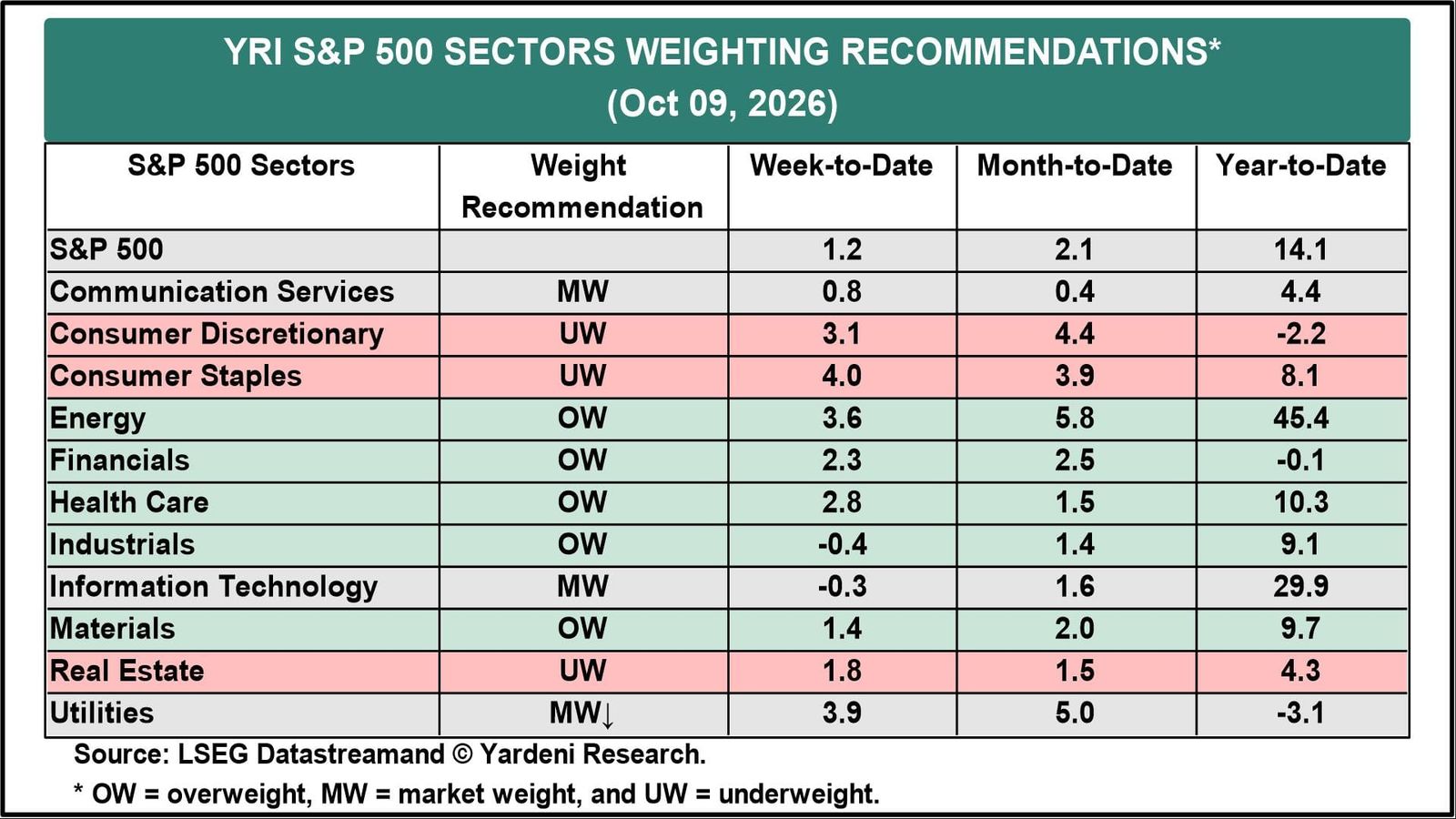
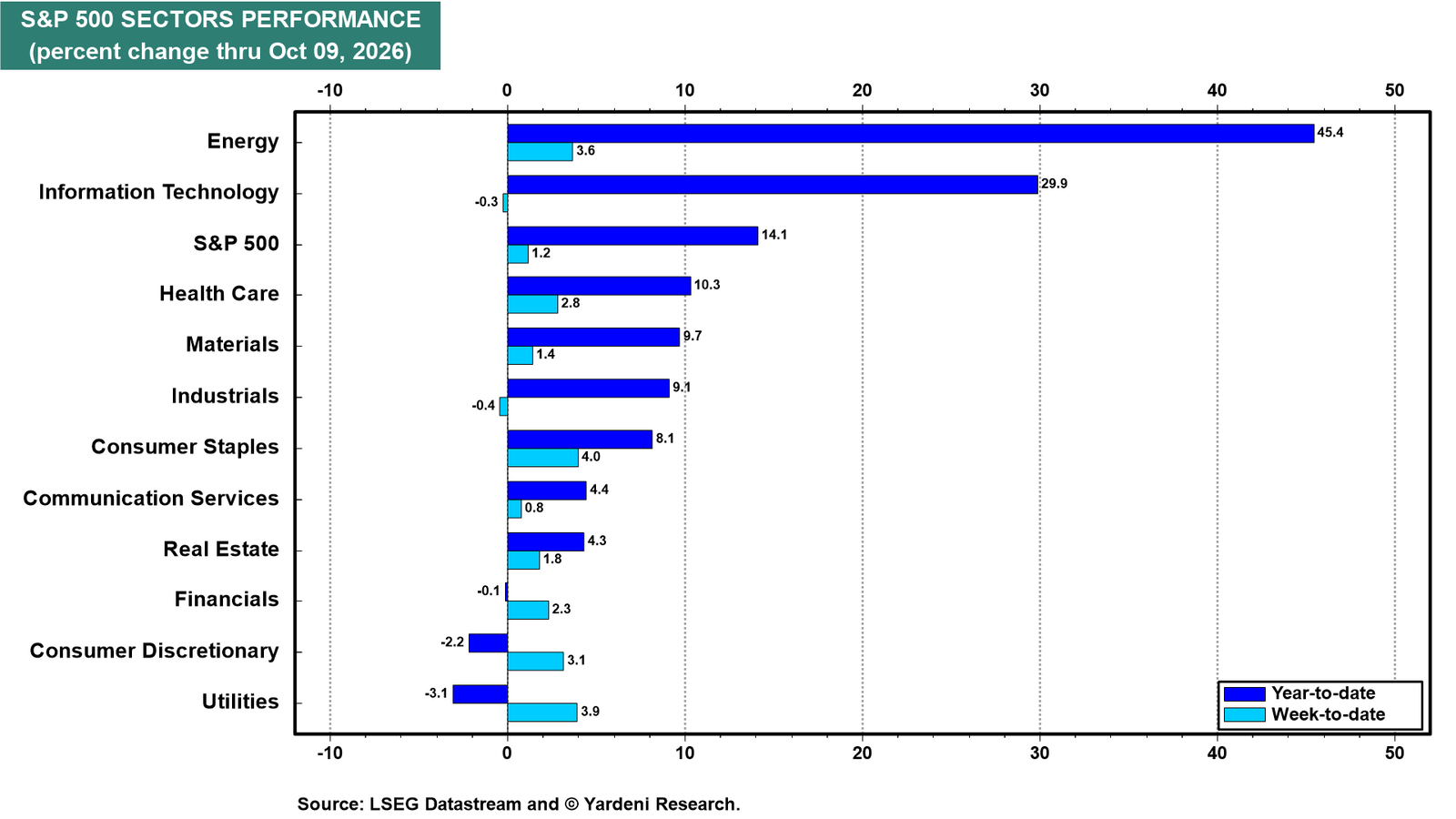
Bond yields edged down last week. As a result, the S&P 500 edged up, led by interest-rate-sensitive sectors. The AI-related sectors Industrials (-0.4%) and Information Technology (-0.3%) edged down and in fact were the only down sectors last week. The big interest-rate-sensitive gainers were Consumer Staples (4.0%), Utilities (3.9%), Consumer Discretionary (3.1%), and Financials (2.3%).
The year's laggards were last week's leaders (chart).
Let's have a look at the Energy, Financials, and Industrials sectors:
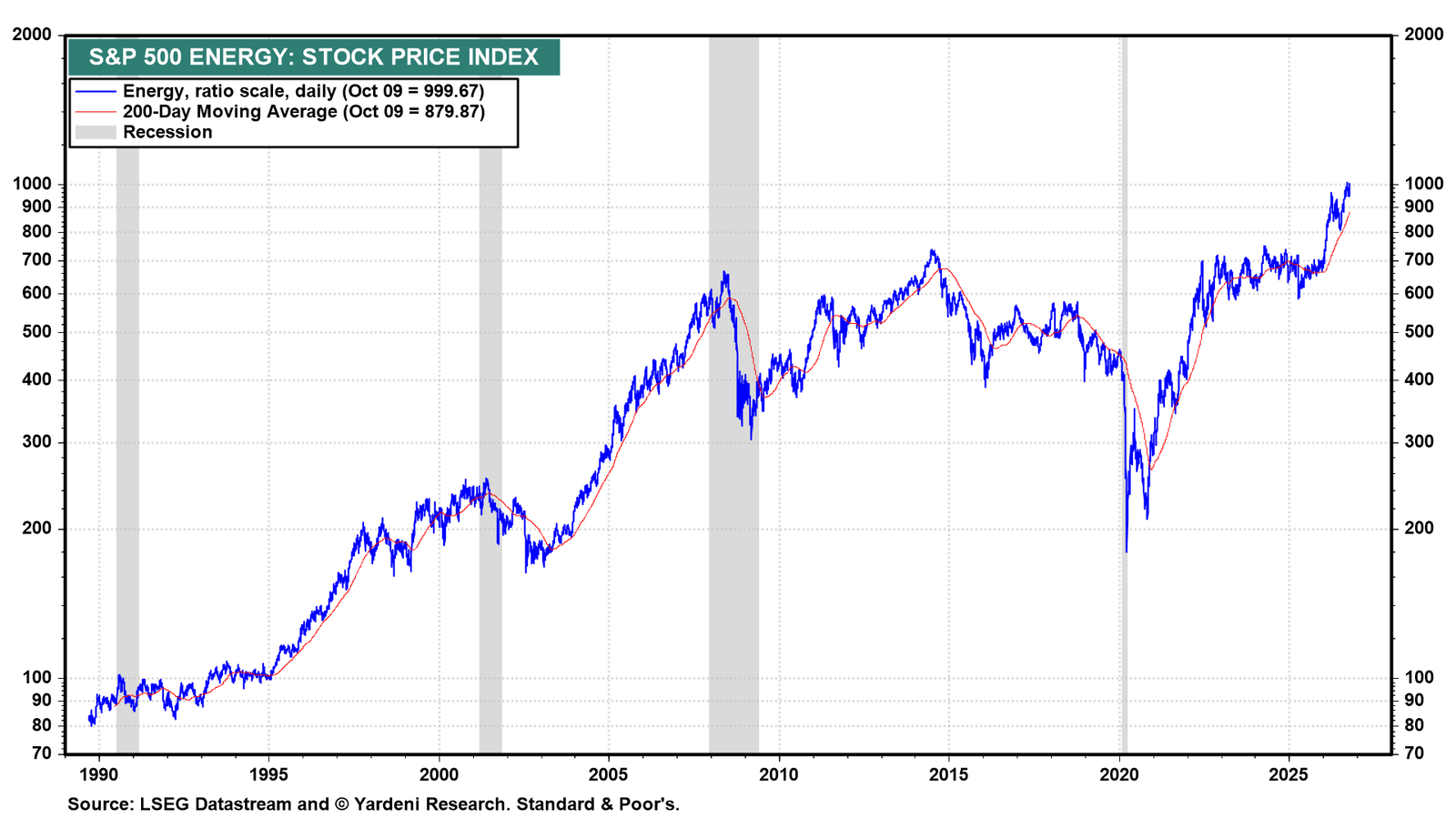
(1) Energy. S&P 500 Energy (3.6%) powered ahead on renewed risks to ships passing through the Strait of Hormuz (chart). Over the weekend, the Houthis attacked King Khalid International Airport in Riyadh and declared Saudi airspace a zone of military operations, warning airlines, travelers, and airport workers to steer clear of airports across the kingdom.
Sector momentum turned decisively positive mid-week, bolstered by a late-week surge as energy equities reacted to escalating Middle East conflicts and subsequent spikes in crude oil benchmarks (chart). Brent crude is quiet tonight at $103.65 per barrel. President Donald Trump helped calm the oil market by announcing that an energy ceasefire between Russia and Ukraine took effect immediately, saying on social media that both parties had agreed to the terms.
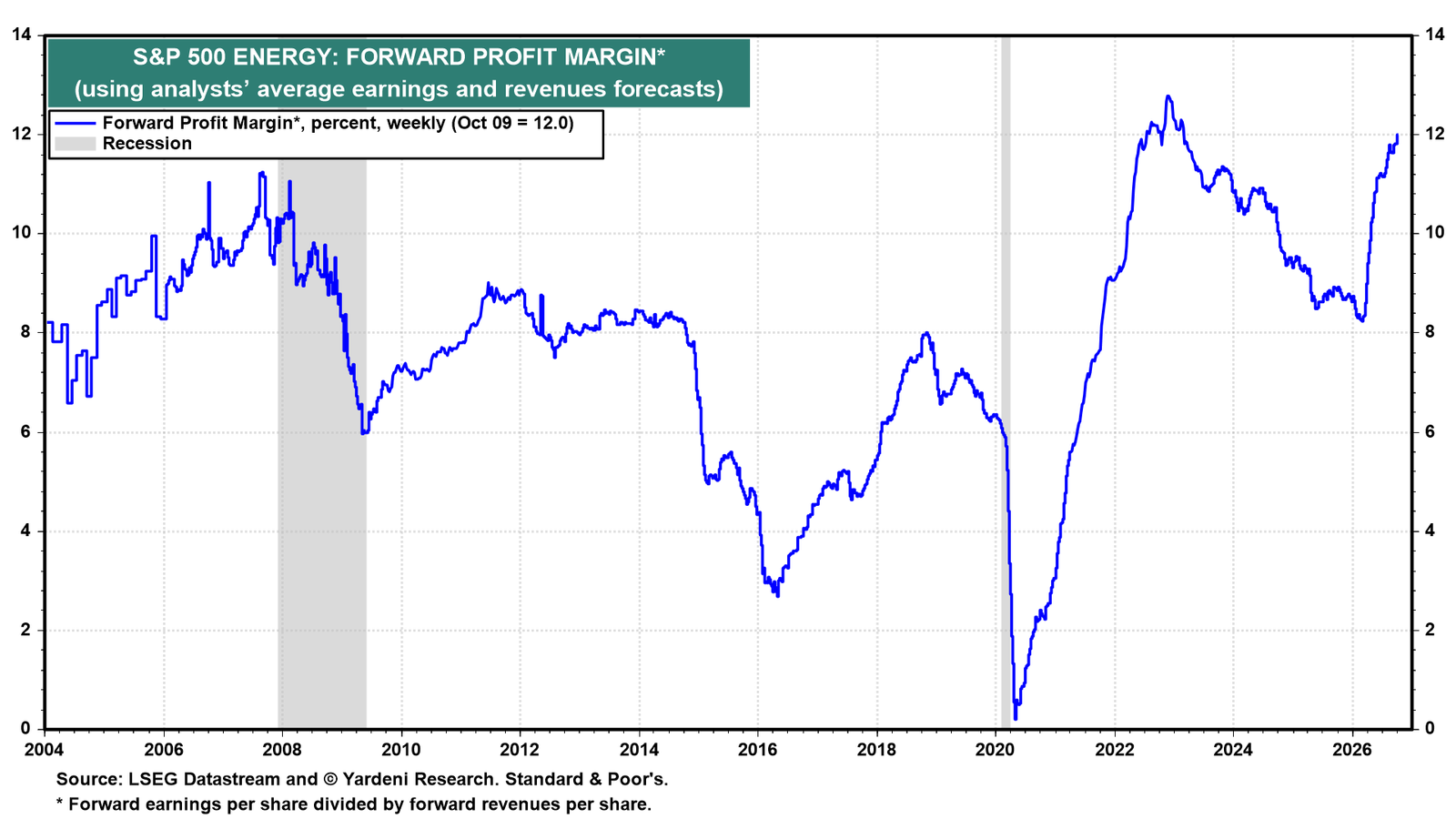
The rebound in the Energy sector's forward earnings this year has been attributable to the jump in the sector's forward profit margin, fueled by the jump in oil prices (chart).
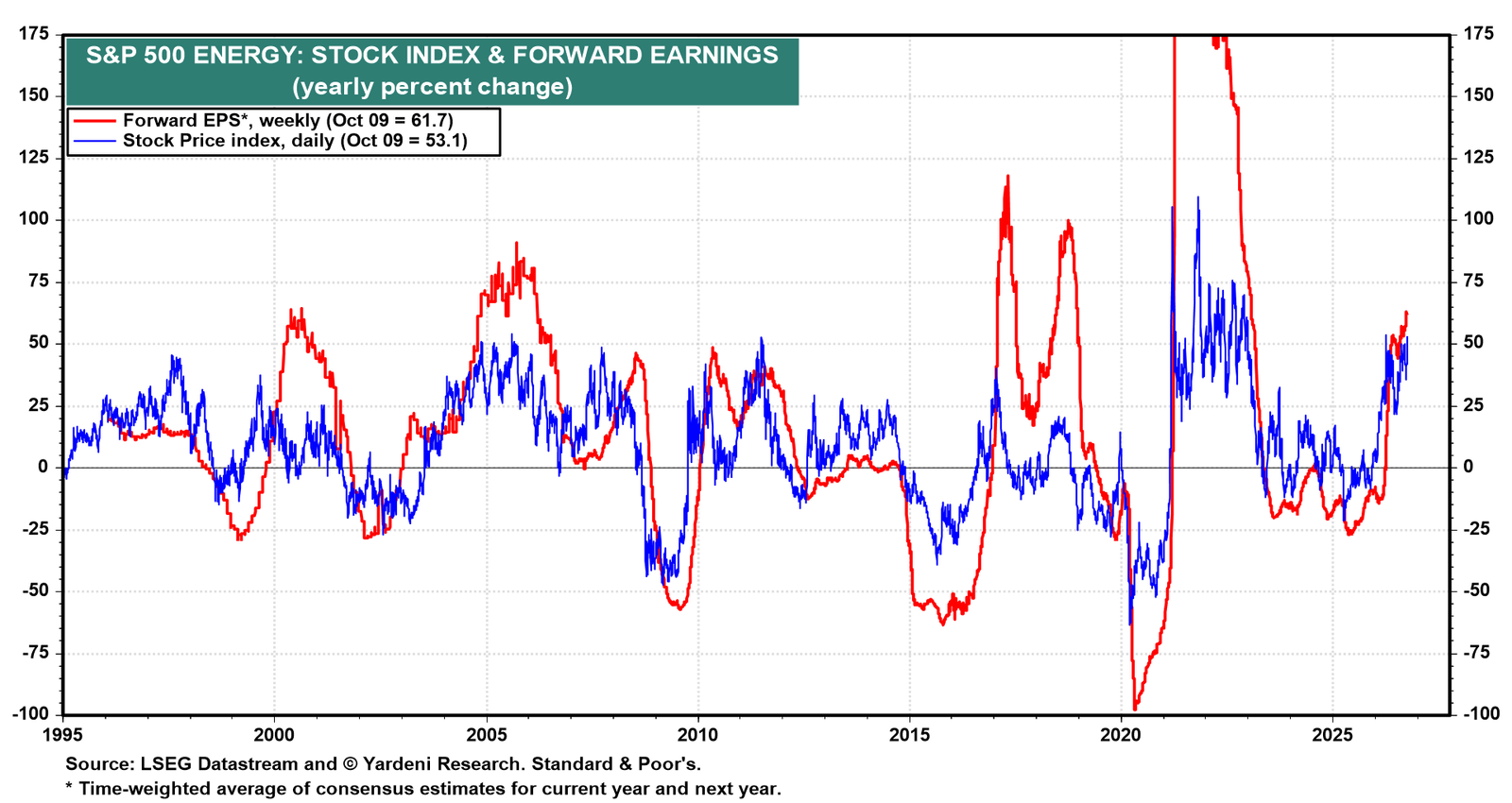
The sector's forward earnings is up 61.7% y/y, and its stock price index is up 53.1% (chart). There should be more upside for the rest of the year, especially if the war in the Middle East heats up after the mid-term elections, as Trump has threatened.
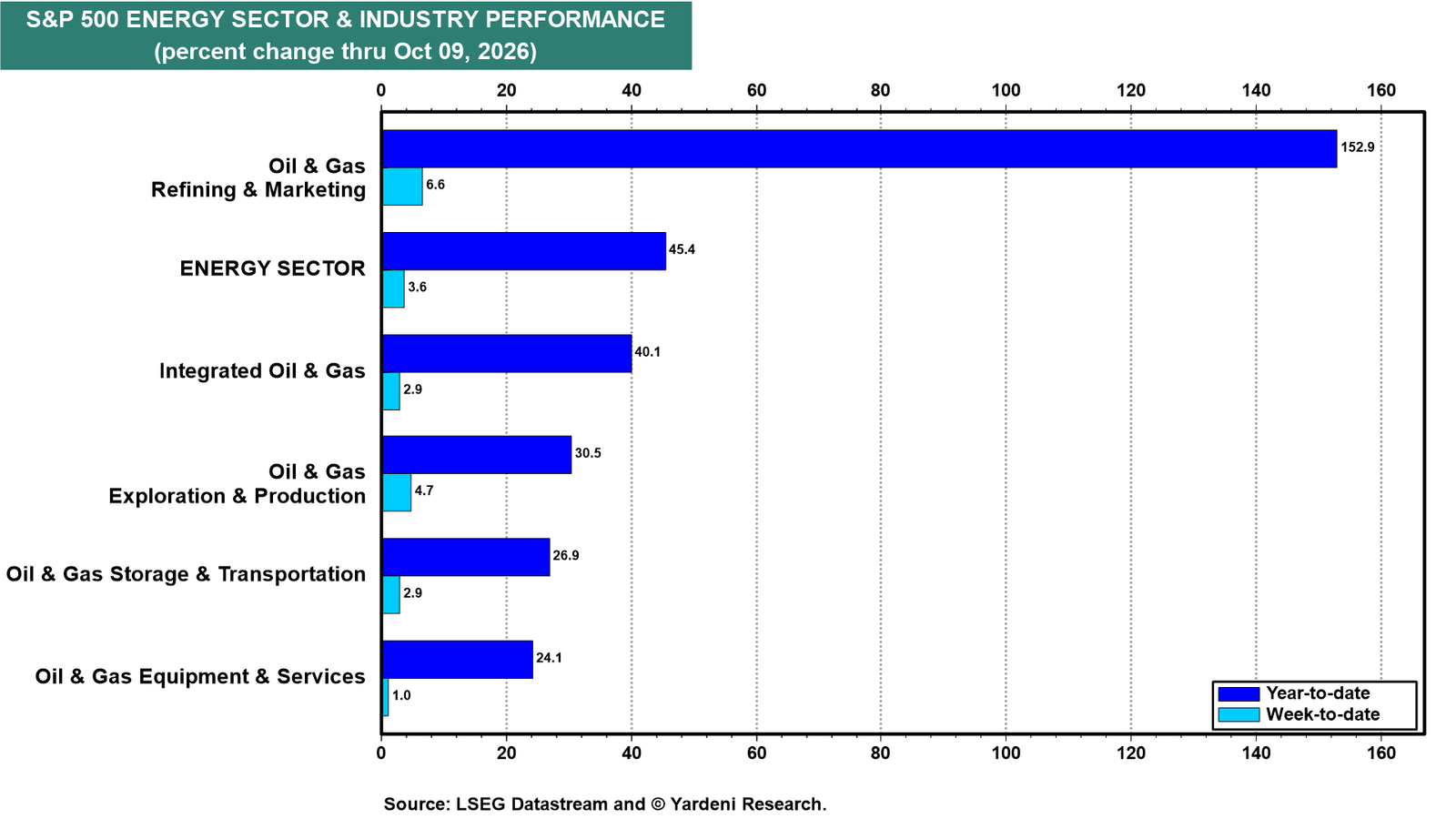
Oil & Gas Refining & Marketing has been the sector's big winner so far this year (chart). A global shortage of refinery capacity might fuel more gains.
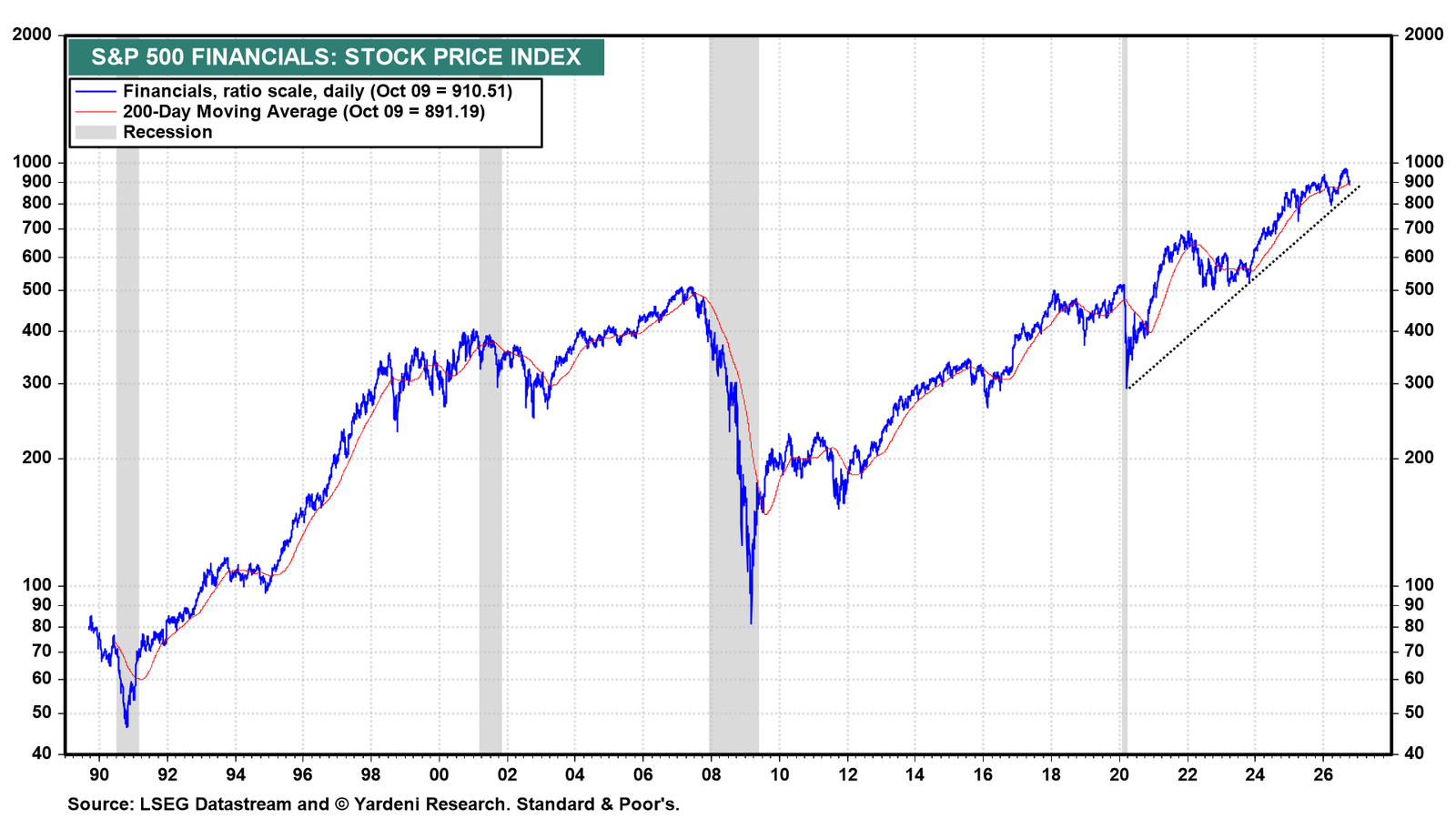
(2) Financials. The Q3-2026 earnings reporting season starts this week with the big banks. The sector's stock price index is nearly down at its 200-day moving average (chart). Solid earnings reports from the banks are likely, as we explained last week. If so, then the sector's uptrend should hold.
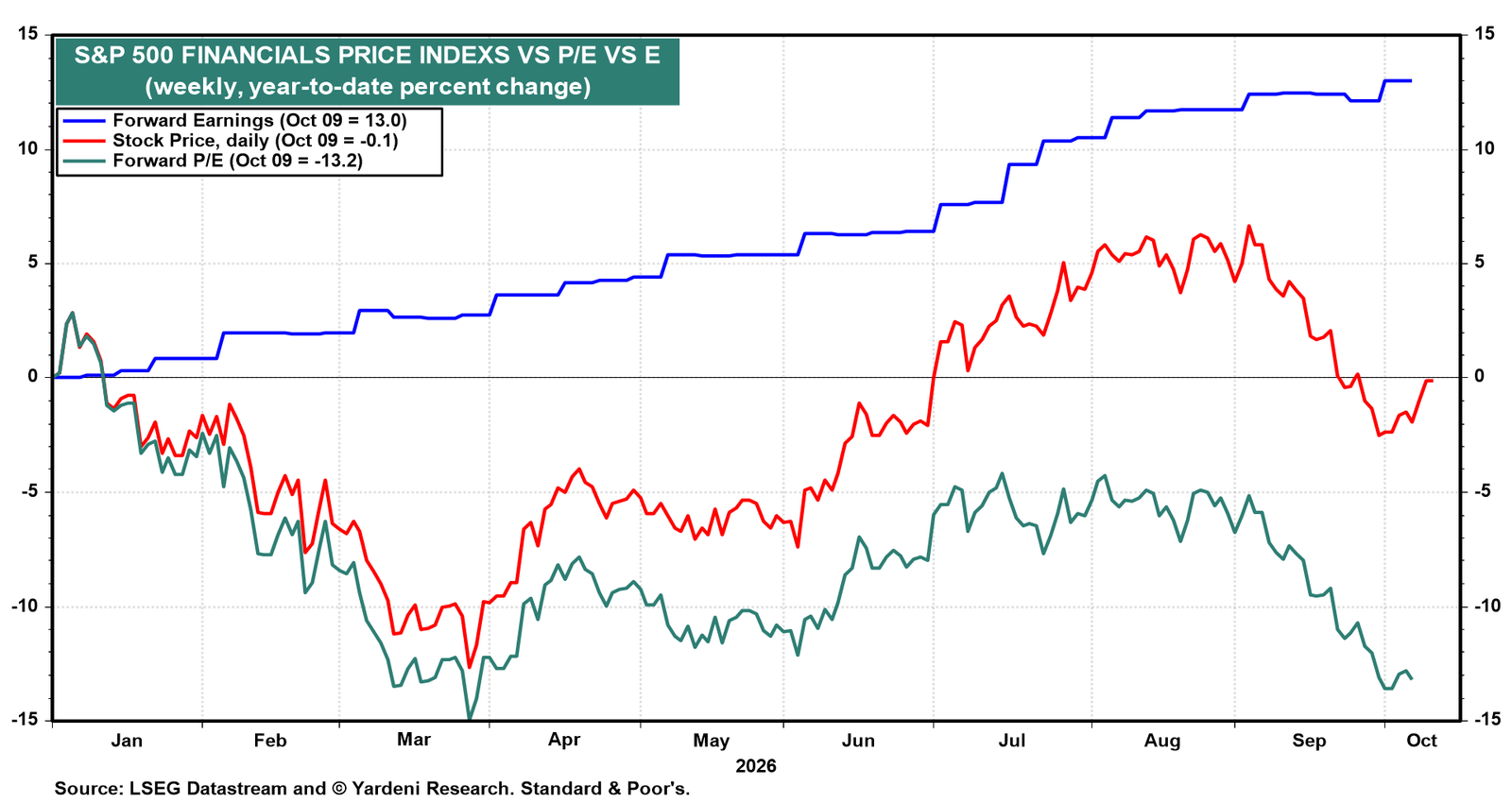
Rising interest rates are probably boosting the net interest margins of the large banks. However, the rapid ascent in bond yields in recent weeks has unnerved investors, as evidenced by the sharp drop in the sector's forward P/E since mid-August (chart). Bond yields may be stabilizing as investors are drawn to higher returns.
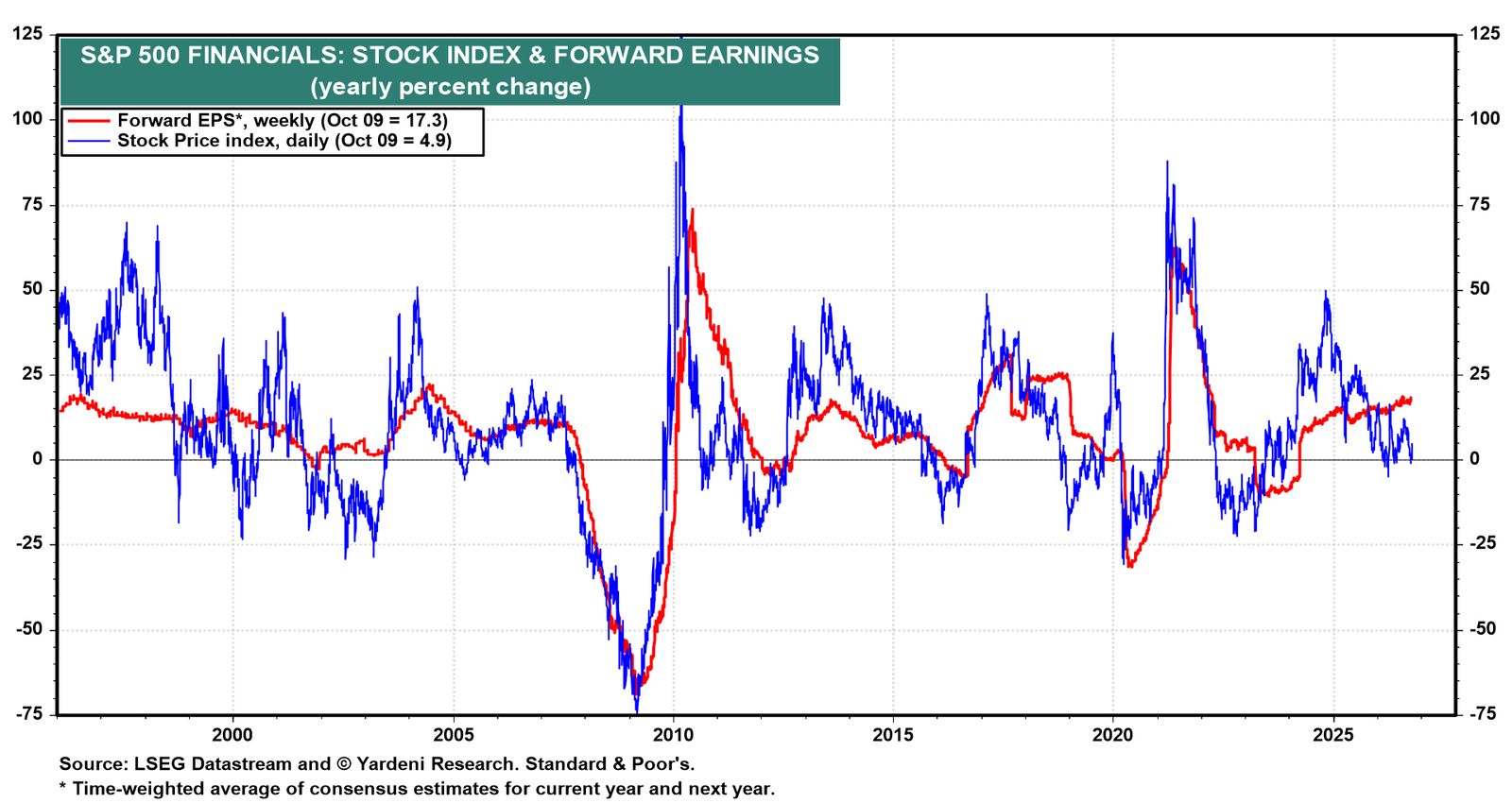
The sector's forward earnings is up 17.3% y/y, while its stock price index is up only 4.9% y/y (chart). A solid Q3 earnings season should lift the sector.
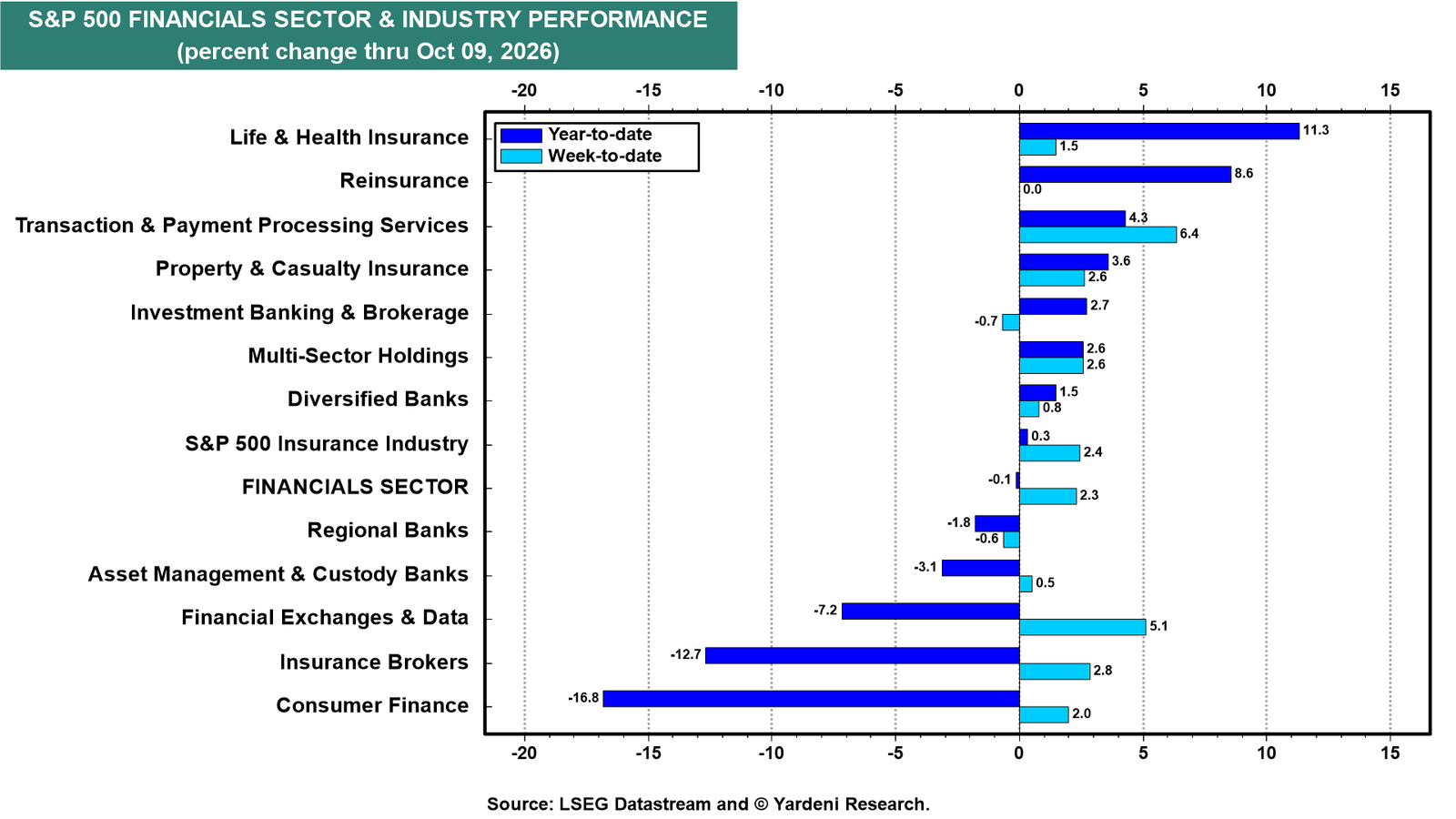
So far this year, insurance industries have performed best in the sector (chart).
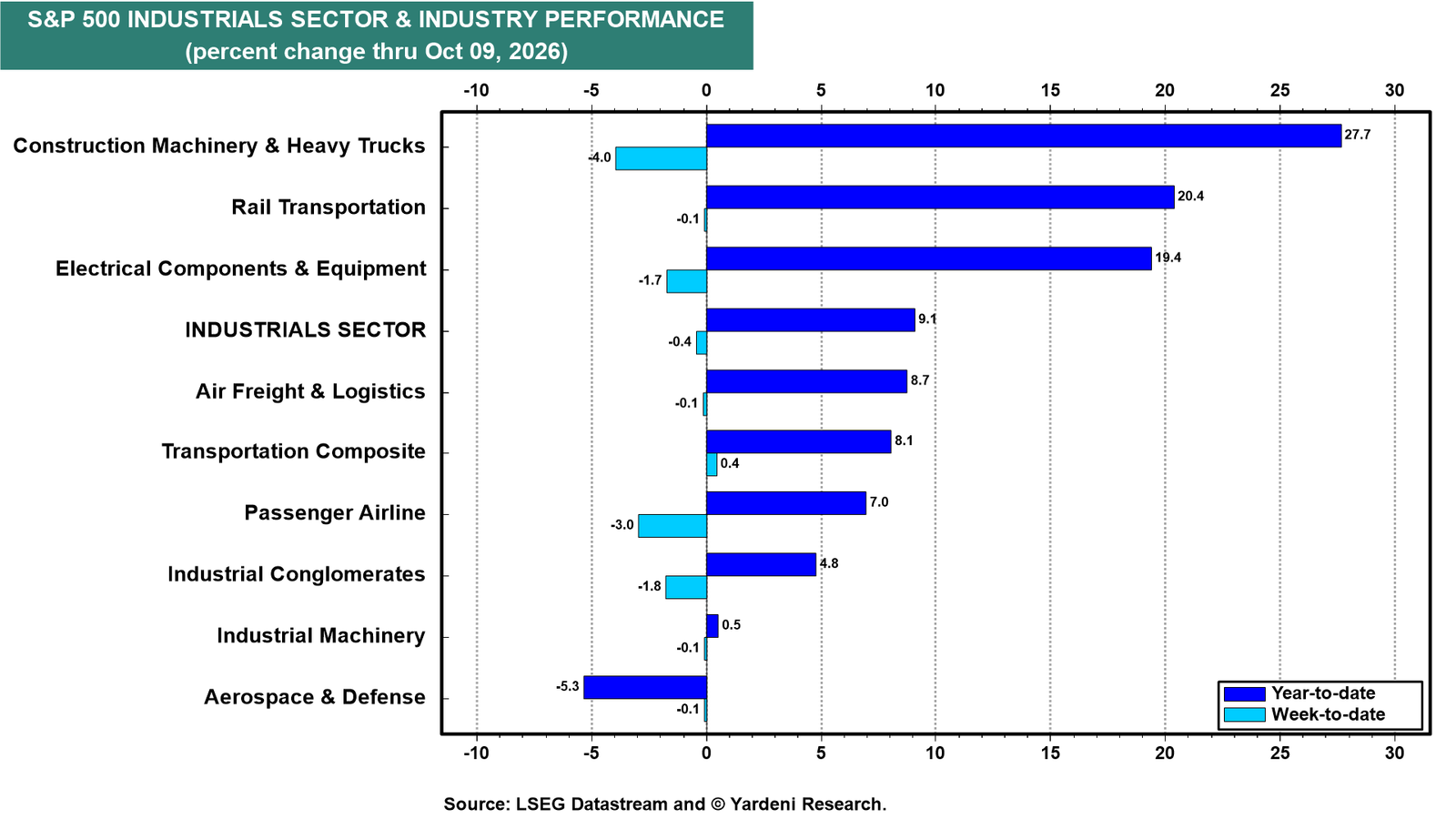
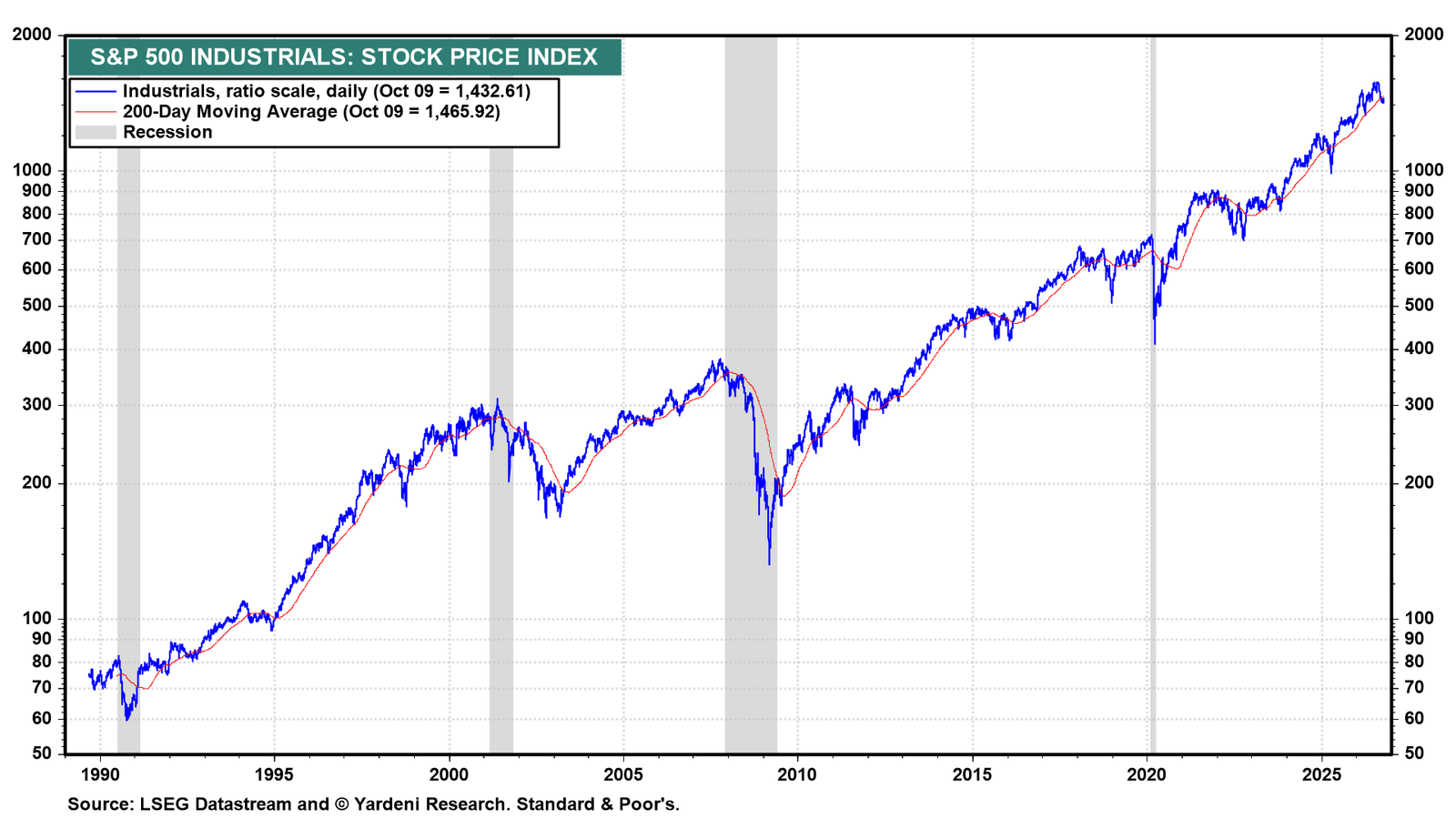
(3) Industrials. Industrials balanced competing forces this week—benefiting from safe-haven rotation and robust structural demand, while facing occasional headwinds from surging energy input costs and persistent high-interest-rate pressures. This S&P 500 sector is also testing support at its 200-day moving average (chart).
This is another sector where forward earnings is rising faster than the sector's stock price index (chart). The price action sometimes leads the growth rate in forward earnings. This time may be different as the AI buildout continues to boost the sector's earnings.
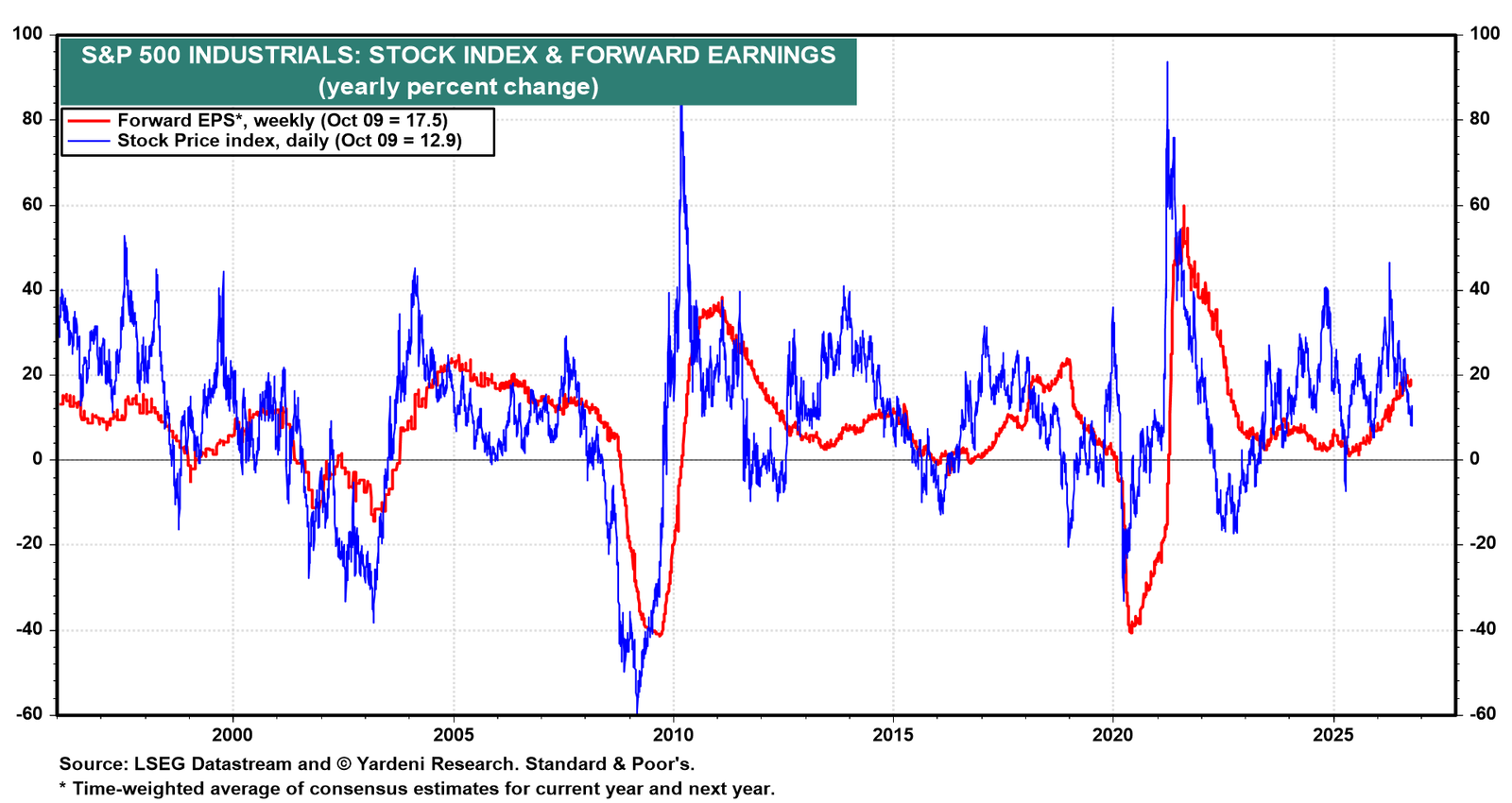
Construction Machinery & Heavy Trucks is the sector's best-performing industry so far this year (chart). Second best has been Rail Transportation. Notwithstanding the wars in the Middle East and between Russia and Ukraine, Aerospace & Defense has been the weakest industry. Military budgets for large munitions and battlefield weapons may have to make room for more spending on AI-guided drones and "Terminators."