I. Profits, Cash Flow & Capital Spending
Corporate profits are the economy's lifeblood. As Dr. Ed explains in his 2021 book, In Praise of Profits, profits are not merely a reward for economic success; they also drive the economy. Strong profits give businesses both the incentive and the financial means to expand, generating the cash flow needed to invest in capital, hire workers, and pursue new opportunities. At the same time, profits reward successful businesses and encourage entrepreneurs to take risks, innovate, and direct capital toward its most productive uses. Consumers benefit from employment gains and from better goods and services.
Let’s examine how Corporate America is turning record profits into record cash flow and putting that money to work:
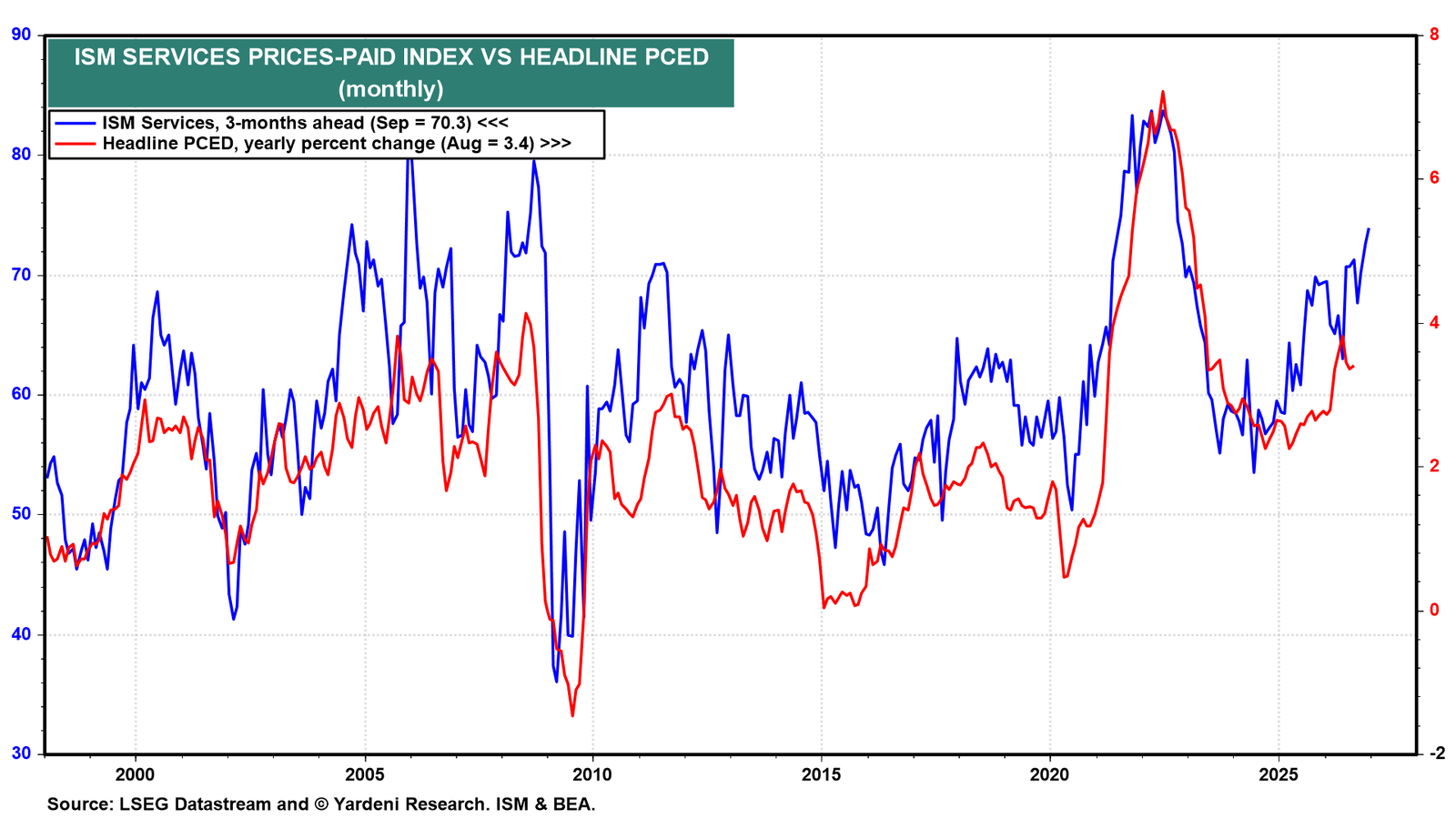
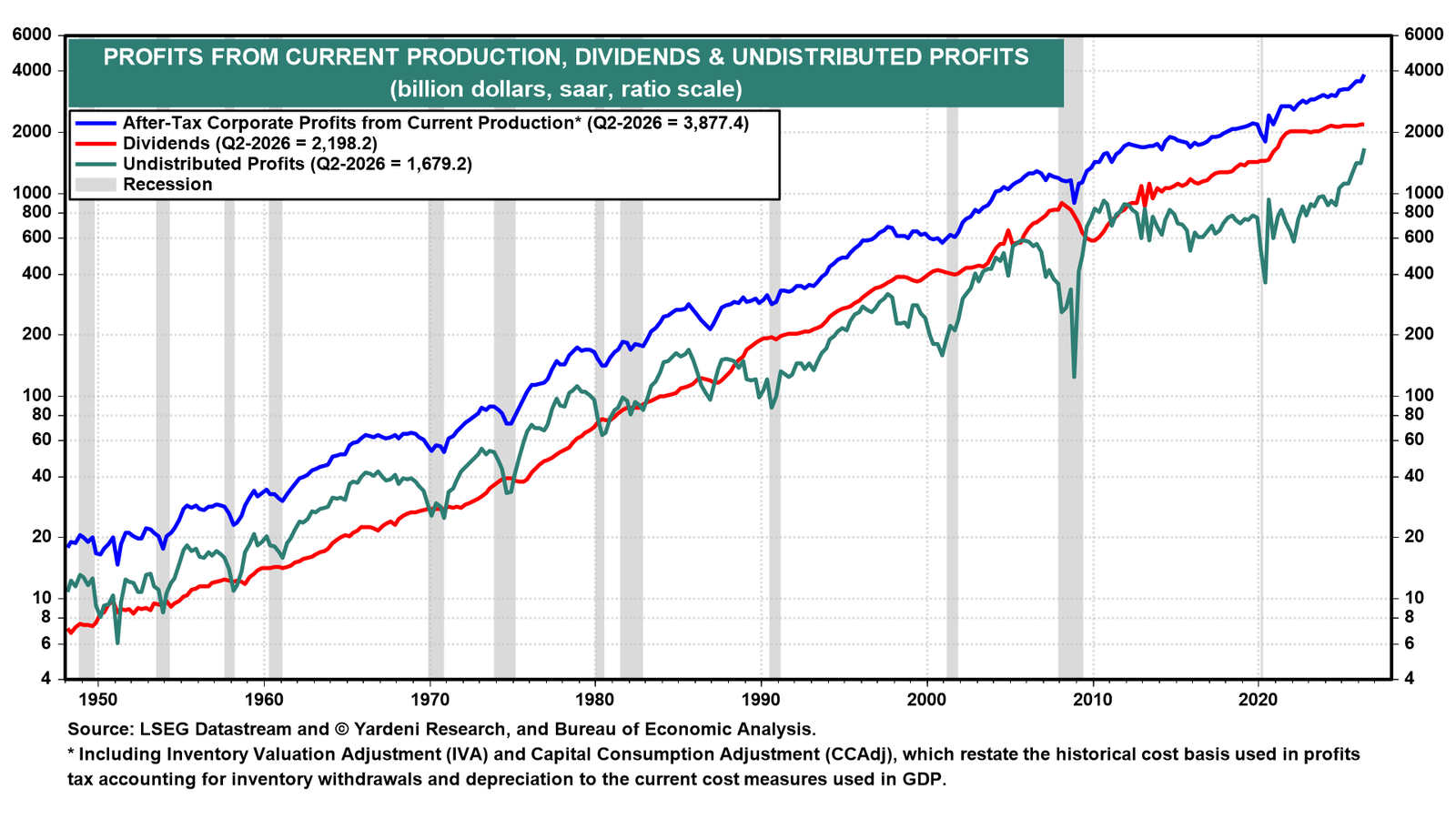
(1) Profits. Corporate America is highly profitable. Pre-tax profits from current production rose to a record $4.7 trillion (saar) during Q2, while after-tax profits reached a record $3.9 trillion (chart). That leaves businesses with a large pool of earnings to distribute, retain, and reinvest.
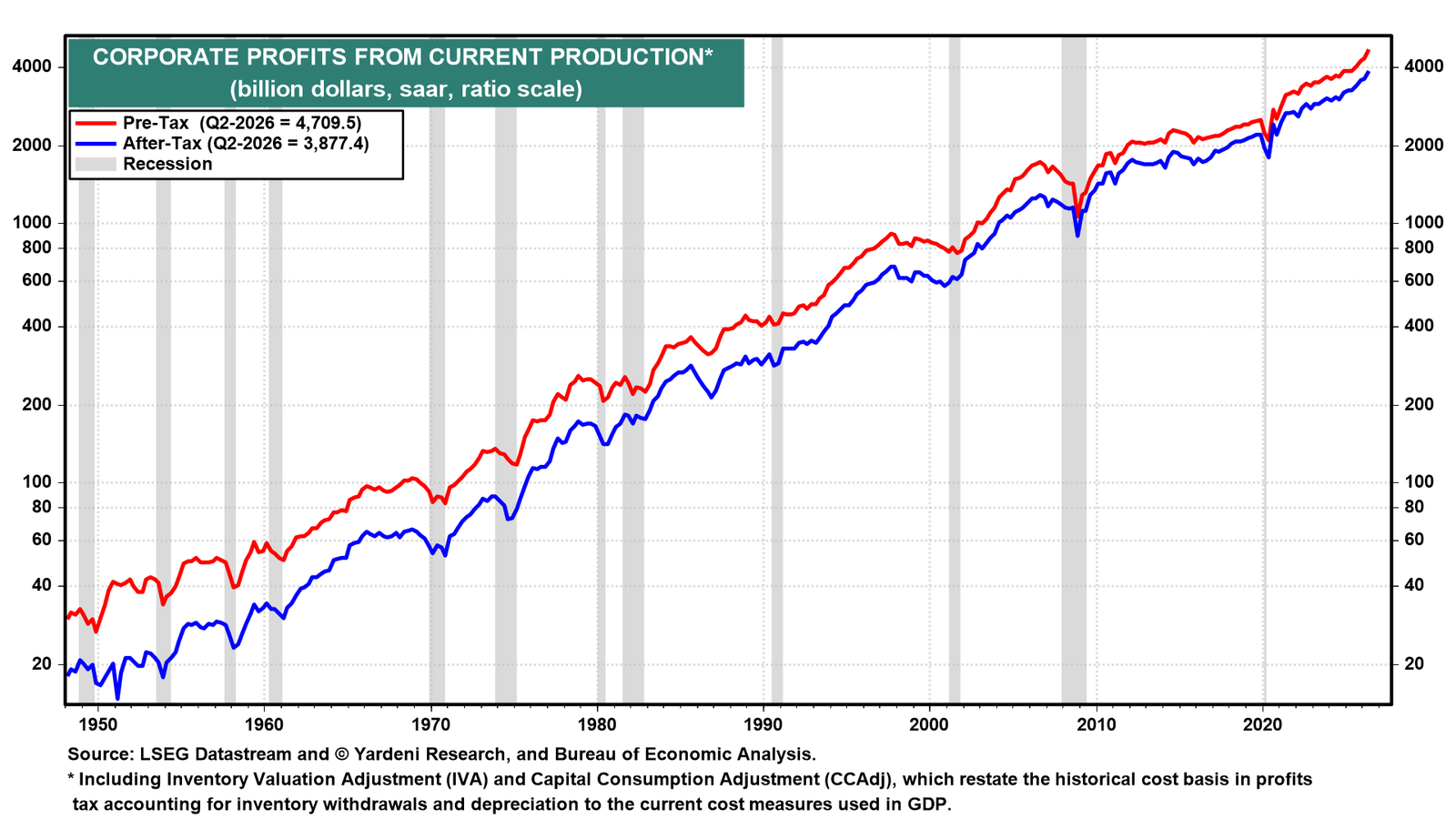
Profits earned abroad by US corporations rose to a record $1.2 trillion in Q2, confirming that the global economy is also doing well alongside the US economy (chart). After subtracting $651 billion in profits earned in the US by foreign corporations, net rest-of-world profits totaled $546 billion (chart).
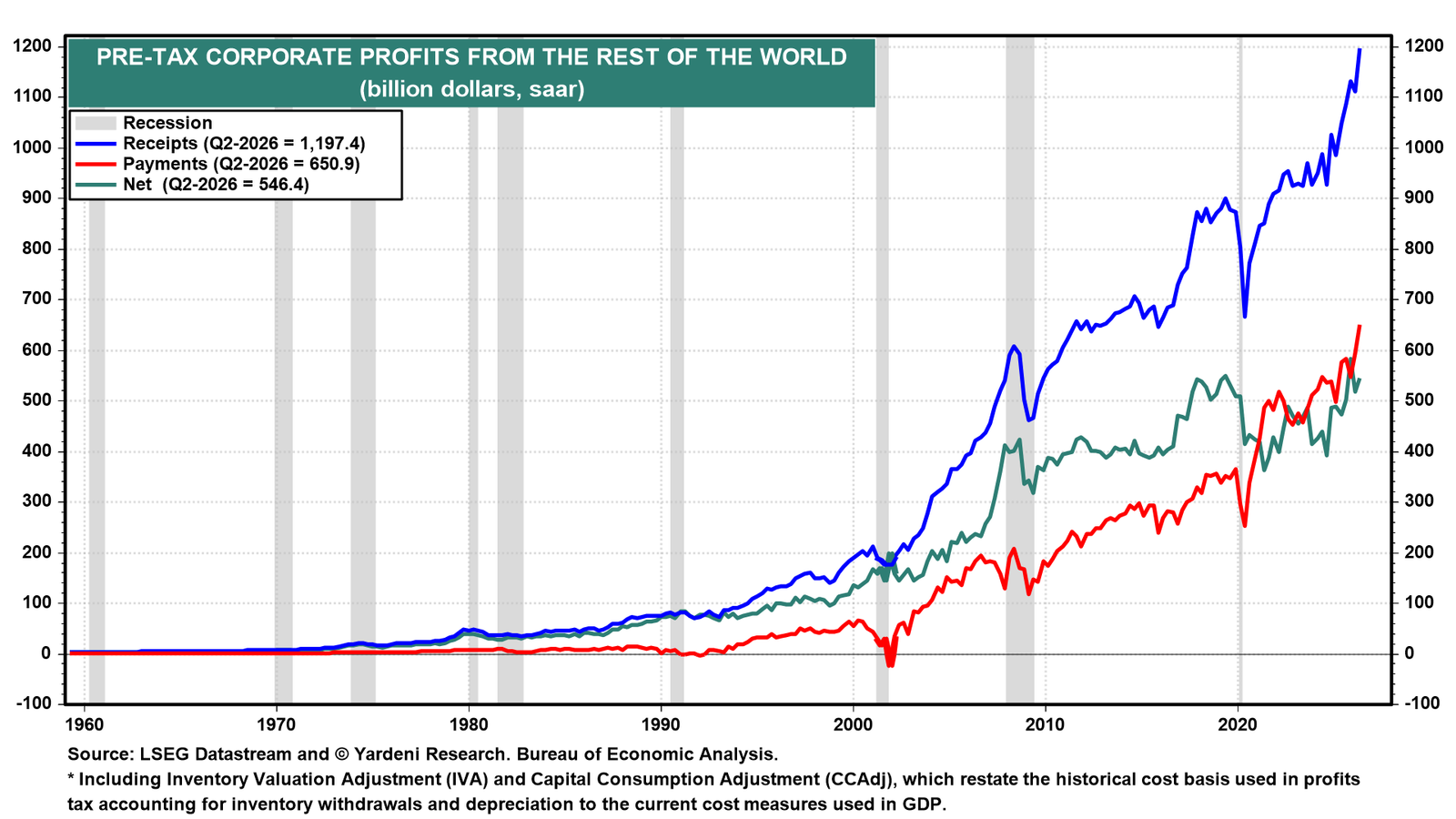
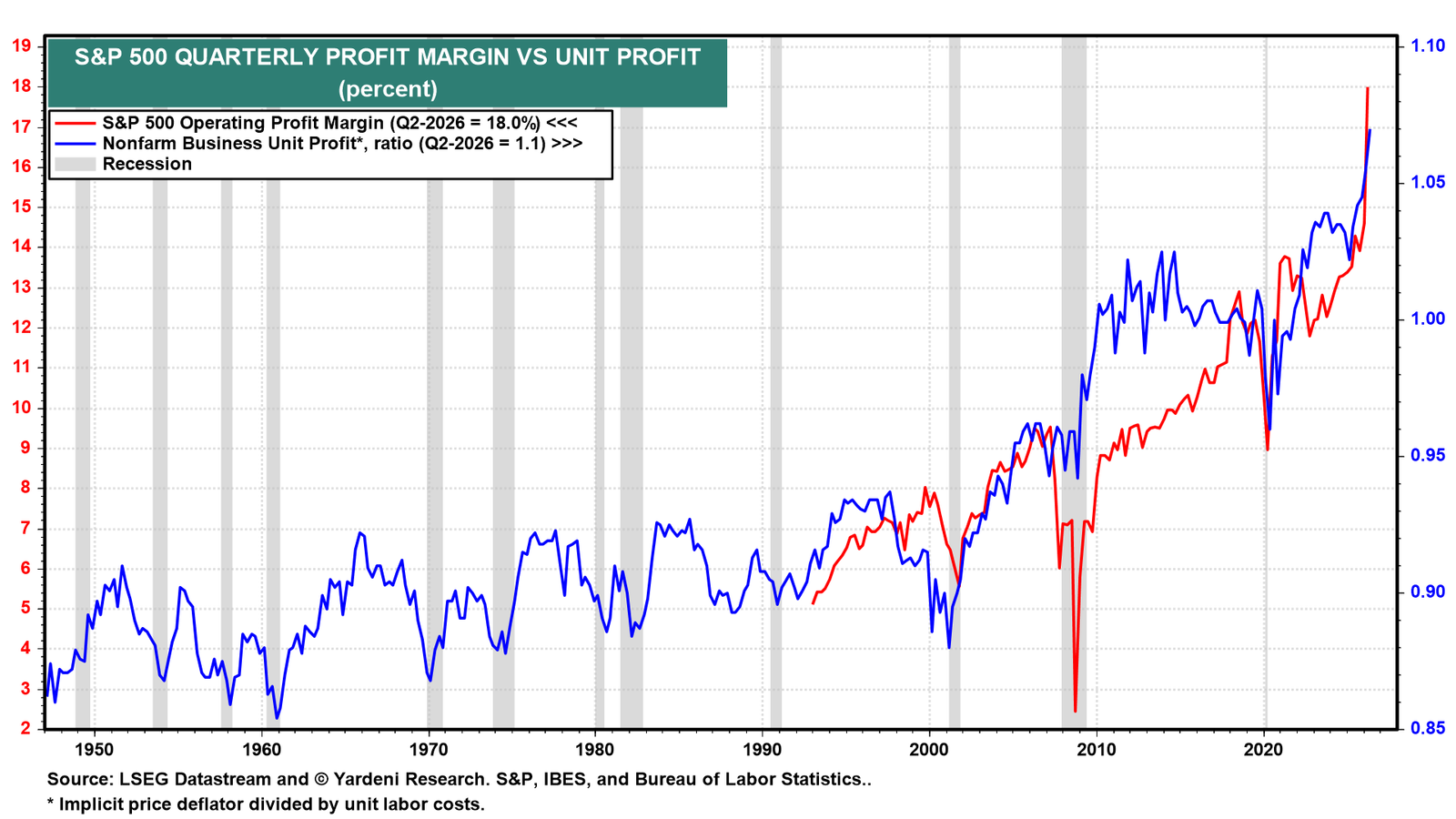
(2) Profit margins. Economy-wide and S&P 500 profit margins both rose to record highs during Q2 (chart). The S&P 500 forward margin jumped to 18.0% in Q2, partly reflecting mark-to-market investment gains at Alphabet and Amazon. The economy-wide GDP growth measure excludes such capital gains and still rose to a record 11.9%.
Unit profits have risen sharply too, meaning that selling prices have outpaced labor costs per unit of output (chart).
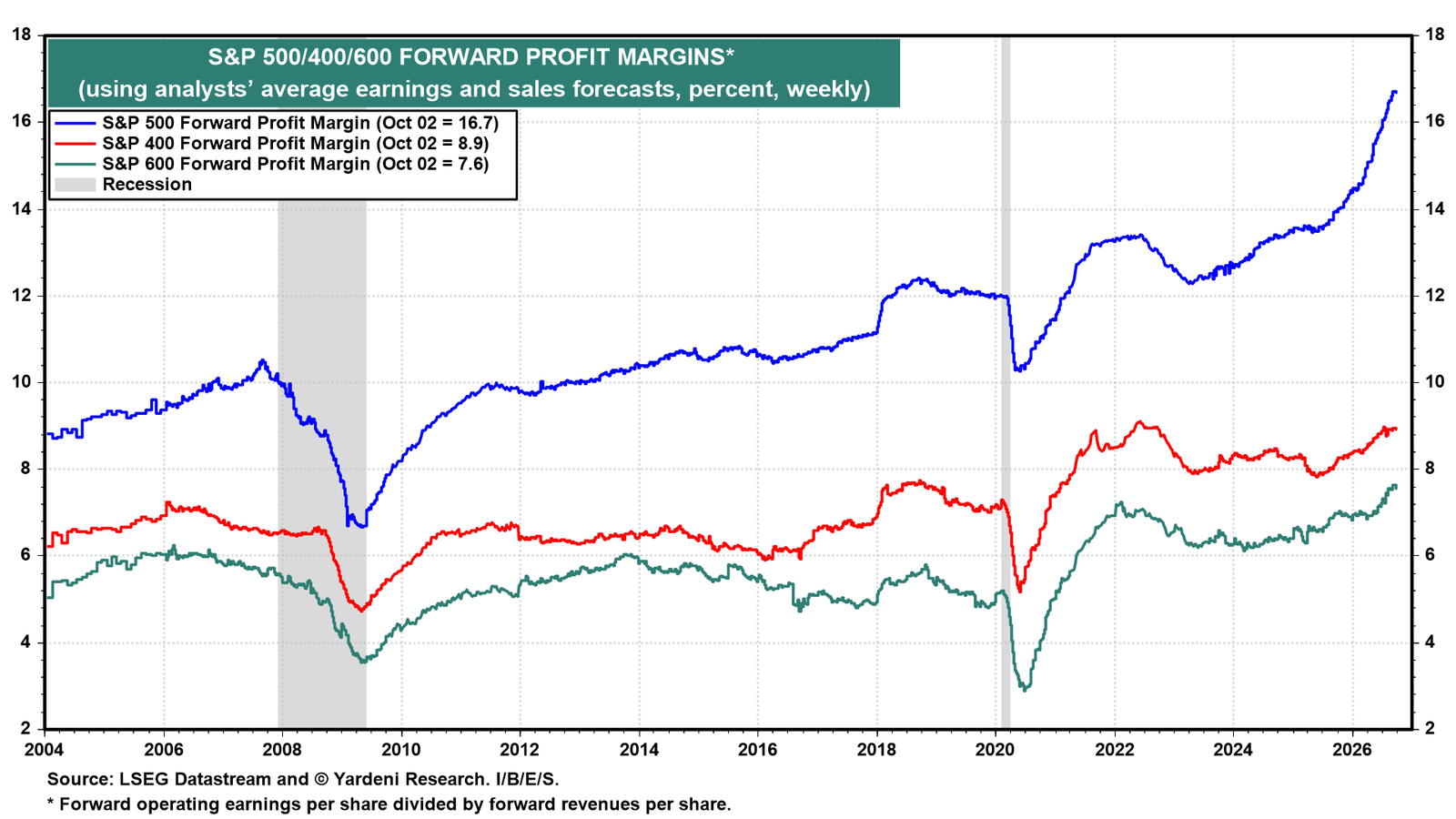
The S&P 500 forward profit margin rose to a record 16.7% in early October, well above the S&P 400’s 8.9% and S&P 600’s 7.6% (chart). The gap largely reflects the greater scale, pricing power, and productivity of large-cap companies.
(3) Retained profits & cash flow. After-tax corporate profits have surged in recent years, but dividend payments have risen much less rapidly. As a result, undistributed profits rose to a record $1.7 trillion (saar) in Q2 (chart). That leaves businesses with plenty of internally generated funds to pursue today’s abundant investment opportunities, not least of all those presented by the AI boom.
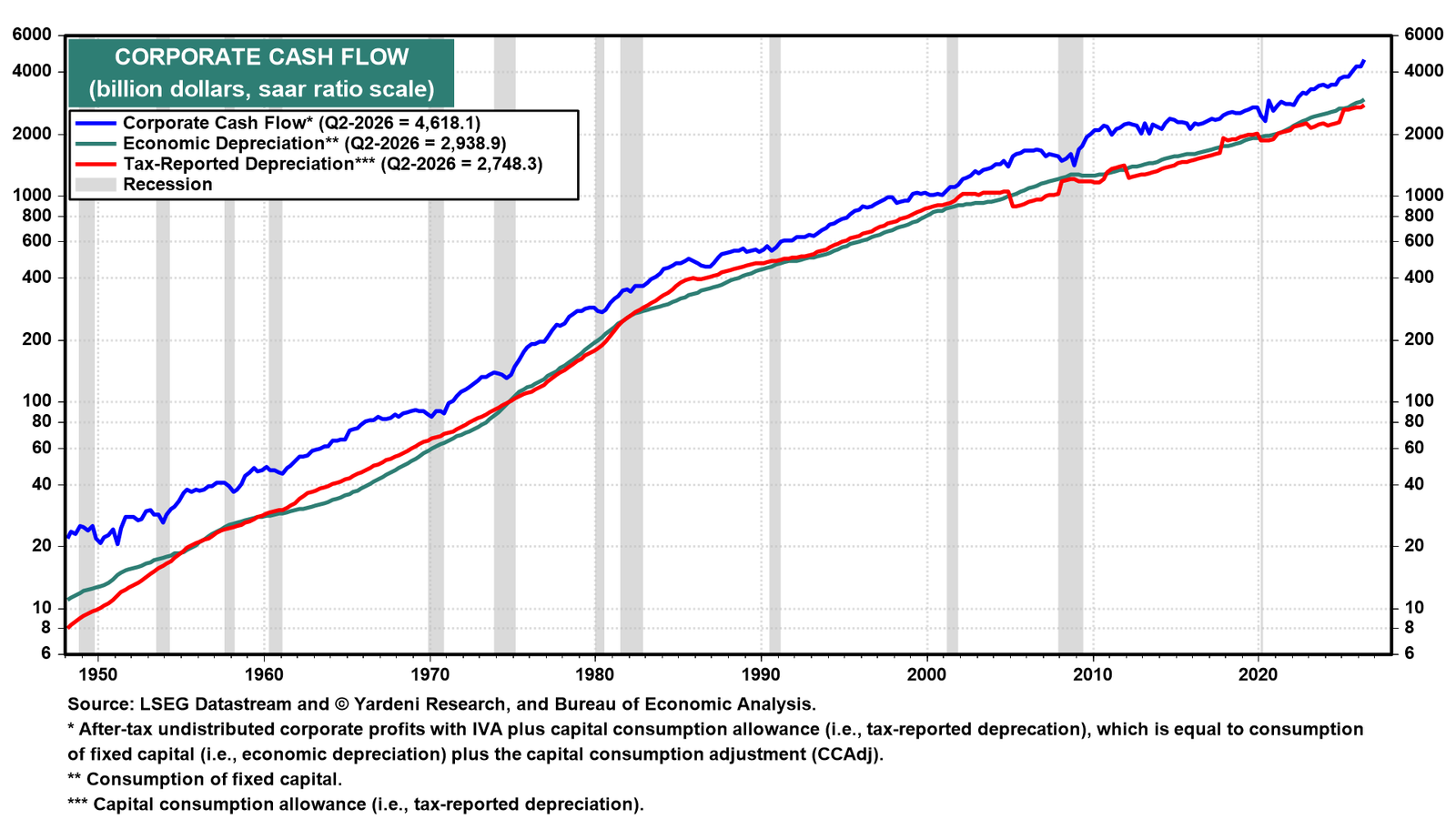
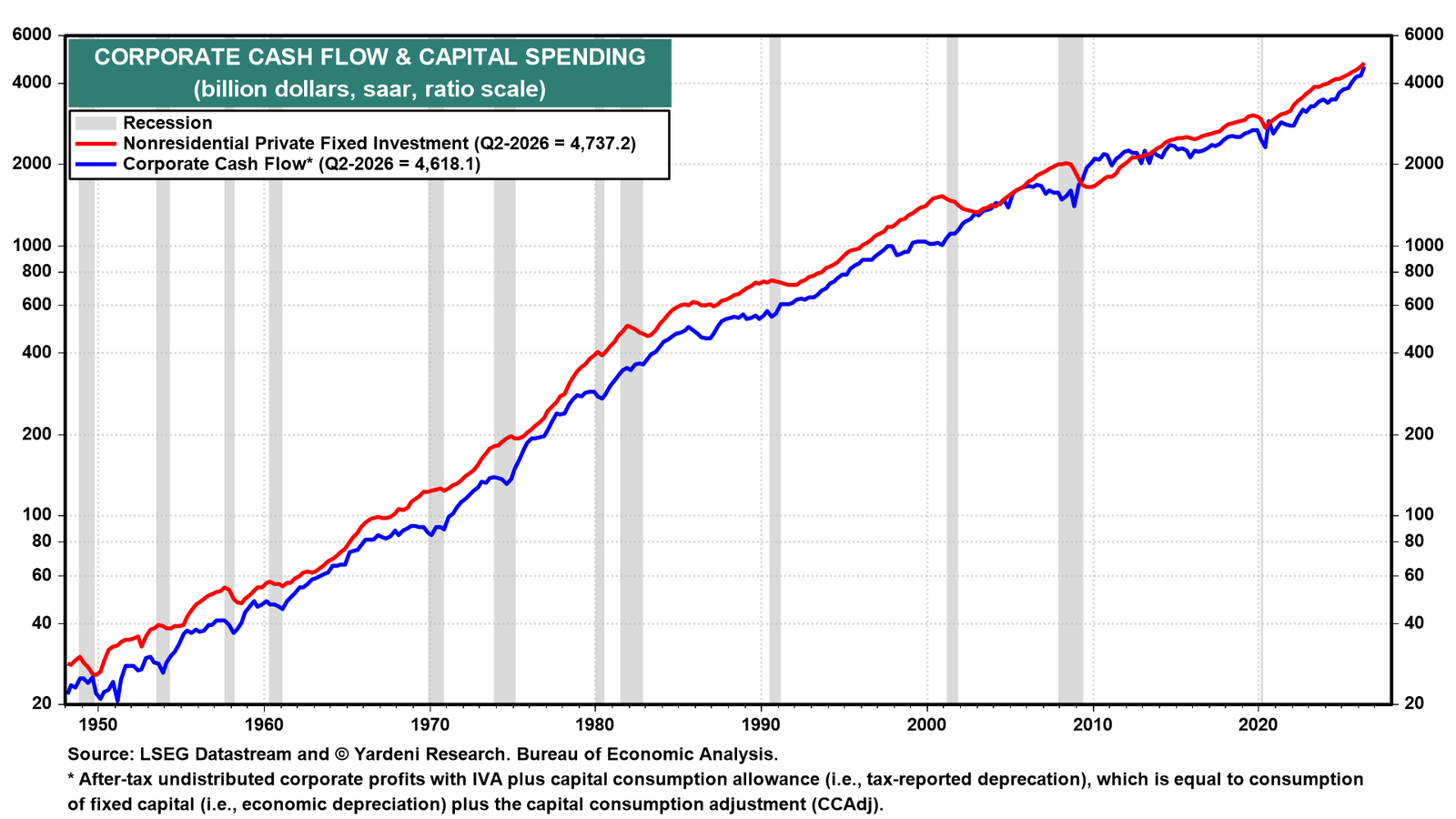
Corporate cash flow, which combines undistributed profits with tax-reported depreciation allowances, rose to a record $4.6 trillion in Q2 (chart). Those depreciation allowances have been boosted this year by generous expensing provisions, including the OBBBA’s 100% write-off for qualifying investment, which lowers current tax liabilities and boosts near-term cash flow.
(4) Capital spending. As corporate cash flow has climbed to a record high, businesses have been putting that money to work. Nonresidential fixed investment has risen in lockstep and reached a record $4.7 trillion (saar) in Q2 (chart).
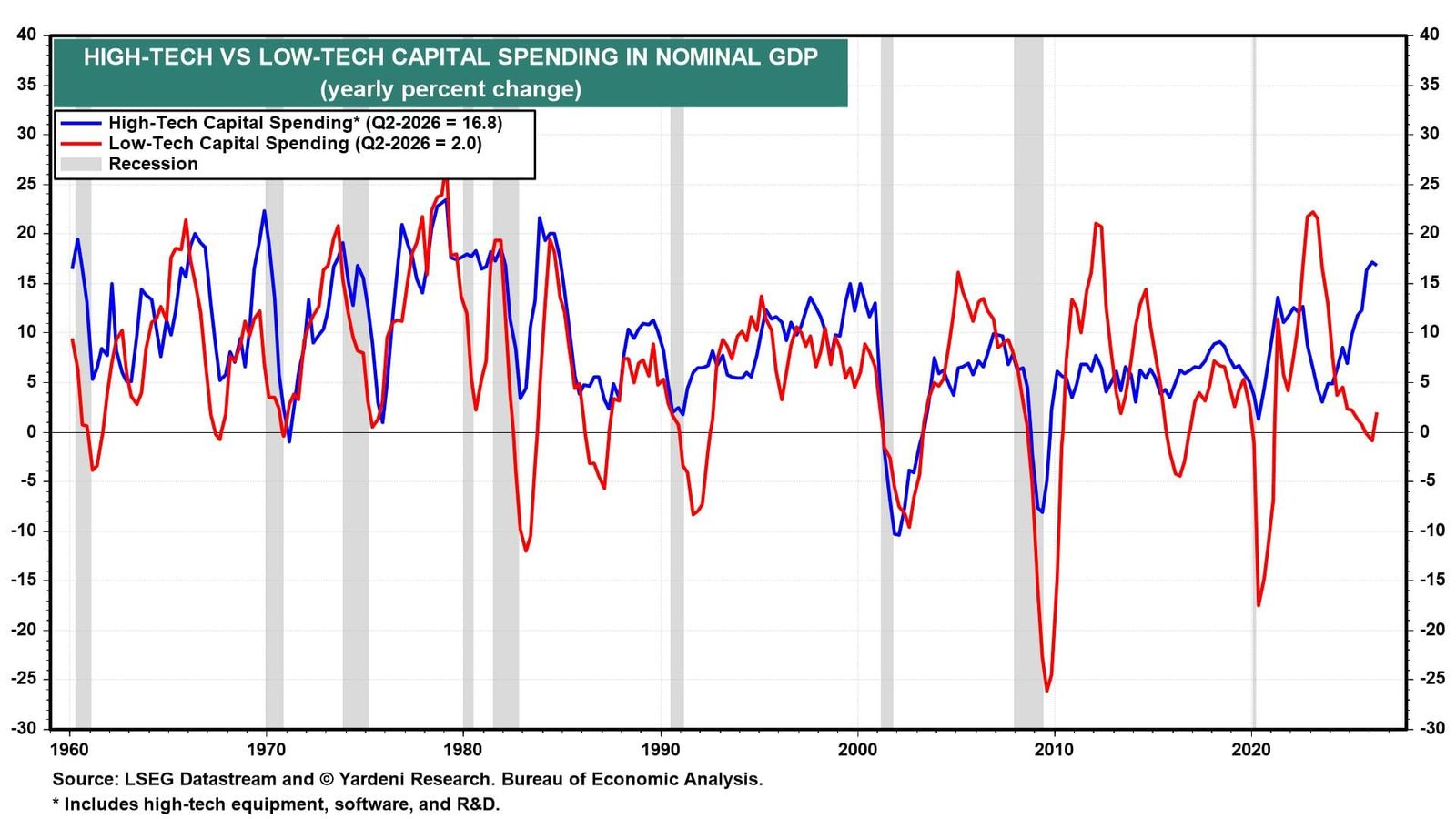
Increasingly, that spending is being directed toward high-tech investments. High-tech capital spending surged 16.8% y/y in Q2, far outpacing the 2.0% gain in low-tech investment (chart).
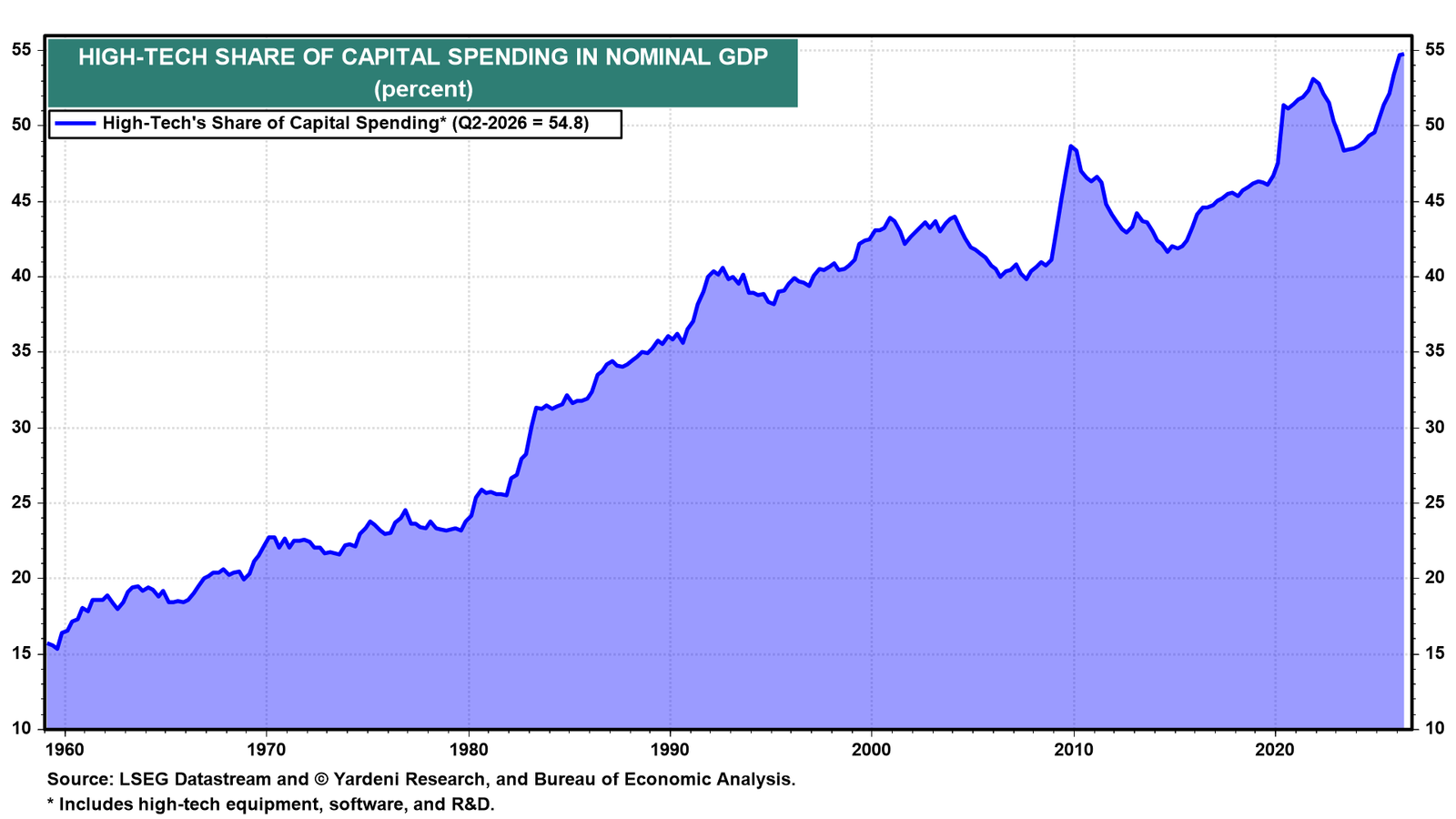
Indeed, high-tech investment now accounts for a record 54.8% of total nominal capital spending (chart).
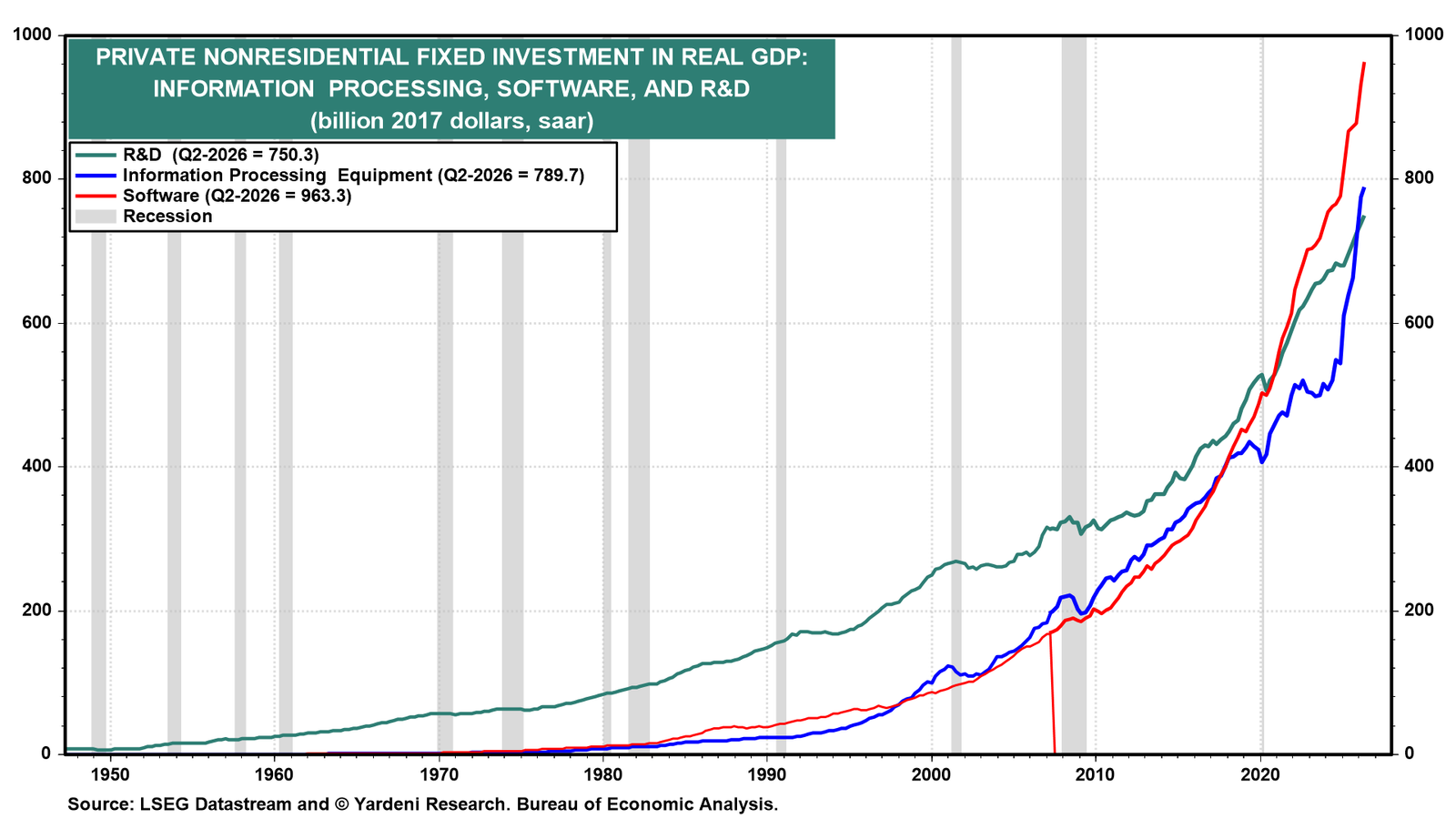
Most of the current nonresidential investment boom is tied to AI-related spending, particularly on software, information-processing equipment, and R&D (chart). That is where much of the cash generated by record profits and elevated retained earnings is now being deployed.
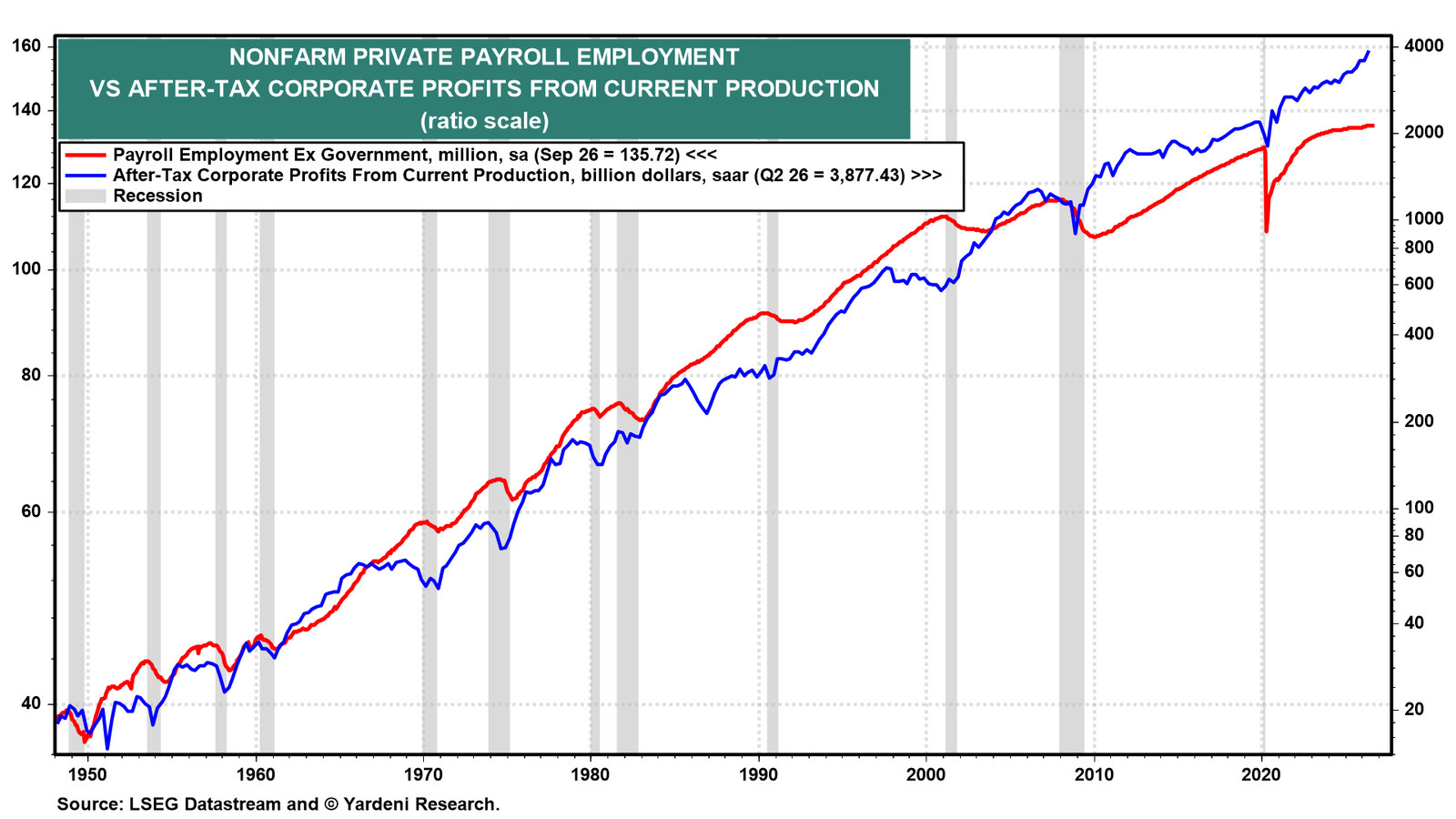
Profits increasingly have outpaced private sector employment (chart). This aligns with rising productivity, especially in high-tech industries, where businesses generate more revenue and earnings without a proportional increase in employment. This can help offset labor shortages caused by population aging and slower immigration.
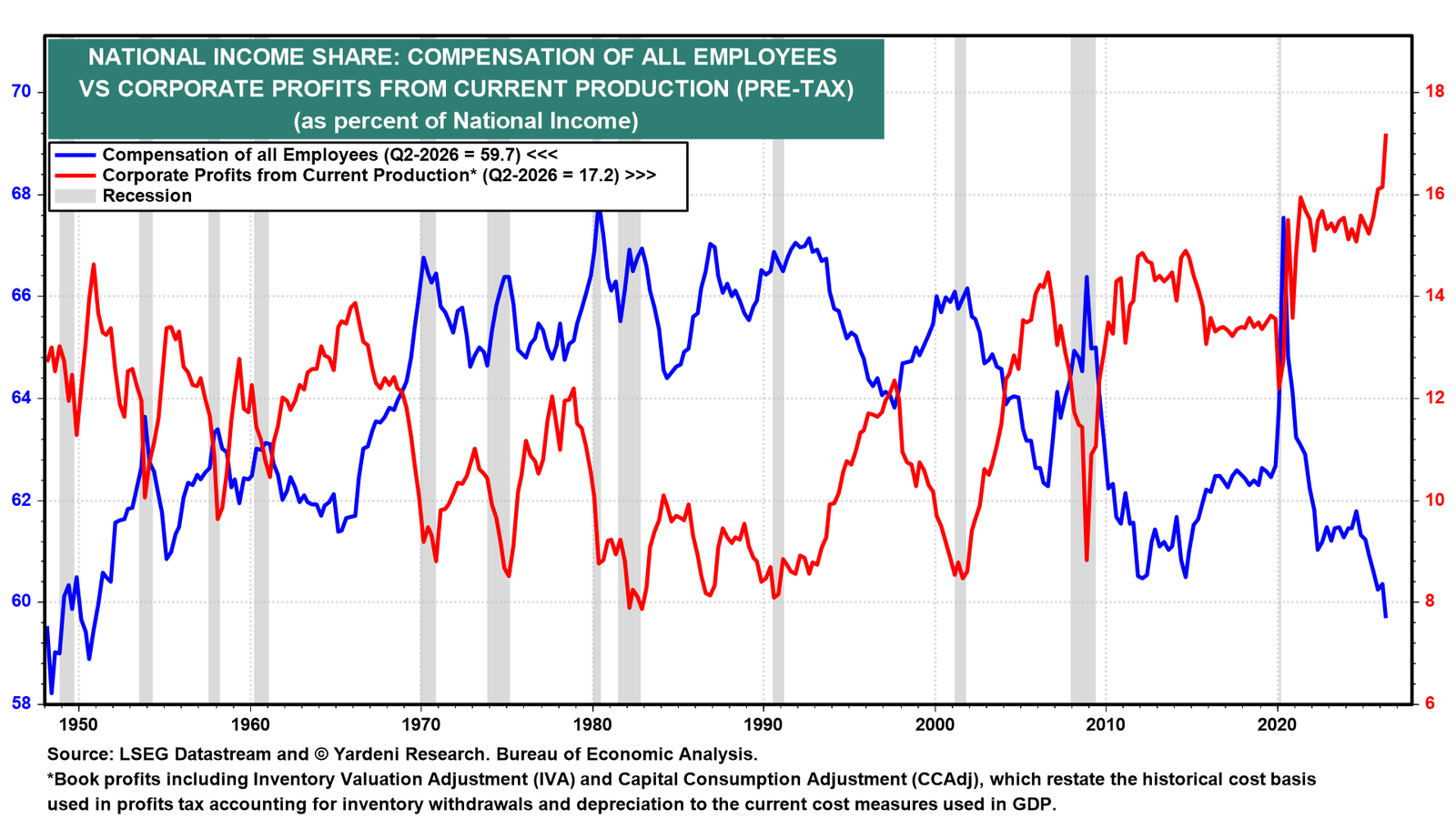
The same shift is visible in the distribution of national income. Employee compensation fell to 59.7% of national income in Q2, while corporate profits rose to a record 17.2% (chart). Put differently, a growing share of income is accruing to capital rather than labor. However, keep in mind that profits are funding dividends and driving the stock market higher, thus boosting the incomes and the net worth of many households.
II. US Economy
As Corporate America mints money and reinvests it in today’s remarkable investment opportunities, the US economy continues to expand at a solid pace.
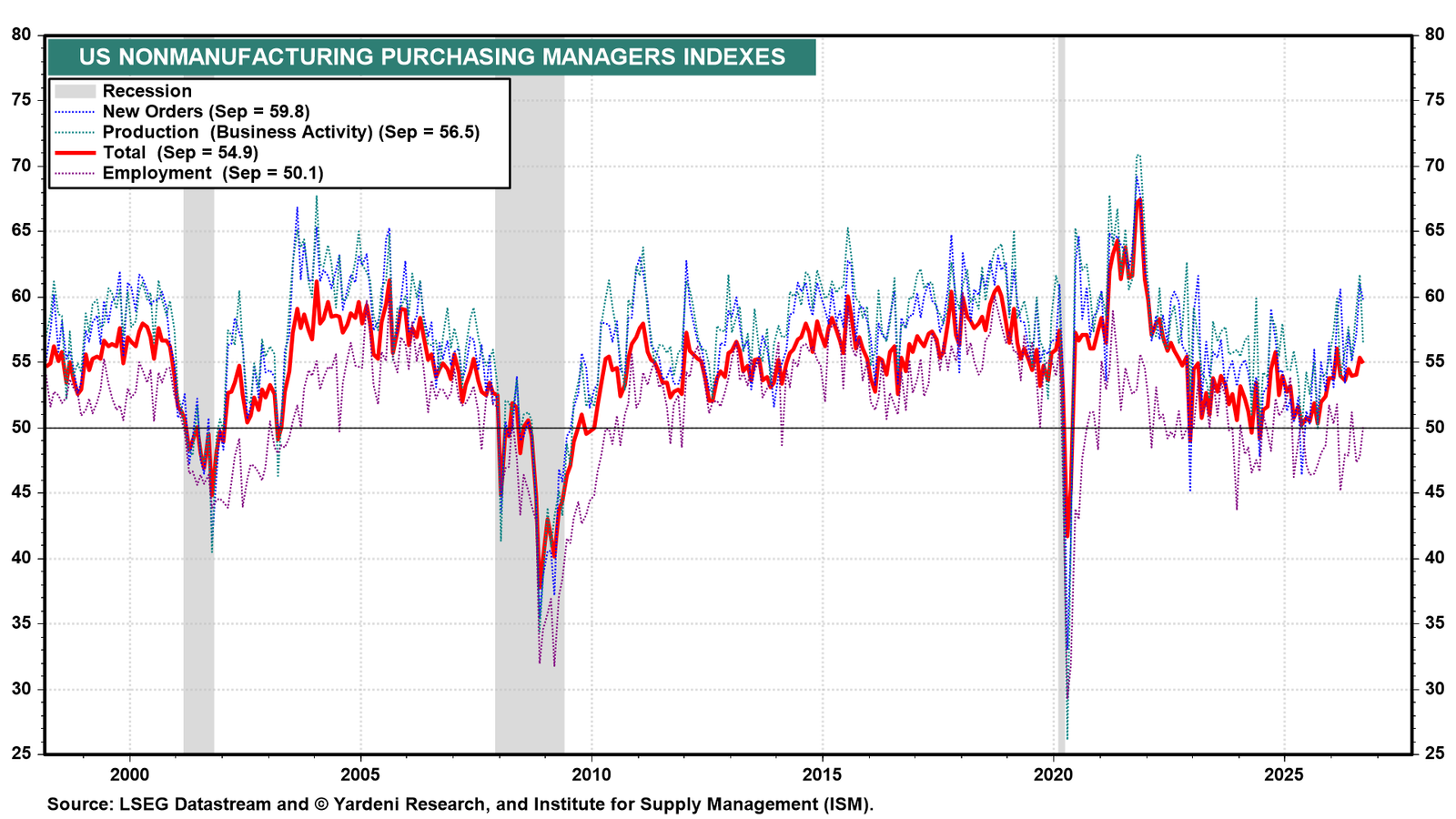
The latest evidence comes from the September ISM NM-PMI. The headline index rose to 54.9 in September, while business activity, new orders, and employment all remained in expansion territory (chart). New orders were especially strong at 59.8, suggesting continued momentum in the service sector.
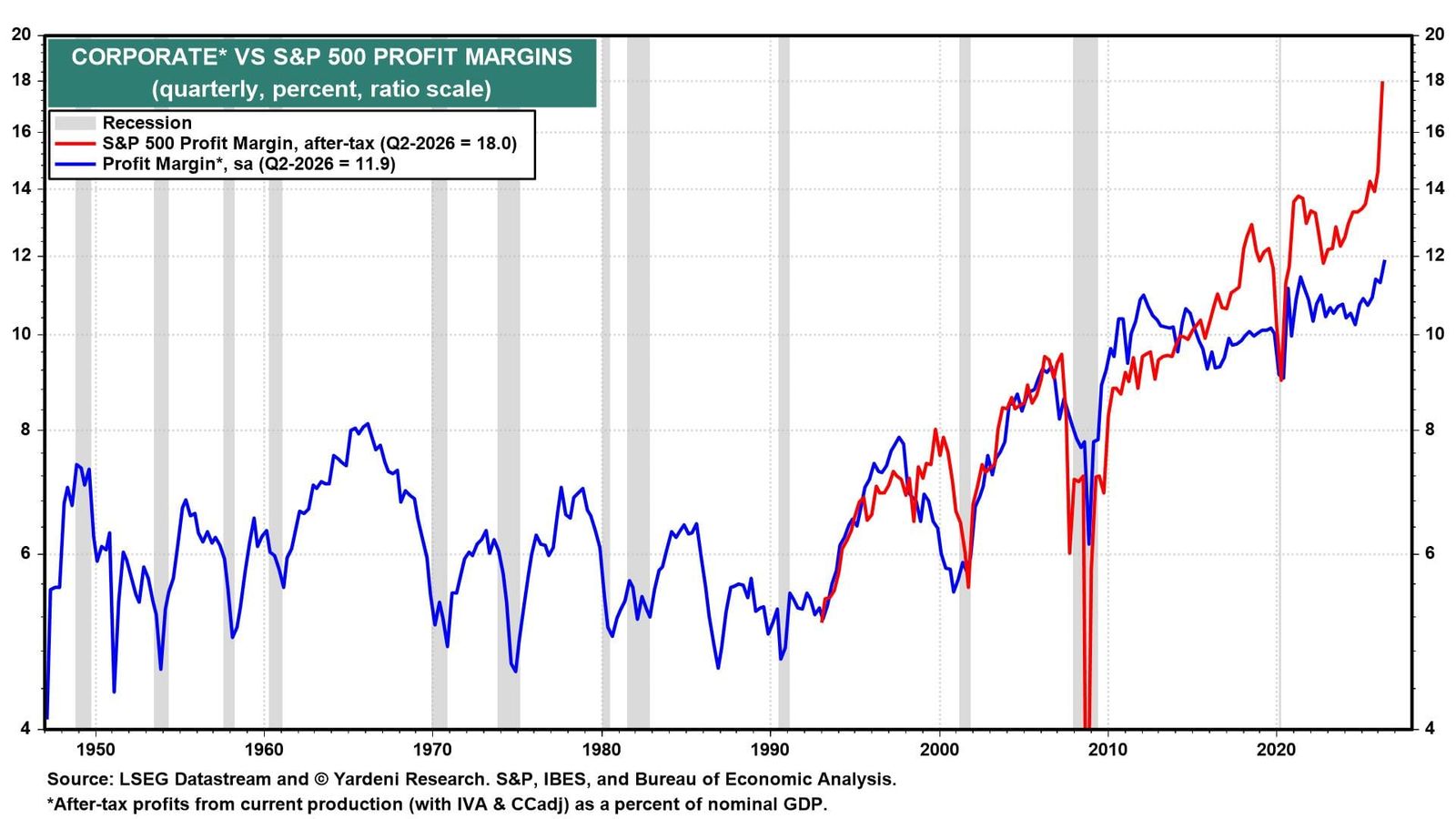
The bigger concern is prices. September's NM-PMI prices-paid index climbed to its highest level since 2022 (chart). Historically, it has been a useful leading indicator of core PCED inflation, the Fed’s preferred measure of underlying inflation.