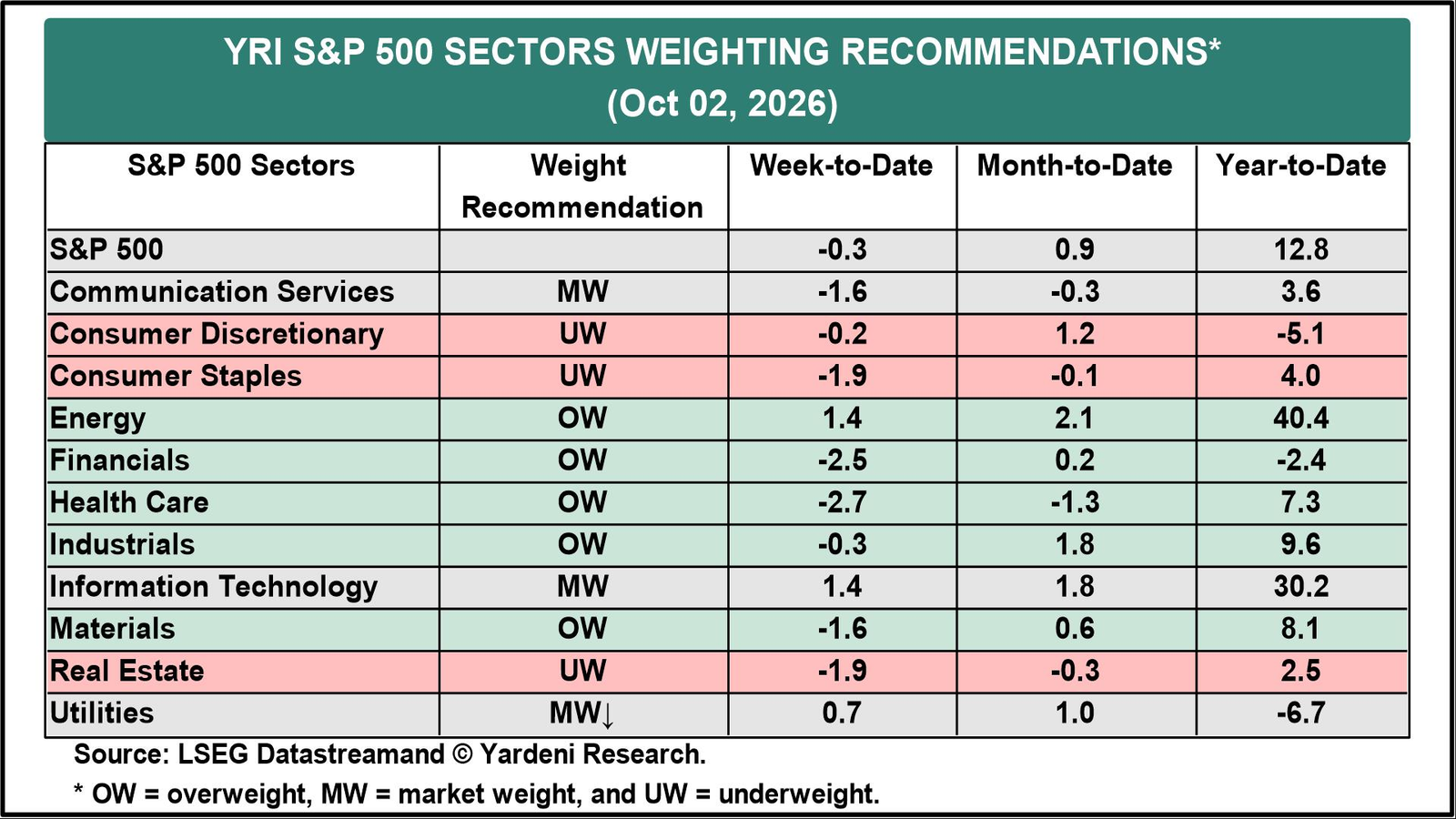
The S&P 500 fell 0.3% last week. Energy (OW) and Information Technology (MW) led the week’s sector performance derby, both up 1.4%. Utilities (MW) was the only other gainer, up 0.7%. Health Care (OW) was the weakest at -2.7%, followed by Financials (OW) at -2.5%.
On a ytd basis, Energy is up 40.4%, the best of the 11 sectors, and IT is second at 30.2% (chart).
We lowered our rating on Utilities last week from overweight to market weight. We argued that the sector's valuation discount rewarded investors for waiting out the bond market. The 10-year Treasury yield has since risen to 5.28%, after peaking at 5.34% earlier this week. We don't expect the sector's multiple to recover until yields stop climbing.
Here's more on Information Technology, Consumer Discretionary, and Consumer Staples:
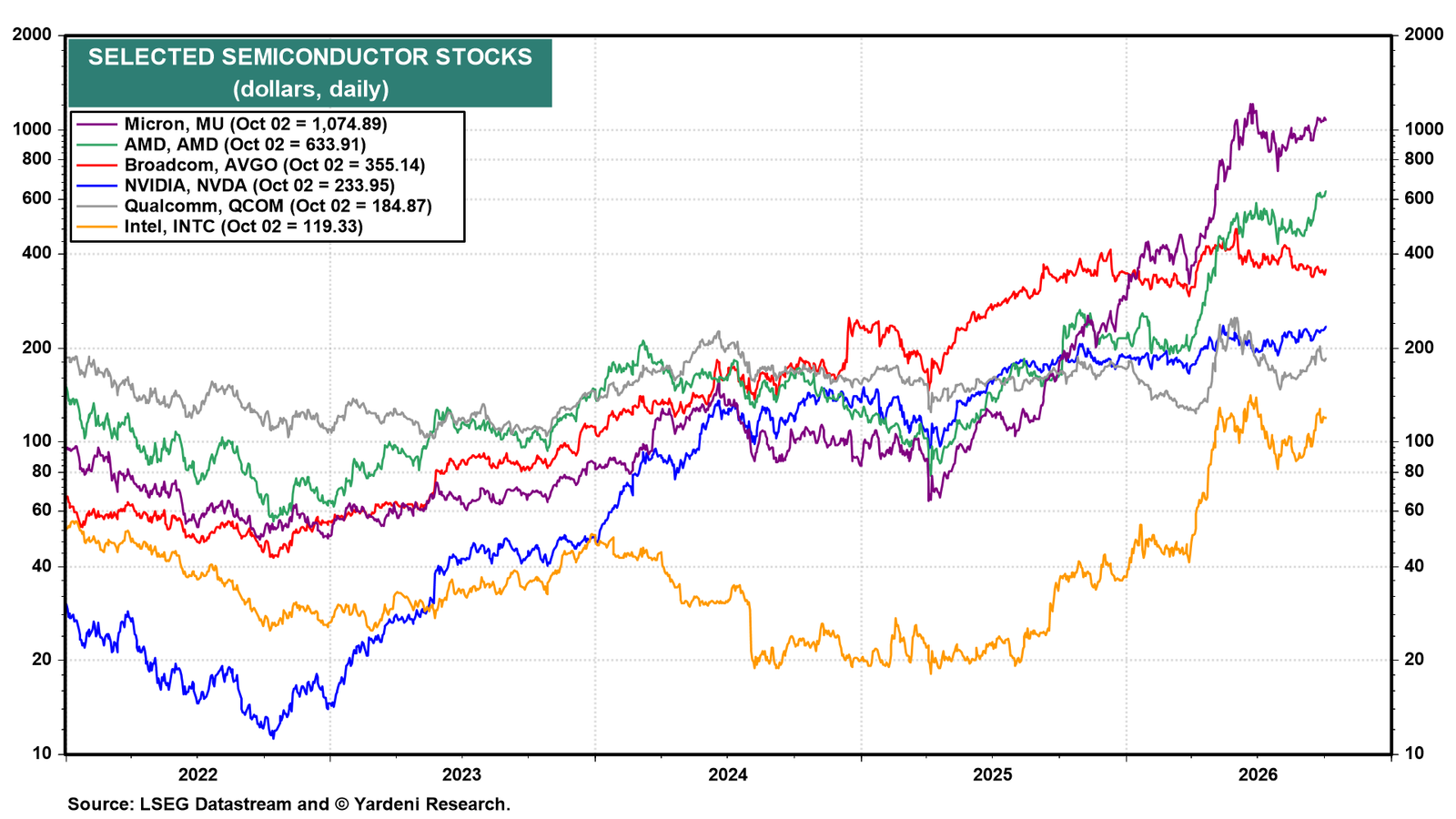
(1) Information Technology. Micron is now the third-largest company in the S&P 500 Semiconductors industry. Its market value of $1.21 trillion trails only those of Nvidia and Broadcom and leads AMD at $1.03 trillion. Micron's stock price is up 276.6% ytd, ahead of AMD at 196.0%, Nvidia at 25.4%, and Broadcom at 2.6% (chart). Its forward revenues are $271.3 billion, and its forward profit margin is 73.1%. It trades at just 6.3 times forward earnings.
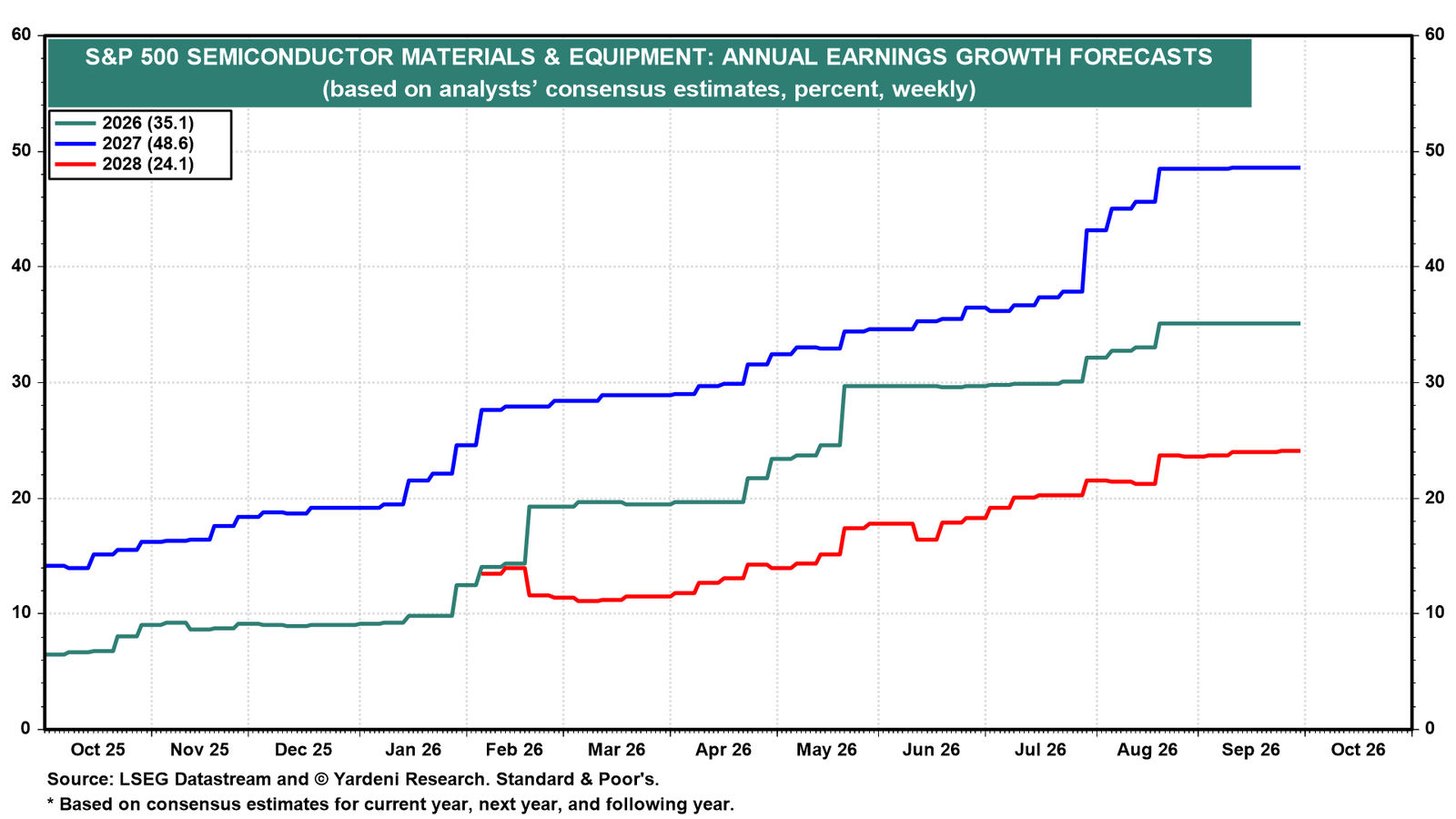
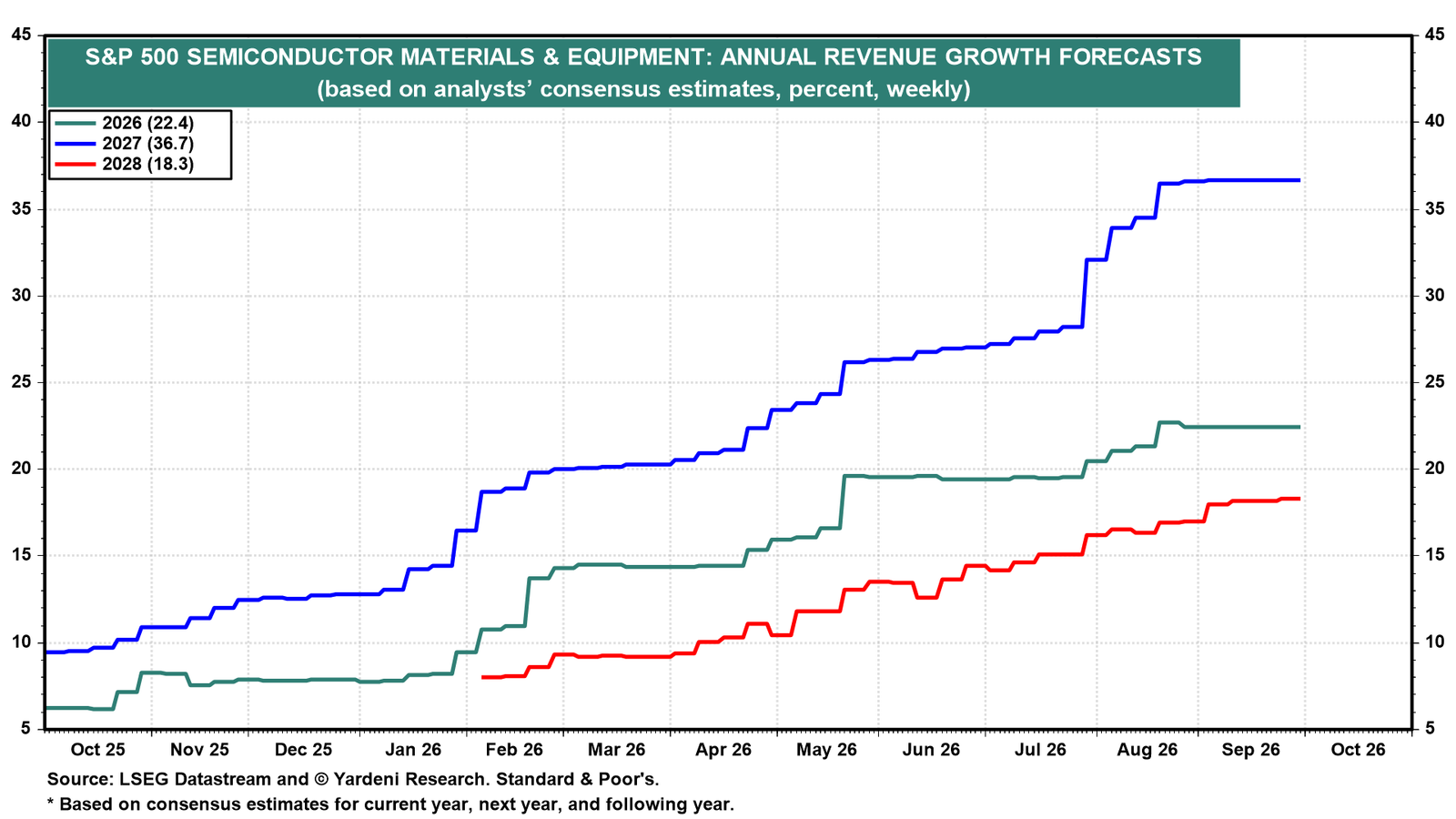
The memory shortage is a capacity problem, and capacity requires equipment. Semiconductor Equipment was the best-performing IT industry this week, up 10.6%; it’s up 97.3% ytd. Analysts expect the industry's earnings to grow 35.1% this year and 48.6% next year, on revenue growth of 22.4% and 36.7% (charts). Its forward P/E is 31.1, down from 52.3 on June 30.
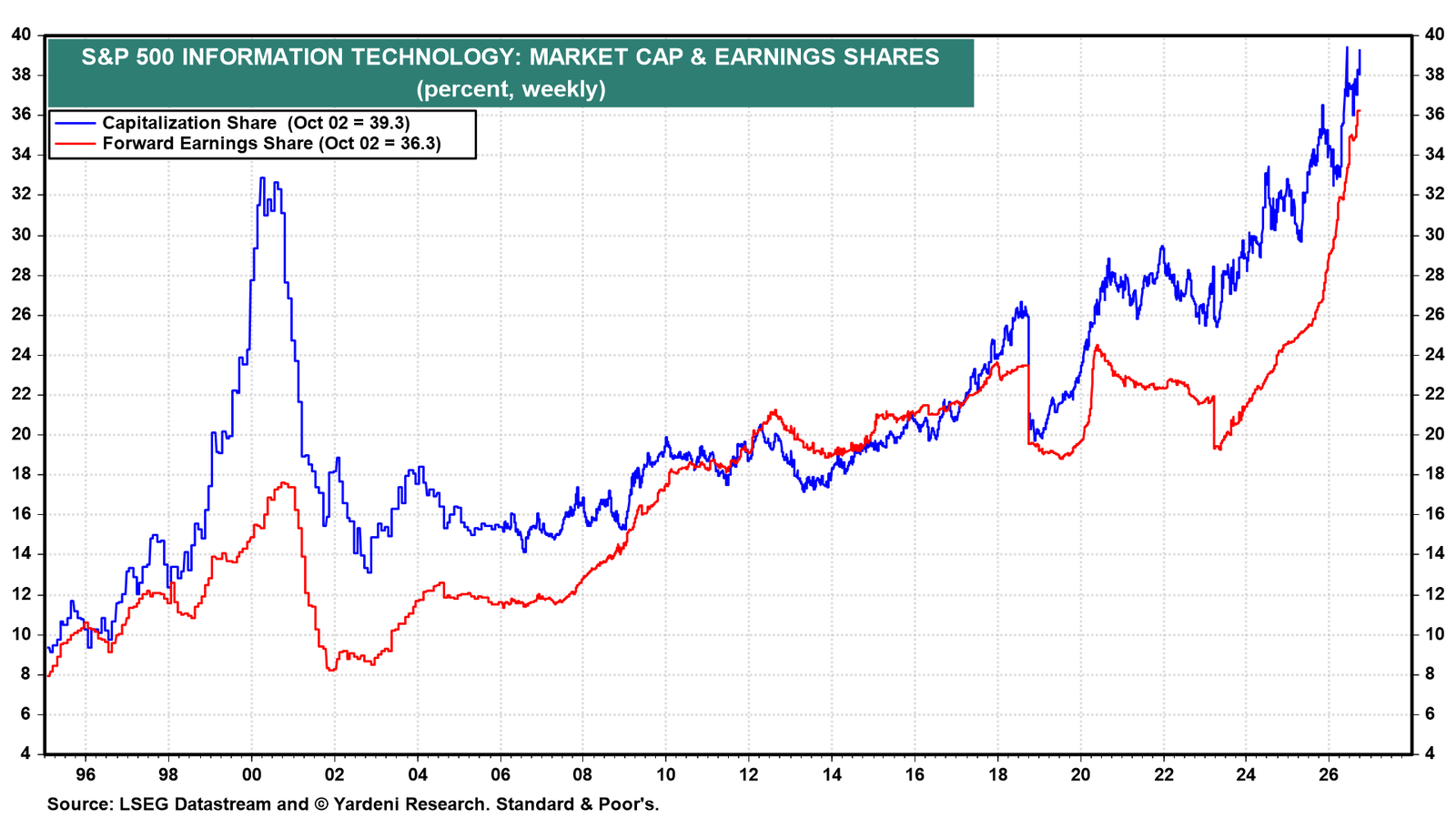
Information Technology's share of the S&P 500's market cap rose to a record 39.3%, above the 2000 peak of 32.9% (chart). The difference this time is earnings. IT accounts for 36.3% of the index's forward earnings, a gap of just 3.0 percentage points. At the 2000 peak, the gap was 17.5 points. Investors are paying for earnings they can see. We retain our market weight rating on Information Technology.
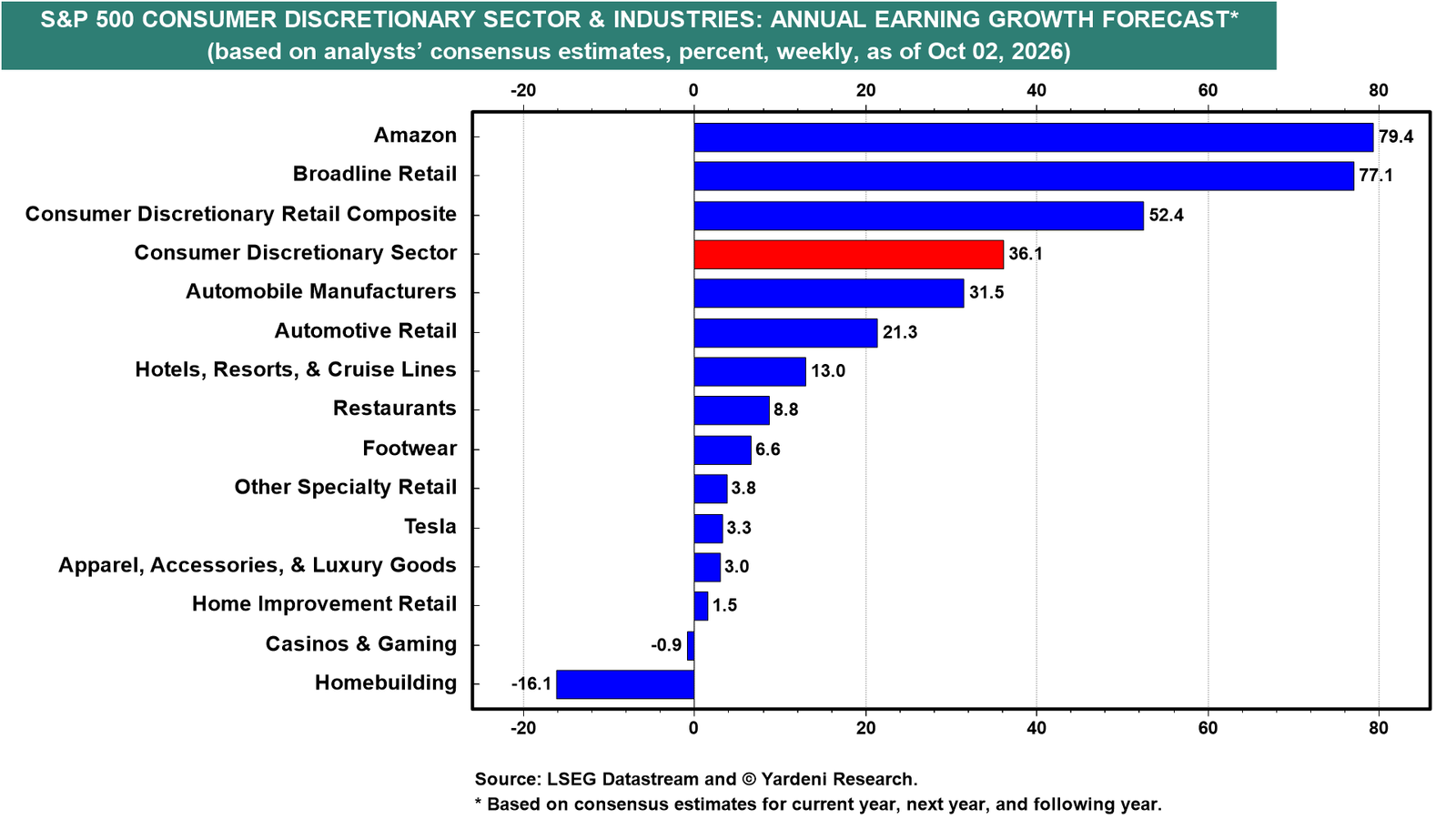
(2) Consumer Discretionary. Consumer Discretionary slipped 0.2% this week and is down 5.1% ytd, the second worst of the 11 sectors after Utilities. Its earnings look better than its stock price, but only because of one company, Amazon. Analysts expect Amazon’s earnings to grow 79.4% and the Consumer Discretionary sector’s earnings to grow 36.1% this year (chart). Much of Amazon's expected growth represents a one-time gain. Its 2026 earnings include mark-to-market gains on its Anthropic stake.
Outside Broadline Retail, only the expected growth of Automobile Manufacturers tops 30%.
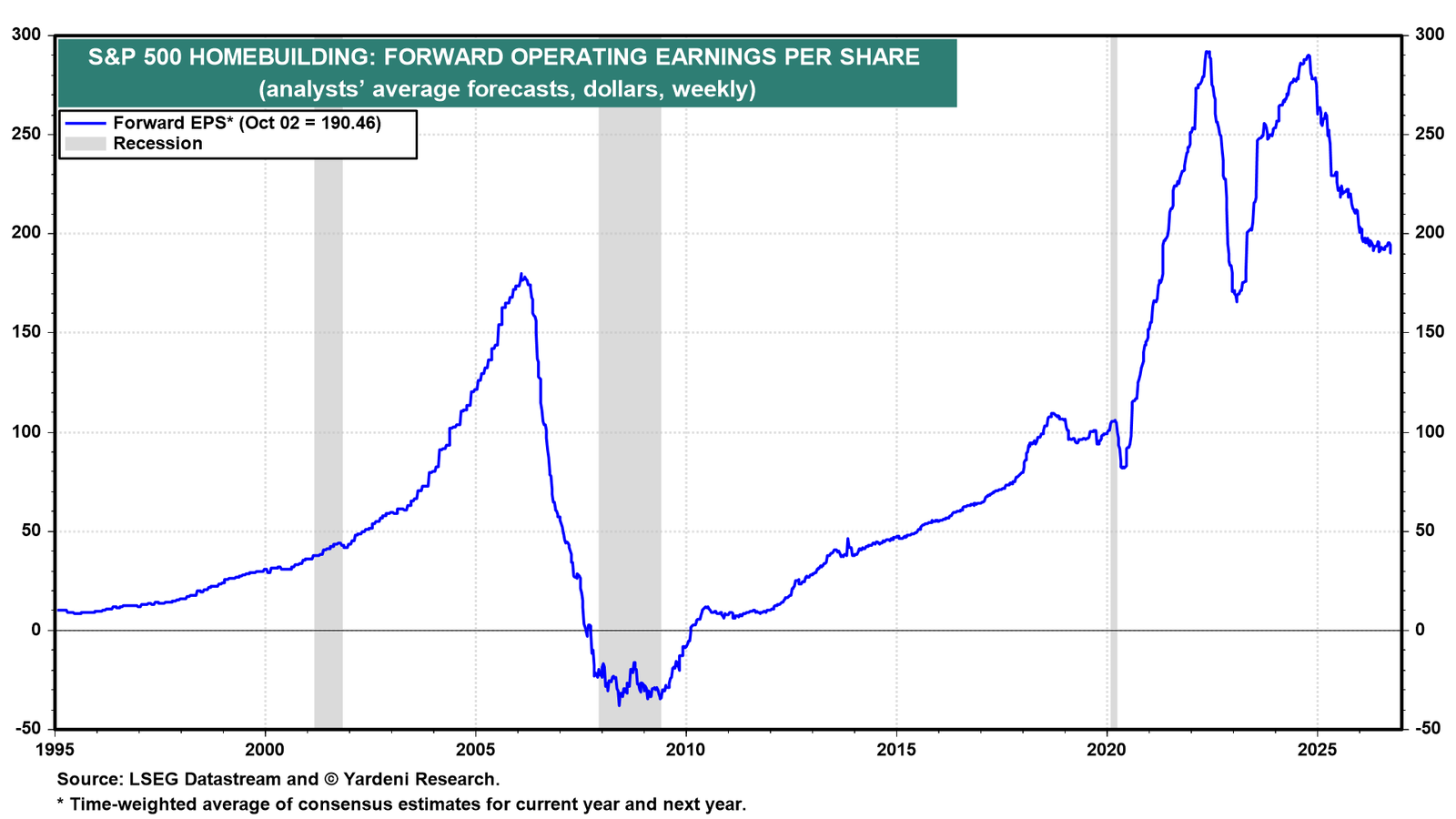
Homebuilding is the weakest link. Analysts expect the industry's earnings to fall 16.1% this year after a 26.6% drop in 2025. Forward earnings has fallen to $190.46 per share from $292.11 last year (chart). The index trades 3.3% below its 200-day moving average. We retain our underweight rating on Consumer Discretionary.
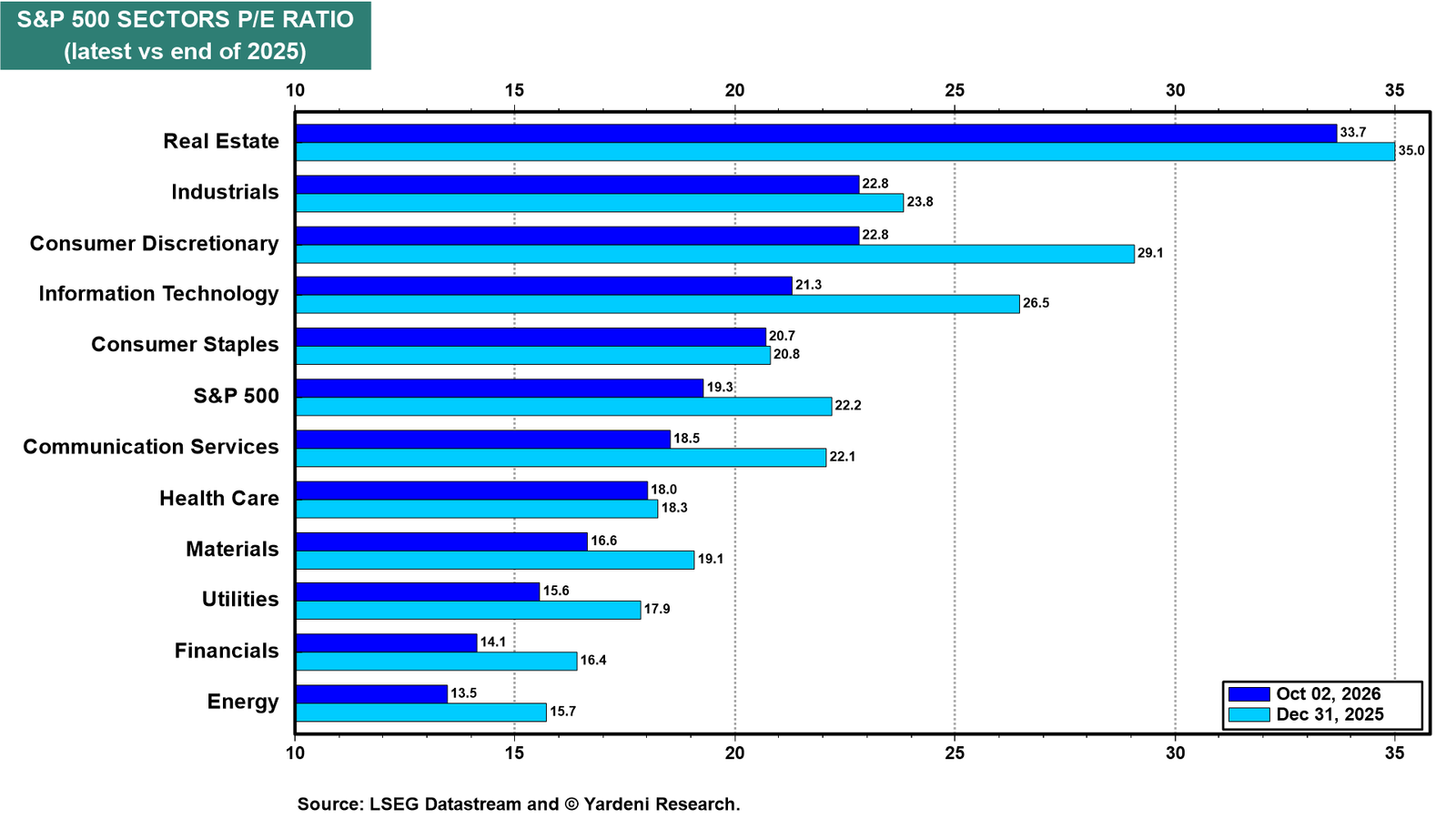
(3) Consumer Staples. Investors de-rated the market this year. They didn't de-rate Staples. The S&P 500's forward P/E has fallen to 19.3 from 22.2 at the end of 2025. Consumer Staples’ forward P/E is at 20.7, barely changed from 20.8 at year-end 2025 (chart).
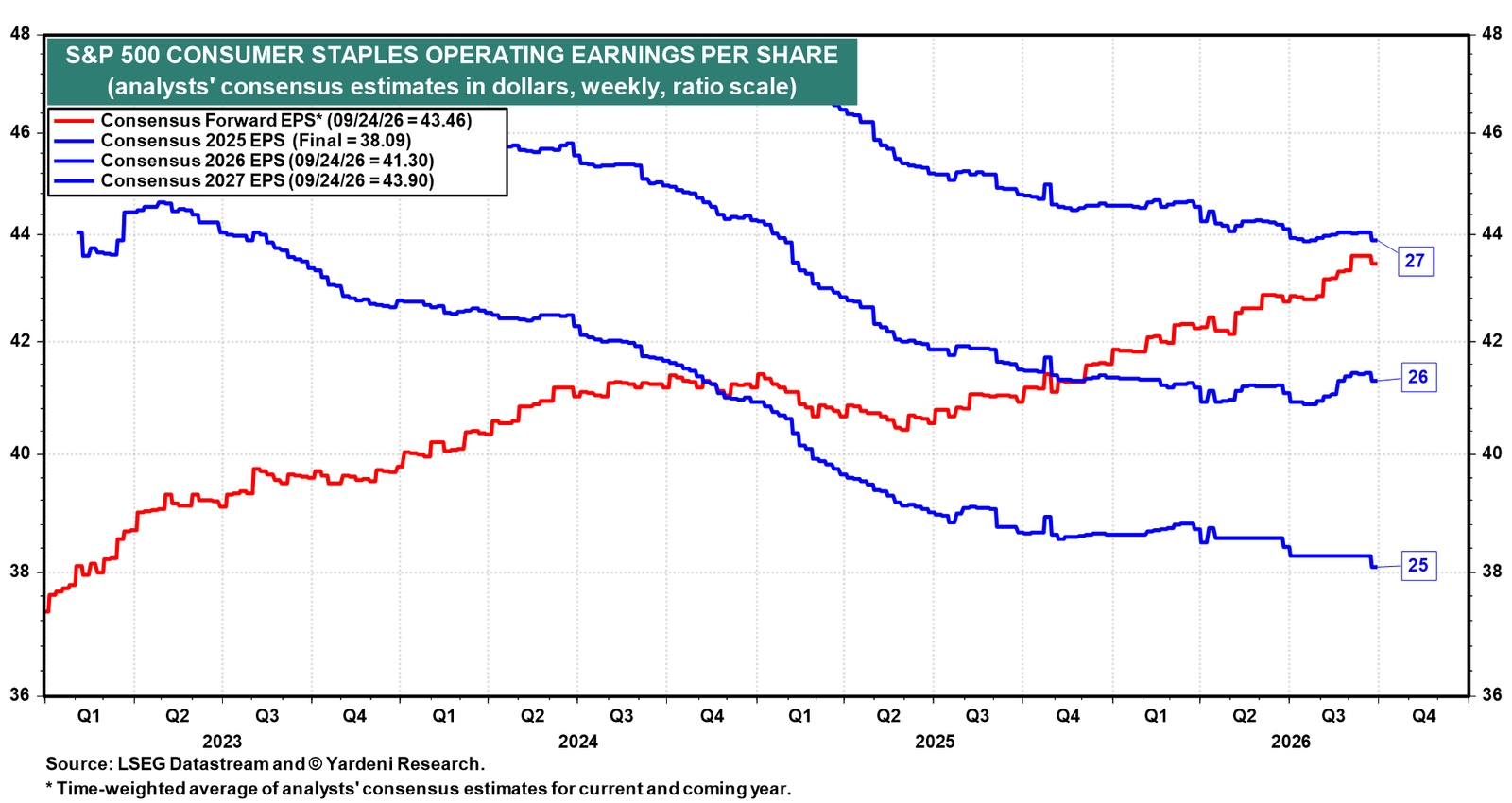
Earnings don't justify the premium. Analysts have cut their consensus 2026 earnings estimate for the sector to $41.30 per share from a 2024 peak of $46 (chart). Their 2027 estimate has fallen as well. The sector's forward profit margin of 7.1% is the lowest of the 11 sectors’.
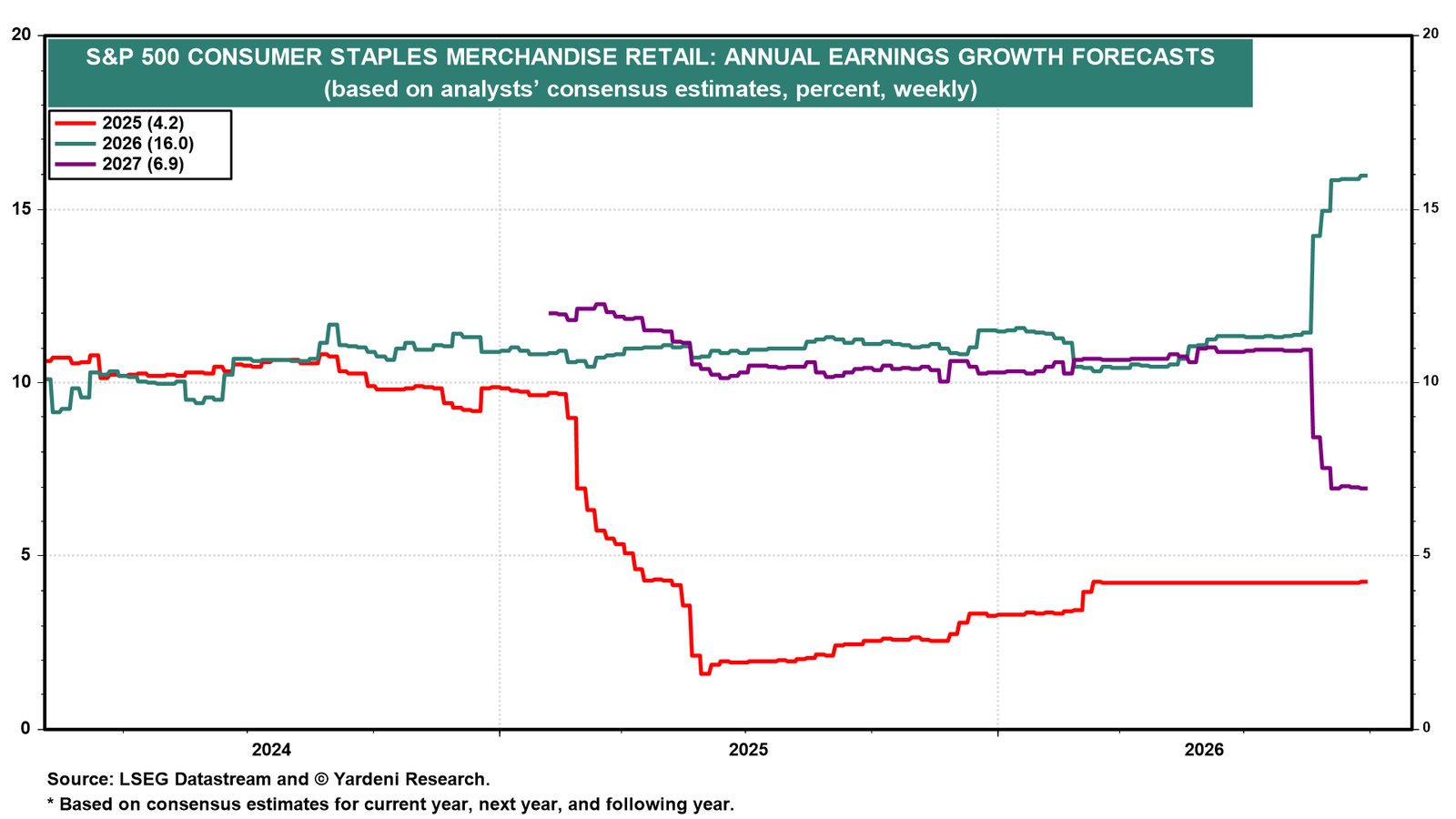
The retailers are the most expensive part of the sector. Consumer Staples Merchandise Retail trades at 31.0 times forward earnings. Analysts recently raised the industry's 2026 earnings growth forecast to 16.0% but cut the 2027 forecast to 6.9% (chart).
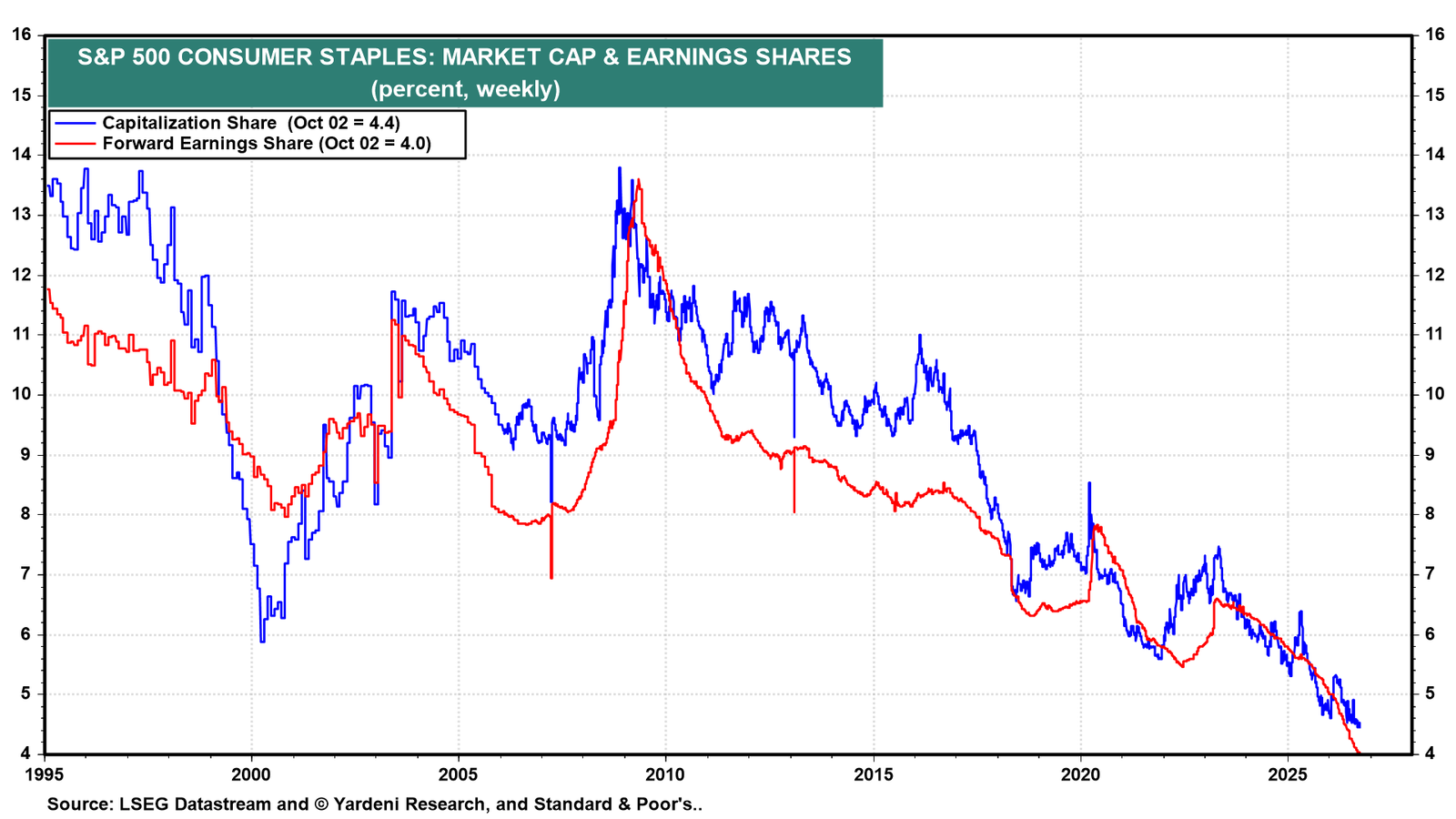
Consumer Staples has the lowest consensus long-term earnings growth of the 11 sectors at 8.7%, against 27.3% for the S&P 500. Its share of the index's market cap has fallen to 4.4%, the lowest since at least 1995, with an earnings share of just 4.0% (chart). We are retaining our underweight rating on Consumer Staples.