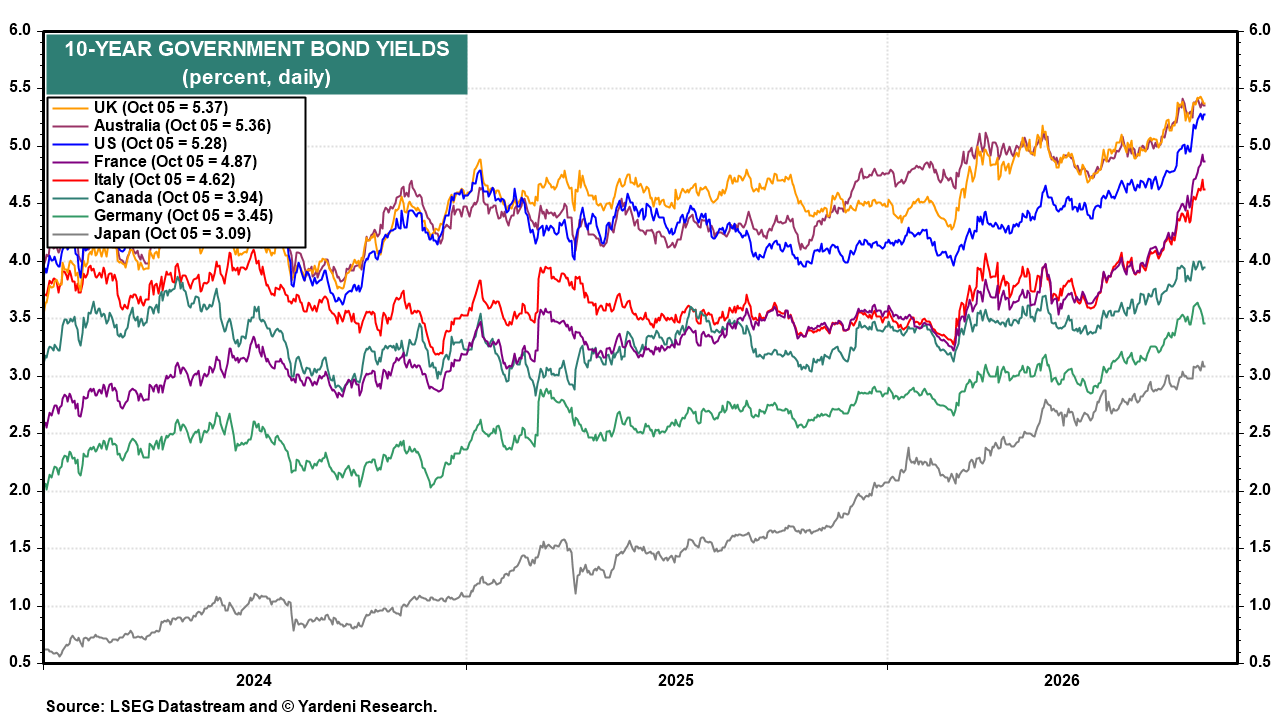
The Bond Vigilantes have gone wild worldwide, pushing government bond yields higher in developed and emerging markets alike.
A month ago, we asked whether rising yields reflected stronger growth, higher inflation, or looming fiscal crises. We still think the answer is mostly growth. The exception is where government finances are weakest. There, bond investors are charging a fiscal-risk premium. France may be on the verge of a full-blown debt crisis.
Here's more:
I. Global Bond Yields
US Treasury yields rose on Friday even though September payrolls increased only 29,000. The 10-year US Treasury yield ended the week at 5.28%, after hitting its highest level since 2002 midweek (chart). Higher real yields account for nearly all of this year's increase, while inflation expectations have barely budged. In the UK and Australia, 10-year yields are higher still, at 5.37% and 5.36%. Japan's is 3.09% and still climbing.
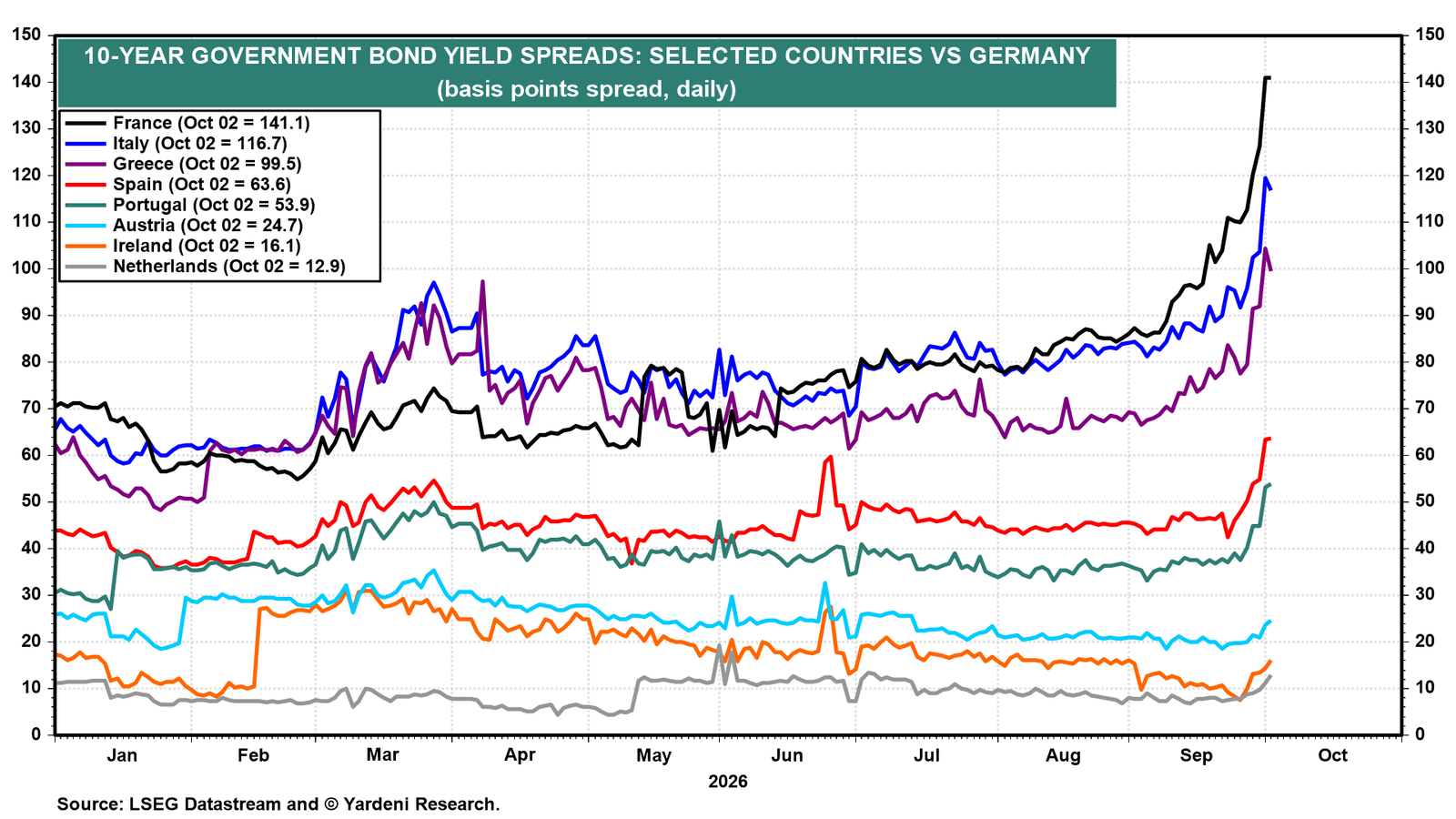
The French government now pays more than Italy or Greece to borrow for 10 years (chart). The yield spread between the French and the German 10-year government bonds jumped on Thursday, when France unveiled a 2027 budget that freezes public-sector pay and most pensions to limit the budget deficit to 5% of GDP. The spread is now the widest since the Eurozone debt crisis of 2012. German yields fell last week as French yields rose. Inflation is running hot in both countries, so the gap reflects France's finances.
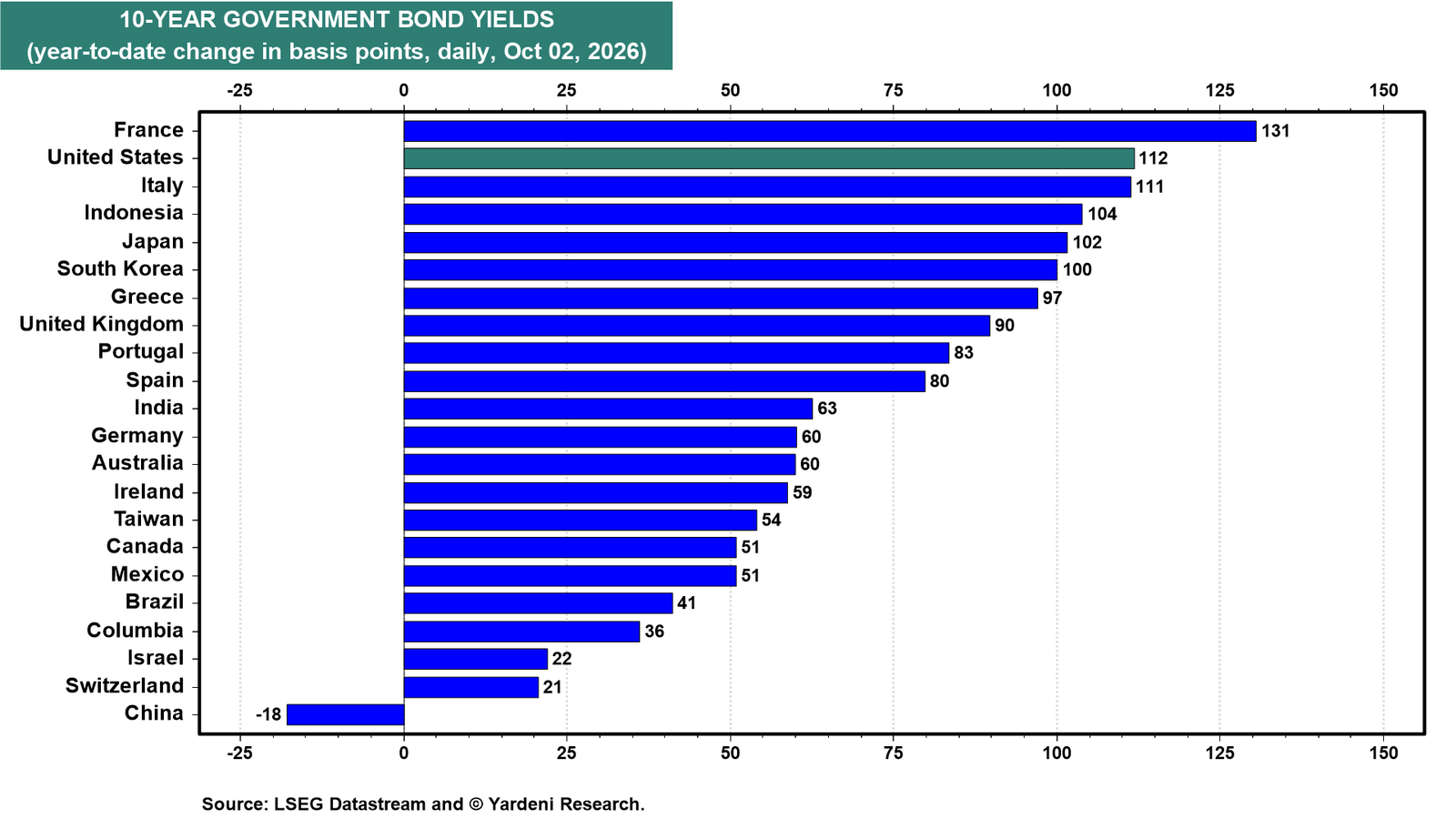
Six of the 22 bond markets on our list have seen 10-year yields climb 100bps or more this year (chart). France leads at 131bps, with the US second at 112bps. Italy, Indonesia, Japan, and South Korea round out the group.
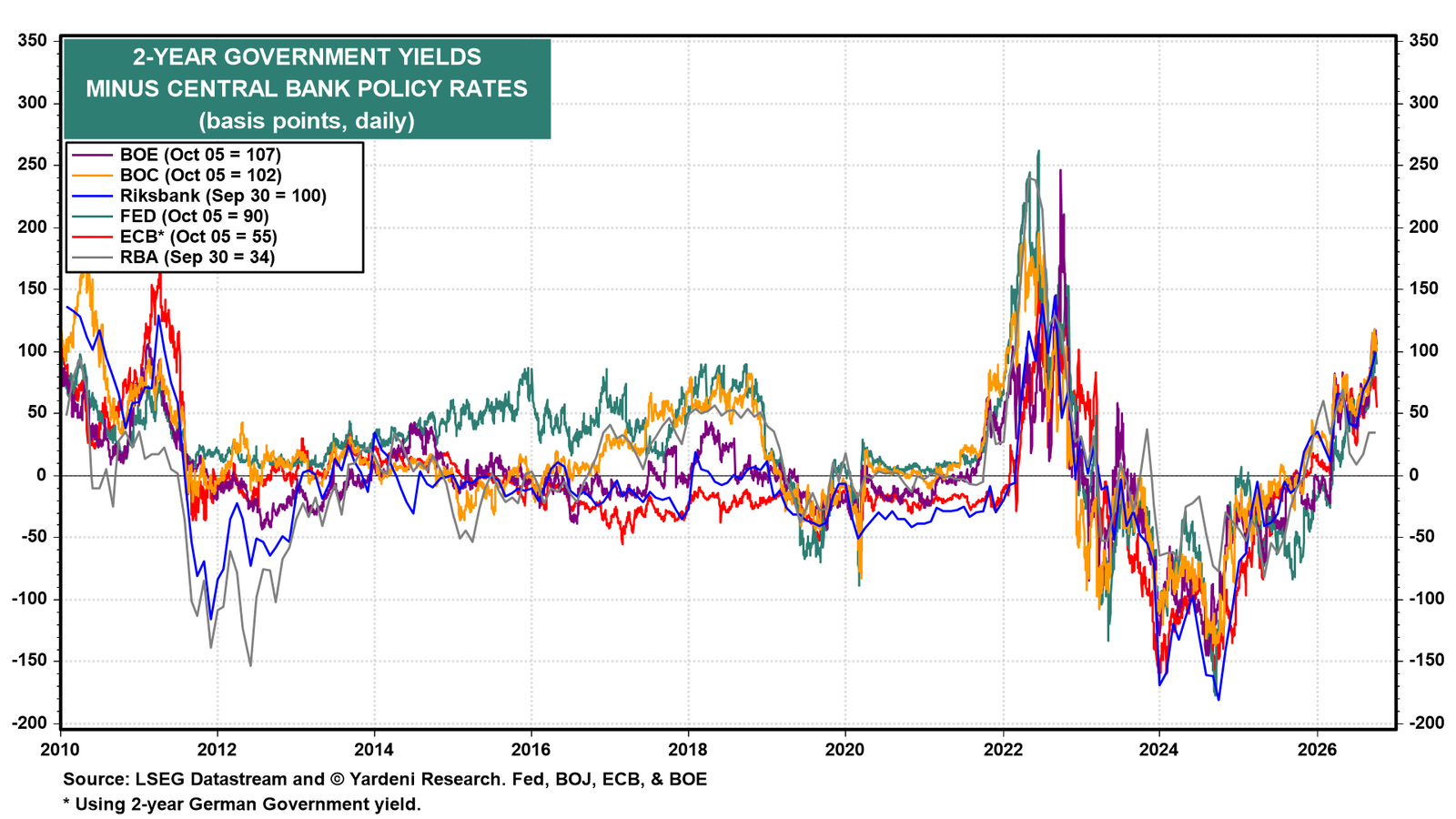
Two-year government note yields are above central banks' official policy rates in all six economies on our chart, by as much as 107bps in the UK (chart). The gap is smallest in Australia, at 34bps. The Reserve Bank of Australia raised its cash rate by 25bps to 4.60% on September 29, its fourth hike this year.
II. Global Stocks
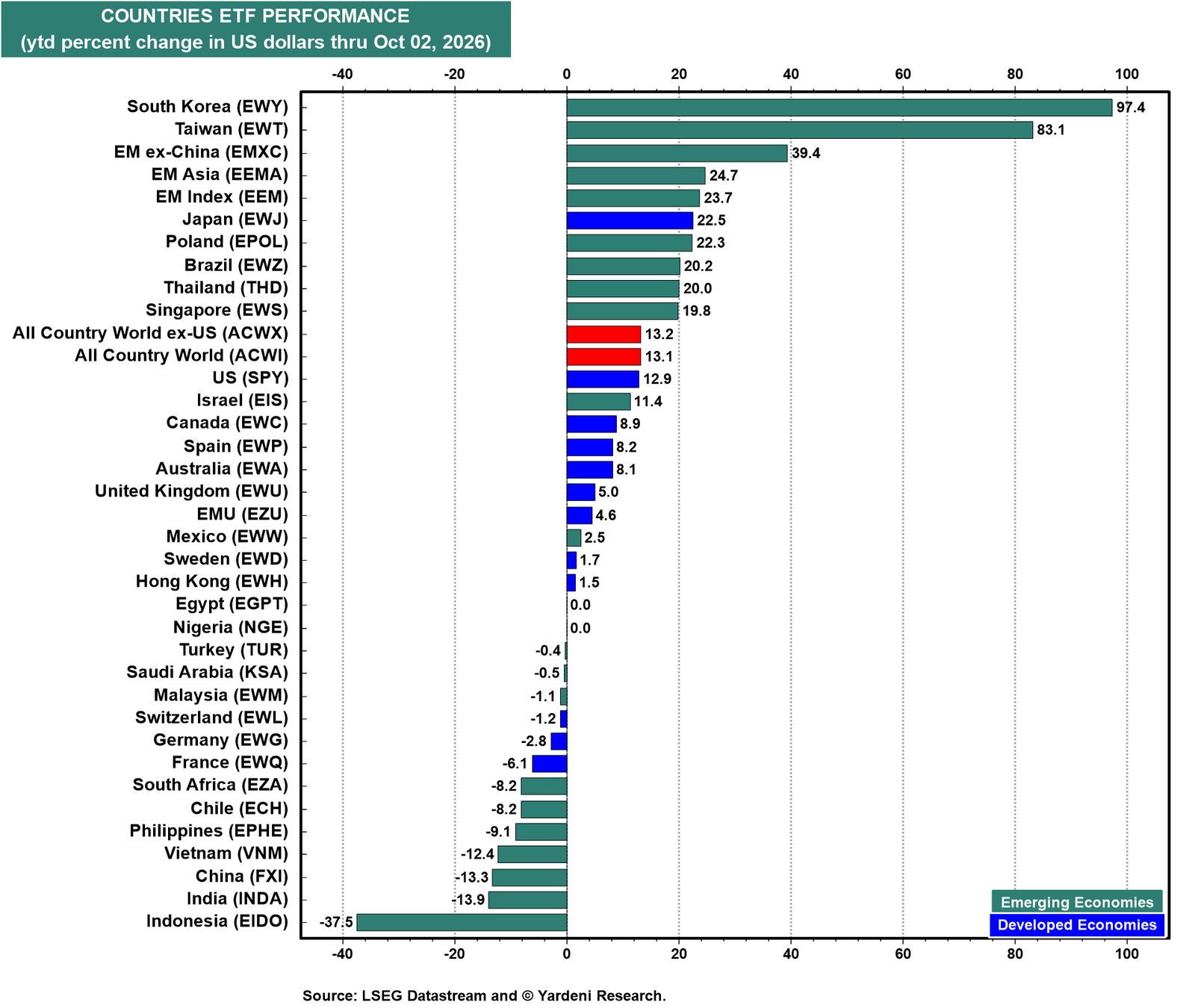
South Korea's ETF has nearly doubled this year, up 97.4% in dollars, with Taiwan's up 83.1% (chart). The Emerging Markets ex-China ETF (EMXC) is up 39.4%, and its lead over the broader Emerging Markets ETF (EEM) widened to 15.7 percentage points last week from 14.9. We continue to prefer EMXC over EEM. France's ETF is down 6.1%, the weakest developed market on our list. The US ETF (SPY) is up 12.9%, in the top half of the rankings.
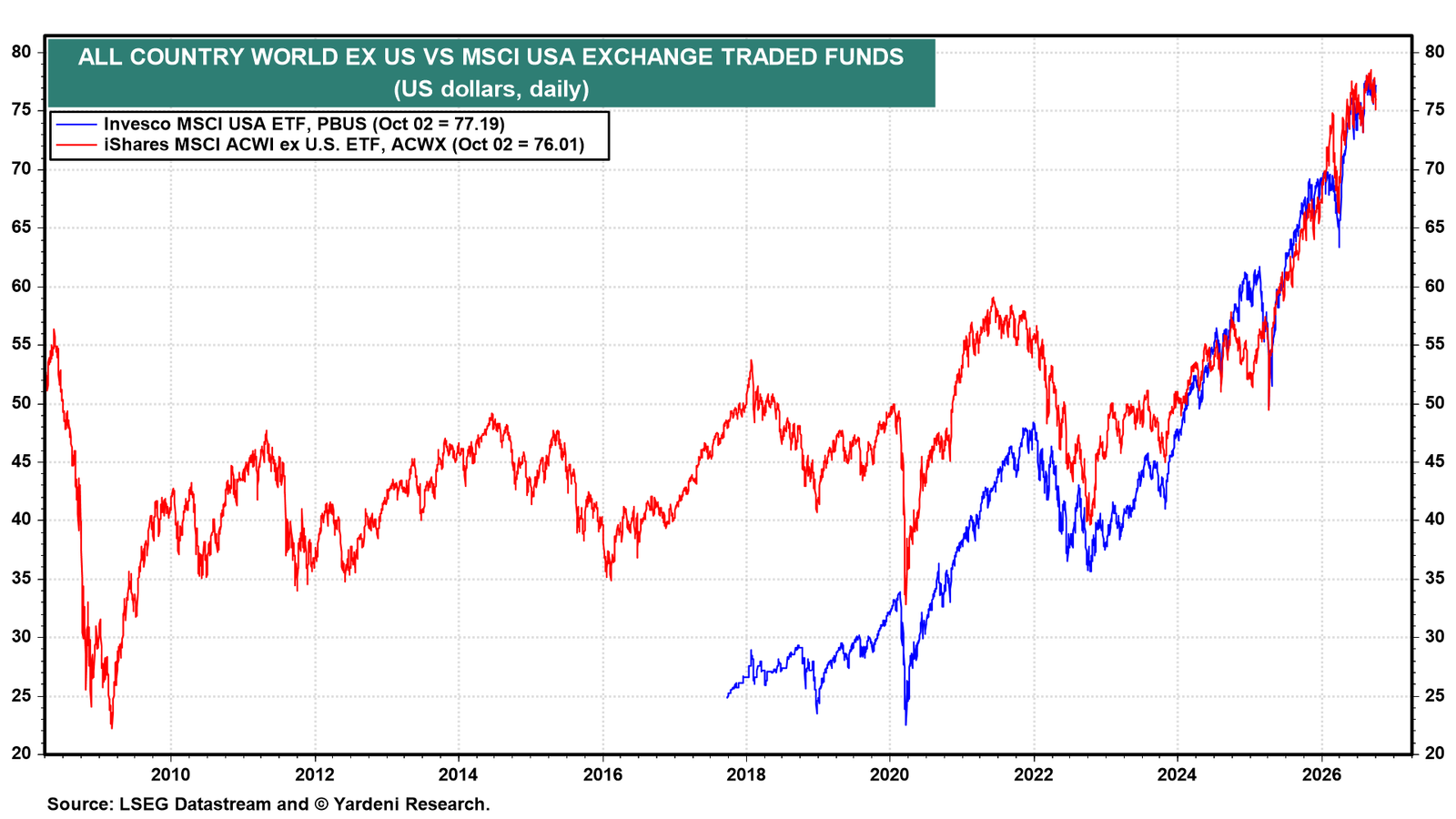
Stay Home vs Go Global match has been in a stalemate in recent months. The US ETF trails the All Country World ex-US ETF (ACWX) by only 0.3 points ytd, versus 1.0 a week earlier. The MSCI USA ETF (PBUS) and ACWX have moved in lockstep, and both pulled back from record highs last week (chart).
III. Currencies
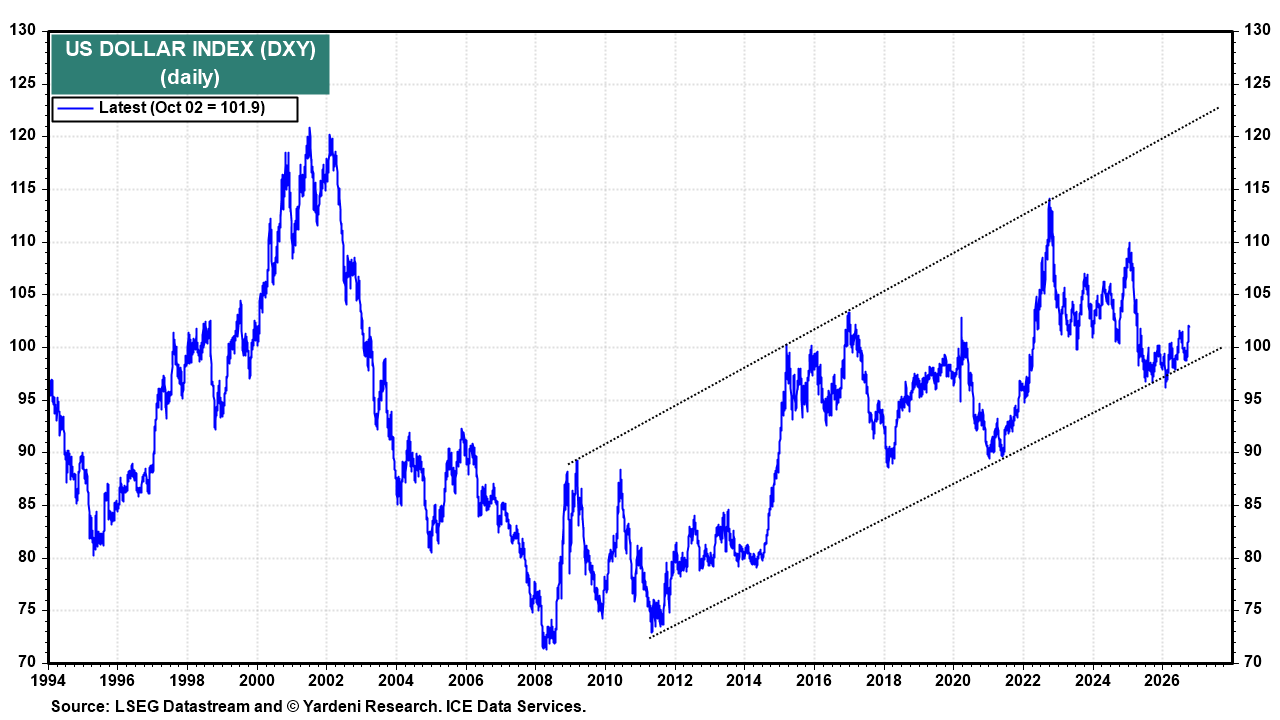
The dollar has rebounded off the bottom of its long-term uptrend channel. The US Dollar Index (DXY) is at 101.9, up from 99.2 at the start of September (chart). We have expected the dollar to stay firm, and it has.
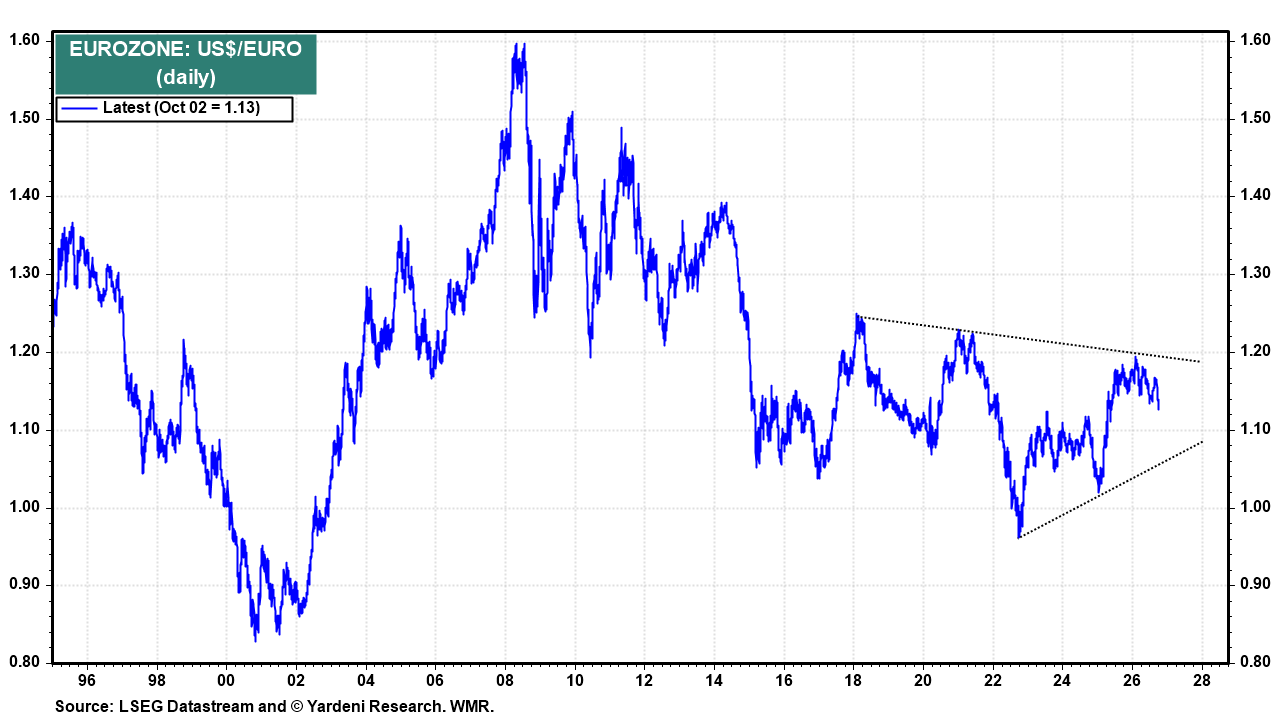
The euro's slide accounts for much of the dollar's gain, since the euro carries a 57.6% weight in the DXY. The euro is trading at $1.13, its lowest since May 2025 (chart). It fell sharply on Thursday, alongside French bonds.
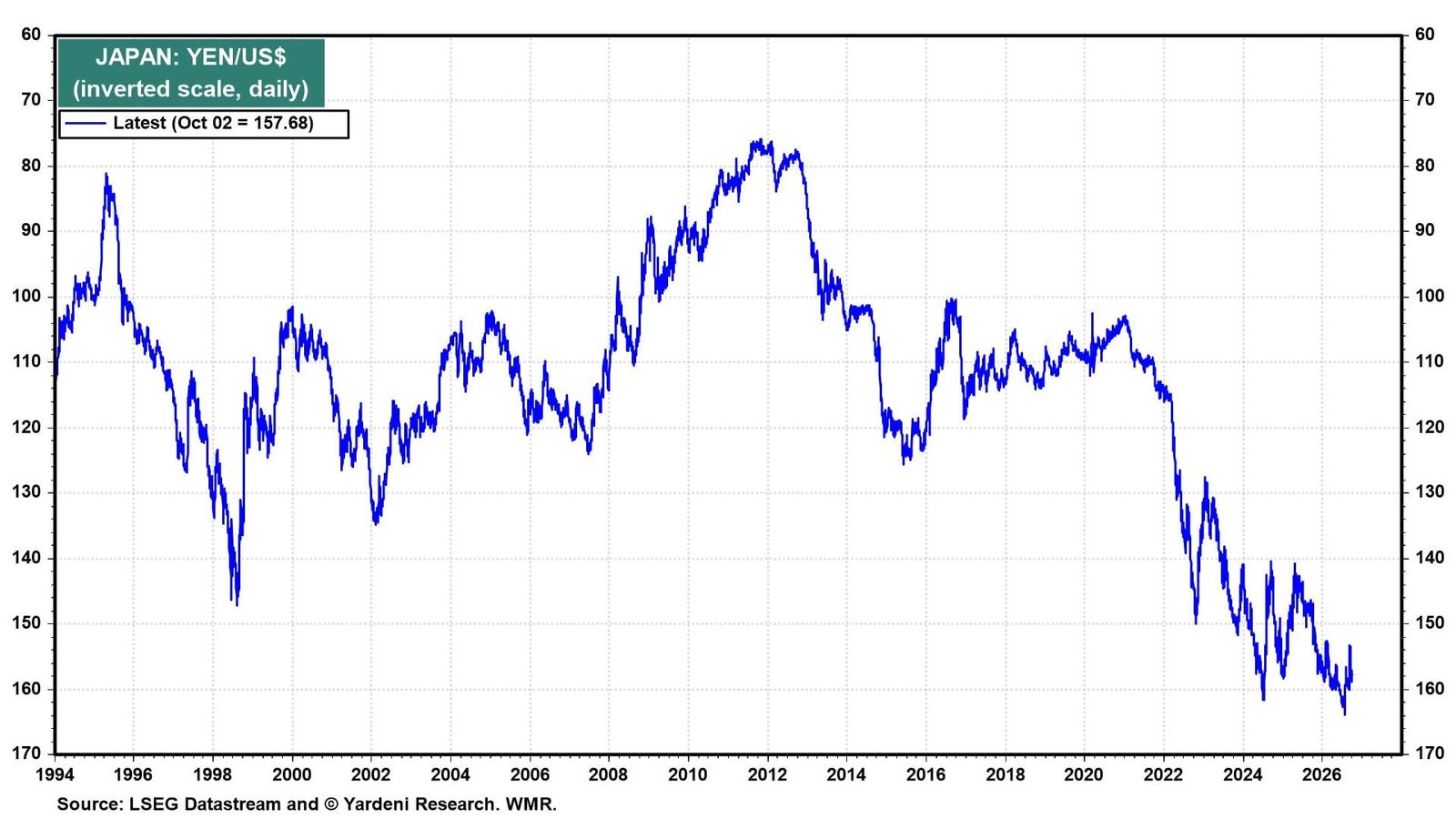
The yen is trading at 157.68 per dollar, near the middle of its 153-160 range since the joint US-Japan intervention in late July (chart). Japan's latest data show no intervention since late August.
IV. Weekly Focus
(1) Seaborne crude oil shipments exiting the Gulf have rebounded to roughly 16.5-17.5 million barrels per day (averaging around 98% of pre-war levels, excluding Iran). Major producers like Saudi Arabia have driven much of this rebound. While crude flows have recovered, refined fuels like diesel face severe ongoing bottlenecks. Refined product flows remain a fraction of pre-war norms (hovering well below historical averages), keeping global diesel supplies and pricing tight. On Friday, the G7 announced the coordinated release of up to 100 million barrels of emergency oil and diesel inventories.
(2) Inflation data across Europe underscored lingering stickiness, with annual prints registering at 3.3% in Germany, 3.0% in France, 4.1% in Italy, and 4.9% in Spain.
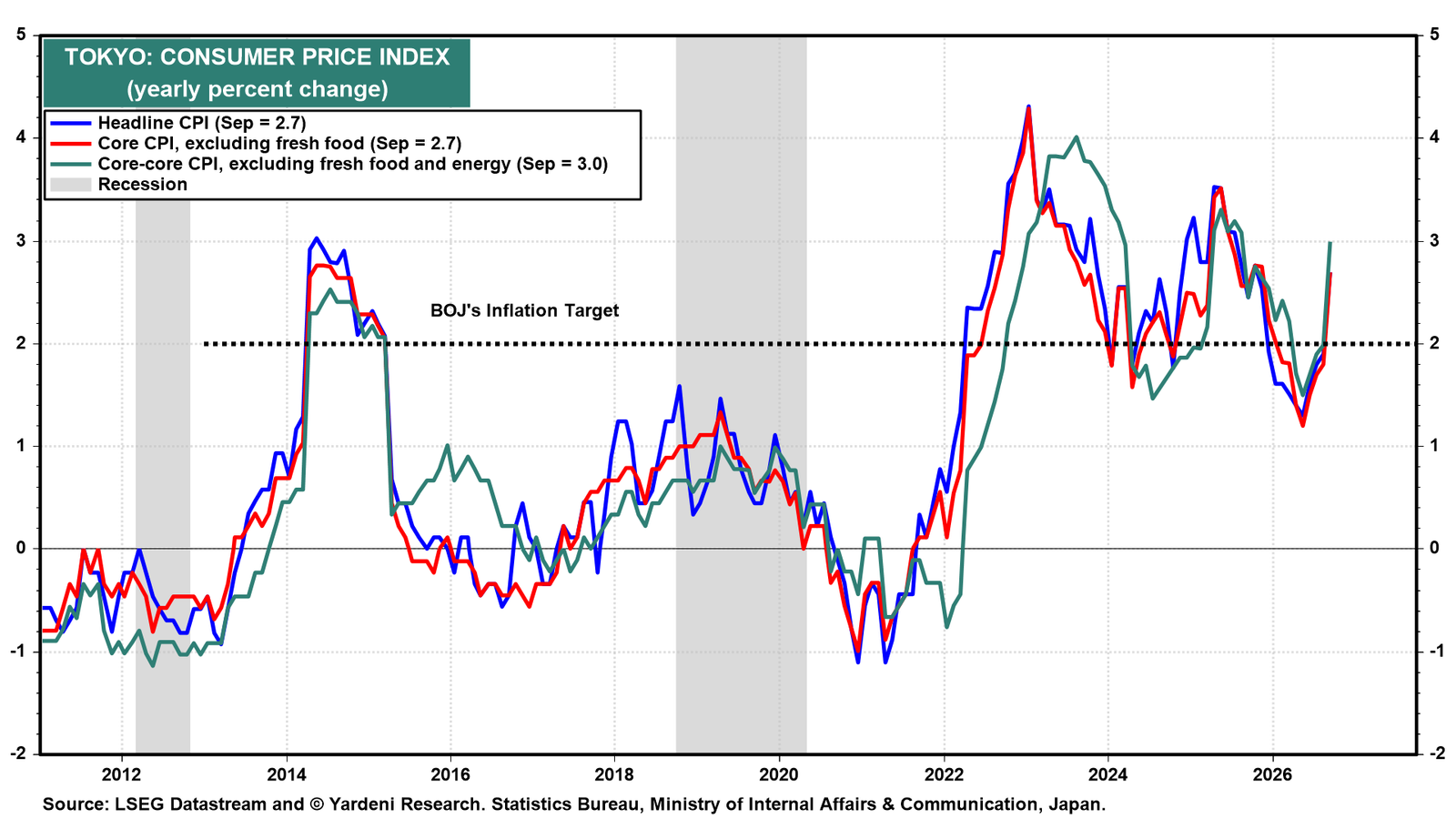
(3) In Asia, a hotter-than-expected Tokyo-area inflation report reinforced expectations of further policy normalization by the Bank of Japan (BOJ). Tokyo’s core CPI (excluding fresh food) jumped to 2.7% y/y in September, accelerating sharply from 1.8% in August and pushing inflation back above the BOJ’s 2.0% target for the first time in several months (chart). The core-core measure climbed even higher, to 3.0% (up from 2.0% in August). Services inflation also rose notably, to 2.3%.