I. Micron and the AI Trade
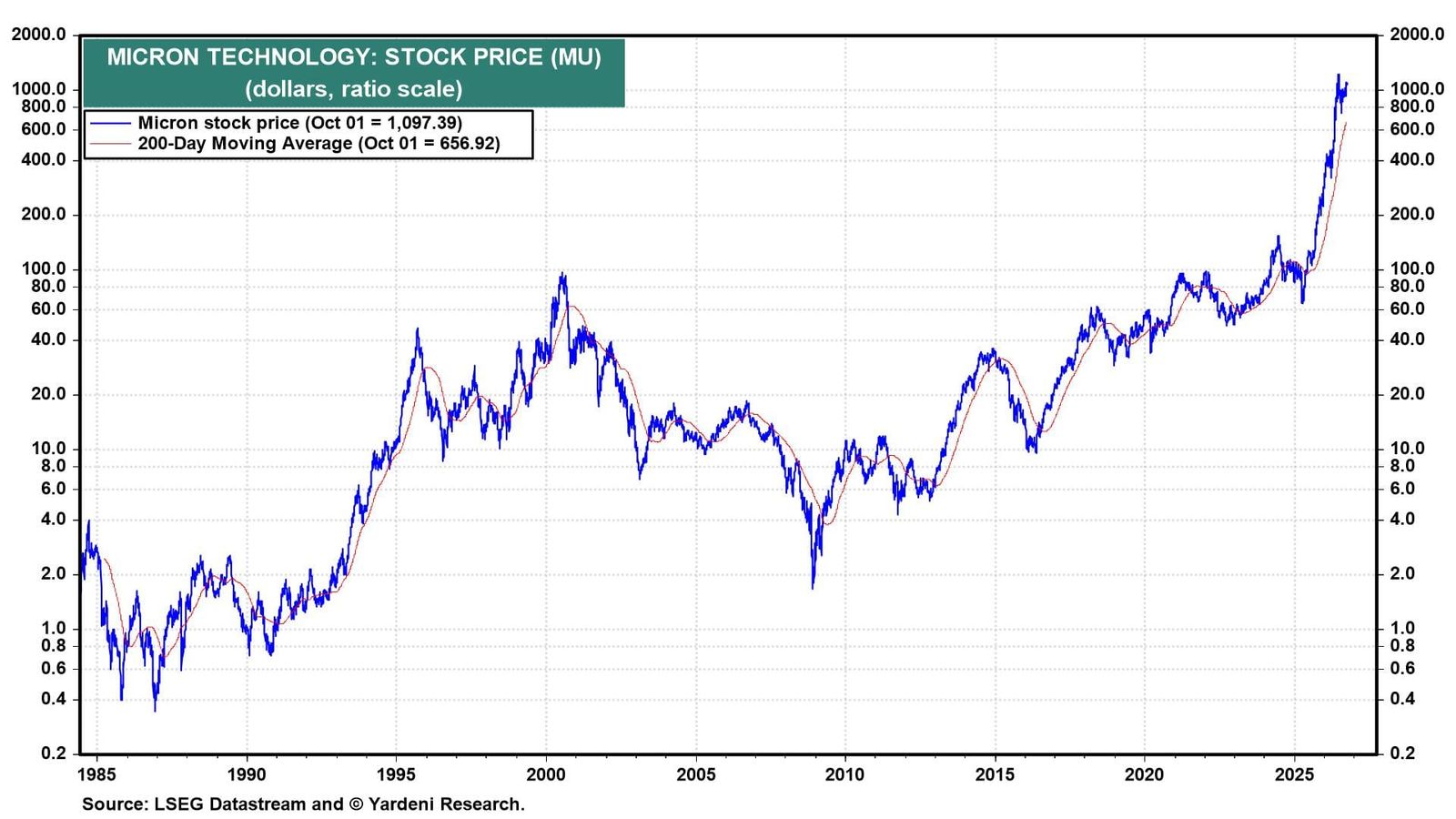
Memory has become one of the biggest beneficiaries of the AI spending boom. Micron’s stock, for example, is up 273.2% ytd, second only to SanDisk among the semiconductor companies. We have been bullish on memory, and Micron’s fiscal Q4-2026 results reinforced our view. Revenue surged 379% y/y to a record $54.2 billion, above the $50.8 billion consensus. Adjusted EPS of $33.42 topped management’s guidance range. Gross margins widened to 87% as DRAM and NAND prices surged.
The outlook was even stronger. Micron guided fiscal Q1-2027 revenue to $61.5 billion, well above the roughly $57 billion analysts expected. Management expects memory supply-demand conditions to tighten further in 2027 and 2028, with more than 75% of fiscal 2027 output already committed. The company now has 26 long-term agreements (LTAs), up from 16 last quarter.
Many investors still view memory as a classic boom-bust commodity. Before the latest earnings report, Micron’s forward P/E was 6.8. The stock barely budged today following the company's gangbusters results (chart).
Micron’s results reinforce the case that the AI buildout still has plenty of runway. Hyperscalers continue to increase infrastructure spending. Indeed, Goldman Sachs recently raised its 2027 hyperscaler capex forecast to $1.2 trillion, roughly 50% above $750 billion this year.
II. "Growthflation"
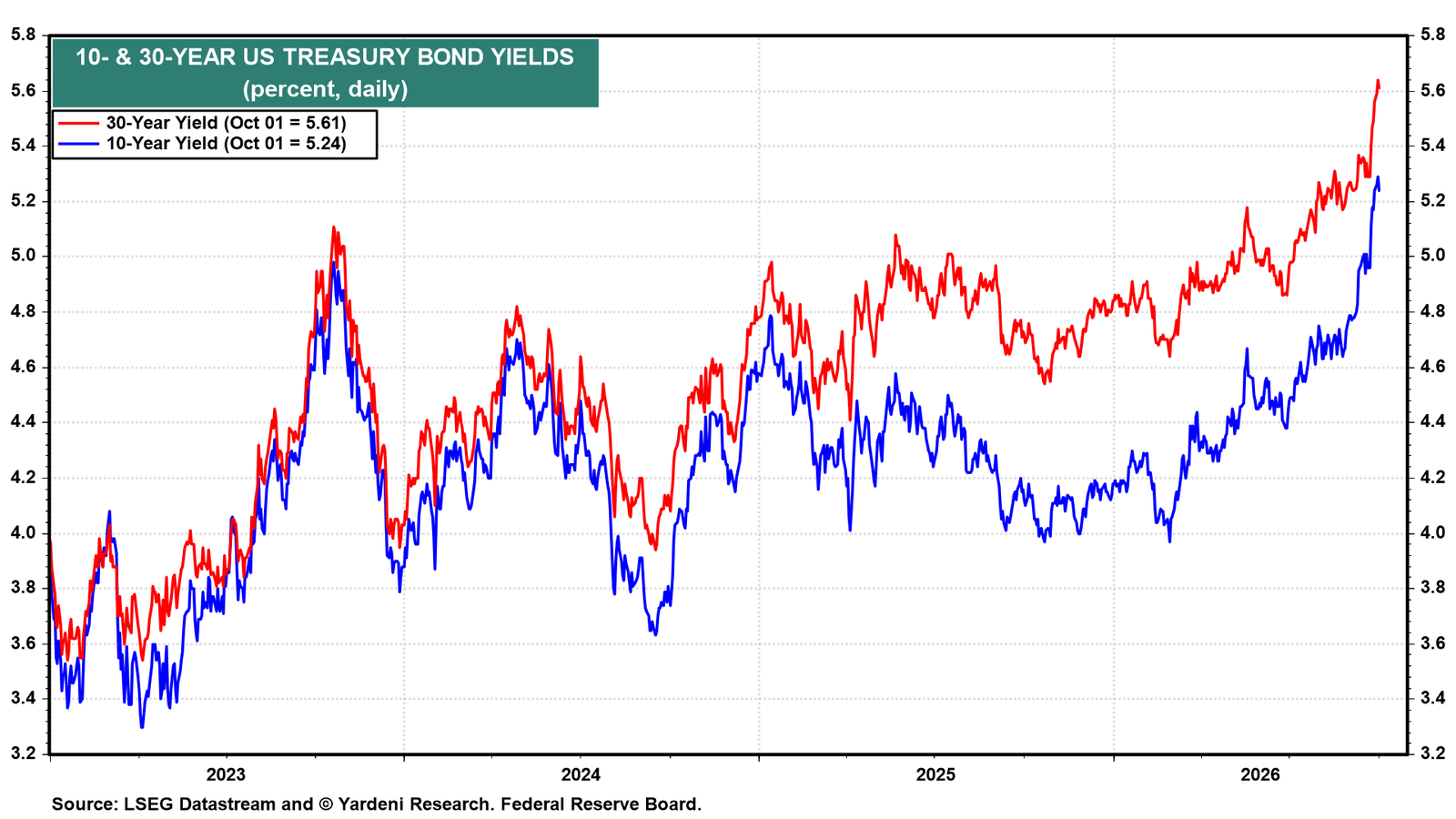
With the AI buildout continuing to act as a powerful private-sector stimulus program, it is hardly surprising that the latest indicators continue to point to a strong economy. At the same time, inflation remains stuck around 3.0%. Today, the 10-year Treasury yield briefly hit 5.33% and the 30-year reached 5.68%, both marking fresh 24-year highs, before easing back a bit (chart). The message is clear: robust growth and persistent inflation are putting upward pressure on long-term yields.
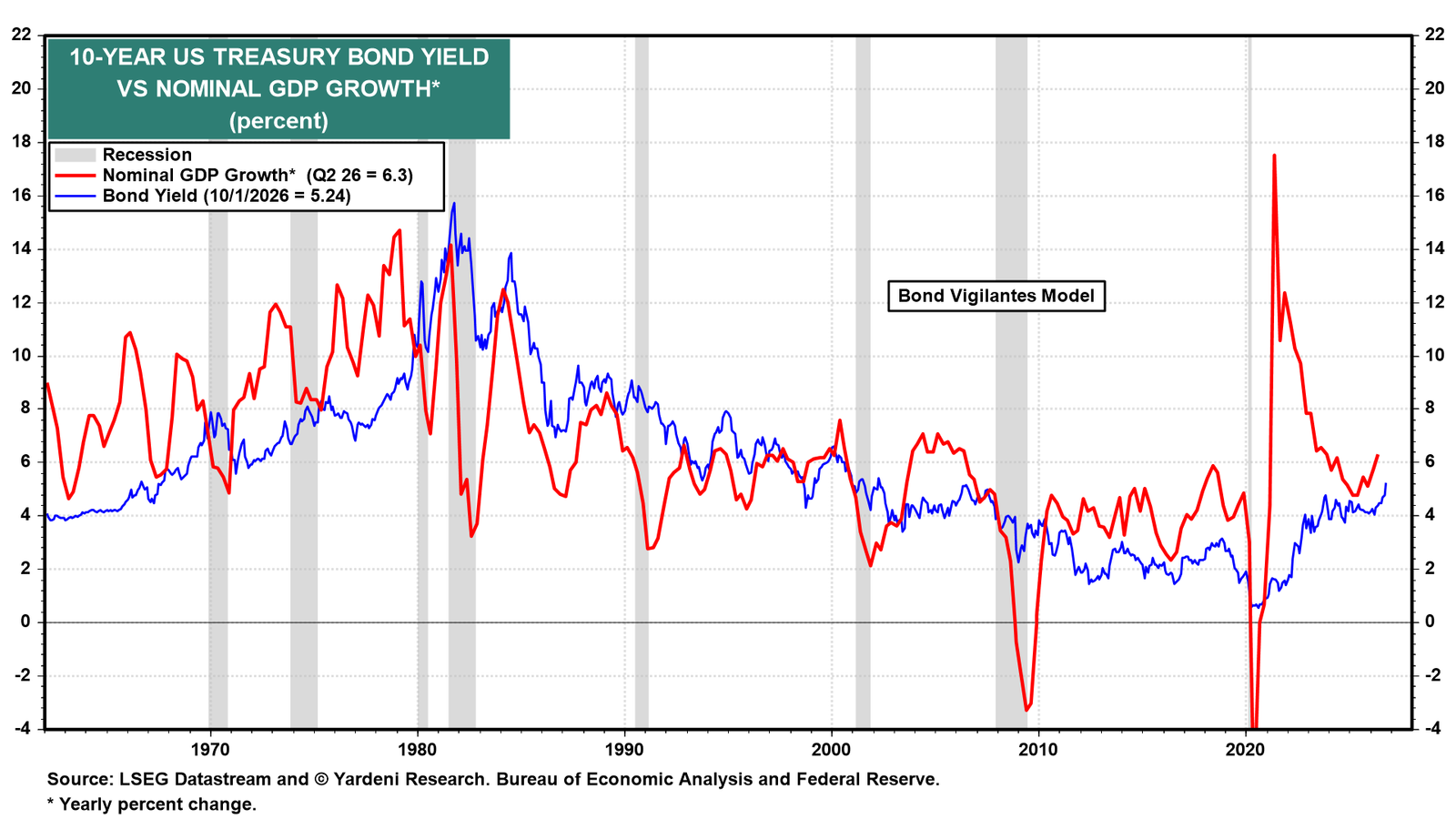
We think the bond yield is reflecting the strength of nominal GDP, which rose 6.3% y/y during Q2 (chart). We don't expect the bond yield to depress the economy unless it surges above the growth rate of nominal GDP, which we don't expect to happen. In fact, Dr Ed visited our institutional accounts in Toronto over the past two days and found that all of them expressed interest in buying bonds at these attractive yields.
Now, consider the latest evidence of the "growthflation" driving nominal GDP:
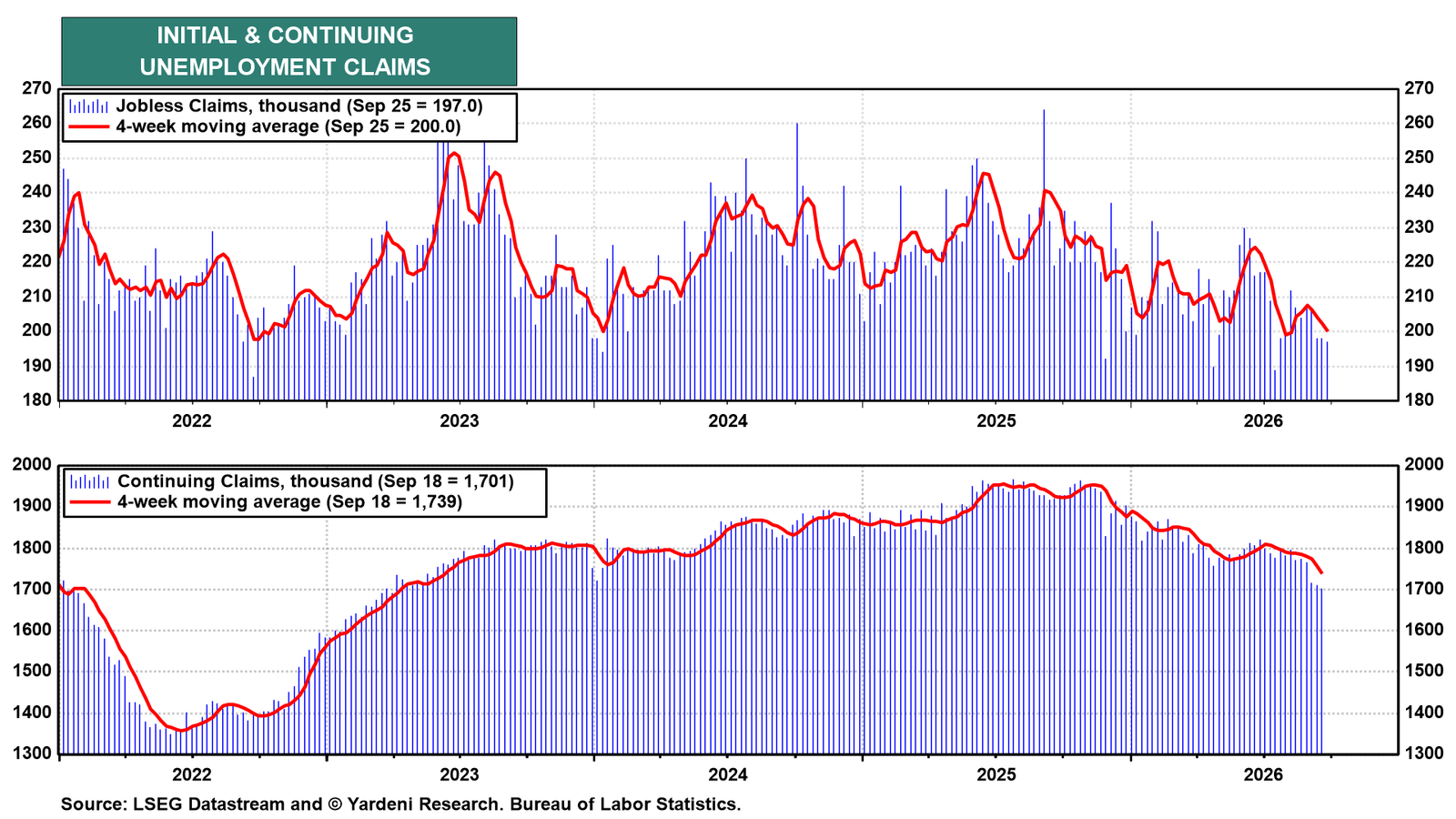
(1) Labor market. Initial jobless claims fell to 197,000 during the week of September 25, the lowest level since July 18 (chart). They have been below 200,000 for seven weeks this year, the most in any year since 1969. Additionally, the latest reading is near a 57-year low. Continuing claims dropped to 1,701,000, the lowest reading since March 2023.
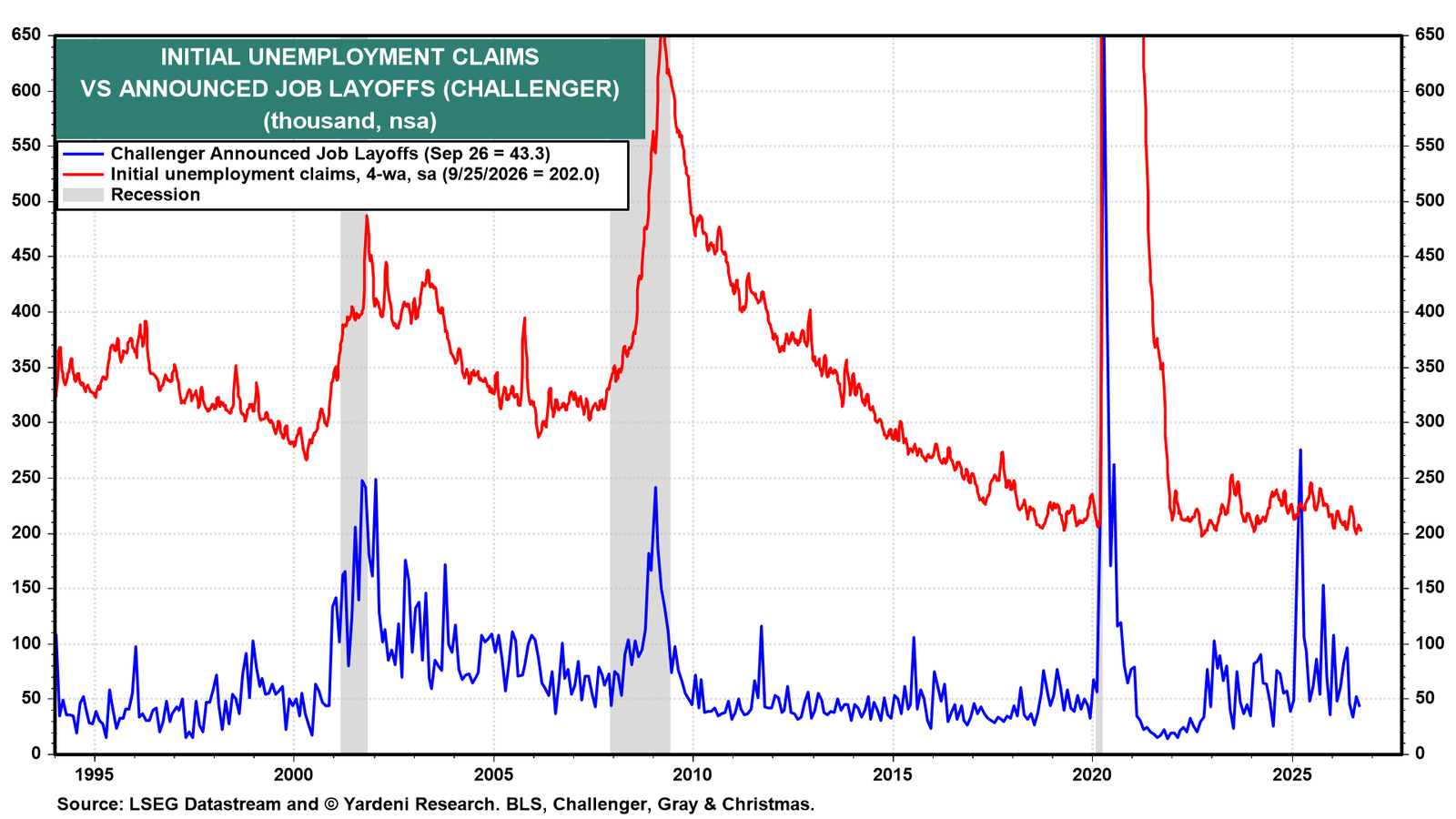
Challenger job-cut announcements fell 18% m/m and 20% y/y to 43,281 in September, the lowest total for the month since 2022 (chart). Layoff activity remains subdued across the US economy.
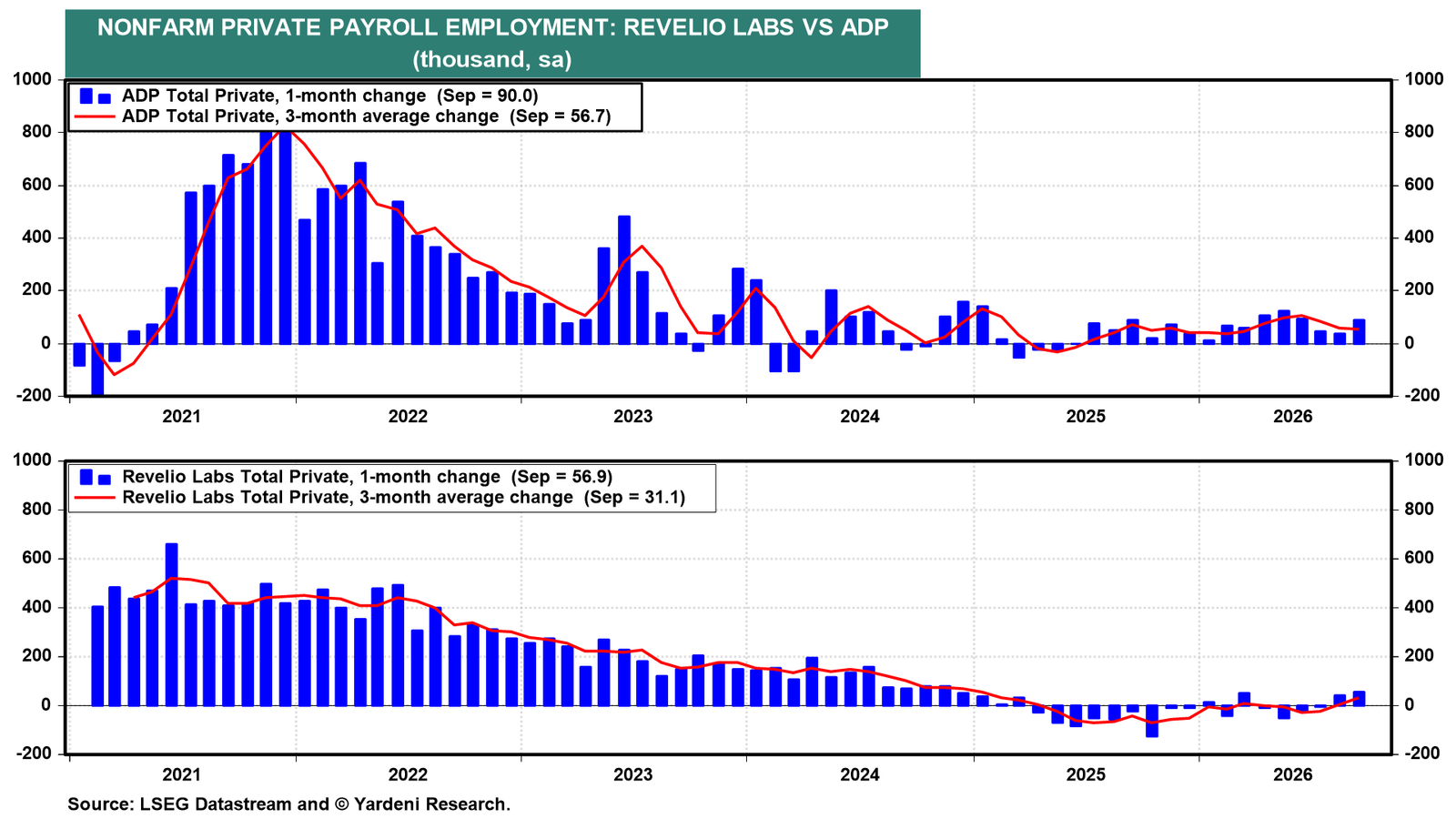
Private payroll growth also appears to be firming. ADP employment rose by 90,000 in September, while Revelio Labs estimates that private payrolls increased by 56,900 last month (chart). We expect tomorrow’s BLS report to show roughly 100,000 nonfarm payroll gains in September, more than enough to keep the unemployment rate near its current low of 4.1%.
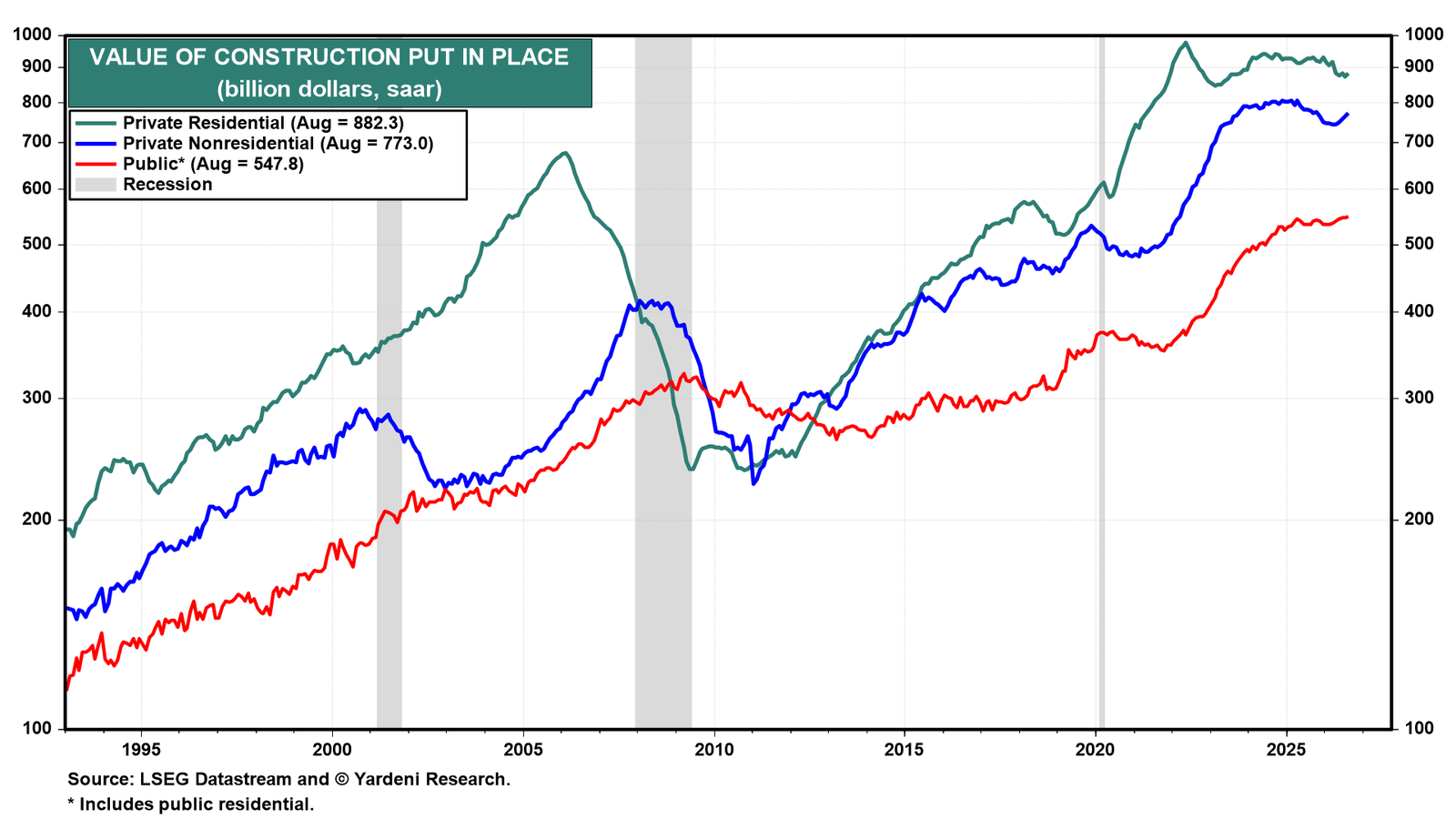
(2) Construction spending. Construction spending jumped 0.9% m/m in August to a $2.20 trillion annual rate (chart).
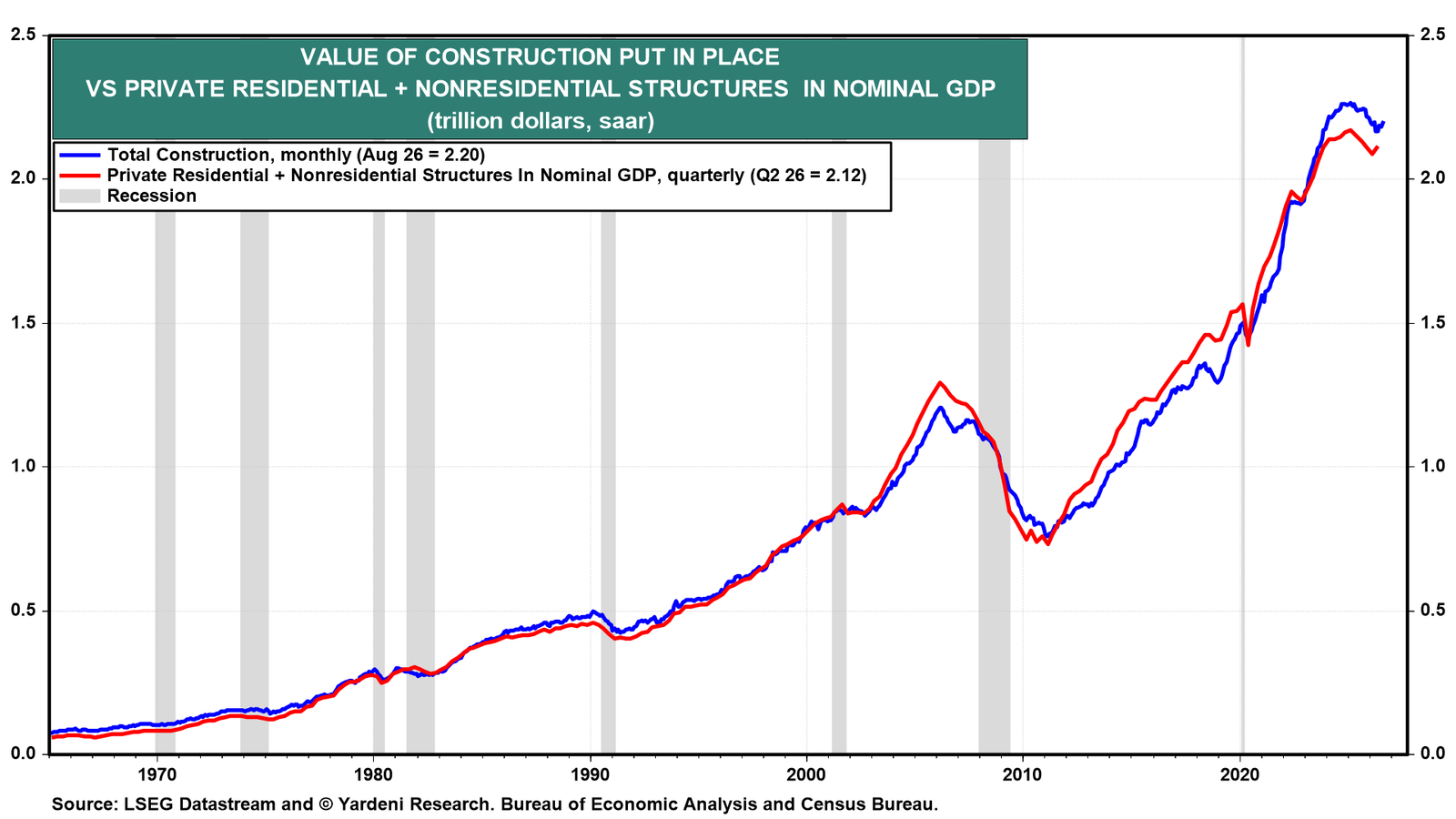
Private nonresidential construction rose 1.0% to $773 billion, while residential construction increased 1.1% to $882 billion (chart). Office construction, which includes data centers, surged 4.6% m/m, while power construction rose 0.9%. Both categories continue to benefit from the massive AI infrastructure buildout.
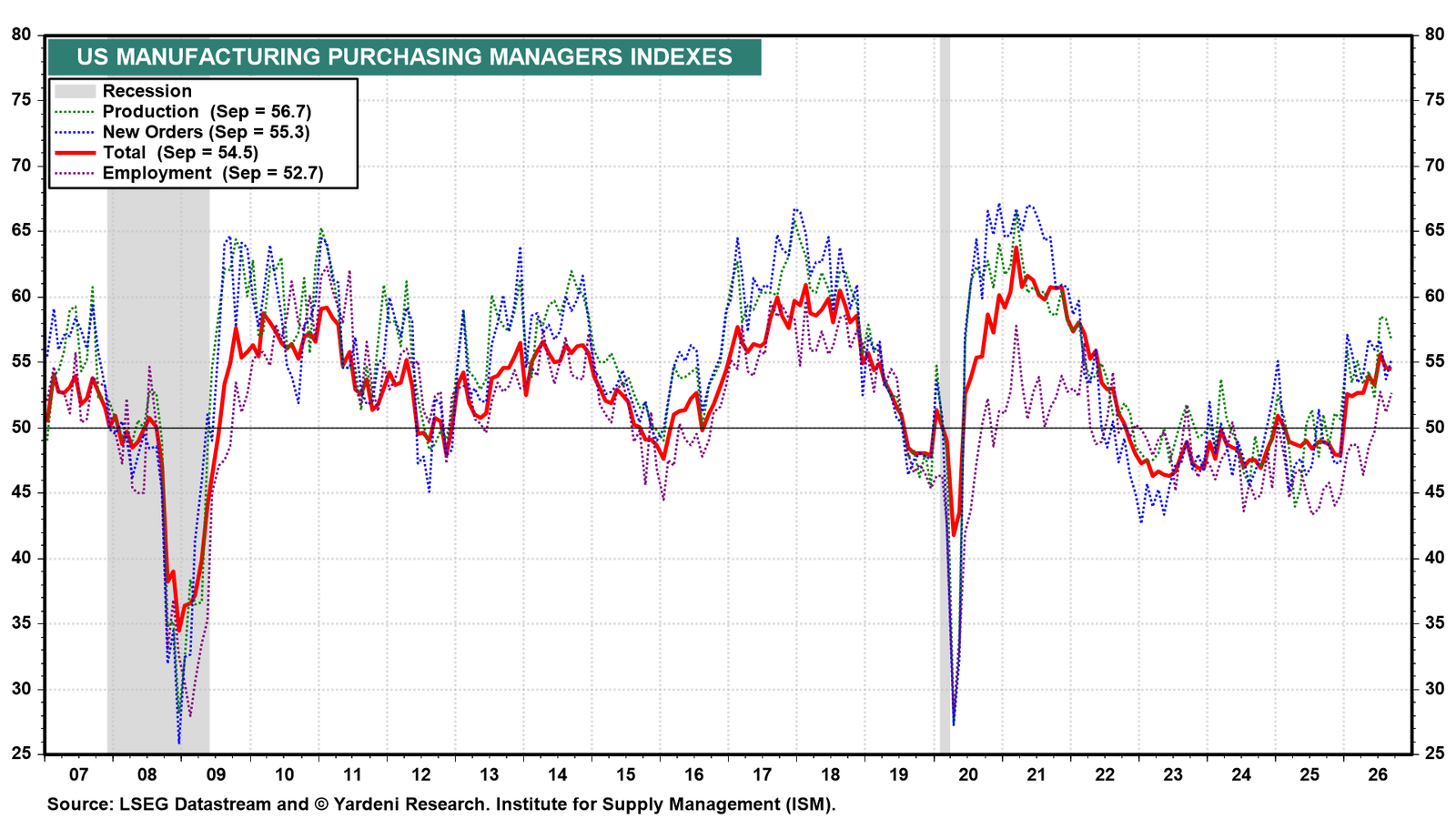
(3) Manufacturing. The ISM M-PMI remained firmly in expansion territory at 54.5 in September, marking the ninth consecutive month above 50.0 and the longest expansion streak since 2022. Major components, including new orders, production, and employment, also remained in expansion territory. The upswing is being fueled by the AI capex boom, reshoring, and stronger incentives for domestic investment, including immediate expensing under the OBBBA.
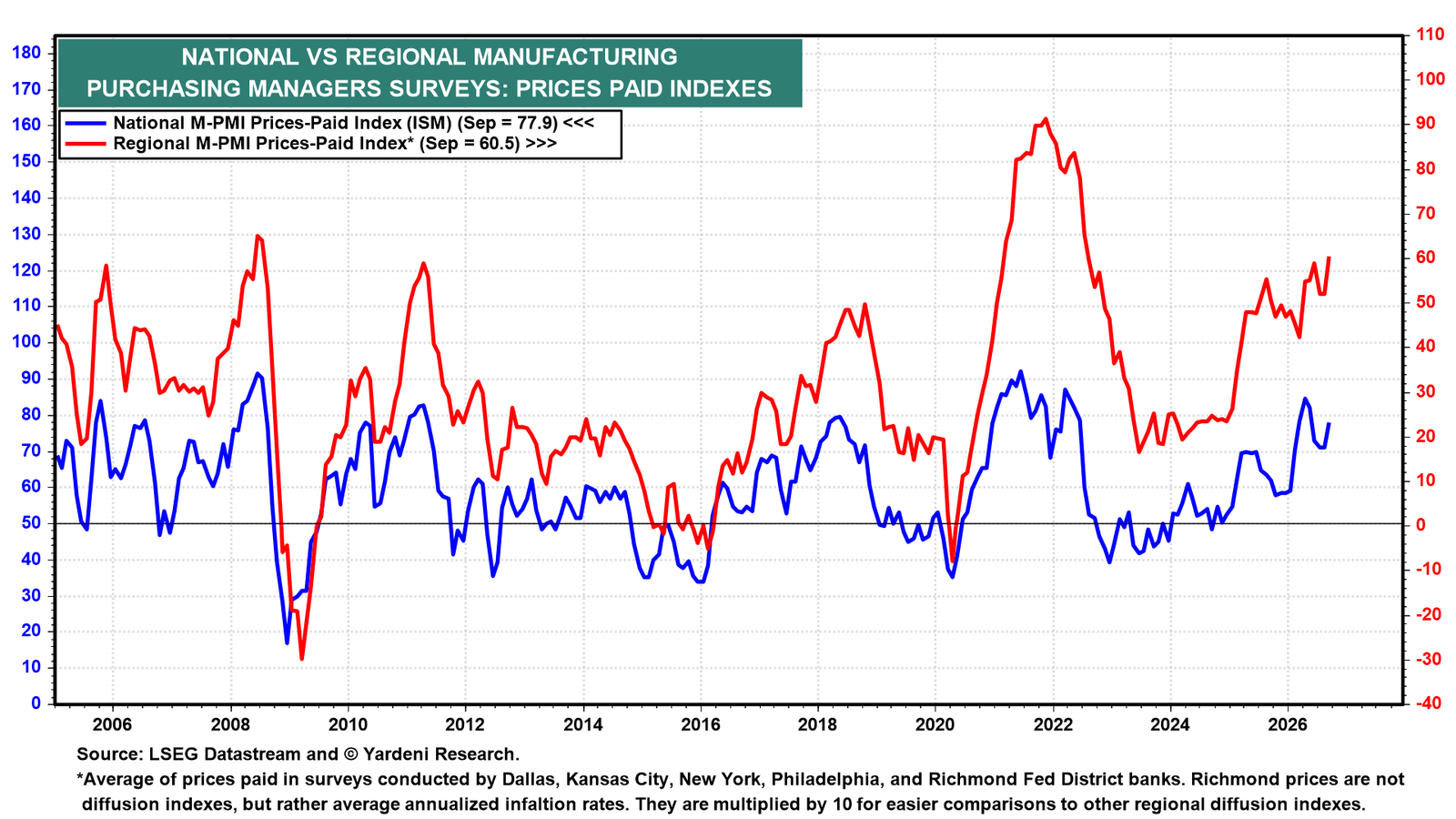
Meanwhile, input cost pressures remained elevated in September. The ISM prices-paid index rose to 77.9, near its highest level since 2022, while regional Fed price surveys also remained high (chart).
Respondent comments in the ISM survey noted that demand remains strong in semiconductors, electronics, machinery, and AI/data-center-related markets, but that strength is increasingly running up against worker shortages, stretched steel capacity, longer lead times, and rising input costs.