I. Revenge of the Bond Vigilantes?
We still have a 70% subjective probability for our bullish base-case Roaring 2020s scenario. The remaining 30% covers all the possible bearish scenarios. We monitor those possibilities closely with our Worry List. Our main worry right now is the significant rise in bond yields worldwide this year (chart).
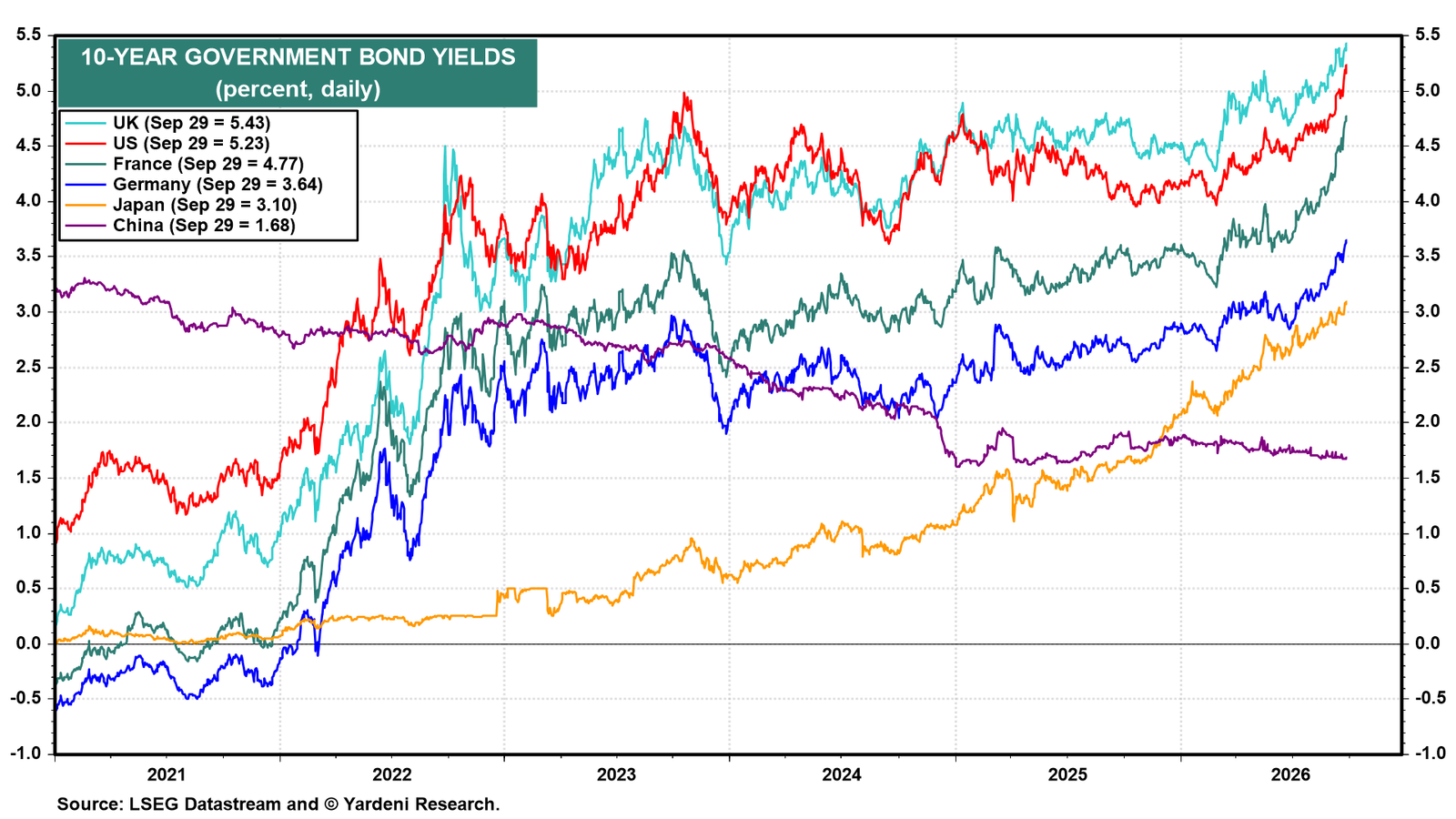
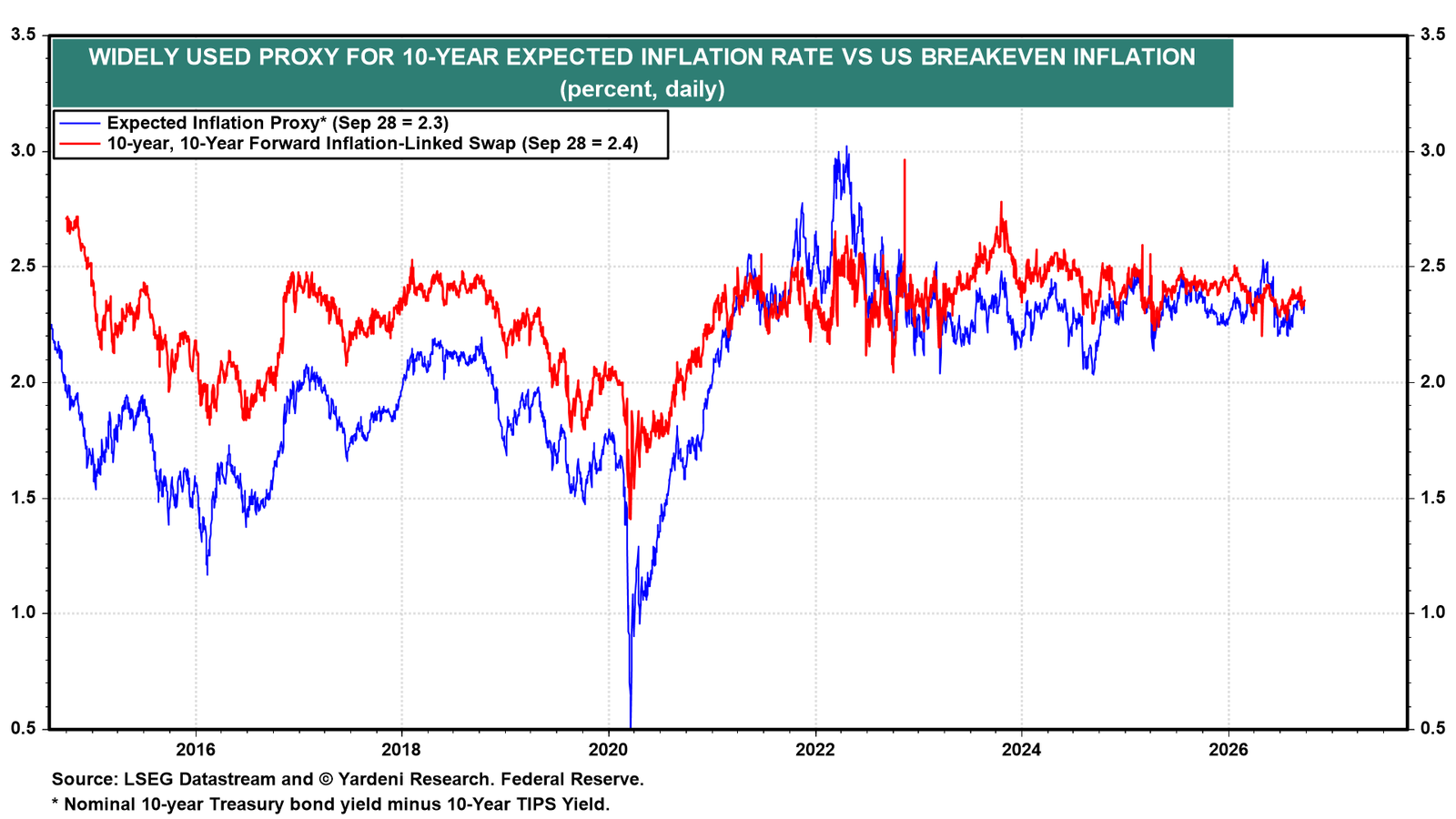
The higher global bond yields may be due to higher inflation, driven by the jump in oil prices following the Middle East war that began in late February. That's not confirmed by US breakeven inflation rates, which remain surprisingly subdued (chart)! Nevertheless, when the war ends, oil prices should drop sharply, lowering bond yields.
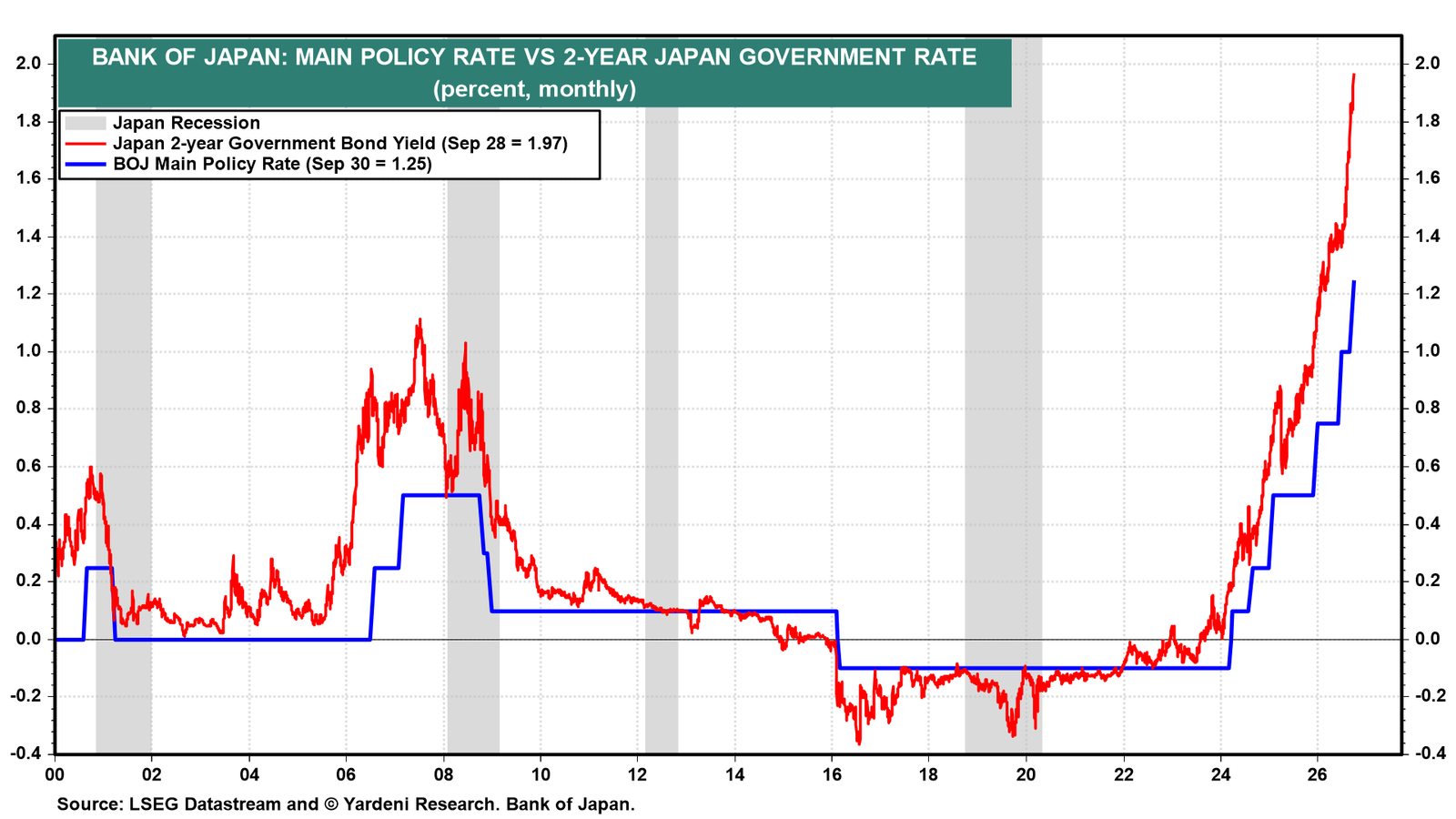
A more likely explanation for the global bond market rout is that the yen-carry trade is unwinding as the Bank of Japan (BOJ) raises its policy rate, forcing carry traders to sell government bonds they bought worldwide with proceeds from cheap yen loans (chart). This trade allowed many governments run budget deficits without putting upward pressure on their bond yields. Now, the chickens have come home to roost.
Governments ran large deficits and accumulated lots of debt when the BOJ and other major central banks kept interest rates abnormally low from the Great Financial Crisis through the Great Virus Crisis. The major central banks' quantitative easing policies rigged global bond markets. The Bond Vigilantes were subdued. Now, we may be witnessing the Revenge of the Bond Vigilantes.
II. Is Bessent getting twisted?
US Treasury Secretary Scott Bessent has been leaning on the BOJ to raise its official policy rate to bolster the yen, which has been very weak. He wants to make sure that Japan doesn't sell its US Treasury securities to support the yen. The problem is that a higher BOJ policy rate would probably cause the yen-carry trade to unwind faster, putting upward pressure on bond yields worldwide.
Bessent also has been gingerly implementing an "Operation Twist" in the US Treasury market by buying back bonds and issuing more T-bills to fund the purchases. If the bond market rout turns into a US debt crisis, he might have to significantly increase the size of his Operation Twist.
III. Is the US on an unsustainable fiscal course?
Larry Kudlow, director of the National Economic Council under President Donald Trump during his first term, invited me to speak at the White House Economic Advisers’ lunch on December 12, 2018. Joining us was Jason Trennert, chairman, CEO, and chief investment strategist of Strategas. Several of the President’s top economic advisers attended. I asked then Treasury Secretary Steven Mnuchin why the administration wasn't refunding the entire government debt. Mnuchin said, "We are looking into that." Nothing changed.
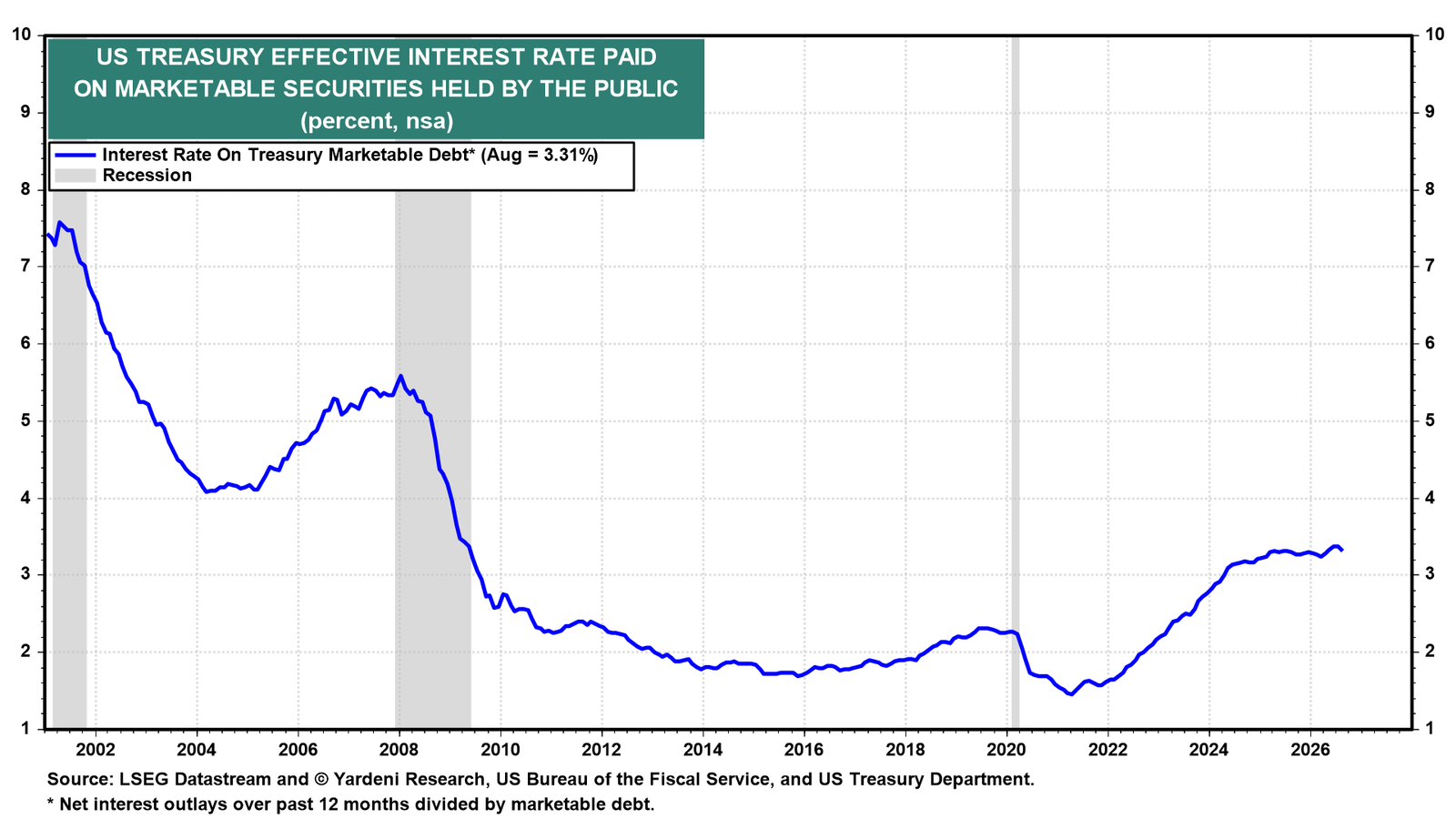
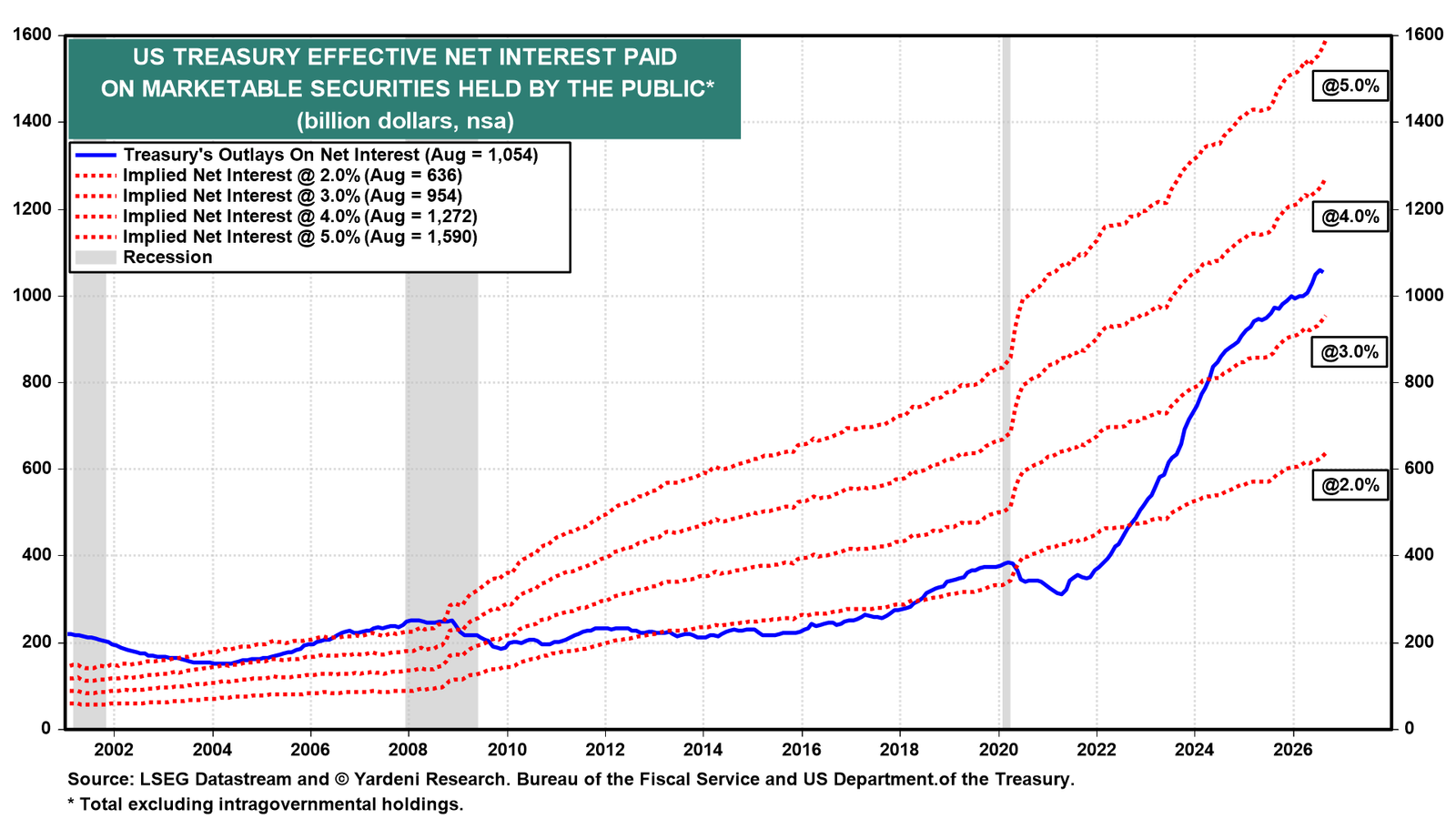
At the time, the three-month Treasury bill rate was 1.32%, and the 10-year bond yield was 2.40%. The average effective interest rate paid on the Treasury's marketable securities was just below 2.00% (chart). Now the T-bill rate is at 4.08%, and the bond yield is at 5.17%. The effective rate was 3.31% in August.
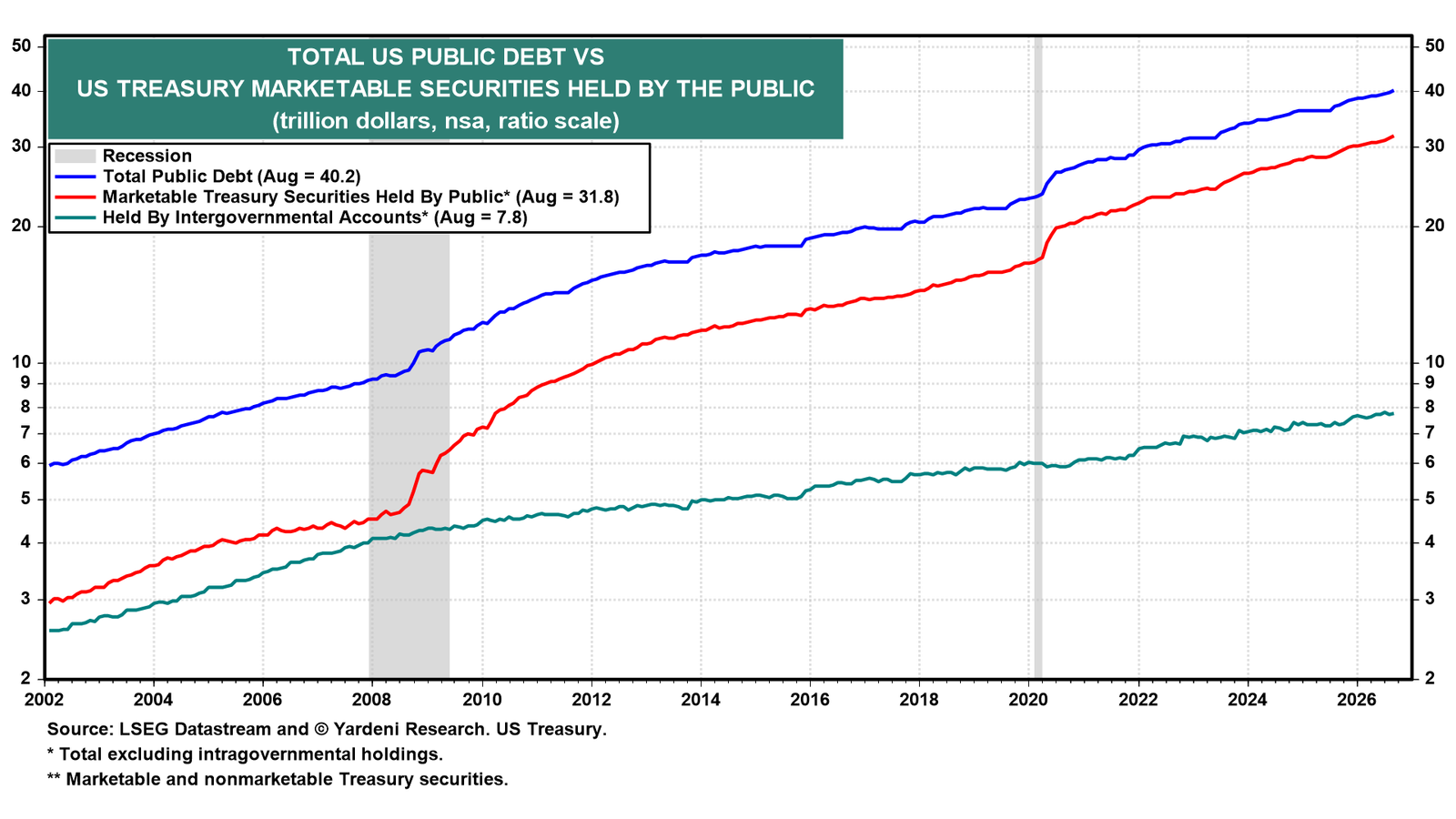
Since that lunch meeting in the basement of the White House in December 2018, federal marketable Treasury debt has more than doubled, rising from $14.4 trillion then to a record $31.8 trillion in August of this year (chart).
Net interest outlays on public debt held by the public soared from $300 billion at the end of 2018 to $1.1 trillion in August 2026 (chart). Persistently large government deficits and now higher interest rates suggest that net interest outlays are heading higher.
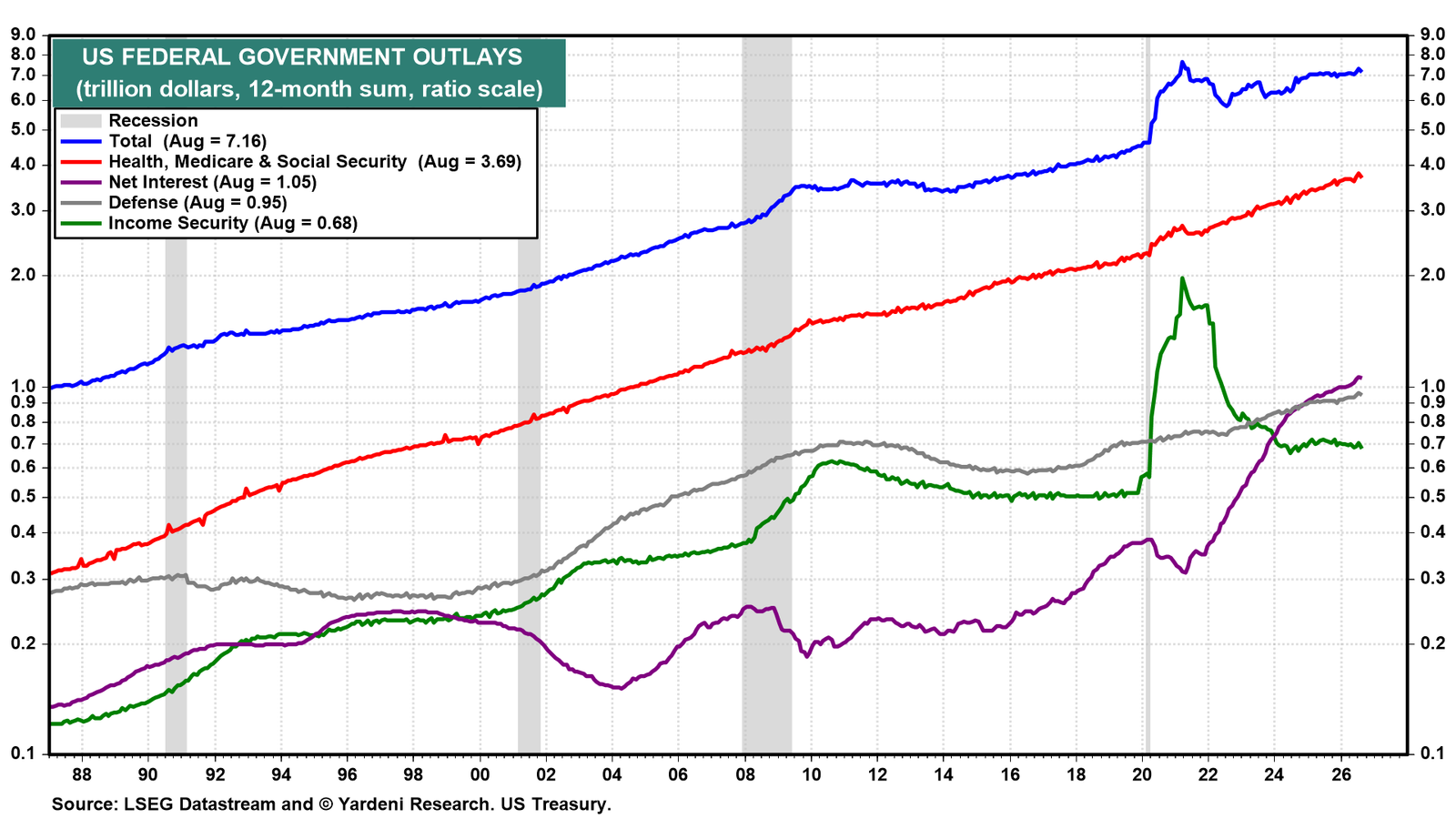
Net interest outlays now exceed both defense spending and income security outlays (chart). Towering above them all, of course, is the relentlessly rising spending on health, Medicare, and Social Security.
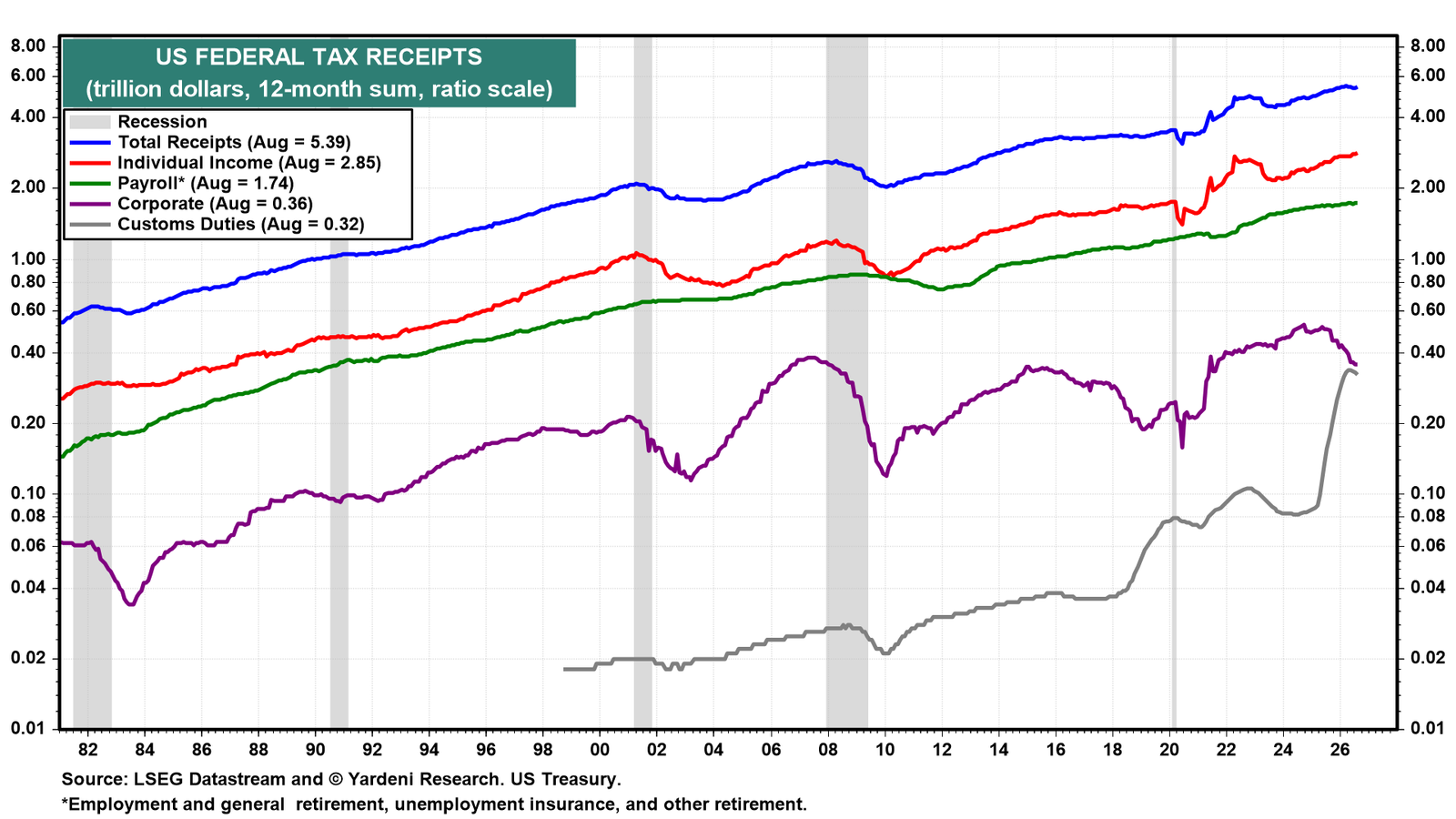
Federal tax receipts are driven mostly by individual income and payroll tax receipts (chart). Both have been increasing along with employment. Corporate tax receipts have been falling this year, probably because last year's tax bill allowed 100% depreciation.
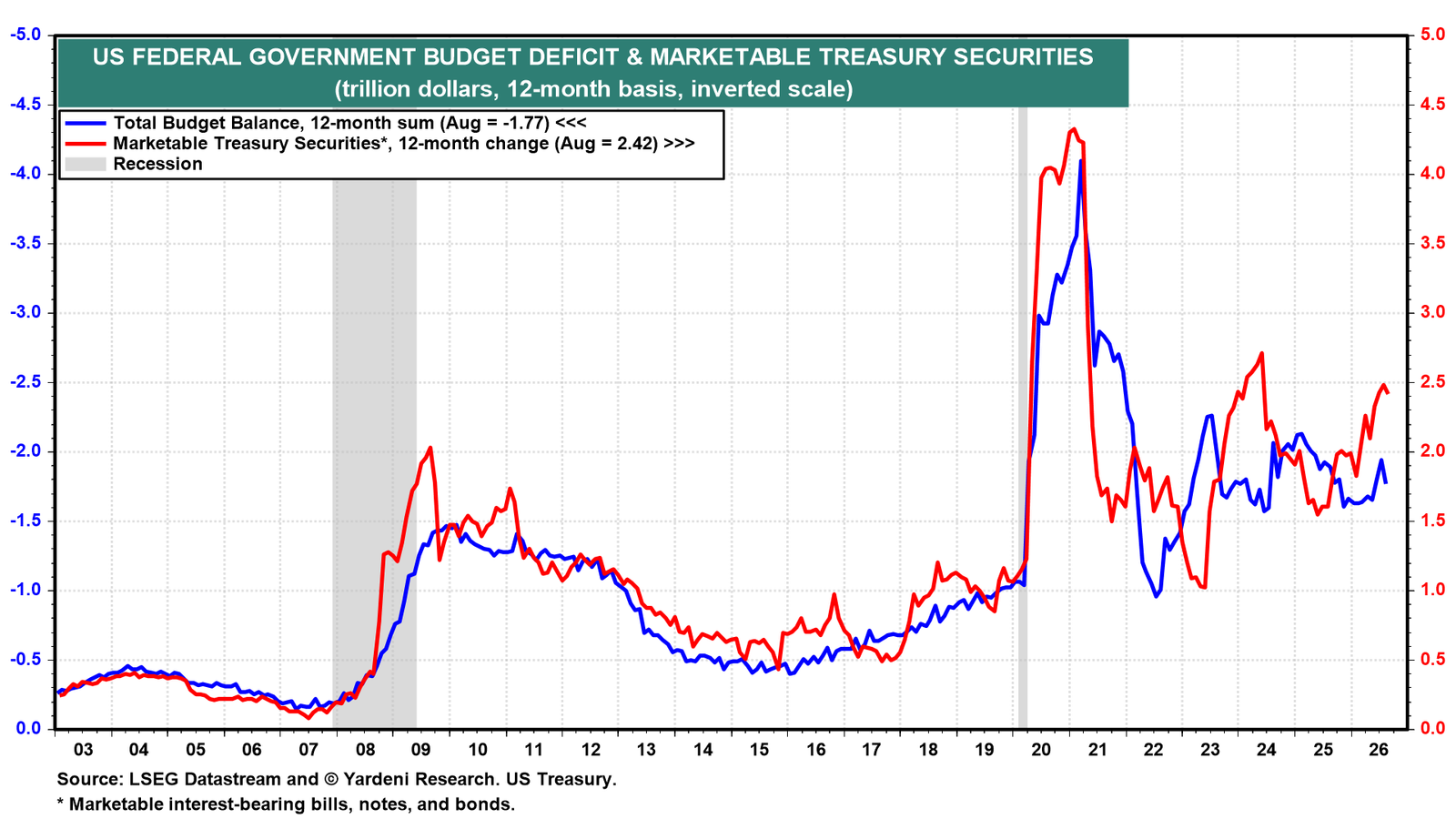
The federal budget deficit totaled $1.77 trillion over the 12 months through August (chart). Over that same period, net marketable Treasury securities rose $2.42 trillion.
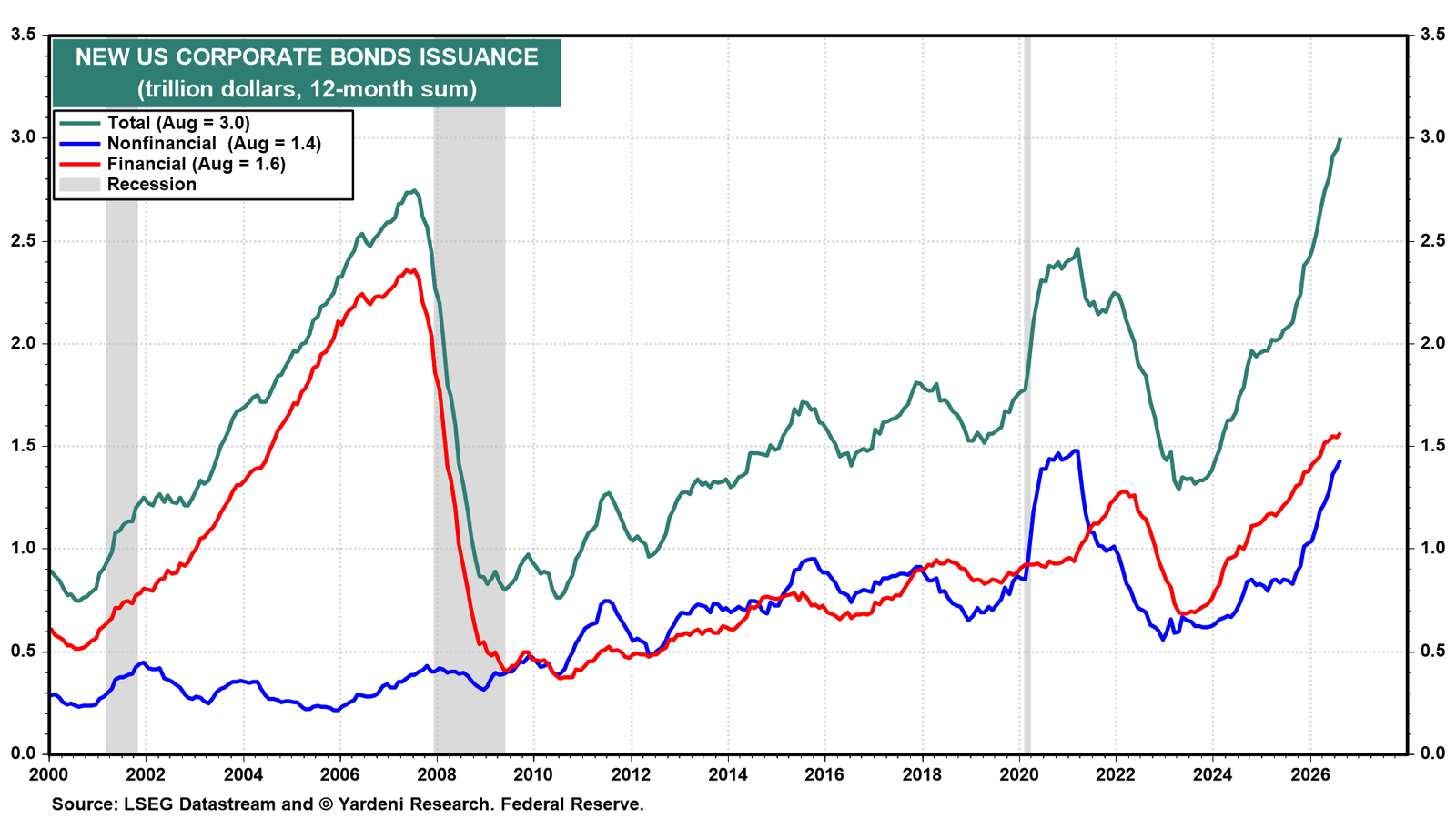
Meanwhile, the pace of new US corporate bond issuance has doubled since the start of 2024 to $3.0 trillion over the past 12 months through August (chart). Interestingly, not all of it is AI-related, since financial corporations raised $1.6 trillion.
Yes, the US government is on an unsustainable fiscal course. But Bessent believes that our Roaring 2020s scenario will save the day: Productivity-led growth should boost federal receipts, moderate inflation, and lower interest rates. Fed Chair Kevin Warsh believes so too. The Bond Vigilantes aren’t cooperating. That’s admittedly worrisome. Nevertheless, we expect the Roaring 2020s to prevail.