I. Global Economy
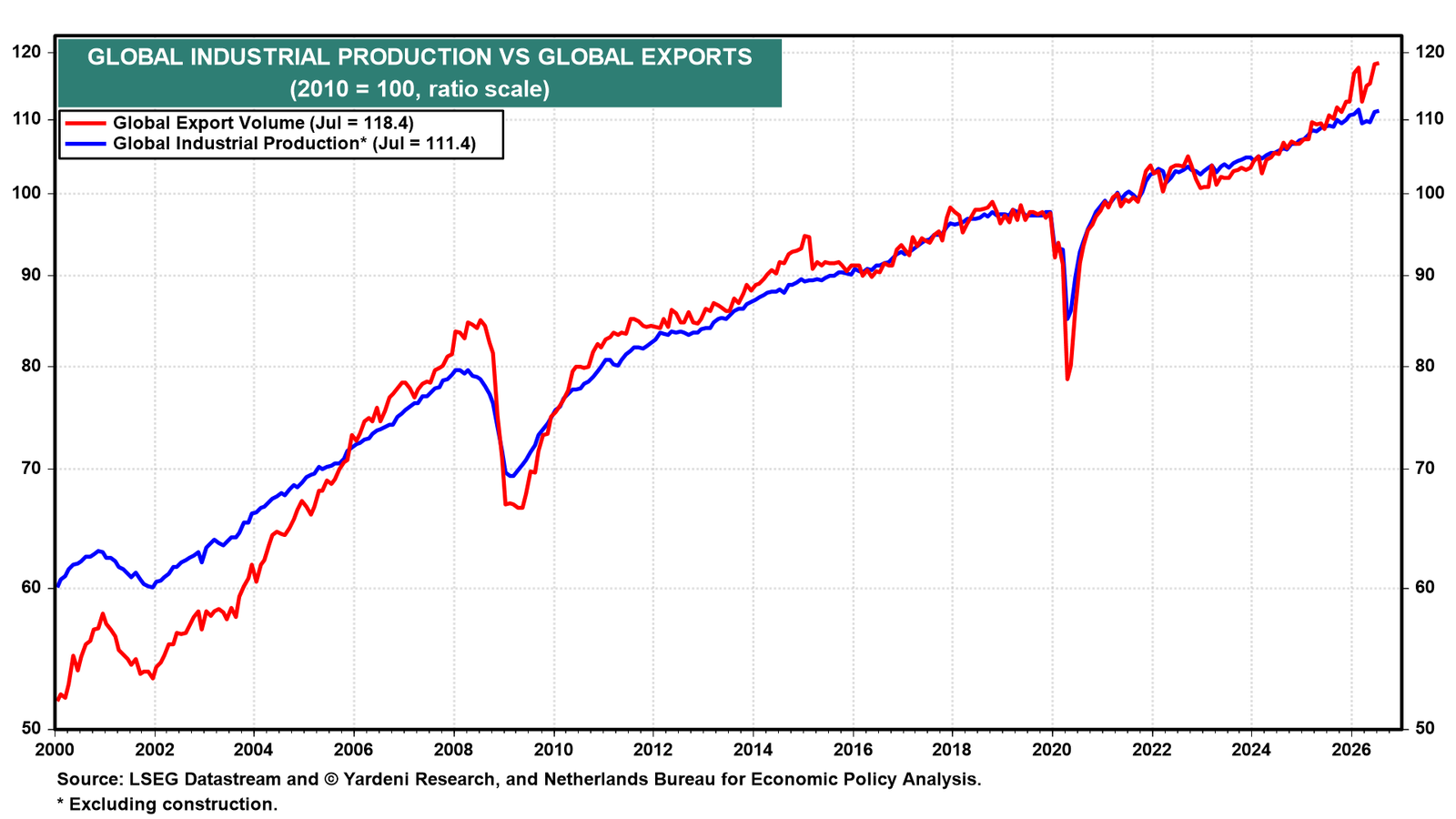
The global economy has been surprisingly resilient so far this year. There were dips earlier this year, when the Middle East war was in full swing; but in recent months, global industrial production and exports have rebounded to their record highs from before the war (chart).
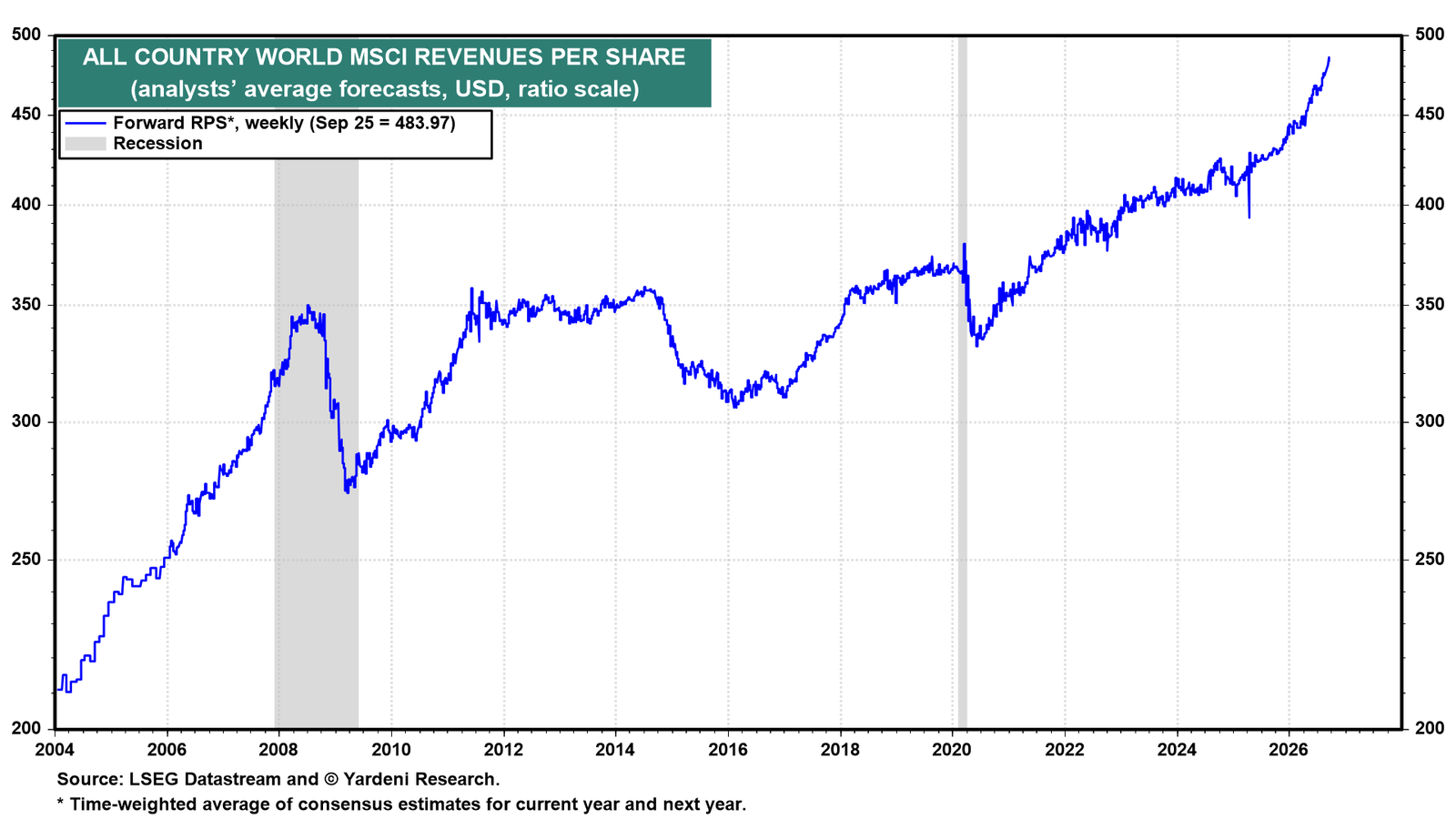
The All Country World MSCI forward revenues per share has continued to soar to record highs this year (chart).
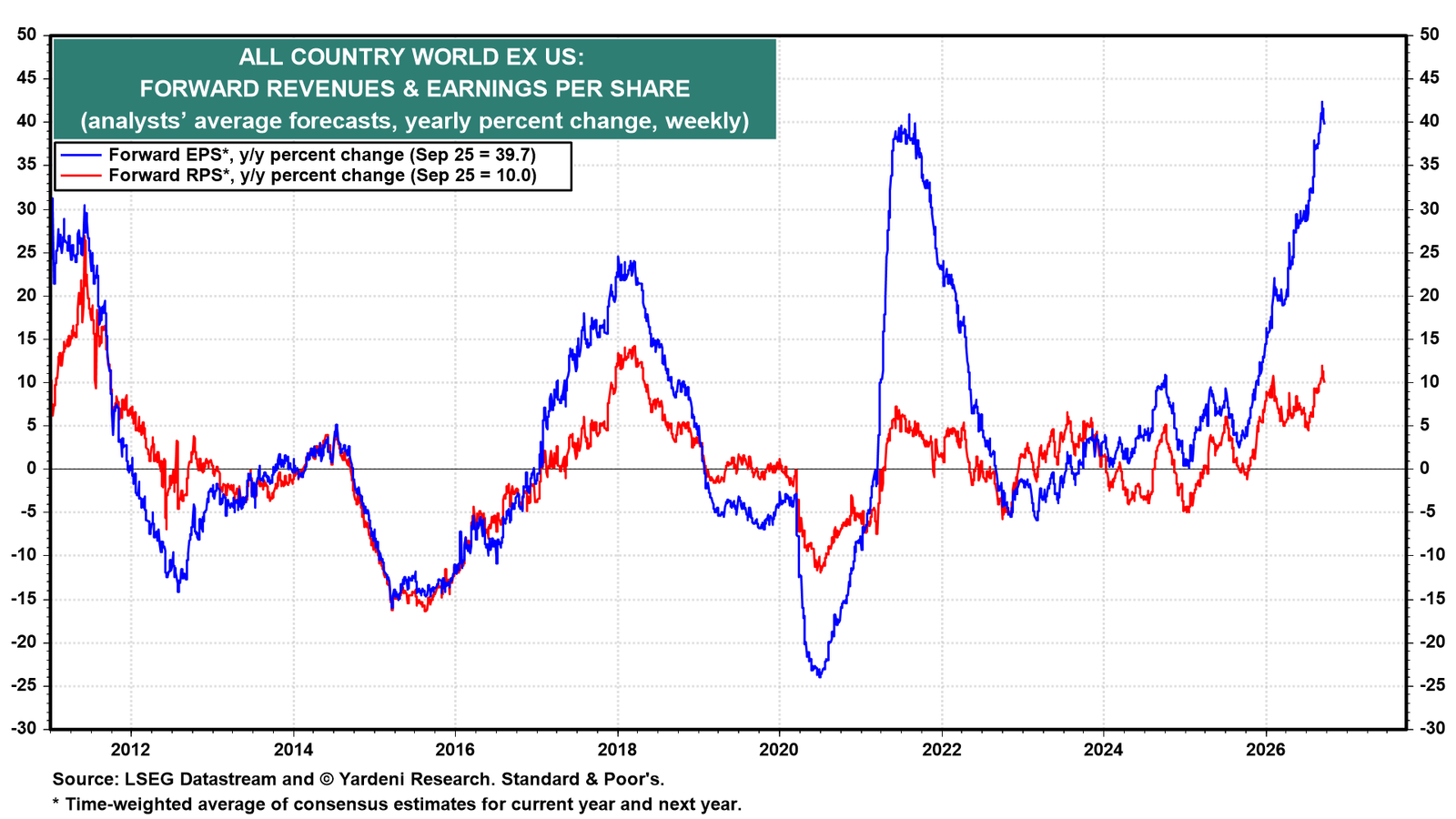
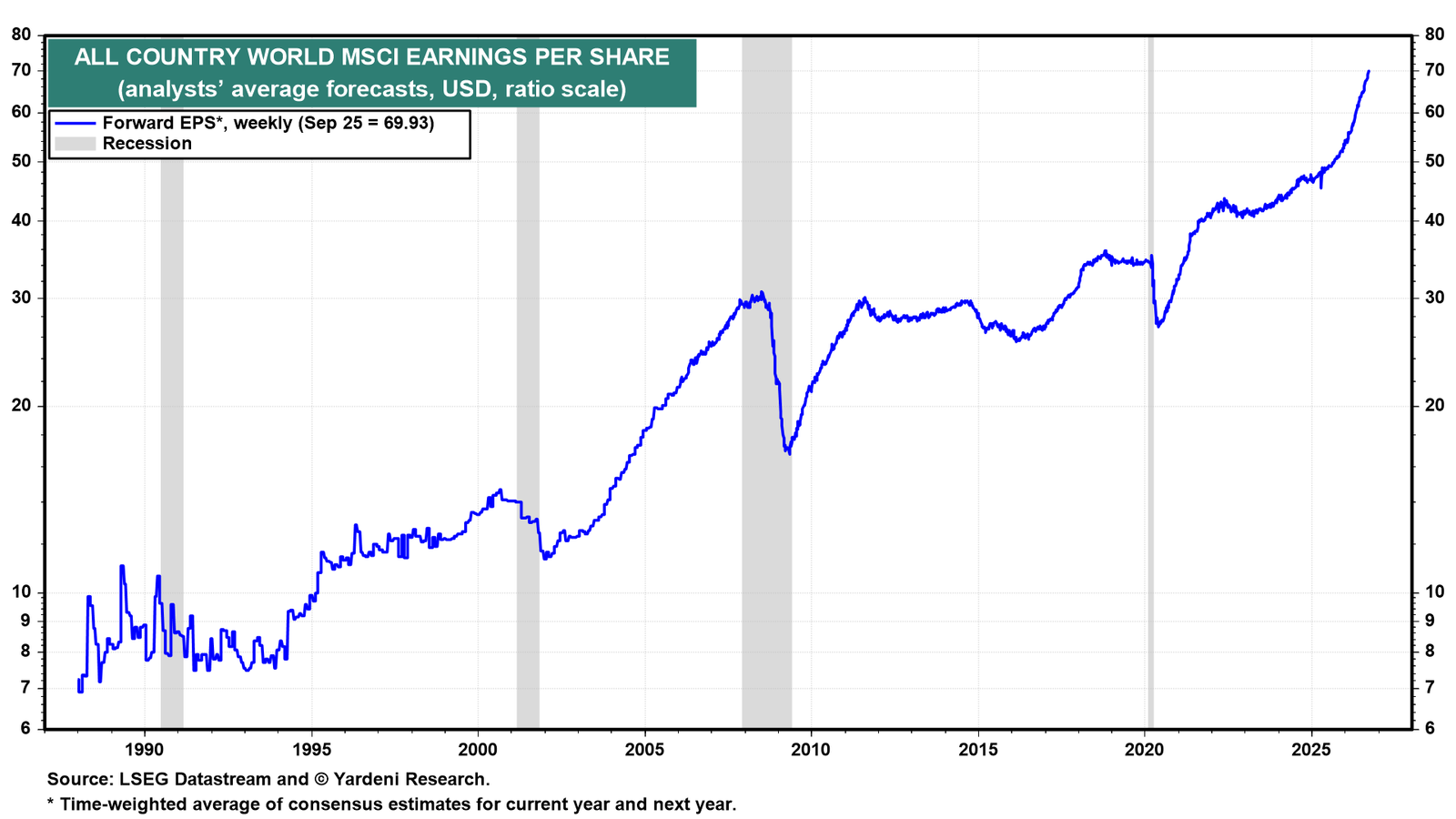
The All Country World ex-US MSCI is up a very solid 10.0% y/y, with forward earnings up a record 39.7% (chart).
II. Global Interest Rates
The significant increase in oil prices so far this year hasn't knocked the wind out of the global economy’s sails. The question is whether rapidly rising interest rates will do so. The rapid rise in 2-year government note yields worldwide signals that major central banks need to raise their policy rates further in response to the inflationary impact of higher-for-longer oil prices resulting from the recent re-escalation of the Middle East war (chart). Unfortunately, these higher rates also exacerbate the outlook for large government deficits worldwide.
A diplomatic settlement of the war would certainly help to bring down oil prices and interest rates. However, President Donald Trump has reportedly rejected an offer by Iran to reopen the Strait of Hormuz and end the conflict. He intends to resume bombing Iran after the midterm elections if Iran doesn't agree to dismantle its nuclear program. That means higher-for-longer oil prices, sticky inflation, and more central bank tightening.
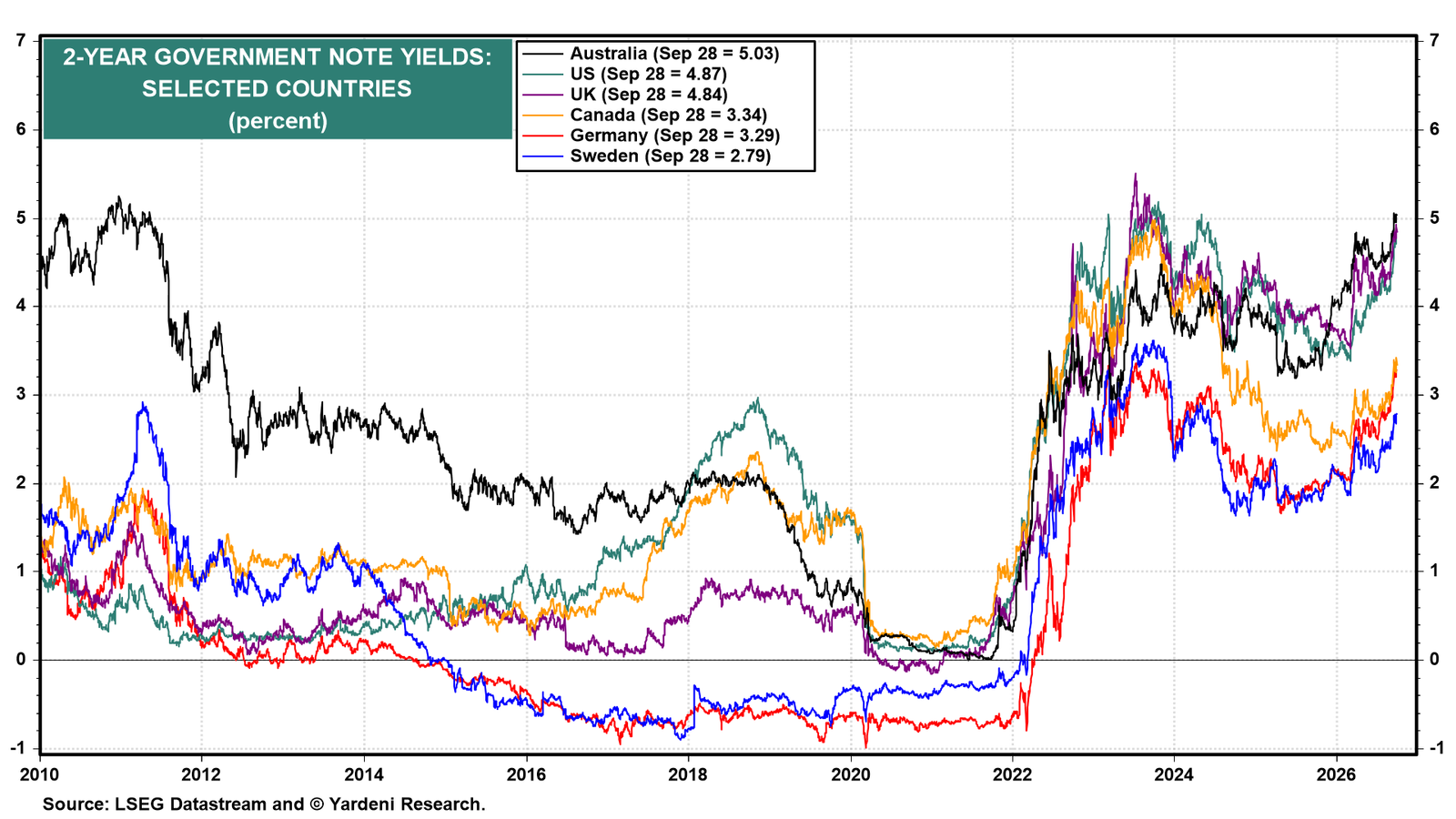
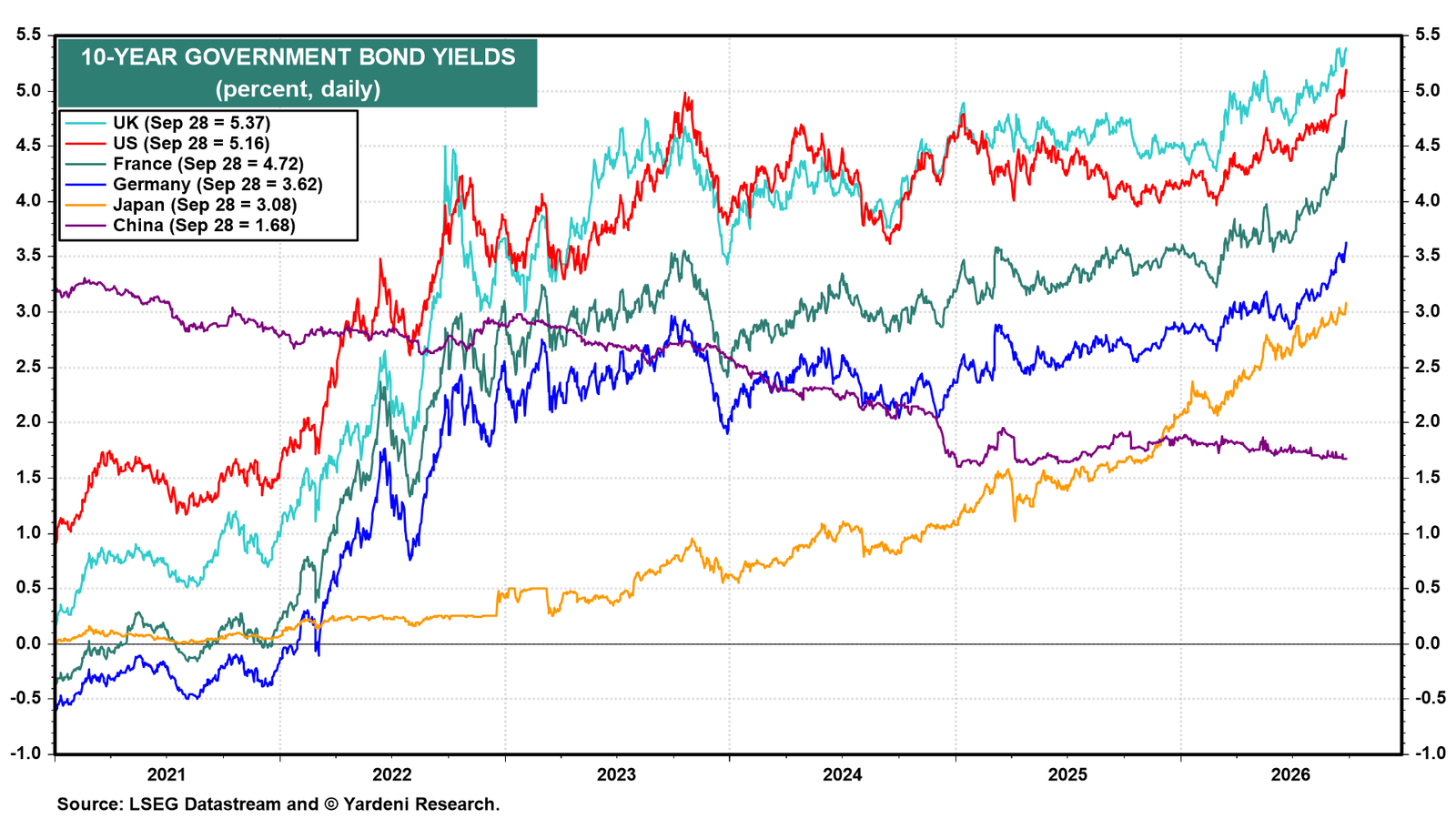
The synchronized worldwide rise in bond yields this year likely stems from factors beyond inflation. In our September 17 QuickTakes titled “Global Bond Rout Made In Japan?,” we wrote, "Higher Japanese interest rates and likely further yen appreciation have been forcing traders to unwind their yen-carry trades. This might explain the rout in the global bond market since 2024."
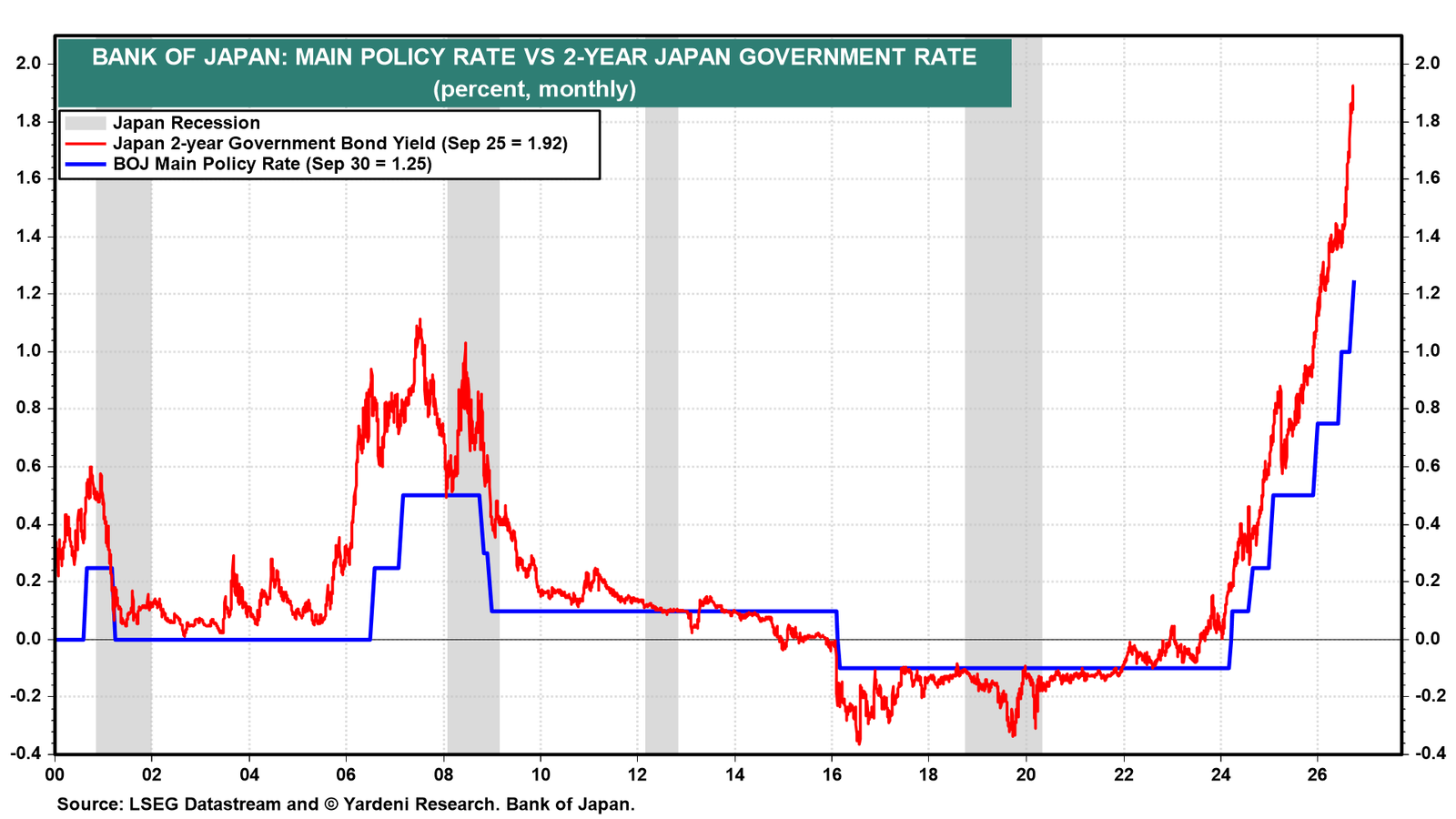
In Japan, the 2-year government note yield suggests that the Bank of Japan needs to hike its official policy rate three more times to 2.00% from 1.25% currently (chart).
III. Global Stock Markets
Meanwhile, global stock markets are rising together to new record highs even as bond yields rise to multi-decade highs (chart).
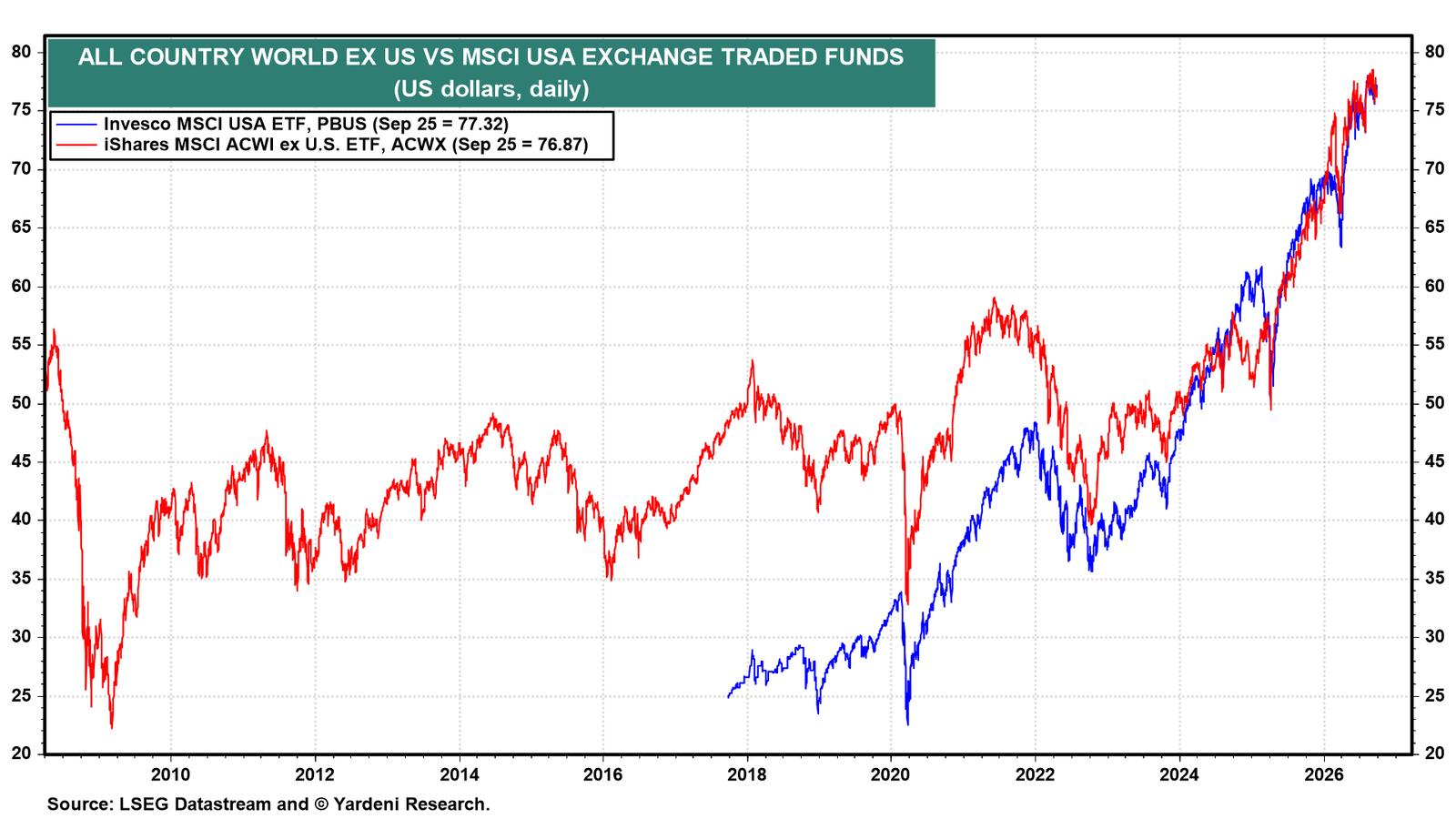
The global stock bull market is driven by fabulous earnings momentum (FEMO) not just in the US, but worldwide (chart). How can that be? Perhaps the AI buildout might explain why this is happening.
IV. Go Global vs Stay Home
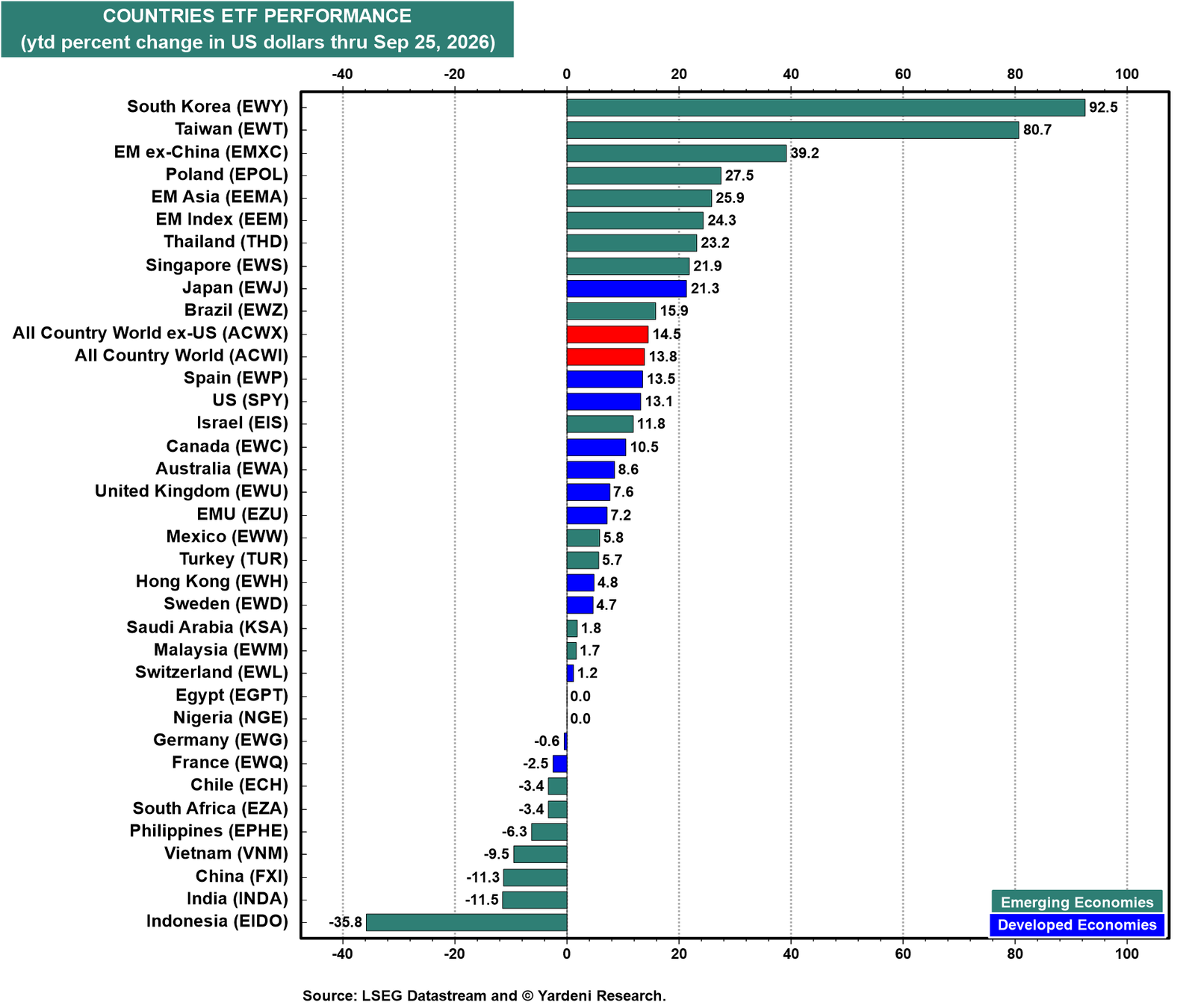
On a ytd basis, Stay Home and Go Global have performed about the same. In dollars, the ACWX is up 14.5%, while SPY is up 13.5% (chart). EMXC (39.2%) has outperformed EEM (24.3%).
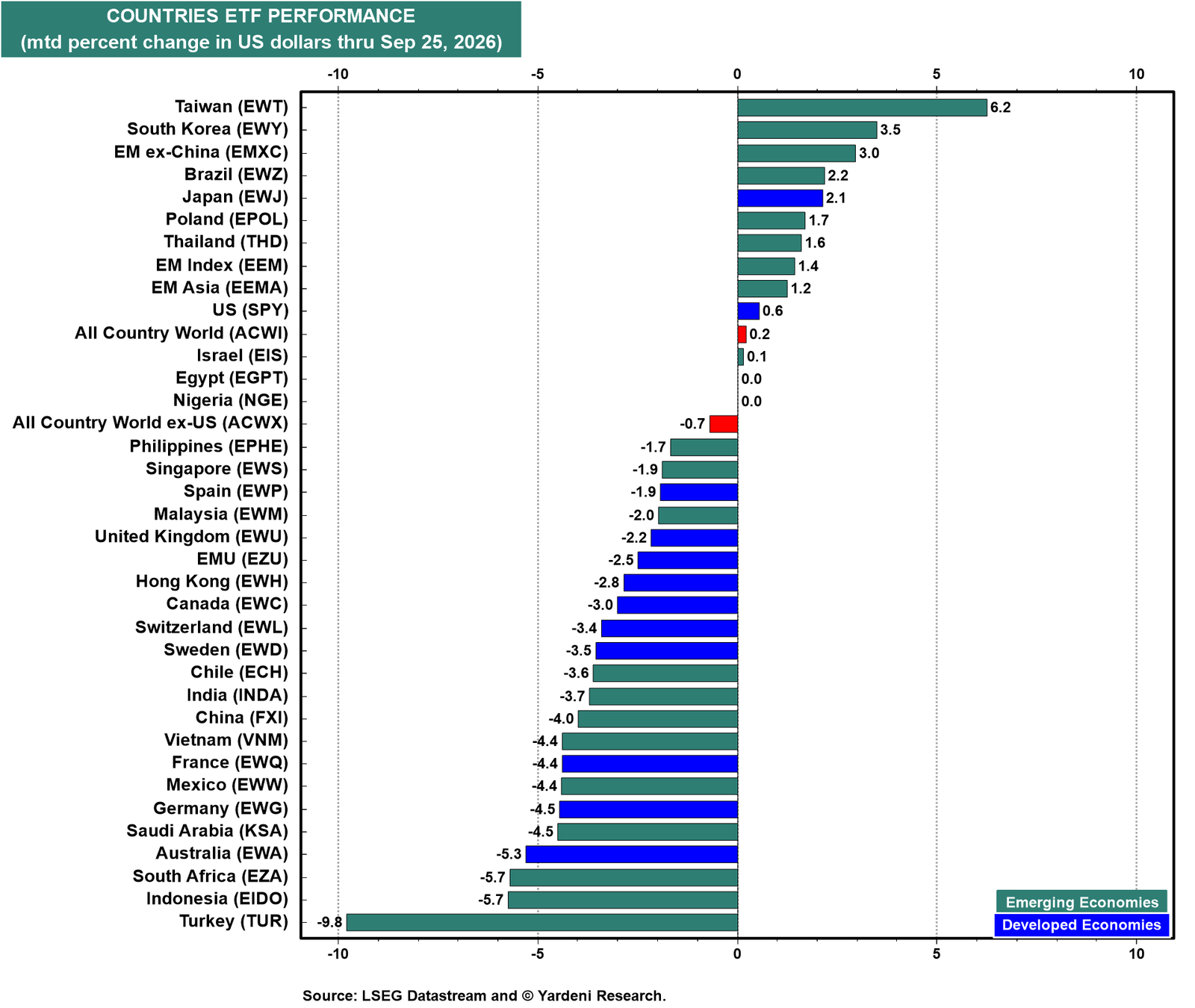
The same rankings have held so far during September (chart).
V. Weekly Focus
(1) The OECD recently released its interim economic outlook, noting that global growth has held up better than initially feared following earlier Middle East conflict escalation and crude oil spikes. Global GDP growth for the year is projected at 2.9% (a slight 0.1% upward revision).
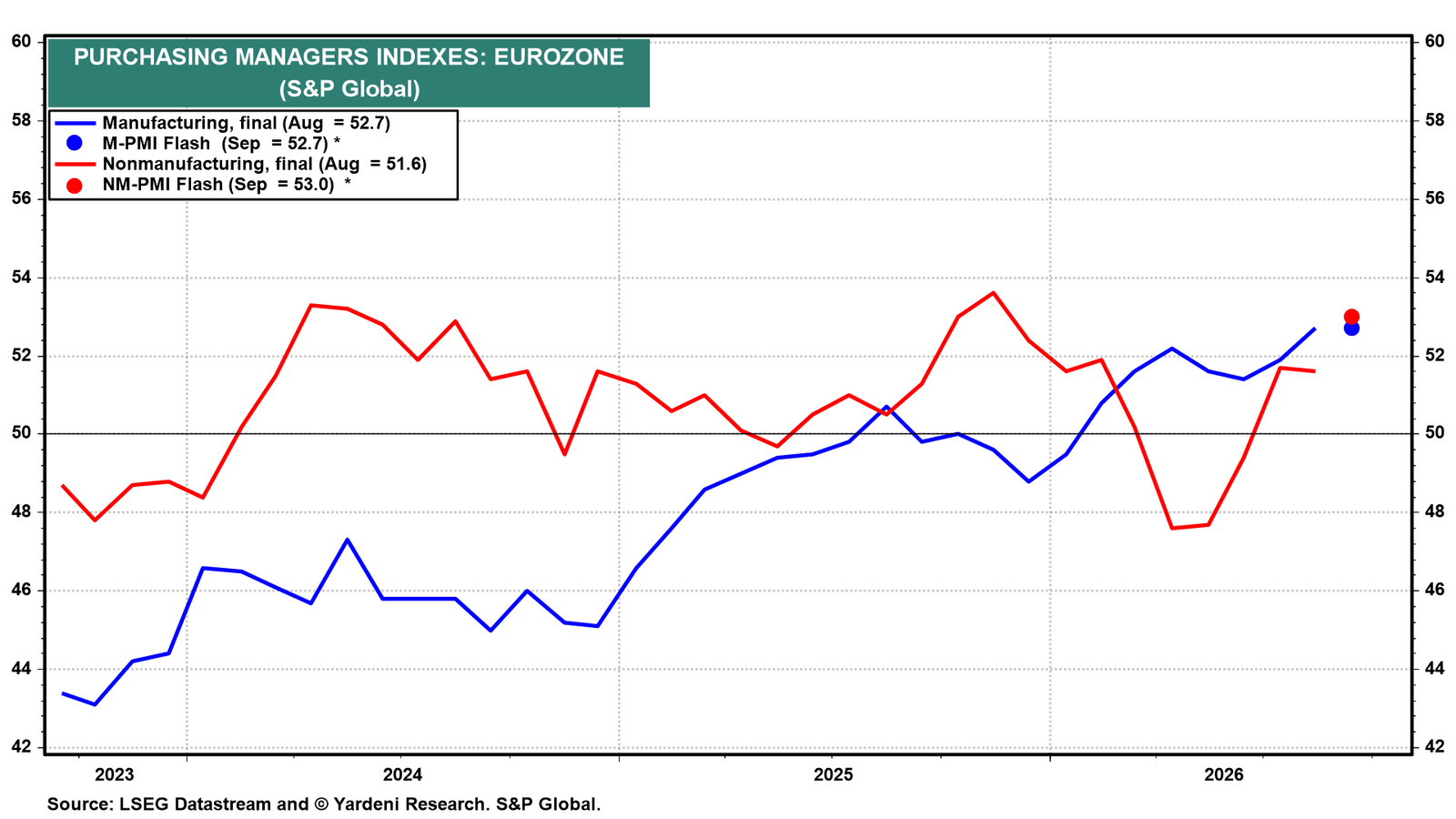
(2) Flash PMI releases across the Eurozone and the UK highlight a two-speed overseas environment: Domestic service sectors continue to expand at a modest clip, while export-oriented manufacturing remains hamstrung by weak external demand and lingering supply-chain cost frictions (chart).
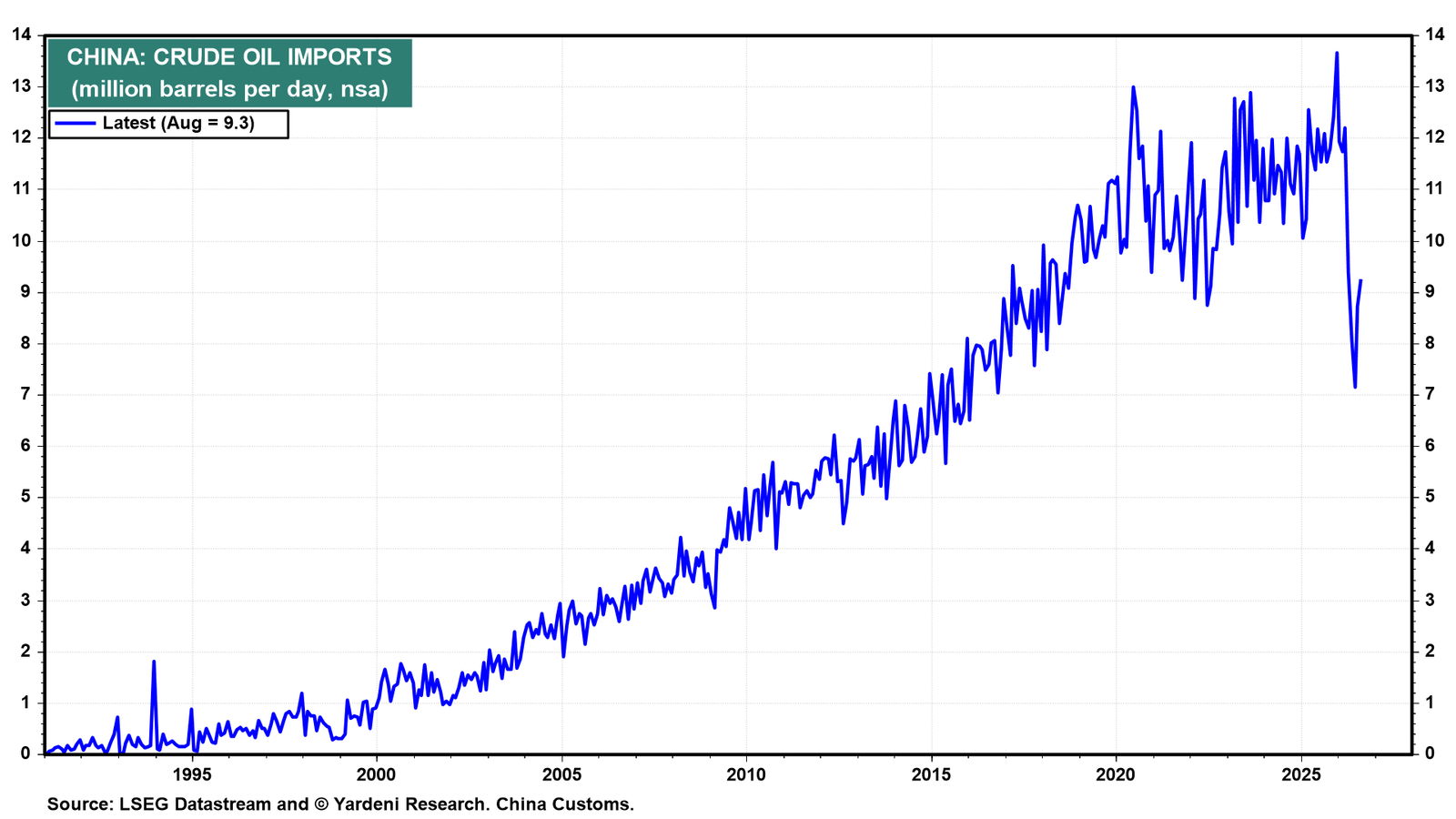
(3) OECD data tracking the past week signal that the recent moderation in oil prices (retreating below $100/bbl) was heavily cushioned by the strategic release of global oil reserves, a sharper-than-expected decline in China's energy imports, and a pivot toward alternative fuels like coal (chart).