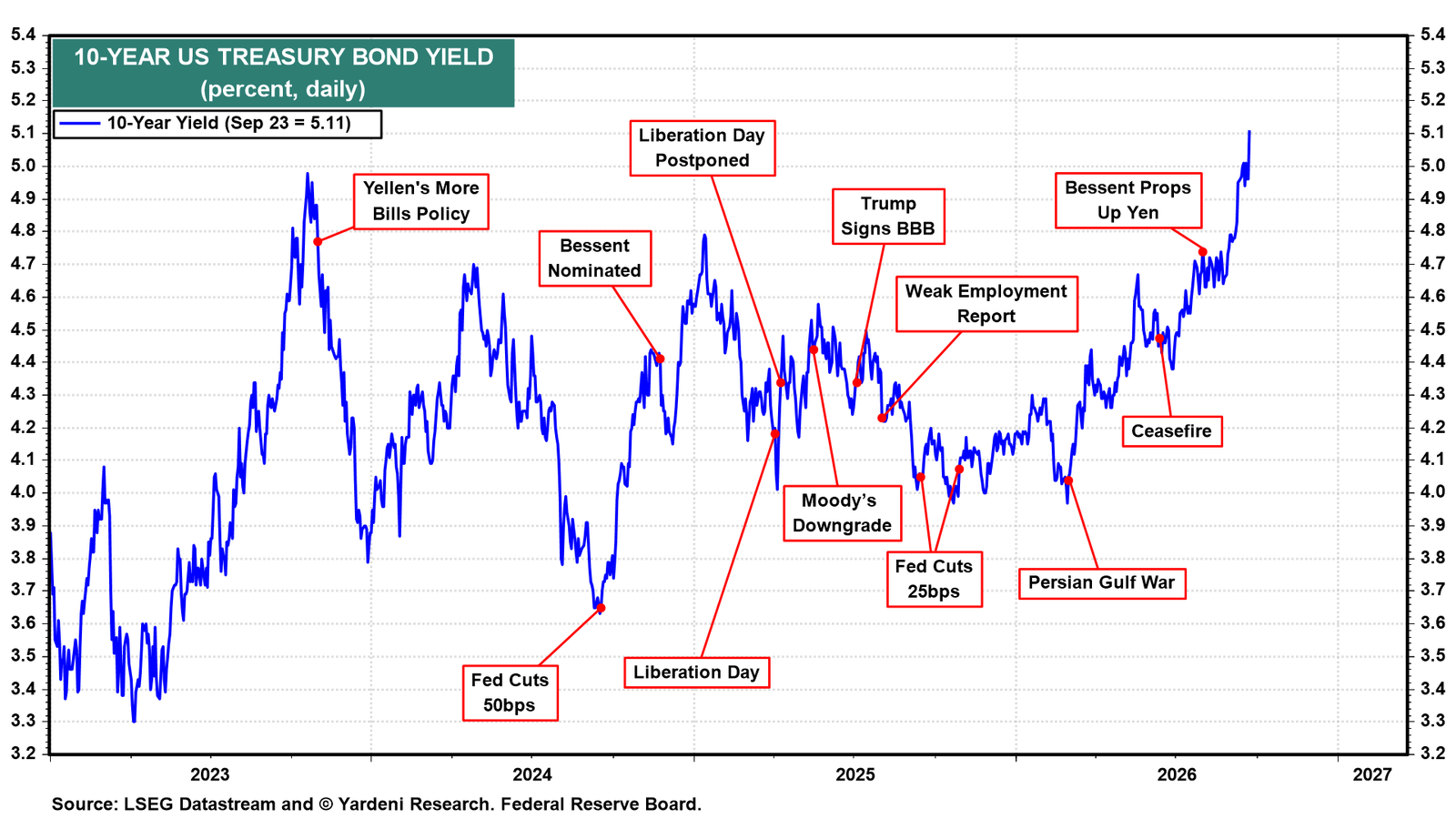
Bond yields have risen for many reasons this year (chart). The war in the Middle East and the war between Russia and Ukraine have pushed up crude oil and refined petroleum product prices. Rising interest rates in Japan are forcing hedge funds to unwind their carry trades. They are paying back their yen loans by selling the higher-yielding government bonds of the US and other countries that they purchased with the proceeds. The surge in the supply of AI-related corporate bonds and the widening US federal budget deficit have also been cited as explanations for the bear market in bonds.
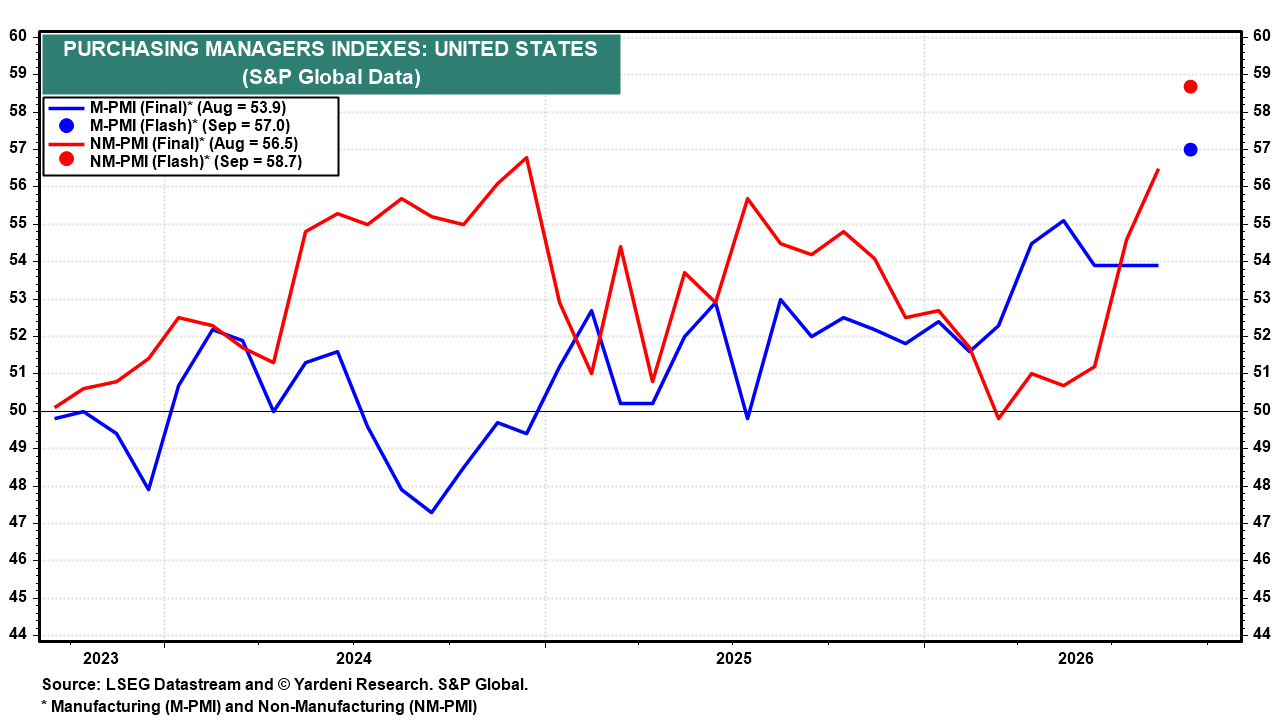
Today, however, the main reason that bond yields rose sharply is that the US economy is booming. Purchasing managers' indexes typically are not huge market movers, but this morning's readings from S&P Global caught the market by surprise. The services PMI jumped to 58.7 in September, its highest level in nearly five years, from 56.5 in August. Its manufacturing counterpart soared to 57.0, a level not seen in more than four years (chart).
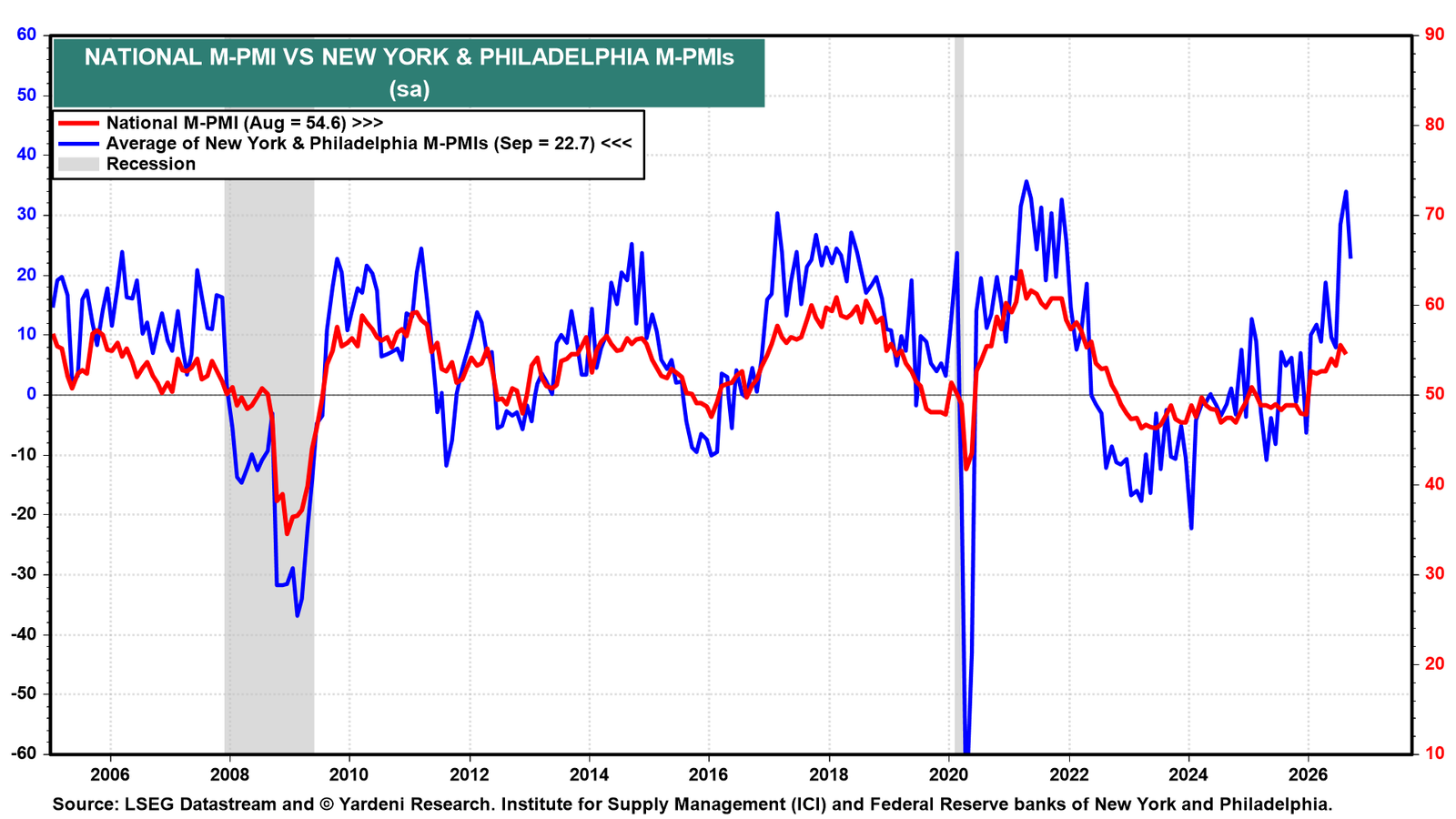
September's regional business surveys from the New York and Philadelphia Feds confirmed the S&P Global manufacturing data and suggest that the national ISM M-PMI also rose sharply in September (chart).
This suggests that the economy's increasing strength this year may be one of the more important explanations for the rise in bond yields. In combination with the inflationary impact of the wars mentioned above, the Fed has been forced to pivot from thinking about more rate cuts at the beginning of this year to a rate hike in September, with another one or two hikes likely before the end of this year.
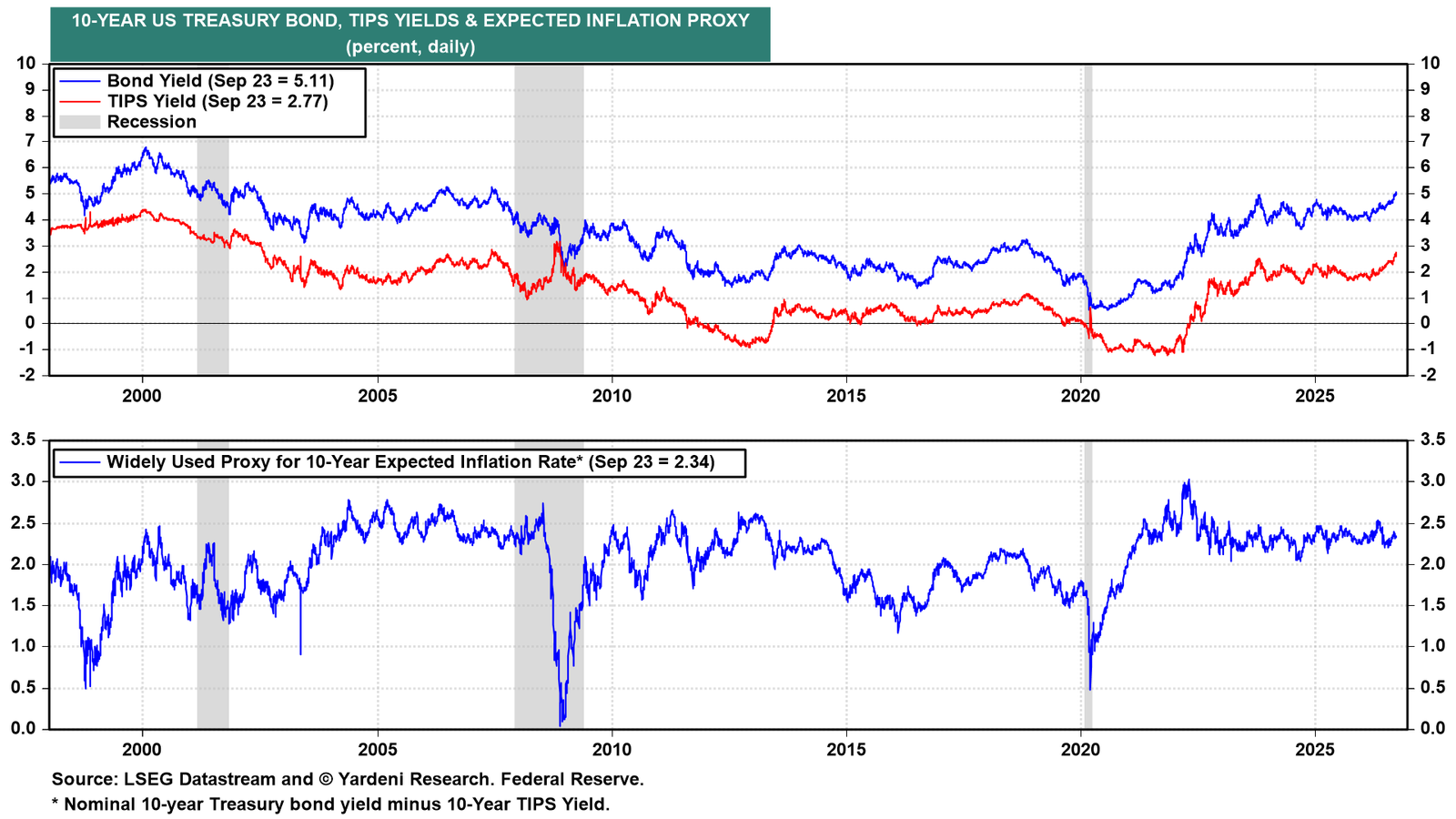
Interestingly, most of this year's increase in the 10-year Treasury bond yield is attributable to the comparable Treasury Inflation-Protected Securities (chart). The former rose 94bps, while the latter rose 84bps. The spread between the two is widely used as a proxy for the 10-year expected inflation rate. It has been range-bound between 2.0% and 2.5% since 2022.
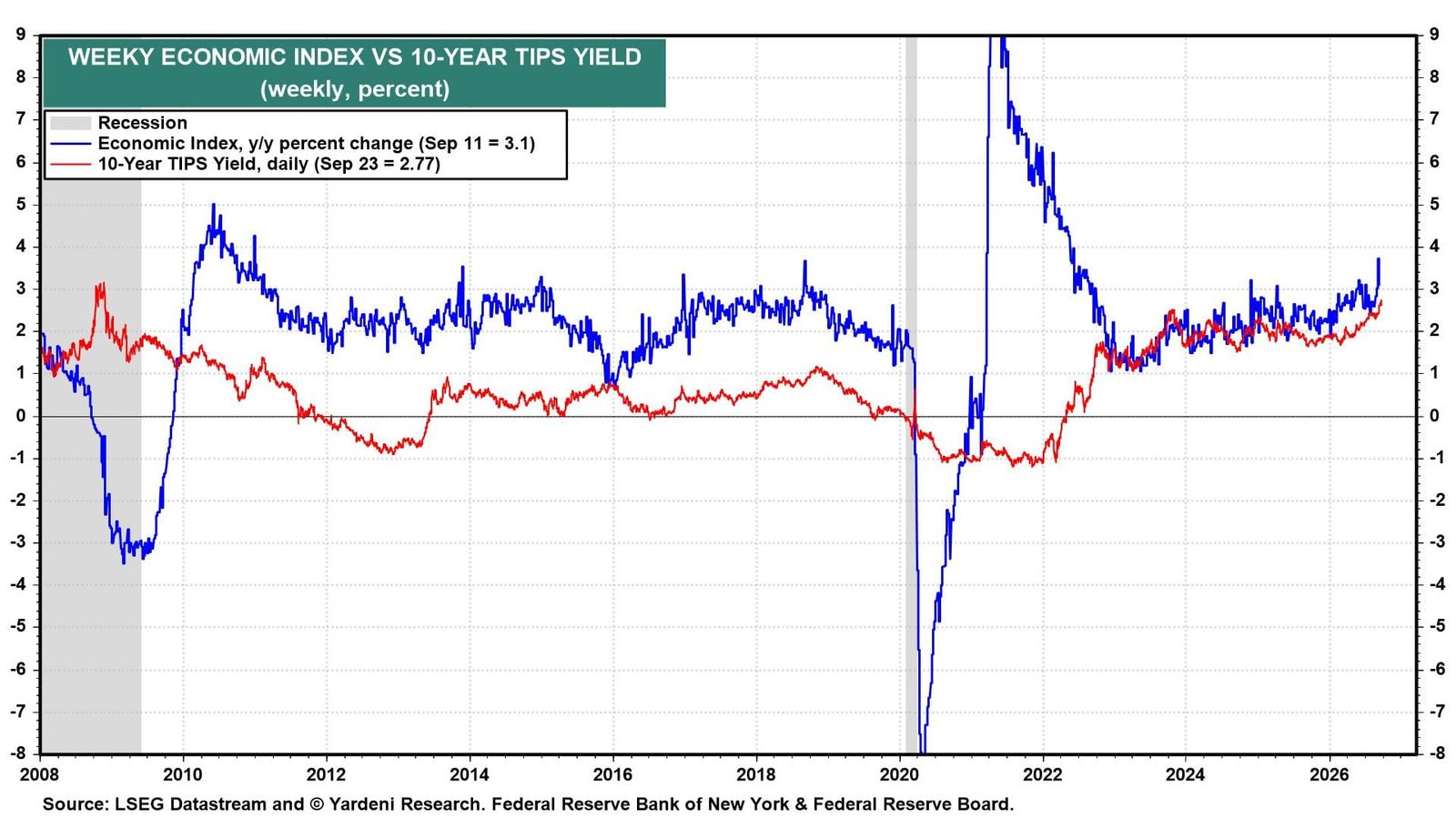
Since 2023, the TIPS yield has closely tracked the Weekly Economic Index compiled by the Federal Reserve Bank of New York as a weekly indicator of real GDP growth on a y/y basis (chart).
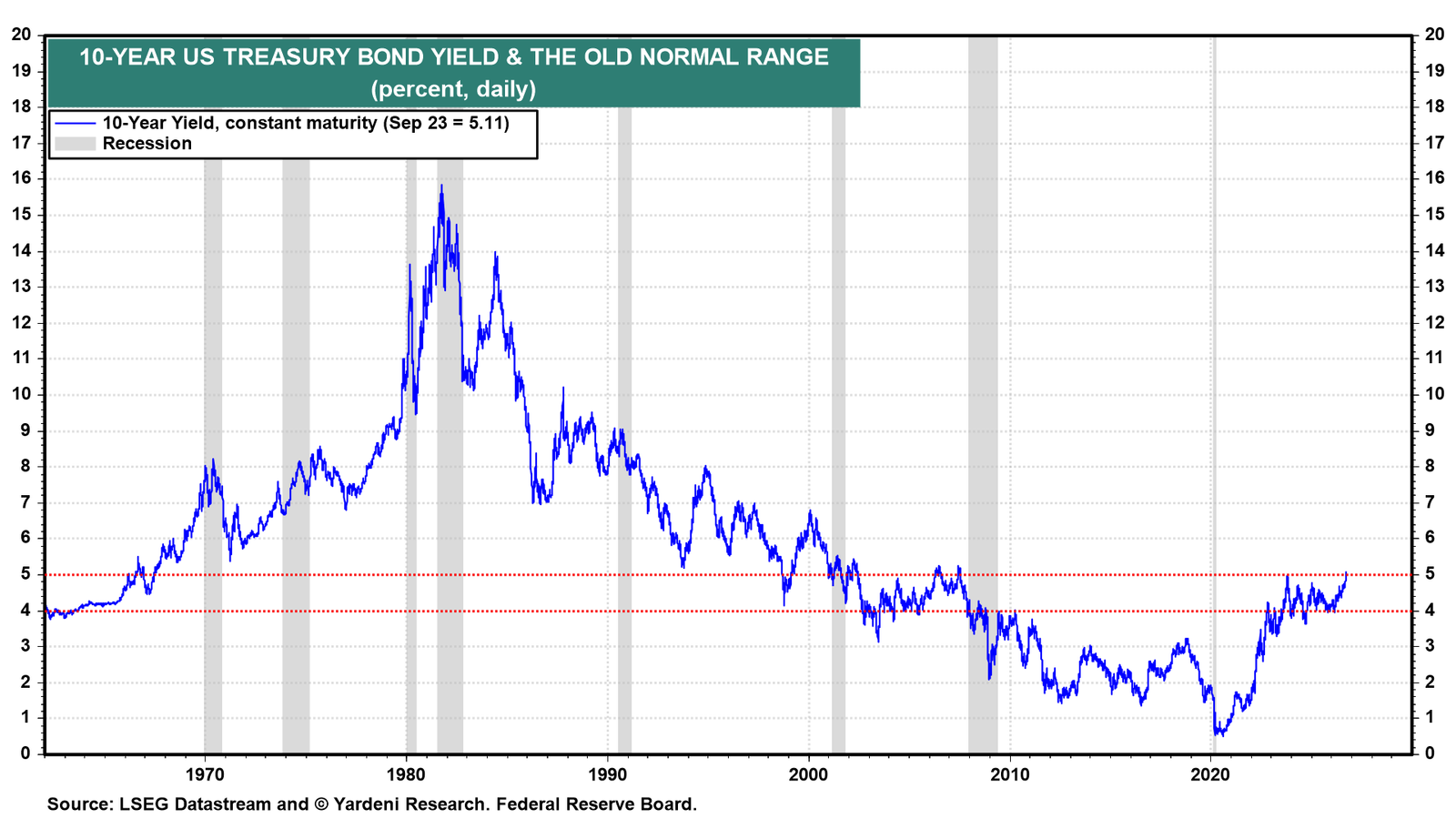
We expected the 10-year bond yield to remain in the 4.00%-5.00% range this year. We aren't giving up on that range just yet; it mirrors the range during the five years before the Great Financial Crisis (chart). Nevertheless, the risks now clearly point to more upside in yields. A relief rally in bond prices would probably require a resolution of the war in the Middle East that would lower oil prices. Another possibility is that US Treasury Secretary Scott Bessent will act to bring bond yields down by buying back more Treasury bonds and issuing more Treasury bills.
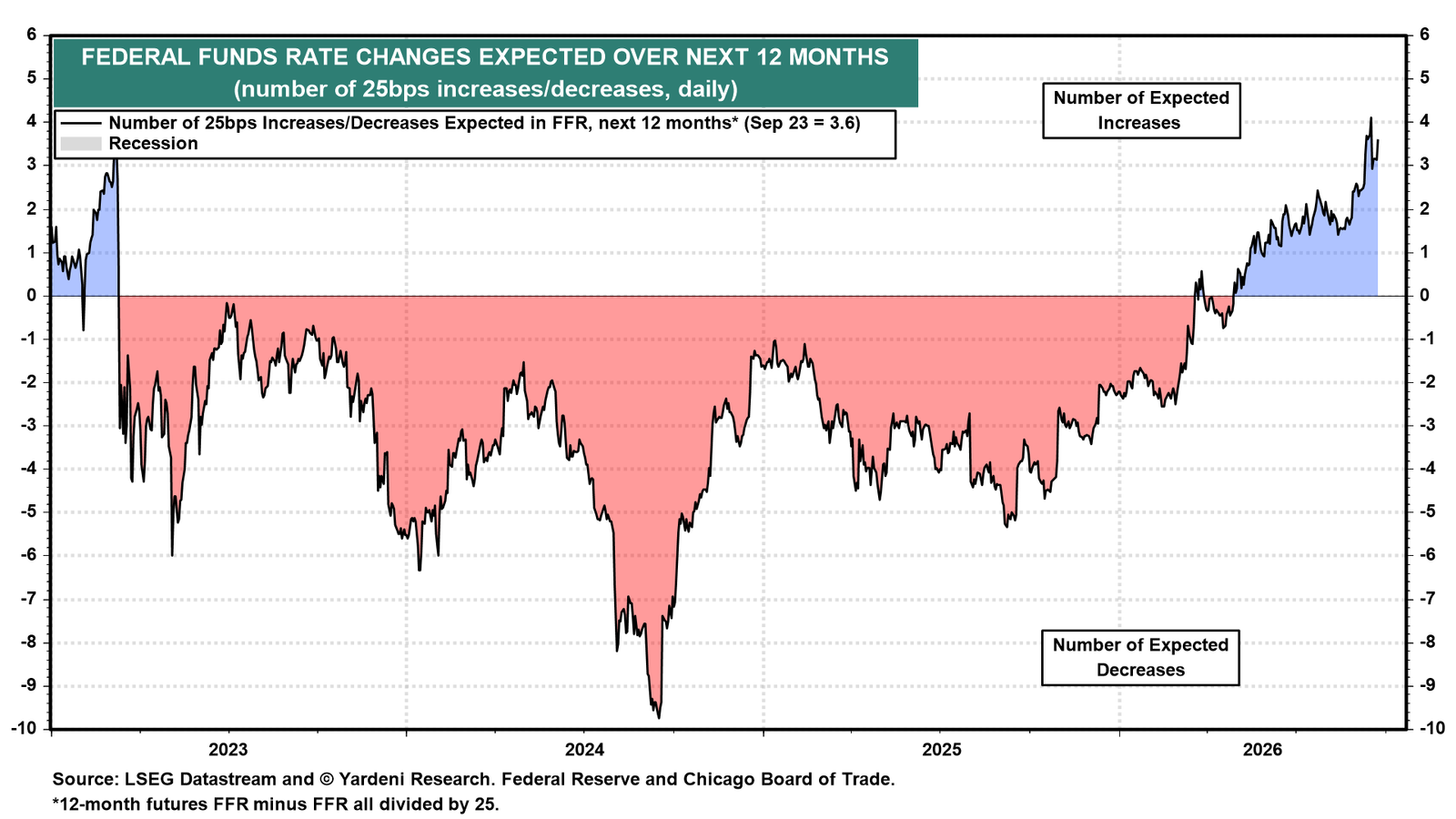
As a result of today's news, the federal funds futures market is now predicting three to four 25bps rate hikes over the next 12 months (chart). Two of them are expected within the next six months.
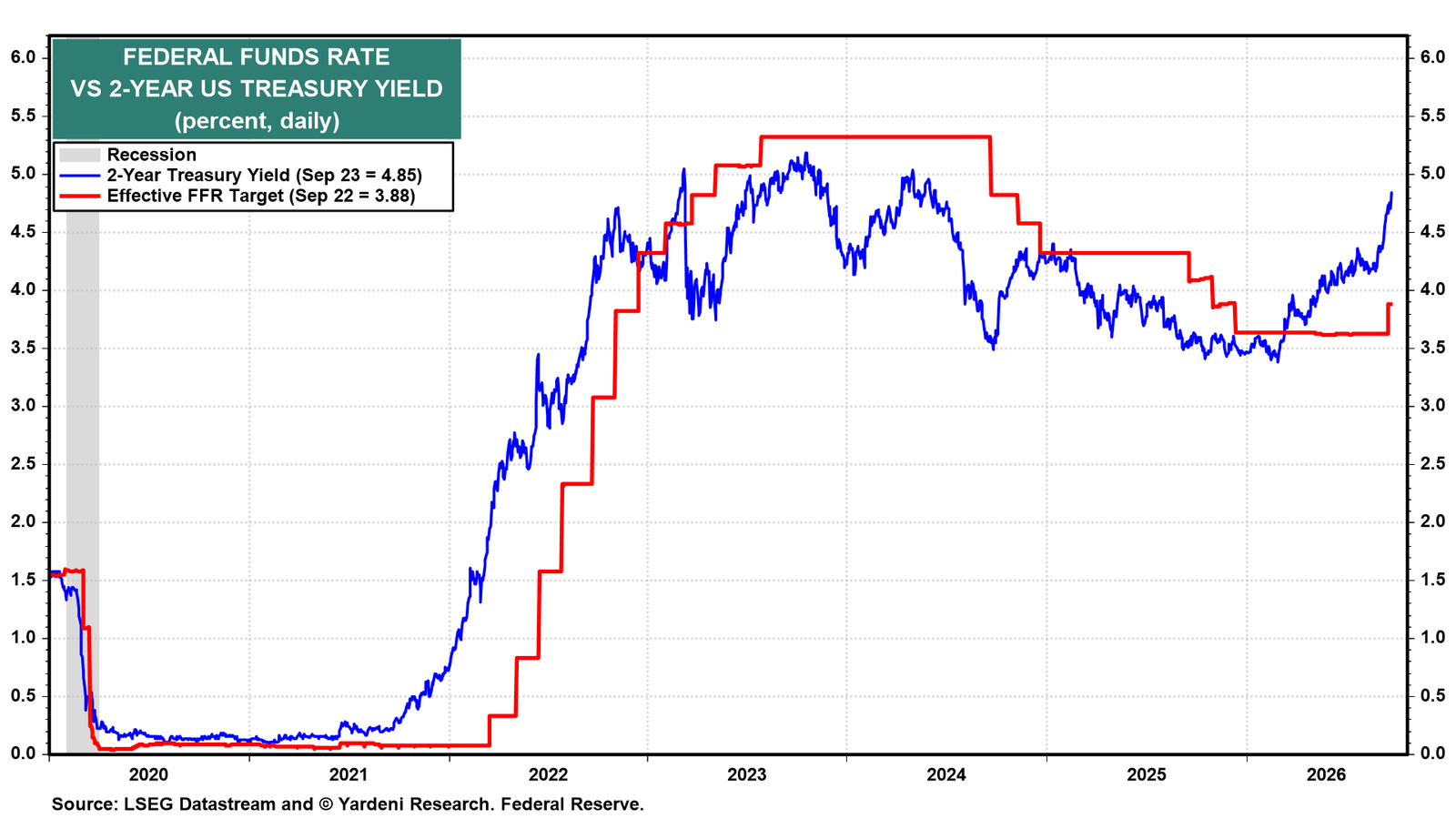
The 2-year US Treasury note yield is predicting four rate hikes over the next 12-24 months (chart).
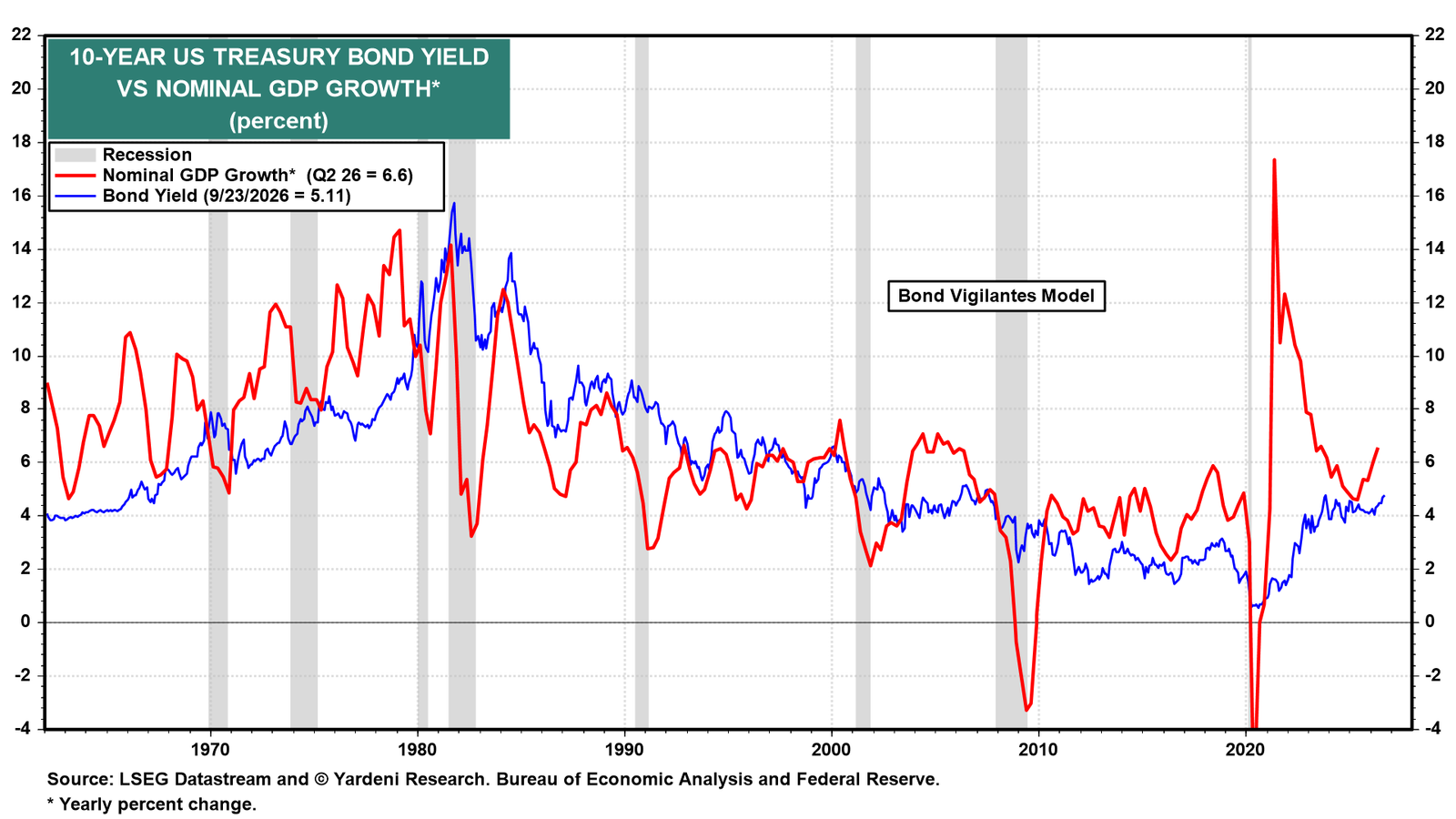
So far, the bond yield remains below the growth rate of nominal GDP, which was 6.6% y/y during Q2-2024 and will probably be even higher during Q3-2024 (chart). In the past, especially during the 1980s, the Bond Vigilantes pushed the bond yield above nominal GDP to slow the economy. They haven't done that so far. The risk is that they will do that if the Fed fails to subdue inflation.
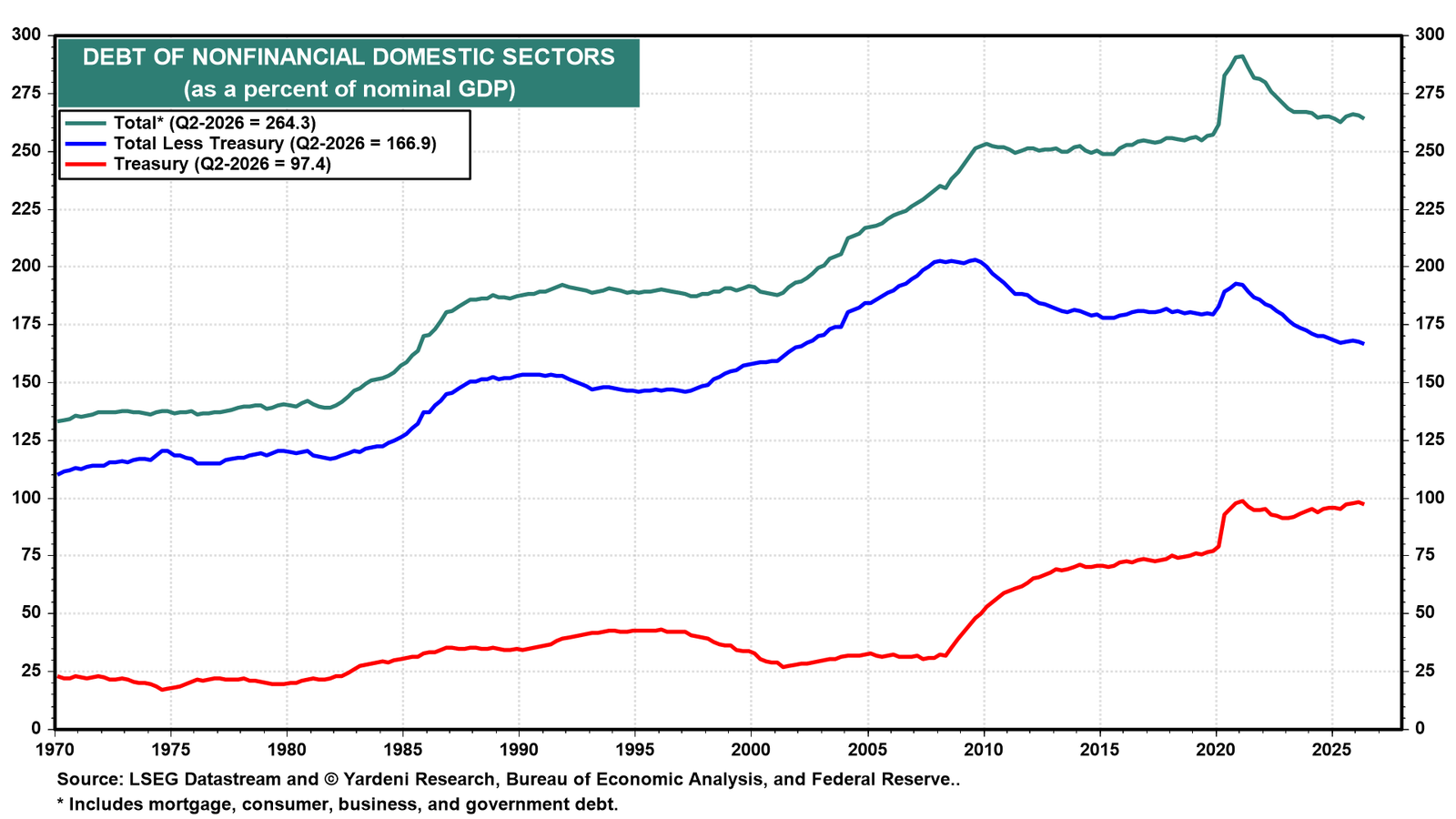
And what about the federal deficit and debt? Better-than-expected economic growth might help to reduce the federal deficit by boosting tax revenues. However, higher interest rates will increase the debt's net interest costs. The only somewhat comforting development is that the rise in the federal debt relative to GDP since 2009 from about 25% to 100% currently has been partially offset by a drop in private nonfinancial private debt relative to GDP from 200% to 166% over the same period (chart).