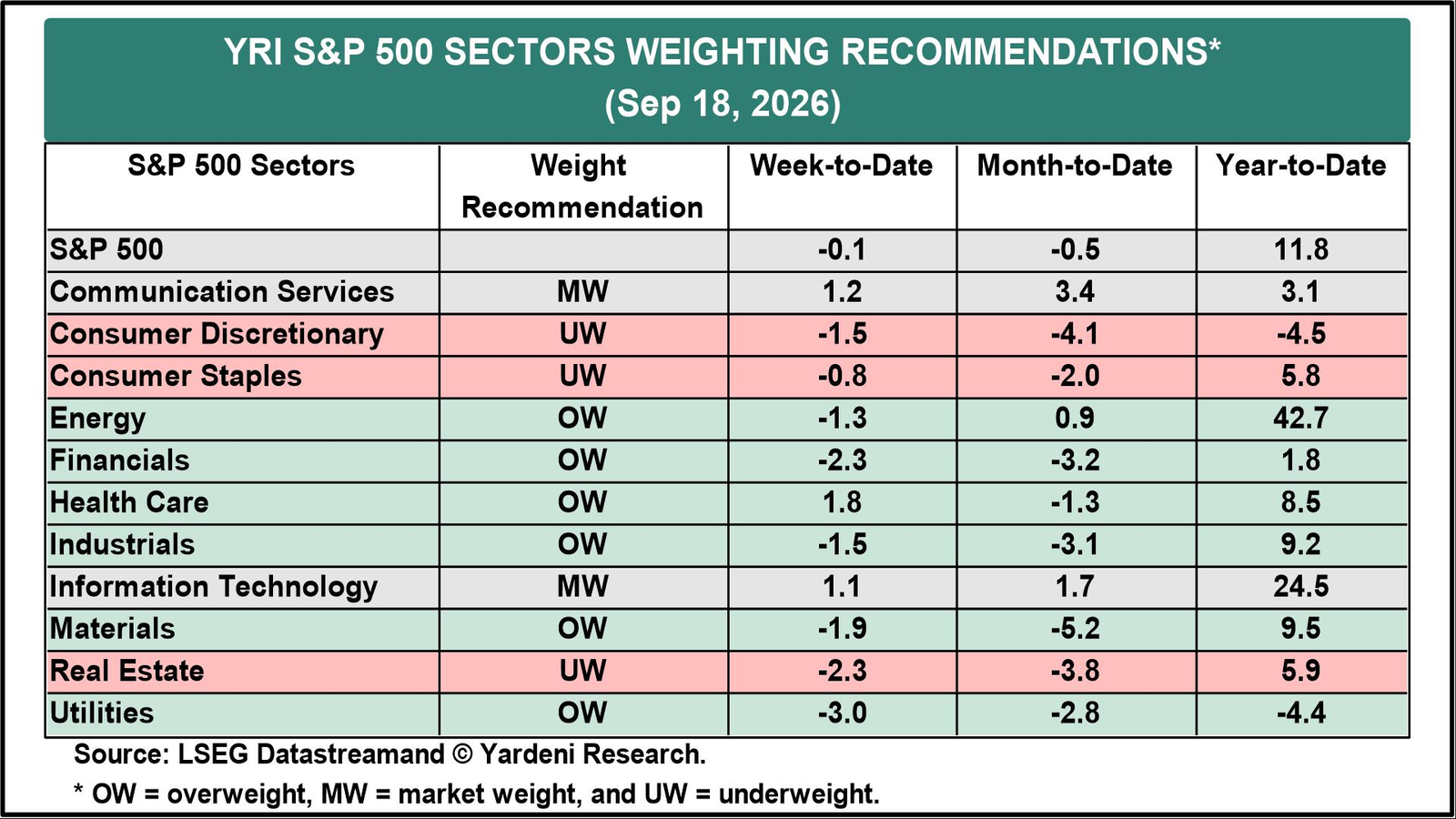
Two shocks hit the stock market last week. On Monday, the heads of the major AI labs called for slowing the development of frontier models, and chip stocks sold off hard. On Wednesday, the FOMC raised the federal funds rate by 25bps to 3.75%-4.00%, the first hike since July 2023, and the updated Dot Plot points to one more this year. The S&P 500 fell 0.1%, with eight of the 11 sectors declining.
The Health Care sector (OW) rose 1.8%, and Communication Services (MW) was close behind at 1.2%. Utilities (OW) fell the most, down 3.0%, while Financials (OW) and Real Estate (UW) both fell 2.3%.
Let's take a closer look at Financials, Communication Services, and Industrials:
(1) Financials. Financials was the second-worst performer this week, but the Fed wasn't the main reason. On Monday, Bank of America CEO Brian Moynihan told the Barclays Global Financial Services Conference that Q3 investment banking fees will come in between $1.6 billion and $1.8 billion, down from $2.0 billion a year earlier.
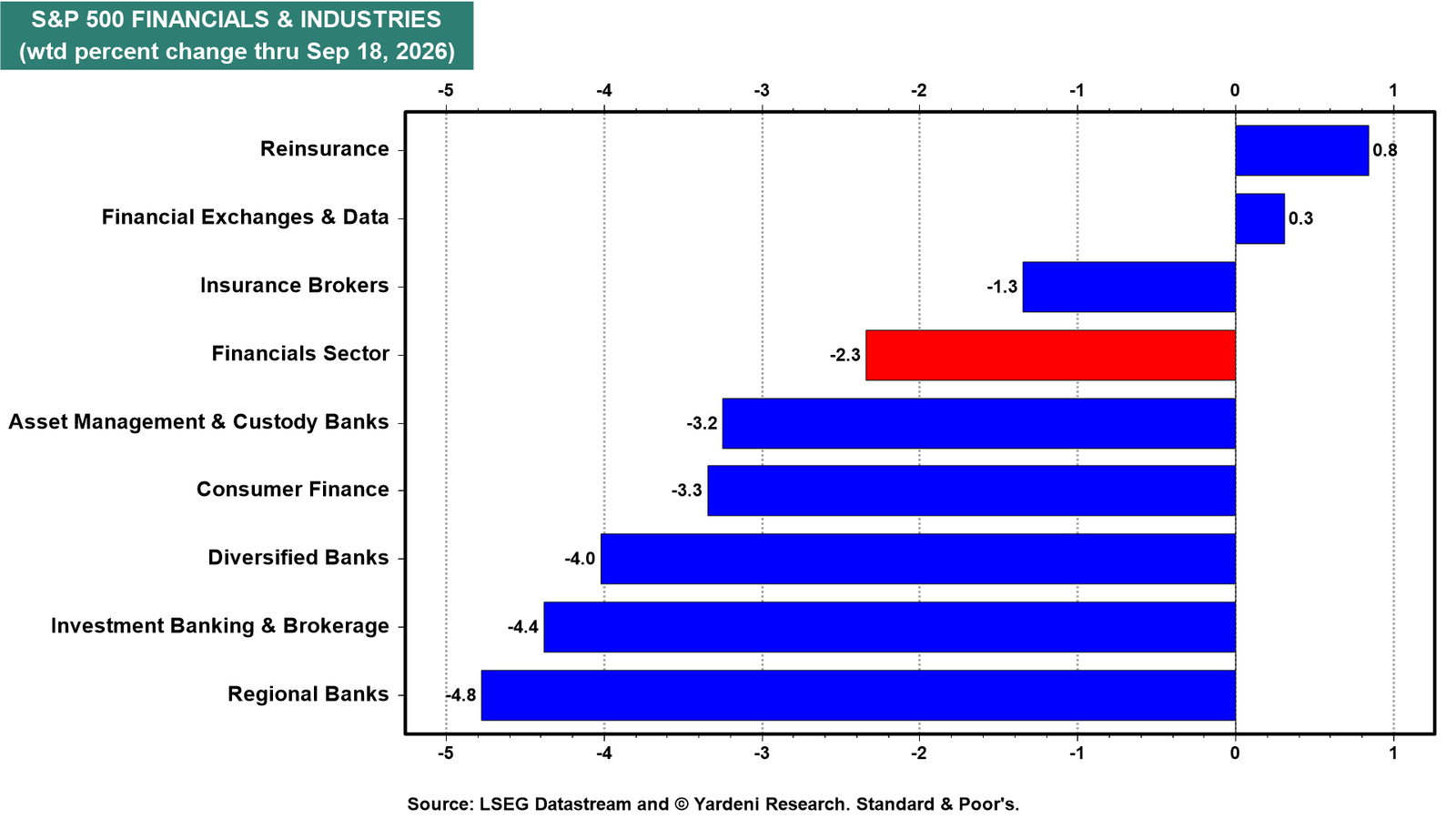
Moynihan cited Dealogic data showing investment banking fees across the market down about 10%. The IPO window has not helped, with OpenAI ruling out a 2026 listing. Bank of America fell 5.1%, and the group fell with it. Investment Banking & Brokerage declined 4.4% this week, the second-worst industry in the sector, while Regional Banks fell 4.8% and Diversified Banks fell 4.0% (chart).
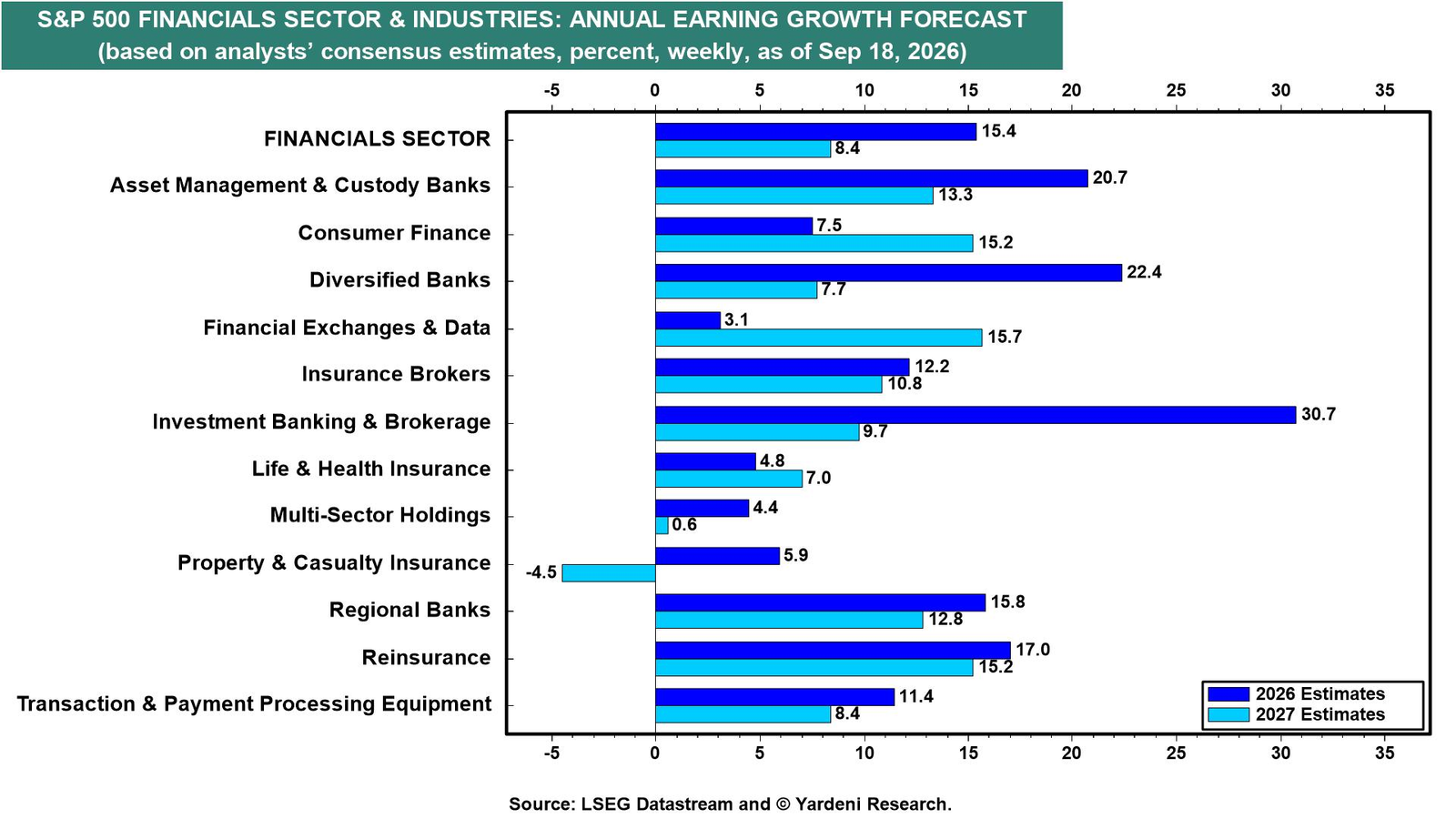
Analysts also expect the deal boom to fade. They just put it a year out. Their consensus estimates represent earnings growth for Investment Banking & Brokerage companies of 30.7% this year but just 9.7% in 2027 (chart). Moynihan says the fade is happening now.
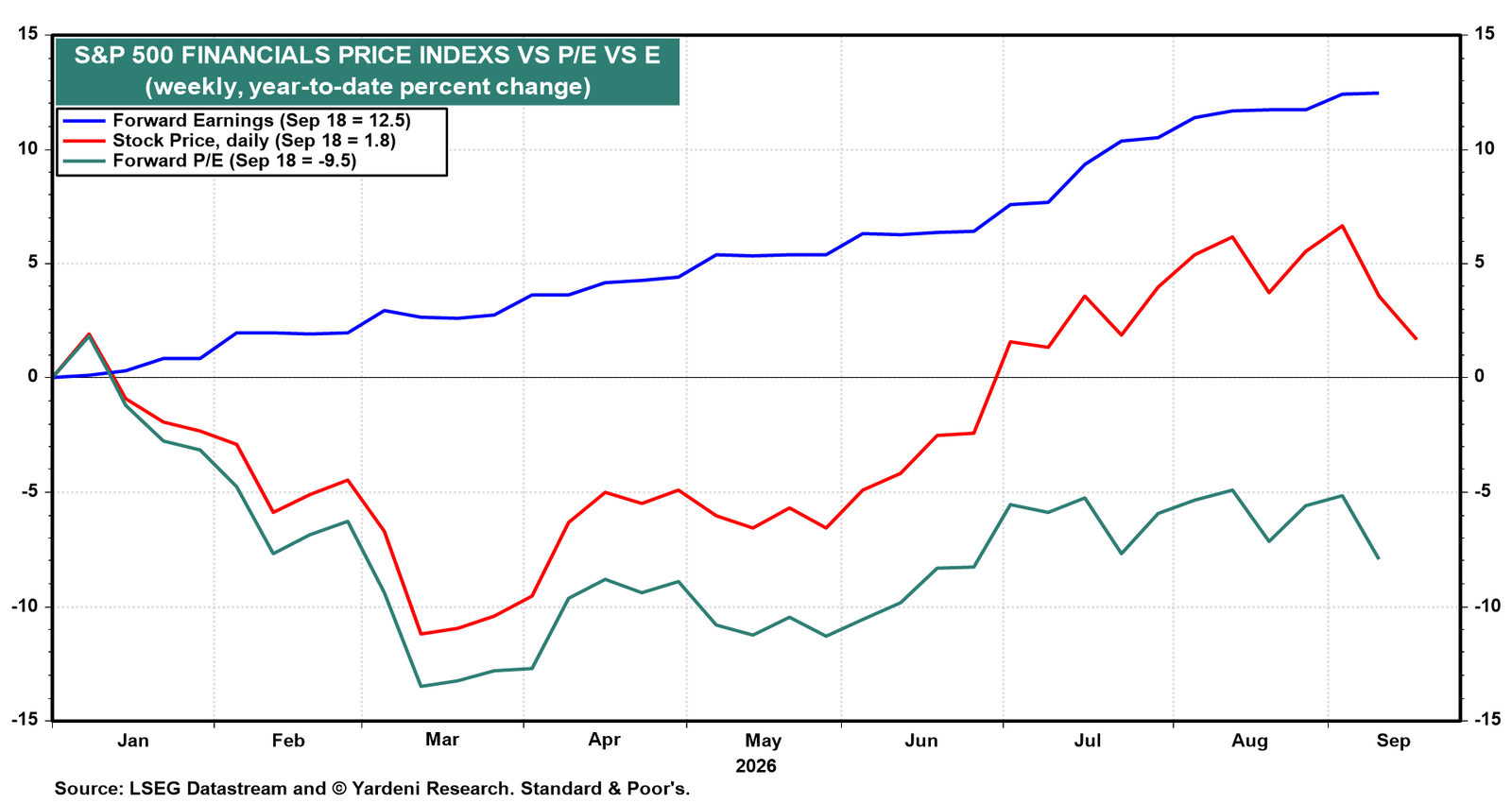
None of that has dented the fundamentals. Forward earnings is up 12.5% ytd, but the price is up just 1.8% because the forward P/E is down 9.5% (chart).
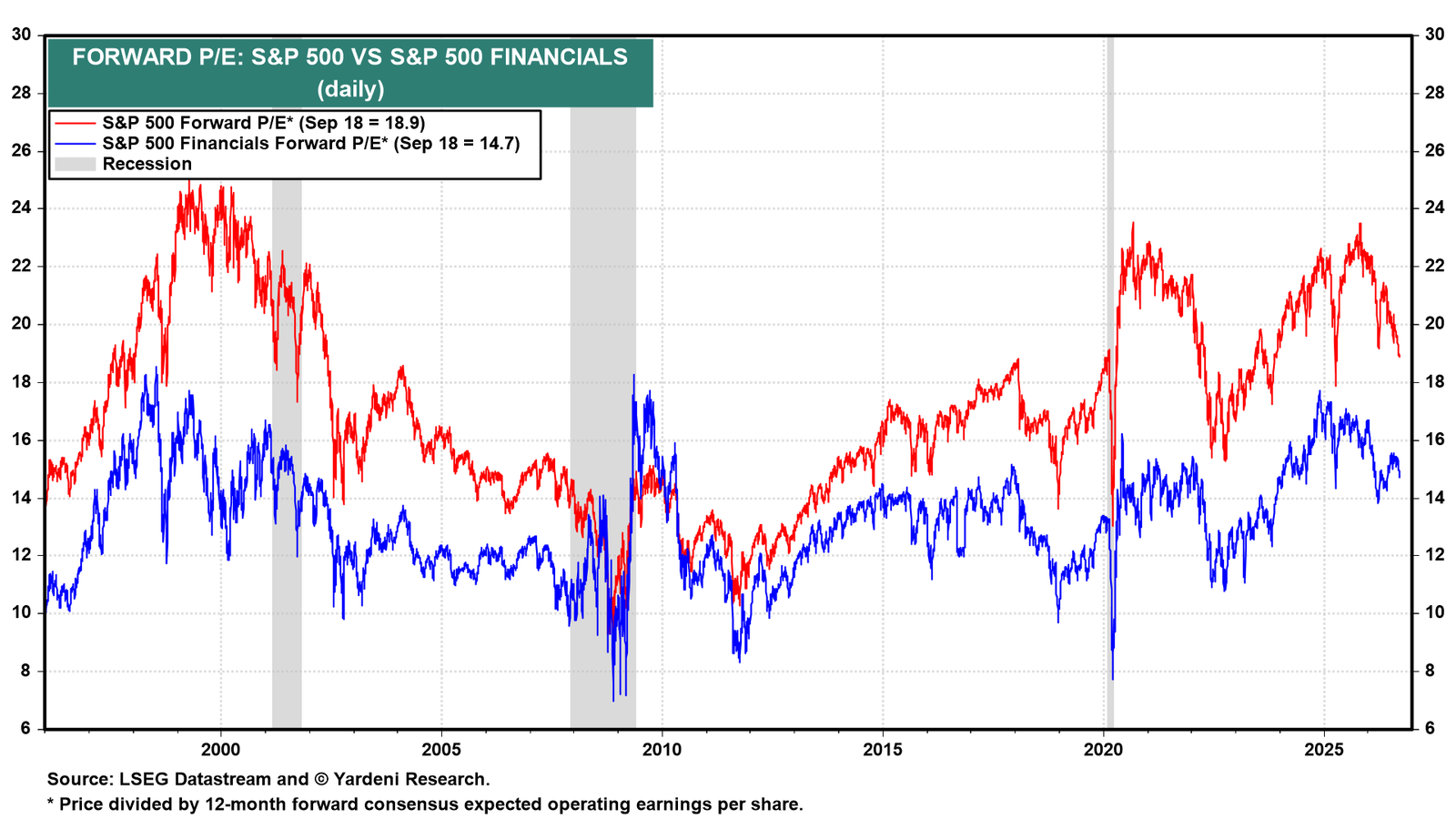
The Financials sector’s companies collectively trade at 14.7 times forward earnings versus 18.9 for the S&P 500, a discount the sector has carried since 2010 (chart). The sector's forward profit margin is at a record 22.1%. We are retaining our overweight rating on Financials.
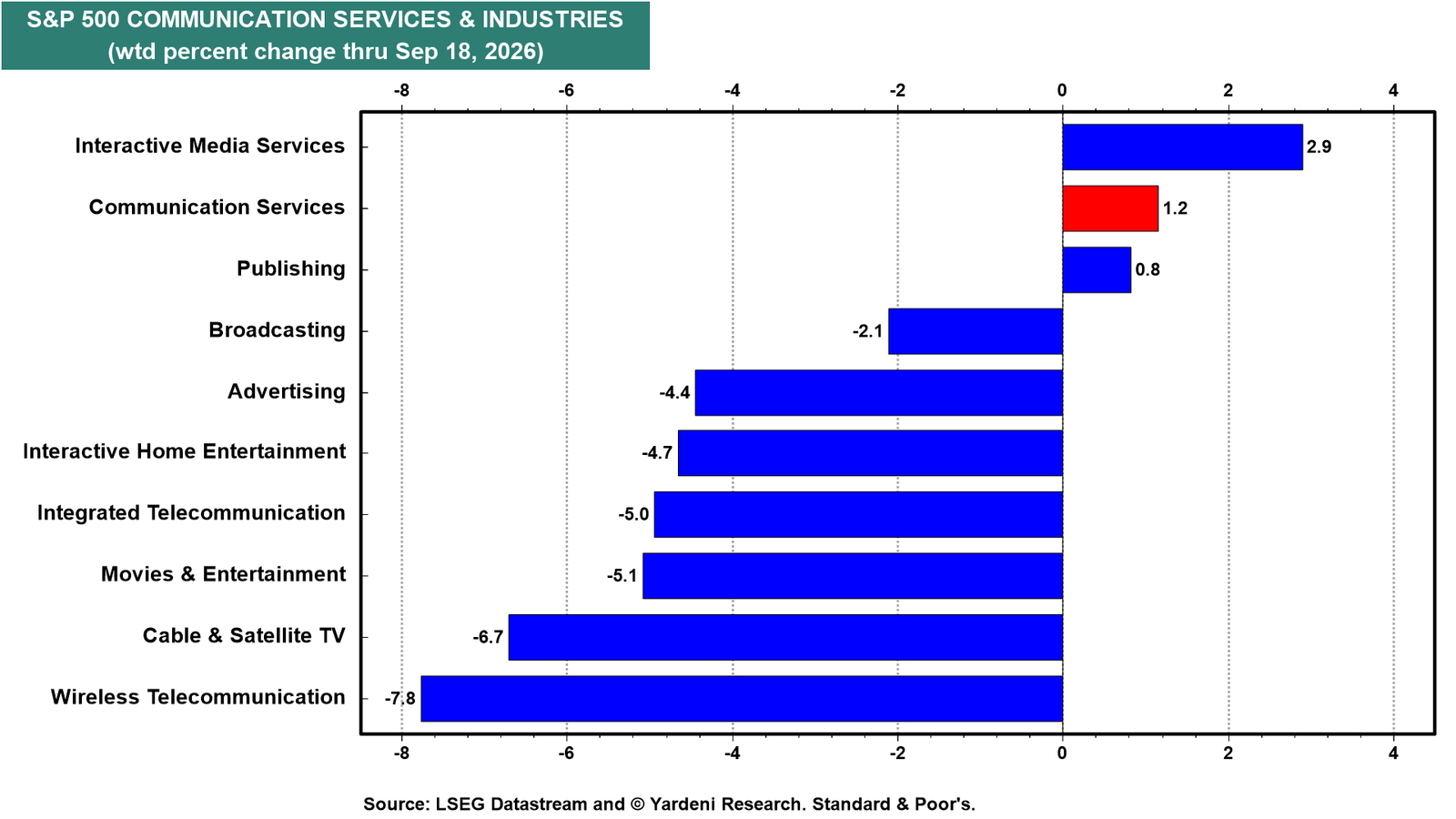
(2) Communication Services. Within Communication Services, up 1.2% this week, Interactive Media Services did the work, rising 2.9% (chart).
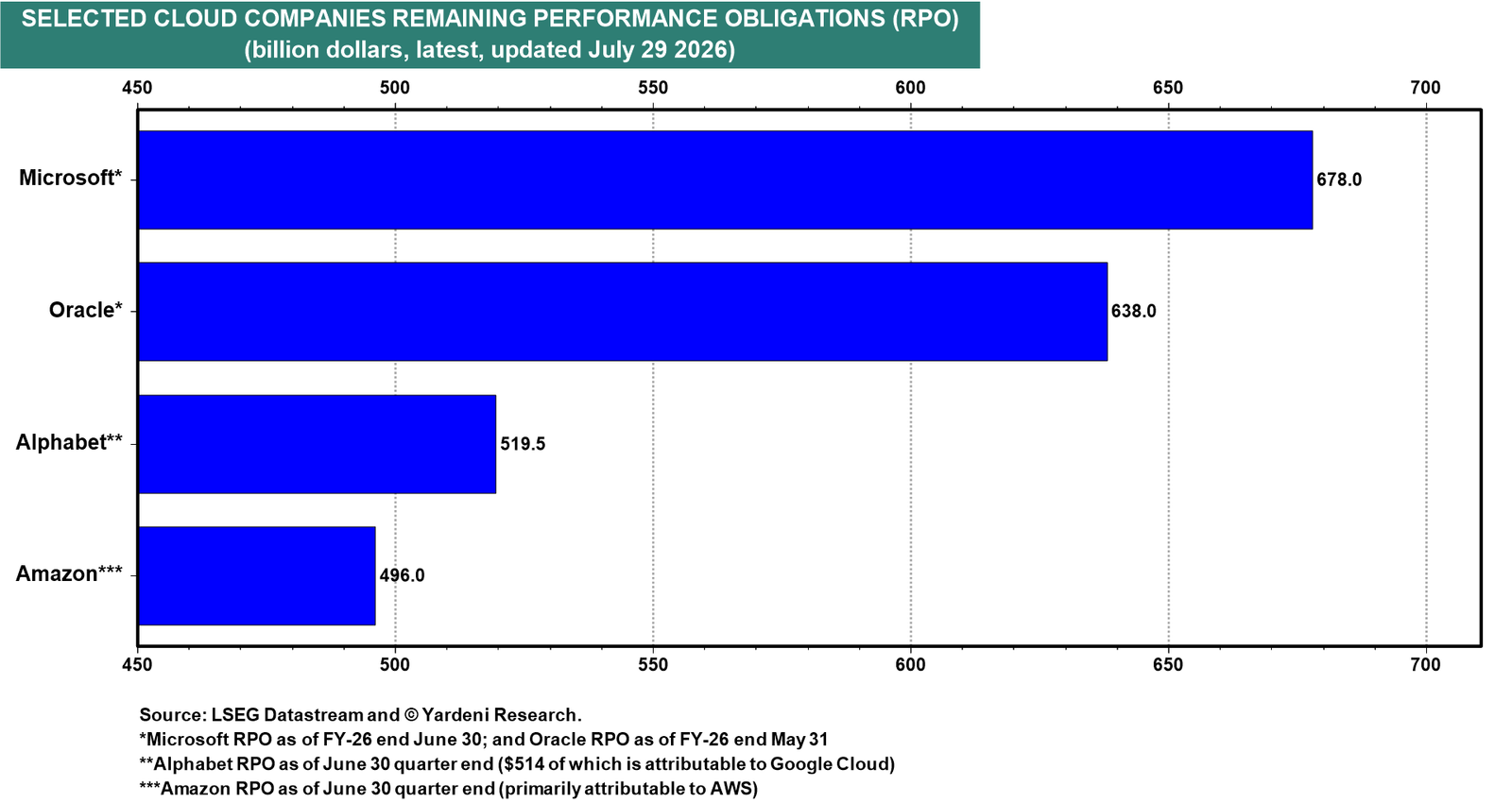
Monday's selloff ran on fears that a slower AI LLM training race means less demand for compute, as the SOXX gave back 5.5%. Nevertheless, there is a large backlog in the demand for compute as measured by remaining performance obligations of the hyperscalers (chart).
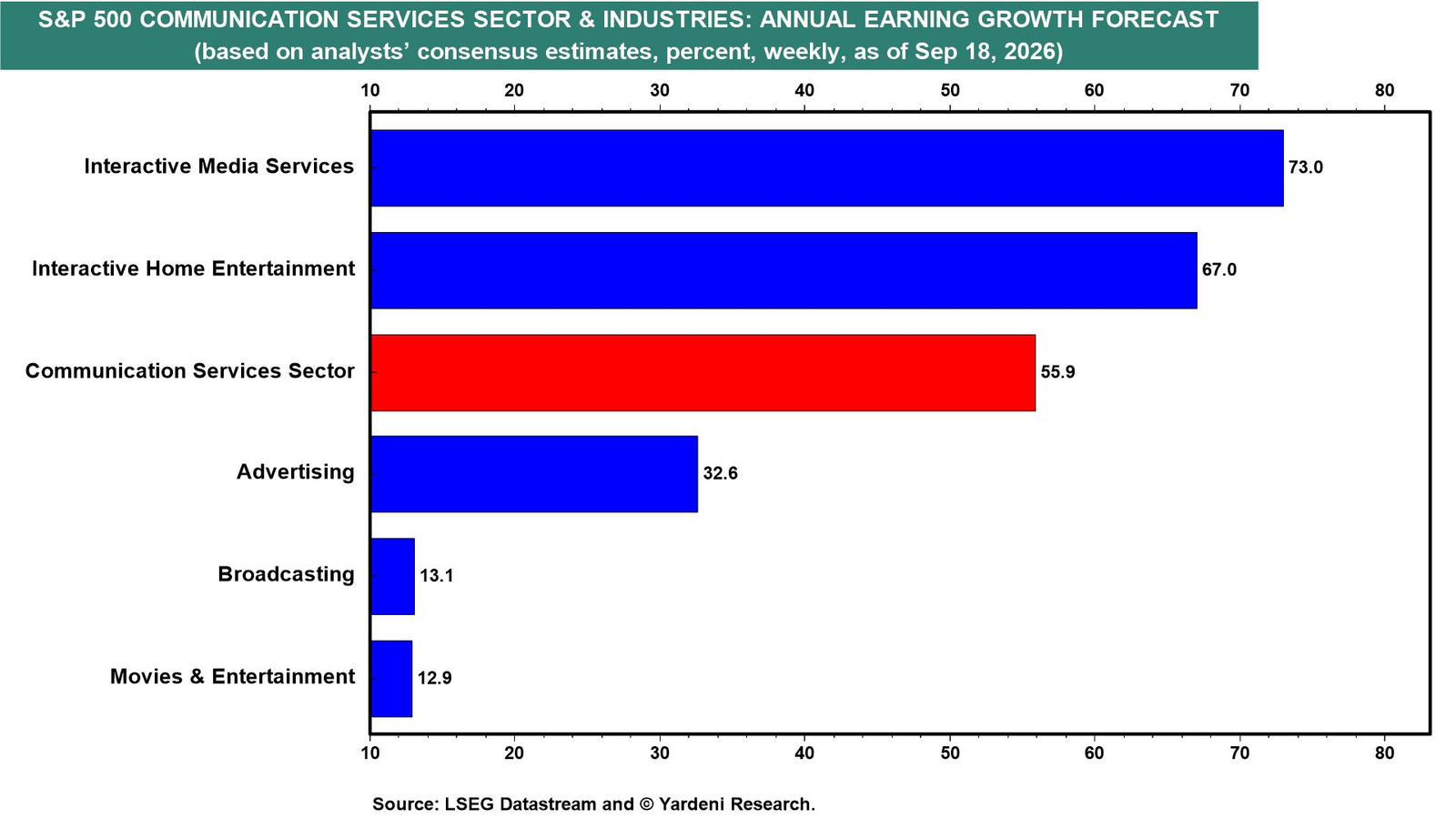
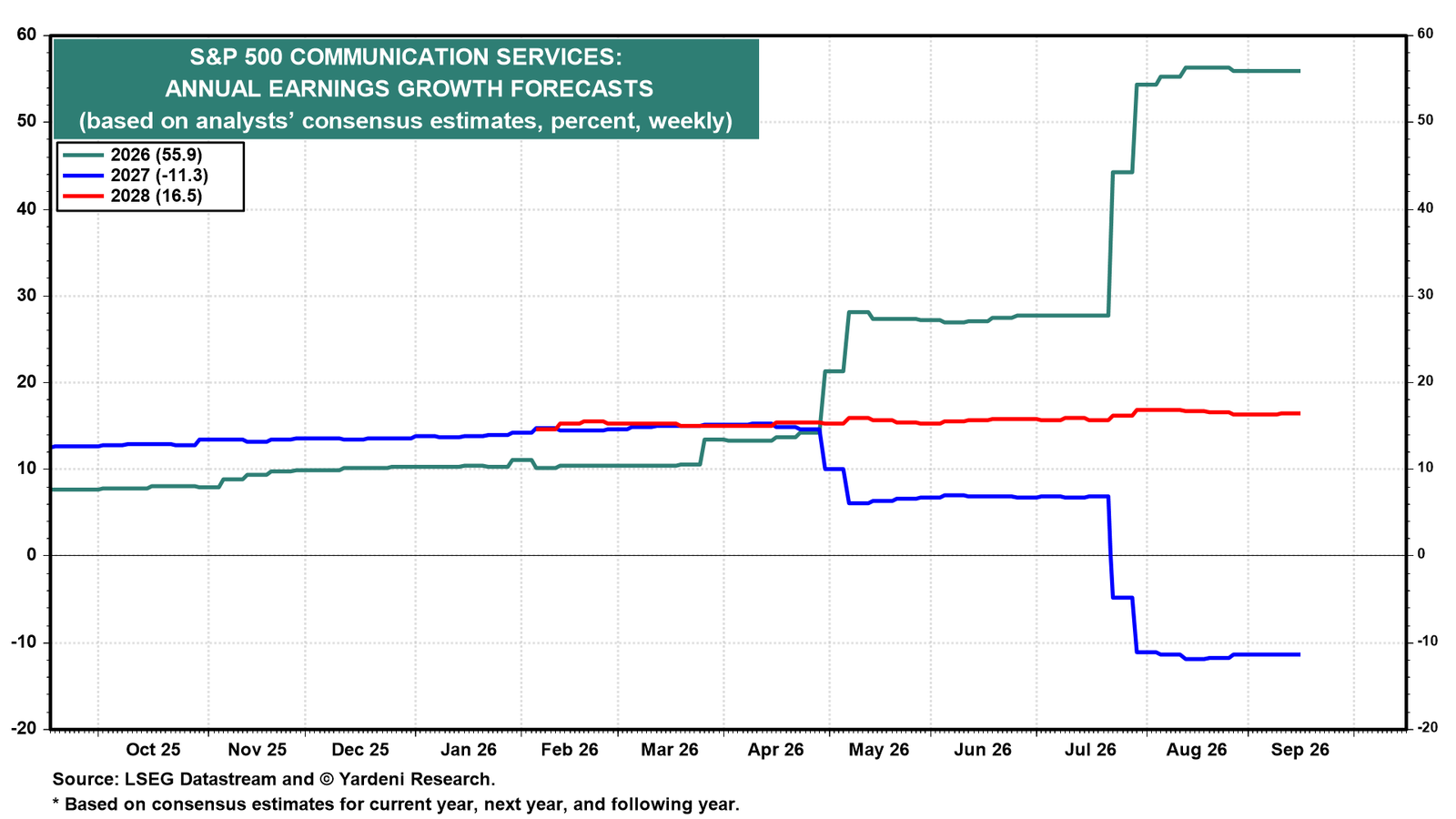
Alphabet and Meta account for 78.4% of the sector's market capitalization and 70.0% of its forward earnings. Interactive Media has a 29.4% forward profit margin versus 21.7% for Communication Services as a whole, and analysts expect earnings to grow 73.0% this year versus 55.9% for the sector (chart).
The sector trades at a forward P/E of 18.4 even though analysts collectively expect an earnings decline in 2027 of 11.3% (chart). Google and Meta represent 70% of the sector’s earnings and the entire growth story. Remove them, and the fundamentals do not support the multiple. We are retaining our market-weight rating on Communication Services.
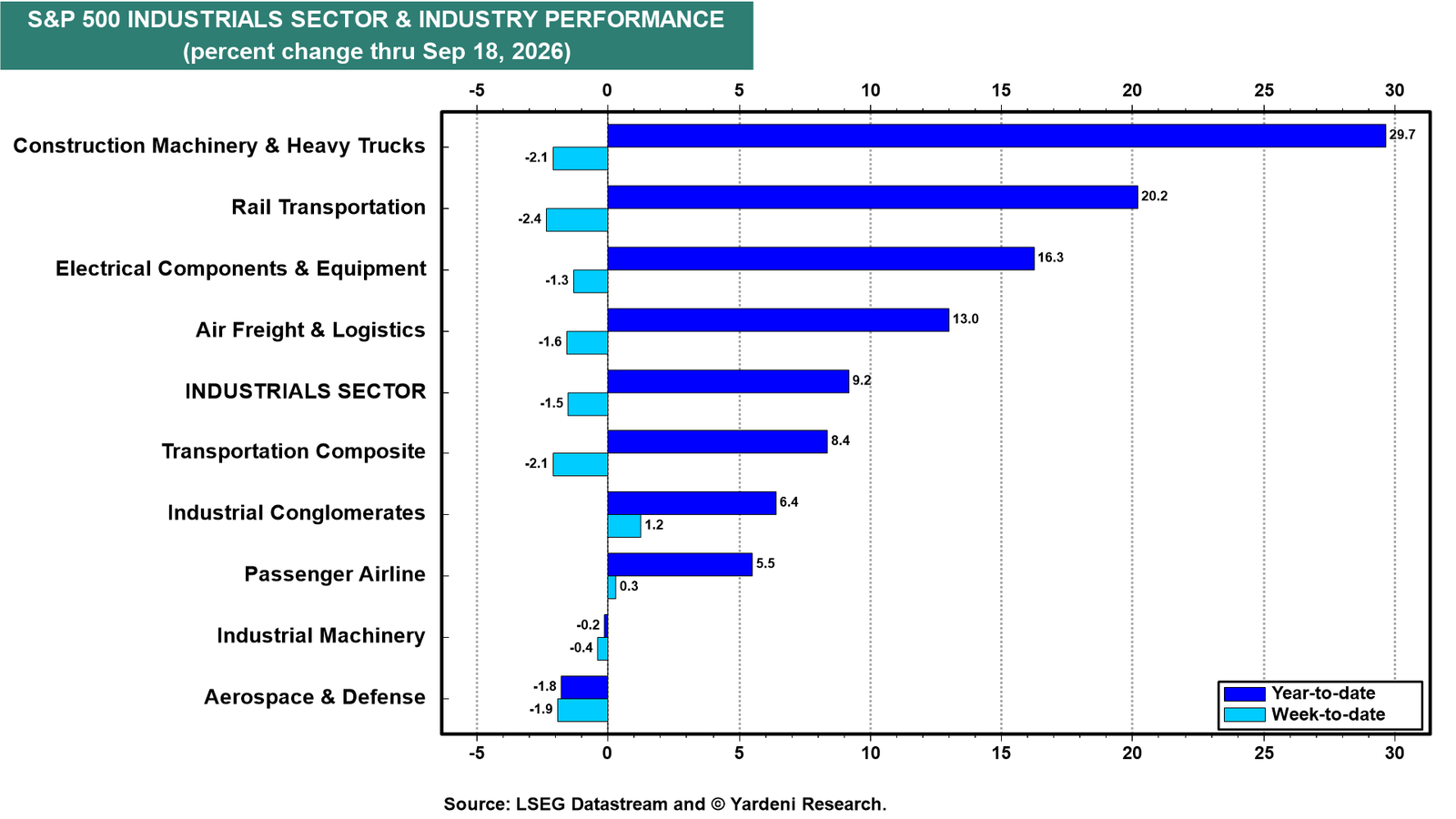
(3) Industrials. Industrials is down 3.1% mtd and still up 9.2% ytd. Last week's selloff hit its best performers. Construction Machinery & Heavy Trucks and Rail Transportation lead the sector ytd at 29.7% and 20.2%, and last week they were the sector's two worst industries, down 2.1% and 2.4% (chart).
Construction Machinery's 2026 earnings forecast has doubled to 40.1% from 18% in January. A pause in frontier AI model training does not cancel orders already placed. Rail revenue growth for 2026 has jumped to 8.8% from 2.9% in March.
We flagged the sector’s valuation risk in April, and it has resolved in our favor. The sector's forward P/E was 25.5 back then versus 20.9 for the broader S&P 500 index. It is now 22.4 against 18.9 (chart). Electrical Components has been devalued, with its forward P/E dropping from 28.7 to 24.4, even as its forward profit margin has risen to 18.2%.
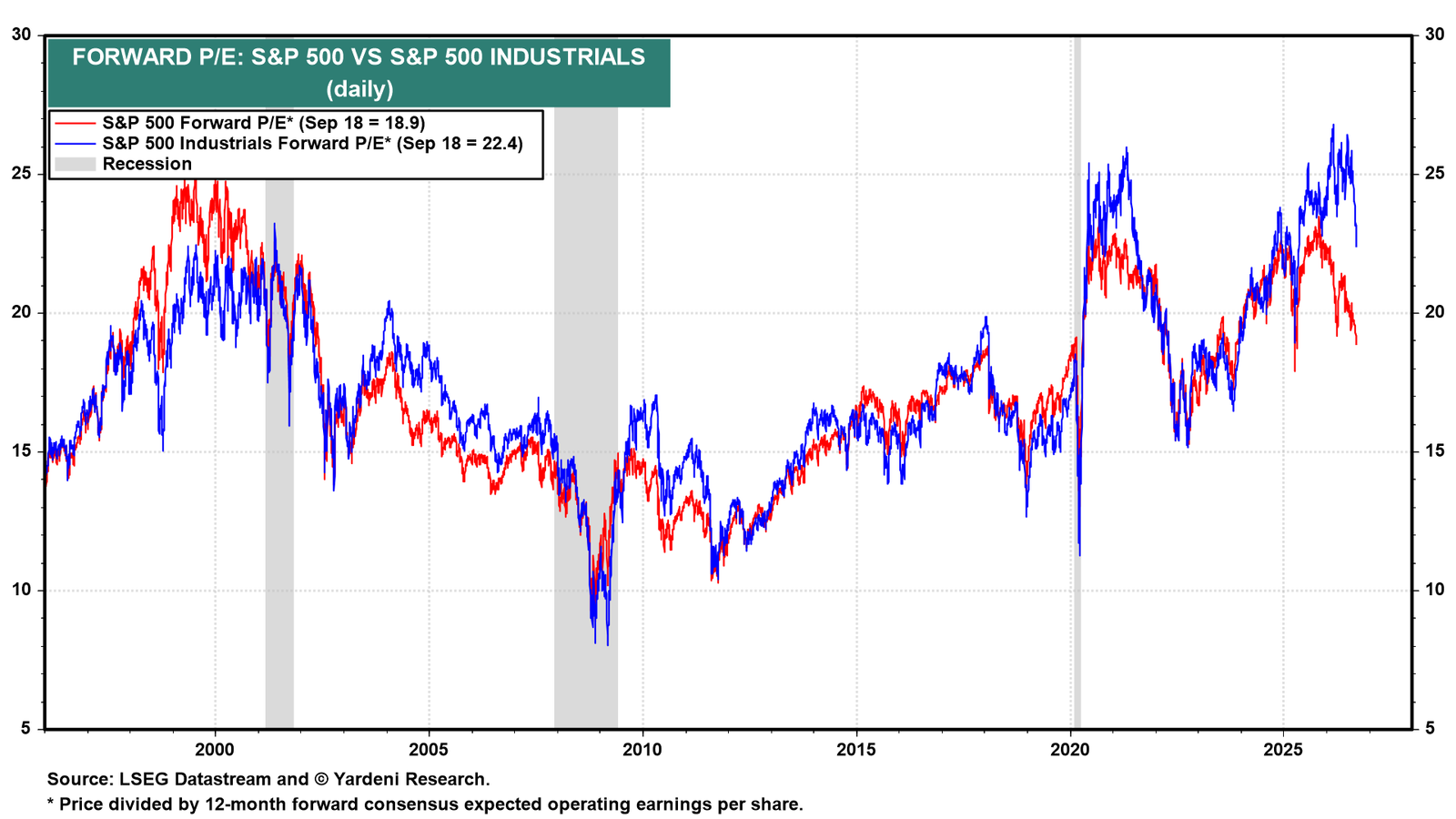
Industrials still trades at a premium to the S&P 500 multiple on slower earnings growth expectations. The analysts’ consensus for long-term earnings growth is 18.0% compared with 26.6% for the S&P 500. We are retaining our overweight rating on Industrials.