Central banks in the US, Europe, and Japan all raised their policy rates over the last two weeks. Bond yields are rising nearly everywhere. Neither development has broken the global stock bull market, as earnings forecasts keep getting marked up.
The Stay Home and Go Global investment strategies have been tracking each other fairly closely in recent months, with limited dispersion between the two. The divergence instead has been across individual markets.
Here's more:
I. Stay Home vs Go Global
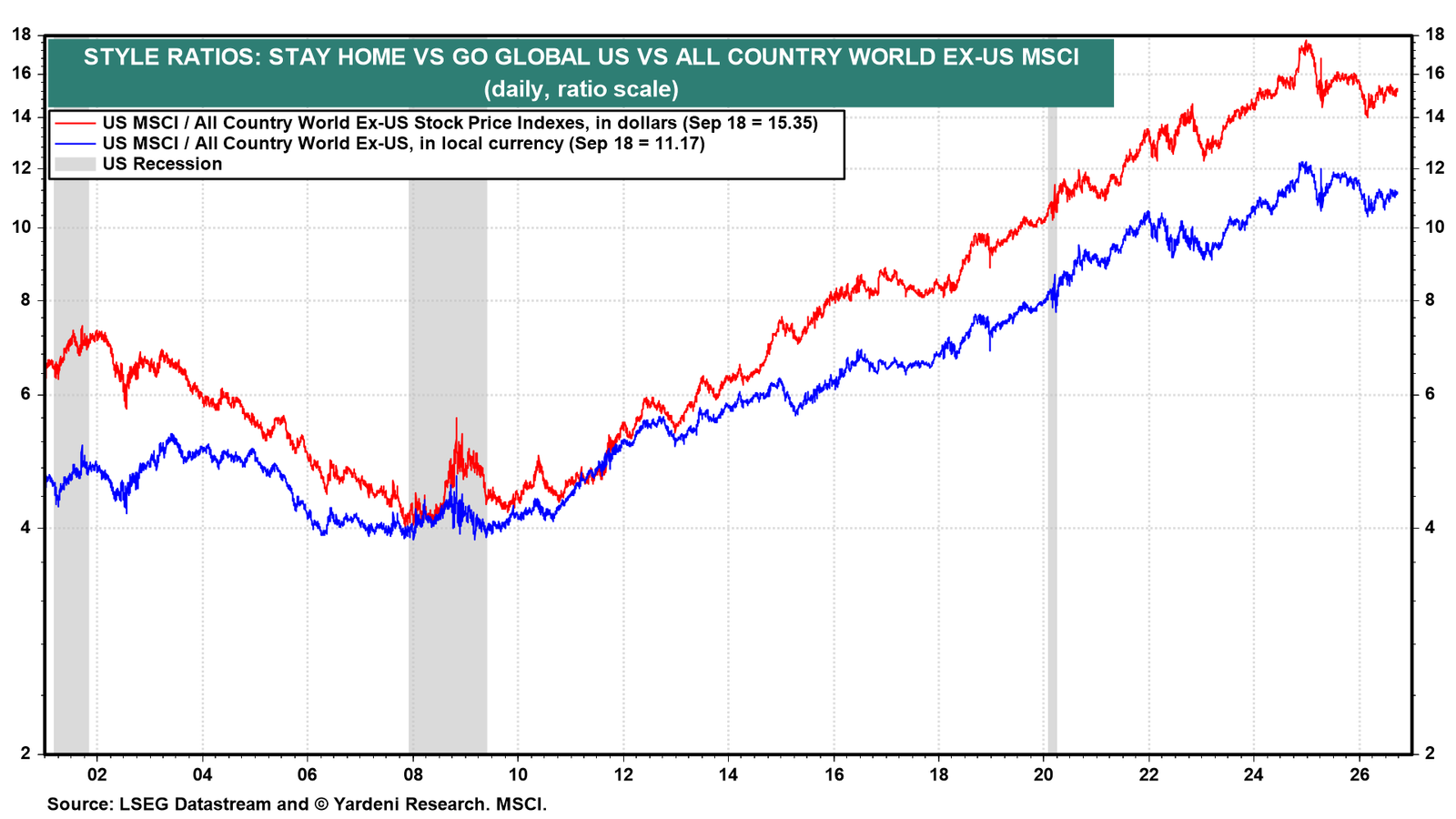
The ratios of the US MSCI to the All Country World (ACW) ex-US MSCI in dollars and in local currencies remain on downtrends relative to their early-2025 highs (charts). However, they have been relatively flat so far this year.
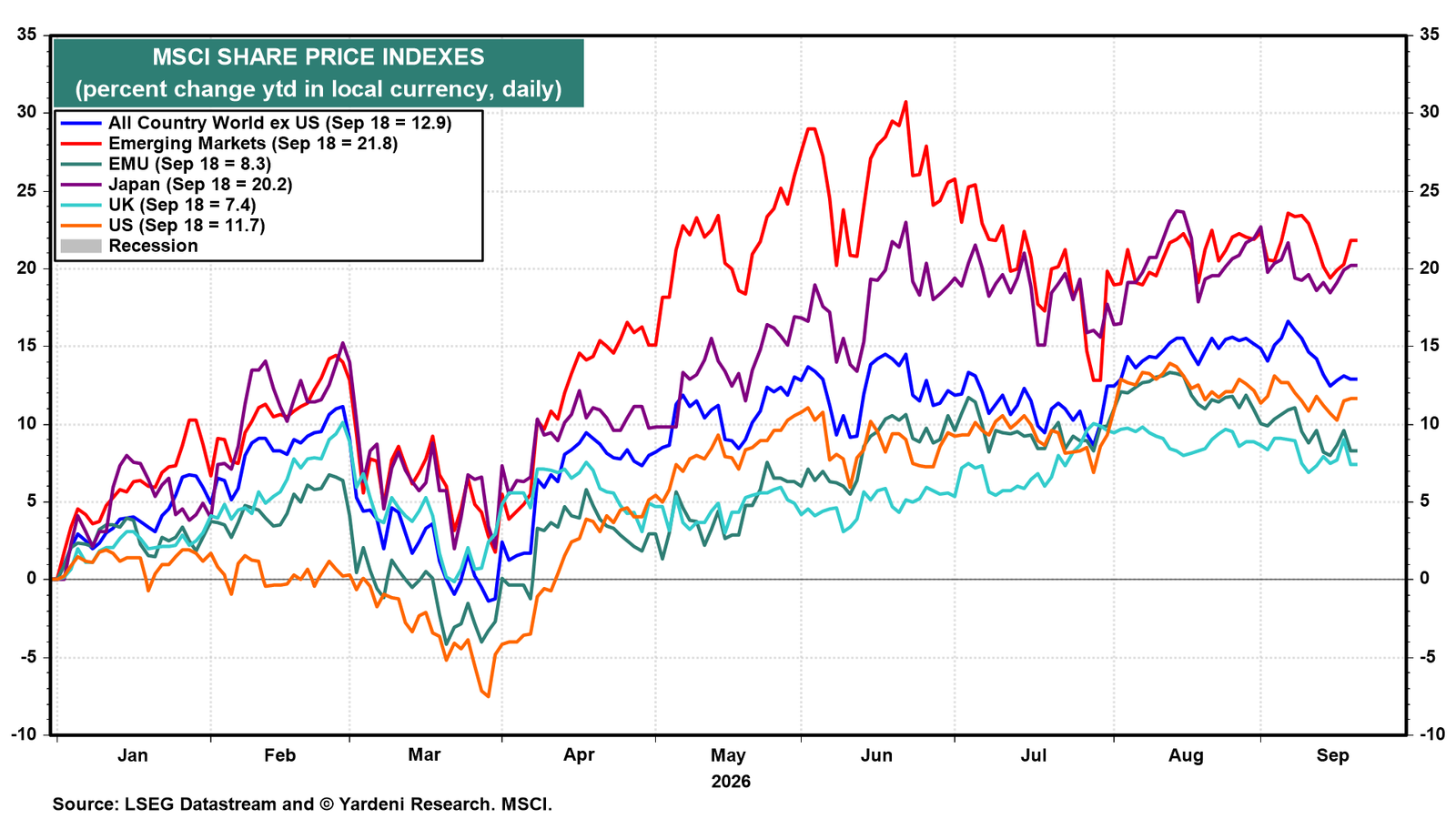
The major stock market index performances show the same. The US MSCI is up 11.7% ytd in dollars versus 12.9% for the ACW ex-US MSCI (chart).
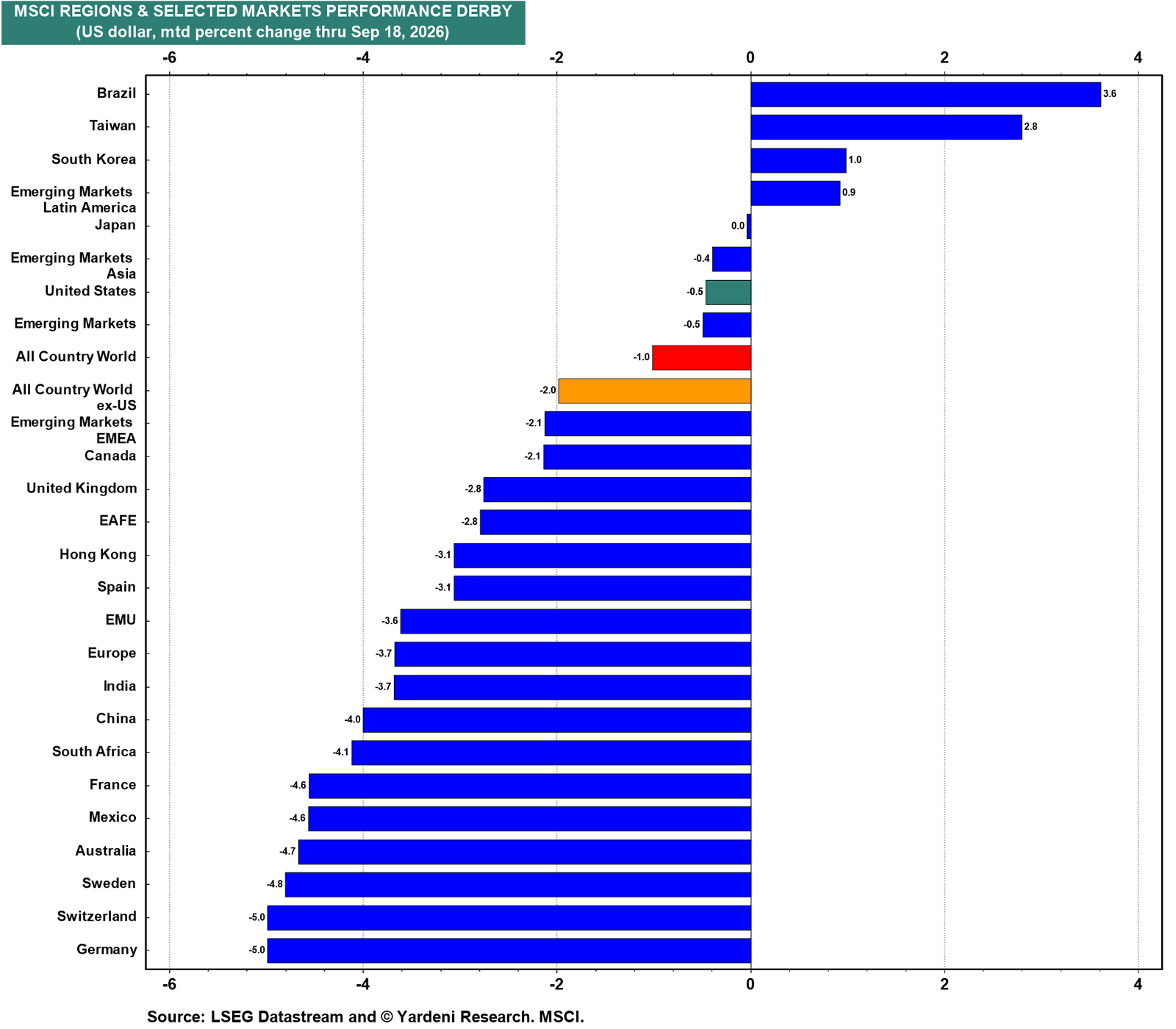
Among country MSCIs, Brazil leads the mtd rankings at 3.6% in dollar terms, with Taiwan at 2.8% and South Korea at 1.0% (chart). The US is down 0.5%, ahead of the ACW ex-US at -2.0%. Germany and Switzerland trail at -6.0% and -5.0%.
II. Earnings & Valuation
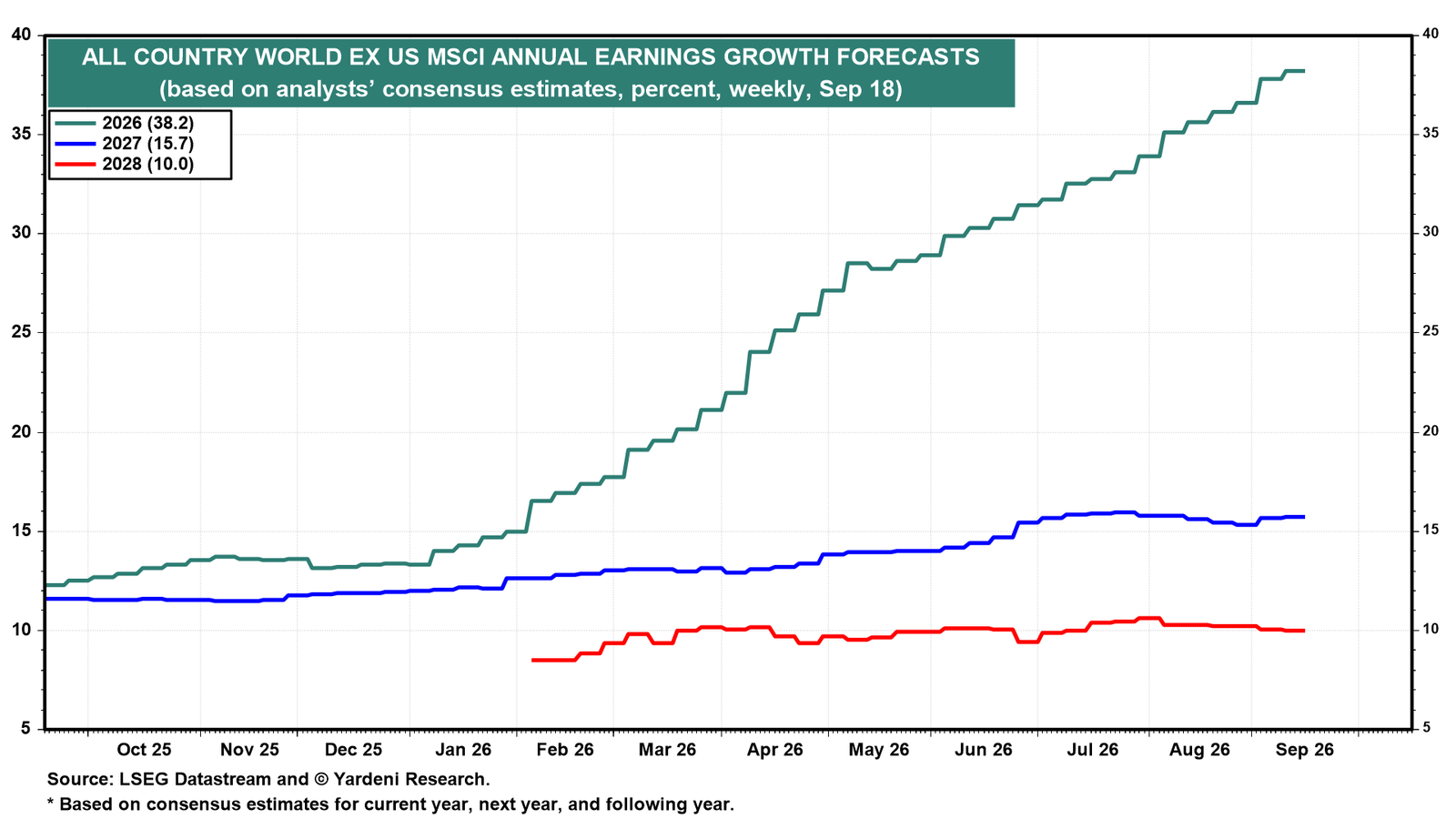
Consensus EPS estimates outside the US are getting revised up across the board. The ACW ex-US MSCI's 2026 consensus earnings growth estimate is now 38.2%, up from 13.3% at the start of the year (chart). The 2027 estimate is 15.7%. South Korea leads at 335.6% for 2026, with the emerging markets aggregate at 74.6%.
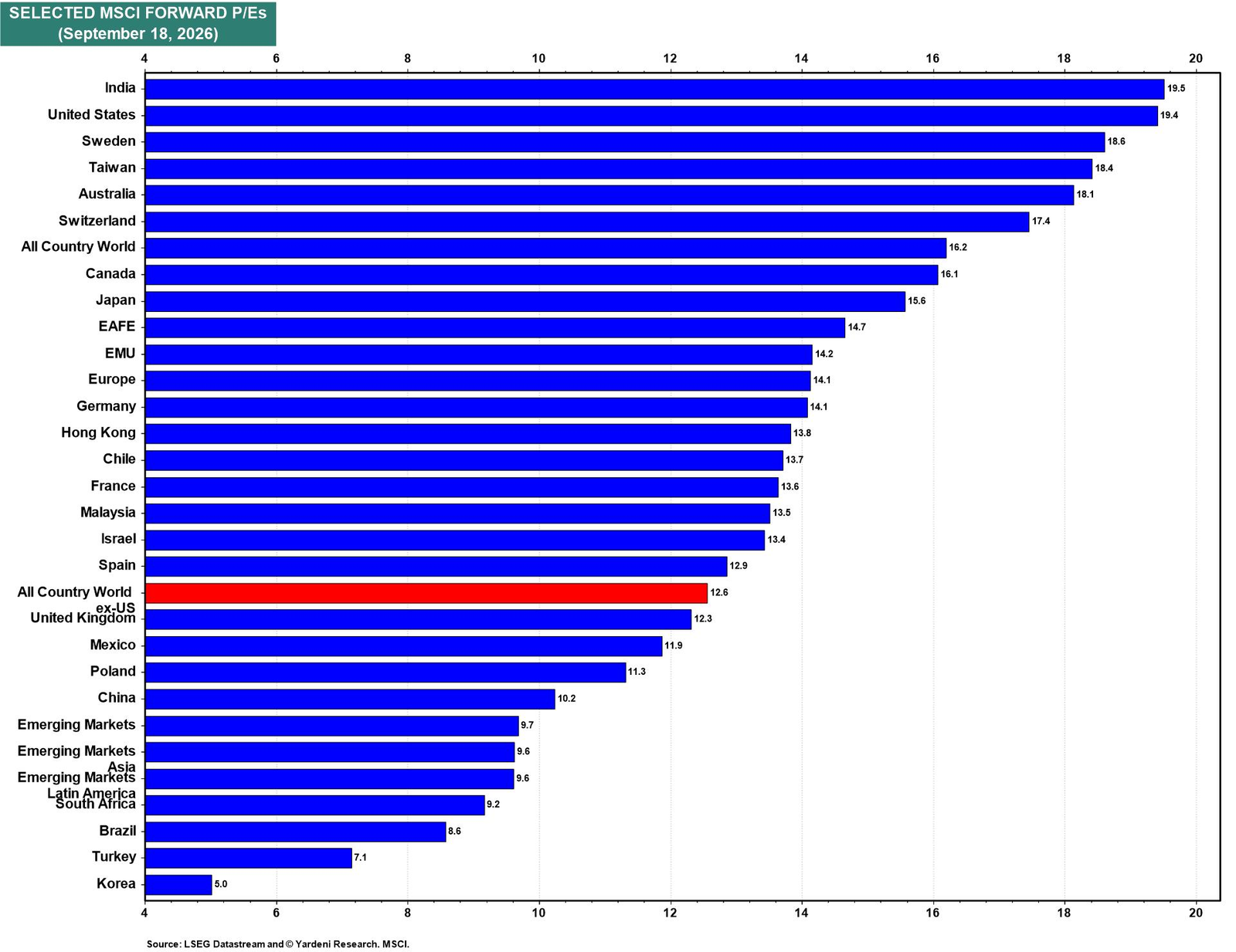
The US MSCI trades at a 19.4 forward P/E versus 12.6 for the ACW ex-US, 15.6 for Japan, 14.2 for the European Monetary Union (EMU), 9.7 for Emerging Markets, and 5.0 for South Korea (chart). Korea is at a 14.4-point discount to the US.
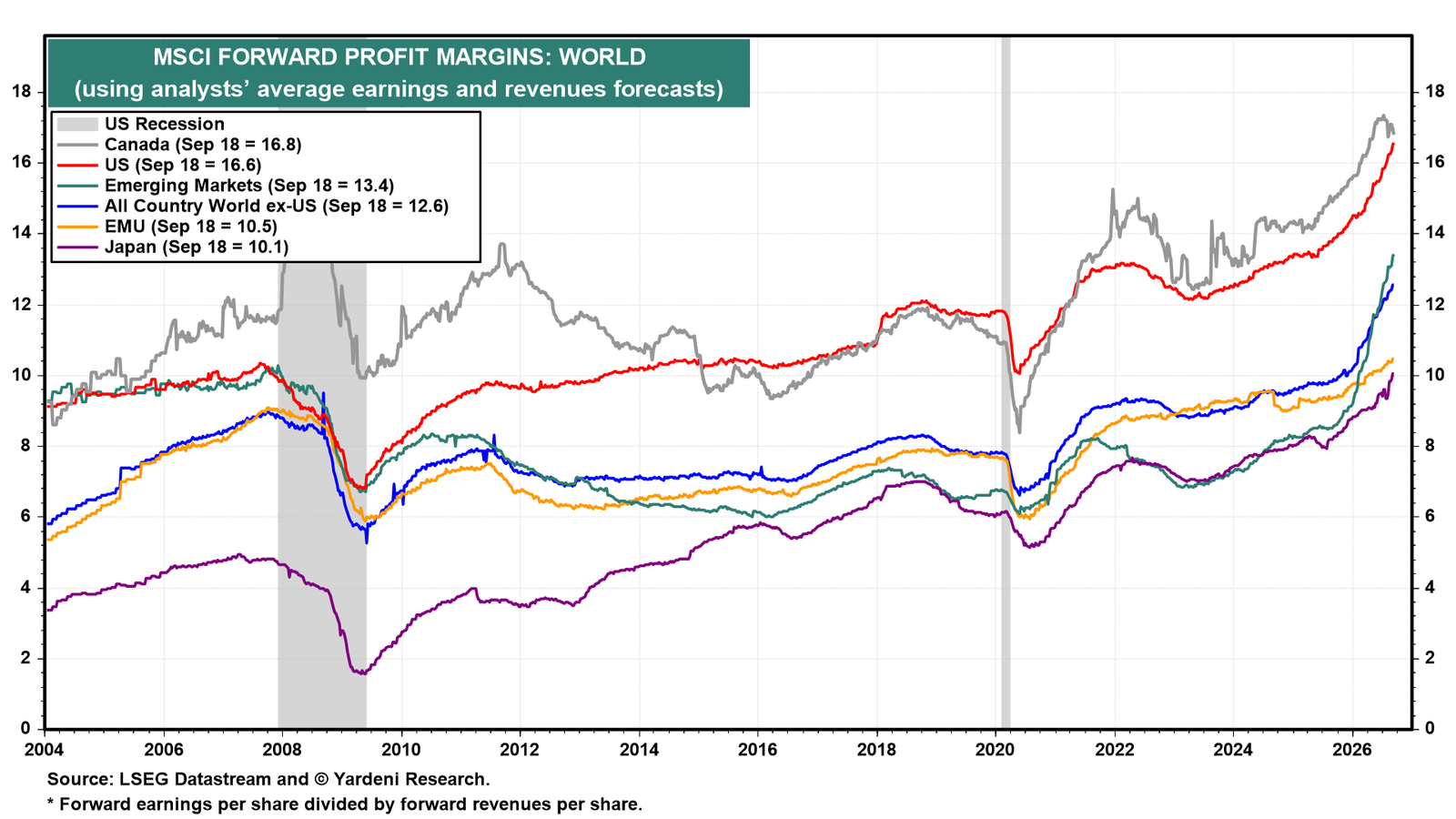
Profit margins explain the US valuation premium. The US MSCI's forward profit margin is 16.6% versus 13.4% for Emerging Markets, 12.6% for ACW ex-US, 10.5% for the EMU, and 10.1% for Japan (chart). Every one of them has been rising.
III. Global Bonds
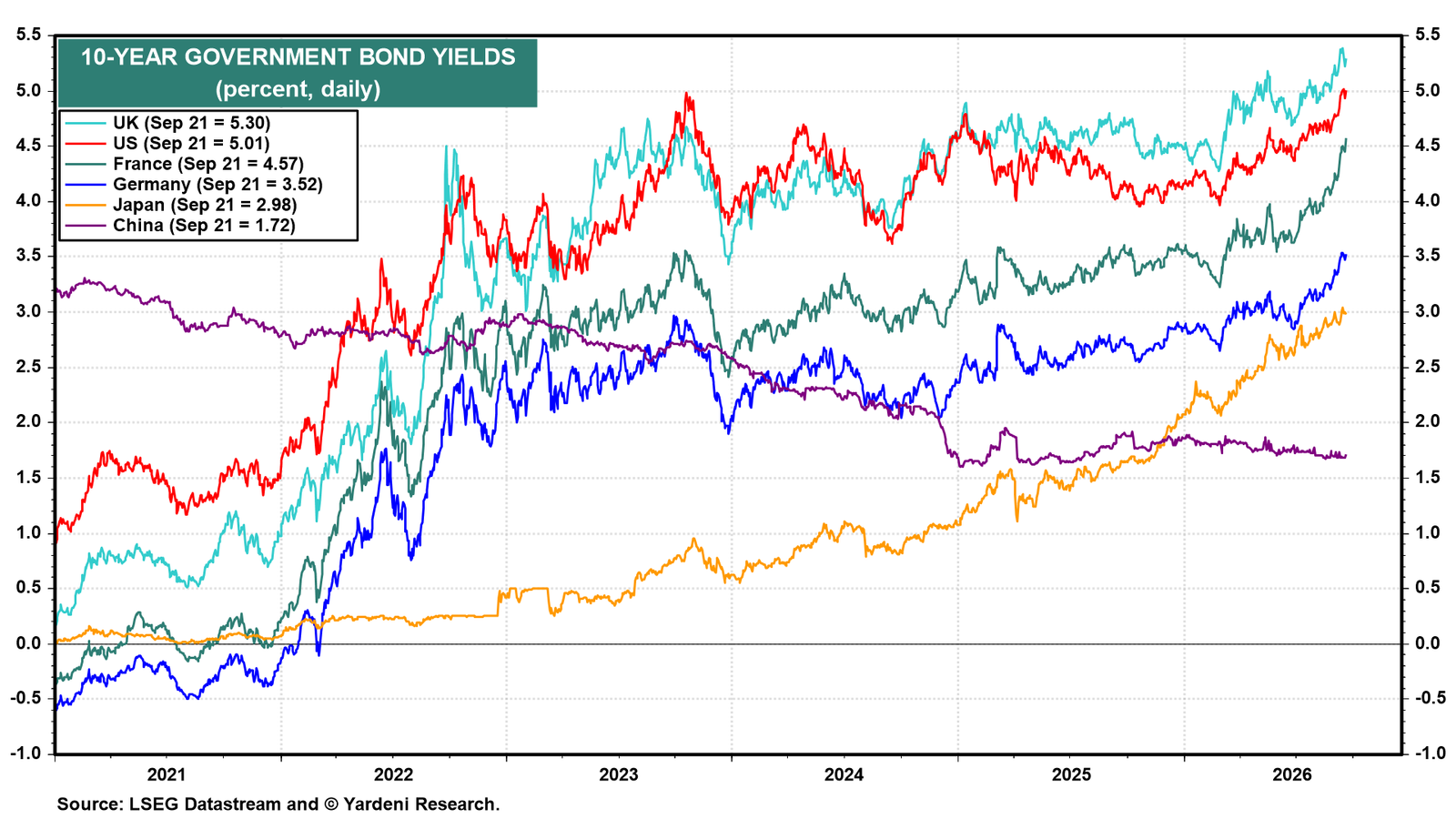
Yields are still climbing, and equities seem to be reading it as a sign of economic growth, alongside other less bullish developments such as higher-for-longer bond yields and fiscal excesses. The UK's 10-year government bond yield is 5.30%, the US's is 5.01%, France's is 4.57%, Germany's is 3.52%, and Japan's is 2.98% (chart). The US is at the top of the 4.00%-5.00% range we call the "old normal." China remains the exception, at 1.72% and still drifting lower. Its bond market continues to reflect deflation expectations while all others reflect the opposite.
IV. Japan
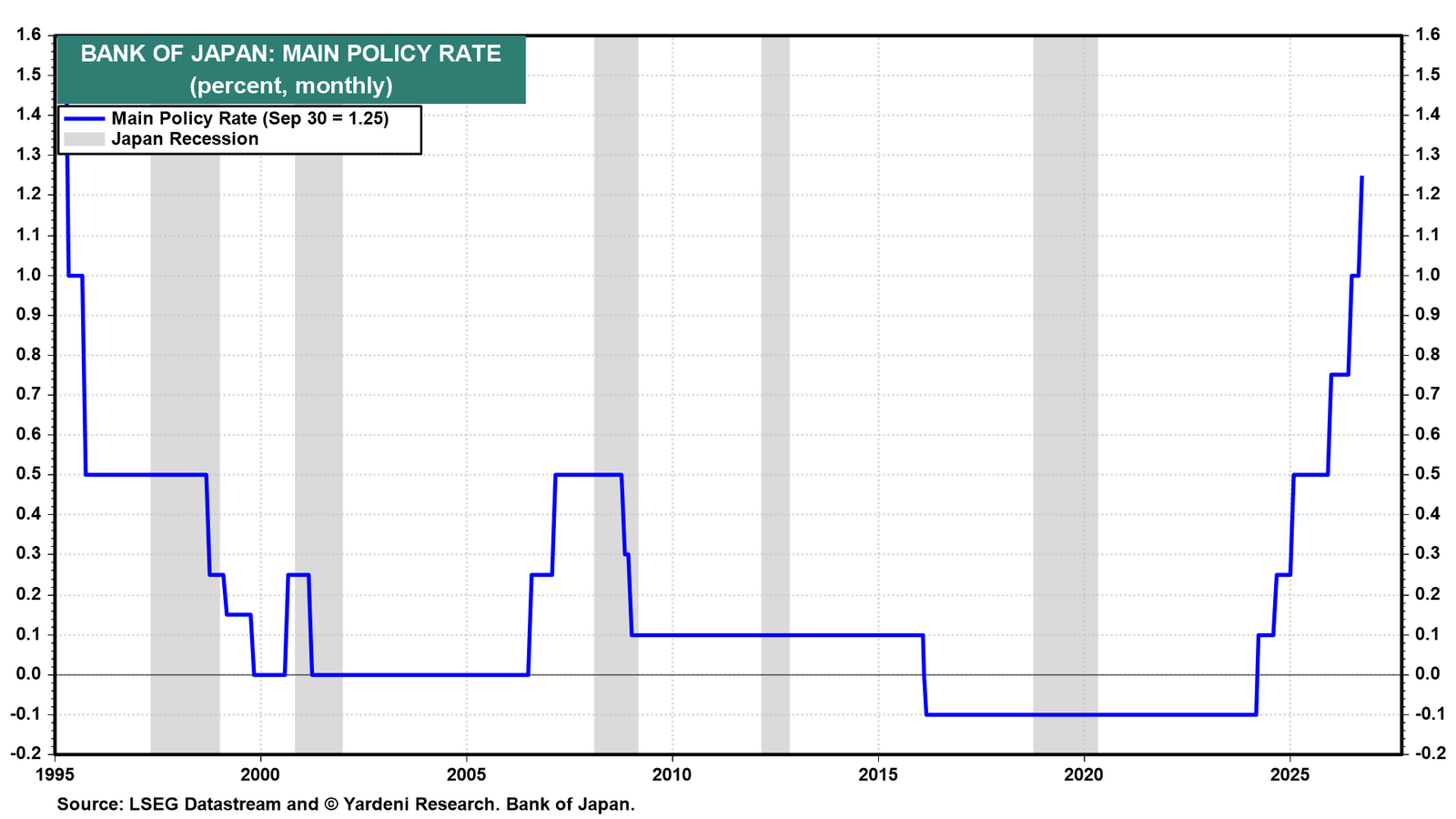
The Bank of Japan (BOJ) raised its policy rate by 25bps to 1.25% on Friday, the highest since 1995 (chart). The yen weakened on the decision, largely due to two dissents by board members appointed by Prime Minister Sanae Takaichi. Governor Kazuo Ueda said monetary policy has entered a new stage and declined to rule out more consecutive rate increases and larger rate increases.
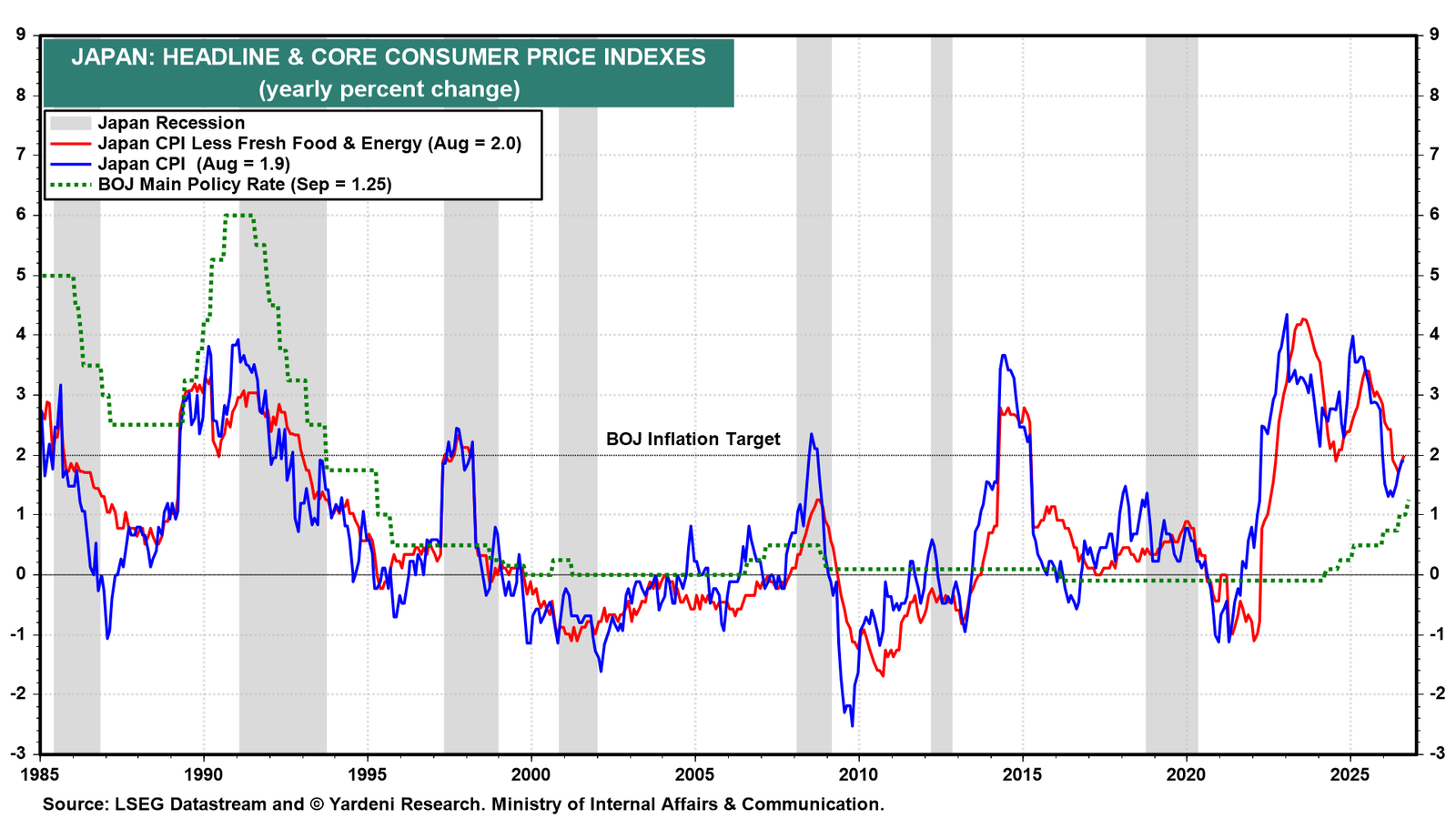
The inflation data explain the caution. Headline CPI was 1.9% y/y in August, with the core rate at 2.0%, while the PPI was 7.6% (chart). The BOJ is tightening in response to a cost shock, not a demand boom.
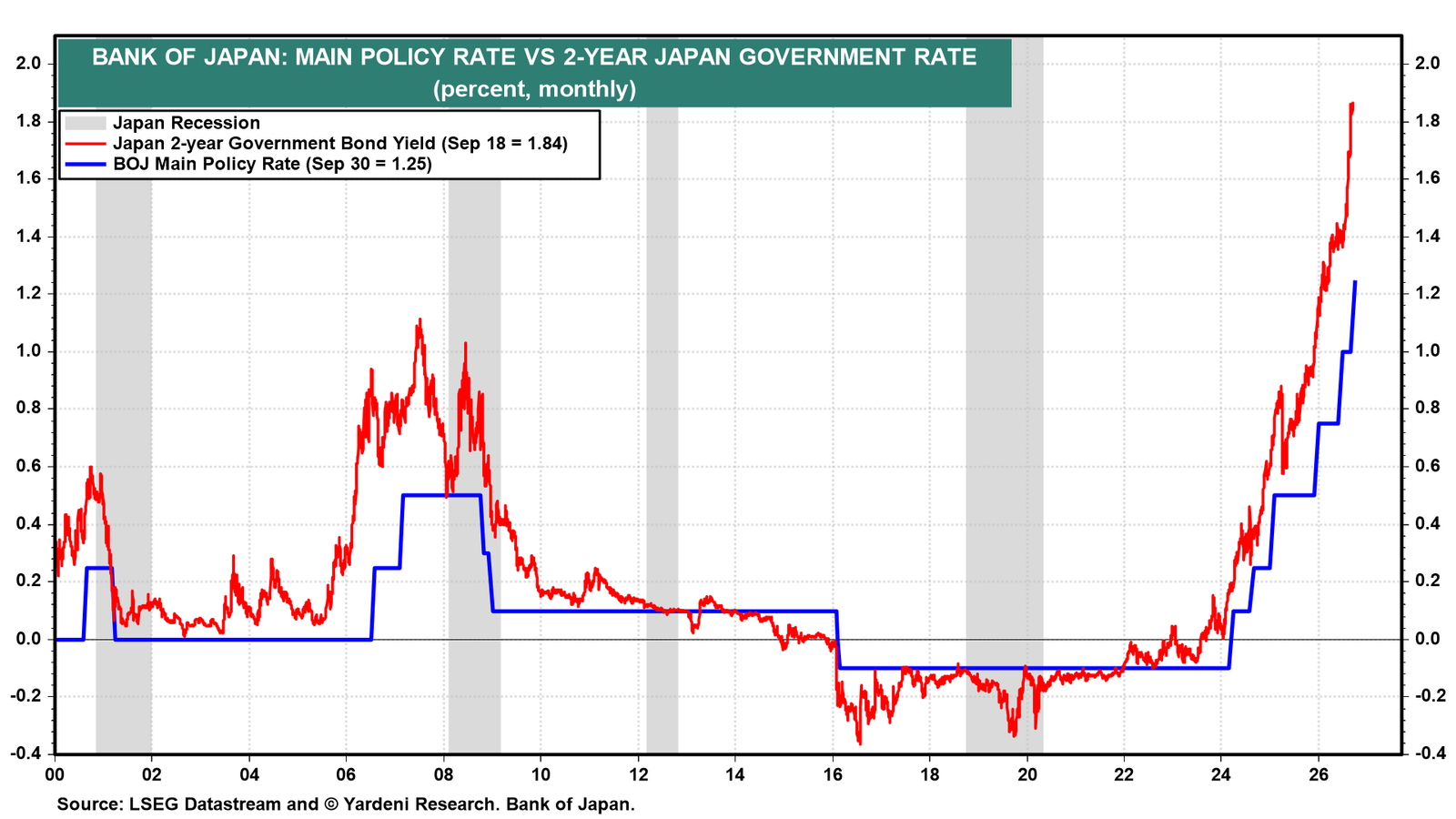
Japanese rates have moved regardless. The 2-year government bond yield is 1.84%, well above the 1.25% policy rate, and the markets expect the policy rate to reach as high as 2.00% by the end of 2027 (chart).
Meanwhile, Topix Banks closed near recent record highs (chart). Both have gone nearly vertical over the past two years.
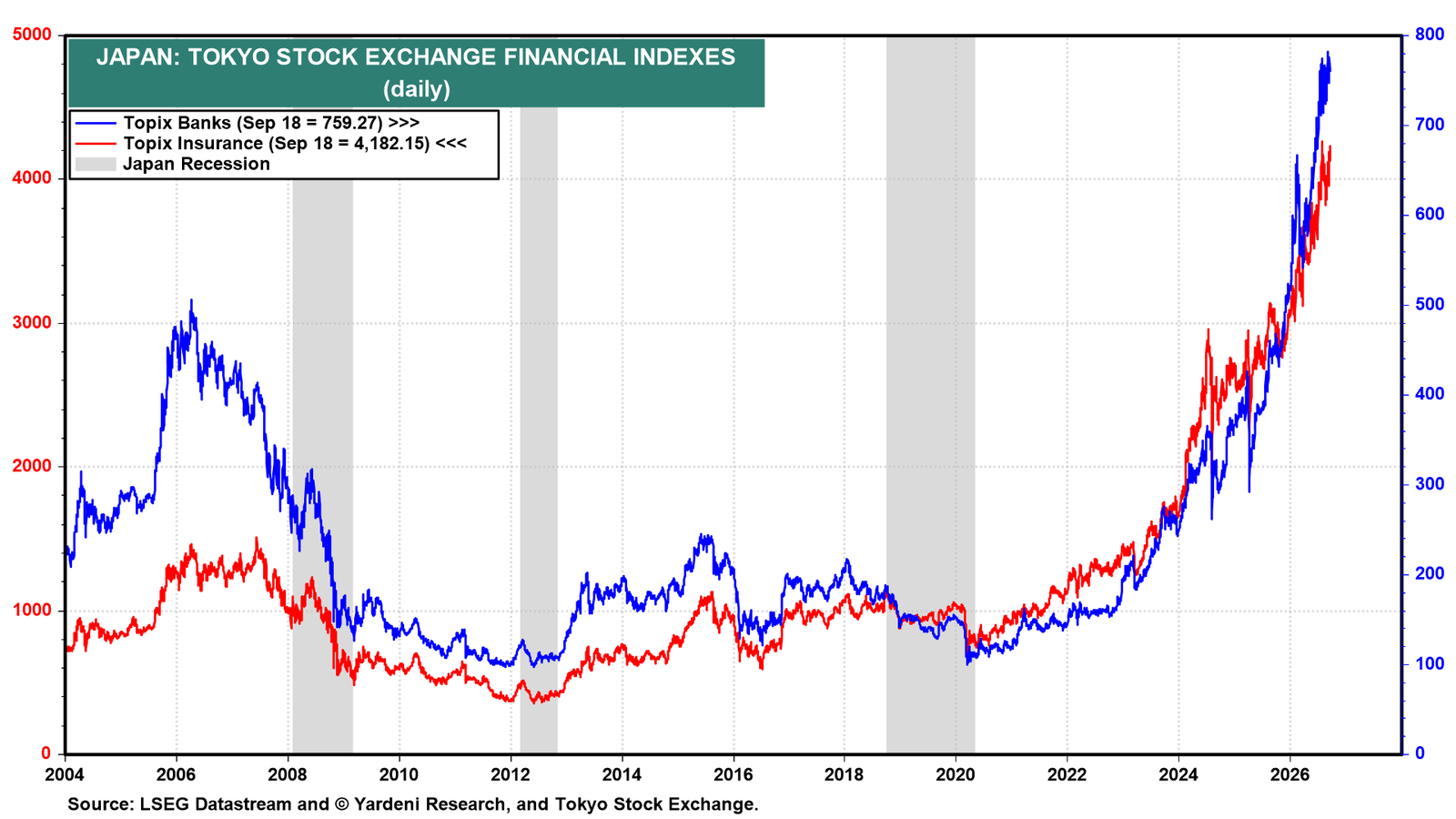
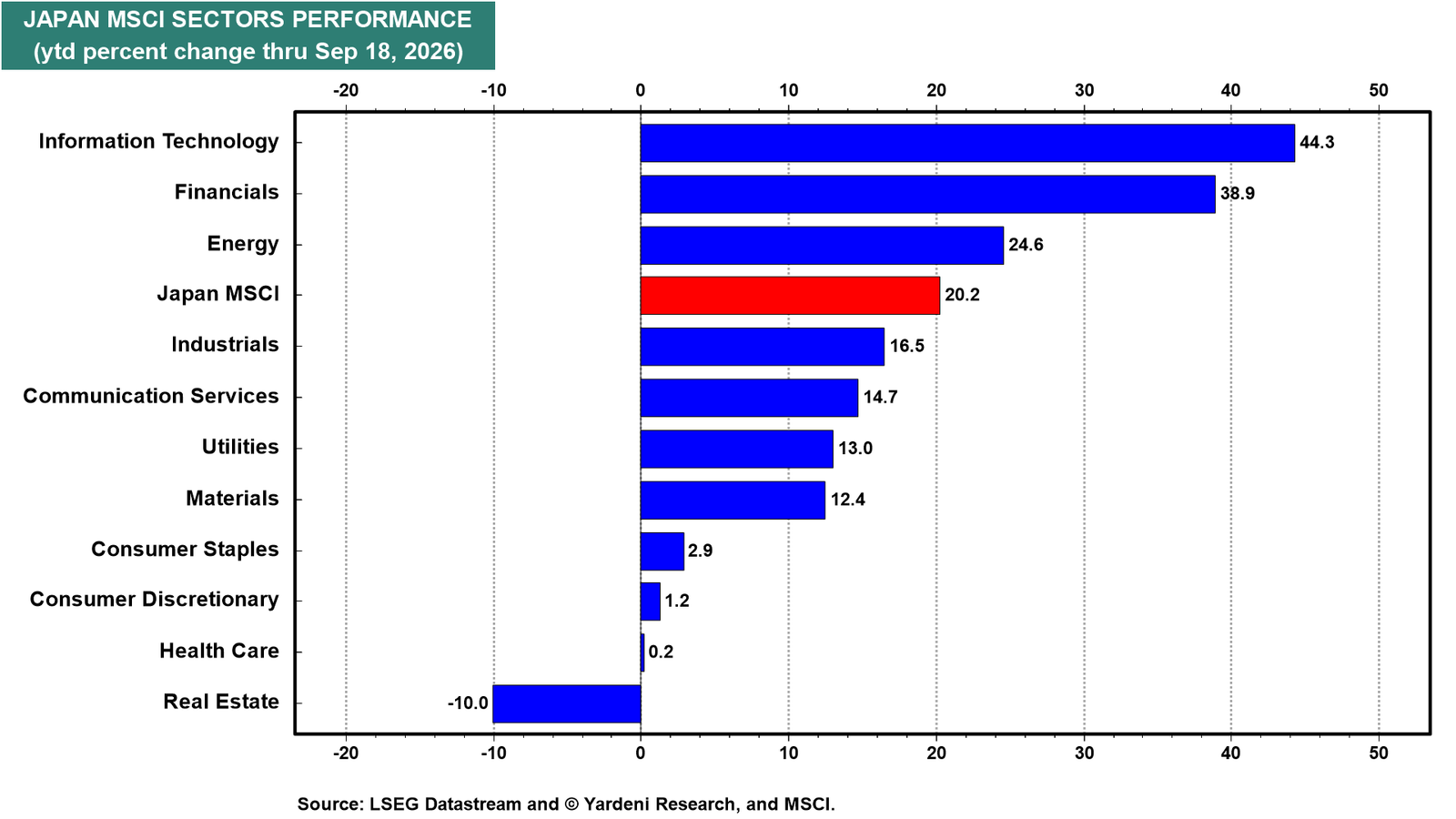
The Financials sector is up 38.9% ytd in the Japan MSCI, second only to Information Technology at 44.3% (chart).
V. Gold
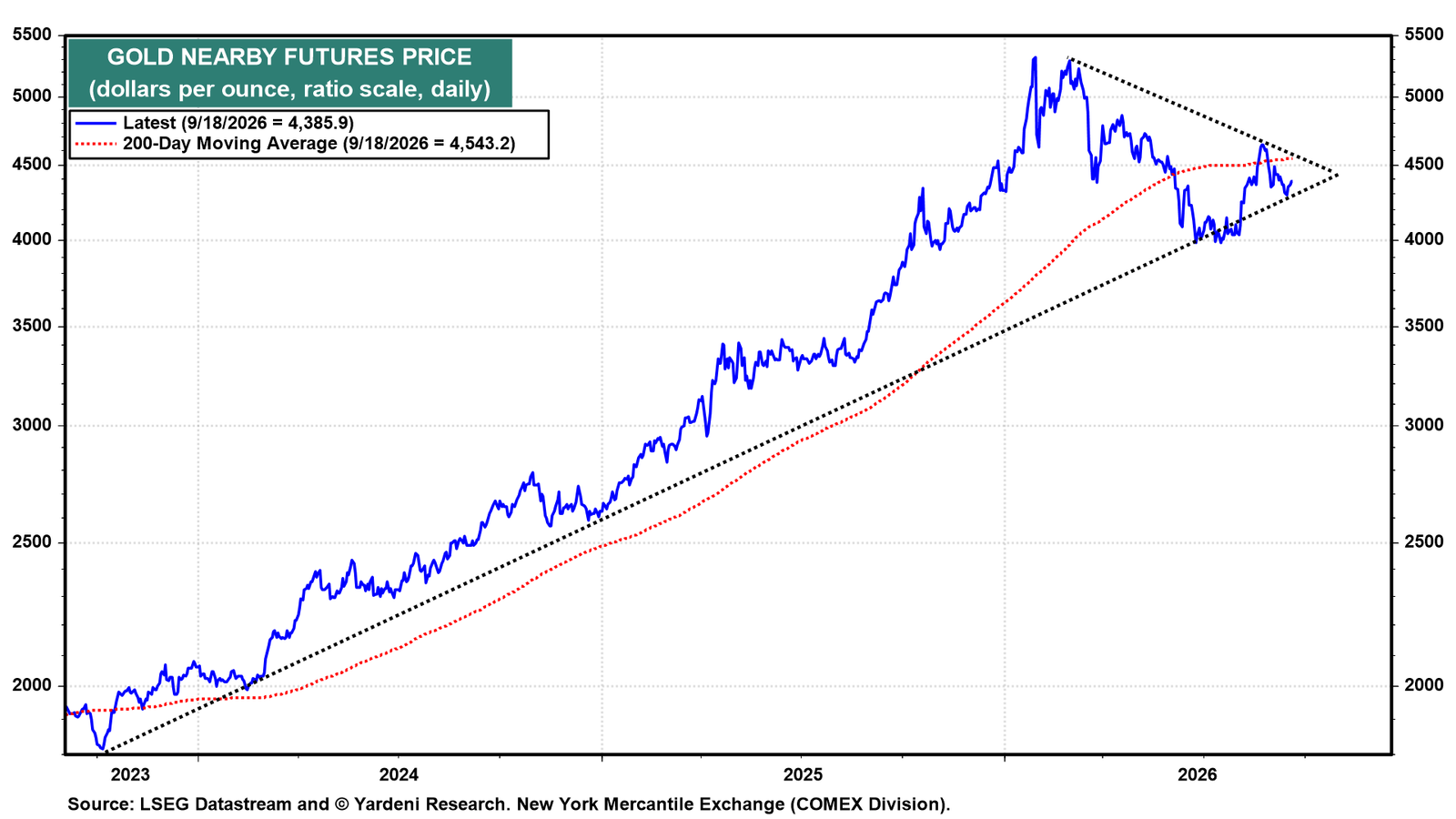
Gold has been weak recently as major central banks have been raising policy rates (chart). However, it found support at an uptrend line that started in 2023. We are still targeting $5,000 by the end of this year.