I. Lowering S&P 500 Target
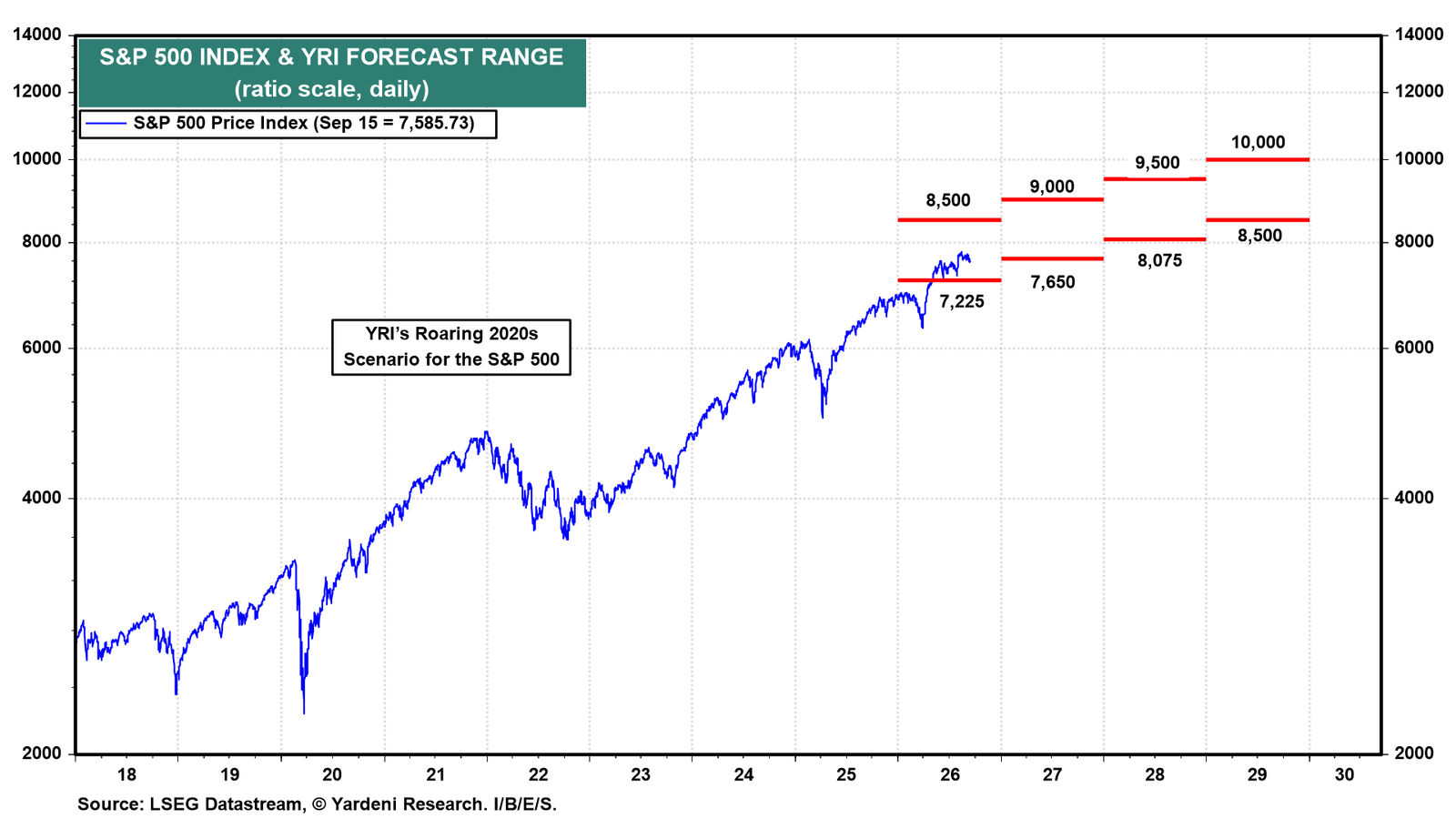
On Saturday, we lowered the subjective odds of our Roaring 2020s base-case scenario from 80% to 70%. We raised the odds of a bearish outcome from 20% to 30%. Today, we are moving our S&P 500 target of 8,400 for year-end to mid-2027. Our new target for the end of 2026 is 7,900. Our end-of-decade target remains at 10,000.
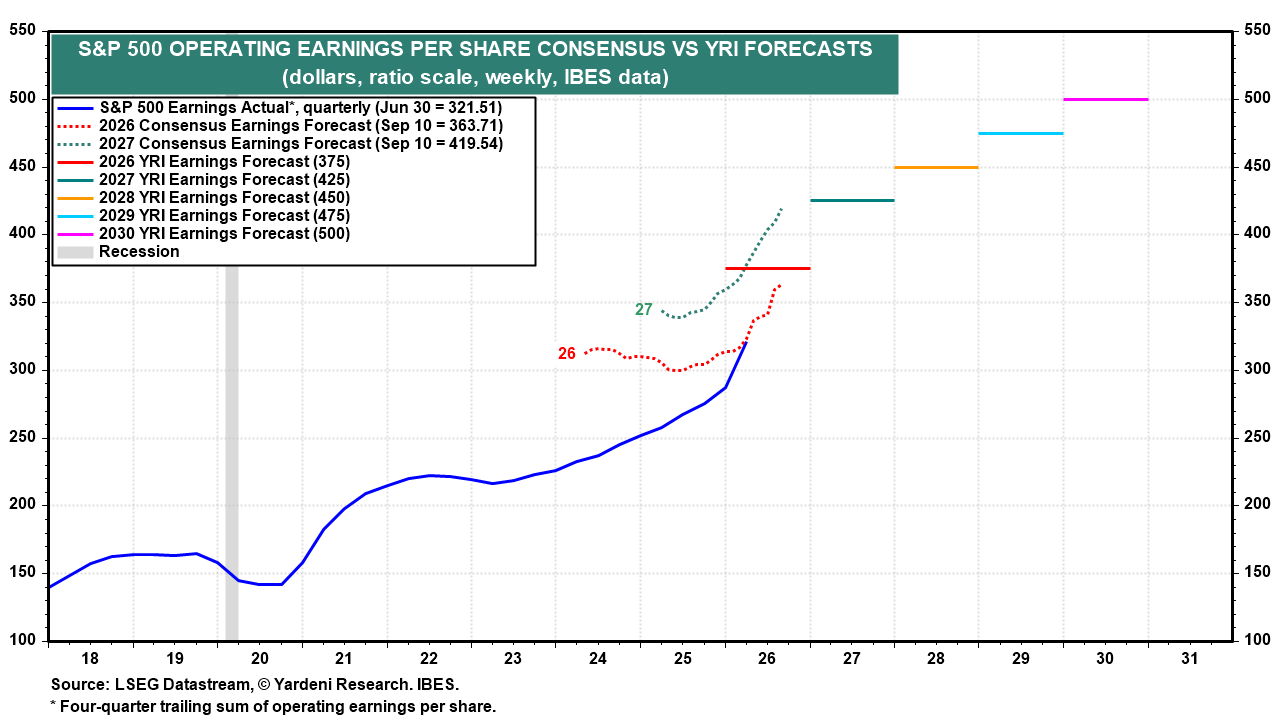
We still anticipate that the economy will grow without a recession through the end of the decade. But the risks of a downturn have increased over the next three to six months, as reflected in the higher odds we assign to a bearish scenario. We are not changing our optimistic 2027 EPS target of $425. Industry analysts are currently projecting $419.53, which should rise to match our forecast by year-end (chart).
Given the recent backup in bond yields, we are lowering our estimate for the forward P/E of the S&P 500 at year-end from 19.8 to 18.6, which lowers our year-end target from 8,400 to 7,900. That’s still within this year’s target range of 7,225 to 8,500 based on 2027 EPS of $425 multiplied by forward P/Es of 17.0 and 20.0 (chart). (For more, see our YRI Earnings Outlook.)
II. Bonds Breaking Bad
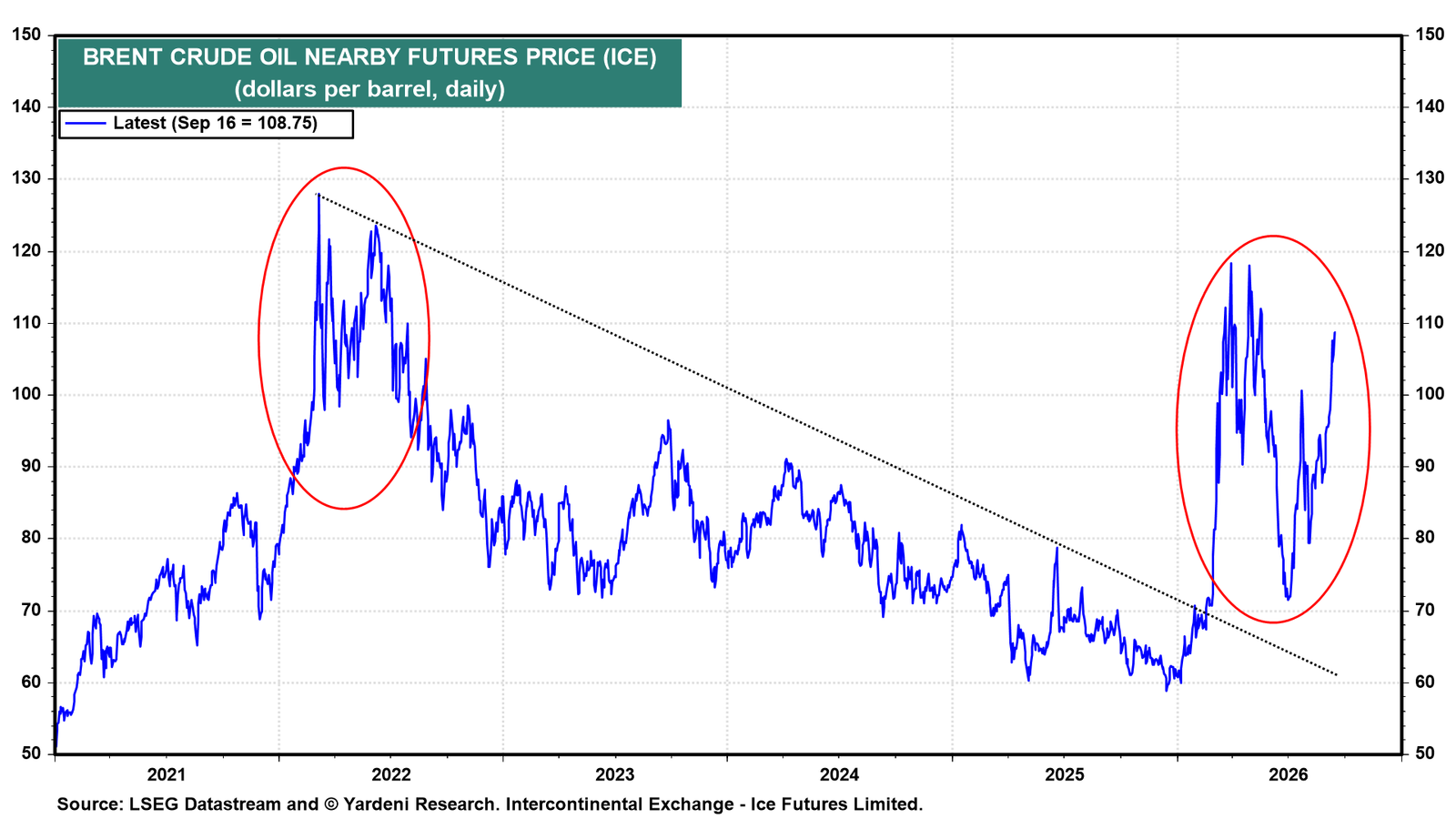
The re-escalation of the war in the Middle East has pushed oil prices back above $100 a barrel (chart). The Islamic Revolutionary Guard Corps (IRGC) remains in control of Iran and continues to fight. The IRGC also continues to coordinate the attacks of its proxies on the US and US allies in the Middle East. The IRGC is aiming to push oil prices higher before the US midterm elections by attacking critical oil facilities in the region. Its goal is to cause Republicans to lose their majorities in Congress and weaken the Trump administration.
The risk is that higher-for-longer oil prices continue to push bond yields higher. Elevated oil prices would also imply that a federal funds rate (FFR) hike tomorrow won't be a one-and-done event, but rather the beginning of a rate-hiking cycle. The longer oil prices remain elevated, the greater the risk that inflation becomes entrenched, especially given the economy's resilience.
We had previously argued that a Fed rate hike in July would have pushed the 10-year yield lower by bolstering the Fed's inflation-fighting credibility. That is still possible in response to tomorrow's expected rate hike. But much will depend on the Summary of Economic Projections (especially the Dot Plot), the number of dissenters, and how Fed Chair Kevin Warsh communicates the latest policy decision during his press conference tomorrow.
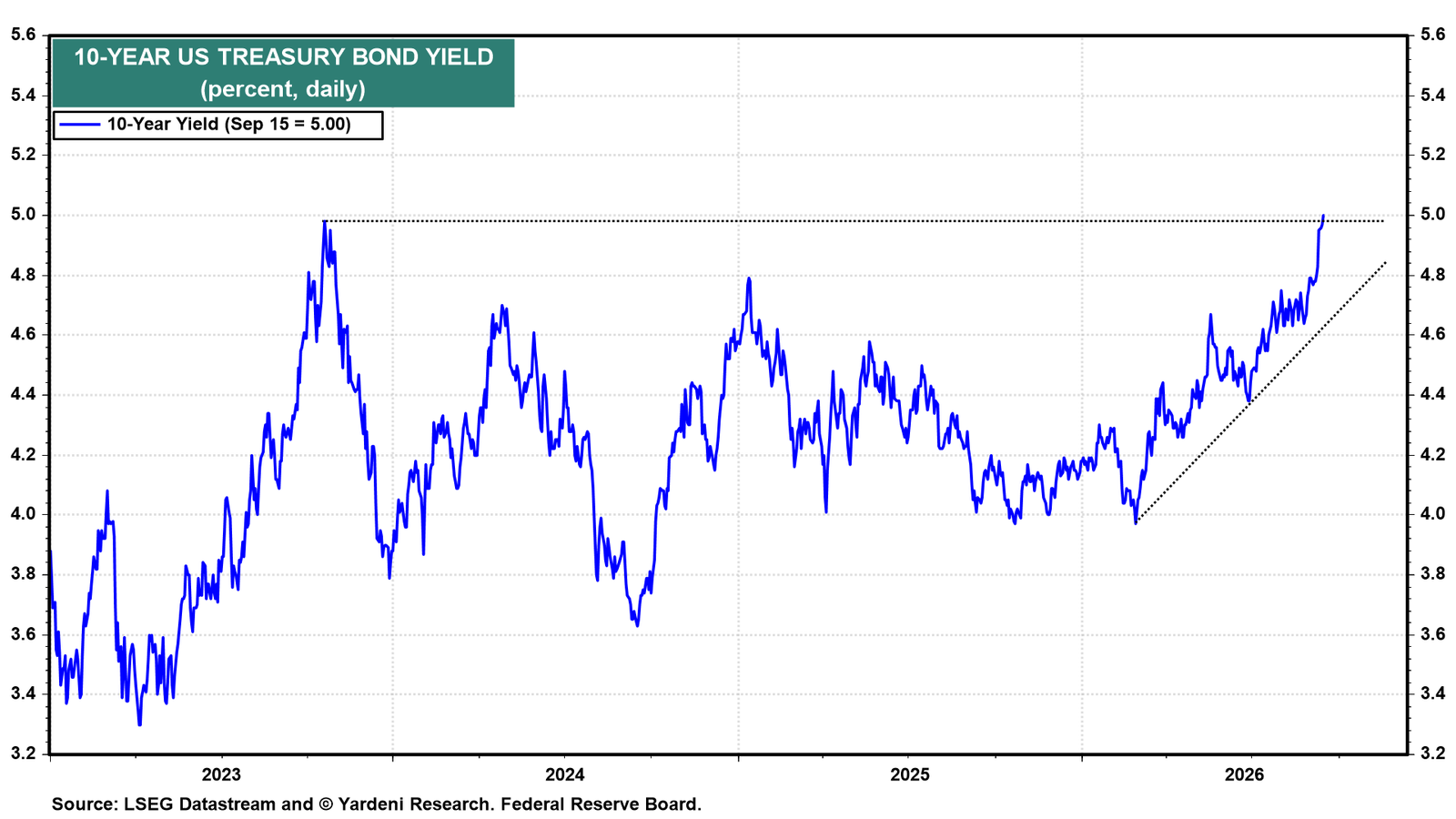
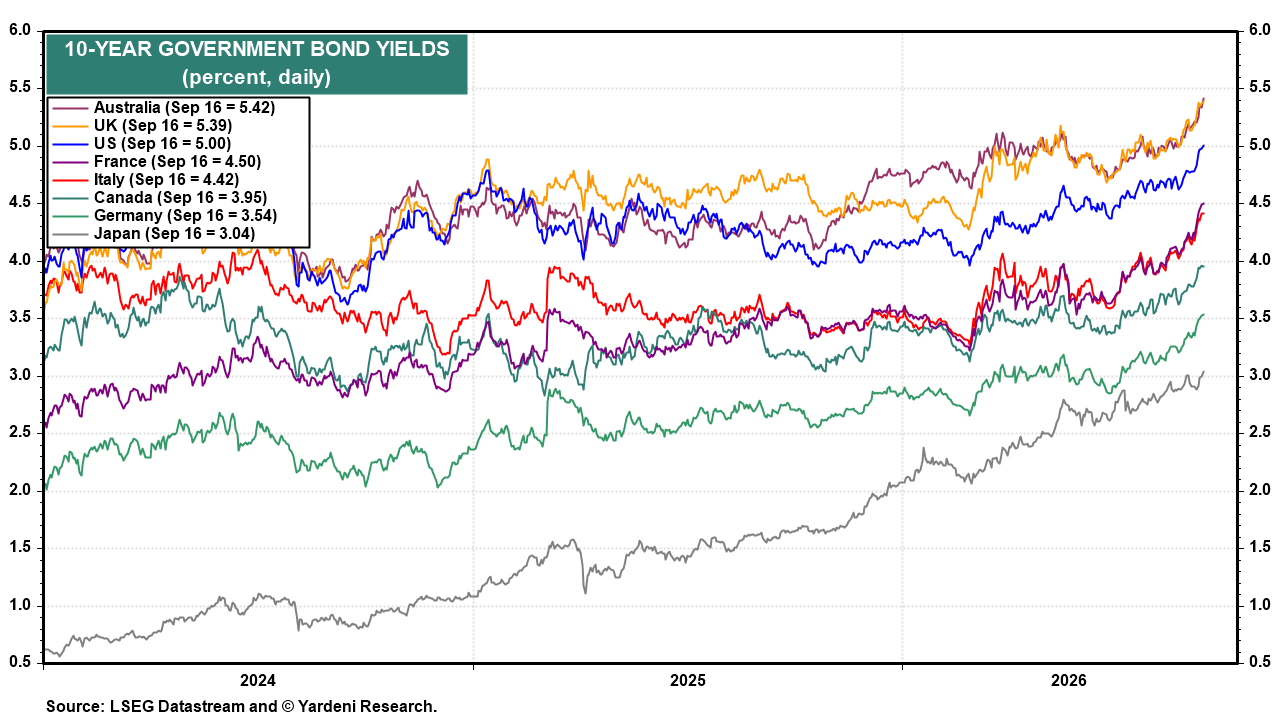
We've said it before, and will say it again: We will worry about a debt crisis when the bond market worries about a debt crisis. We are starting to worry now that the 10-year US Treasury bond yield may be on the verge of breaking out above 5.00% (chart). We've argued that the "normal" range for this yield should be 4.00% to 5.00%. North of this range reflects a recent combination of "abnormal" developments, including the attack on the Saudi east-west oil pipeline, the Houthi advances toward the Bab al-Mandab Strait, the Treasury's recent lame attempts to tamp down yields, and the Trump administration's deficit-bloating fiscal policies (including $5,000 for every adult US citizen if the Republicans hold onto both their congressional majorities).
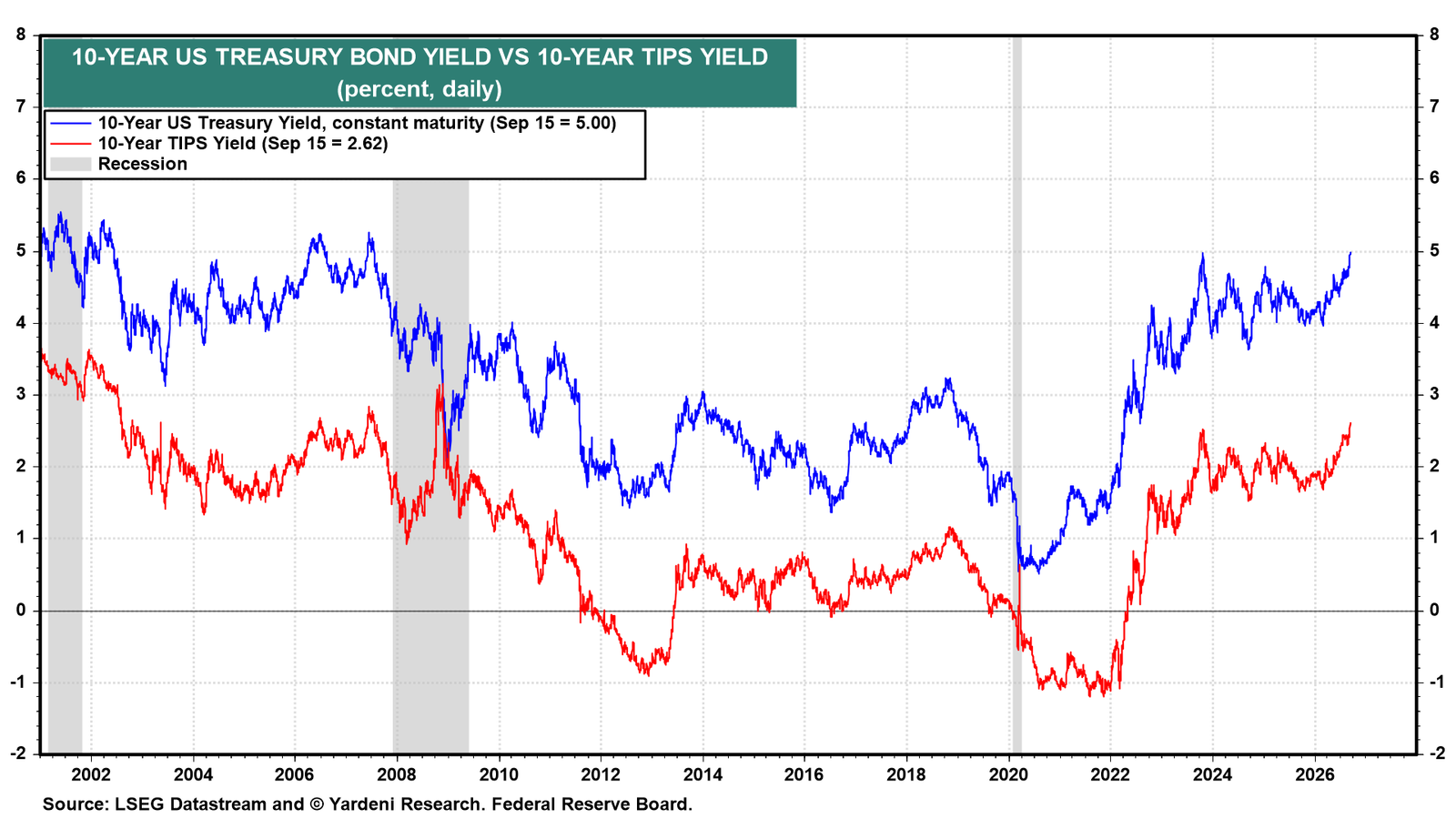
The good news is that the increase in bond yields also reflects better-than-expected economic growth. That's how we interpret the surge in the 10-year TIPS yield in recent weeks (chart).
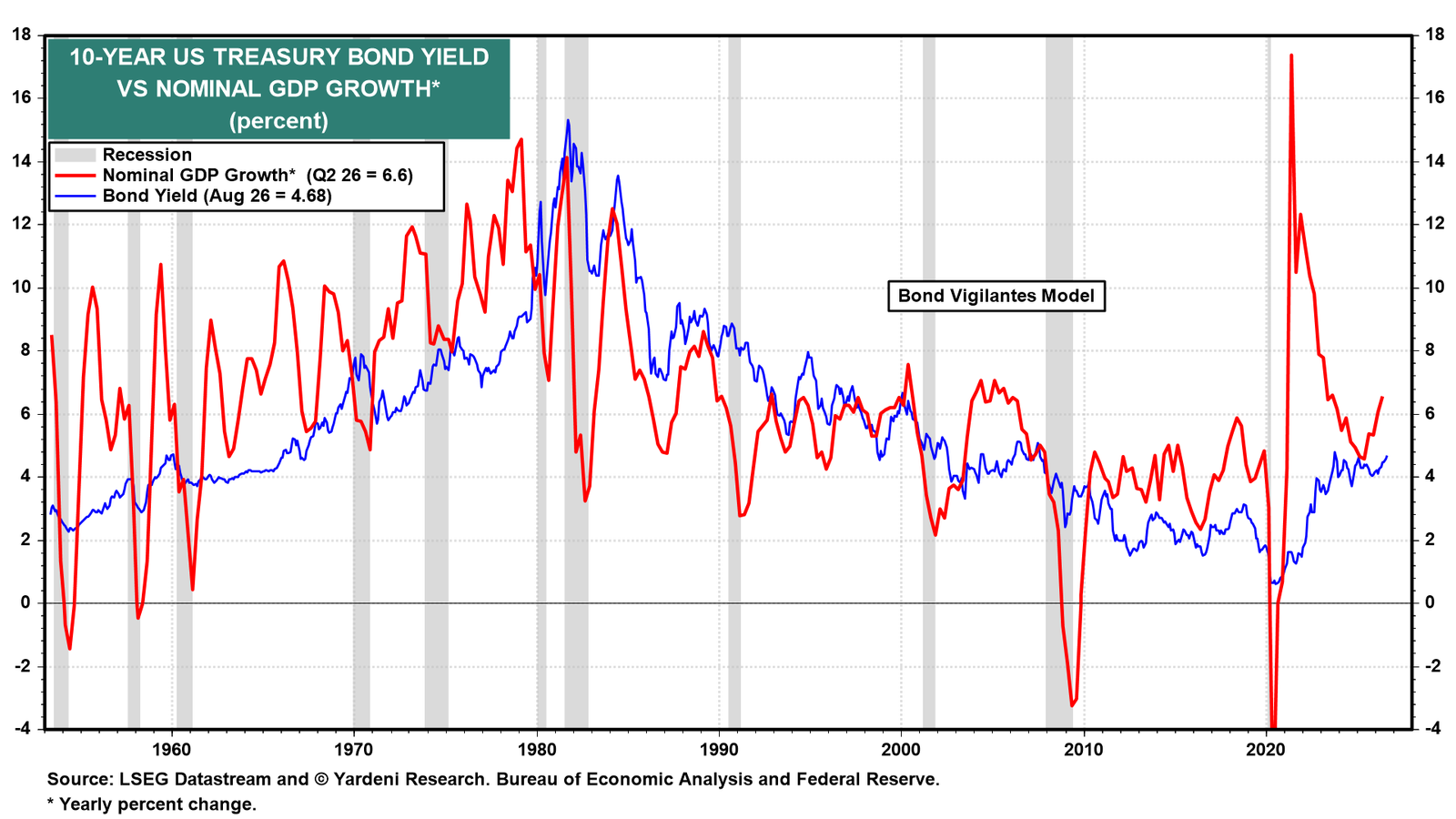
Also comforting is that the bond yield remains well below the growth rate of nominal GDP (currently at 6.6% y/y) (chart). To slow the economy down, the former would probably have to rise above the latter. The bad news is that's what would happen in a debt crisis.
III. Unwinding the Carry Trade
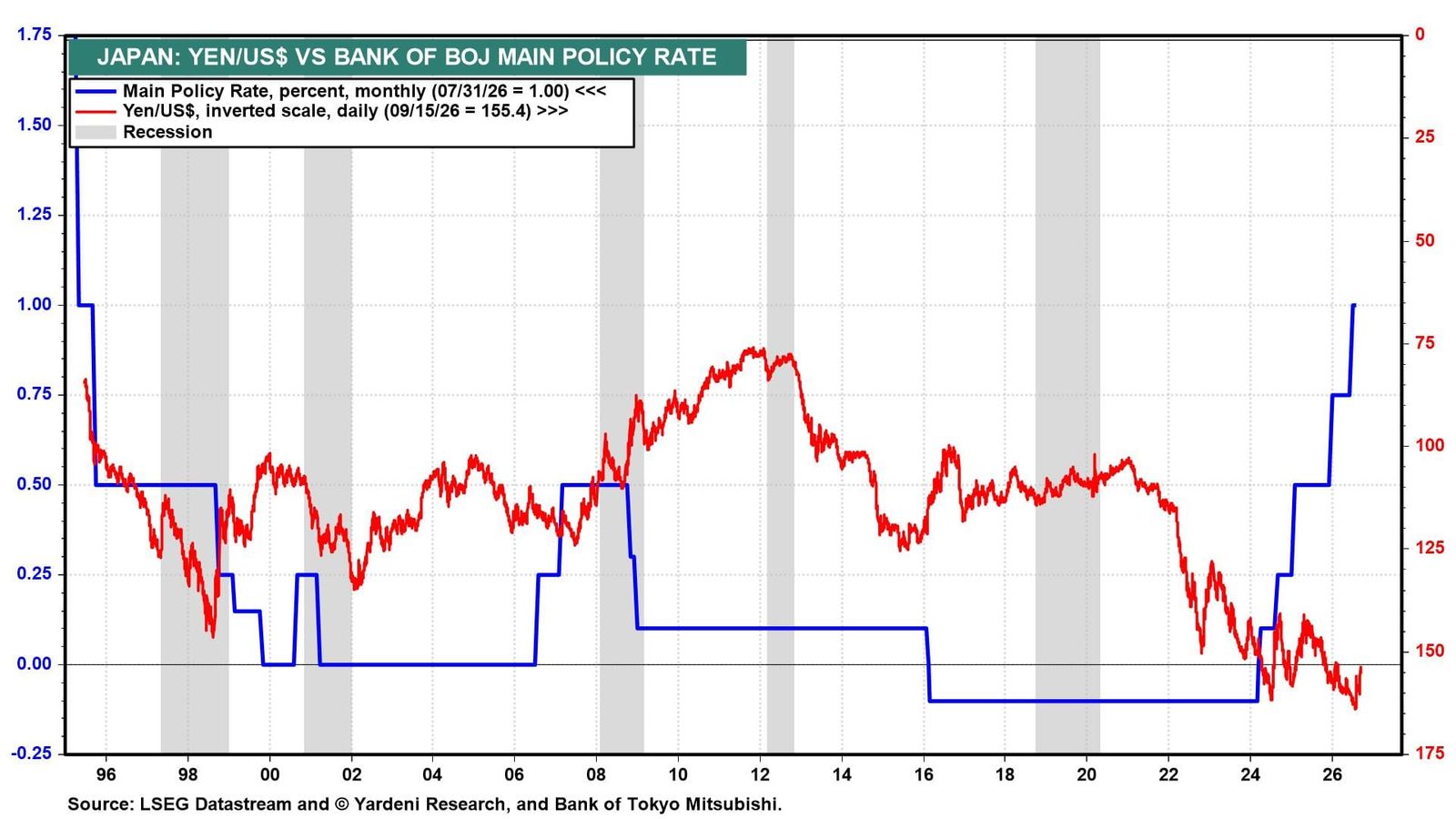
A potentially more ominous possibility is that the global bond market selloff reflects the unwinding of carry trades in response to Japan's tightening monetary policy, which began in 2024, and the yen's recent strength (chart). For years, near-zero interest rates and a weakening yen gave hedge funds an incentive to borrow in Japan's money markets and convert yen loans into other currencies to buy higher-yielding government bonds worldwide. In this way, Japan's reckless easy monetary policy partially financed the fiscal borrowing excesses of lots of governments, including Japan's.
In his congressional testimony today, US Treasury Secretary Scott Bessent said that "global issues" explain why US bond yields have surged recently. He may be acknowledging that there isn't much he can do to offset the bearish impact on bonds of the global unwinding of the carry trade. Nevertheless, we won't be surprised if he pulls out his bazooka to stop any serious rampage by the Bond Vigilantes. In this scenario, the Treasury would significantly increase bond buybacks financed by issuing more Treasury bills.
IV. Bessent's House
On September 8, Bessent famously declared, “I am the house now, so when we intervene with the Japanese yen, I have pretty good insight into what the Japanese, what the Bank of Japan is going to do, what Japanese policymakers are going to do. Bet against me if you want.”
Bessent intervened to boost the yen so that the Japanese government wouldn't be forced to sell some of its holdings of US Treasury securities to support its currency. The yen has strengthened a bit recently on expectations that the Bank of Japan will hike its policy rate on Friday by 25bps to 1.25%. That could be more consequential than the Fed's rate hike tomorrow if it triggers more carry-trade unwinding in the bond market (chart).
V. Warsh's Guidance
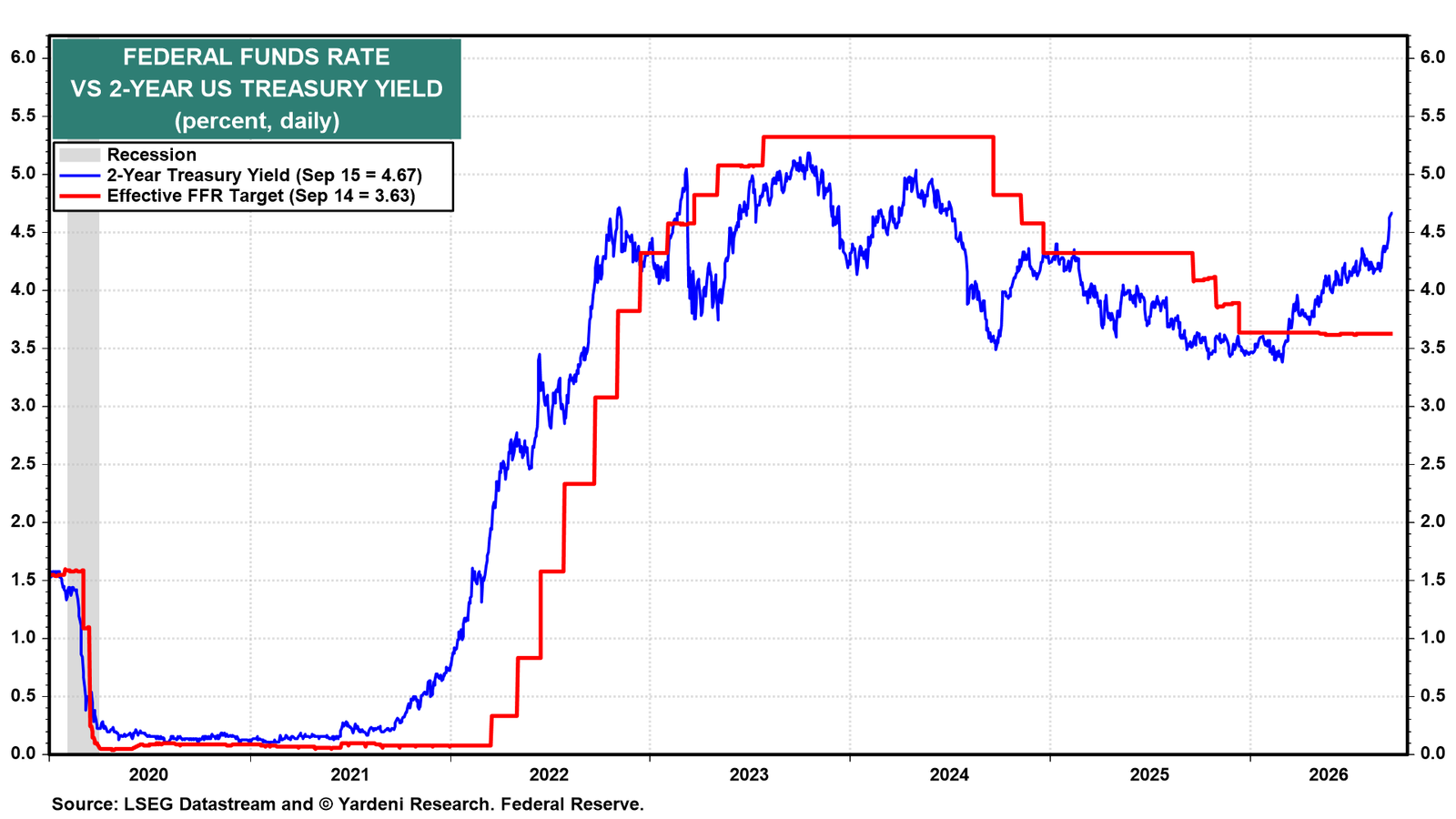
Fed Chair Kevin Warsh repeatedly has emphasized that he isn't going to say much. He doesn't want the Fed to provide forward guidance. Instead, he wants the Fed to listen to the fixed-income market, which is sending a clear message. The spread between the 2-year Treasury yield and the FFR has widened to roughly 100 basis points, the widest since 2022. That suggests the bond market views the rate increase expected tomorrow as the beginning of a tightening cycle rather than a one-and-done rate hike (chart).