On September 1, we warned you that September is back. We wrote, "Everyone in the stock market knows that September is the cruelest month for stocks. But when it is a bad month, it tends to create buying opportunities for a year-end rally that often starts in October." So far, the month has been crueler to bond investors than to stock investors. The 10-year US Treasury yield rose to 4.96% today from 4.76% at the end of August (chart). We think this will turn out to be a buying opportunity if US Treasury Secretary Scott Bessent fires his bazooka to avert a spike above 5.00%.
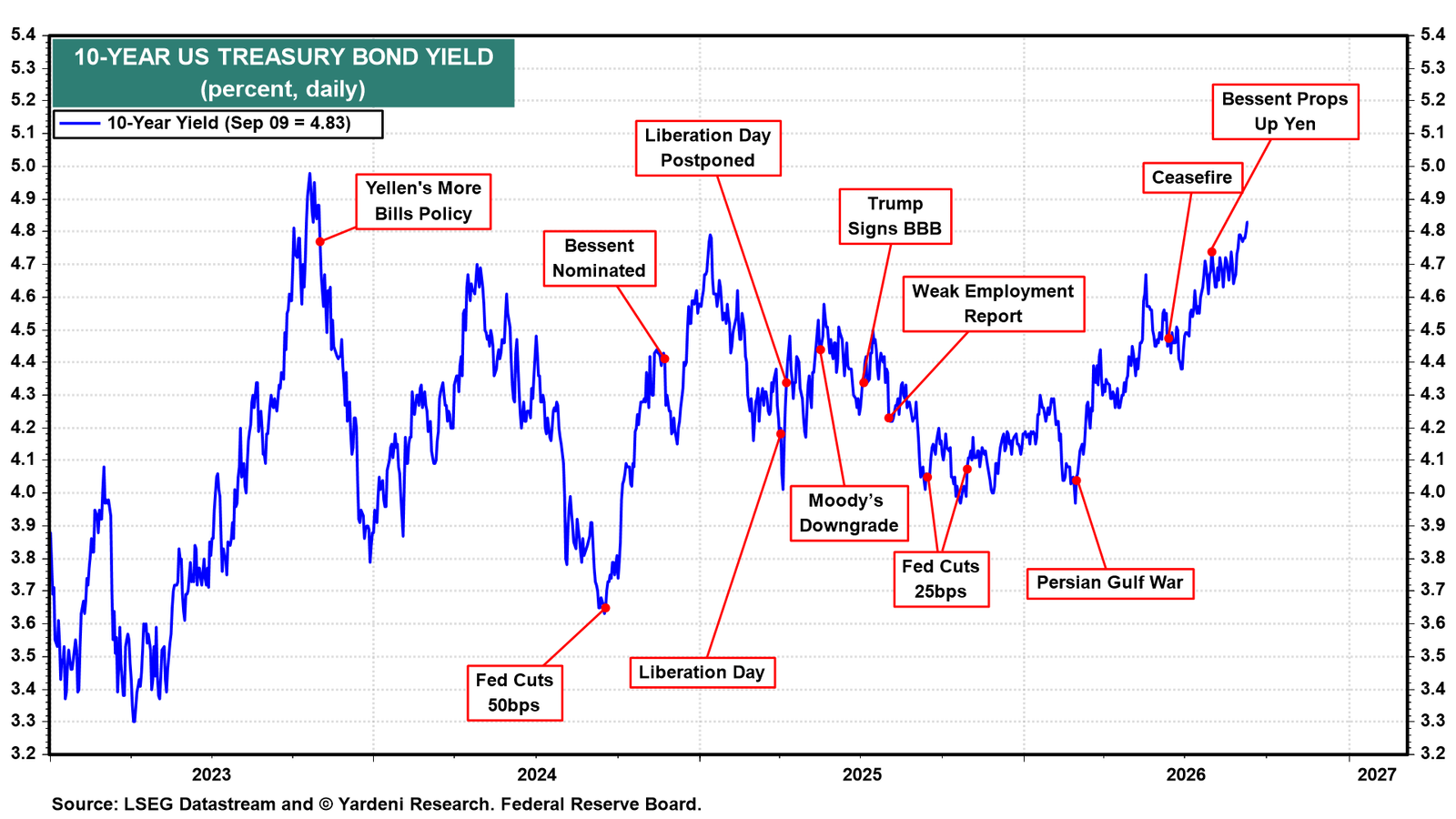
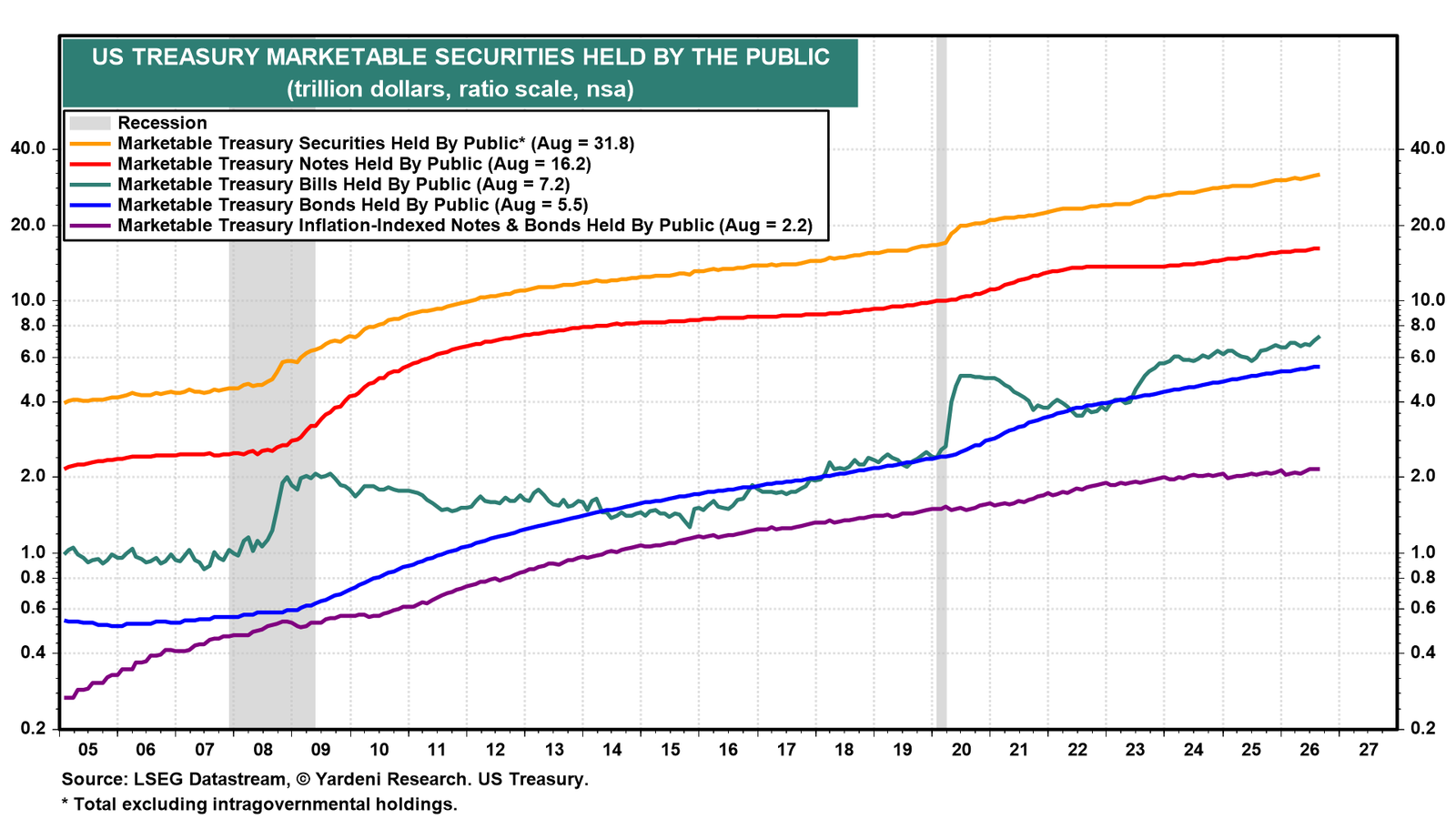
Over the past few weeks, Bessent has displayed several tools to push back against rising Treasury yields, including supporting the yen alongside Japan, expanding long-bond buybacks, and potentially drawing down the Treasury General Account to finance additional bond purchases. Yesterday, the Treasury unveiled a $6 billion buyback operation in the 10- to 20-year sector. However, $6 billion amounts to little more than a rounding error in a $31.8 trillion Treasury market, including $5.5 trillion of long bonds (chart).
The Bond Vigilantes are daring Bessent to use the bazooka in his tool kit. That would mean much larger bond buybacks, financed by issuing more Treasury bills. Such an operation has been described as the "Bessent Twist."
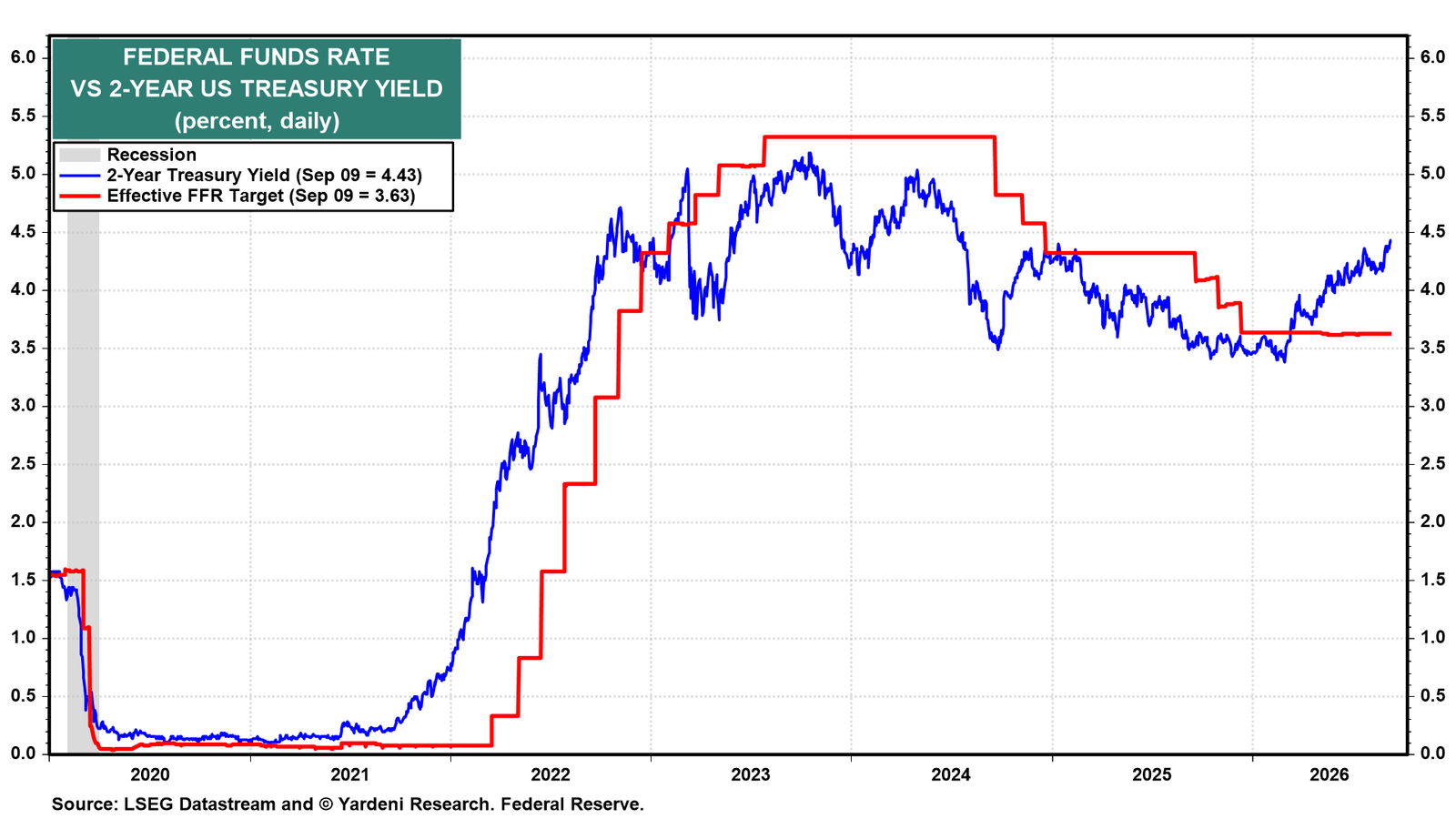
Meanwhile, traders continue to price in more aggressive Fed tightening, with the 2-year Treasury yield rising to 4.59% today, 100bps above the current effective federal funds rate (chart). That is the largest spread between the two since 2022, during the Fed's post-pandemic rate-hiking cycle.
The Fed is increasingly likely to deliver a 25bps rate hike next week. Such a move would reinforce the Fed's inflation-fighting credibility. In our view, it could ease some of the upward pressure on long-term yields. We think the Fed should have made that move back in July.
For now, we expect policy actions and strong buying at these levels to keep the 10-year yield within our 4.00%-5.00% range of expectations. Let's review the factors that have contributed to the rise in Treasury yields this week:
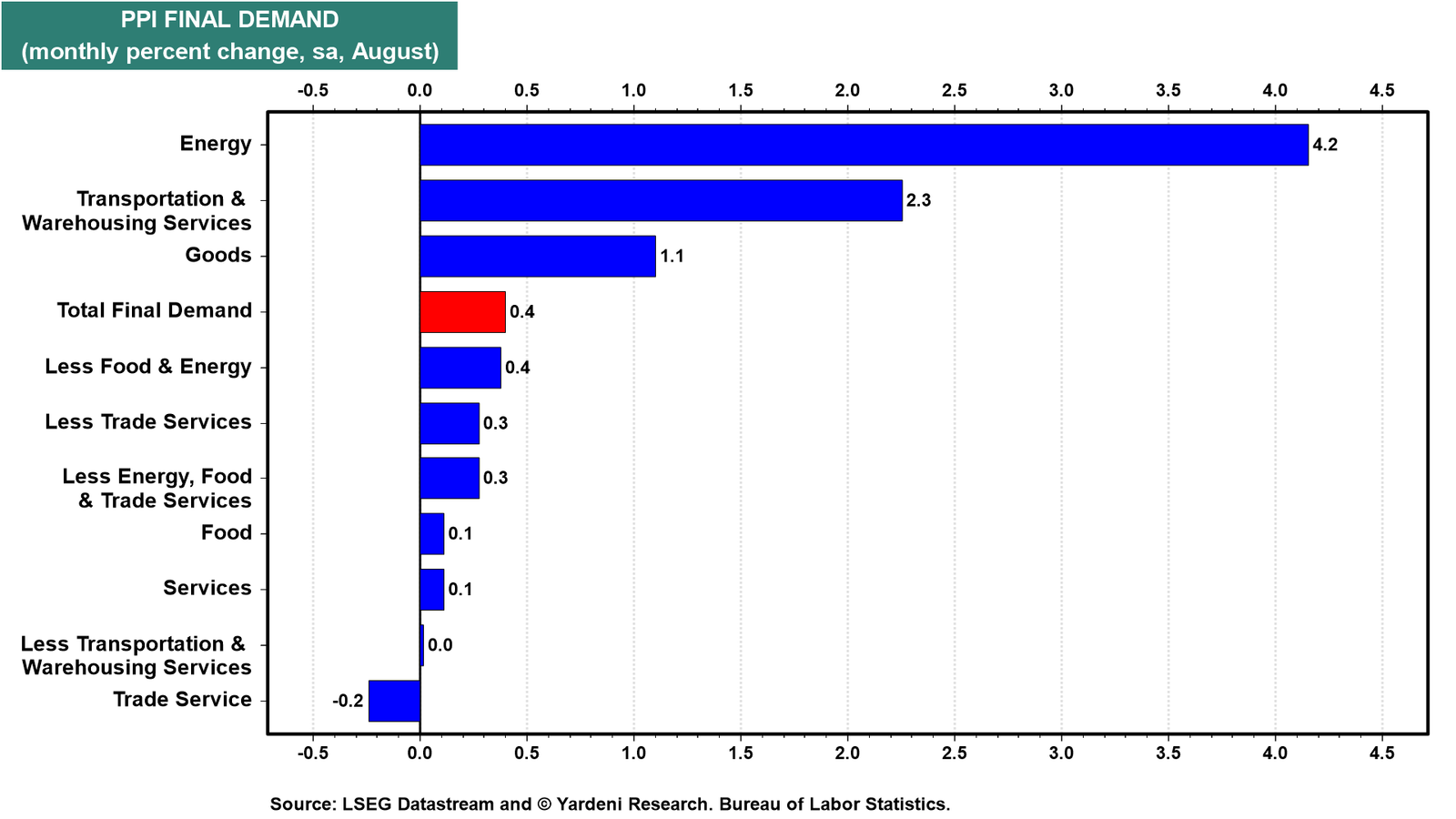
(1) PPI. The final-demand PPI rose 0.4% m/m in August, the largest increase since May. The jump was driven largely by a 4.2% rise in energy prices (chart). Higher fuel costs also boosted transportation and warehousing prices, which surged 2.3% m/m. The PPI excluding food and energy increased a solid 0.4%, suggesting that underlying producer price pressures remained firm last month.
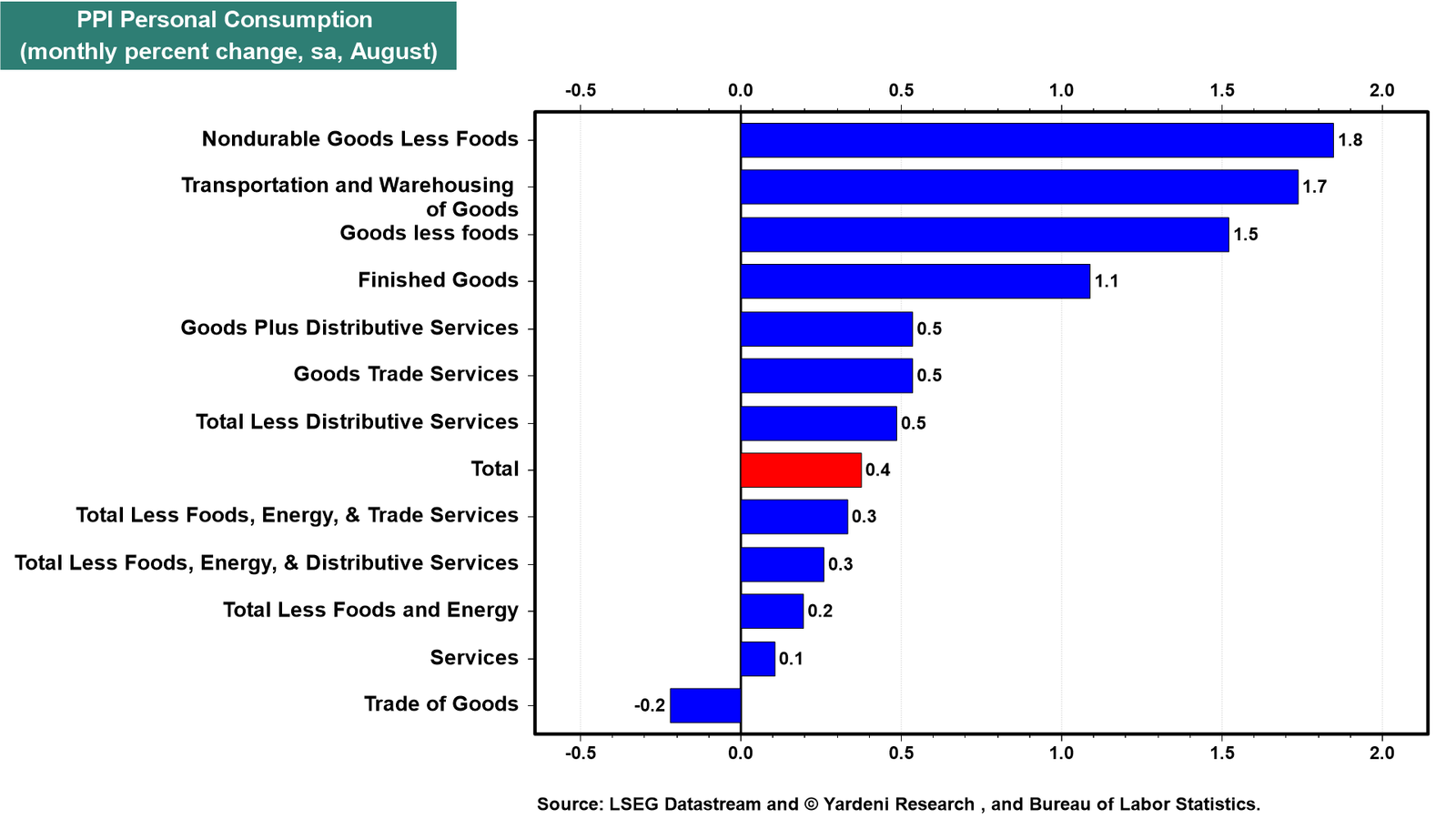
The PPI for personal consumption, a key input into the Fed’s preferred PCED inflation gauge, rose 0.4% m/m in July, the most since May (chart). Excluding food and energy, it rose at a more moderate pace of 0.2%.
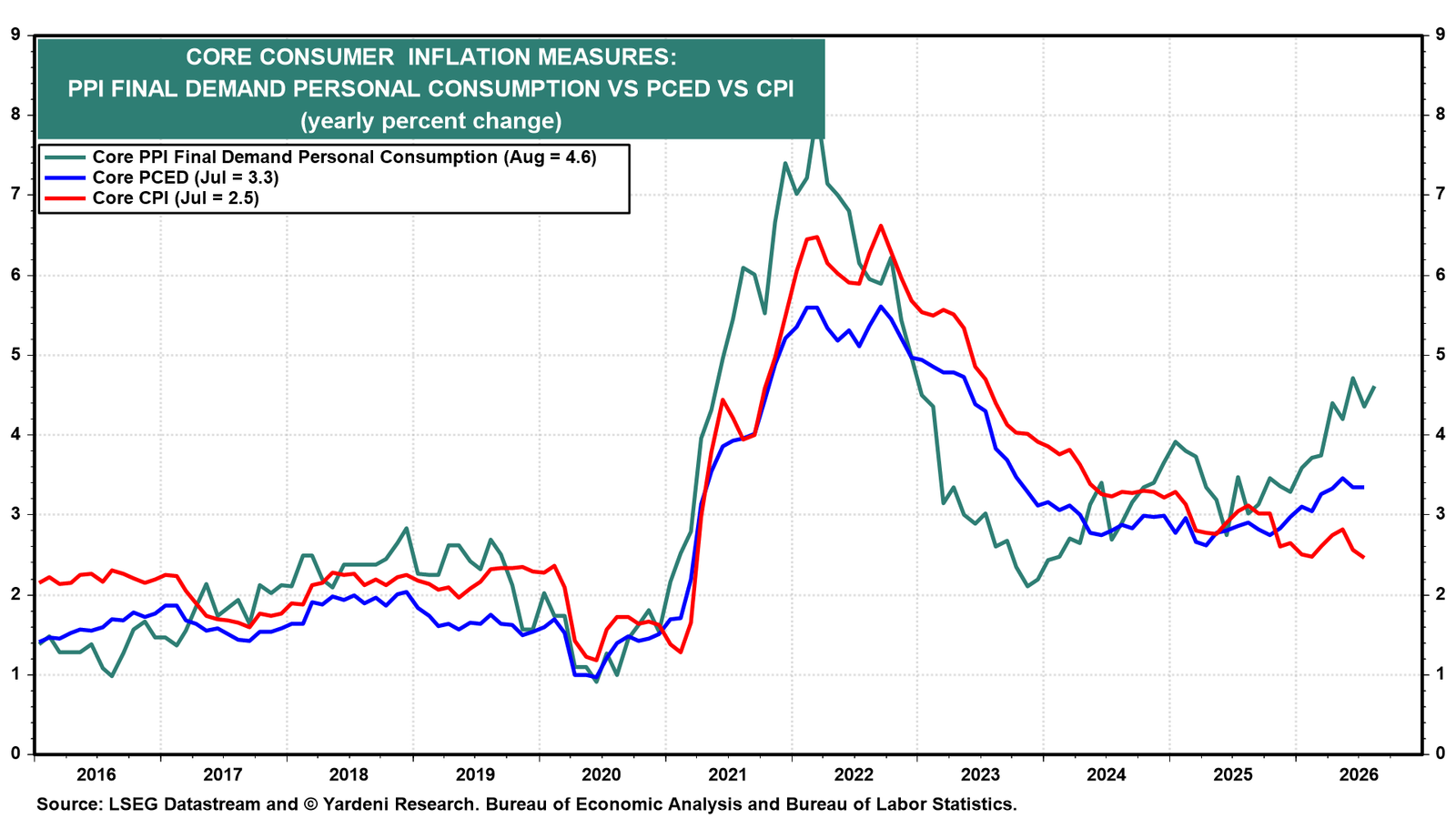
The core PPI for personal consumption accelerated modestly to 4.6% y/y. It remained above both core PCED and core CPI inflation, suggesting that upside risks to consumer inflation remain elevated (chart).
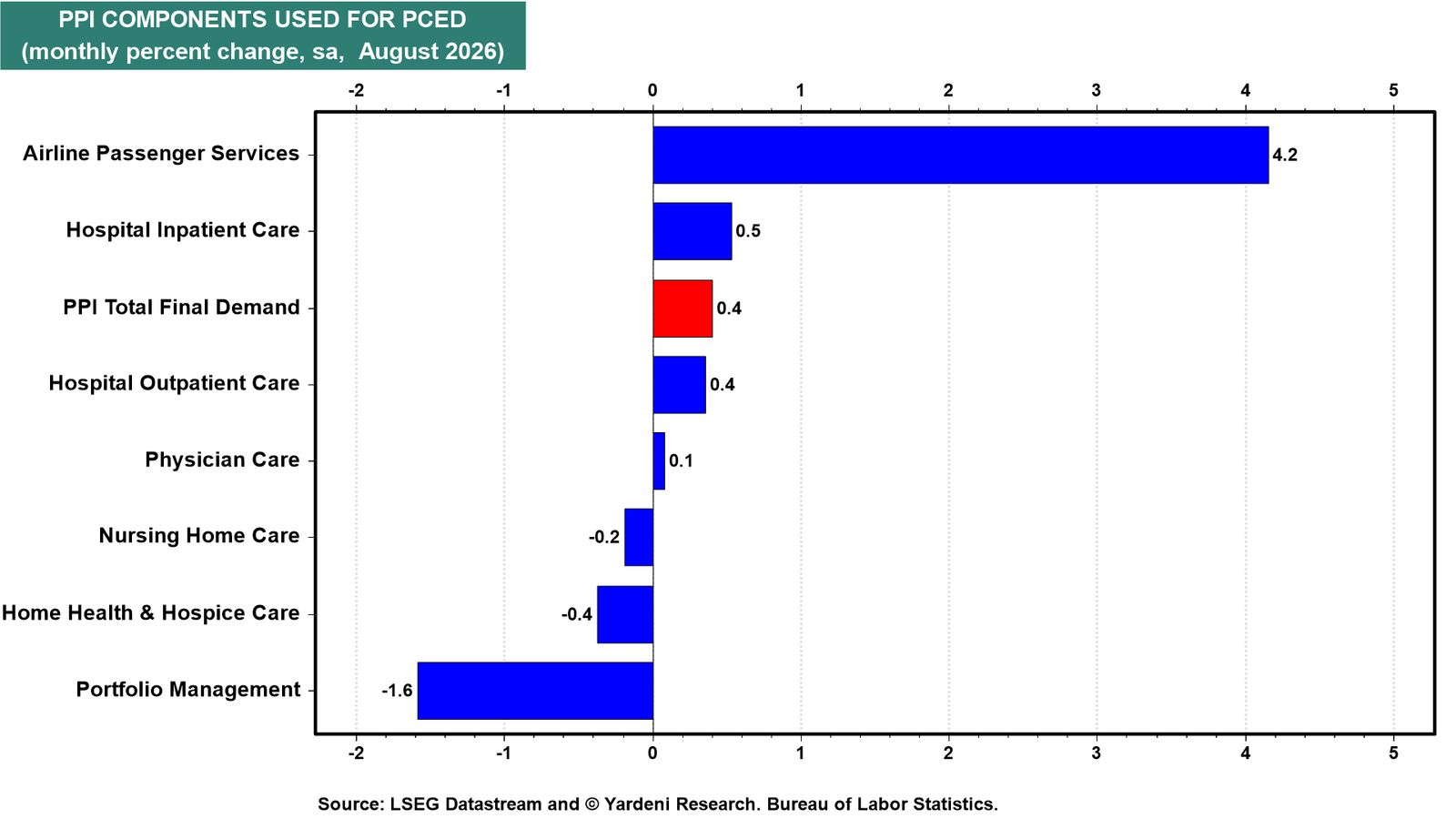
Importantly, PPI components that feed into the PCED, the Fed's preferred inflation measure, came in strong, with airfares surging 4.2% m/m and hospital services prices up 0.5% (chart). That matters because the September 16-17 FOMC decision will likely hinge on what this week's CPI and PPI reports imply for August’s core PCED inflation. Today's PPI report raises the odds of a rate hike, though tomorrow's CPI report remains critical.
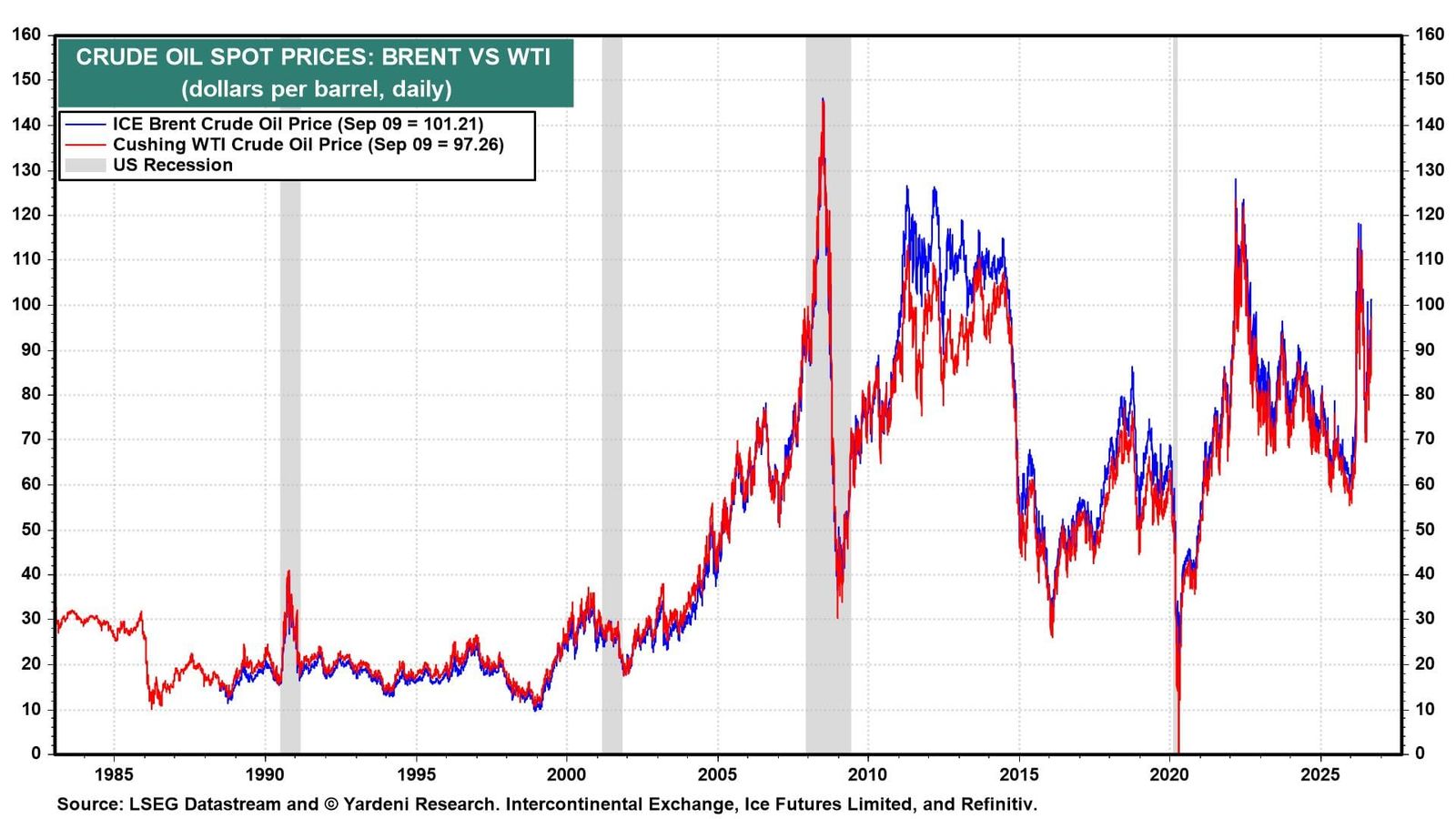
(2) Oil Prices. Oil prices continued to surge today amid escalating warfare in the Middle East. Brent crude traded near $107 per barrel, while West Texas Intermediate crude climbed to around $101, leaving both benchmarks up roughly 6% for the day (chart).
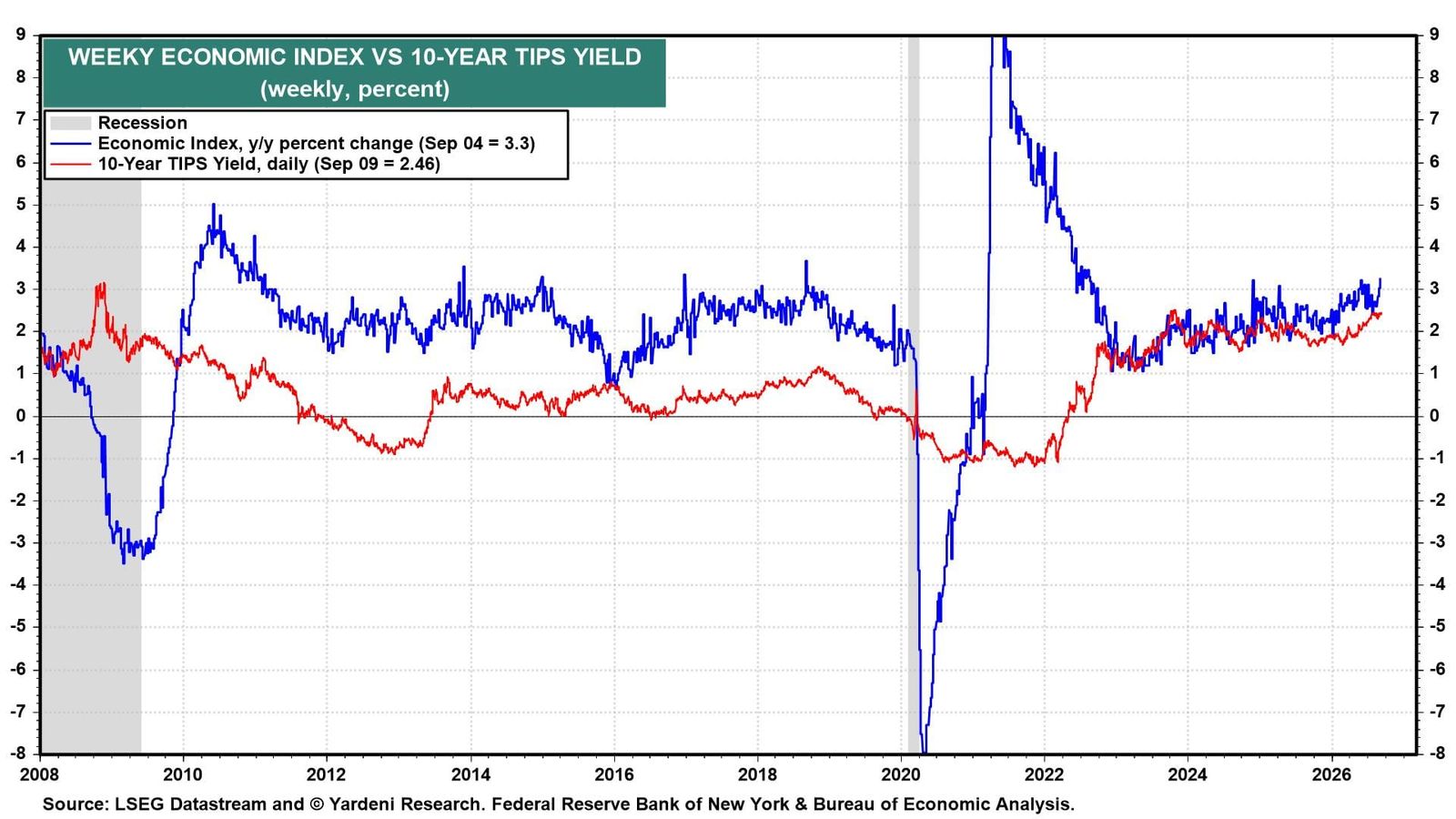
(3) US Economy. While inflation pressures remain elevated, the US economy continues to show remarkable strength. The Weekly Economic Index rose to 3.3% y/y in the week of September 4, its highest reading since August 2022 (chart). The index has increased for three straight weeks now.
The Atlanta Fed's GDPNow model currently projects real GDP growth of 4.4% (saar) in Q3, supported by strong consumer spending and robust business investment.
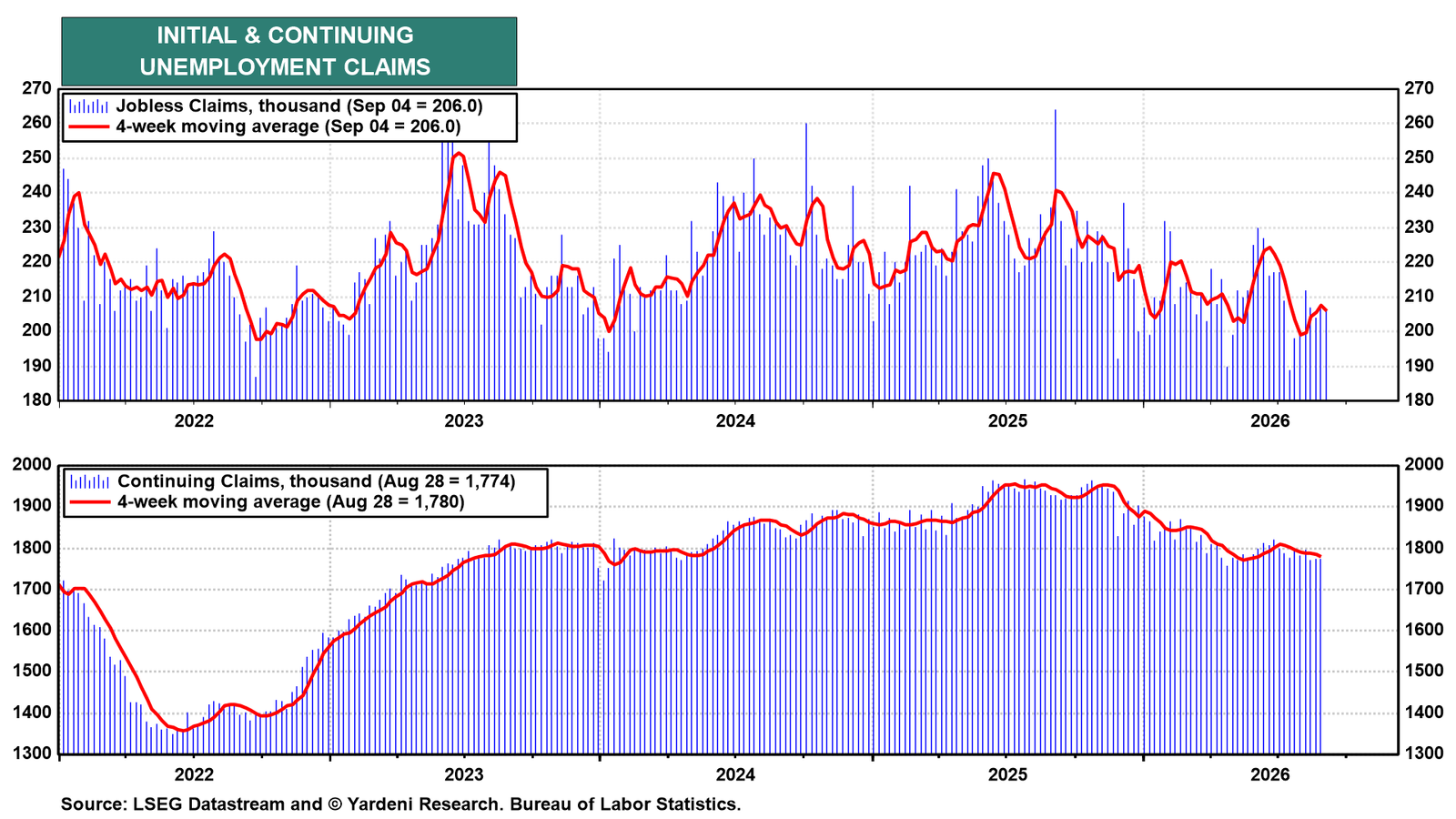
The labor market continues to point to an economy operating at full employment. Initial jobless claims remained historically low at 206,000 in the week of September 4, while the four-week average of continuing claims declined for a third straight week (chart).
(4) Fiscal Deficit. Bessent and other administration officials have emphasized a strategy focused on fiscal consolidation, debt management, and economic growth to rein in a national debt surpassing $40 trillion. Yesterday, President Donald Trump proposed issuing a $5,000 direct cash dividend to every adult US citizen, contingent on Republicans retaining control of Congress in the midterms.
Independent fiscal watchdogs quickly pointed out that a nationwide $5,000 payout would cost upwards of $1.20 trillion to $1.85 trillion. Critics argue that such a massive infusion of cash directly undermines Bessent's deficit-reduction efforts, threatening to reignite inflation and drive up borrowing costs at a time when the federal deficit is already near $2 trillion.