I. Bessent Intervening
On August 19, Treasury Secretary Scott Bessent announced an expansion of the Treasury's buyback program in the long end of the yield curve. Today, the Treasury unveiled a $6 billion buyback operation in the 10- to 20-year sector, with Bessent stating that the goal is to ensure "that there is not a bad, big adverse outcome" in the Treasury market.
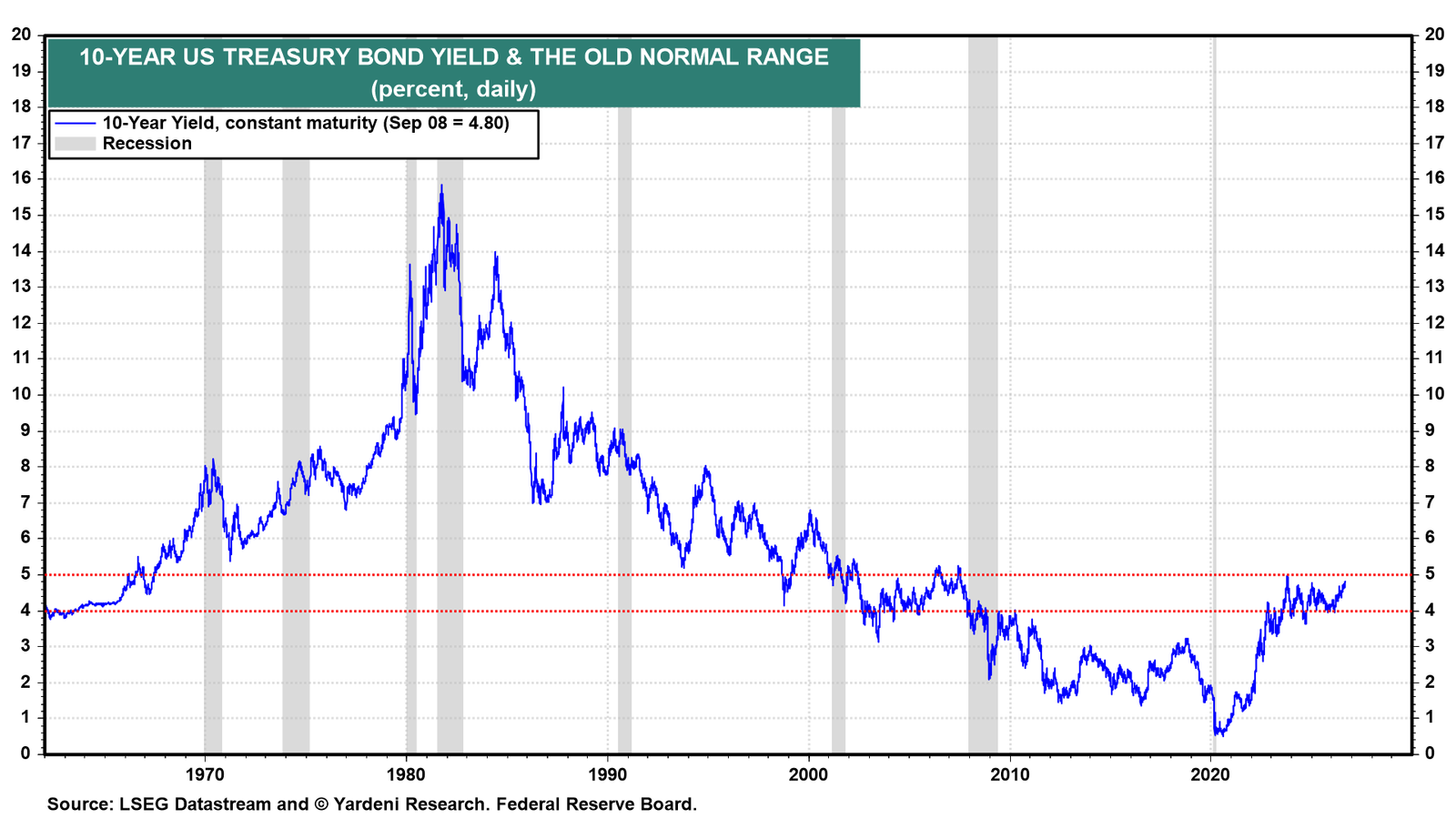
However, the market remained unconvinced, with the 10-year Treasury yield rising to 4.85%, its highest level since November 2023. Investors remain focused on the fundamentals supporting elevated long-term rates, including robust consumer spending, an AI-led capital spending boom, huge federal deficits, and inflation stuck above the Fed's target.
Nevertheless, we continue to expect the 10-year yield to remain in the back-to-normal 4.00%-5.00% range (chart). If so, Bessent may be overreacting because he fears more than we do that the Bond Vigilantes will drive yields above 5.00%. Bessent is talking loudly and carrying a big stick. The "Bessent Put" raises the odds that 5.00% won't be breached, making bonds at these levels more attractive.
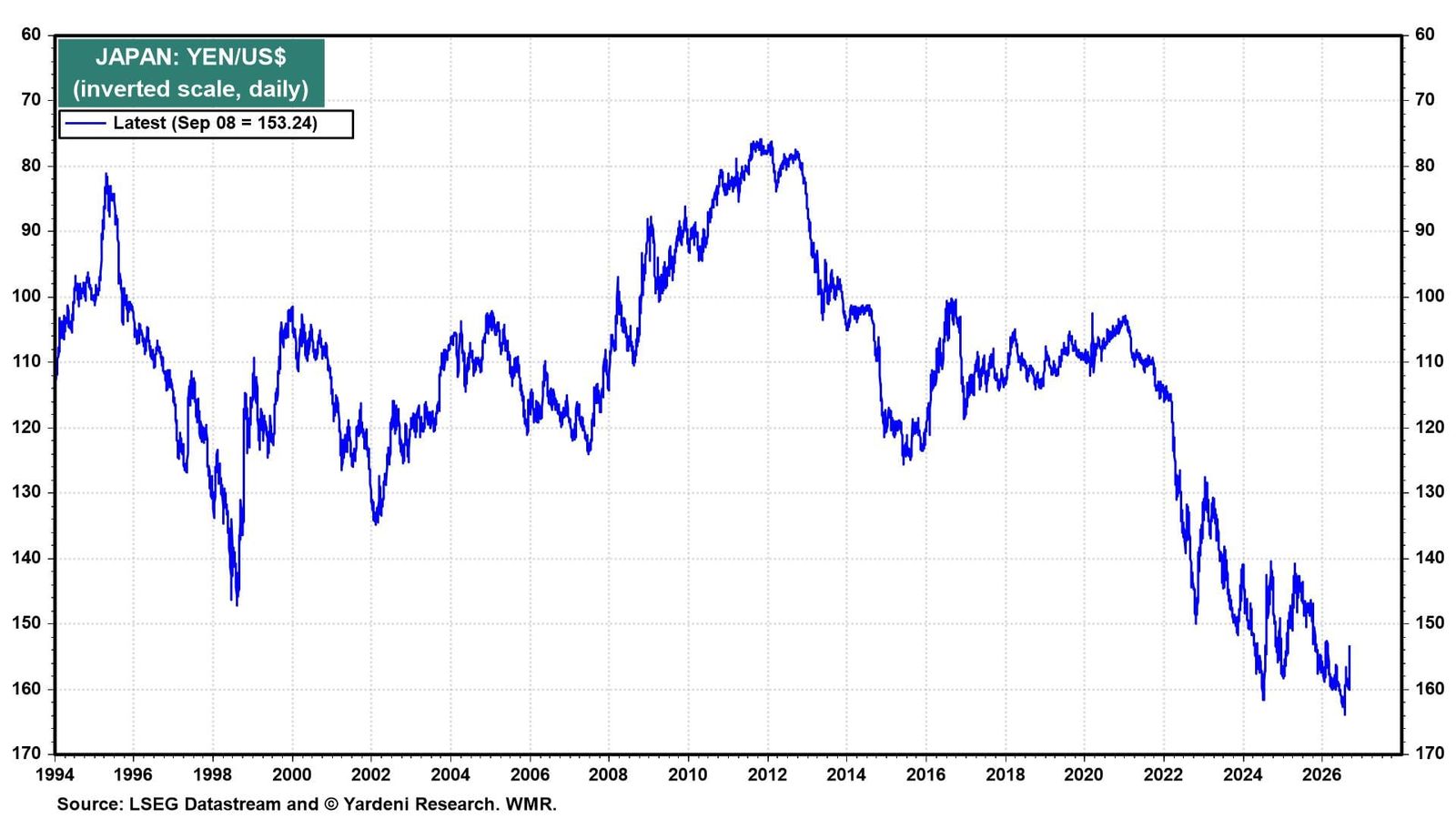
On July 31, Bessent also joined Japan in supporting the yen after the currency plunged to a 40-year low against the dollar. Japan still spent a record $98.6 billion defending the currency between July 30 and August 26, partly financed through Treasury sales.
The yen has since rebounded more than 6% from its late-July low (chart). In our view, the interventions helped establish a floor under the currency, while the subsequent rally reflected a hawkish repricing of BOJ policy and an unwind of short-yen carry trades. A big stick often works.
The broader takeaway is that Bessent is willing to intervene when he believes markets have drifted too far from fundamentals. He has framed this strategy as leveraging "asymmetric information" to force speculators to reassess their views. Yesterday, in a speech at Southern Methodist University, he declared: "I am the house now." Referring to coordination with Japan, he added, "When we intervene with the Japanese yen, I have pretty good insight into what the Bank of Japan is going to do ... Bet against me if you want."
Meanwhile, the latest economic data show that despite the recent rise in bond yields and the rebound in oil prices, the labor market is improving and consumers show no sign of retrenching.
II. Consumers Consuming
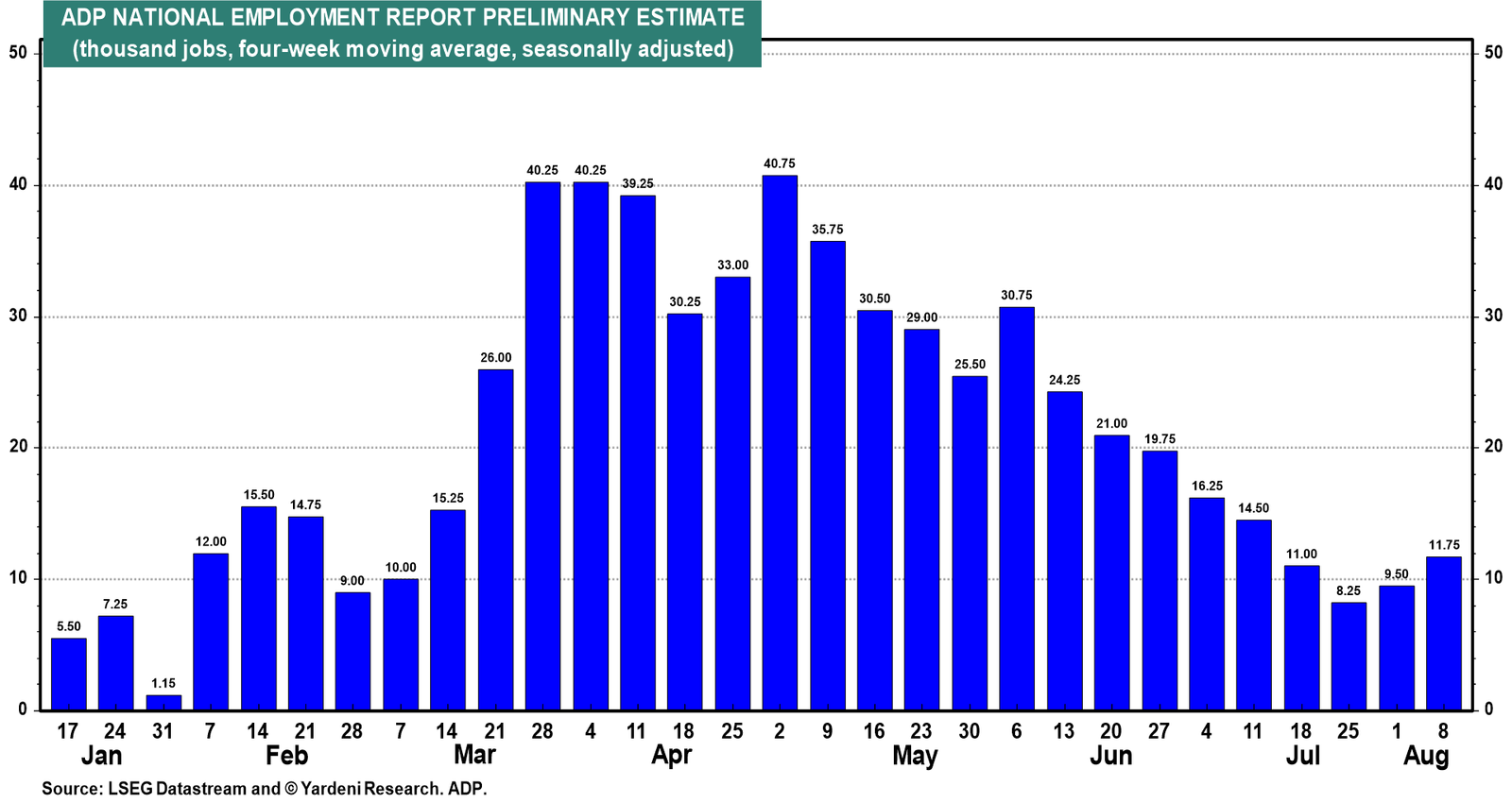
The latest labor market data suggest the US economy continues to operate at full employment. According to ADP, private employers added an average of 12,500 jobs per week in the four weeks ending August 22, equivalent to a monthly pace of 50,000 jobs (chart). We think that is sufficient to keep the unemployment rate around 4.0%.
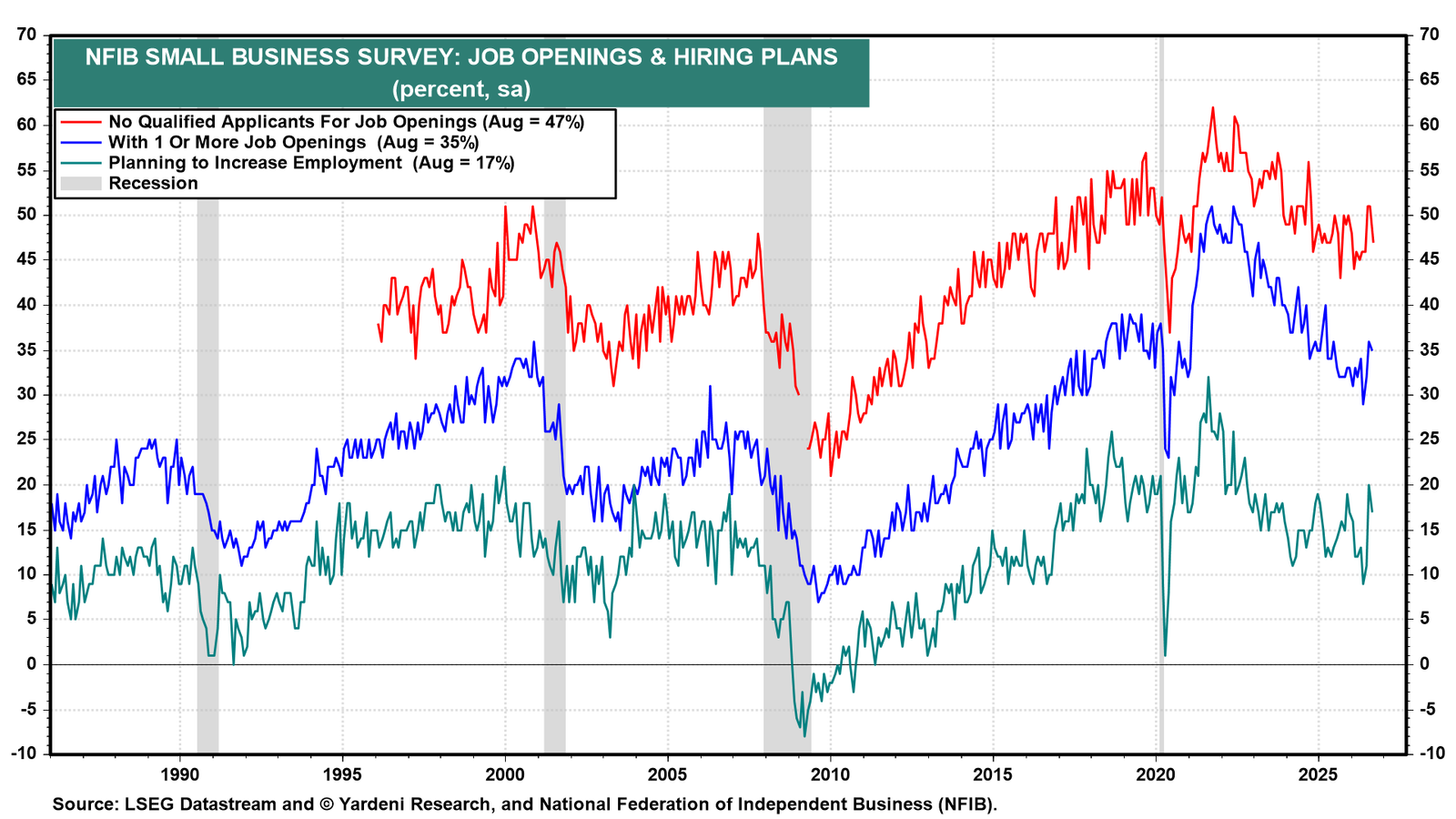
The latest NFIB survey shows that 17% of small businesses planned to increase employment in August, above the historical average of 11% (chart). Job openings remained 11 points above their historical average. Hiring likely remains constrained by a shortage of skilled workers, with 47% of firms reporting no qualified applicants for an open position, well above the historical average of 37%.
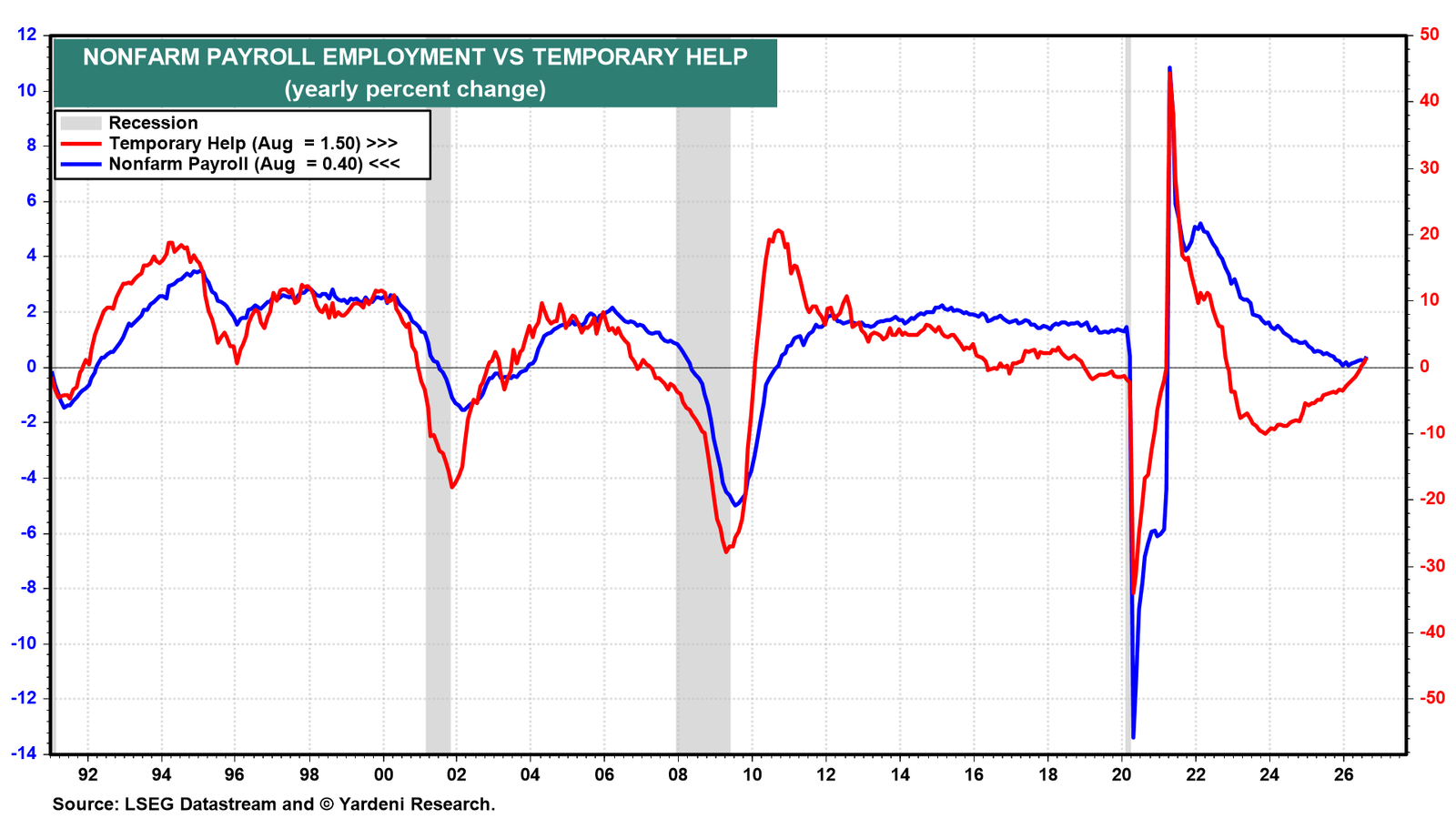
Another upbeat sign for overall payroll employment is that the y/y growth rate of temporary help employment turned slightly positive during August for the first time since October 2022 (chart).
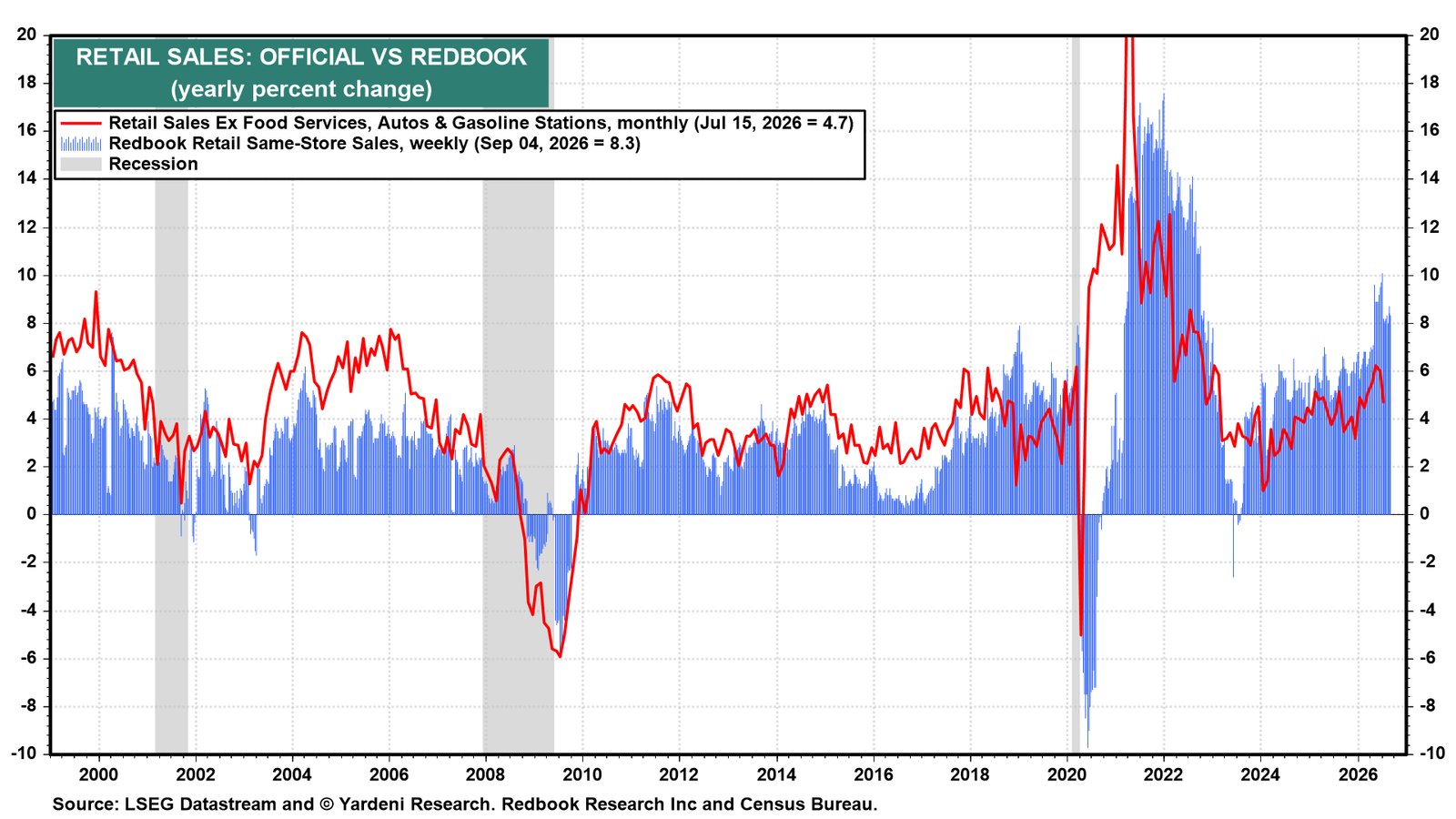
Despite elevated energy prices, consumers continue to spend at a solid pace. Redbook same-store retail sales rose by 8.3% y/y during the week of September 04, well above the 2025 average of 5.8% (chart).
III. Inflation Inflating
While the labor market data suggest the Fed has no reason to worry about the full-employment side of its dual mandate, the inflation picture remains unsettling.
Oil prices surged above $100 per barrel today for the first time since July as the US-Iran conflict re-escalates. Higher oil prices will boost headline inflation and increase the risk that temporary supply shocks become more persistent inflationary pressures, strengthening the case for the Fed to raise the federal funds rate next week.
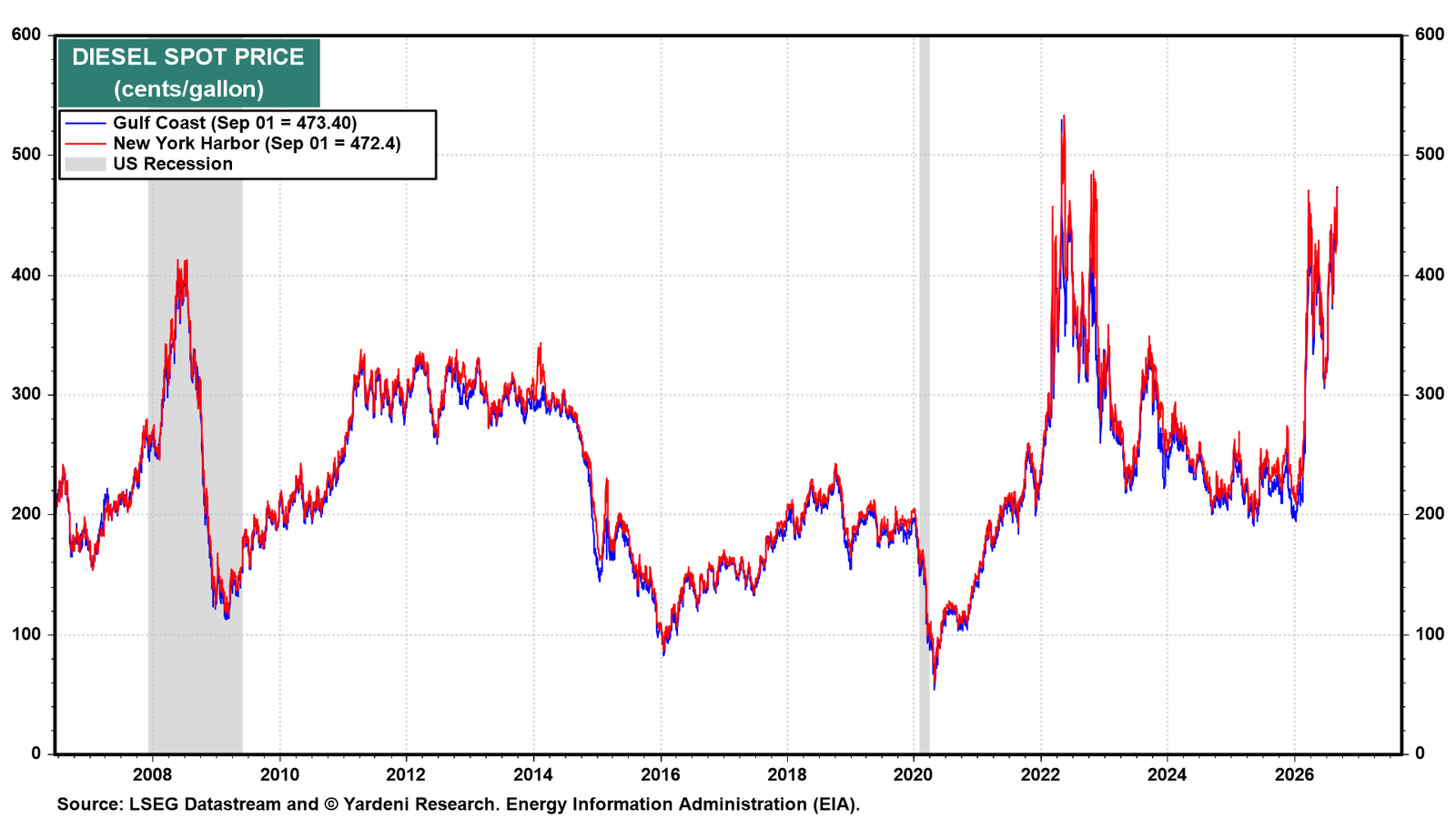
Diesel prices have also continued to surge, reflecting tightening global distillate supplies and refinery disruptions (chart). Because diesel fuels much of the transportation, agricultural, and industrial sectors, higher diesel costs tend to raise prices across the broader economy.
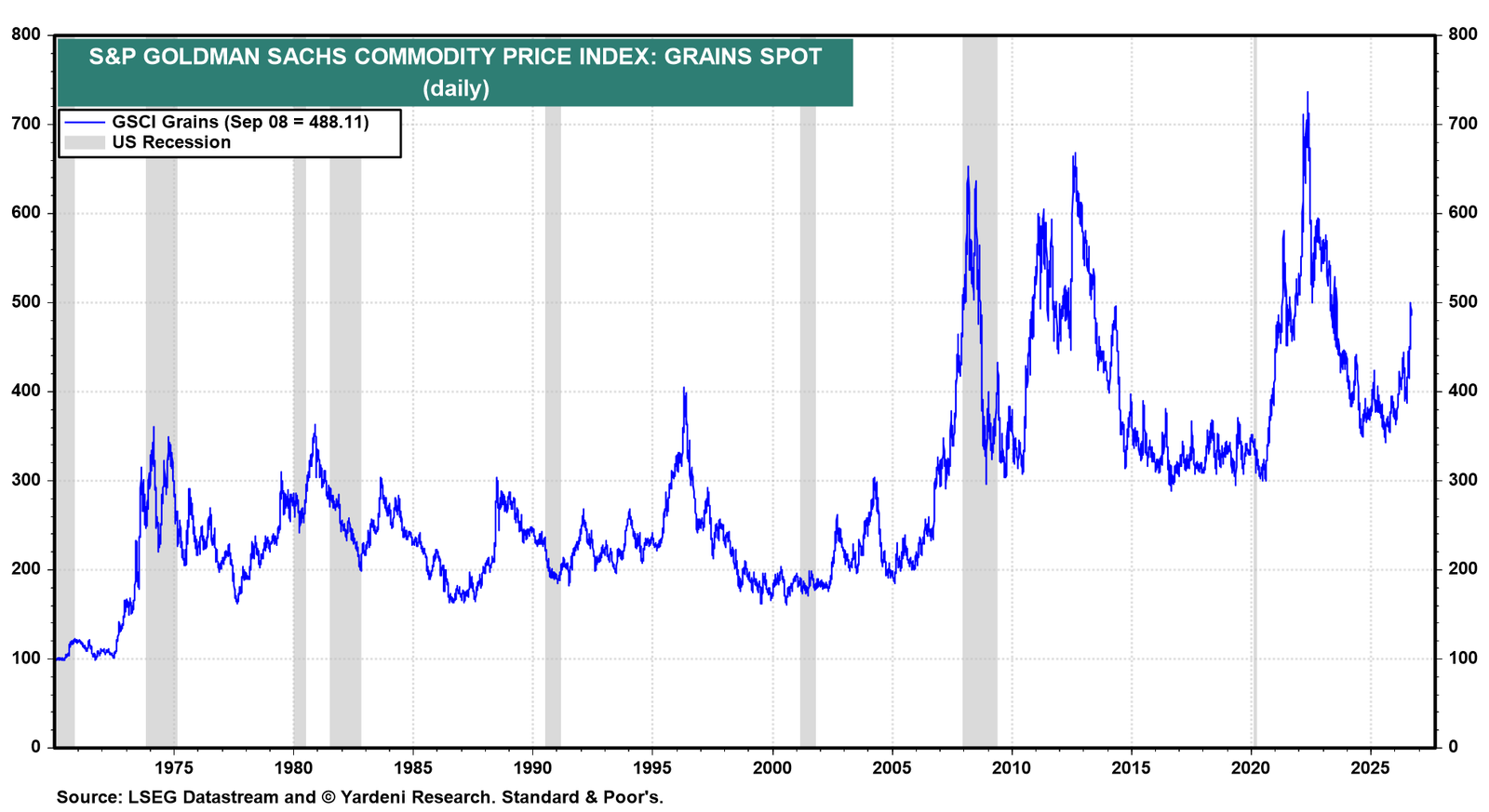
Grain prices are also spiking amid Black Sea export disruptions, extreme weather-related crop losses, and rising energy and transportation costs (chart). This is likely to filter through to consumer food prices with a lag.
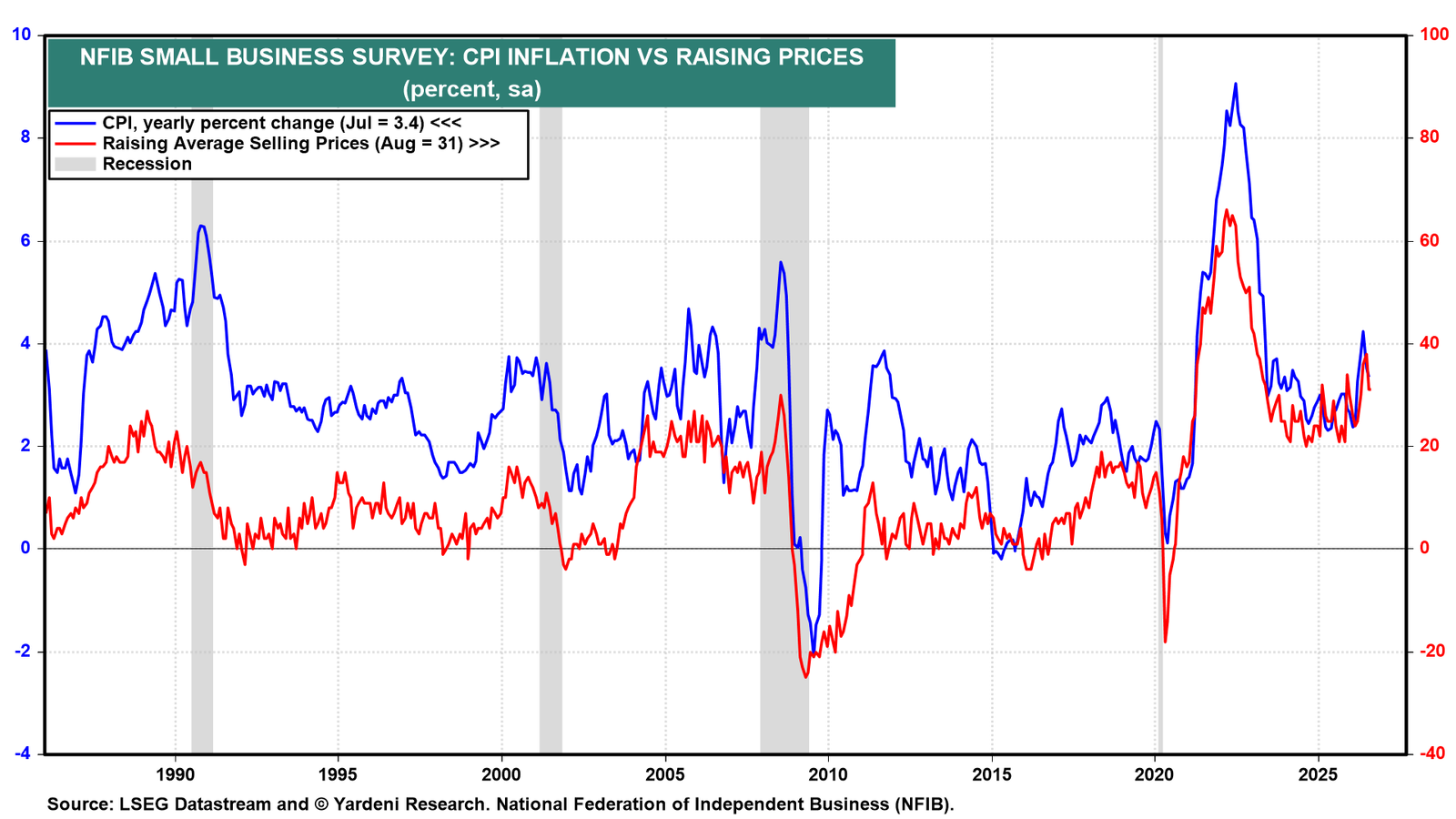
On a more encouraging note, the latest NFIB survey shows that the percentage of firms planning to raise prices was 28% in August, the lowest since April (chart). However, the overall data suggest inflation remains a troublesome issue for the Fed.