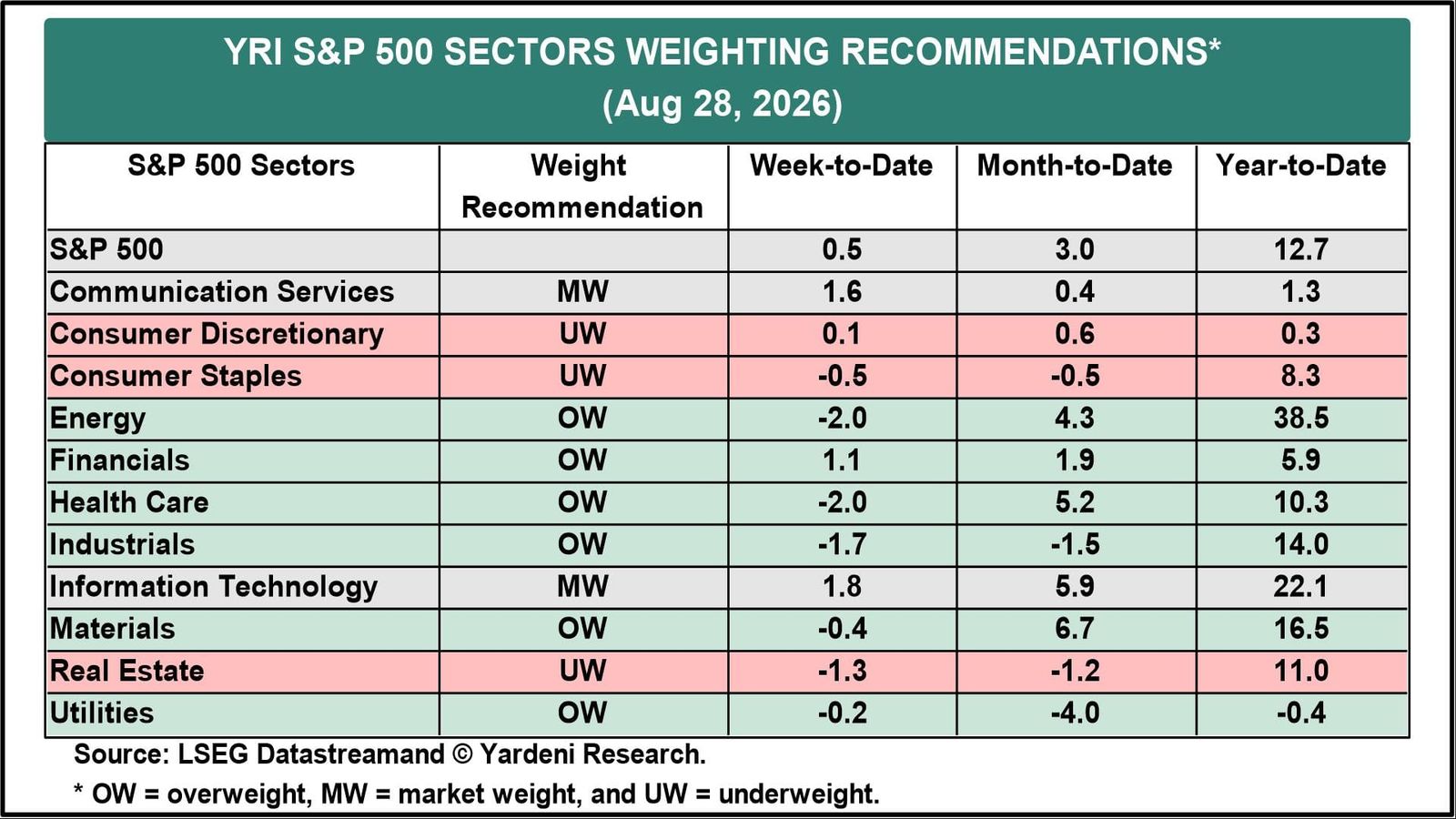
Information Technology (MW) led the S&P 500 sectors last week, up 1.8%. The sector rose 3.4% on Thursday following Nvidia’s results the previous evening. Nvidia guided to 70% revenue growth next fiscal year against a 45% consensus. Energy (OW) was among the weakest, down 2.0%, while Consumer Discretionary (UW) rose 0.1%. The rate-sensitive sectors sold off on Friday after Warsh’s Jackson Hole speech, with Real Estate (UW) down 1.3% on the week and Utilities (OW) down 4.0% on the month (chart).
Here's more on Software, Energy, and Consumer Discretionary:
(1) Software: Cyber and SaaS soar. Dr. Ed said on CNBC on February 26 that the market had overdone AI's potential negative impact on software stocks. The iShares Expanded Tech-Software ETF closed at $82.60 that day. It closed Friday at $109.50, up 32.6% since then (chart). Markets initially priced software as a sector vulnerable to AI disruption, yet it is proving to be the essential distribution layer for AI integration.
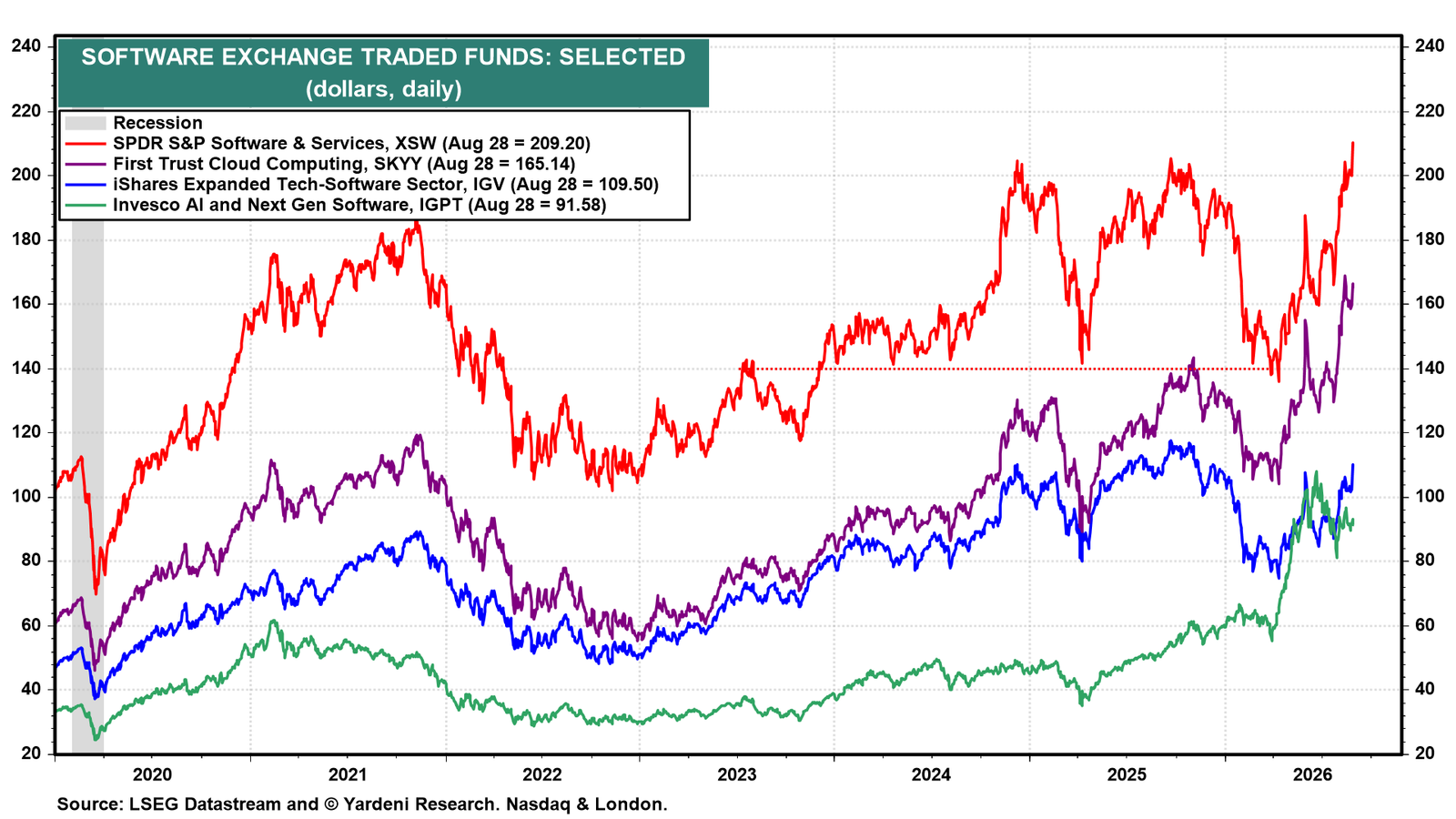
CrowdStrike reported earnings on Wednesday evening, with revenues up 26% y/y and raised guidance. The stock rose 20.50% on Thursday. Salesforce reported the same evening, with revenues up 11% y/y and annual recurring revenue from Agentforce and Data 360 up more than 210% to nearly $3.9 billion. It raised full-year revenue guidance and rose 22.58%.
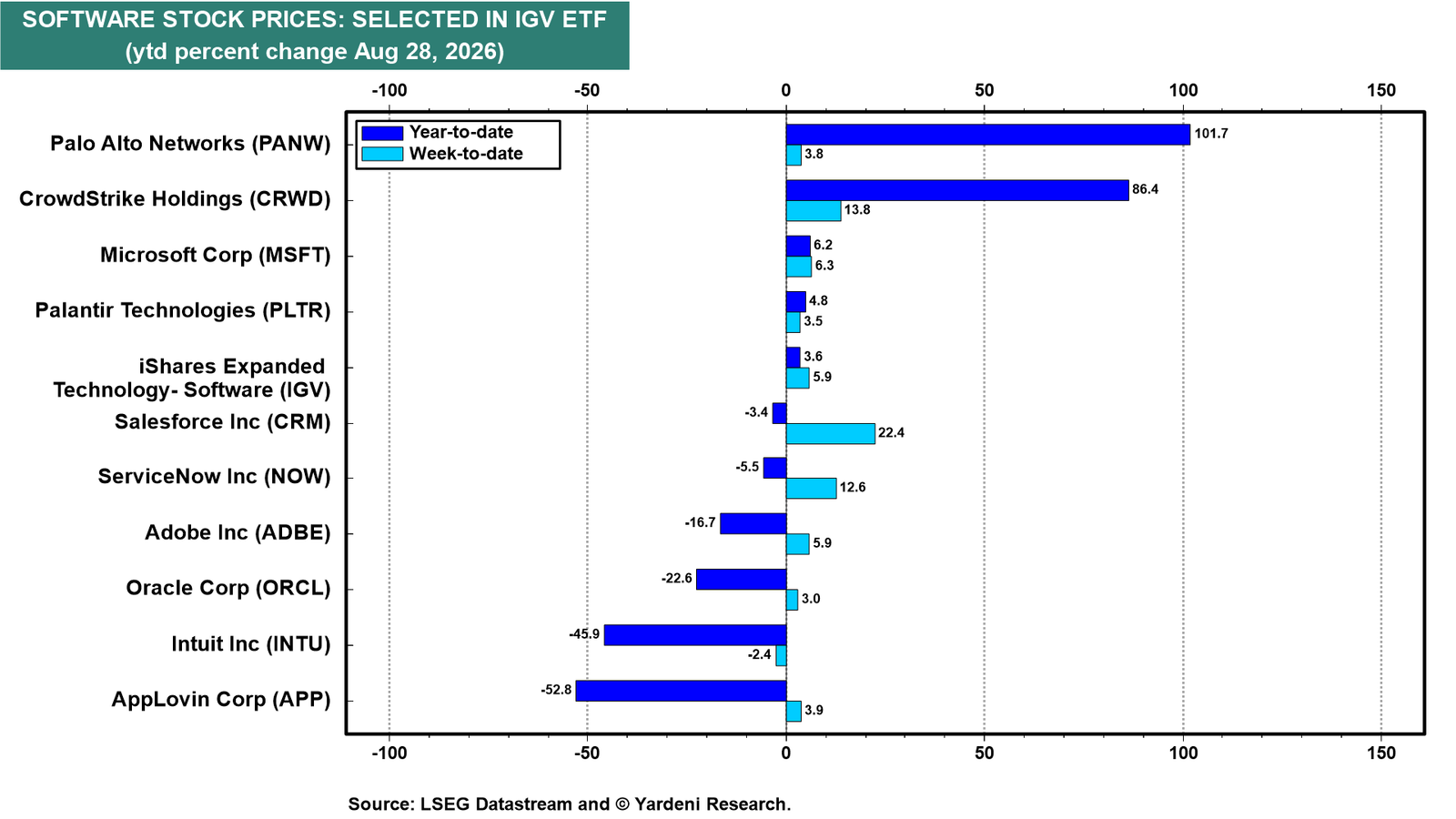
Cybersecurity has led all year. Palo Alto Networks and CrowdStrike are the two best performers among the IGV names, while AppLovin, Intuit, and Oracle all have fallen more than 20% (chart). Agentic AI has widened the attack surface faster than enterprises can defend it, and security budgets are being written against that gap.
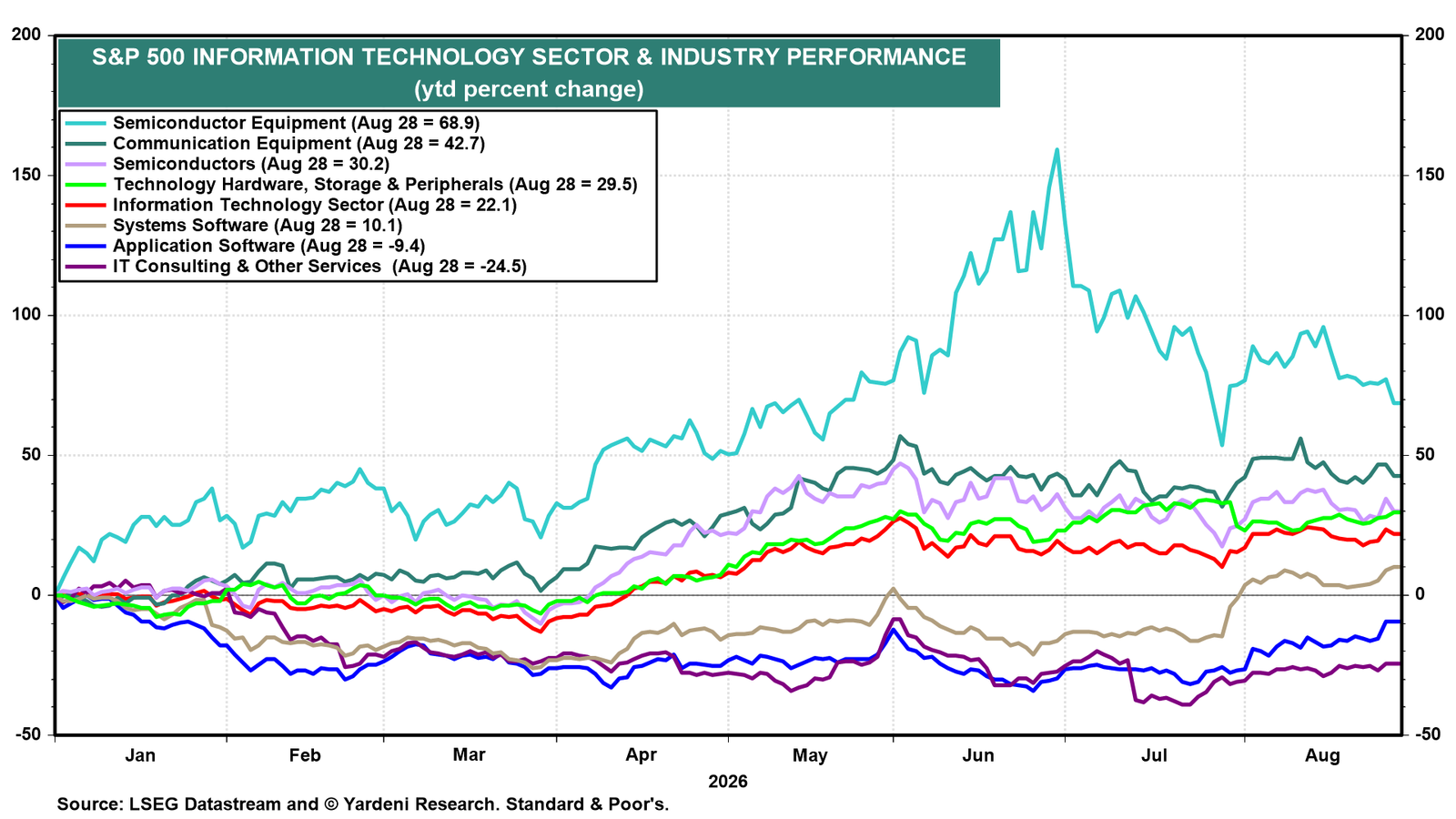
Application Software remains among the weakest industries in the Information Technology sector, down 9.4% ytd, alongside IT Consulting & Other Services at -24.5%. Systems Software is up 10.1%, behind the sector's 22.1% (chart). Most of the recovery has come within the past month.
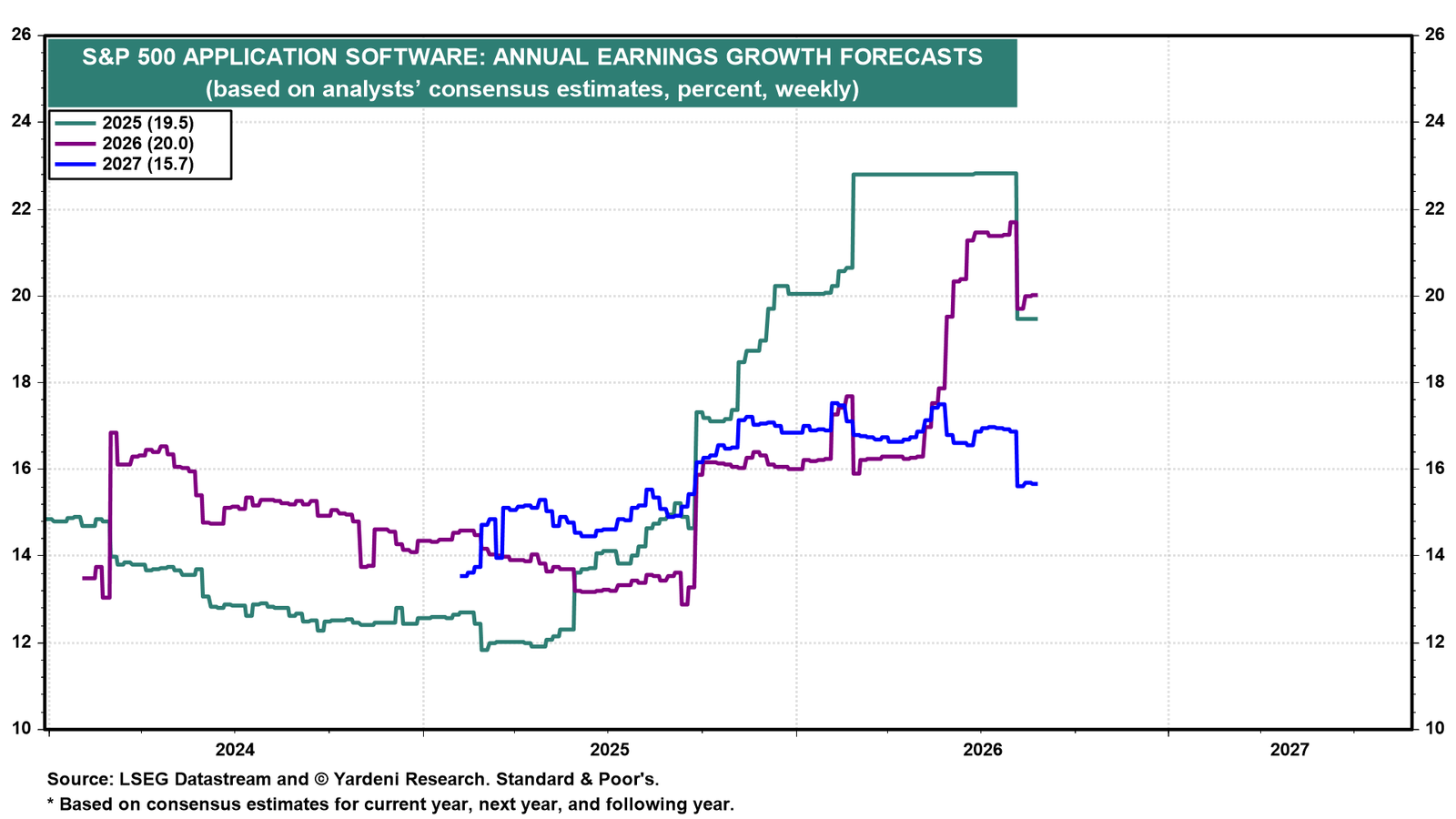
Application Software has a 30.5% forward profit margin, with earnings forecast to grow 20.0% this year and 15.7% next (chart). It trades at 23.0 times forward earnings against 21.3 for the sector, and down from 26.5 at the end of 2025. We remain at a market weight rating on Information Technology.
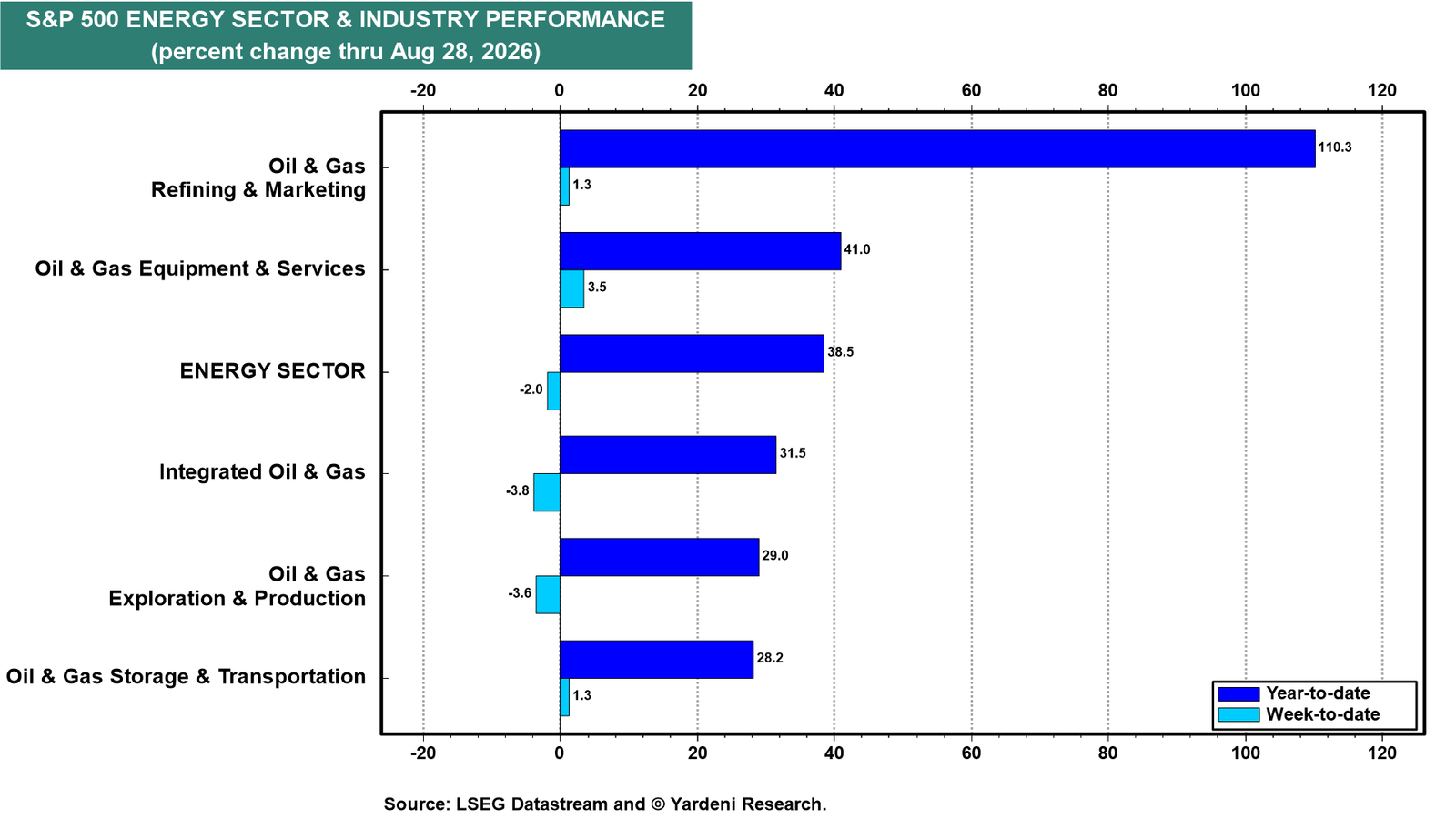
(2) Energy: The war trade cools. Diplomatic efforts to reopen the Strait of Hormuz, restored Gulf shipments, and a surprise build in US crude inventories all weighed on the oil price this week. Both benchmarks fell more than 3% on the week, with Brent closing at $88.29 and WTI at $83.44. Energy fell 2%, the worst of the 11 sectors after leading them last week, though it is still the best ytd at 38.5%.
The producers took the damage. Integrated Oil & Gas fell 3.8% and Exploration & Production fell 3.6%, while Oil & Gas Storage & Transportation along with Refining & Marketing rose 1.3% (chart).
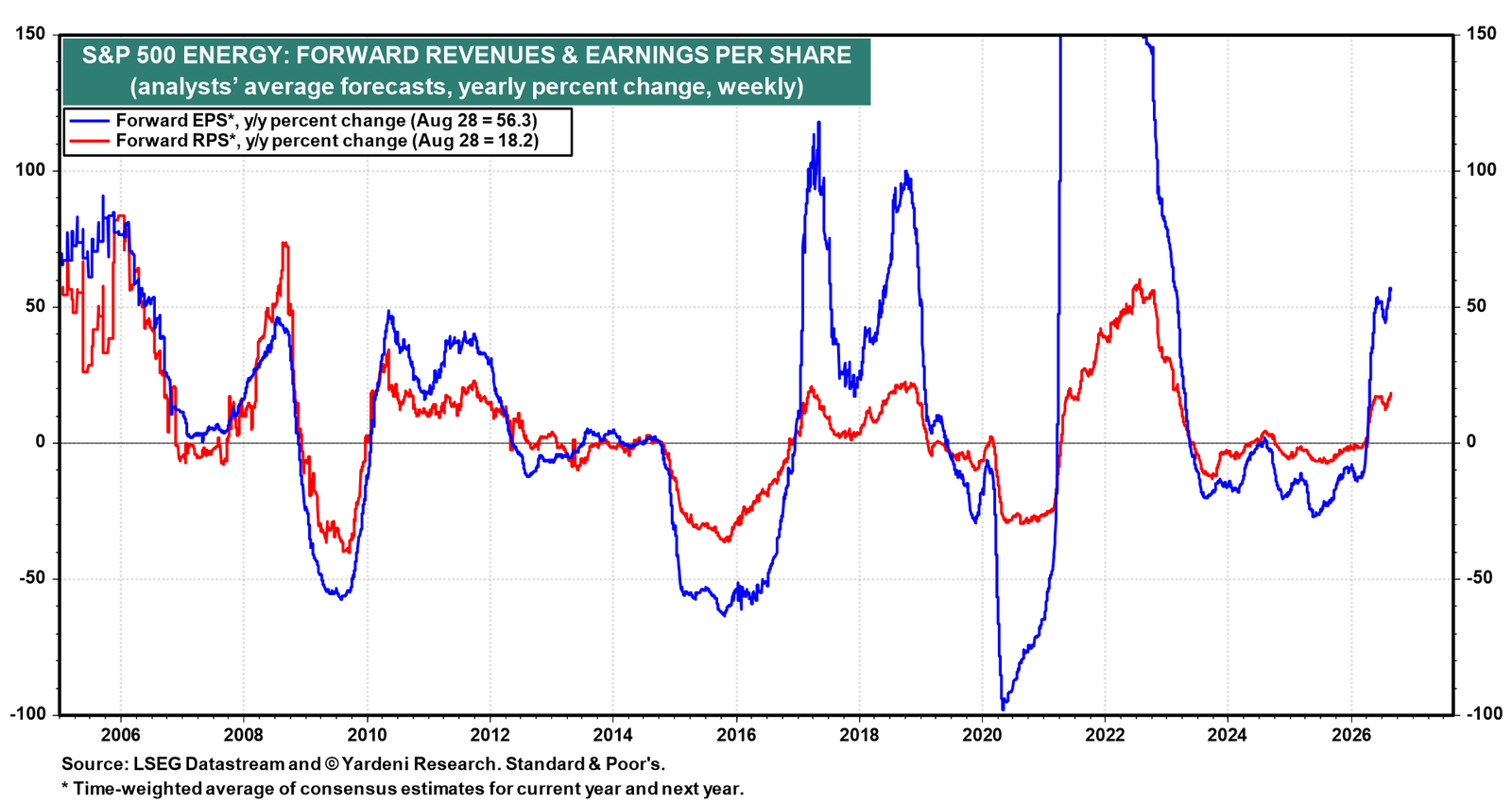
The earnings are outrunning the revenues. Forward earnings per share is up 56.3% y/y against forward revenues per share up 18.2% (chart). The forward profit margin has risen from 8.3% at the start of the year to 11.7%.
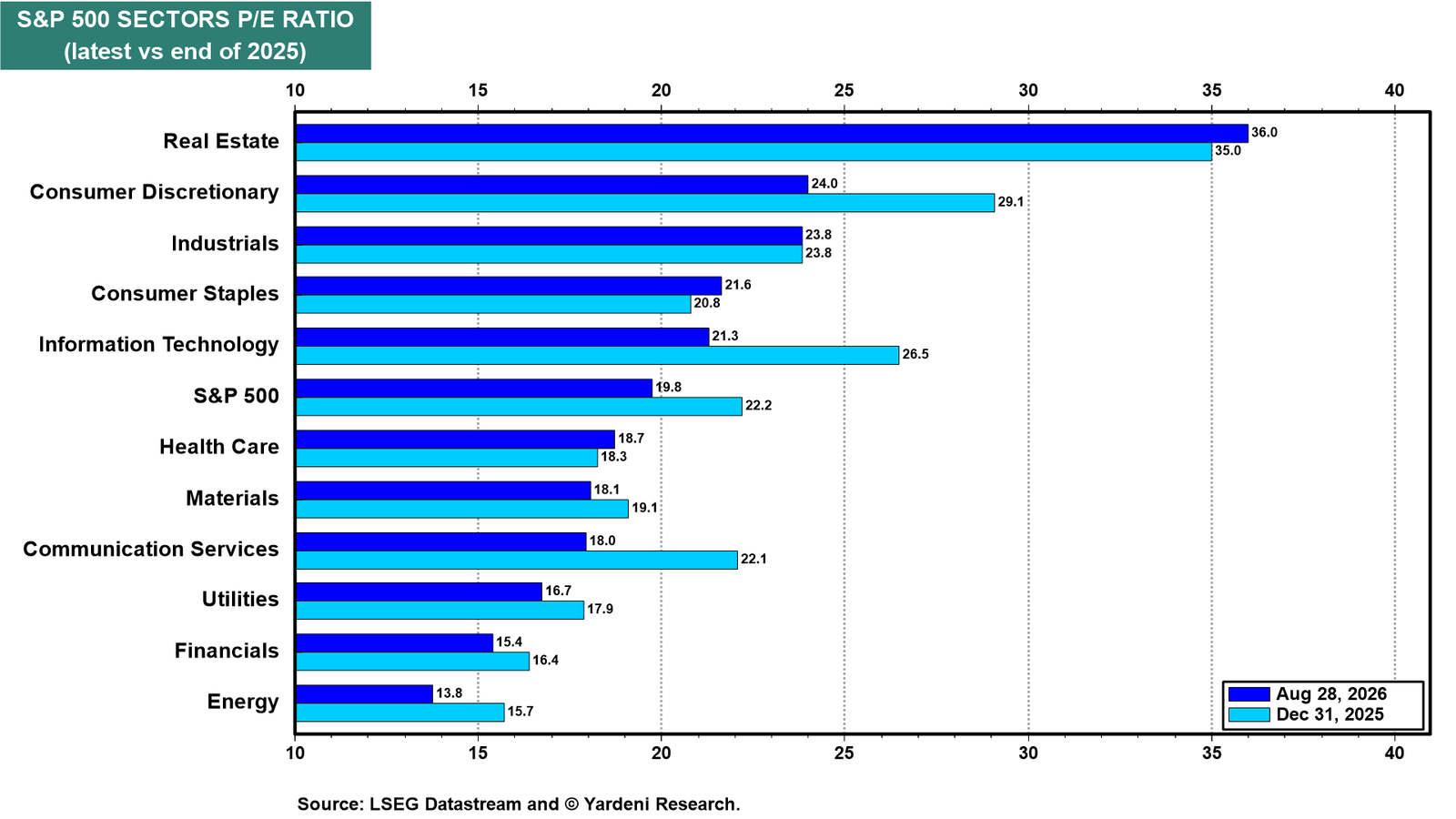
The sector earns more than its weight. Energy accounts for 3.4% of the S&P 500's market capitalization against 4.8% of its forward earnings, and trades at 13.8 times forward earnings, the cheapest of the 11 sectors. We retain our overweight rating on the energy sector.
(3) Consumer Discretionary: Cheaper for a reason. Consumer Discretionary has lagged all year, and Dick's Sporting Goods showed why on Tuesday. The stock fell 31% after missing on earnings. Adjusted earnings per share fell 19% y/y, management cut its full-year guidance, and Foot Locker’s comparable-store sales fell 3.6% on a pro forma basis. The brands have fared no better. Nike and Lululemon are both more than 75% below their record highs.
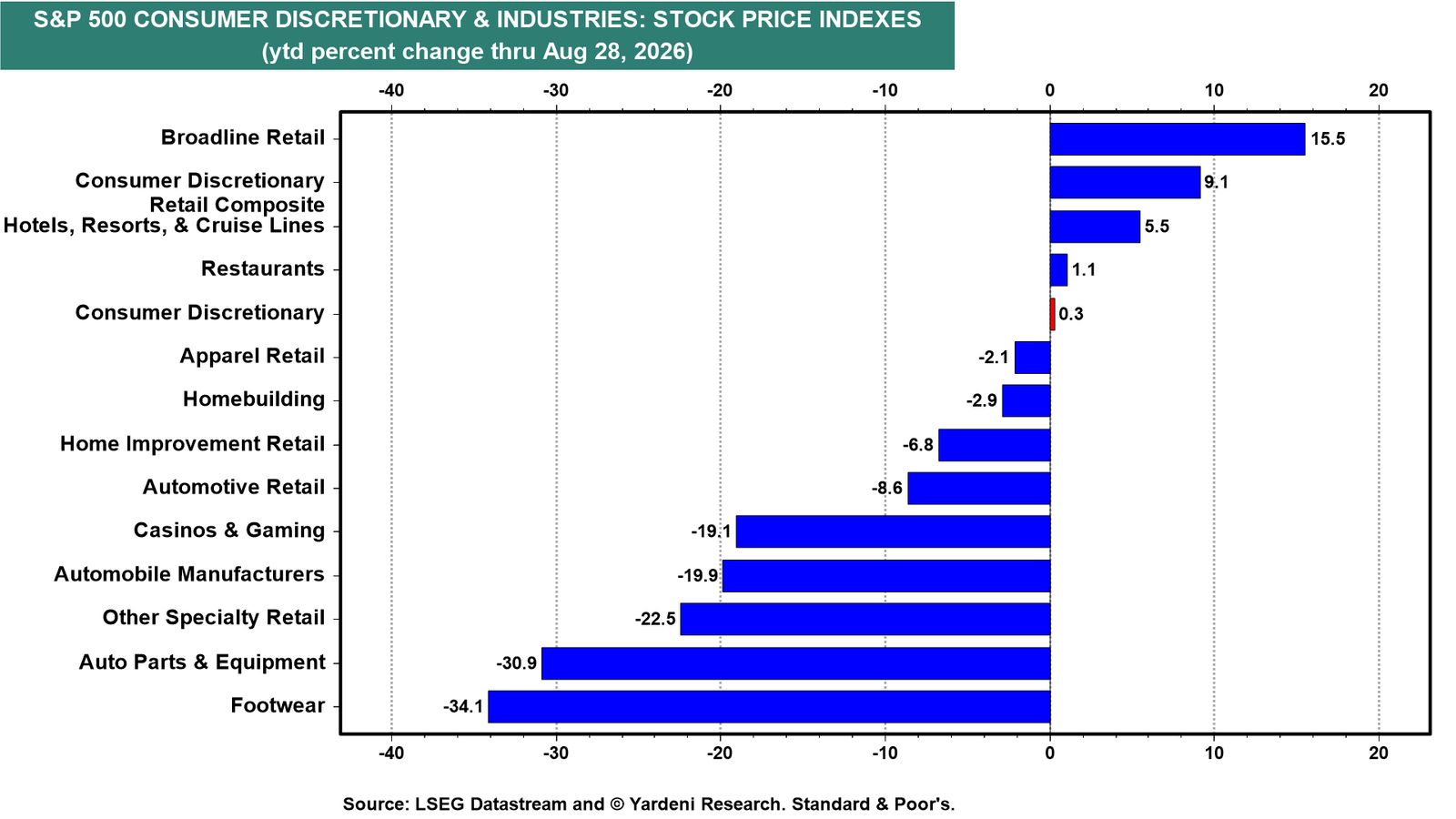
The weakness is concentrated. Footwear is down 34.1% ytd, and Other Specialty Retail is down 22.5%, while Broadline Retail is up 15.5% (chart). Broadline Retail's forward profit margin is 13.6%, up a lot from 3.5% in March 2023.
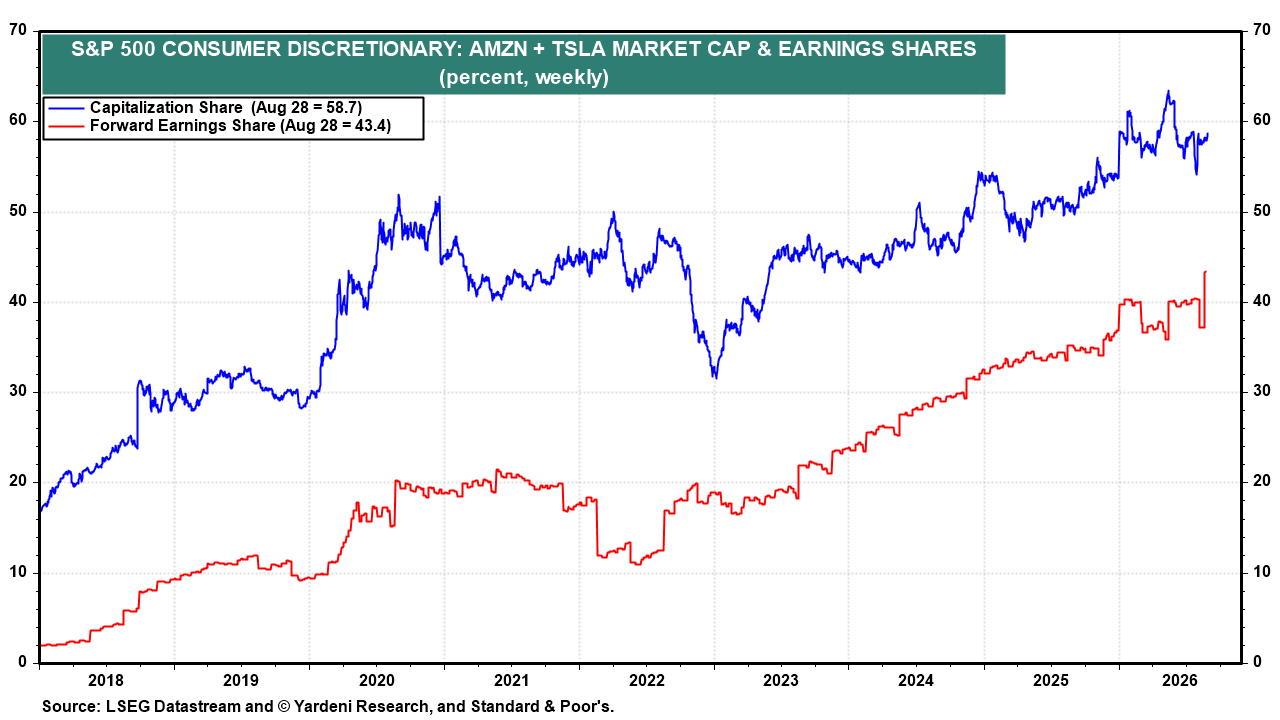
Amazon and Tesla together account for 43.4% of the sector's forward earnings and 58.7% of its market capitalization (chart). The sector's fortunes track those two more than consumer spending.
The multiple has come down, but not far enough. At 24.0 times forward earnings, down from 29.1 at the end of 2025, the sector still trades at a 22% premium to the S&P 500's 19.7 forward P/E (chart). Yet the consensus long-term earnings growth projection is 17.5%, against 25.0% for the index.
We are retaining our underweight rating on the Consumer Discretionary sector. Amazon is carrying the sector while the brands and specialty retailers that sell to the everyday consumer keep falling.