Bond yields are rising worldwide, but that's not stopping the global bull market in stocks. For now, investors are reading higher yields as a sign of economic growth rather than a threat to it, so the "Go Global" trade is still working.
South Korea and Taiwan are back at the top of August's leaderboard after July's shakeout. The AI-linked markets that led all year are leading again. The laggards are markets with domestic problems, not those exposed to the global business cycle.
Here's more:
I. Global Interest Rates
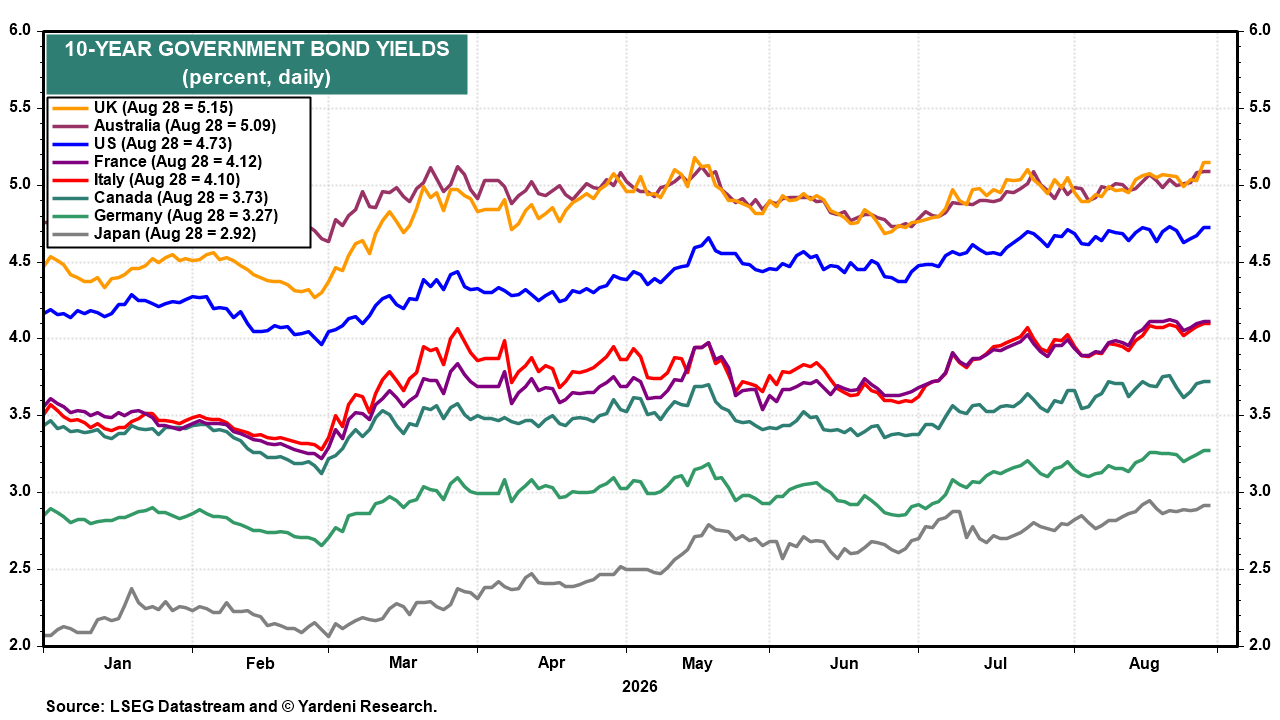
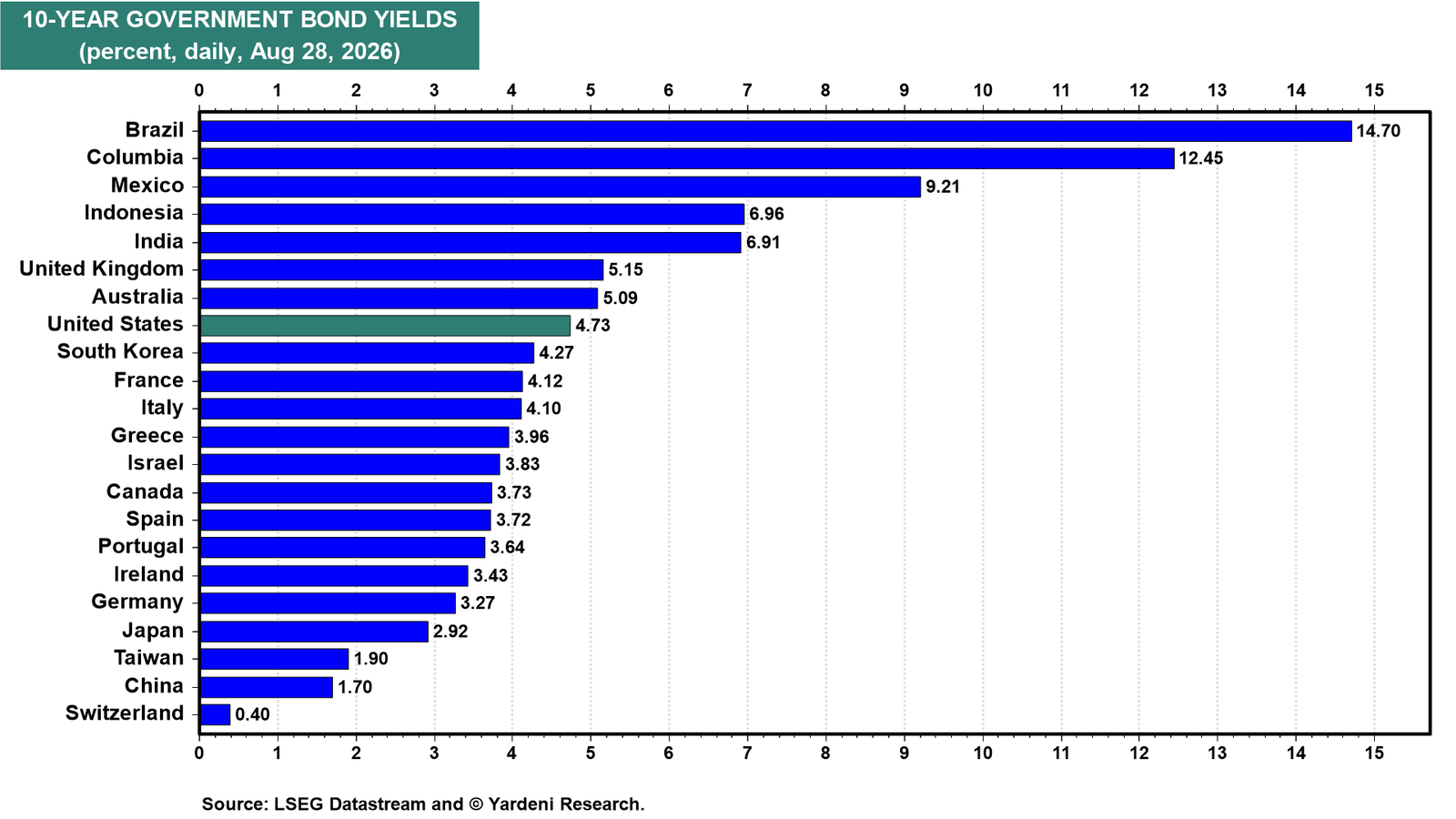
Government bond yields continue to grab headlines. The UK and Australia are both above 5.00%, at 5.15% and 5.09% (chart). The US at 4.73% is toward the upper end of the 4.00%-5.00% range we call the "old normal." Japan and Germany continue to rise, at 2.92% and 3.27%, both up steadily since February.
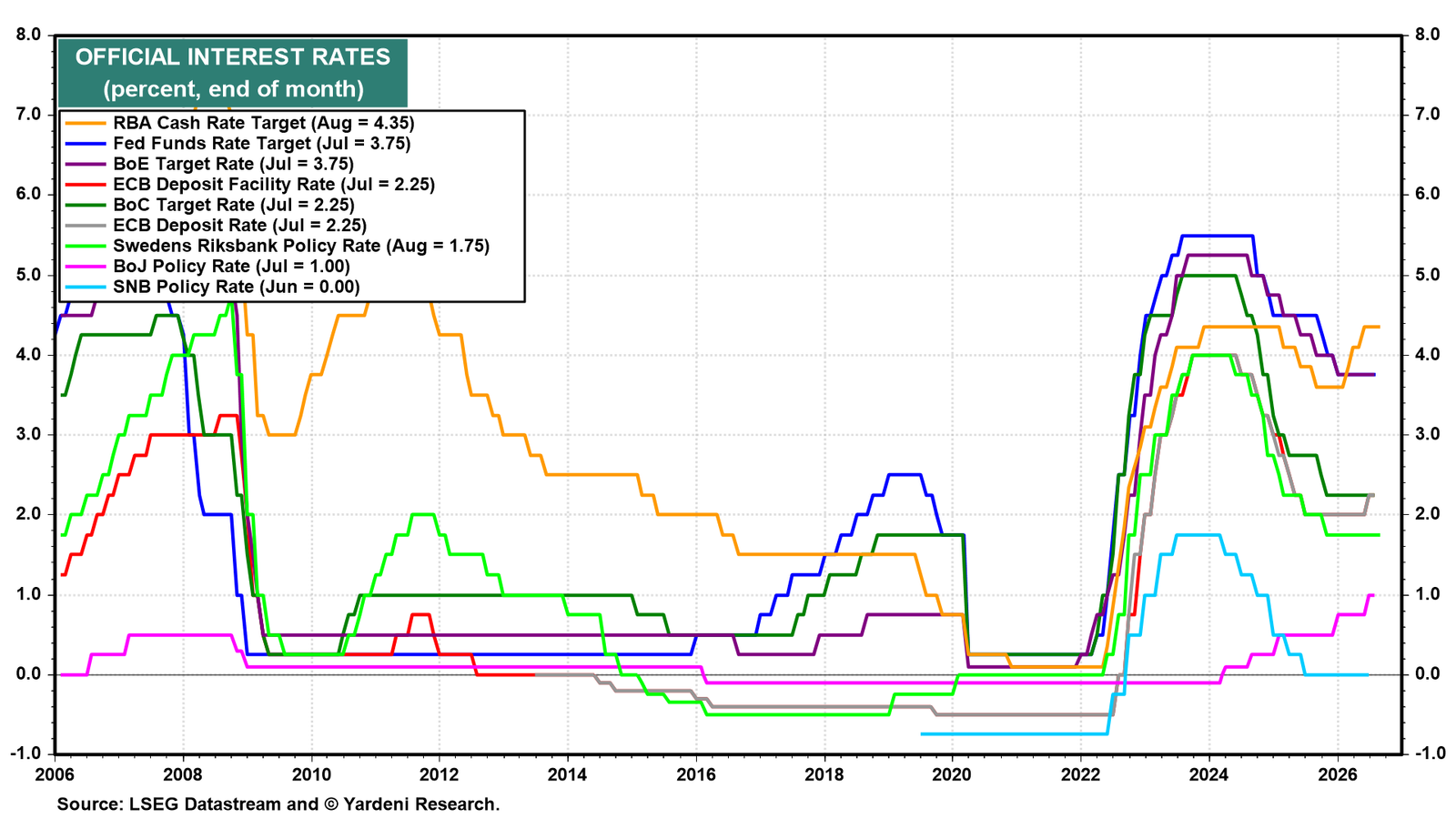
The long end is pricing a policy turn. Official rates are well below market yields across the major economies, with the RBA at 4.35%, the Fed and BoE both at 3.75%, and the ECB deposit rate at 2.25% (chart). Markets have shifted from pricing central bank rate cuts to pricing hikes in the coming months.
II. Foreign Exchange
Collectively, the three dollar indexes we monitor are showing a slight upward tilt so far this year (chart). The DXY touched a three-month low last week following the Treasury department's intervention in the long end of the Treasuries market. We remain in the constructive camp on the dollar. We aren't buying the de-dollarization story.
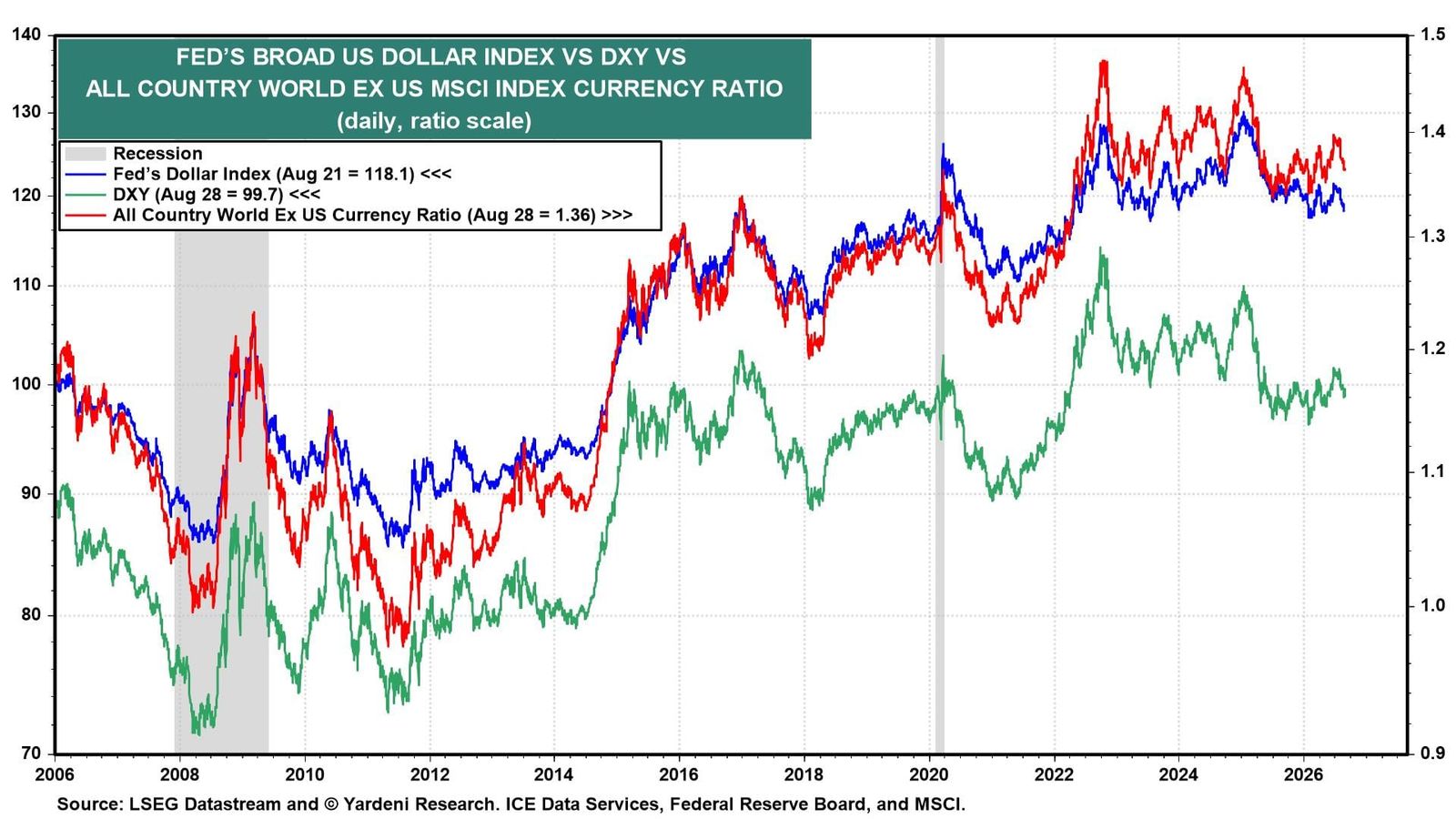
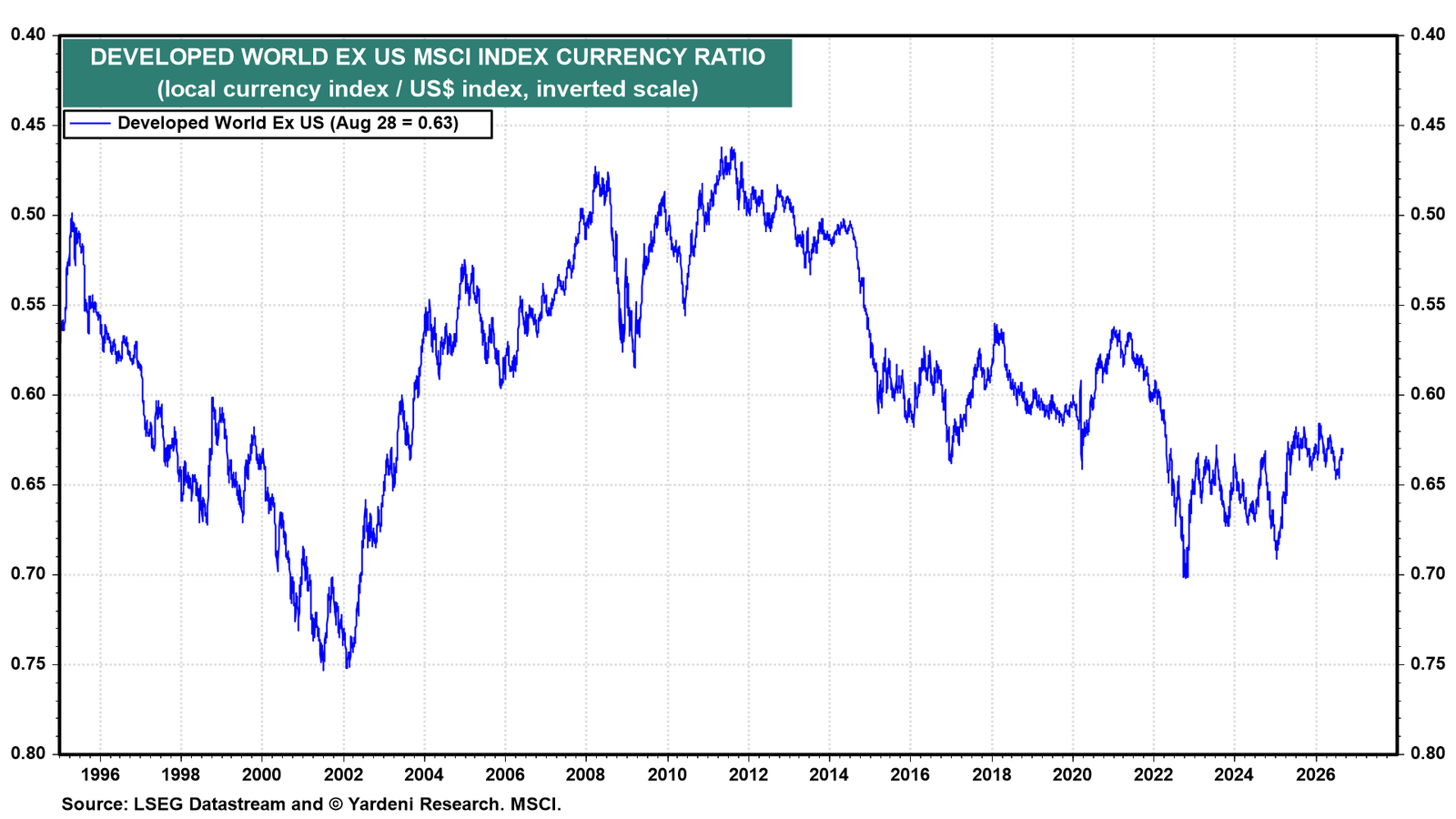
The dollar has been relatively stable relative to other developed economies over the past year (chart).
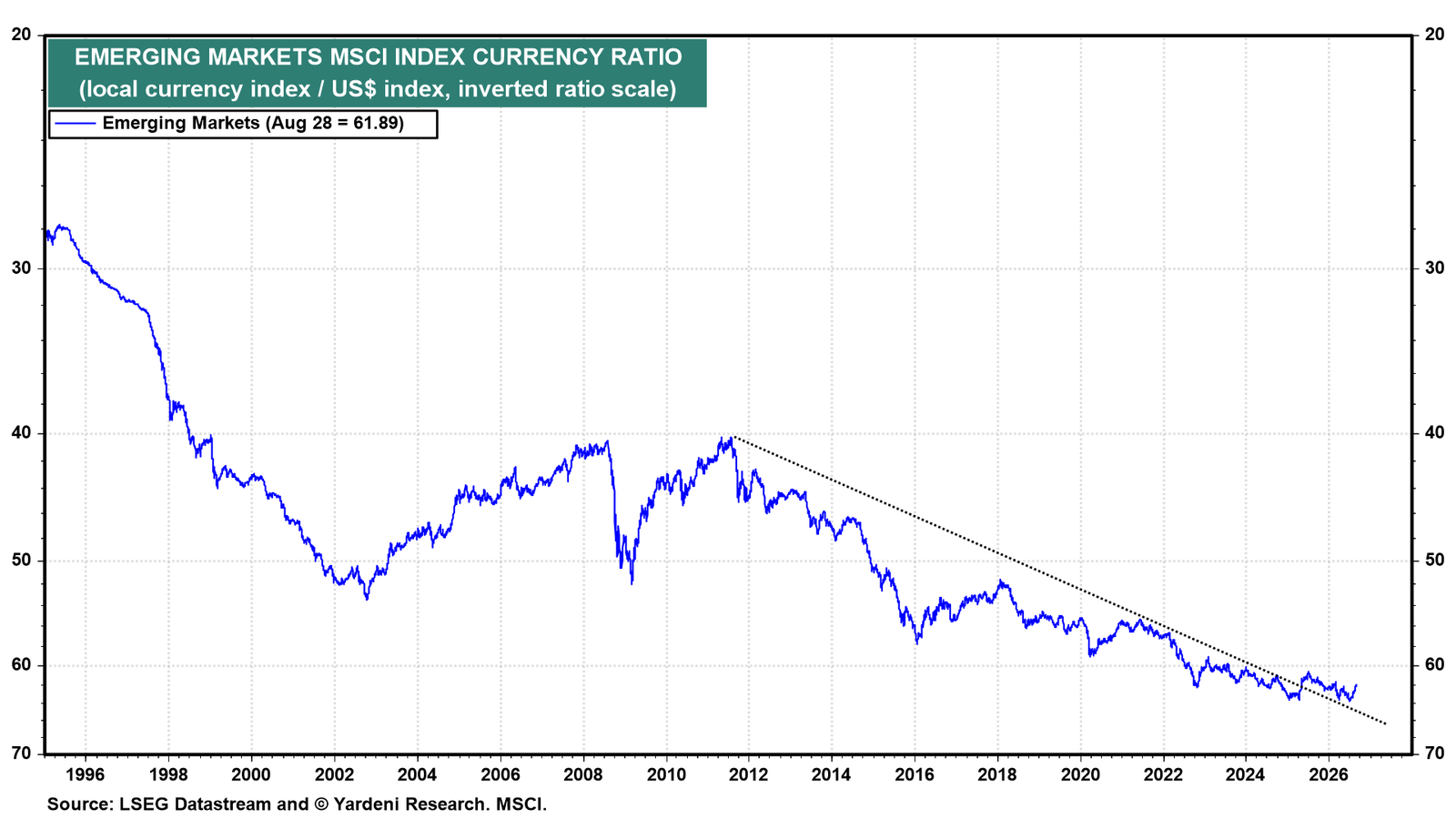
The dollar has been strengthening relative to emerging markets currencies for several years (chart).
III. Global Stock Markets
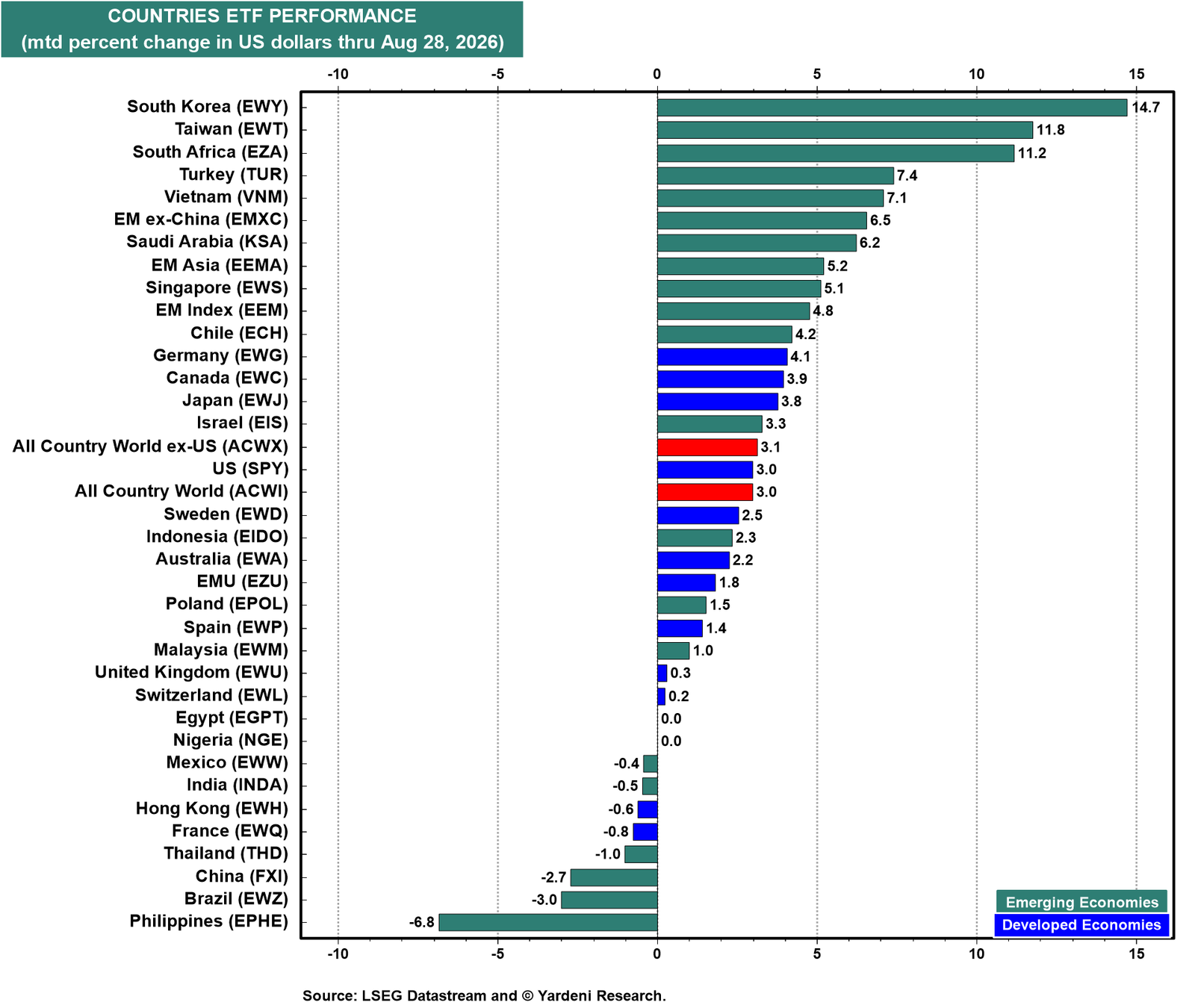
South Korea and Taiwan are back at the head of the pack in the global stock market derby. Korea leads the mtd rankings at 14.7% in dollar terms, and Taiwan is second at 11.8% (chart). EMXC is up 6.5%, versus 4.8% for EEM, 3.1% for ACWX, and 3.0% for SPY (i.e., the US). The three biggest losers were the Philippines (-6.8%), Brazil (-3.0%), and China (-2.7%).
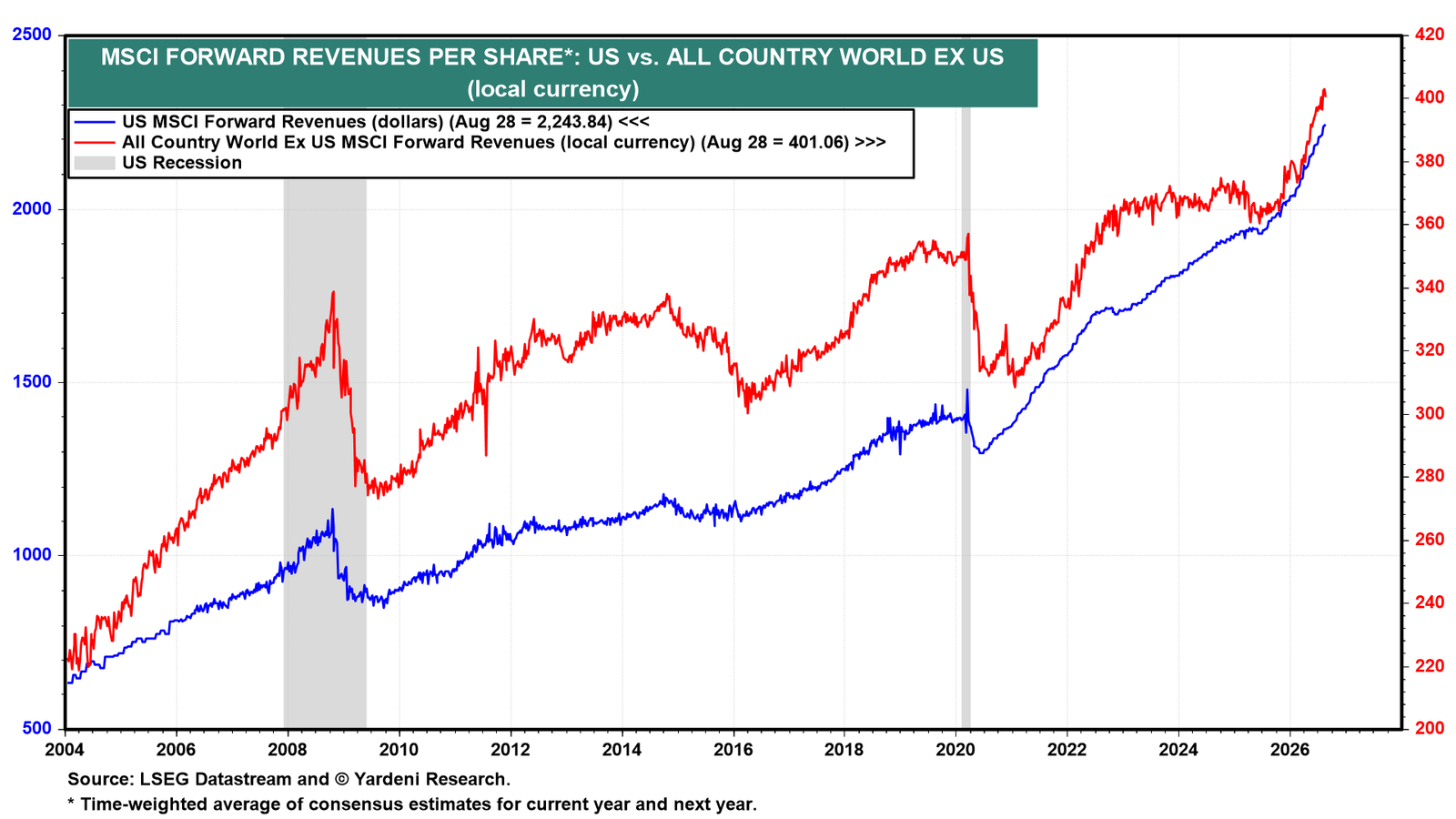
Forward revenues per share has been accelerating worldwide (chart). Those of both the All Country World ex-US MSCI in local currency and the US MSCI have been rising more rapidly since late 2025.
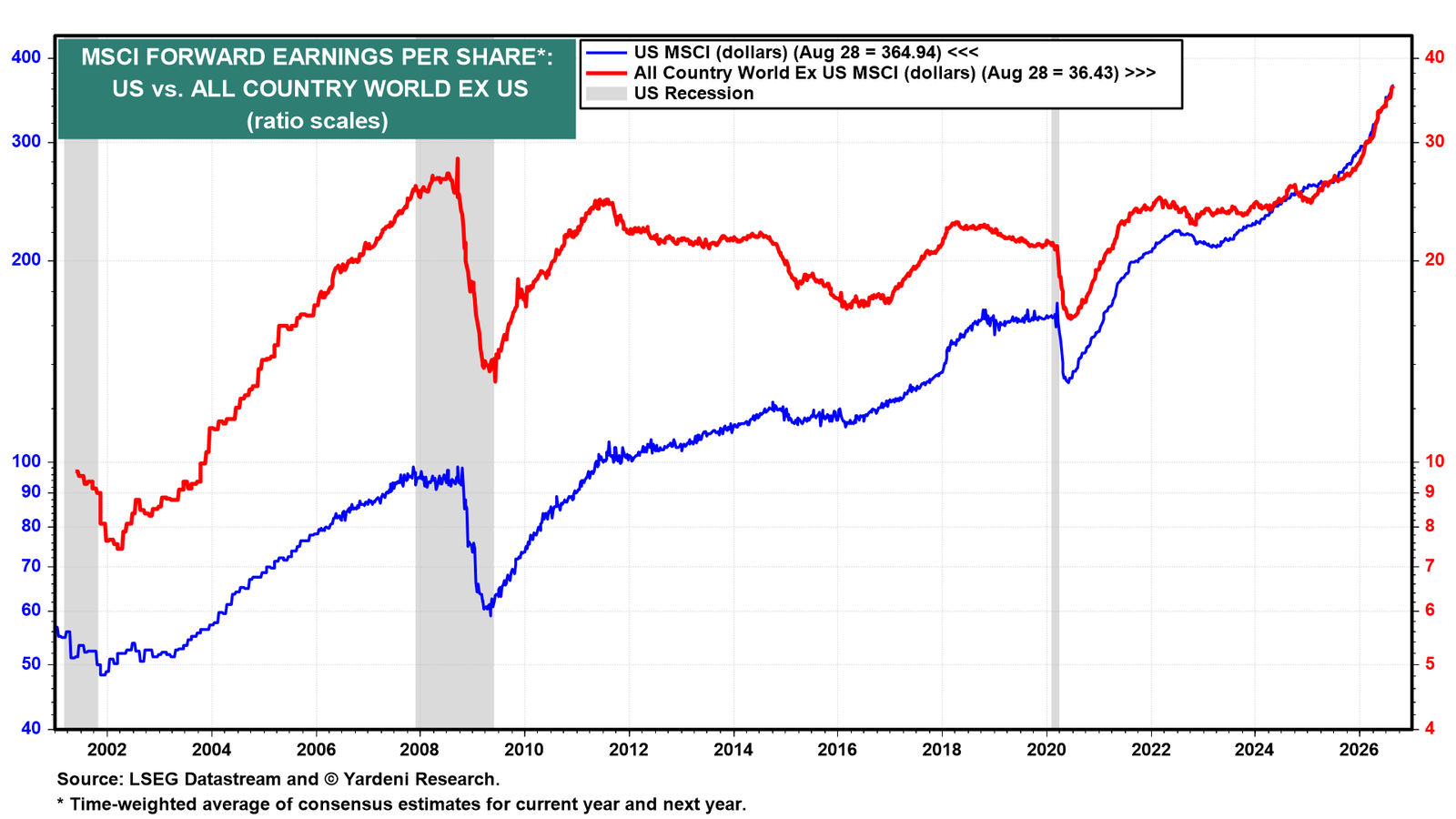
Forward earnings likewise has been accelerating (chart). Overseas earnings have kept pace with the US, both in dollar terms.
IV. Japan Focus
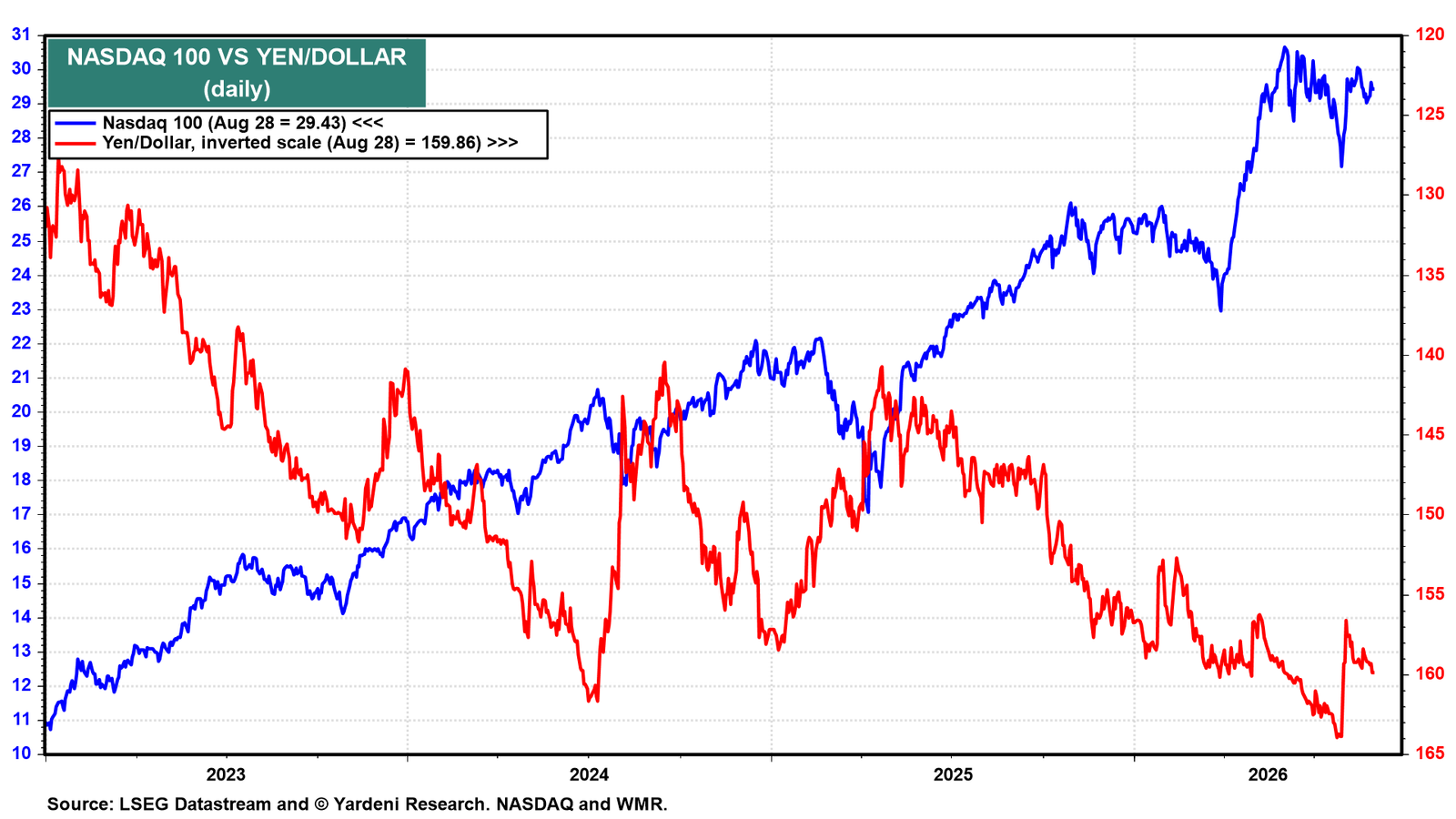
The yen is at 159.86 per dollar and has been drifting back toward its pre-intervention level, while the Nasdaq 100 has been moving sideways (chart). The inverse relationship between the two can be explained by the yen carry trade, which hasn't unraveled so far.
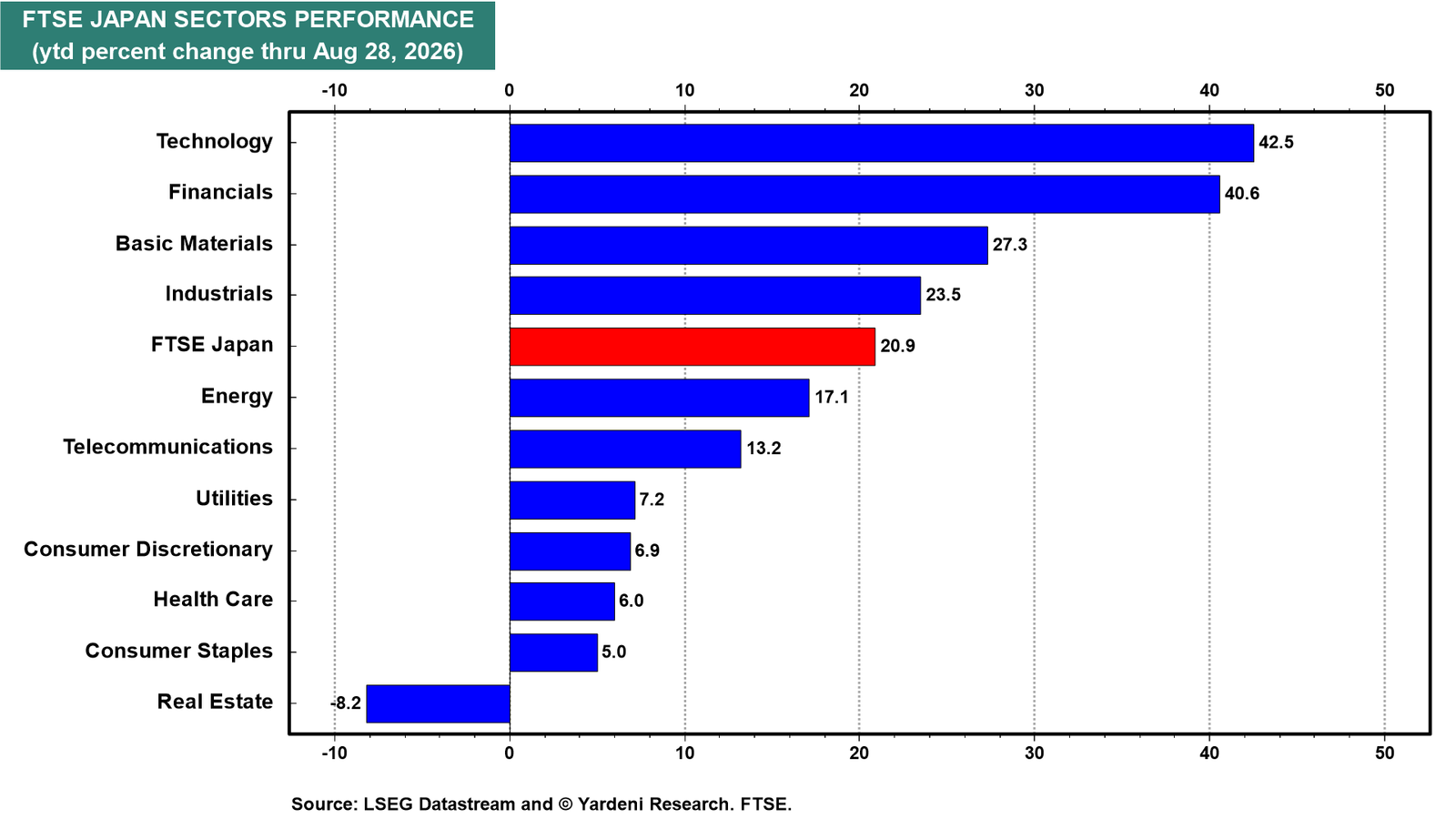
Technology leads the FTSE Japan sectors ytd at 42.5%, with Financials second at 40.6% (chart). The index is up 20.9%. Real Estate is the only sector down, at -8.2%.
V. Brazil Focus
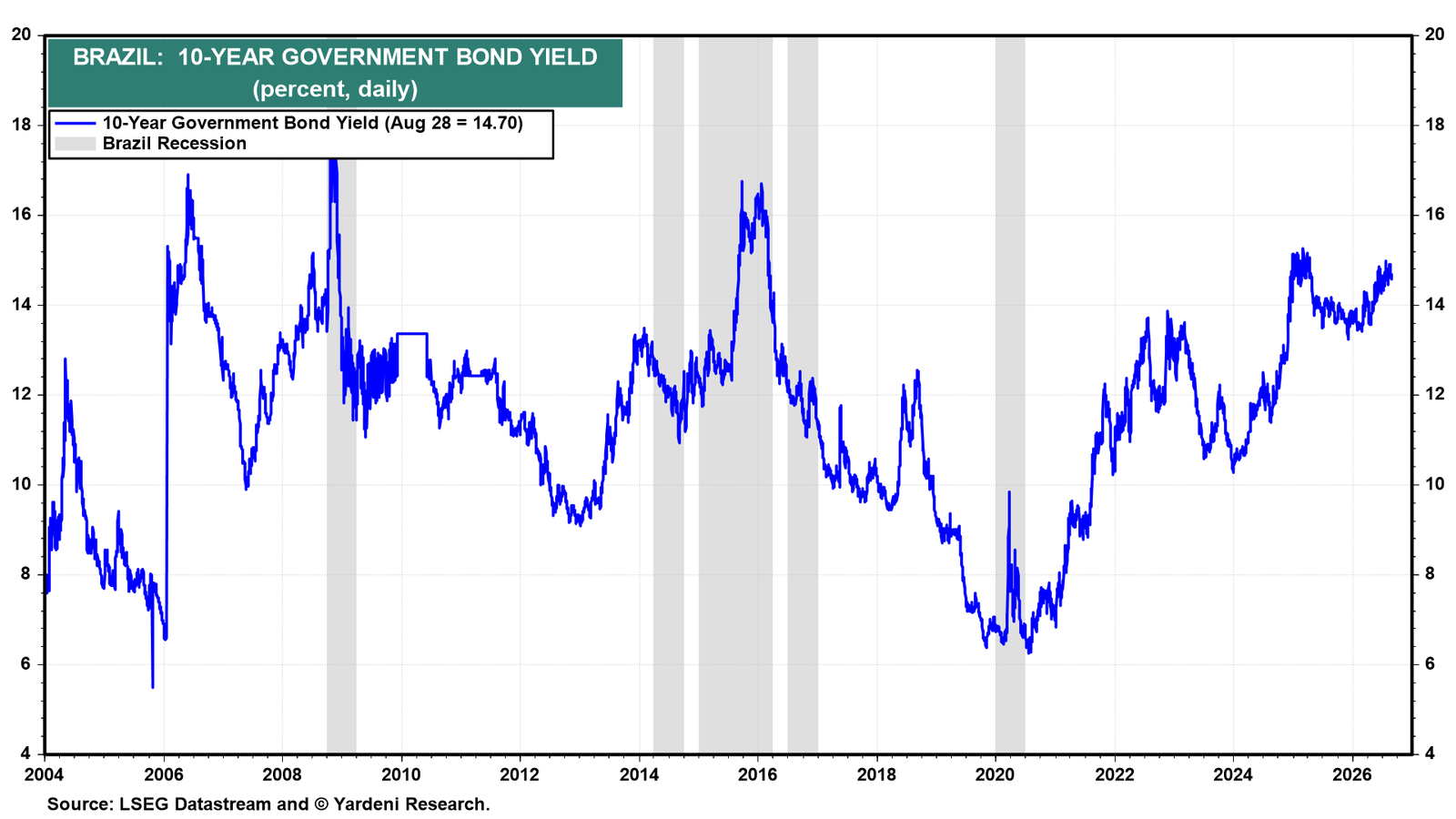
Brazil is the far outlier in terms of long bond yields. Its 10-year government bond yield is 14.70%, well above those of Colombia at 12.45% and Mexico at 9.21%, and roughly three times that of the US (chart).
Brazil’s 14.70% 10-year bond yield is near the top of its range over the past two decades, exceeded only in 2008 and 2015-16 (chart). Both of those coincided with recessions.
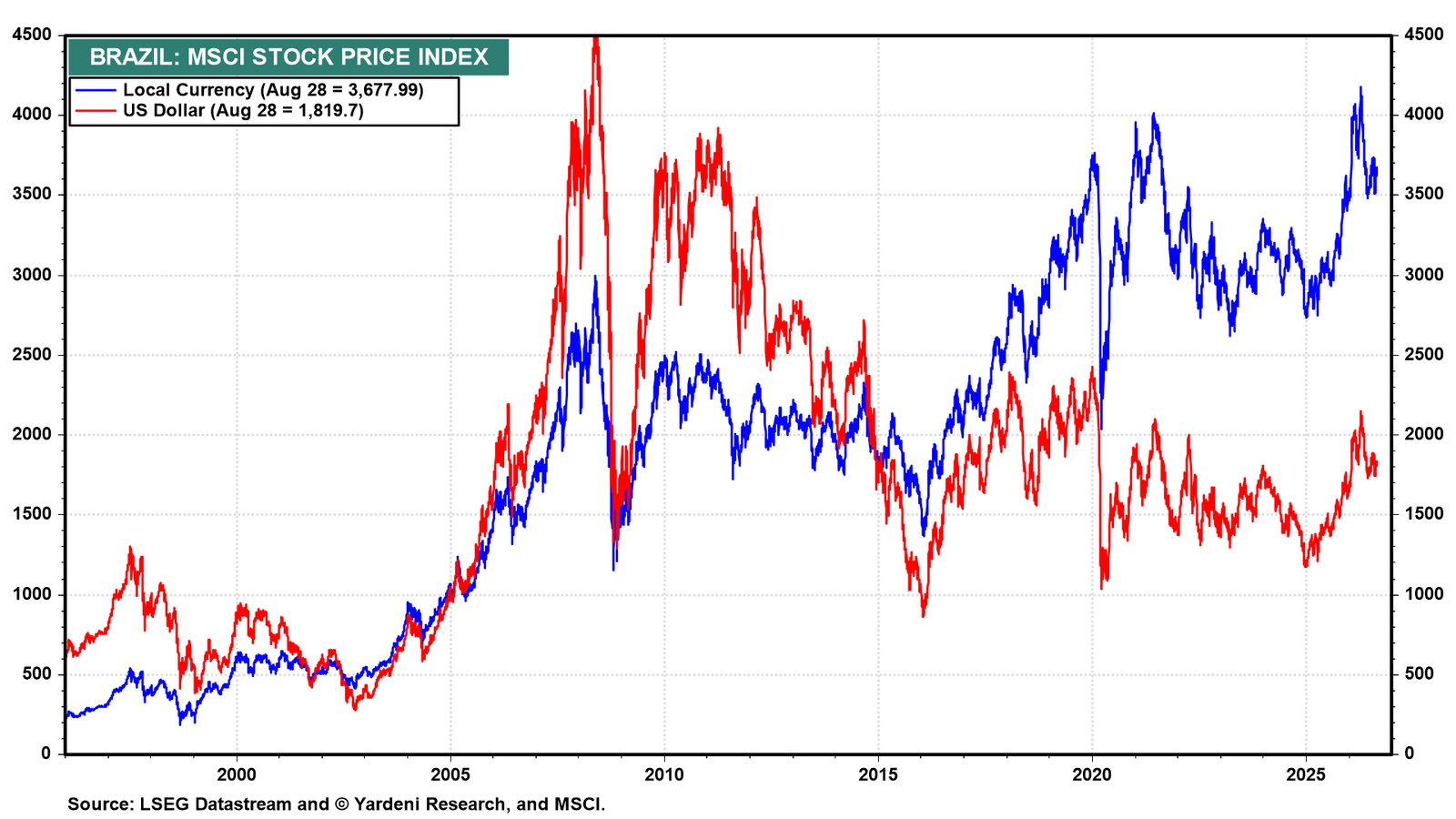
The Brazil MSCI local currency index is near a record high, while the comparable dollar index is well below its 2008 peak (chart). Foreign investors have not been paid for two decades of local-currency gains.
VI. Sectors
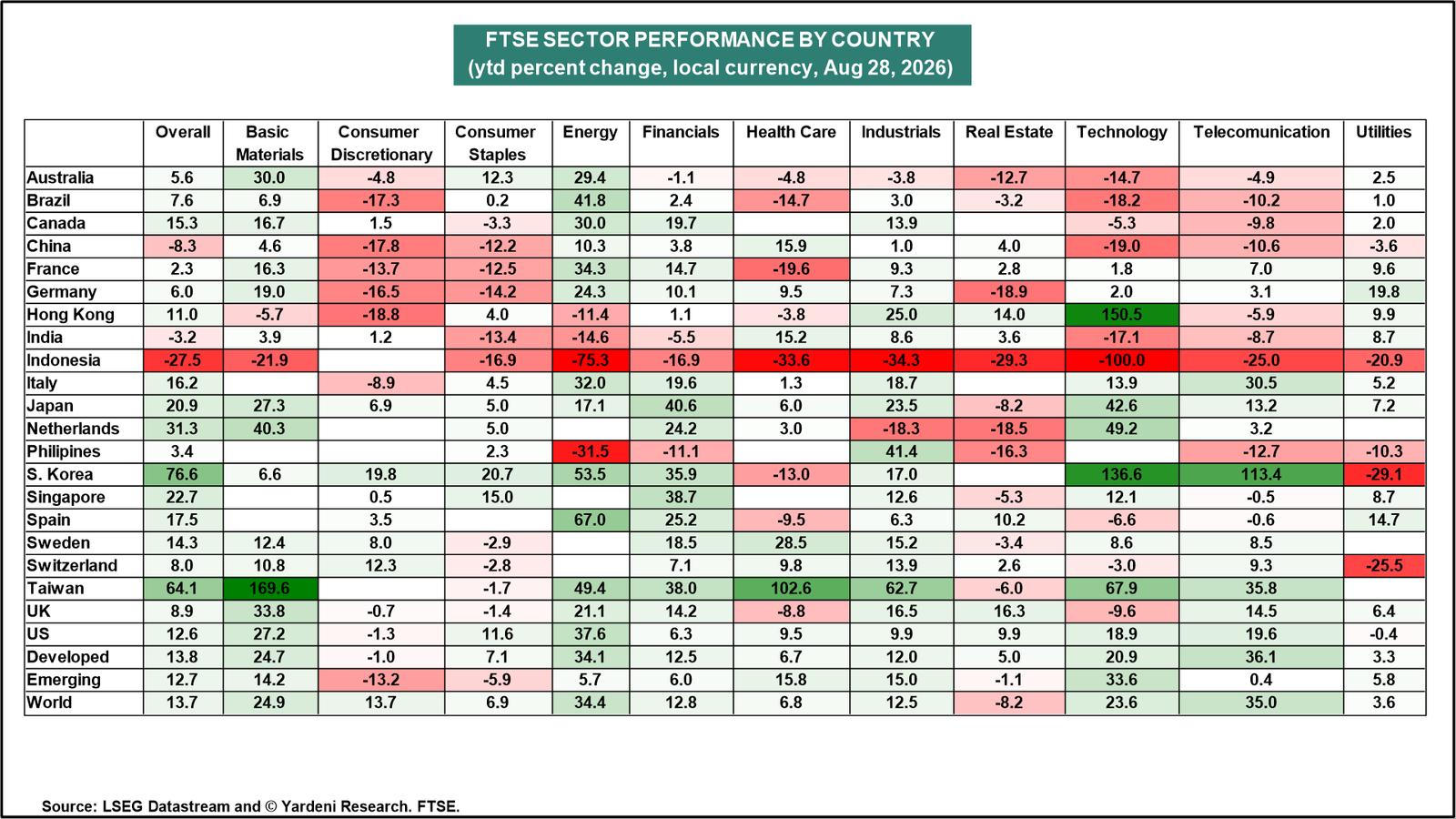
Five sectors have triple-digit ytd gains in local currencies (table). Taiwan Basic Materials leads at 169.6%, followed by Hong Kong Technology at 150.5%, Korea Technology at 136.6%, Telecommunications at 113.4%, and Taiwan Health Care at 102.6%. Telecommunications and Energy are the broadest outperformers globally, up 35.0% and 34.4% for the World index.