Nvidia's Q2 earnings report suggests that the AI spending boom is broadening. The company forecast 70% revenue growth next fiscal year, far above Wall Street's 45% expectation, and said growth would be even stronger if supply constraints were less severe. Significantly, non-hyperscaler revenue grew 138% y/y, outpacing hyperscaler revenue growth of 102% y/y, as demand broadened beyond mega-cap tech into AI-native startups, sovereign cloud builds, and traditional enterprise IT.
Such a strong outlook from the company at the center of the AI ecosystem is a powerful vote of confidence in the AI spending boom. As CEO Jensen Huang put it, the "AI infrastructure buildout is at full steam." That suggests AI-related investment should remain a significant tailwind for both economic and earnings growth:
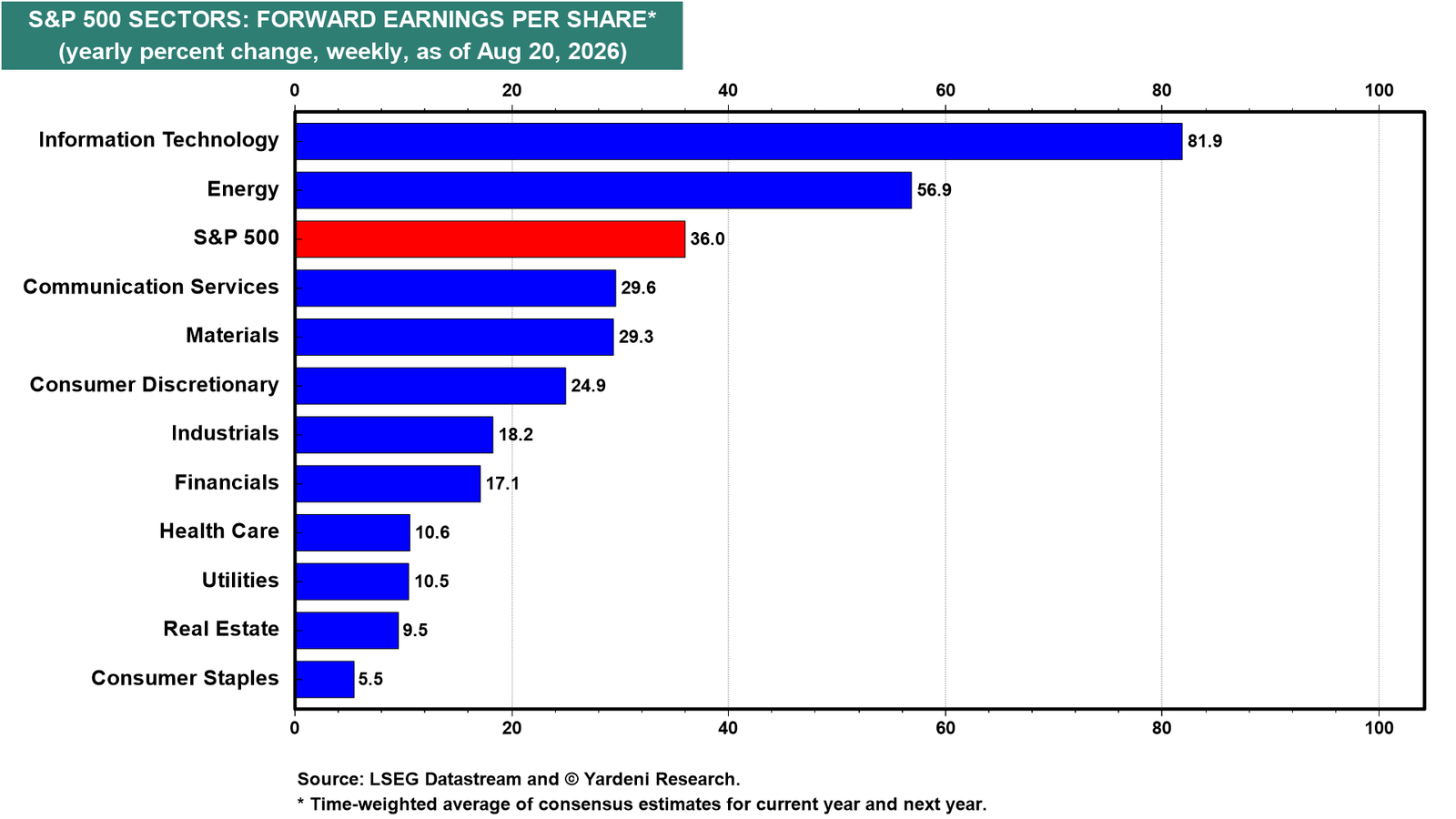
(1) Earnings. AI spending is already showing up broadly in the economy and in earnings. S&P 500 Information Technology forward earnings is up 81.9% y/y, more than double the 36.0% gain for the S&P 500 as a whole. Other sectors tied to the AI buildout (including Industrials, Materials, and Communication Services) are showing robust growth too (chart).
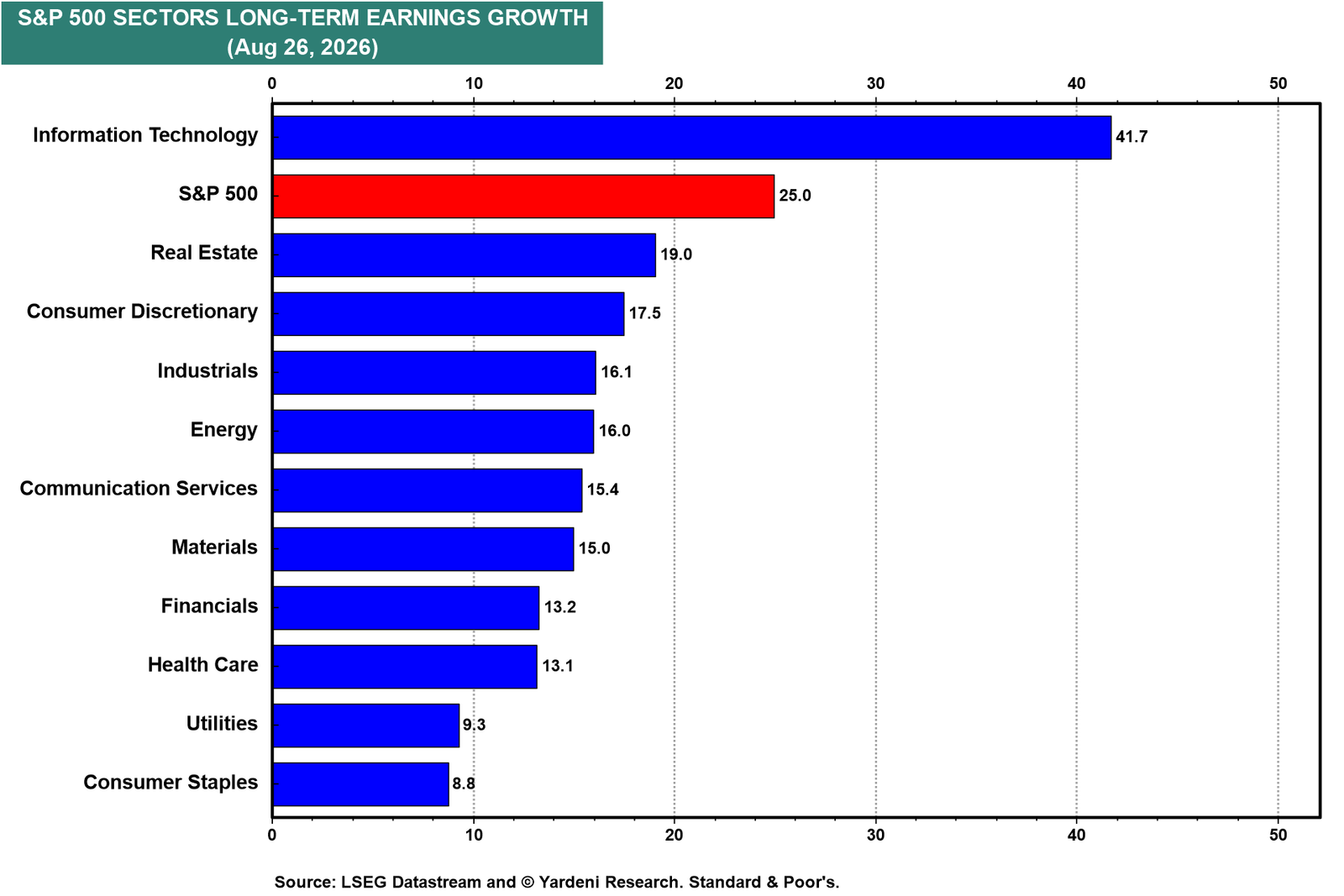
Industry analysts expect the strength to persist, with Information Technology's long-term earnings growth (LTEG) forecast at 41.7%, well ahead of the S&P 500's 25.0% (chart). The other AI-related sectors are also expected to show double-digit LTEG in the mid- to high teens.
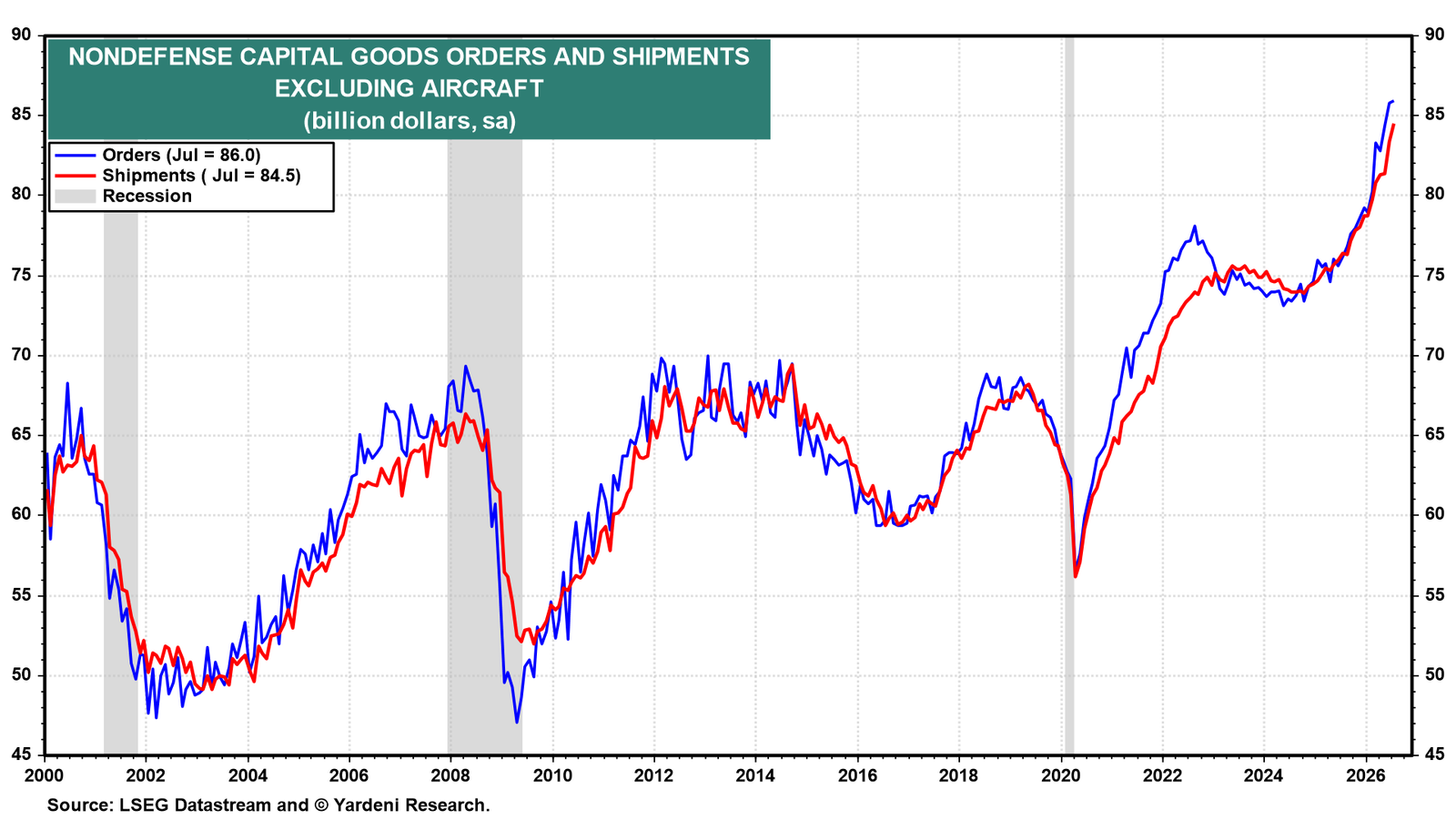
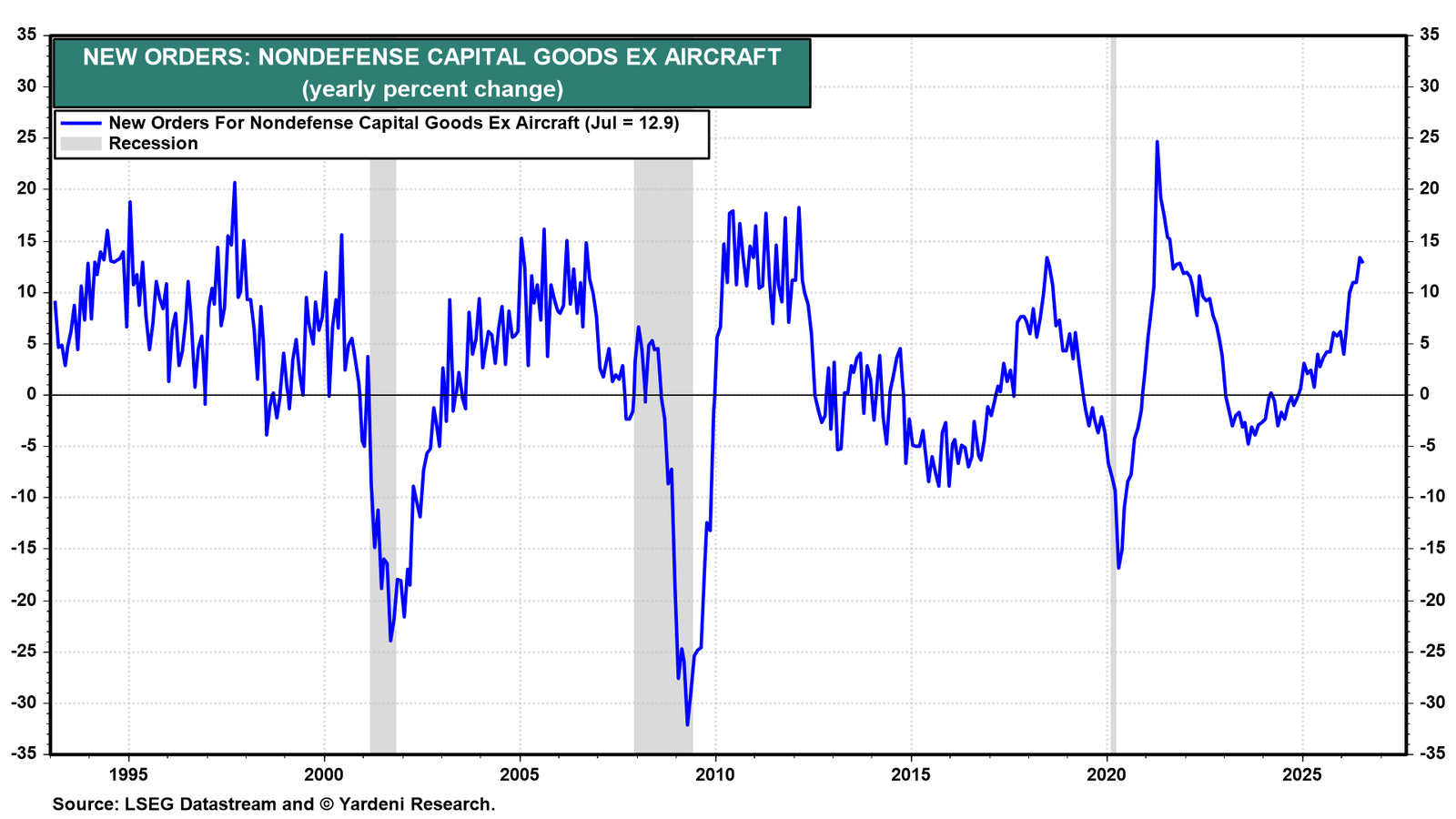
(2) Durable goods. The AI buildout is also showing up clearly in macroeconomic data. July durable goods orders rose 1.1% m/m, beating expectations and marking the fourth increase in the past five months. Excluding transportation, orders increased 0.4%, while core capital goods orders (nondefense ex-aircraft), a key gauge of business investment, rose 0.2% m/m and 12.9% y/y (charts). Core capital goods shipments, which feed directly into GDP, jumped 1.4% in July.
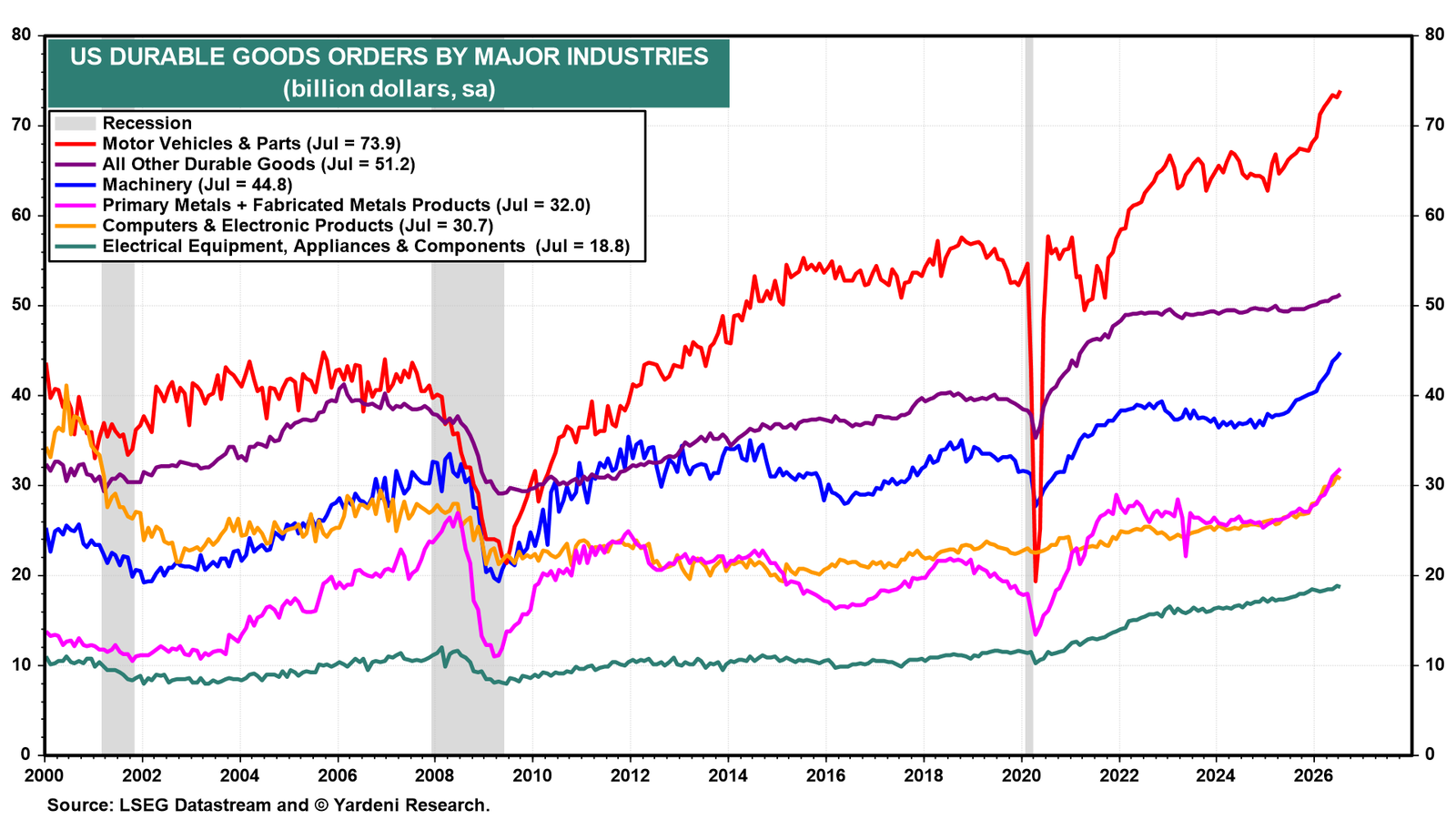
The major components of durable goods orders are at record highs (chart).
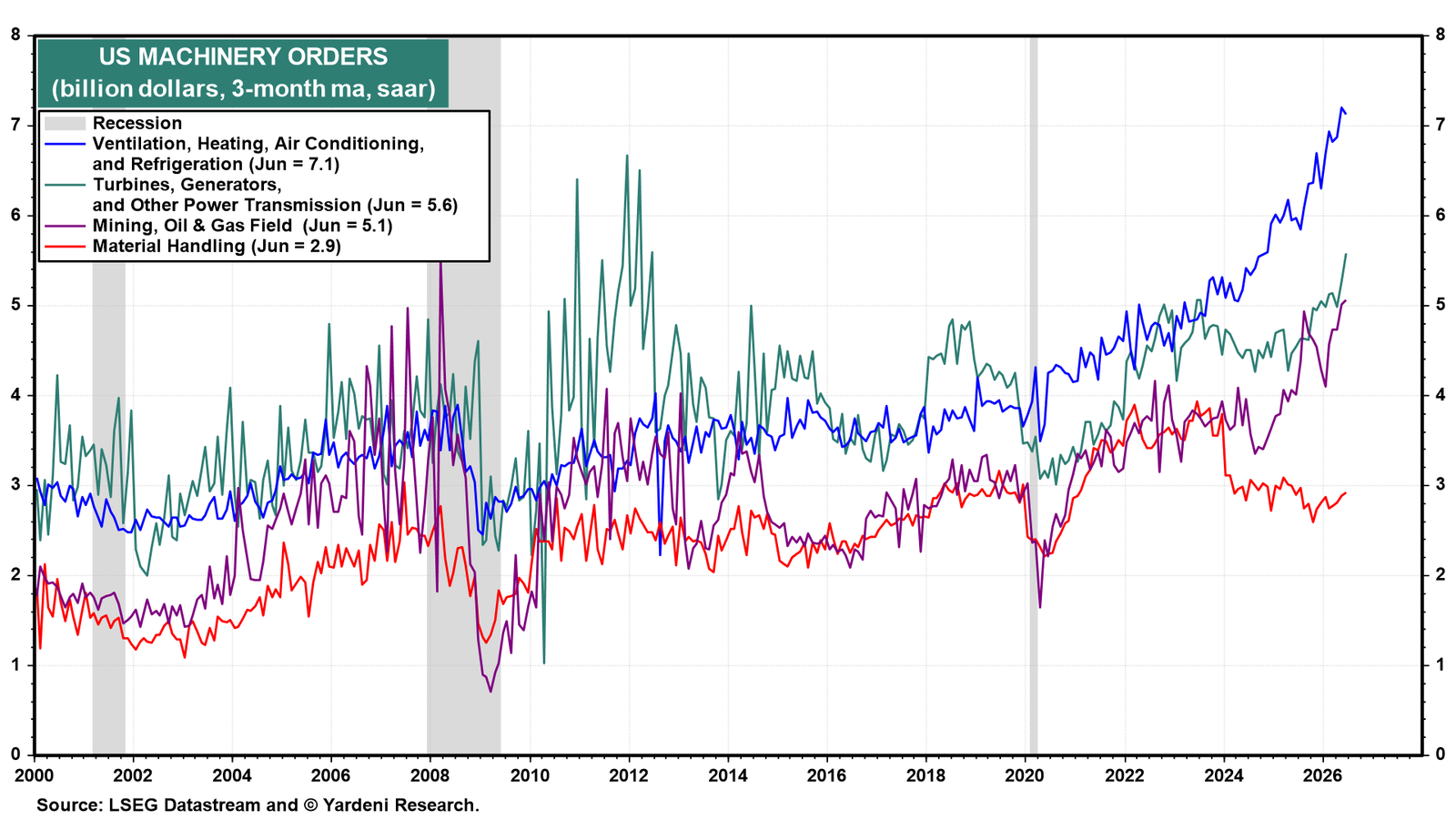
Orders for machinery necessary to construct and operate data centers remain very strong (chart).
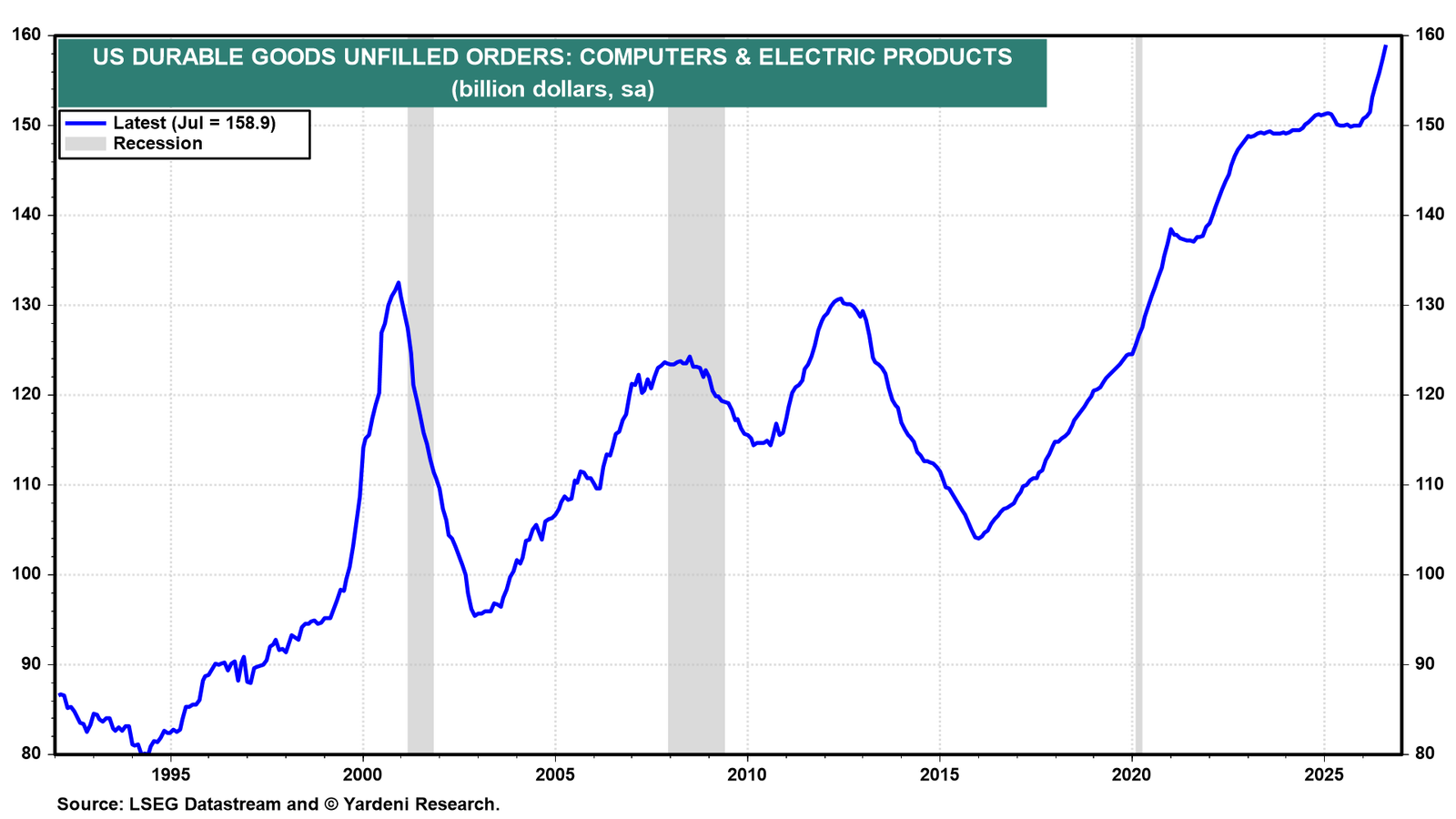
Unfilled orders for computers and electronic products rose to a record $158.9 billion in July (chart).
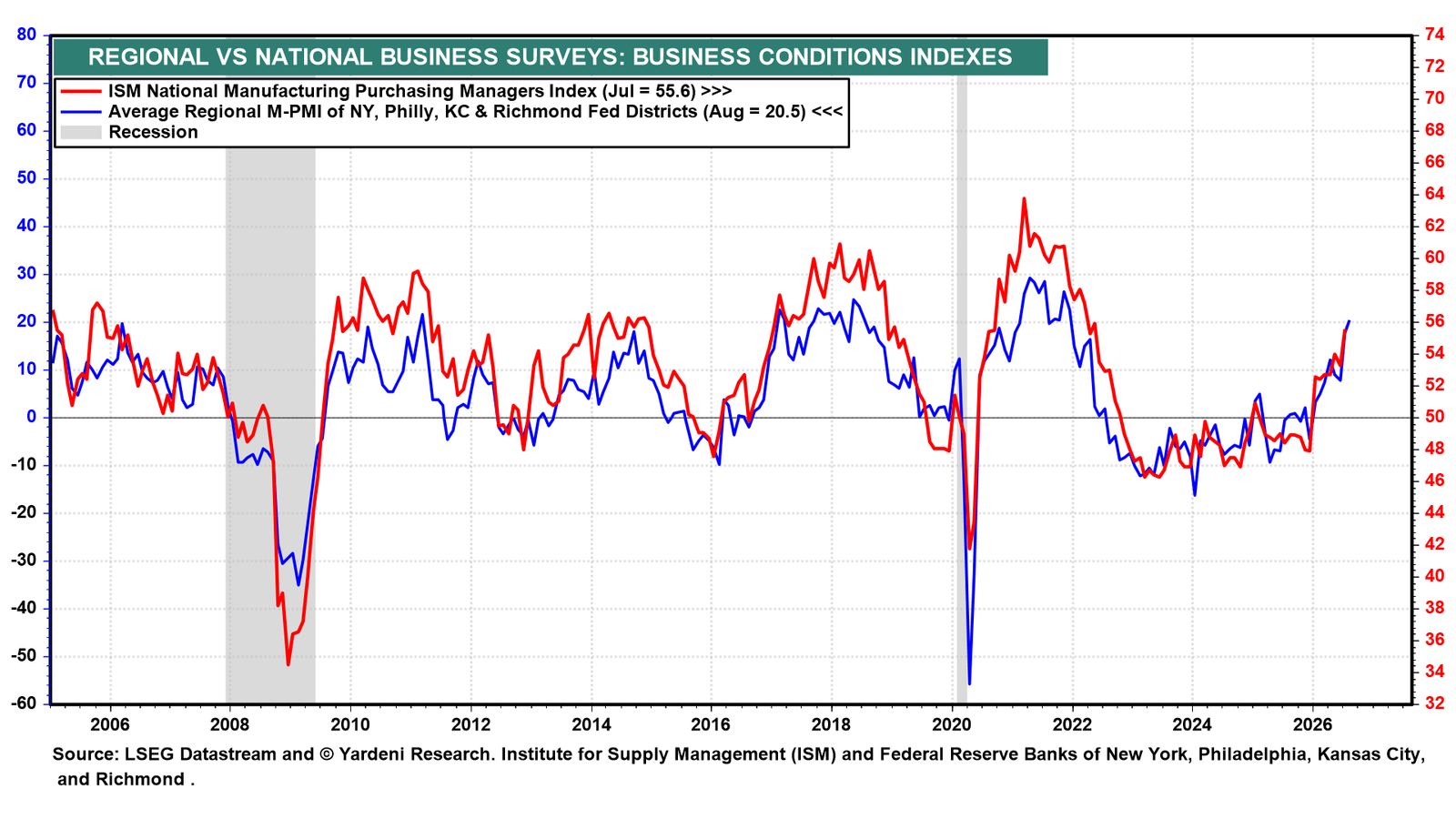
(3) Regional business surveys. Four of the five regional business surveys conducted monthly by five of the 12 Fed district banks are now available for August. The Regional Manufacturing PMI rose to 20.5 in August, its highest reading since late 2021, suggesting that the national ISM M-PMI likely remained comfortably in expansion territory during the month (chart).
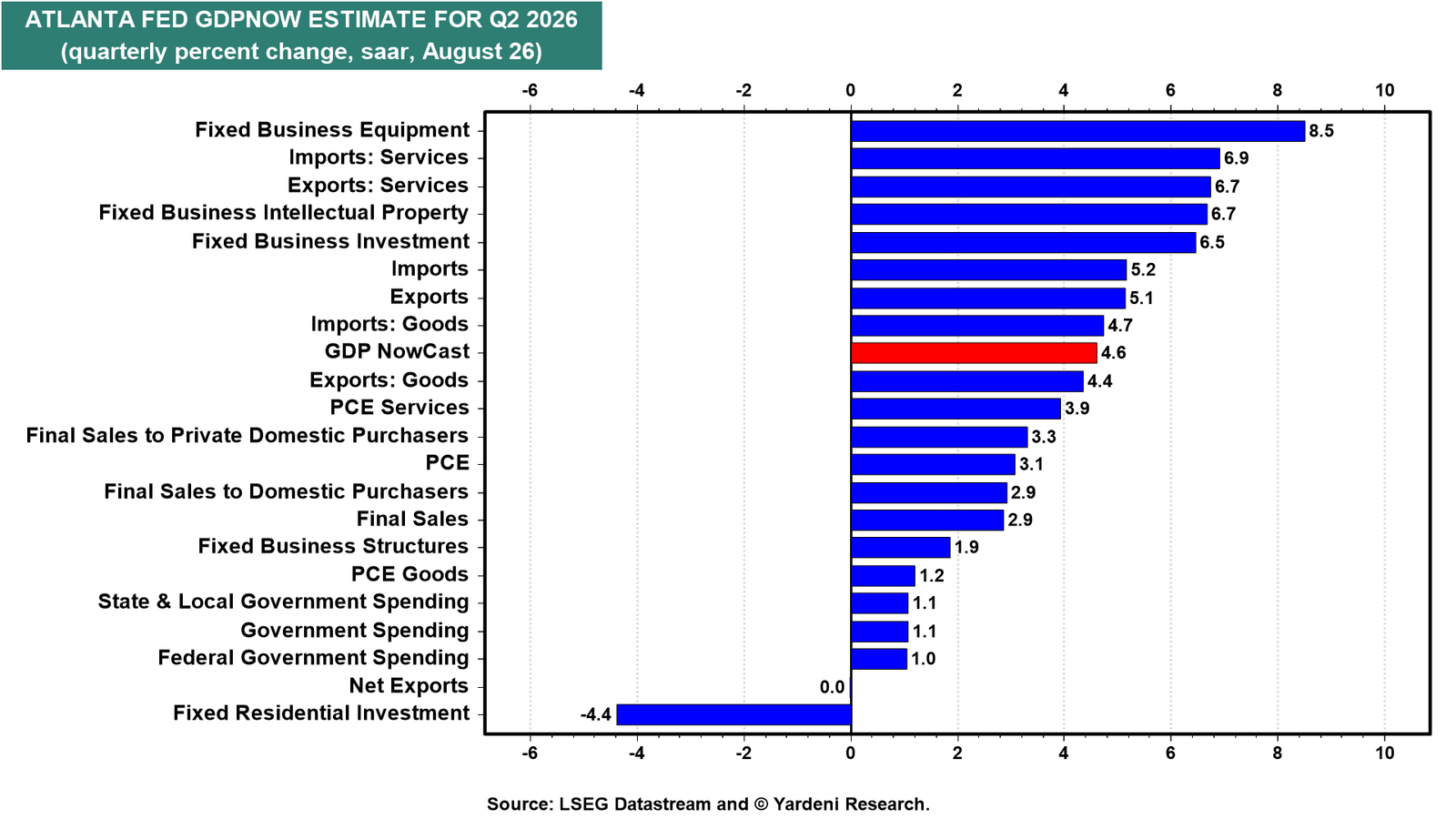
(4) GDP. Based on recently released data, the Atlanta Fed's GDPNow model estimates Q3 real GDP growth at 4.6% (saar), up from 4.0% previously. Consumer spending growth was revised up to 3.1% from 2.5%, while gross private domestic investment was raised to 14.5% from 13.7% (chart).
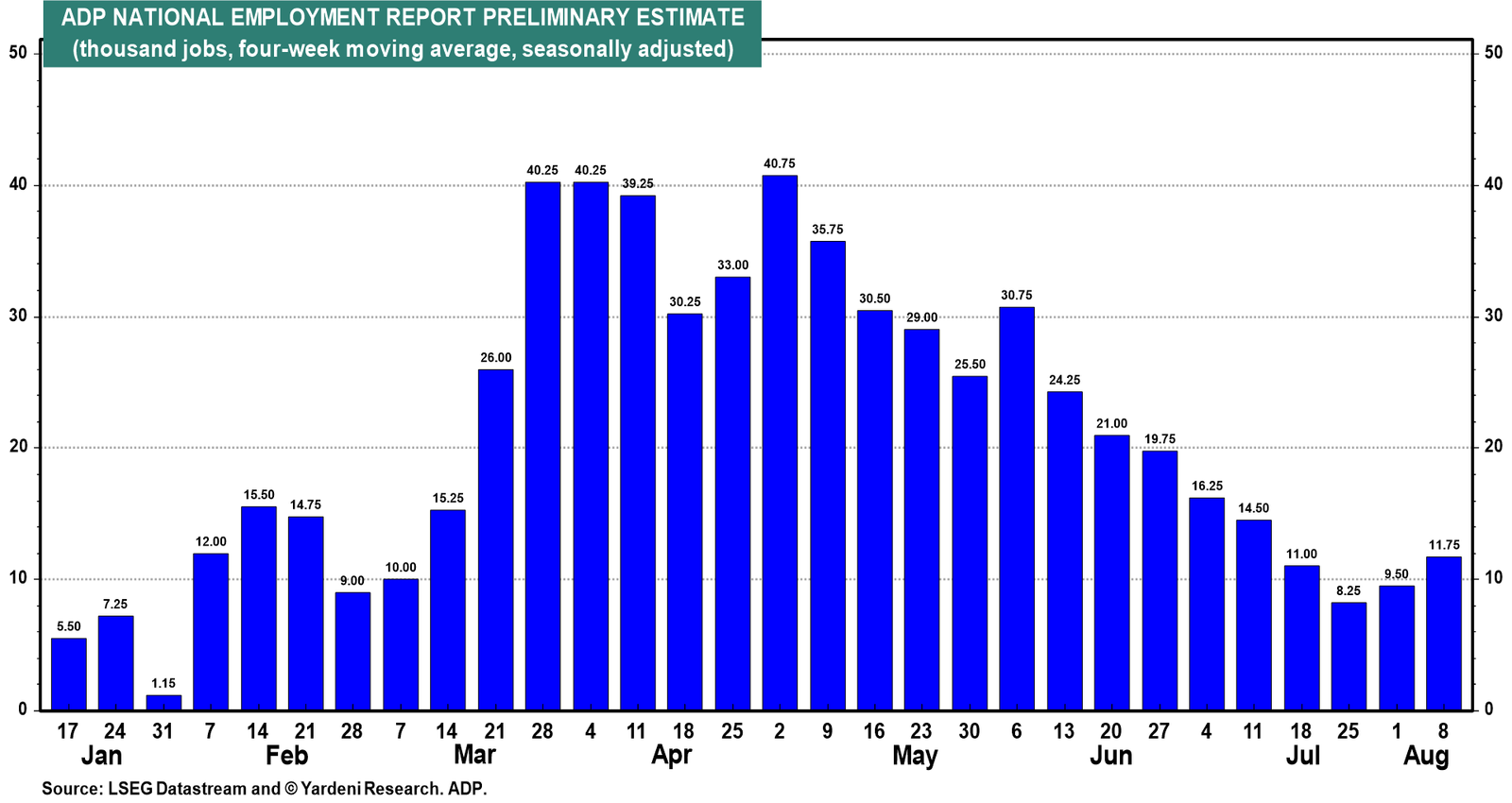
(5) Labor market. Private employers added an average of 11,750 jobs per week in the four weeks ending August 8, up from 9,500 in the prior four-week period, according to ADP (chart). The data point to a second straight week of hiring improvement.
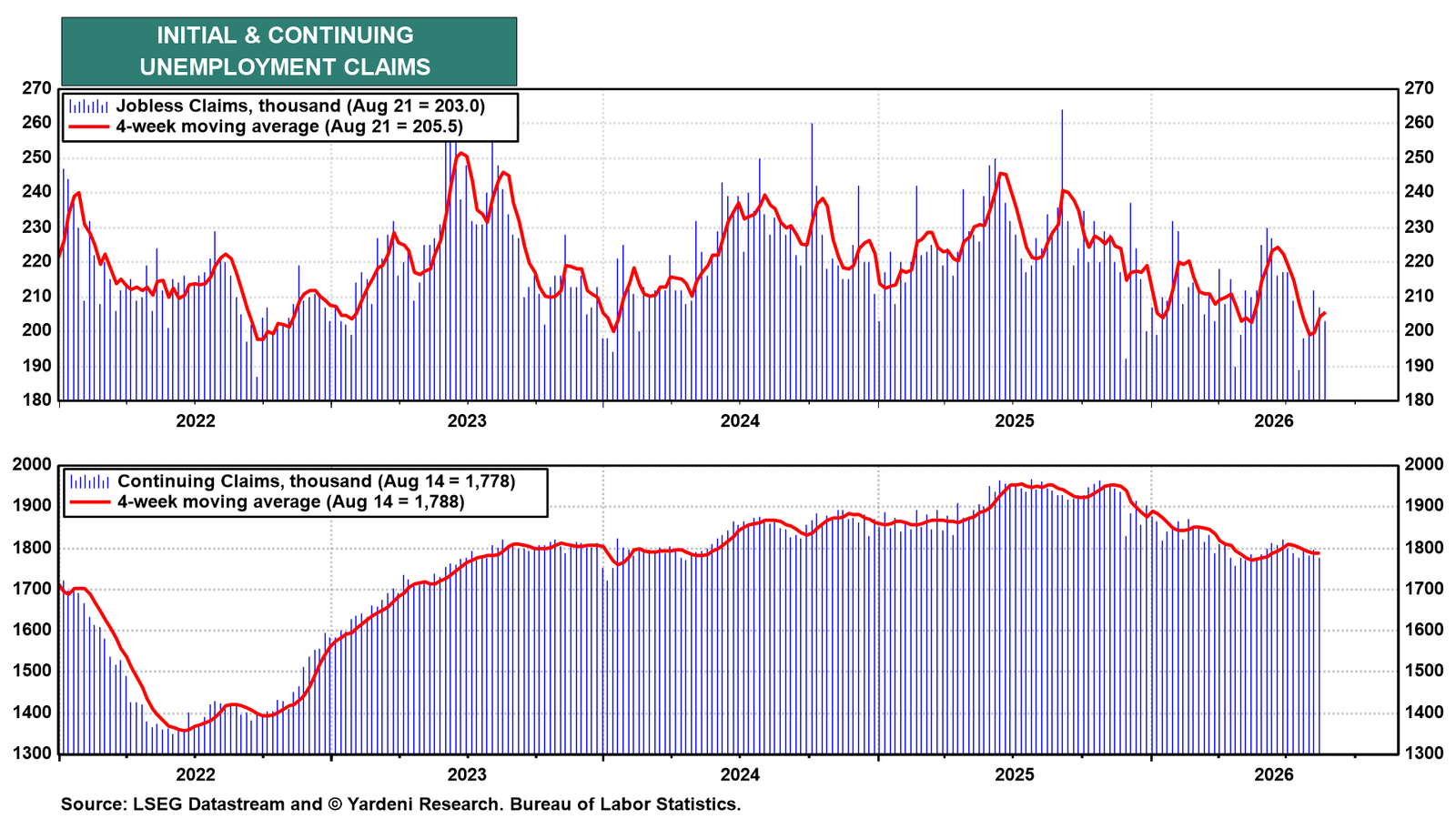
The latest weekly jobless claims data confirm that layoffs remain low (chart).
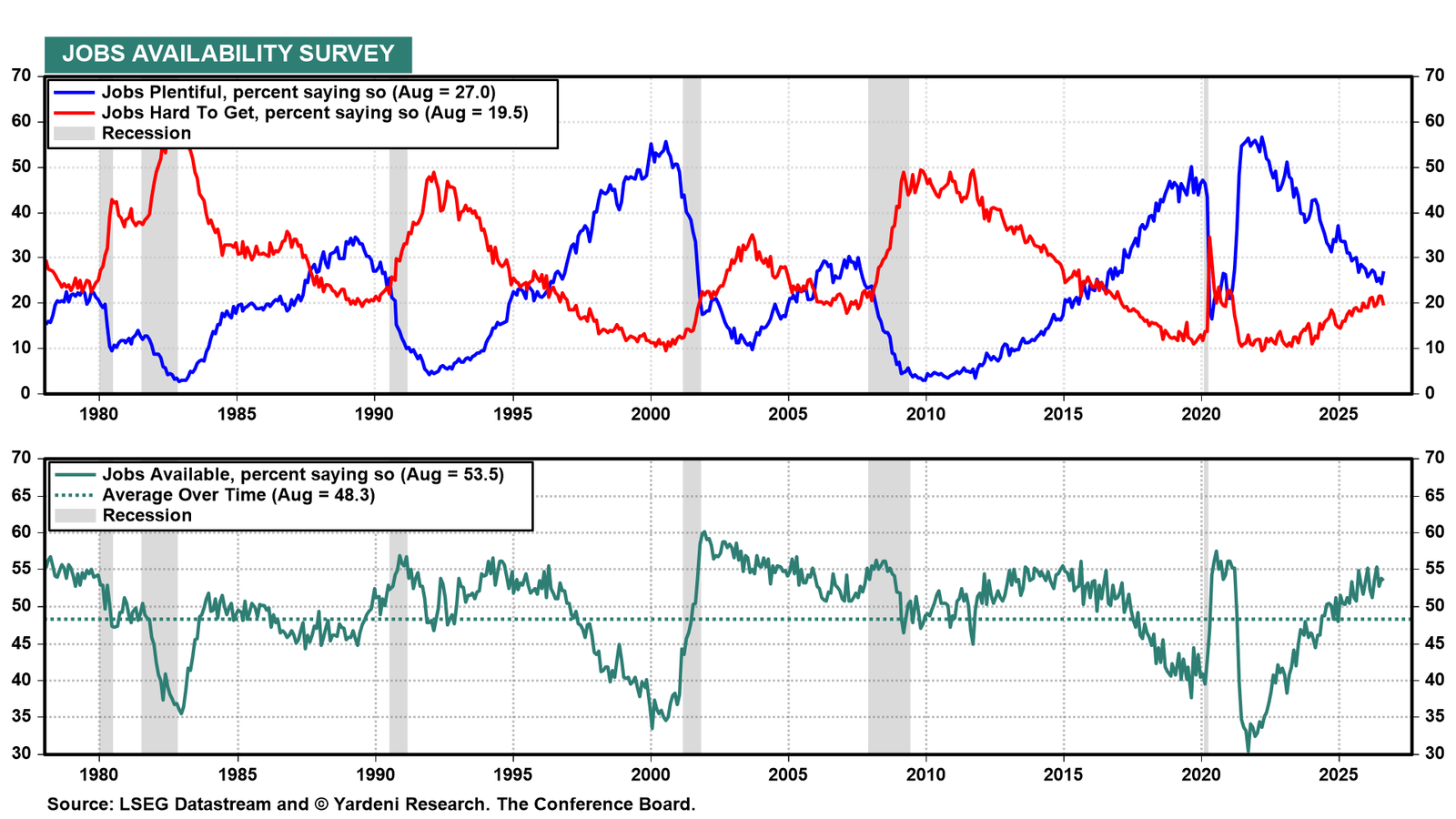
Consumers are also feeling more optimistic about the labor market. The share of consumers saying jobs are plentiful edged higher in August, while fewer reported that jobs are hard to get (chart). Furthermore, 53.5% of consumers said jobs are available, remaining above the historical average of 48.3%.