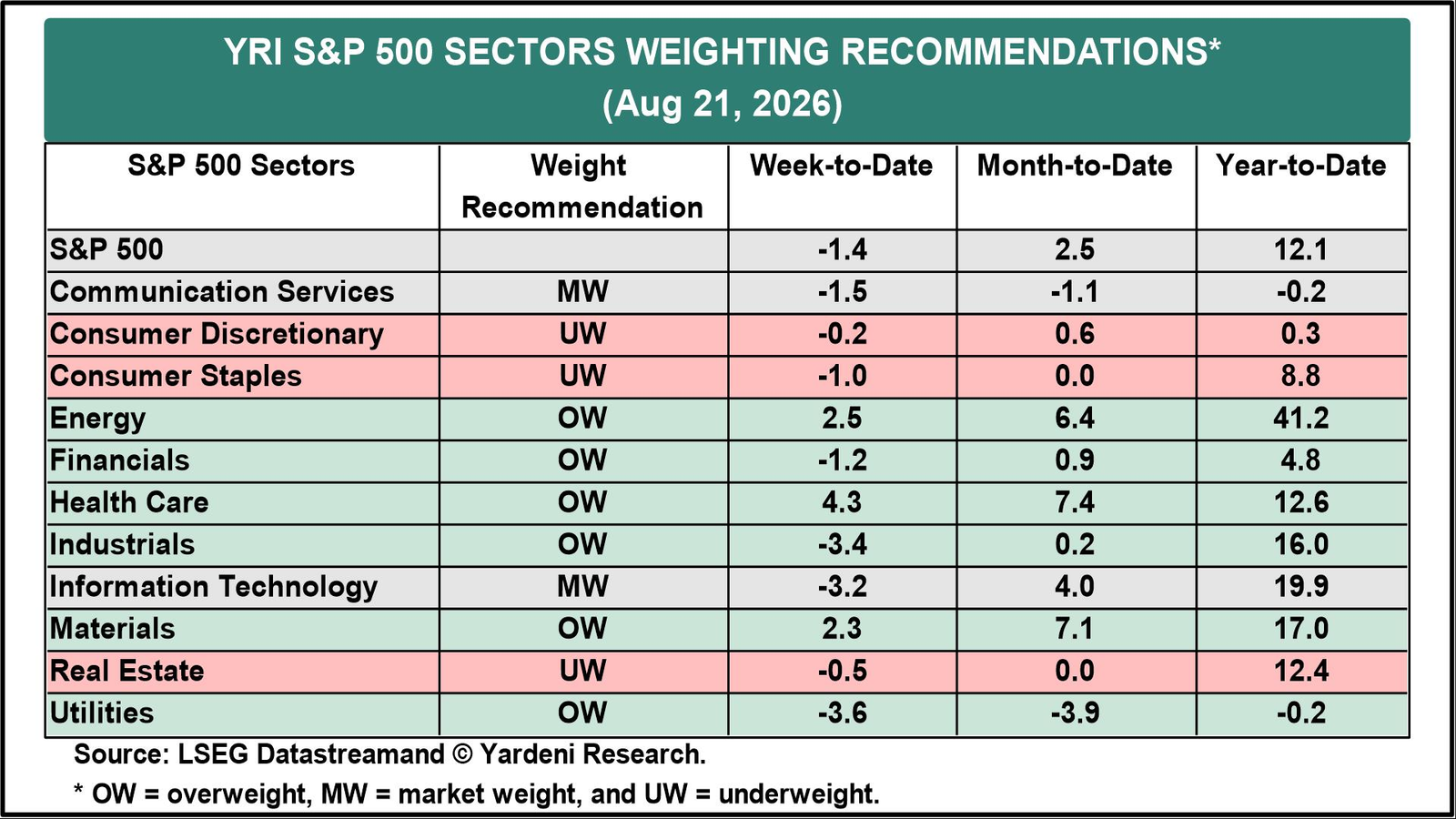
Health Care (OW) led the S&P 500 sectors this week, rising 4.3%. Energy (OW) was next at 2.5% and is up 41.2% ytd, the best of the 11 sectors (chart). Materials (OW) also finished higher, up 2.3%. The other eight sectors fell. Utilities (OW) was the weakest at -3.6%, followed by Industrials (OW) at -3.4% and Information Technology (MW) at -3.2%.
Here's more on Health Care, Information Technology, Consumer Staples (UW), and Materials:
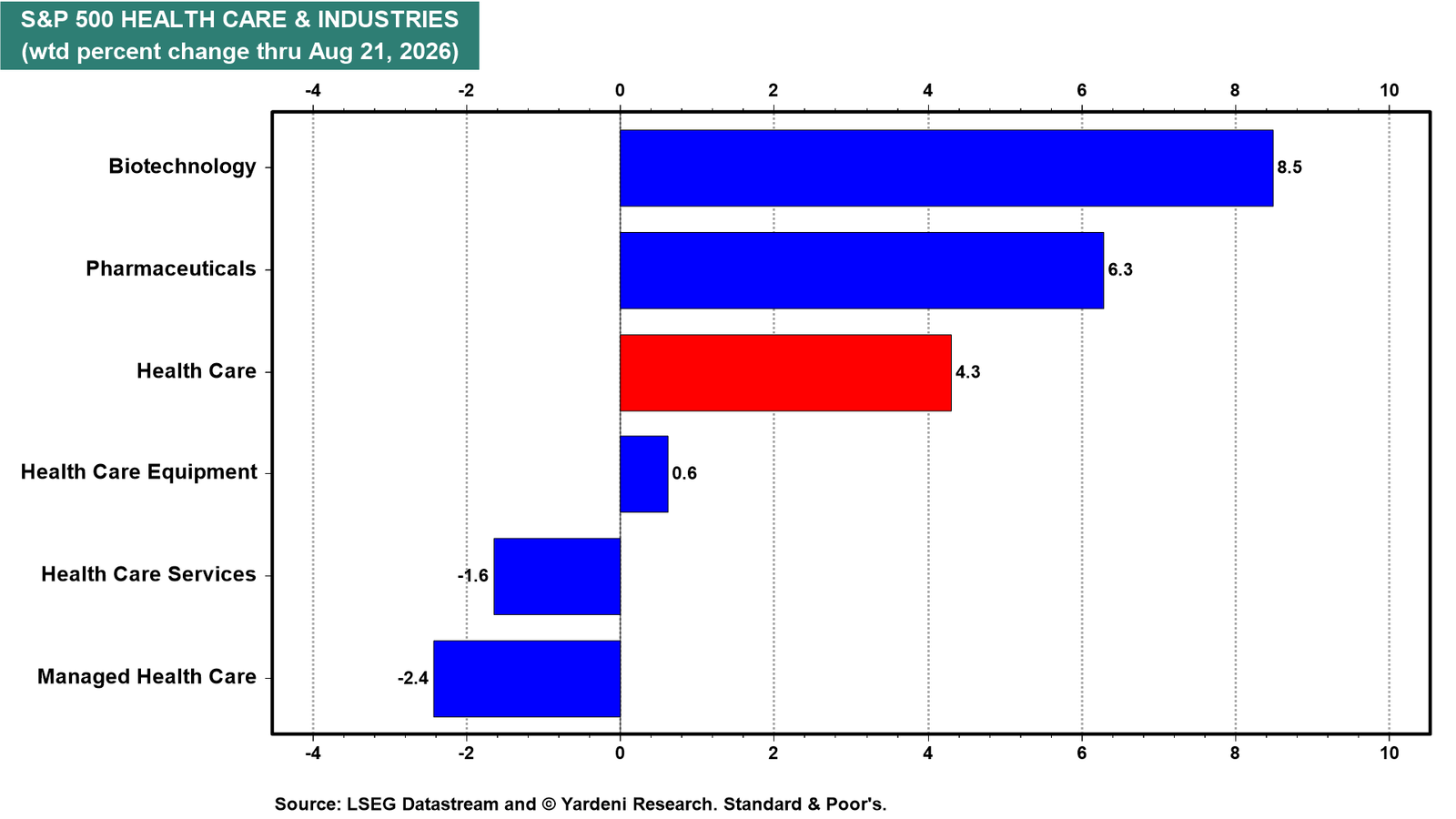
(1) Health Care: Biotech leads the way. The biotech rally has been running on M&A, hope, and hype. Last week, the sector delivered great news. Moderna and Merck announced on Wednesday that their personalized cancer vaccine met its primary endpoints in a Phase 3 trial, the first individualized mRNA therapy ever to do so. Moderna rose 177%, the largest one-day gain by any S&P 500 stock this century, then gave back 22% on Thursday. Biotechnology gained 8.5% for the week (chart)
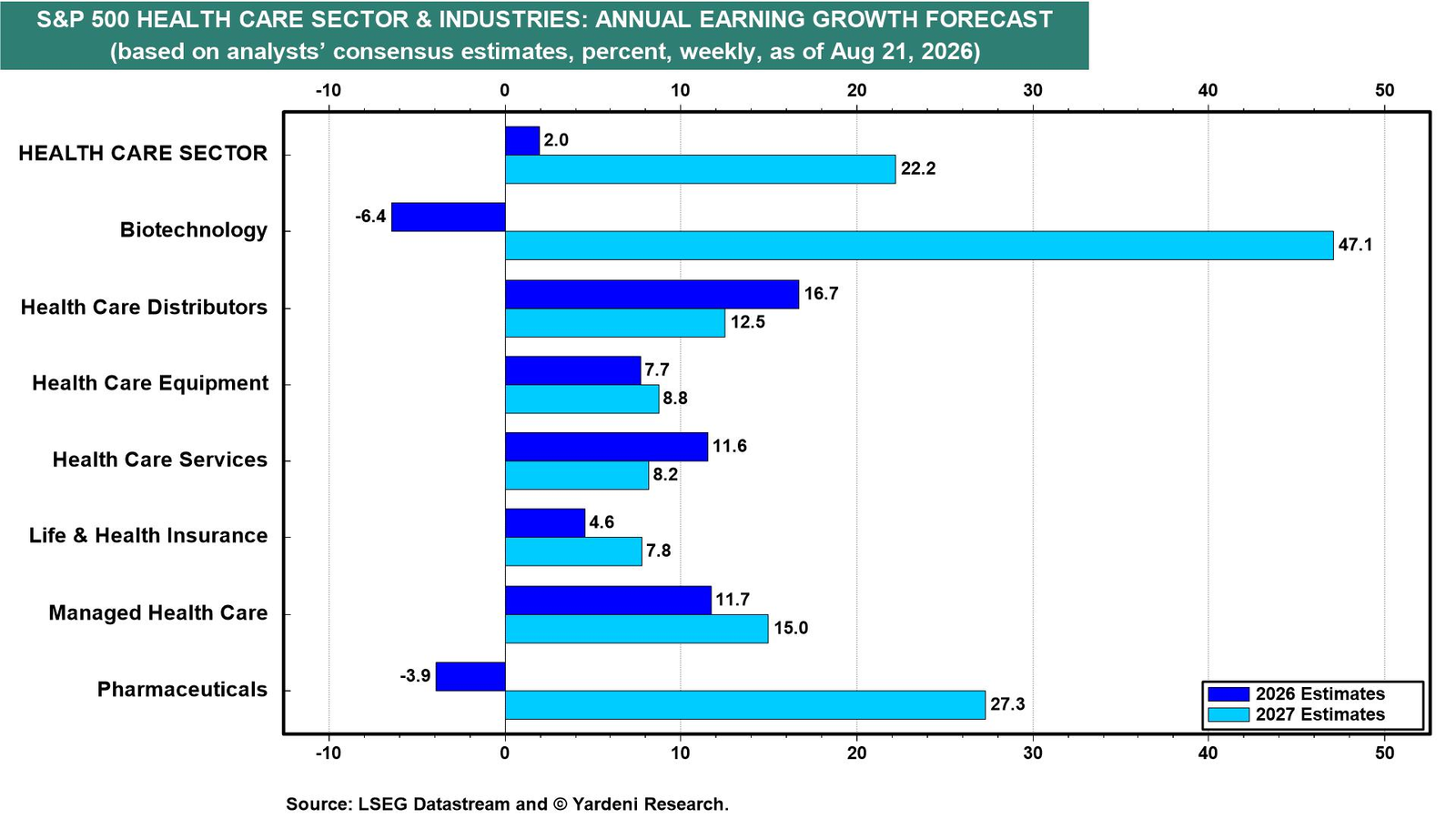
Analysts have been marking up the sector. Two weeks ago, they expected earnings to grow 0.1% in 2026. They now expect 2.0% growth this year, with 22.2% penciled in for 2027. Biotechnology is the leading swing factor, forecast to shrink 6.4% this year and grow 47.1% next year (chart).
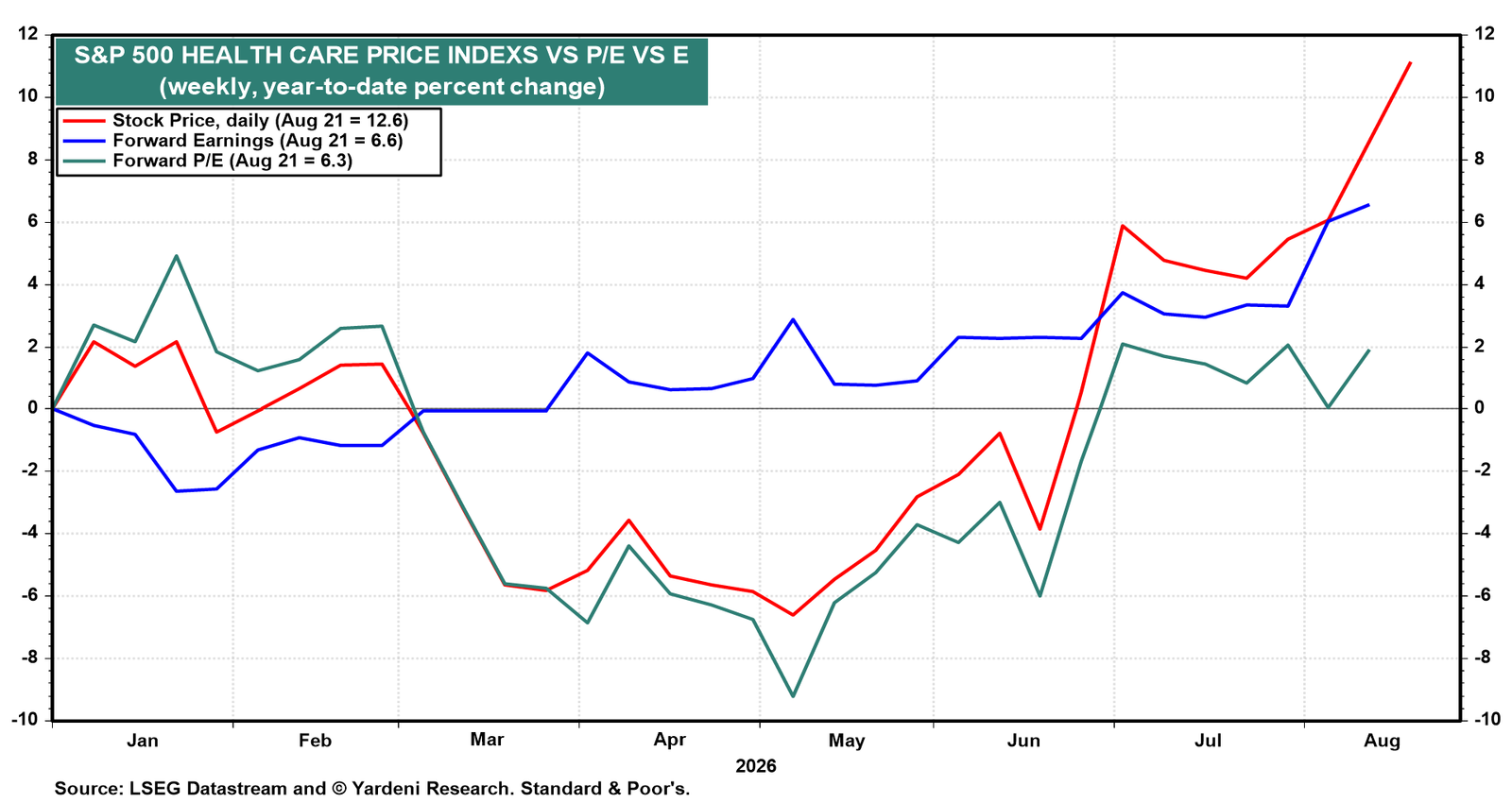
The sector's forward earnings is up 6.6% ytd, and the forward P/E is up 6.3% ytd, pushing the price index up 12.6% (chart). At 19.1 times forward earnings, the sector trades slightly below the S&P 500's 19.8.
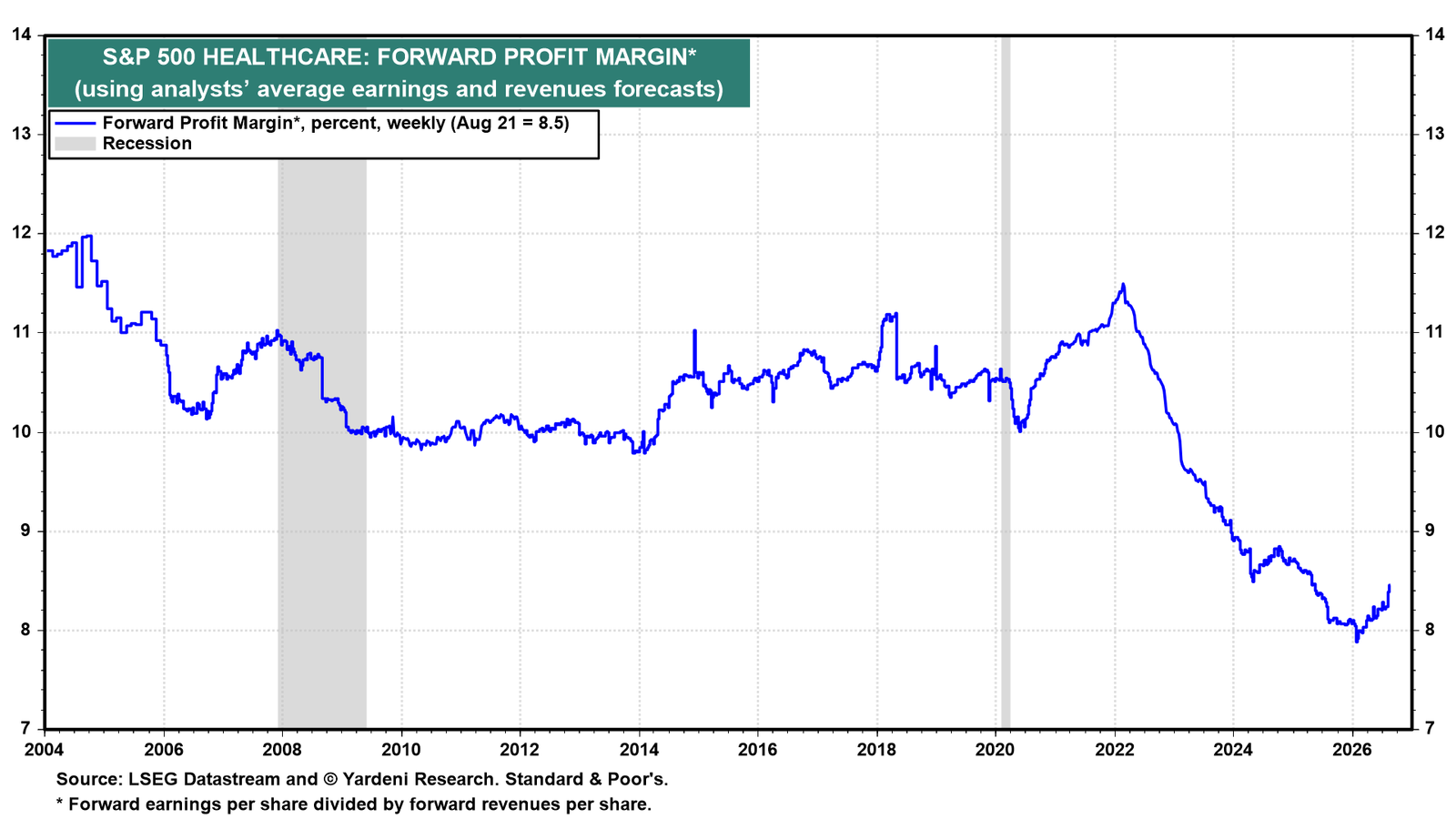
We are watching the sector's forward profit margin. It slid since early 2022 from 11.5% to just under 8.0% at the start of this year, then picked up to 8.5% (chart). That is a small move off a low base, but it arrives alongside the earliest commercial evidence that AI-designed therapeutics work. We are overweight Health Care because we think the drug-development cycle is turning.
(2) Information Technology: Semis getting cheaper. Information Technology fell 3.2% this week. Long-term Treasury yields did the damage. The 30-year hit 5.31% on Monday, its highest since 2007, and closed Friday at 5.28%.
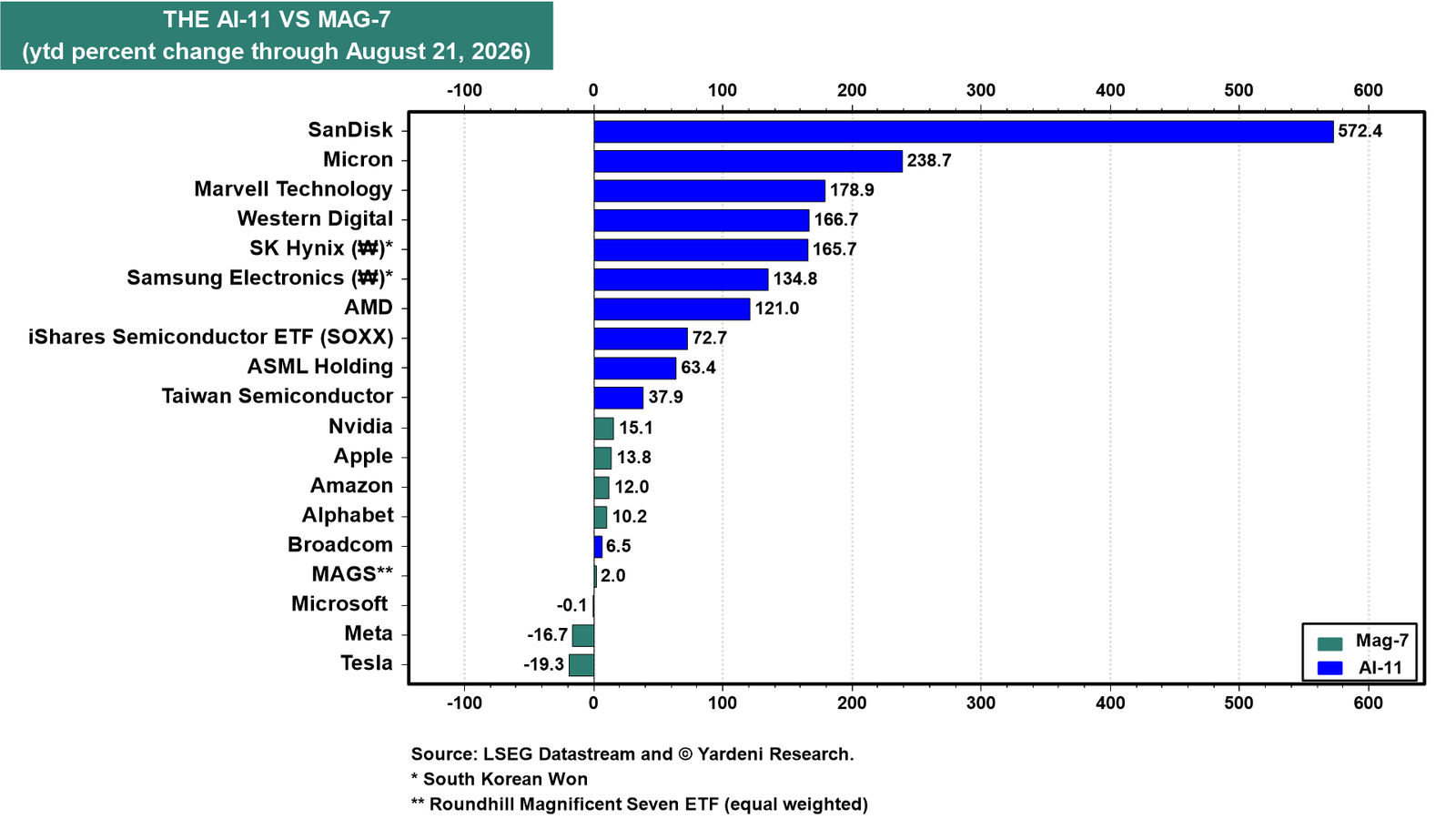
The selloff has barely dented the year for Semiconductors. SanDisk is up 572.4% ytd, Micron 238.7%, and Marvell 178.9%, against 2.0% for the Mag-7 (chart). All three are also leading on a mtd basis (chart).
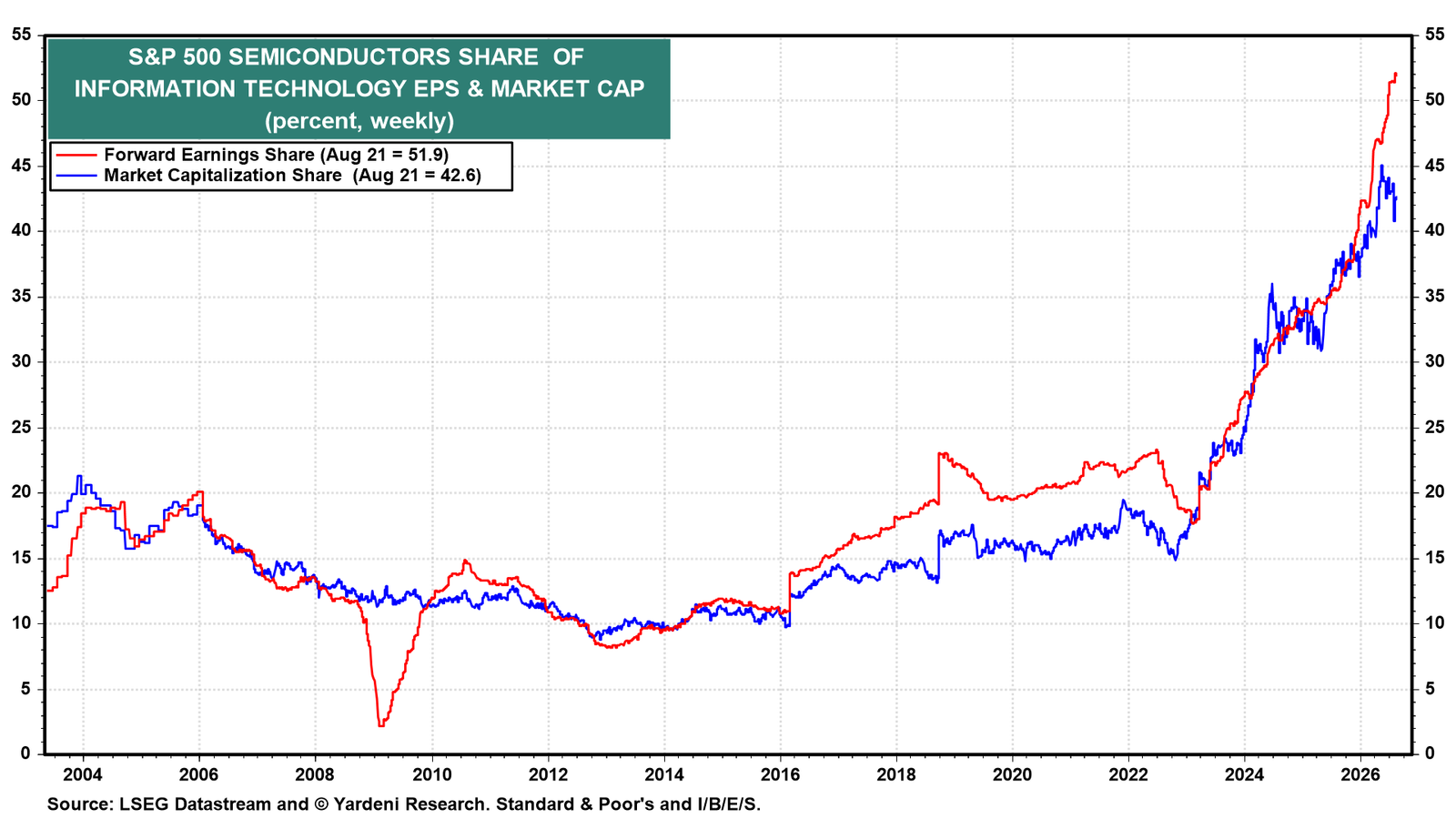
Semiconductors now account for 51.9% of the sector's forward earnings, up from 46.8% in mid-May, while the industry's share of its market cap has fallen from 45.1% to 42.6% over the same stretch (chart). Semis' earnings are piling up so fast that investors are getting nervous about paying up for them. That's because price increases are driving up earnings rather than unit sales, which are constrained by capacity. Semis trade at 16.9 times forward earnings against the S&P 500's 19.8.
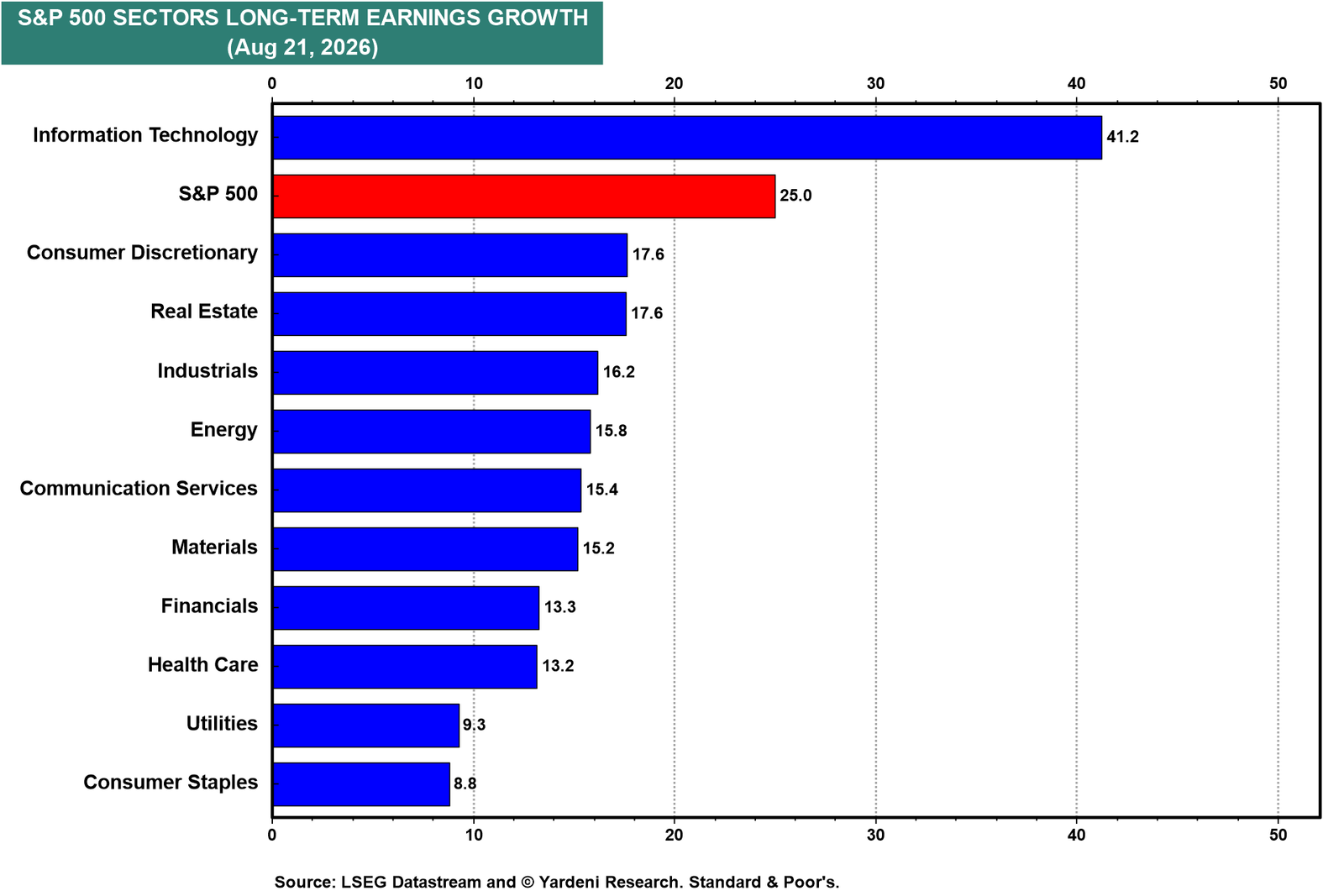
Tech as a whole trades at 21.0 times forward earnings, down from 26.5 at the end of 2025, while the consensus long-term earnings growth is at 41.2% against 25.0% for the S&P 500 (chart). Analysts keep raising the growth rate. Investors keep lowering the multiple. We remain at a market weight rating, and continue to view the AI selloff as an opportunity
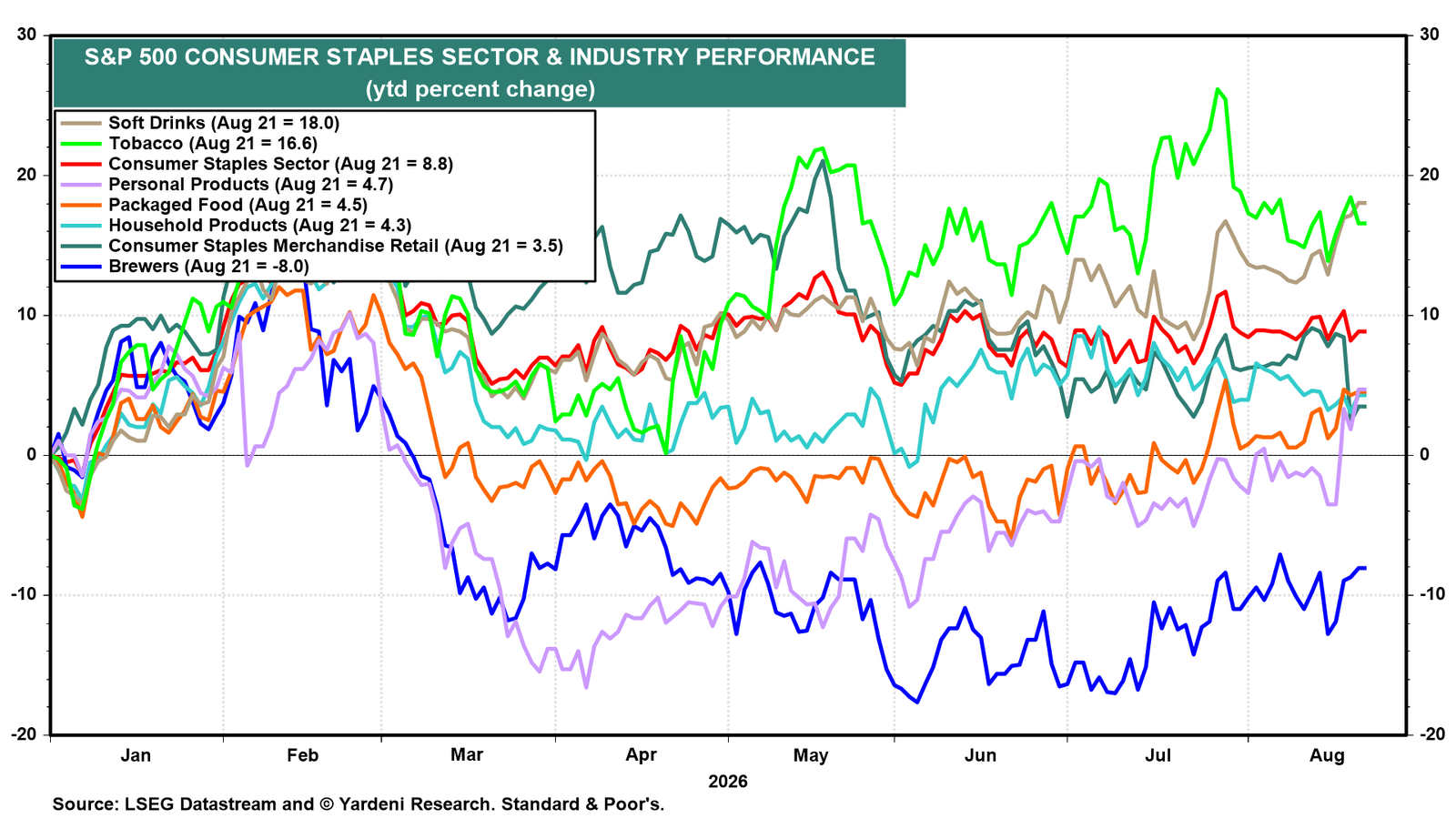
(3) Staples: Retailers are a drag. The two biggest US retailers, Walmart and Target, reported July-quarter earnings last week. Target beat the consensus estimate for comparable-store sales growth, and its stock rose 4.25% on Wednesday. Walmart beat the consensus on the earnings headline but missed on comparable sales, and its shares fell 9.2% on Thursday. The Consumer Staples Merchandise Retail industry index fell 4.9% for the week, the worst industry performance in the Consumer Staples sector. That cut the industry’s ytd gain to 3.5%; it was around 10% for most of the year (chart).
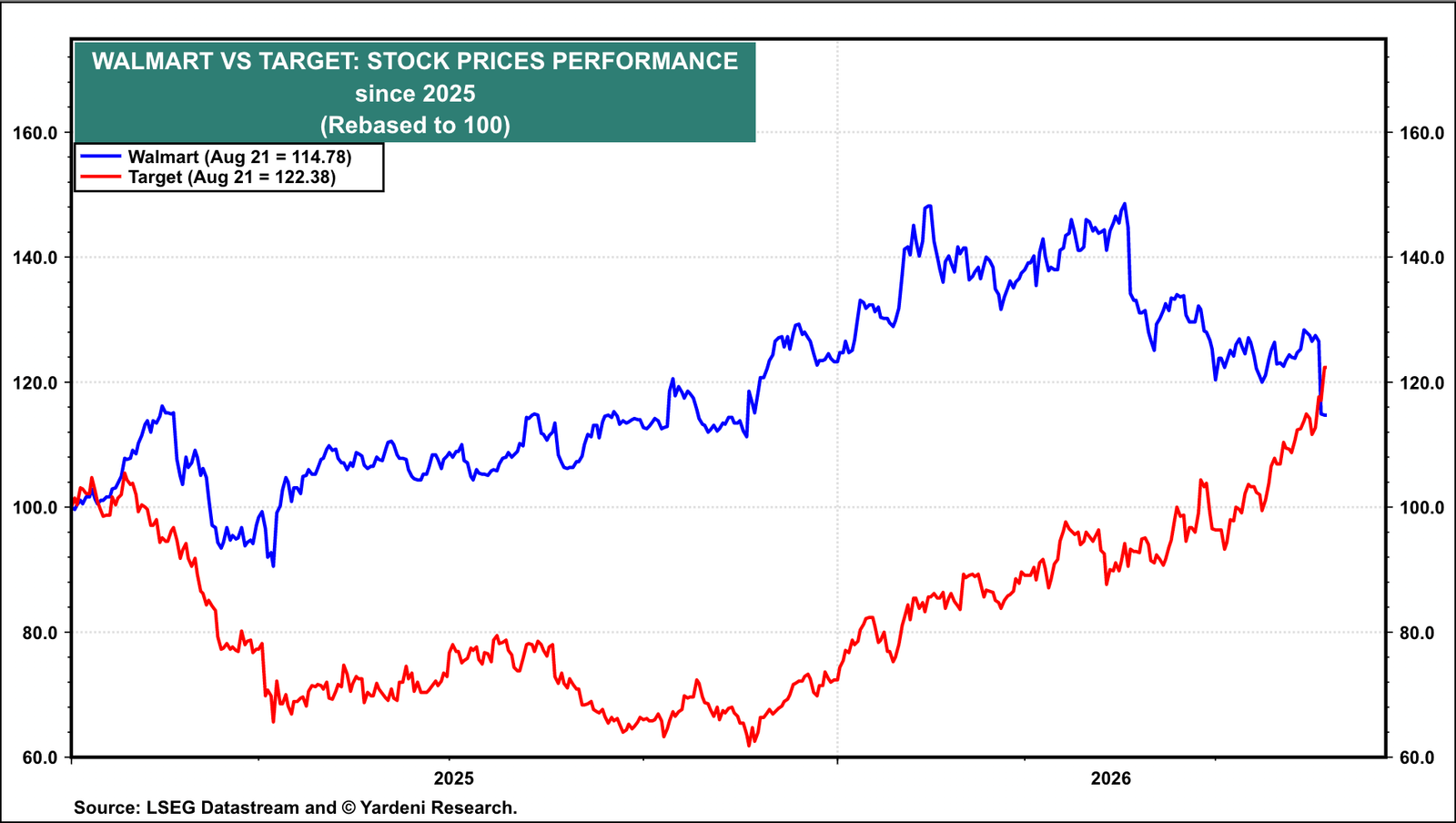
Since the start of last year, Walmart stock is up 15% and Target is up 22%, with Target having caught up with and overtaken Walmart after naming Michael Fiddelke chief executive on August 20, 2025 (chart). Target is up 65% ytd.
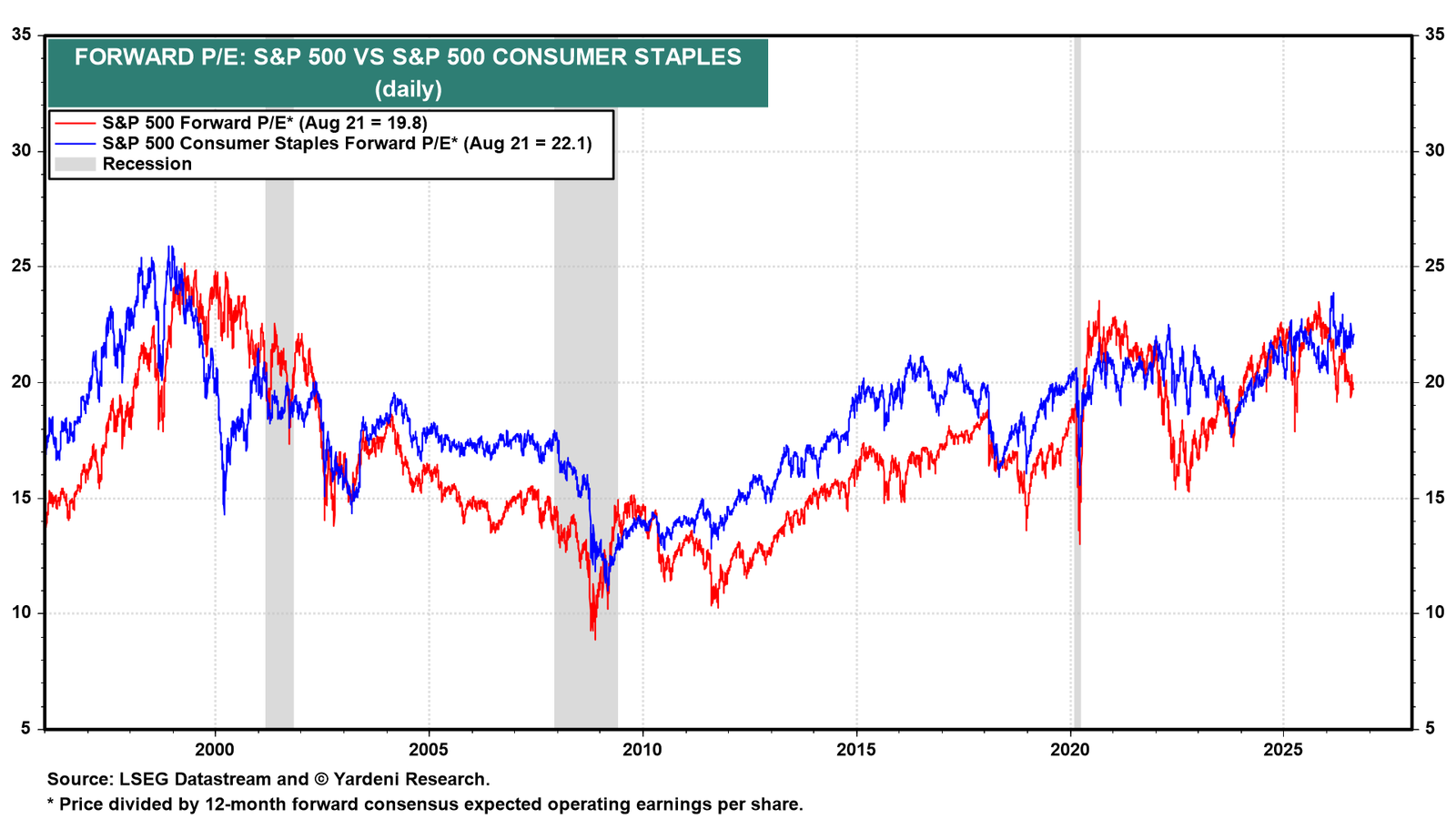
We retain our underweight rating on the sector, which trades at 22.1 times forward earnings against the S&P 500's 19.8 and carries the lowest consensus long-term growth of the 11 sectors at 8.8% (chart).
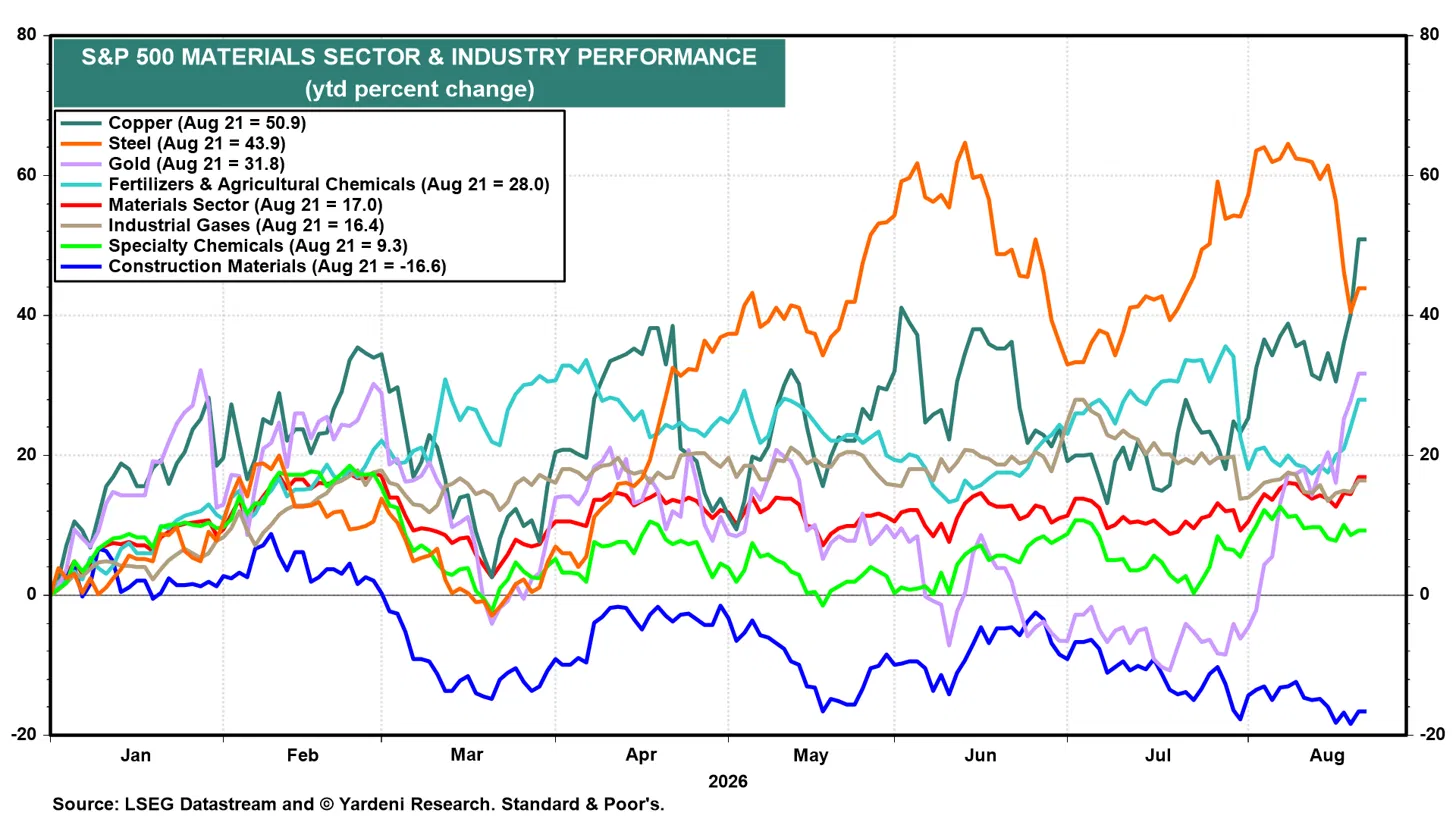
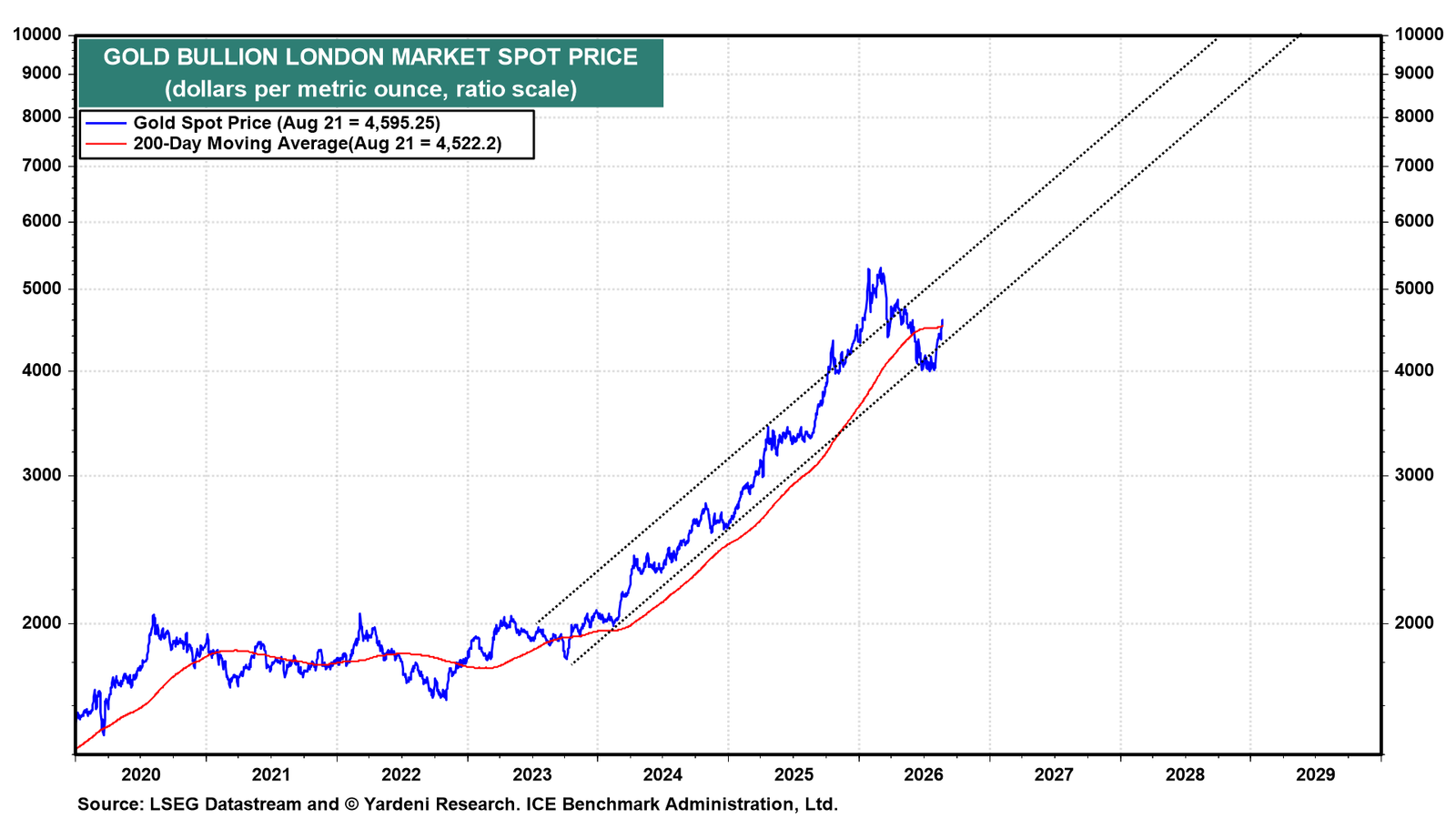
(4) Materials: More than gold. The Materials sector rose 2.3% last week and is up 17.0% ytd. Among its component industries, the Gold share price index was the standout performer last week, up 11.7%, as the price of gold rebounded above its 200-day moving average (chart). The same fiscal concerns pushing long-term Treasury yields to 19-year highs have supported the gold price.
Even so, the Gold industry index was not the sector's best performer among its component industries last week. Copper rose 15.3%, ahead of Gold’s 11.7%, and is up 50.9% ytd against Gold's 31.8% (chart). The Materials sector's strength spans the metals complex rather than resting on one commodity, and we retain our overweight rating.