I. The Fed
Today's Financial Times ran an exclusive story about Fed Chair Kevin Warsh. It is based on insights provided by unidentified people close to him. They say that he admits that he has made some mistakes, "including failing to reinforce his key messages on price stability." In our opinion, he has been unequivocal about his commitment to restore price stability. He just hasn't done anything about it so far. Nor has he provided any information about the Fed's reaction function under his leadership.
The FT article suggests he is watching "market-based measures of inflation," which remain low. Furthermore, the article states, "[b]y breaking the feedback loop between the Fed and investors, the new chair has said that he hopes markets will spend less time scrutinising officials’ clues and focus more on economic data." We've been monitoring the 2-year Treasury yield, which is unambiguously calling for rate hikes.
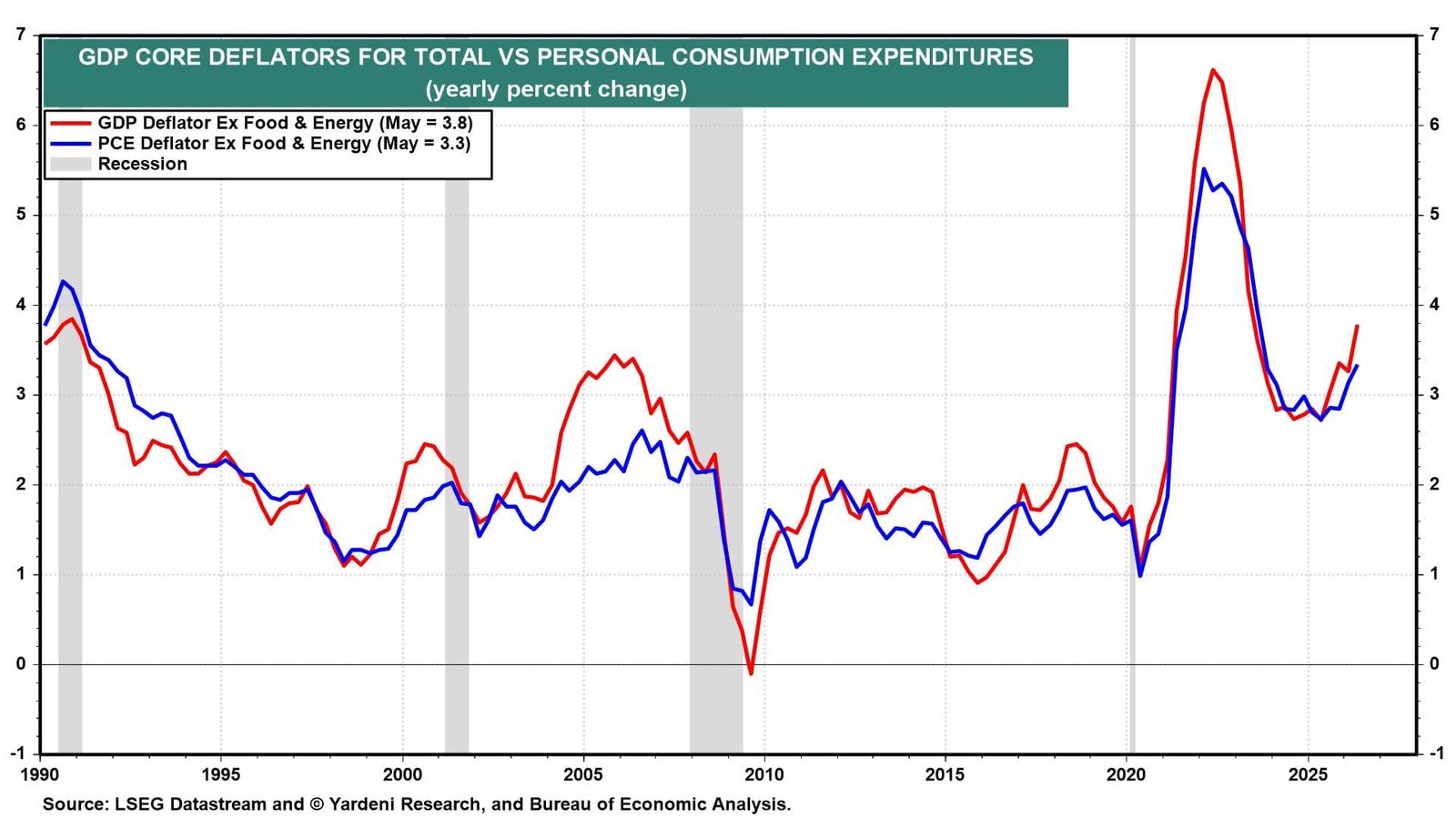
Warsh is refusing to provide any forward guidance, but his people are providing some, saying that he is "prepared to raise interest rates at September’s meeting if inflation readings released in coming weeks are hot." We thought that the Q2-2026 core GDP deflators for total GDP and for personal consumption expenditures were hot at 3.8% y/y and 3.3% (chart).
Will Warsh provide any more clarity in his Jackson Hole speech on Friday, August 28. We doubt it.
II. Macro
The September FOMC rate decision will ultimately hinge on the economic data. The latest reports point to a resilient economy, a tight labor market, and persistent inflation pressures. Consider the following:
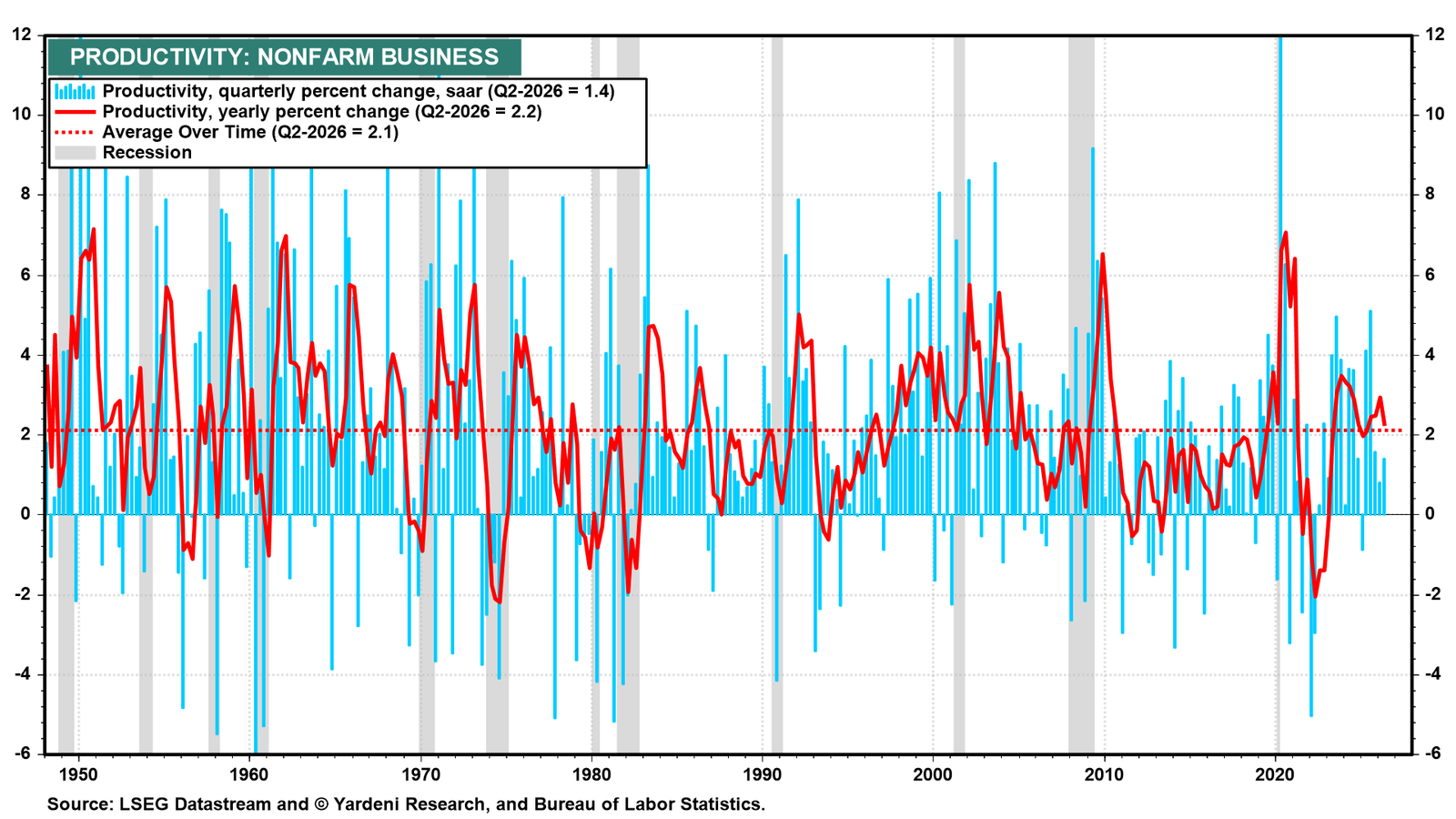
(1) Productivity. Productivity, measured as nonfarm business output per hour worked, rose 2.2% y/y in Q2, in line with its 2.1% long-term average (chart). We expect productivity growth to improve over the rest of the decade as businesses continue investing heavily in AI and other productivity-enhancing technologies. That should boost economic growth and moderate inflation. For now, AI is boosting inflation, as we have previously discussed.
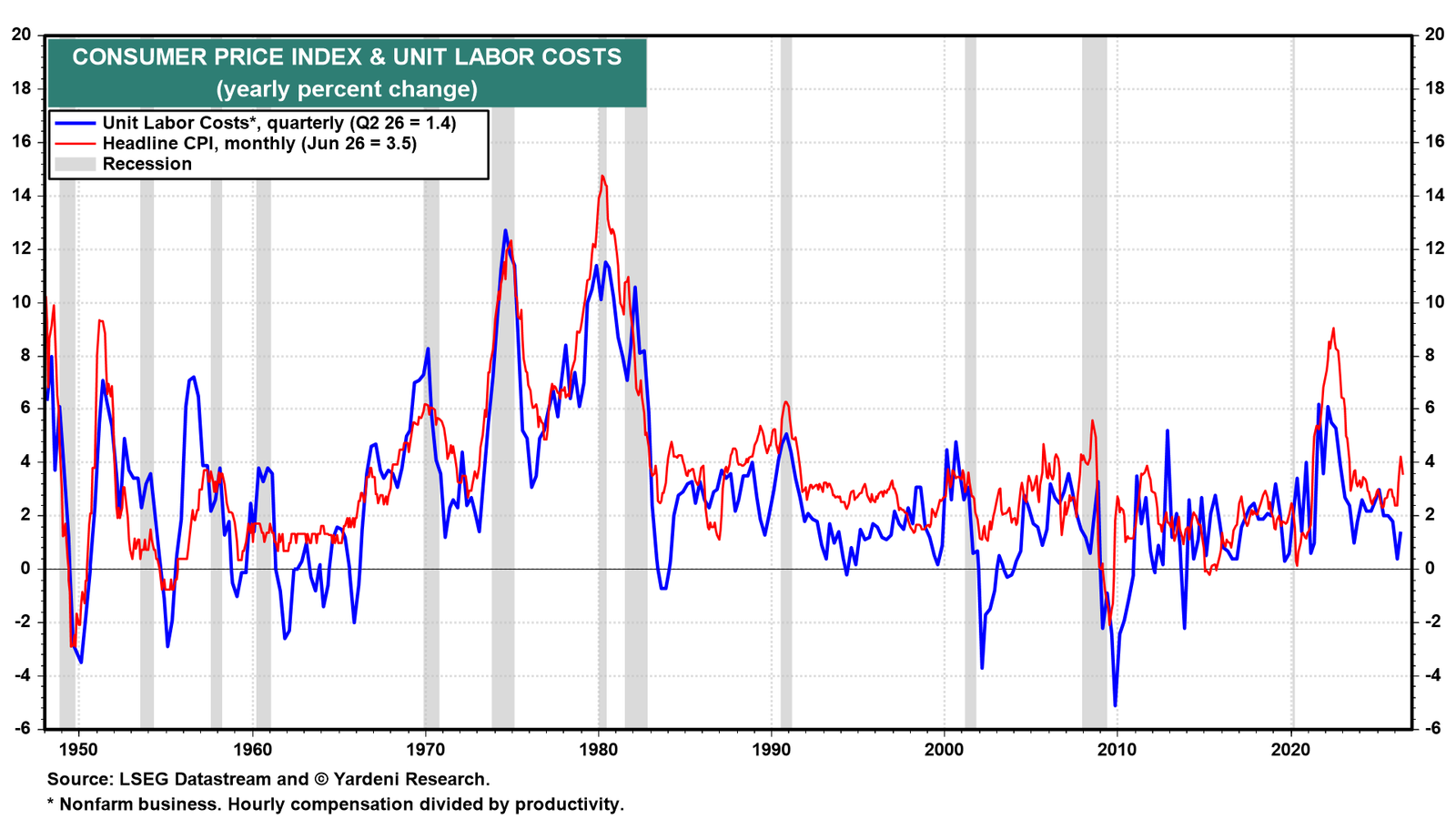
(2) Unit labor costs & inflation. Unit labor costs, measured as hourly compensation divided by productivity, rose just 1.4% y/y in Q2 (chart). This suggests that labor market conditions are not a source of inflation. Instead, inflationary pressures are coming from higher energy prices, tariff-related increases in goods prices, and the economy's ongoing AI-driven investment boom.
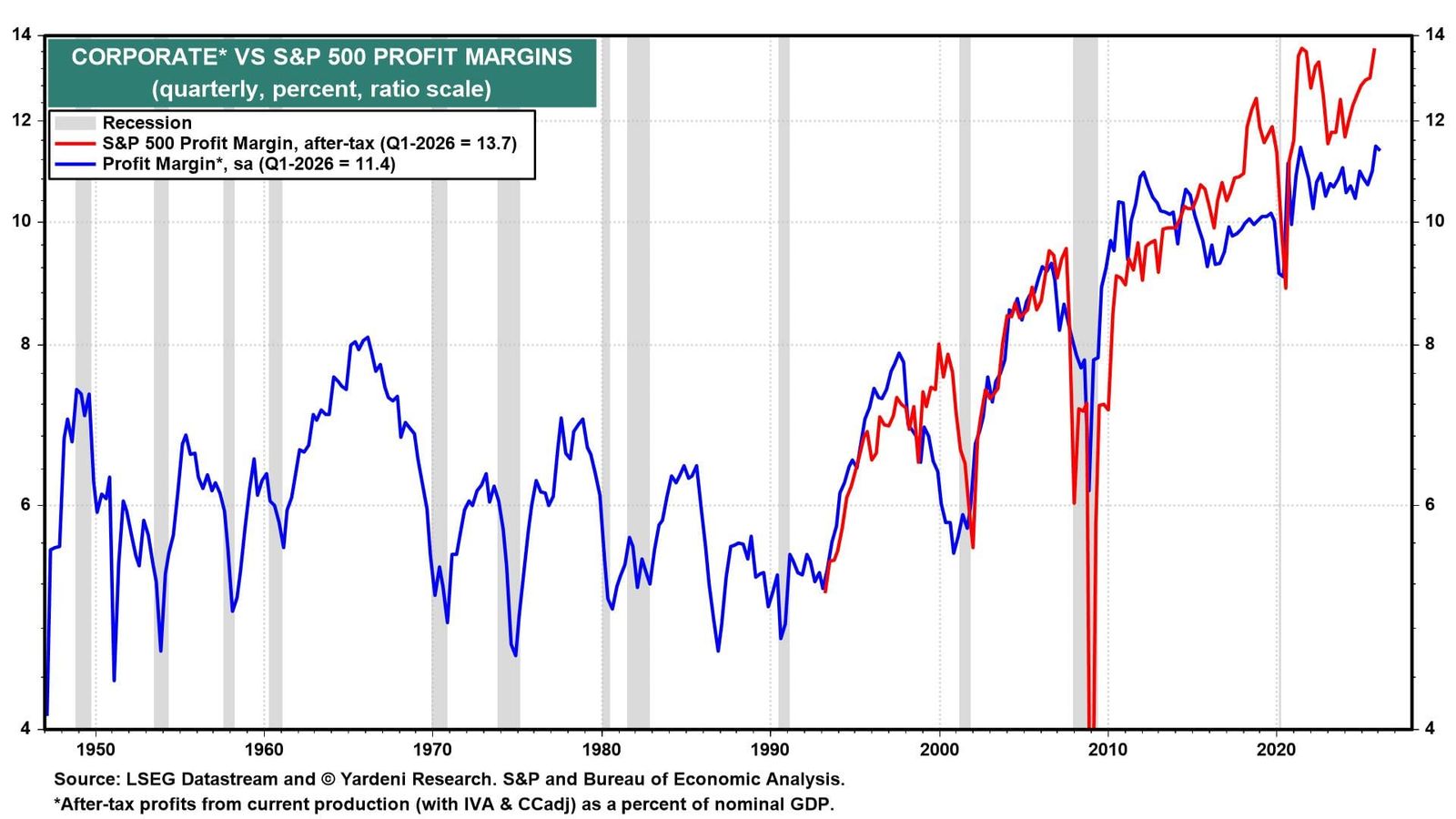
(3) Corporate profitability. Corporate and S&P 500 profit margins remain near record highs, helping to support surprisingly strong earnings growth (chart). Continued productivity gains should provide further support for profits over the remainder of the decade.
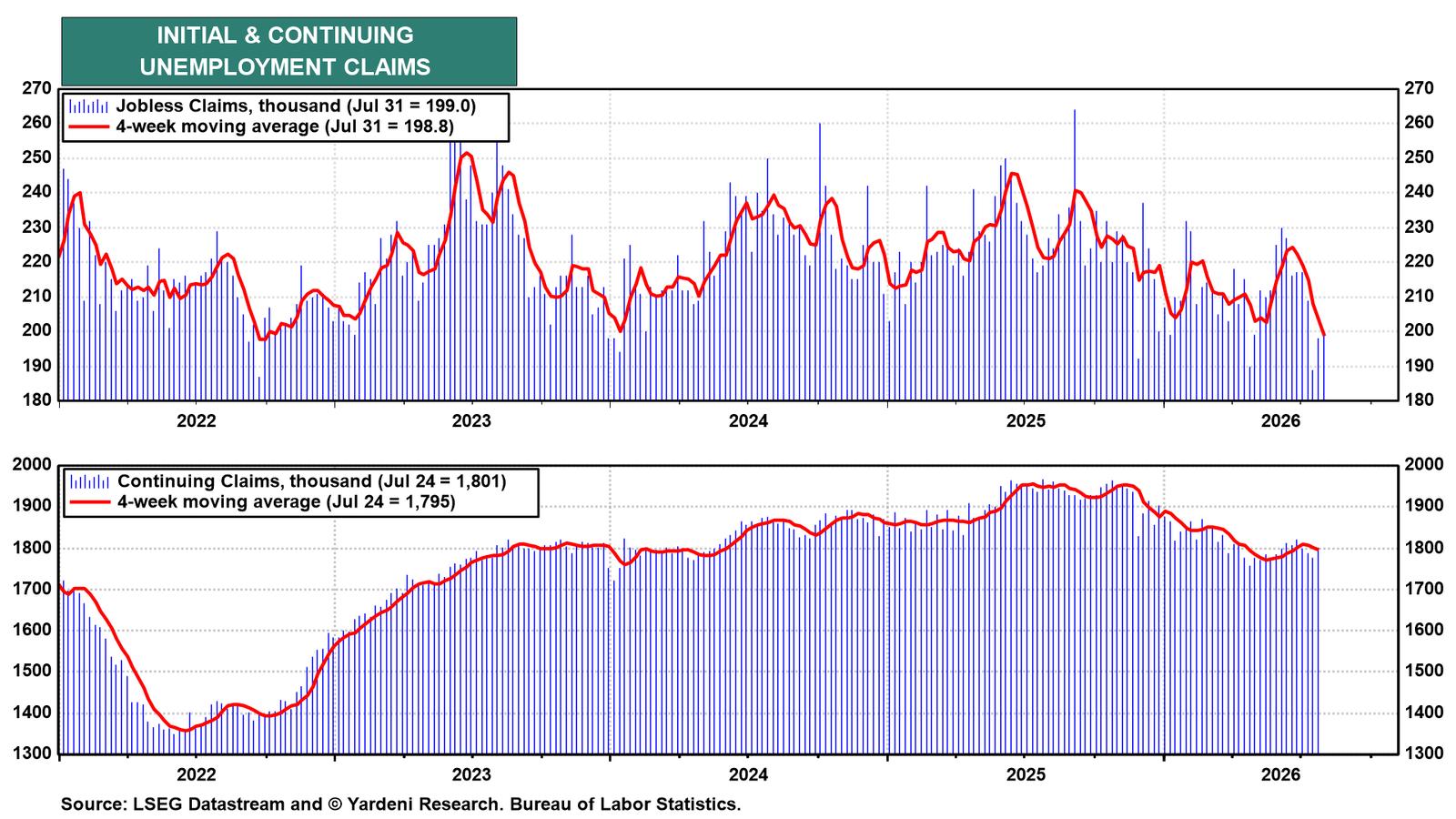
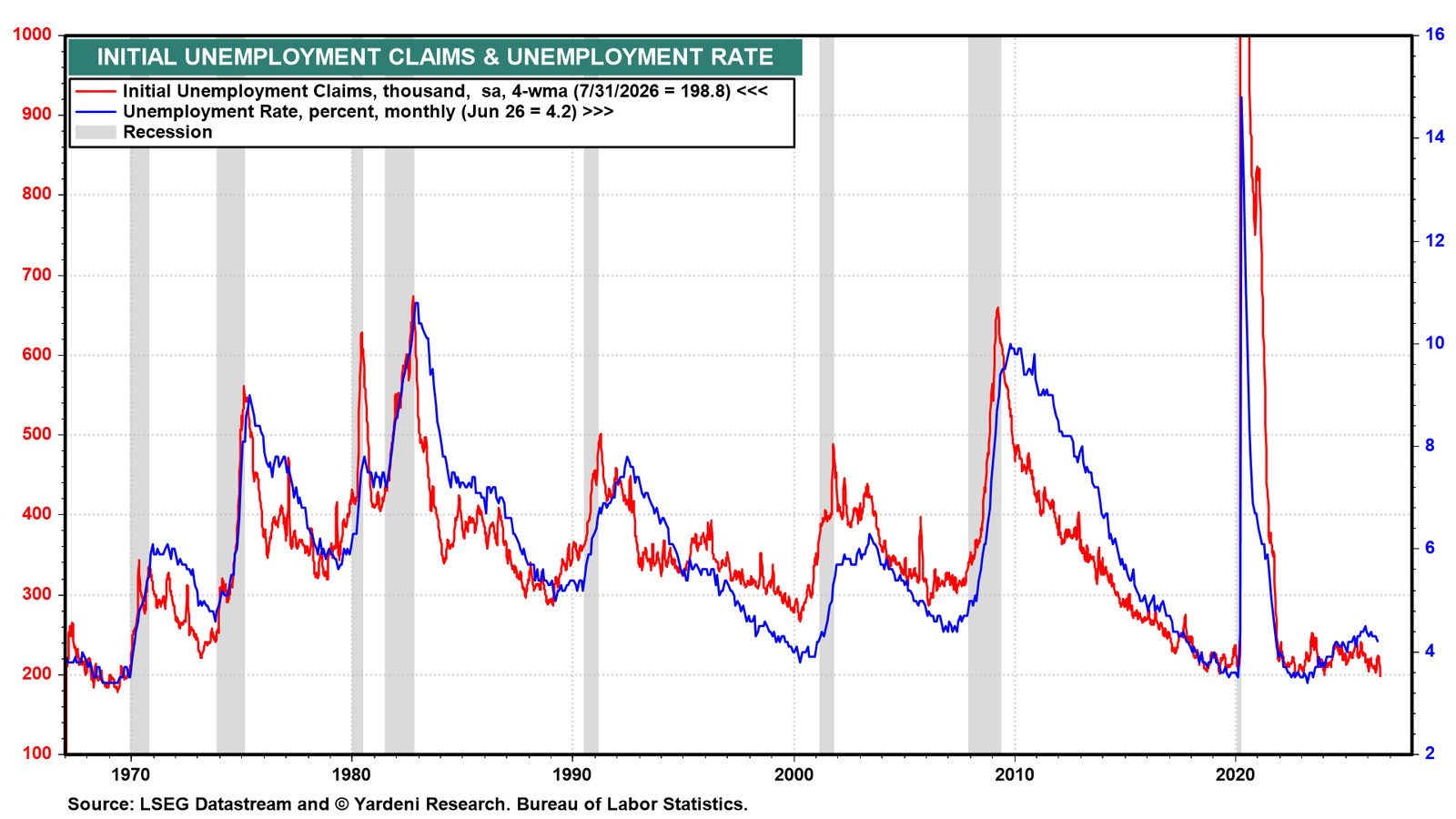
(4) Initial unemployment claims. Jobless claims rose slightly to 199,000 in the week ending July 31 but remained below 200,000 for a third consecutive week (charts). Even more encouraging, the four-week moving average fell to its lowest level since October 2022, suggesting that the unemployment rate fell in July. Continuing claims also remain subdued.
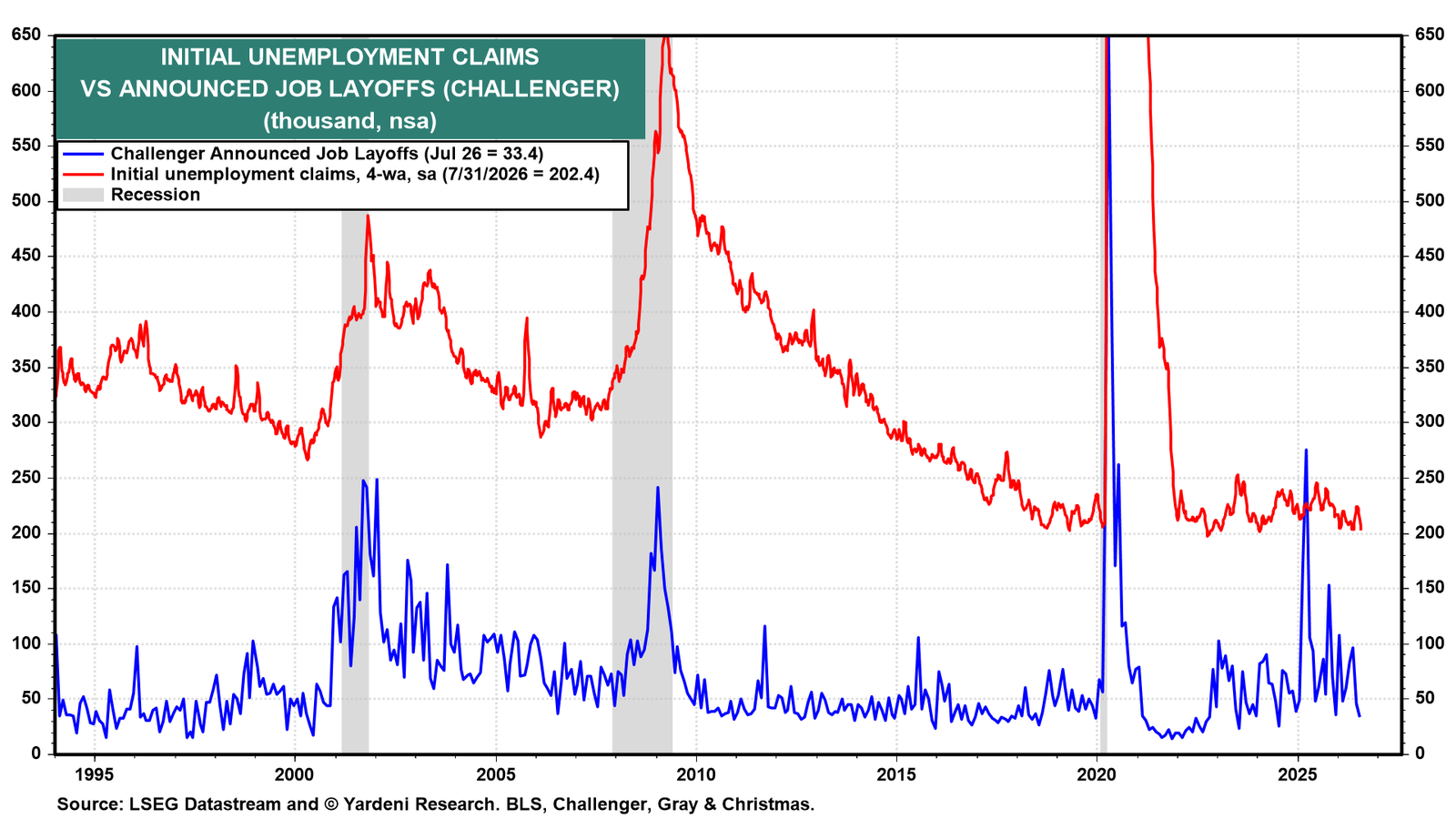
(5) Layoff announcements. The decline in jobless claims is corroborated by layoff announcements. US employers announced just 33,429 job cuts in July, the lowest monthly total in two years (chart).
(6) Job growth. Yesterday, ADP reported that private payrolls rose by 44,000 in July. Today Revelio Labs estimated that nonfarm payrolls increased by 79,200.
III. Commodities
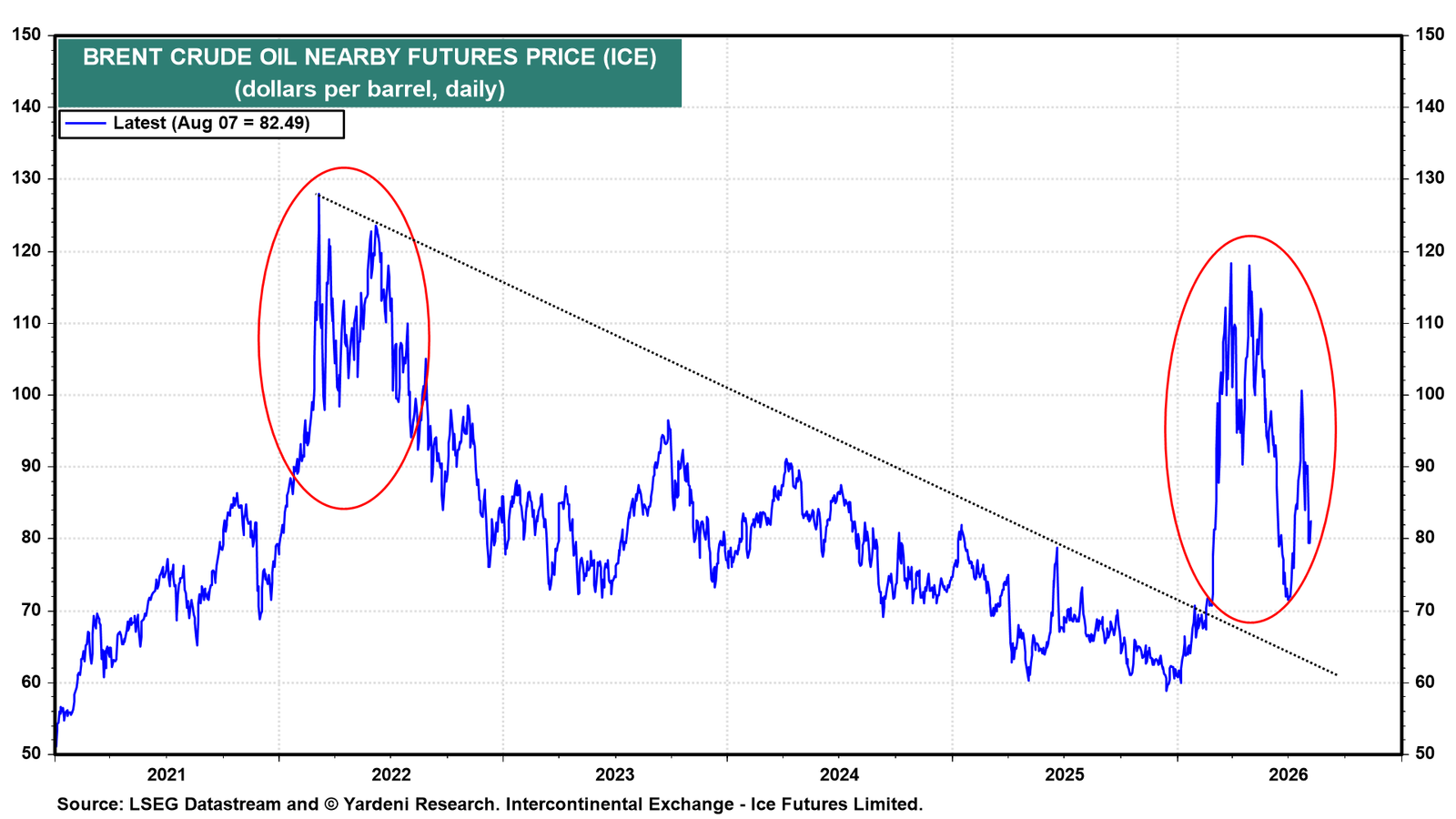
The war isn't over. This afternoon, Reuters reported, "An attack by Yemen's Houthis on southern Saudi Arabia wounded 11 civilians." An Iranian parliamentary committee is reviewing a preliminary bill that would bar US, Israeli and other "hostile" vessels from transiting the Strait of Hormuz, Iran's semi-official Fars news agency reported, citing a lawmaker. Yet, the price of a barrel of Brent crude oil remains below $84 this evening (chart).
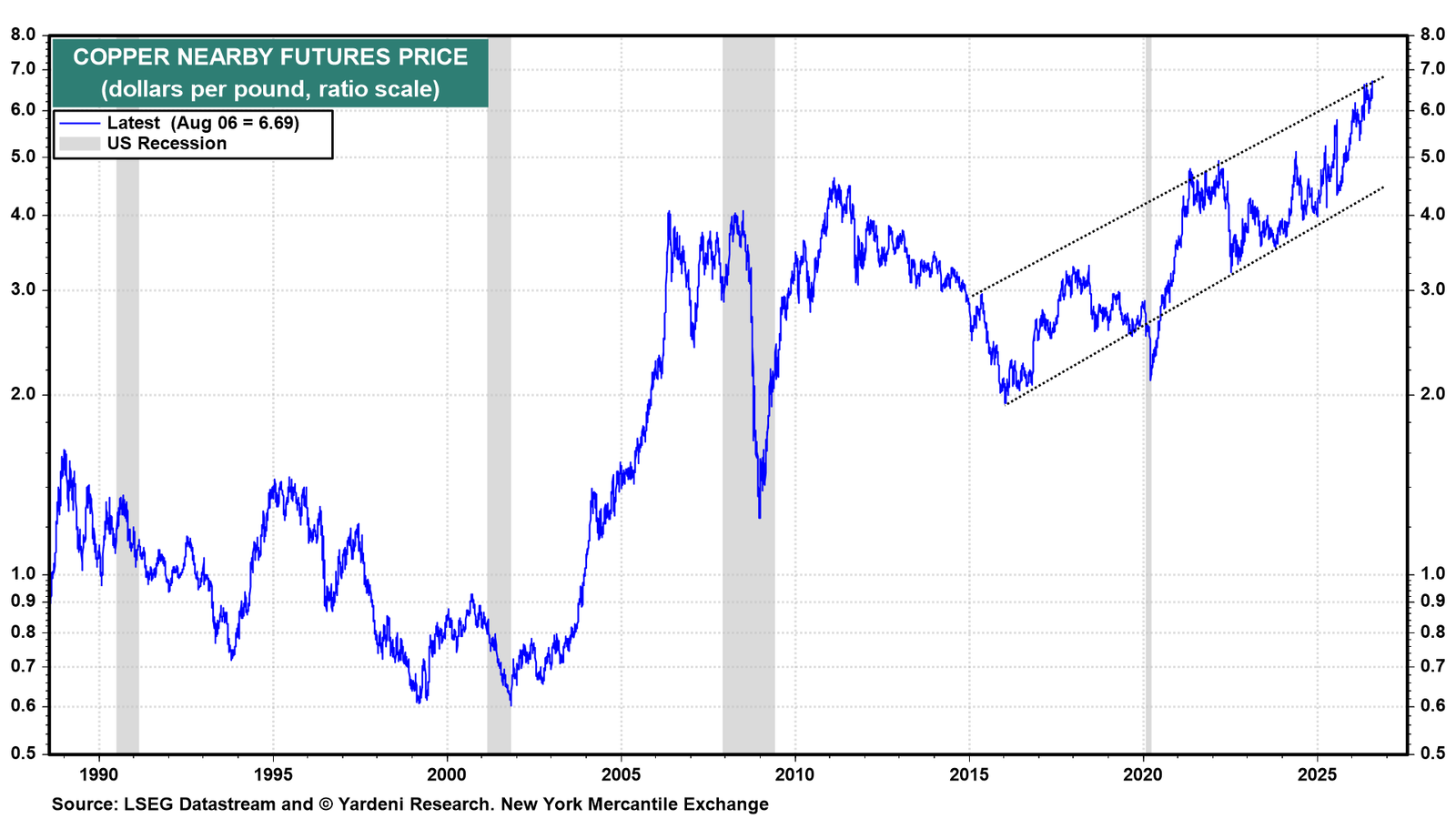
Meanwhile, the turmoil in the Middle East doesn't seem to be denting global economic growth, according to the copper price, which rose to a record high today (chart). It looks set to move still higher.
IV. Stocks
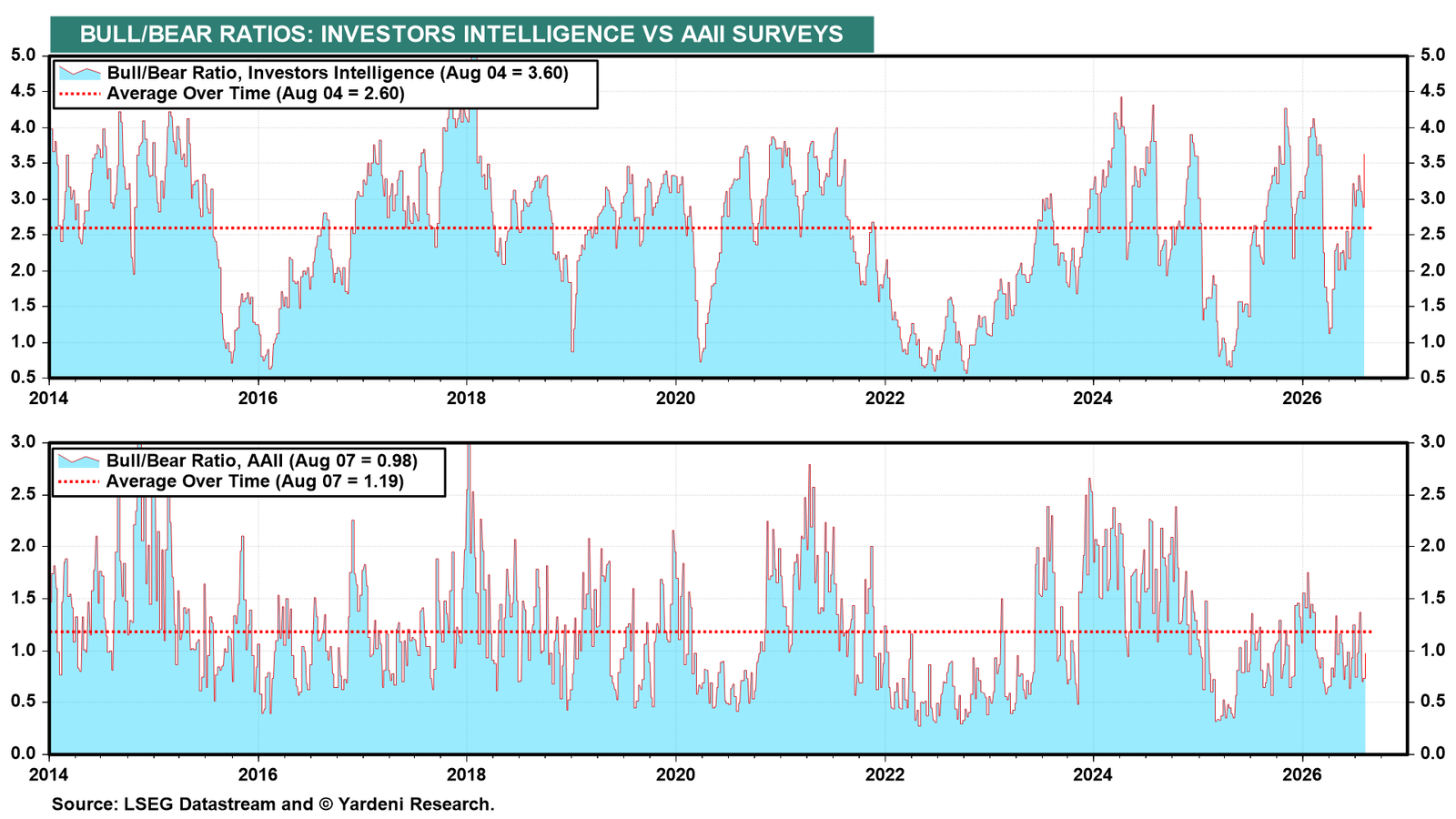
The bull-bear ratios we monitor showed increased bullishness this week (chart). They are not high enough to provide clear signals of an imminent pullback.