In an interview with CNBC, US Treasury Secretary Scott Bessent said the US and Iran could reach an agreement to open the Strait of Hormuz to "freedom of movement" as soon as "today or tomorrow." Following his remarks—alongside reports of ongoing regional mediation via Qatar and Oman—crude oil prices dropped significantly. Brent crude fell below $80/barrel. The US Treasury yield curve edged lower across the board. US equity markets rallied sharply on hopes of a diplomatic breakthrough.
Sunday's QT was titled "Information Technology Is On Sale." The S&P 500 Information Technology sector rose 6.6% over the past two days. It is up 12.2% since last Wednesday's close. The summer stall in the S&P 500 ended decisively today as the S&P 500 broke out to a new record high of 7,736.52.
Bessent also said he's tired of hearing about the "K-shaped economy" and argued that it is over. We agree. In fact, given the broadening strength across the economy, we'd say it is an "OK economy."
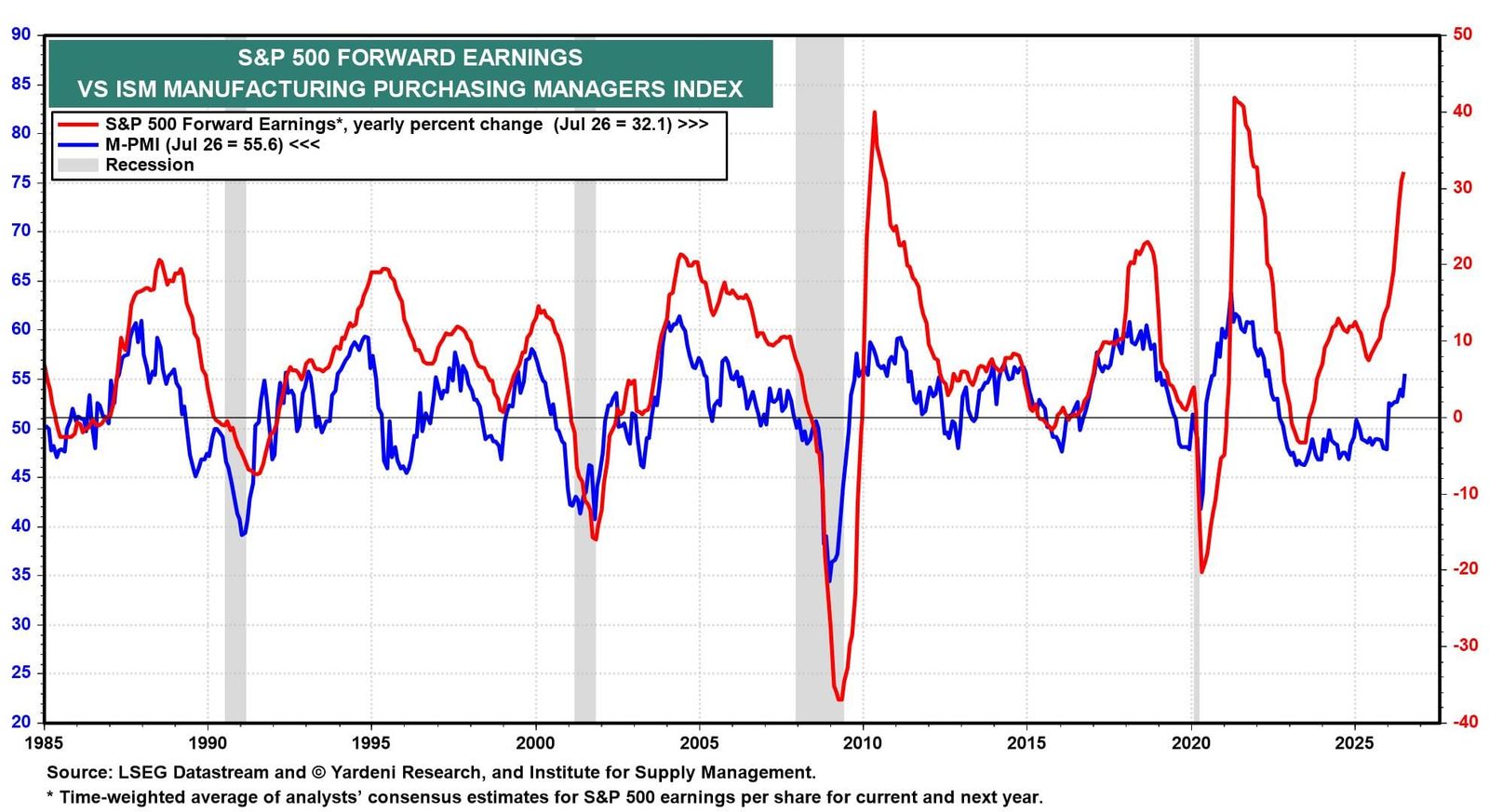
The economy is doing very well, and earnings are reflecting that. S&P 500 forward earnings is up more than 30% y/y, while the ISM M-PMI climbed to a four-year high in July (chart). Historically, stronger manufacturing activity has been associated with stronger earnings growth.
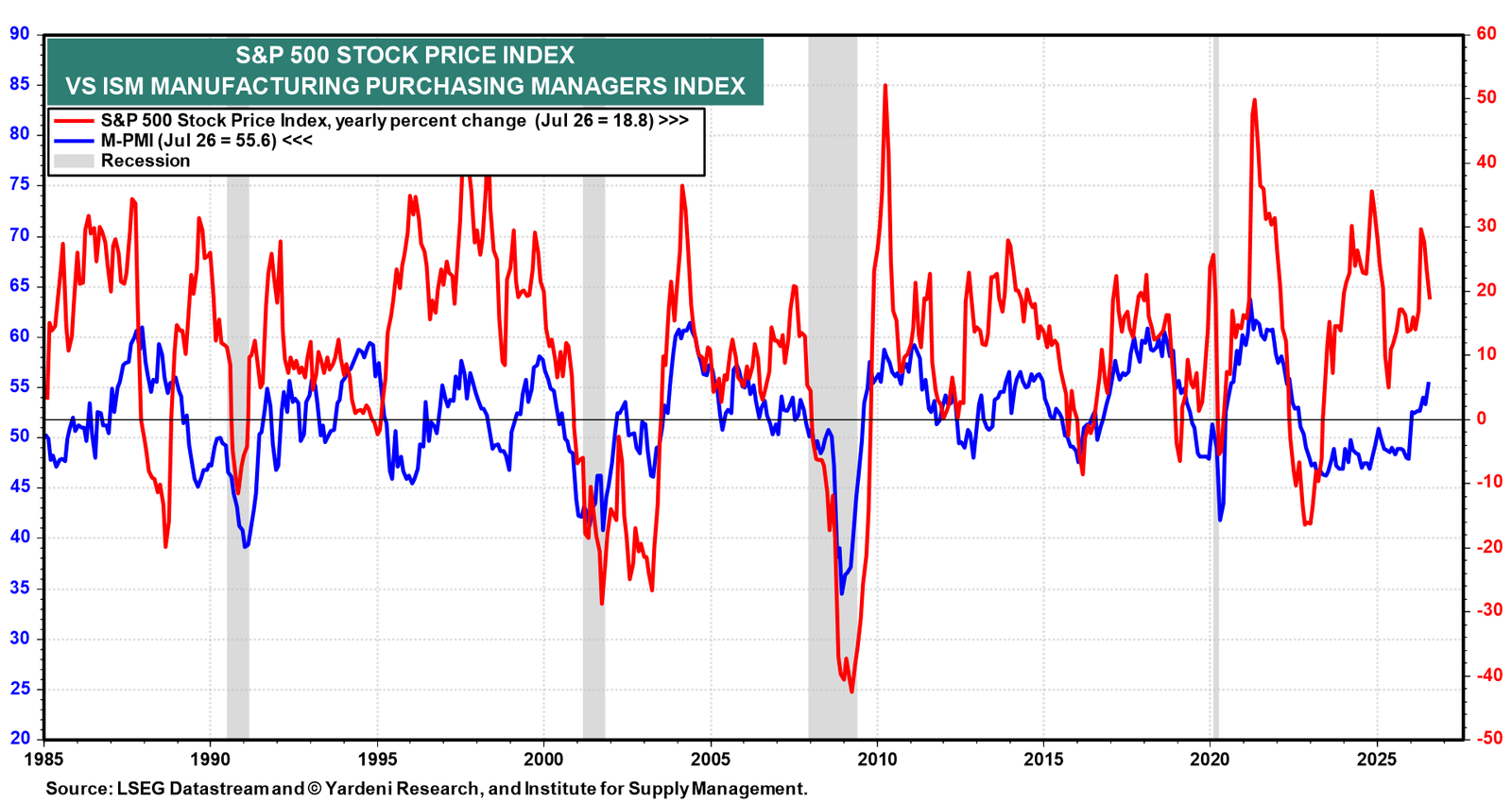
The stock market is doing well because of FEMO, Fabulous Earnings Momentum. Stocks have generally performed best when the ISM Manufacturing PMI is above 50.0. The correlation isn't perfect, but expansion in manufacturing has usually provided a tailwind for equities (chart).
Here's more:
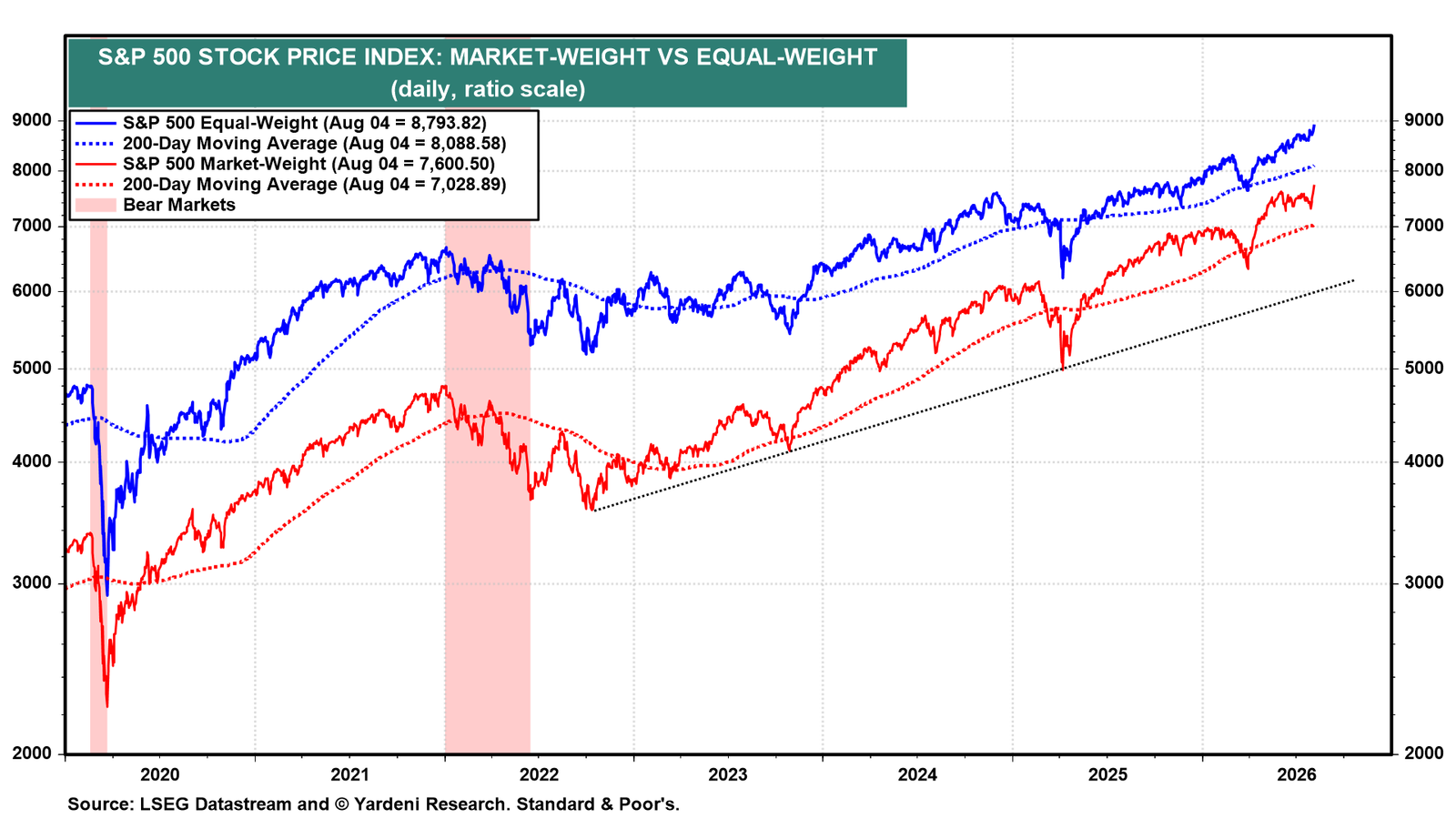
(1) Stocks. While the market-weight S&P 500 stalled around 7,500 from mid-May through the end of last week, the equal-weight S&P 500 rose to new highs during June and July and again today (chart). Investors rotated rather than retreated, with money moving into sectors we are overweighting, including Financials, Health Care, and Industrials. Now both versions of the S&P 500 indexes are at new highs. The S&P 500 is getting closer to our year-end target of 8250.
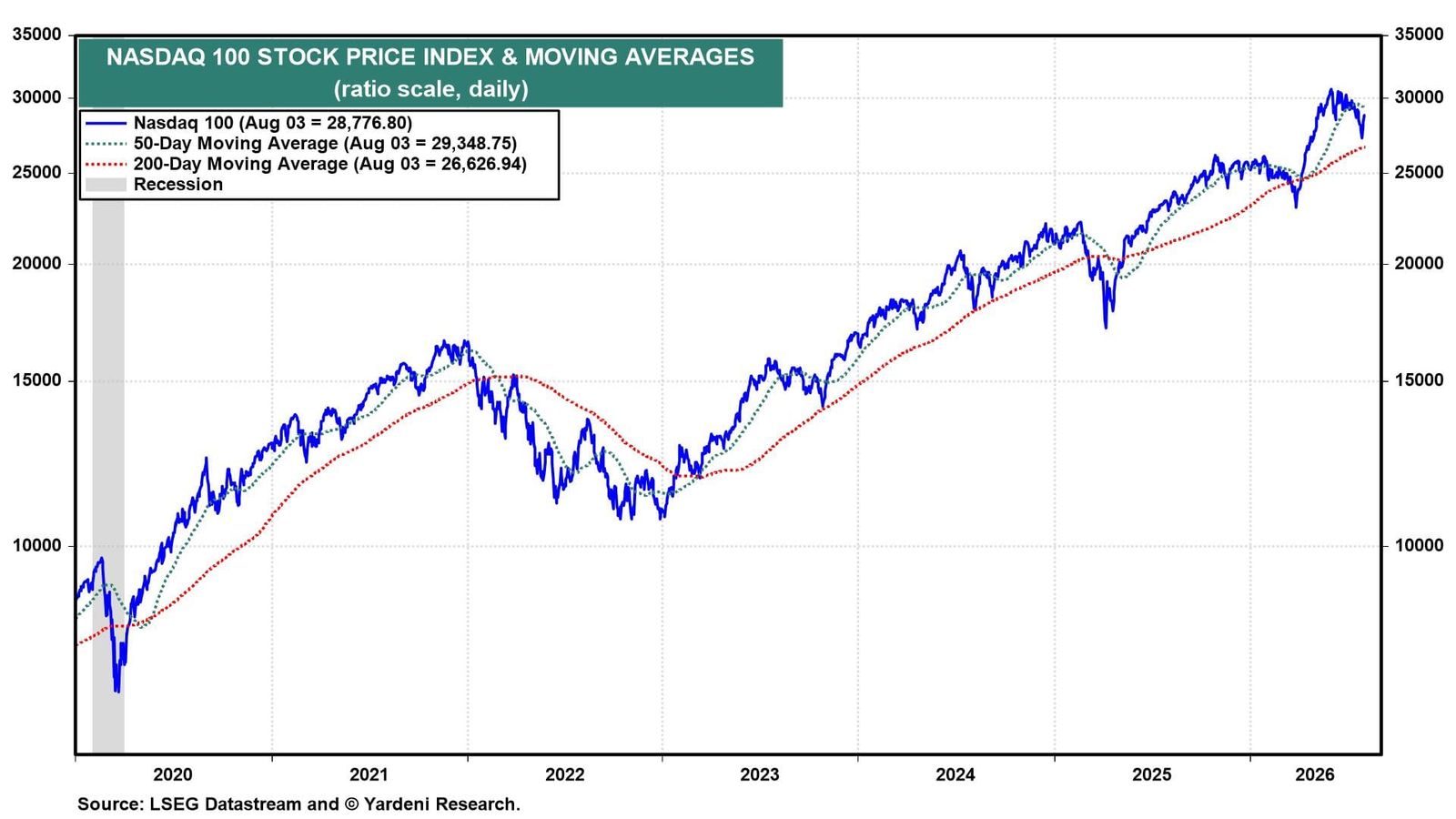
The Nasdaq 100 experienced an 11.3% correction during June and July. It proved to be a buying opportunity, as we expected (chart). It is up 9.3% since last Wednesday's close.
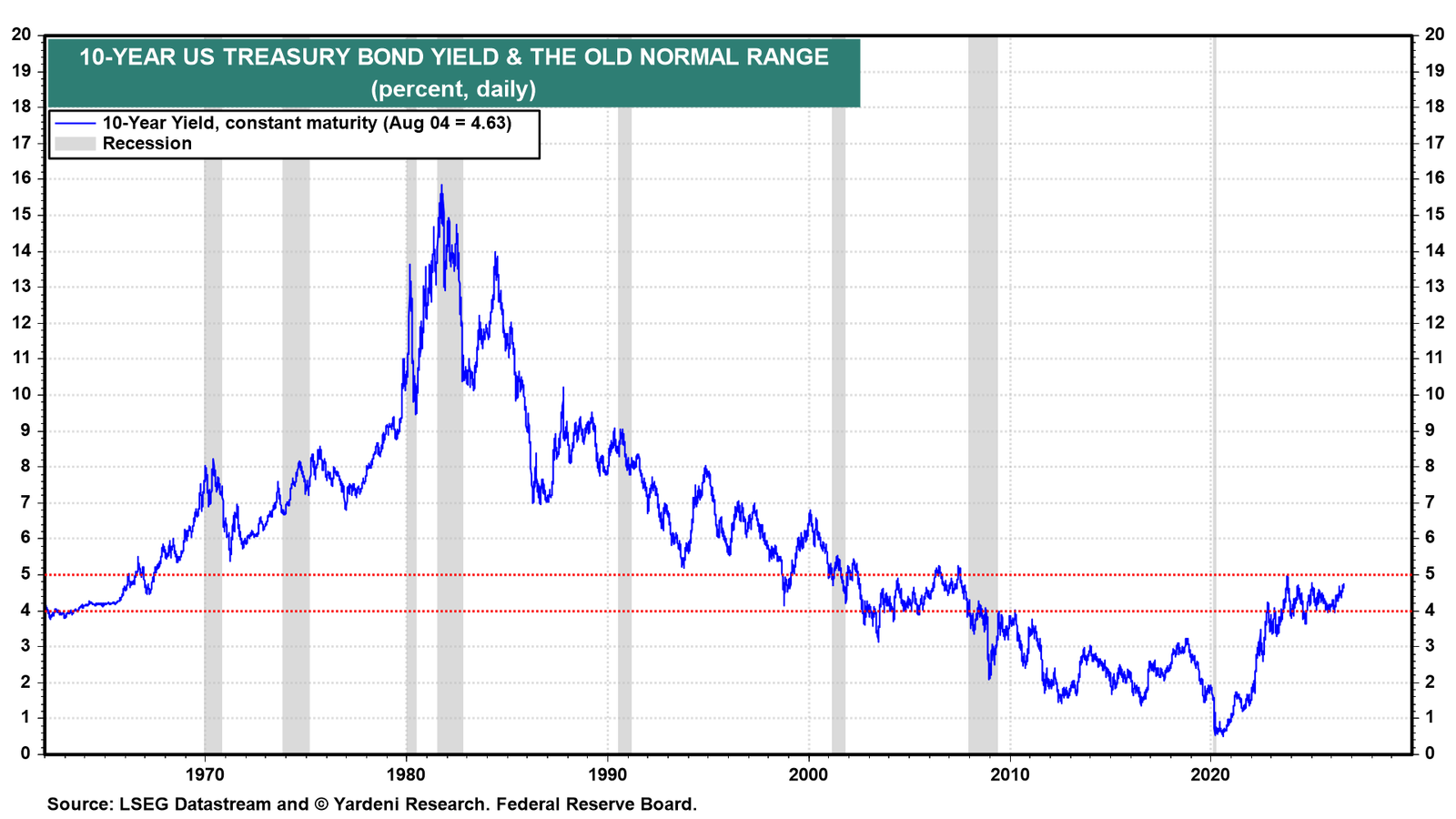
(2) Bonds. Falling oil prices pushed the 10-year US Treasury yield lower to 4.63% from a recent high of 4.74% on Friday. It remains in our "old normal" range of 4.00%-5.00% (chart). The 2-year US Treasury yield is down to 4.21% from a recent high of 4.36%. This still signals that the markets expect 2-3 Fed rate hikes in coming months.
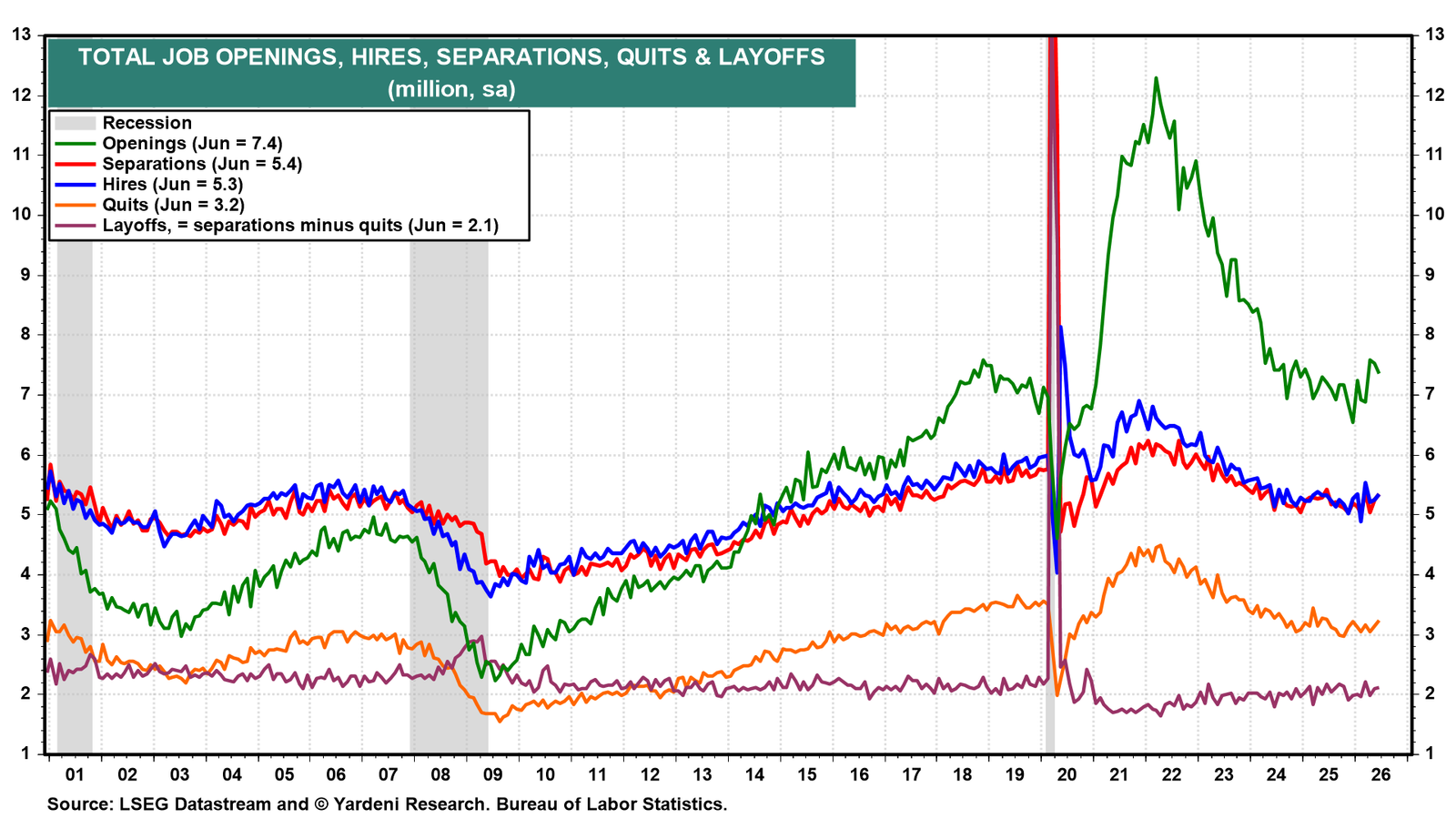
(3) JOLTS. June's JOLTS report confirmed that the labor market remains well-balanced. Job openings eased to 7.36 million but remained close to recent readings, which were the highest since early 2024 (chart). The three-month average rose for a sixth straight month to 7.49 million, just shy of its pre-pandemic record. Voluntary quits rose to a one-year high, suggesting that workers are increasingly confident of their job prospects.
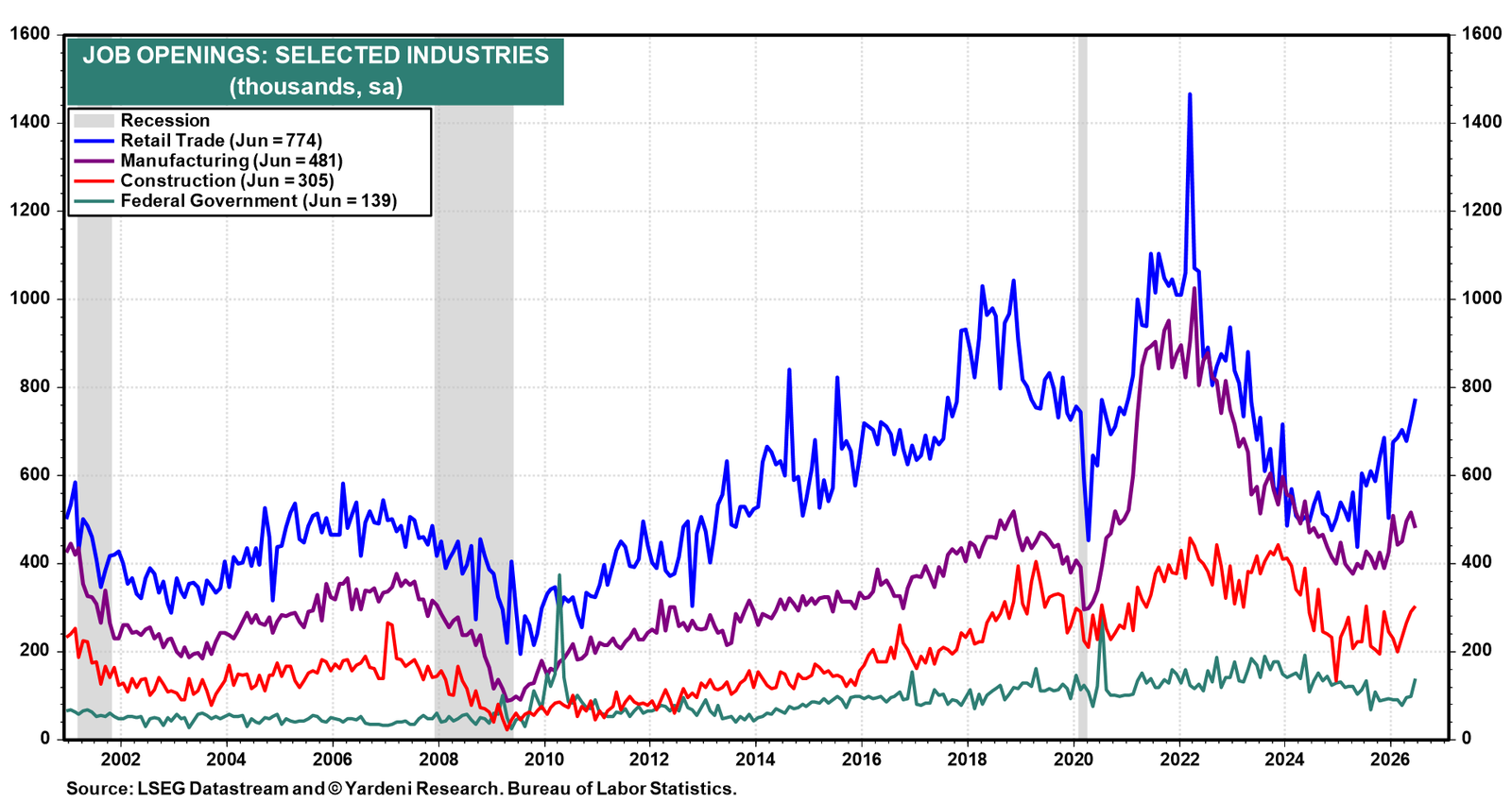
Job openings are rising in two of the most cyclical sectors of the economy. In June, retail openings reached their highest level since April 2023, while manufacturing openings continued to trend higher (chart).
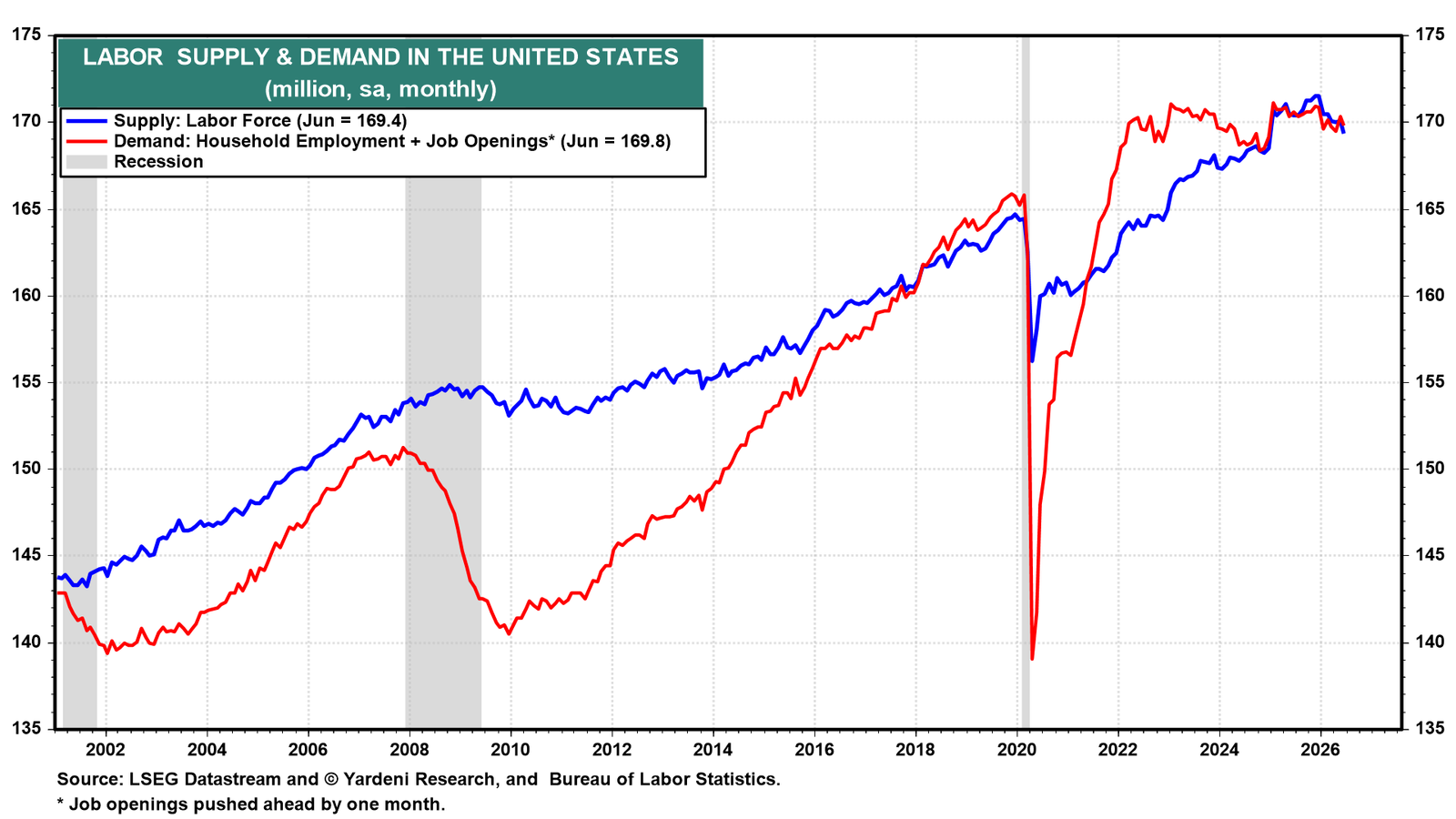
Labor demand and supply remain in equilibrium, consistent with a full-employment economy. The unemployment rate is likely to remain around June's 4.2% in the coming months (chart).
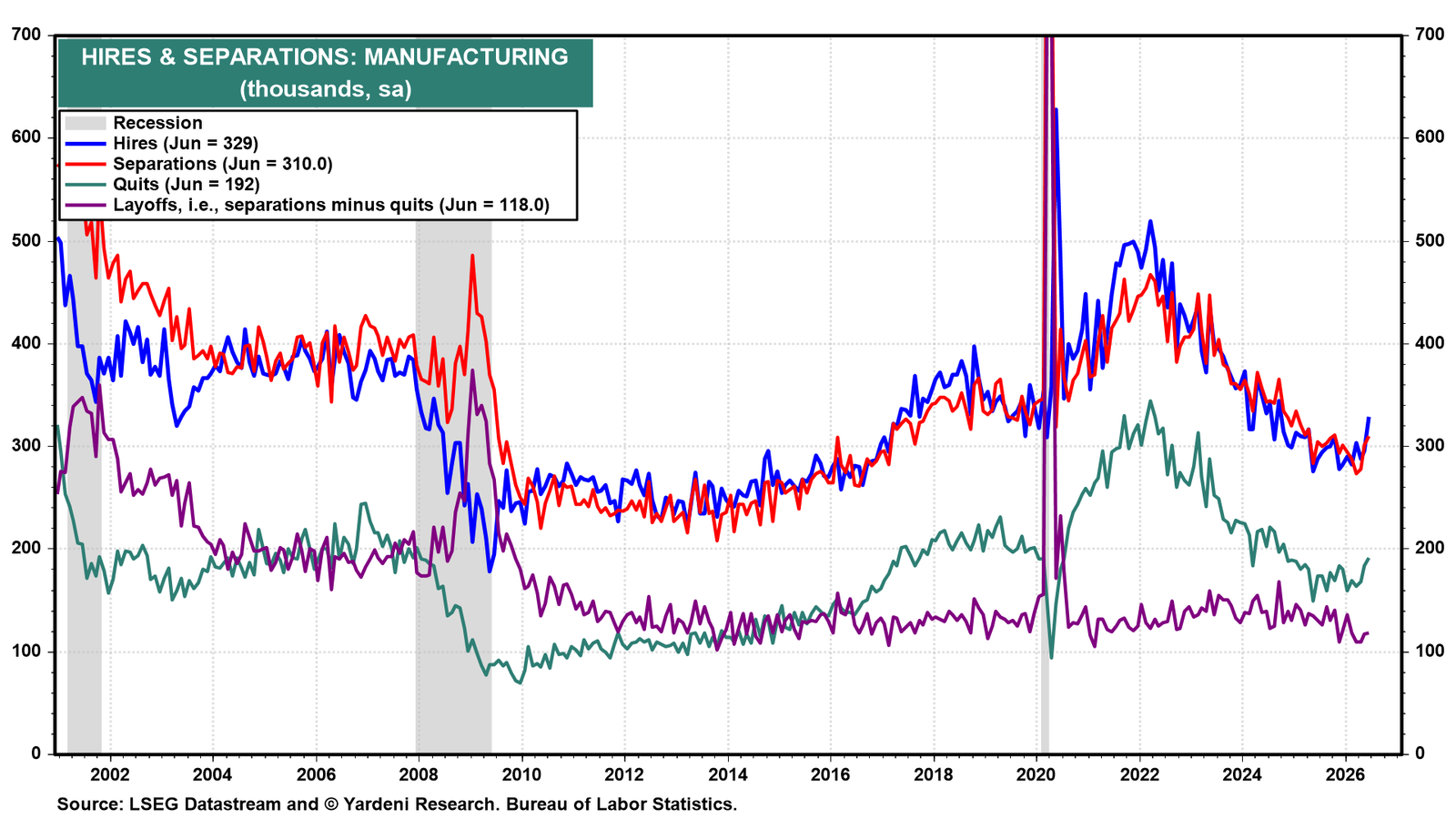
Labor demand is strengthening in manufacturing. During June, hires rose to their highest pace since September 2024, while quits reached their highest since October 2024, reflecting the sector's rebound amid the ongoing AI buildout and onshoring (chart).
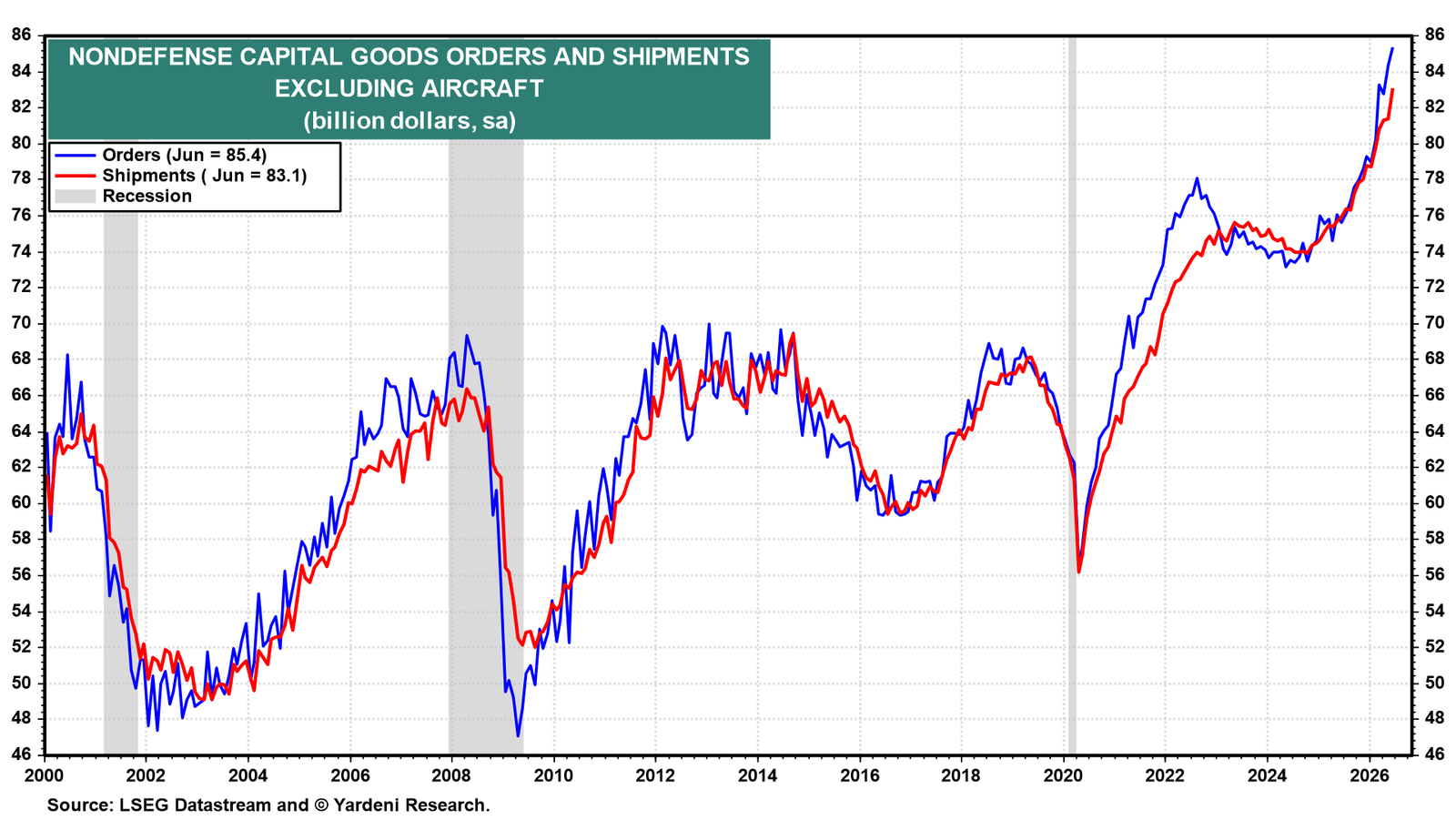
(4) Durable Goods Orders. Capital spending remained strong in June. Core capital goods orders and shipments reached fresh record highs that month. They were up 13% and 9% y/y, respectively, underscoring strong business investment tied largely to the ongoing AI infrastructure buildout and onshoring (chart).
Durable goods orders continued to rise to new record highs across the major industries (chart).
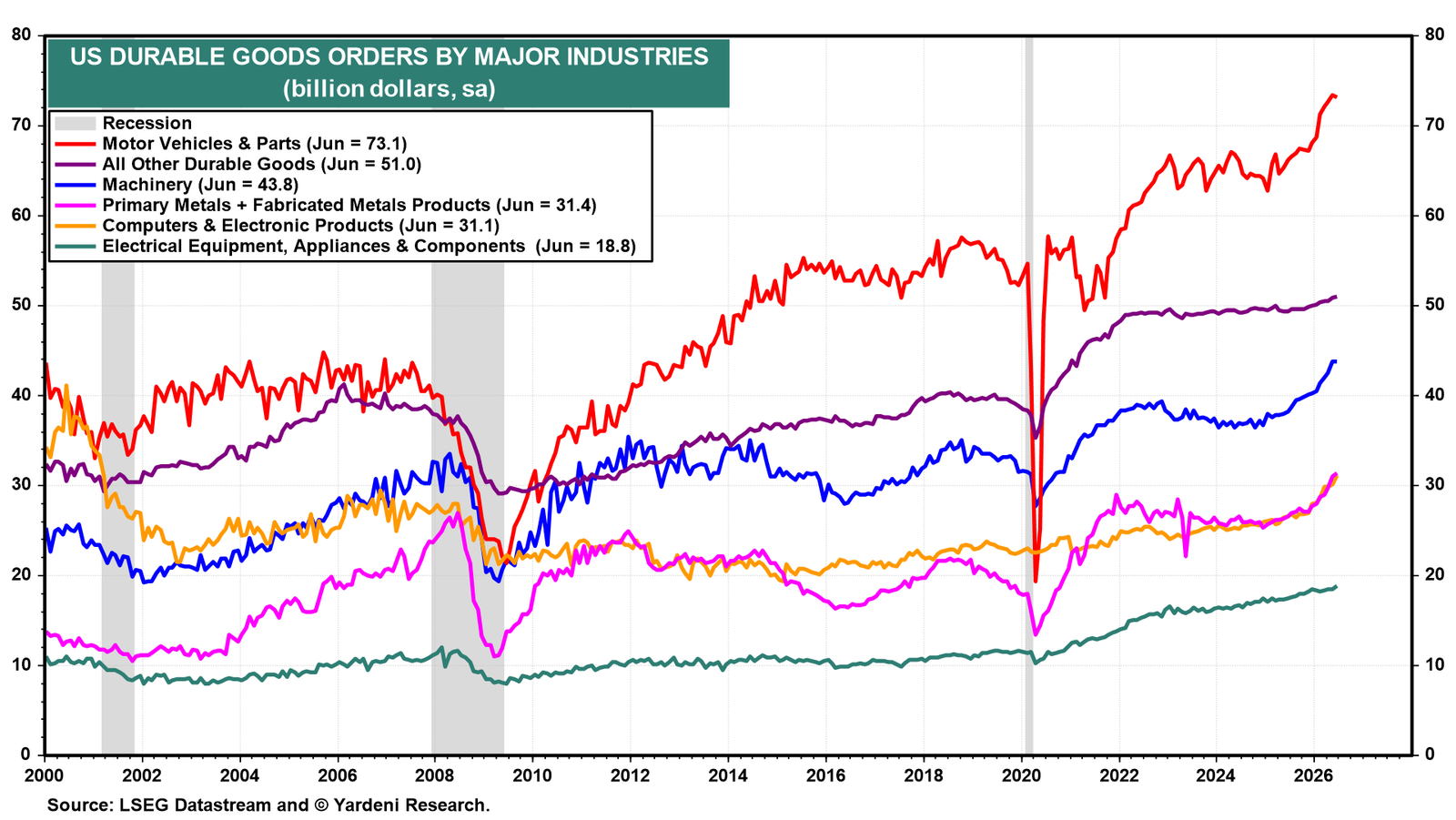
Particularly noteworthy is the recent acceleration in machinery orders. The details suggest that the AI buildout is in full swing, with orders for industrial machinery, construction machinery, power equipment, and cooling equipment all climbing to record highs (chart).
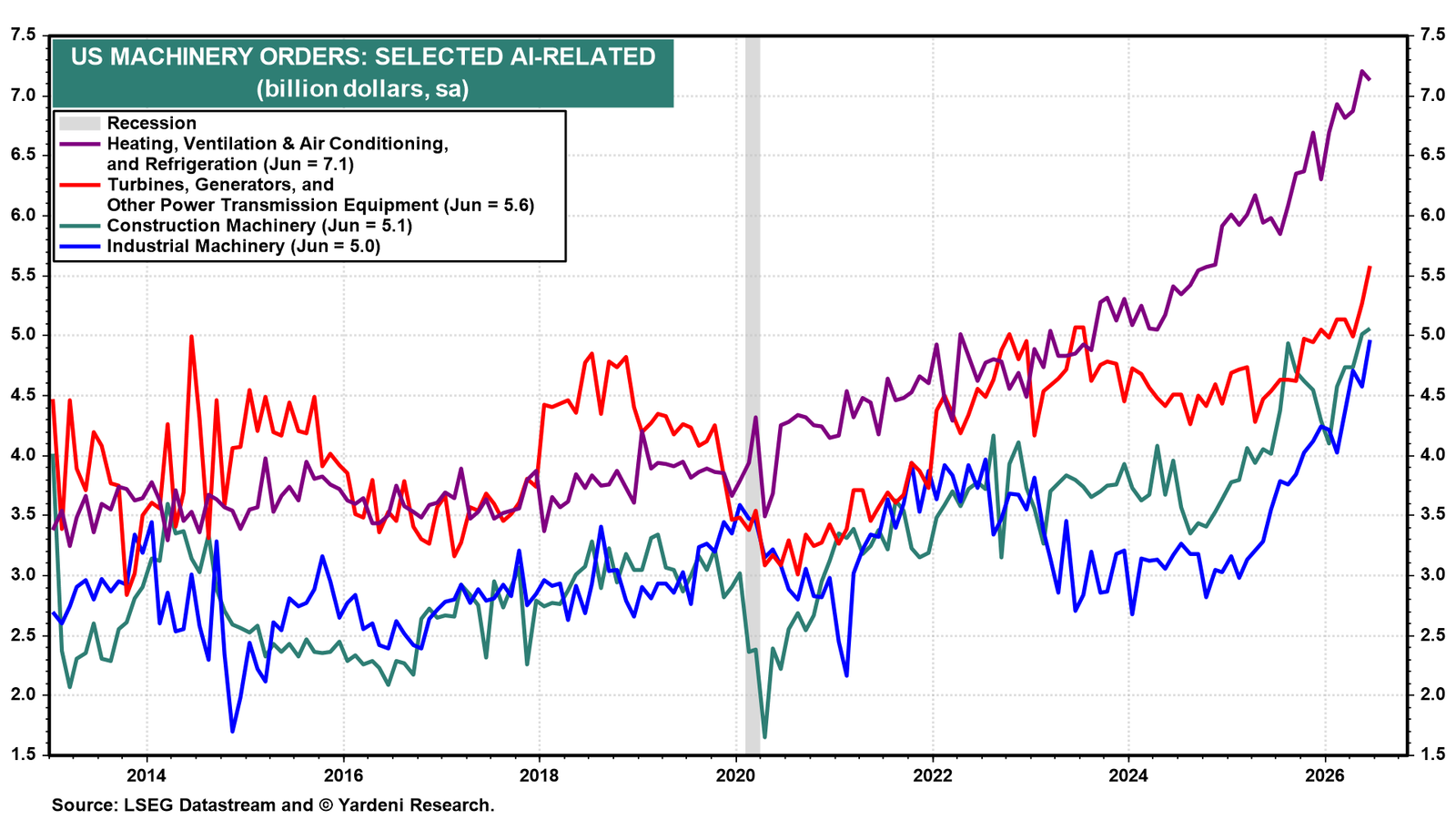
Caterpillar's latest earnings call reinforced the same message. Order backlog surged 92% y/y, construction sales rose 35%, and power and energy revenue increased 17%, reflecting strong demand for the equipment needed to build and power the infrastructure supporting AI. The AI buildout is increasingly leaving its mark across the industrial economy.
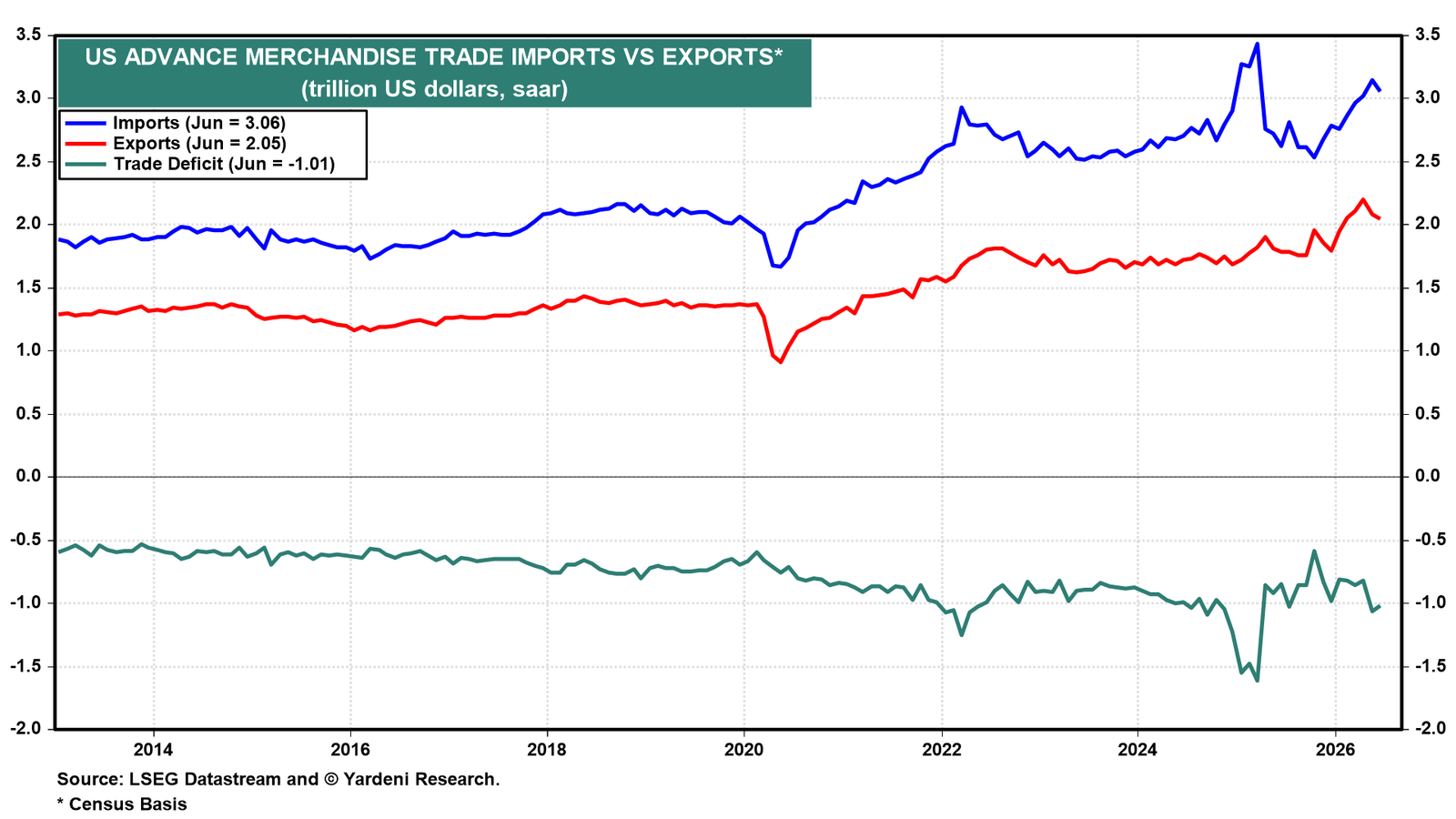
(5) Trade. The US trade deficit narrowed in June. Both imports and exports remained very strong (chart).
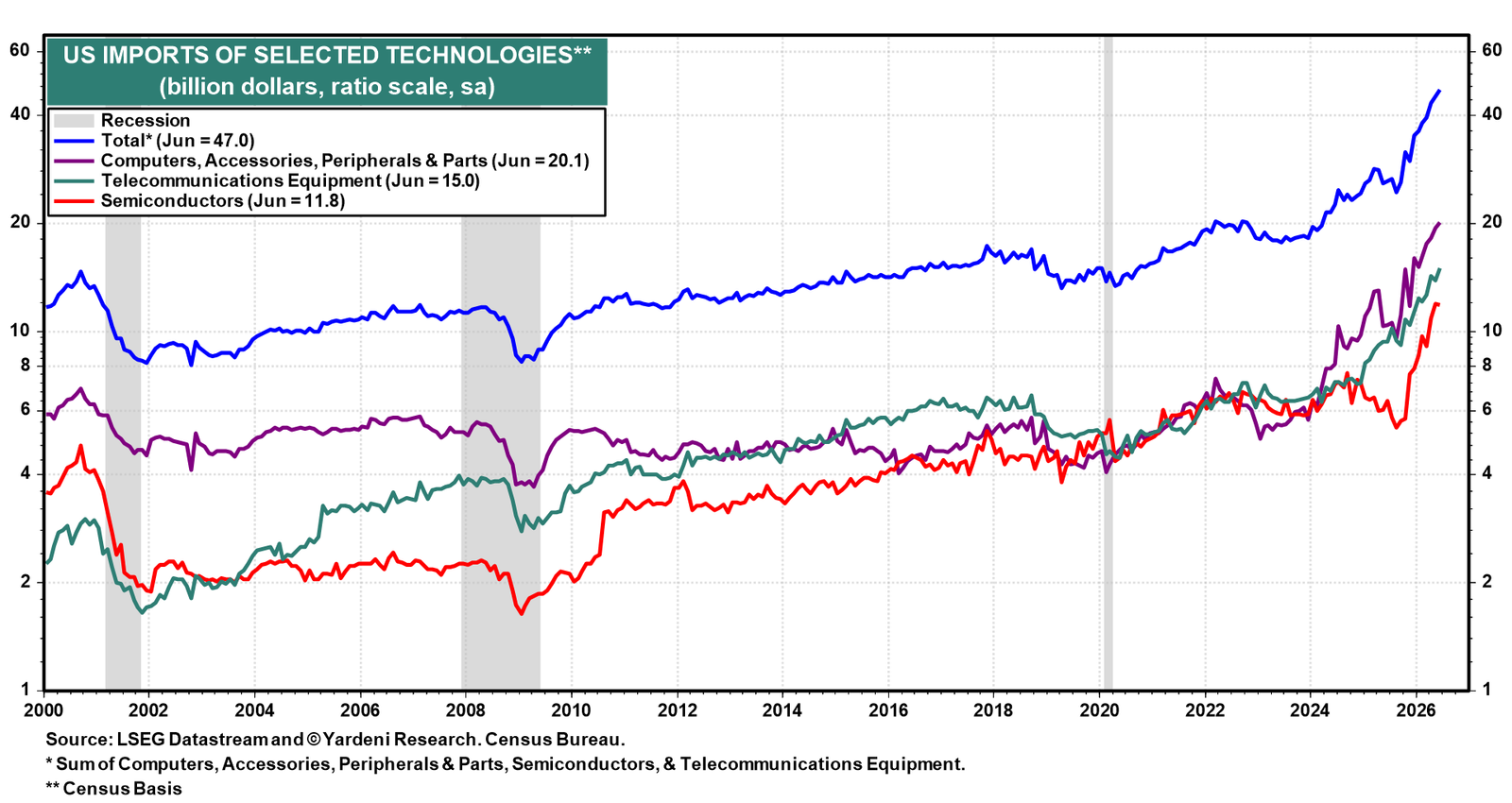
A closer look reveals the fingerprints of the AI buildout. Imports of computers, telecom equipment, and semiconductors have surged, helping to drive overall imports higher (chart).
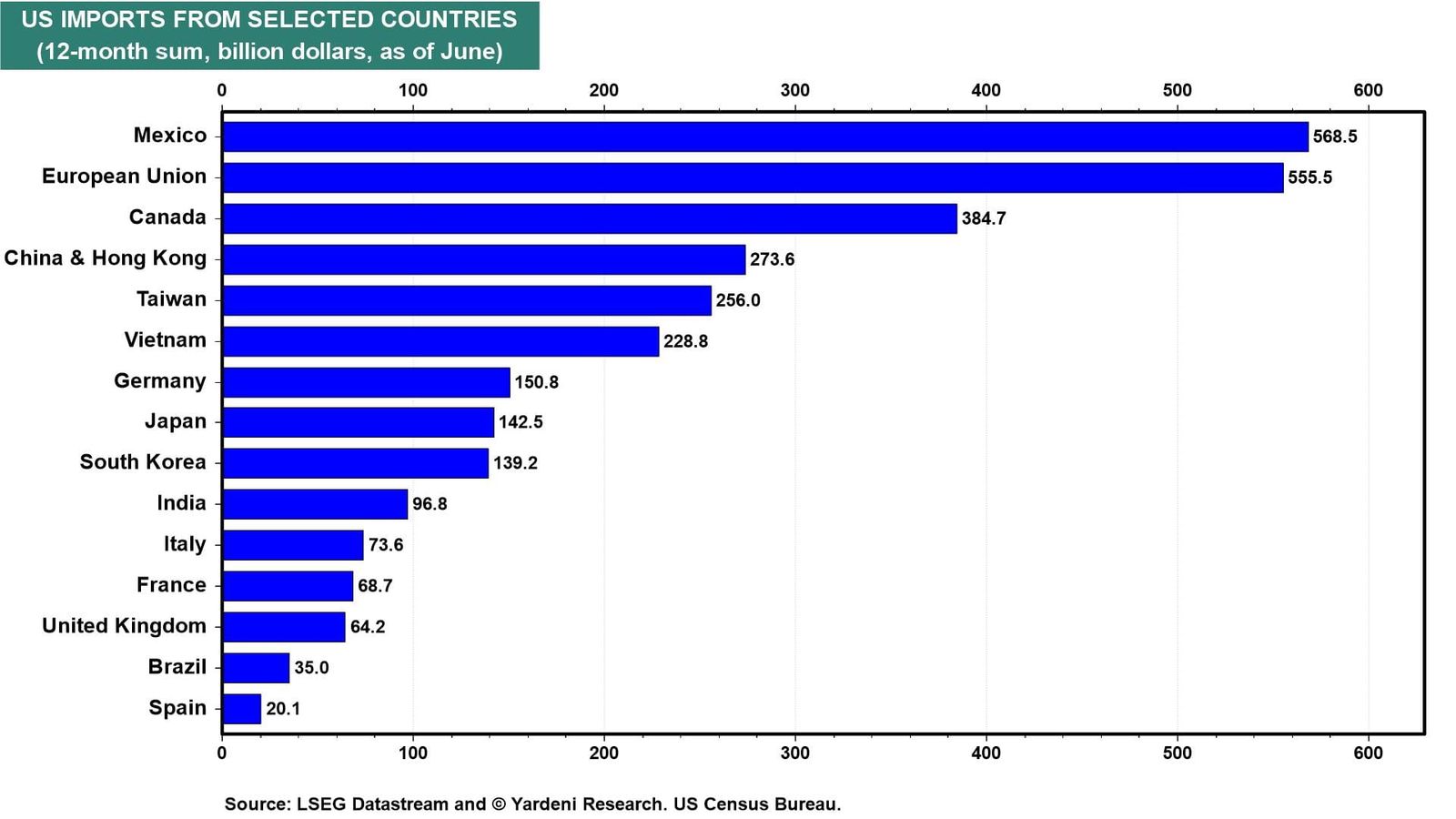
The US imports almost as much from Taiwan as from China (chart).