In Mission: Impossible, Ethan Hunt is always given a nearly impossible mission to accomplish. The objective is crystal clear, the deadline is urgent, and a plan is quickly formulated to achieve the mission. Like Hunt, President Donald Trump, Fed Chair Kevin Warsh, and Treasury Secretary Scott Bessent have clear missions. Their plans for accomplishing these missions are less clear.
Despite these uncertainties, the S&P 500 rose today to 7,600.50, nearly matching its June 2 record high. It's been a tug-of-war this summer between FEMO (fabulous earnings momentum) and these uncertainties. The S&P 500 has been fluctuating around 7,500 since May 14. We aren't convinced that the summer stall is over, but it might be.
I. Trump's Mission
It's Tehran's "last chance." So said President Donald Trump today about his latest decision to pause a massive military strike on Iran scheduled for this past weekend. Presumably, bombs will drop again if the latest round of negotiations doesn't deliver a peace deal quickly that opens the Strait of Hormuz and denuclearizes Iran. Oil prices fell, and stocks rallied impressively on the news today (chart).
However, Iranian Foreign Ministry spokesperson Esmaeil Baqaei explicitly stated that no direct negotiations with the United States are underway or scheduled. Tehran maintains that it has not sent negotiators abroad nor hosted foreign delegations for peace talks.
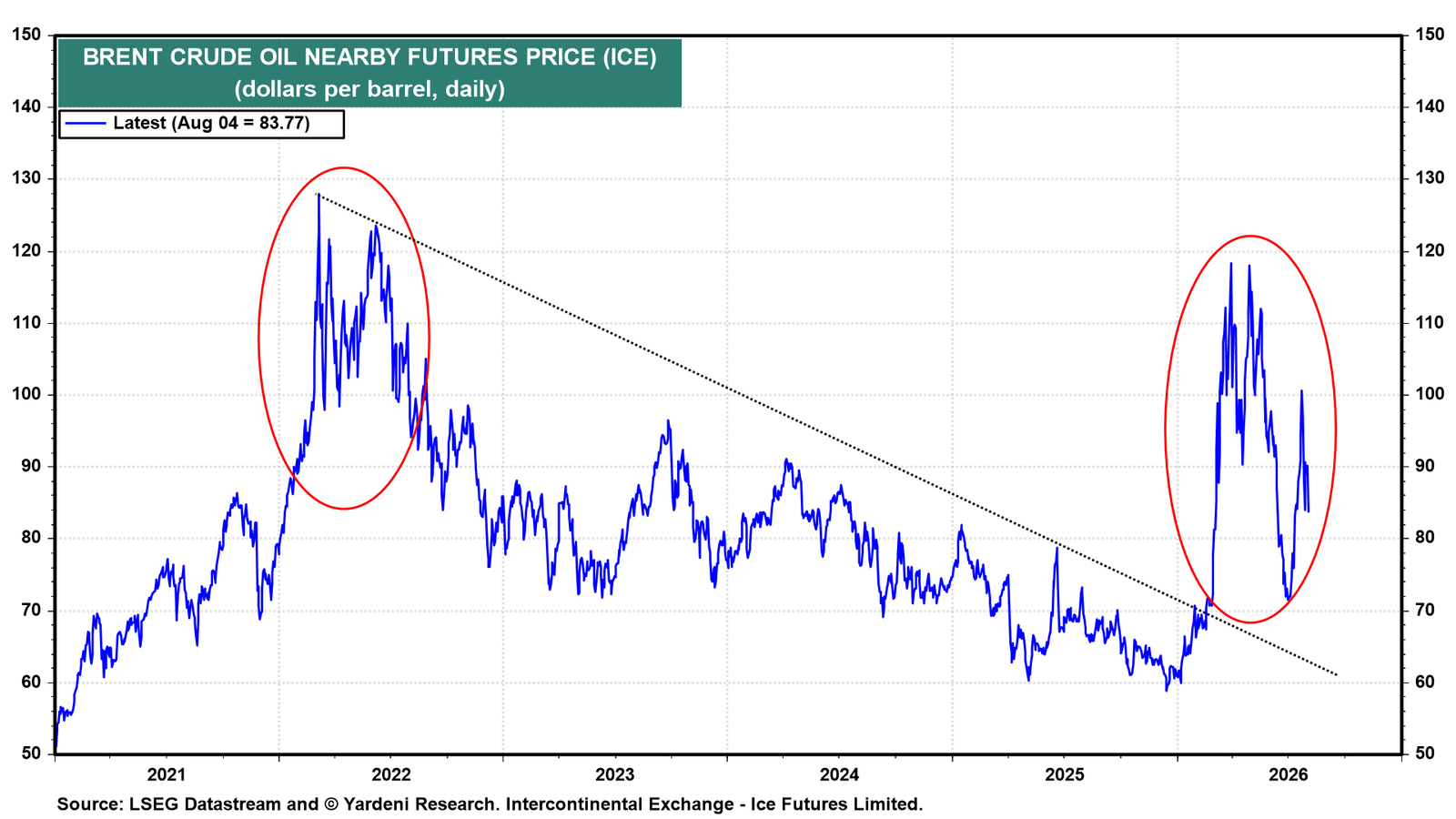
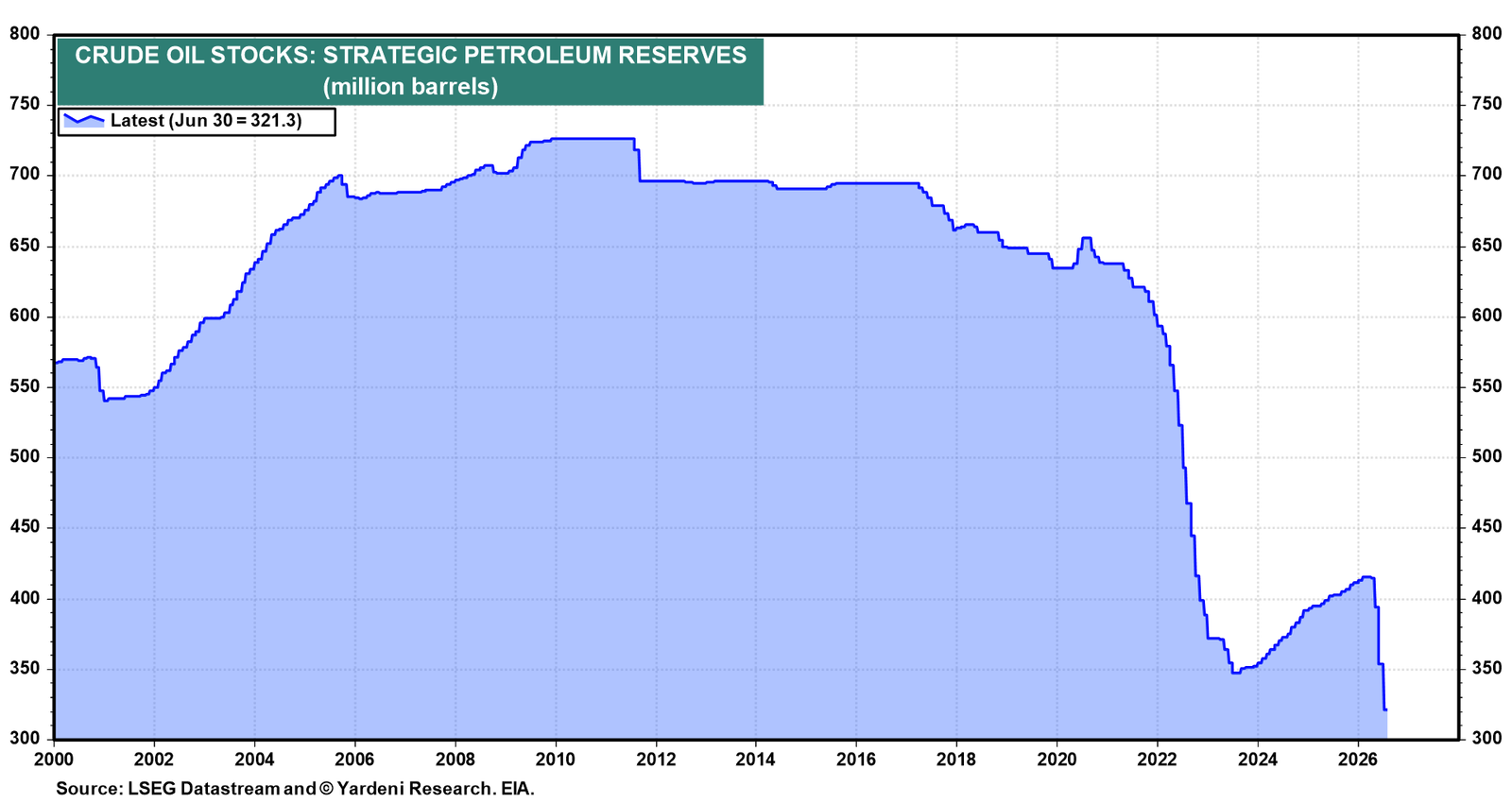
In an effort to keep oil prices from moving higher, the Trump administration is continuing to tap the Strategic Petroleum Reserves, which were already down sharply when they were tapped in 2022 in response to the Russian invasion of Ukraine.
II. Warsh's Mission
Fed Chair Kevin Warsh is like a secret agent with a clear mission to "deliver price stability." However, he is very secretive about his plan for doing so. He hasn't set a deadline for accomplishing his mission because his five special task forces are working on plans to reform the Fed. These plans won't be released until the end of this year.
So far, Warsh has only confirmed that the Fed's inflation target is still 2.0%. Investors are struggling to understand the what, when, and how of the mission to get there. What inflation measure is the Fed targeting? When does he expect inflation to return to 2%? How exactly does he plan to get there? His task forces are working on answering those questions.
Some Fed watchers believe that Warsh wanted to raise the federal funds rate (FFR) at the end of July, but couldn't get enough FOMC votes to do so. As Fed chair, he didn't want to reveal his ineffectiveness by joining the three dissenters who favored a rate hike. Other Fed watchers think that Warsh doesn't want the Fed to tighten until after the midterm elections. Another theory is that the Fed chair prefers that the bond market tighten credit conditions and hopes that inflation declines soon so that the Bond Vigilantes won't do too much damage.
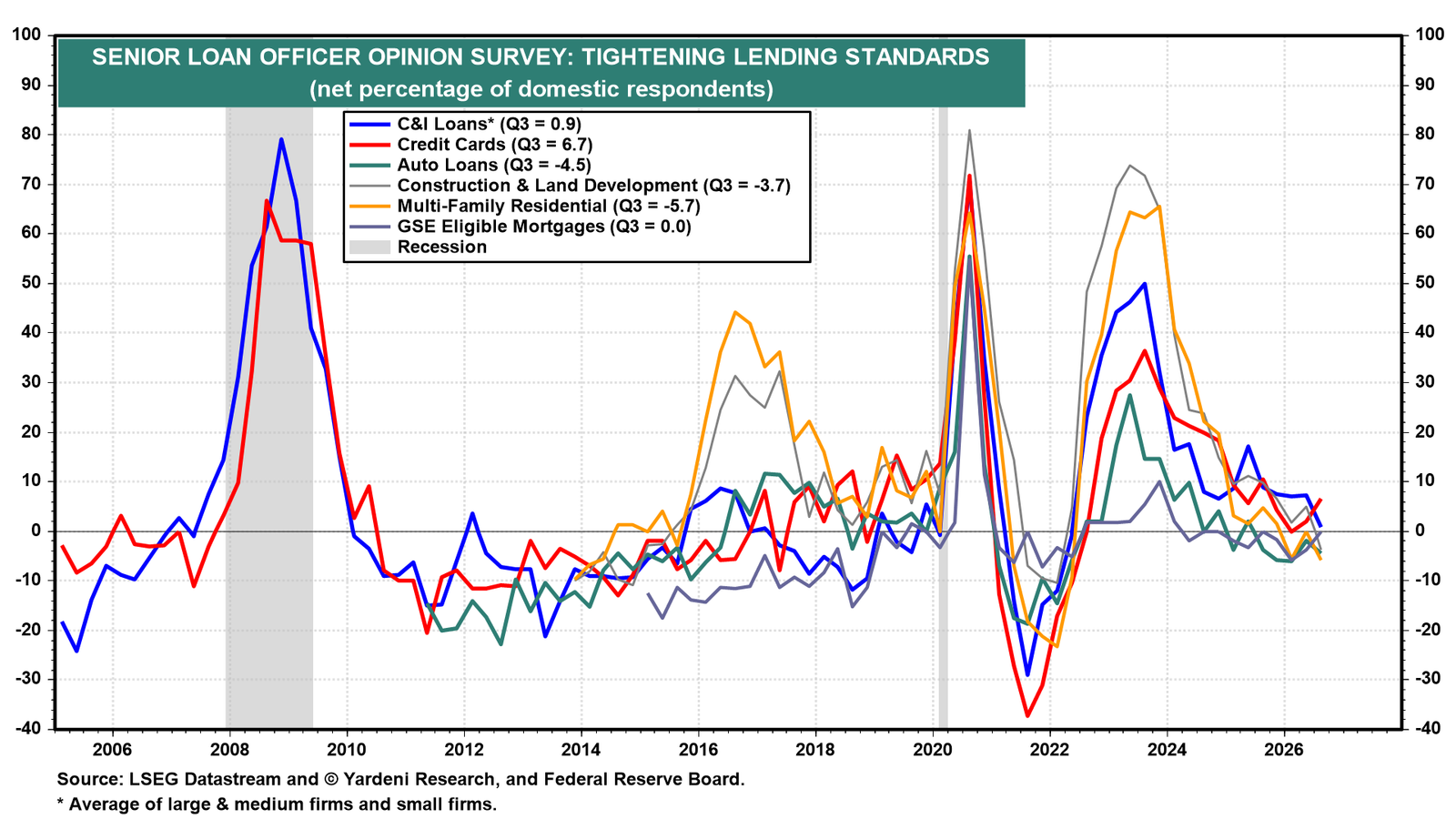
Meanwhile, today's Senior Loan Officer Opinion Survey, compiled by the Fed, shows that credit conditions remain relatively easy (chart).
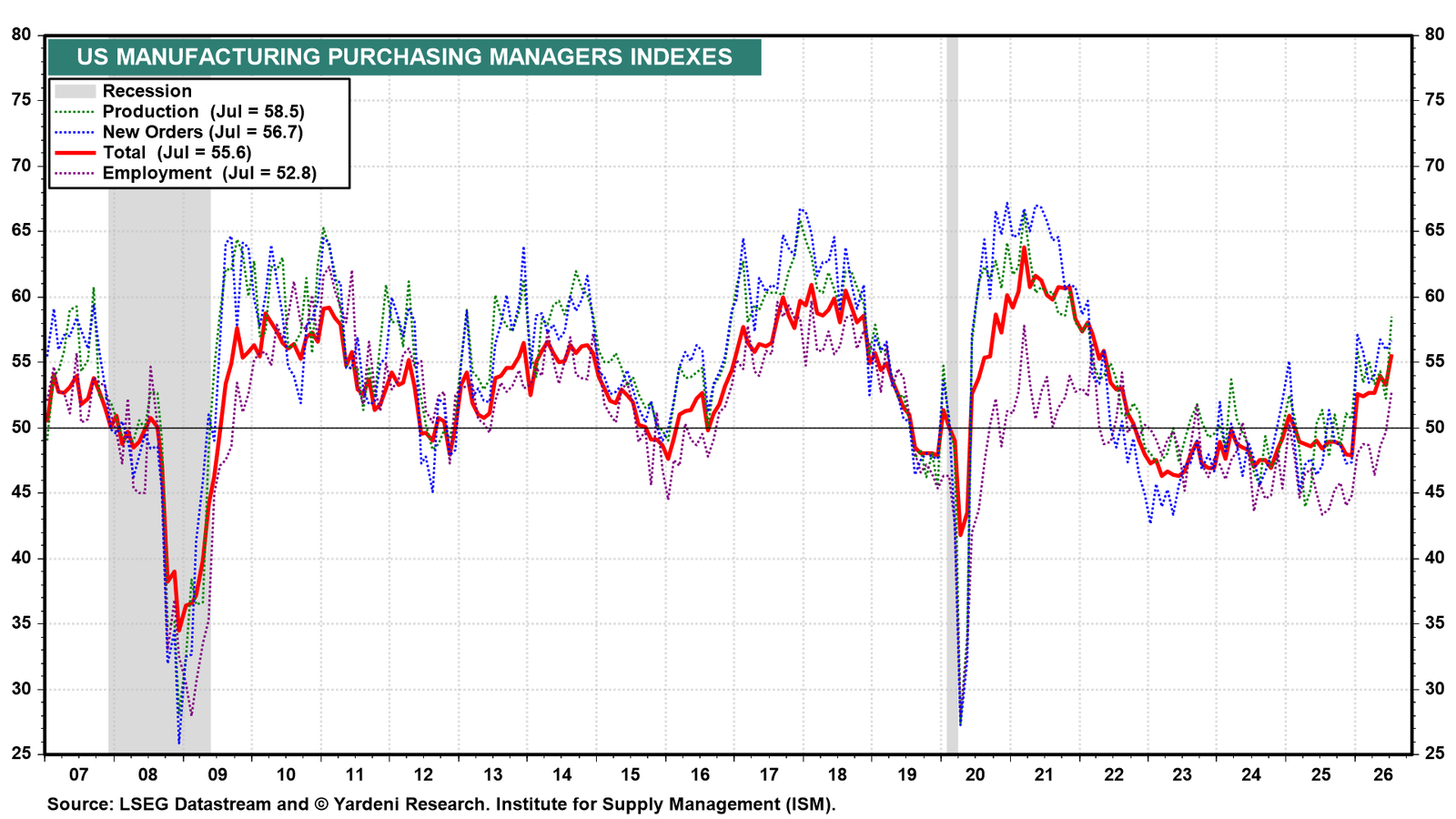
Today's manufacturing purchasing managers survey for July was very strong. The M-PMI rose to 55.6 in July, its highest reading since May 2022 (chart). Growth was broad-based, with the production index climbing to its highest level since late 2021 while new orders remained firmly in expansion territory.
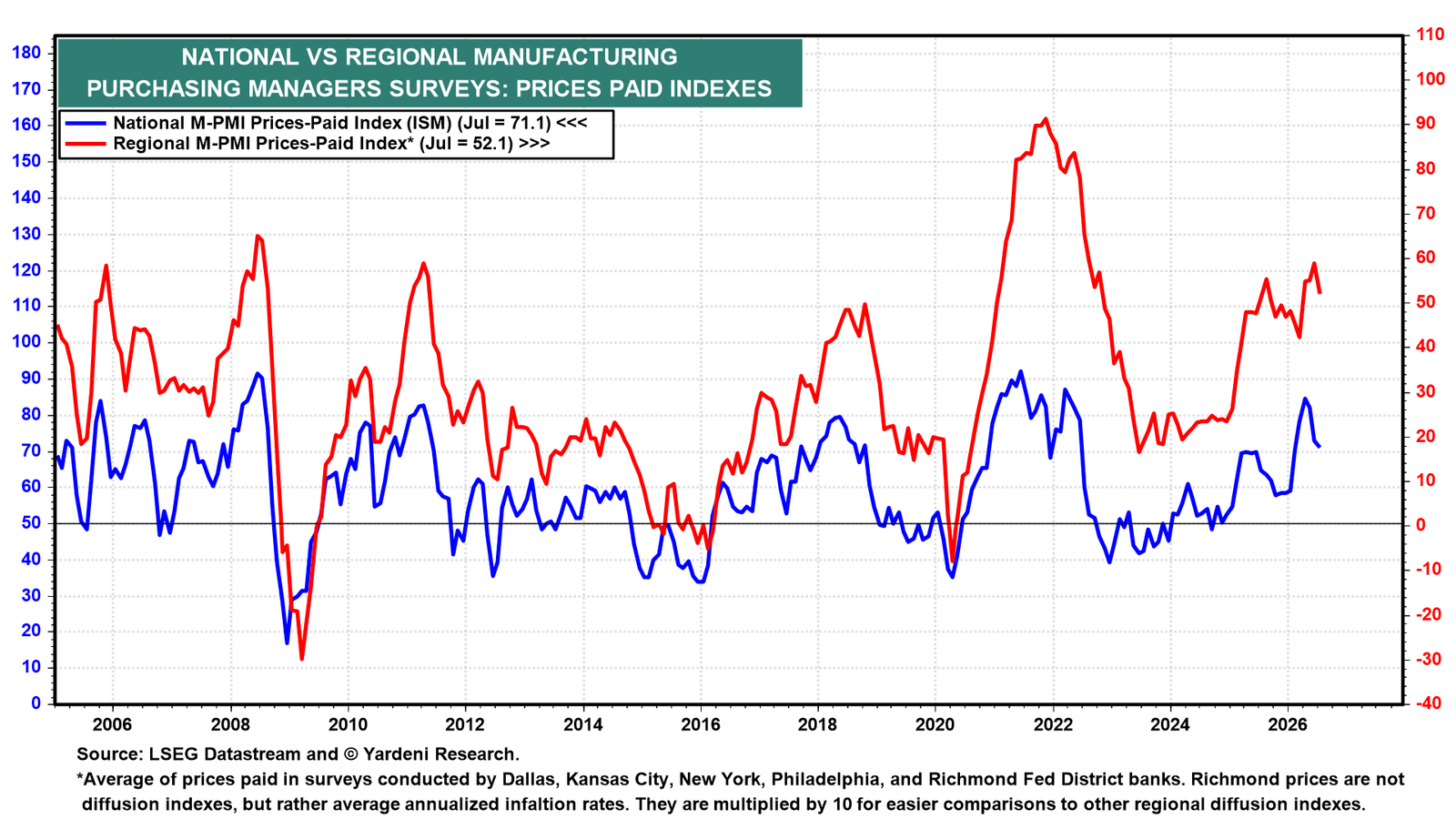
Both the ISM national and regional manufacturing surveys showed that prices-paid indexes moderated somewhat in July but remain elevated (chart).
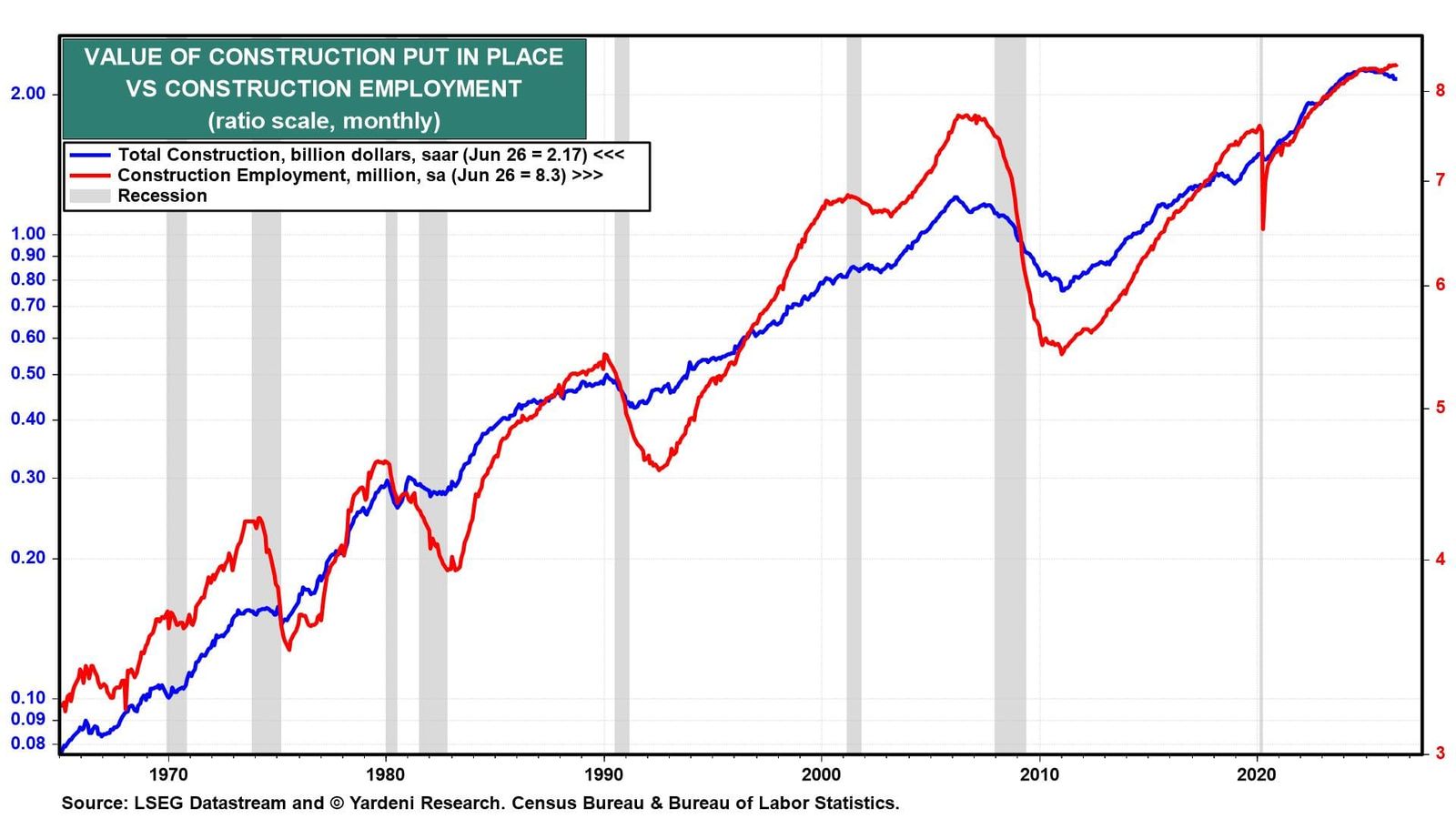
Today's construction spending report showed that it edged down 0.1% m/m from June. However, it remains near its recent record high, and construction employment rose to a record high in June (chart).
III. Bessent's Mission
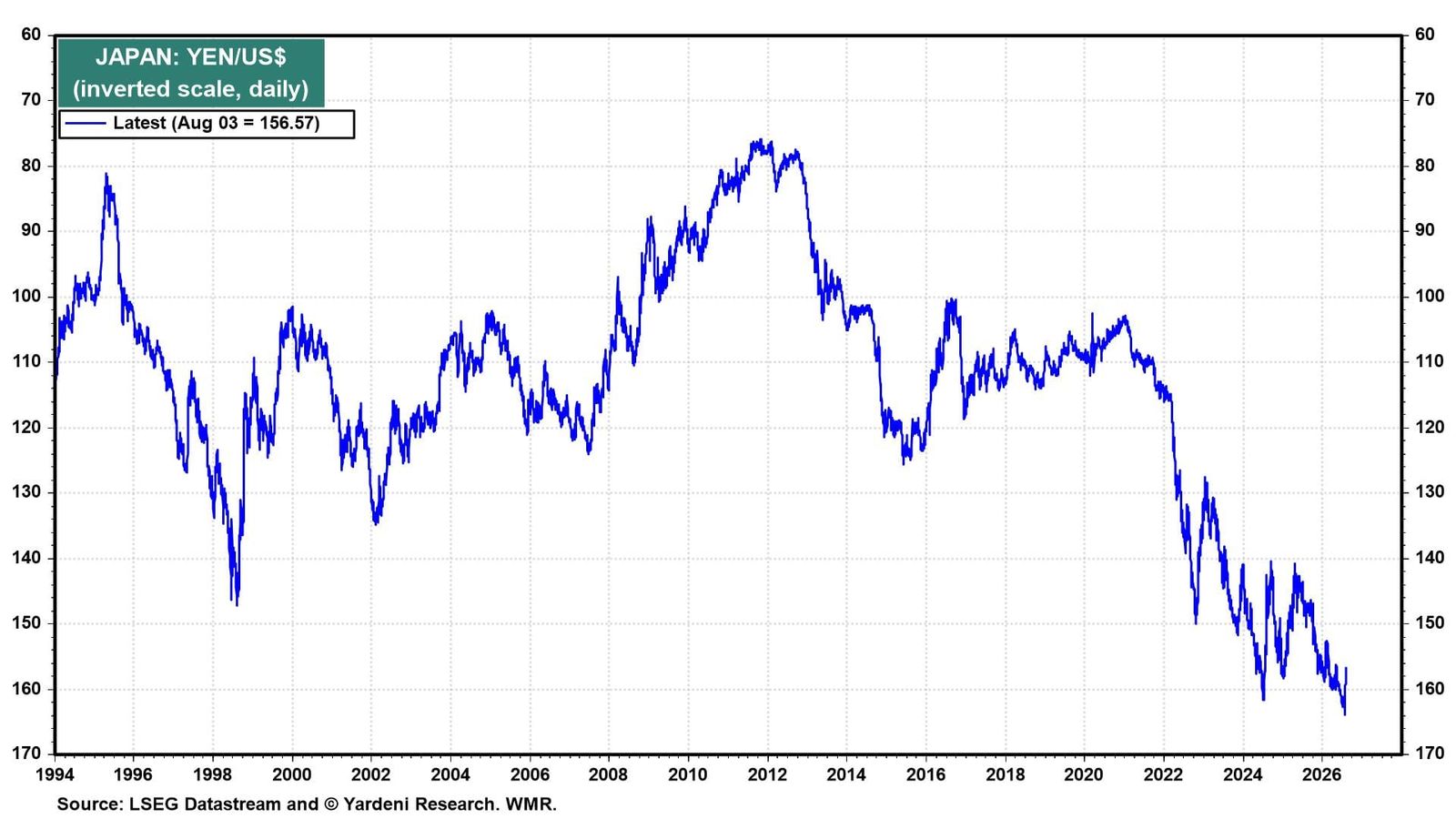
Today, the United States Treasury and the Ministry of Finance of Japan confirmed a rare joint yen-buying intervention to stem the rapid depreciation of the Japanese yen (chart). The currency had plummeted to fresh 40-year lows near 164 to the dollar, worsening domestic inflation pressures in Japan and causing broader spillover concerns across global capital markets.
The intervention took place on Thursday and Friday. Bank of Japan data indicates Japan deployed roughly $34 billion to $36.5 billion on Friday alone alongside direct US intervention, following an estimated $59 billion spent by Tokyo during solo operations on Thursday. The Federal Reserve Bank of New York, acting on behalf of the US Treasury Department, sold euros to purchase yen.
US Treasury Secretary Scott Bessent acted to support the yen because he feared that a collapsing yen risked disorderly sell-offs in Japanese Government Bonds (JGBs). Uncontrolled Japanese yield spikes threaten to spill into global markets, driving US Treasury yields higher.
The problem is that Japanese interest rates remain well below those in the United States. That's putting downward pressure on the yen. The new Japanese government fears that higher interest rates would offset measures aimed at stimulating the economy.