All eyes are on Wednesday’s FOMC meeting. Markets expect the Fed's monetary policy committee to leave the federal funds rate (FFR) unchanged at 3.50%-3.75%, with the CME FedWatch assigning roughly a 70% probability to no change and a 30% probability to a 25bps rate hike. Investors will be closely watching the FOMC statement, Fed Chair Kevin Warsh's press conference, and the degree of any dissent for clues about the policy outlook. Given the economy’s continued resilience and persistent inflation pressures, there is a reasonable chance that two hawkish regional Fed bank presidents, Lorie Logan and Beth Hammack, dissent in favor of a rate hike.
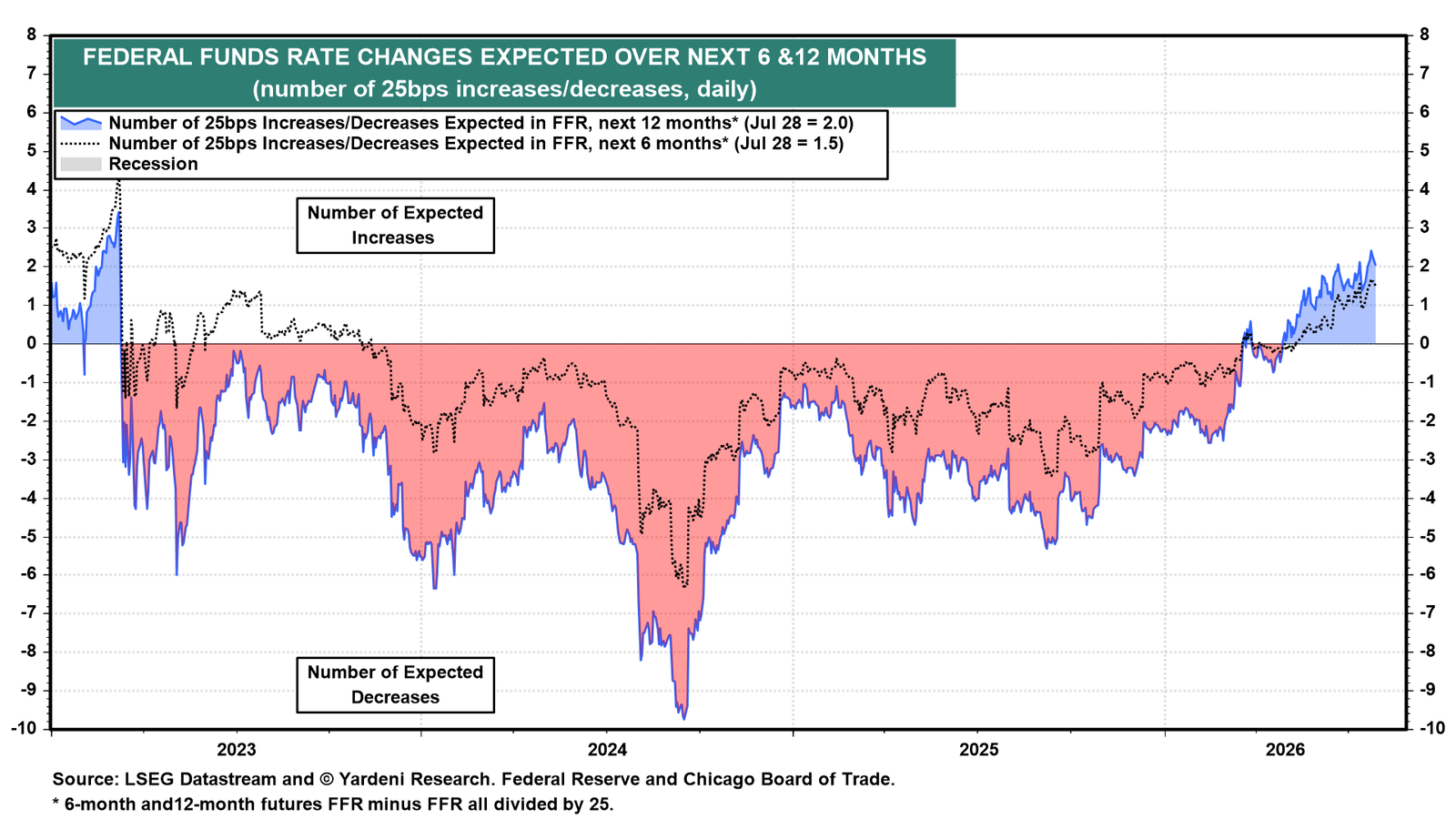
Recent data continue to suggest that inflation risks outweigh labor market risks. Consumer spending remains robust, the labor market is balanced, and manufacturing activity is rebounding, boosted by the AI investment boom and onshoring. As a result, the FFR futures market continues to price roughly two 25bps rate hikes over the next 6-12 months (chart).
The latest batch of economic data gives policymakers little reason to worry about economic weakness. Instead, it reinforces the view that an economy this resilient could transmit recent inflationary shocks more broadly. These shocks include supply-chain disruptions in the Middle East, another round of Trump's tariffs, and soaring semiconductor prices.
Consider the following:
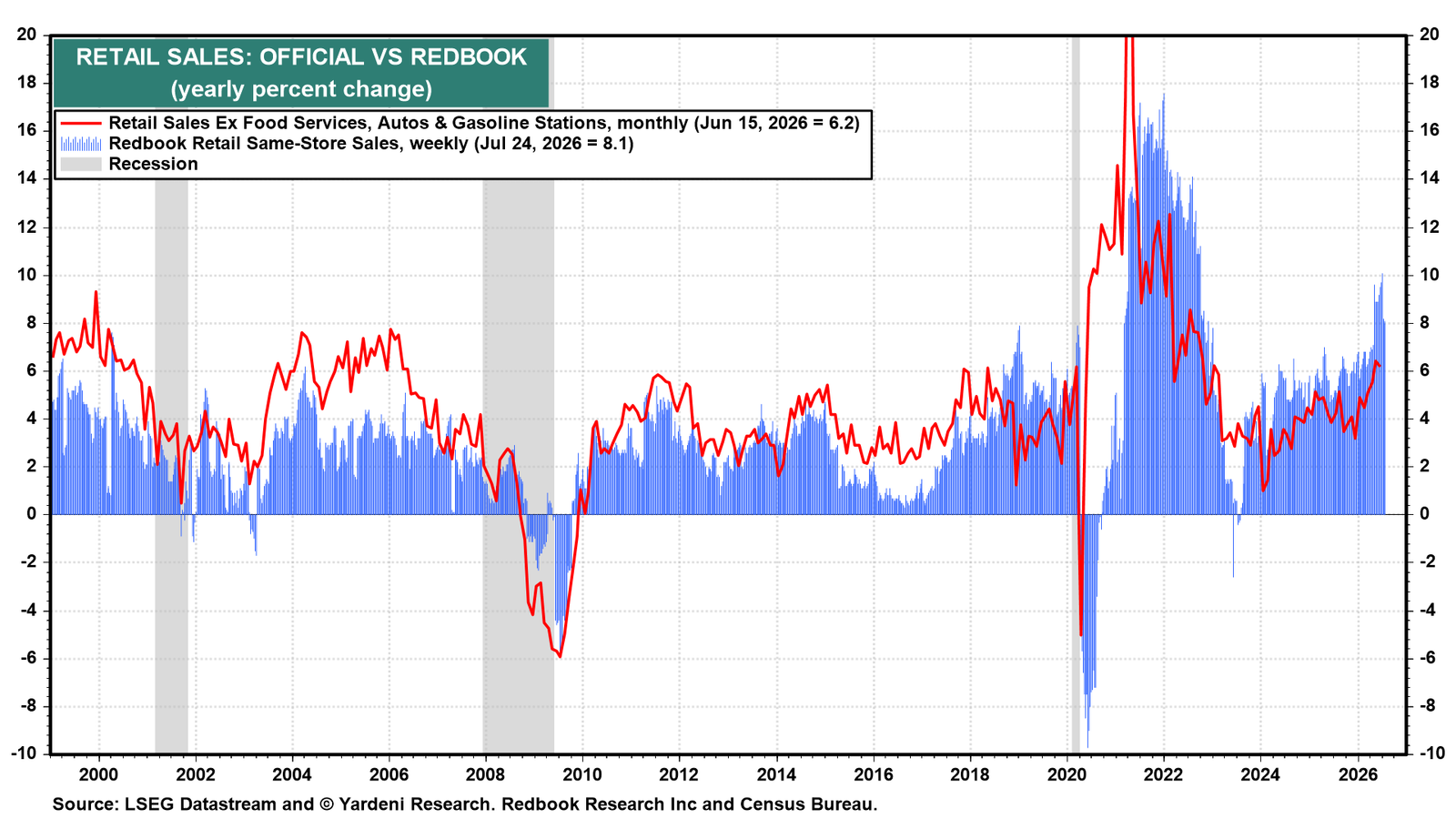
(1) Consumer spending. Redbook same-store retail sales rose 8.1% y/y in the week ending July 24, rebounding after a temporary pullback from the exceptionally strong gains during the World Cup this summer (chart). Sales growth remains well above the 2025 average of 5.8% y/y.
Likewise, recent Q2 company earnings reports point to solid consumer spending. Royal Caribbean said that "demand for our vacation experiences continues to strengthen," noting that bookings remain at record prices and above year-ago levels. JetBlue highlighted "strong customer demand" despite higher fuel costs and fares. Hilton reported "strong second quarter results" and pointed to an improving US travel environment, with particularly strong business, group, and leisure demand. UPS reported a return to revenue and profit growth and said it entered the second half of the year with "strong momentum." Taken together, the latest corporate commentary confirms that households are still spending on travel and merchandise.
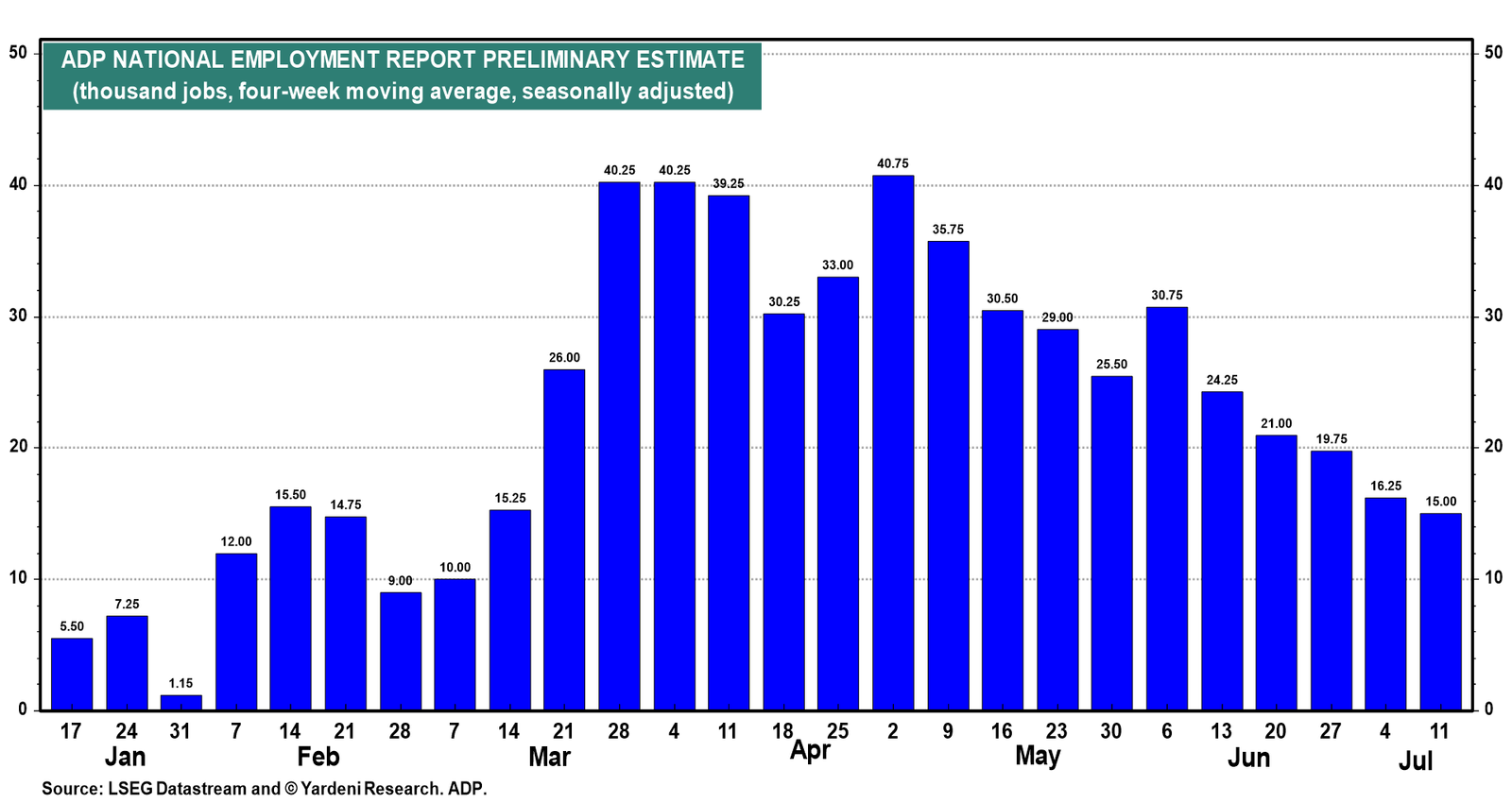
(2) ADP weekly job report. For the four weeks ending July 11, private employers added an average of 15,000 jobs per week (chart). While that marks a fifth consecutive slowdown in weekly hiring, the current pace is still consistent with monthly jobs growth of roughly 60,000, which is near our estimate of the breakeven rate needed to keep the unemployment rate stable at current low levels.
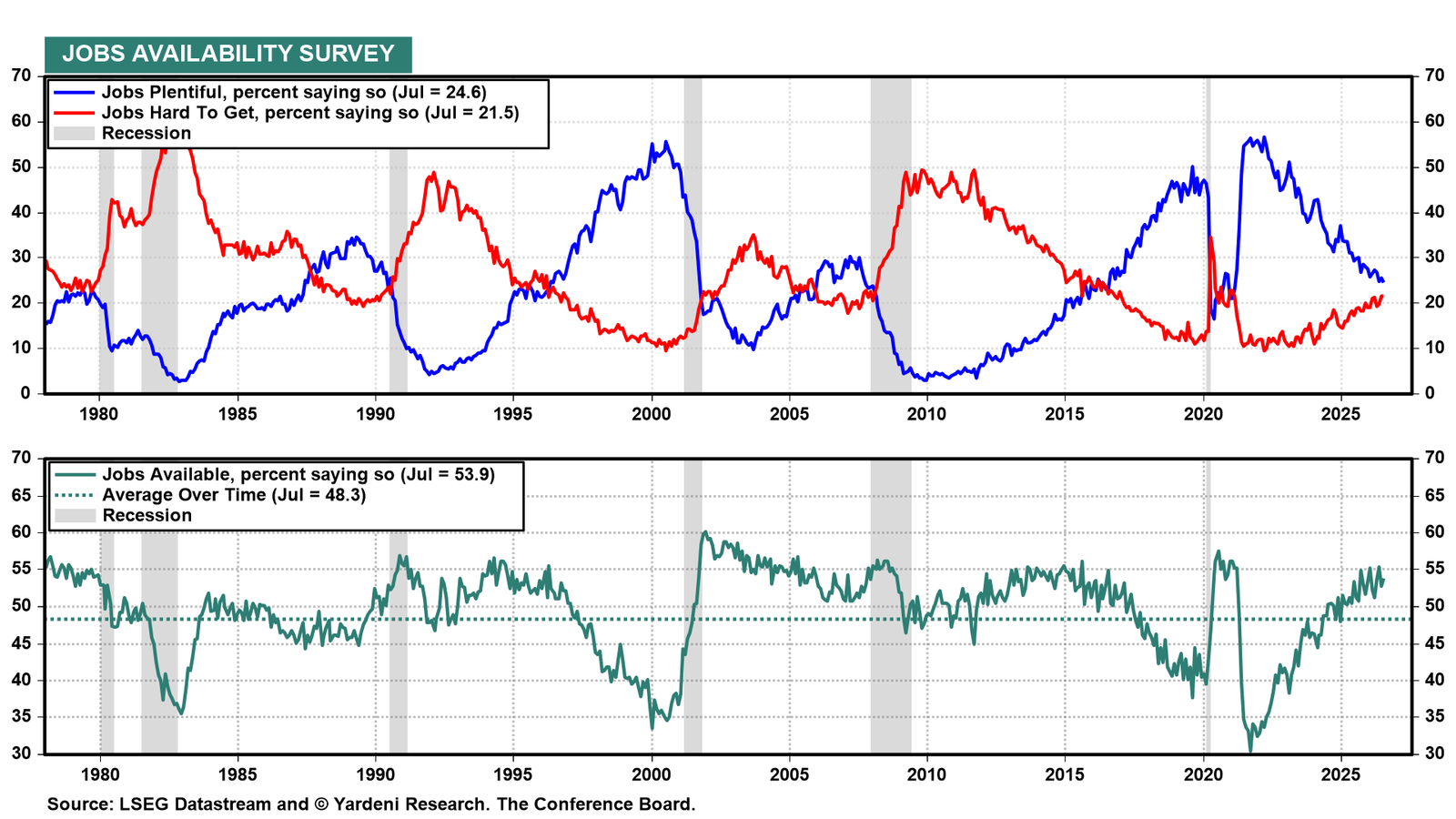
(3) Consumer confidence. The Conference Board’s July Consumer Confidence survey shows that the share of respondents saying jobs were plentiful or available dipped slightly to 78.5%, while the share saying jobs are hard to get edged up to 21.5% (chart). Although the latter measure remains on an upward trend, it is still well below levels typically associated with labor market stress.
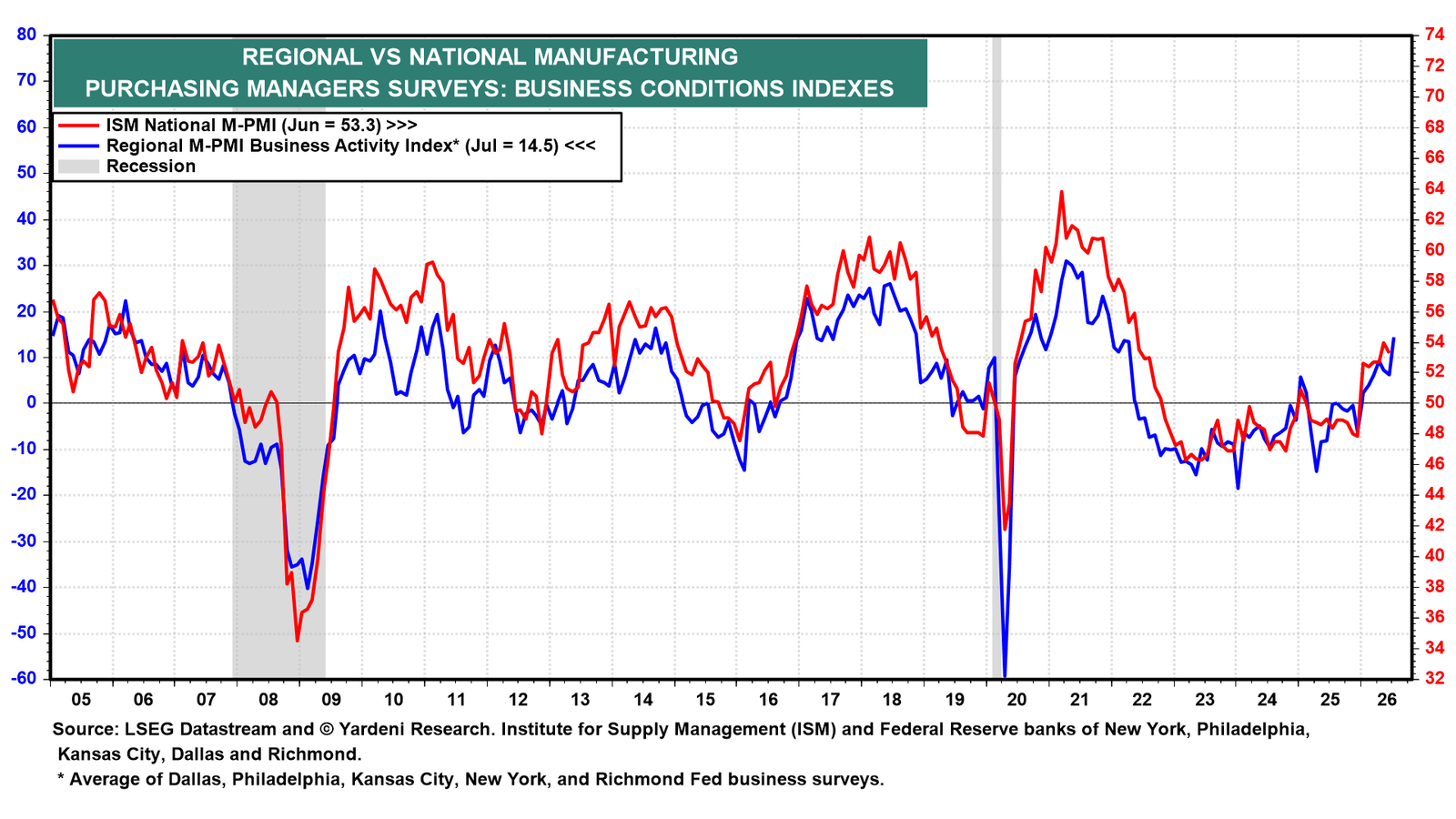
(4) Manufacturing. All of the regional business surveys conducted monthly by five of the 12 Fed district banks are now available through July. The Regional Manufacturing PMI rose to 14.5 in July, its highest reading since early 2022, suggesting that the national ISM M-PMI likely remained comfortably in expansion territory during the month (chart).
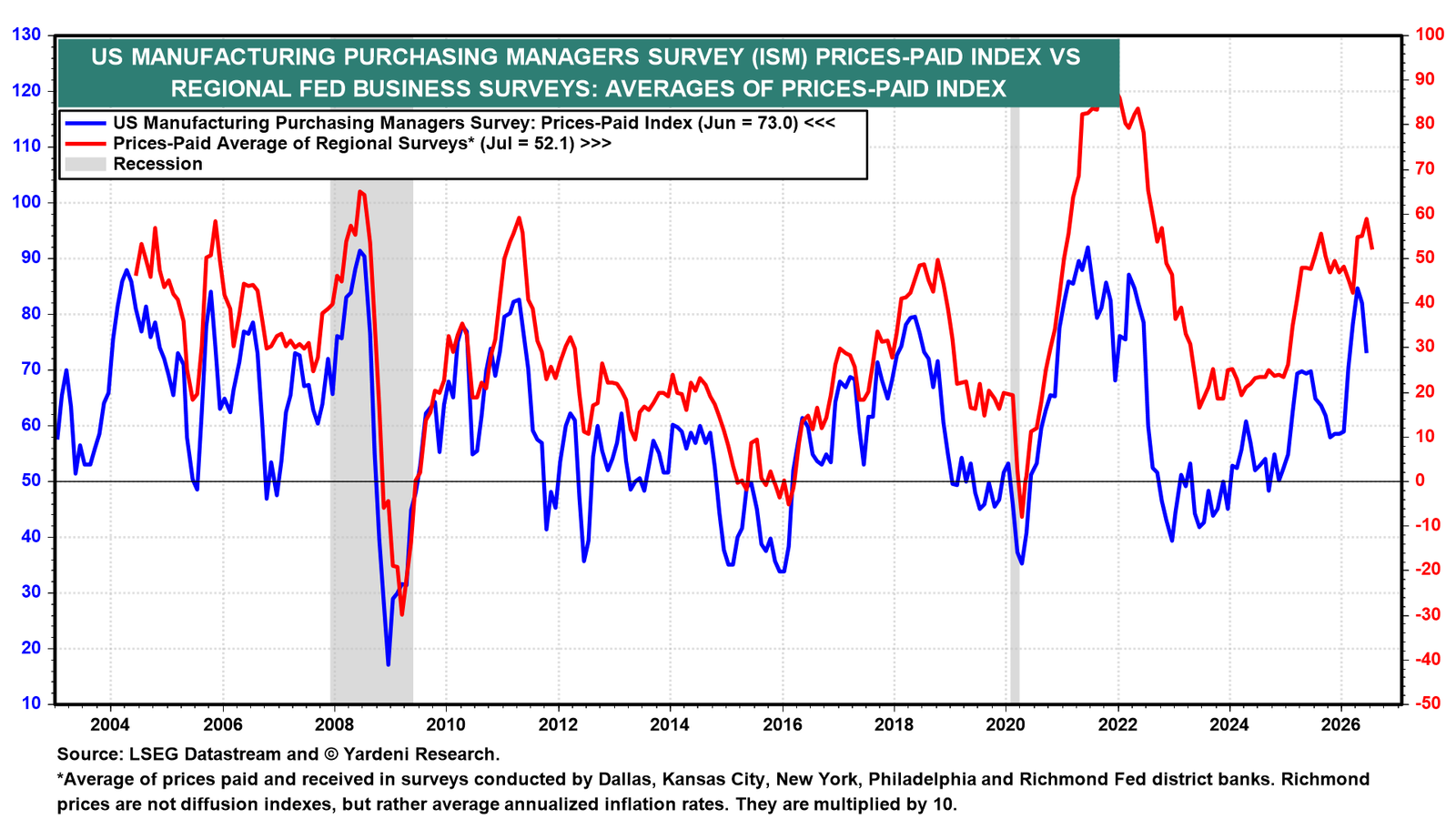
The regional average of the prices-paid indexes eased slightly to 52.1 in July but remained elevated, signaling that inflation pressures remain troublesome (chart).
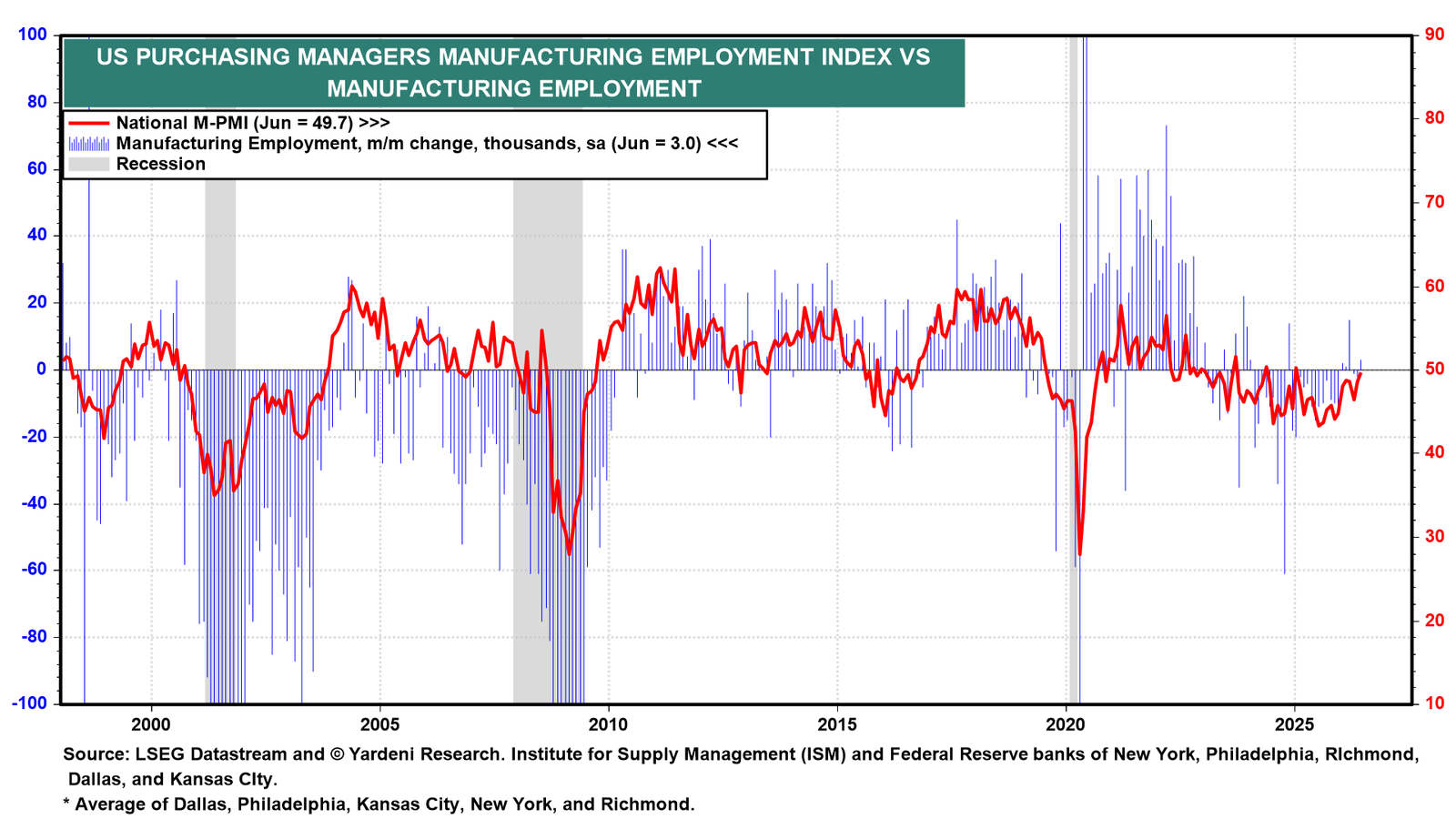
Regional manufacturing employment indexes remain in an upward trend, pointing to improving labor demand in the manufacturing sector (chart). The AI buildout is likely contributing to that strength, supporting hiring across the manufacturing supply chain.