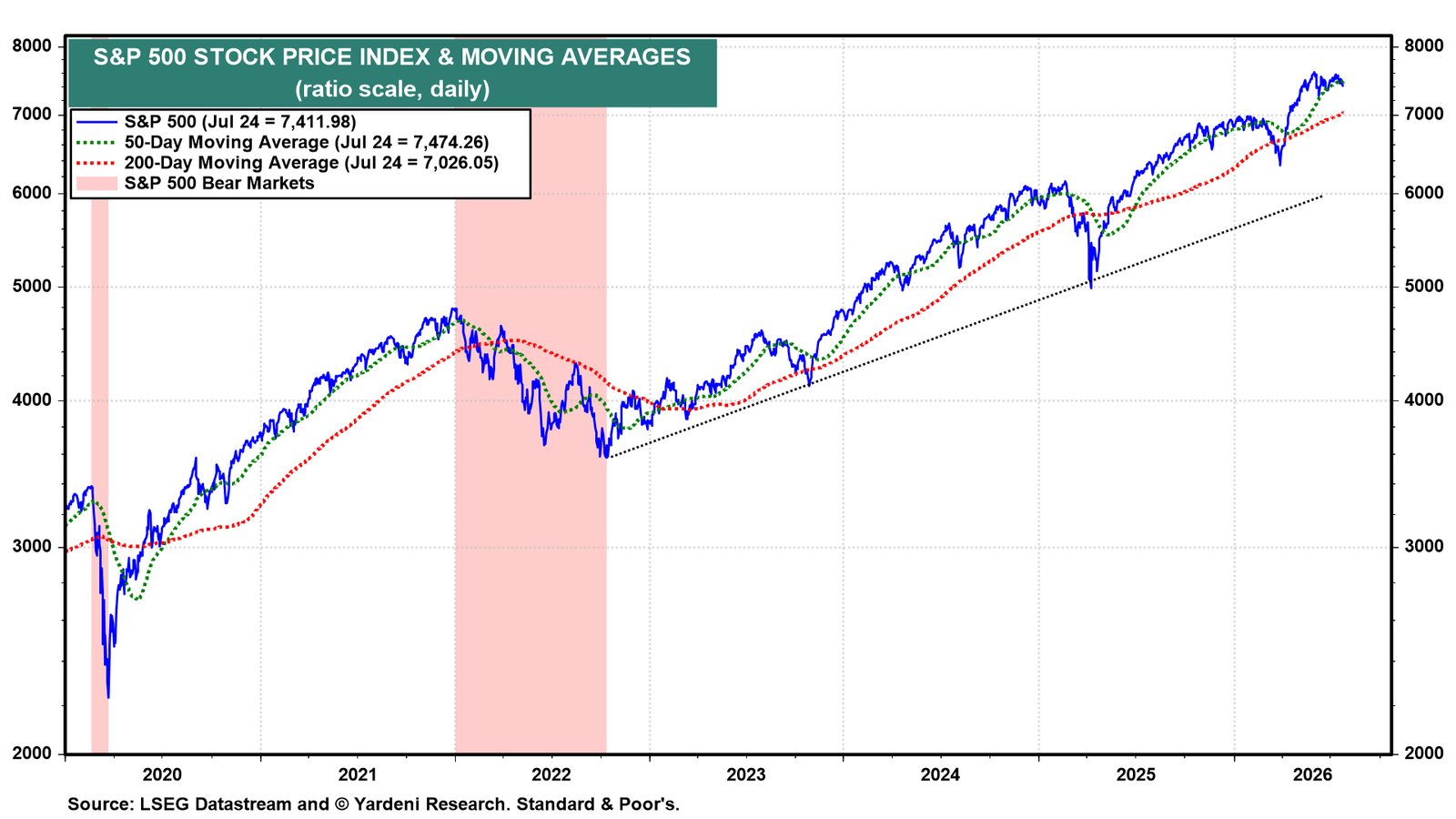
The S&P 500 has been holding up around 7,500 as the war in the Middle East escalates. It closed at $7411.98 on Friday, just below its 50-day moving average (chart). Alphabet and Tesla both reported great Q2 revenues on Thursday. Yet both stocks were crushed, down 6.9% and 14.5%, as free cash flow turned negative for both. Investors have decided that AI capital spending is a high, known cost with an unknown ROI.
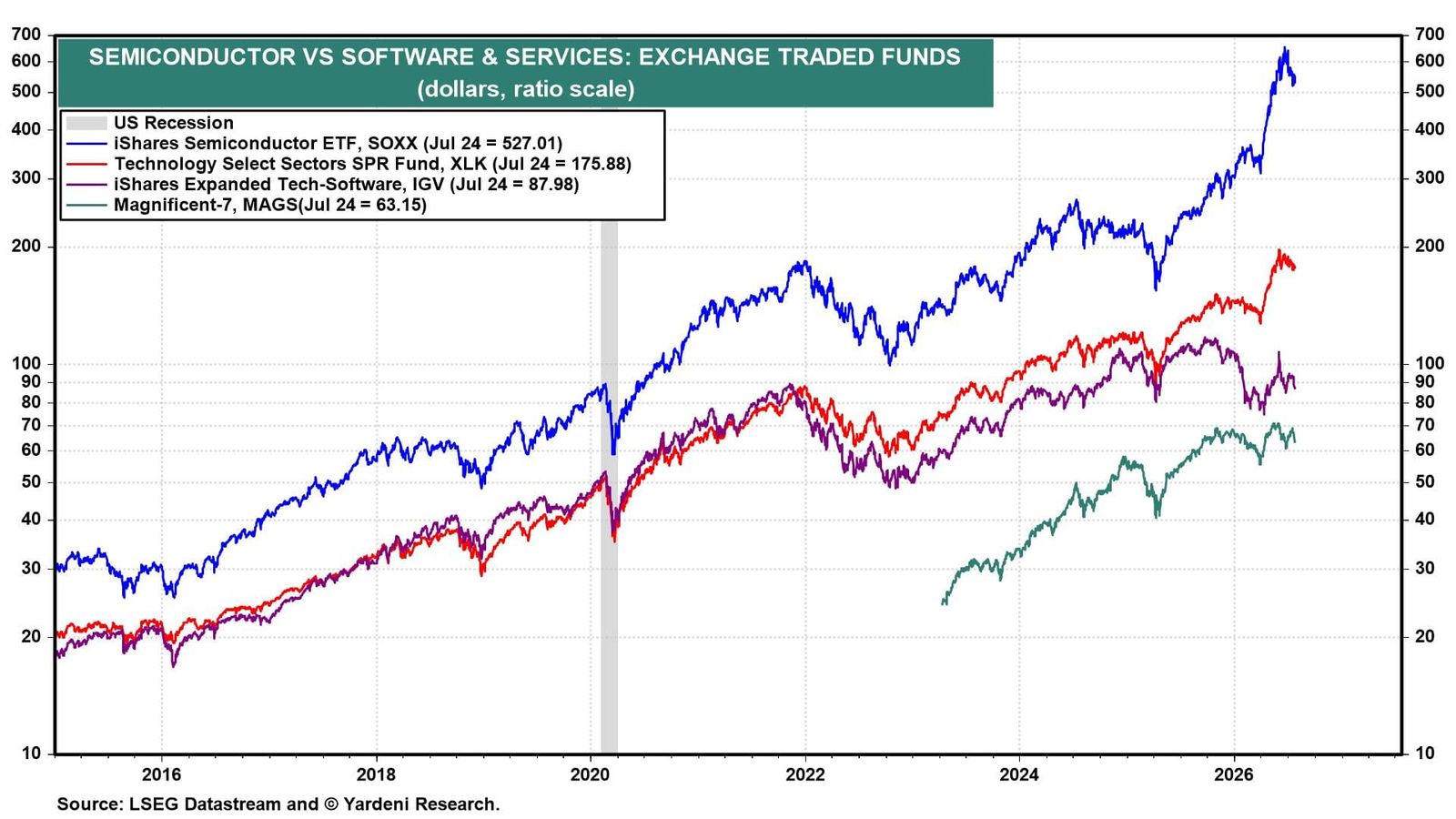
However, the hyperscalers' negative free cash flow has boosted the positive free cash flow of semiconductor companies. Nevertheless, semiconductor stocks gave back more ground this week. Even so, the iShares Semiconductor ETF (SOXX) closed Friday at $527.01, still 32% above its rising 200-day moving average (chart).
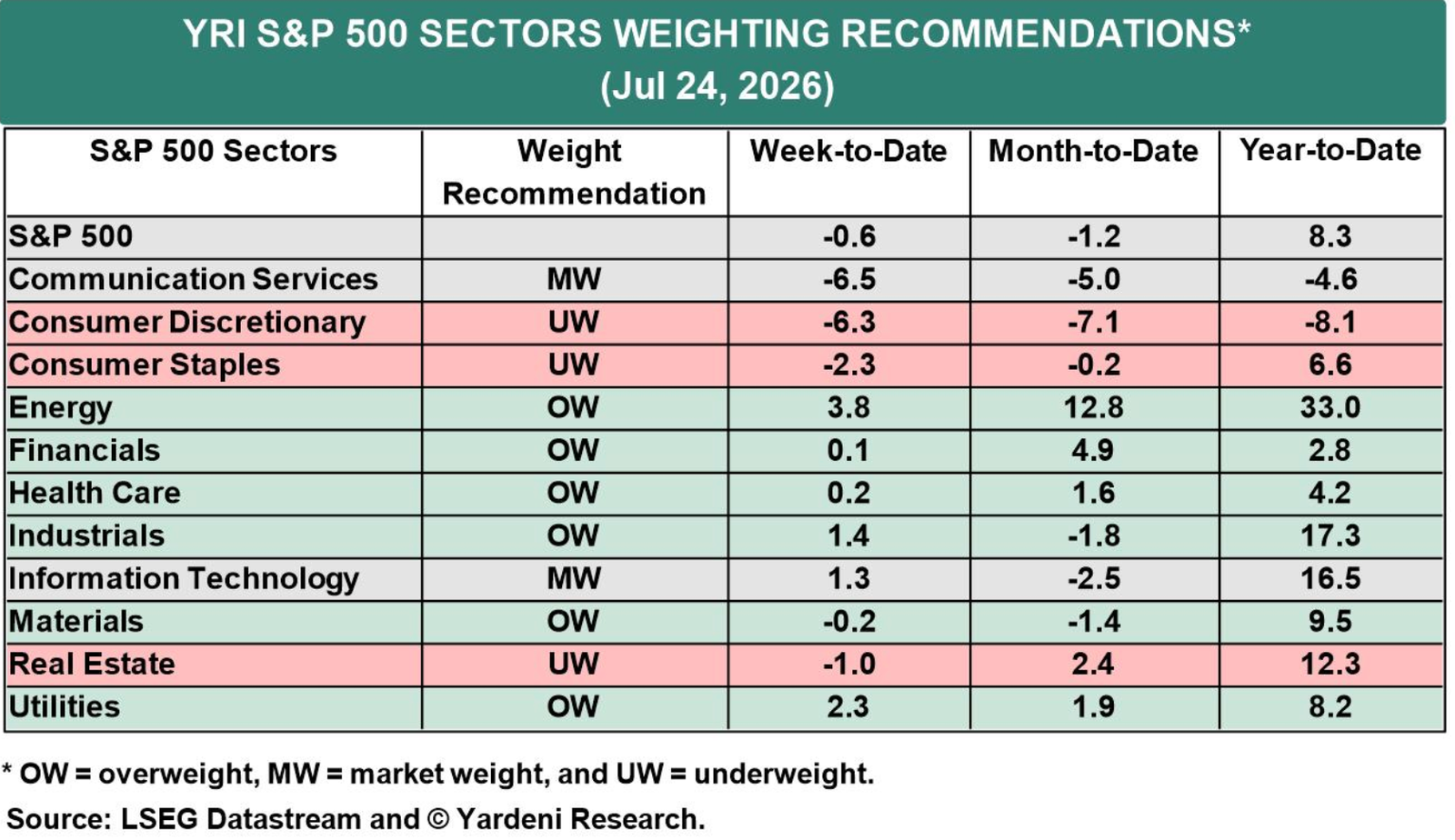
We downgraded the S&P 500 Information Technology sector to market weight on December 7, 2025. We continue our overweight ratings on the Energy, Financials, Health Care, Industrials, Materials, and Utilities sectors (table).
Here's what has gotten our attention recently among some of the sector trades:
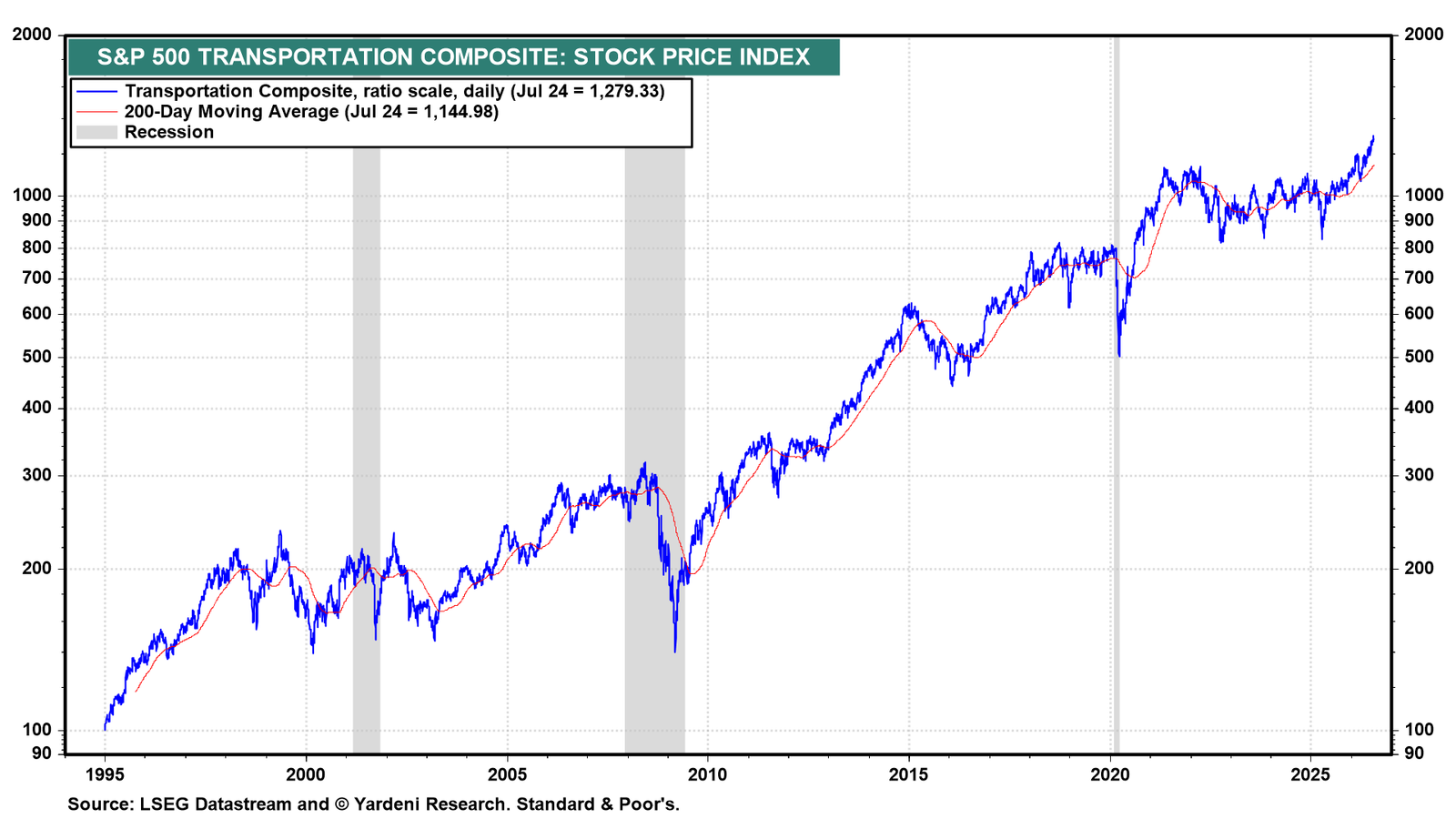
(1) Transportation: On the fast track. Dow Theory remains bullish. The Dow Jones Industrials Average and the Dow Jones Transportation Average remain in record-high territory. The S&P 500 Industrials sector (which includes the Transportation industries) is up 17.3% ytd, second only to S&P 500 Energy among all sectors. The Transportation composite is at a record high despite high fuel prices (chart).
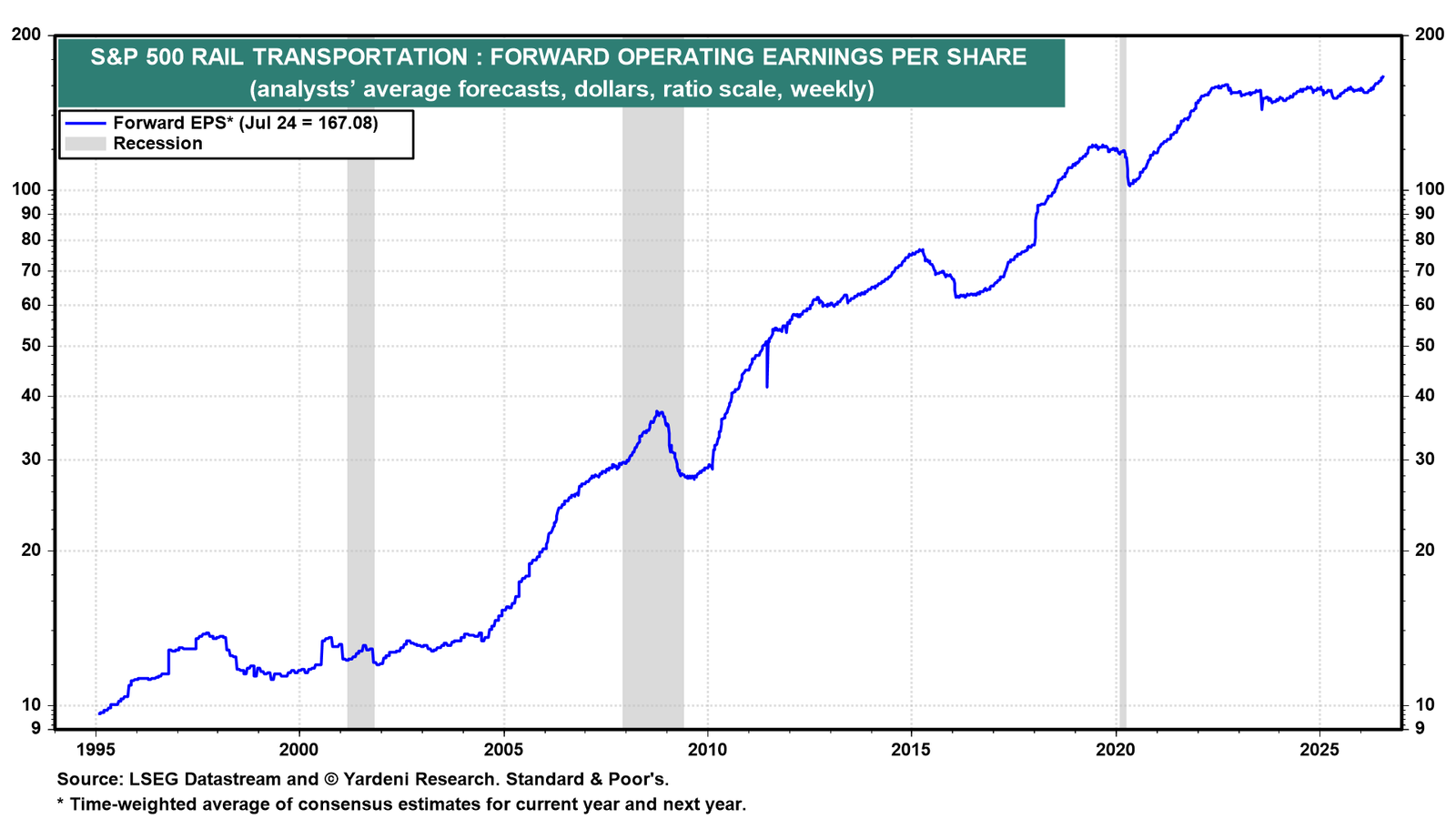
Analysts are marking up rail revenues. The consensus now expects S&P 500 Rail Transportation revenues to grow 6.6% in 2026, up from 2.9% in March. Rail forward earnings, which has been flat for the past four years, is now rising to record highs (chart).
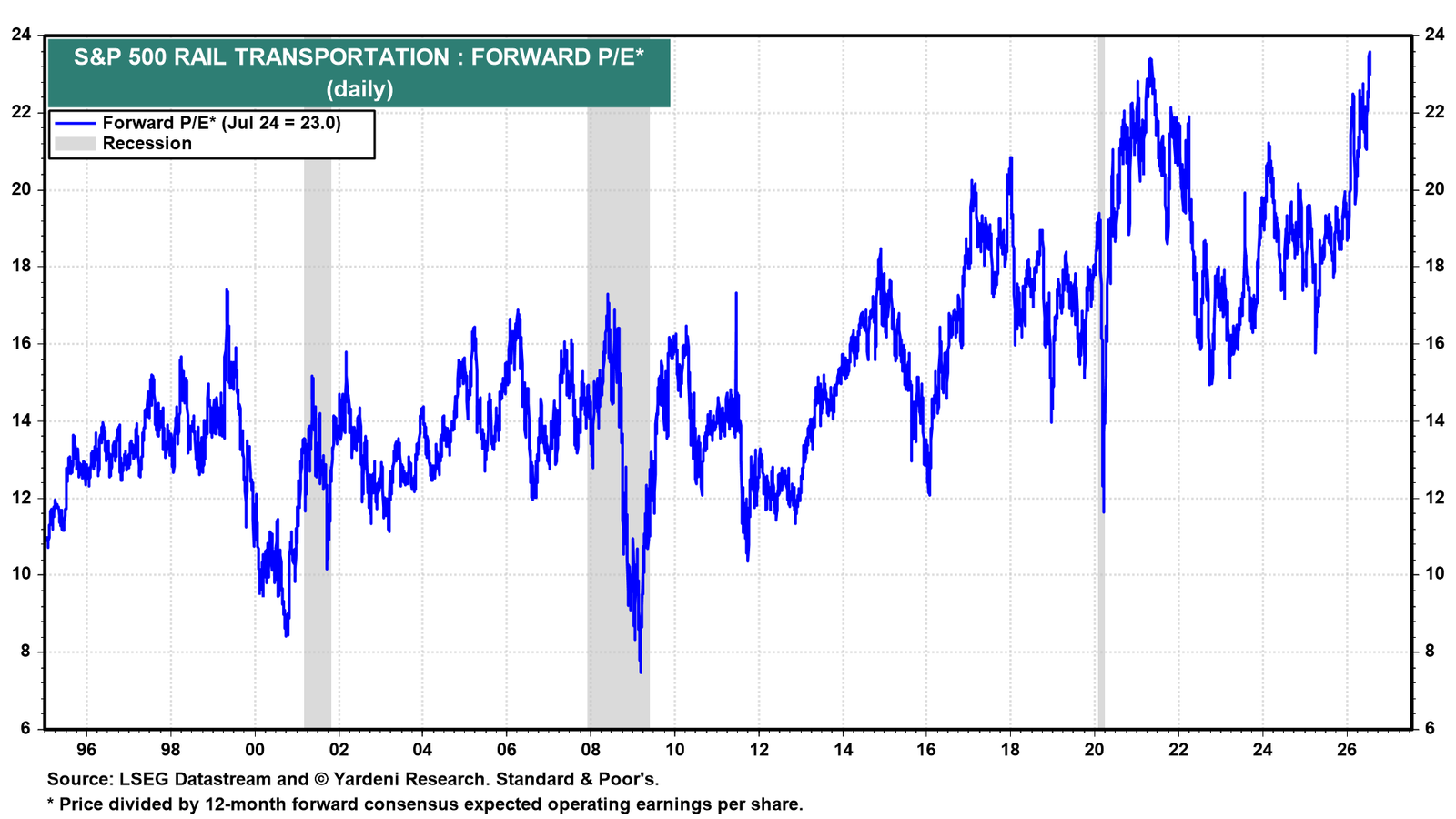
The rebound in rails coincides with the data center construction boom. Rails haul the materials and equipment needed to build data centers. The risk is valuation. Rail Transportation's forward P/E is at a record high of 24.3 (chart). Higher oil prices add a fuel cost increase the likes of which the sector has not faced since 2022.
(2) Information Technology: Spending, not burning cash. Alphabet raised its 2026 capital spending guidance to $195-$205 billion on Wednesday, up from $180-$190 billion a quarter earlier. Investors sold the stock. They ignored the other half of the report: Google Cloud revenues grew 82% y/y, and the backlog reached $514 billion. This is not spending in search of demand.
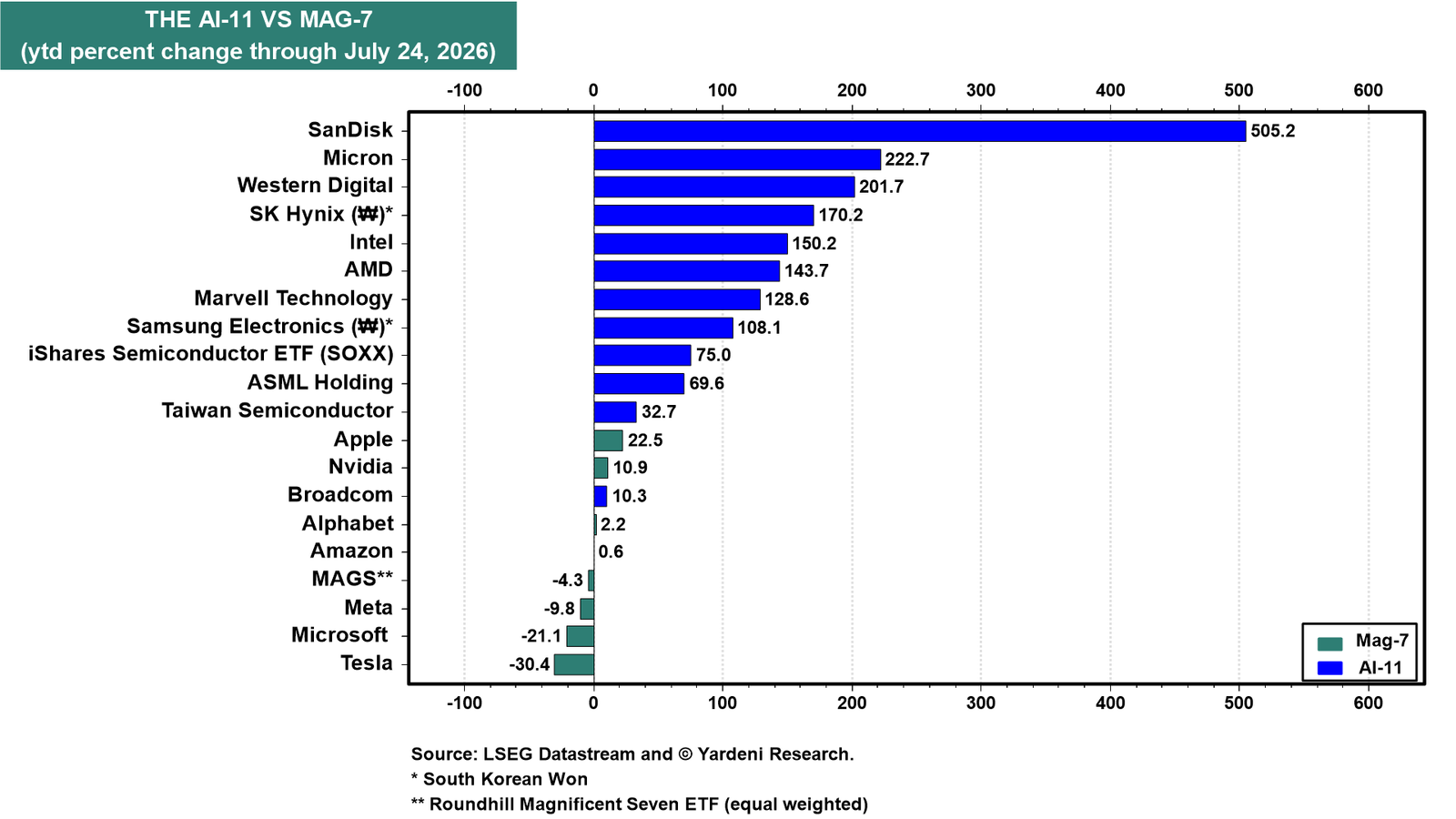
The other four hyperscalers (Amazon, Microsoft, Meta, and Oracle) report over the next two weeks. Analysts expect the five of them to spend roughly $750 billion this year, up from around $600 billion estimated in January. Lots of that spending is on semiconductors. The semiconductor ETF (SOXX) is up 75.0% ytd (chart). The Magnificent-7 ETF (MAGS) is down 4.3% ytd.
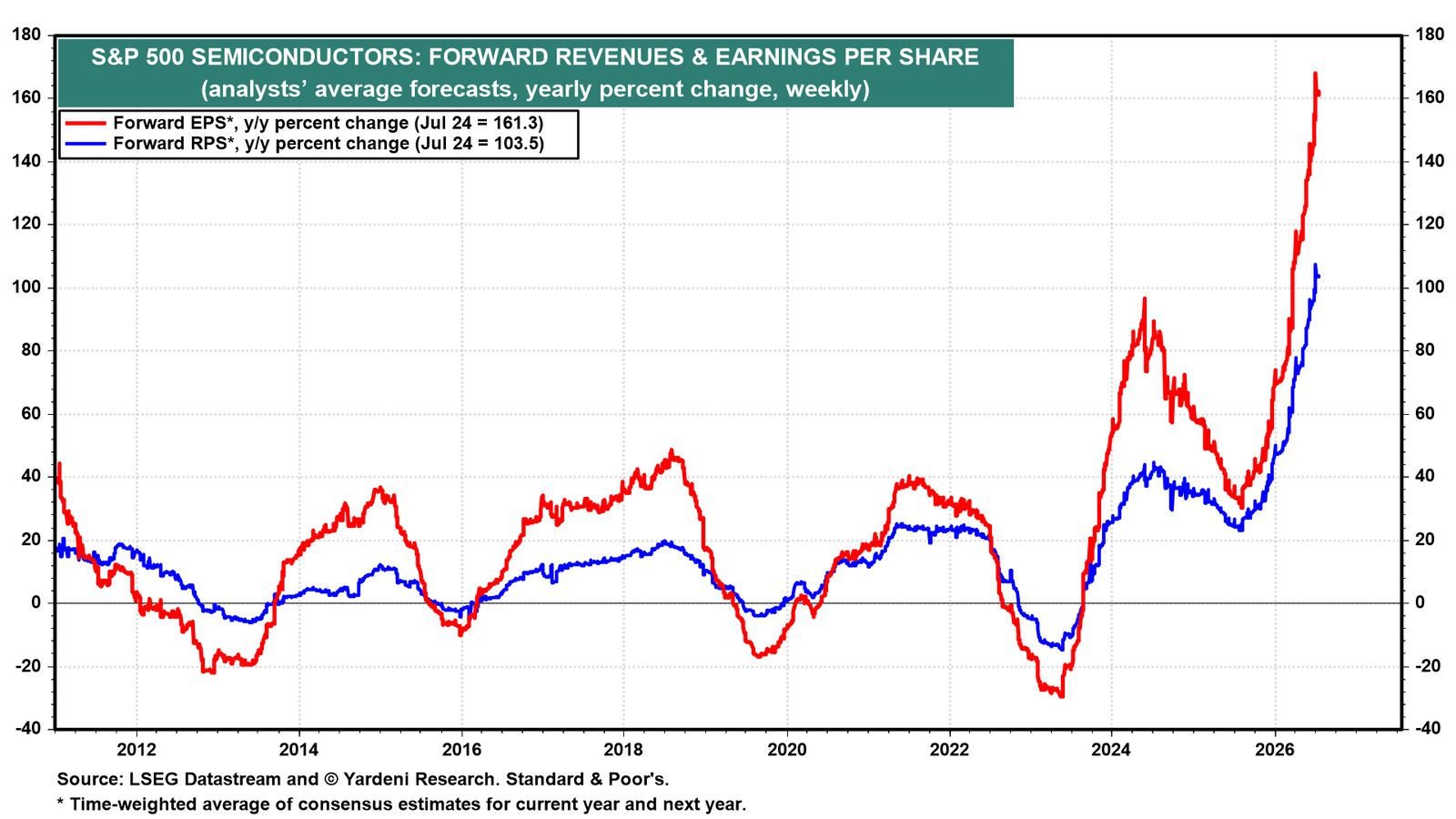
The S&P 500 Semiconductors forward revenues per share is up 103.5% ytd (chart). The rising forward profit margin lifted the industry's forward EPS by 161.3% through the week of July 24.
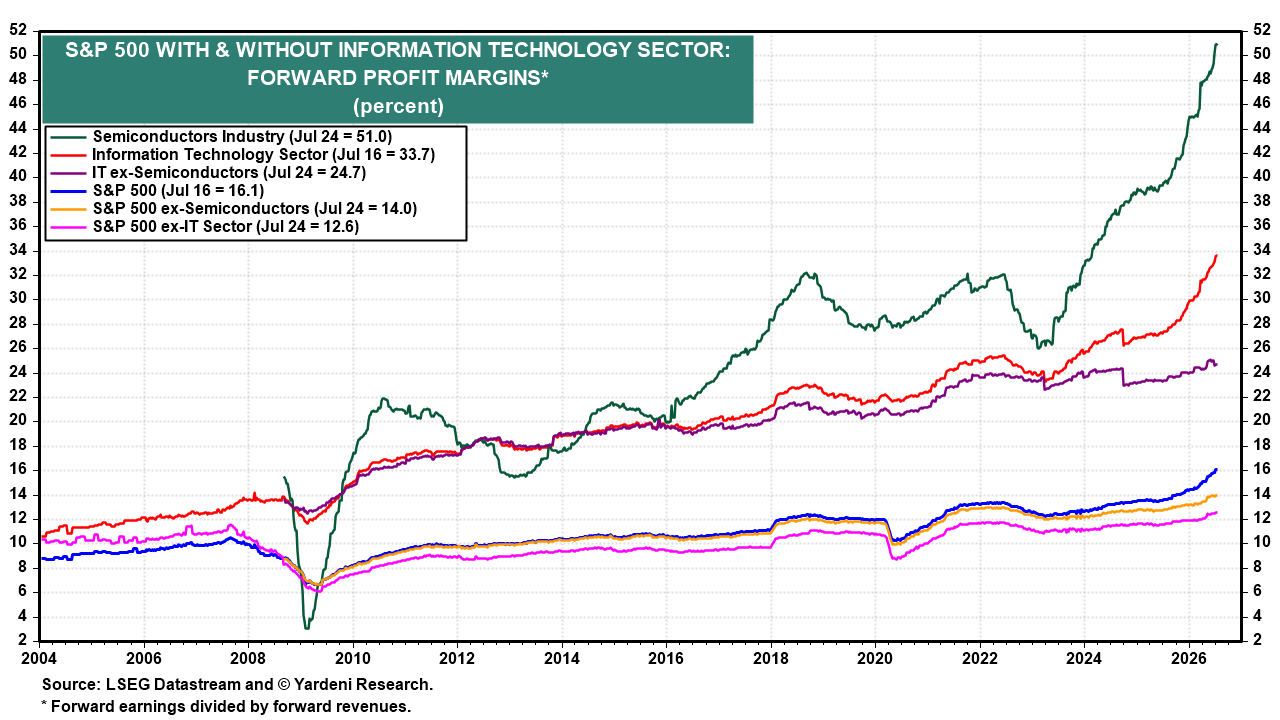
The S&P 500 Semiconductors forward revenues per share is up 103.5% ytd (chart). The rising forward profit margin lifted the industry's forward EPS by 161.3% through the week of July 24.
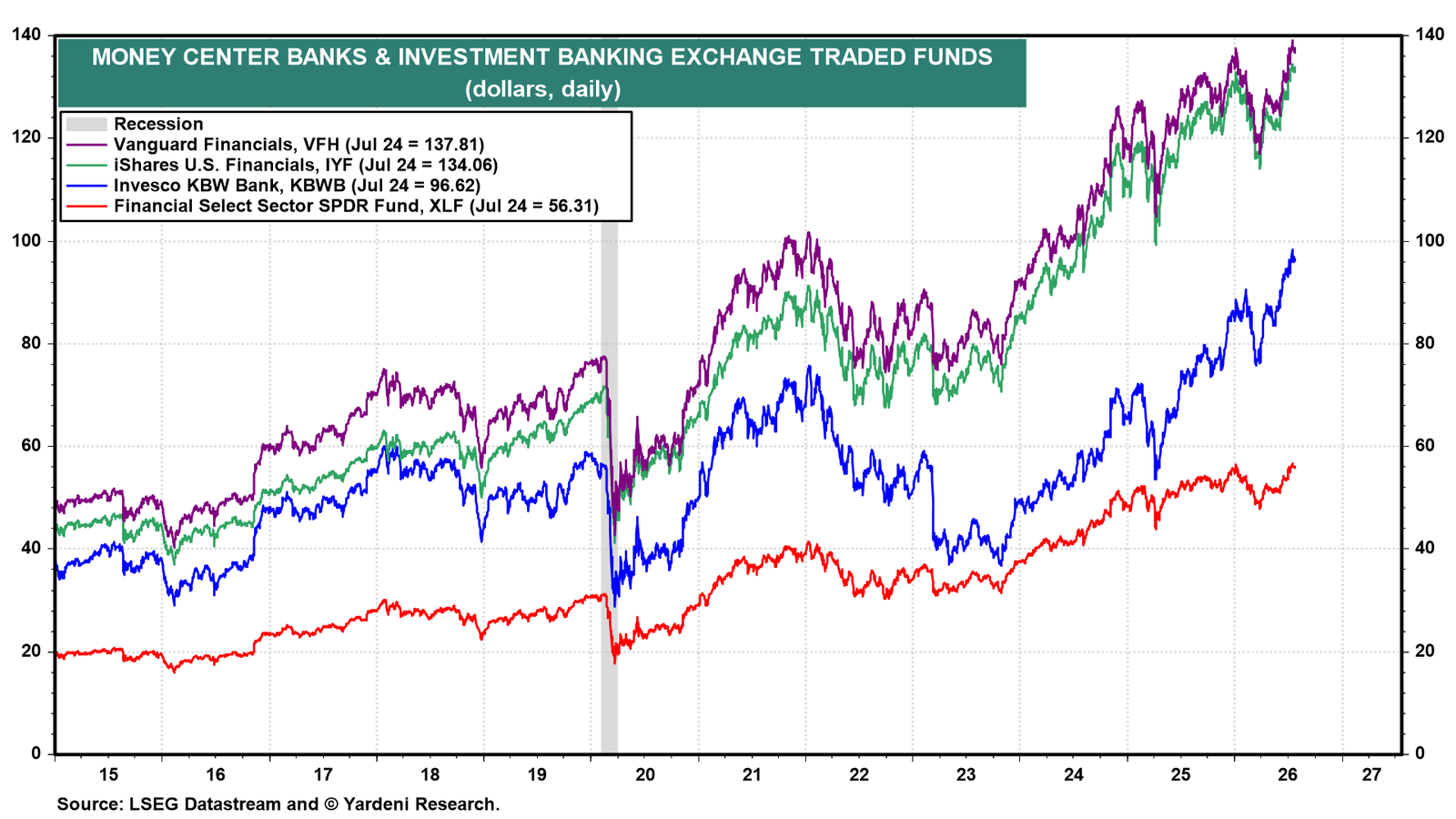
(3) Financials: Spending big on fintech. Financials have lagged this year, up 2.8% ytd against 8.3% for the S&P 500. They have moved higher recently. The sector is up 4.9% mtd, while the index is down 1.2%. The large banks are near record highs despite the rising odds of a Fed rate hike (chart).
The sector is spending heavily to rebuild its own plumbing. The Depository Trust and Clearing Corporation began limited production trades of tokenized Russell 1000 equities, major ETFs, and US Treasuries this month, with a full commercial launch scheduled for October. Goldman Sachs, JPMorgan, BlackRock, Vanguard, and the NYSE are participating.
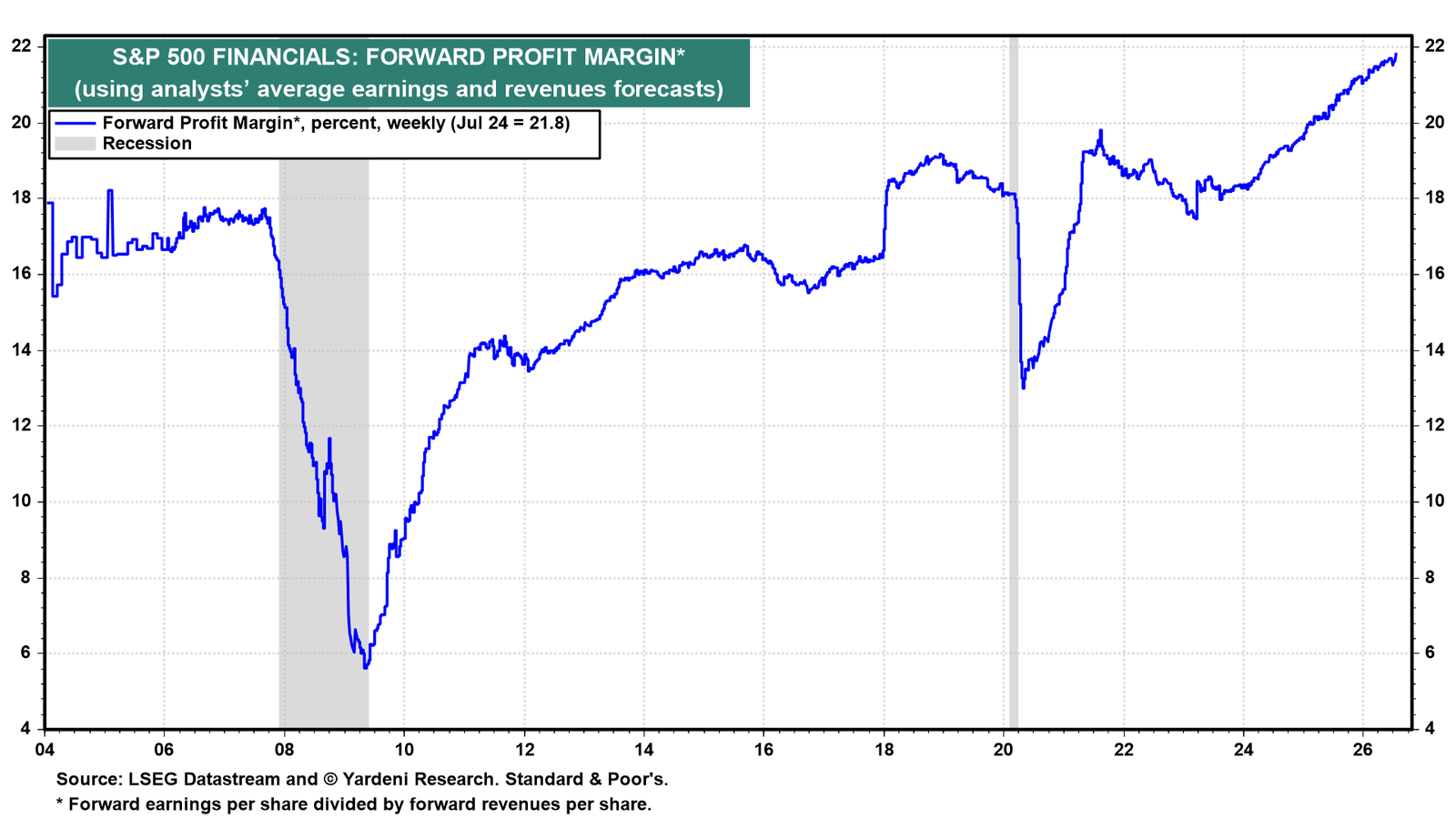
Technology budgets at the large banks are rising fast. That spending is a cost today but a higher-margin story tomorrow. The current forward profit margin is at a record 21.8% (chart).