(1) Geopolitics. President Donald Trump said he is weighing a “massive attack” on Iran. The Pentagon is flooding the Middle East with elite troops, fighter jets, and combat medics. “I am considering a massive attack. Bigger than anything we have ever had before. I am close to making a decision. We are fully prepared for it,” the president told Israel’s Channel 12 on Thursday. The US military on Tuesday deployed a powerful B-1 long-range bomber, officials told Axios. It was the first time the US conducted a B-1 mission since fighting with Iran resumed 12 days ago, signaling a major escalation in the war. The moves come as Trump is demanding “a head for an eye” when it comes to attacking Iran, Secretary of State Marco Rubio told reporters Thursday, updating the Old Testament formula of reciprocal justice.
Today's WSJ reported: "The president in recent days has grown skeptical that negotiations with Iran can produce a lasting peace, according to people familiar with the matter. A senior administration official said Trump believes that the only thing Iran understands is military force, adding that he was in 'revenge mode' against Tehran. The president, the official said, sees few good options besides continuing strikes."
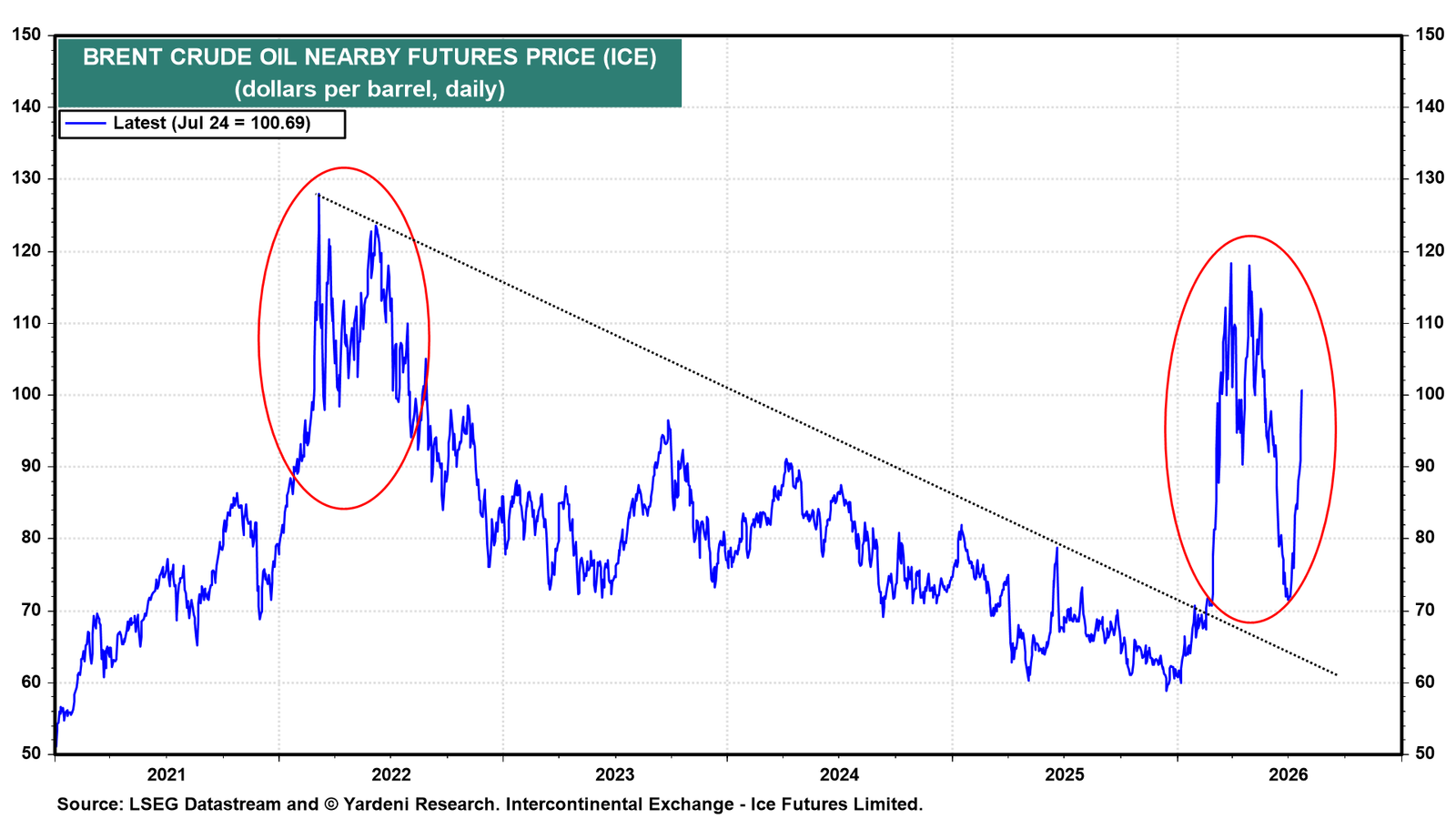
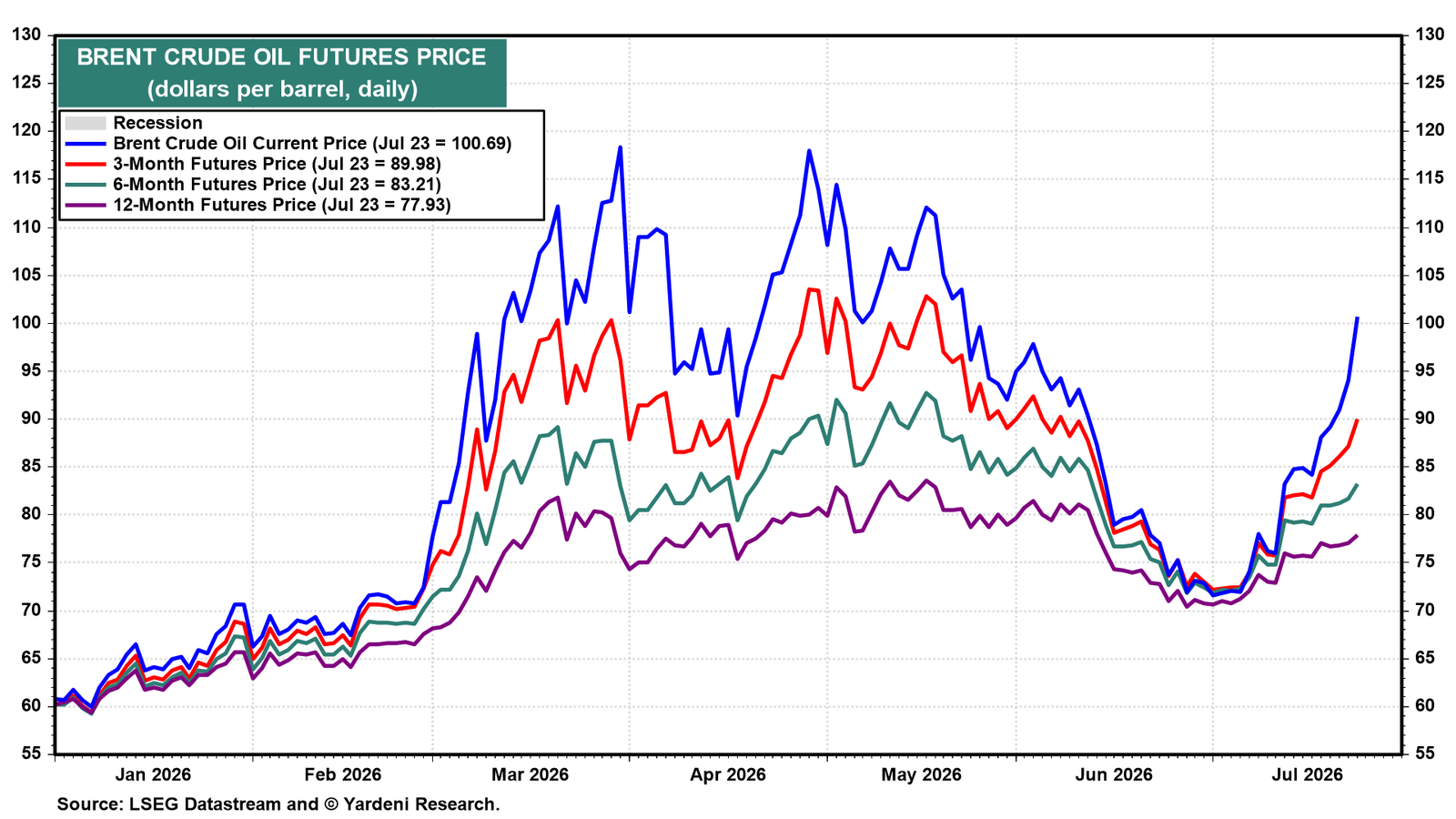
The price of a barrel of Brent crude oil soared today (charts). It was boosted by news that the Houthis targeted two Saudi oil tankers with ballistic missiles, cruise missiles, and drones in the Red Sea on Wednesday. Trump's "Apocalypse Now!" warning today sent the price back above $100.
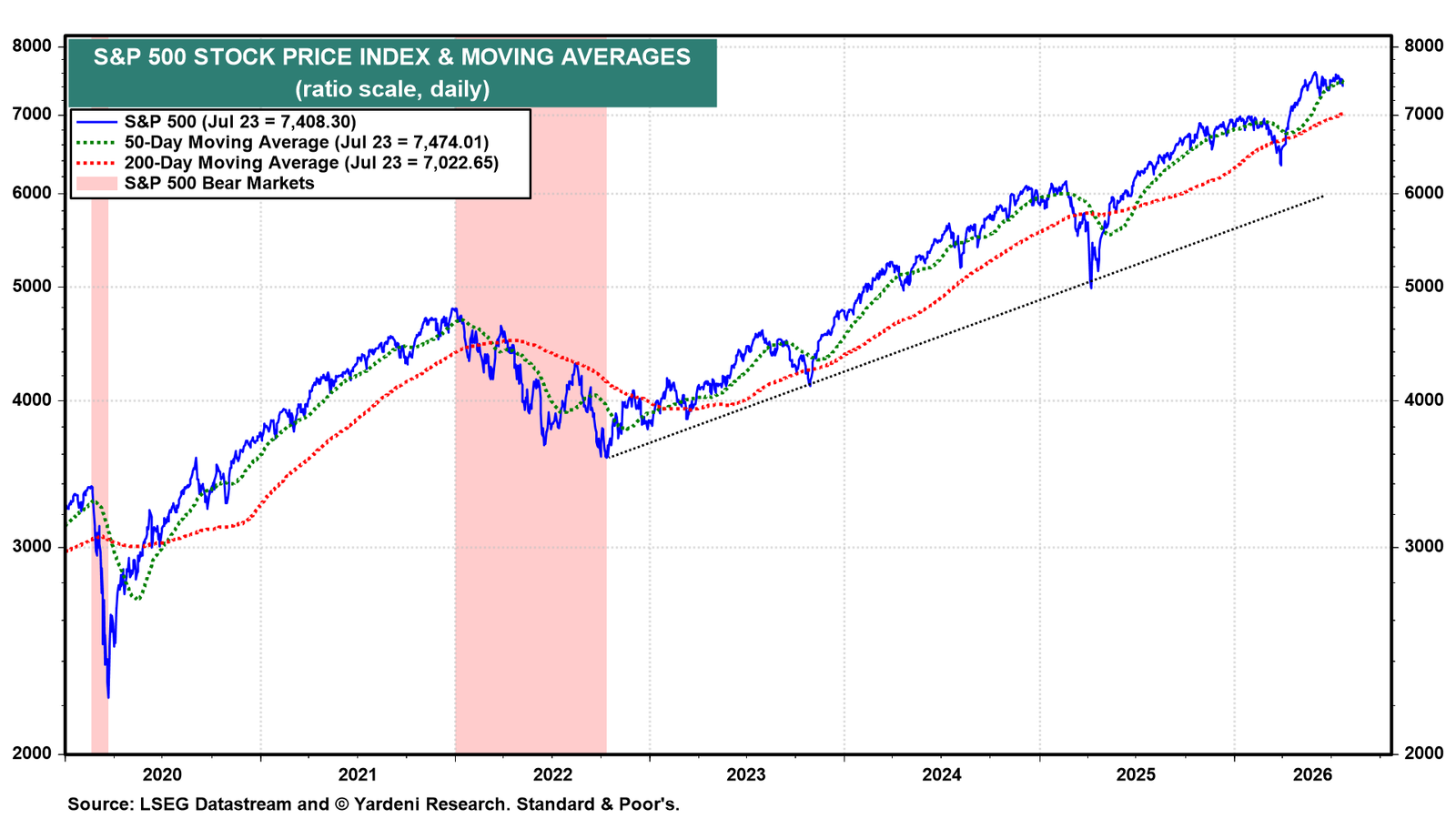
The S&P 500 fell only 1.2% to 7,408.30 as the war escalated today (chart). It has been fluctuating around 7,500 since May 14. It is now slightly below its 50-day moving average.
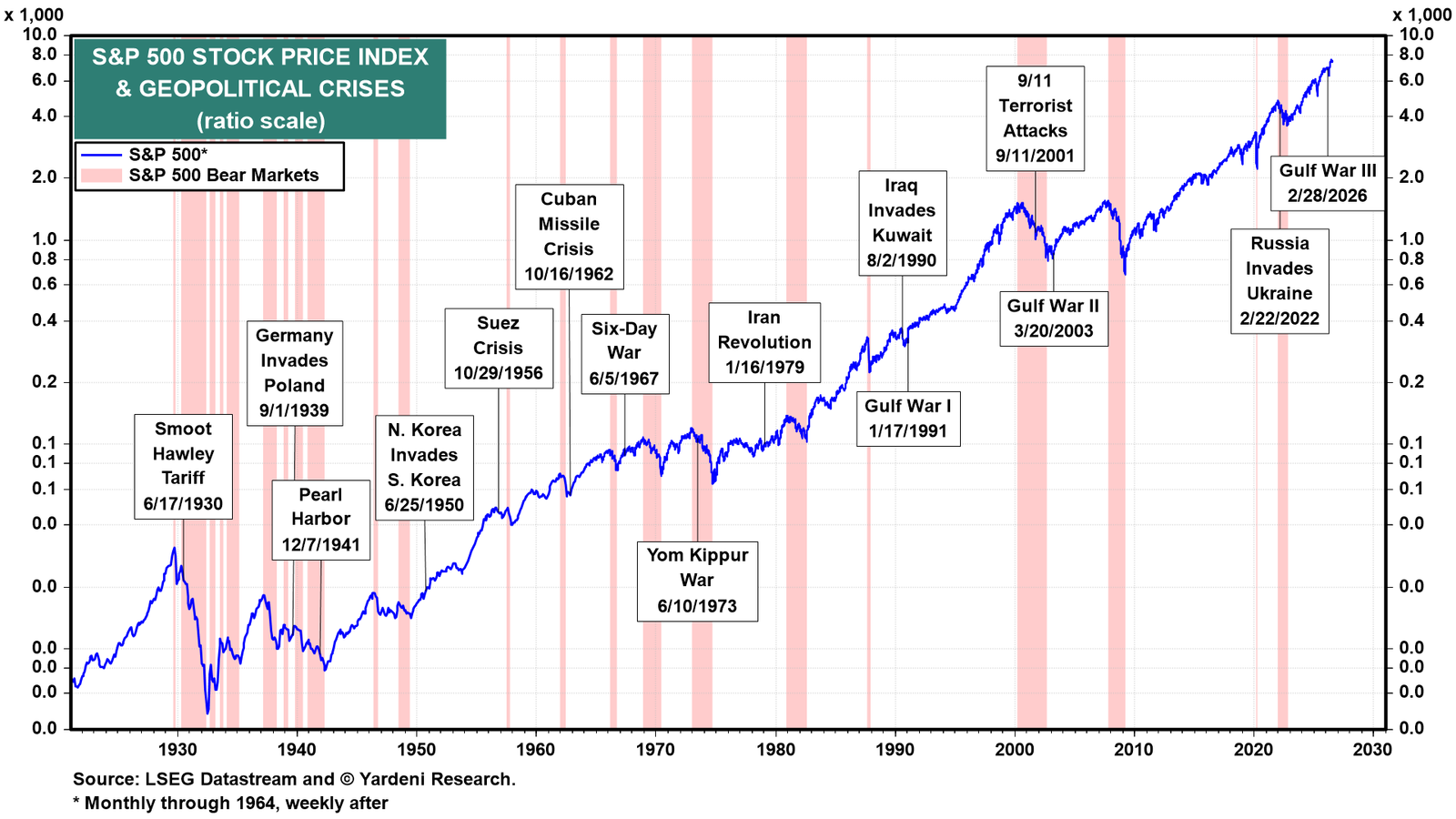
The relative calm in the S&P 500 suggests that investors have learned that geopolitical crises have usually been good buying opportunities (chart). It should be so again. This time, dip buyers are likely to bet that either Iran caves or Trump does.
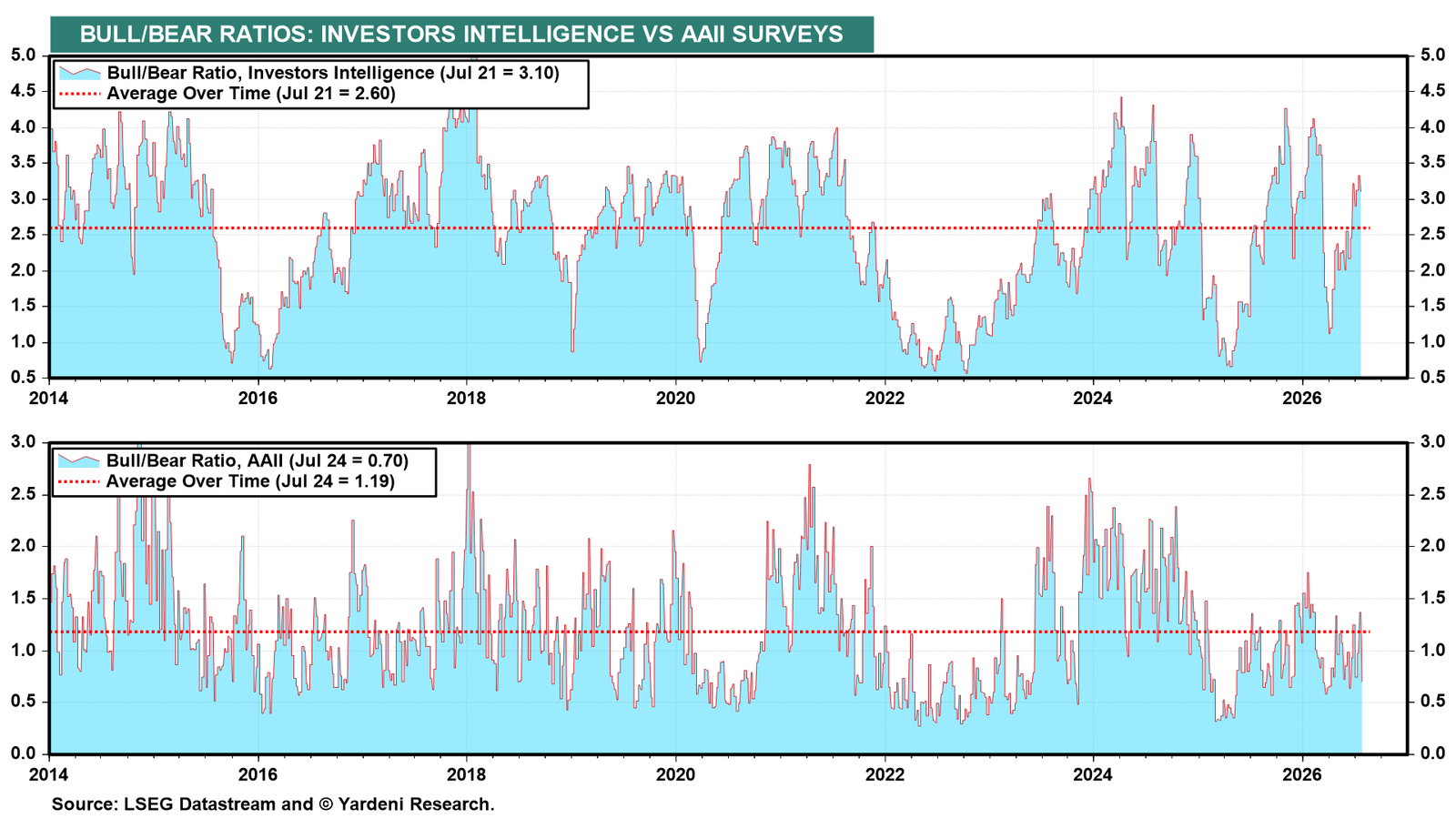
(2) Sentiment. Our favorite bull-bear ratios are mixed (chart). They are consistent with our summer stall scenario and the sideways trend of the S&P 500 since mid-May.
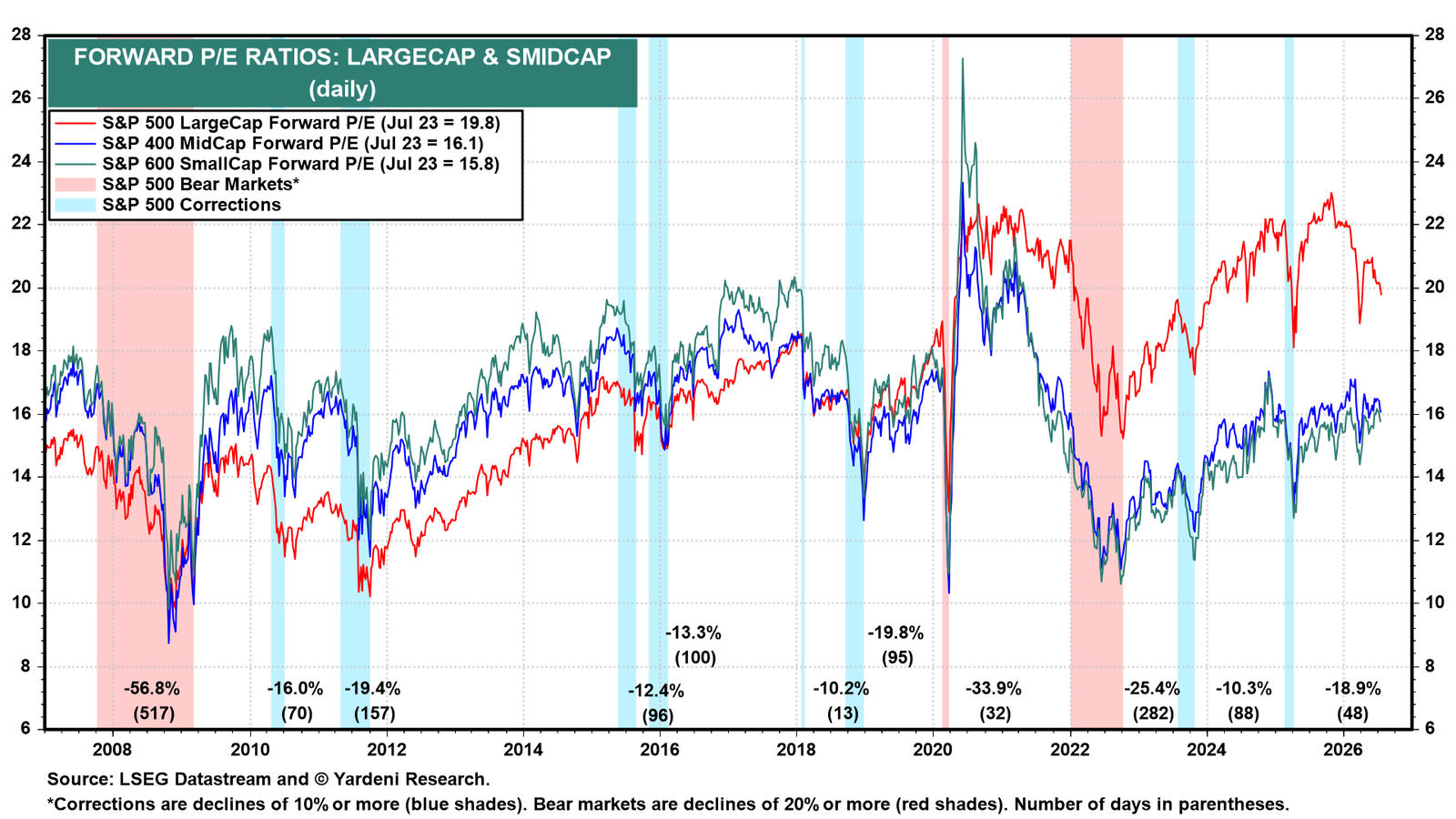
(3) Valuation. S&P 500 forward earnings continues to climb to record highs. So any downside in the S&P 500 will be driven by a falling S&P 500 forward P/E (chart).
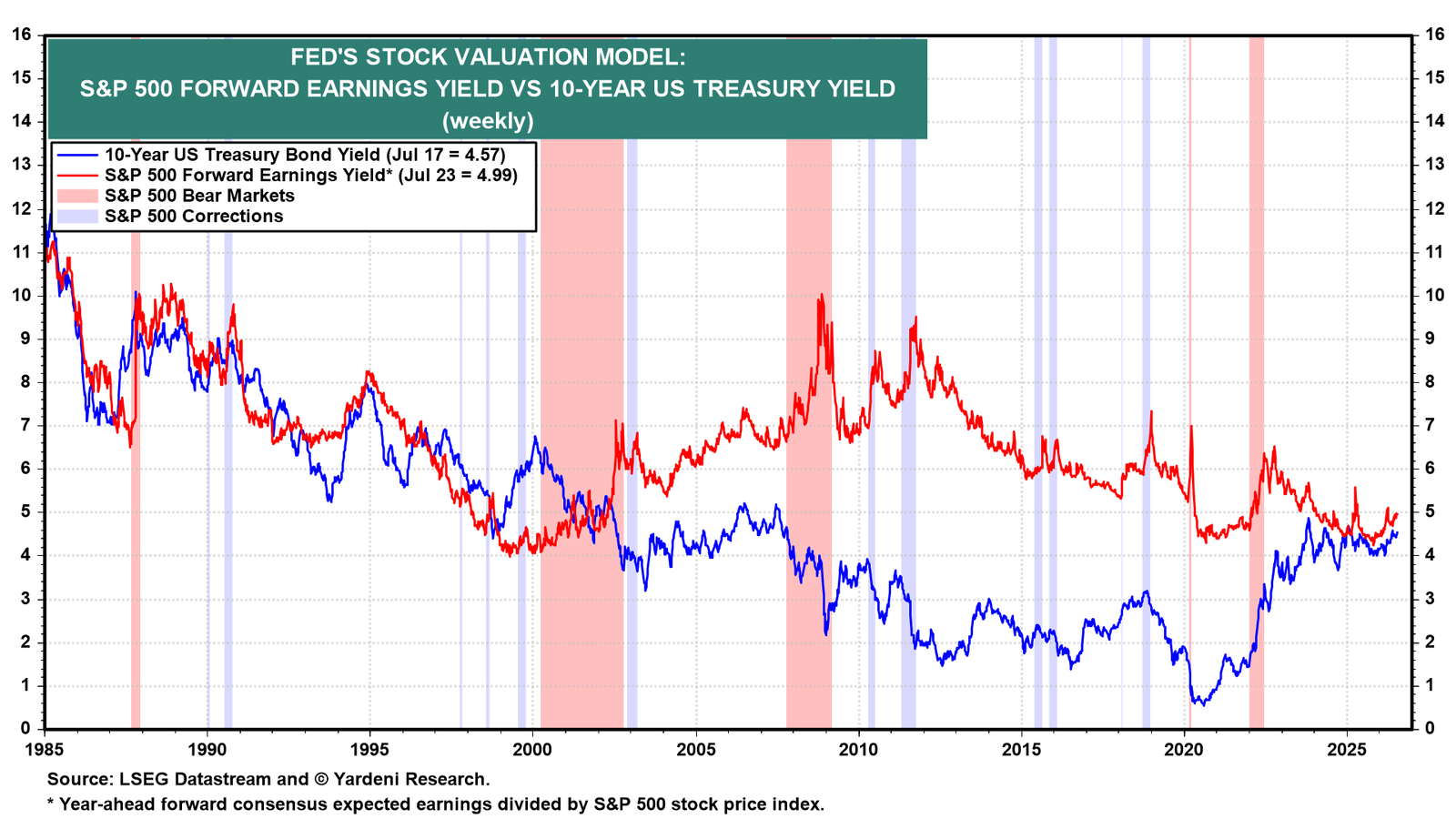
The recent decline in the forward P/E (and increase in the forward earnings yield) can be attributed to the rise in the 10-year bond yield, which has been rising on renewed fears that a backup in oil prices will boost inflation and force the Fed to raise the federal funds rate (FFR) (chart).
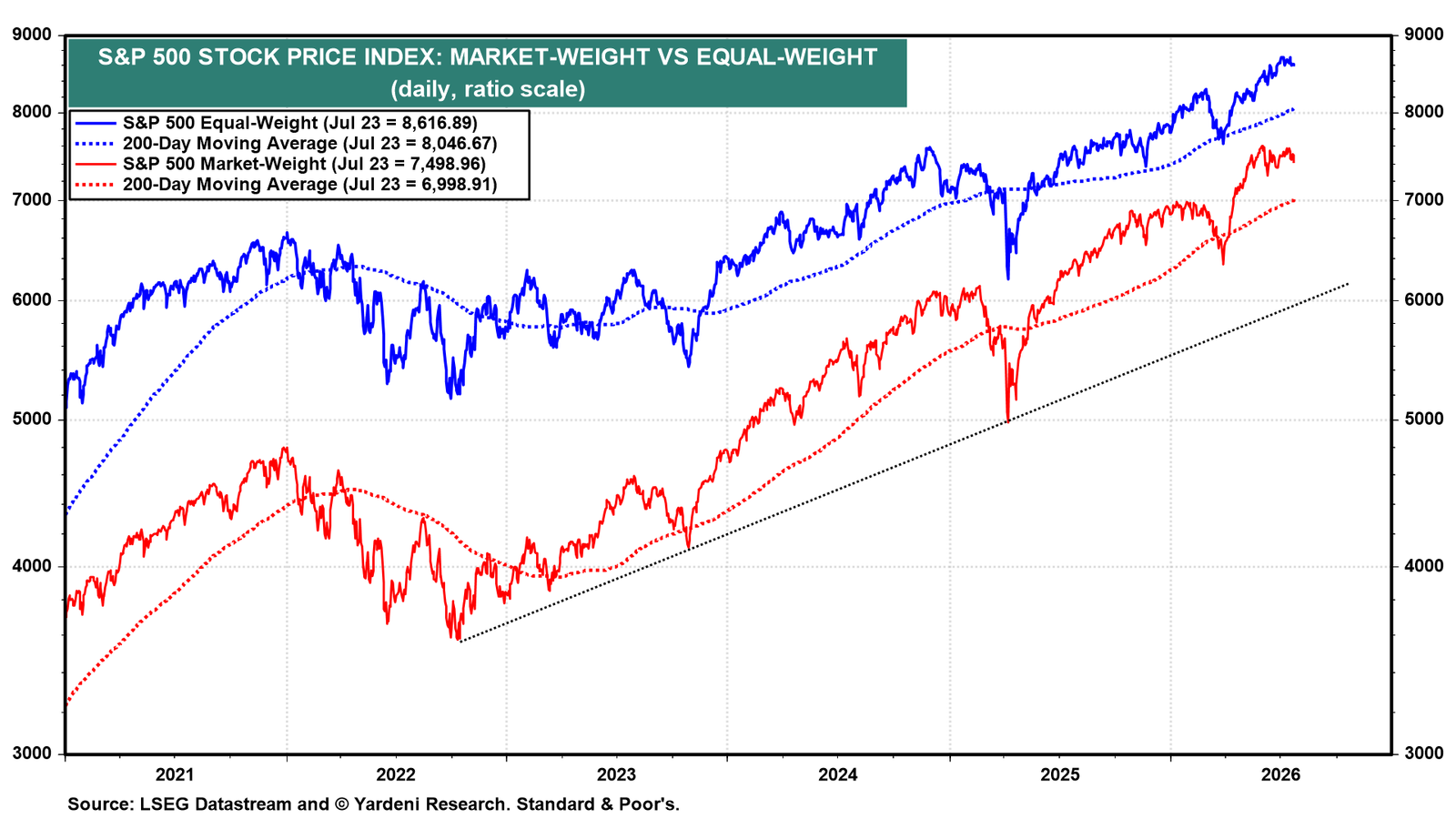
(4) Investment styles. The S&P 500 equal-weight stock price index was down only 0.37% today compared to the 1.21% decline in the market-weight index (chart). The former has been outperforming the latter during the summer stall. That indicates a broadening of the stock market rally.
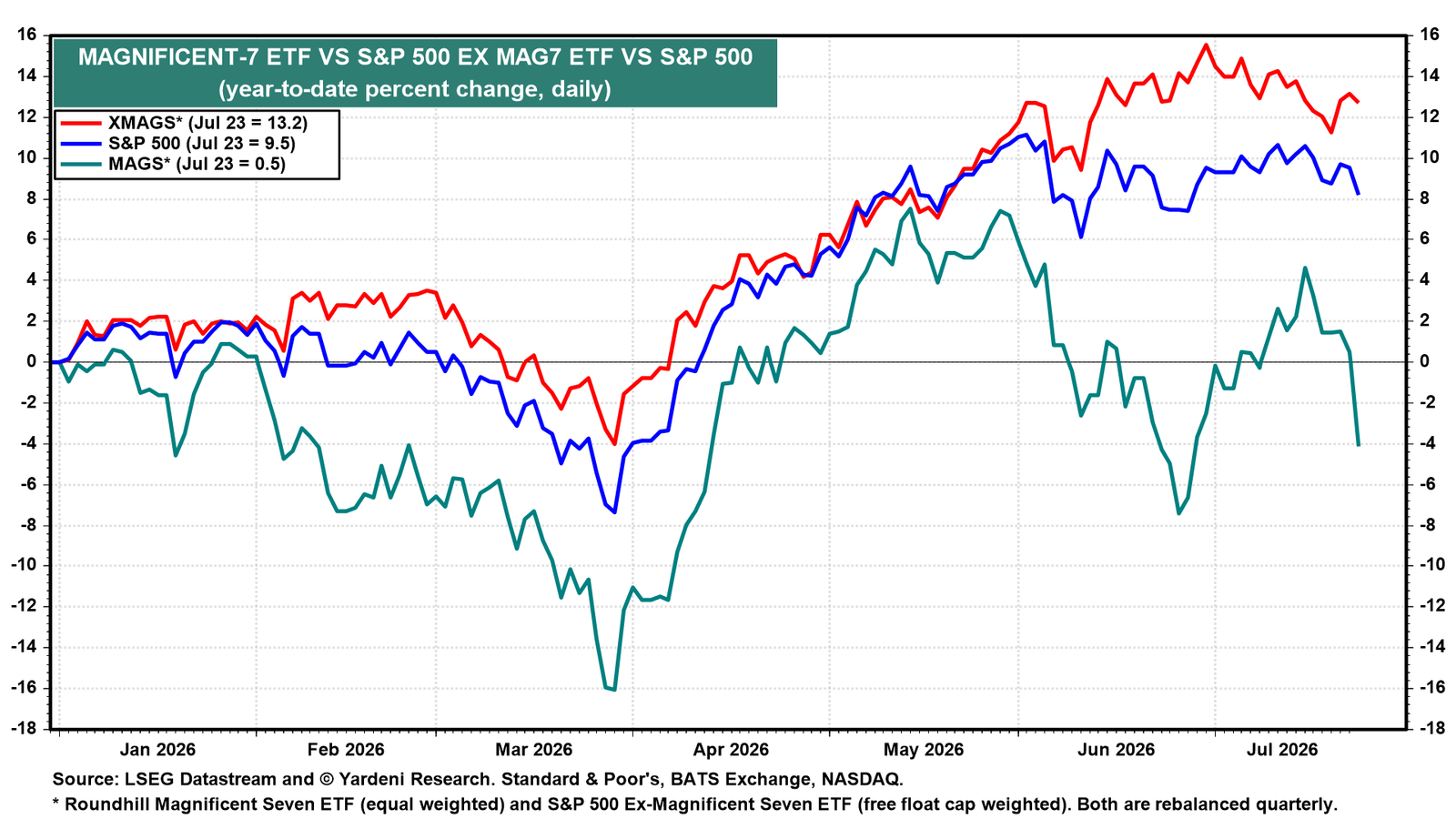
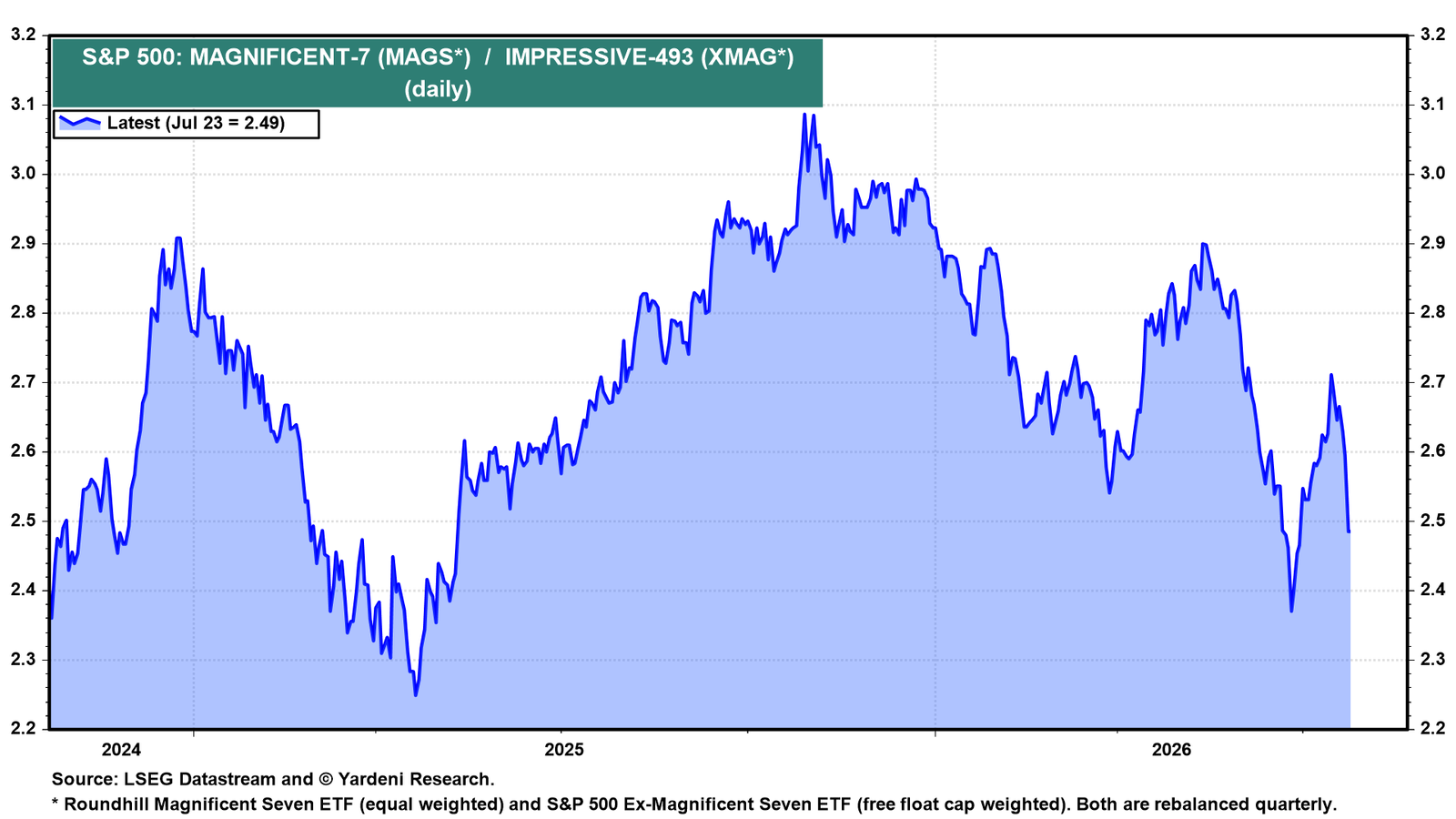
Hard hit today were the Magnificent-7, especially Alphabet (-7.4%) and Tesla (-14.5%). Both reported soaring revenue today during Q2, but investors instead zeroed in on their AI spending. Free cash flow turned negative at both. Investors are concerned that their massive capital spending might not pay off. The MAGS ETF was down 3.0% today, while the XMAG ETF was down just 0.11% (charts).
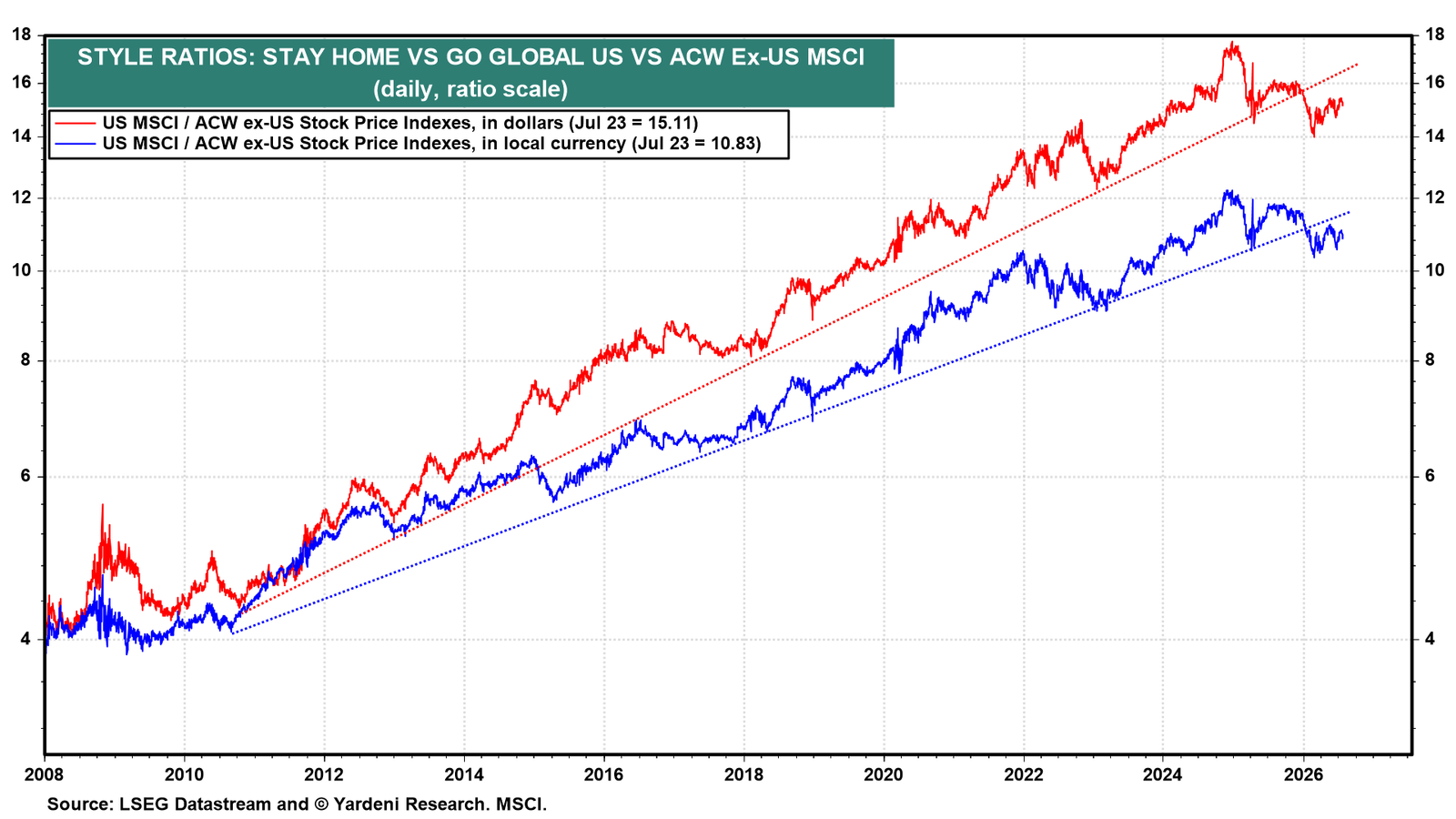
Stay Home slightly underperformed Go Global today (chart). The ratio of the two remains in a downward trend, which started in early 2025.
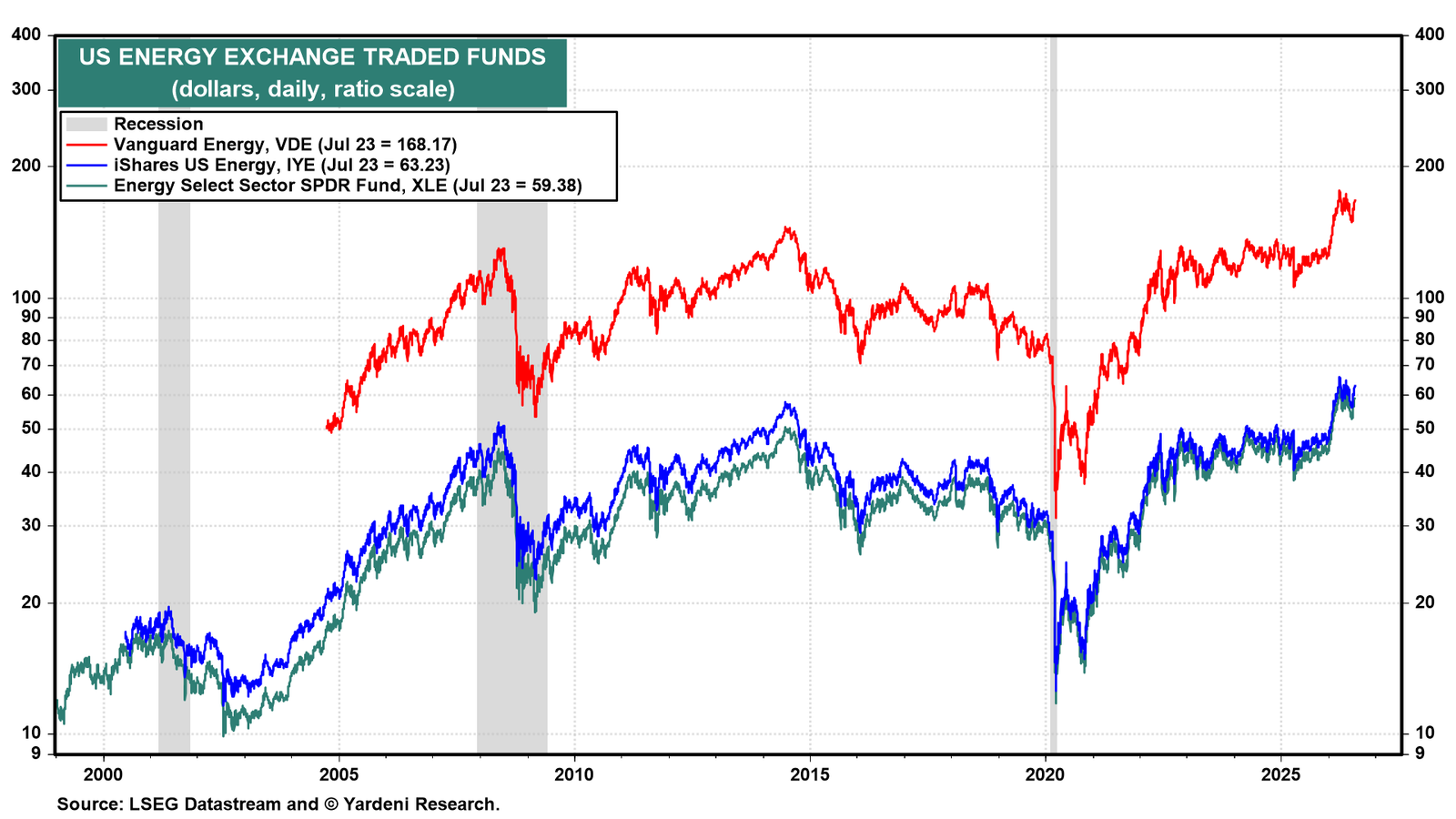
(5) Sectors. We've recommended overweighting Energy as a hedge against a longer-than-anticipated war (chart). The stocks held up well during the MOU ceasefire. Now they are rising along with oil prices again.
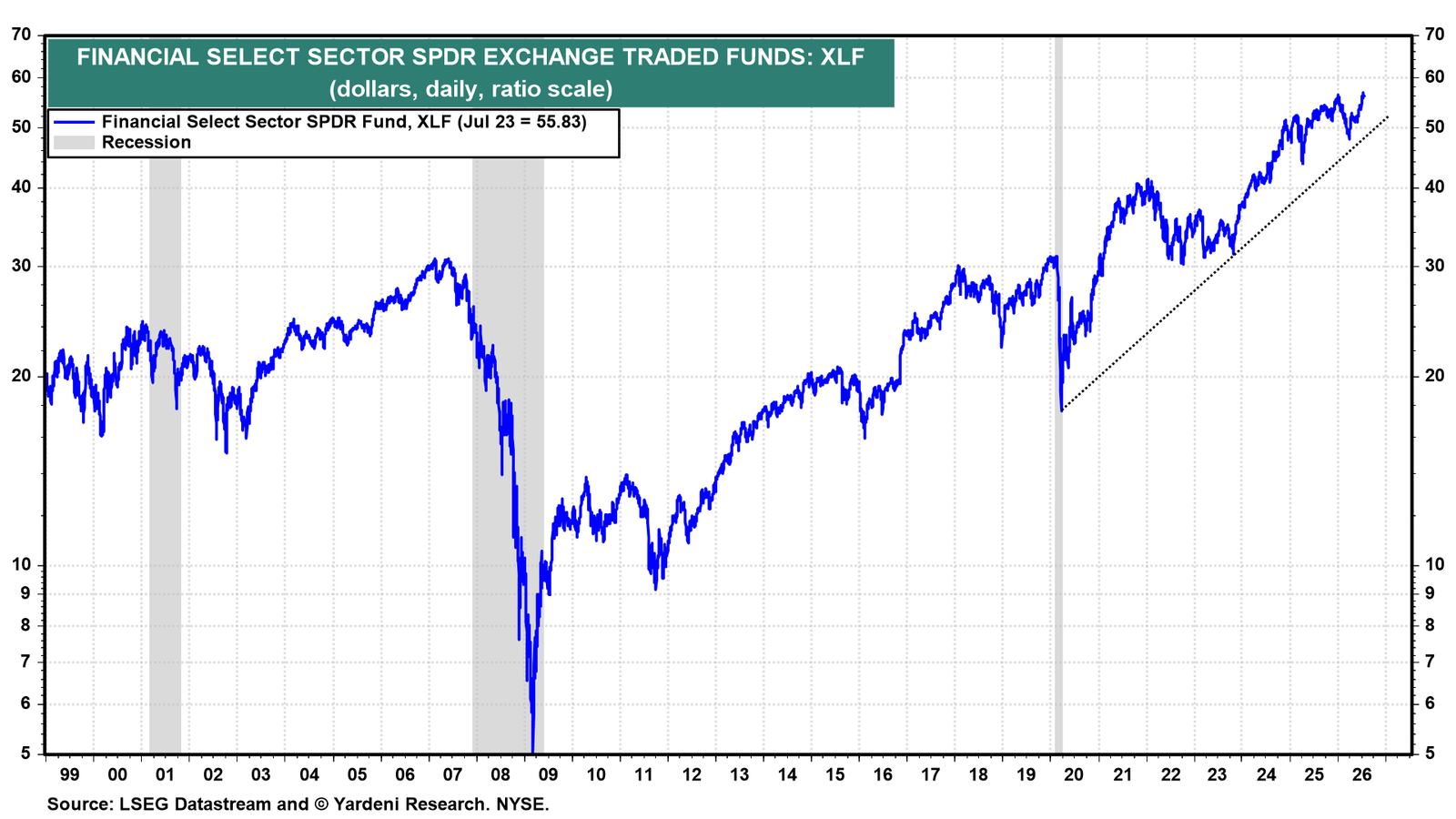
We continue to recommend overweighting Financials, which seem to be holding up well despite increasing odds of a Fed rate hike sooner rather than later.
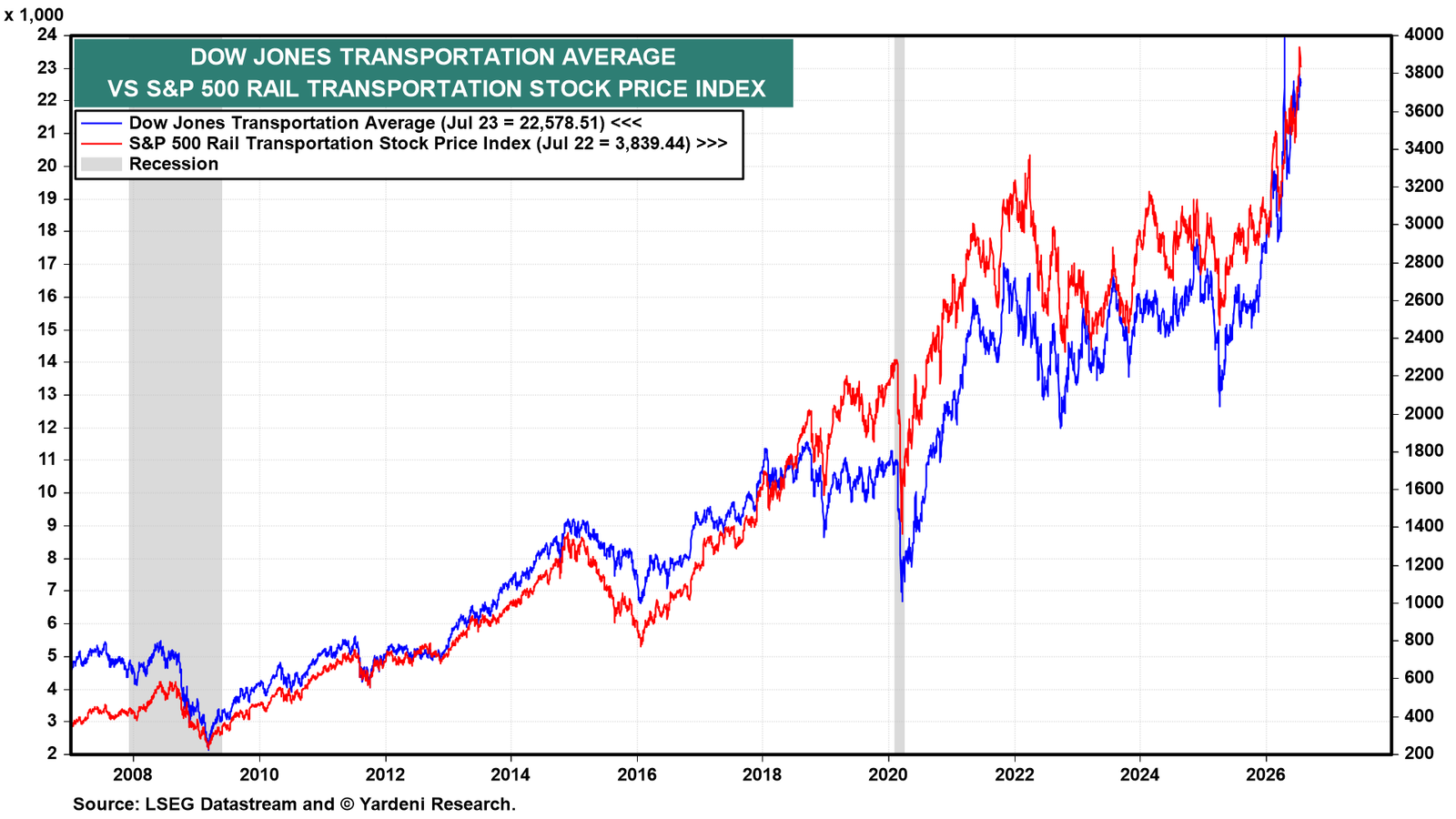
Industrials are also among our overweight recommendations. The S&P 500 Railroad companies are reporting very strong earnings, sending their stock prices higher, as well as the DJTA (chart). Dow Theory remains bullish.
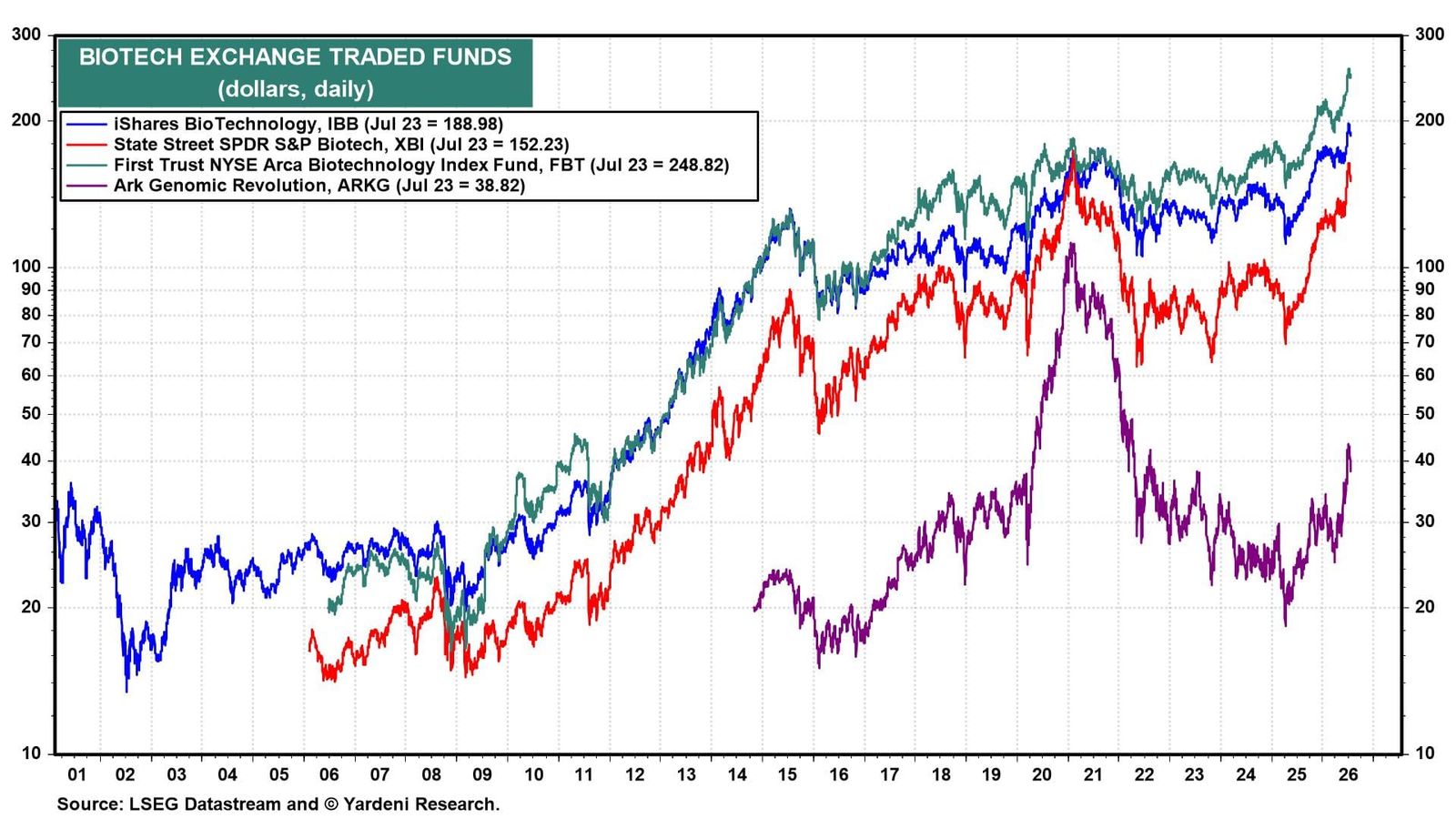
Health Care is another one of our overweight sectors. Biotech ETFs have done very well so far this year and are holding up well (chart).
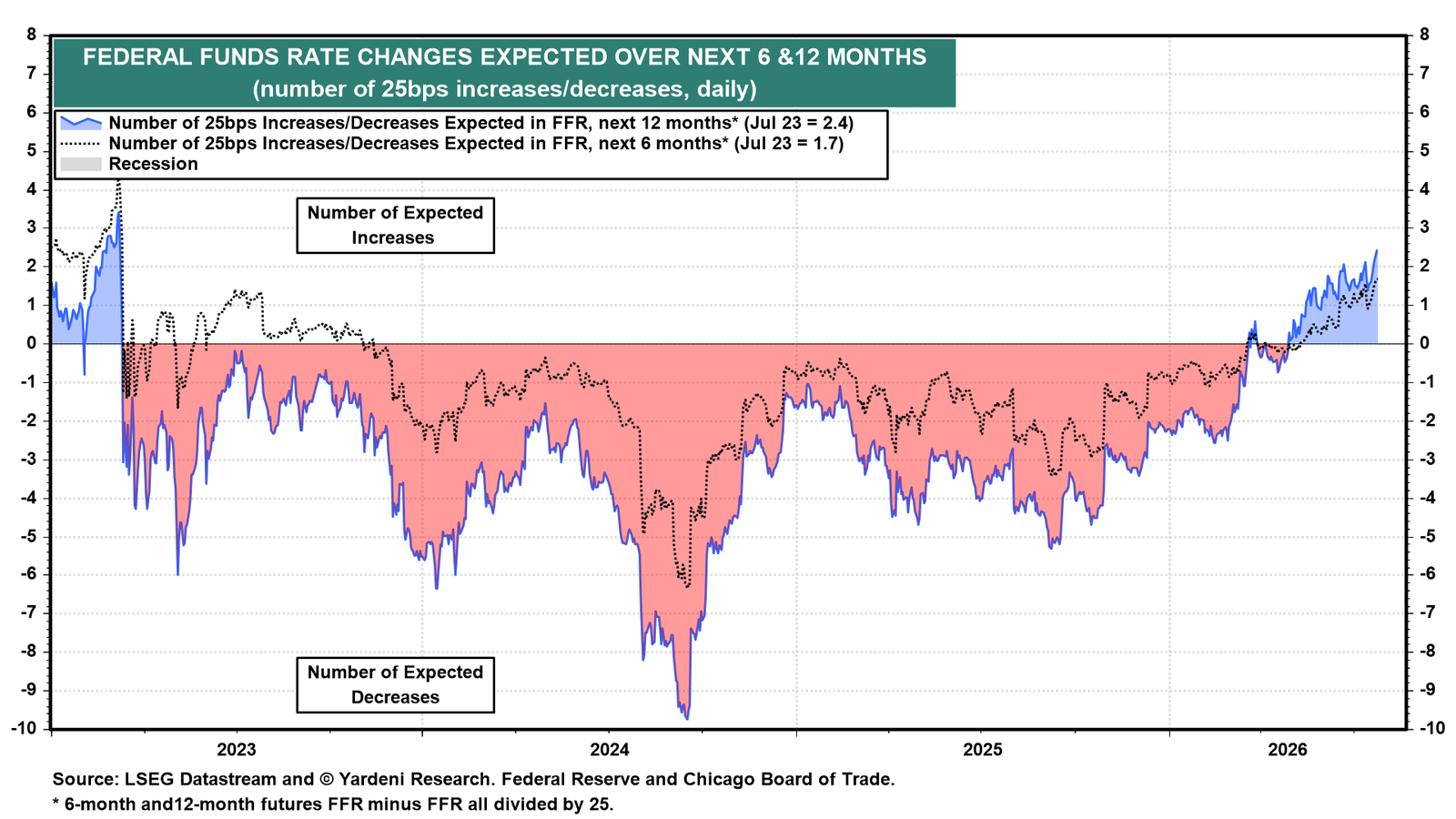
(6) Bonds. Bonds are not doing well as the rebound in oil prices revives concerns about higher-for-longer inflation and a more rapid tightening response by the Fed. The odds of a rate hike at next week's FOMC meeting are increasing. The FFR futures market is signaling two rate hikes over the next 6-12 months (chart).
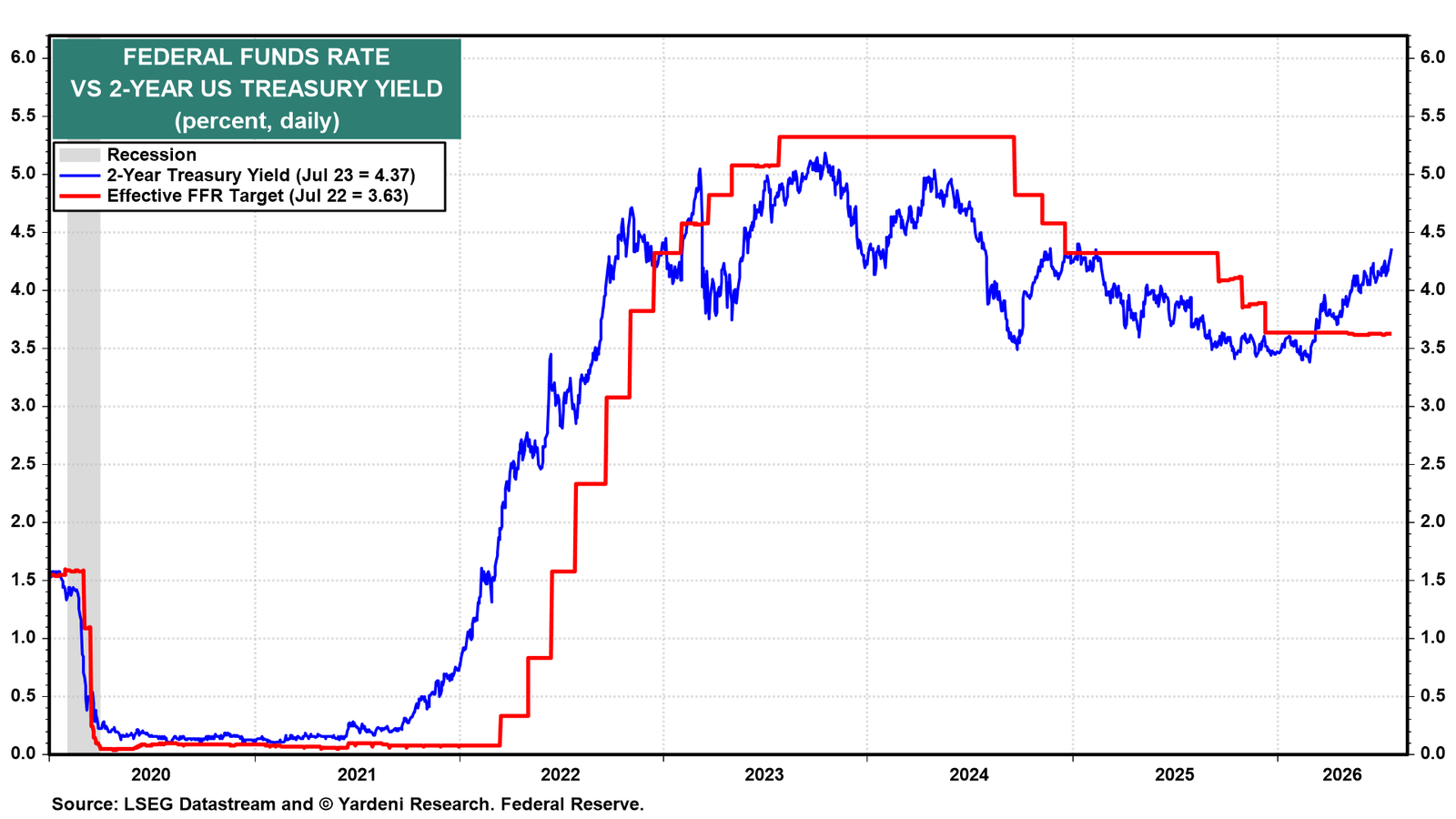
The 2-year Treasury yield suggests that the Fed should reverse last year's three rate cuts totaling 75bps (chart)!
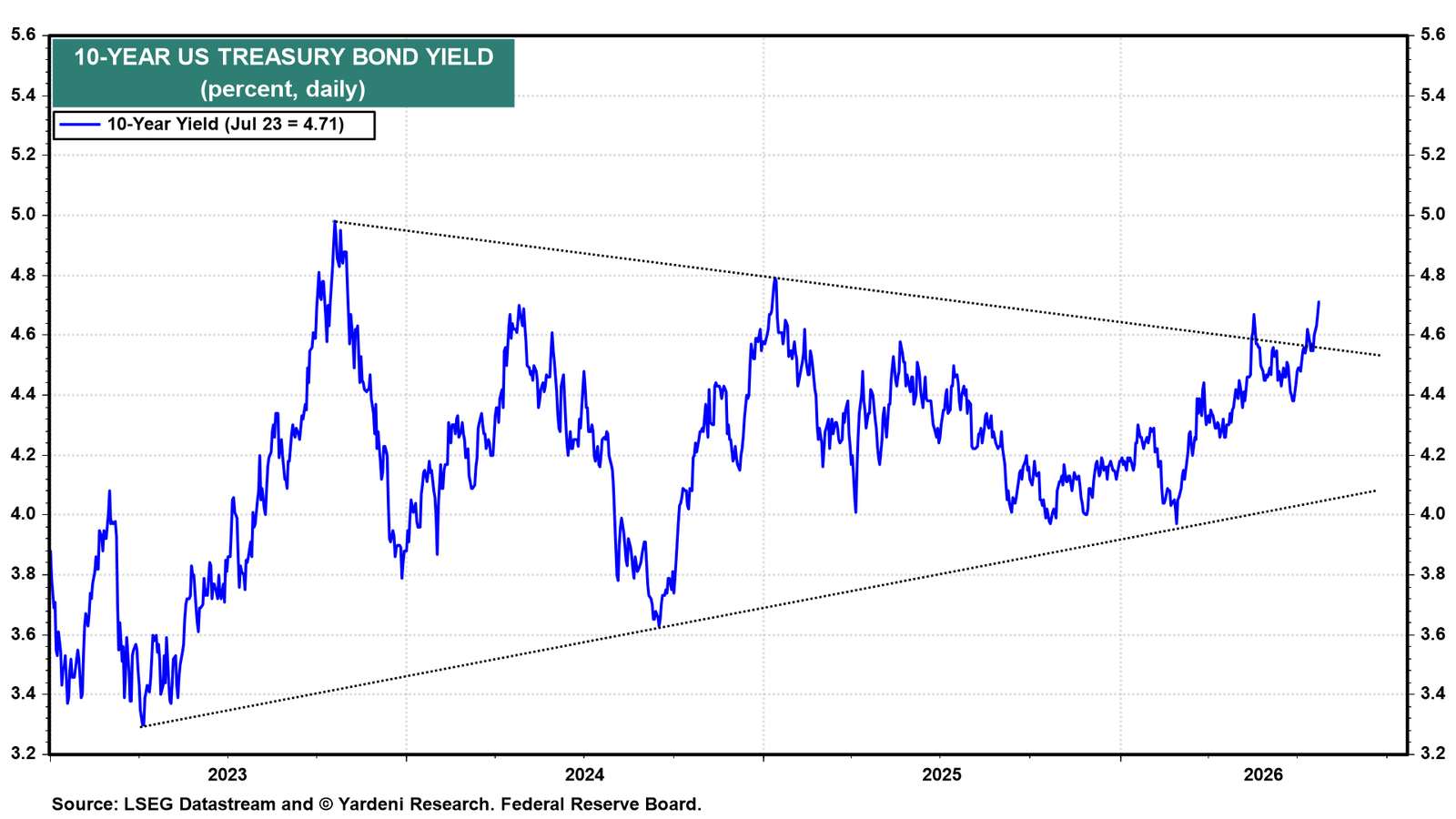
The bond yield remains in our 4.00%-5.00% "normal" range (chart). If it gets to 5.00%, there will be plenty of buyers that will keep it from going any higher, in our opinion.
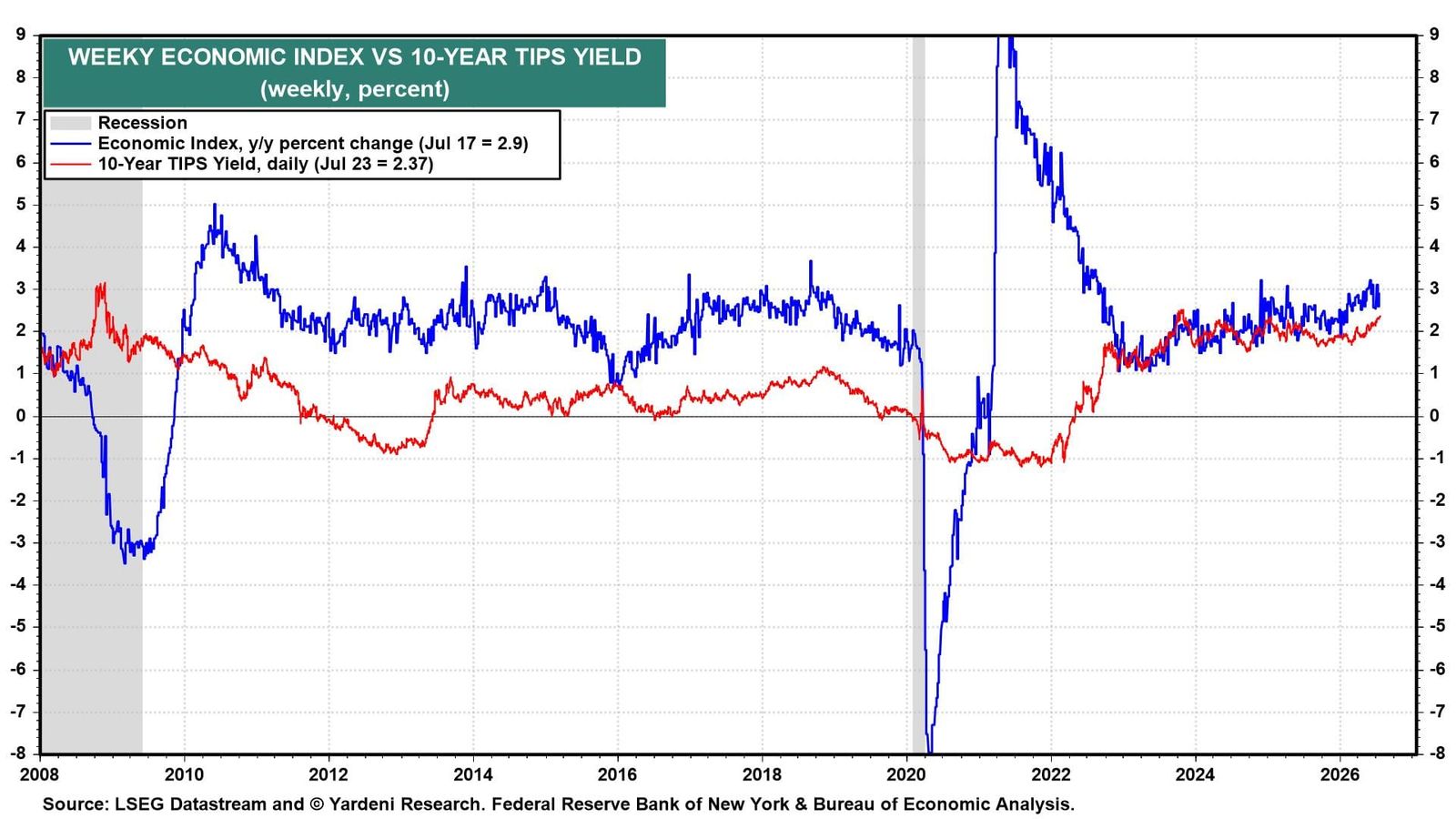
Interestingly, the recent increase in the 10-year Treasury yield has been attributable to the increase in the comparable TIPS yield, which has been closely tracking the NY Fed's weekly real GDP growth proxy (chart). In other words, the yield could be rising on strong economic growth expectations rather than higher inflation expectations!
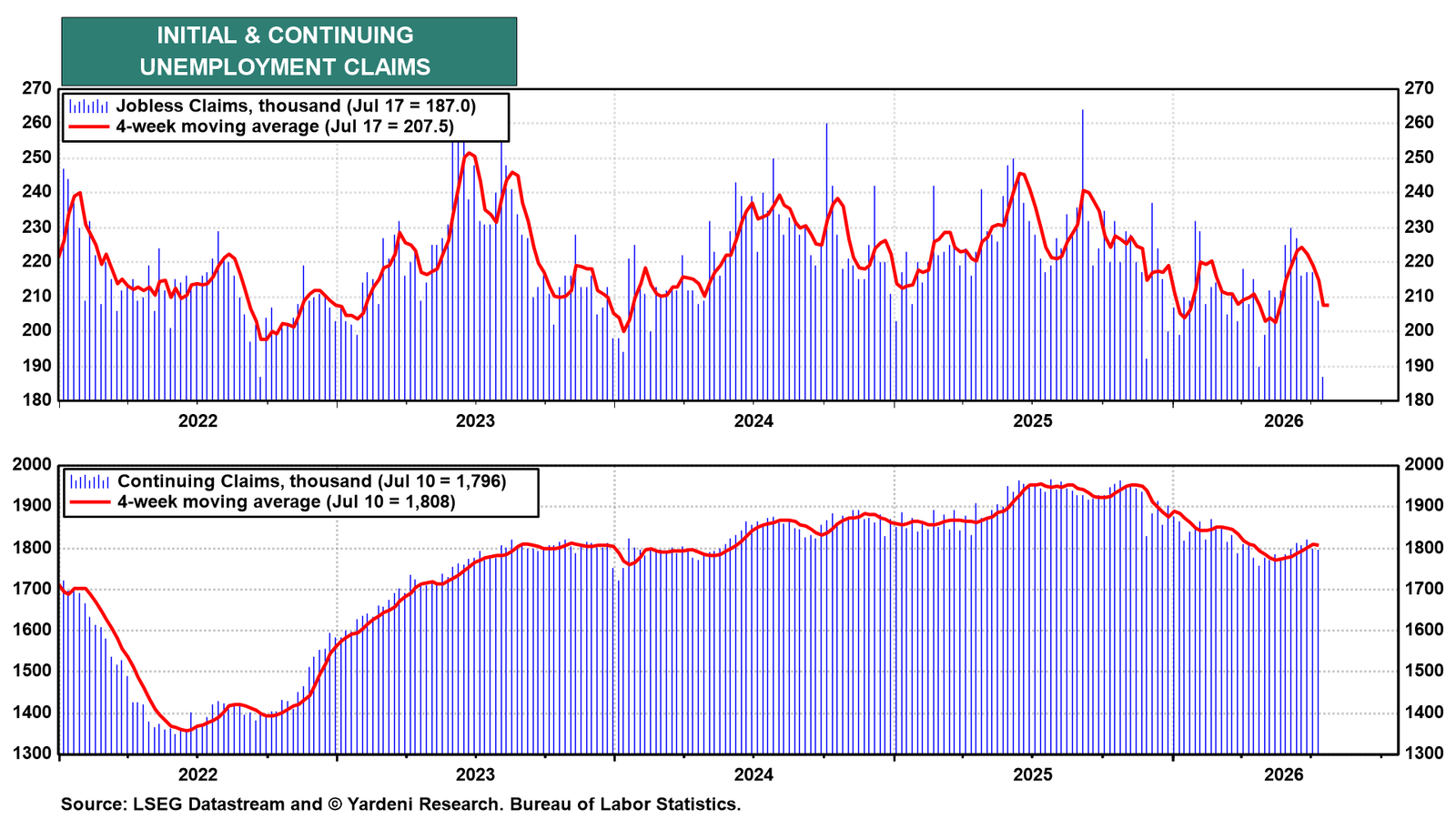
(8) US economy. Today's weekly unemployment insurance claims data confirmed that the labor market remains in good shape (chart). It probably contributed to today's rising bond yields.
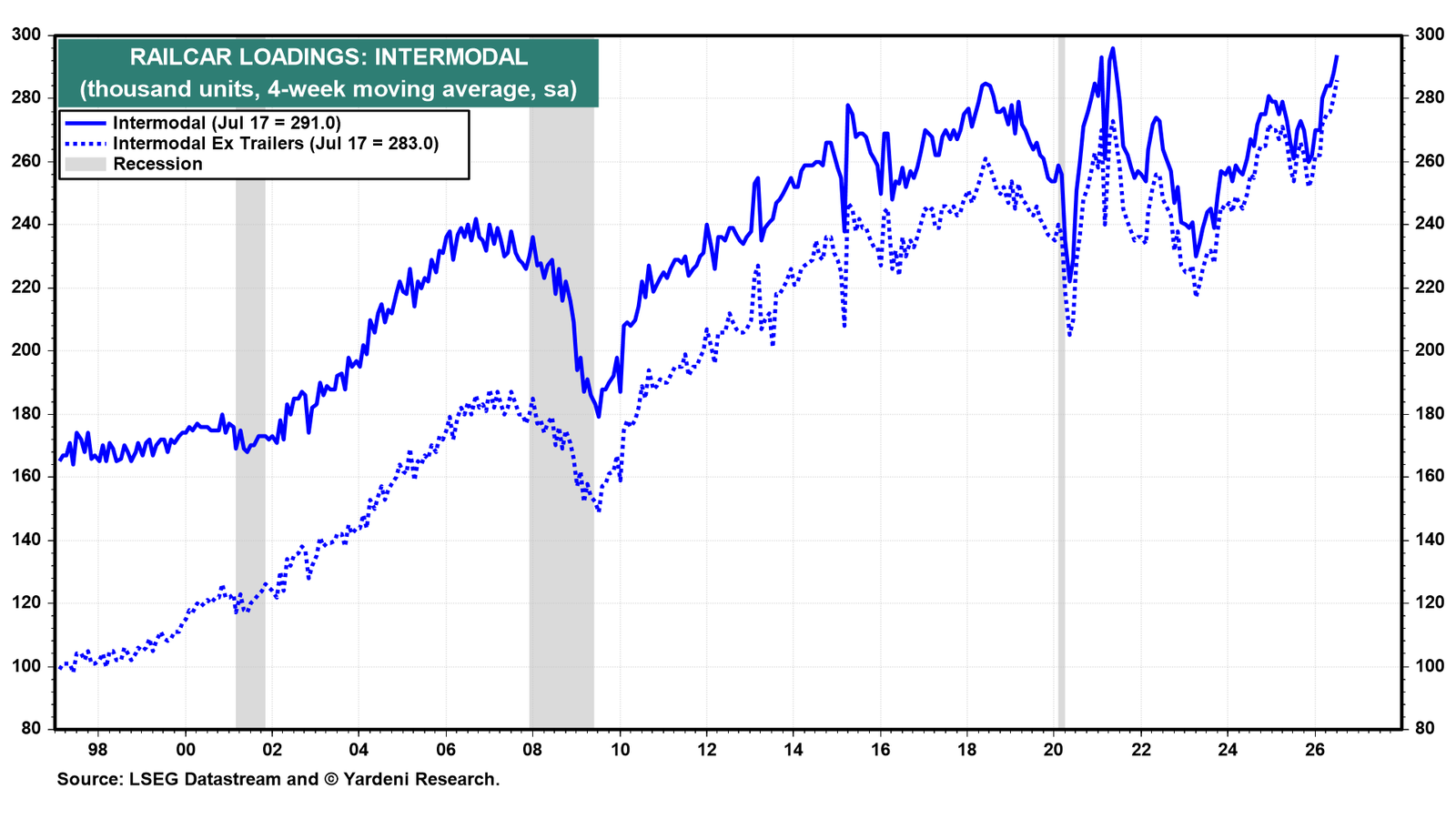
Weekly rail car loadings are back at record highs (chart). The economy is chugging along just fine.