"Ain't No Stoppin' Us Now" is a 1979 disco song performed by R&B duo McFadden & Whitehead. American consumers agree. For a long time now, their doubters warned that a low savings rate, flatlining real disposable income, rising consumer debt, and mounting affordability challenges would force households to retrench. Instead, they continue to do what they do best, namely shop! A well-balanced labor market and the wealthiest retiring generation ever continue to power consumer spending.
Let's review the latest upbeat developments:
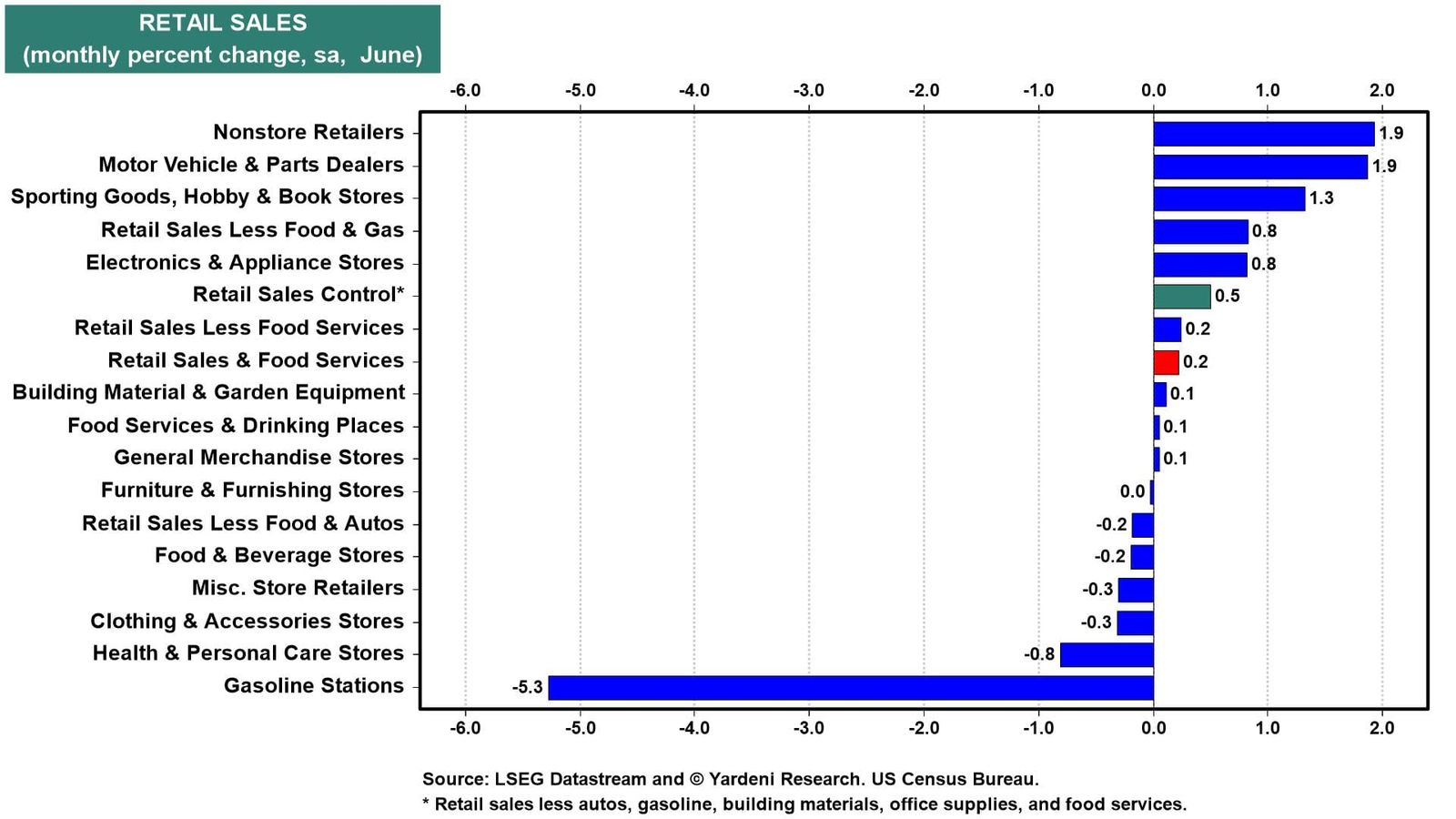
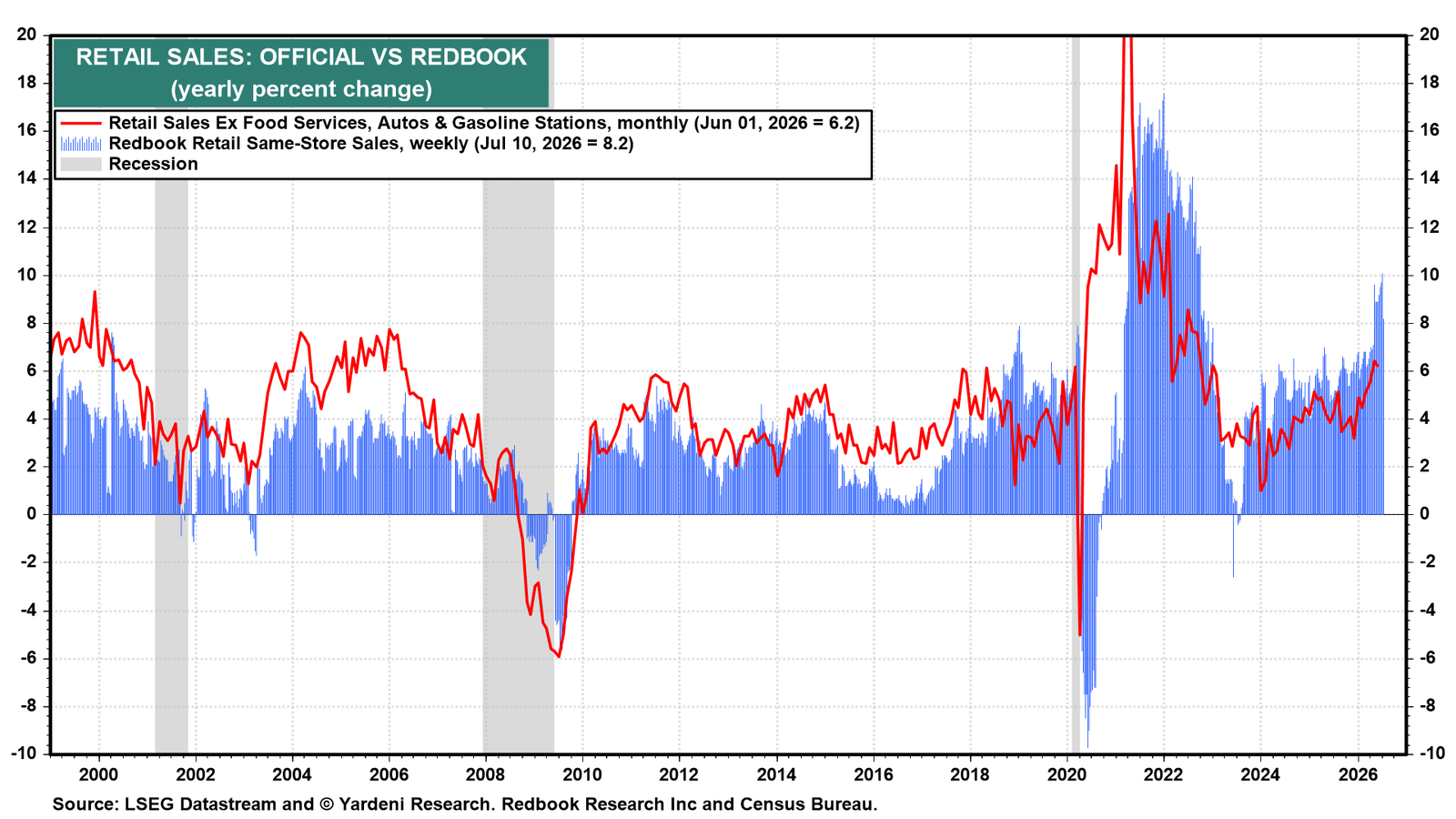
(1) Retail Sales. Retail sales (including food services) rose 0.2% m/m in June after a 1.0% gain in May (chart). The slowdown largely reflected a 5.3% drop in gasoline station sales as pump prices fell by roughly 50 cents per gallon. Excluding gasoline but including food services, sales increased a solid 0.7%, with gains across the board. Nonstore retail sales jumped 1.9%, the largest monthly increase in a year, likely boosted by Amazon's Prime Day. Encouragingly, control group sales, a key input into GDP goods spending, rose by 0.5%. For Q2 as a whole, control-group sales advanced at a remarkable 9.2% annualized rate.
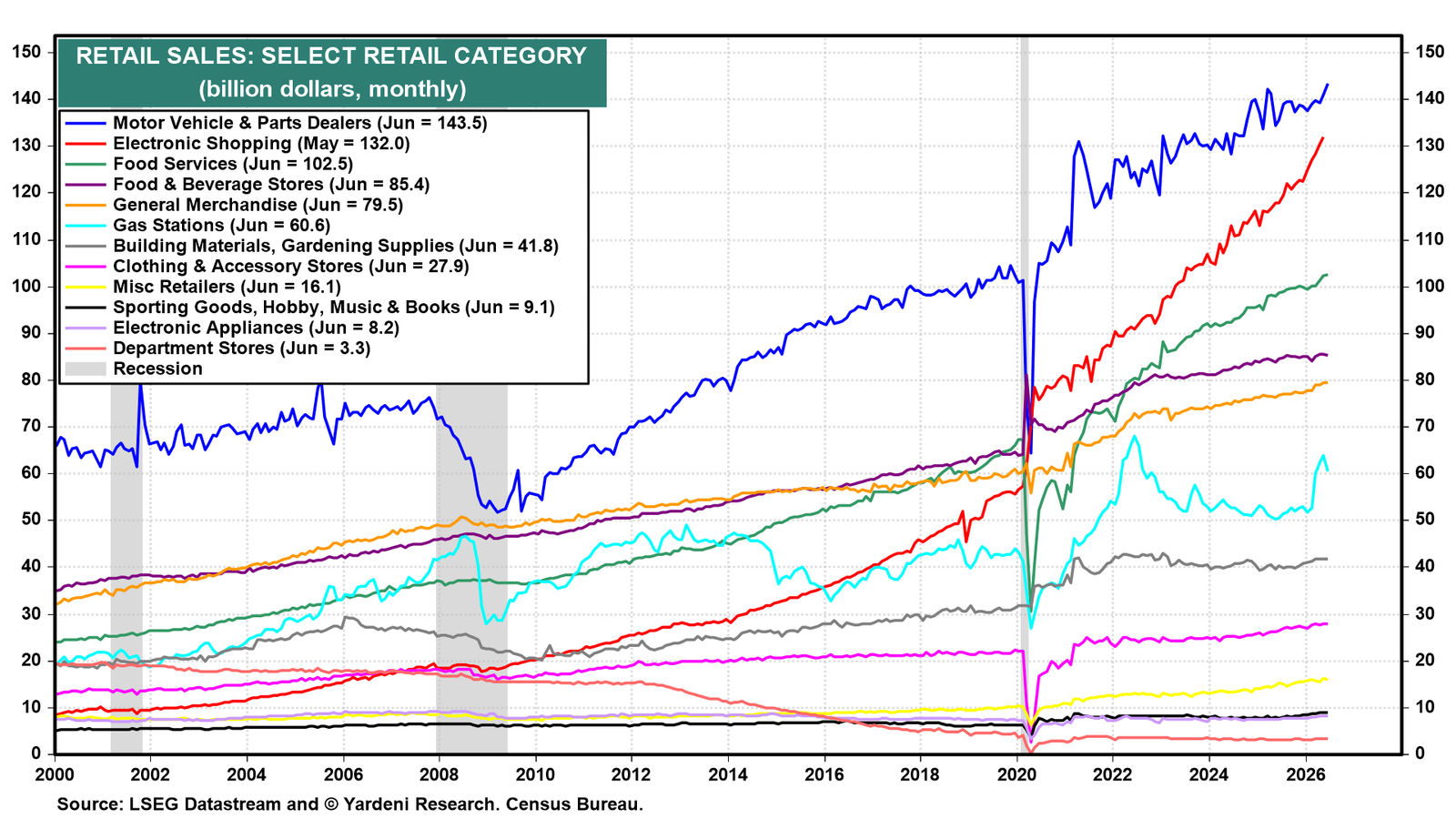
Several sales categories rose to new record highs in June, including discretionary areas such as motor vehicles, electronic shopping, and general merchandise (chart). Food services, the only services category in the report, also climbed to a record high.
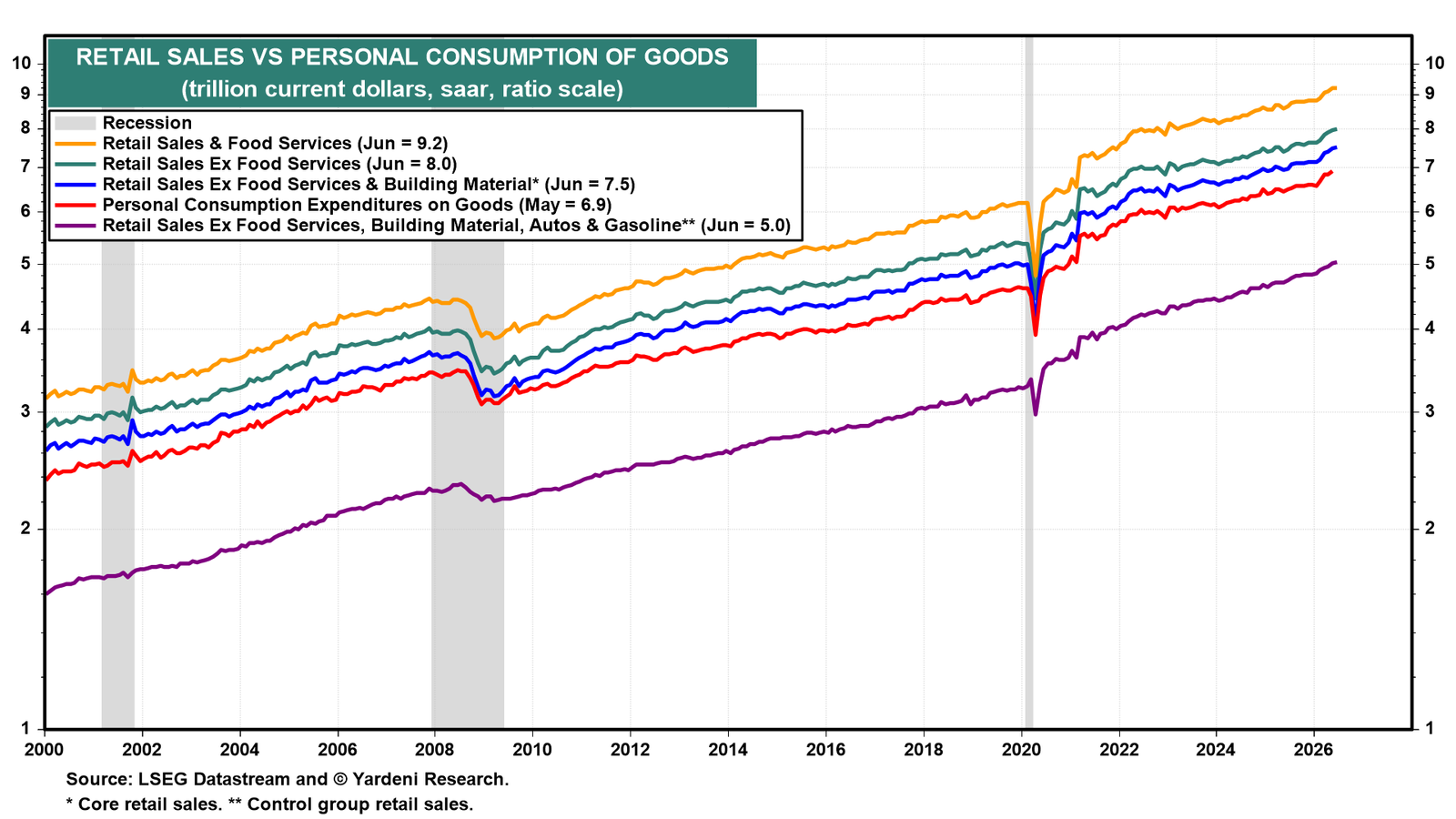
Meanwhile, the solid gain in core retail sales (excluding food services and building materials) suggests the June PCE report should show a solid increase in goods spending (chart).
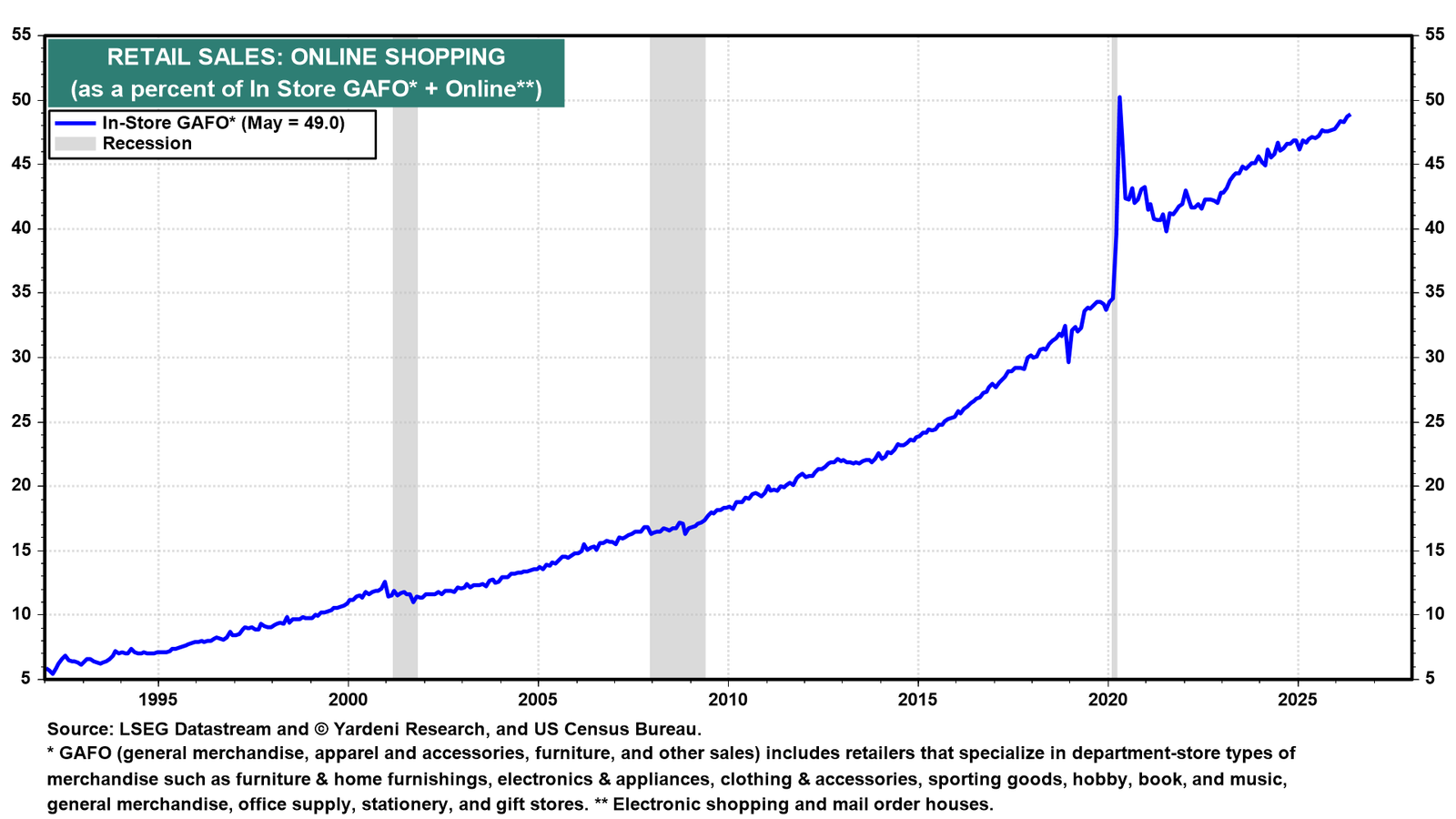
Online retailers' share of GAFO sales has climbed to nearly 50% (chart).
The strong retail sales report came as no surprise, as Redbook same-store sales remained strong in June (chart). They slowed to 8.2% in the week ended July 10, but that's still a solid increase. Spending might cool in July as the World Cup ends.
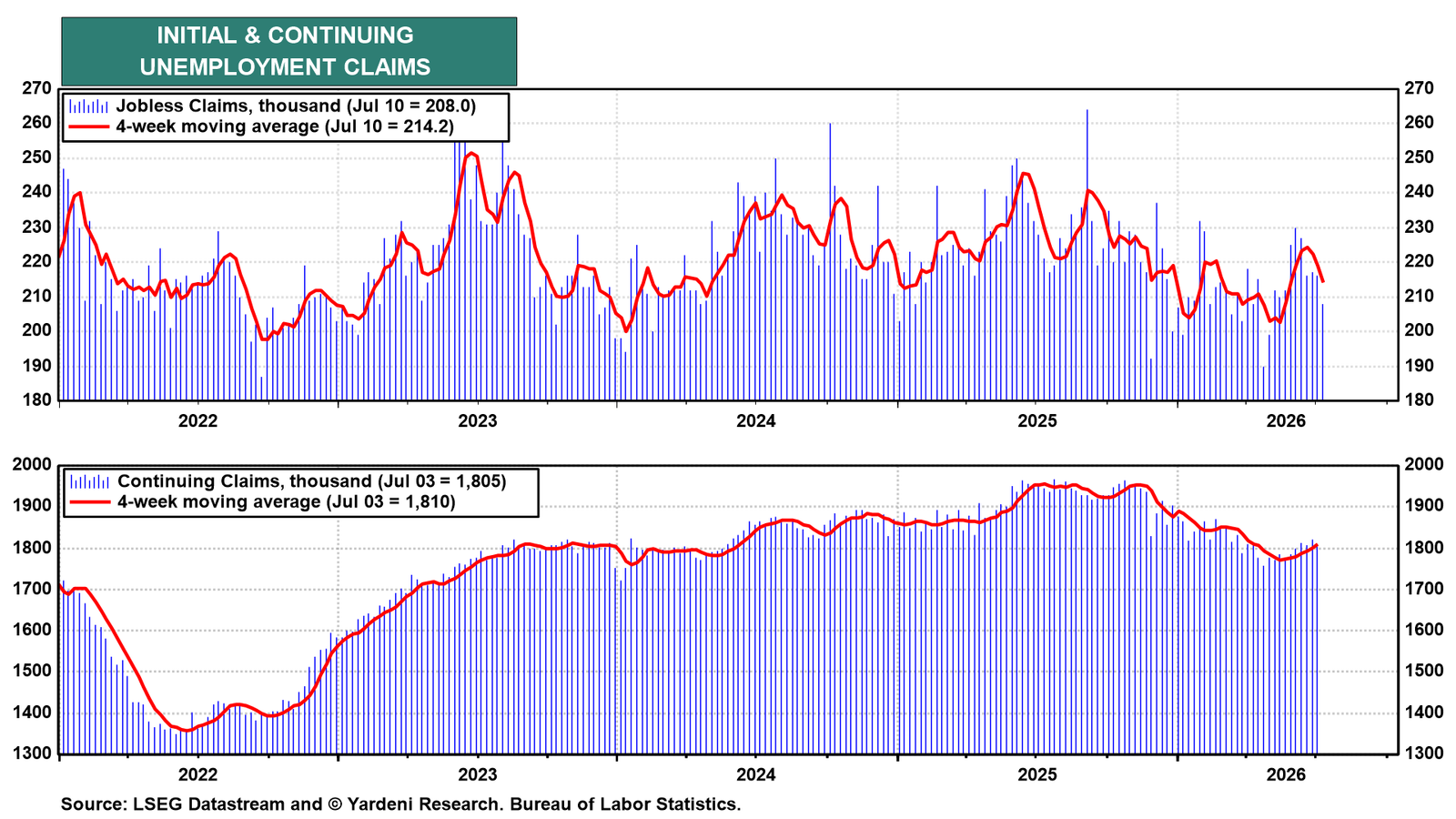
(2) Labor market. The labor market remains in very good shape. Initial jobless claims fell to a 10-week low of 208,000 in the week ended July 10, while continuing claims eased to 1.81 million. Together, the data suggest layoffs remain very low.
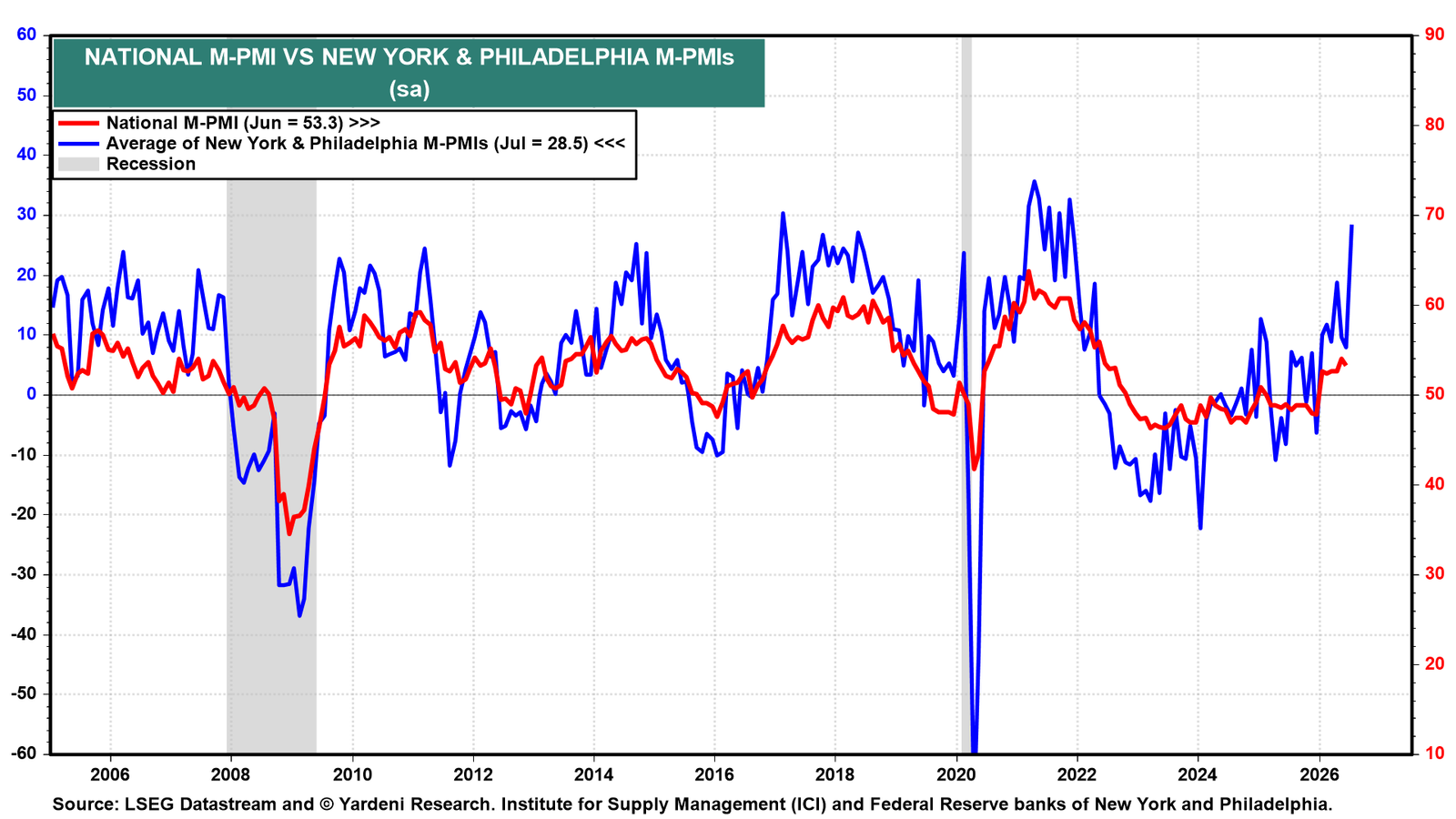
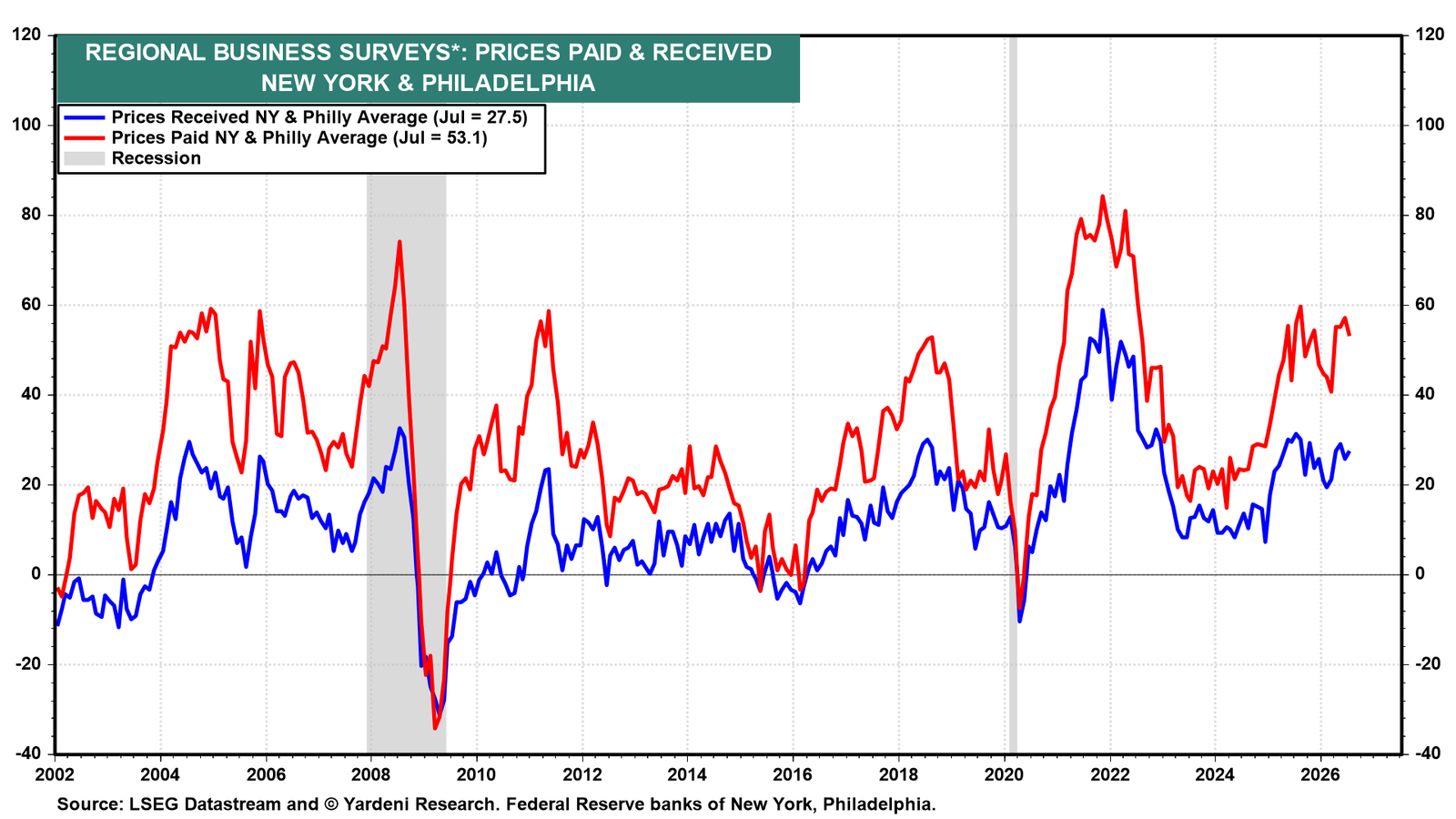
(3) Regional business surveys. Manufacturing activity is picking up nicely. The average of the New York and Philadelphia Fed manufacturing indexes jumped to 28.5 in July, the highest since 2022, suggesting another gain in the national ISM manufacturing index this month (chart).
The averages of the prices-paid and prices-received indexes in the two surveys moderated in July but remained elevated (chart).
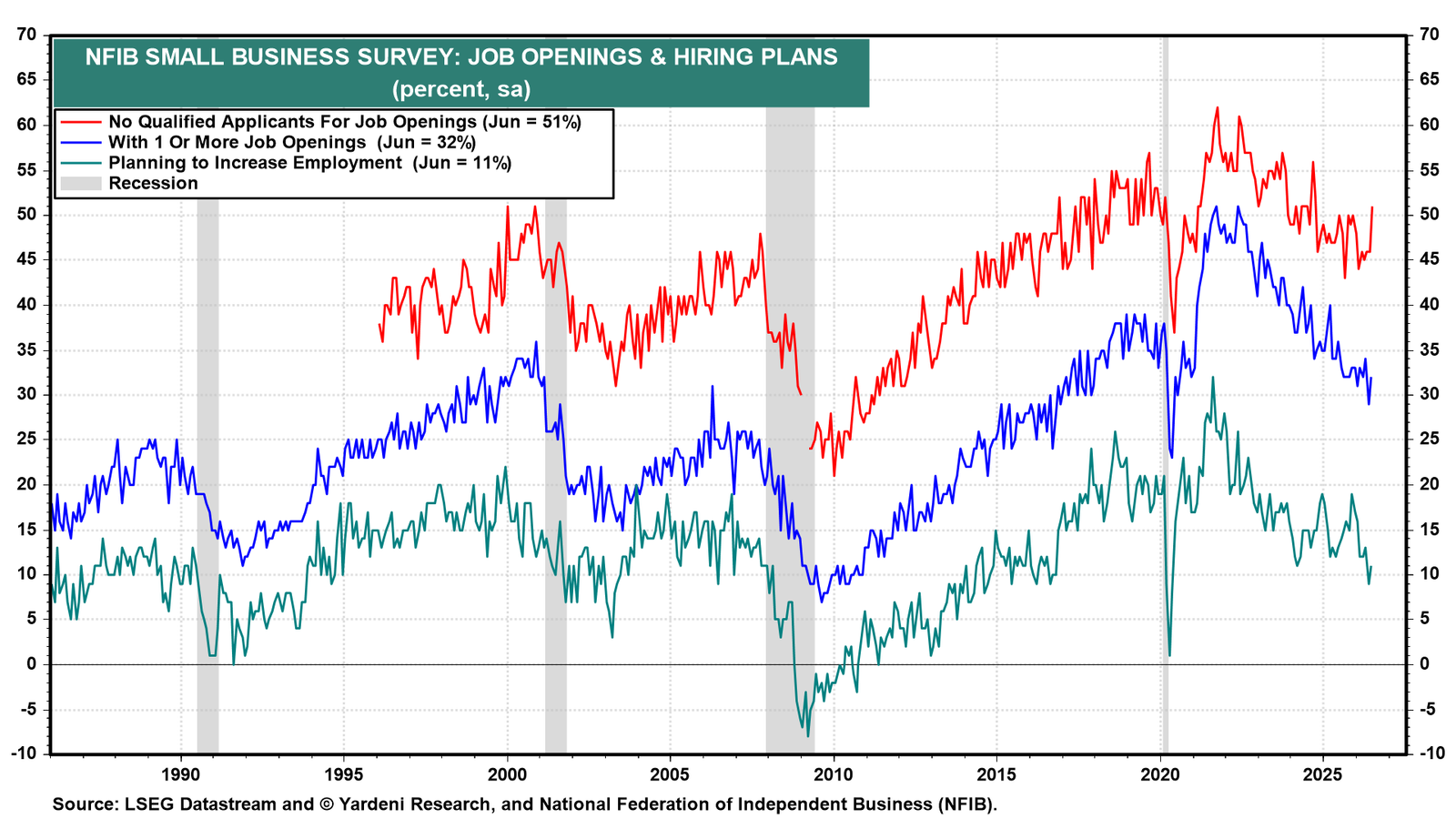
(4) Small business owners survey. Job openings and hiring plans among small businesses improved in June. The share of owners reporting unfilled positions rose to 32%, while a net 11% plan to create new jobs (chart). Meanwhile, 51% cited a lack of qualified applicants, supporting our view that the labor market continues to face a skills mismatch.
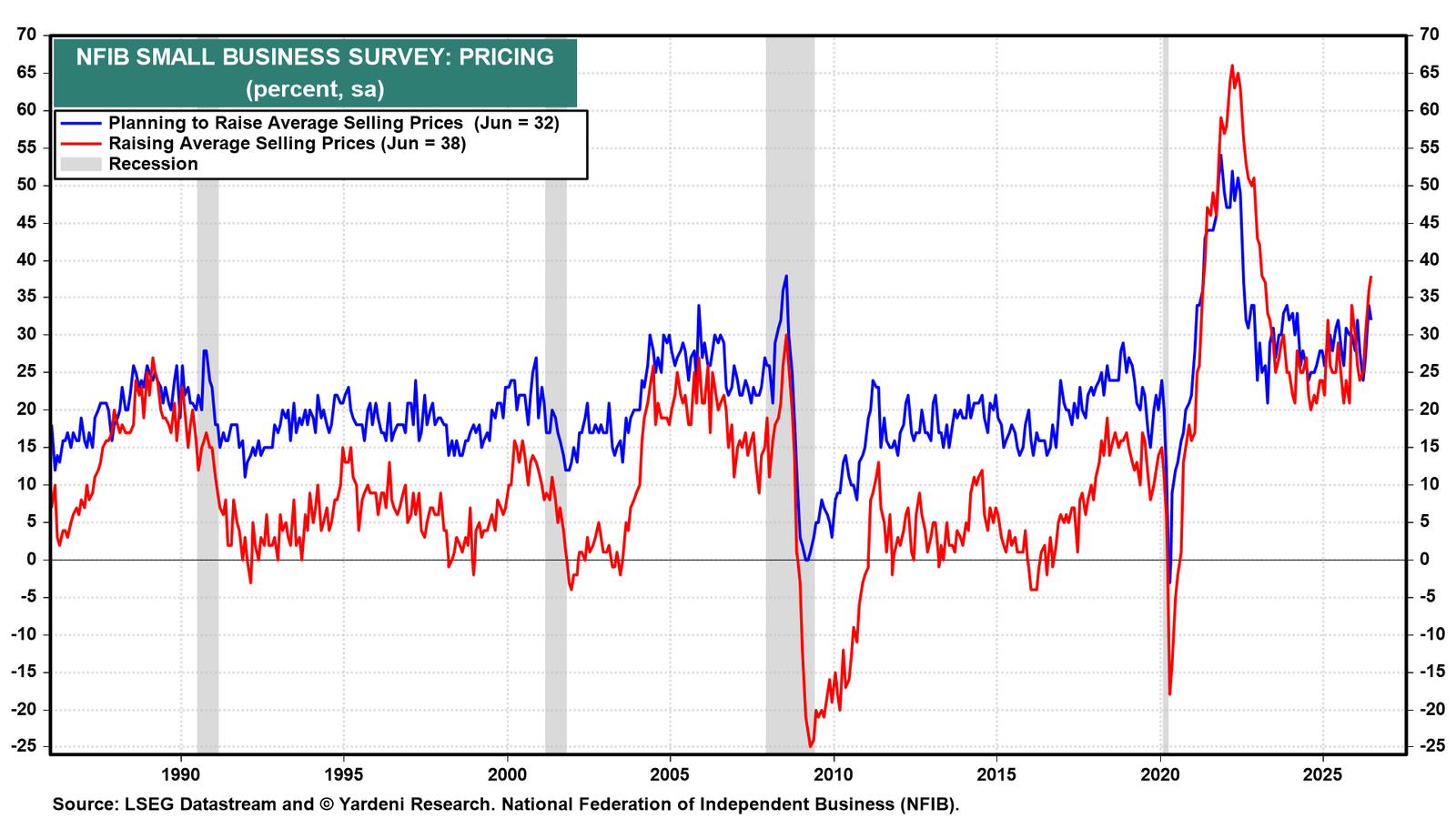
The percent of small business owners raising selling prices rose to 38% in June, the highest reading since January 2023, and 32% are planning to do so (chart).
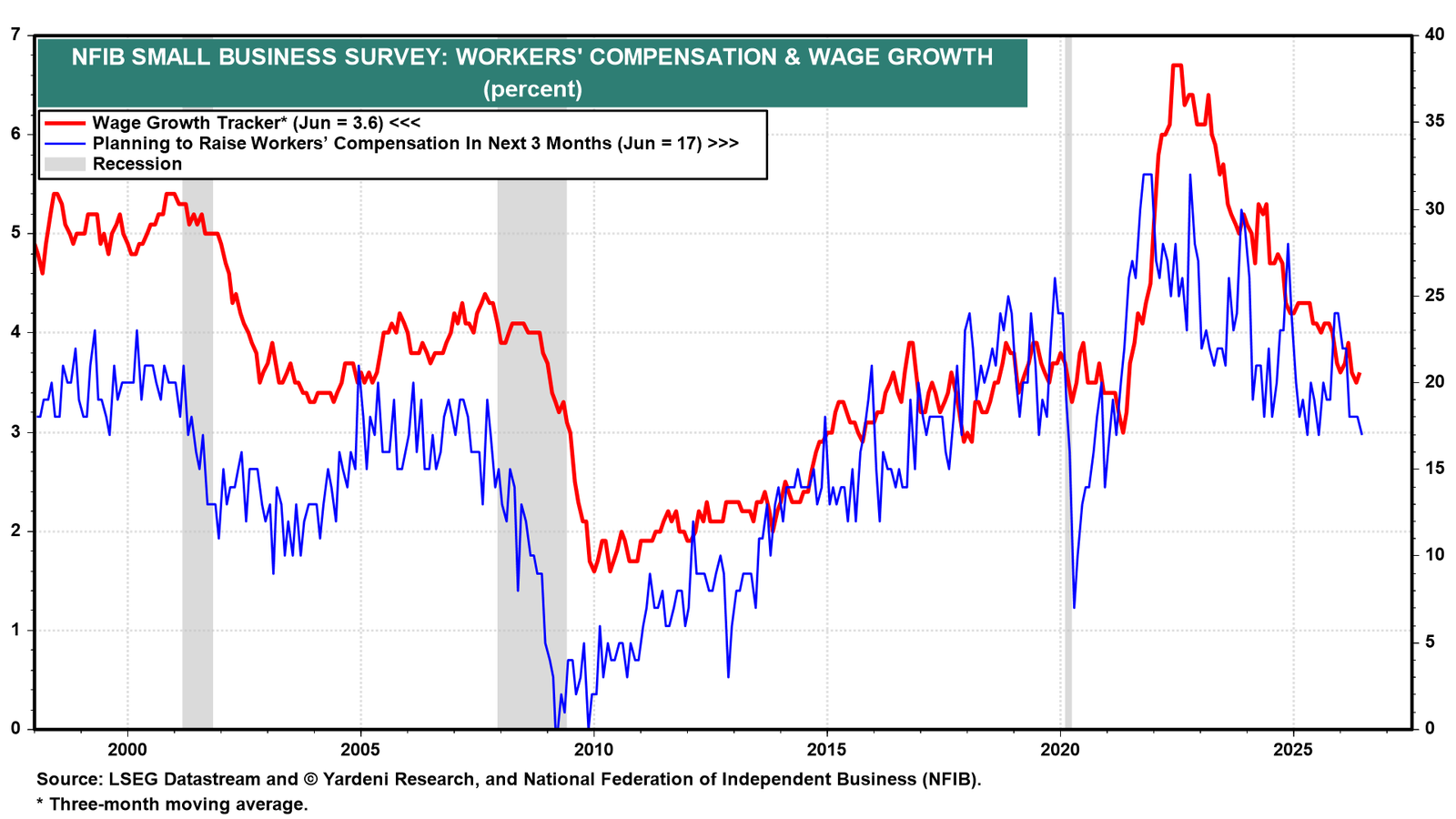
Only 17% of small business owners planned to raise worker compensation over the next three months, matching the lowest reading since July 2025. This supports our view that there's no wage-price spiral during the current inflationary oil shock, as there was in 2021 and 2022 (chart).
(5) GDPNow. The Weekly Economic Index combines 10 high frequency economic indicators. Its latest reading is consistent with real GDP growth of around 2.6% y/y (chart).
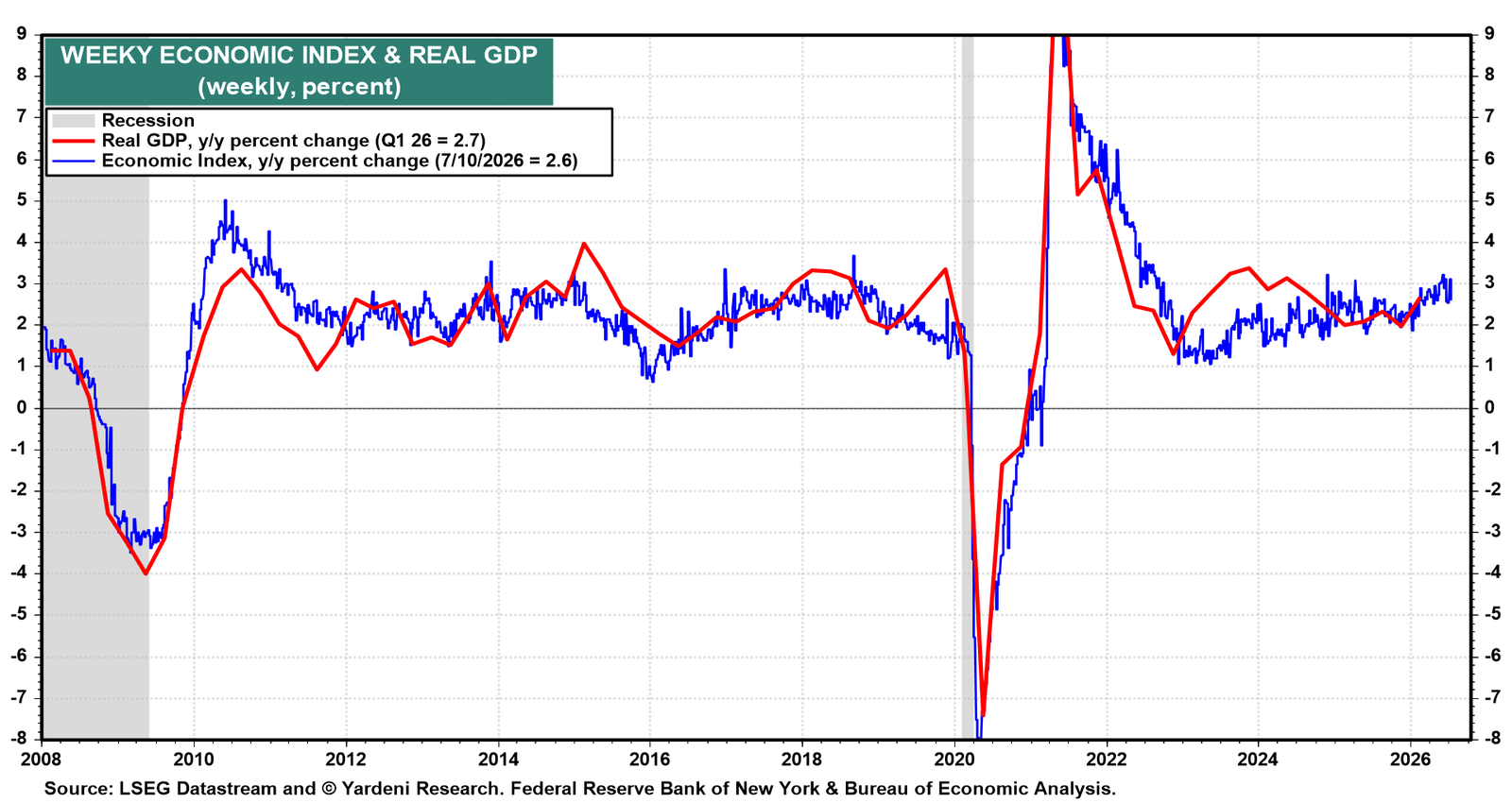
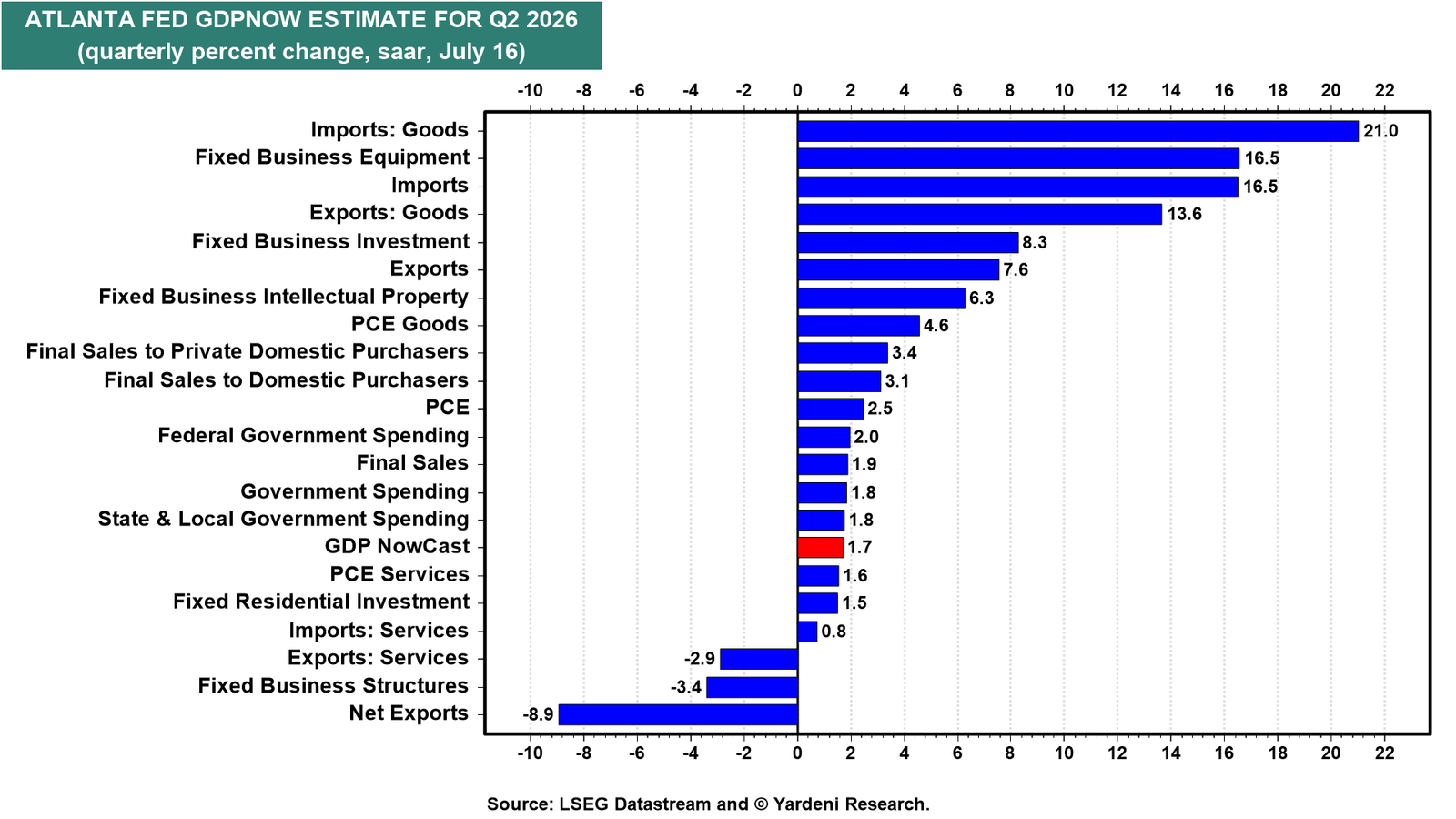
The Atlanta Fed's GDPNow tracking model currently shows Q2 real GDP growth at 1.7% (saar) (chart). Much of the weakness reflects a surge in AI-related imports, with net exports expected to subtract 96 basis points from growth. By contrast, consumer spending is projected to rise a solid 2.5% (saar), up from 0.5% in Q1, while final sales to private domestic purchasers is expected to increase 3.4%, up from 1.7%.