Will the FOMC raise the federal funds rate (FFR) at its July 28-29 meeting? Foggetaboutit! Today's CPI inflation report was surprisingly subdued across the board. Inflation remains above the Fed's 2.0% target, so the FOMC is likely to maintain its tightening stance, which was adopted in June. However, after the latest inflation report, there is no rush for the FOMC to act, contrary to our earlier expectations.
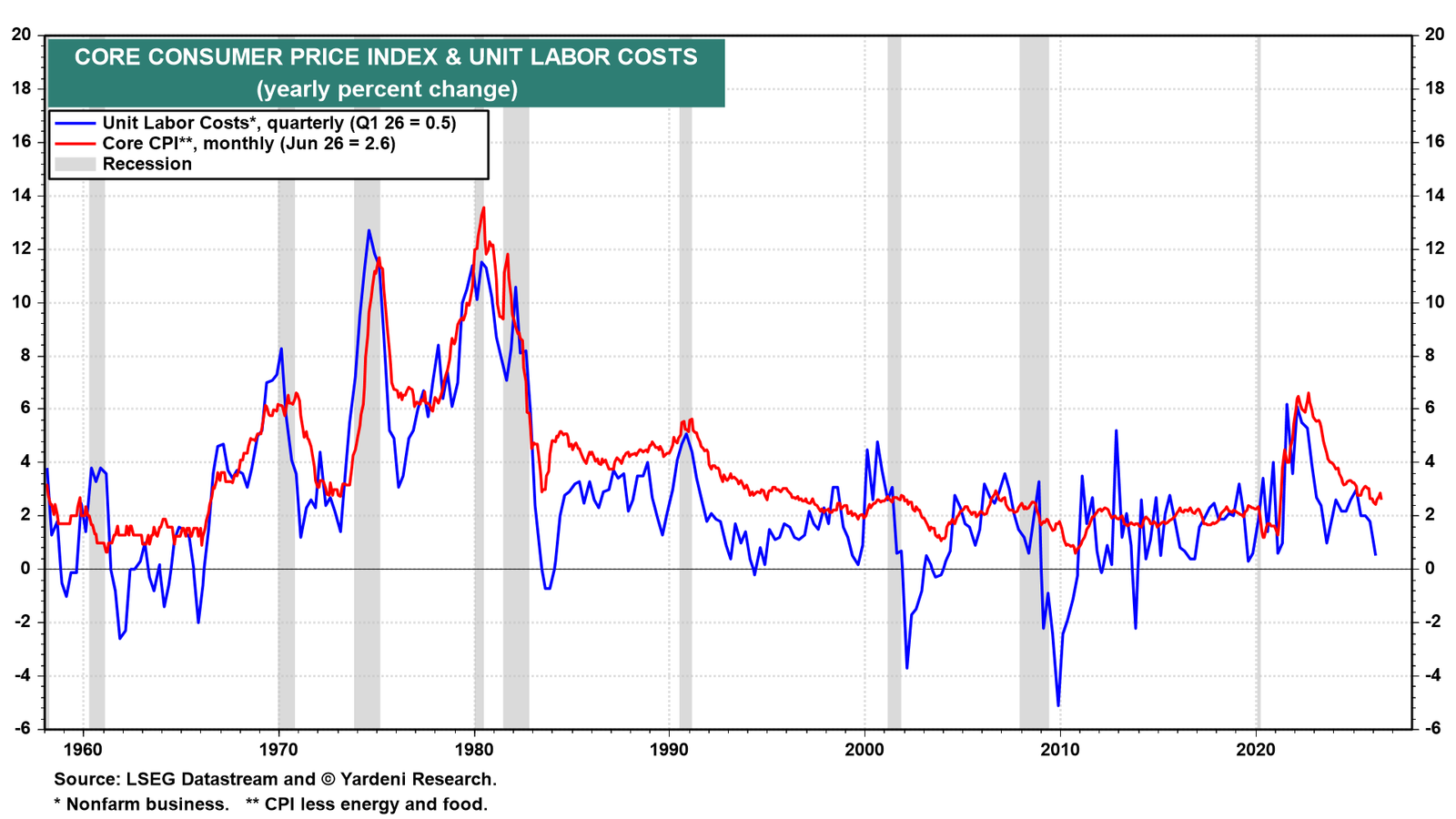
Our Roaring 2020s scenario may be working its magic as productivity growth has reduced unit labor cost (ULC) inflation to 0.5% y/y during Q1-2026 (chart). During the previous inflation surge, ULC inflation soared due to a significant wage-price spiral, which isn't happening this time.
Let's review today's important Fed-related developments:
(1) Warsh's Spin. The topic of inflation dominated Kevin Warsh’s first congressional testimony as Fed chair today. He stressed that the Fed has “no tolerance for persistently elevated inflation” and remains committed to returning inflation to 2%, arguing that inflation is ultimately the responsibility of monetary policymakers.
Warsh cautioned against viewing June’s lower-than-expected CPI inflation report today as “mission accomplished,” emphasizing that the Fed’s credibility depends on restoring price stability. At the same time, he was enthusiastic about the AI boom, which he saw as a reason to be optimistic about the outlook for the economy and inflation. He said that the spending on data centers, software, and infrastructure should boost productivity, raise the economy’s non-inflationary growth rate, and help ease inflation pressures over time. His core message was that the Fed must stay focused on inflation while recognizing AI’s potential to support stronger, less inflationary growth.
In other words, the new Fed chair endorsed our Roaring 2020s narrative!
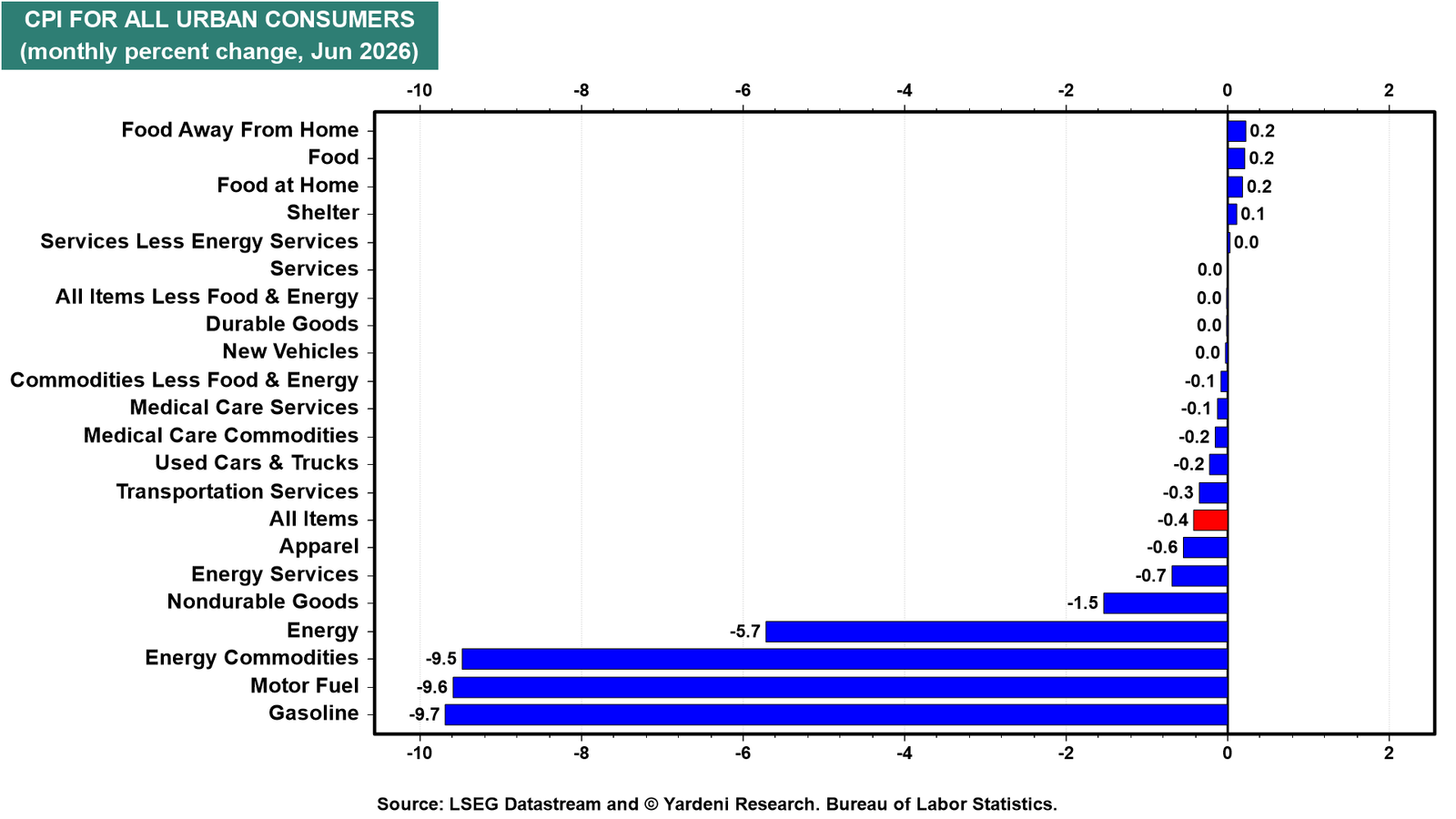
(2) CPI Inflation (m/m). Warsh’s testimony was accompanied by a surprisingly subdued June CPI inflation report. The headline CPI fell 0.4% m/m, the first monthly decline in six years, led by a big 9.7% m/m drop in gasoline prices (chart). However, the moderation was widespread, with the core CPI unchanged. Core goods prices fell 0.1%, and core services remained unchanged.
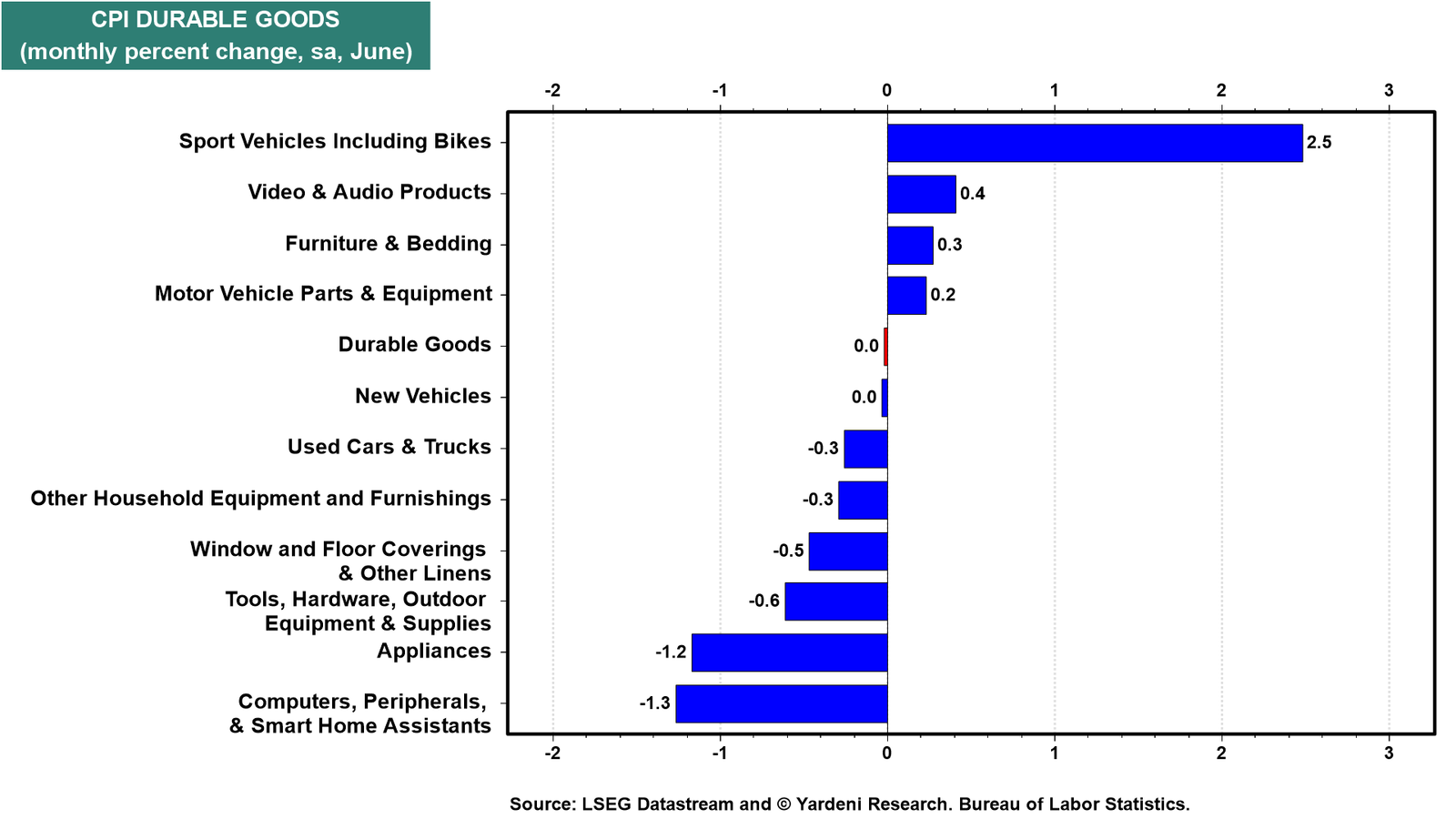
The durable-goods component of the CPI was unchanged m/m (chart). Notably, prices for computers, peripherals, and accessories fell 1.3%, suggesting that the recent surge in memory chip prices has yet to feed through to consumer electronics. With Apple and Microsoft announcing price increases, this category could soon become a larger source of inflation pressure.
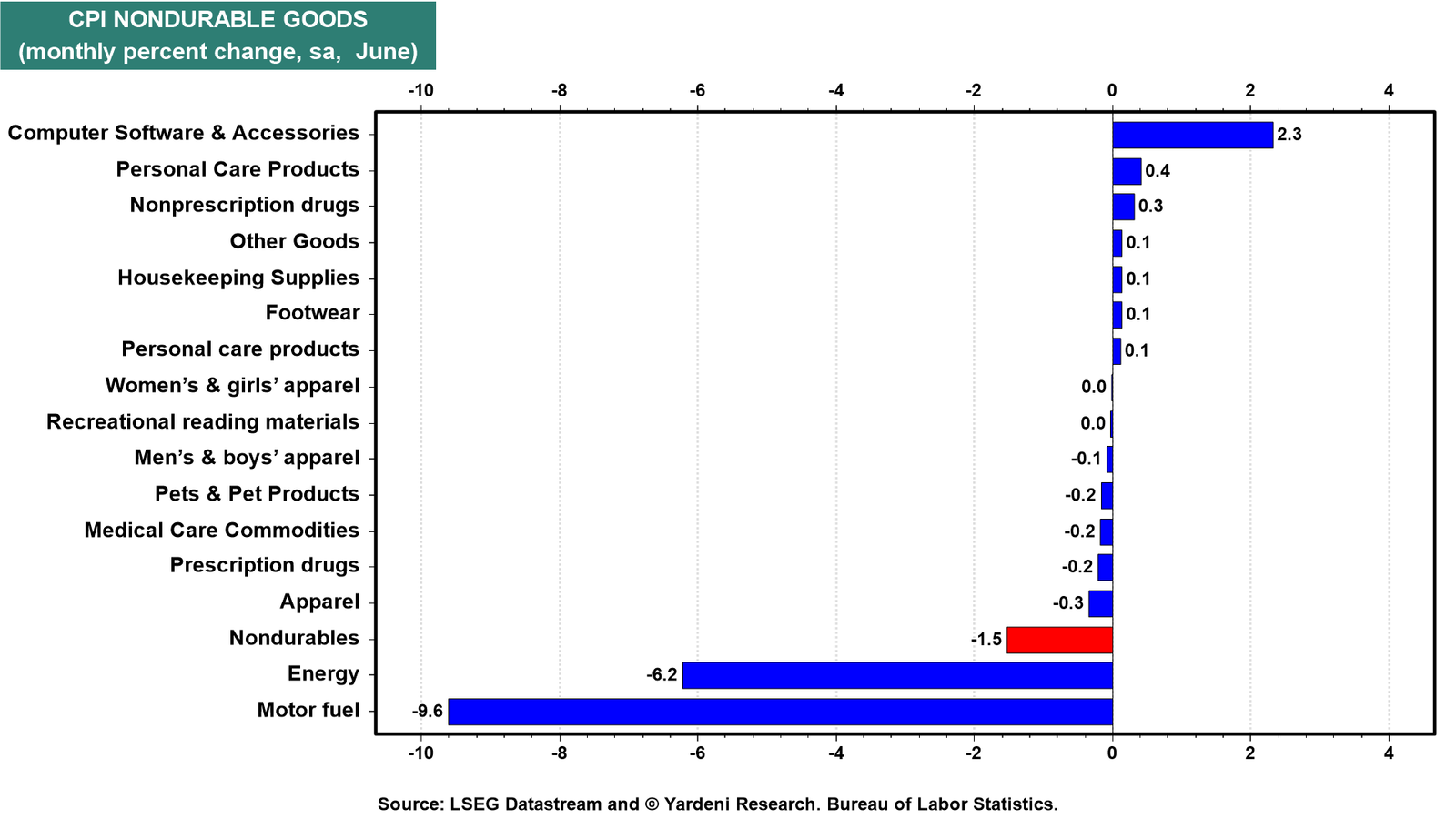
The nondurable goods CPI fell 1.5% m/m, driven largely by energy-related categories (chart). The main source of inflation was computer software and accessories, which rose 2.3%. This category is where AI-related inflation is most apparent, as strong demand for AI-enabled software has allowed providers to raise prices.
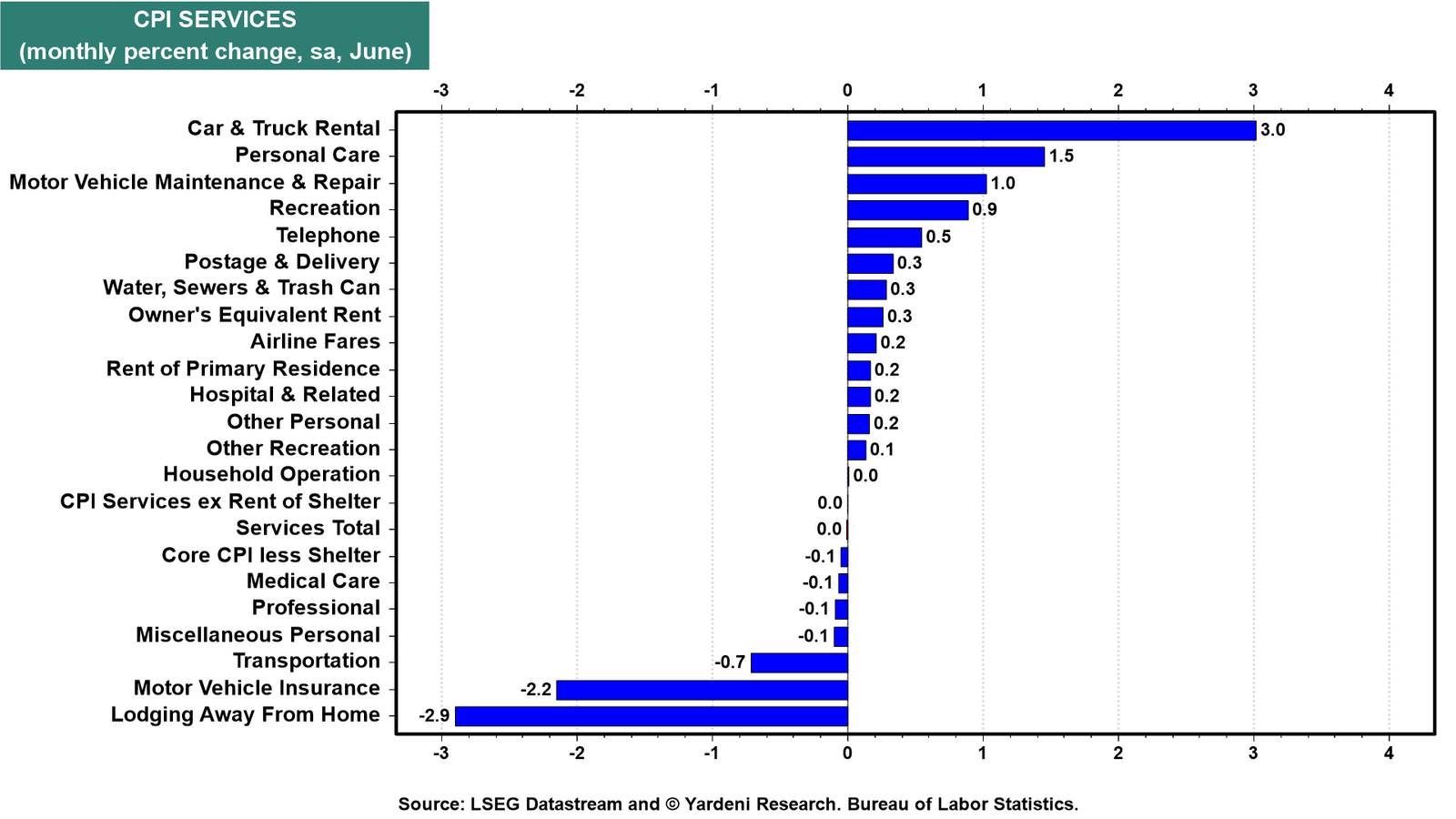
The CPI for services was unchanged m/m in June (chart). The weakness reflected the lowest monthly shelter inflation since January 2021, as well as a decline in lodging away from home.
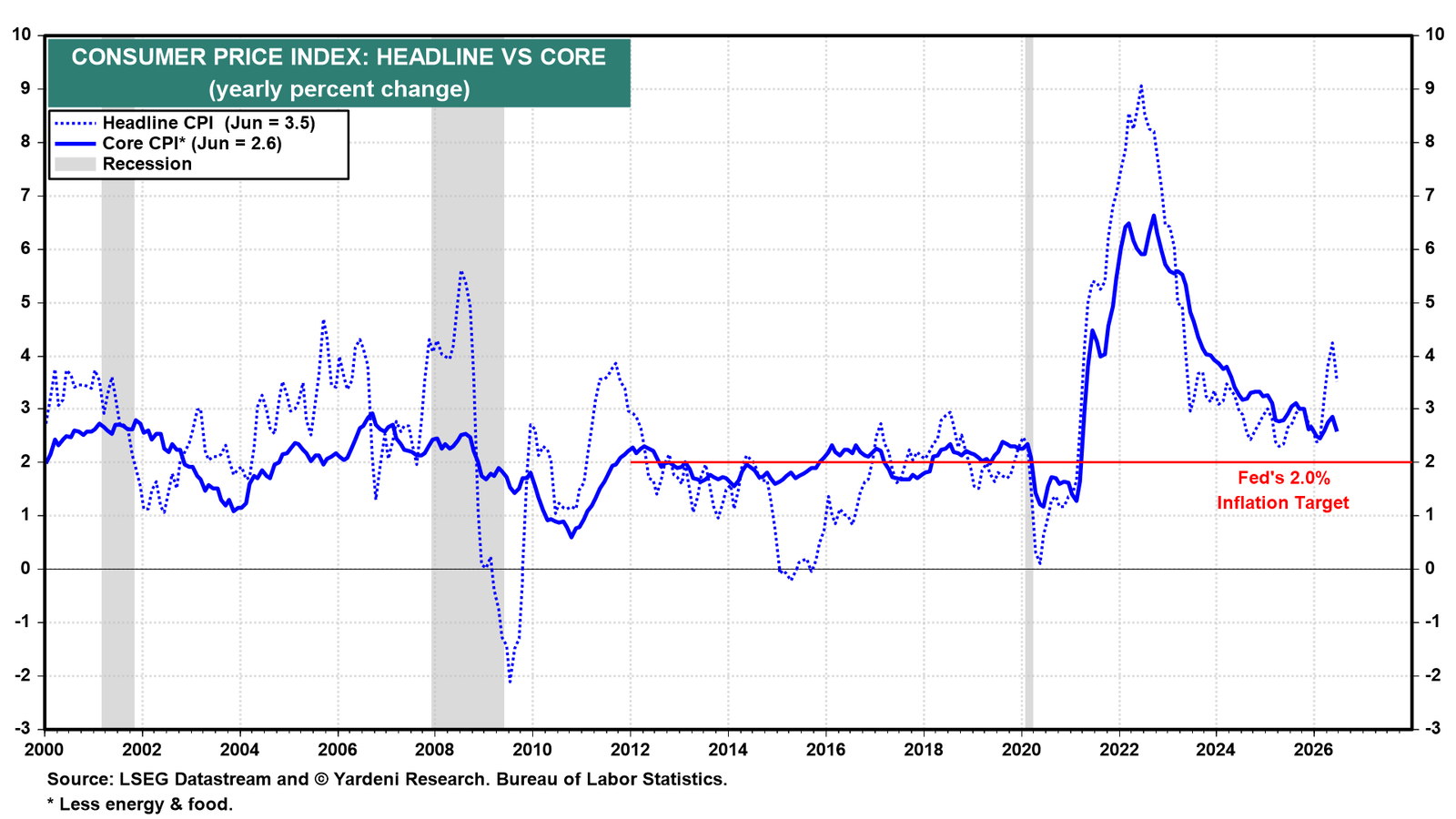
(2) CPI Inflation (y/y). Headline inflation moderated in June but remained elevated at 3.5% y/y (chart). At 2.6% y/y, core CPI inflation is much closer to the Fed's 2% target.
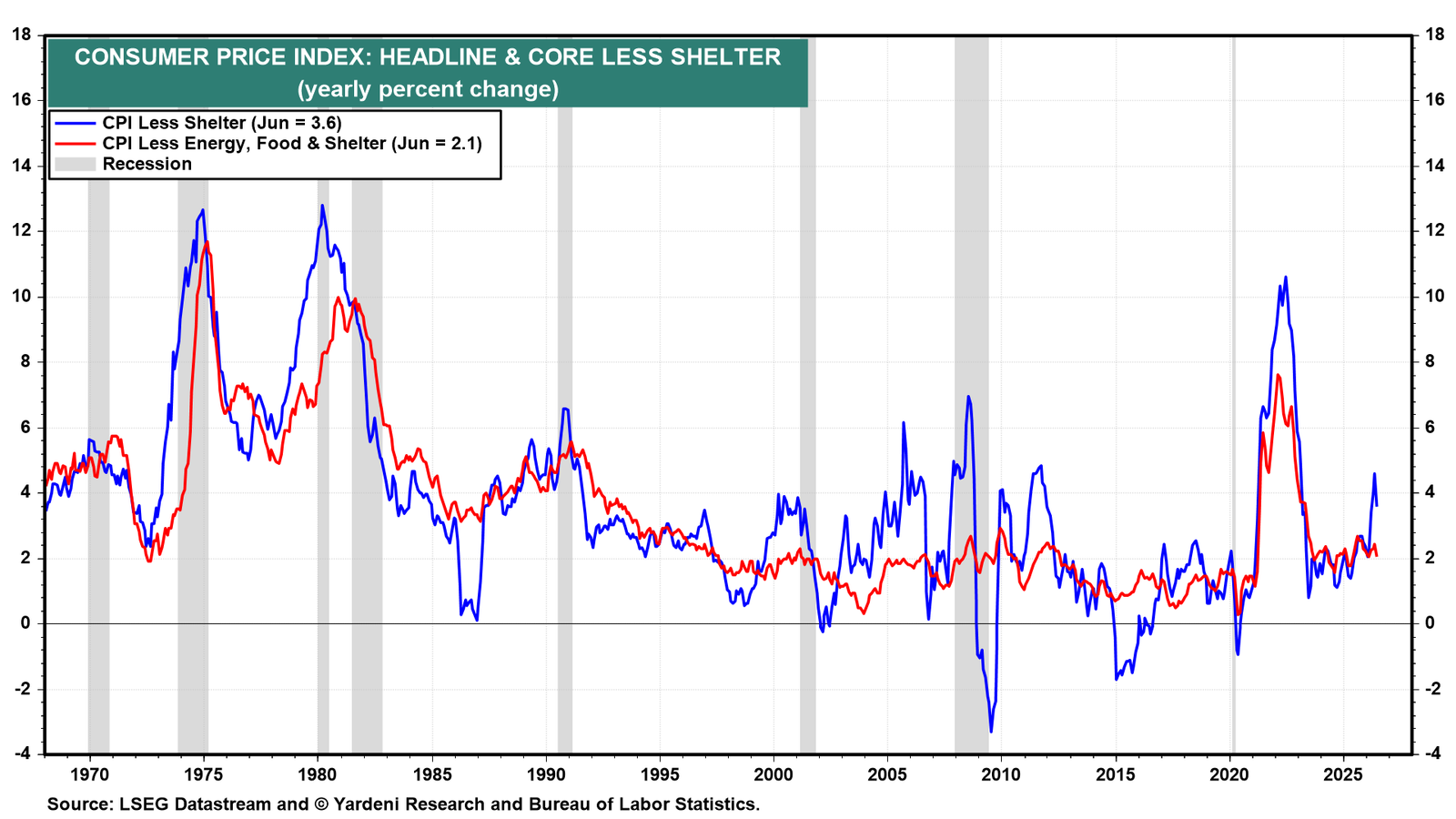
We have long argued that the CPI excluding shelter (especially owner's occupied rent) provides a clearer view of underlying inflation, given the lagged nature of shelter inflation. While the CPI less shelter remains elevated at 3.6% y/y, it is running at just 2.1% once food and energy are also excluded (chart).
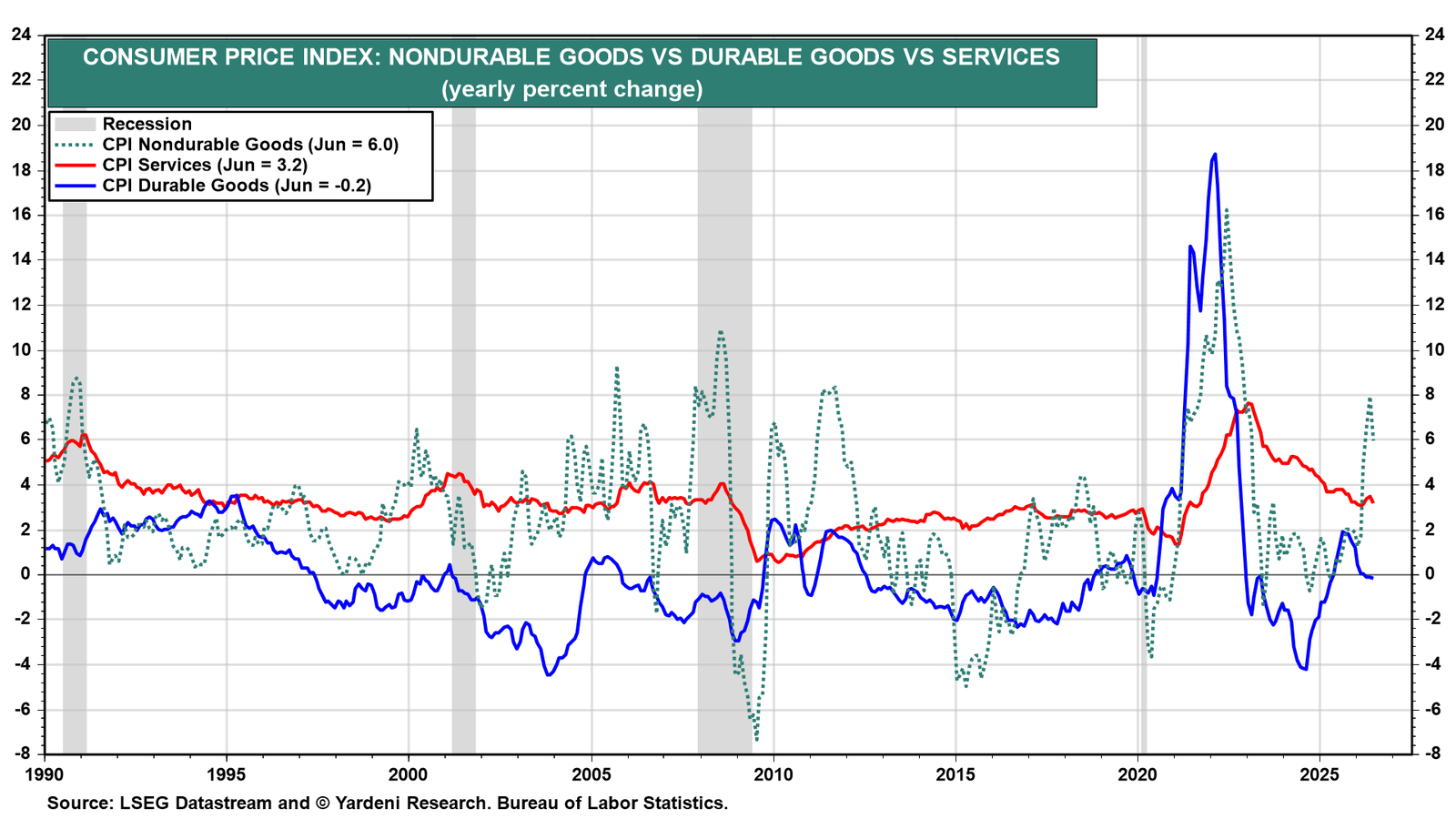
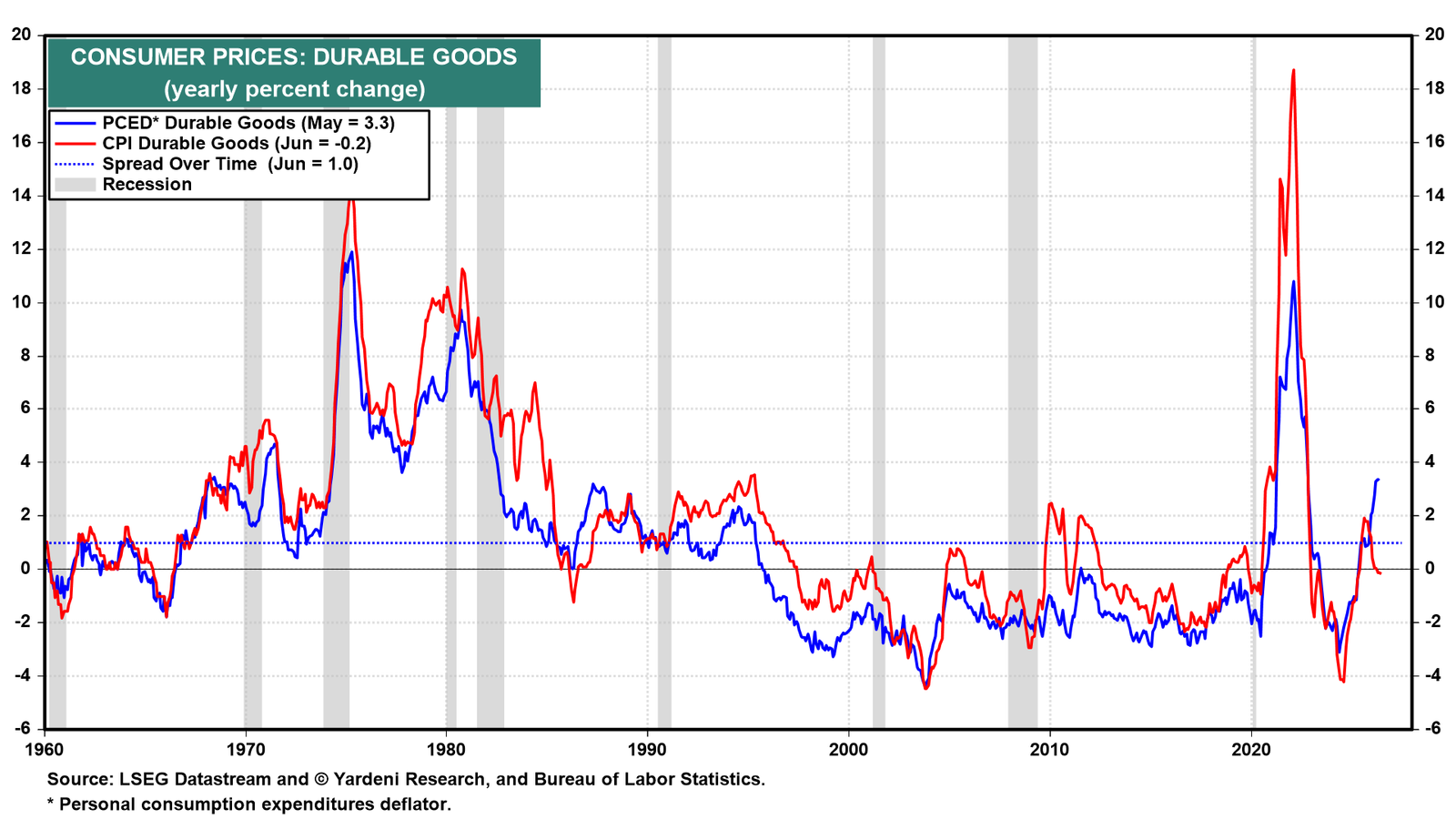
What is keeping inflation elevated are services and nondurable goods, which both moderated in June. Durable goods inflation is back in deflationary territory (chart).
A notable divergence has emerged between the PCED and the CPI for durable goods inflation (chart). The former is clearly rising, while the latter is edging lower. Used car prices have been falling (chart). They carry a larger weight in the CPI than in the PCED and therefore provide a stronger disinflationary tailwind for the former.
In addition, the surge in software prices is boosting the durable-goods component of the PCED, as software is classified as a durable asset, whereas the CPI for durable goods excludes software entirely.
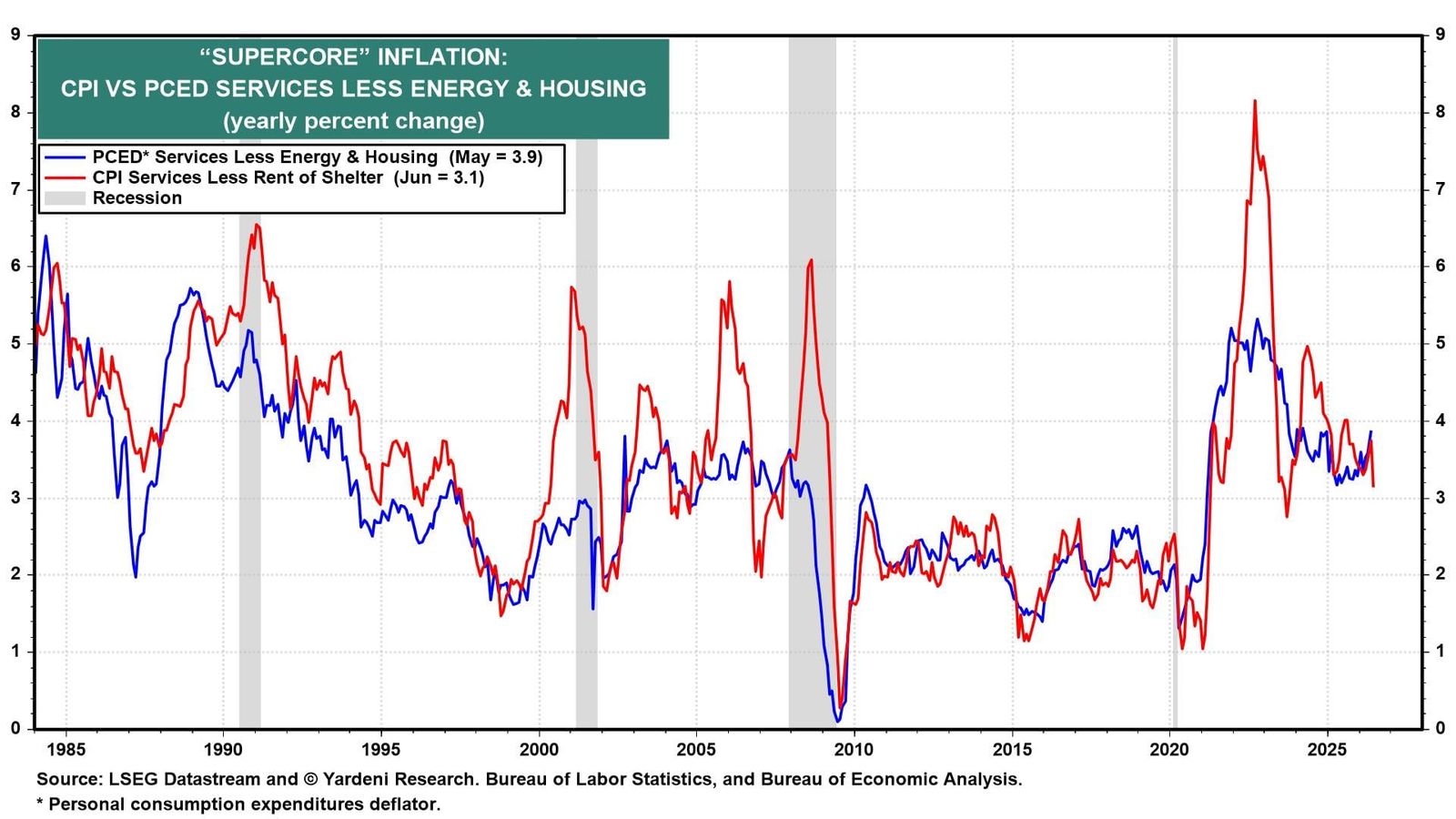
Encouragingly, the CPI supercore inflation rate moderated in June but remains elevated at 3.1% y/y (chart).
The bottom line: June’s CPI report reduced the urgency for a Fed rate hike. However, the AI buildout and tariffs will likely keep goods inflation elevated, while the disinflationary support from lower energy prices will fade in July as oil prices rebound. Additionally, the resilience of the US economy will likely keep underlying inflation sticky. As a result, inflation risks remain skewed to the upside, keeping a 2026 rate hike on the table.