The S&P 500 has been meandering around 7,500 since mid-May. Earnings should continue to drive the stock market higher. However, investors may be fretting that expectations for the upcoming earnings reporting season are so high that if they aren't exceeded, the market might swoon again in July as it did in June. If so, dip buyers are likely to limit the downside. We still expect the S&P 500 to hit 8,250 by year-end.
Consider the following:
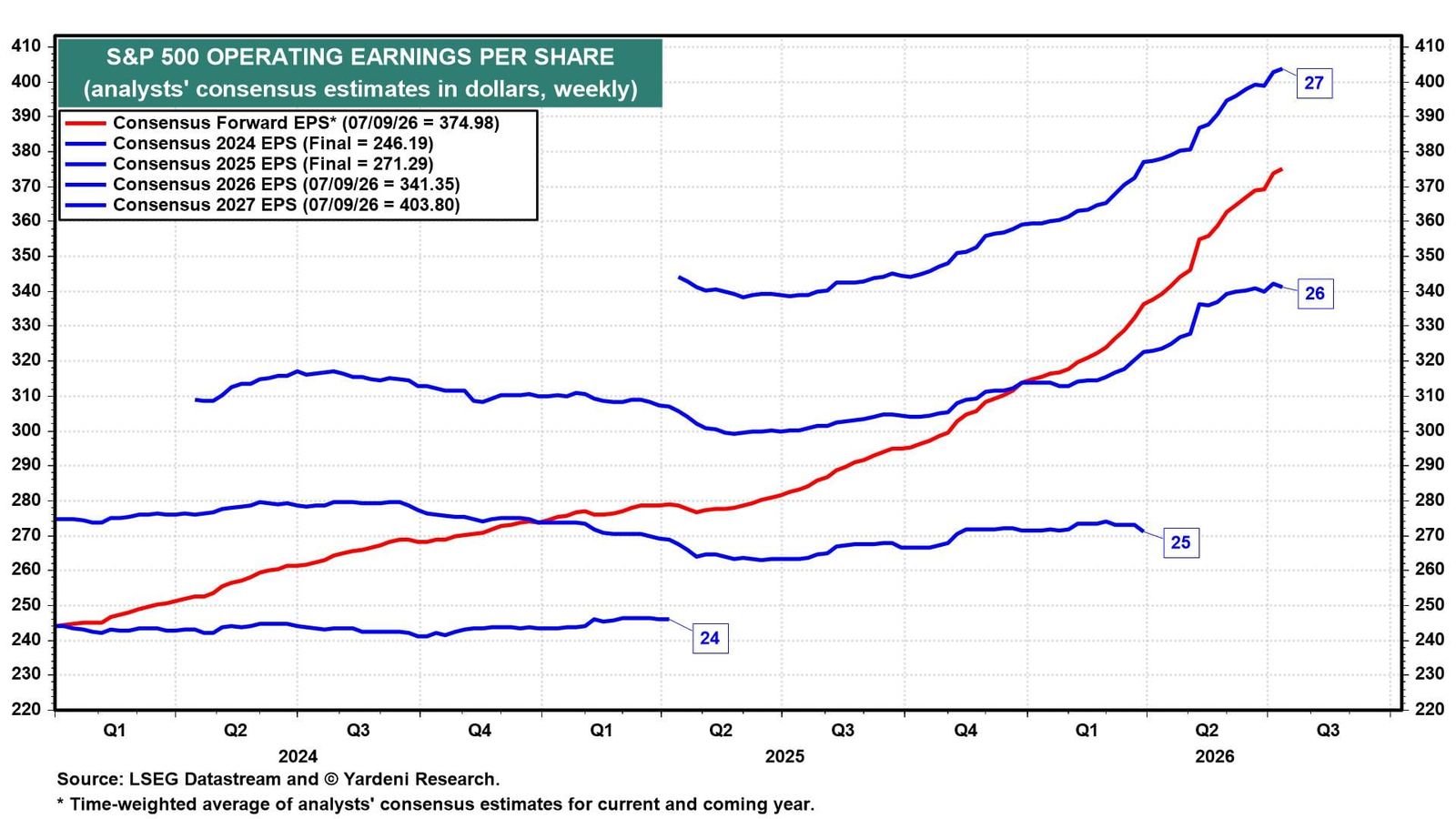
(1) Earnings. Fabulous earnings momentum (FEMO) moderated a bit heading into the Q2-2026 earnings season. S&P 500 companies’ aggregate forward earnings per share rose to yet another record high last week as the consensus 2027 EPS estimate edged higher, while the 2026 estimate dipped (chart). Forward earnings will converge with the 2027 estimate by the end of this year. That estimate is likely to continue to rise. If it reaches $412.50 by the end of this year, a 20.0 forward P/E would imply an S&P 500 level of 8,250. It could also get there with $400 earnings and a 20.6 multiple.
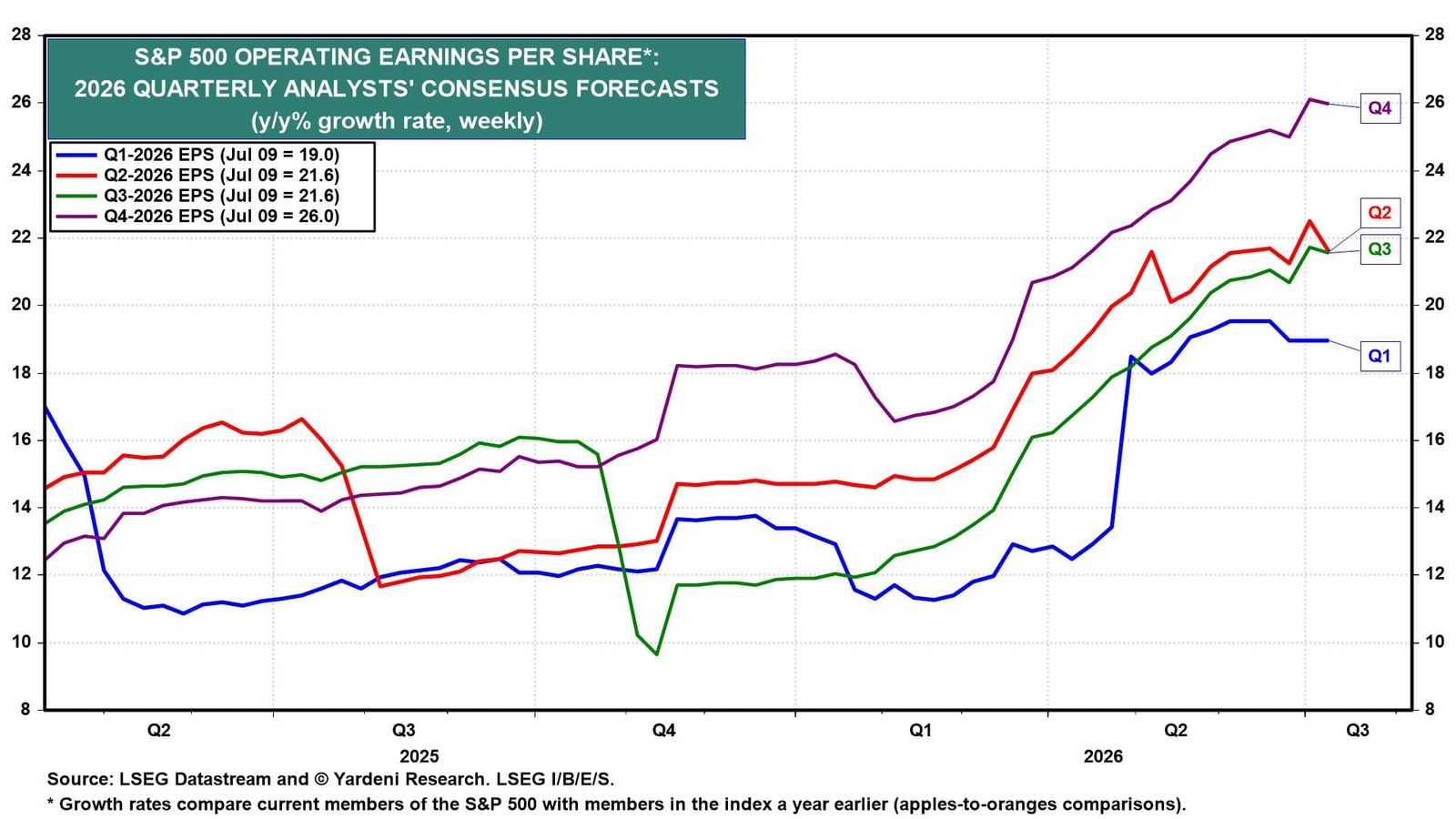
Analysts trimmed their aggregate Q2 earnings expectations slightly last week, but the estimate remains very strong, representing 21.6% y/y growth on an apples-to-oranges basis (chart). Q3 and Q4 are currently expected to be just as strong.
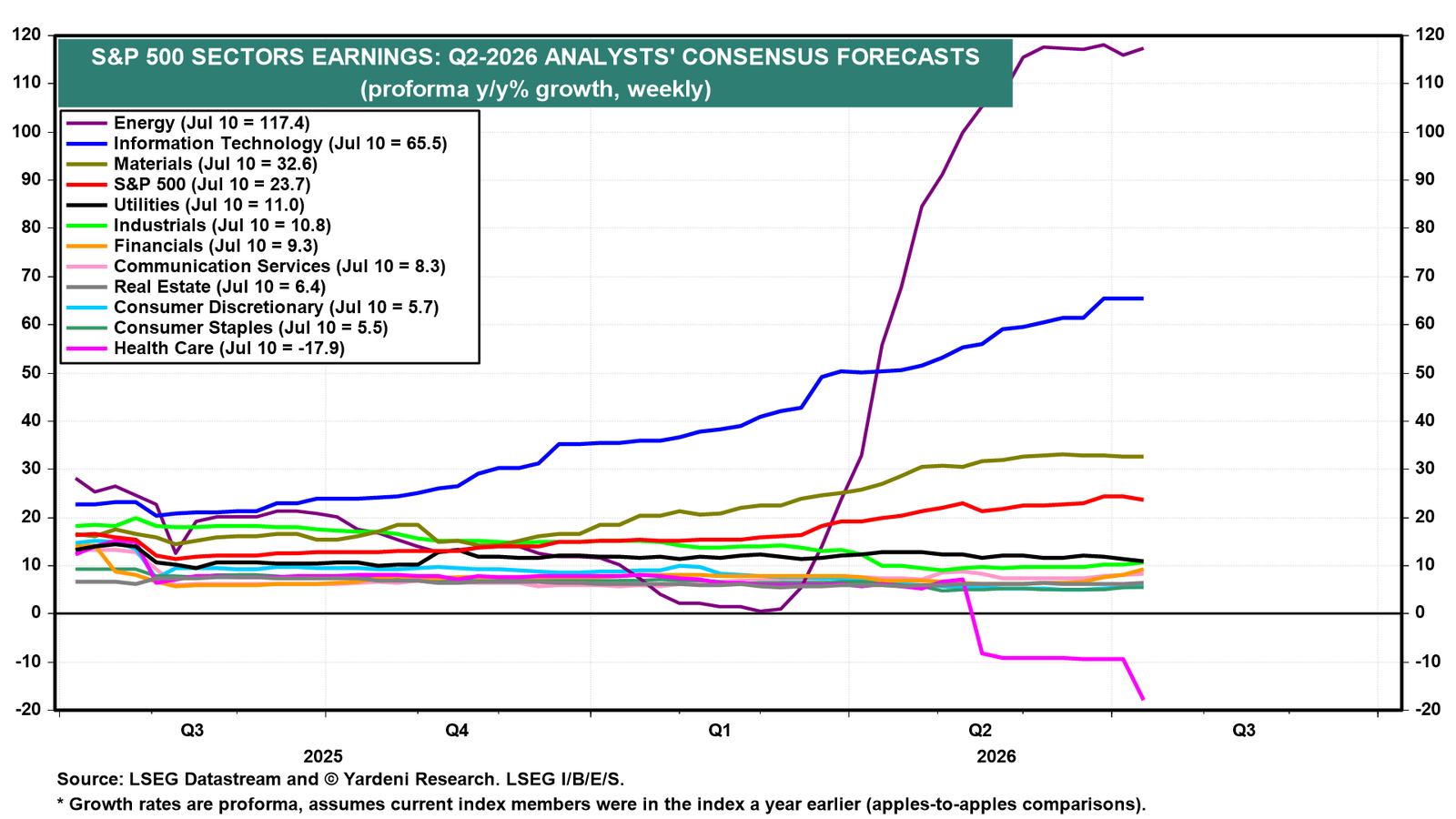
On a pro forma basis, which compares current S&P 500 index members to themselves a year earlier (apples-to-apples), expected Q2 earnings growth is even higher at 23.7% (chart). The Energy and Information Technology sectors are leading the way higher, while Health Care continues to sputter.
It's hard to imagine any upside surprises from here. That could be an issue for the stock market over the rest of this month and early August. But we would expect dip buyers to step in if Q2 earnings merely match rather than exceed expectations.
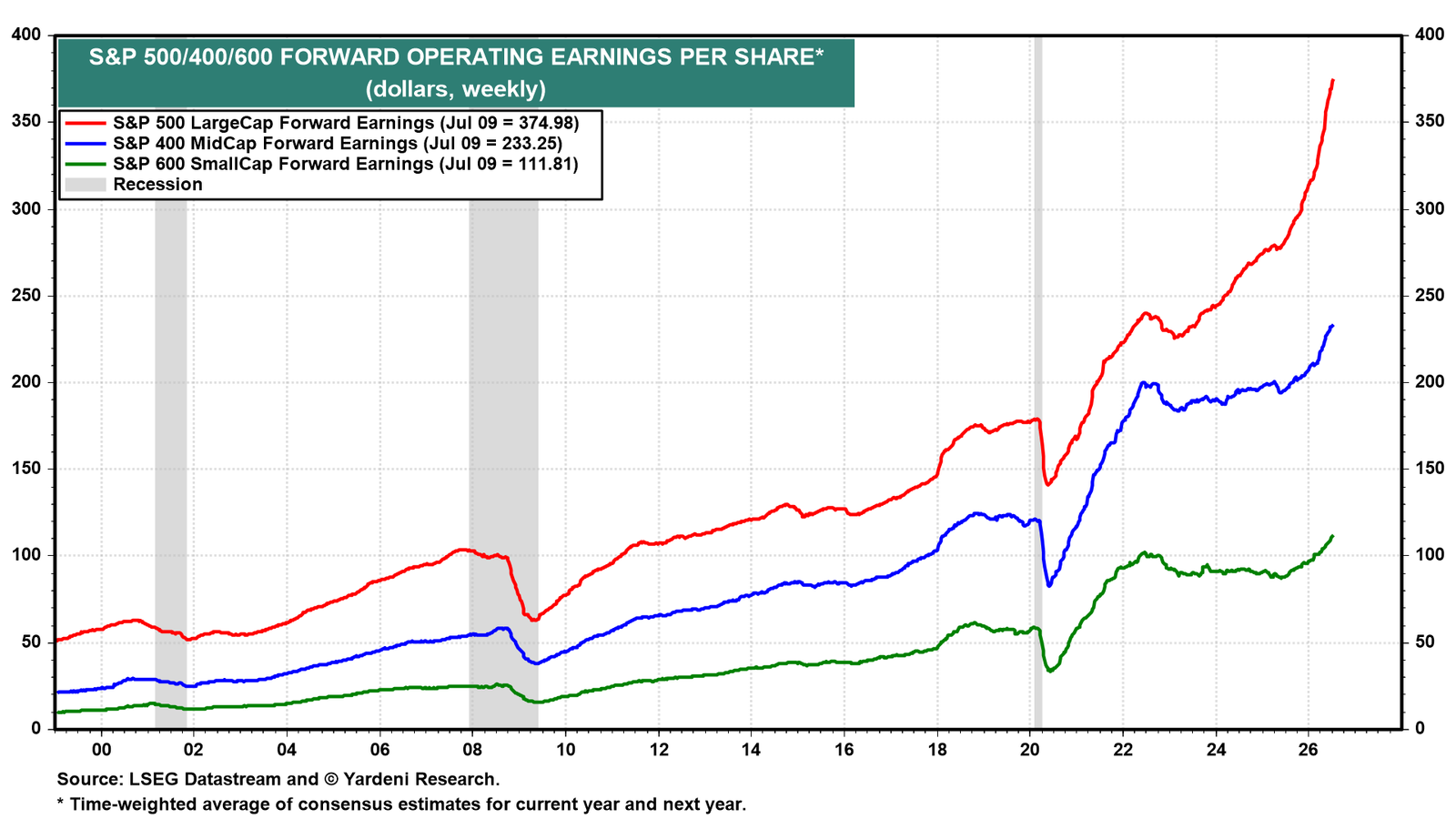
(2) Breadth. Breadth remains healthy, as revenue growth is broadening into earnings gains beyond the S&P 500. S&P 400 and S&P 600 forward earnings are climbing to new record highs along with the S&P 500 forward earnings (chart).
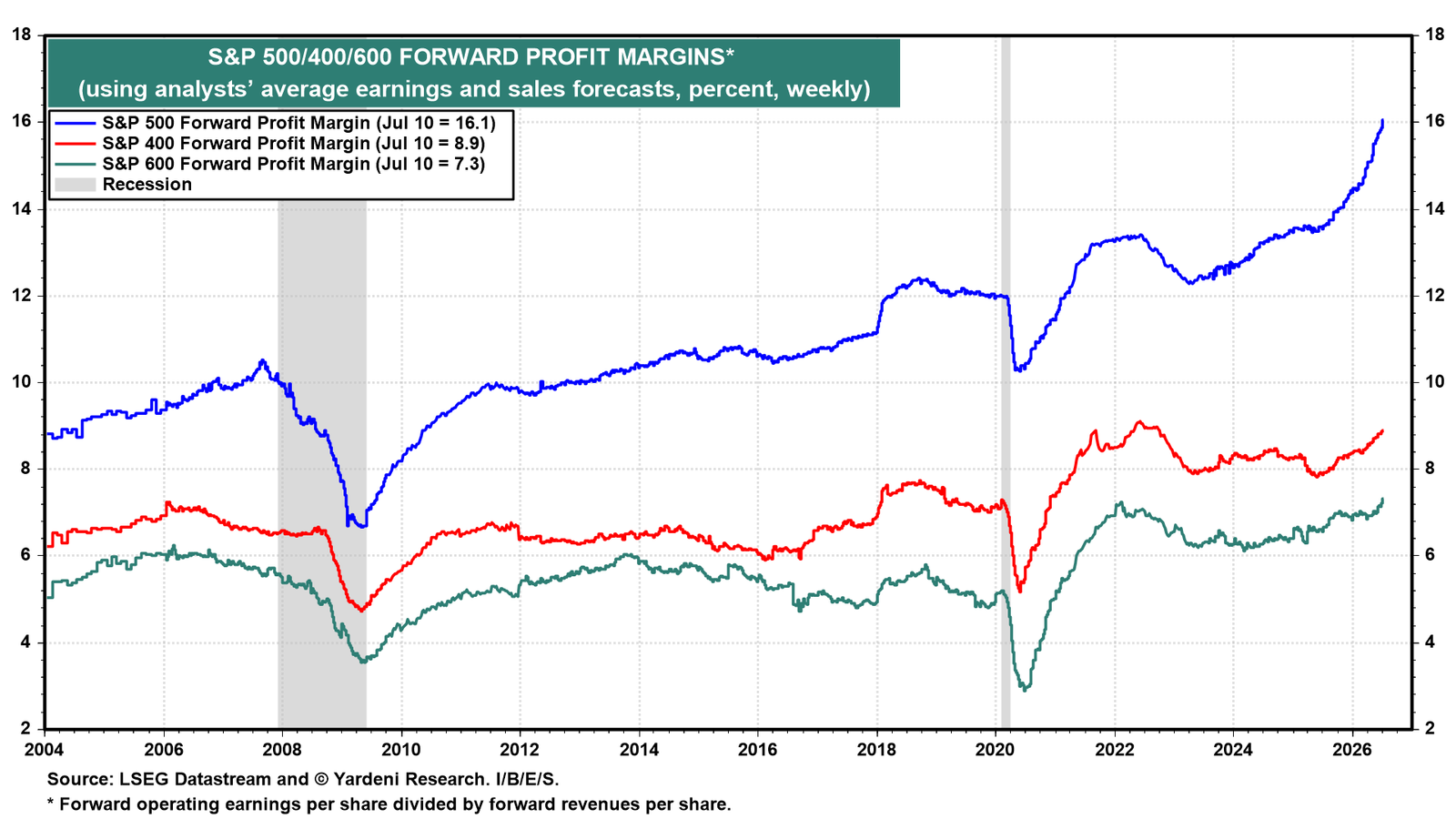
The S&P 500 companies' collective forward profit margin rose to a record 16.1% last week (chart). The forward profit margins of the S&P 400 and S&P 600 are lower, but also closing in on their previous record highs.
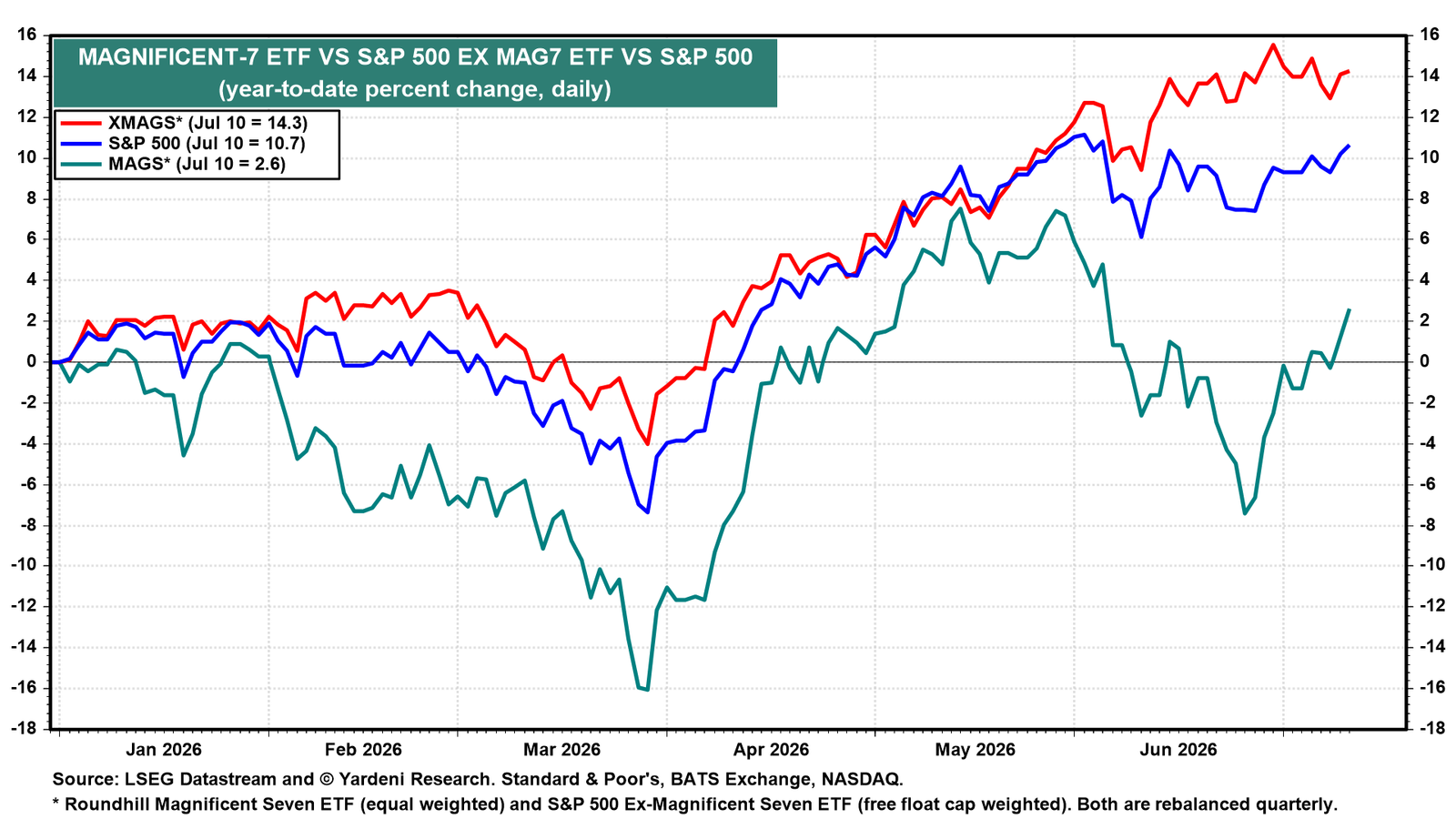
The Magnificent-7 has clawed back some ground in recent weeks after lagging most of this year, though the group is still up just 2.6% ytd versus 14.3% for the S&P 500 excluding the Mag-7 and 10.7% for the overall S&P 500 (chart).
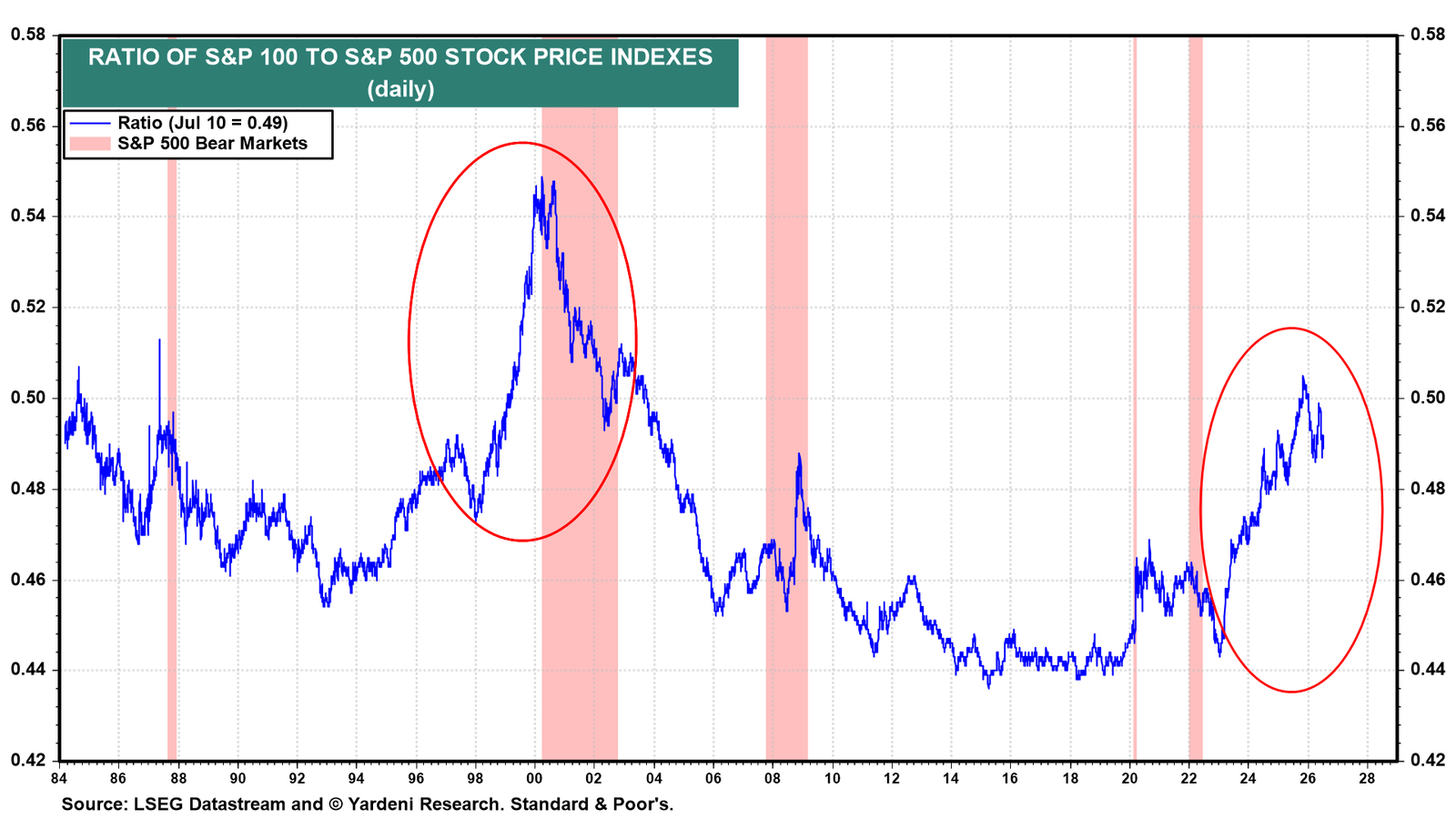
Market concentration, measured by the ratio of the S&P 100 to the S&P 500, is down to 0.49 and remains well below its dot-com-era peak of 0.55 (chart).
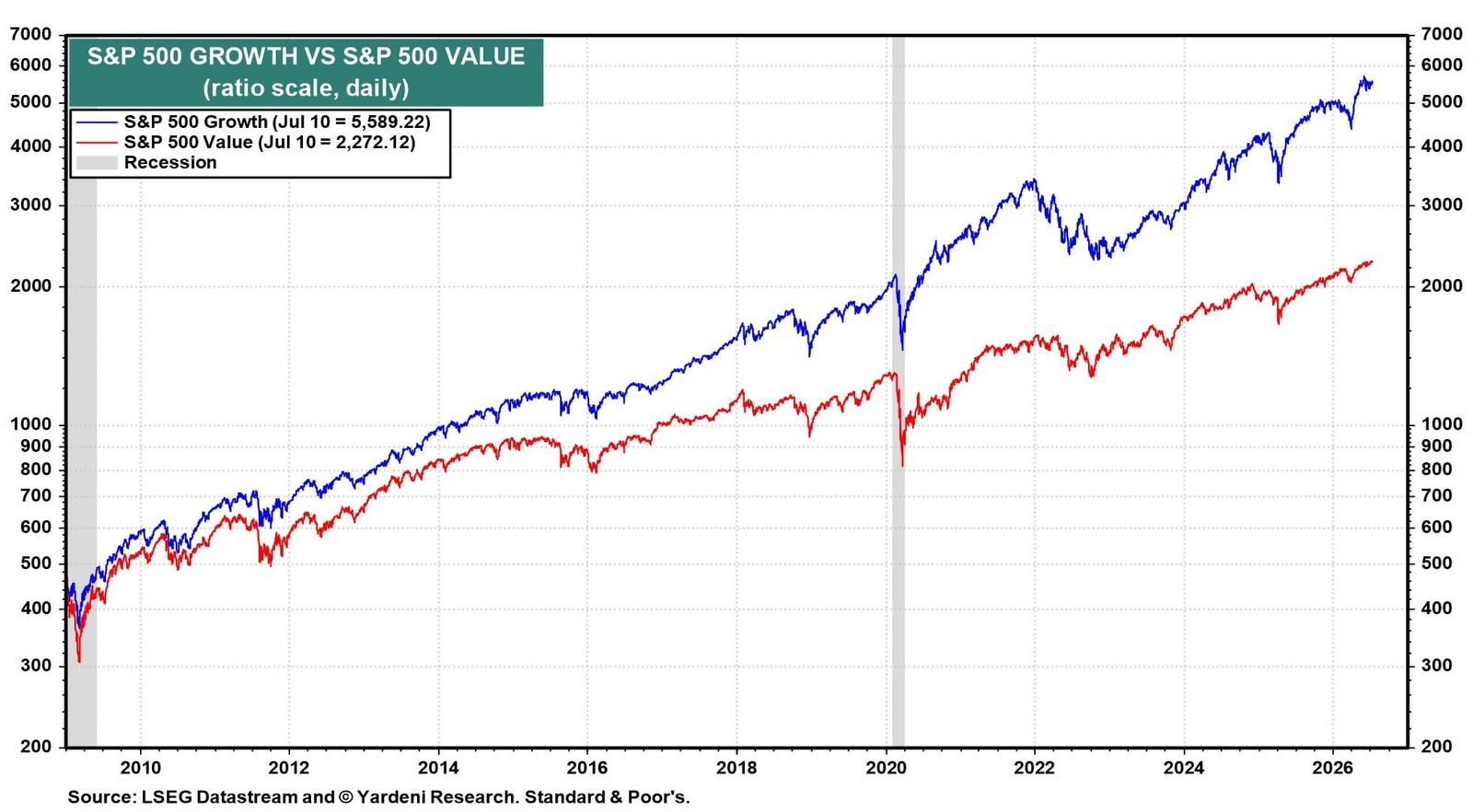
(3) Rotation. S&P 500 Value is pushing to record highs and could keep climbing as earnings season unfolds (chart). The Q2 earnings expectations for the S&P 500 Growth companies might be too exuberant. If earnings disappoint, then money might rotate out of crowded Growth names to Financials and other Value sectors.
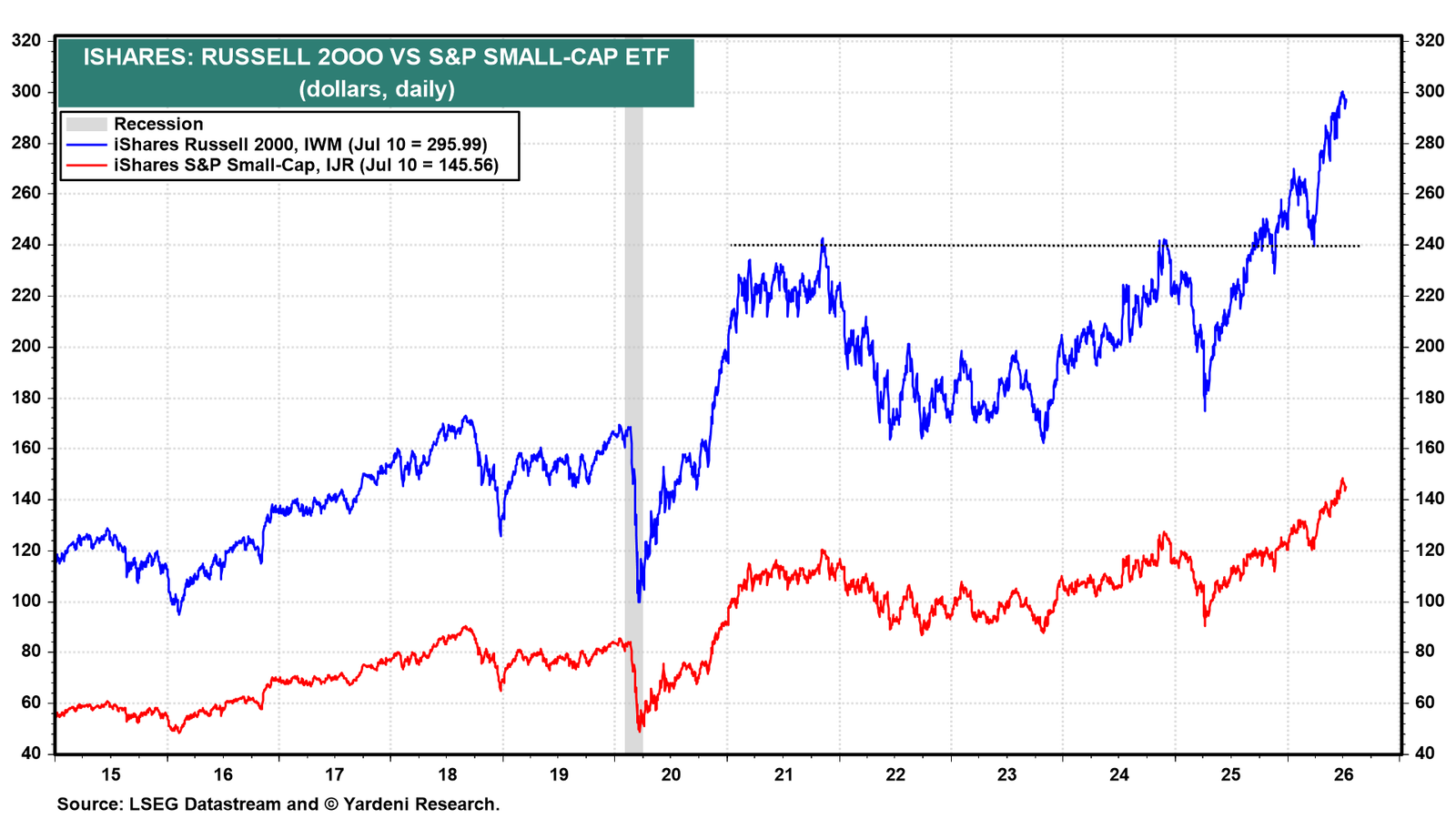
Another sign of a broadening bull market in stocks is the Russell 2000’s breakout to new highs since bottoming this year on March 30 (chart).
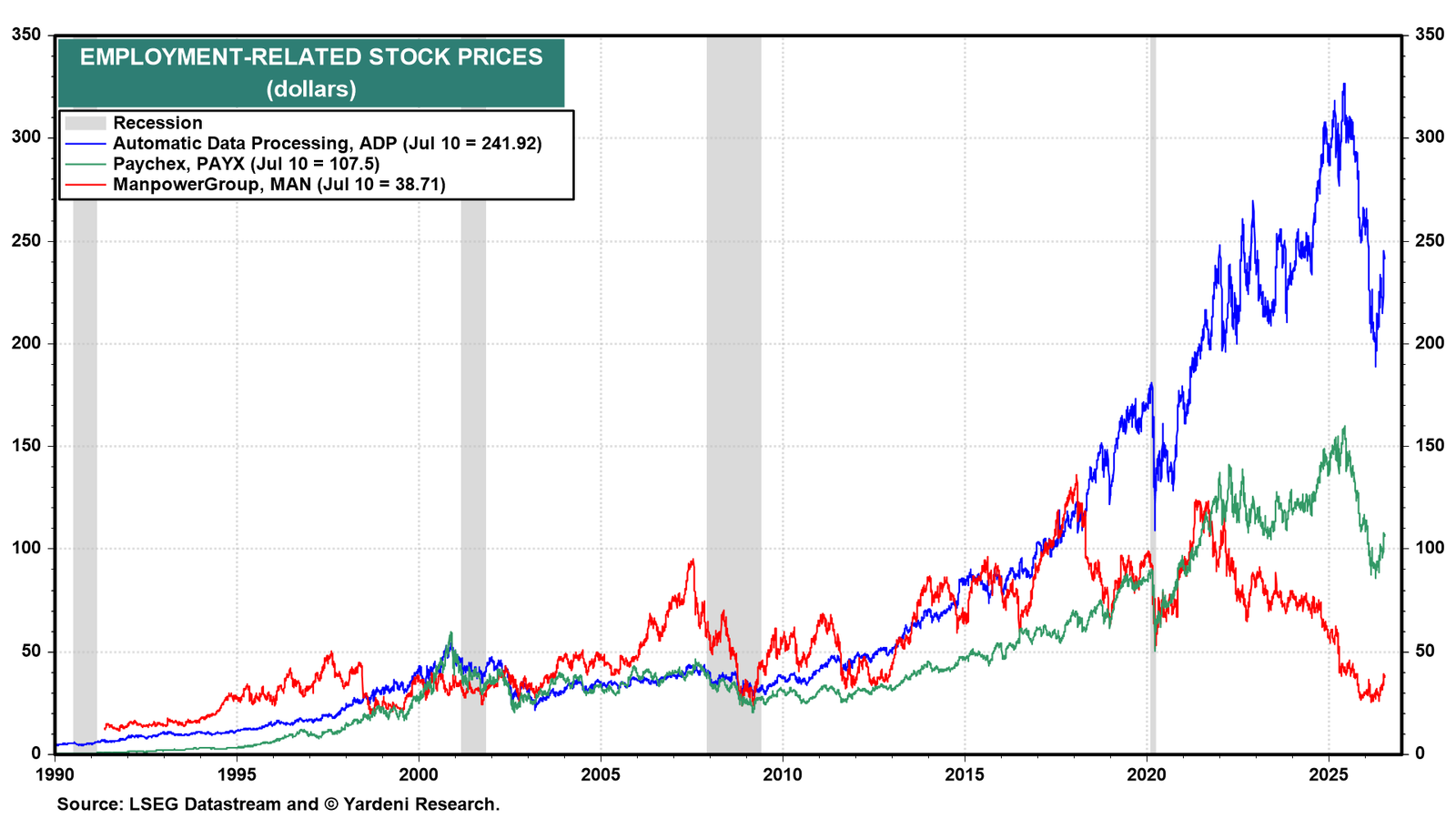
(4) Outperformers. Employment-related stocks continue to perform well, in line with a firming labor market, led by ADP. June's weaker-than-expected payrolls gain didn't weigh on these stocks (chart).
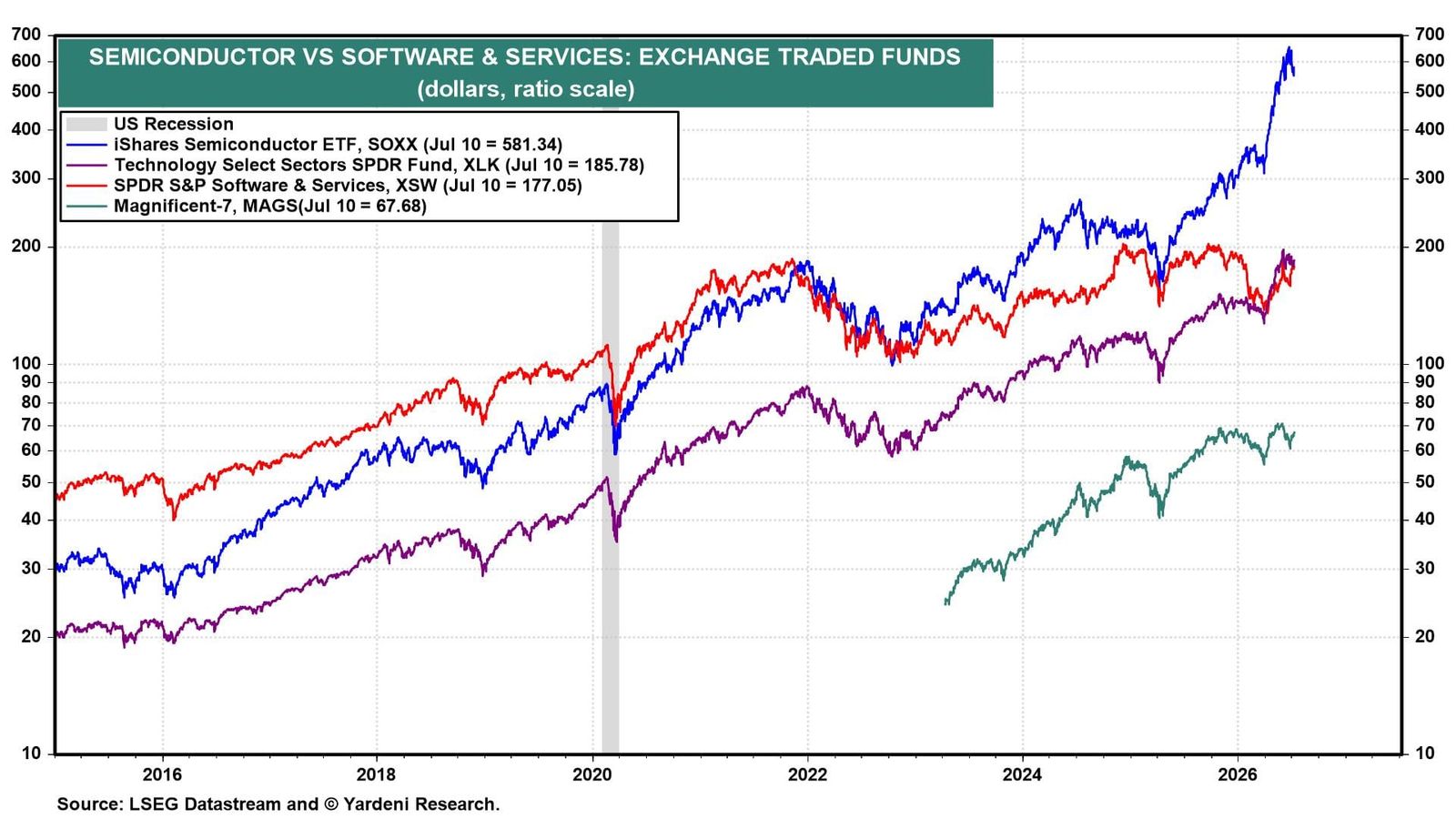
Technology is holding its own despite persistent chatter about a correction. Semiconductors have pulled back from their highs, and we'd view further weakness there as a buying opportunity (chart).
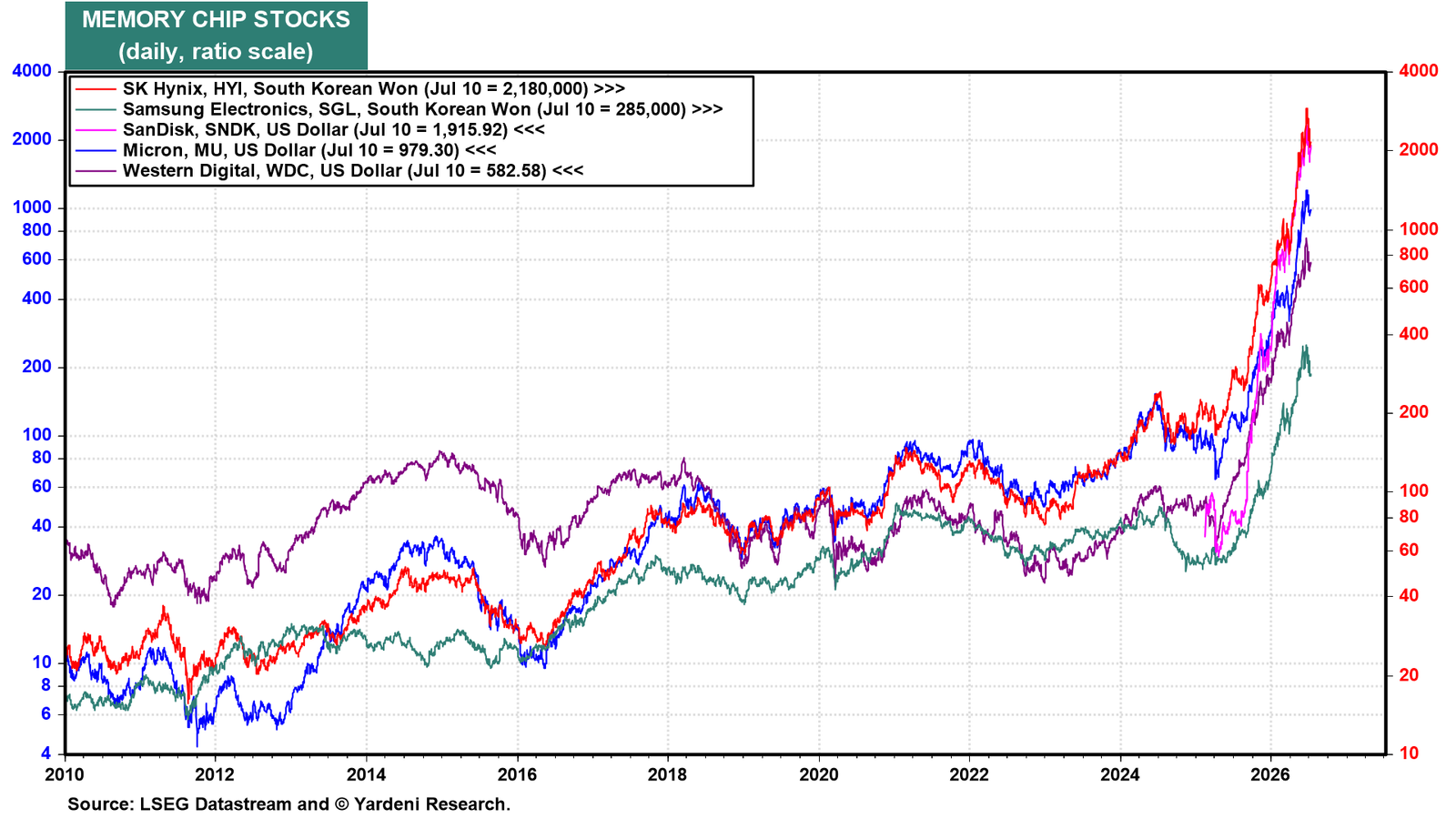
Memory chip stocks remain in a long-term uptrend but have pulled back sharply from recent peaks, with Micron and SanDisk both down over 15% from their all-time highs (chart).
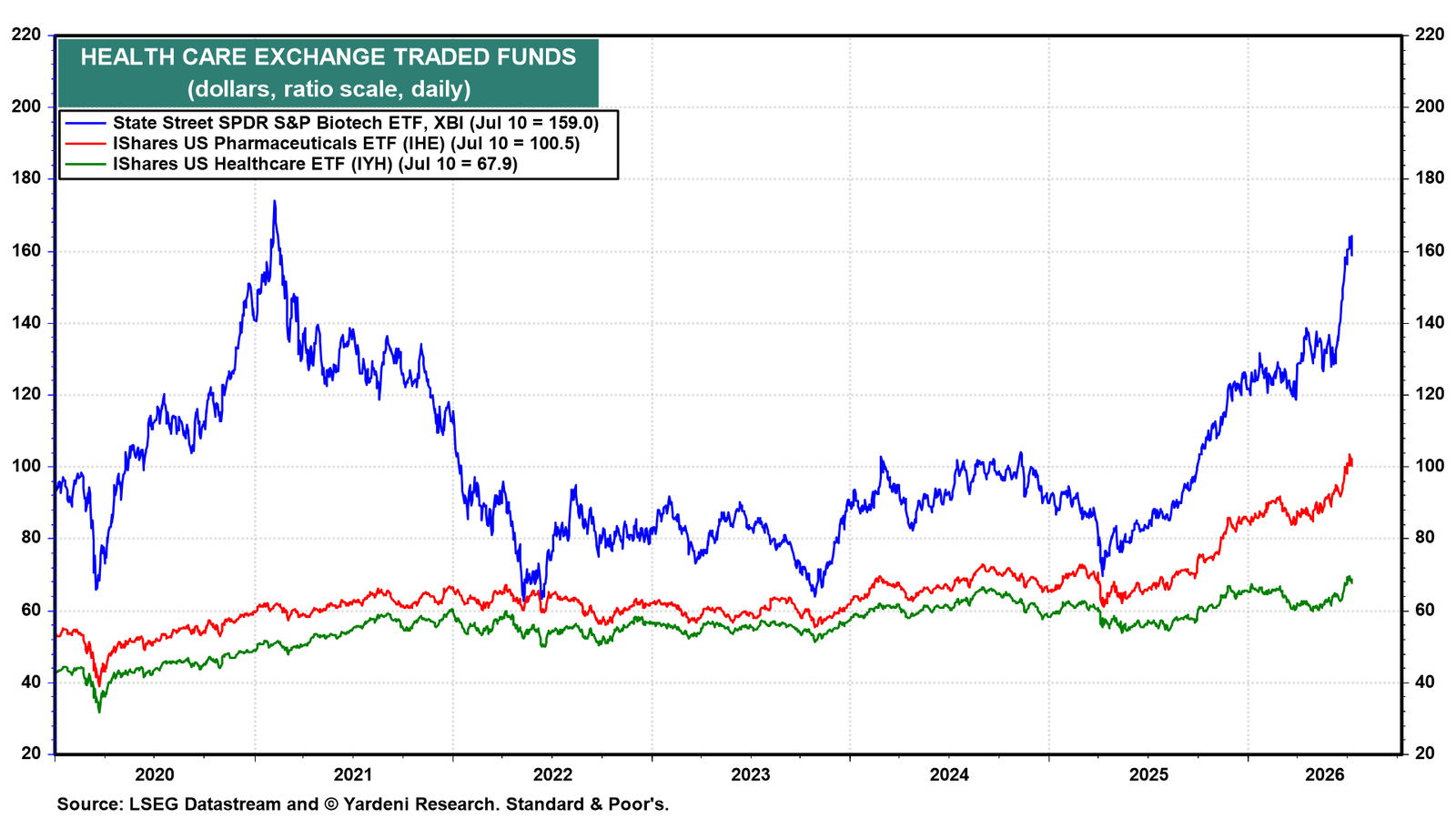
Health Care is attracting buyers, particularly for Biotechnology and Pharmaceuticals stocks. Both are breaking out to fresh highs (chart).
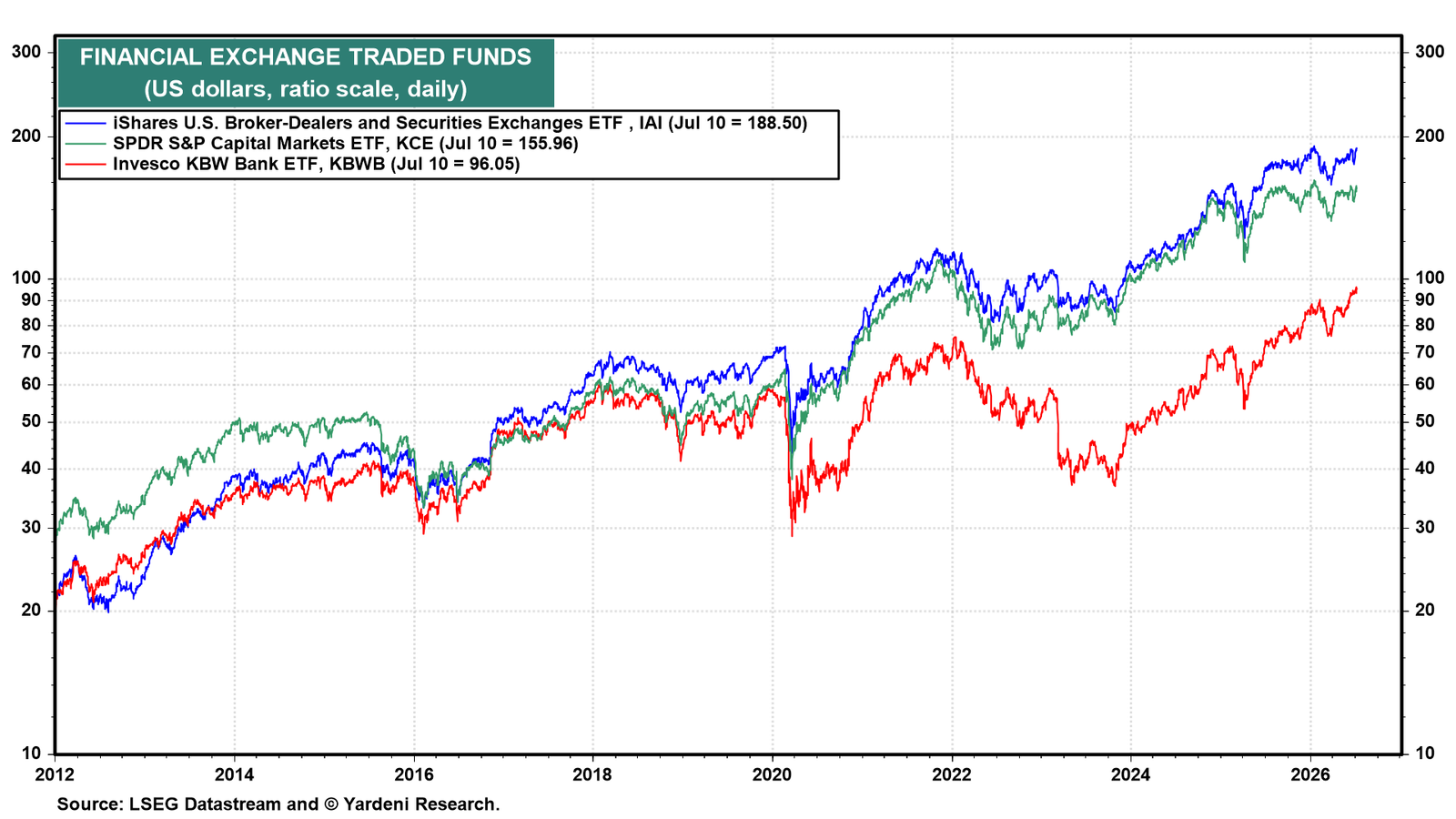
Financials look well positioned heading into what should be a favorable earnings season, with broker-dealer, capital markets, and bank ETFs all trending higher (chart). Loan demand and investment banking are robust. Banks are likely to reduce their loan-loss provisions to boost earnings.
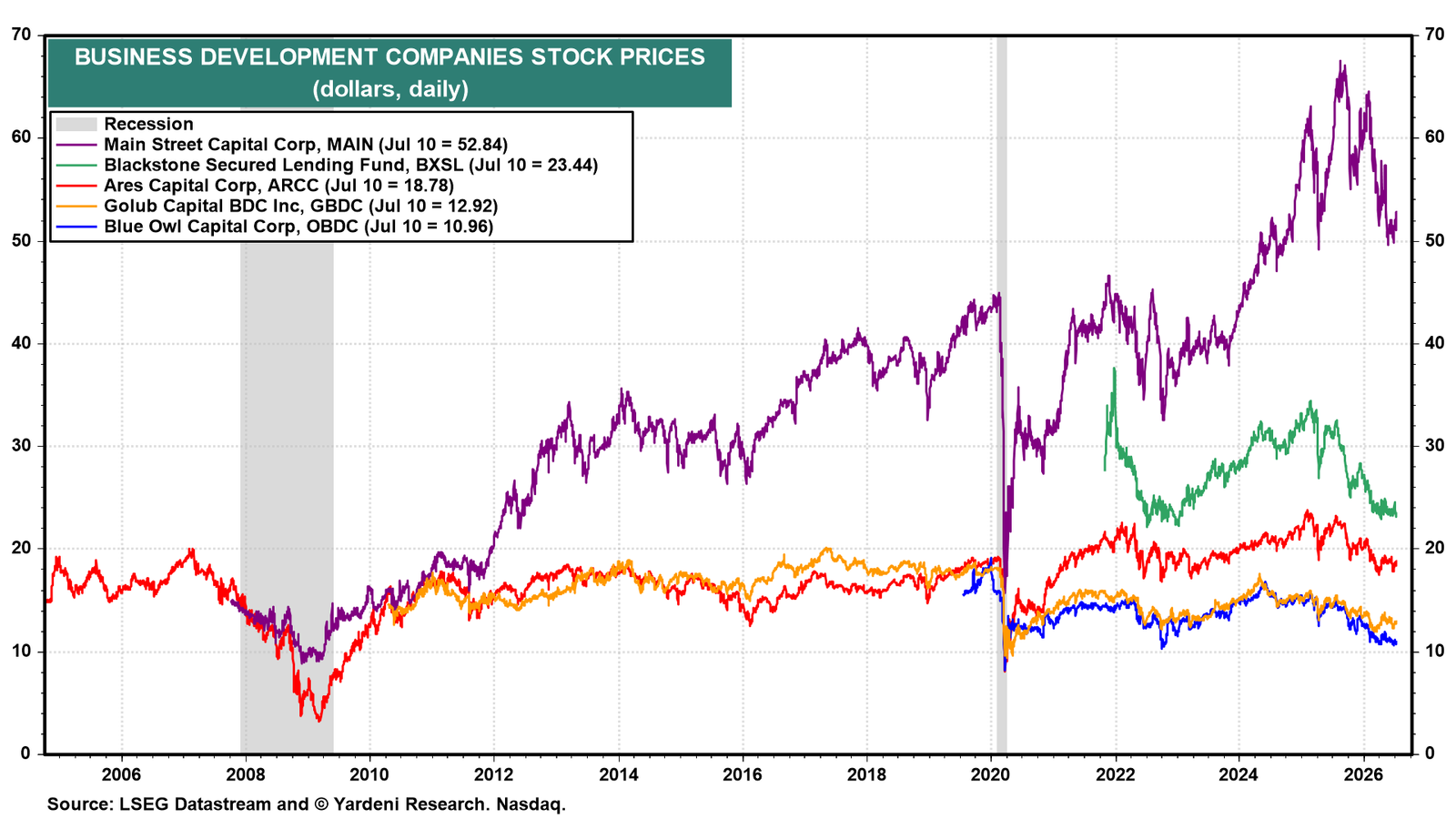
(5) Credit. Private credit ETFs remain weak (chart). However, we doubt that they are signaling an economy-wide credit crunch.
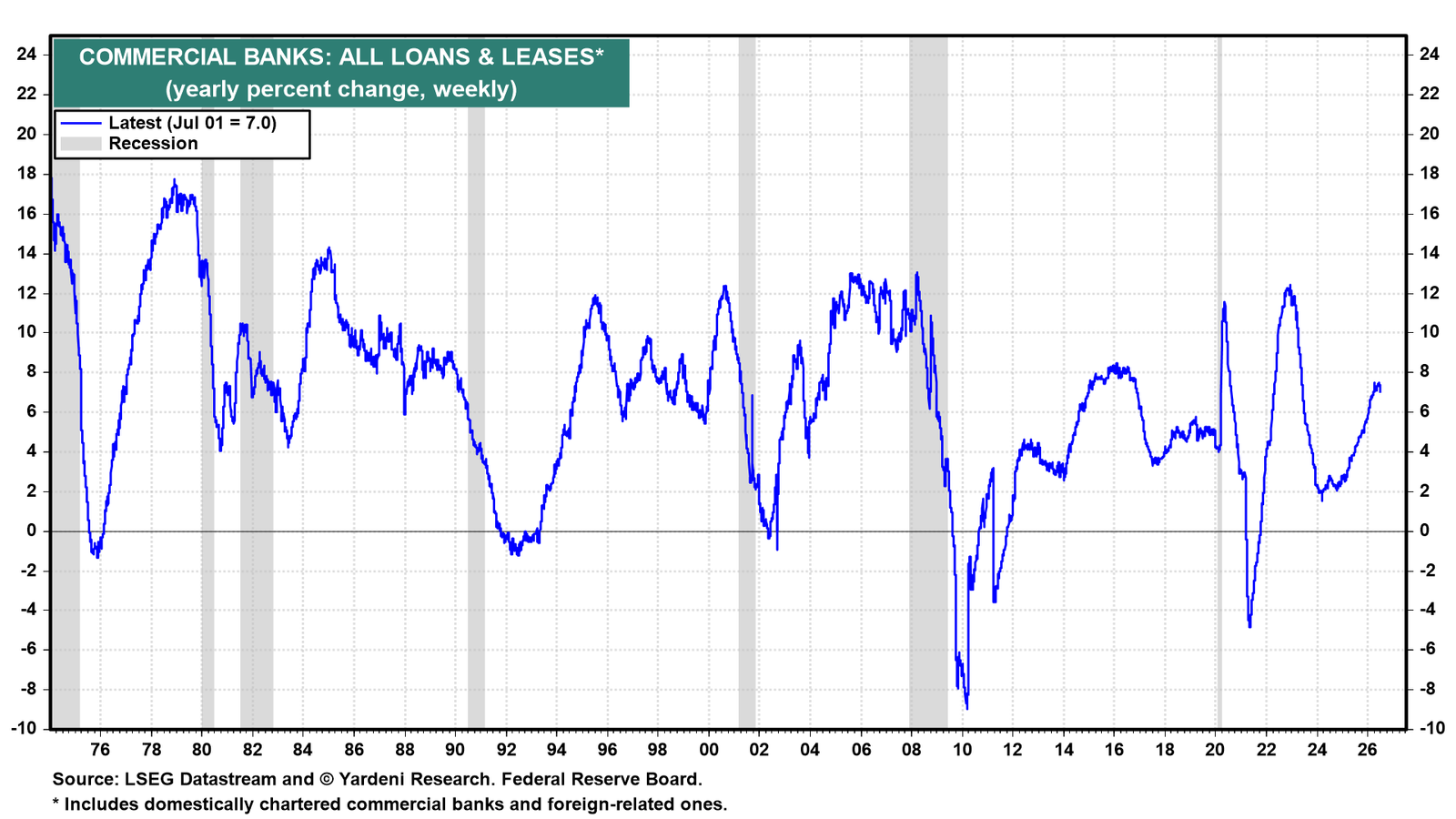
Indeed, commercial bank loans continue to expand (chart). The Invesco KBW Bank ETF is at a record high.
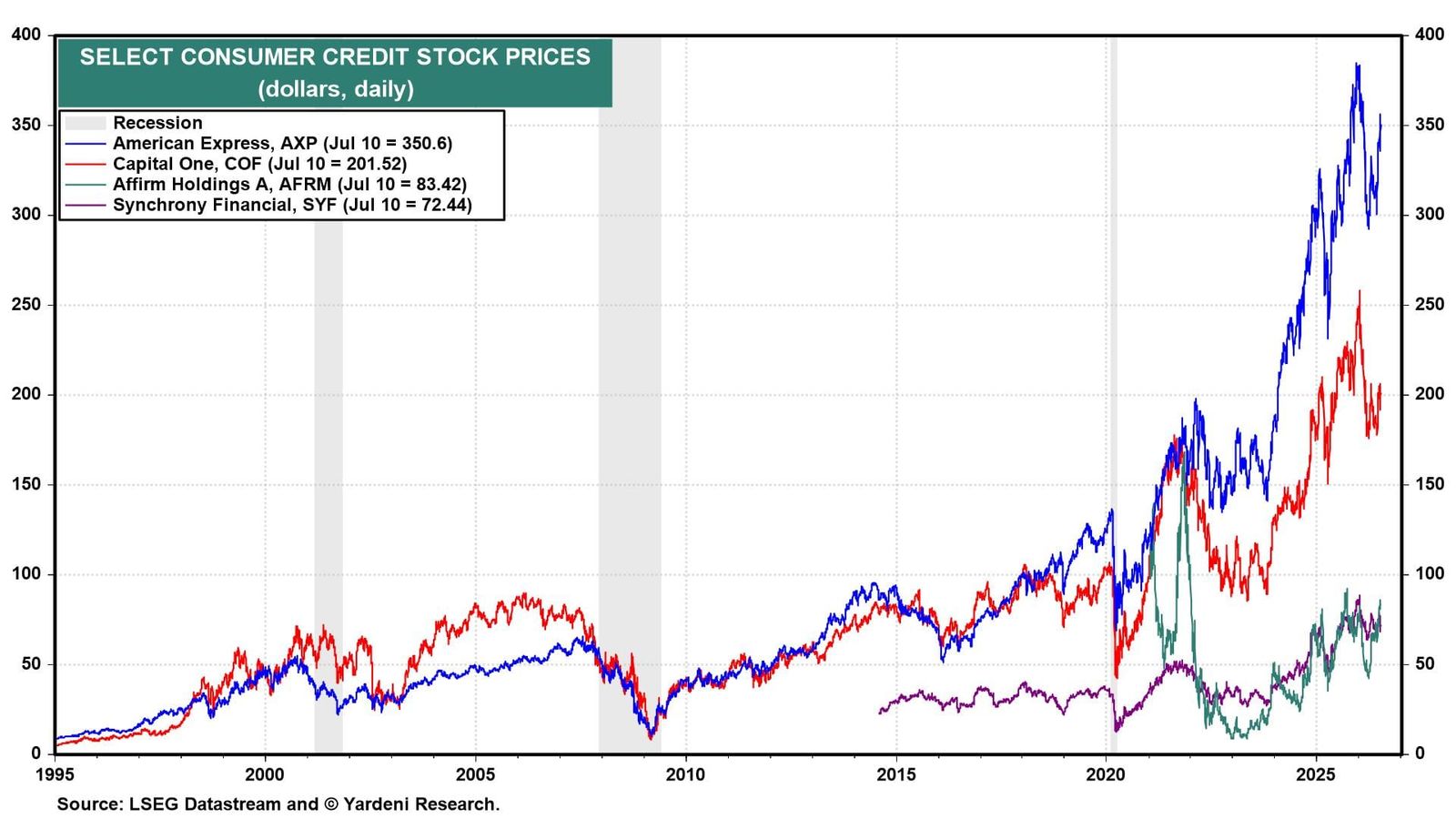
Also encouraging to see is that the stock prices of consumer credit companies have been moving higher recently (chart).
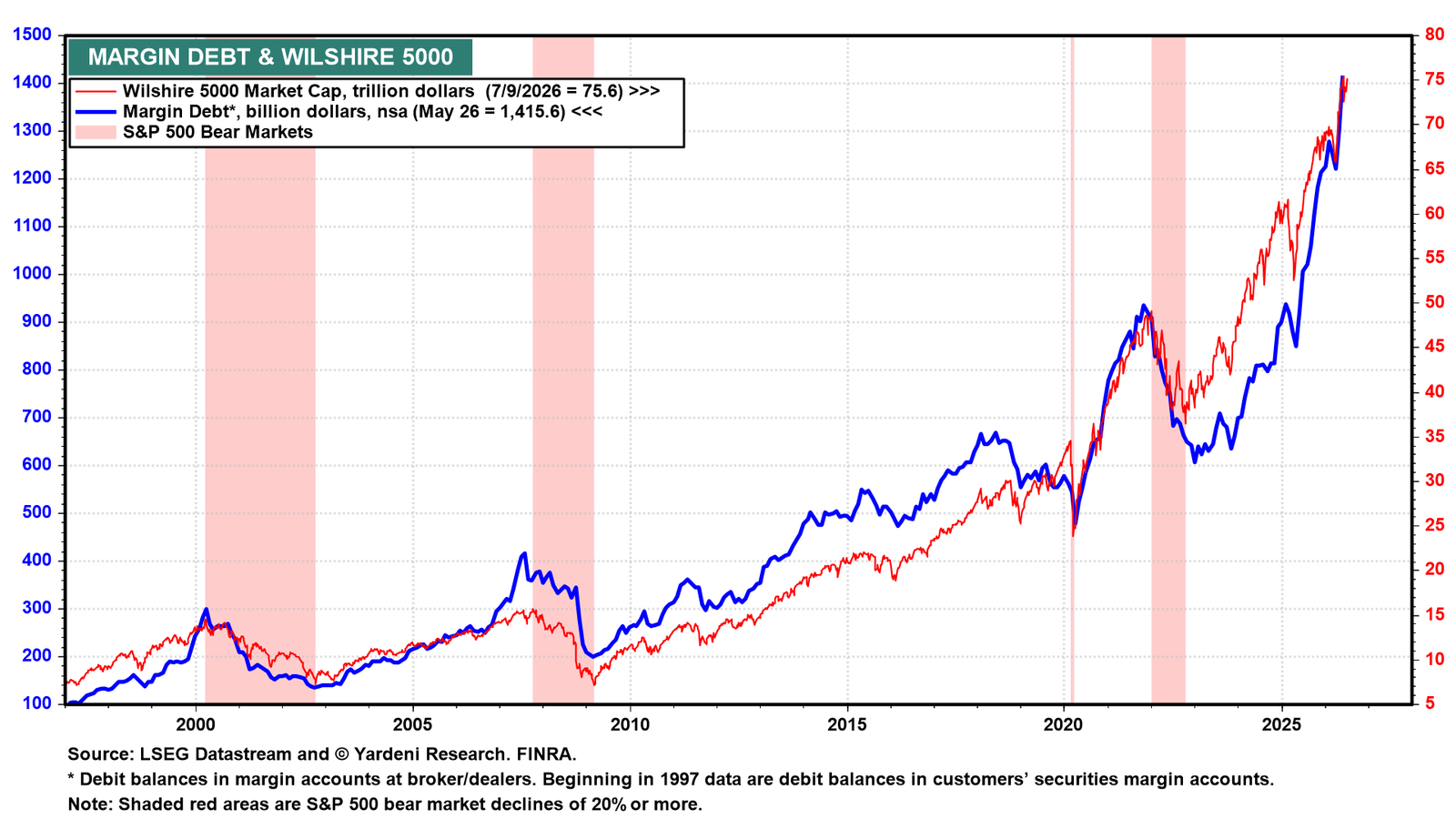
Margin debt has climbed alongside the market to a record high, but elevated margin debt has never been a reliable timing signal for bear markets (chart).