The temperature was 81 degrees in Sintra, Portugal, today. Tomorrow it will be 101 degrees. Fed Chair Kevin Warsh spoke on a panel in Sintra today. He was cool as a cucumber. This was his second public appearance since his first press conference as the new Fed chair on June 17. Back then, he was surprisingly hawkish, stressing that he and his colleagues on the FOMC are committed to restoring price stability.
At Sintra, Warsh reiterated that pledge and explicitly stated that price stability means lowering inflation to the Fed's 2.0% target. The former has exceeded the latter for more than five years. He refused to provide any forward guidance in response to several questions by moderator Sara Eisen. Instead, he repeated that as Fed chair, he won't provide any forward guidance. Instead, he wants the financial markets to provide guidance to the Fed about the proper course for monetary policy.
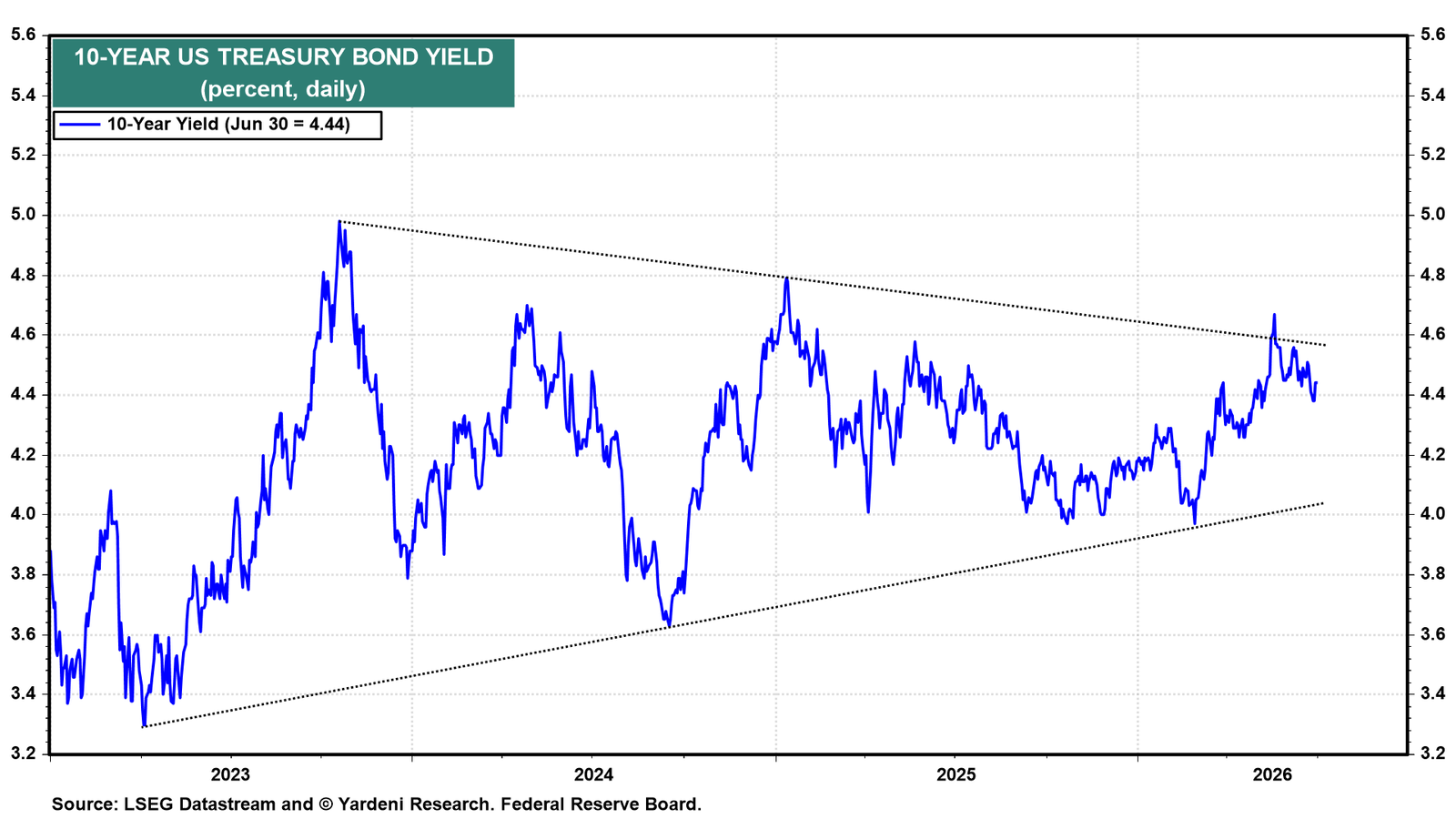
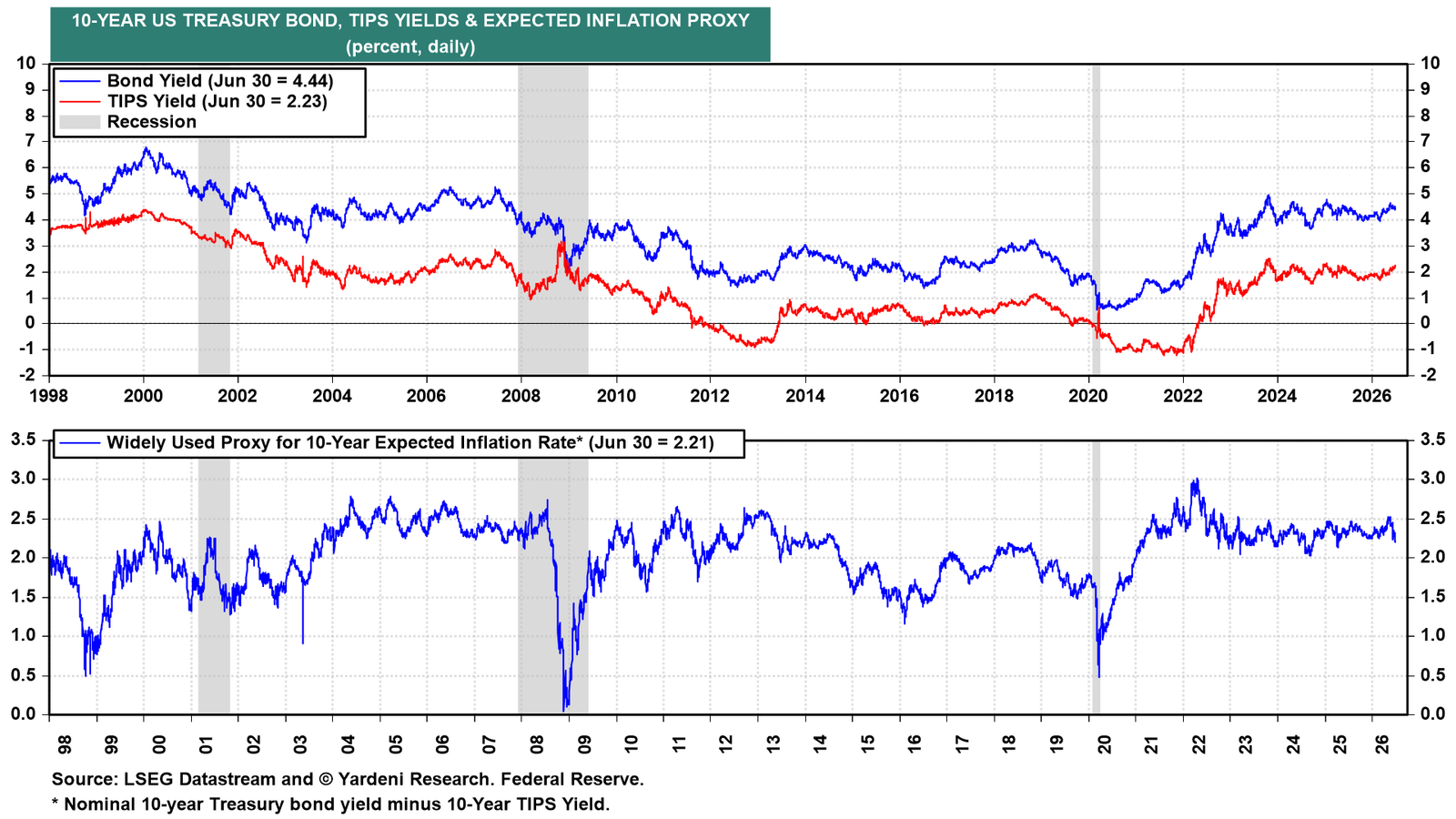
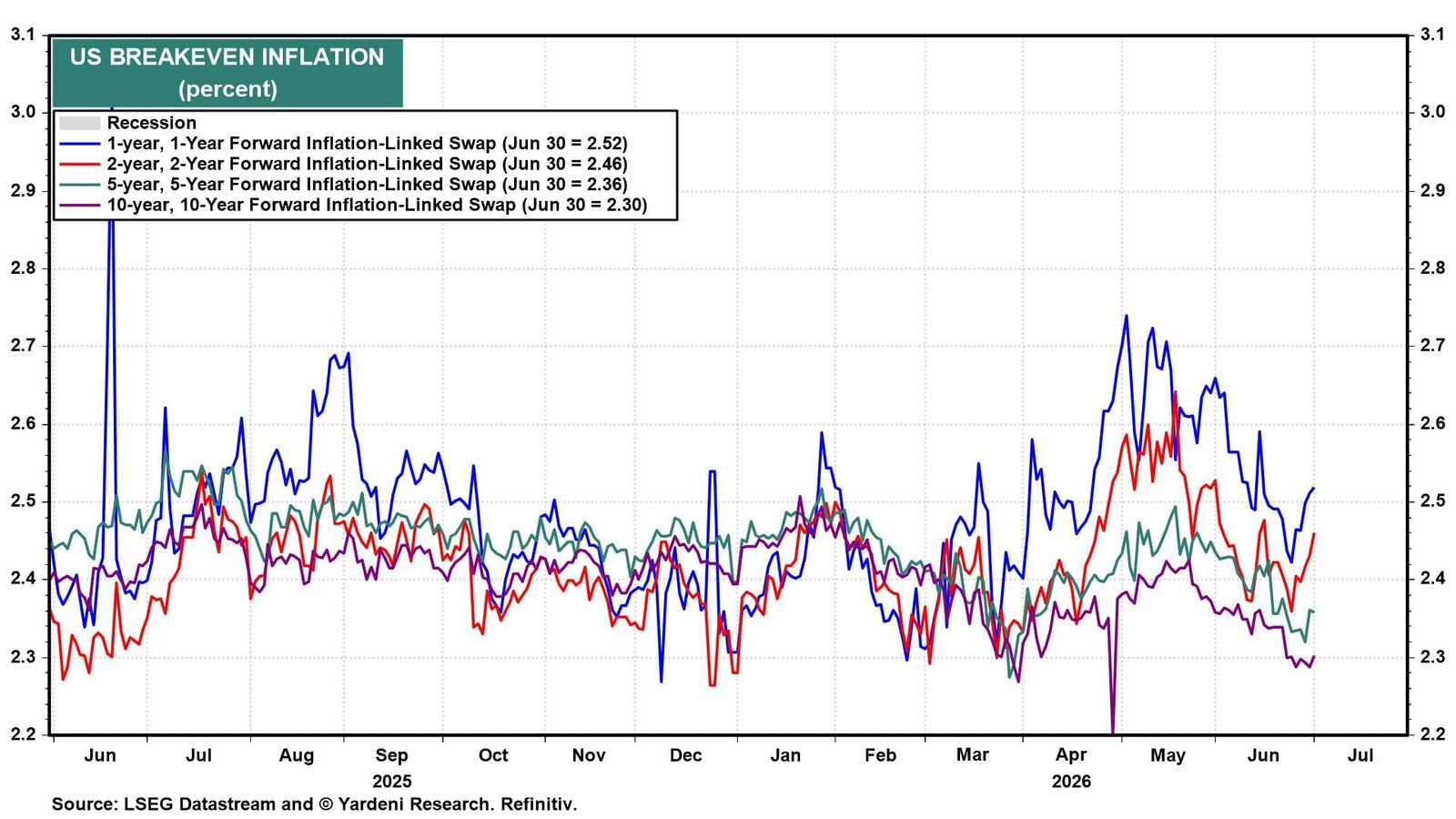
In effect, Warsh will be guided by the Bond Vigilantes. He said today that he was pleased to see that since his presser, measures of expected inflation in the fixed-income markets have moderated. That's correct. The 10-year bond yield has declined in recent weeks. The yield spread between the 10-year Treasury nominal and TIPS bonds has narrowed to 2.23%. And the 10-year forward breakeven inflation rate has dropped to 2.30% (charts).
That all happened because right after June's FOMC meeting, Warsh actually did provide the financial markets with plenty of forward guidance, as did the FOMC's statement and Dot Plot. The FOMC and the committee's new chair are hawkish. The short statement ended with an emphatic pledge: "The Committee will deliver price stability." In his presser, Warsh mentioned "price stability" eight times in that same context.
Today's economic data confirm that the manufacturing sector and the labor markets are in good shape, while inflation remains troublesome:
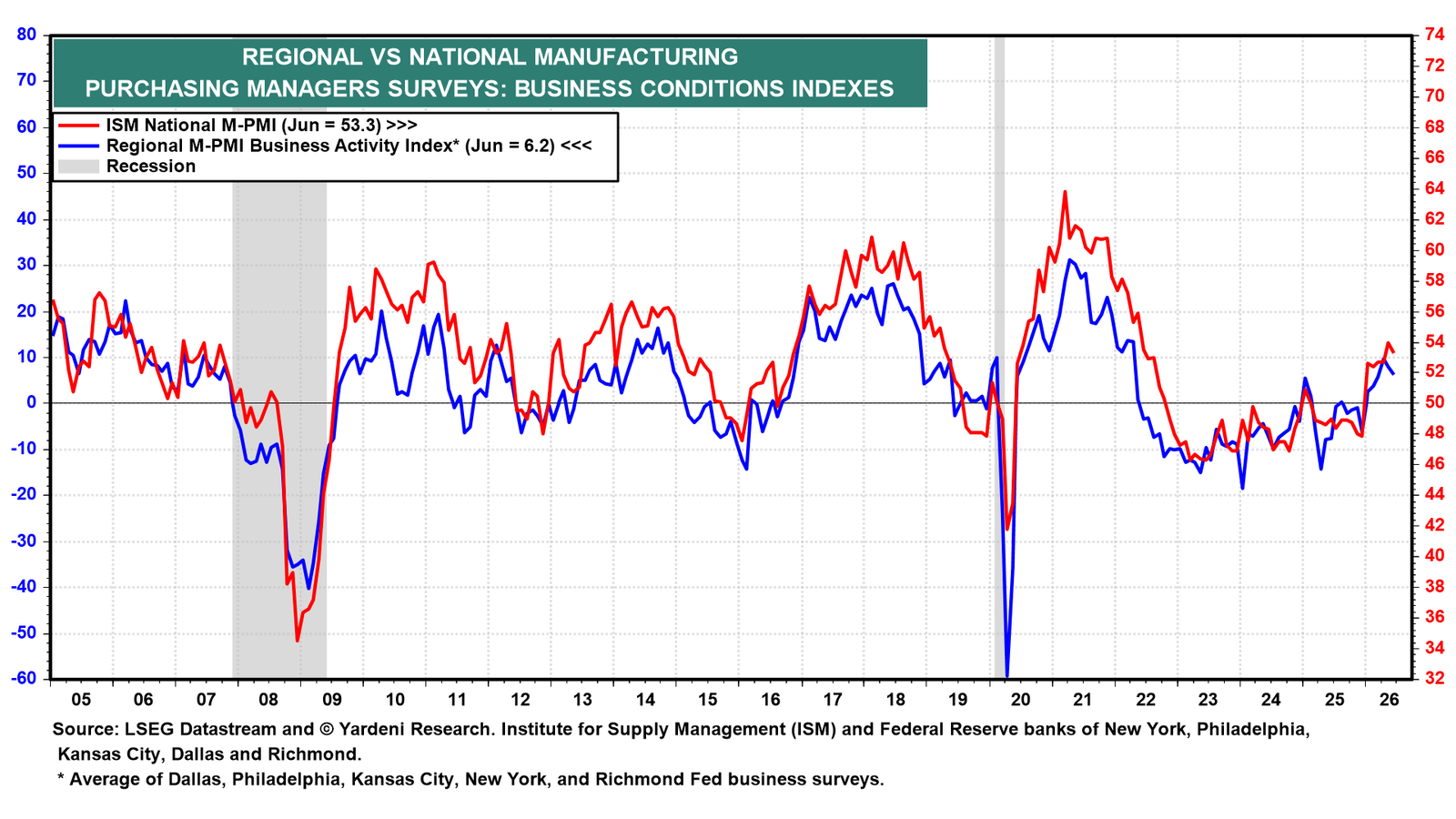
(1) ISM’s M-PMI. The ISM Manufacturing PMI dipped 0.7 points to 53.5 in June but remained near a four-year high (chart). The index has been above 50.0 for six straight months, the longest expansion streak since 2022, a reading confirmed by the average of regional business surveys. Manufacturing continues to be supported by the AI buildout, rising defense spending, and inventory stockpiling in response to supply-chain disruptions attributable to the Gulf War III.
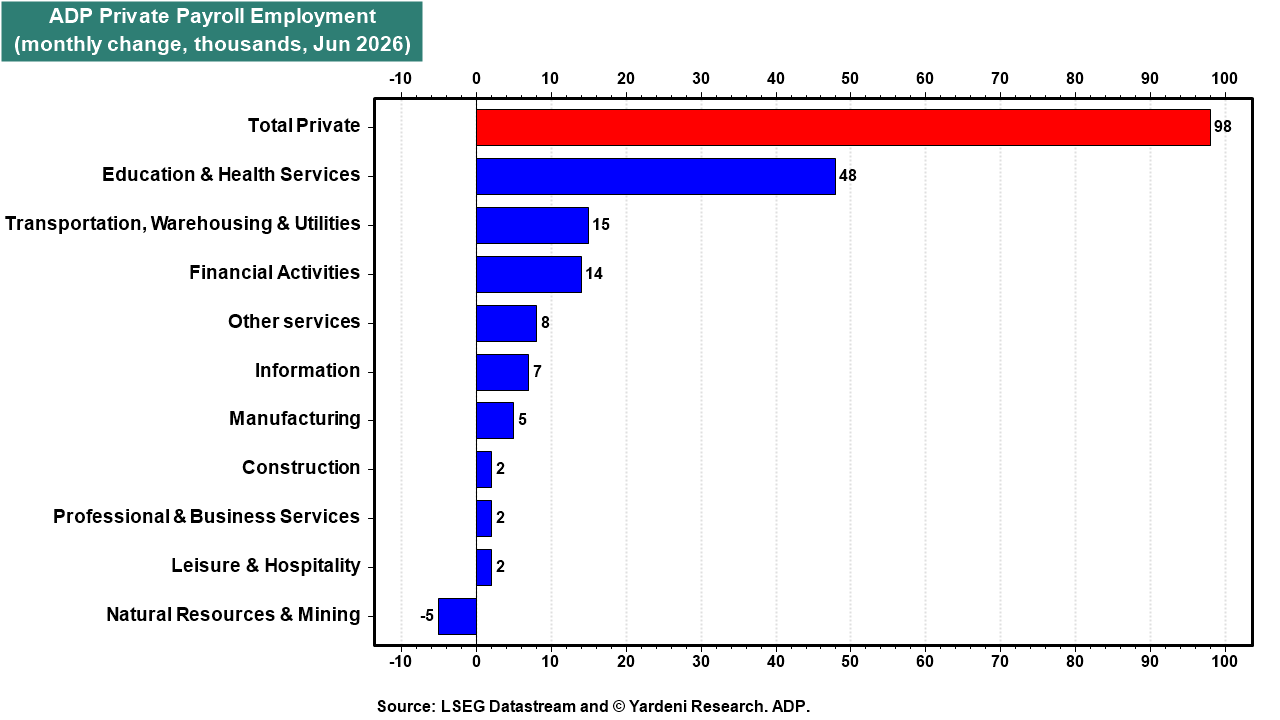
(2) ADP’s Payrolls. ADP reported 98,000 private-sector jobs added in June (chart). That lifted the three-month average to its highest since January 2025. Gains were broad-based across sectors, and wage growth for job switchers rose to 6.6%. Revelio Labs put June job creation at 259,000, the strongest since October 2023. Taken together, these reports suggest that the Bureau of Labor Statistics’ June employment report will be solid. Our estimate is 188,000, the same as the three-month average through May.
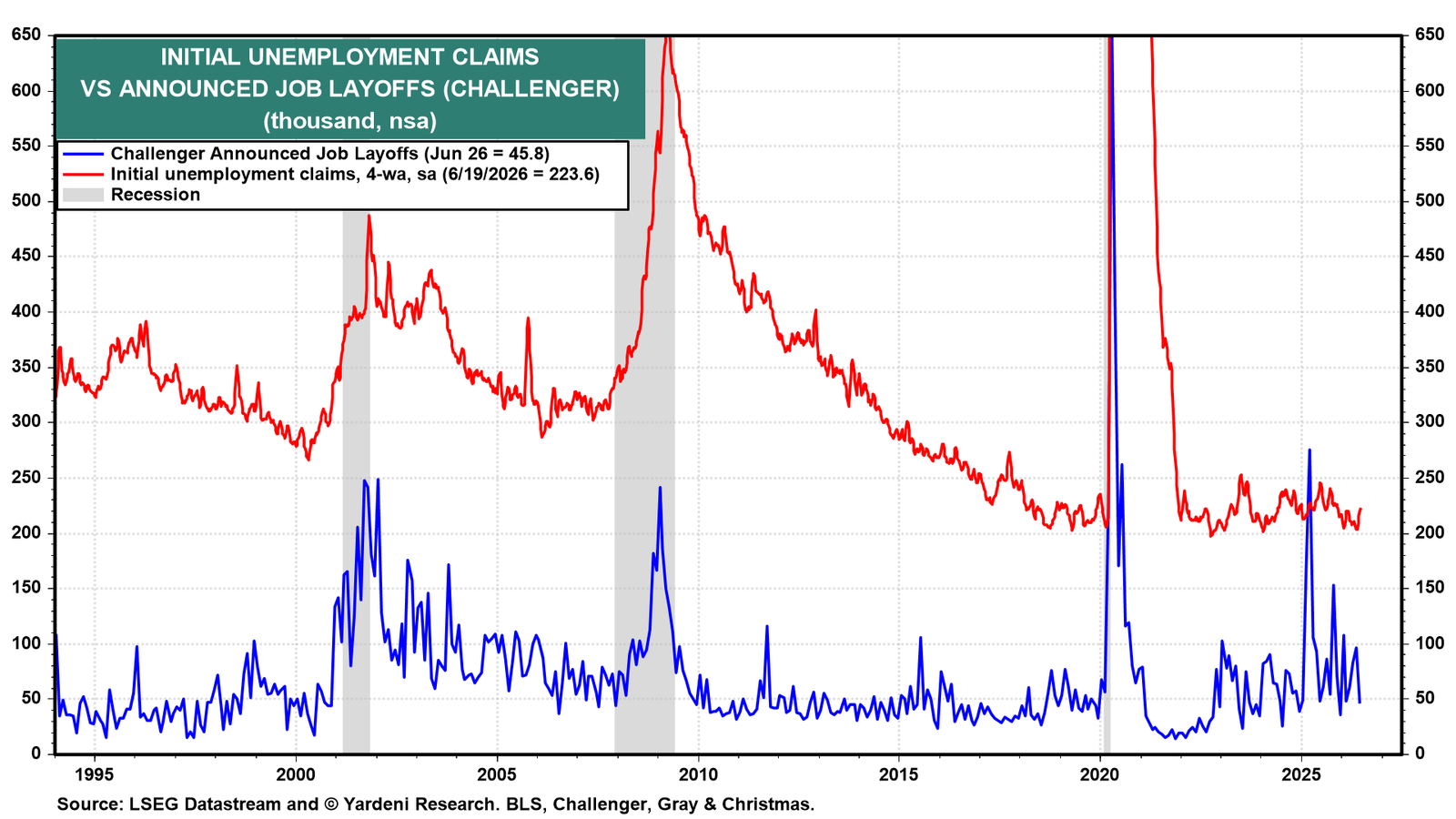
(3) Challenger’s Layoff Announcements. Monthly layoff announcements remained low in June, as confirmed by weekly initial unemployment insurance claims (chart).
(4) Atlanta Fed’s GDPNow. Q2 real GDP growth is now tracking at only 1.2% (saar), according to the Atlanta Fed’s GDPNow model, down sharply from the prior reading of 2.5% (chart). The revision was driven by a slowdown in private nonresidential capital expenditures in May's Construction Spending report. However, underlying demand remains solid. Final sales to domestic purchasers are tracking at 3.1% in Q2, up from 2.2% in Q1, and consumer spending is running at 2.0%, well above the near-stagnant 0.4% of Q1.
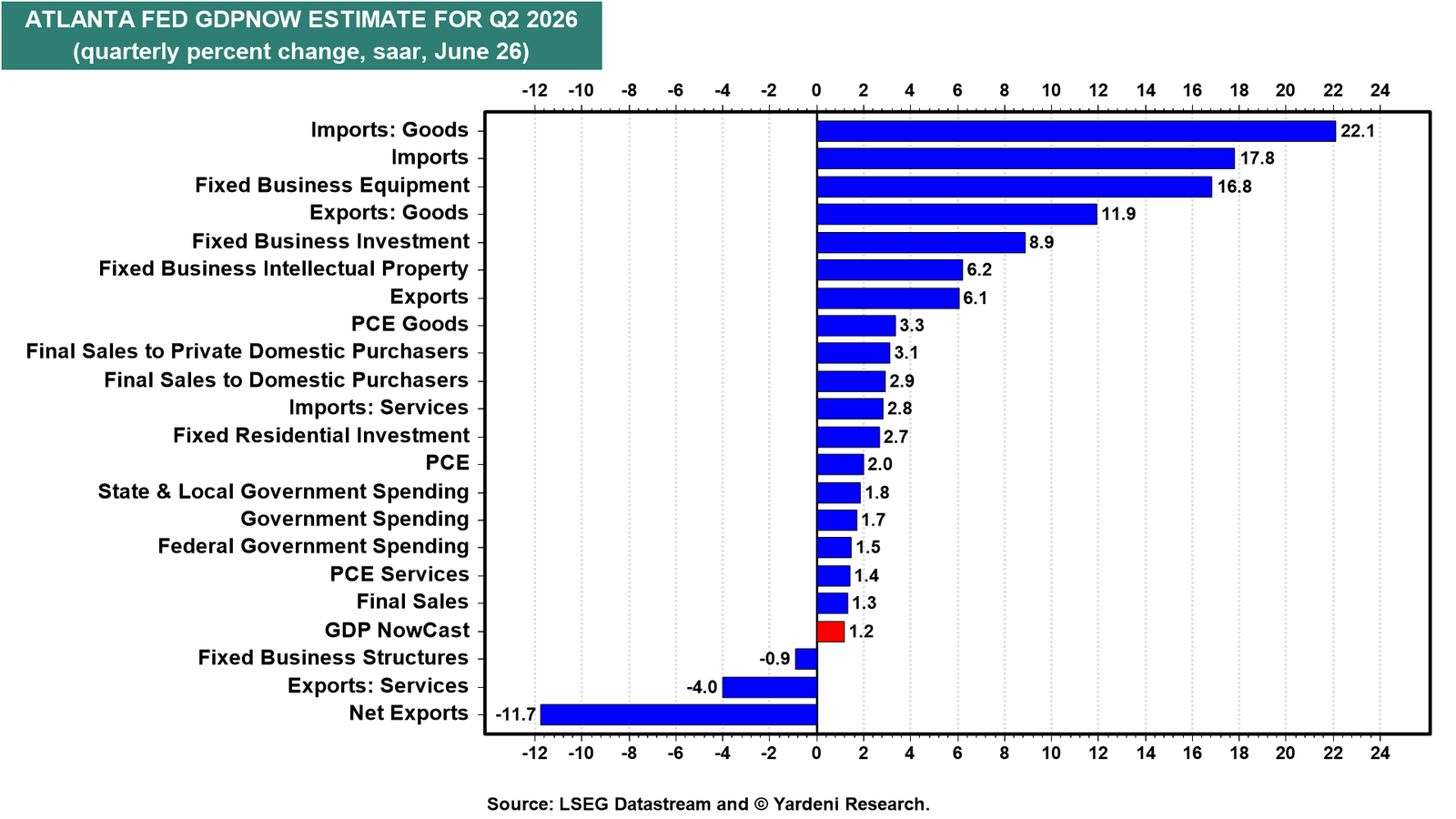
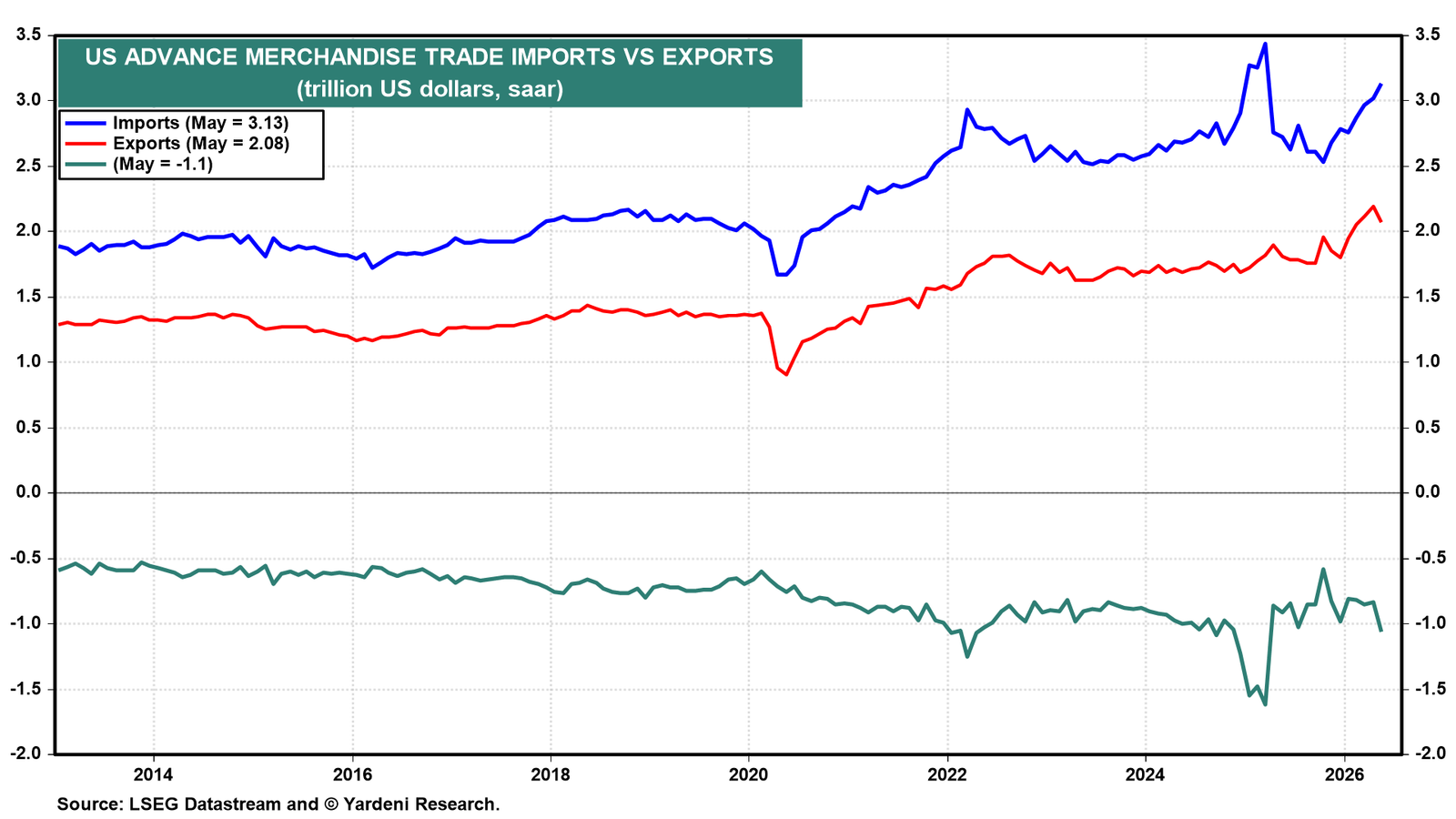
A surge in May merchandise imports to $3.13 trillion (saar), against weaker exports of $2.08 trillion, also weighed on the nowcast (chart). The US is importing more semiconductors as a result of the AI spending boom.
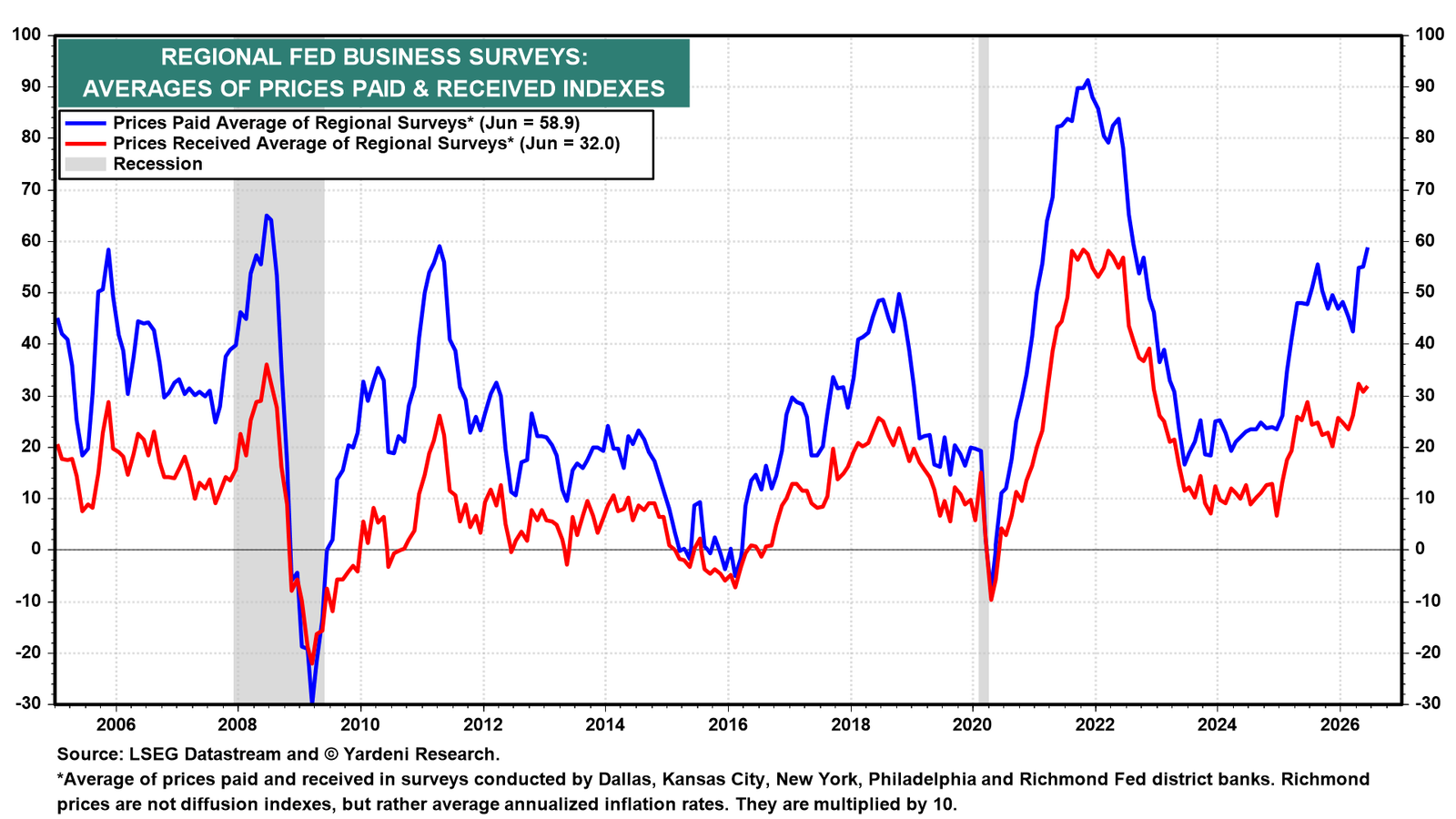
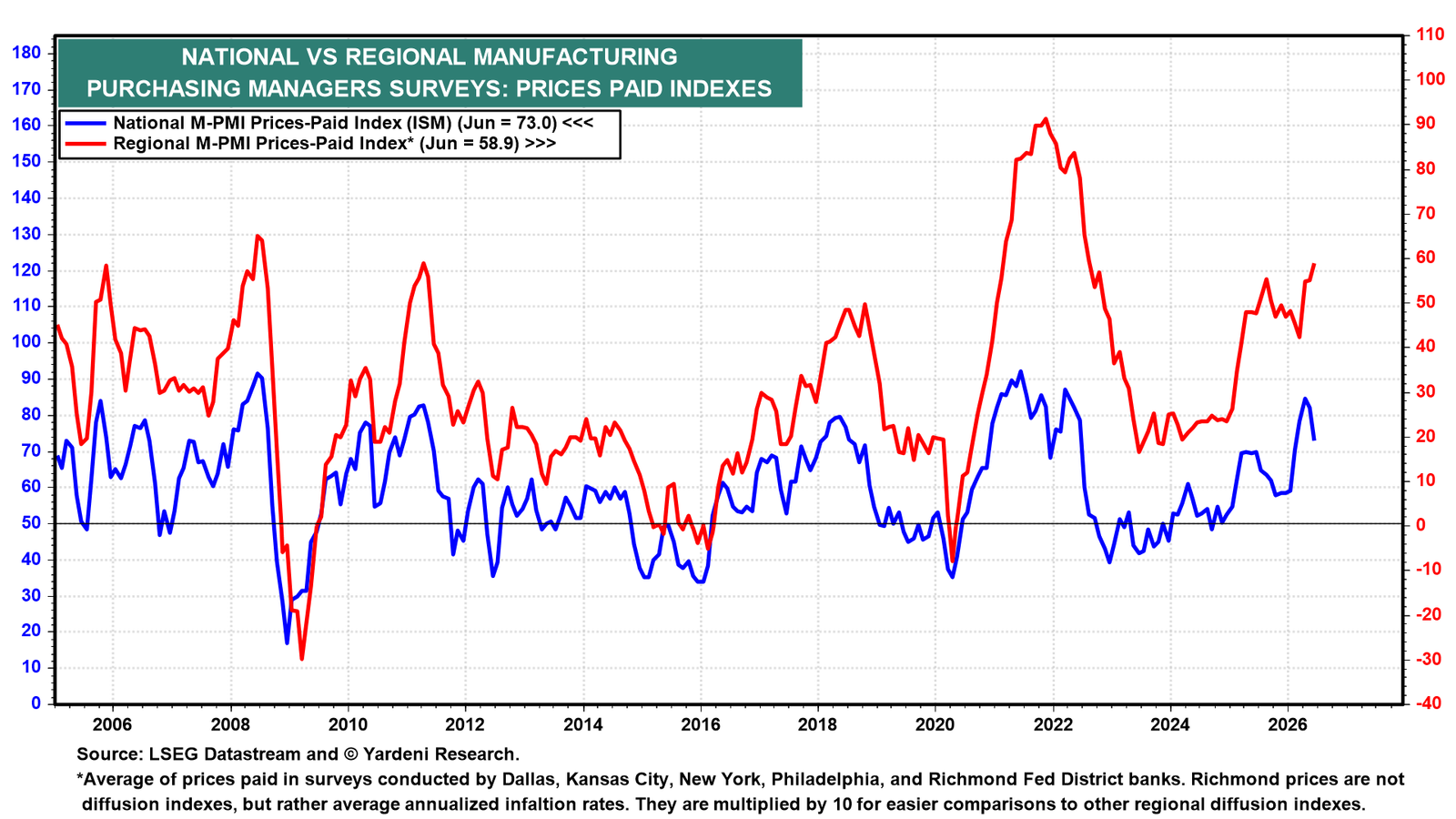
(5) Inflation. The prices-paid component of June's M-PMI posted its largest monthly decline since July 2022 as oil prices plunged (chart). Even so, at 73.0, it remains well above its level at the start of the year, before the war began. The average of the five regional Fed banks’ prices-paid indexes also advanced to levels last seen in 2022, confirming that price pressures remain in the pipeline.
The average prices-received component of the five regional Fed banks’ business surveys rose at a more modest pace but also remained elevated (chart).