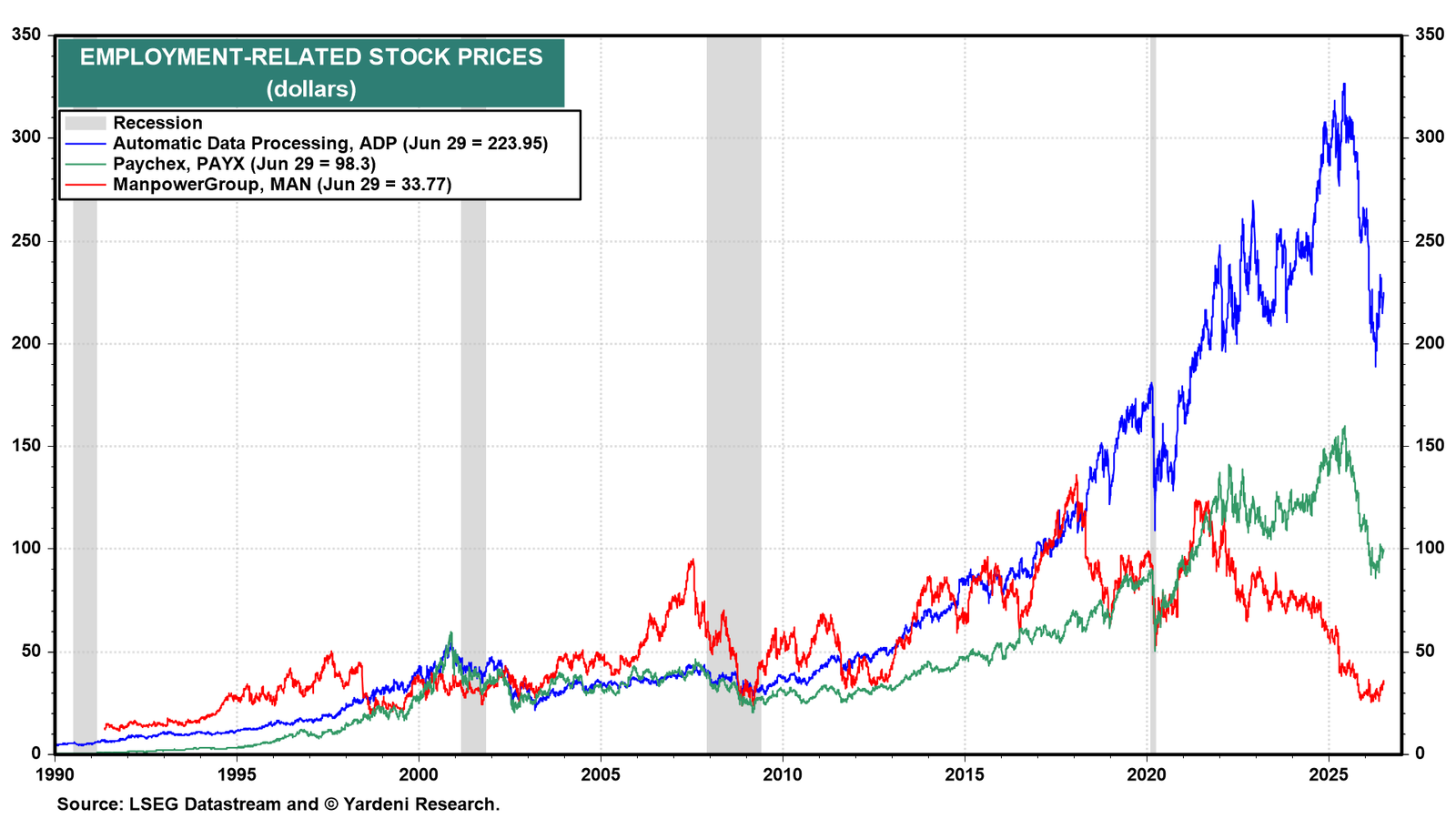
The stock prices of ADP, Paychex, and ManpowerGroup sold off sharply last year as hiring cooled. Employers froze their headcounts as they assessed the impacts of Trump's tariffs and of AI technologies on their businesses (chart). On May 8, we wrote that the labor market was showing early signs of improvement and that employment-related stocks may have bottomed. So far, so good.
Employers now seem to have a clearer, more optimistic sense of the economic outlook. As a result, payroll employment growth has improved in recent months and should continue to do so. Employment-related stocks still have room to run in this scenario.
We expect the June employment report (released on Thursday) to show a gain of 188,000, matching the three-month average through May, with the unemployment rate remaining at 4.3%.
The latest batch of employment stats shows that the labor market is in good shape:
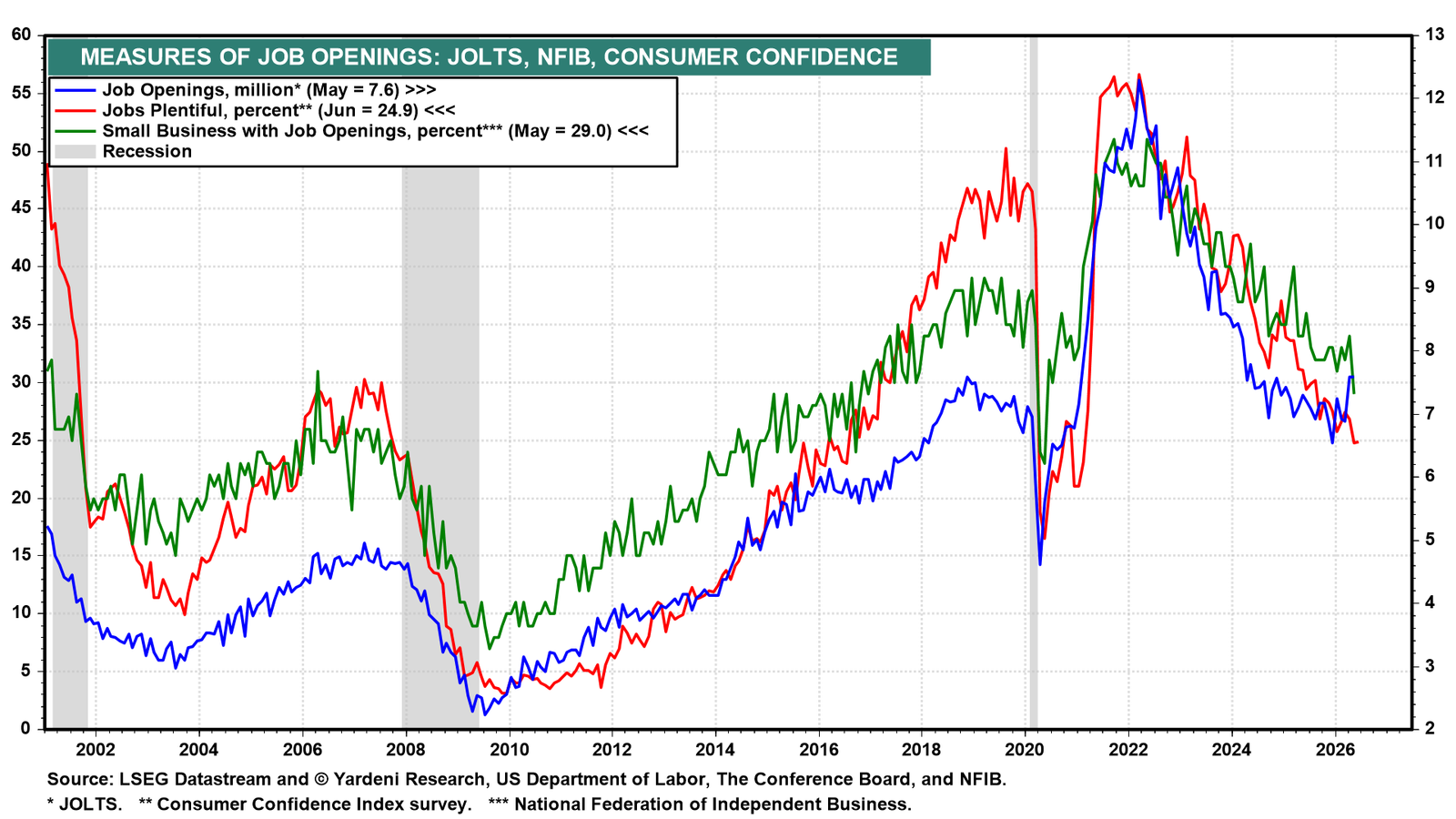
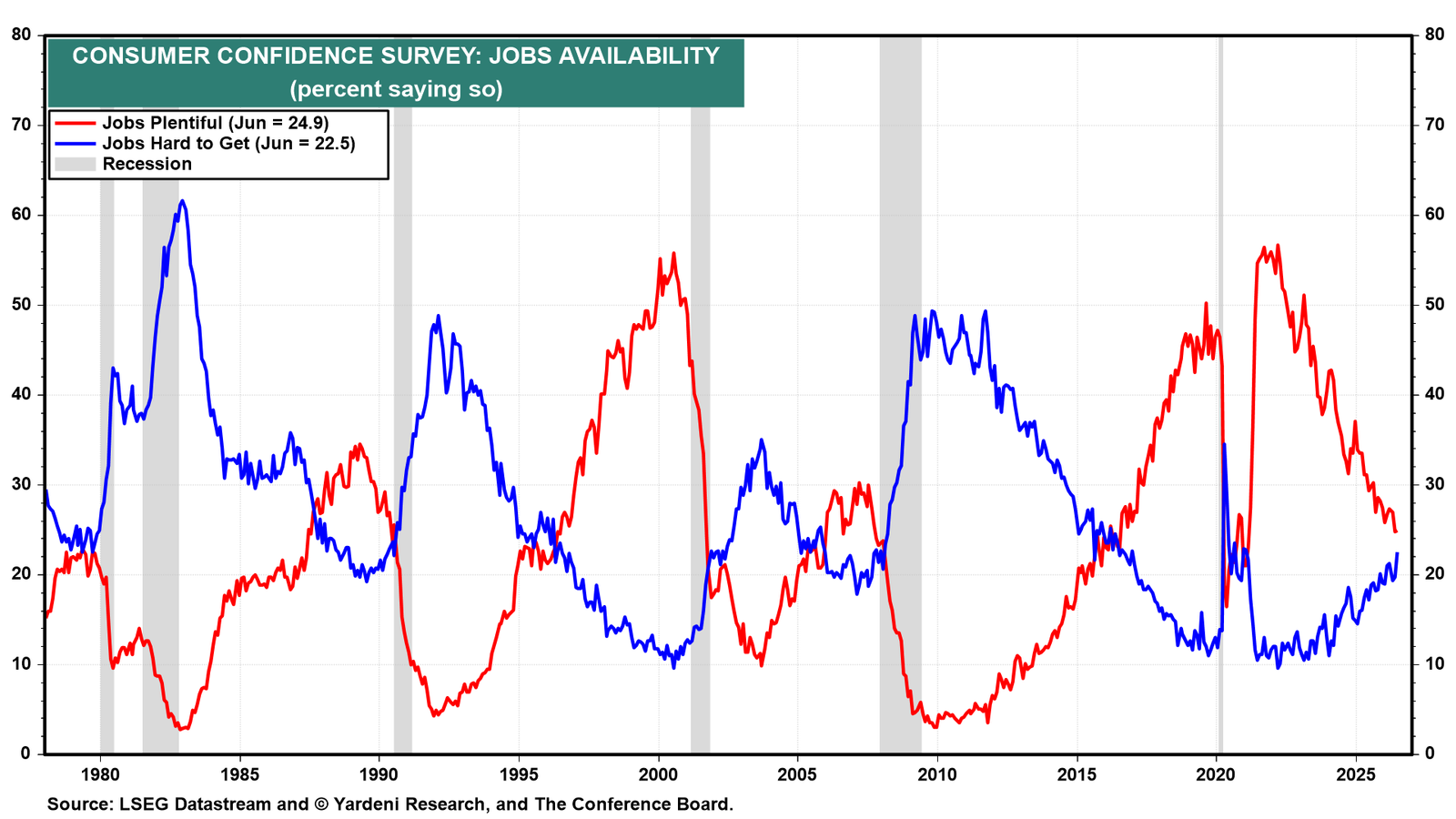
(1) JOLTS. Total job openings ticked up to 7.5 million in May, the highest since May 2024, signaling improving labor demand. Meanwhile, the share of small businesses with job openings fell to 29.0% in May, and the share of consumers describing jobs as plentiful edged down to 24.9% in June. We give more weight to hard data (e.g., today's JOLTS report) than to soft data from surveys.
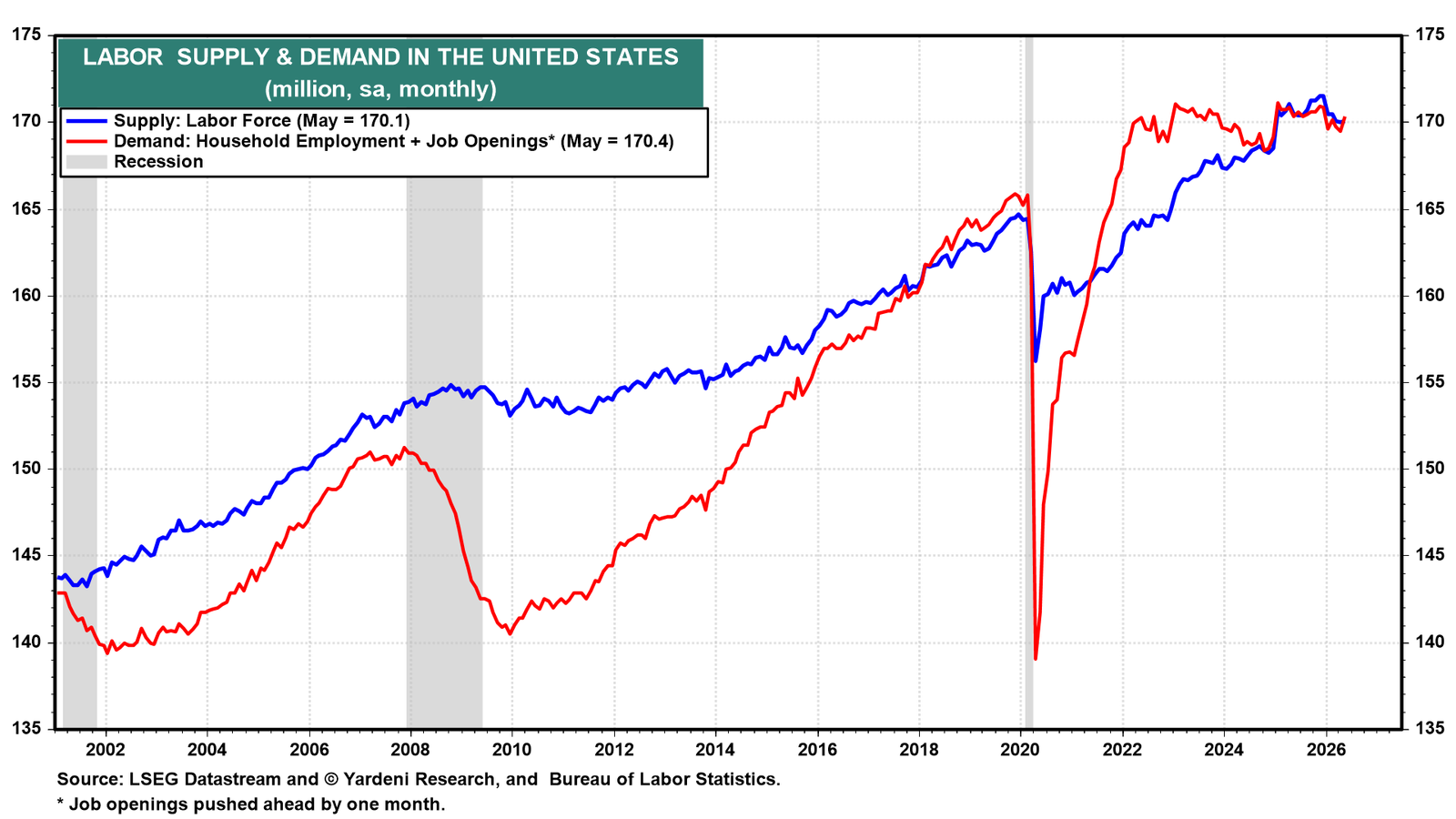
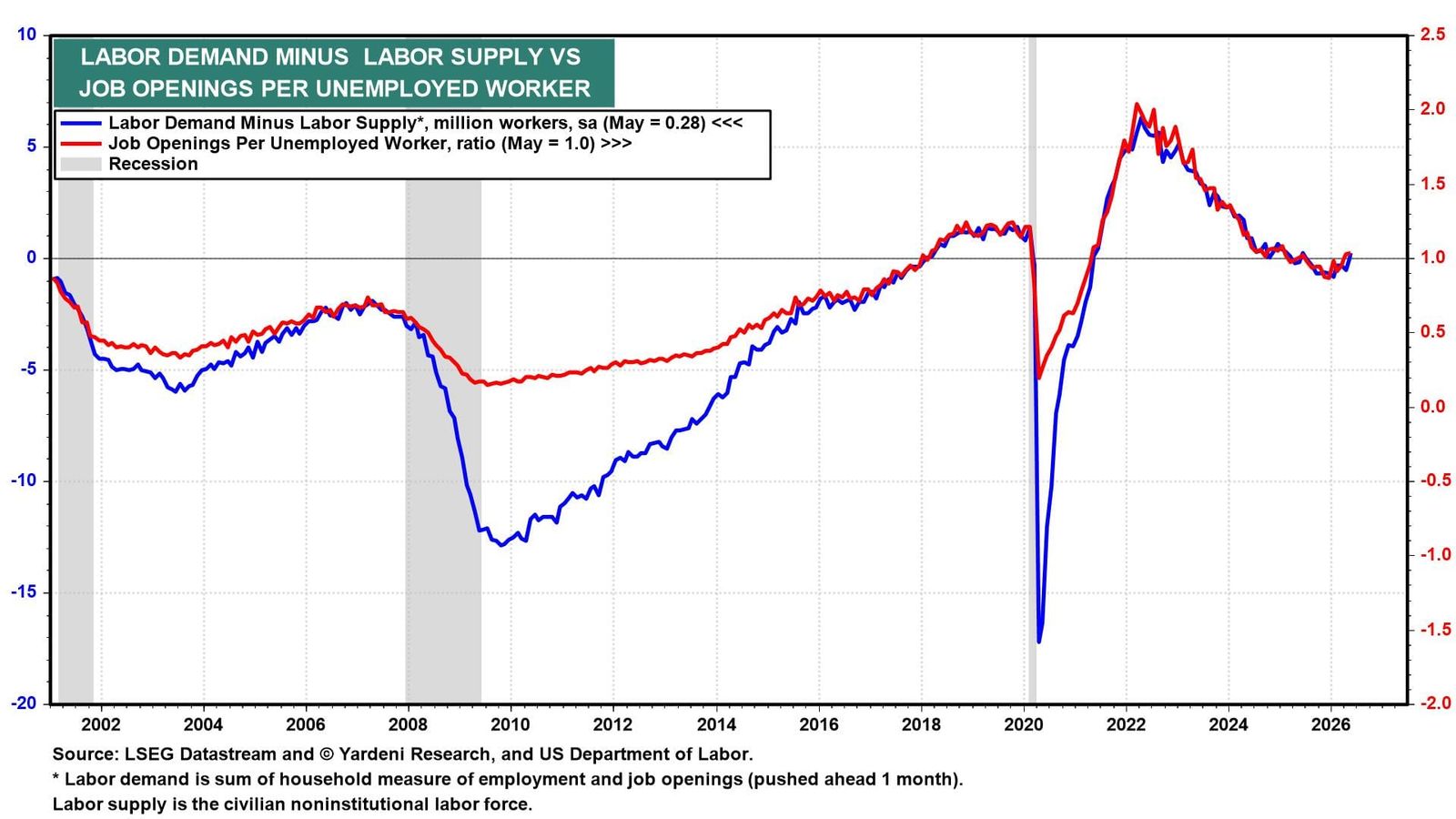
Supply and demand in the labor market are nearly in equilibrium (chart). The chronic labor shortages of the pandemic years are over. Notably, May was the first month since June 2025 that labor demand outpaced supply, albeit very modestly.
Labor demand minus labor supply closely tracks job openings per unemployed worker. The latter edged up to 1.0 during May (chart).
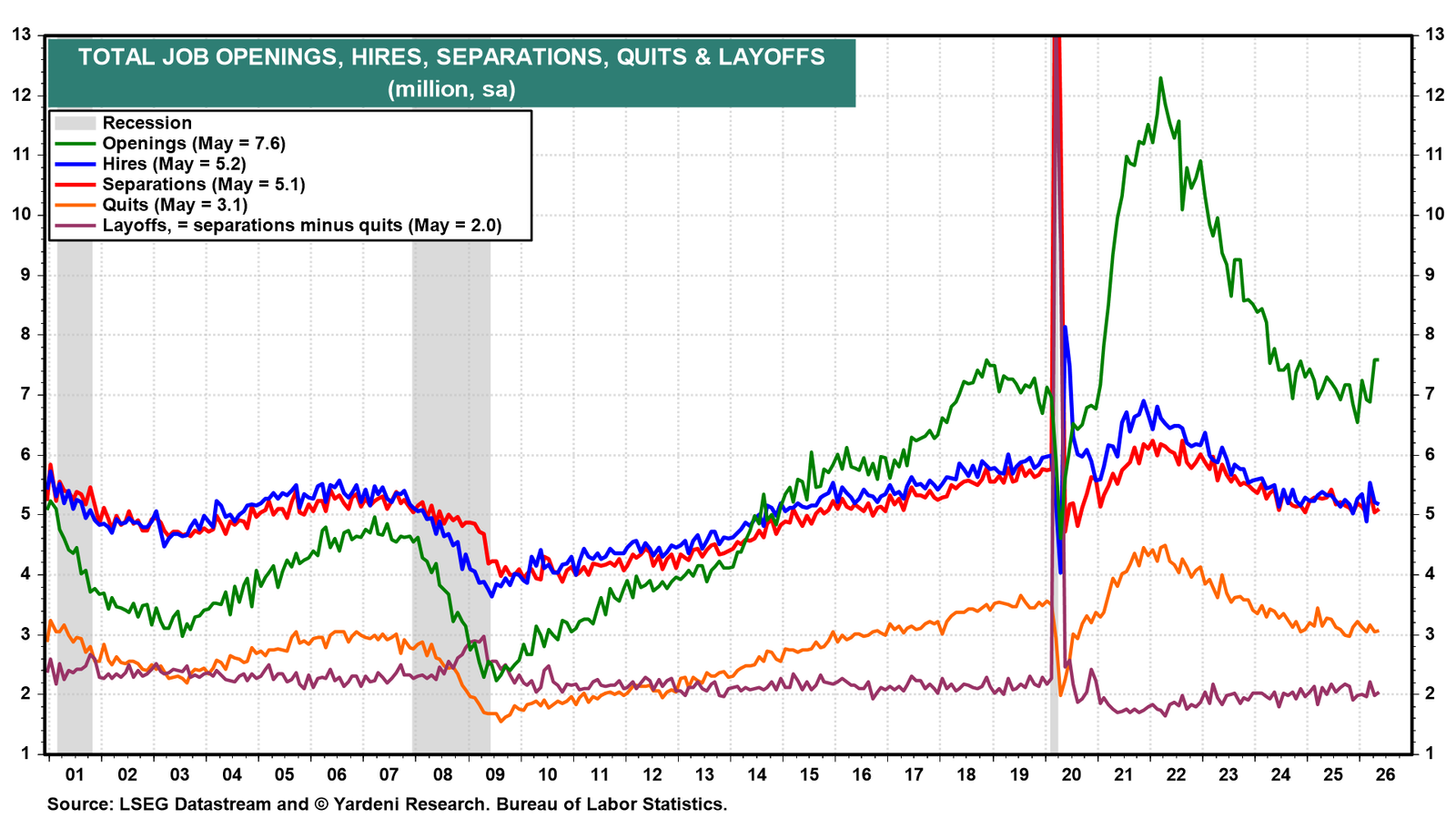
Contrary to the widely accepted "no-hires-no-fires" description of the labor market, hires totaled 5.2 million during May, slightly exceeding separations, i.e., layoffs and quits—both of which remain relatively subdued (chart).
(2) Consumer Confidence. The percentage of respondents in June's Consumer Confidence Index survey describing jobs as hard to get rose to 22.5% (chart). That's still a relatively low reading.
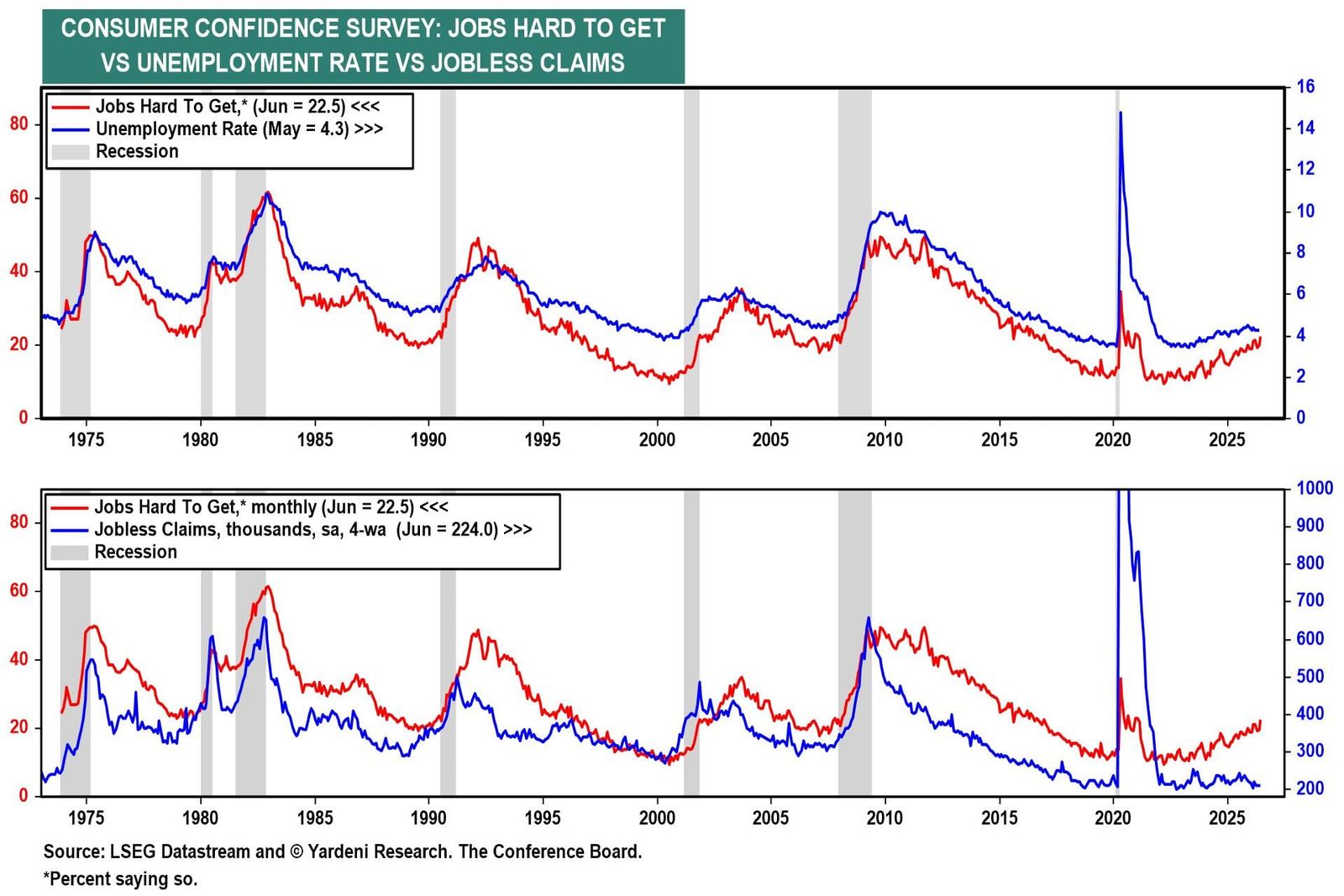
The share describing jobs as hard to get has historically tracked the unemployment rate and initial unemployment insurance claims closely (chart). The AI building boom requires highly specific skills, and unqualified workers are finding it harder to land new jobs, potentially lengthening their unemployment spells.
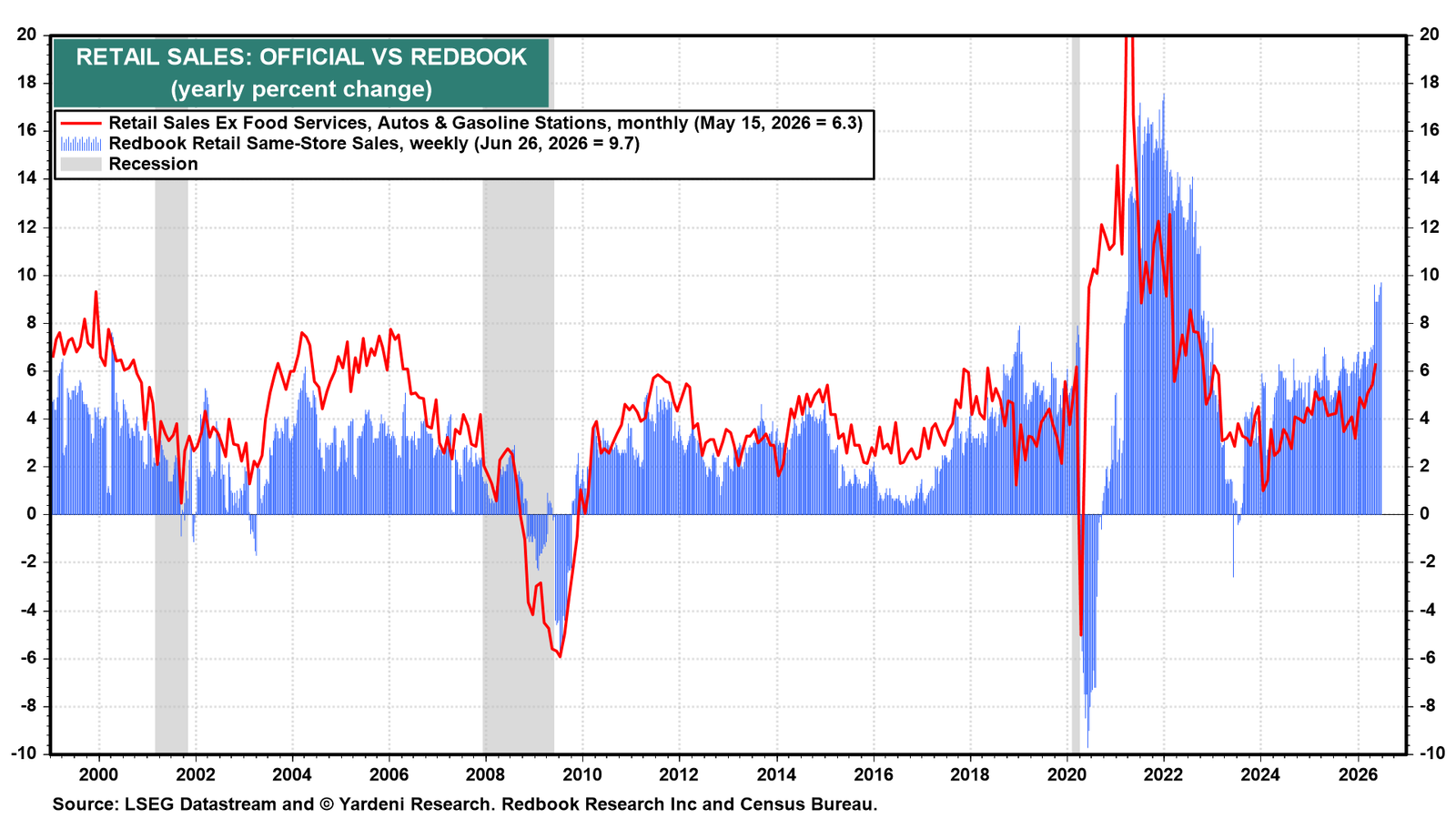
(3) Redbook Retail Sales. The Redbook Retail Sales Index rose 9.7% y/y for the week of June 26 (chart). The four-week moving average climbed to its highest since September 2022! The World Cup is almost certainly providing a lift, attracting millions of domestic and international visitors who are spending on hotels, restaurants, apparel, and transportation. There could be a dip in consumer spending after they leave, but we expect that it will remain solid.
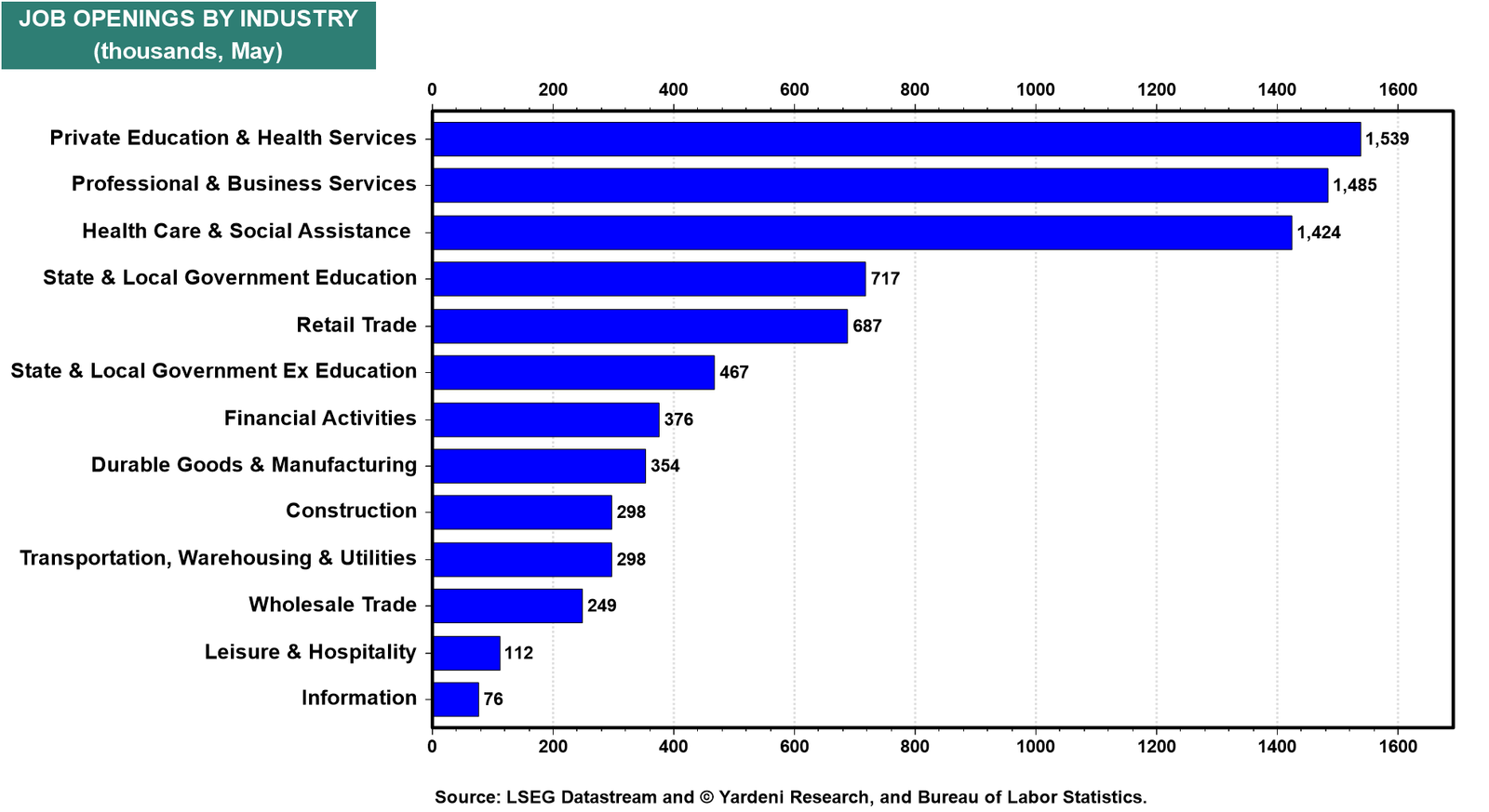
(4) JOLTS by Industry. The World Cup footprint is visible in the labor data too. Robust hiring during May in leisure, hospitality, retail, and transportation likely reflects firms staffing up for the tournament (chart). Beyond the World Cup effect, solid hiring in construction and manufacturing is consistent with the AI building boom.
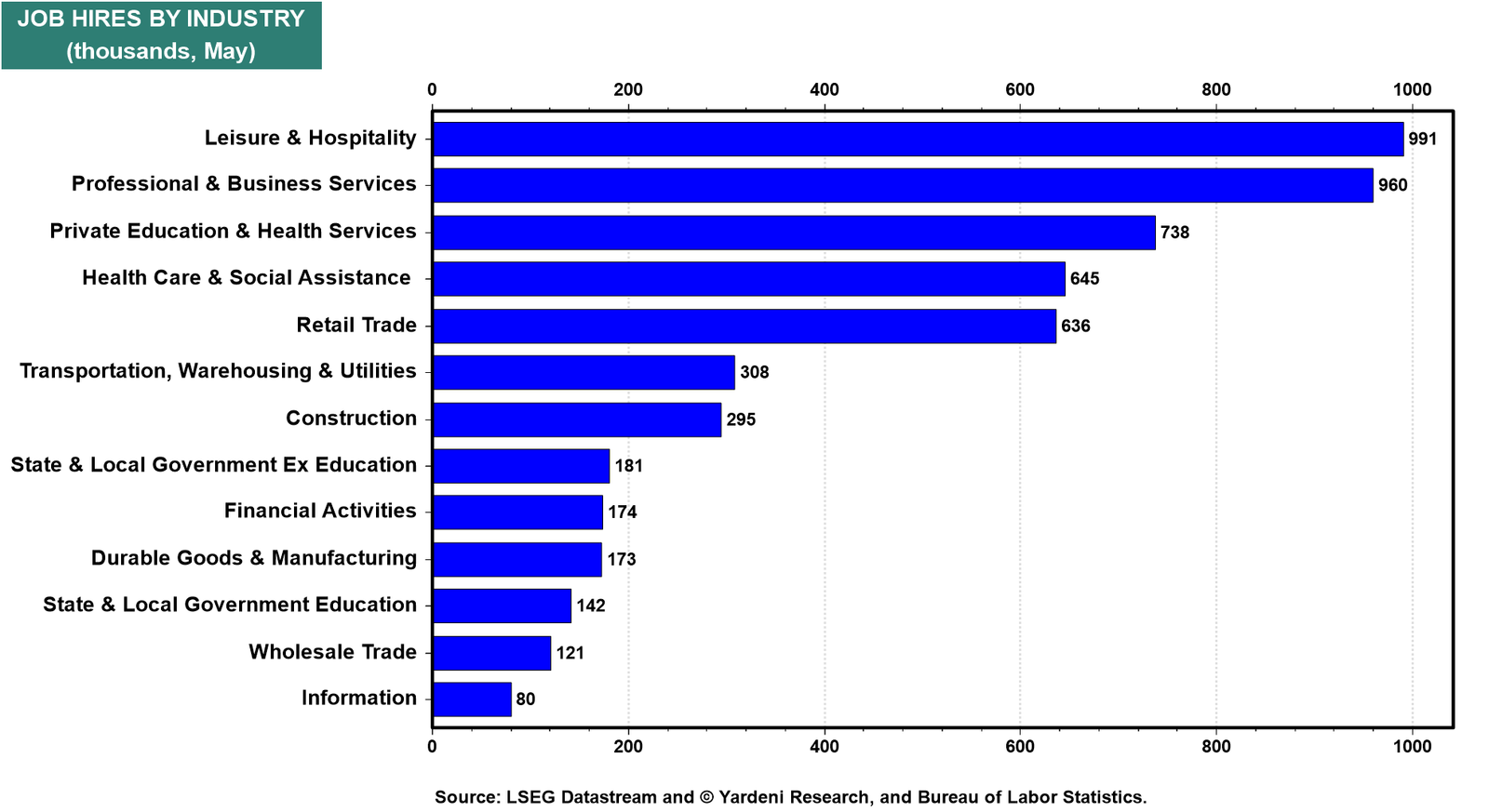
In May, job openings remained broad-based, with particular strength in private education, health services, and professional and business services (chart). Healthcare job openings reflect the long-term structural tailwind of an aging population, while elevated retail trade vacancies signal that consumer-facing industries continue to expect robust spending. Job openings are scarce in the leisure & hospitality and information sectors.