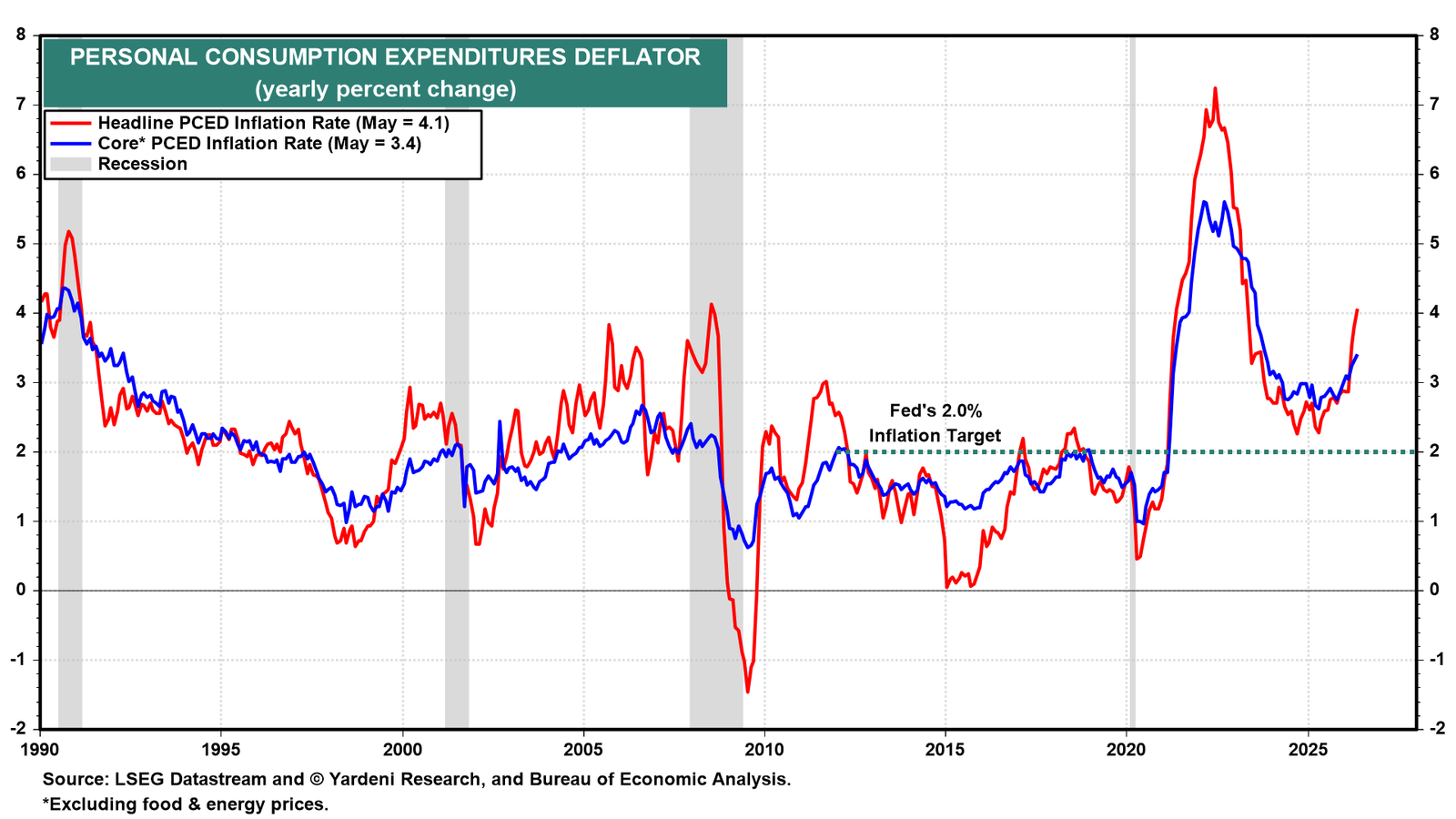
The FOMC’s policy stance is determined by the balance of risks to its dual mandate of price stability and full employment. In the current environment, those risks remain firmly skewed toward inflation, justifying last week's FOMC pivot from an easing bias to a tightening one. Today's plethora of May economic data shows that the economy and the labor market are in great shape, while both headline and core PCED inflation rates rose further above the Fed's 2.0% target (chart) .
June's plunge in oil prices will certainly reduce the headline inflation rate, but the core rate is now up to 3.4% y/y. Before the war, it was stuck just below 3.0%. In his press conference last week, Fed Chair Kevin Warsh acknowledged that inflation has exceeded the FOMC's target for more than five years and committed the Fed to restoring price stability. Accordingly, we remain inclined to expect at least one rate hike before year-end, with July a live possibility.
Falling energy prices may slow core inflation. However, the AI spending boom is driving up electricity bills and consumer electronics prices. Today, Apple announced significant price increases because of soaring memory chip prices.
The Cleveland Fed's Inflation Nowcasting projects that June's headline inflation fell to 3.9%, while the core inflation rate remained stuck at 3.4%.
Let's have a closer look at today's inflation report and economic indicators:
(1) Inflation. Headline PCED inflation surged to 4.1% y/y in May, the highest since April 2023. Core PCED also spiked to 3.4%, its highest since October 2023.
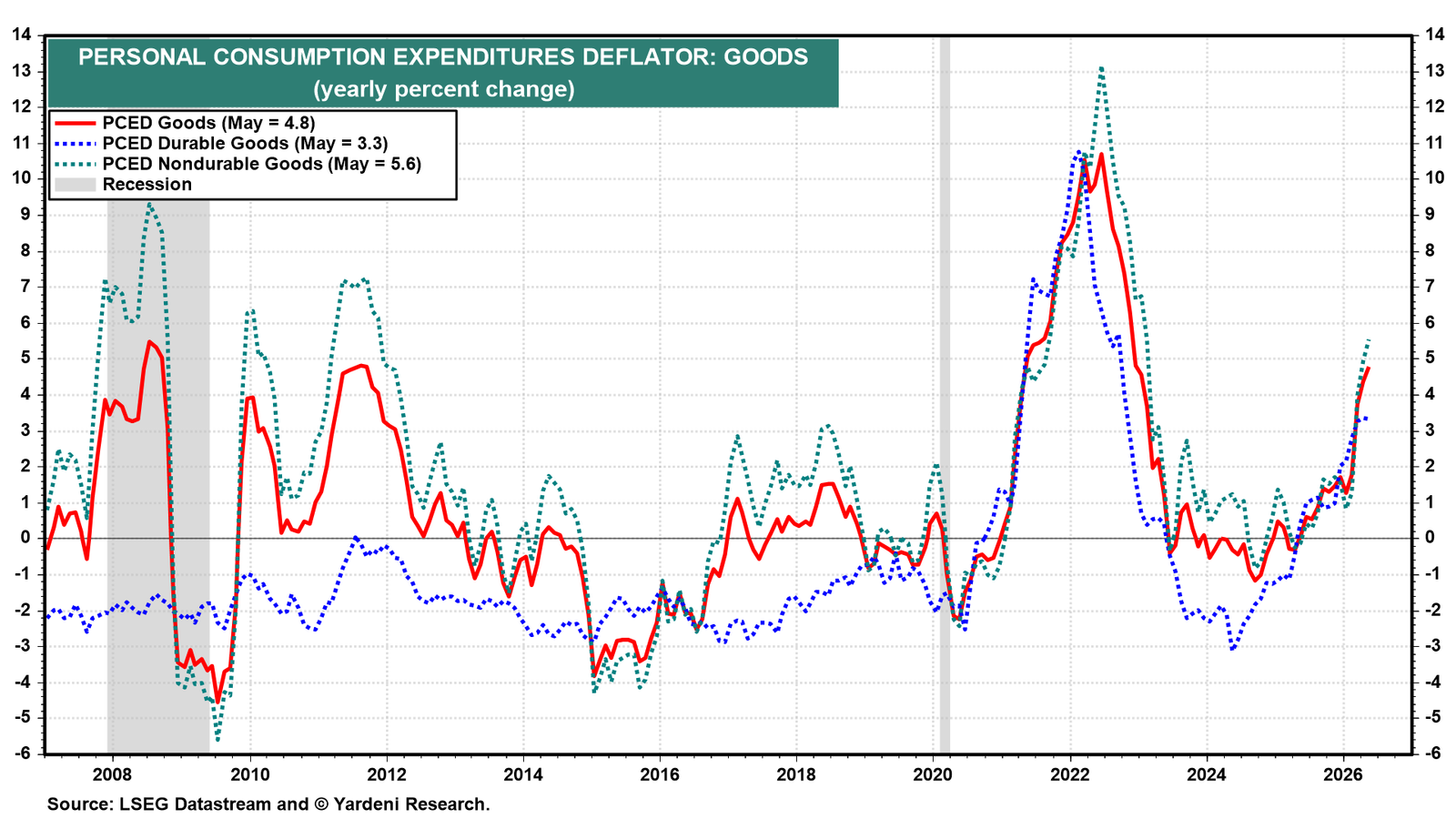
Goods inflation was 4.8%, led by a 5.6% increase in nondurable goods (chart). The latter should moderate quickly if the recent plunge in oil prices sticks. Durable goods inflation remained elevated at 3.3%, suggesting that the effect of last year's tariff hikes hasn't fully abated yet.
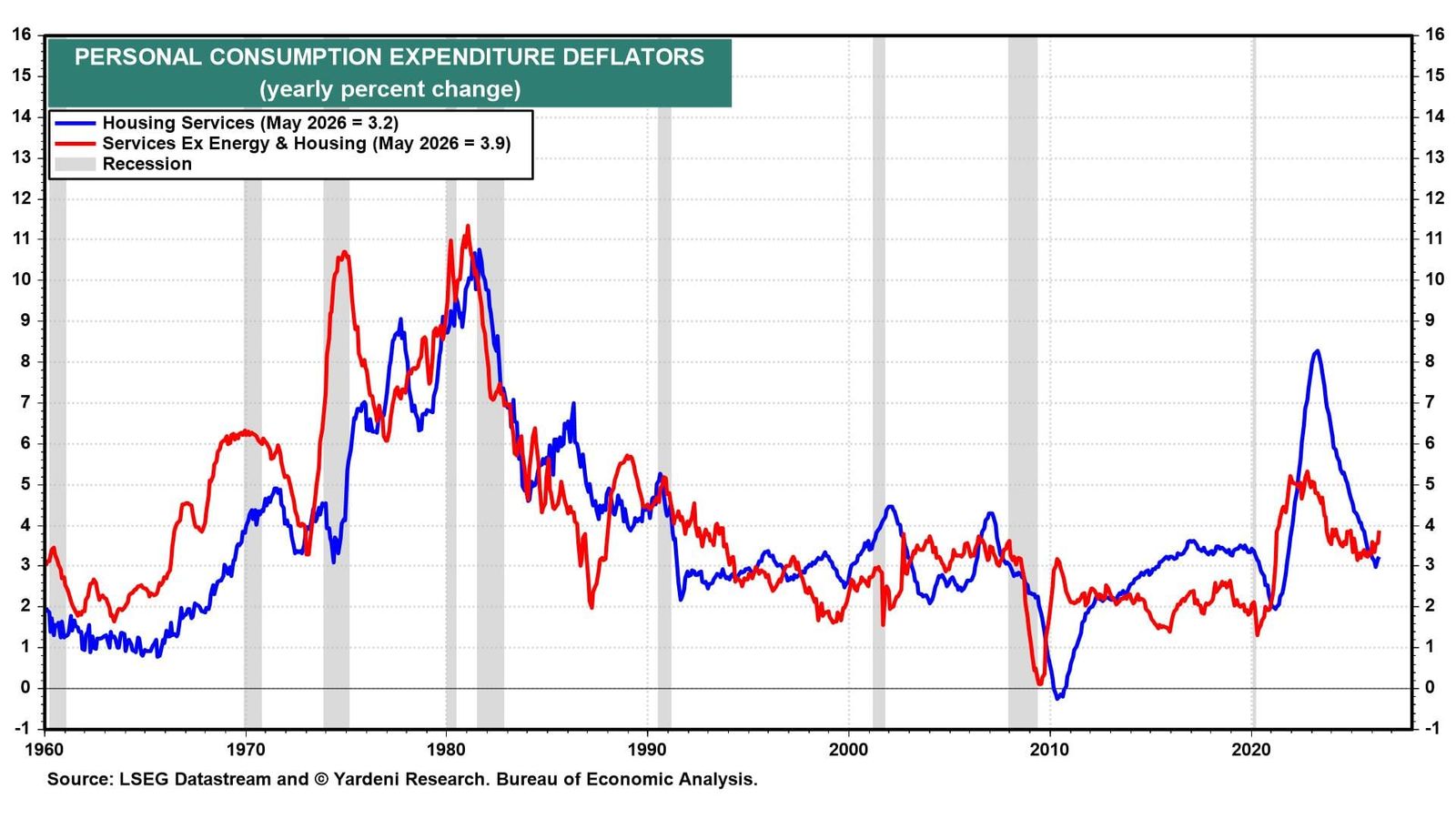
Housing services inflation edged up to 3.2% y/y (chart). More importantly, services excluding energy and housing inflation rose to 3.9% y/y, the highest since September 2023. This so-called "supercore" inflation rate is a key measure of underlying inflation. It is well above the Fed's 2.0% inflation target.
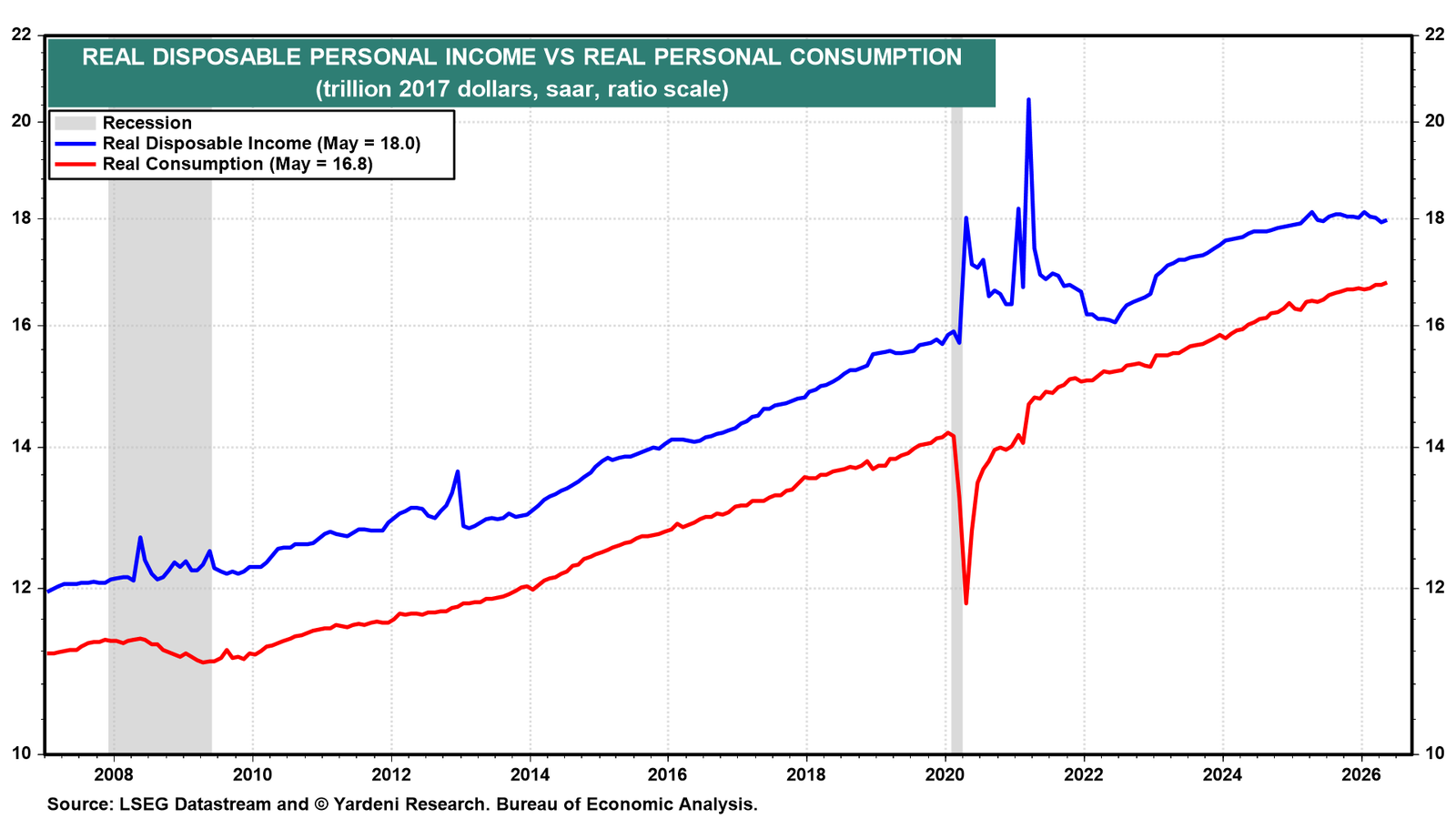
(2) Consumer Spending. The consumer remains in good shape despite rising inflation. Real consumer spending rose 2.1% y/y to a new record high in May (chart). Real disposable income posted its first monthly gain since January 2026. But it has been basically flat for the past year. We attribute this to the retirement of Baby Boomers, who collectively have a record $89 trillion in net worth and are using it to fund their spending now that they don't have paychecks.
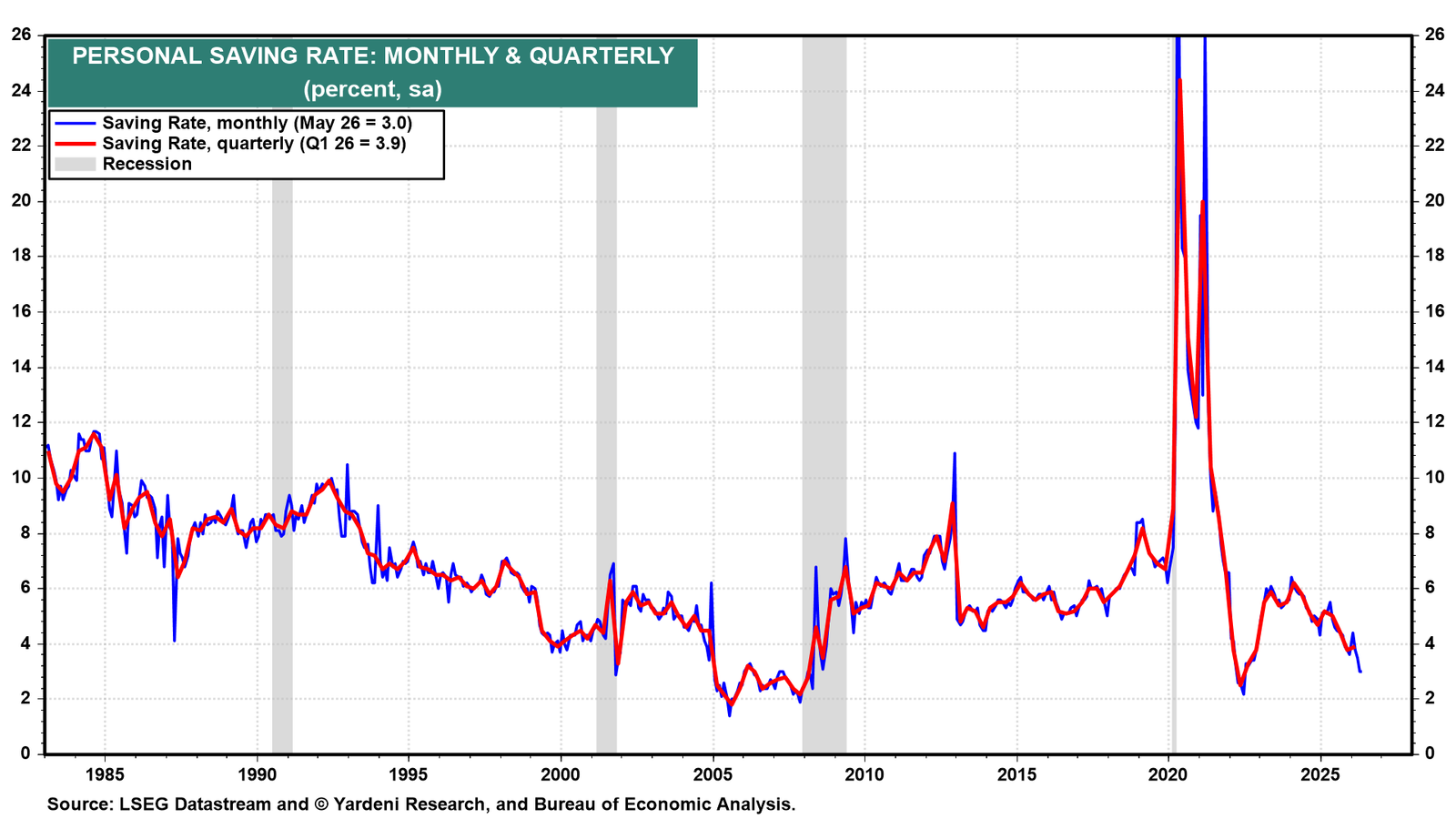
May's saving rate held at 3.0%, the lowest since 2022 (chart). We expect it will continue to fall as more Baby Boomers retire.
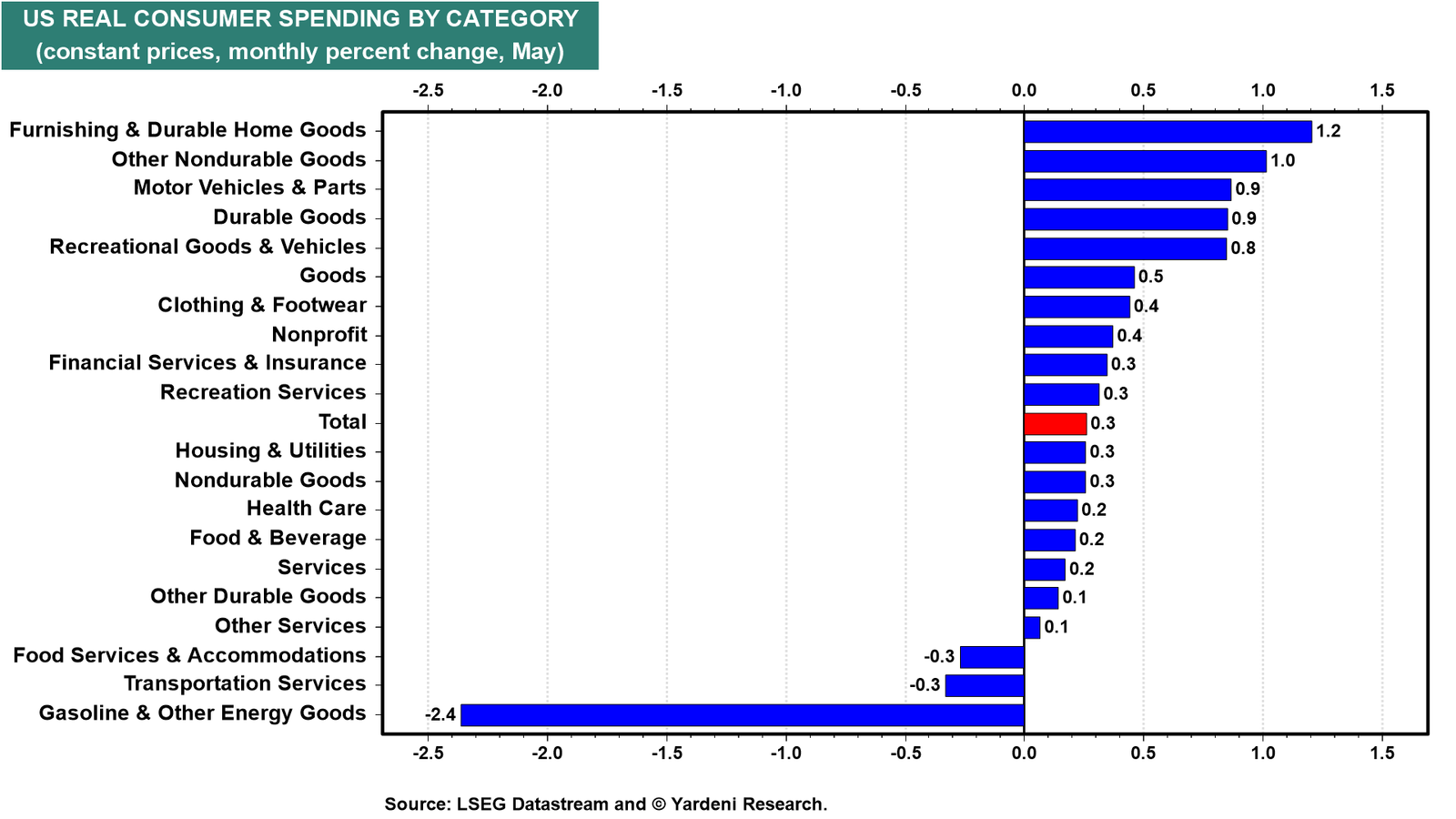
The advance in real consumer spending during May was broad-based, reflecting healthy underlying demand across many categories (chart). Interestingly, higher gasoline prices did reduce consumers' gasoline usage, but didn't reduce spending in other categories during the month, with the exception of food services & accommodation and transportation services. These should rebound now that gasoline prices are falling.
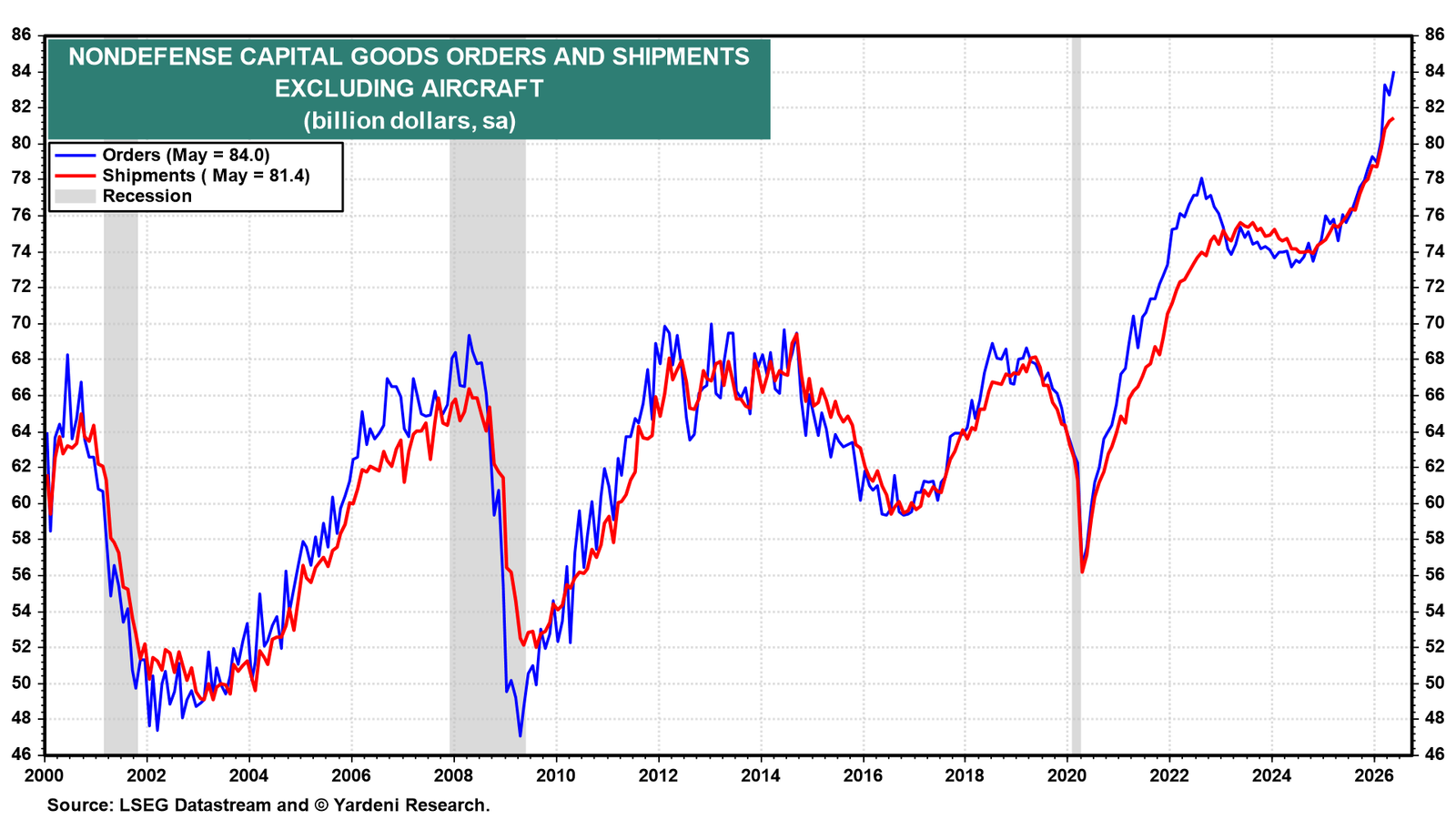
Meanwhile, capital spending remained very strong in May, as new orders for nondefense capital goods, excluding civilian aircraft, jumped to yet another record high (chart).
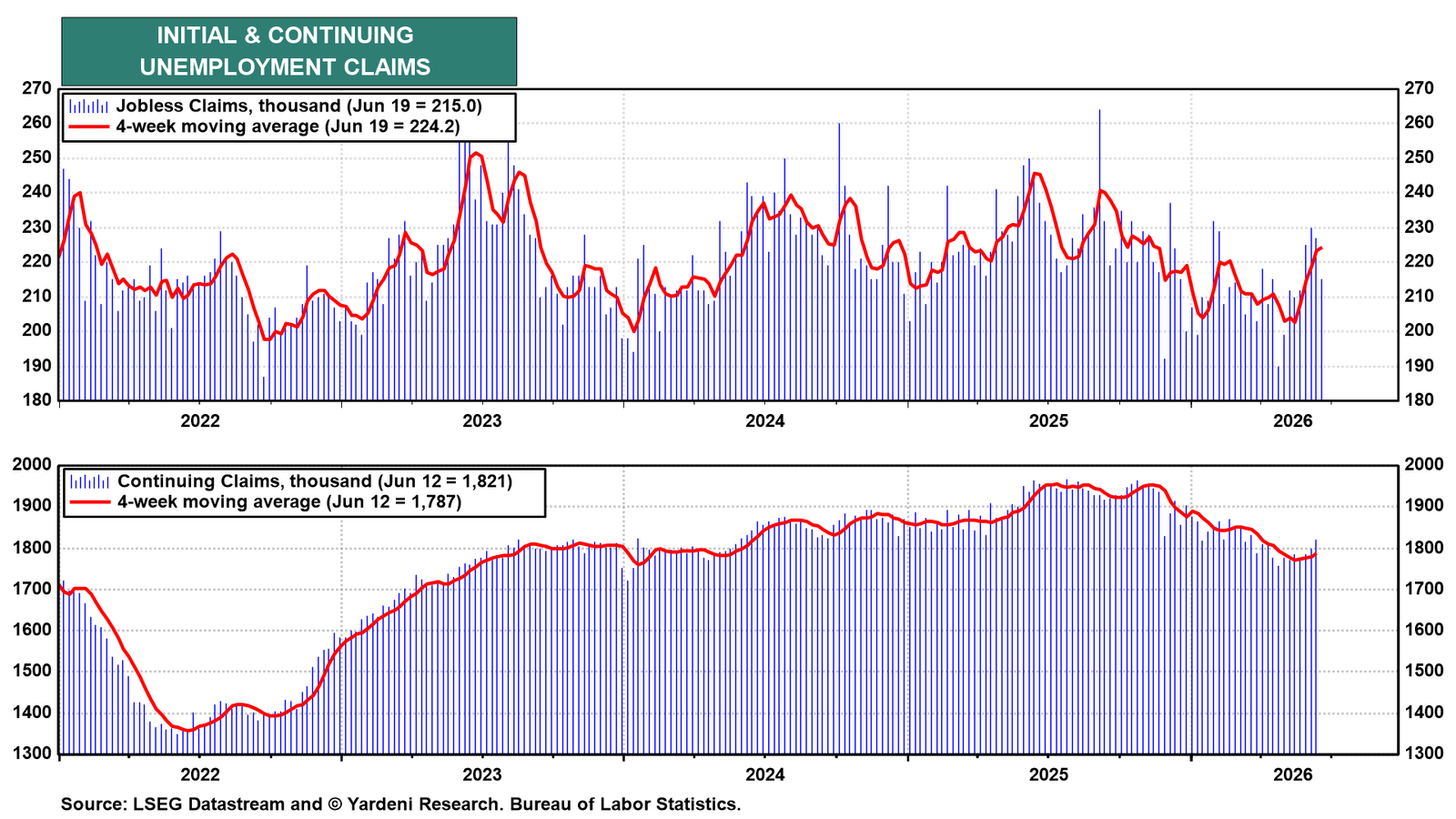
(3) Labor Market. The labor market continues to show signs of improvement. Initial jobless claims fell to 215,000 during the week of June 19, confirming that layoff activity remains remarkably subdued. Continuing claims are also low (chart).
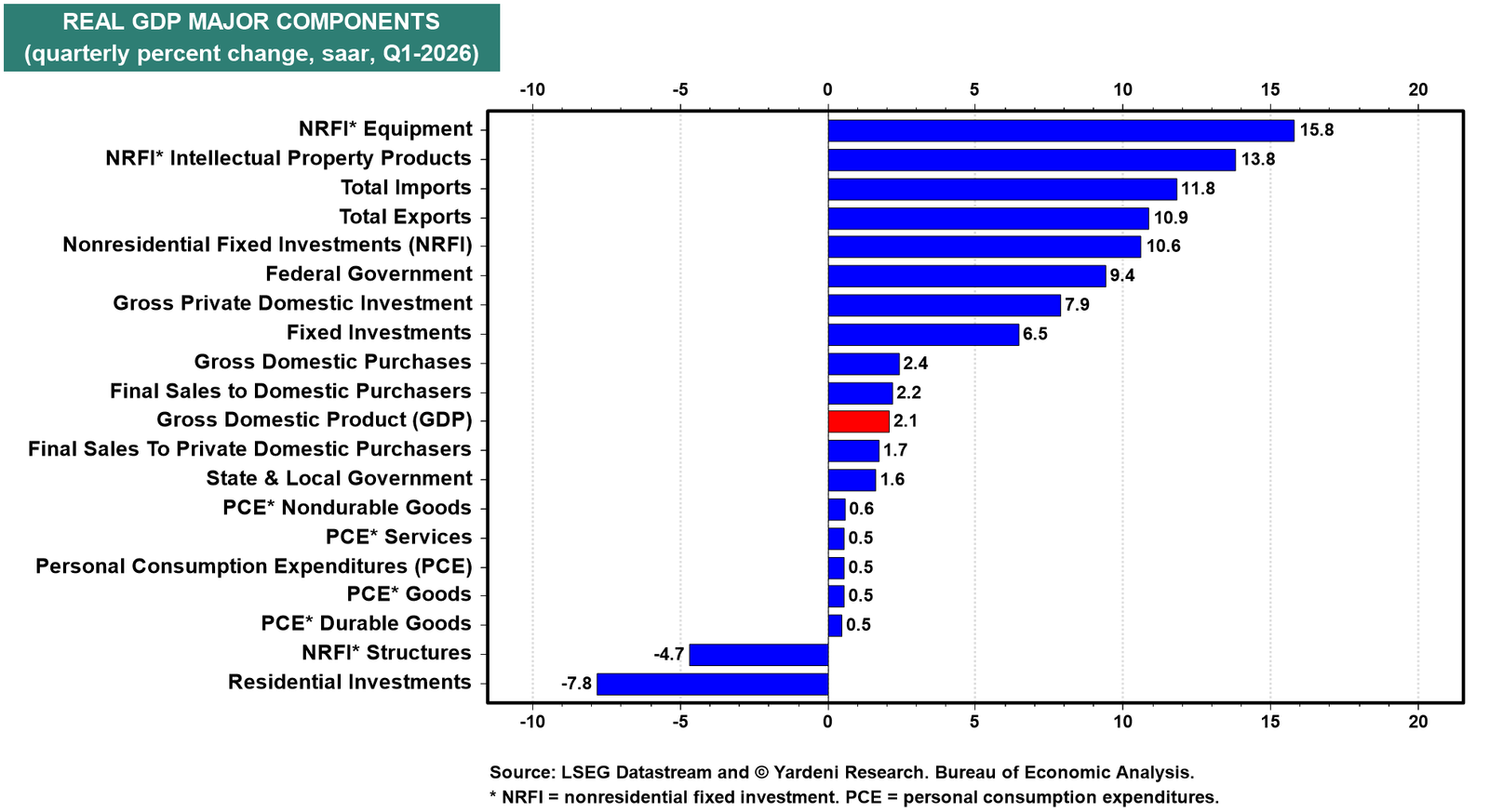
(4) GDP. Q1-2026 real GDP growth was revised up to 2.1% from 1.6%, driven by a downward revision to import growth from 21.1% to 11.8% (chart). Consumer spending growth, however, was revised down to 0.5% from 1.4%, largely due to adverse weather weighing on Q1 activity.
The Weekly Economic Index moderated to 2.5% for the week of June 19 (chart).
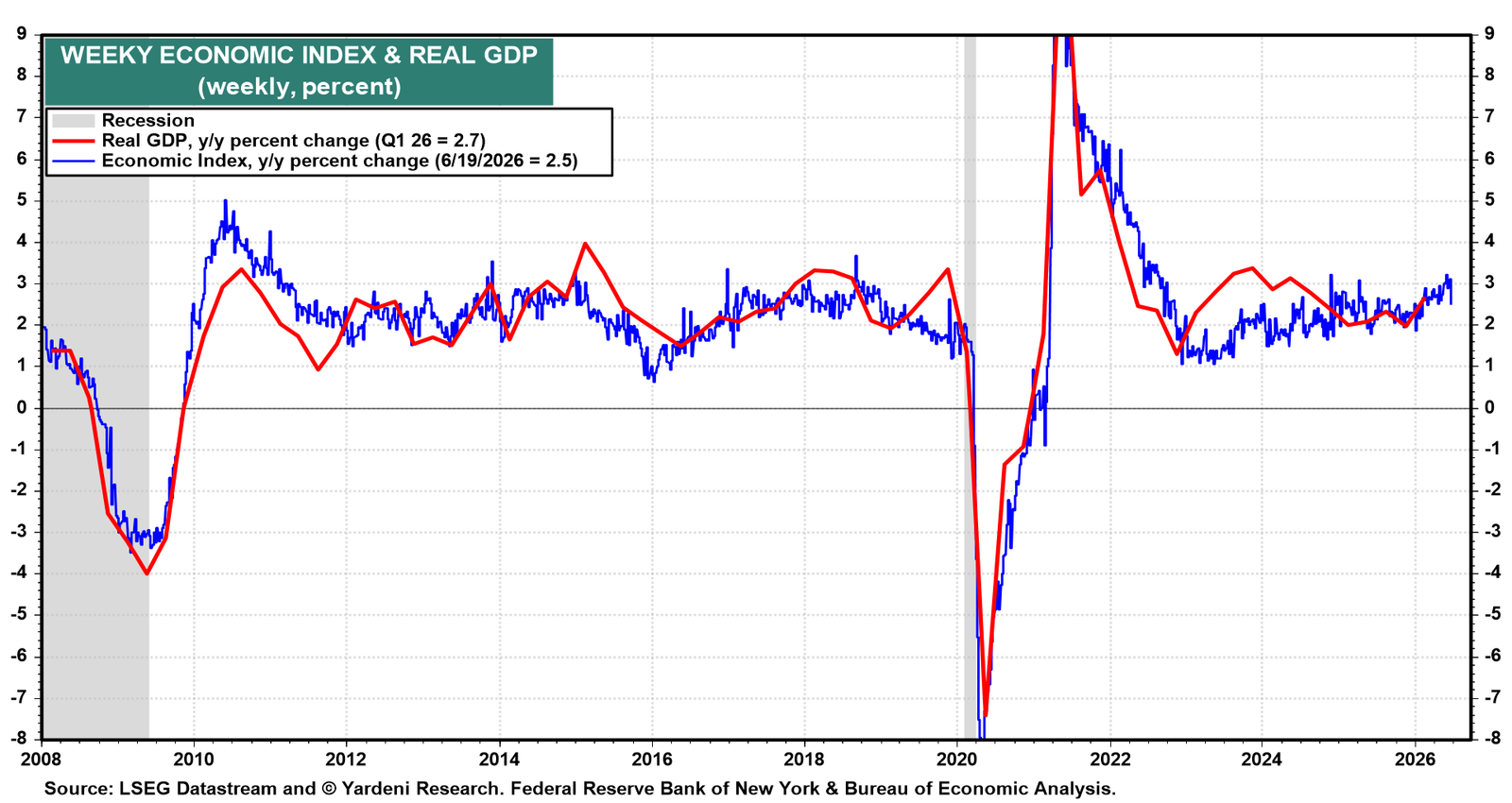
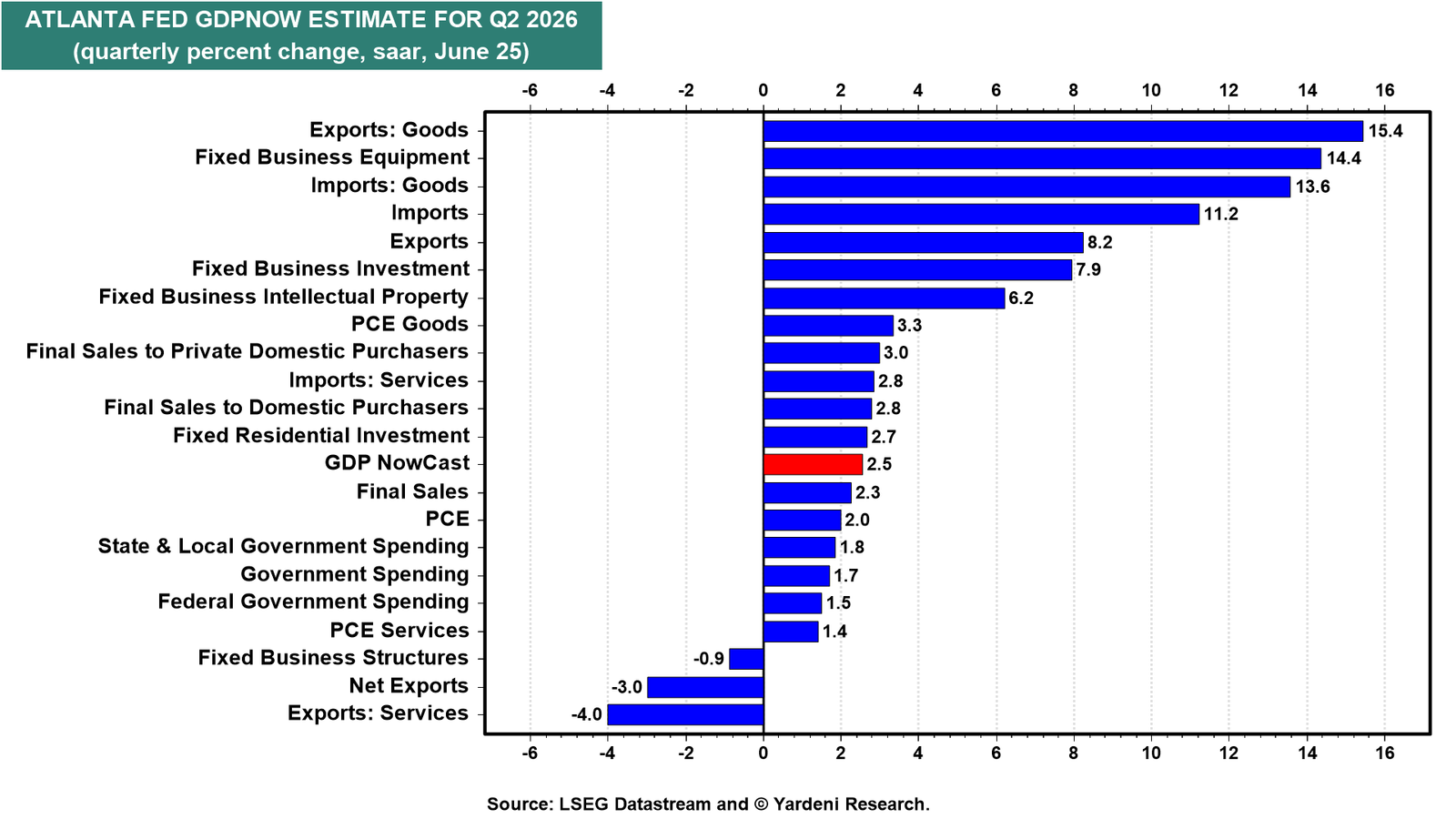
This is consistent with the latest update to the Atlanta Fed's GDPNow model. The Q2-2026 real GDP growth estimate was revised down from 3.1% to 2.5%, reflecting downward revisions to real consumption growth from 2.8% to 2.0%, while business equipment spending was revised up from 13.8% to 14.% (chart). Both point to stronger consumer spending and robust capital investment, supported by AI infrastructure spending, during Q2.