The stock market was hit by another June swoon today. Investors were unnerved by the outcome of last Wednesday's FOMC meeting. The committee participants were more hawkish than expected, according to their Dot Plot. Fed Chair Kevin Warsh abstained from providing his dot, but he came across as very hawkish during his presser, repeatedly stressing the importance of the Fed achieving price stability. Also weighing on AI-related stocks is news that token prices are falling as competition heats up, and that a Chinese company introduced a new dirt-cheap open-source AI model.
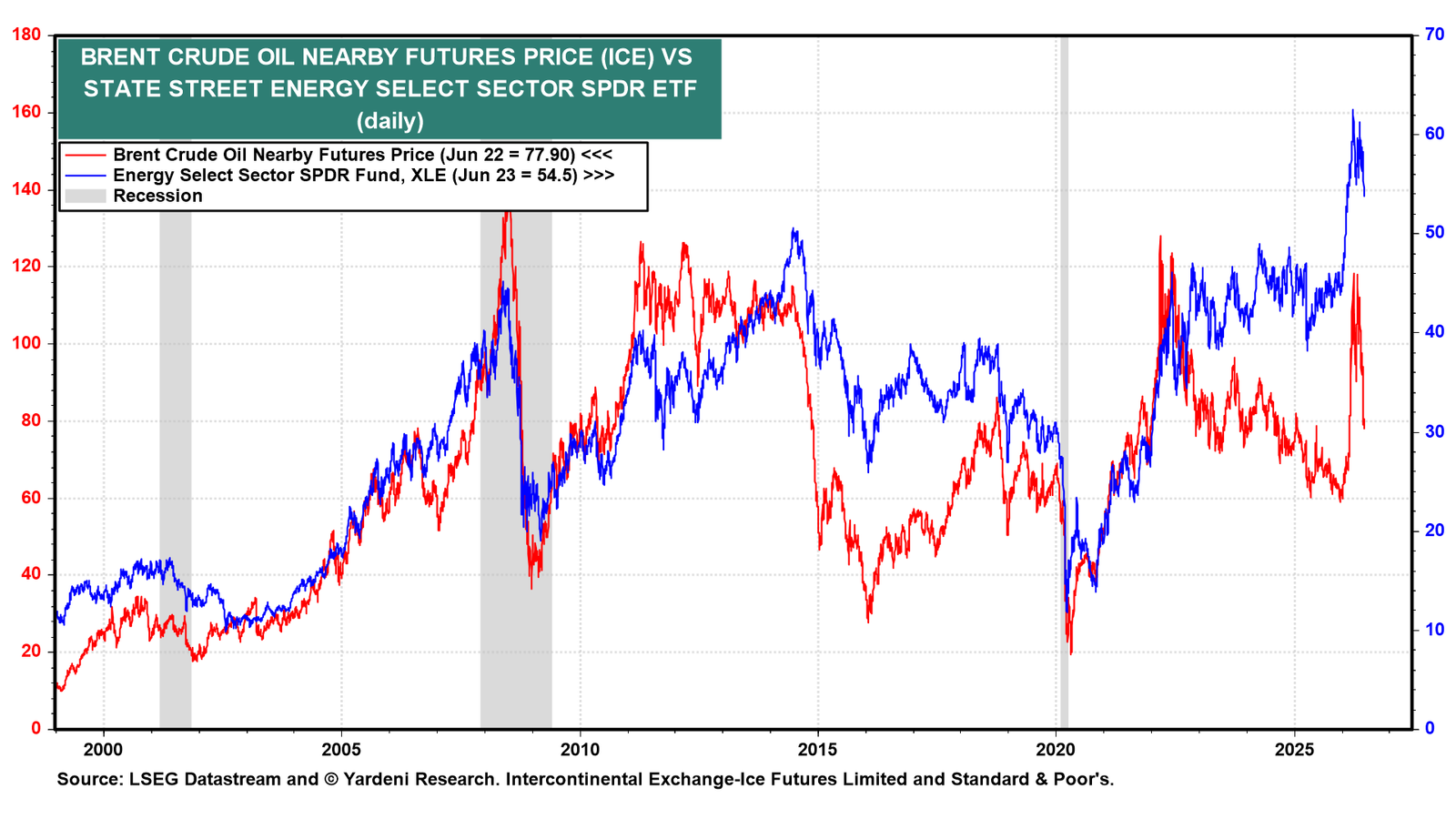
(1) Crude oil. Meanwhile, the June swoon for oil prices continued today. Brent crude fell below $77 a barrel this evening (chart). The decline reflects an improving supply outlook following the US-Iran MOU, with tanker traffic resuming through the Strait of Hormuz and the lifting of the US blockade of Iran's ports. The sharp reversal suggests the geopolitical risk premium in the crude oil market is rapidly unwinding and that the underlying trend is bearish, with crude prices falling from early 2022 until the latest war in the Middle East began.
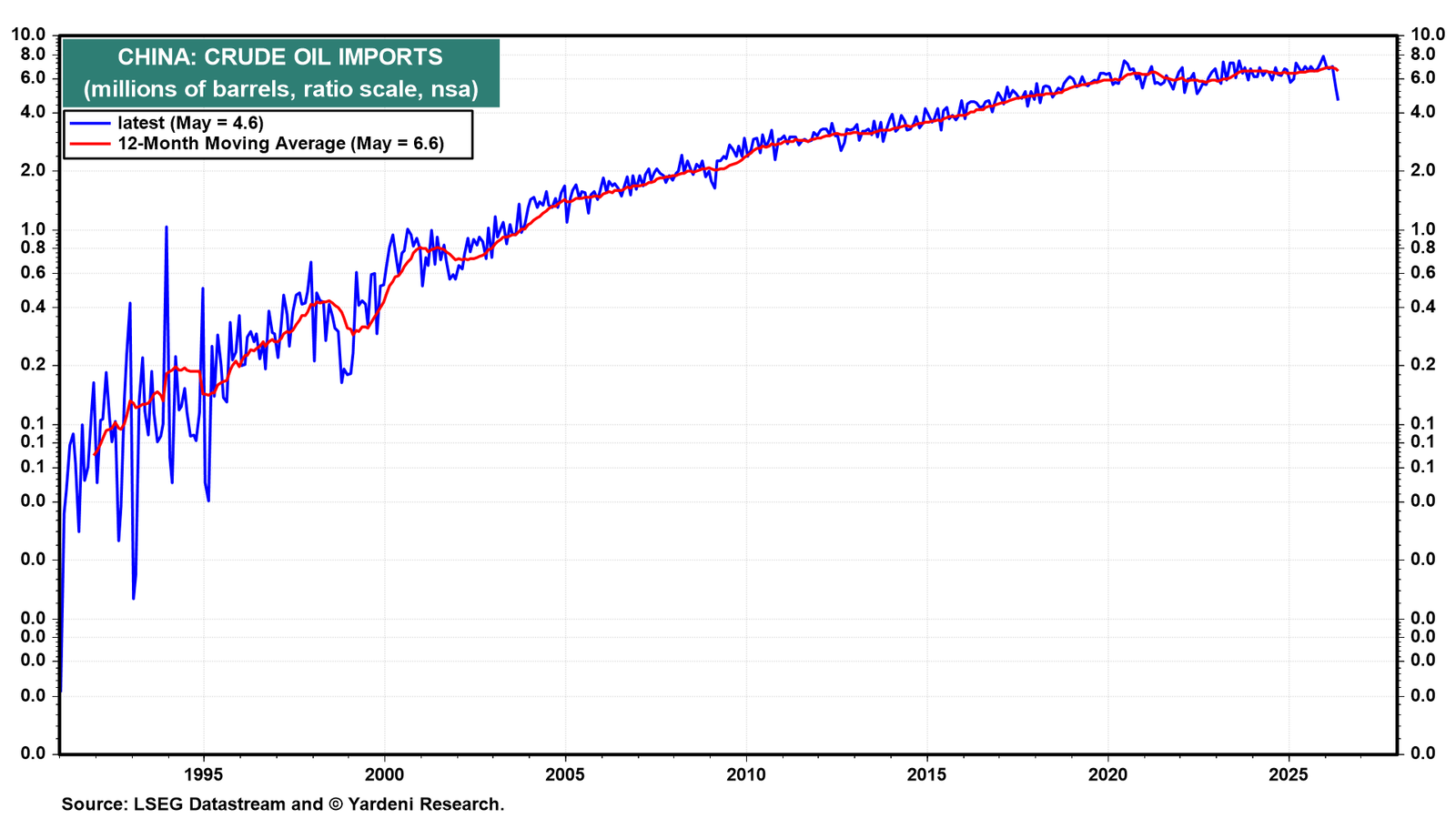
Another factor explaining why oil prices never spiked as much as the closure of the Strait of Hormuz would historically have implied, and why they have since fallen so sharply, is the secular decline in Chinese crude oil demand. After three decades of near-uninterrupted growth, crude imports fell to just 4.6 million barrels per day in May, well below their 12-month average (chart). Chinese demand was already being weighed down by rapid EV adoption, a prolonged property downturn, slower economic growth, and elevated oil inventories before the Middle East conflict. According to JPMorgan, China accounts for 74% of the recent decline in global crude imports.
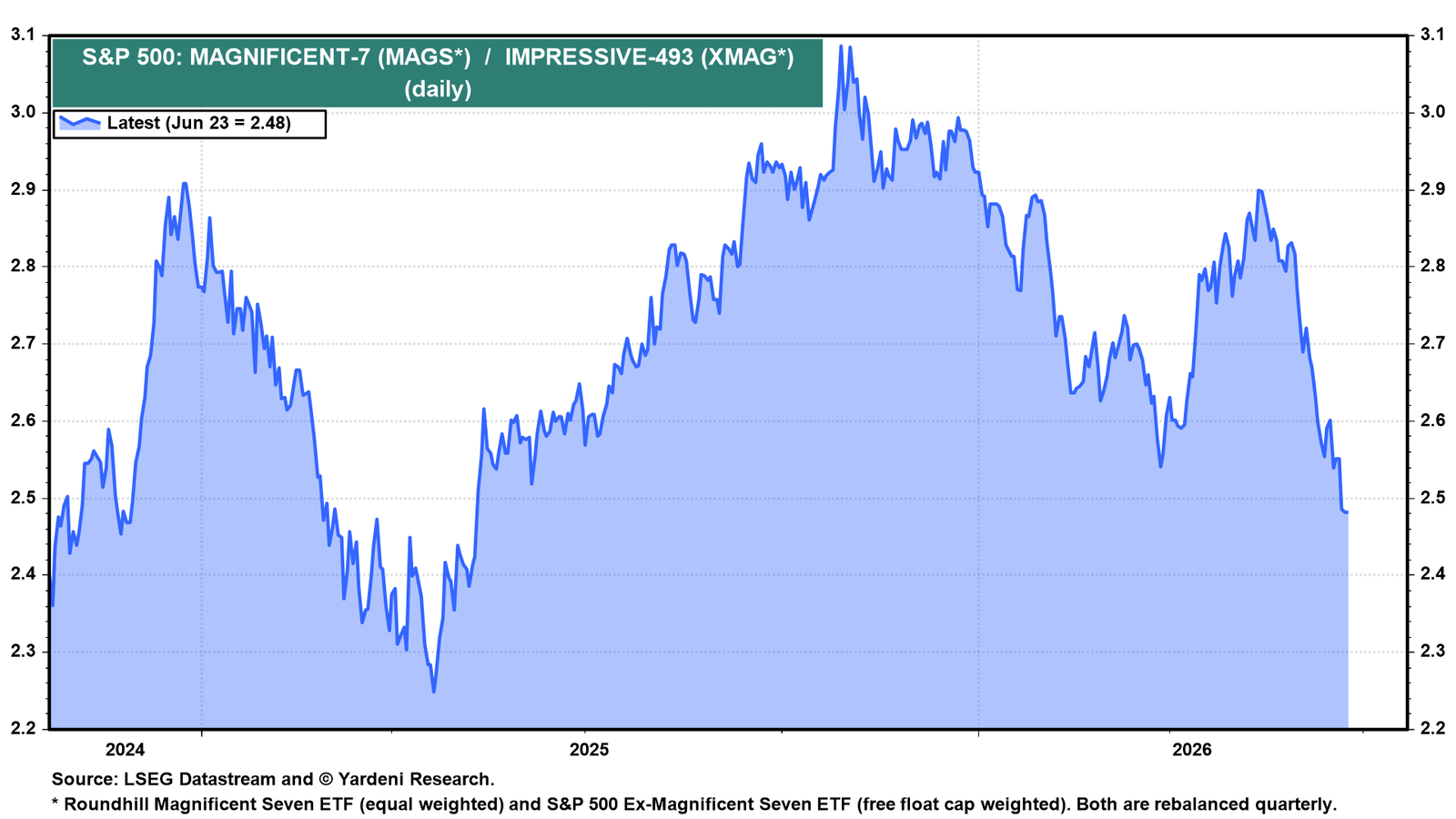
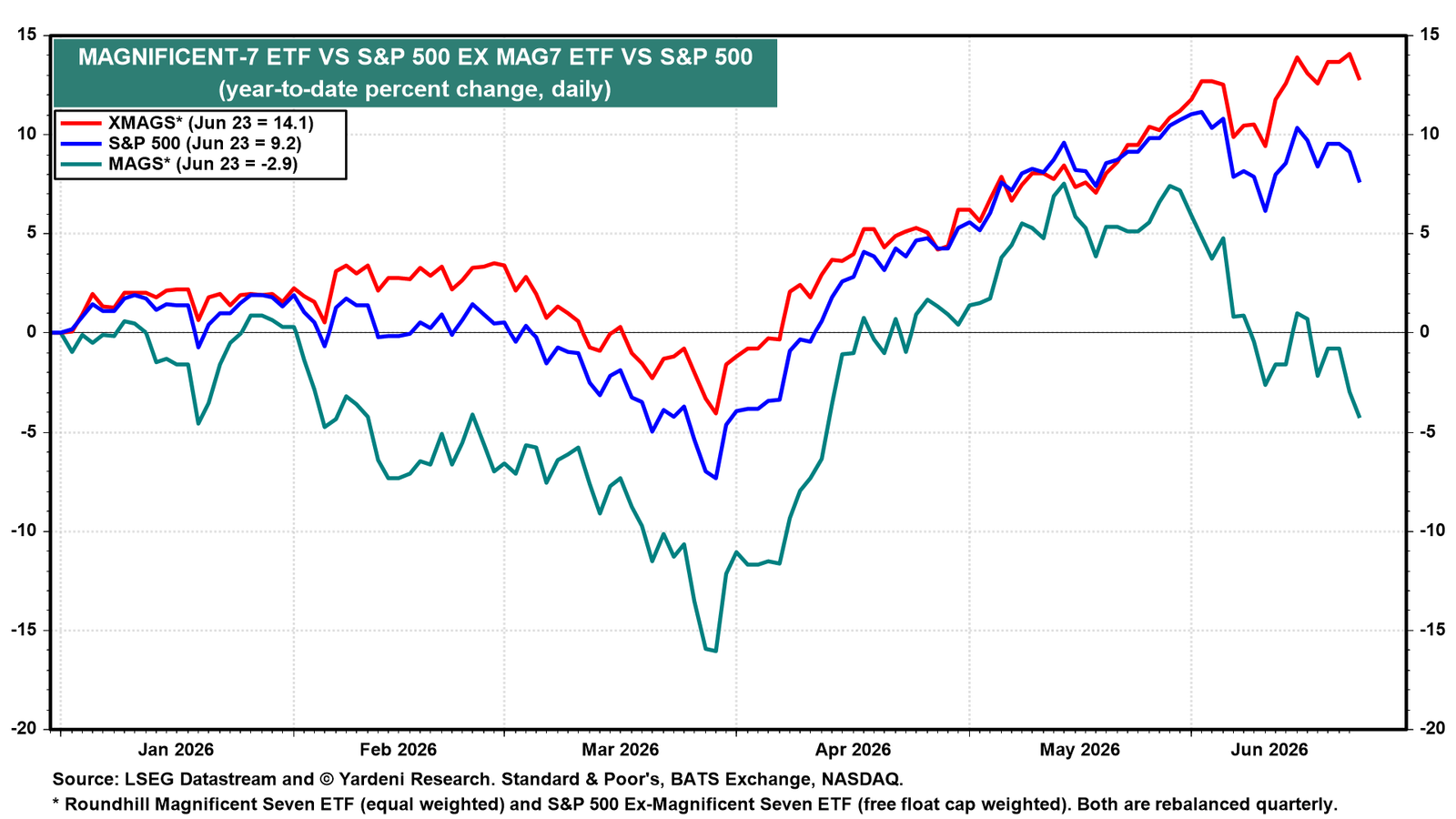
(2) Stock prices. Lower oil prices should boost US economic growth. That should be bullish for stocks. But the stock market has been weighed down by the Magnificent-7, which have been weighed down by mounting uncertainties about the AI trade (charts). The MAGS ETF is down 2.9% ytd, while the XMAG ETF is up 14.1%.
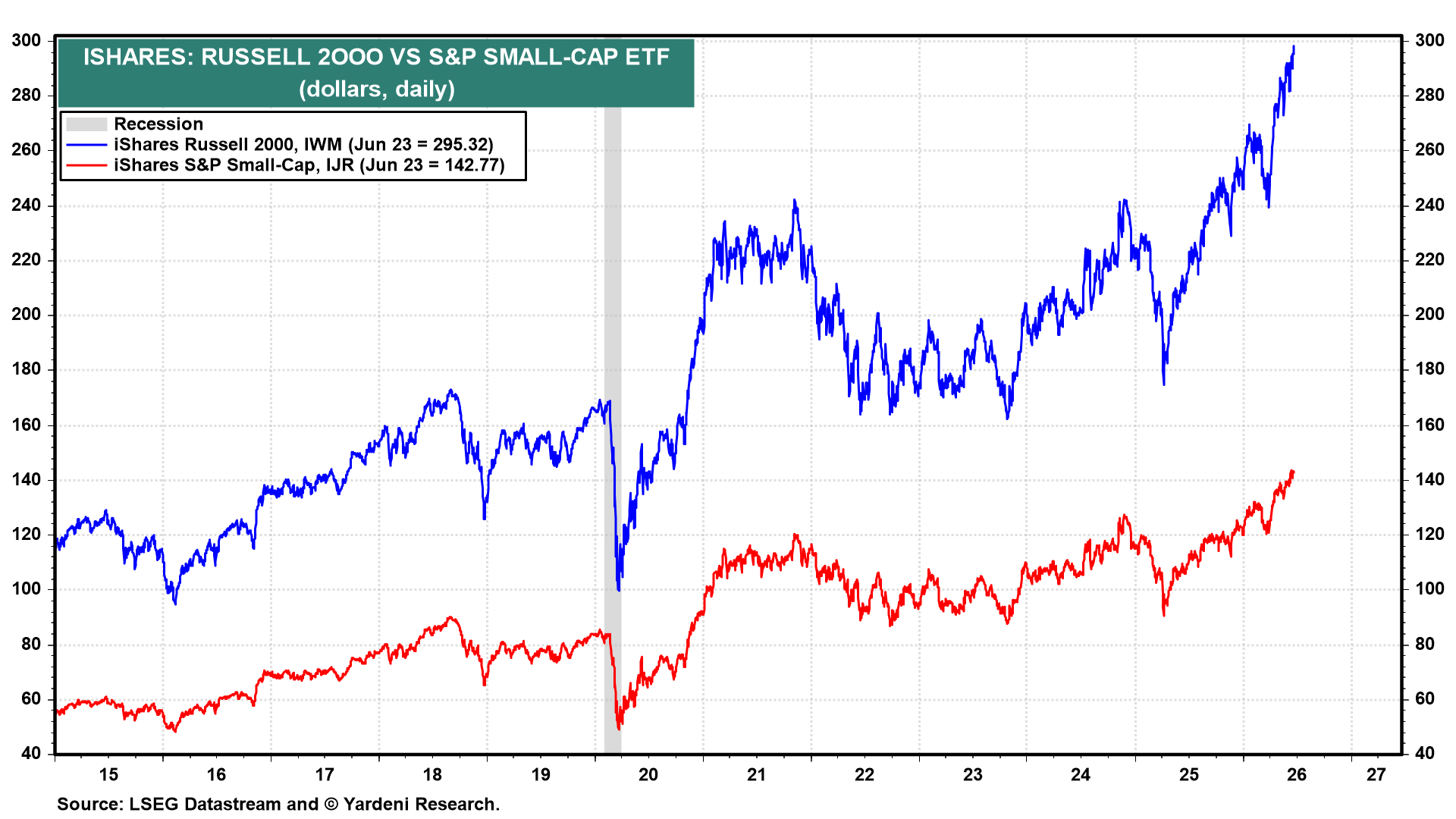
There are signs that the stock market rally is broadening not only to the Impressive-493 stocks in the S&P 500, but also to SmallCaps (chart).
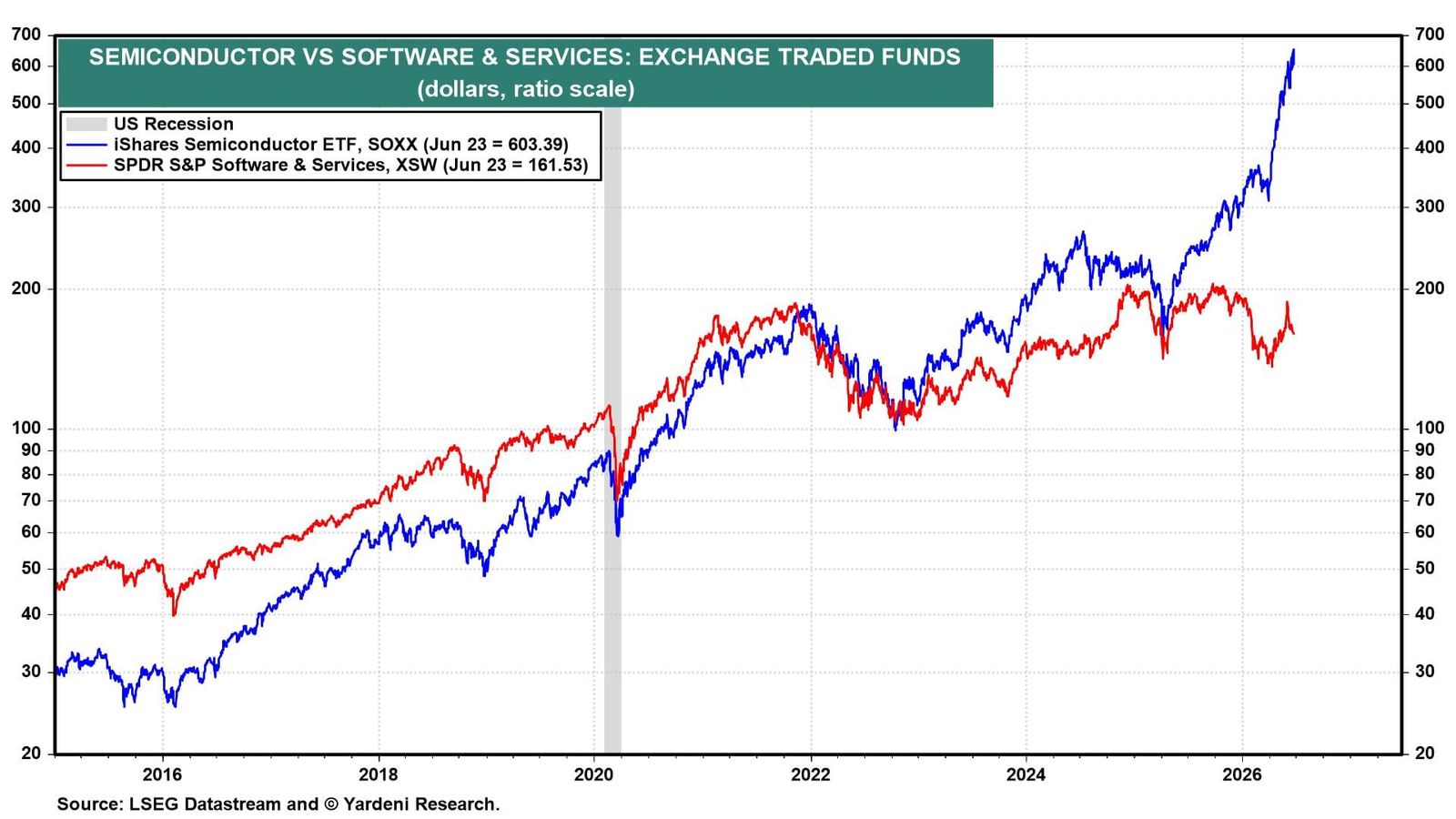
The recent swoon in technology stocks hasn't been across-the-board. Memory chip and quantum computing stock prices have held up. Semiconductor stock prices are also holding up, while software stock prices have been weakening again recently (chart).
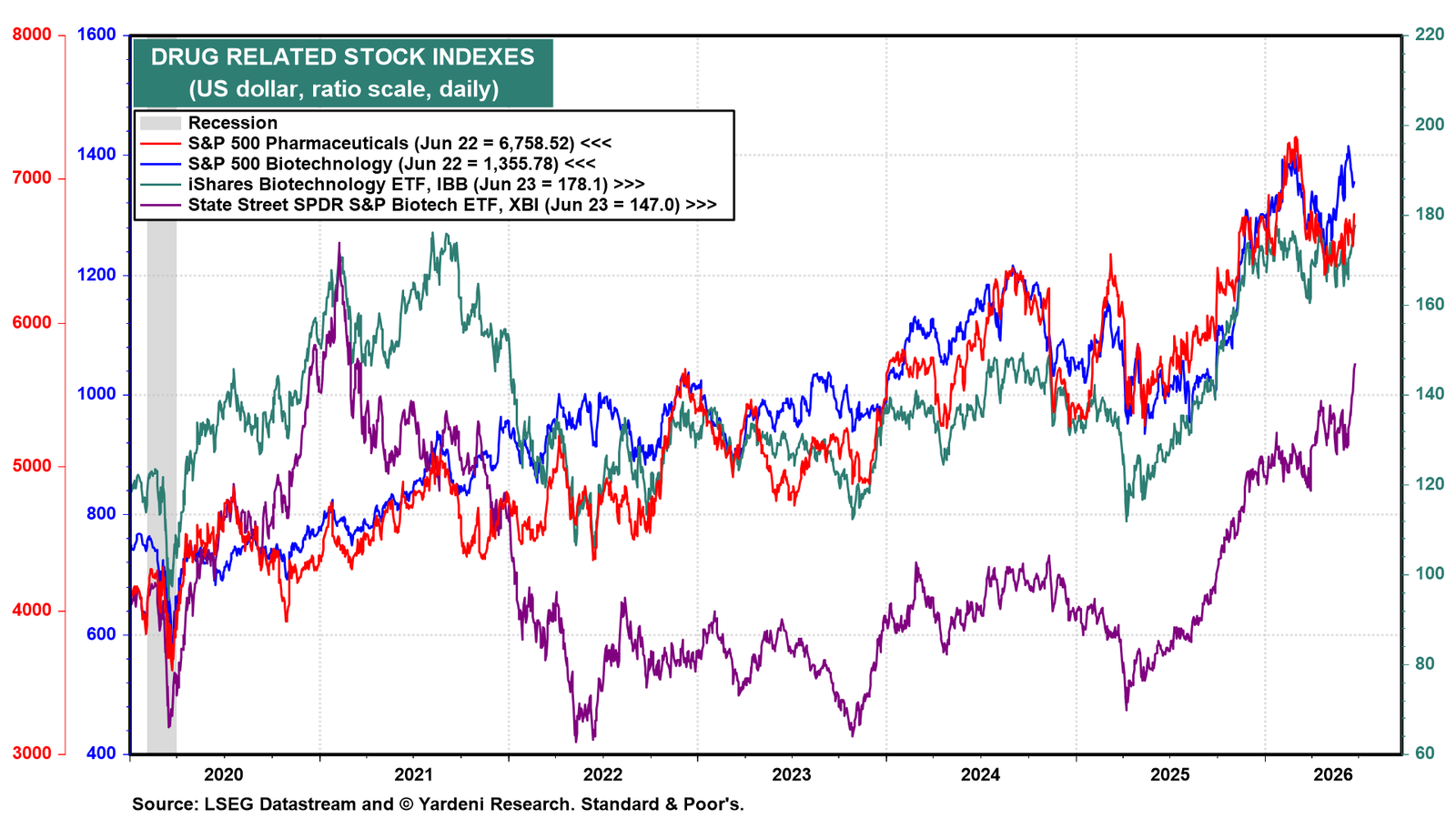
The XBI Biotech ETF is also bucking the June swoon (chart).
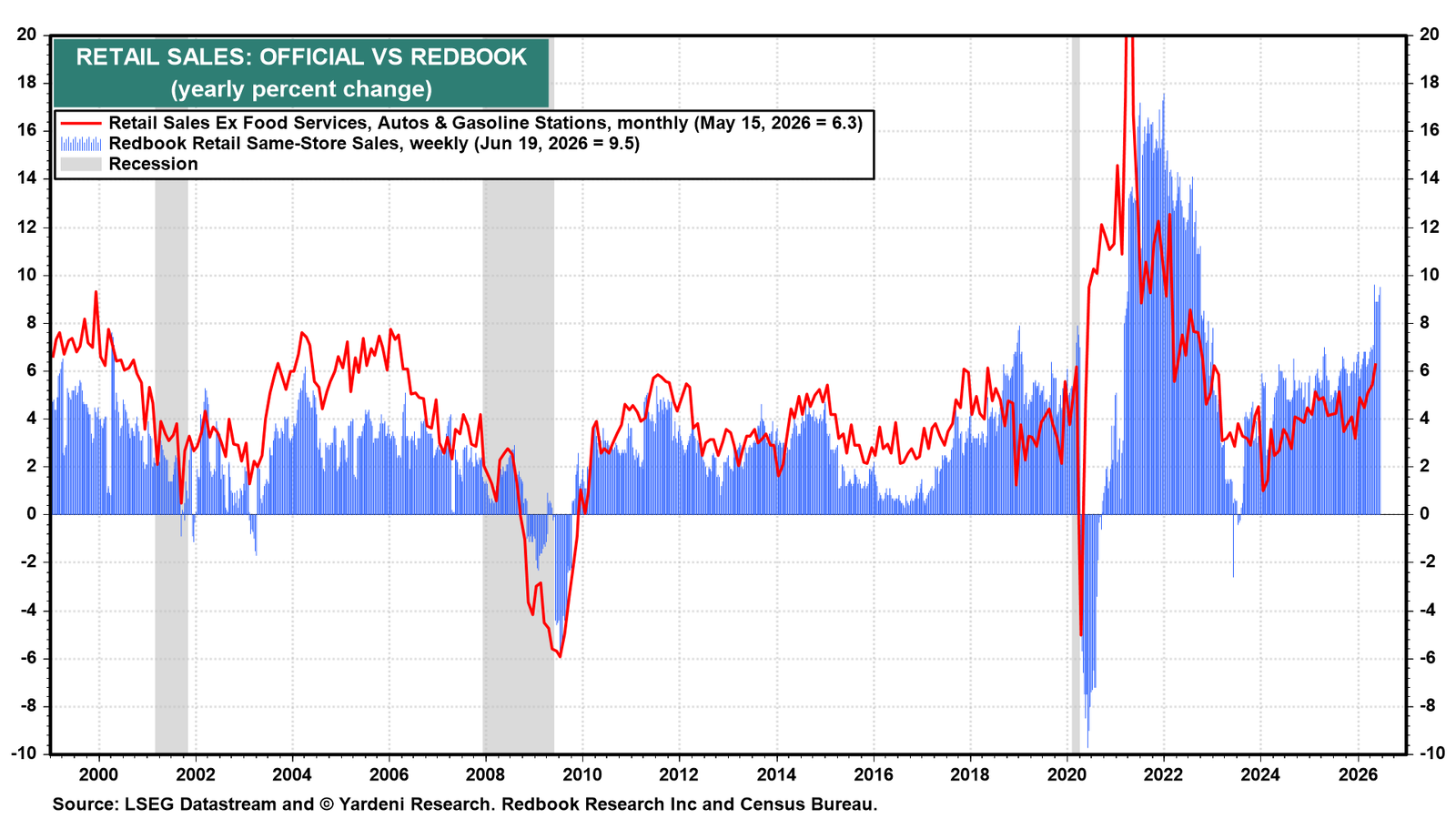
(3) Weekly Redbook retail sales & ADP employment. Contributing to the June swoon may be stronger-than-expected economic data because they increase the odds that the Fed will raise the federal funds rate sooner rather than later. The Redbook Retail Sales Index (on a same-store basis) rose 9.5% y/y during the week of June 19 (chart).
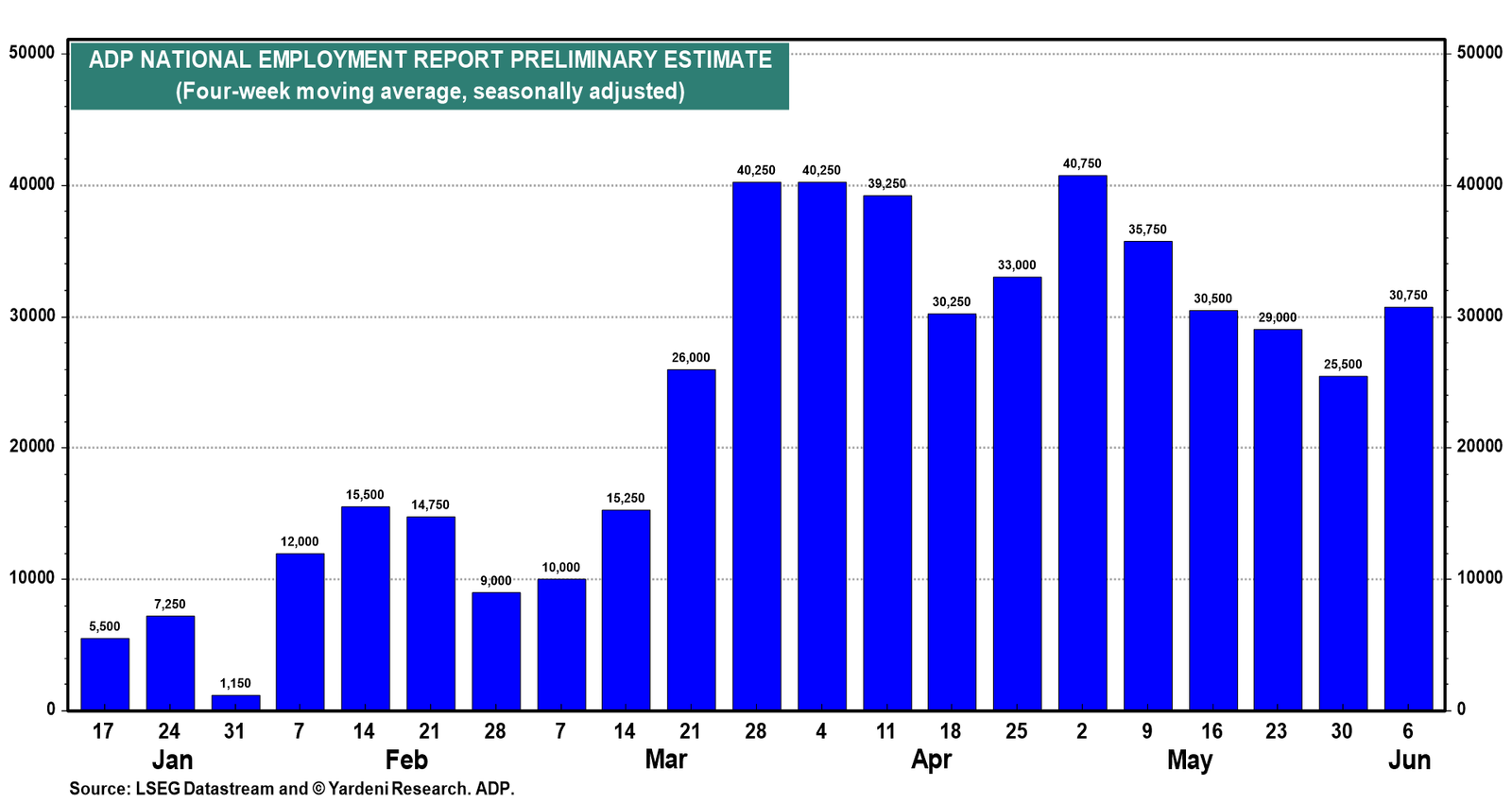
The weekly ADP measure of payroll employment in the private sector rose to a solid reading of 30,750 during the first week of June (chart).
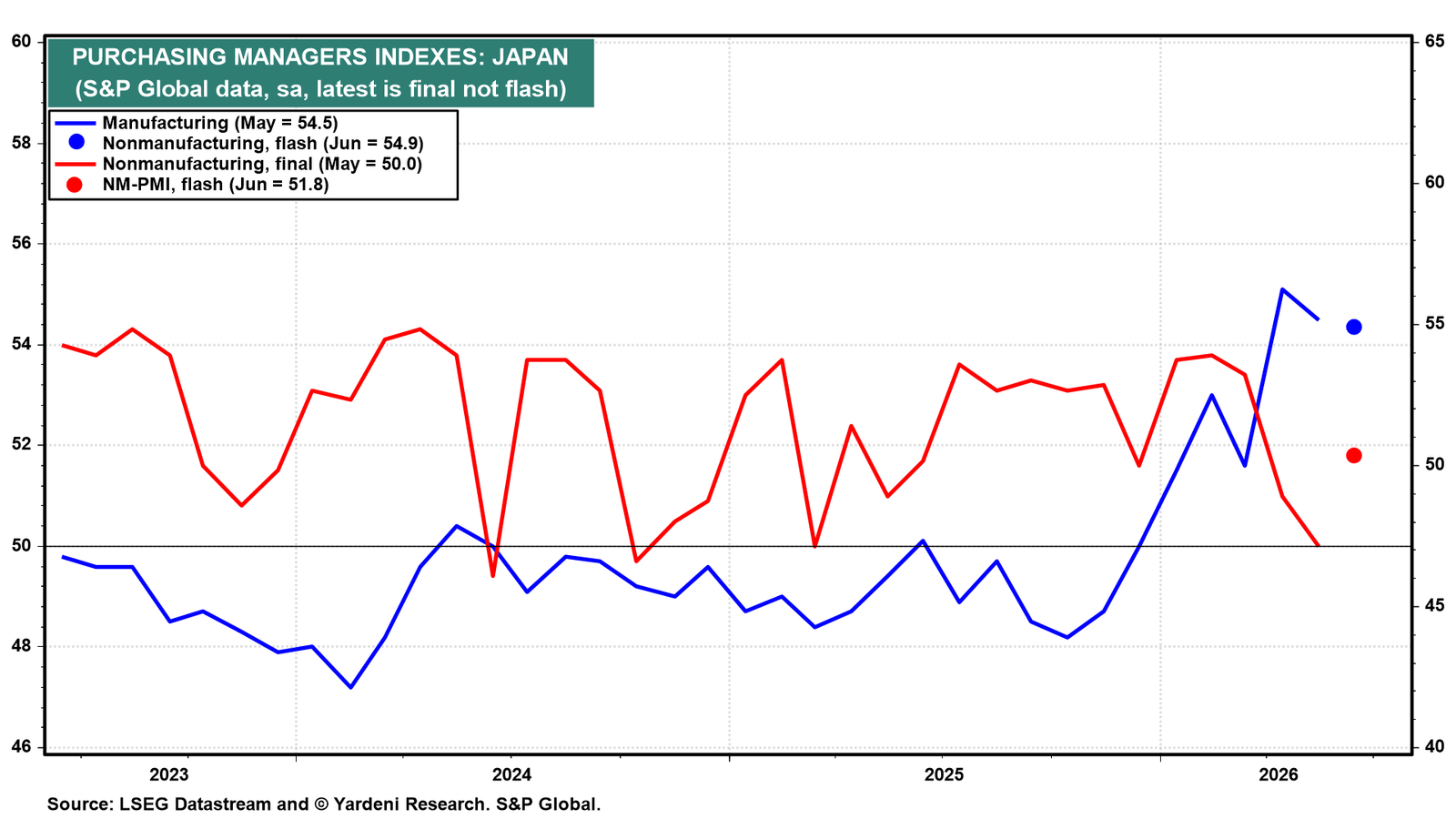
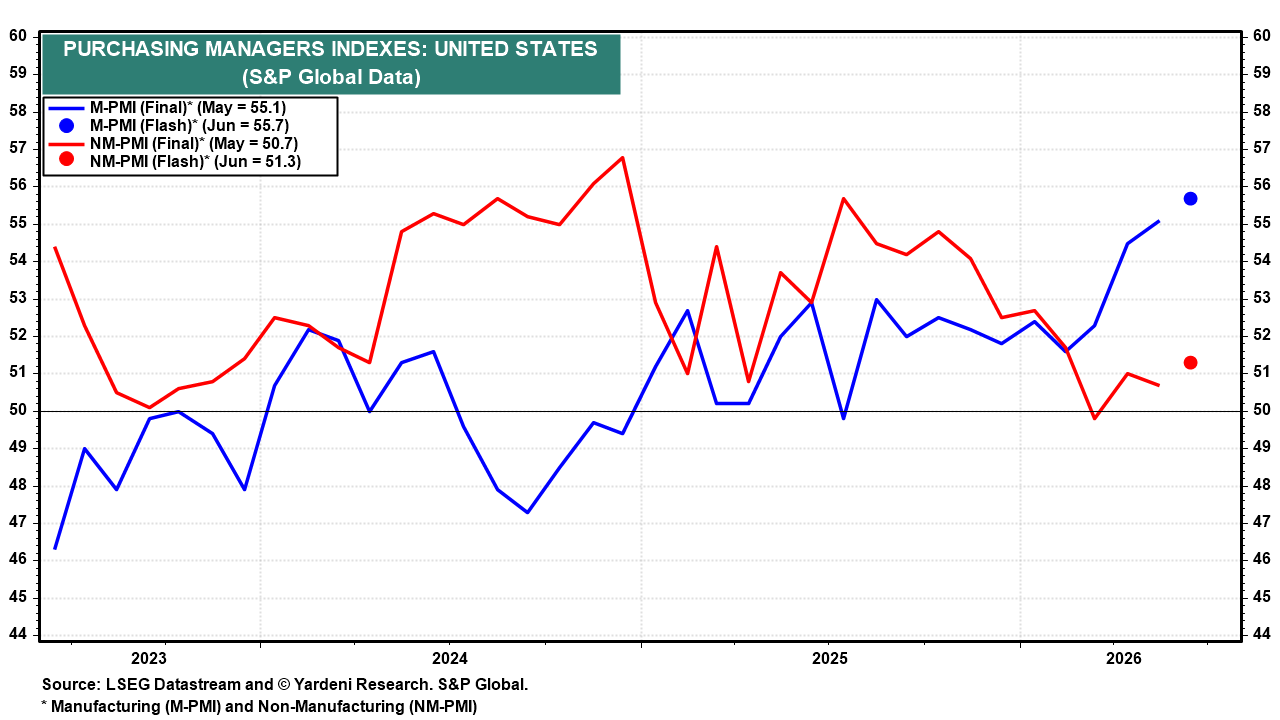
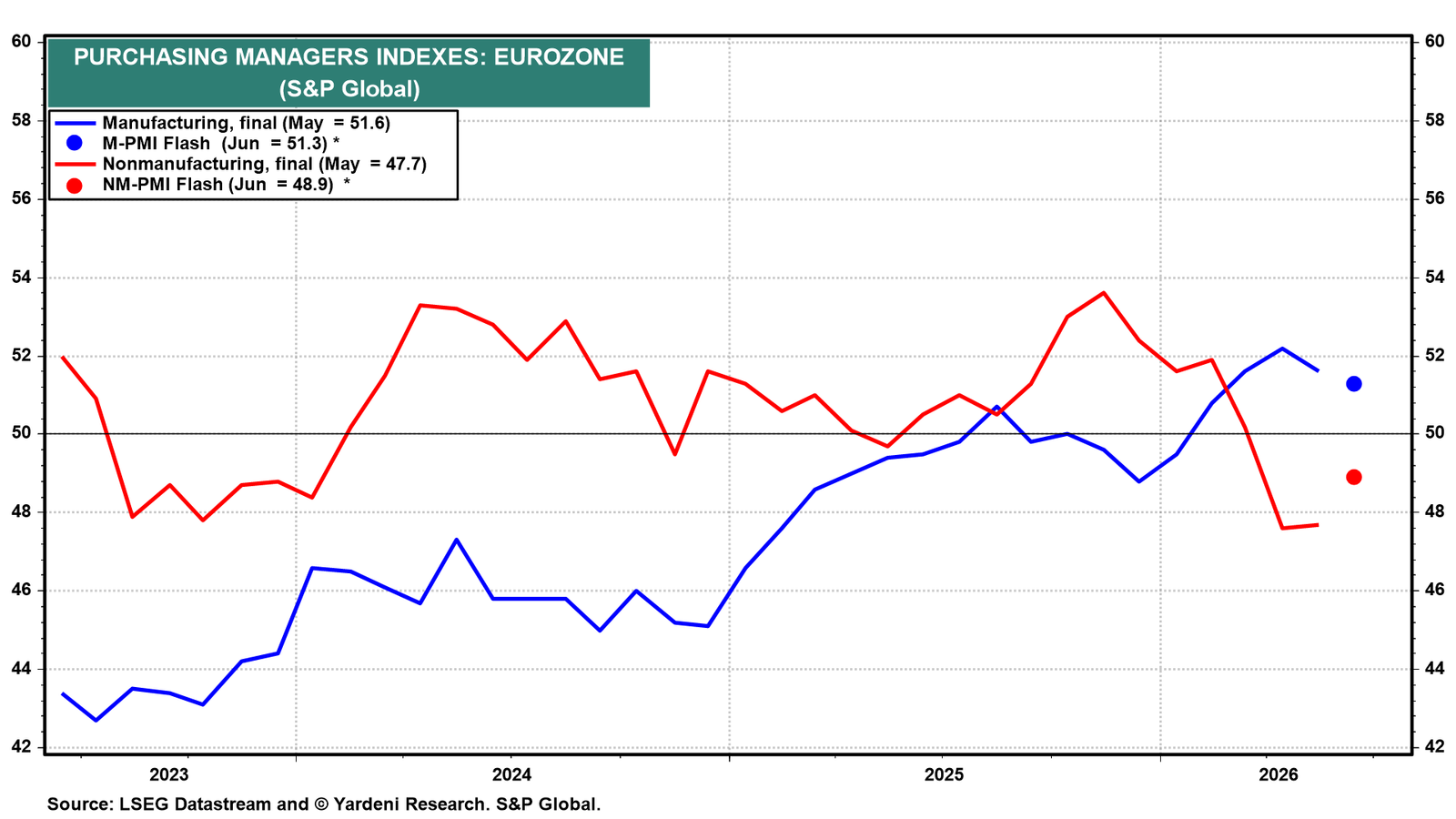
(4) Purchasing managers. June's flash PMIs highlight that both manufacturing and services in the US remain in expansion territory, supported by the AI buildout and resilient consumer spending. While manufacturing is also expanding in the Eurozone and Japan, much of that strength may reflect inventory accumulation rather than the structural tailwinds that support US activity. Services remain weaker abroad, reflecting less resilient consumers and weaker domestic demand.
The US M-PMI hit a 49-month high in June (chart). The NM-PMI ticked higher, with new orders getting a lift from the FIFA World Cup and a partial restoration of business confidence as oil prices fall.
The Eurozone M-PMI remains in expansion but is losing momentum, with new orders stagnating and export demand falling (chart). The NM-PMI stayed in contraction for a third straight month, though the downturn is easing as tourism and leisure show early signs of recovery.
In Japan, manufacturing expanded for a sixth straight month, supported by Middle East conflict-related inventory stockpiling, while services recovered modestly from May's stagnation (chart). However, elevated inflation continues to weigh on consumer spending.