Greetings from Greece. My colleagues, Elias and Toby, have been writing the QTs this week while my wife and I are vacationing in Crete and Santorini. The weather, food, and people are great. In Crete, we visited the ruins of the Palace at Knossos. It was the ceremonial and political center of the Minoan civilization and culture that thrived during the Bronze Age. We learned that for fun, Minoans enjoyed bull jumping. In Greek mythology, Zeus was born in Crete. In addition, the Minotaur, who was half human and half bull, was confined by King Minos of Crete to dwell in the Labyrinth, designed by the architect Daedalus and his son Icarus. Icarus died by flying too close to the sun, which melted his wax wings.
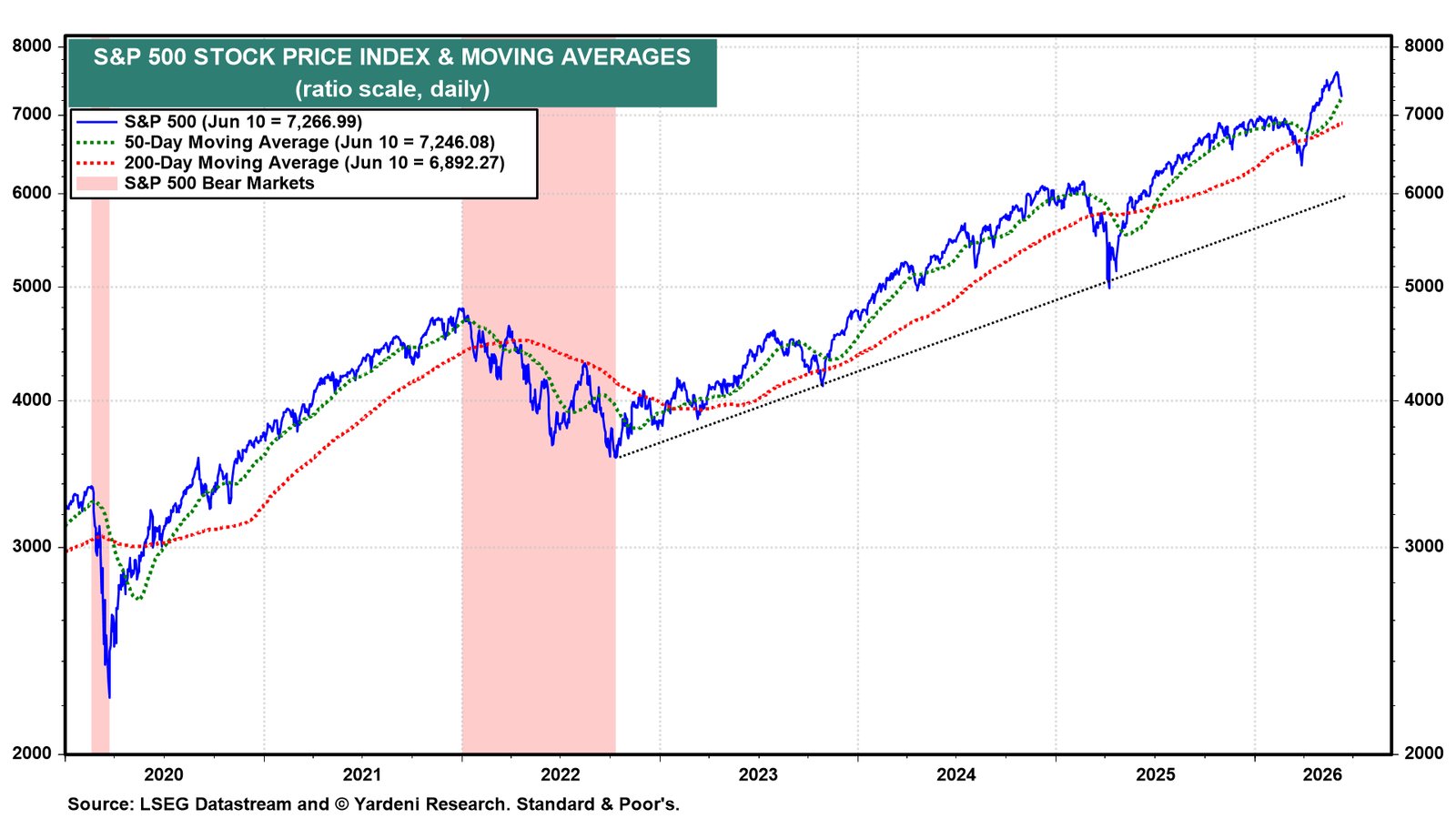
(1) Markets. Today’s bull market in stocks has raised concerns that investors are flying too close to the sun and are in for a meltdown like Icarus’. We try not to be bullheaded, but we think that the earnings-led bull market will continue at least through the end of the decade. We think that June’s Swoon so far is more likely to be a rotation than a correction (chart). The S&P 500 bounced off its 50-day moving average today on news that President Donald Trump decided to postpone a planned attack on Iran. He subsequently said that a deal to end the war is imminent. Iran has yet to confirm this.
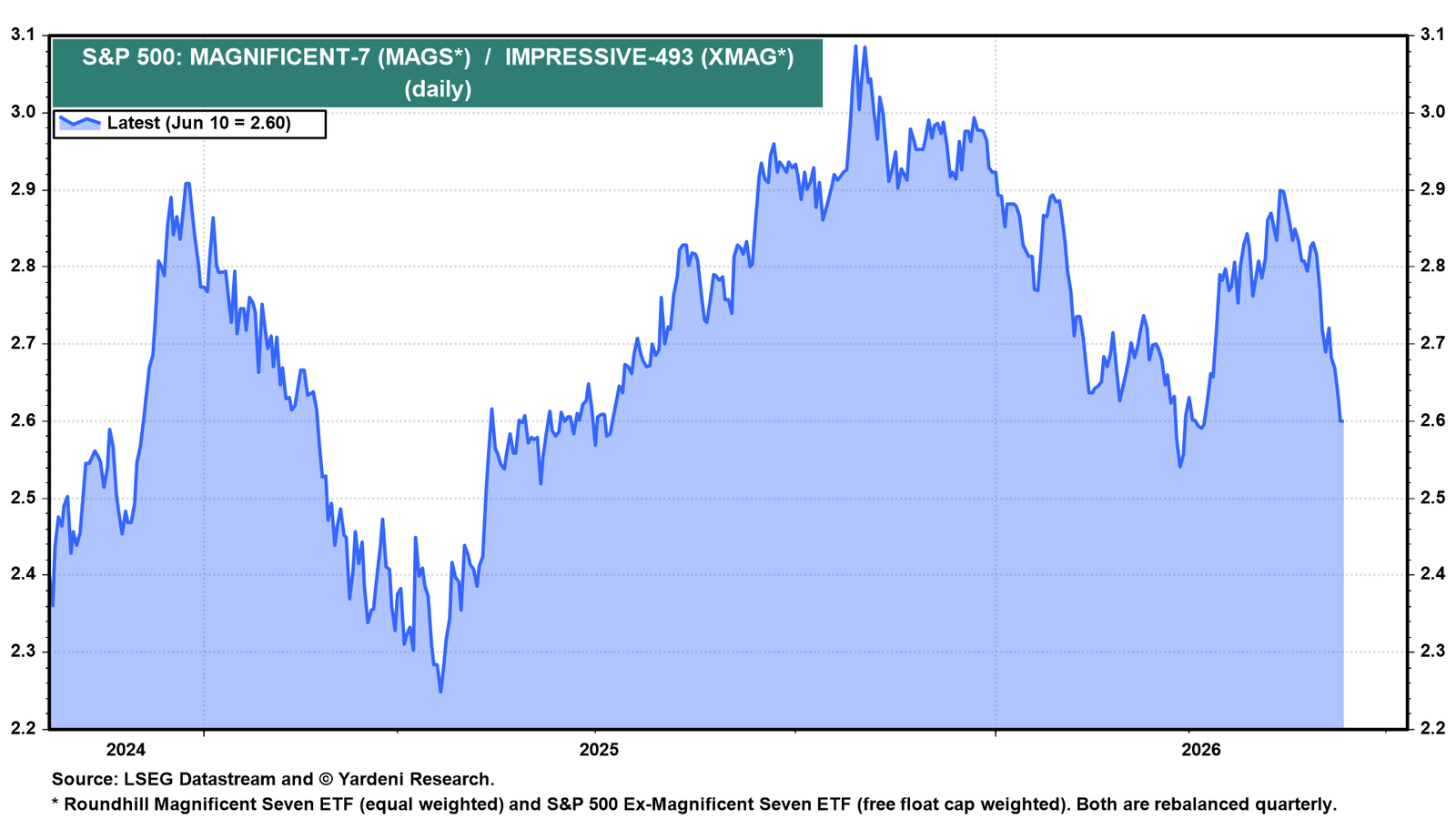
While the Magnificent-7 companies mostly continue to deliver fabulous earnings momentum (FEMO), investors aren't sure that they can sustain it given their enormous AI capex. In addition, there is lots of uncertainty about the AI investments’ payoff. Recently, LLM providers have had to lower the prices of their "tokens" in response to pushback by business users at the high cost of using AI tools.
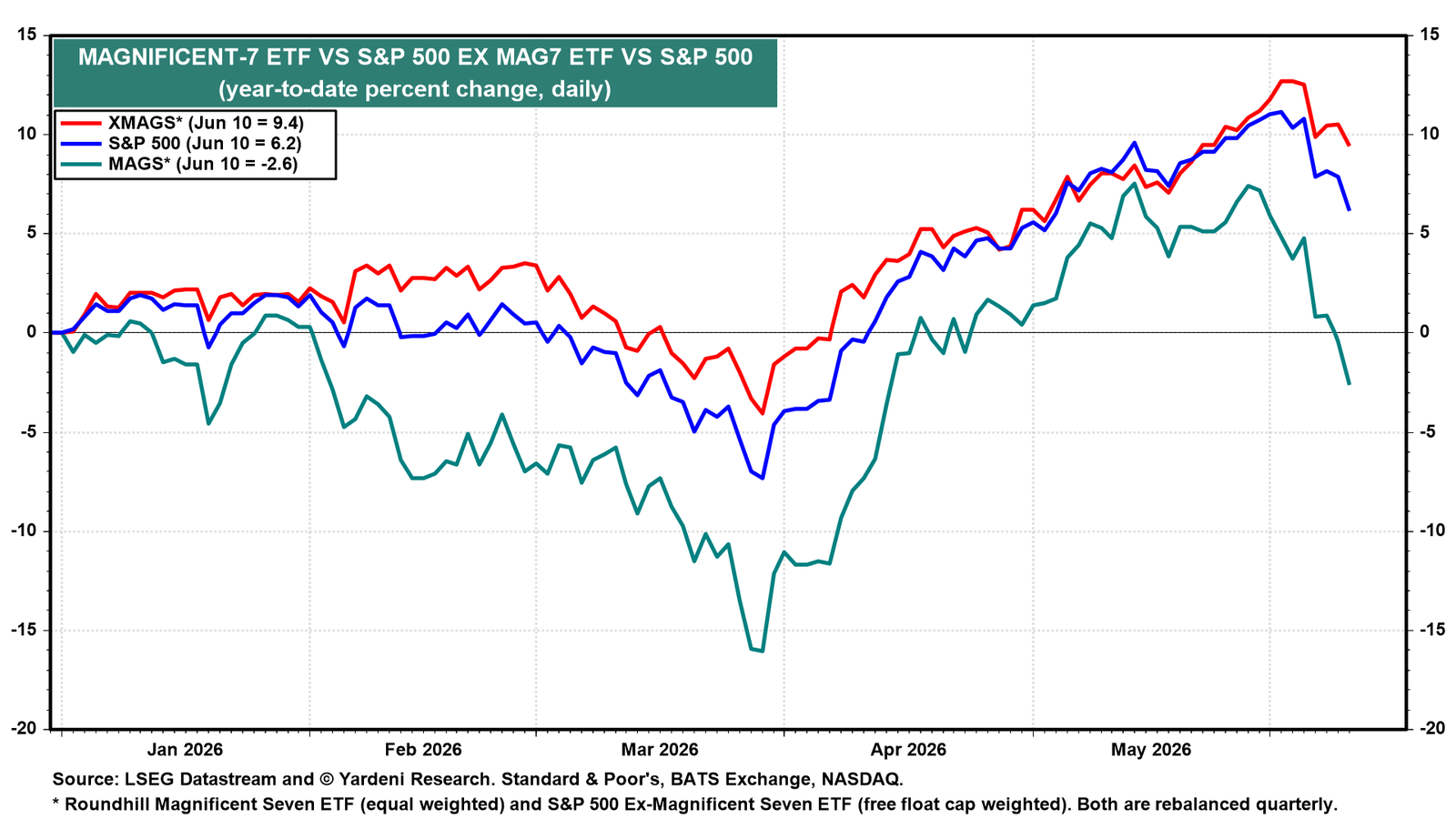
In recent weeks, the Impressive-493 collectively have outperformed the Magnificent-7 stocks (chart). The latter might also be getting hit by profit-taking by investors participating in tomorrow's gigantic SpaceX IPO.
The MAGS ETF is down 2.6% ytd, while the XMAGS is up 9.4% (chart).
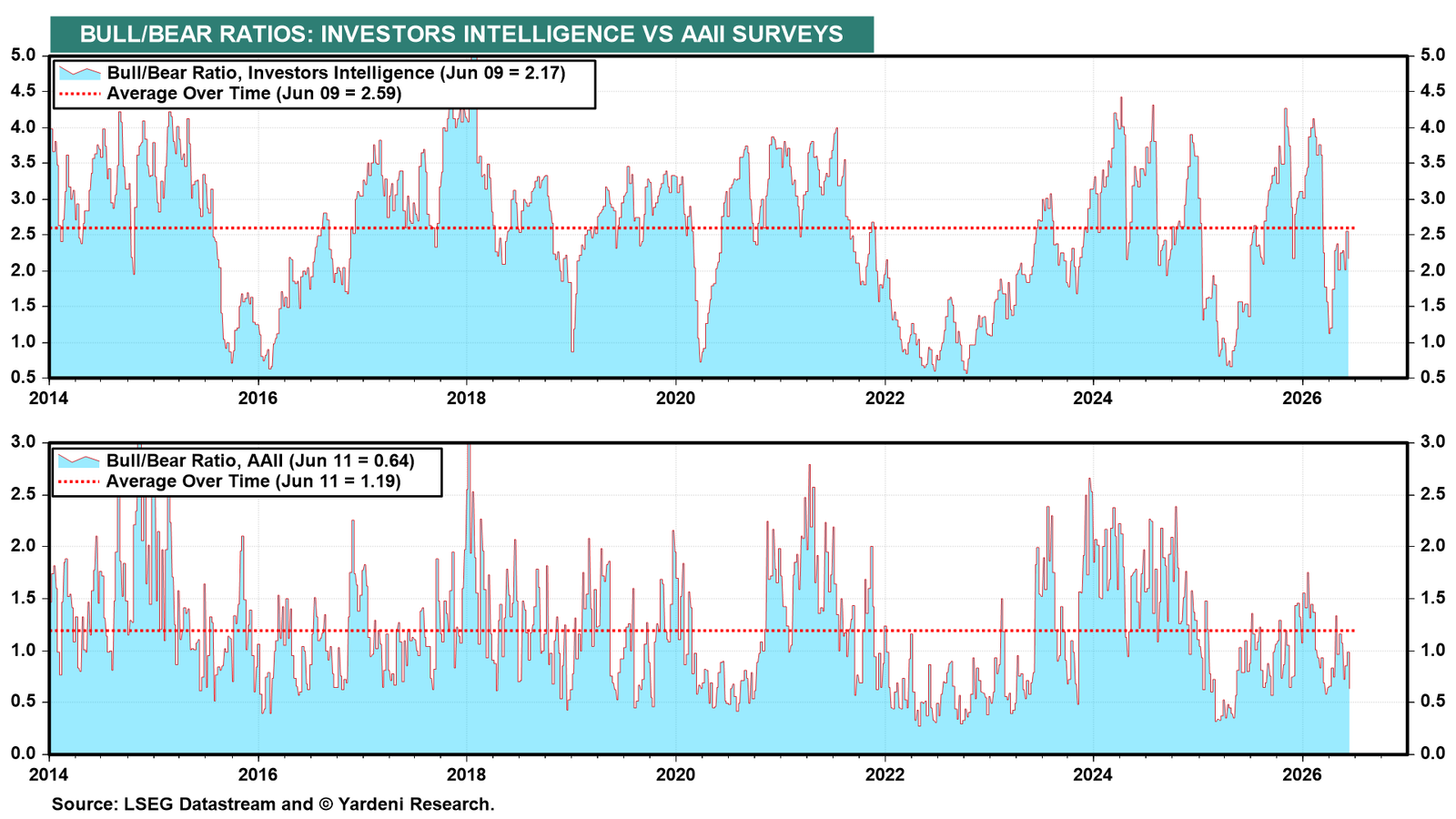
Another reason we don't expect the current June Swoon to turn into a correction is that our two favorite Bull-Bear Ratios remain subdued (chart). We tend to get concerned when there are too many bulls.
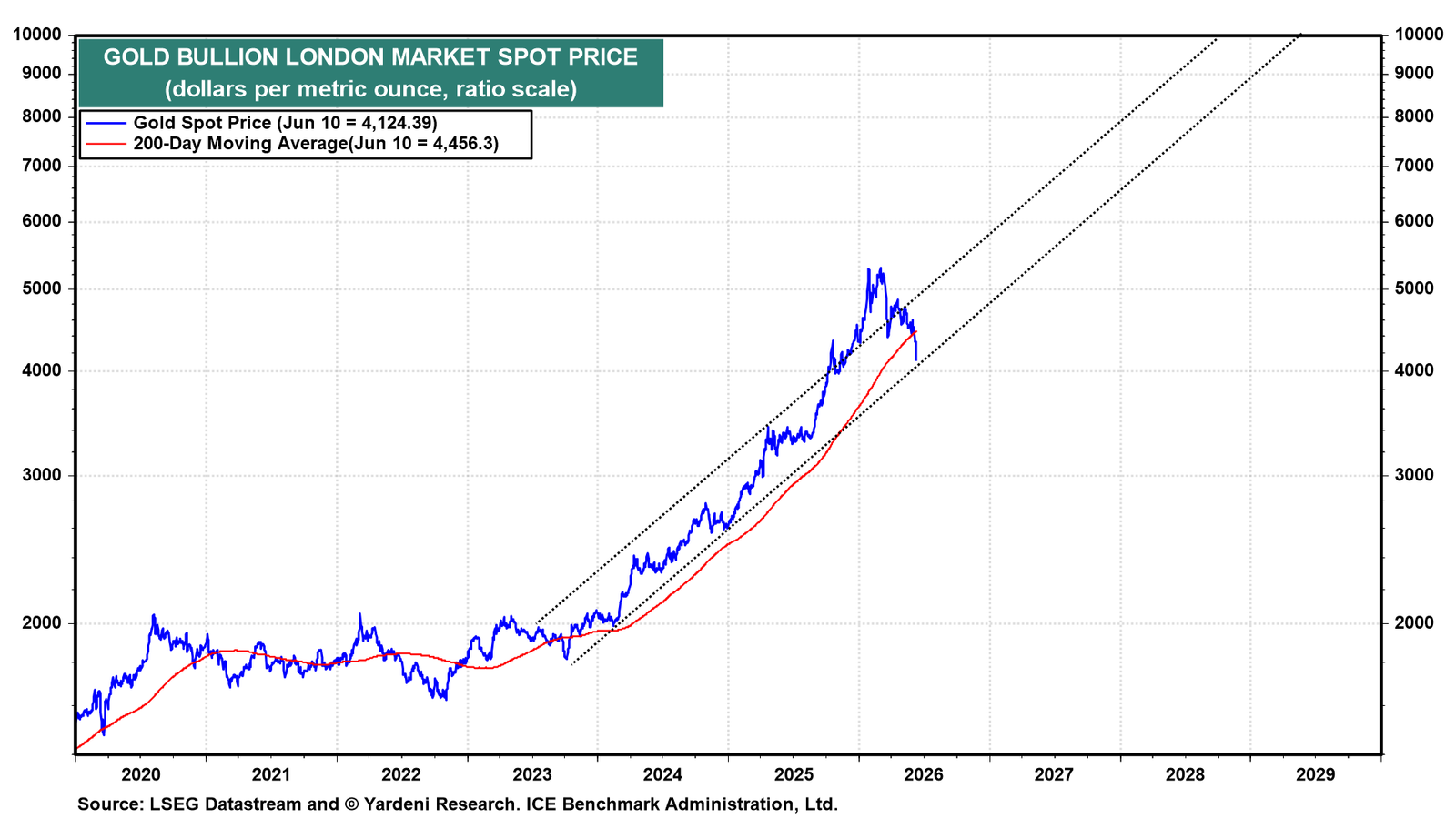
By the way, a couple of days ago, when the price of gold dropped below its 200-day moving average around $4,500, we concluded that it was likely to fall further and find support at $4,000 (chart). We still think that, expecting it to bounce off that level and resume the bull market that began in late 2022. We would have to seriously reconsider our current stance should the price fall below $4,000.
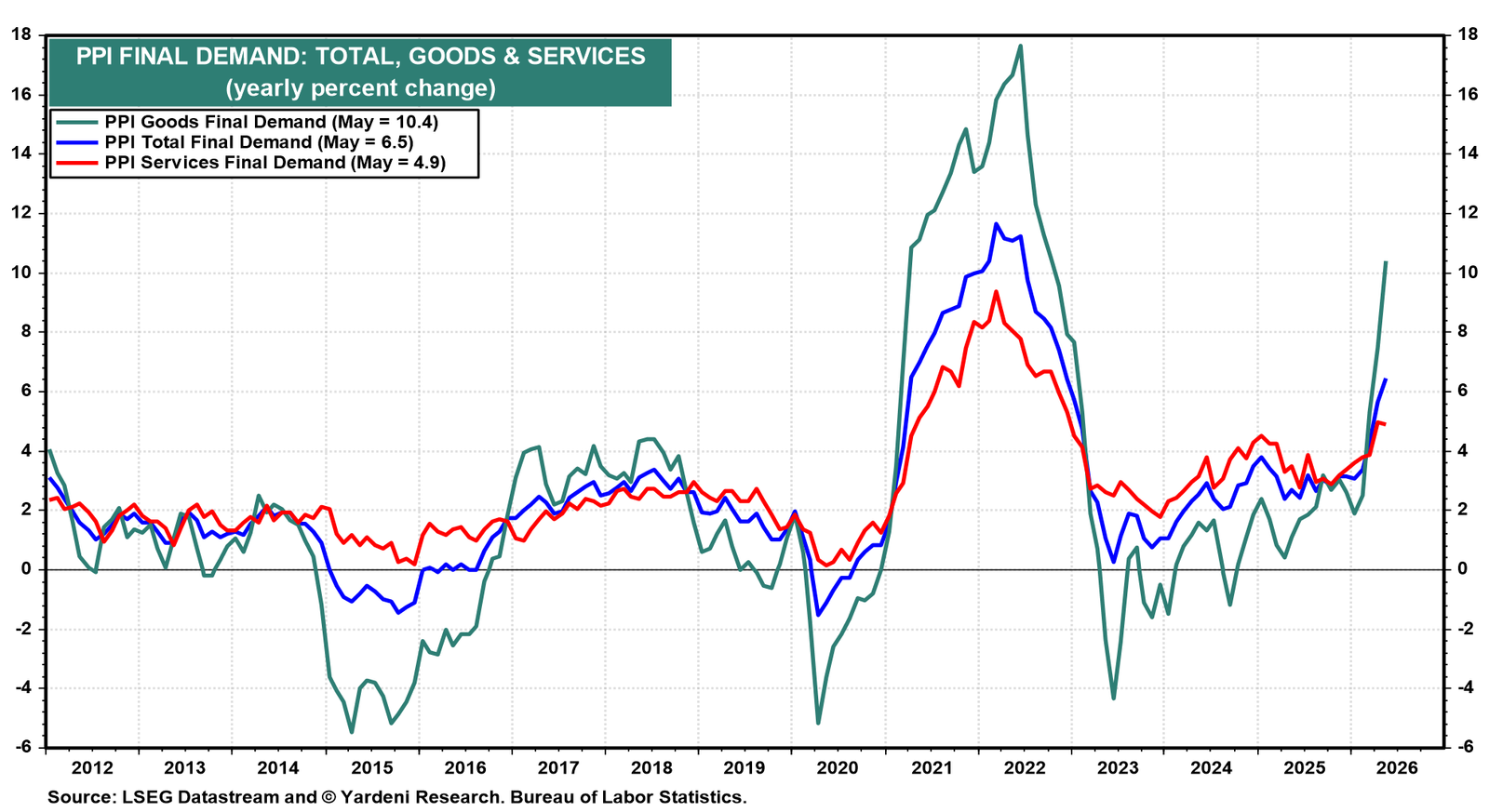
(2) Inflation. The US PPI inflation rate jumped sharply in May. Headline PPI for final demand rose 1.1% m/m for the second consecutive month. The y/y inflation rate soared to 6.5%, the fastest pace in more than three years (chart). PPI goods’ final demand surged 2.8% m/m, the largest one-month advance on record, lifting the y/y rate to 10.4%, the highest since October 2022. PPI services’ final demand inflation remained elevated at 4.9% y/y.
The acceleration in inflation was driven overwhelmingly by a 10.7% m/m rise in energy prices, while transportation and warehousing costs increased by 2.6%. Additionally, food prices saw a three-month-high increase of 0.6% m/m, as fertilizer prices skyrocketed by 28% y/y.
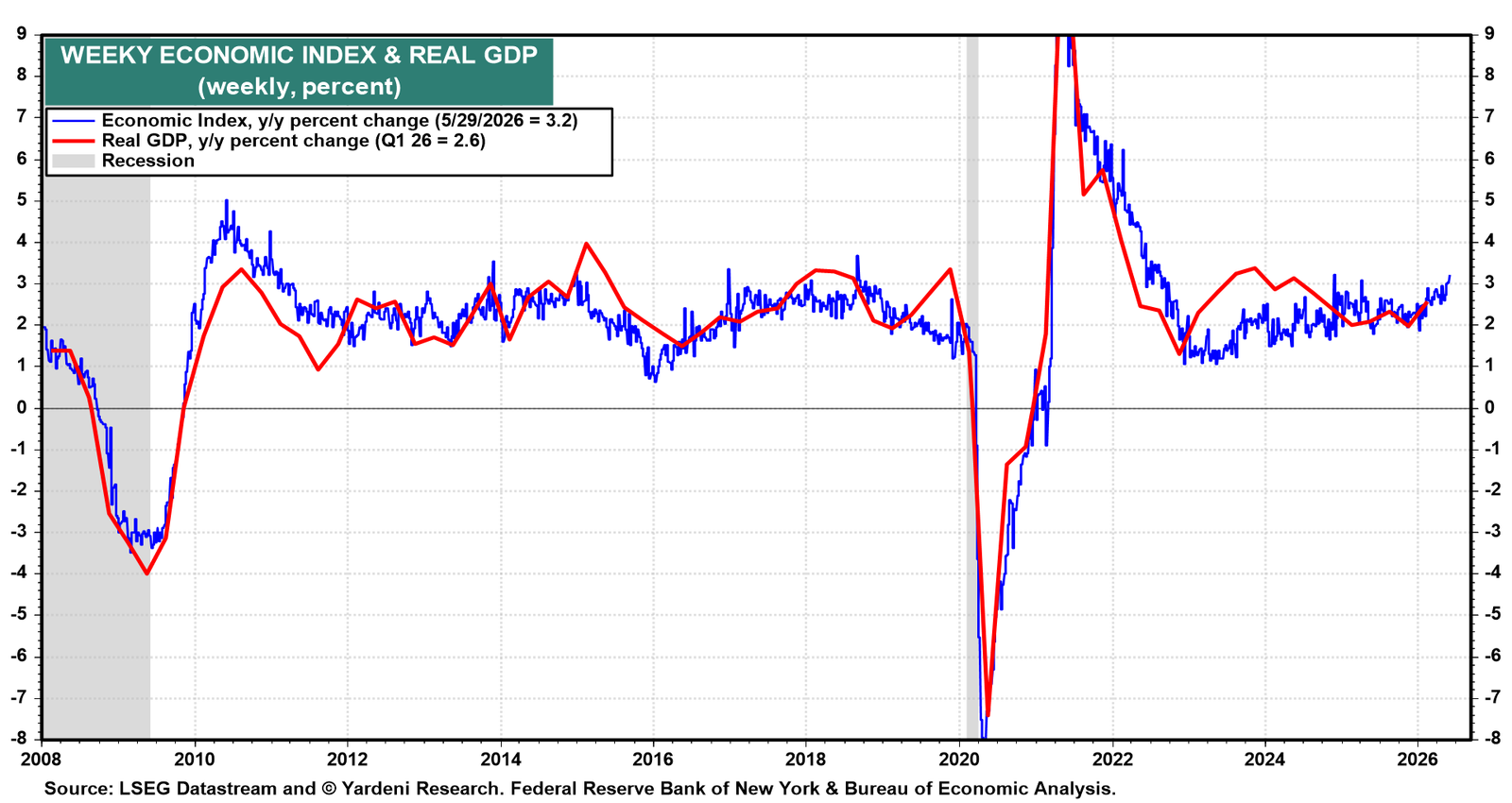
(3) Economy. Meanwhile, the economy continues to roll along. The Weekly Economic Index rose to 3.2% y/y, its highest reading since September 2022, consistent with real GDP growing at around 3.0% y/y (chart).
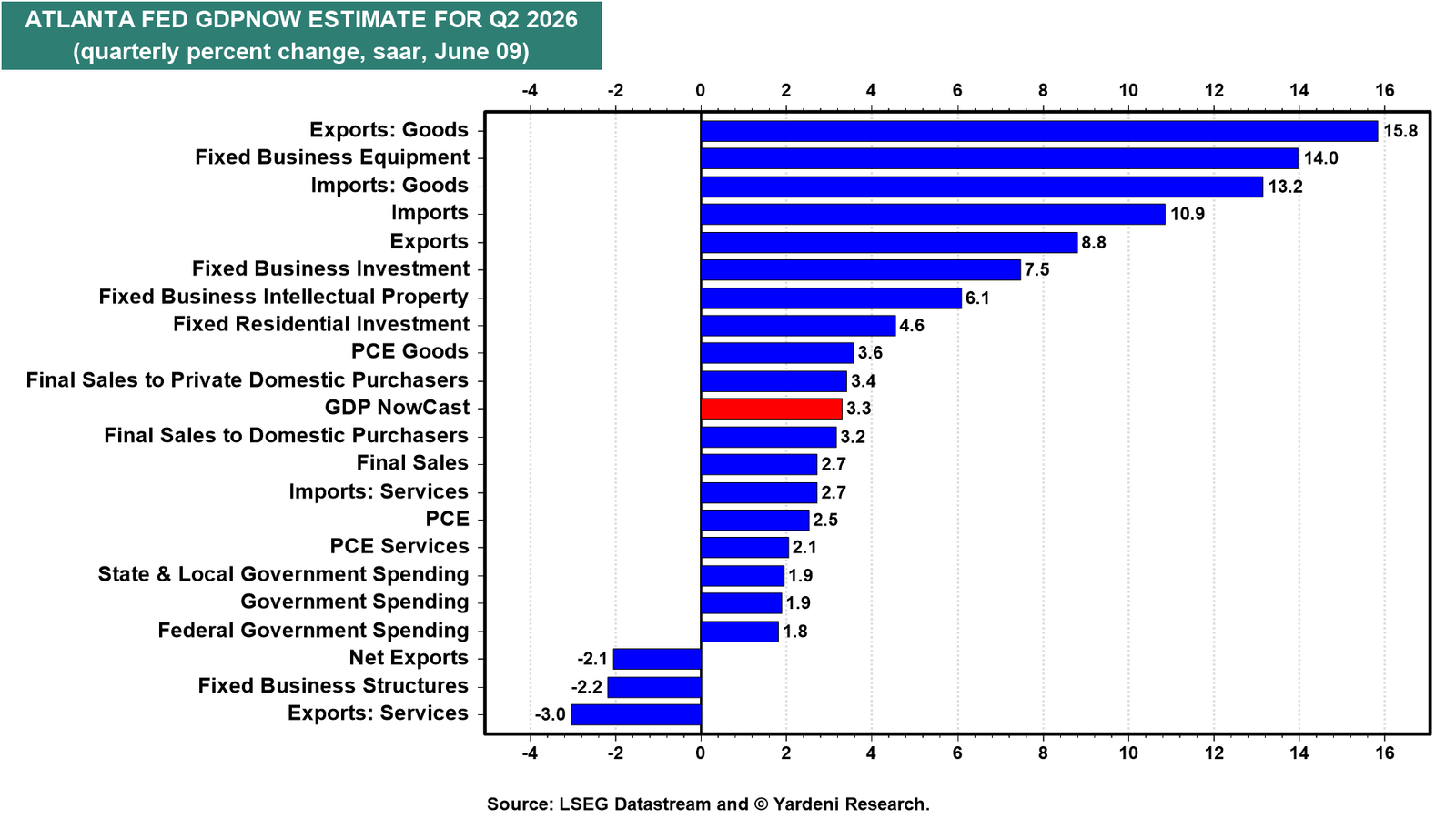
The Atlanta Fed GDPNow tracking model revised its Q2-2026 real GDP estimate higher this week, from 3.0% to 3.3% (chart), with real consumption growth revised up from 2.4% to 2.5% and real gross private domestic investment growth from 9.3% to 10.2%.
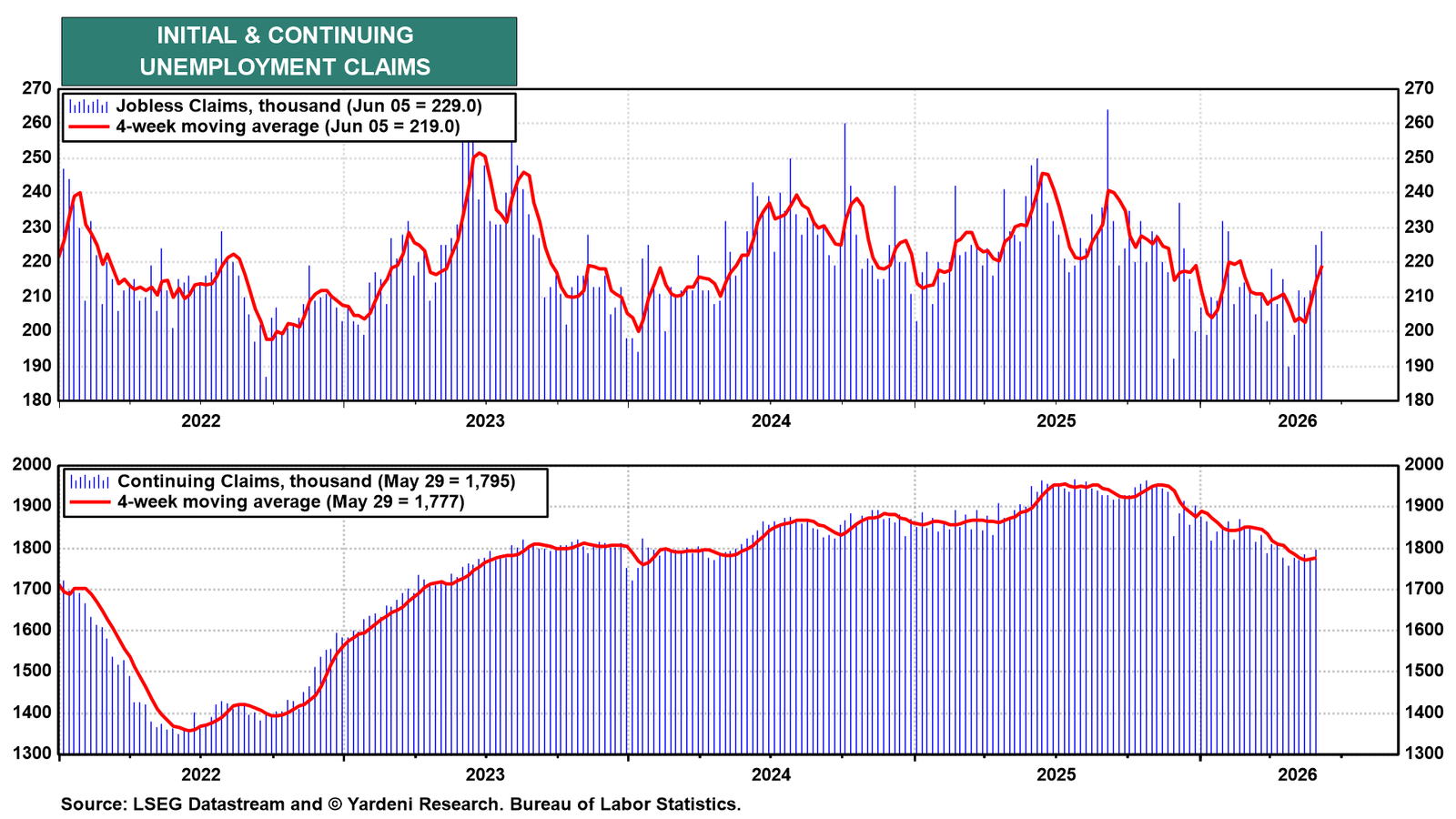
Initial unemployment insurance claims rose to 229,000 for the week of June 5, pushing the 4-week moving average to its highest reading since February. However, this series remains low. Continuing claims rose slightly to 1,795,000, but the 4-week moving average remains near its lowest level since January 2024 (chart).
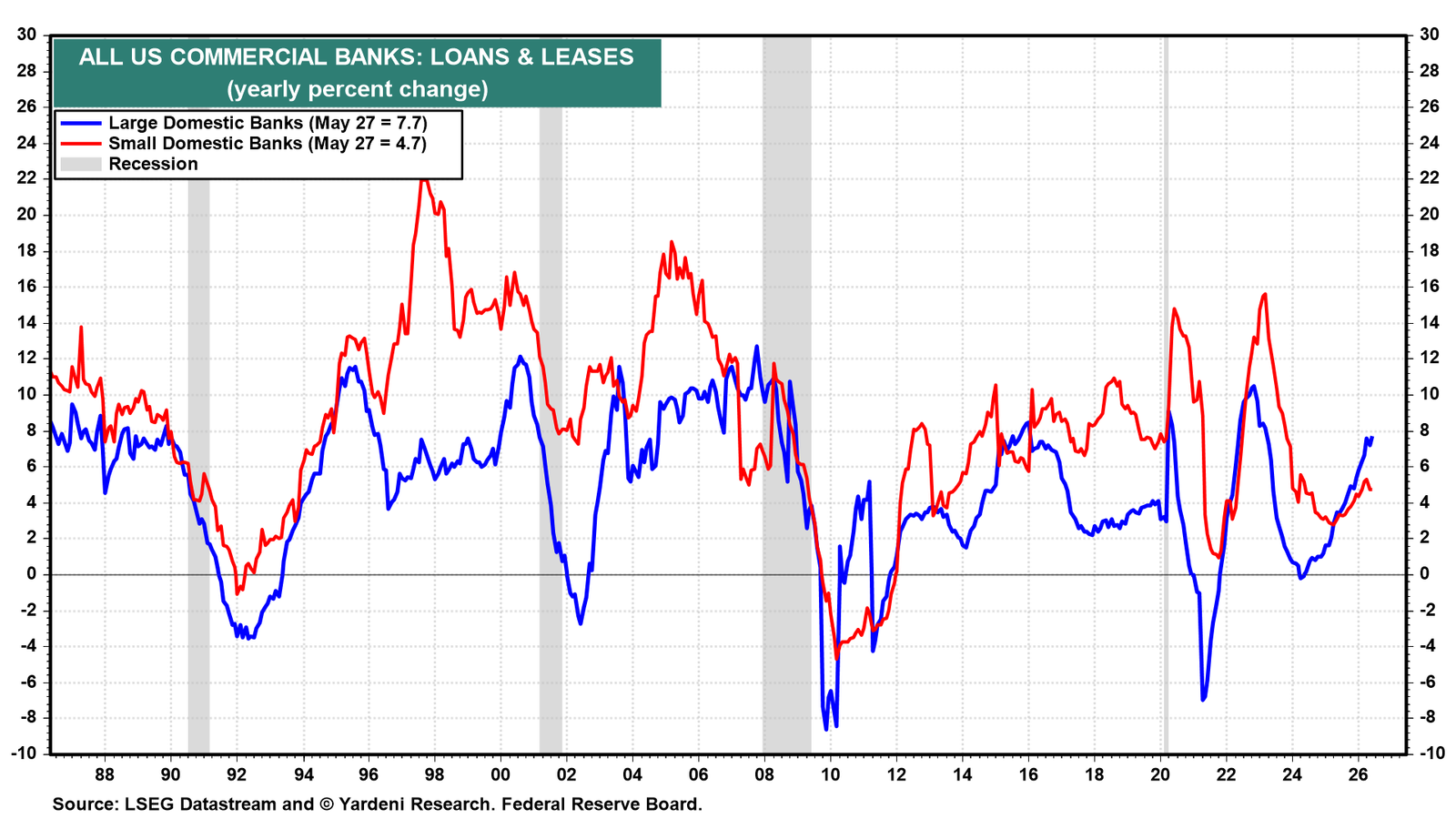
(4) Credit. In the past, recessions were typically caused by credit crunches. Currently, the private credit market is showing signs of stress, but bank lending continues to expand. Large banks' loans increased 7.7% y/y in May, the strongest pace since the middle of 2023 (chart). Small banks' loans rose at a more muted 4.7% y/y.