The latest batch of inflation and employment indicators suggests that the FOMC might adopt a neutral policy stance at next week's meeting rather than a tightening one as we have been expecting. That seemed to be the initial reaction in the US Treasury market, as 2- and 10-year yields edged lower on today's cooler-than-expected core CPI inflation news. We are sticking with our prediction that the FOMC will pivot toward a tightening stance rather than a neutral one next week, followed by a rate hike at the July FOMC meeting. We are also sticking with our June Swoon scenario as investors fret about the Fed, mega IPOs, AI uncertainties, and the war in the Middle East.
Here’s a closer look:
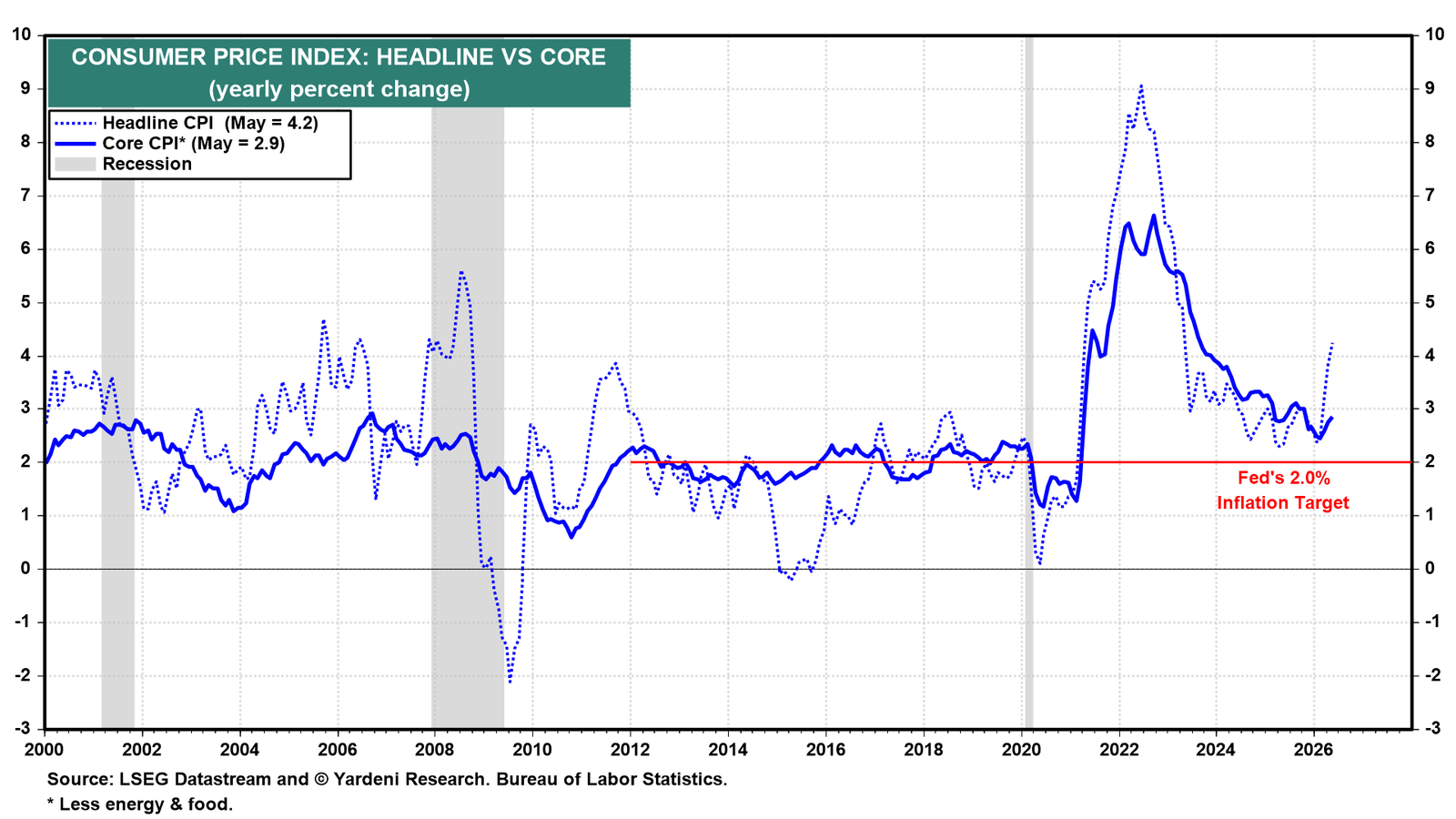
(1) Inflation. Today's CPI report for May was about as hot as expected for the headline inflation rate at 4.2% y/y and a bit cooler than expected for the core inflation rate at 2.9% (chart). Fed Chair Kevin Warsh prefers to use trimmed measures of the CPI, which show lower inflation, in his approach to monetary policy. But we doubt that he will succeed in convincing his colleagues to change their reliance on the CPI and PCED. Any move away from these inflation measures would probably be shot down by the Bond Vigilantes anyway.
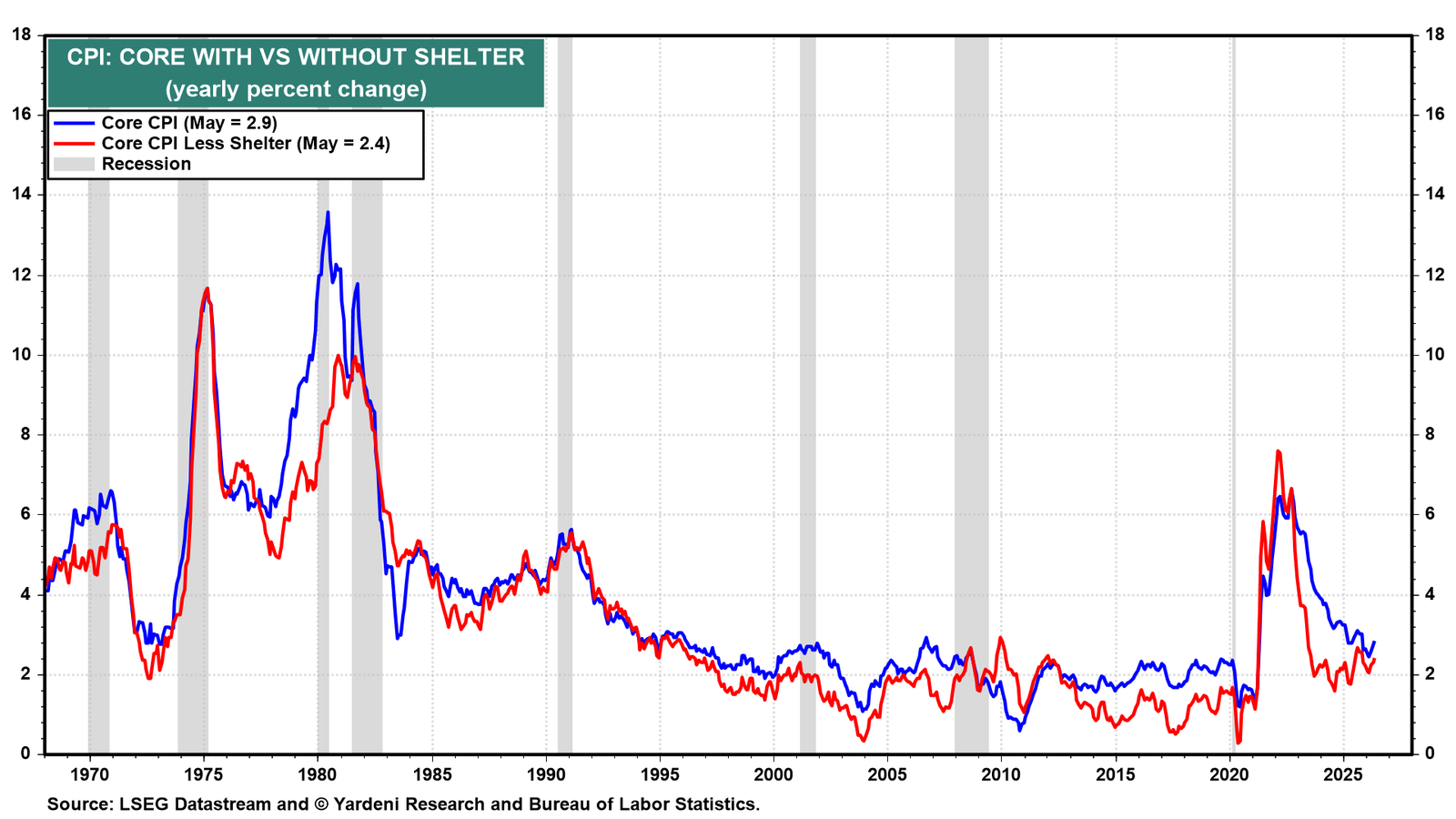
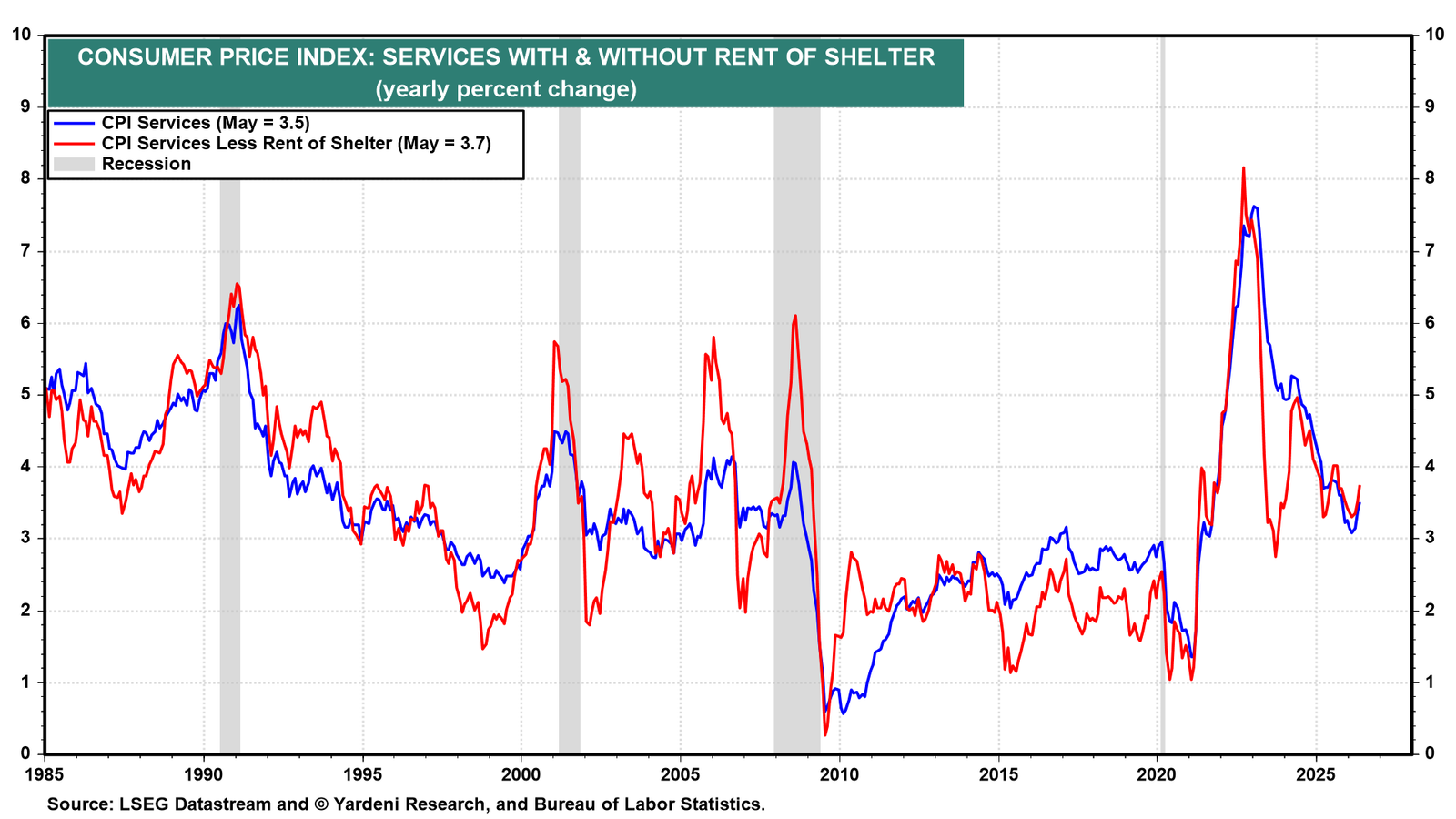
Warsh should try convincing his colleagues to focus on the core CPI and PCED; they both exclude shelter costs like the weird owners' equivalent rent component (chart). The core CPI inflation rate excluding shelter rose 2.4% y/y in May.
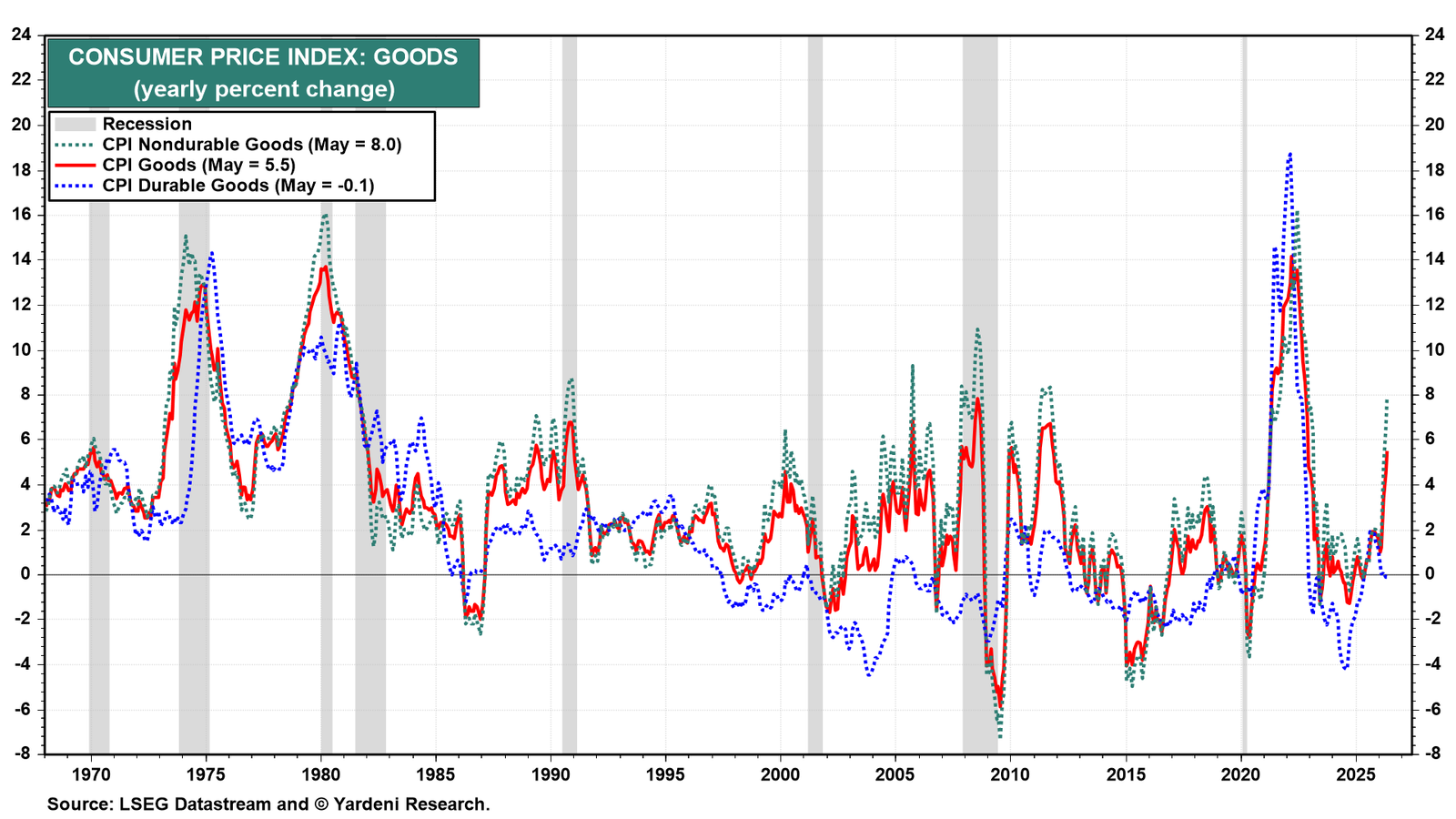
The CPI nondurable goods inflation rate jumped to 8.0% y/y, driven by a 23.5% y/y spike in energy costs (chart). Food prices rose 3.1% y/y. The CPI durable goods inflation rate fell to -0.1% y/y, suggesting that last year's tariff shock is abating.
There are two significant issues on the inflation front that should concern the FOMC. First, the energy shock isn't over, and higher energy costs are likely to push up other prices in the coming months. Second, the CPI services inflation rate has stalled above 3.0% y/y in recent months, well above pre-pandemic readings of around 2.0% (chart). That's even excluding rent of shelter!
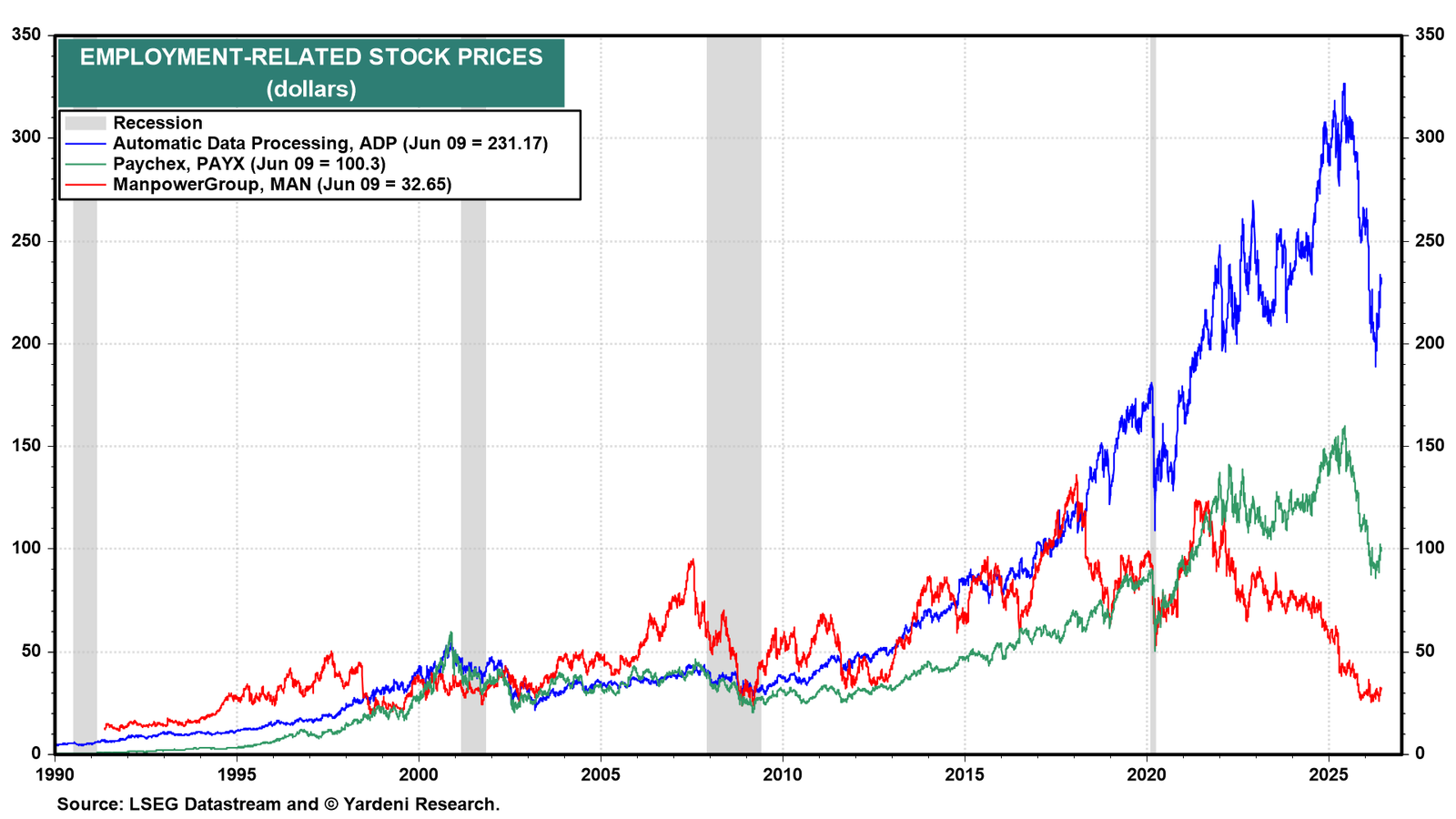
(2) Employment. When the labor market sneezes, ADP, Paychex, and ManpowerGroup catch colds. The stock prices of all three sold off sharply as hiring cooled early last year. On May 8, we noted that the data suggested that employment conditions were improving and that employment-related stocks may have bottomed. That call has been validated. Employment-related stocks moved higher recently in lockstep with an improving labor market (chart).
Earlier this month, the Bureau of Labor Statistics reported the average monthly pace of job creation over the past three months through May was 188,000, the best such pace since March 2024.
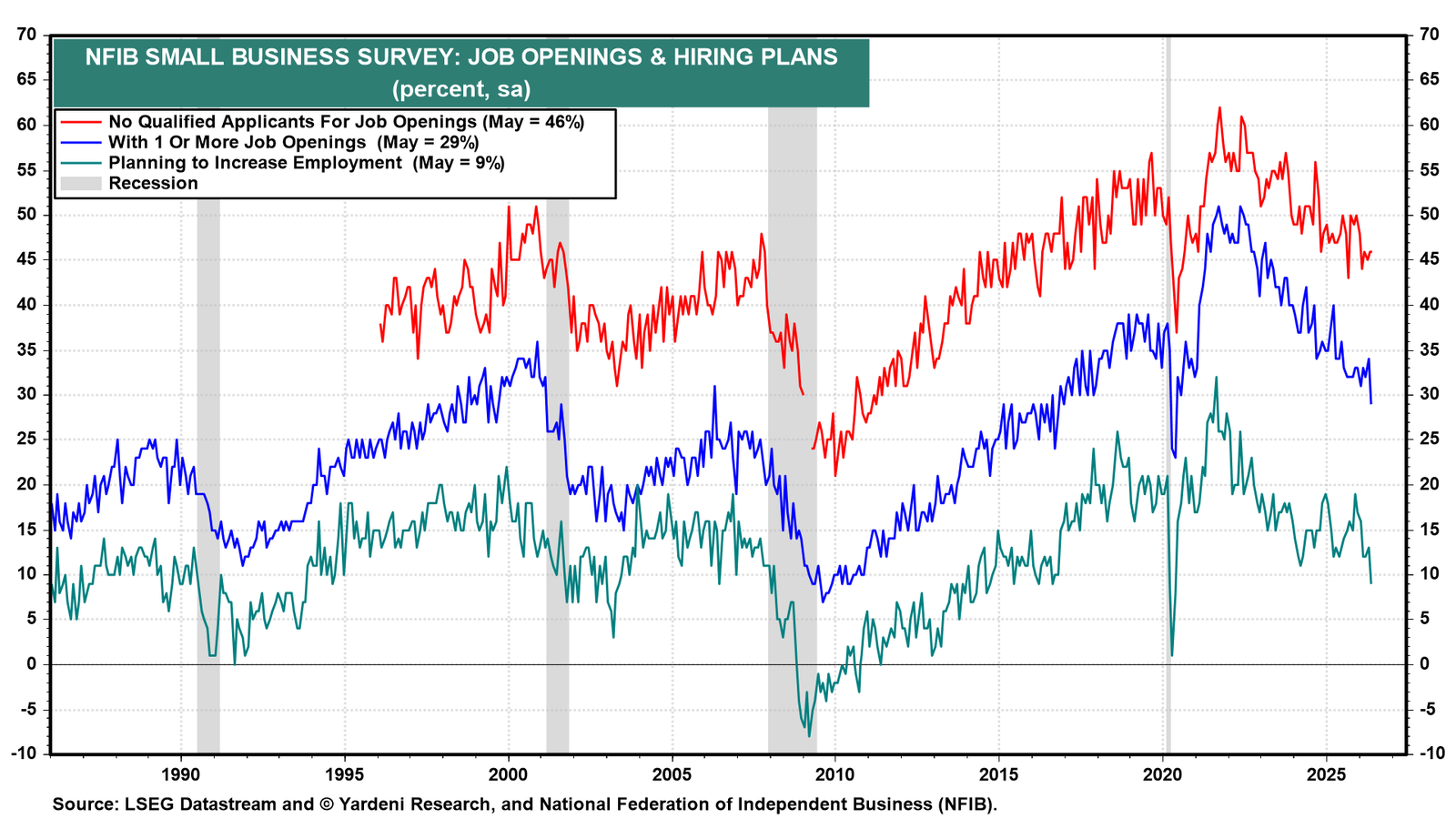
Then again, May's NFIB small-business owners' survey was more downbeat. Only 9% of them planned to increase employment, and just 29% reported one or more job openings, both at levels last seen in 2020 (chart). The NFIB survey mentions that small businesses reduced hiring intentions due to high labor costs and surging energy prices. Hiring at small businesses should improve when the Middle East conflict is resolved.
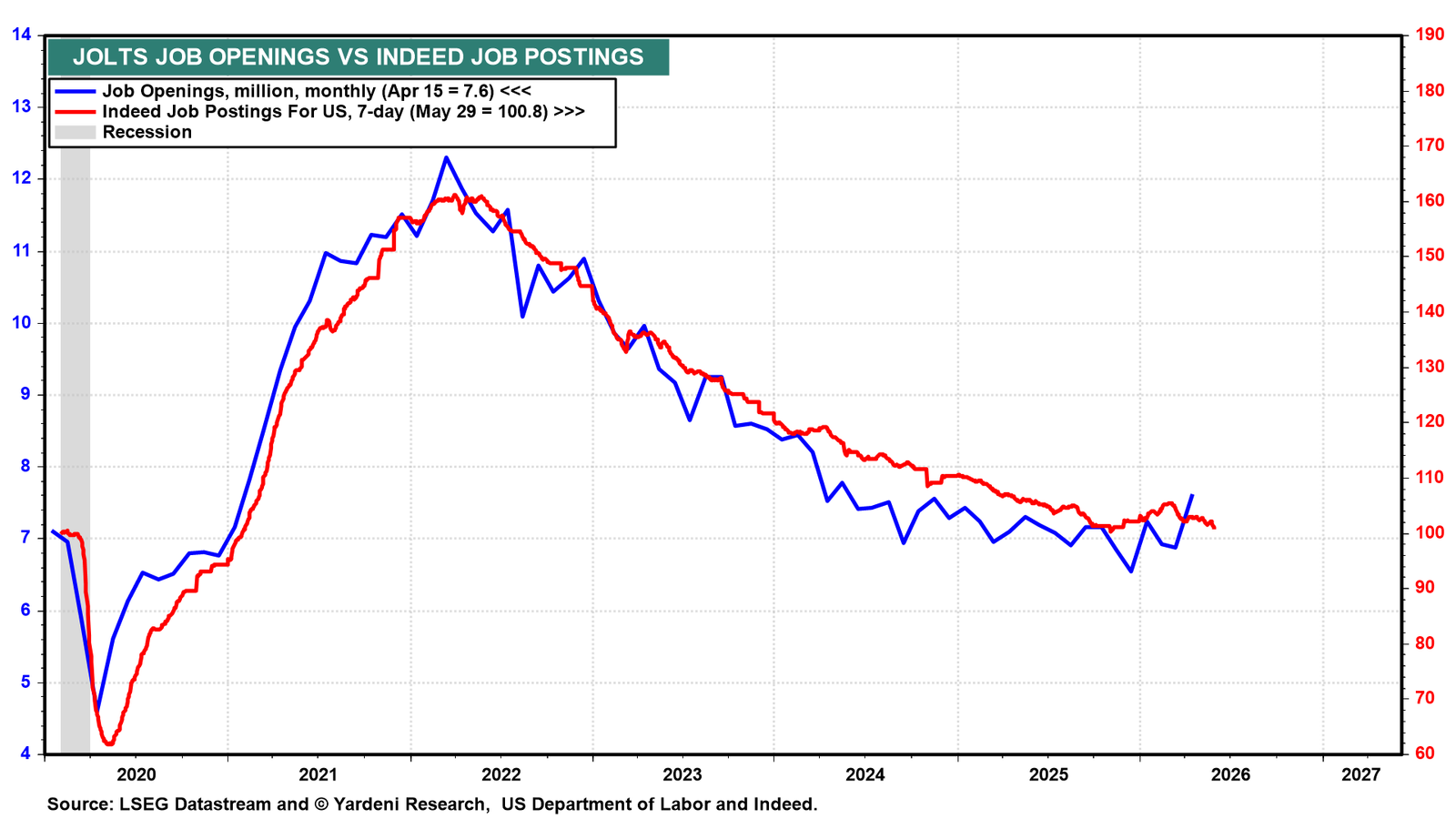
Another downbeat labor market indicator is INDEED's job postings series, which has dropped in recent weeks (chart). Also slightly disappointing was ADP's report that private employers added an average of 29,000 jobs per week in the four weeks ending May 23, a slight easing from 30,500 in the prior period and the third consecutive week of moderation. However, the implied monthly pace of 116,000 jobs remains solid.
May was a blockbuster month for hiring, particularly for leisure and hospitality, which undoubtedly received a boost from World Cup-related activity. A modest slowdown is likely during July and August. But we expect that labor market conditions will remain solid over the rest of the year. The balance of risks to the Fed's dual mandate remains skewed toward inflation rather than unemployment, which is why a more hawkish policy stance is likely, as reflected in the stock market's June Swoon, which we predicted a week ago on June 3.
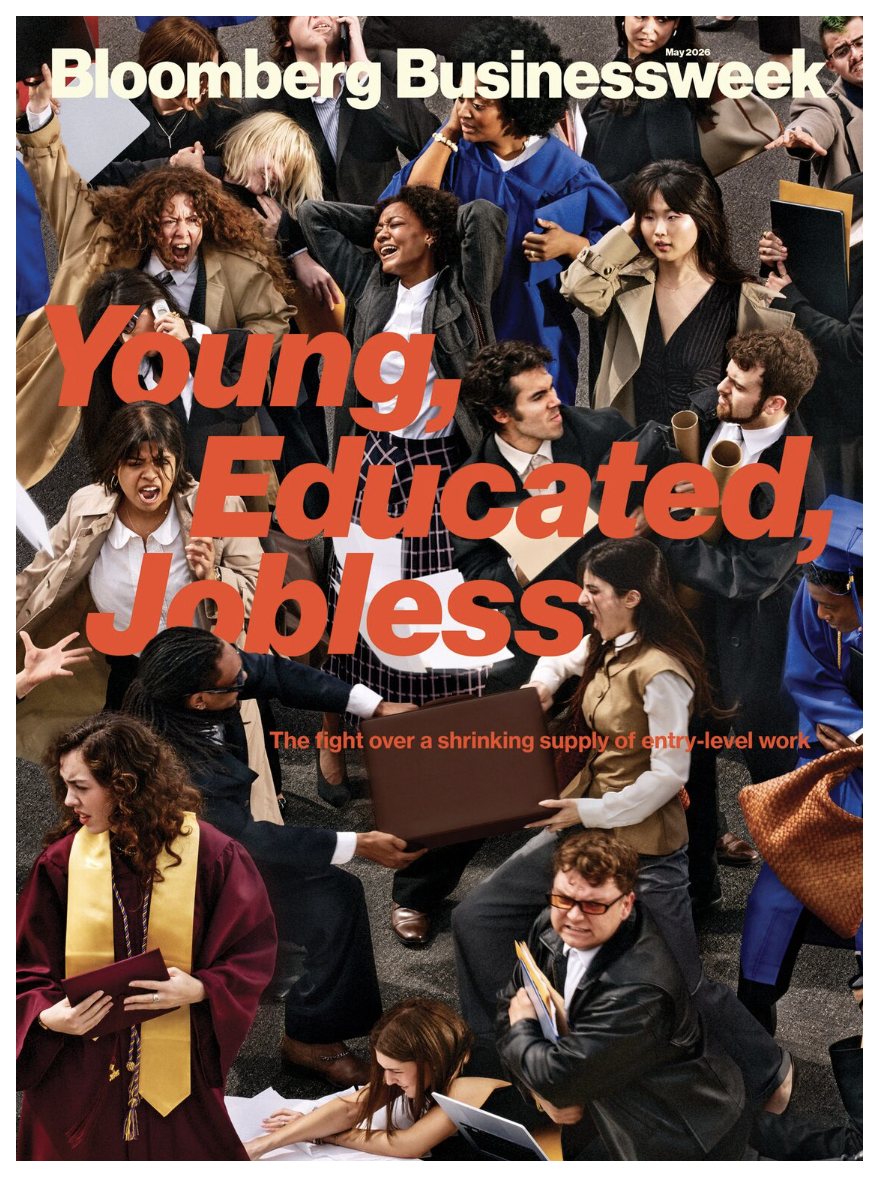
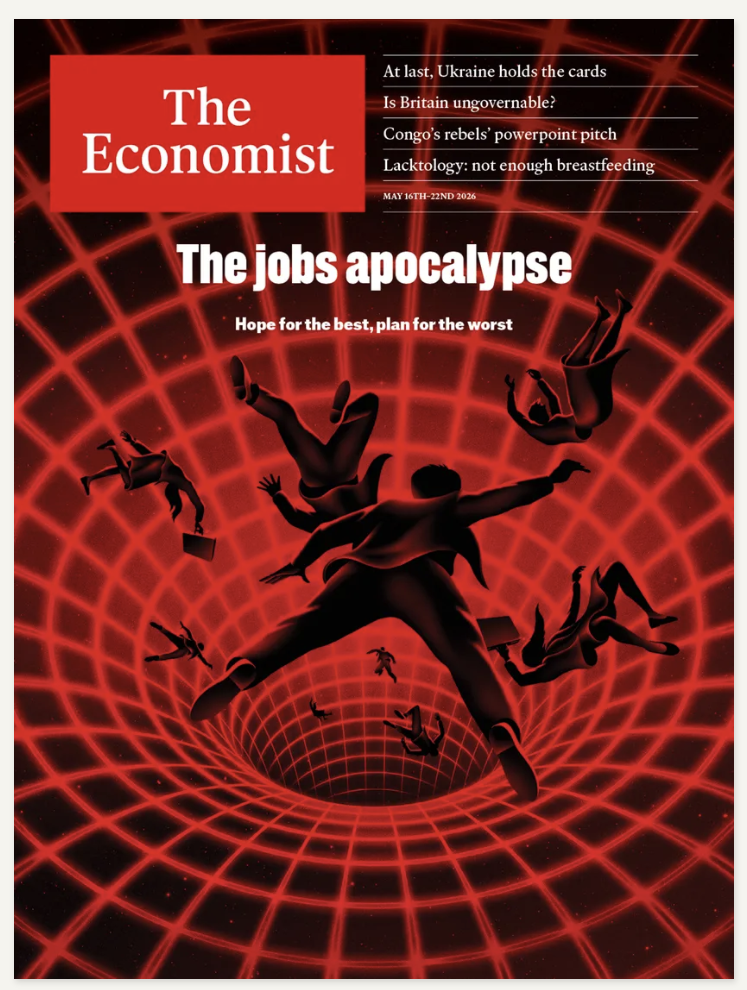
One final note: Both Bloomberg Businessweek and The Economist have recently run cover stories predicting a jobs apocalypse. We will take the contrarian side of the argument that both covers make.