As we've been predicting in recent months, labor market conditions are improving, while inflationary pressures remain elevated. We expect the FOMC will shift to a tightening bias at the June meeting of the Fed's policy-setting committee and will probably hike the federal funds rate in July if current trends persist.
Don't get us wrong, we expect inflationary pressures to ease later this year, assuming, as we do, that the price of crude oil will settle between $75-$85 a barrel once the war in the Middle East has been resolved, opening the Strait of Hormuz to free maritime passage again. Oil tankers are reportedly already passing through the strait if their owners pay Iran's "toll."
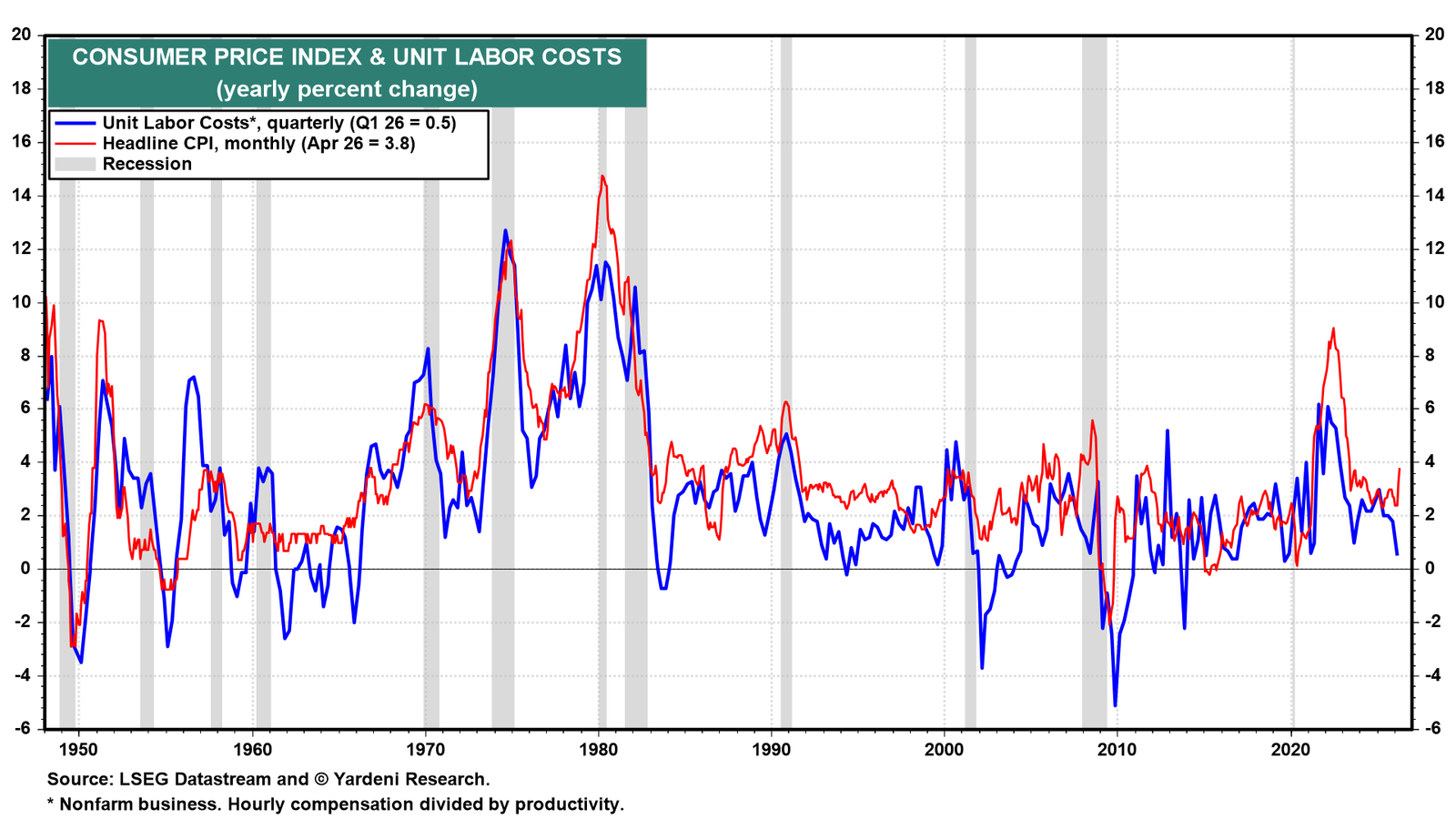
We are also counting on productivity growth to keep a lid on unit labor costs inflation (ULC). So far, so good. Today's revisions for Q1 reduced the growth rates of both productivity and hourly compensation. Productivity is still up nicely at 2.8% y/y, while hourly compensation increased 3.3%. So ULC inflation is now down to just 0.5% y/y during Q1 (chart).
This measure of the underlying inflation rate in the labor market is providing a strong disinflationary offset to the inflationary energy shock from the war. ULC inflation rose sharply during 2021 and 2022. The FOMC should pivot toward tightening monetary policy to avert a renewed wage-price spiral and to cool speculative excesses in the stock market.
Now, let's review the multiple data points that confirm the labor market and economy are doing well:
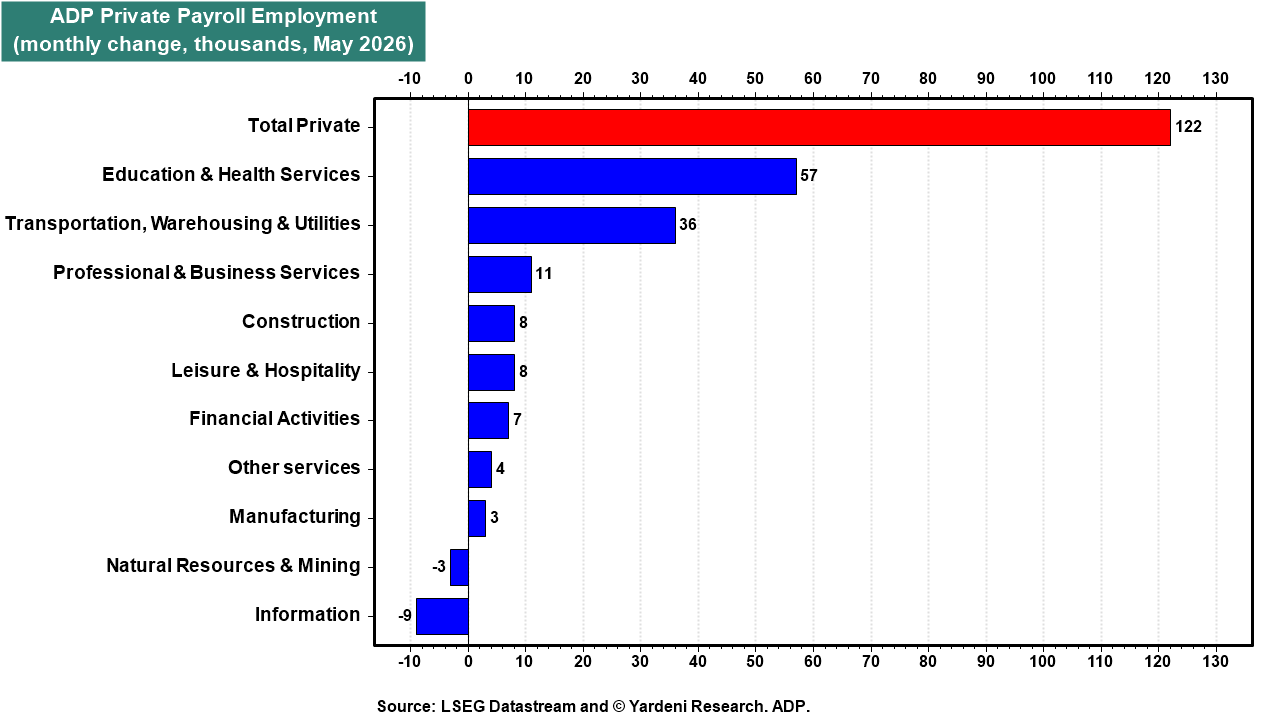
(1) ADP. The US private sector added 122,000 jobs in May, the strongest monthly pace since January 2025, according to ADP. The gain was broadly based, with eight of the 10 sectors posting gains (chart). ADP chief economist Nela Richardson noted that "hiring was more broadly based in May than we have seen in the last few years," adding that "the labor market continues to show sustained momentum going into the summer hiring season."
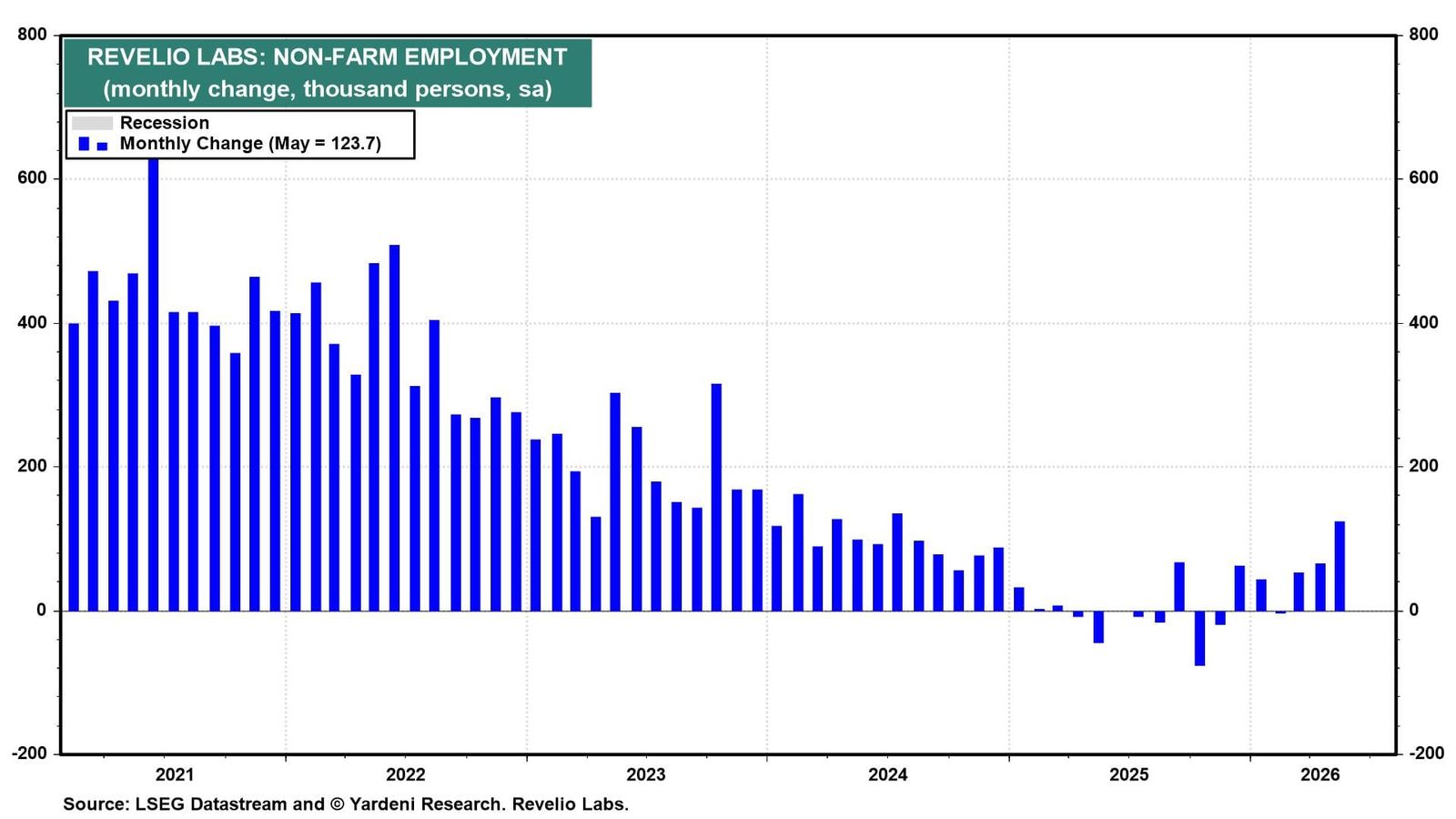
(2) Revelio Labs. The ADP reading is corroborated by Revelio Labs, which reported that the US economy added 123,700 jobs in May, the strongest monthly pace since July 2024 (chart).
(3) Challenger Report. US employers announced 97,006 job cuts in May. However, this series is inherently volatile and remains relatively low (chart).
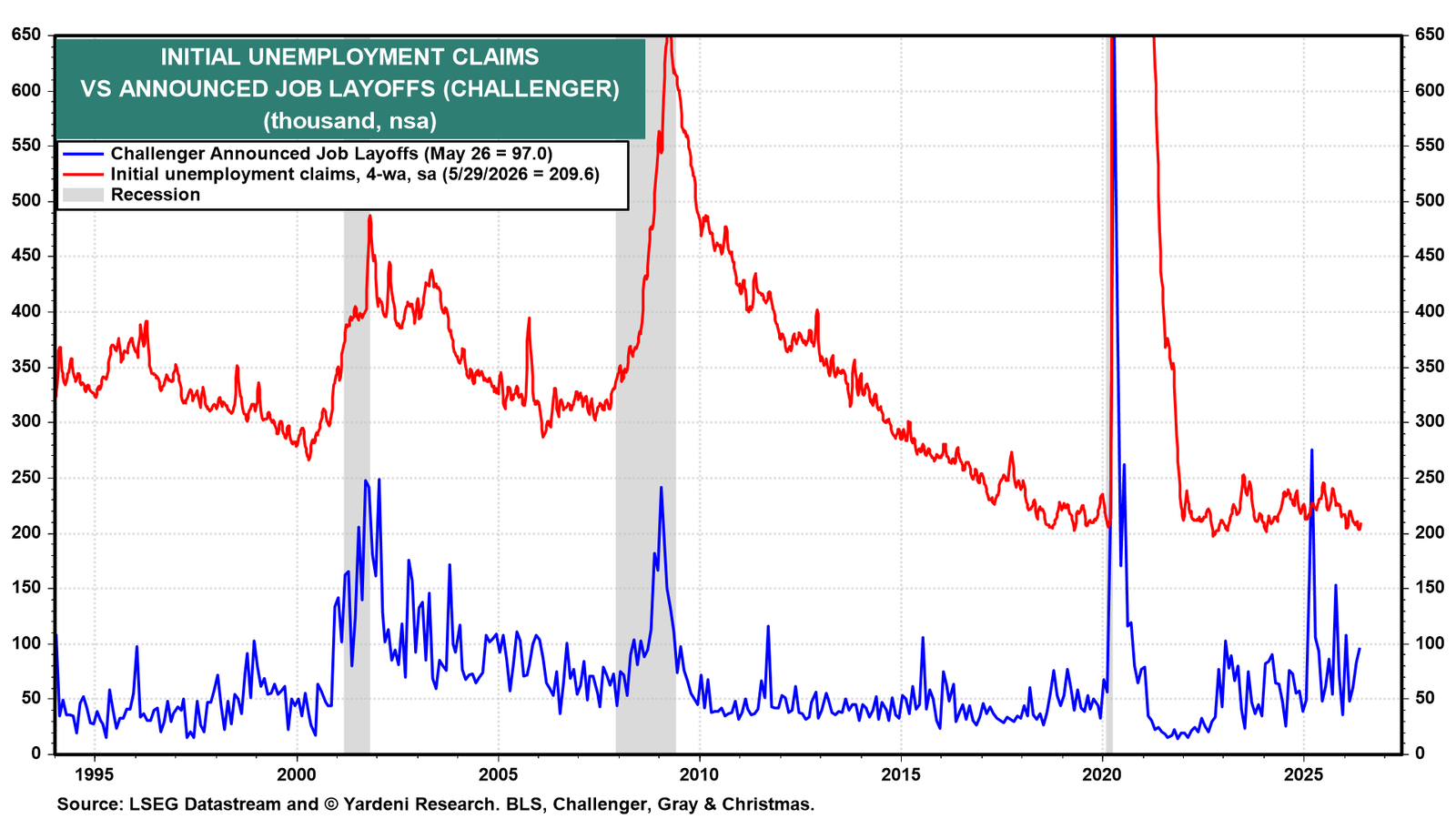
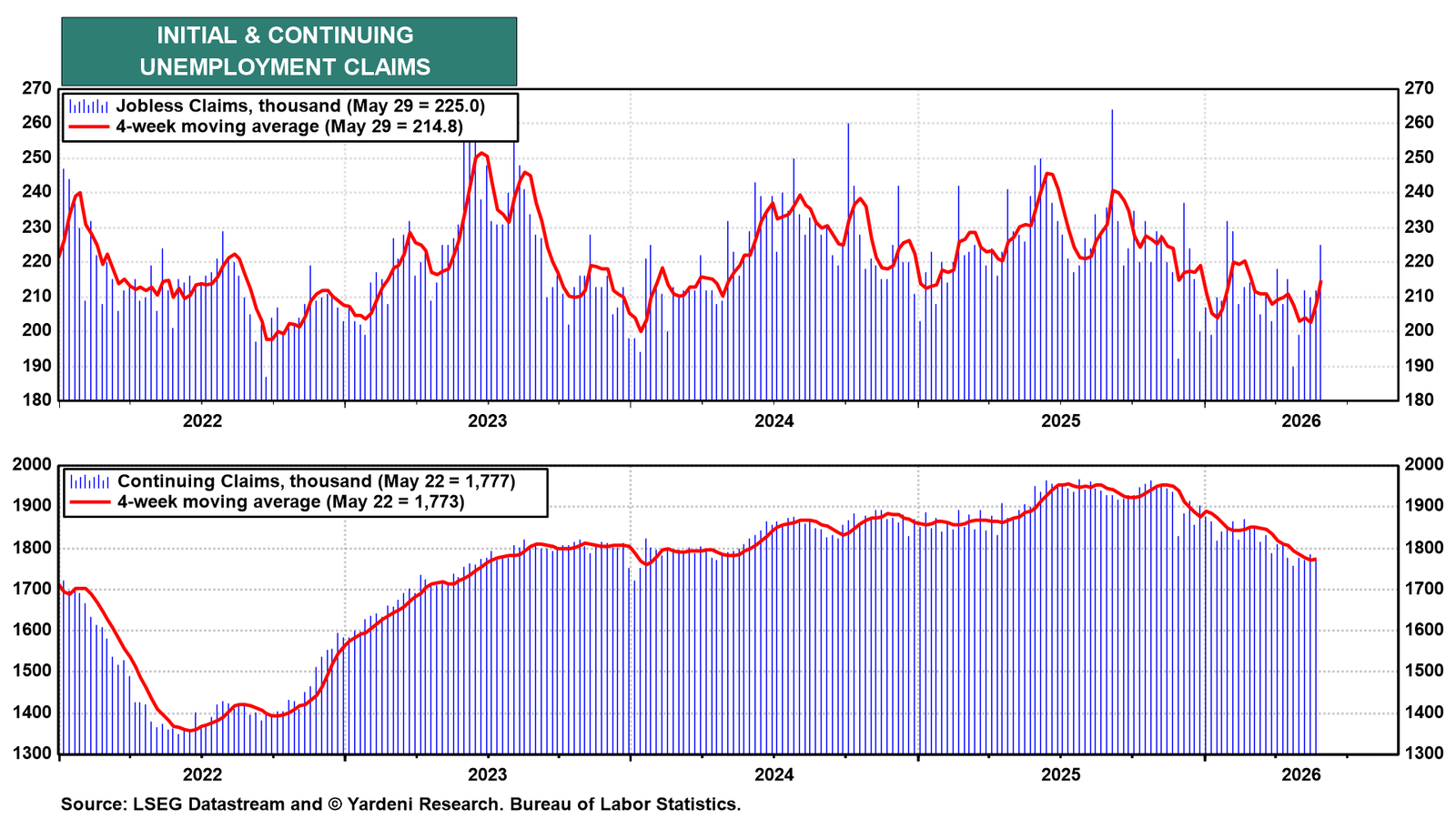
(4) Initial Claims. Initial unemployment insurance claims rose slightly to 225,000 last week (which included Memorial Day) but remains low and consistent with very subdued layoff activity (chart). Continuing claims ticked down to 1,777,000, remaining near its lowest level since January 2024.
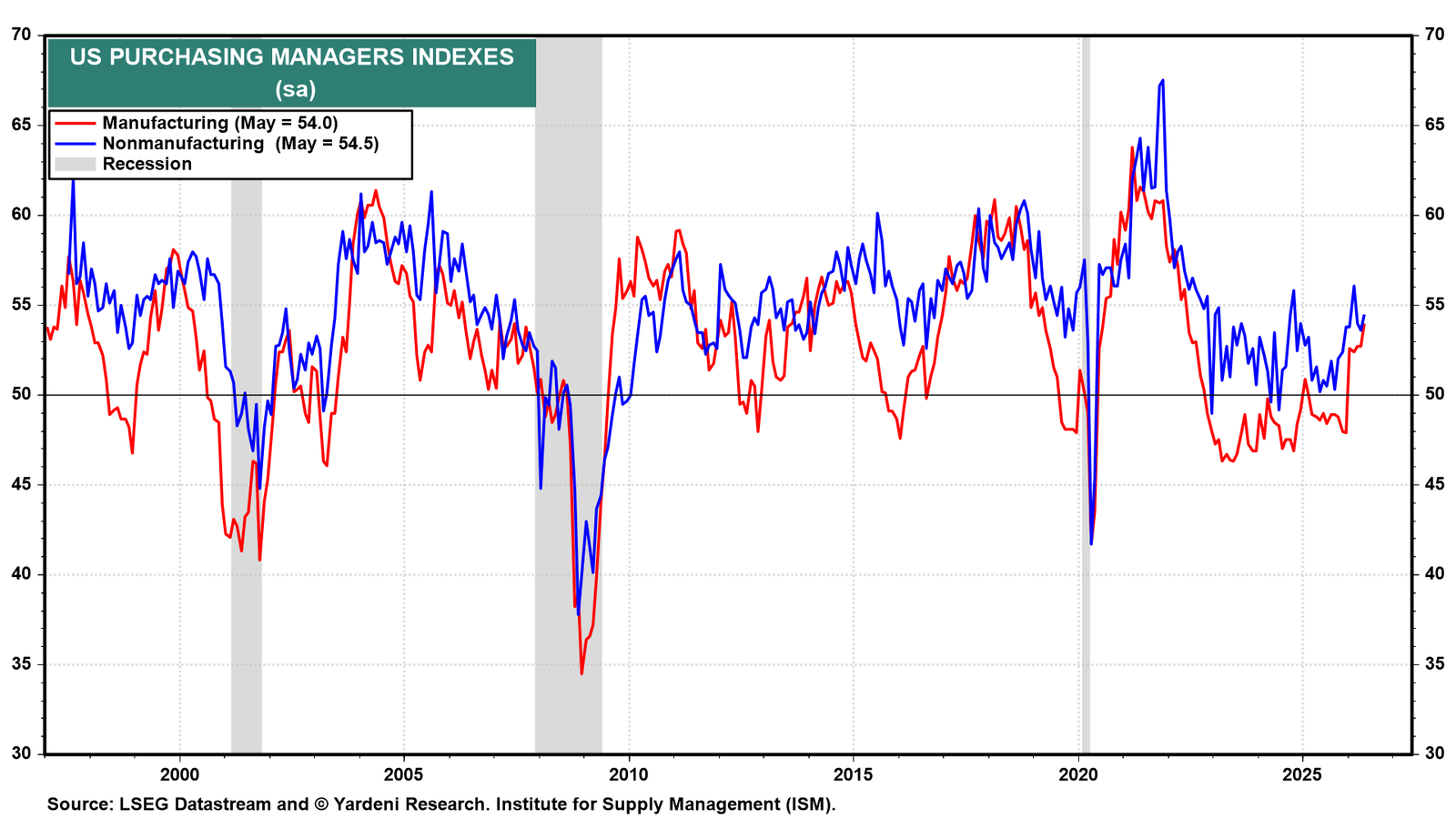
(5) ISM PMIs. The ISM NM-PMI edged up to 54.5 in May, its 23rd consecutive month of expansion (chart). The ISM M-PMI rose to 54.0 in May, its fifth consecutive month of expansion and the highest reading since 2022. Both sectors of the economy are now expanding simultaneously at solid paces.
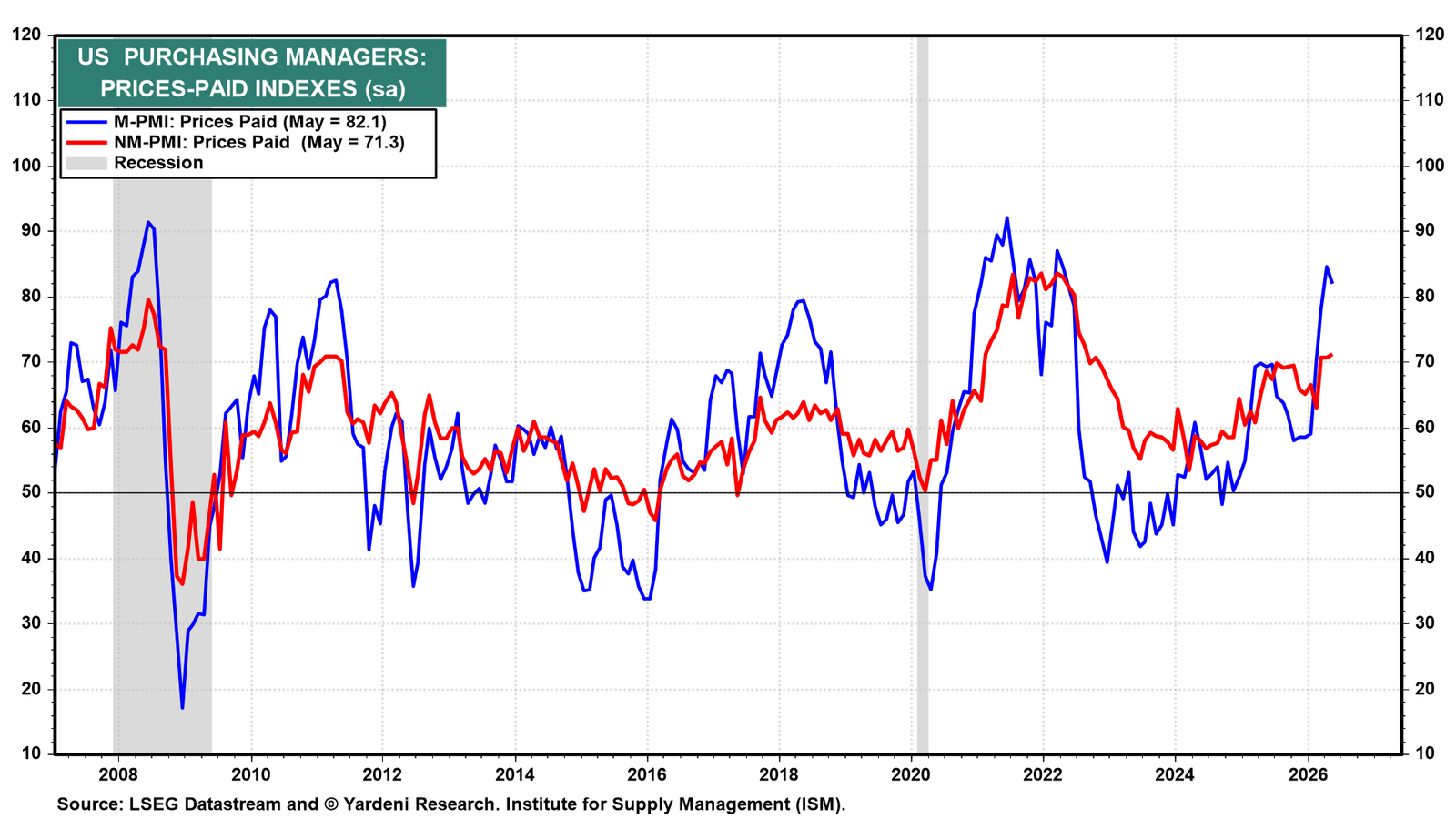
The prices-paid component of the NM-PMI survey rose to 71.3 in May, the highest since August 2022. The prices-paid index for the M-PMI was even higher at 82.1 last month (chart). Both confirm that inflationary pressures remain significant due to the energy shock, supply chain disruptions, and tariffs.
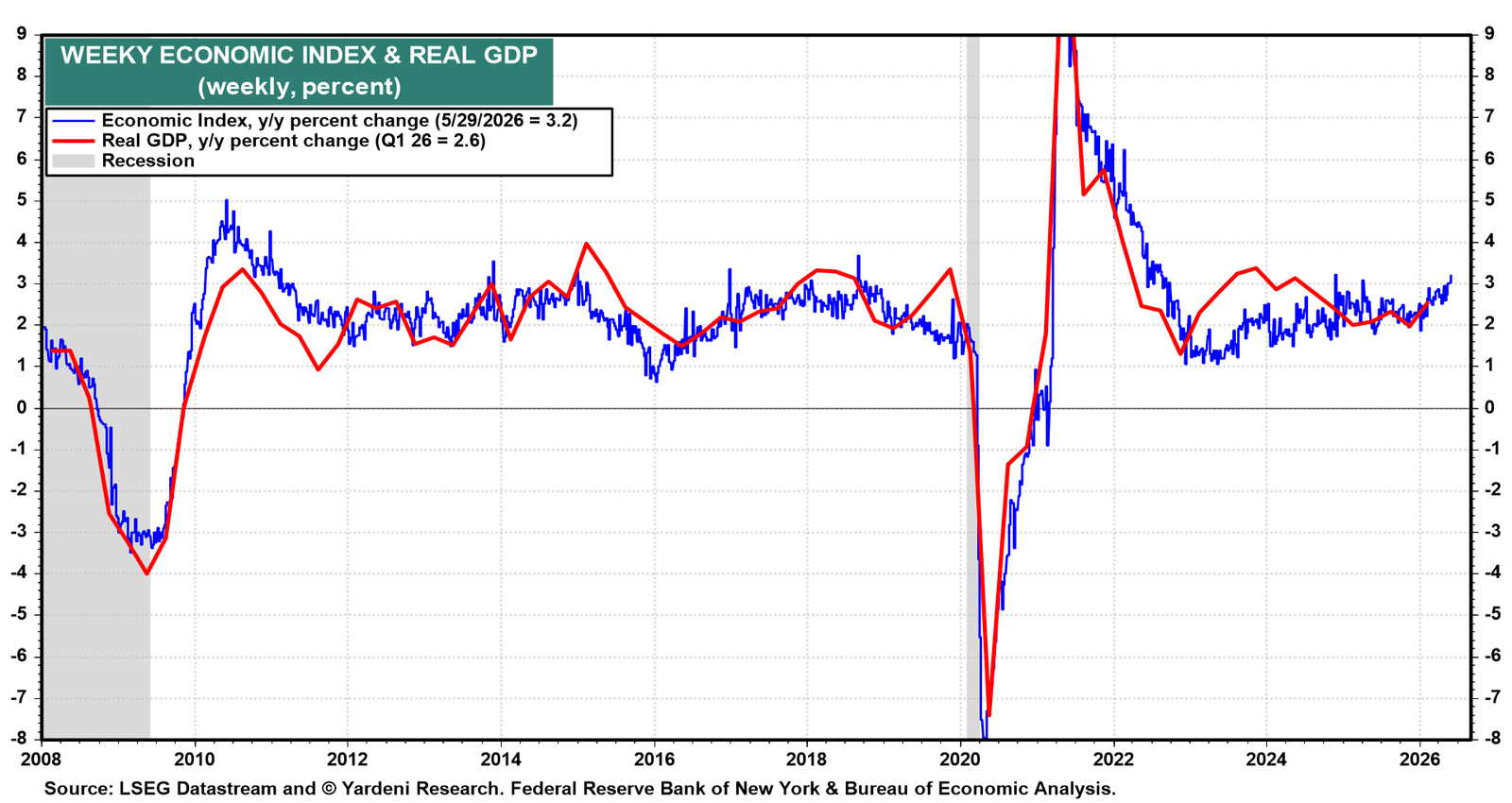
(6) Weekly Economic Index. The Weekly Economic Index, which aggregates 10 high-frequency daily and weekly data series to track real-time US economic activity, rose to 3.2% for the week of May 29, its highest reading since August 2022. This suggests that real GDP is growing around 3% y/y.
(7) Beige Book. The Fed's Beige Book, covering data collected on or just before May 27, confirms that inflation risks are higher than unemployment risks.
Economic activity. Ten of 12 Fed district banks reported slight to moderate economic growth, up from eight in April. Nine of 12 districts reported modest to strong manufacturing growth, a clear improvement from April's mixed picture. Consumer spending was bifurcated, with higher-income households resilient and middle- and lower-income households showing signs of stress. Modest to moderate wage growth persisted across all districts, and 11 districts reported little to no change in employment.
Inflation. Multiple districts reported rapid price increases, with the energy shock now the primary driver, generating spillovers into shipping, food, fertilizer, and packaging costs.
The Beige Book is consistent with our view that the economy remains in solid shape, but inflation risks have increased for the next few months.