The S&P 500 rose to yet another record high today, rising above 7600 for the first time. On May 11, we raised our year-end S&P 500 target from 7700 to 8250, still the highest forecast on Wall Street. We did so because of the strength and breadth of S&P 500 earnings during the Q1 earnings reporting season. That led us to conclude that the rally in the stock market since this year's low on March 30 (which we called the next evening on March 31) was driven by Fabulous Earnings Momentum (FEMO) rather than FOMO.
A FEMO-led stock market meltup should be more sustainable than a FOMO-led one. Nevertheless, we are turning cautious about the prospects for the stock market in the coming weeks. The war in the Middle East isn't over. Executives at Exxon and Chevron are warning that global oil inventories are dangerously low and that oil prices could soon spike to $150 a barrel or higher. We've explained why the FOMC might possibly shift from an easing bias to a tightening bias this month, followed by a rate hike in July. Three gigantic IPOs might also increase market volatility in the coming weeks, as we discussed yesterday.
On the other hand, the price of oil remains remarkably subdued at around $100 a barrel. The Strait of Hormuz is no longer completely closed. Oil tankers are reportedly passing through by paying a "toll" to Iran. The Fed might postpone a rate hike for later this year, as widely expected. SpaceX might have a very successful IPO. Maybe.
Meanwhile, the AI boom may be spreading to Main Street, which has certainly benefited from Wall Street's AI-led bull market. Now there are signs confirming our view that AI is providing a tailwind rather than a headwind for the economy in general and the labor market in particular.
Consider the following:
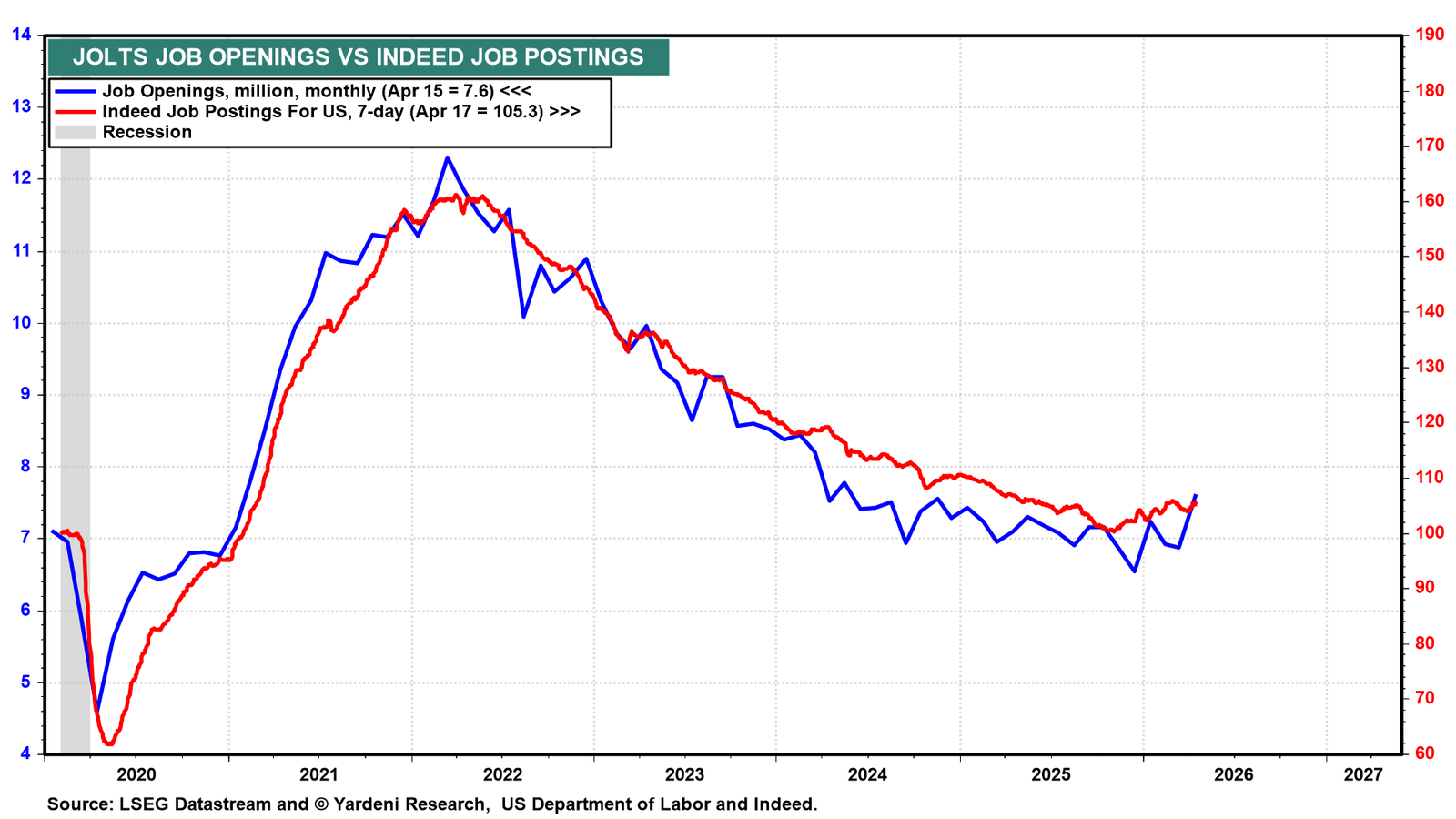
(1) JOLTS. April job openings surged to 7.62 million, the highest reading since May 2024. The 10.6% m/m increase was the strongest monthly gain since May 2020! The rise is consistent with the upward trend we have been tracking in INDEED's weekly job postings (chart).
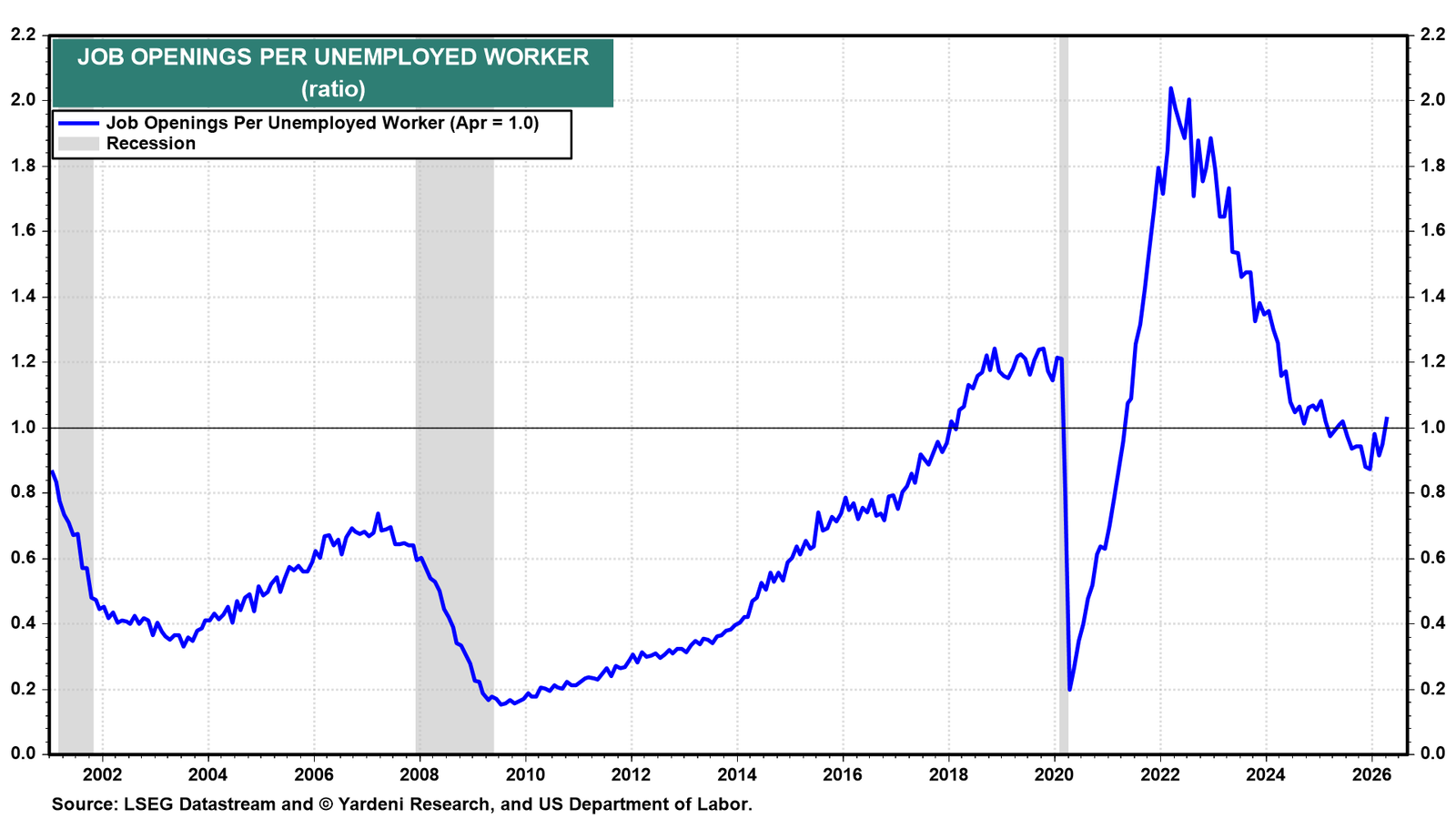
Job openings now stand roughly equal to the number of unemployed workers (chart). This is the first time the ratio has been above parity since mid-2025.
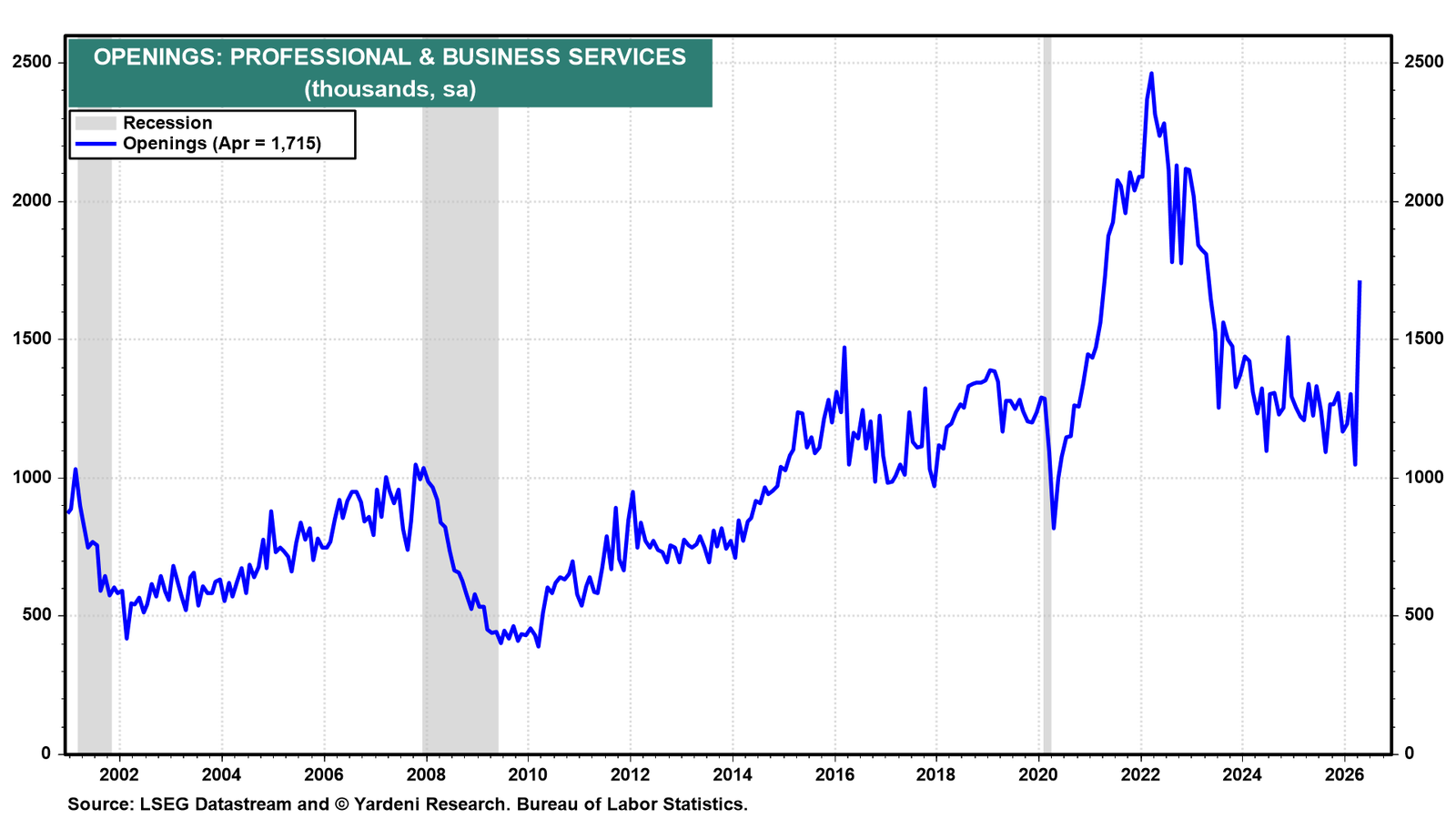
The composition of the April increase in job openings is striking. A 69% m/m surge in openings at establishments with 1-9 employees was the strongest on record. The sector contributing most to the increase was Professional and Business Services, which posted a 64% m/m rise in job openings, also the strongest on record (chart).
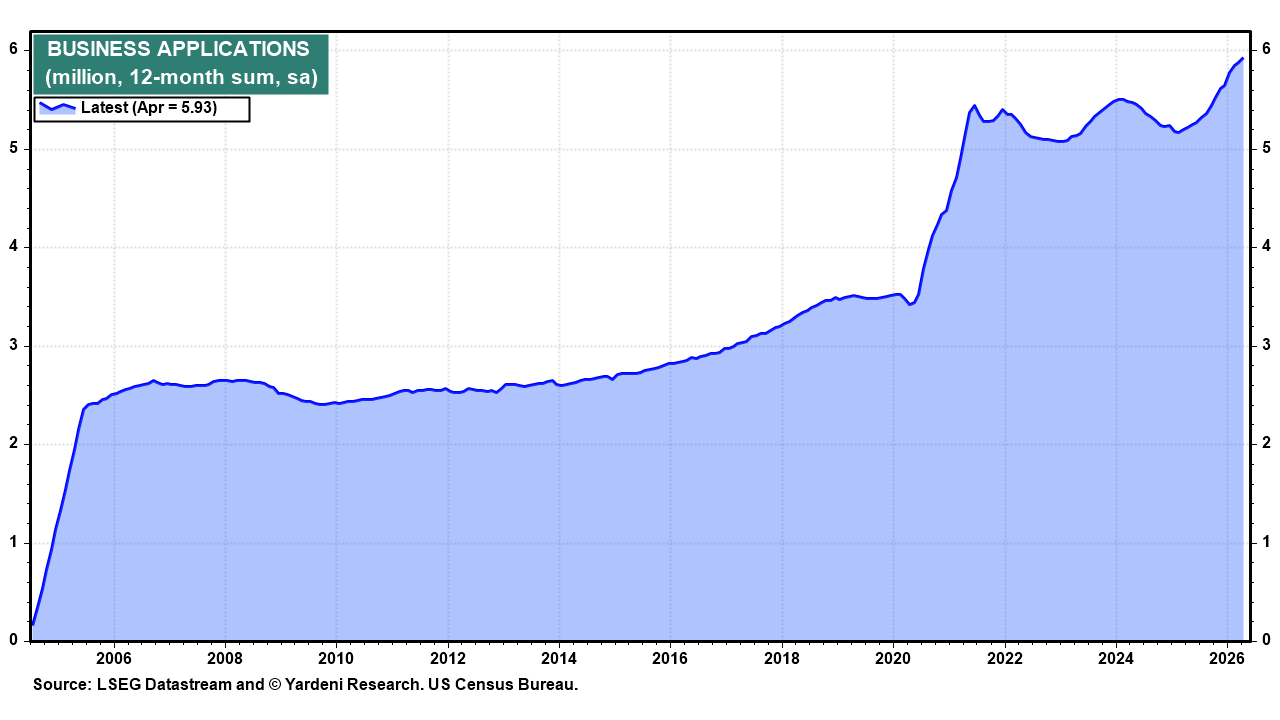
We think these two facts could be connected to AI, which may be stimulating the formation of new AI-driven businesses, as evidenced by the ongoing rise in new business applications (chart).
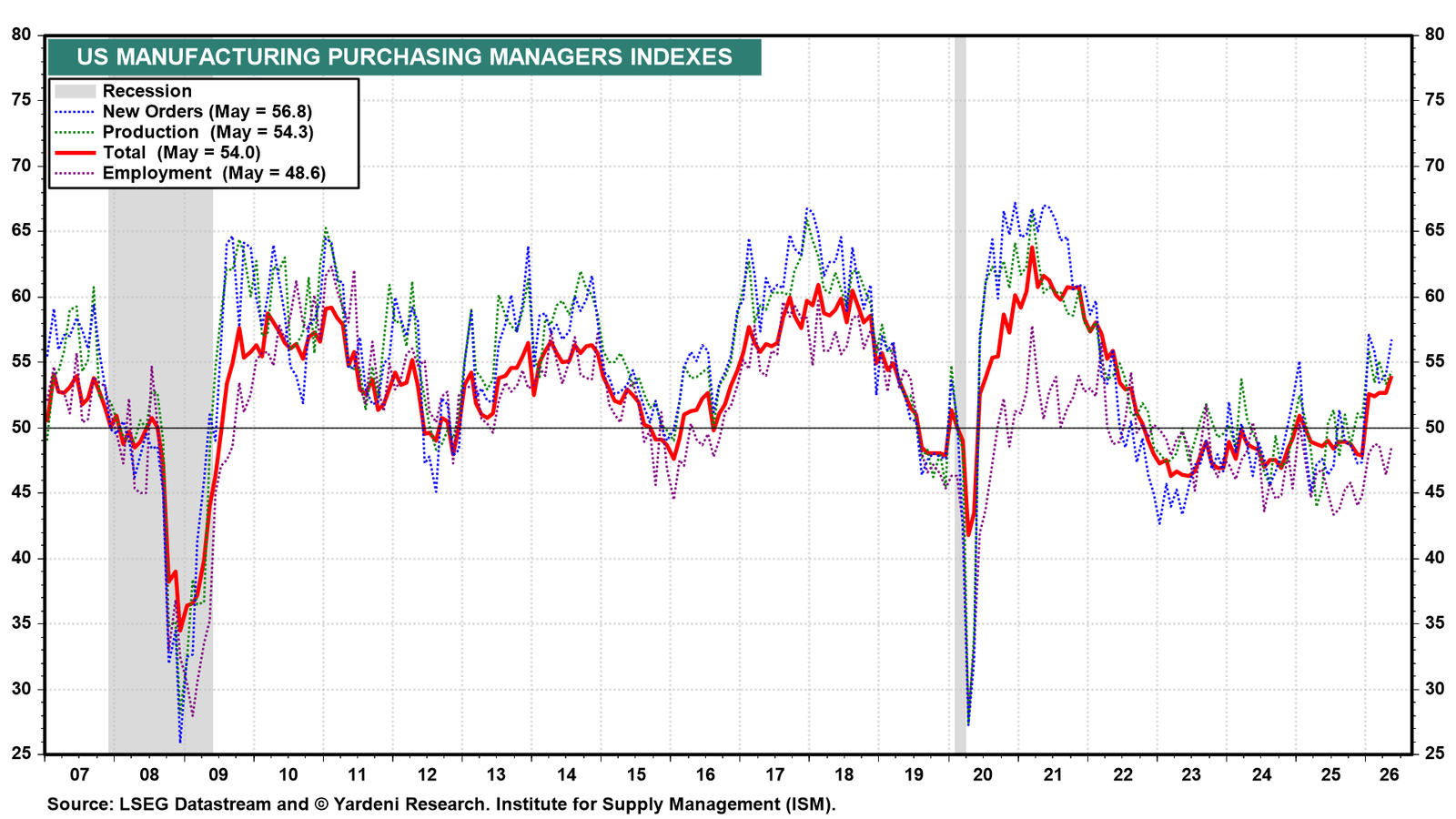
(2) Purchasing managers. The ISM M-PMI jumped to 54.0 in May, the highest reading since May 2022, marking the fifth consecutive month of expansion in the sector. New orders remain firmly in expansionary territory at 56.8%, and production has been expanding for seven consecutive months (chart).
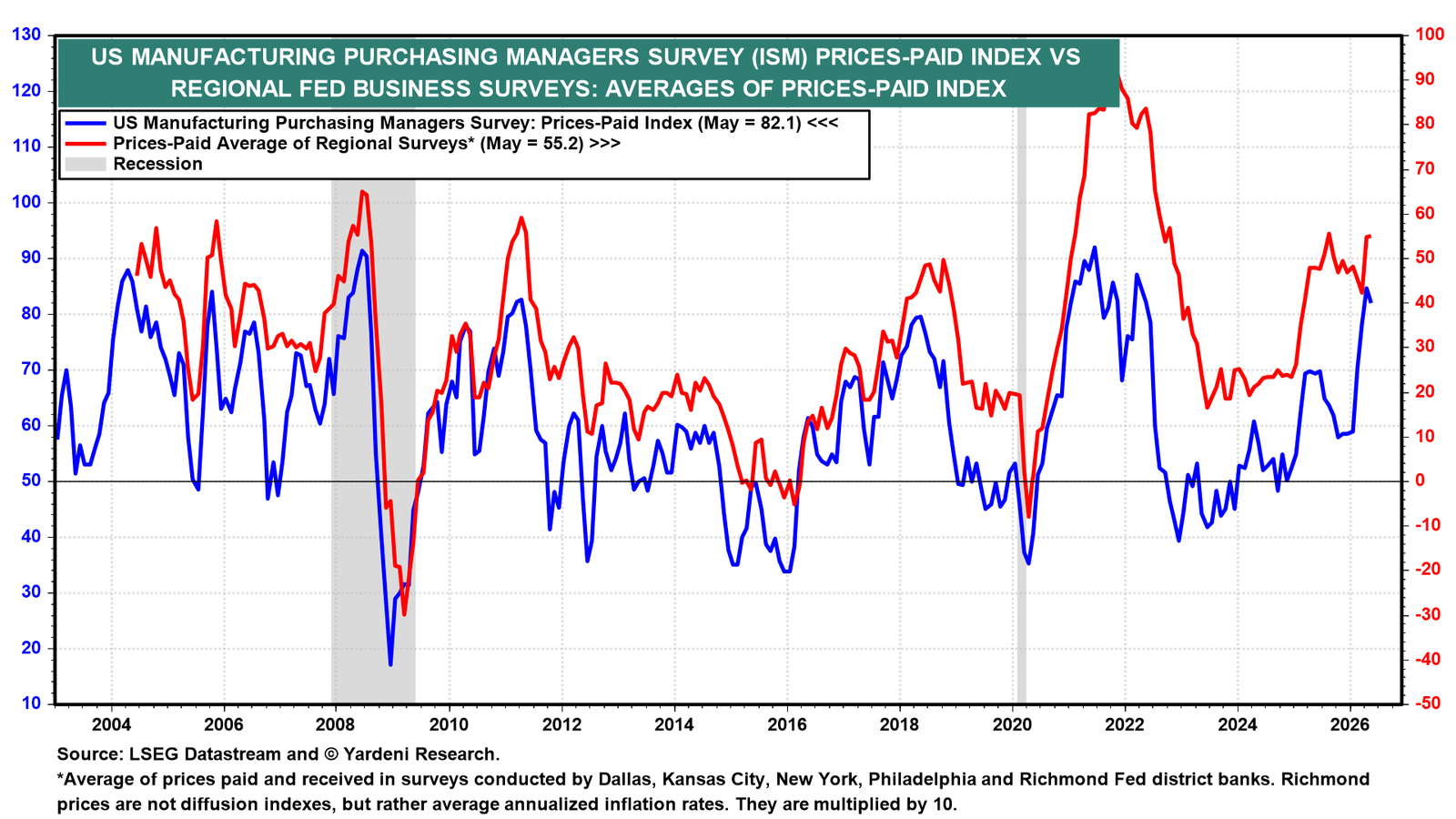
The prices-paid index remained very high at 82.1% in May's M-PMI survey (chart). The average of the prices-paid indexes across five Fed regional business surveys corroborates the ISM reading. Both show that inflationary pressures remained elevated in May.
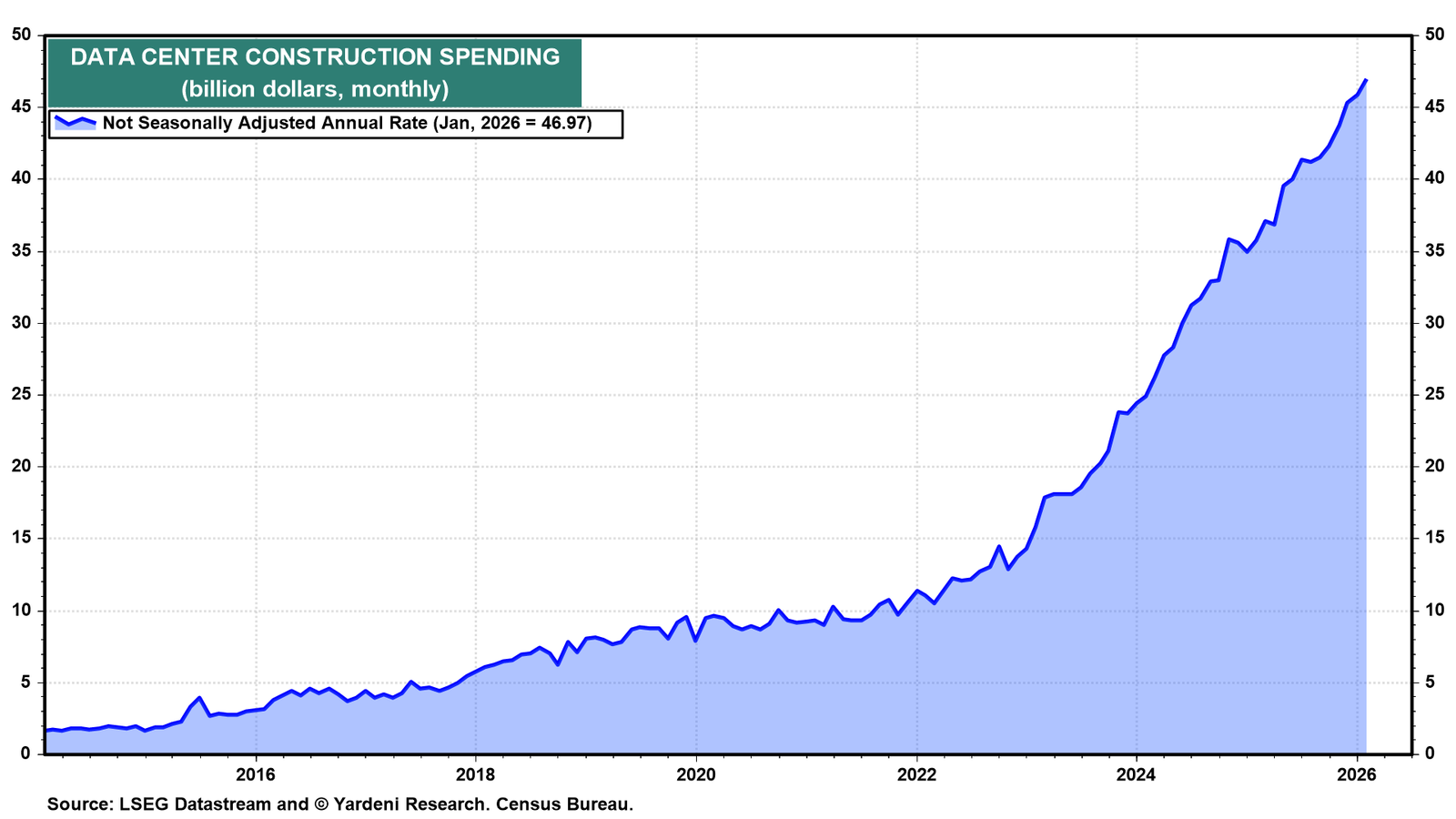
(3) Construction spending. Total construction spending in April rose 0.4% m/m, beating the consensus estimate and marking the second consecutive monthly gain (chart).
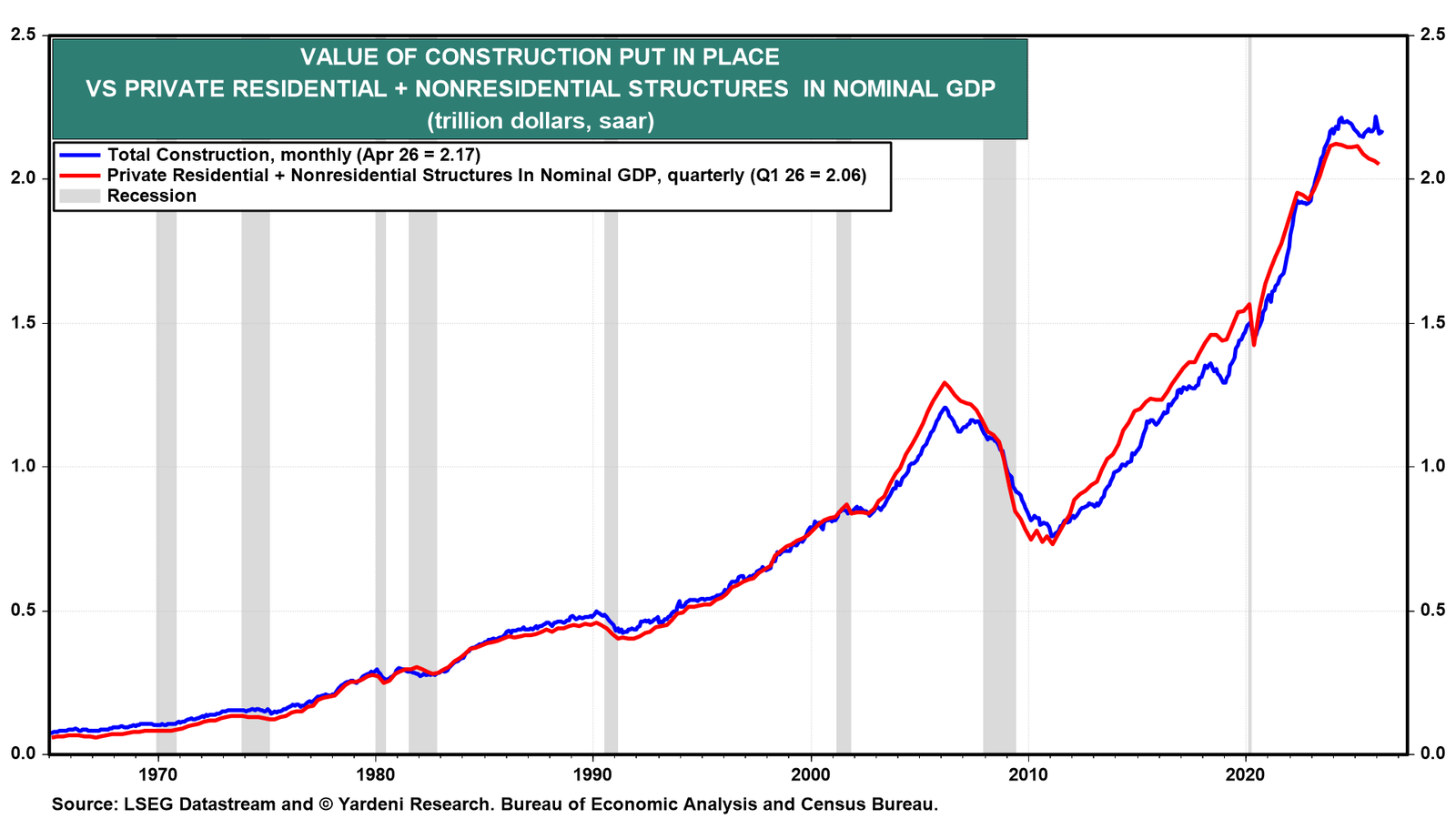
A powerful driver of construction spending remains the AI buildout, as evidenced by the rapid increase in spending on data center structures.
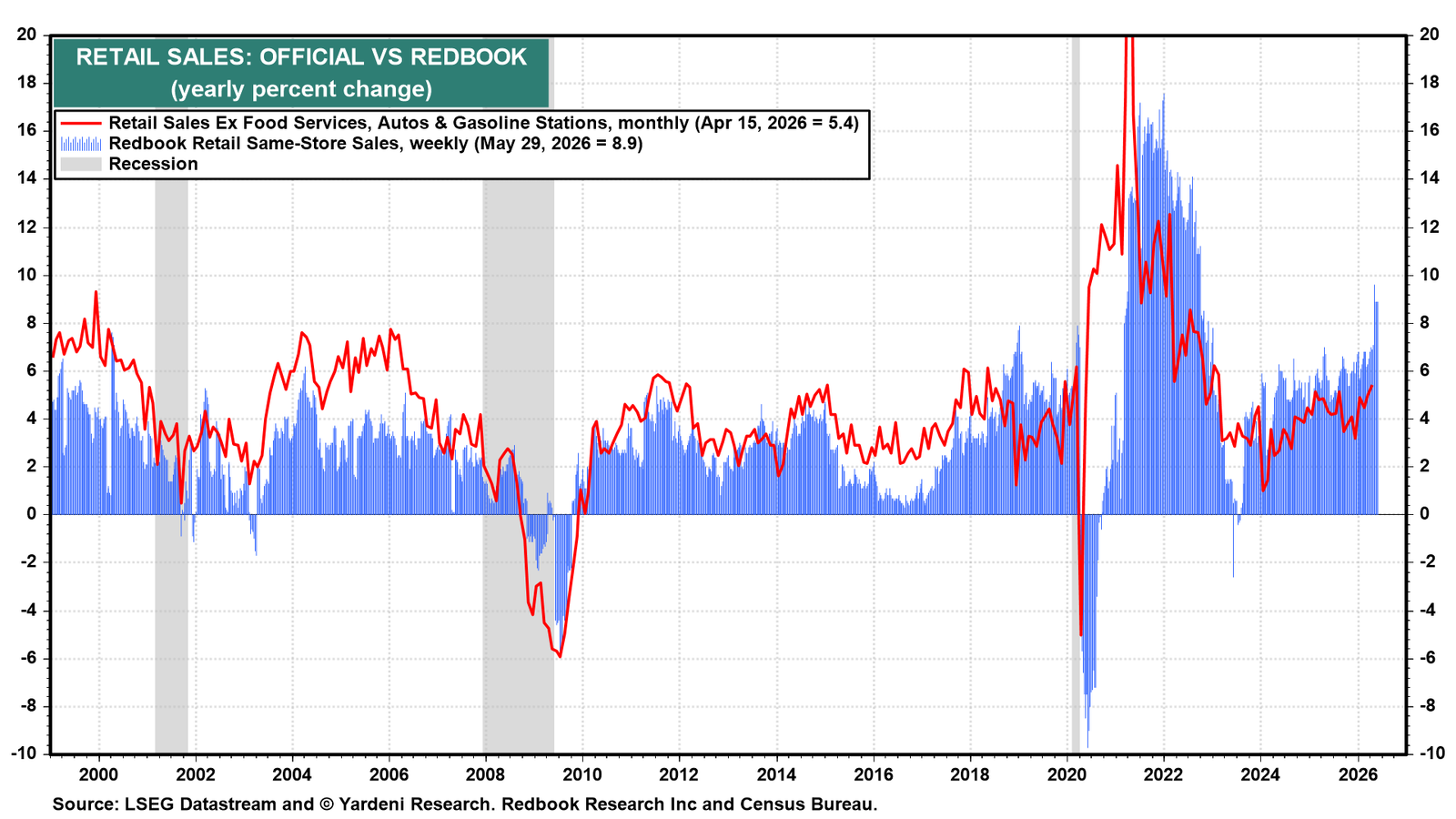
(4) Consumer Spending. The Redbook same-store retail sales index rose 8.9% y/y for the week ending May 29, pushing the four-week moving average to its highest level since October 2022. Importantly, this index excludes food services, gasoline, and autos. Consumer spending remains robust according to this indicator.
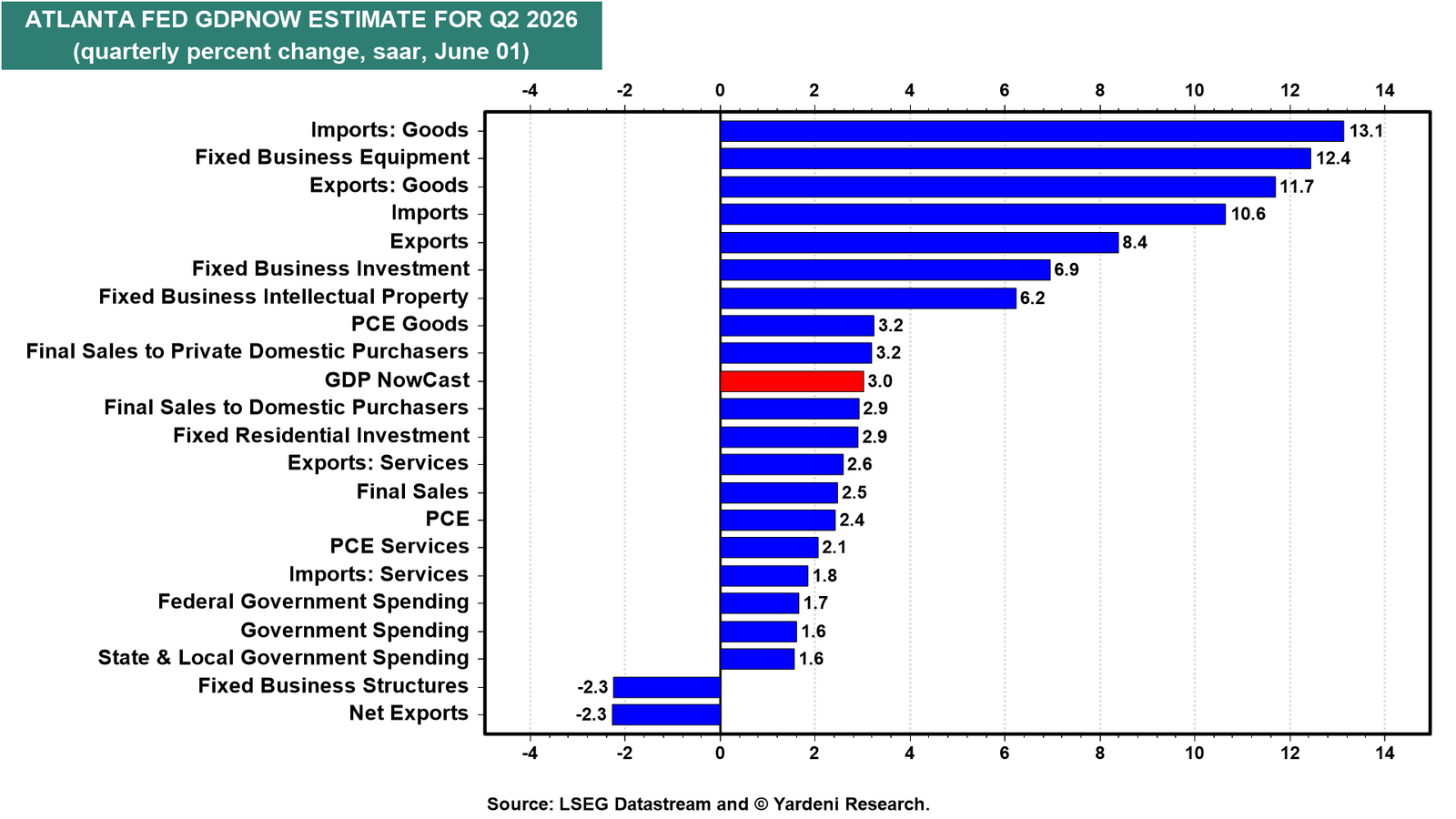
(5) GDP. The Atlanta Fed GDPNow model estimate for Q2-2026 real GDP growth was revised lower on Monday, from 3.8% to 3.0% (chart). The “nowcast” for real consumption growth was trimmed from 2.6% to 2.4%, and real gross private domestic investment from 10.4% to 9.3%. Even after the revision, these numbers are consistent with an economy growing at a solid pace, driven by robust consumer spending and the AI investment boom.