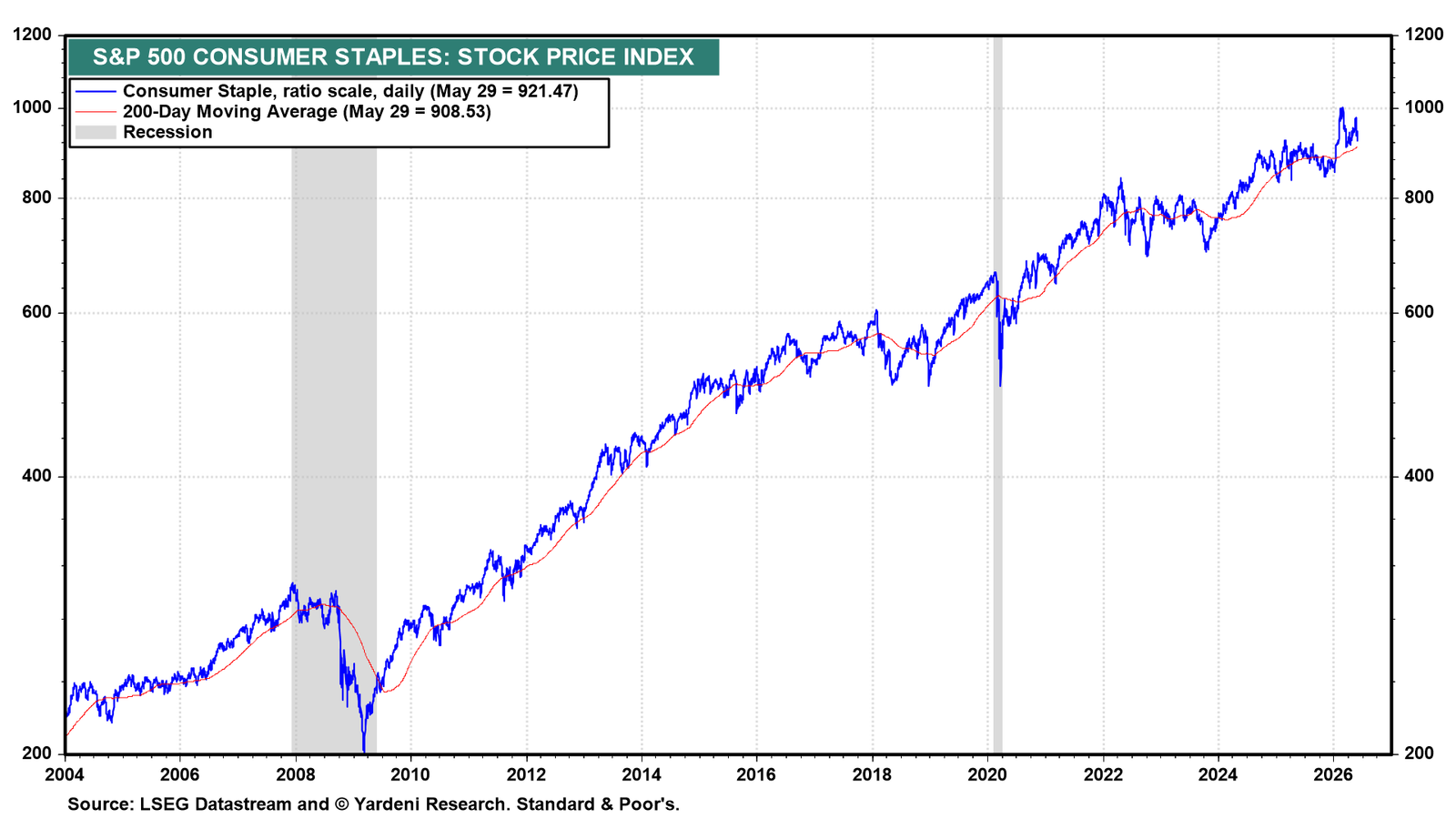
We recommend an underweight position in the S&P 500 Consumer Staples sector. At first glance, the sector looks fine. Its stock price index is near a record high (chart). Consumer Staples could turn out to be a haven if AI exuberance is fueling a tech bubble that bursts.
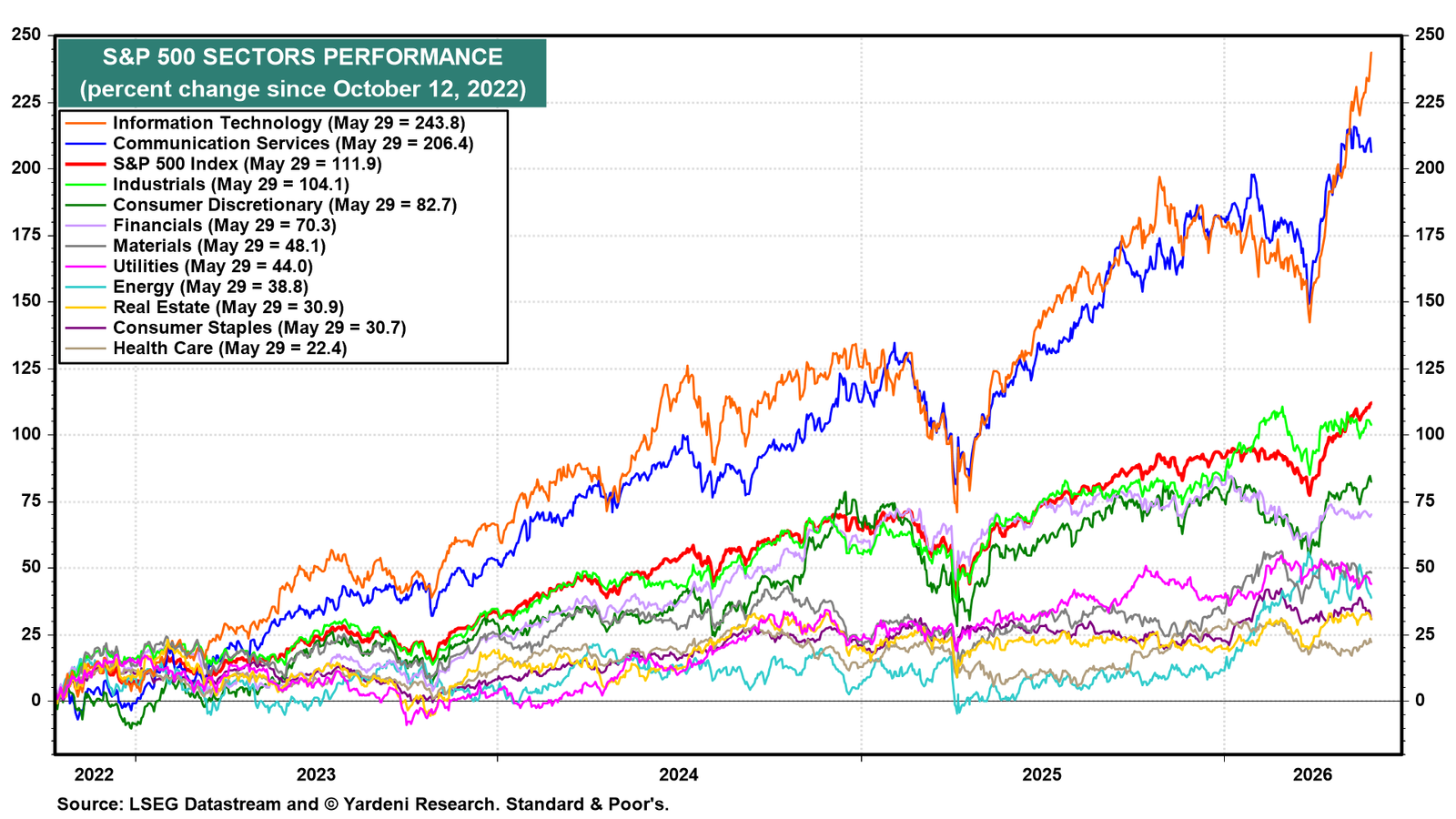
On the other hand, Consumer Staples is up 6.5% ytd, ranking 7th among the 11 S&P 500 sectors and trailing the S&P 500's 10.7%. Since the current bull market began on October 12, 2022, the sector is up 30.7%, second-worst of the 11 sectors, ahead of only Health Care (chart). The defensive rotation that some have called has not come to fruition. A sector trading at a market-plus multiple on muted earnings and revenue growth is one to underweight, not to chase, in our opinion.
Here's more:
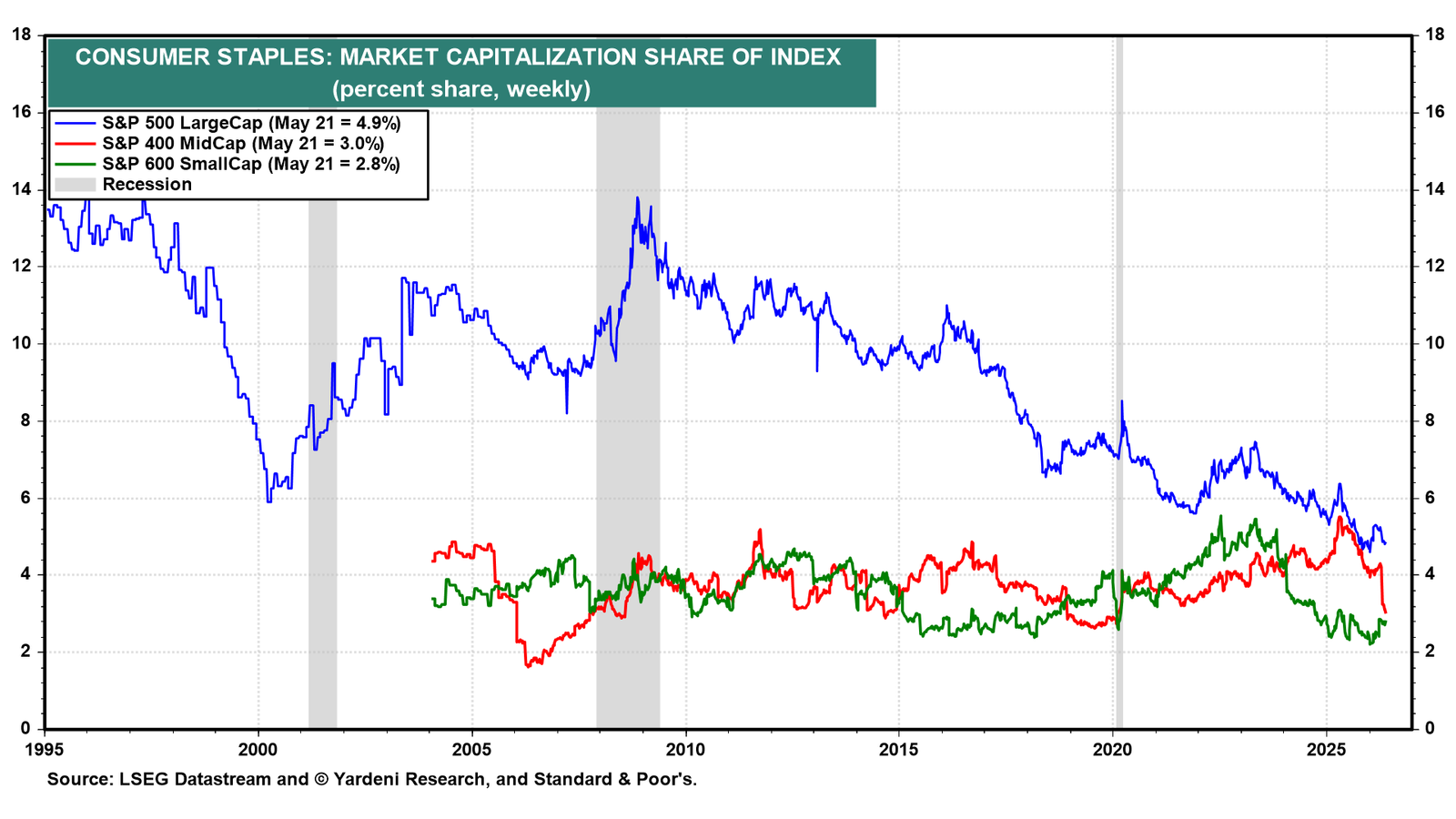
(1) Concentration. S&P 500 Consumer Staples accounts for just 4.9% of the index's market capitalization, down from above 13% in the late 1990s, and is marginally above its 2025 multi-decade low (chart). Its MidCap and SmallCap counterparts tell the same story, at 3.0% and 2.8%, respectively. The structural decline largely reflects the sector's slower growth profile, especially compared to Information Technology.
Walmart, Costco, Procter & Gamble, Coca-Cola, and Philip Morris together account for 75% of the S&P 500 sector's market capitalization.
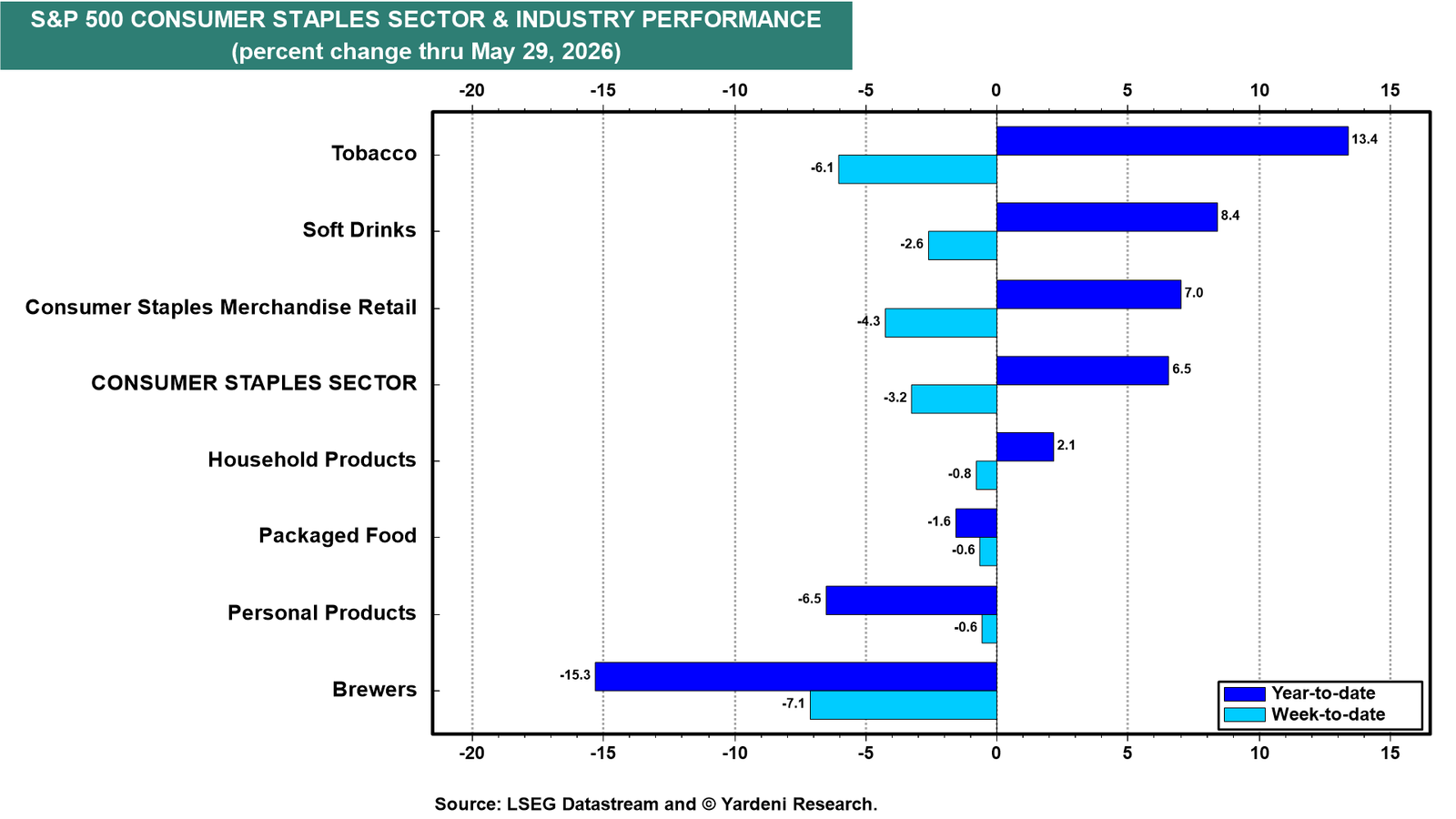
(2) Weak Breadth. The sector's 6.5% ytd gain rests on three industries. Tobacco (13.4%), Soft Drinks (8.4%), and Consumer Staples Merchandise Retail (7.0%) are doing the work, while Brewers is the laggard at -15.3% (chart). The defensive bid is evident for tobacco, soda, and big-box retail. But it isn't a sector-wide rotation.
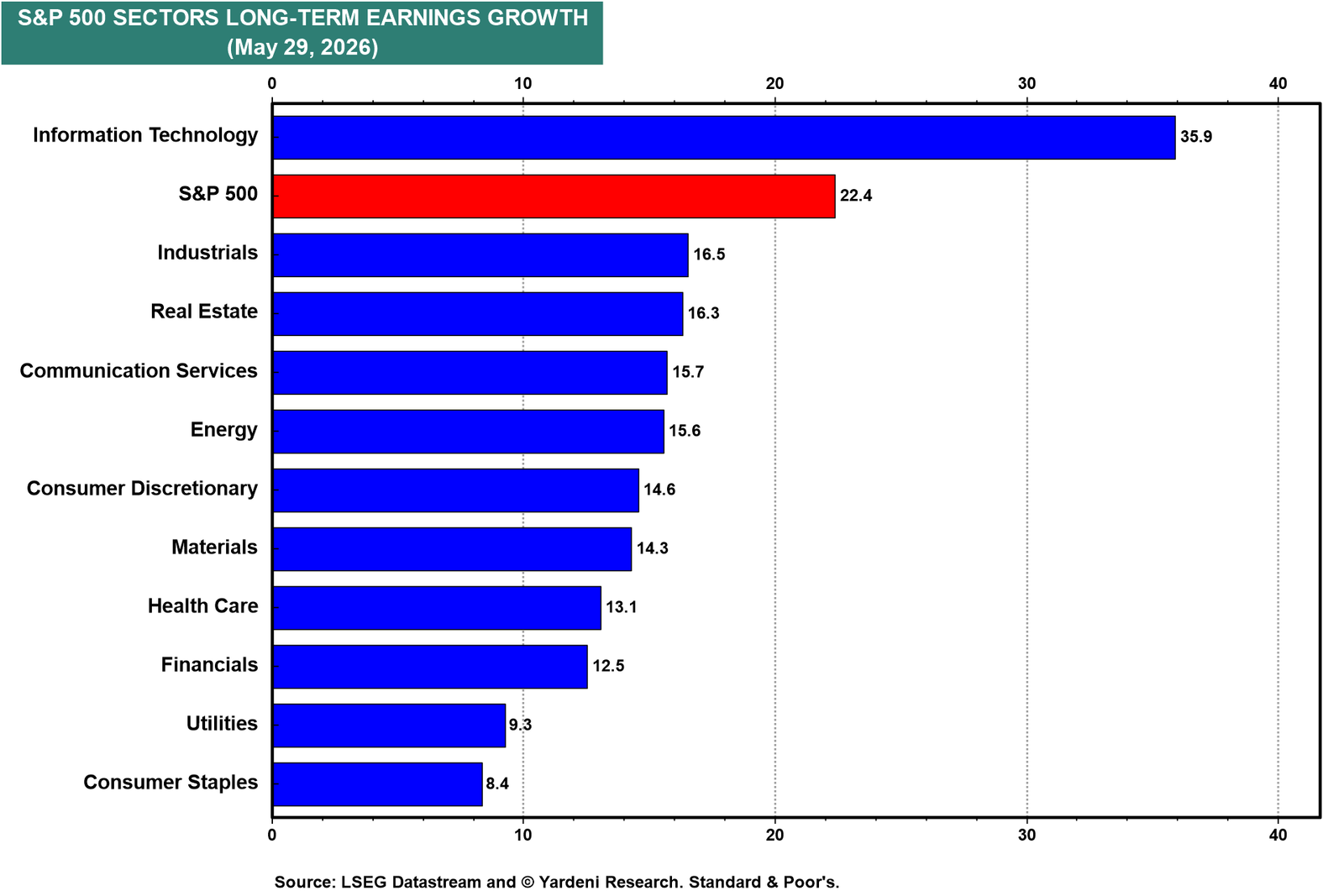
(3) Fundamentals. The analysts' consensus for the sector's long-term earnings growth (LTEG) is 8.4%, the lowest among all S&P 500 sectors (chart).
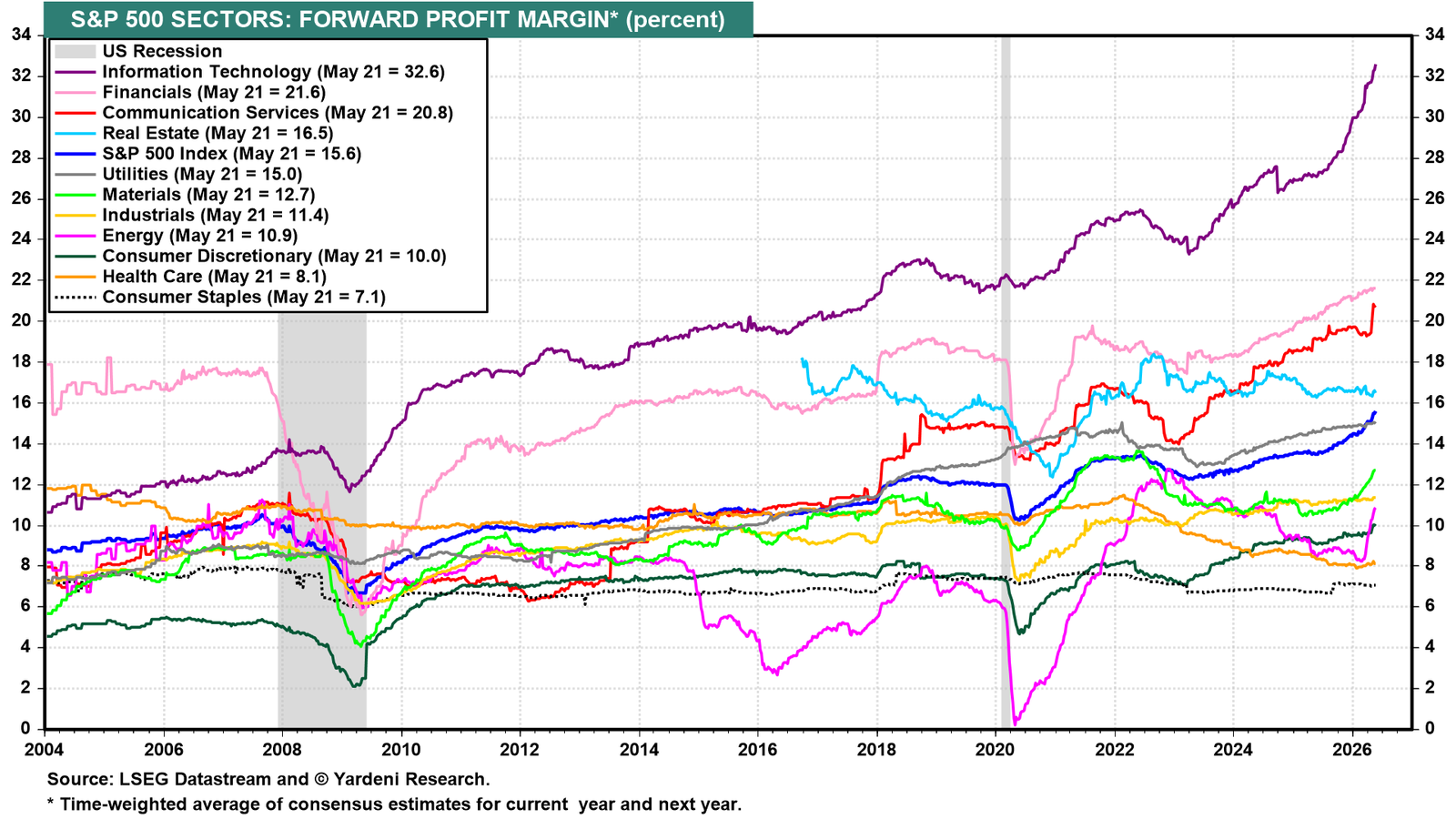
At 7.1%, the sector's forward profit margin is the lowest of the 11 S&P 500 sectors and roughly half the S&P 500's 15.6% (chart). Staples have always operated on thin margins, but it has gone nowhere for over a decade and remains below the pre-GFC peak. The structural weakness is slow revenue growth with low, stagnant margins.
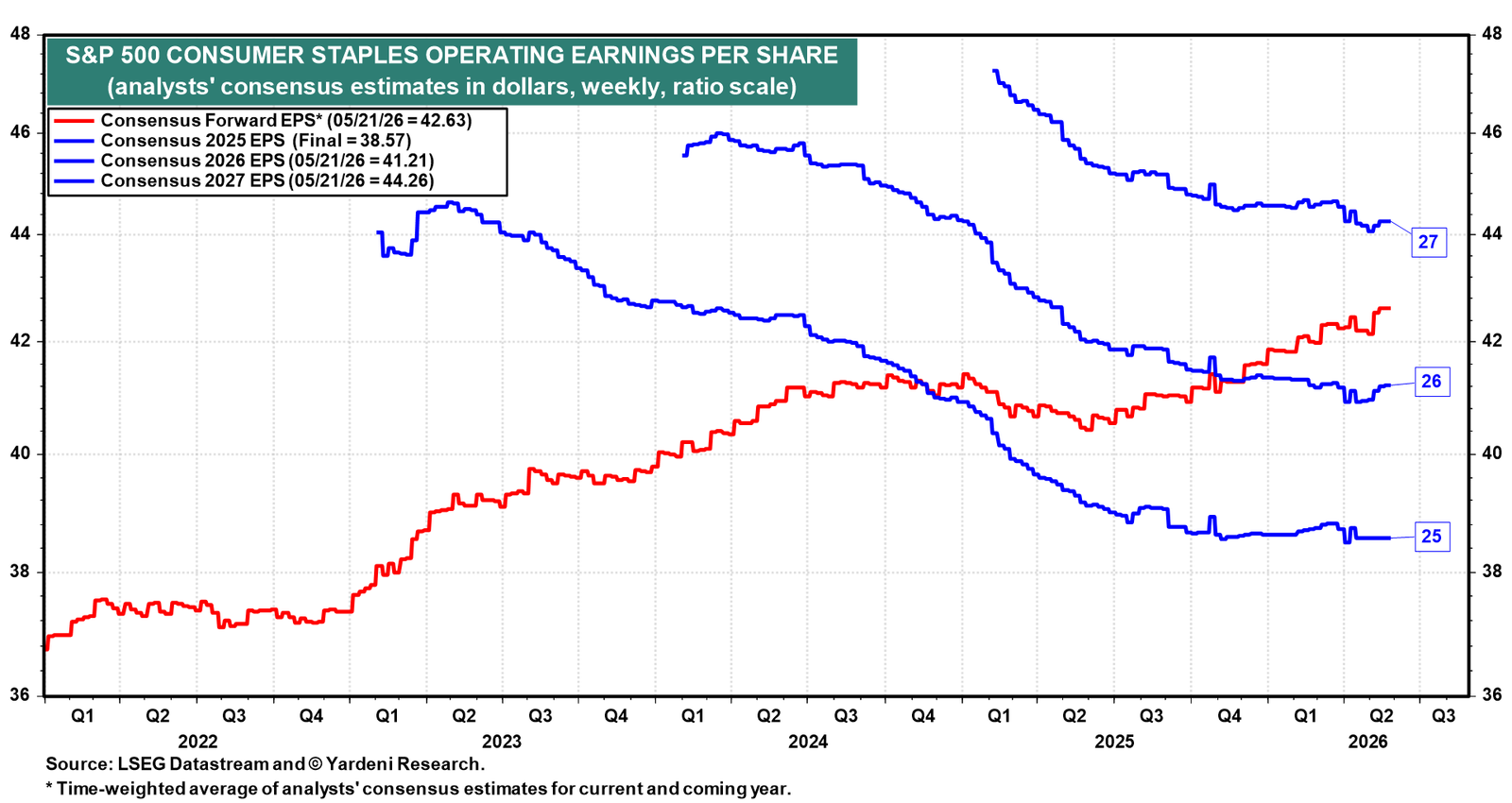
The sector's forward earnings is on an uptrend (chart). But the 2026 and 2027 EPS estimates have been falling for a while (chart). The trajectory of analysts' consensus earnings revisions is negative.
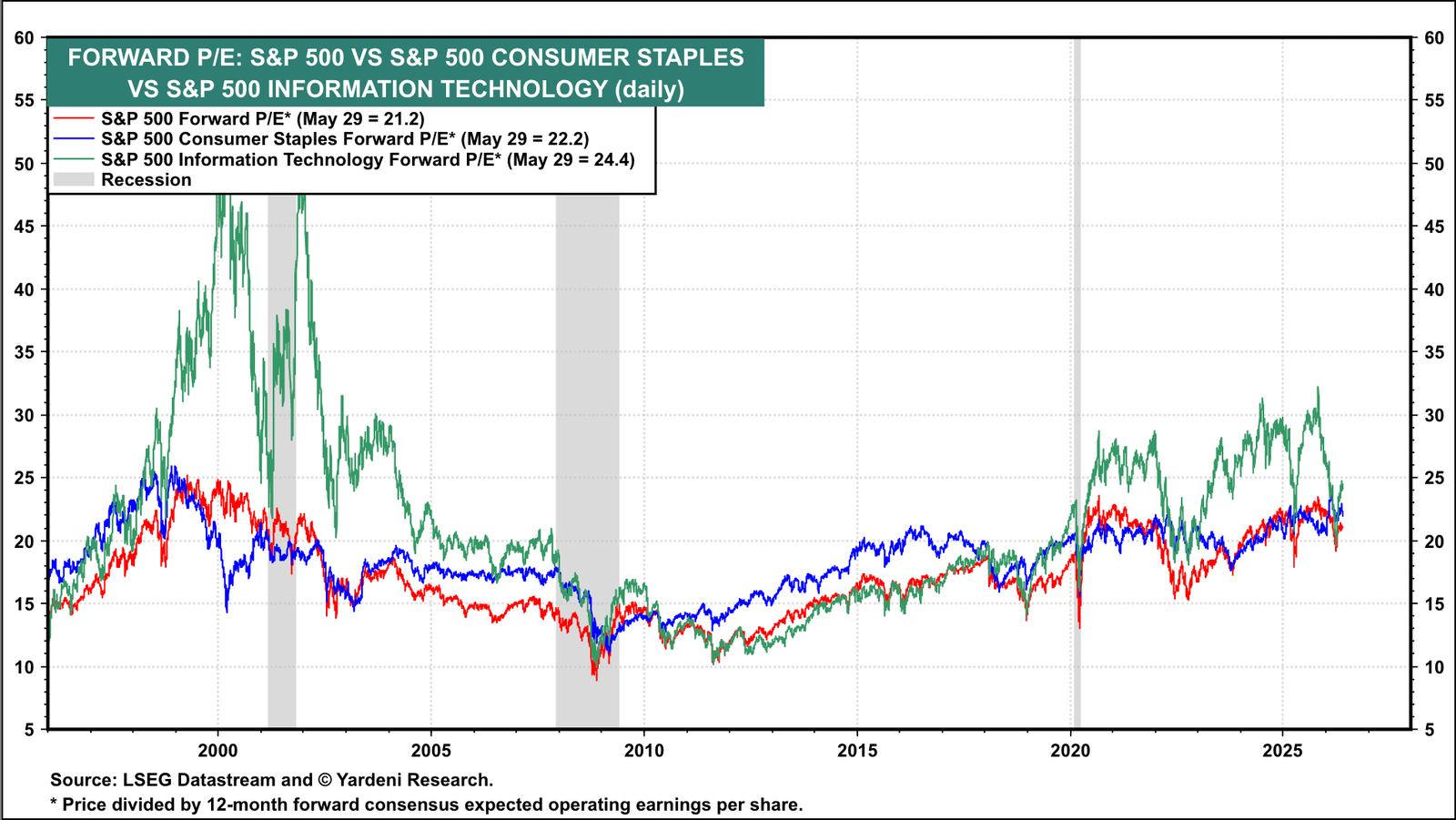
(4) Valuation. S&P 500 Consumer Staples currently trades at a 22.2 forward P/E, above the S&P 500's 21.2 (chart). The more telling comparison is to Information Technology, which trades at 24.4. The gap is just 2.2 points. Yet Information Technology's 2026 EPS growth is forecast at 47.2%, compared with Staples' 6.8%.
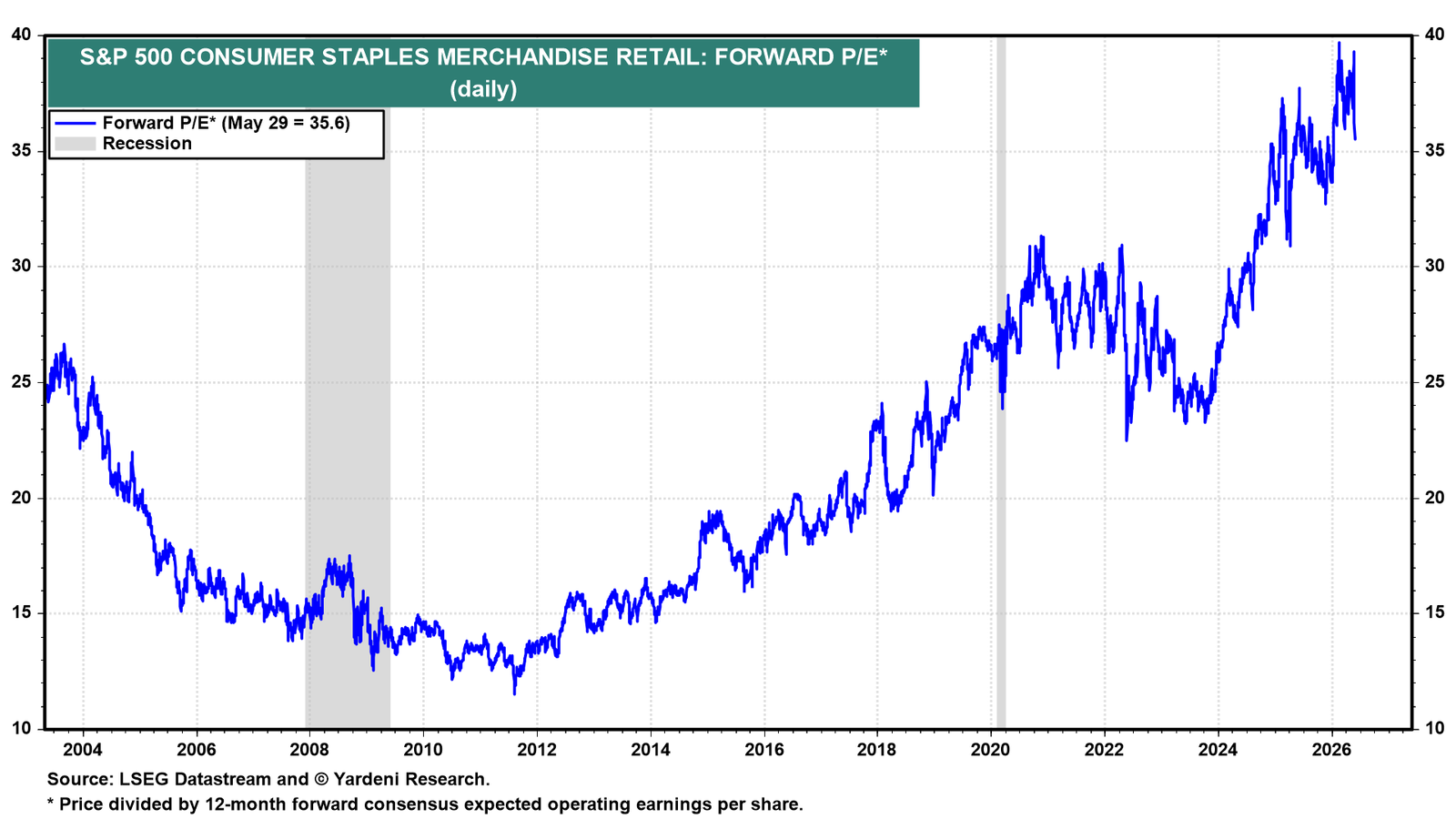
The sector's Consumer Staples Merchandise Retail industry trades at a 35.6 forward P/E, near its recent record high and more than double the level it carried as recently as 2018 (chart). Walmart and Costco account for 92% of the industry’s market capitalization. Walmart’s forward P/E of 39 is at a premium to Amazon’s 29. The market is pricing the world's largest grocer as a tech company.
The sector could outperform briefly on a sharp risk-off move, but the structural case for our underweight remains intact.