On Sunday night, Reuters reported that oil prices slipped to a two-week low as US-Iran talks seemed to be moving closer to a peace deal. Then again, the news service also reported that President Donald Trump is in no rush to make a deal and that the US will continue to blockade Iran. If so, then Iran will continue to blockade the Strait of Hormuz. Nevertheless, Japan's Nikkei 225 rose above 65,000 for the first time on Monday because oil prices fell.
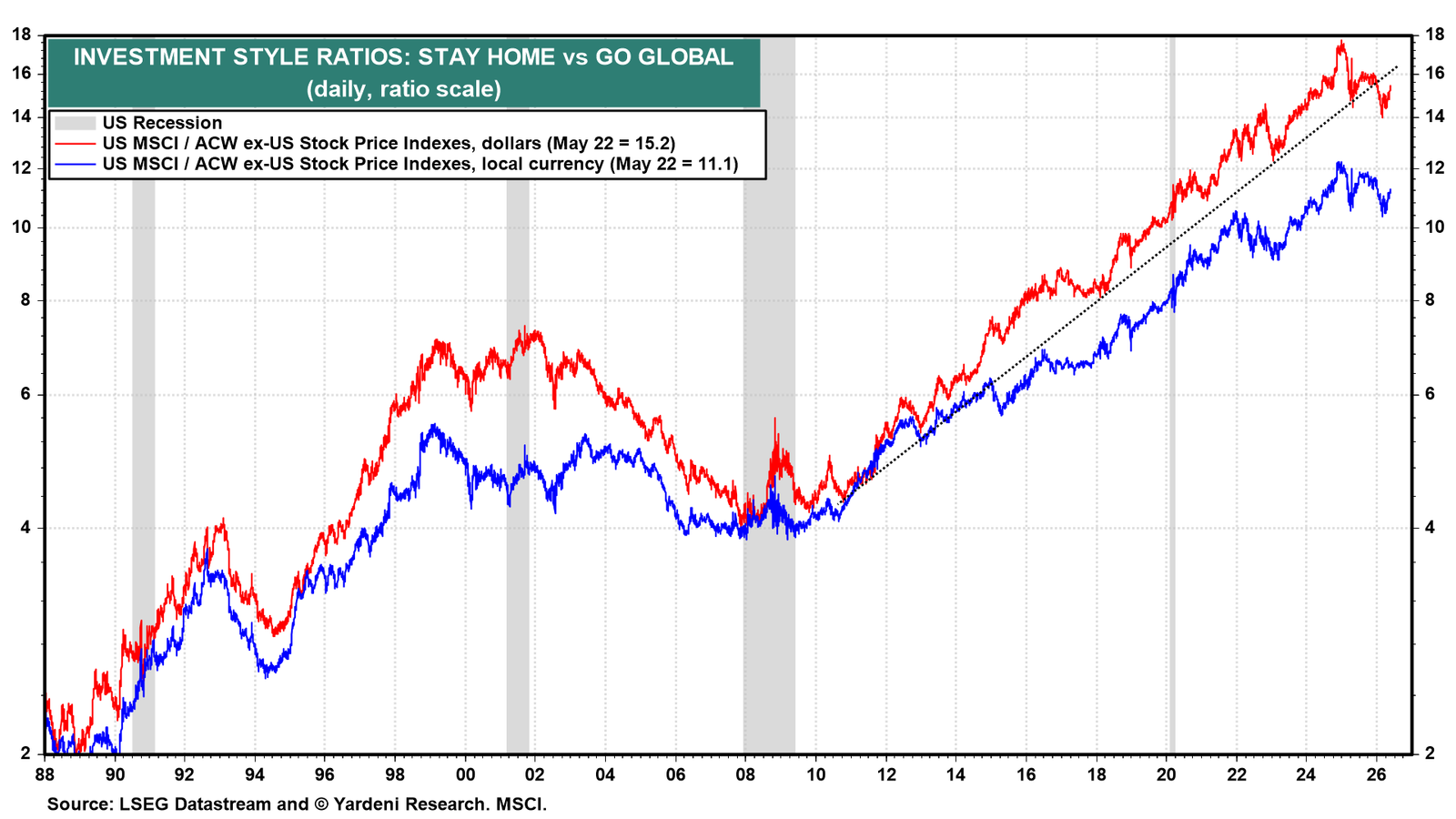
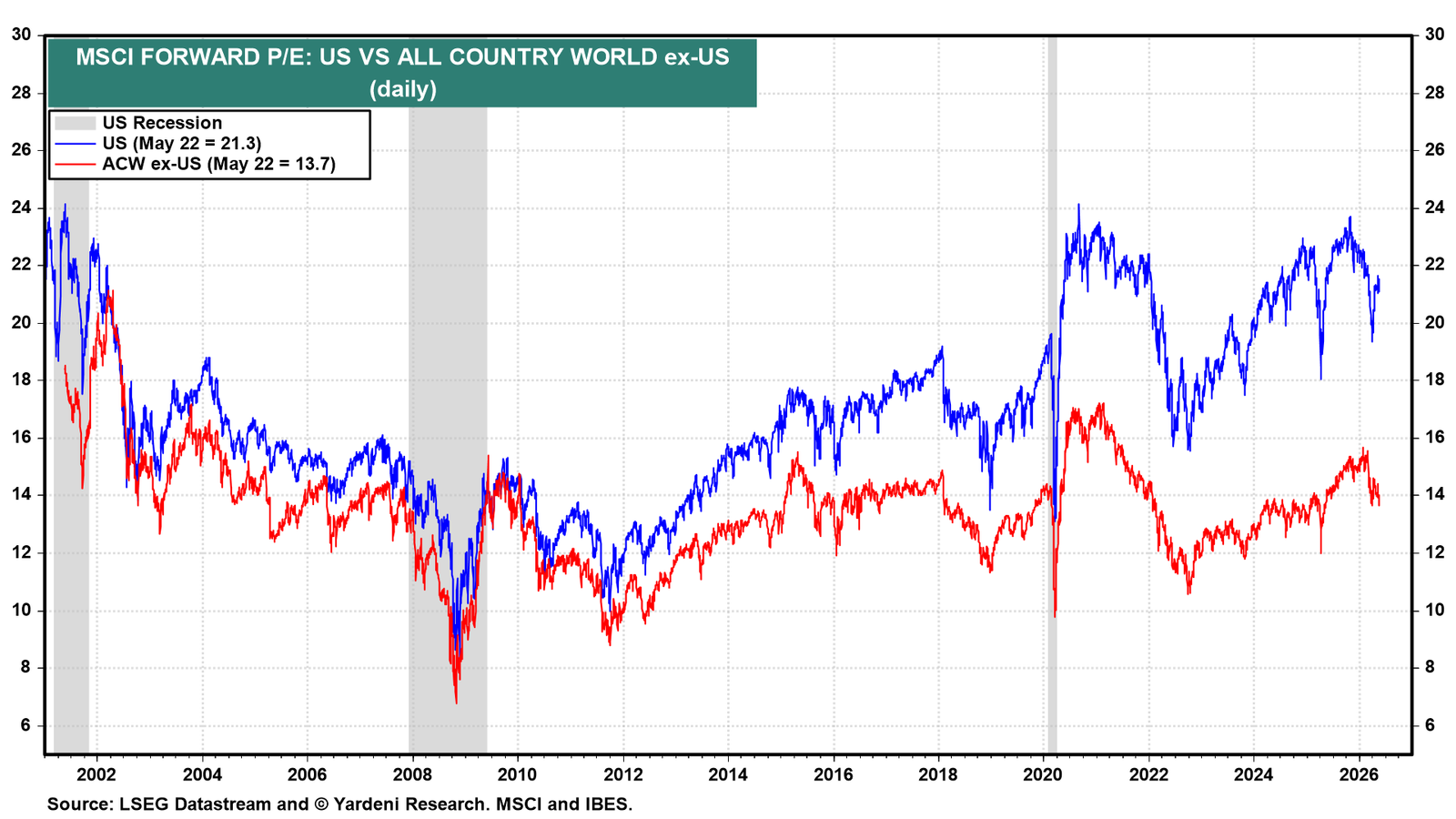
The All Country World (ACW) ex-US MSCI outperformed the US MSCI last year and early this year for the first time since the 2000s (chart). Since the start of the latest Middle East war, the US has outperformed the ACW ex-US MSCI because it is more energy-independent than most of the rest of the world. The rest of the world might soon start outperforming the US again on expectations that the end of the war is in sight. Falling oil prices would clearly benefit the rest of the world more than the US.
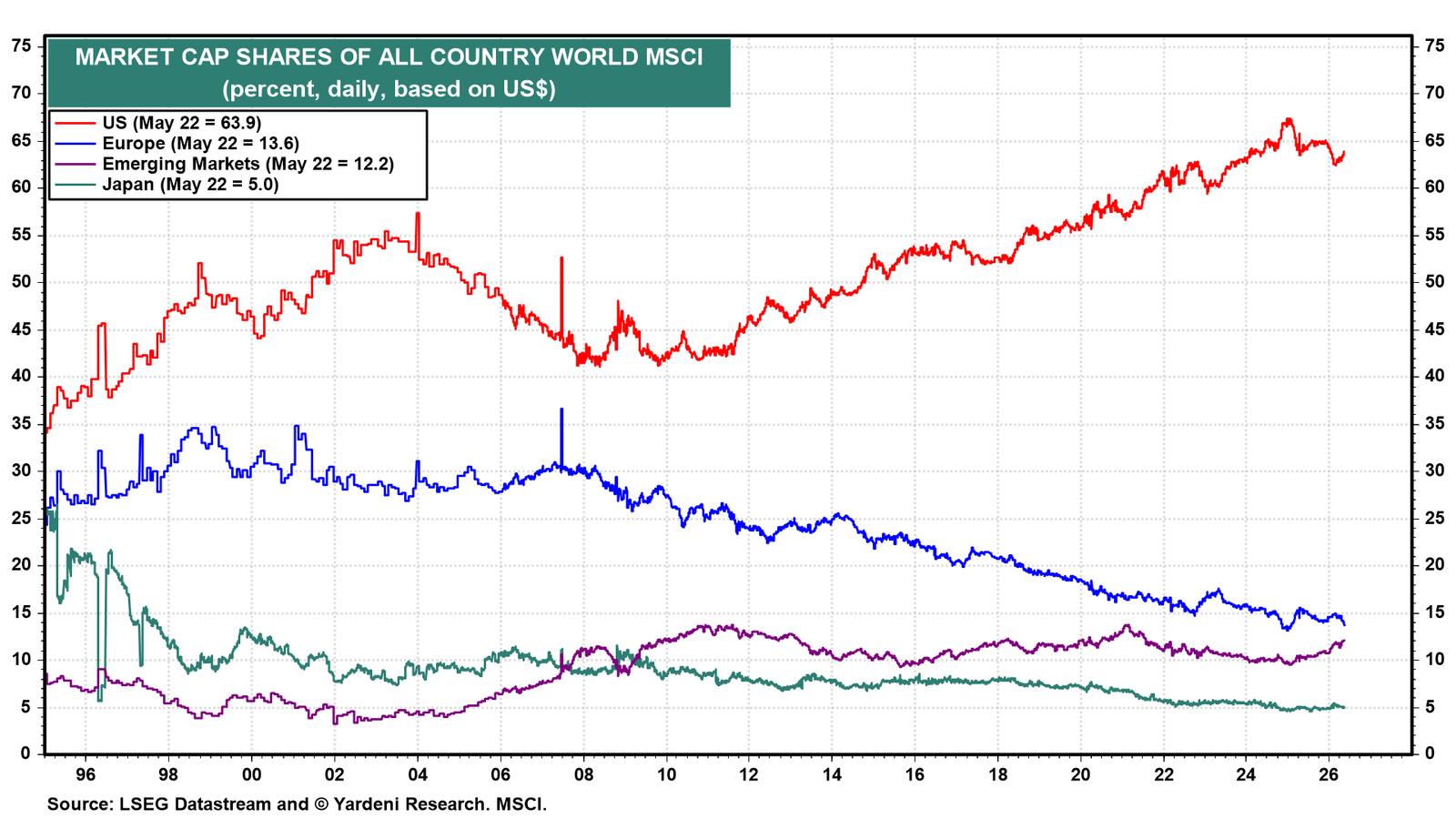
The US MSCI’s market-cap share of the ACW MSCI remains very high at 63.9% (chart). It is down from a record high of 67.4% during January 2025. Much of that market-cap share was gained by the Emerging Markets MSCI, which rose from 9.6% in early 2025 to 12.2% currently.
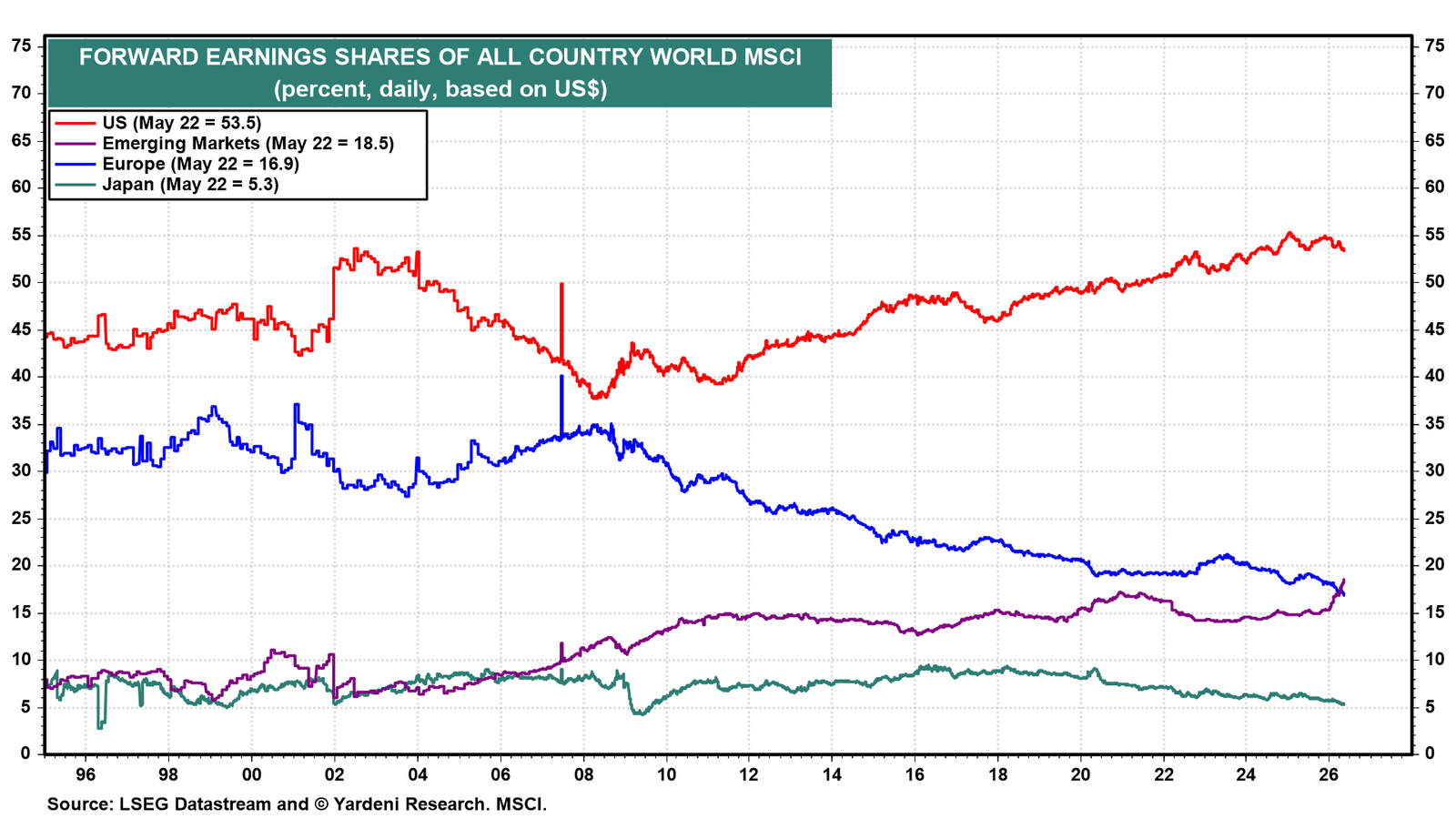
Interestingly, the only major regional MSCI index to gain a share of the ACW forward earnings so far this year has been Emerging Markets (chart).
Consider the following:
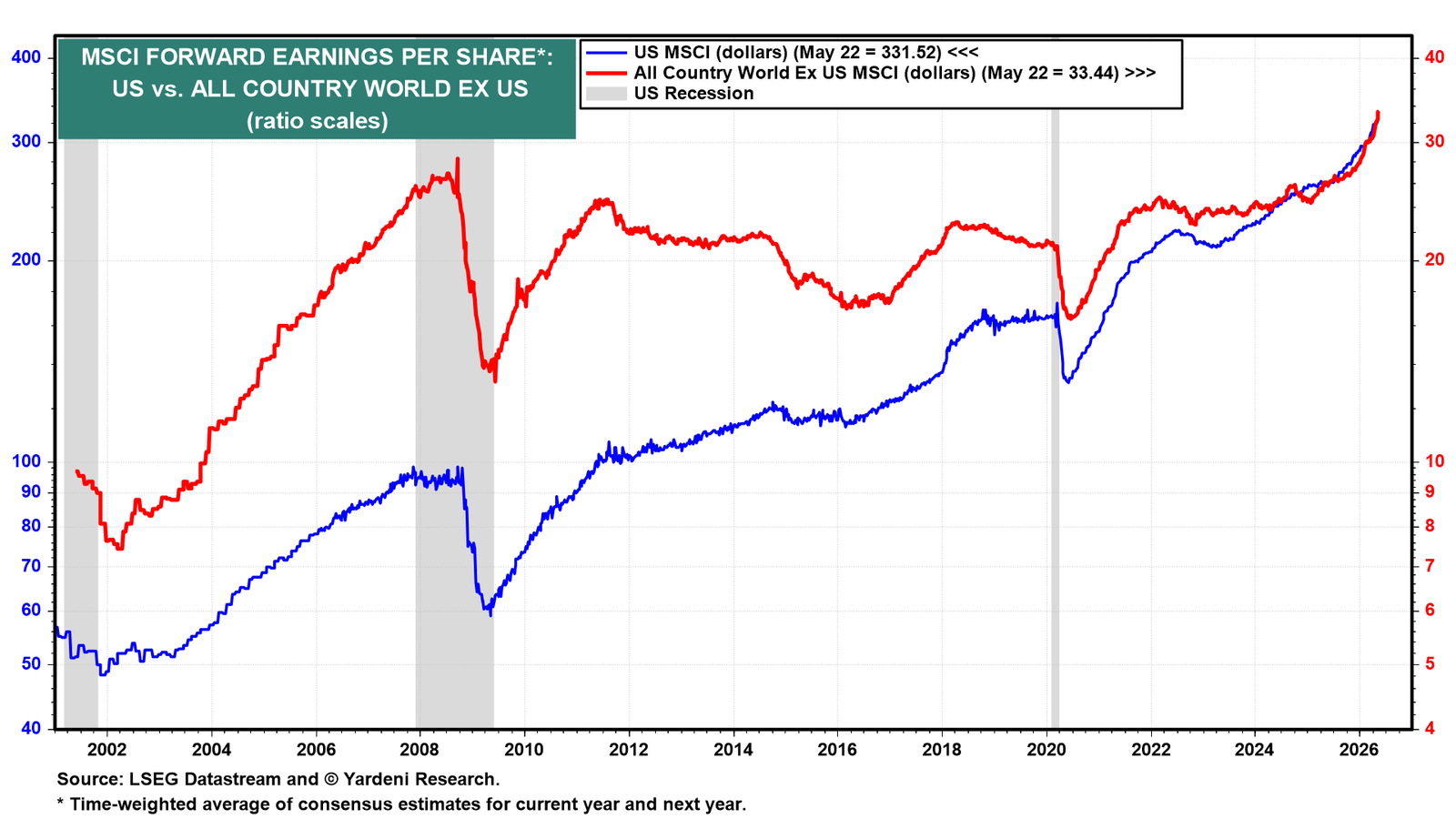
(1) AI has boosted ACW forward earnings. The recent rapid increase in forward earnings per share of the US MSCI has been matched by the ACW ex-US MSCI (chart). That's because the AI boom has boosted earnings not only in the US but also in South Korea and Taiwan, which are categorized as Emerging Markets.
(2) Lower P/Es can be found overseas. Foreign stock markets, on average, remain much cheaper than the US stock market. The forward P/E is currently 21.3 in the US and 13.7 in the rest of the world (chart).
(3) US is still underperforming EMs and Japan ytd. On December 7 of last year, we recommended a Go Global investment strategy rather than a Stay Home strategy. We no longer felt comfortable overweighting the US, given that it already had such a large share of global stock market capitalization. We were particularly keen on the Emerging Markets ex-China MSCI. Its ETF, i.e., EMXC, is up 31.5% ytd versus 20.4% for EEM, which includes China. The US SPY ETF is up 9.3% ytd. The Japan MSCI ETF is up 13.5% through the end of last week (chart).
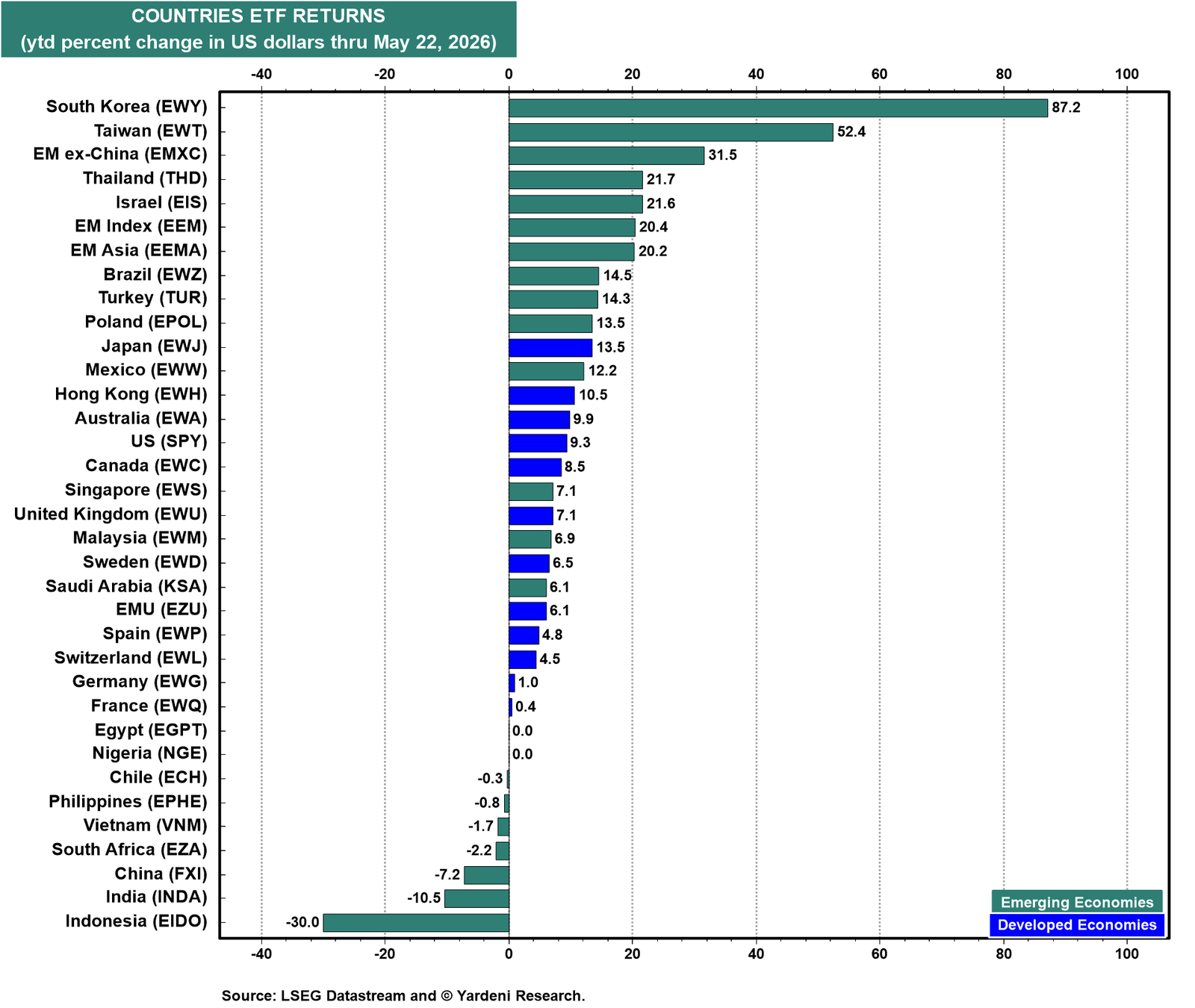
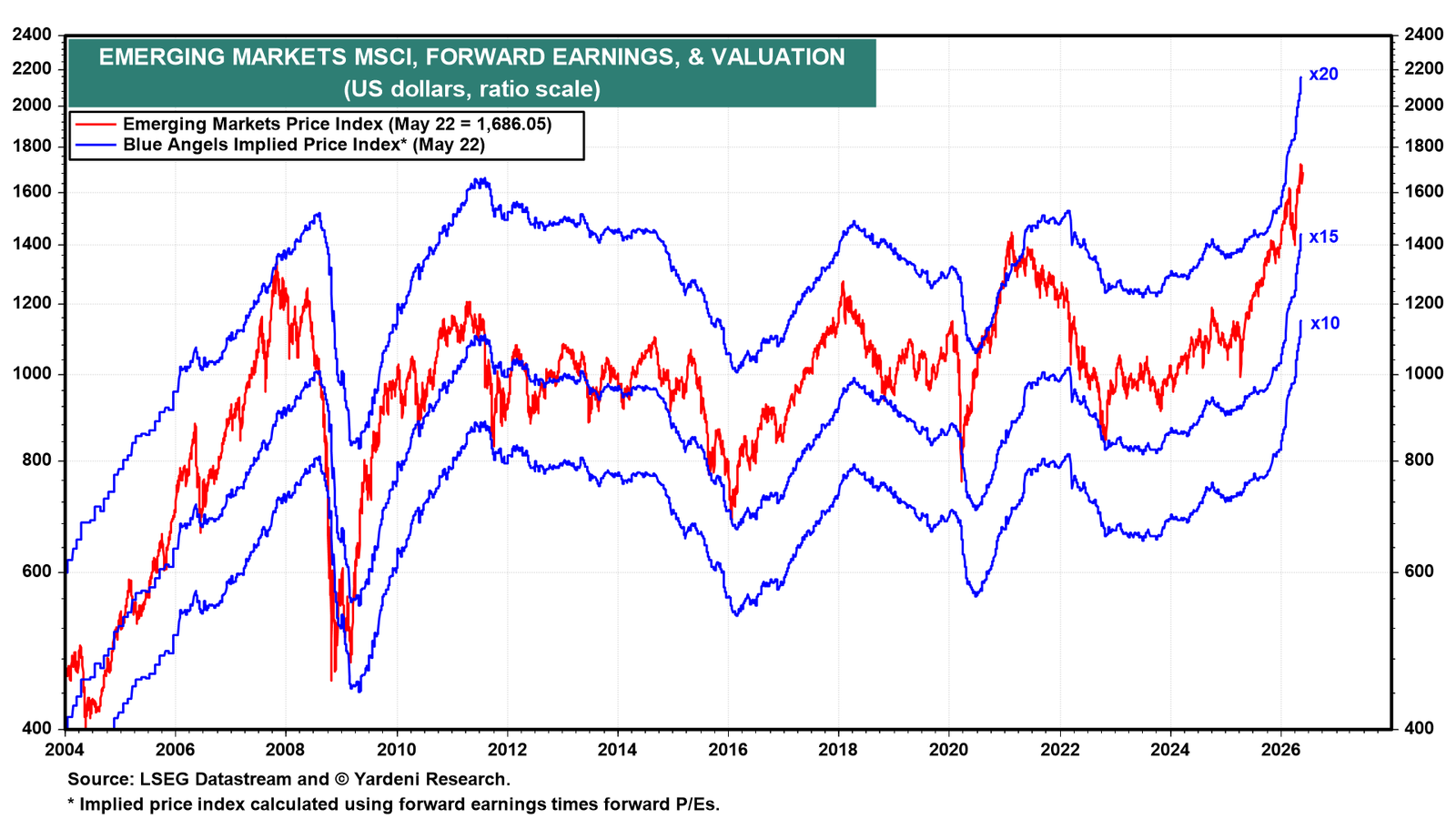
(4) AI has boosted EM forward earnings. The outperformance of Emerging Markets has been led by South Korea and Taiwan, which are up 87.2% and 52.4% ytd. They have been propelled higher by the AI trade. They've boosted the forward earnings of the Emerging Markets MSCI since late last year (chart).
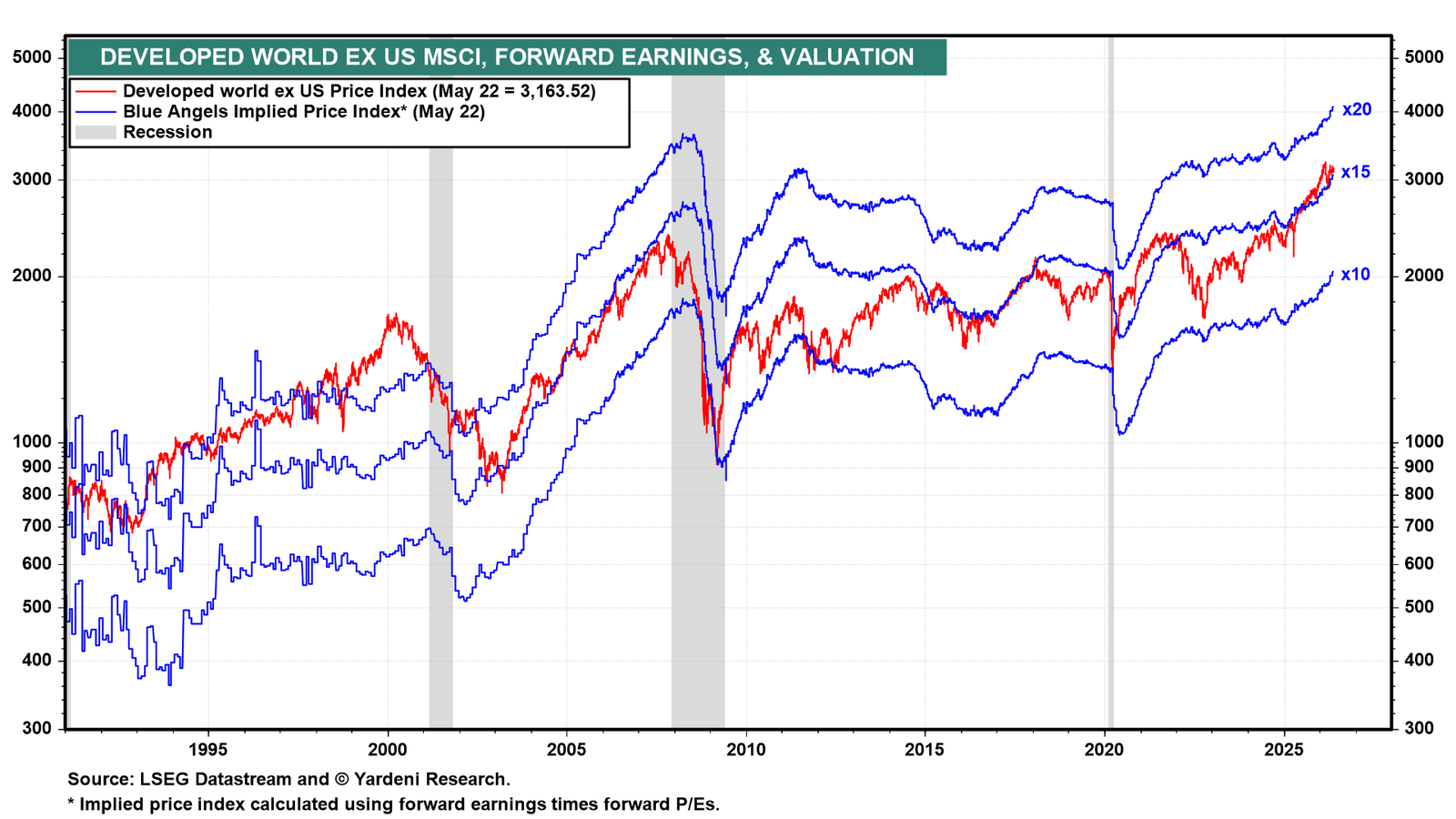
The forward earnings of the Developed World ex-US MSCI has also risen more rapidly over the past year, though at a more subdued pace than for Emerging Markets (chart).
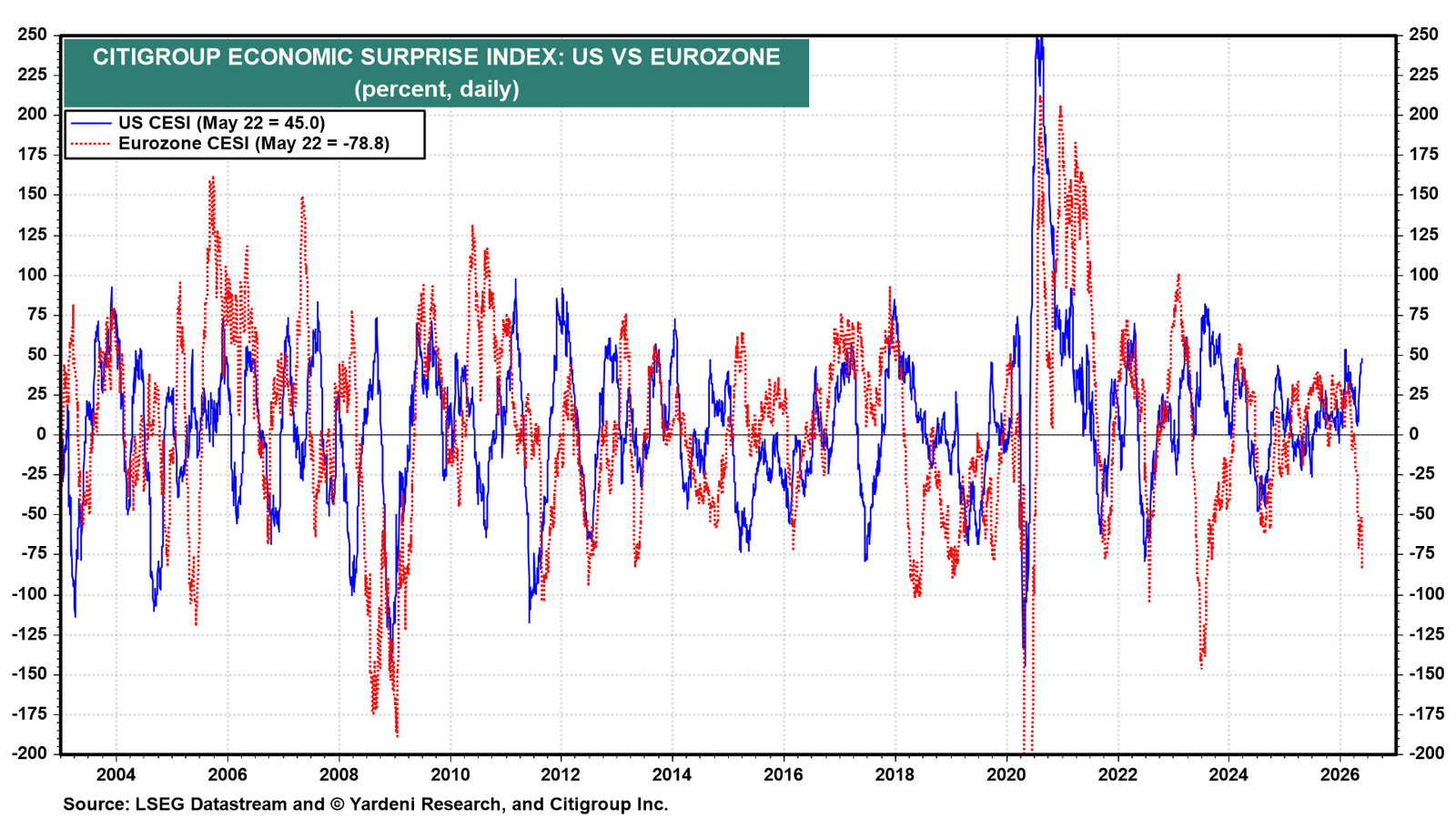
(5) Europe's weak fundamentals could be offset by lower energy prices. Europe's economy remains stressed by high oil prices. The Eurozone's Citigroup Economic Surprise Index is at −78.8 versus +45.0 for the US (chart). European data have been missing expectations badly, while US data have been beating them. A surprise index this negative is a low bar, and low bars are easy to clear once conditions improve.
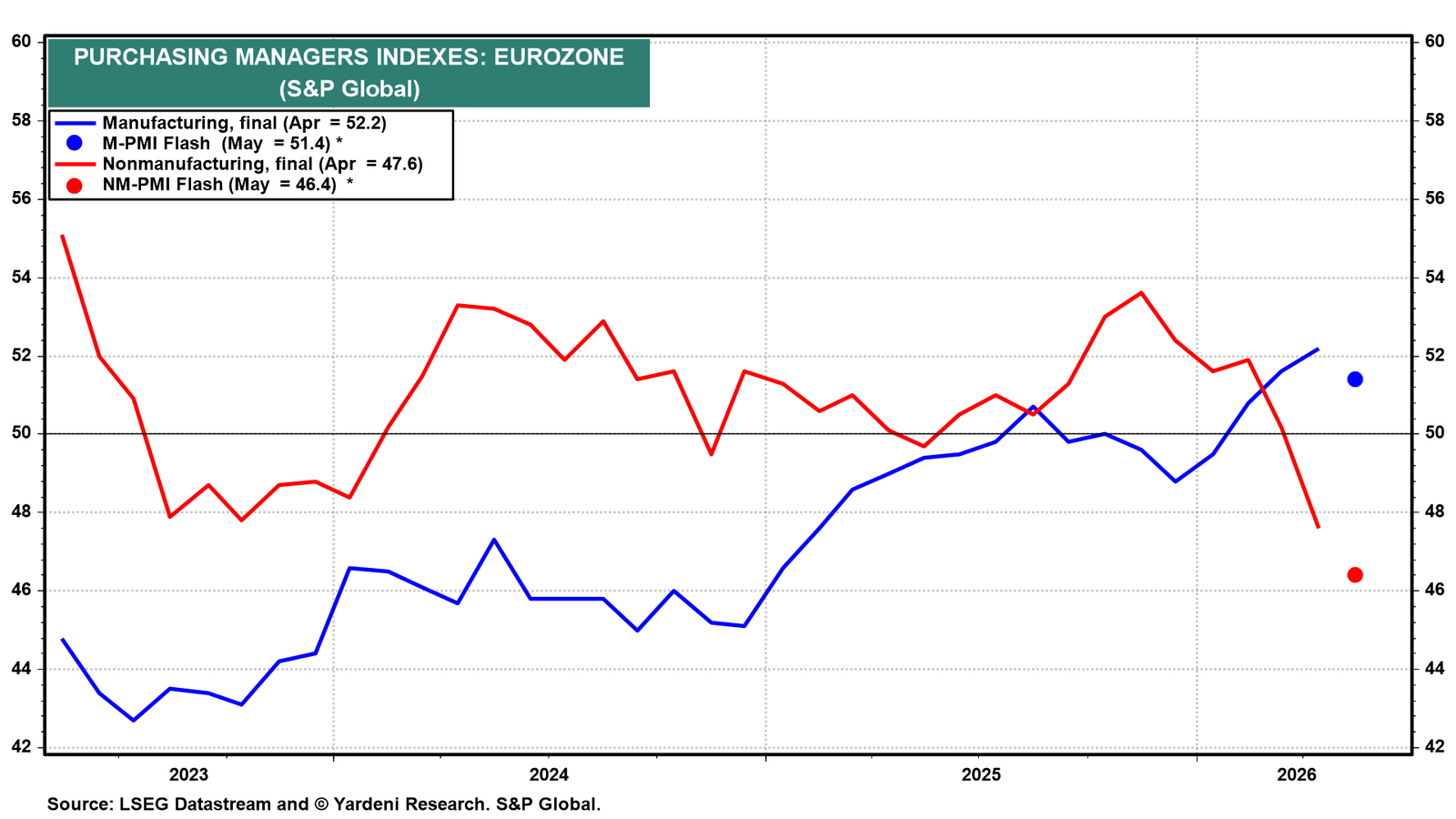
The Eurozone's weakness is not uniform. The region's flash M-PMI came in at 51.4 in May, while services fell to 46.4, deep in contraction (chart). Manufacturing is the sector most exposed to energy costs, and it is already the firmer of the two. Cheaper energy would extend that strength.
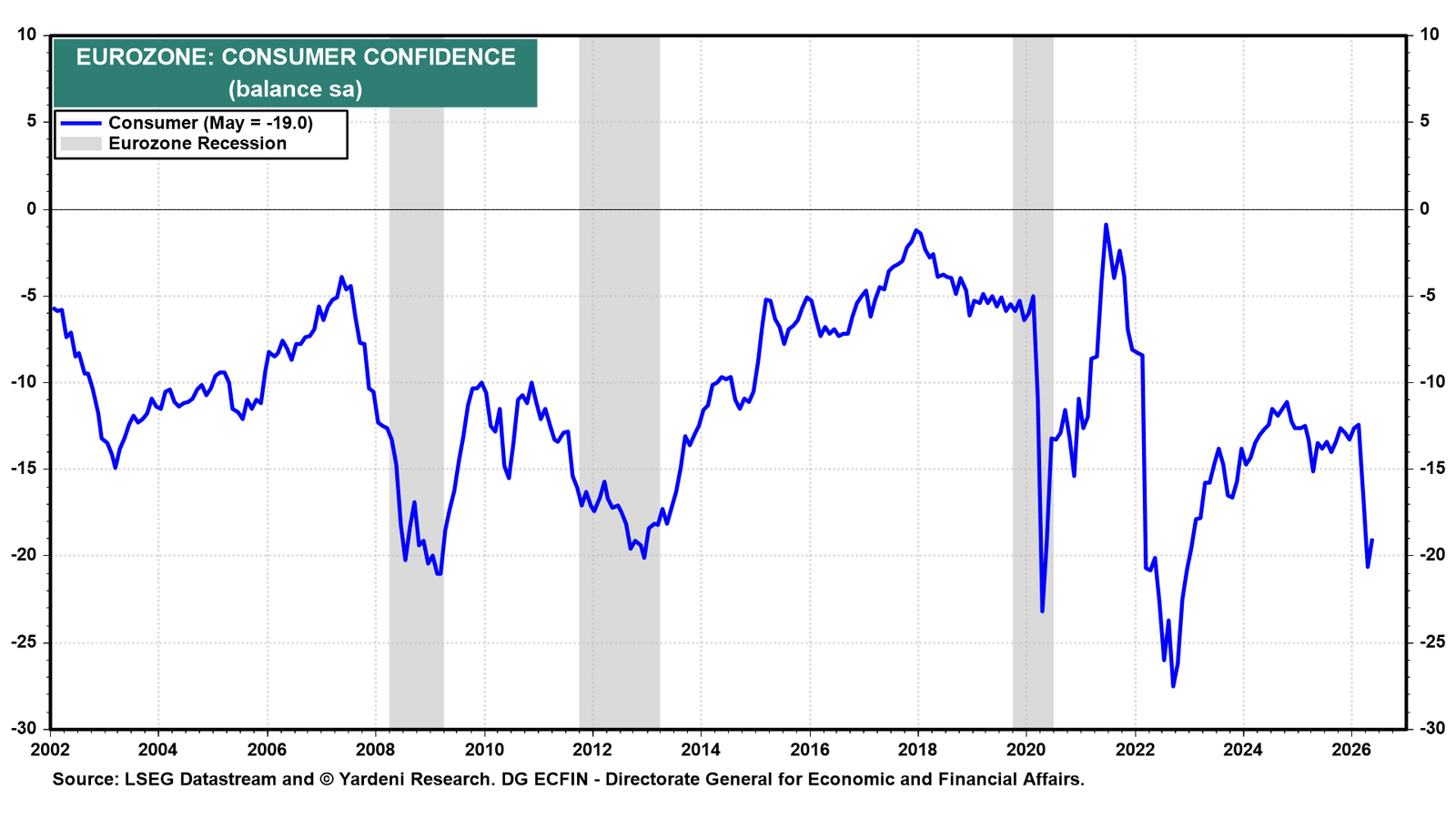
The Eurozone consumer confidence index was −19.0 in May, deep in negative territory (chart). Europeans have been downbeat for years. Sentiment this low has more room to recover than to fall.
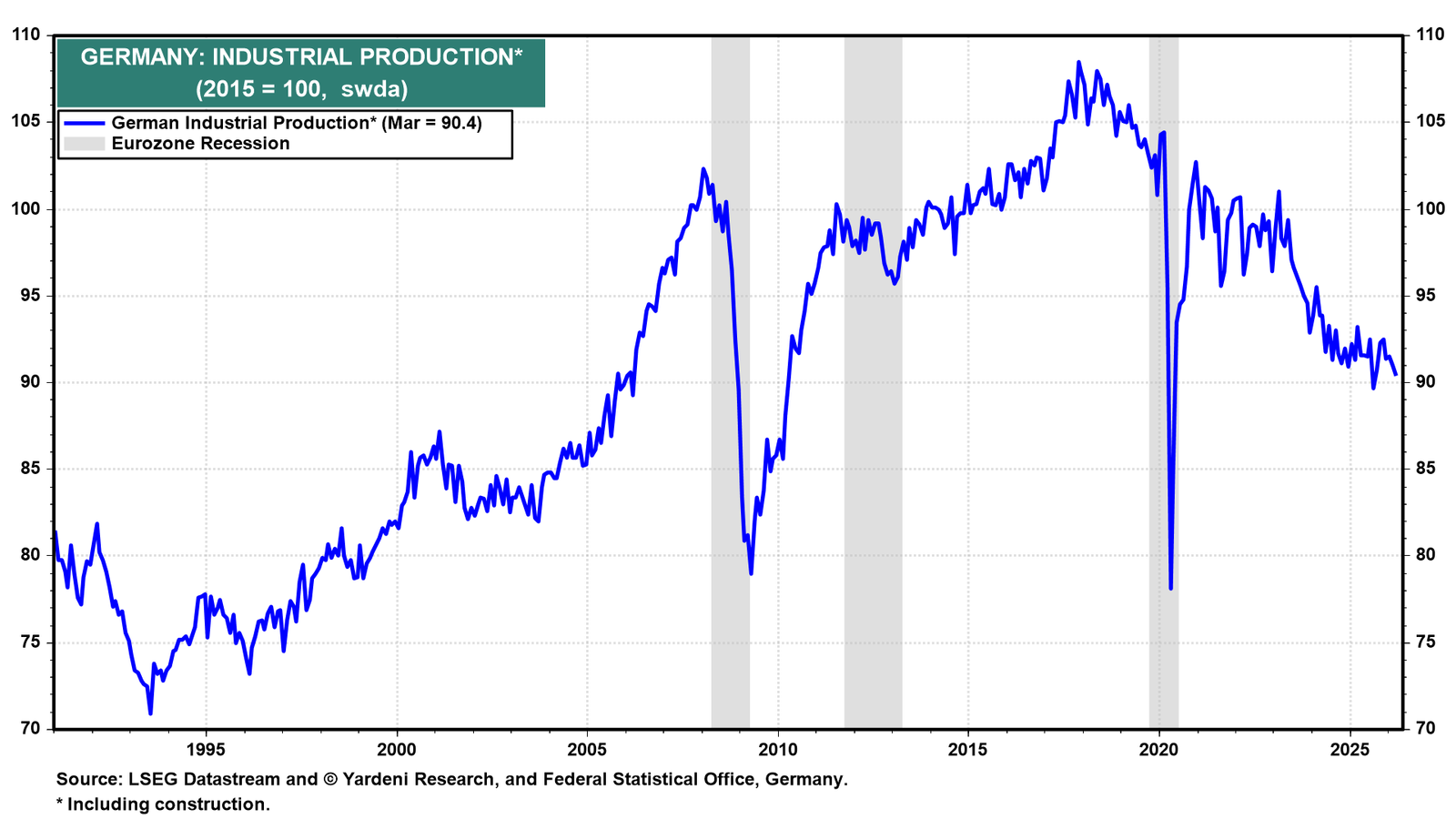
Germany shows the damage most clearly. Its industrial production stood at 90.4 in March, far below its prior peak and still grinding lower (chart). The 2022 energy shock never fully reversed, in part because Germany had not diversified away from Russian gas in time. As the most energy-intensive economy in Europe, it has borne the brunt of the latest energy shock. Germany stands to be the most direct beneficiary of lower energy prices once the war is over.
We are sticking with our advice of December 7 last year: Go Global. If a deal ends the war and oil prices continue to fall, the economies and stock markets of the rest of the world should benefit more than those of the US.