The stock market has had an exuberant stretch since the S&P 500 bottomed on March 30. The index is up 17.8% since then through Friday, after hitting a record high on May 14. The DJIA rose to a record high this past Friday. The bears say the exuberance is irrational, driven by lots of excitement about AI. We say it is rational, based on our Buzz Lightyear Theory (BLT) of "To Infinity and Beyond!"
According to our BLT, there’s a fourth factor or production, not just the historically recognized three. In addition to land, labor, and capital, which are relatively scarce, there’s now data, the supply of which is unlimited. The Digital Revolution, which began in the 1960s, is all about processing as much information as possible, as quickly as possible and as cheaply as possible. Today's AI technologies can certainly do all that much better than IBM mainframes back in the mid-1960s.
Instead of focusing on rational versus irrational exuberance, let's compare FOMO to FEMO. The former stands for “Fear Of Missing Out.” Investors pile into stocks, bidding up their price-to-earnings multiples. FEMO is “Fabulous Earnings Momentum.” Analysts raise their earnings estimates because hard data and company guidance give them reason to do so. We would rather see FEMO than FOMO every time.
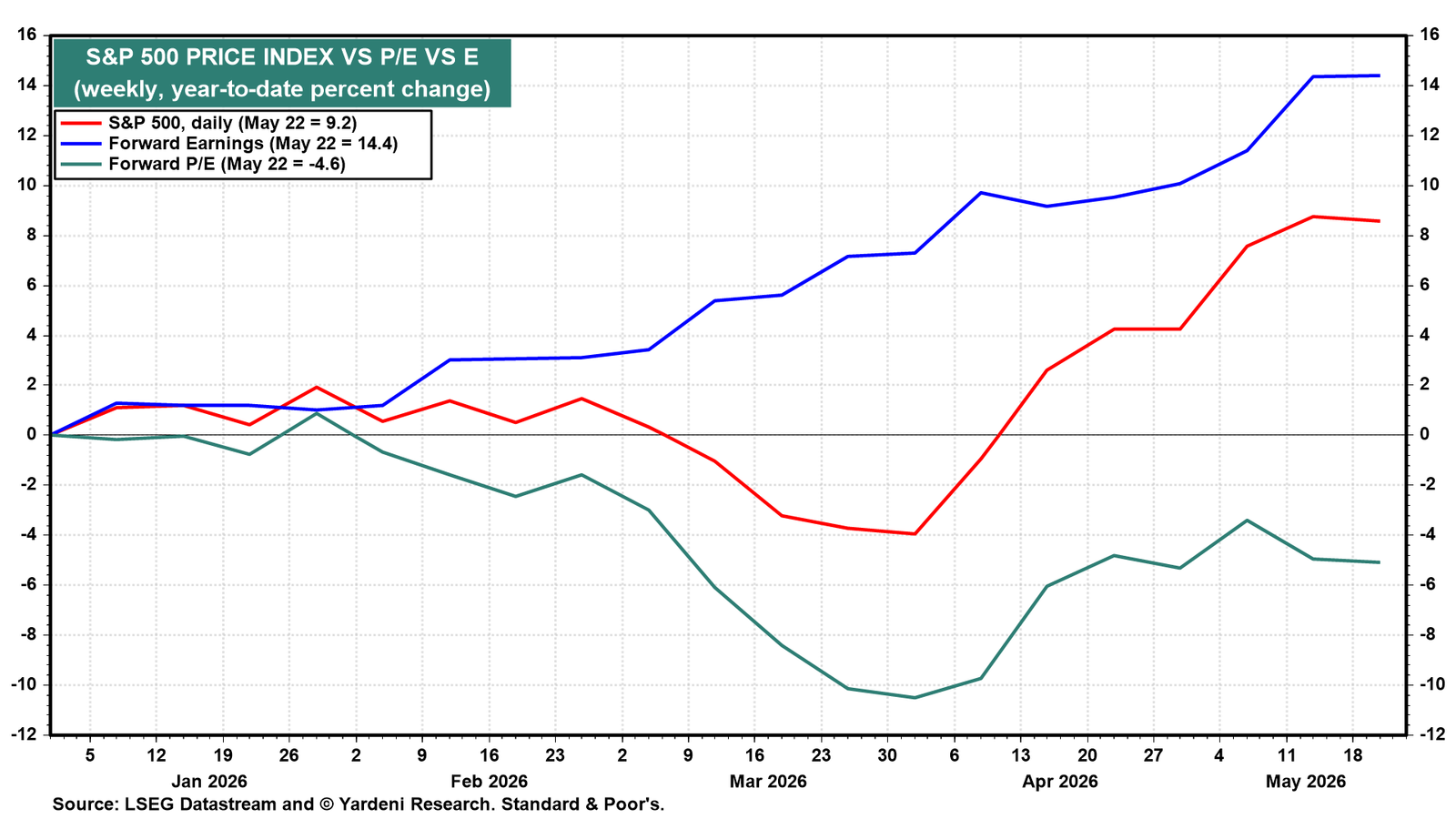
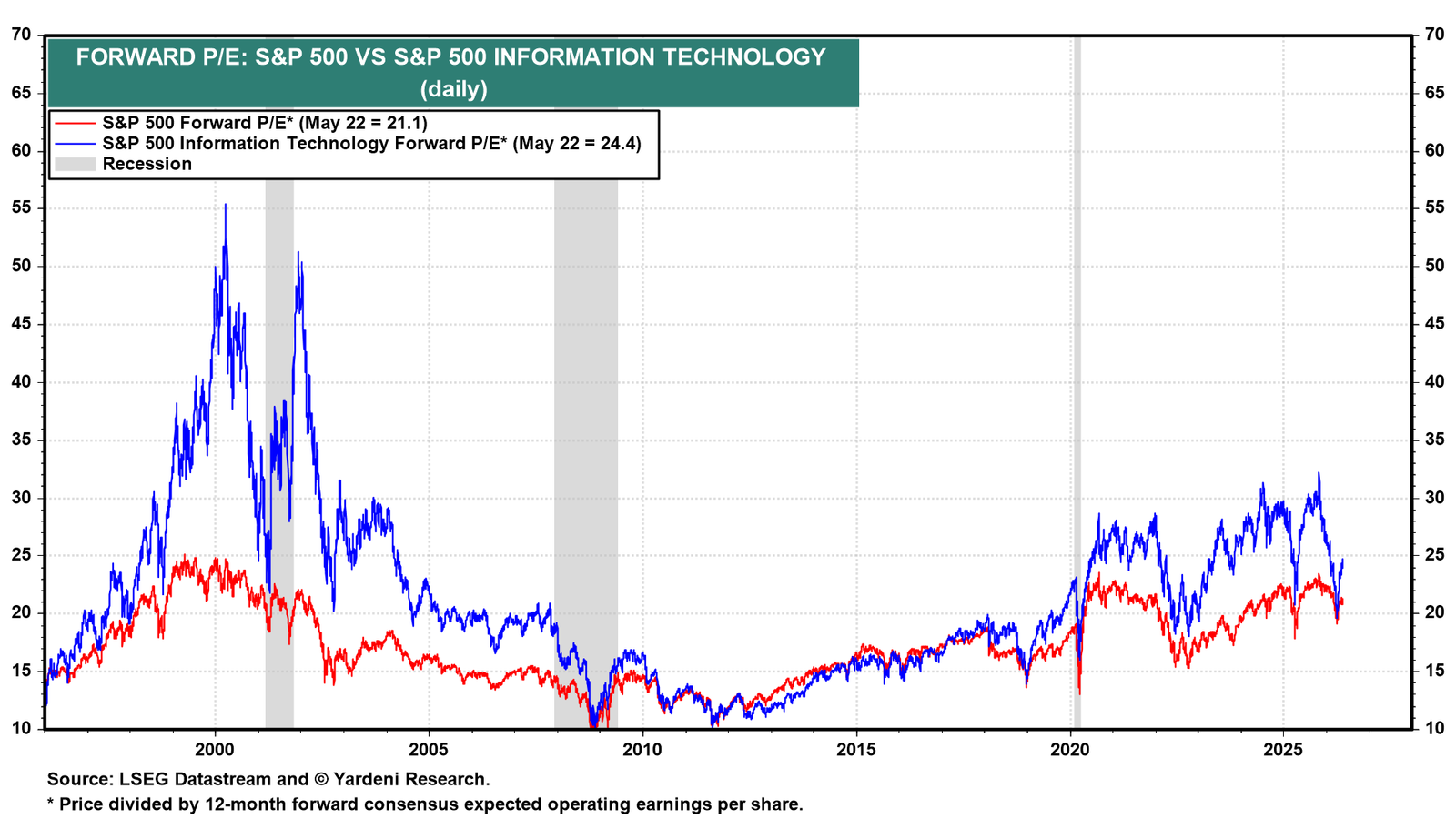
This year has been all about FEMO. Through Friday, the S&P 500 is up 9.2% ytd, forward earnings is up 14.4%, and the forward P/E is down 4.6% (chart). The entire rally has been driven by forward earnings. The multiple has contracted. FOMO inflates the P/E. This market did the opposite. That is why we are not in the bubble camp. FOMO is based on hope and hype. FEMO is based on fundamentals. At 21.1 times forward earnings, the S&P 500 is not irrationally valued unless a recession is coming in the foreseeable future. We don't see one.
Now consider the following:
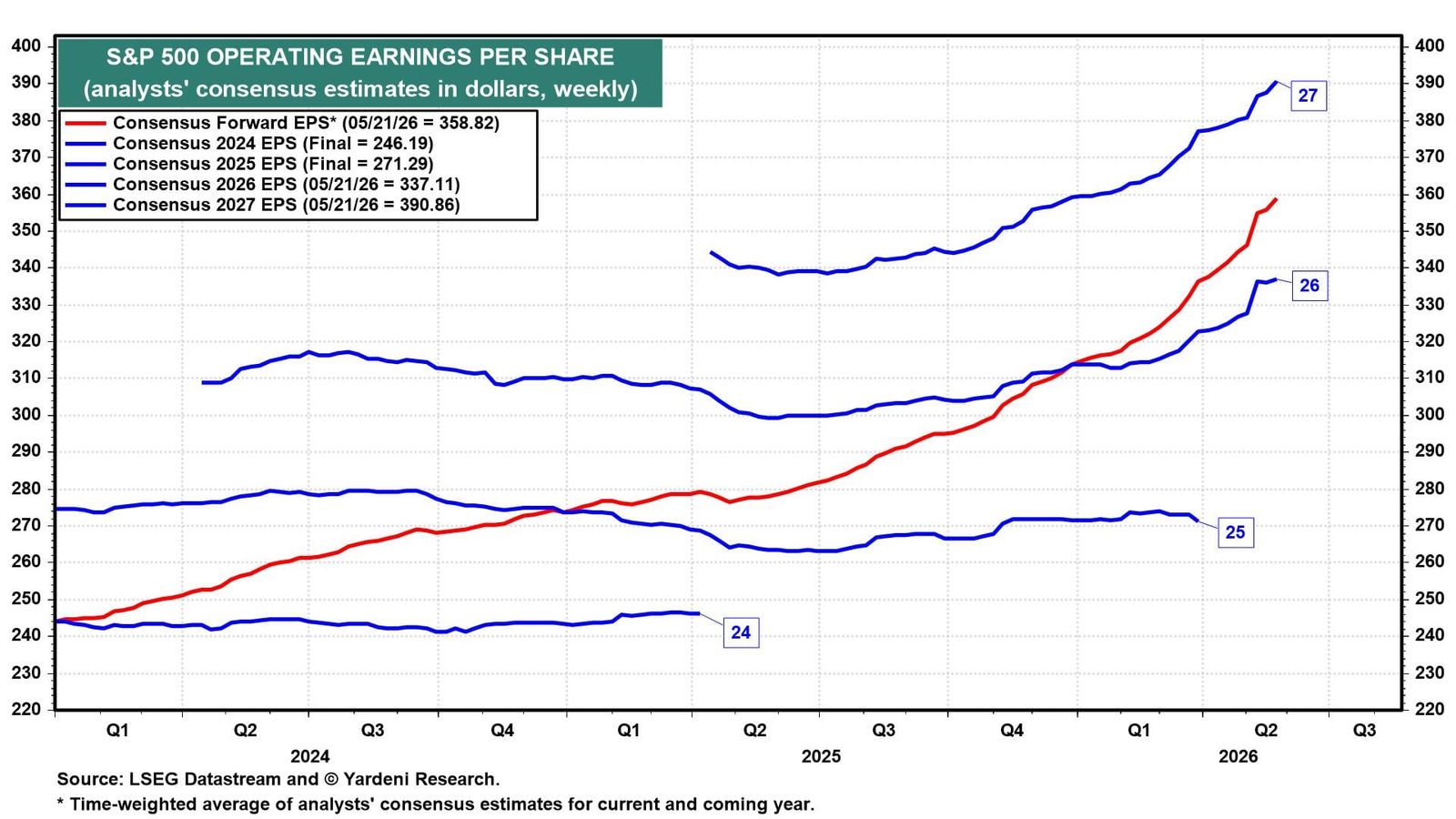
(1) Record forward earnings. The S&P 500's forward EPS rose further to a record $358.82 last week. The 2026 and 2027 consensus earnings estimates are both at new highs of $337.11 and $390.86, respectively (chart). Analysts keep raising their estimates as the AI compute buildout struggles to keep pace with the exploding demand for processing ever more data.
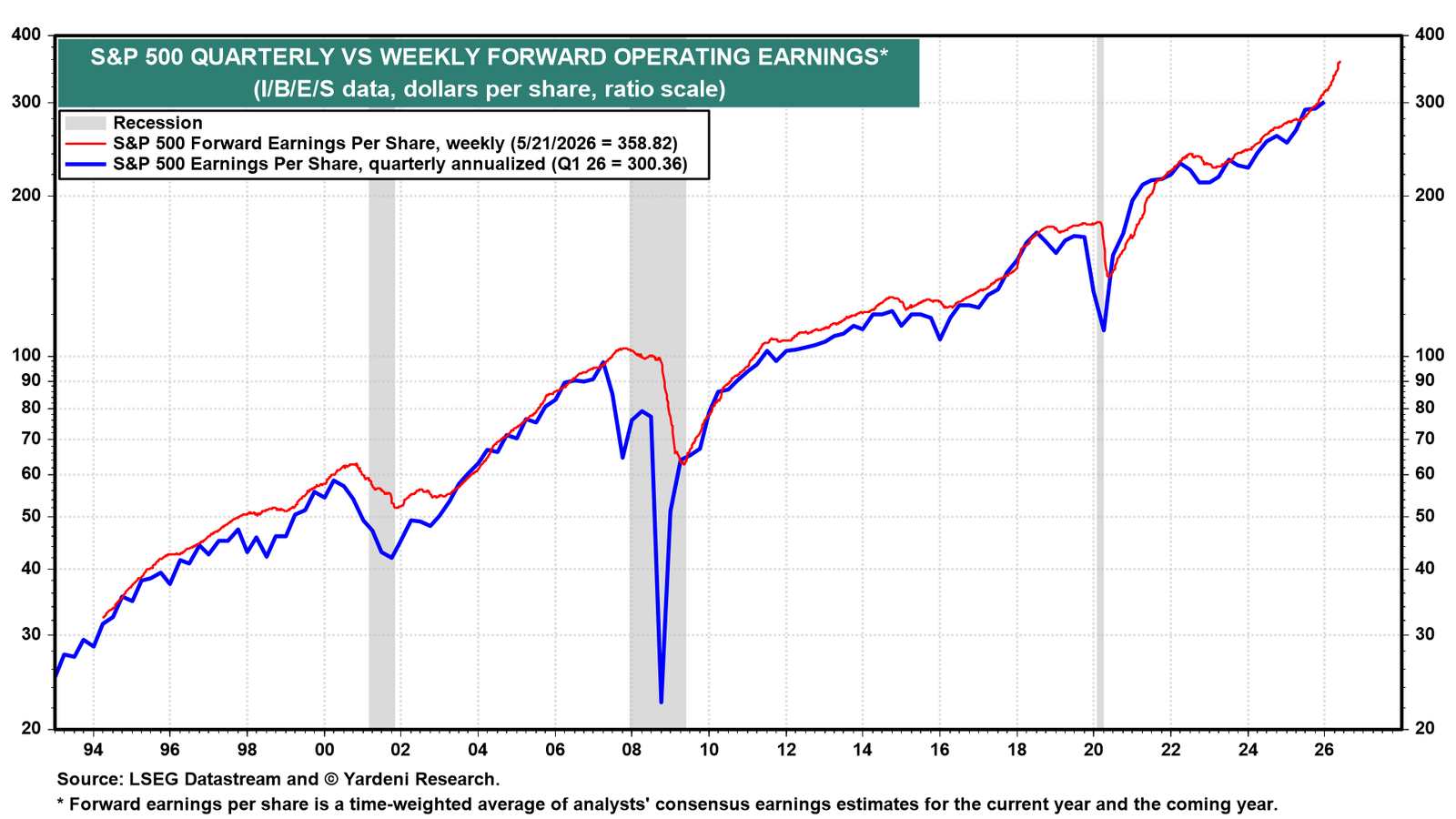
Forward earnings is a leading indicator of the actual quarterly earnings of the S&P 500 (chart). We have rarely seen forward earnings rise so quickly at this stage of an earnings cycle. That's FEMO.
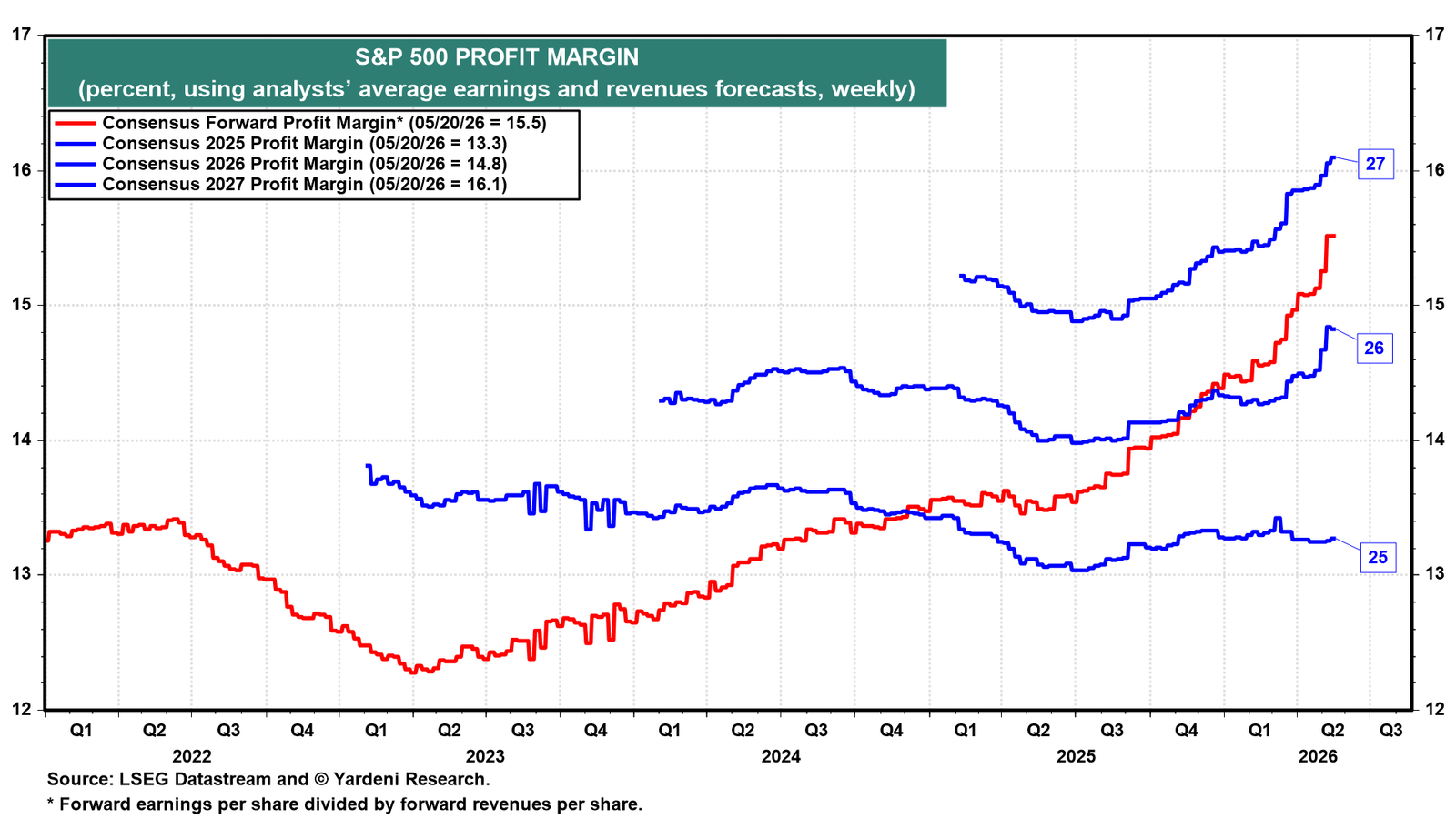
(2) Record profit margins. Profit margins have been on fire since mid-2023, approximately seven months after ChatGPT was released. The forward profit margin reached a record 15.5% last week, and the current 2027 consensus margin is 16.1%, up from 14.8% currently this year (chart). This is consistent with the productivity gains at the heart of our Roaring 2020s narrative.
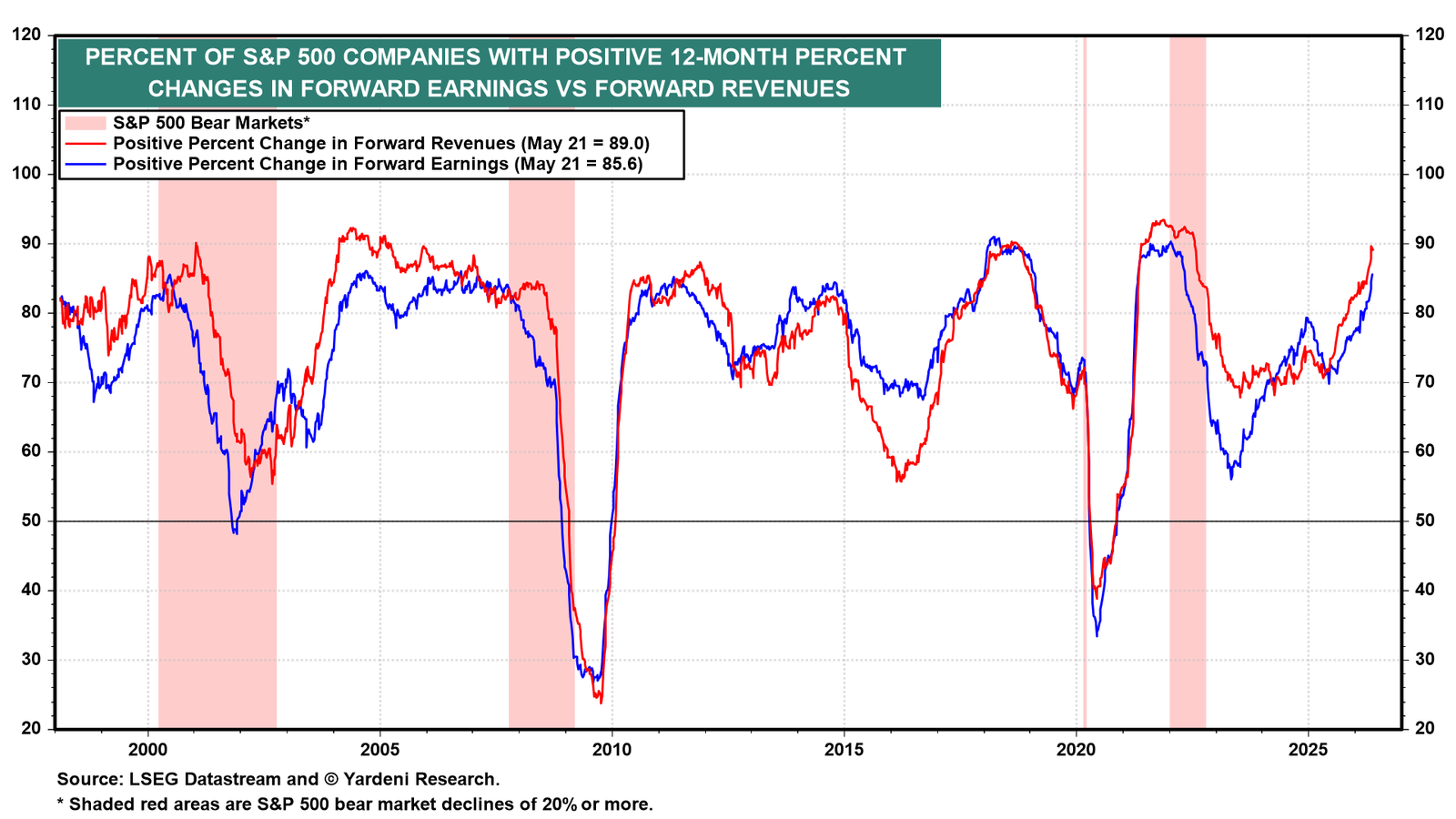
(3) Broadening earnings breadth. Across the S&P 500, 85.6% of companies report rising forward earnings, and 89.0% report rising forward revenues, both on a y/y basis (chart). That's more FEMO.
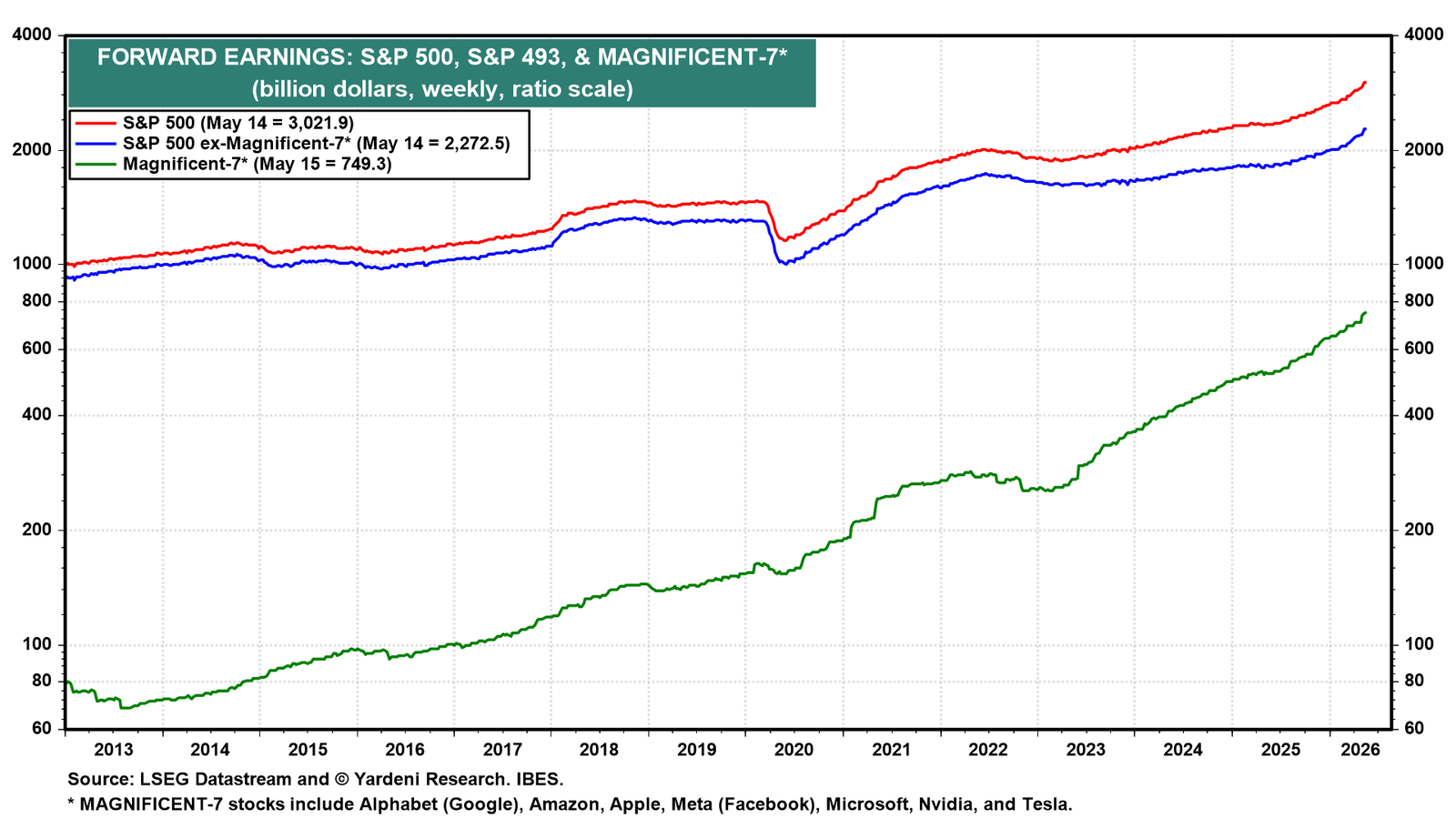
(4) Mag-7 vs Impressive 493. FEMO has been led by the Mag-7 since ChatGPT was released in late 2022. Their combined forward earnings has increased sharply since mid-2023 (chart). There is one caveat: A few of these companies booked mark-to-market gains on their AI investments in Q1-2026, which boosted reported earnings. Strip those out, and the underlying growth rate remains solid. Meanwhile, the forward earnings of the Impressive 493 has also been rising faster in recent months, to record-high territory.
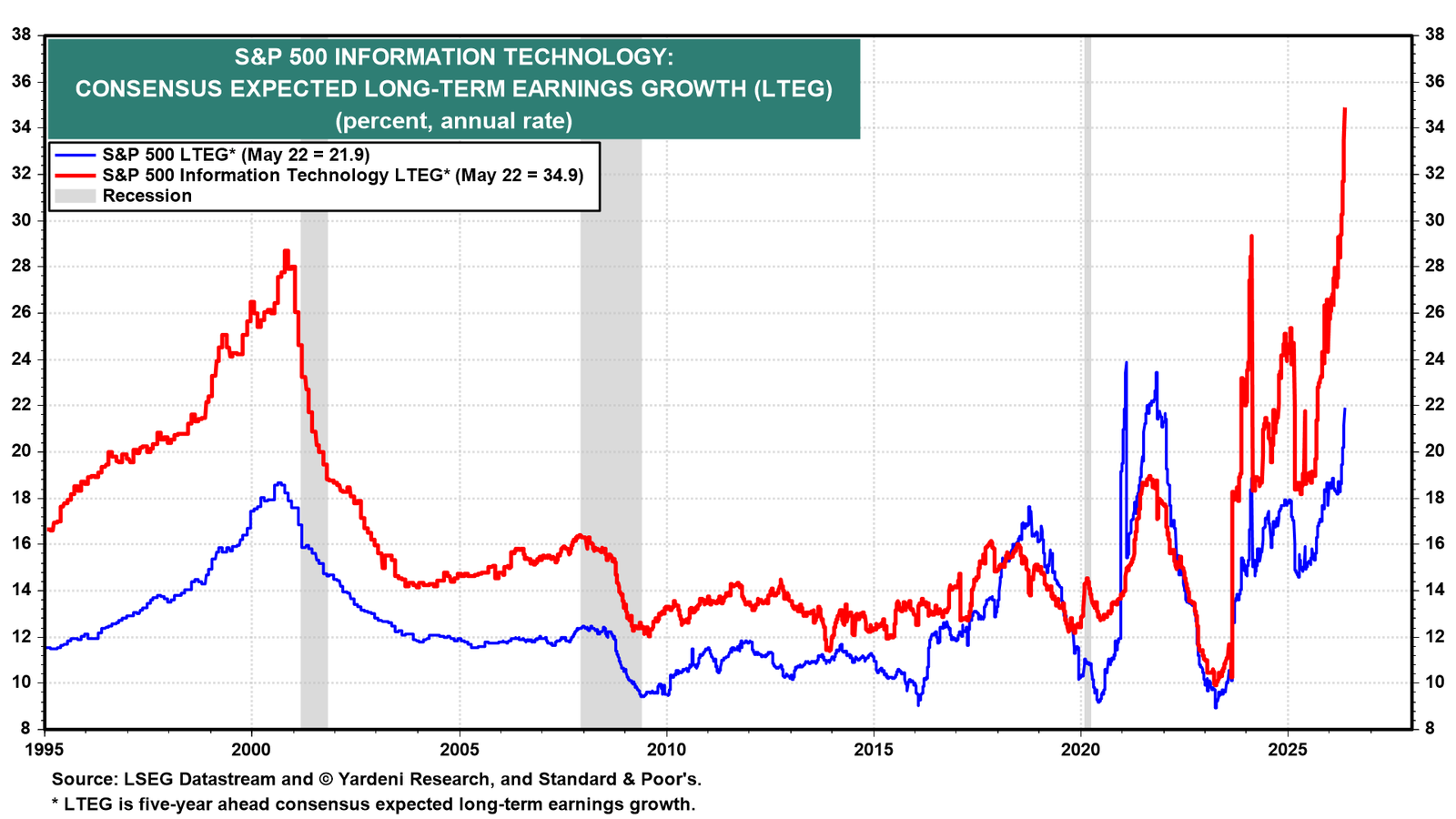
(5) FEMO and LTEG. Fabulous Earnings Momentum has been driven by the rising consensus of long-term earnings growth (LTEG) expectations of industry analysts. Information Technology alone is the biggest contributor to the S&P 500's LTEG. It is the only sector above the S&P 500's LTEG, at 34.9% versus the index's 21.9% (chart).
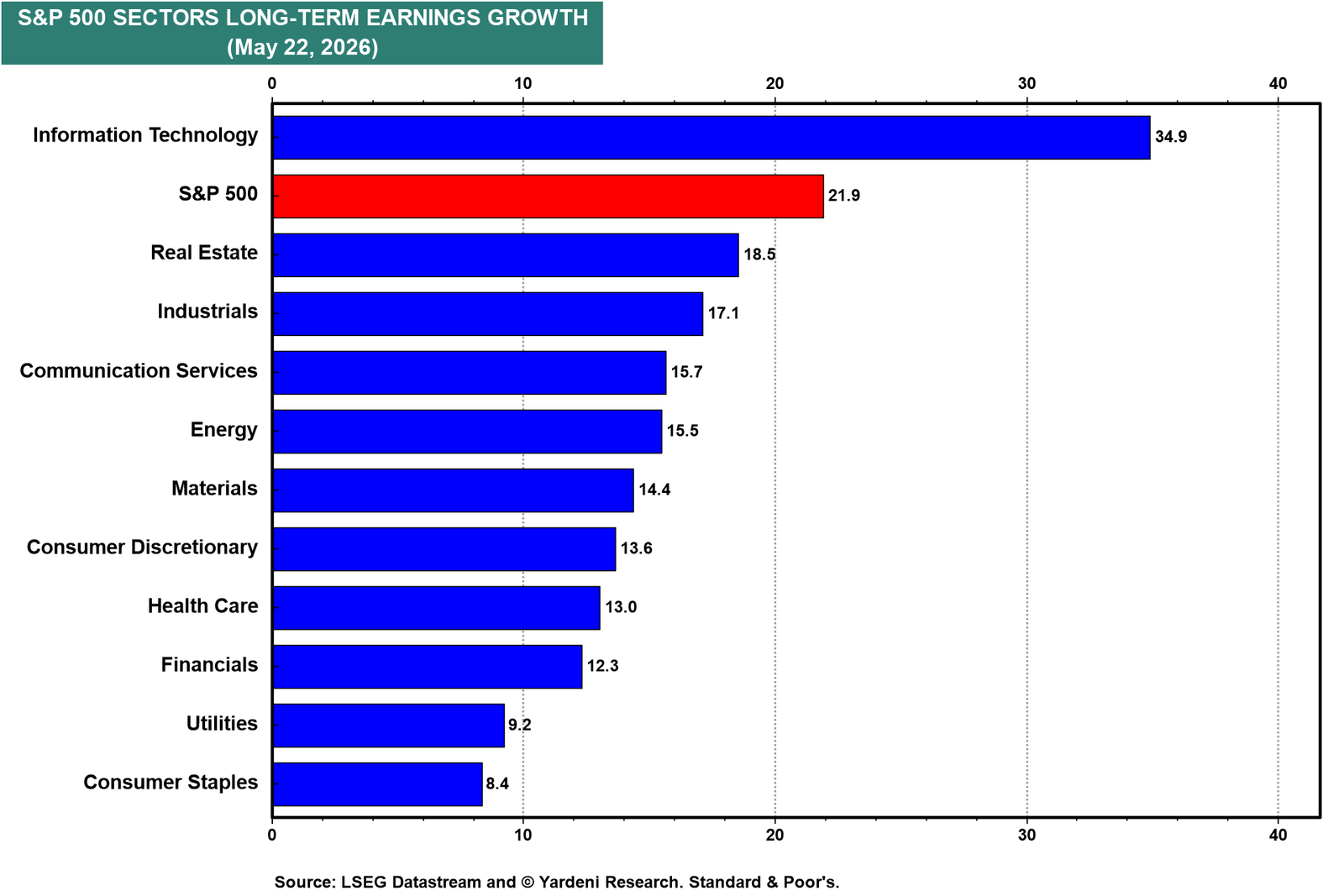
That 34.9% is a record high, above its dot-com peak (chart). Information Technology's growth expectations may be bordering on irrational, and we flag it. But this is analysts raising LTEG, not investors bidding up stock prices. Optimistic earnings forecasts get revised. They do not crash the market the way that a stretched valuation multiple can.
(6) Valuation and FOMO. The multiple is where FOMO resides, but it is nowhere to be found. The S&P 500 trades at 21.1 times forward earnings per share, and the Information Technology sector at 24.4 (chart). In 2000, the multiple ran up while earnings lagged behind. This year, it is the reverse: Earnings is doing the running, and the multiple has backtracked. That is the better setup. That is FEMO, not FOMO.
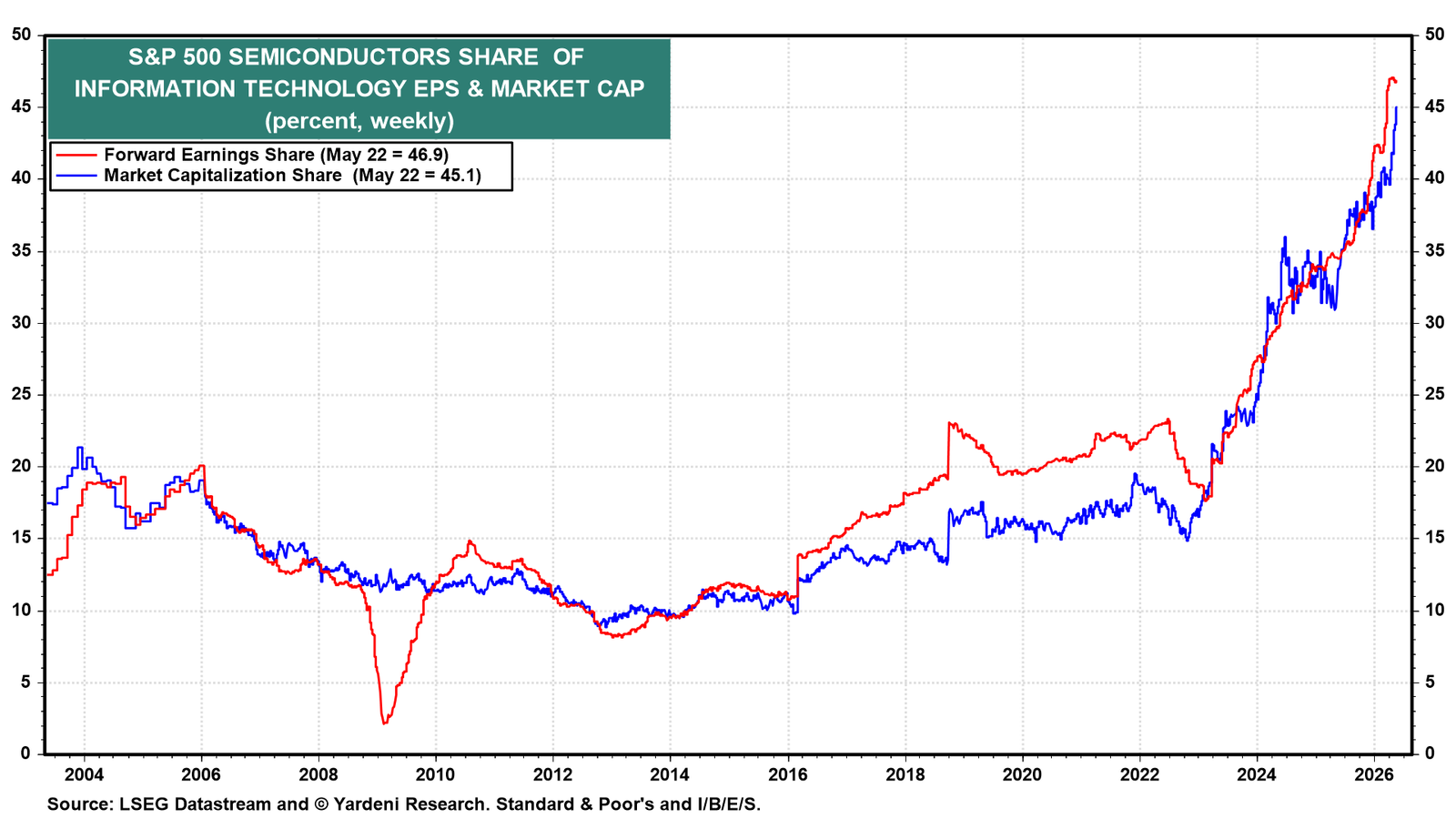
(7) Case study. Semiconductors make the case. The industry's share of Information Technology's forward earnings has risen to 46.9%, only slightly above its 45.1% share of the sector's market cap (chart). The market is signaling that semiconductor makers are growth companies, not the cyclicals they once were. That conviction would normally inflate their stocks’ P/E multiples. It hasn't. The rally in the semis has been led by E, not P/E. That is FEMO, not FOMO.