On Monday, we made a few headlines in the financial press with our out-of-consensus prediction that the FOMC would adopt a tightening bias at the June meeting of the Fed's policymaking committee. That would be followed by a 25-bps hike in the federal funds rate (FFR) at the July FOMC meeting. Today, the minutes of the April FOMC meeting showed that the vote to maintain an easing bias was close. There was considerable support for dropping it and adopting a tightening bias. Changing to a neutral stance wasn't seriously discussed.
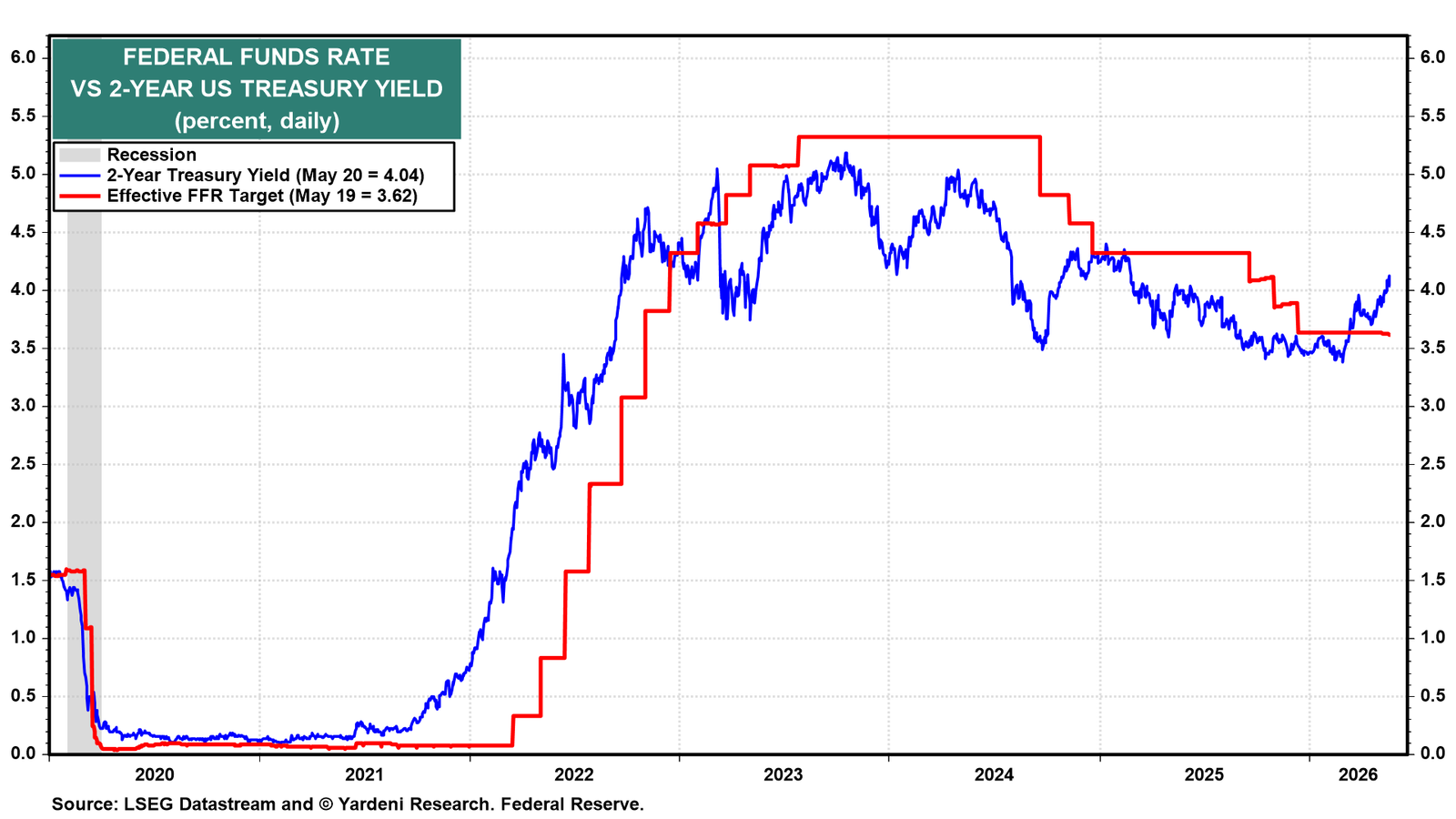
Treasury bond yields fell this morning before the minutes were released in the afternoon. The 2-year yield edged down to 4.04%, still signaling that a 25bps cut in the FFR is likely soon (chart).
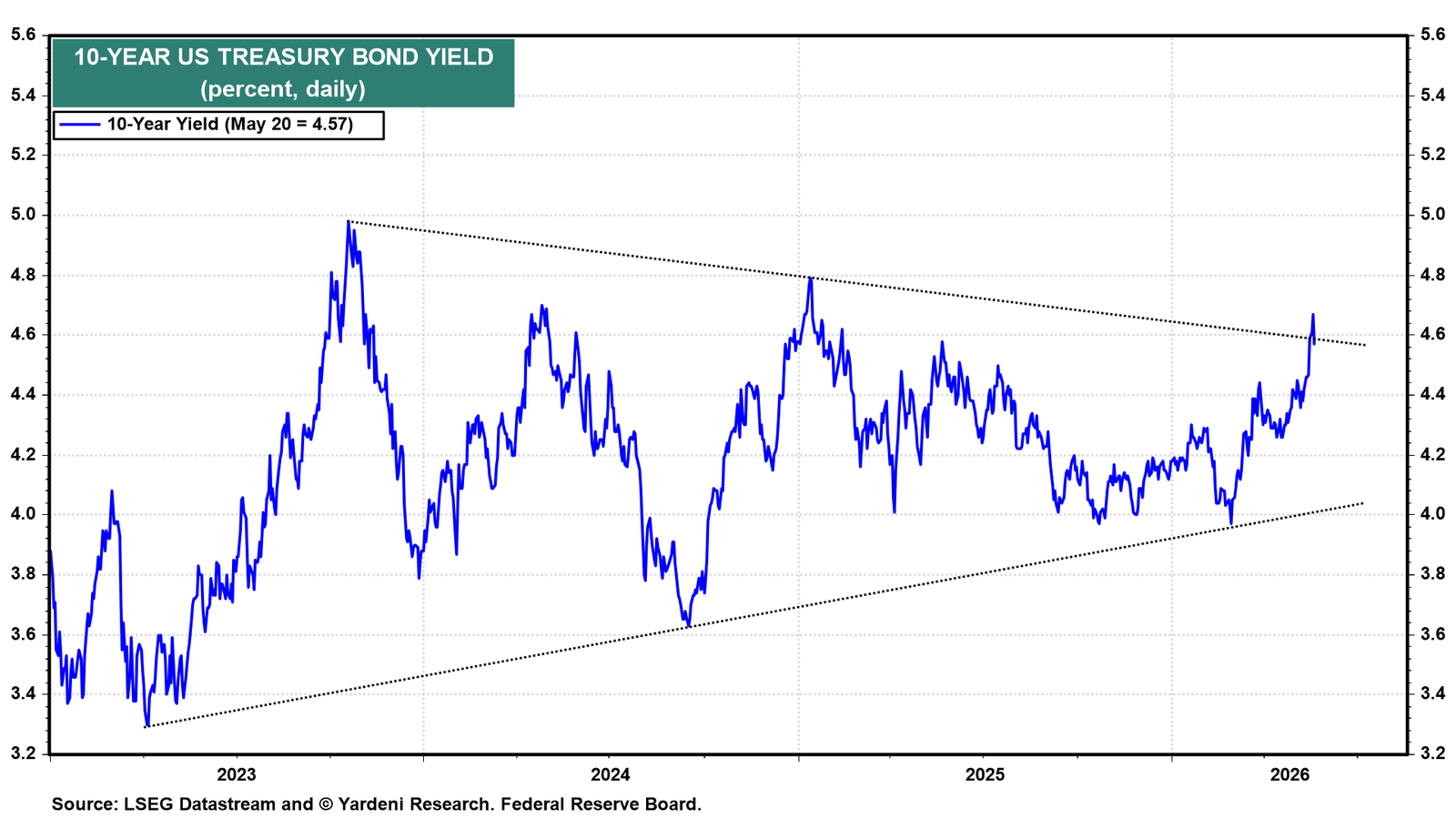
The 10-year yield fell back below 4.60%, an important level from a technical perspective (chart).
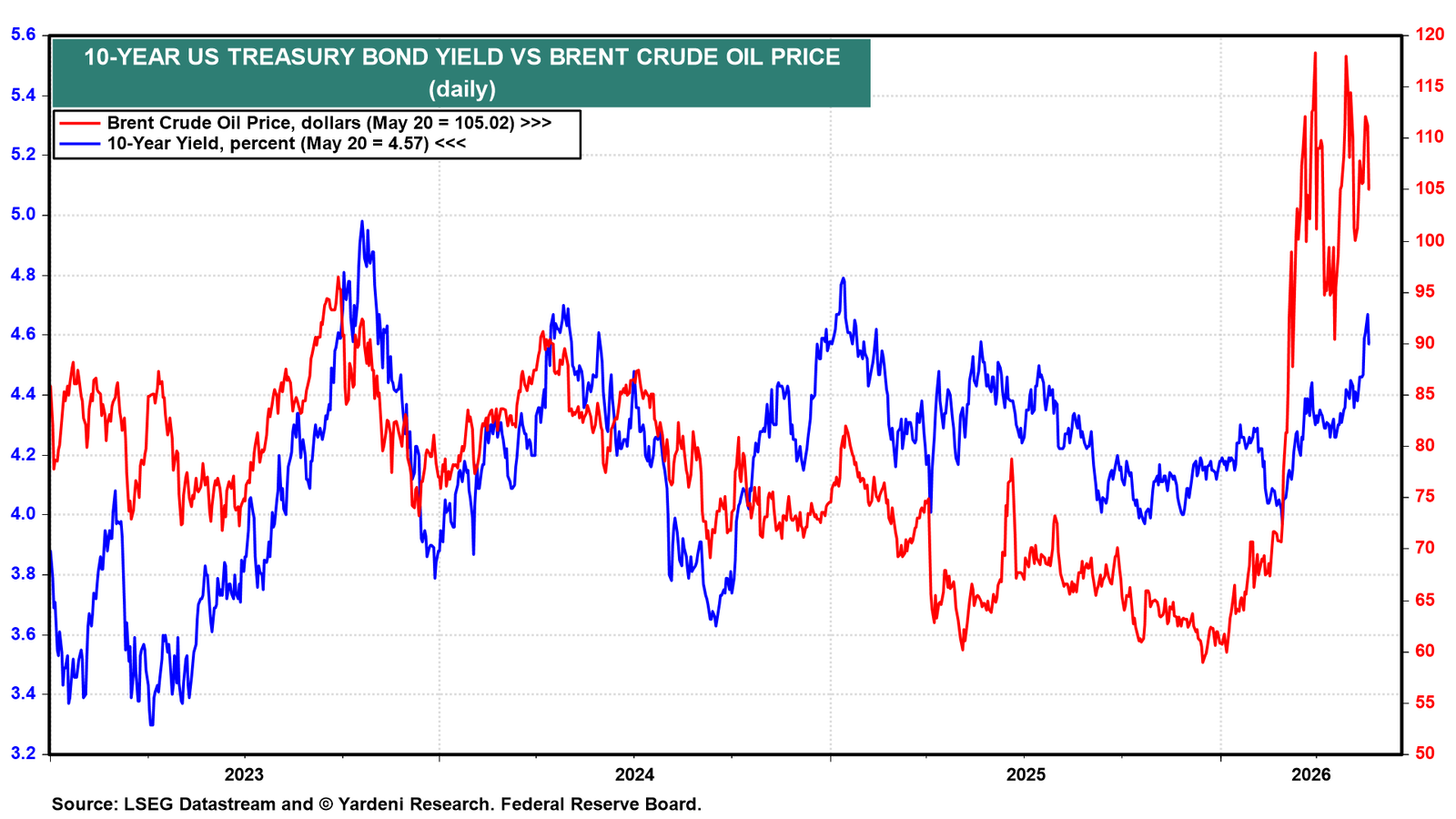
The pullback in yields was triggered by a slide in oil prices, with Brent crude dropping more than 5% to $105 per barrel (chart). The selling pressure on crude reflects escalating market optimism surrounding the US-Iran peace negotiations, which reports suggest have entered the "final stages," alongside comments from President Donald Trump indicating he expects the conflict to wrap up quickly.
Also helping to calm the Bond Vigilantes was April's FOMC minutes, which were unexpectedly hawkish. If the Fed is going to be more vigilant about the latest inflation problem, then the Bond Vigilantes can be less so.
The ongoing closure of the Strait of Hormuz and the latest batch of strong economic indicators suggest that upside risks to inflation now outweigh the downside risks to employment. The April minutes show that the FOMC was turning more hawkish, even though the easing bias was maintained.
Here's more:
(1) The FOMC was already close to shifting to a tightening bias in April. The minutes reveal a committee that was split over whether to retain an easing bias. Most strikingly, "many participants indicated that they would have preferred removing the language from the post-meeting statement that suggested an easing bias." Three voting members, Hammack, Kashkari, and Logan, formally dissented not on the no-rate-change decision but specifically because they "did not support inclusion of an easing bias in the statement at this time."
Three additional members "would have preferred to provide a more two-sided characterization" of future rate decisions, Fed language for a stance that treats hikes and cuts as equally probable. The easing bias made it into the published statement by a narrow majority, not by a consensus.
(2) The FOMC explicitly discussed potentially having to hike rates. The minutes state that "a majority of participants highlighted that some policy firming would likely become appropriate if inflation were to continue to run persistently above 2 percent." Furthermore, "the vast majority of participants noted an increased risk that inflation would take longer to return to 2 percent than previously expected."
Several participants also flagged the risk that elevated inflation could begin to entrench itself in wage- and price-setting decisions, the precondition for hiking interest rates in response to a supply shock.
(3) Rate cuts are off the table. One lone dissenter, Governor Miran, voted for a 25-bps cut, but the minutes make clear that his view found no support. The dominant discussion was not when to cut, but how long to hold the FFR and whether to tighten. Participants "generally judged that continued elevated inflation readings, together with uncertainty related to the Middle East conflict, could necessitate maintaining the current policy stance for longer than previously anticipated."
(4) The FOMC is willing to do whatever it takes. The minutes project a committee acutely concerned about its credibility and willing to tighten if inflation persists above the 2% target. Participants explicitly discussed the nightmare scenario in which sustained elevated energy prices, combined with tariff effects, could lift the anchor on inflationary expectations. Fed members characterized inflation persistence as "a salient risk" that is "skewed to the upside."
We are sticking to our call that the Fed will shift from the easing bias in April to a tightening bias at the June FOMC meeting, followed by an FFR hike in July. The Bond Vigilantes can take comfort in the fact that the FOMC has become more vigilant about the current inflation problem.