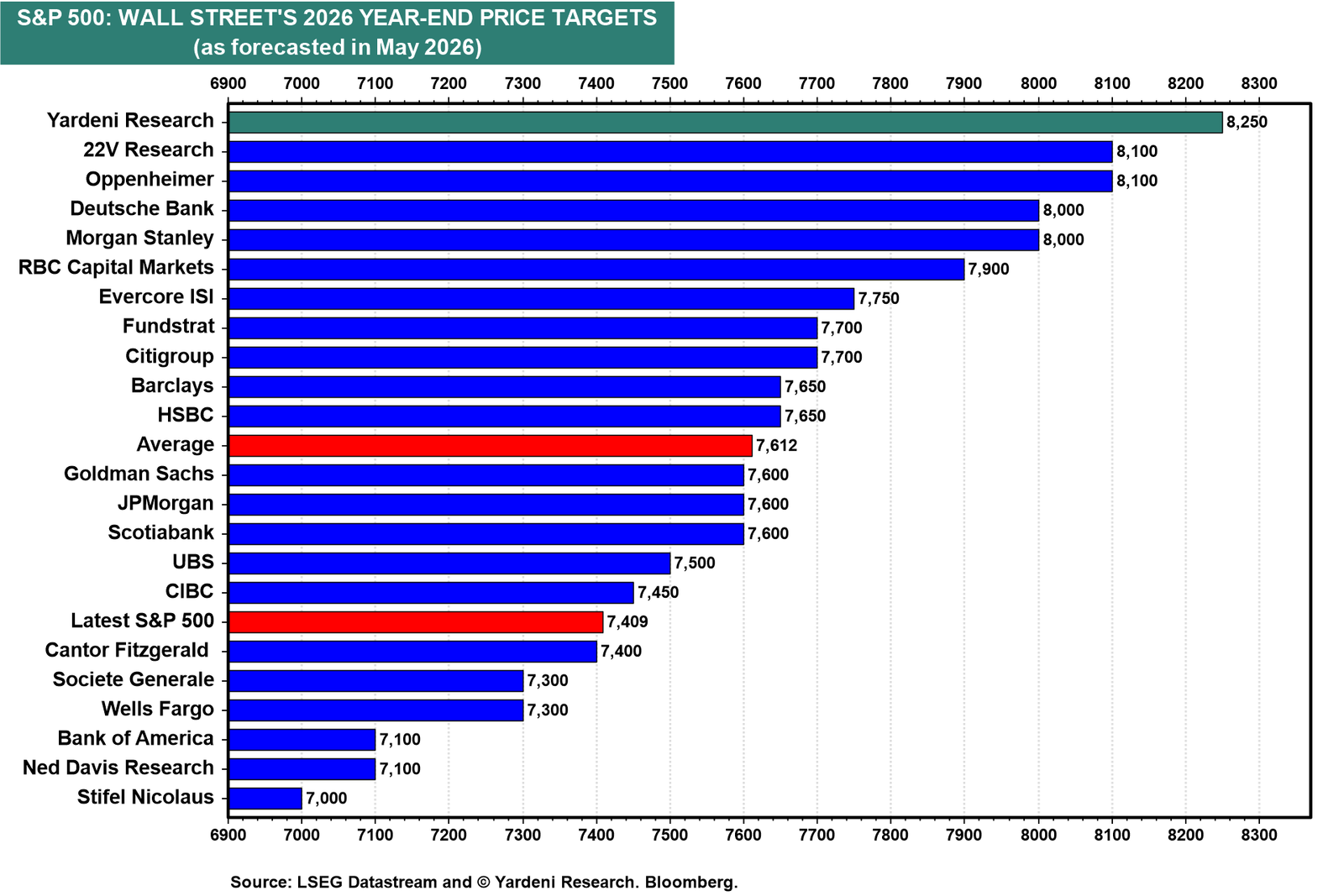
The S&P 500 sold off by 1.2% on Friday after hitting a record high of 7501.24 on Thursday. We are sticking with our 8250 year-end target for the S&P 500 (chart). However, the index might have peaked for a while. That's because bond yields spiked on Friday, which just happened to be Kevin Warsh's first day at the office as the new Fed chair. The bond market fears that he will tolerate inflation rather than hike the federal funds rate (FFR). He will likely have to cave and join the tightening camp sooner rather than later. The Bond Vigilantes will force him to pivot. So will his colleagues on the FOMC.
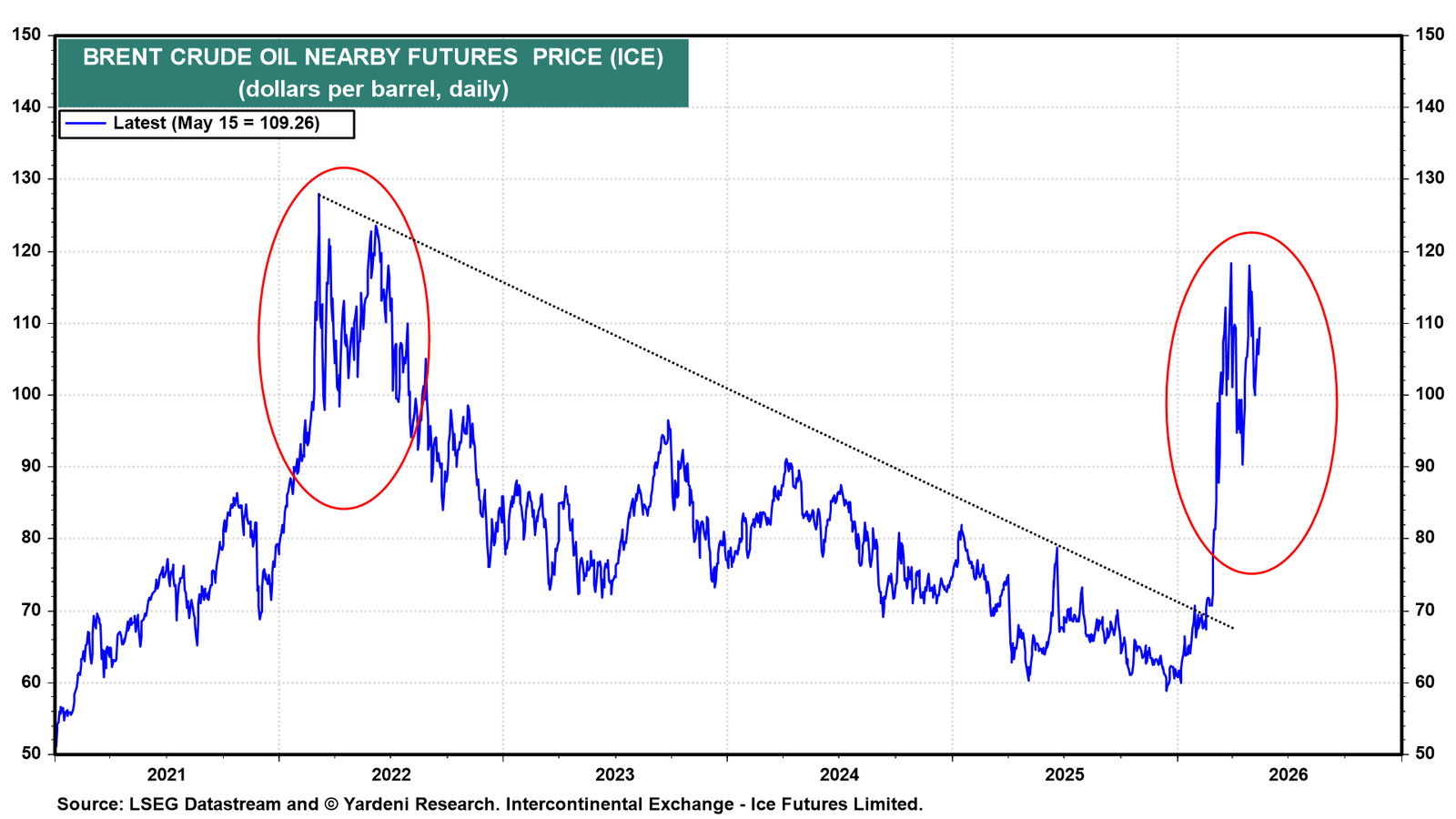
The Strait of Hormuz remains closed. In a post on Truth Social, President Donald Trump warned: "For Iran, the Clock is Ticking, and they better get moving, FAST, or there won’t be anything left of them. TIME IS OF THE ESSENCE!" A drone strike caused a fire at a nuclear power plant in the United Arab Emirates, officials there said on Sunday, while Saudi Arabia reported intercepting three drones.
Brent crude is up $2 to $111 per barrel this evening (chart). The longer it remains here or higher, the greater is the likelihood that the Fed will have to pivot from its easing bias in April to a tightening bias in June and an actual rate hike in July. We wouldn't rule out a June rate hike.
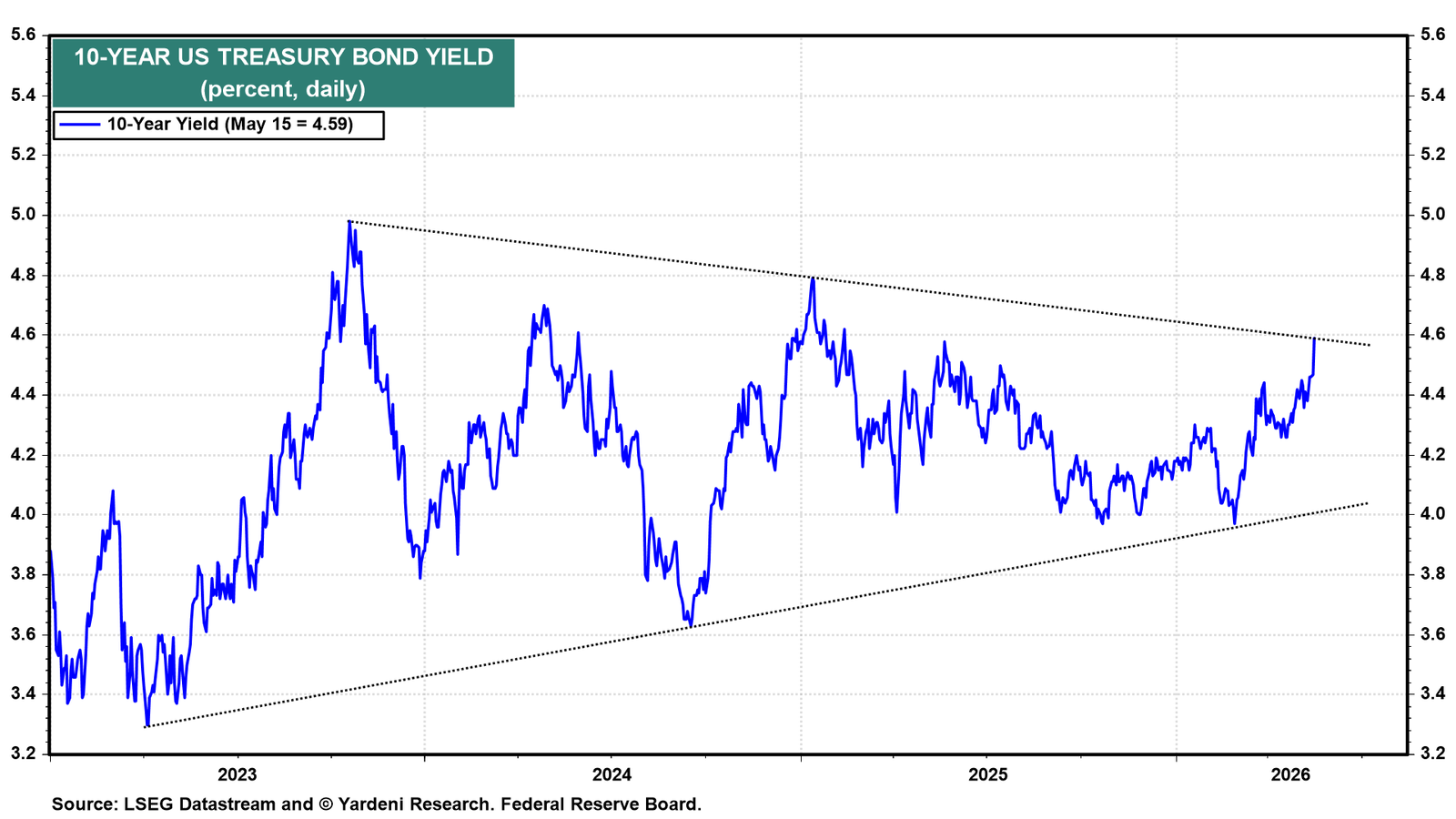
Last Wednesday, when the 10-year US Treasury yield was 4.46%, we predicted it was "likely to move up to 4.60% in the coming days." It got there on Friday (chart). This evening, it is at 4.63%. If it moves higher from here, then we would expect it to peak between 4.75% and 5.00% in the coming weeks. That would be a good buying opportunity for both bonds and stocks.
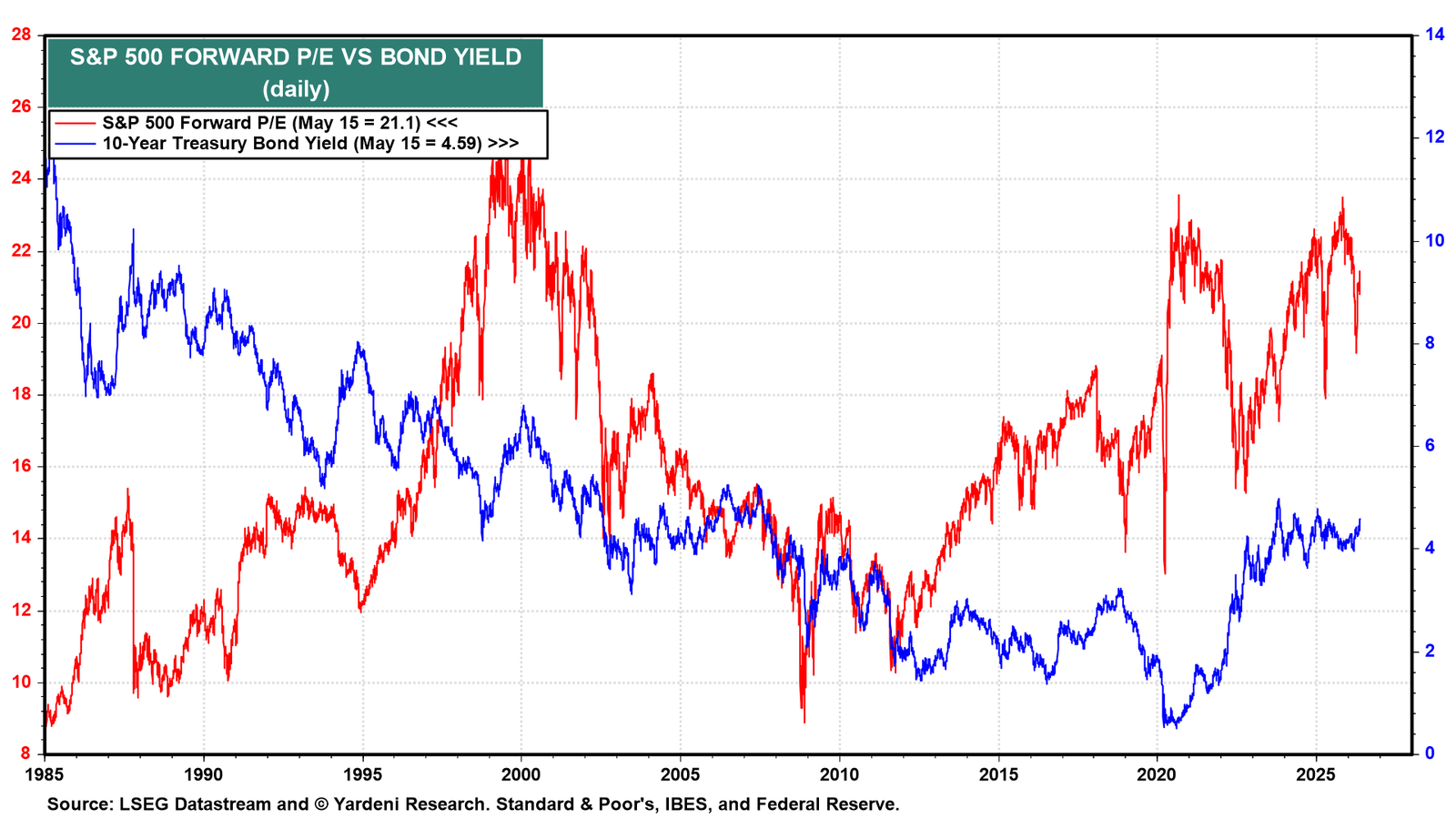
The S&P 500 forward P/E has risen 10% from its recent low of 19.1 to 21.1 on Friday, while the 10-year yield has climbed 63 bps from its low of 3.96% earlier this year (chart). If yields continue climbing, stocks will likely experience another P/E-led pullback. We would view it as another buying opportunity.
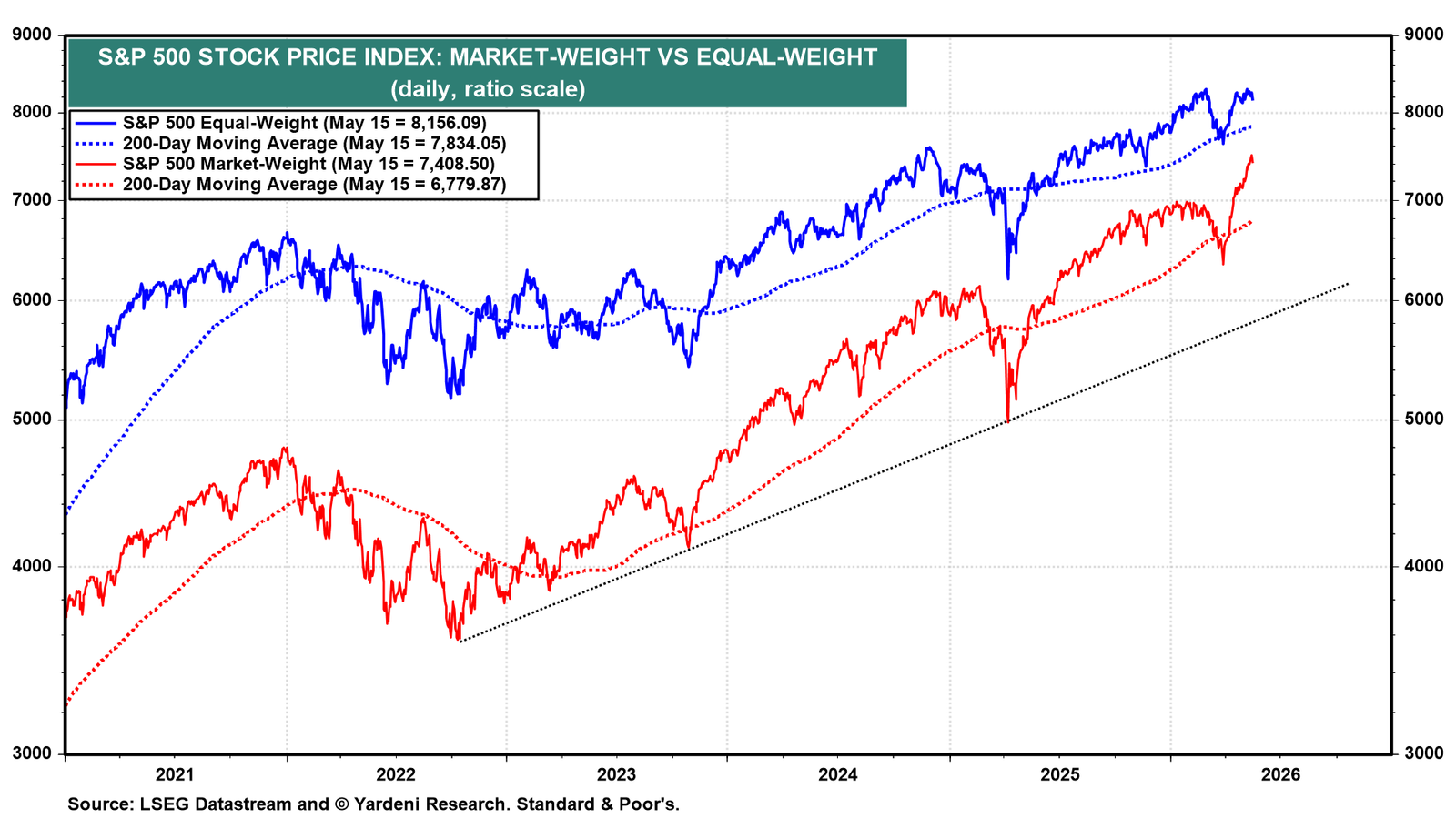
The S&P 500 market-weighted index is more vulnerable to a pullback than is the equal-weighted index (chart). That's because it is more stretched relative to its 200-day moving average.
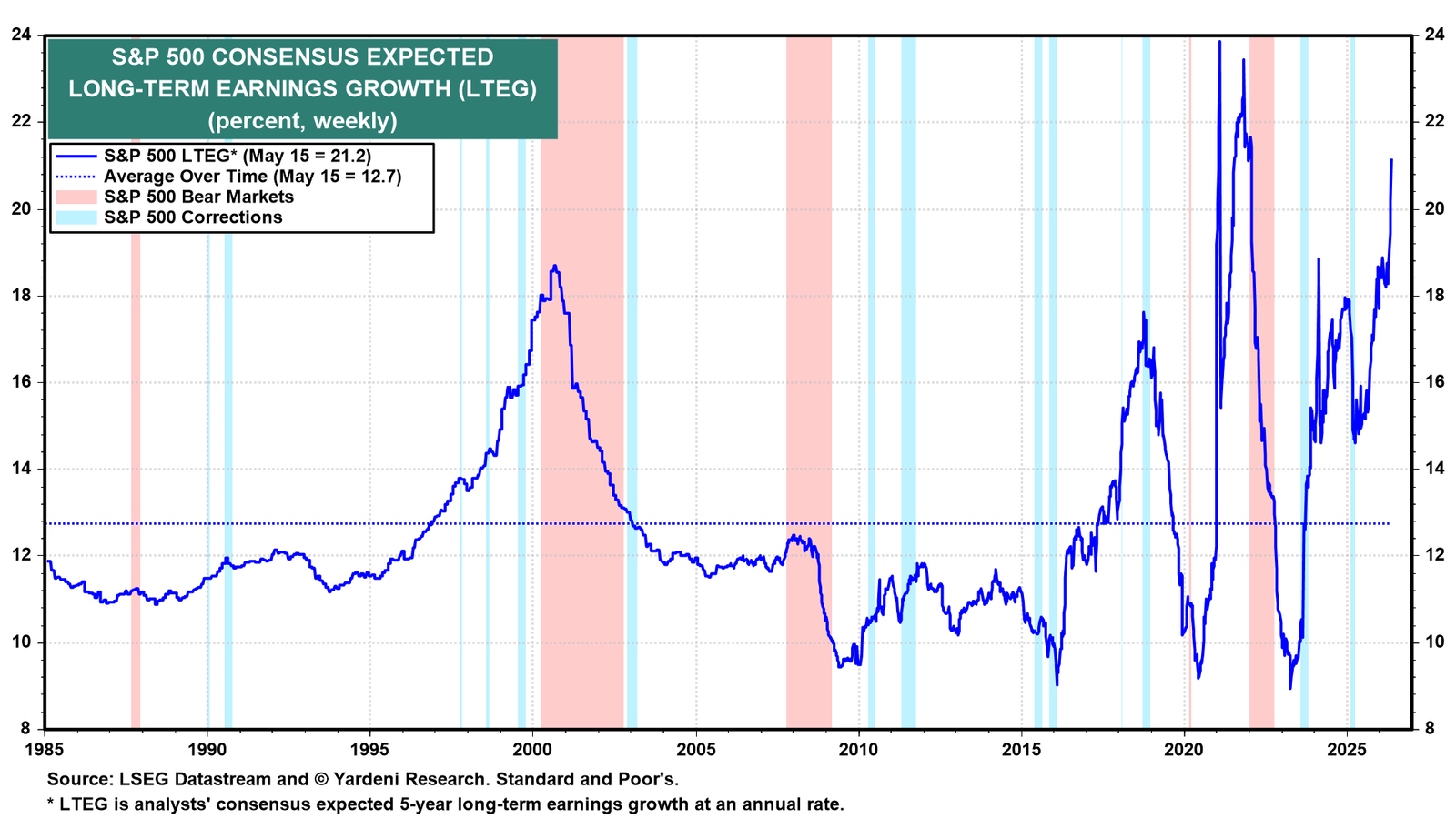
The consensus expectations among analysts for S&P 500 long-term earnings growth is 21.2%, well above the historical average of 12.7% (chart). That reflects mounting excitement about the AI revolution. The question is whether this exuberance is rational or irrational. There could be another sell-off in AI-related stocks, triggered by DeepSeek, which just introduced an ultra-cheap LLM workhorse optimized for speed, agent infrastructure, and background tasks.
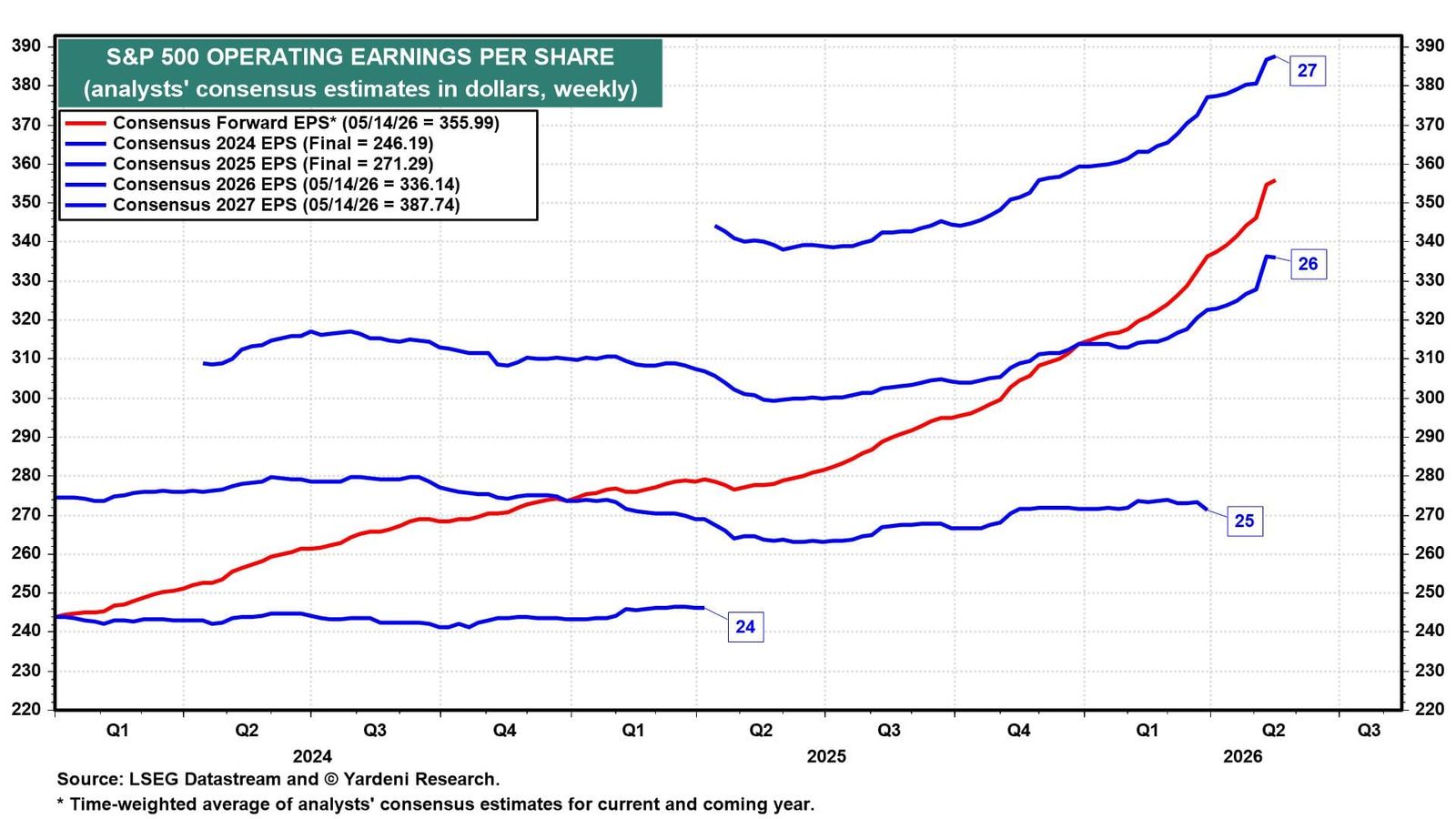
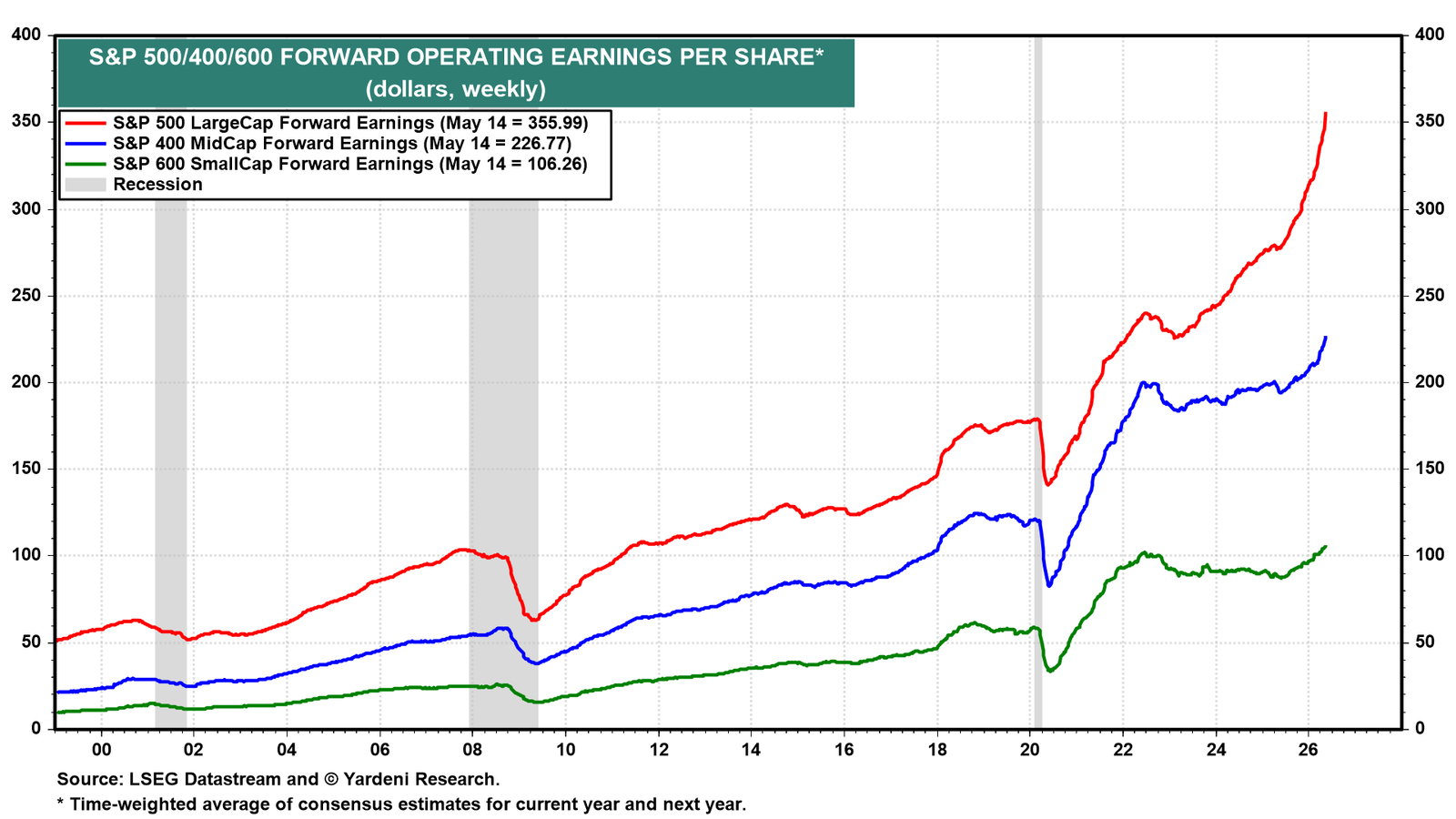
The S&P 500's forward EPS rose to a record $355.99 last week (chart). The 2026 and 2027 consensus estimates have rocketed higher in recent weeks. The earnings-led meltup since March 31 has been driven by genuine fundamental strength, not multiple expansion.
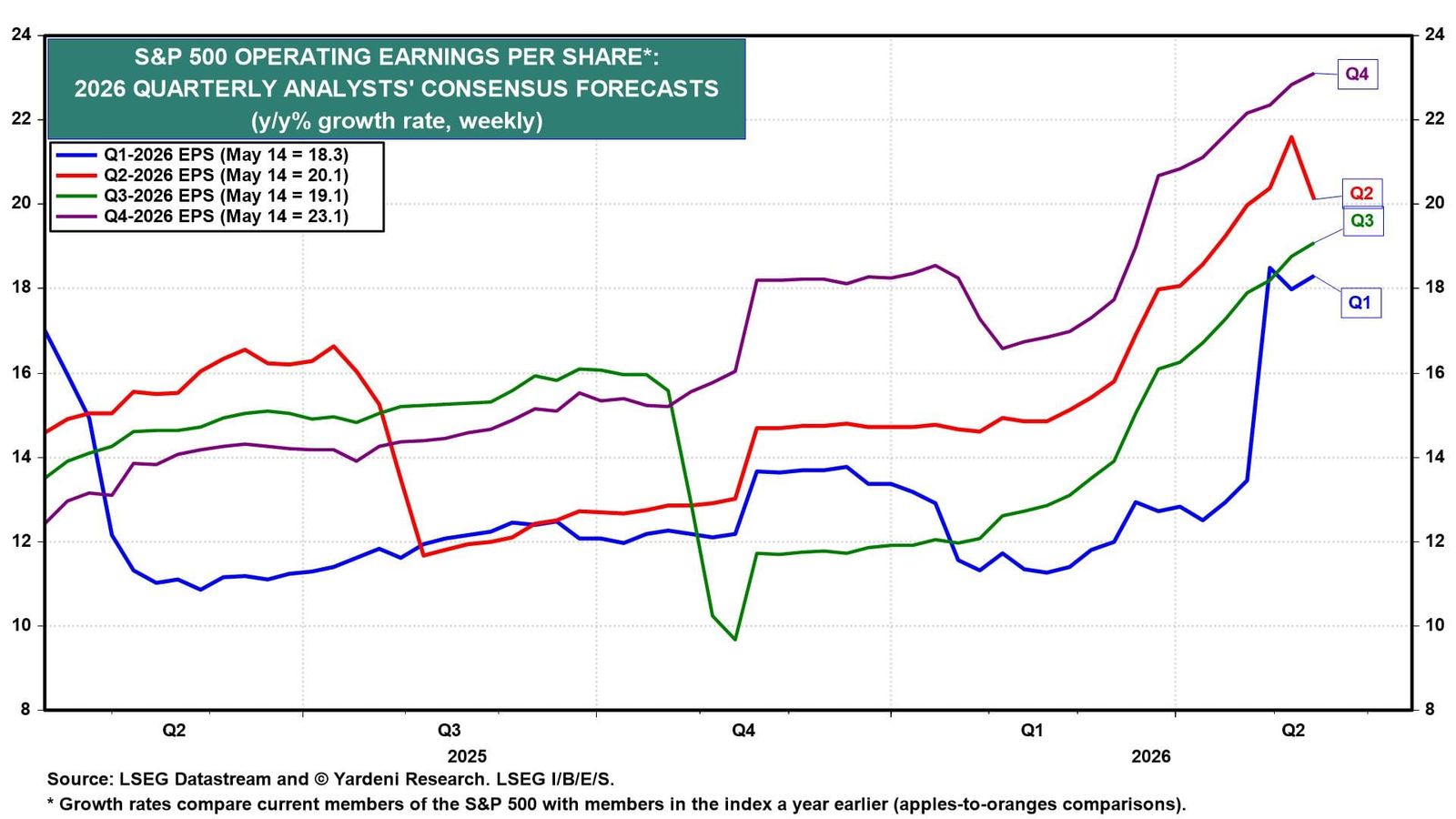
We have never seen quarterly consensus earnings expectations rise this quickly at this stage of an earnings cycle (chart).
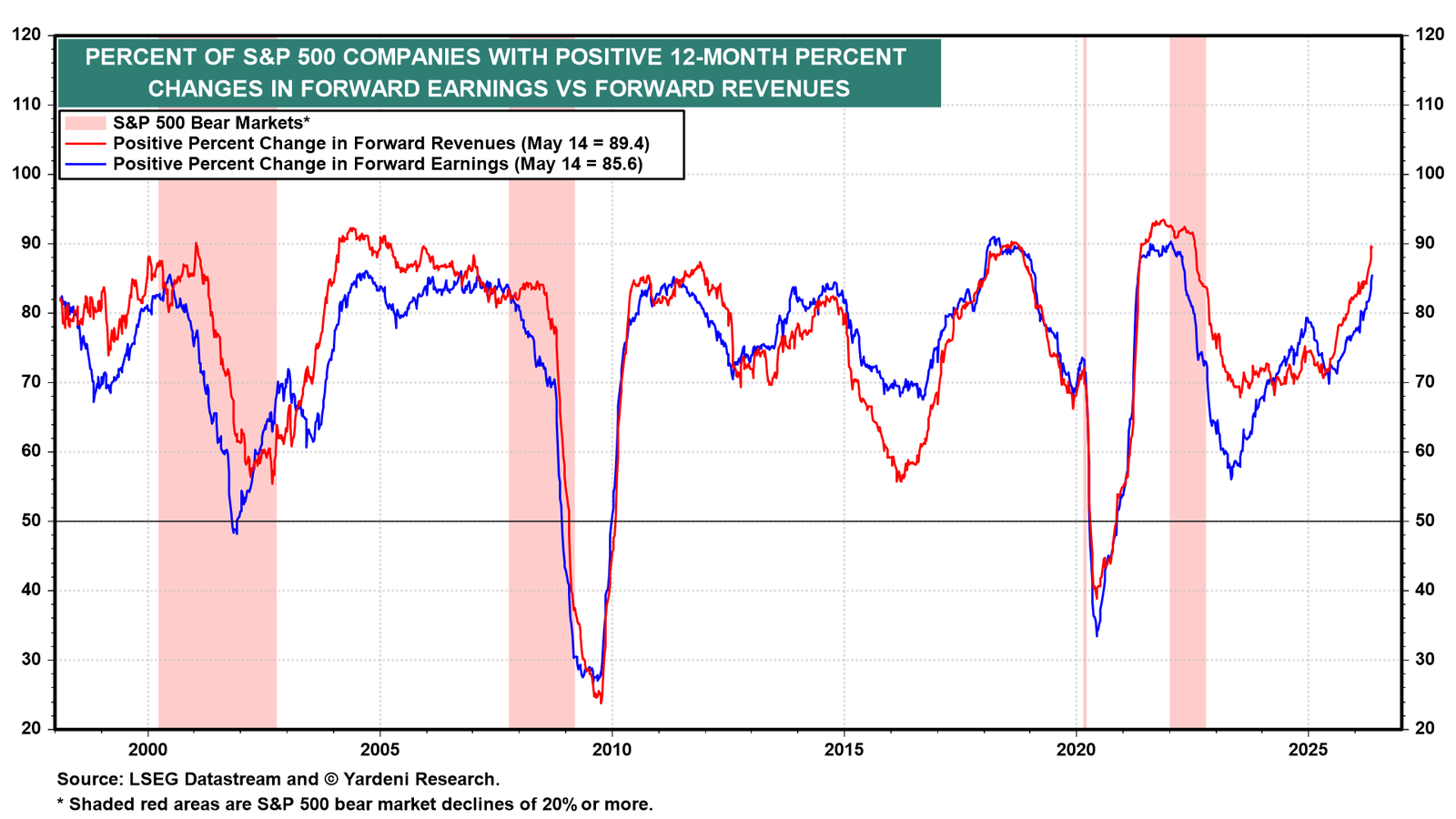
Earnings breadth continues to widen, with 85.6% of S&P 500 companies showing positive 12-month changes in forward earnings and 89.4% in forward revenues (chart).
LargeCap, MidCap, and SmallCap forward EPS are all still rising to record highs(chart).
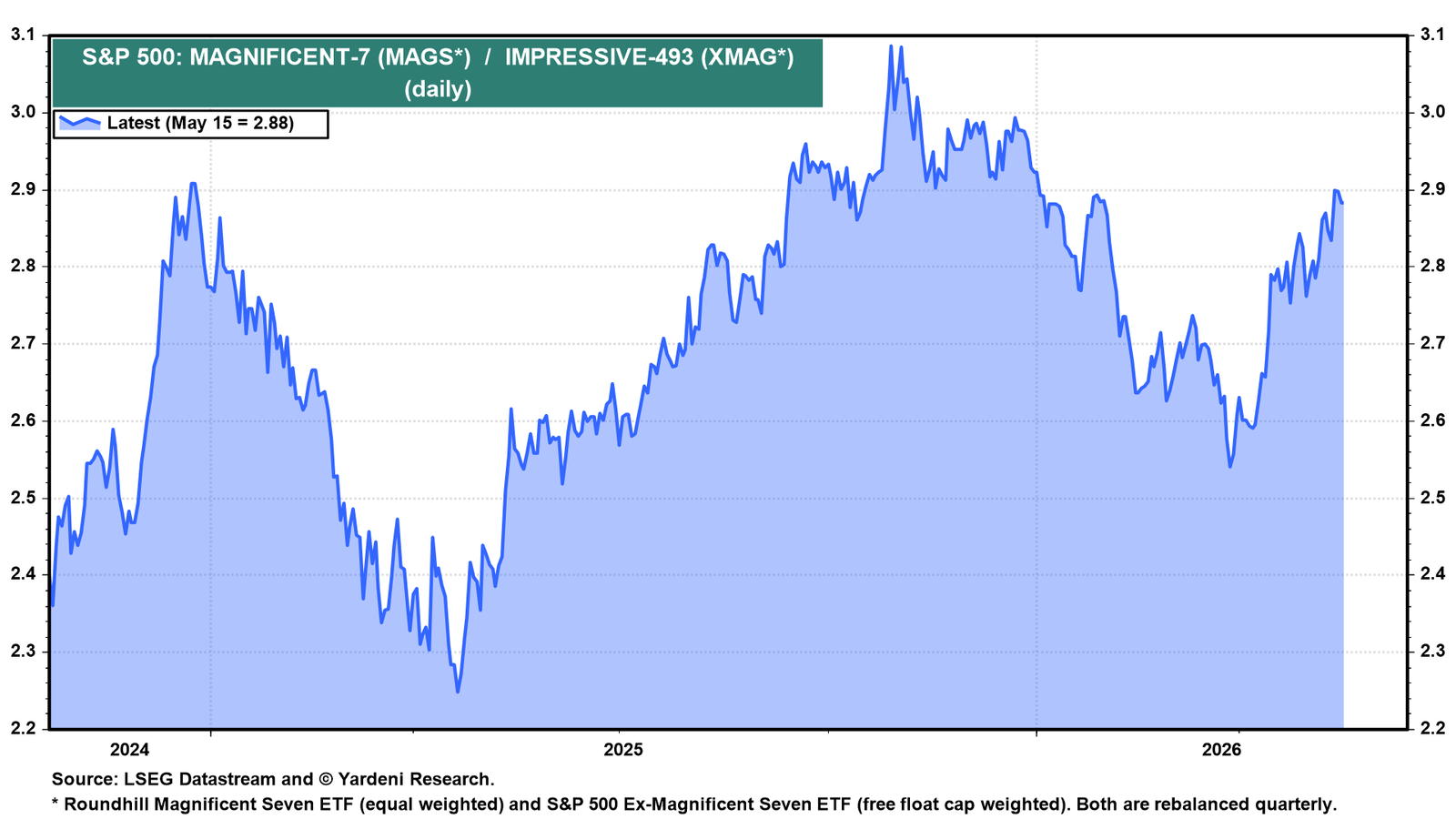
The Magnificent-7 have outperformed the Impressive-493 since March 30 (chart). We think the latter might outperform the former for a while.
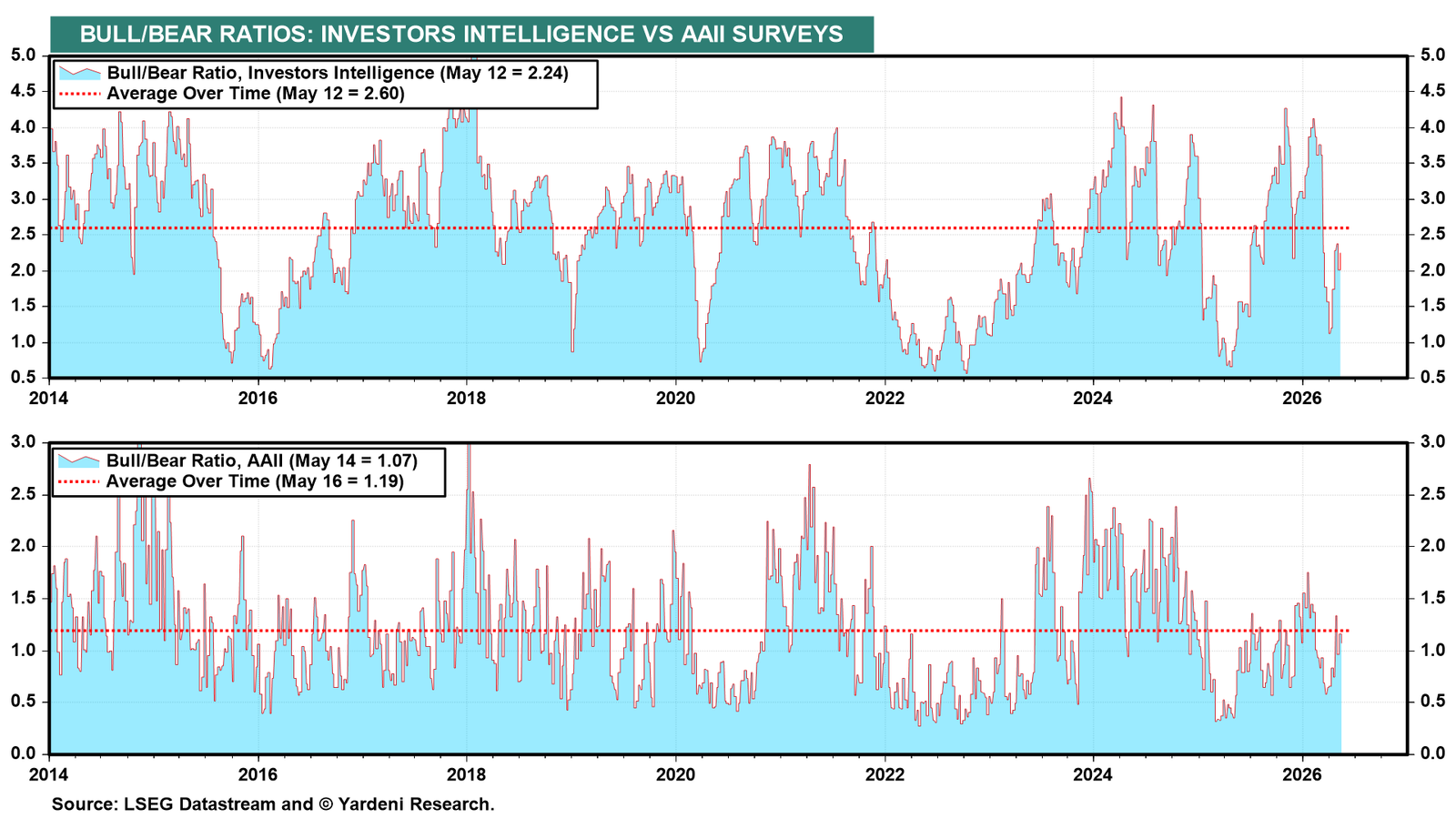
Despite the record high in the S&P 500 last week, the Investors Intelligence bull/bear ratio is 2.24, below its 2.60 long-term average. The AAII ratio is 1.07, below its 1.19 average. Both remain well below the levels that preceded major pullbacks in the past (chart).
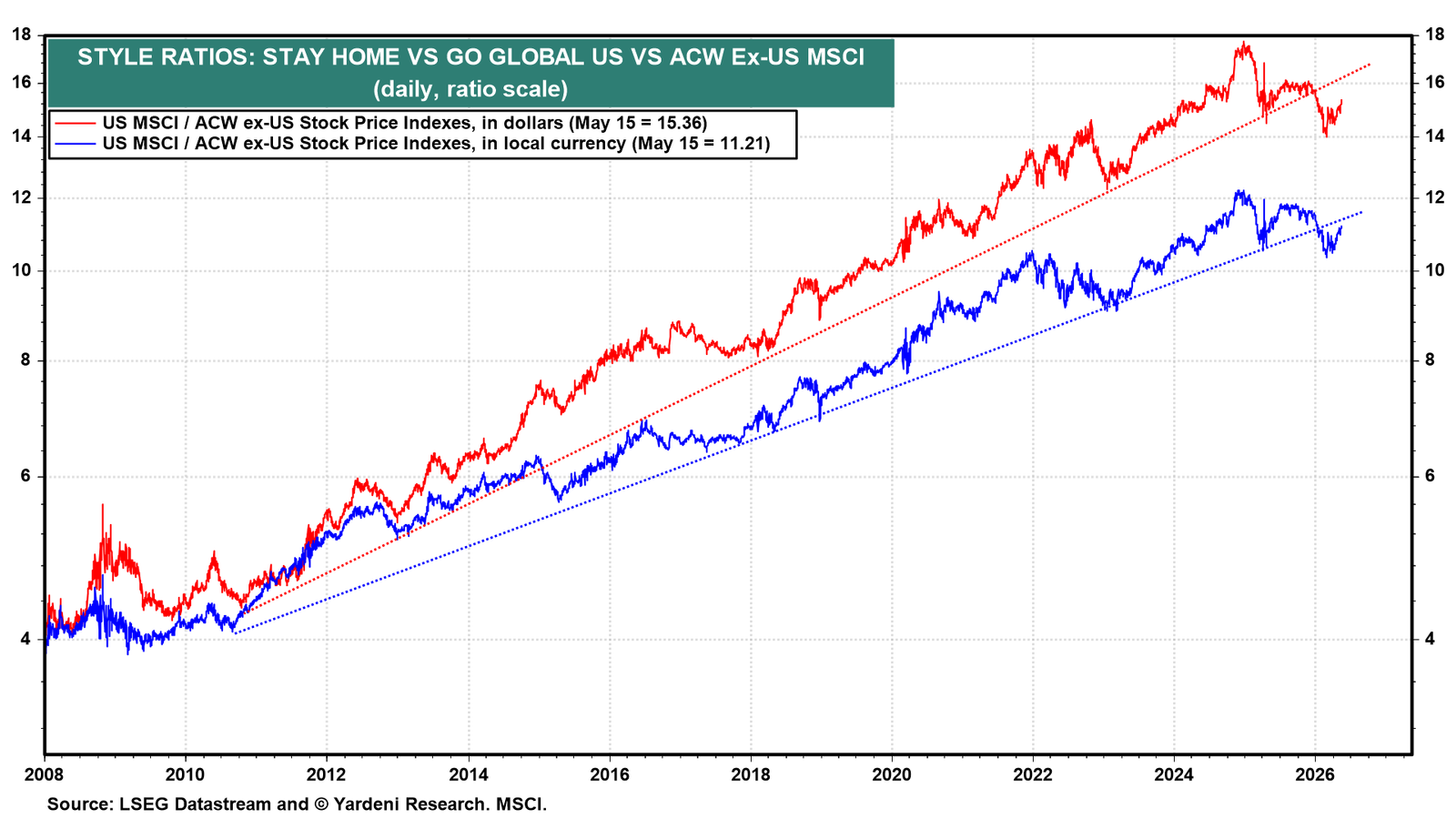
We recommended Go Global on December 7, 2025. Stay Home has outperformed since March 30 (chart). It might continue to do so the longer that the Strait remains blockaded.
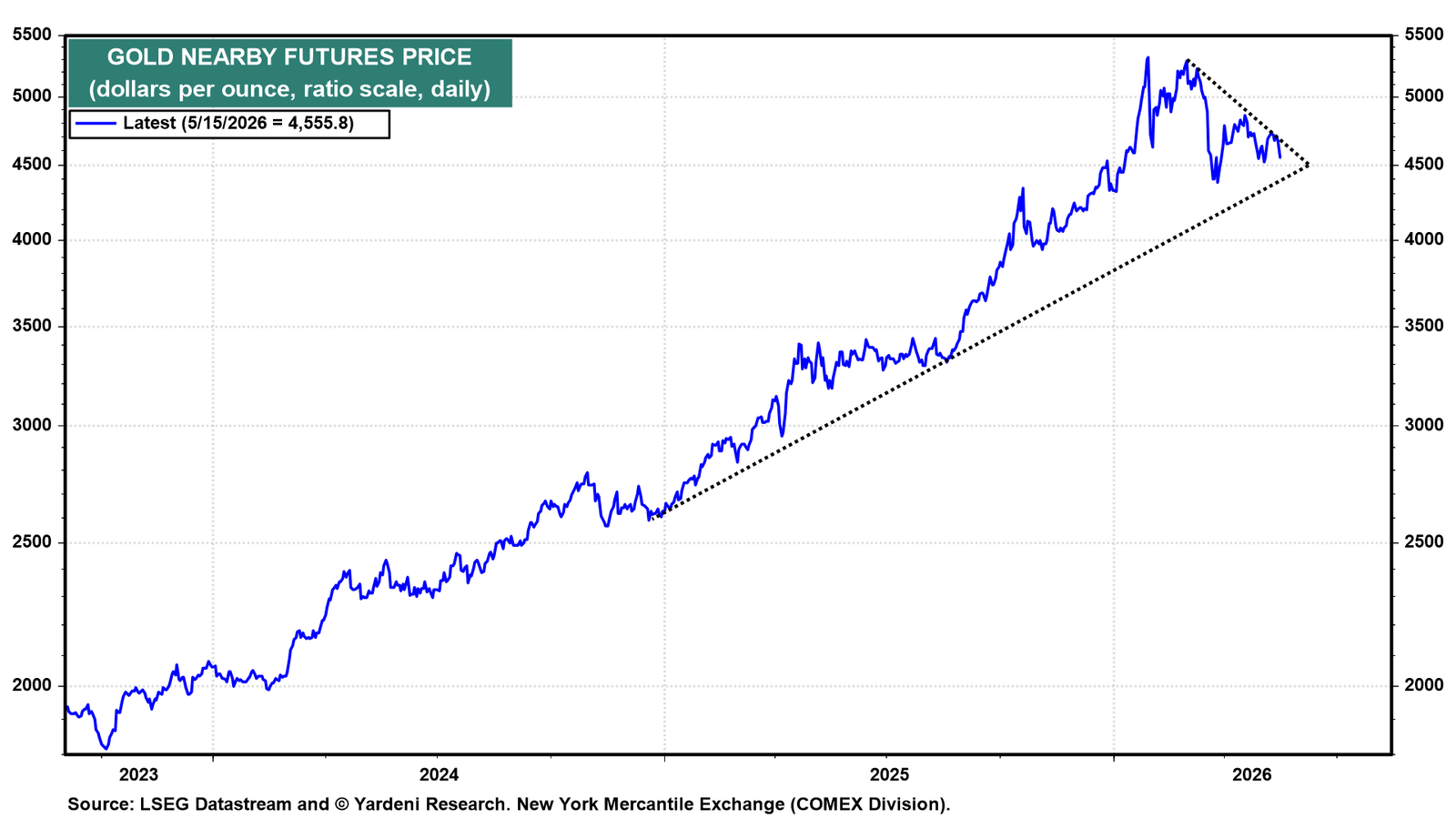
Gold is pulling back from its highs near $5,500 earlier this year, and trading at $4,537 this evening (chart). The retreat makes sense. Rising yields and a firming dollar are headwinds for bullion in the short term. The long-term structural bull case remains intact. We are now targeting $5,500 by year-end and still $10,000 by the end of 2029.
With the Q1-2026 earnings reporting season largely over, the near-term catalyst calendar is light for the stock market, aside from Nvidia's report on Wednesday. Yields are elevated, oil prices are elevated, and the market is stretched. Sideways may be the path for the next few weeks. A small pullback would not surprise us. That is not a reason to abandon our year-end target of 8,250. Earnings breadth is improving. If the Mag-7 stalls from here, the Impressive-493 can support the index. The bull case is intact, in our opinion.