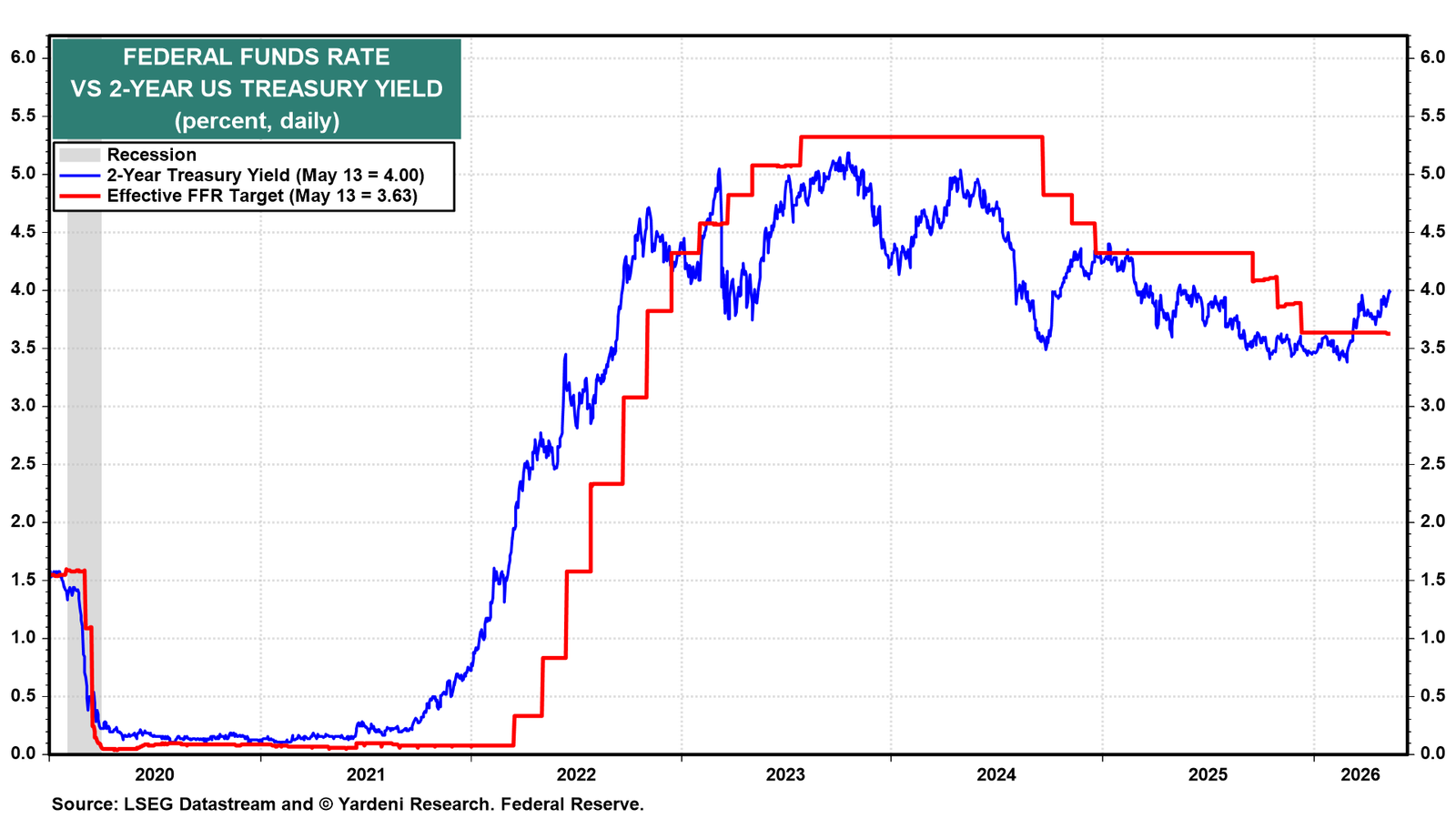
Two important psychological levels are being tested in the US Treasury market right now. The 2-year yield is trading just above 4.00% this evening, May 14 (chart). That's 25bps above the current federal funds rate (FFR) range of 3.50%-3.75%. That implies investors believe the Fed may need to raise the FFR by at least 25 bps in the foreseeable future.
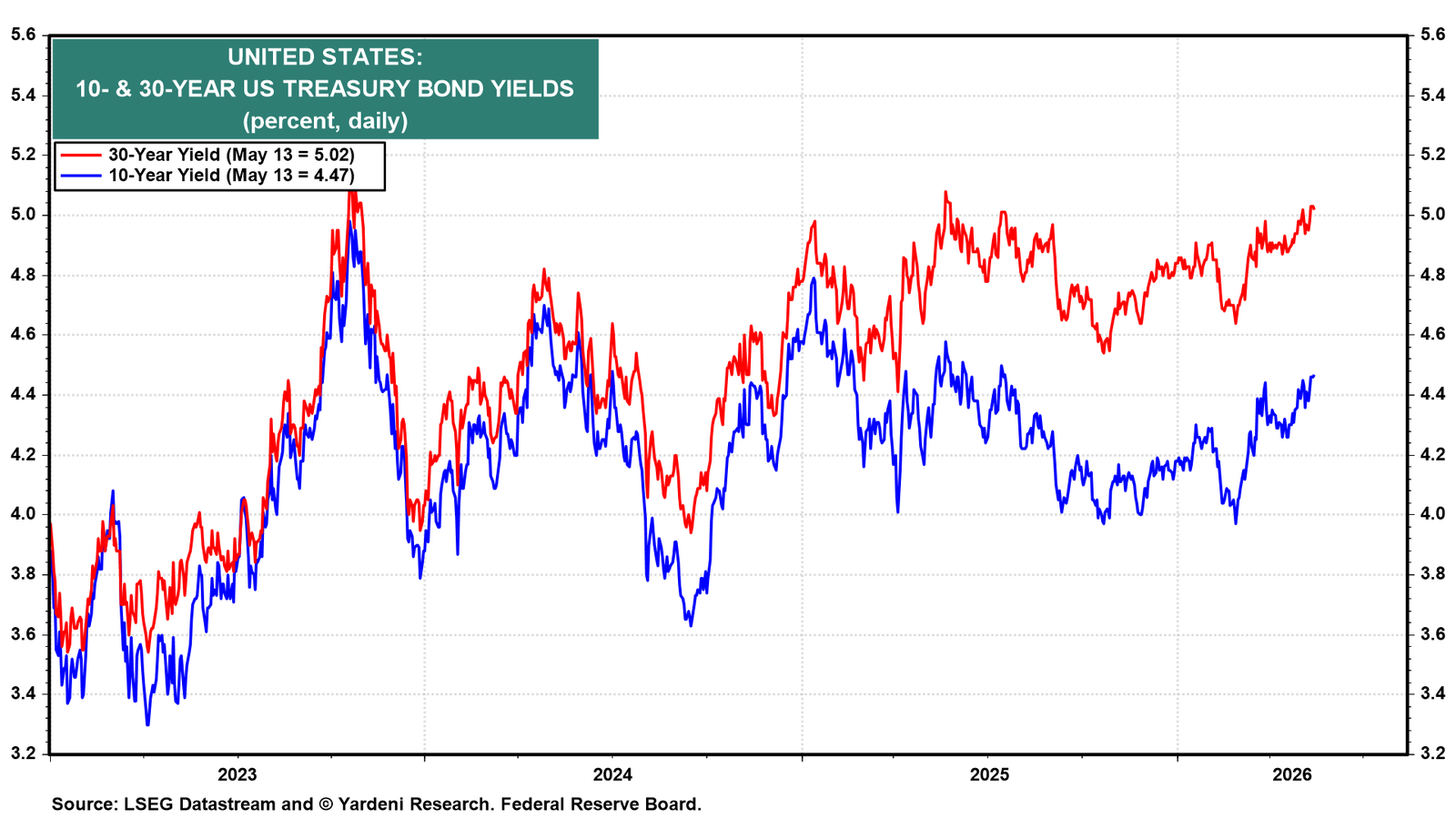
The 30-year yield breached 5.00% on May 13, triggered by a $25 billion auction that drew such weak demand that it marked the first time since 2007 that the Treasury has auctioned a 30-year bond with a 5% handle. The 30-year has held above 5.00% since, trading at 5.06% this evening (chart). The 10-year yield is trading just above 4.50%, at 4.51% this evening.
The Bond Vigilantes are sending a clear message to the Fed. Drop the easing bias that was in the April FOMC statement. Don't replace it with a neutral stance, but go straight for a tightening bias. Otherwise, the yield curve might start pricing in another Fed policy mistake, i.e., failing to turn hawkish quickly enough to fight inflationary pressures stemming from the Gulf War.
Today's economic data fueled these bearish sentiments in the fixed-income markets:
(1) Retail Sales. April retail sales rose 0.5% m/m, in line with expectations and the third solid consecutive monthly increase (chart). Excluding autos and gas, sales rose 0.5% m/m, above the expected 0.3%. Nine of 13 categories posted gains. Gas station receipts rose 2.8% m/m as prices at the pump averaged $4.10 per gallon in April. Discretionary spending held up well: food services and drinking places rose 0.6% m/m and sporting goods surged 1.4% m/m (chart).
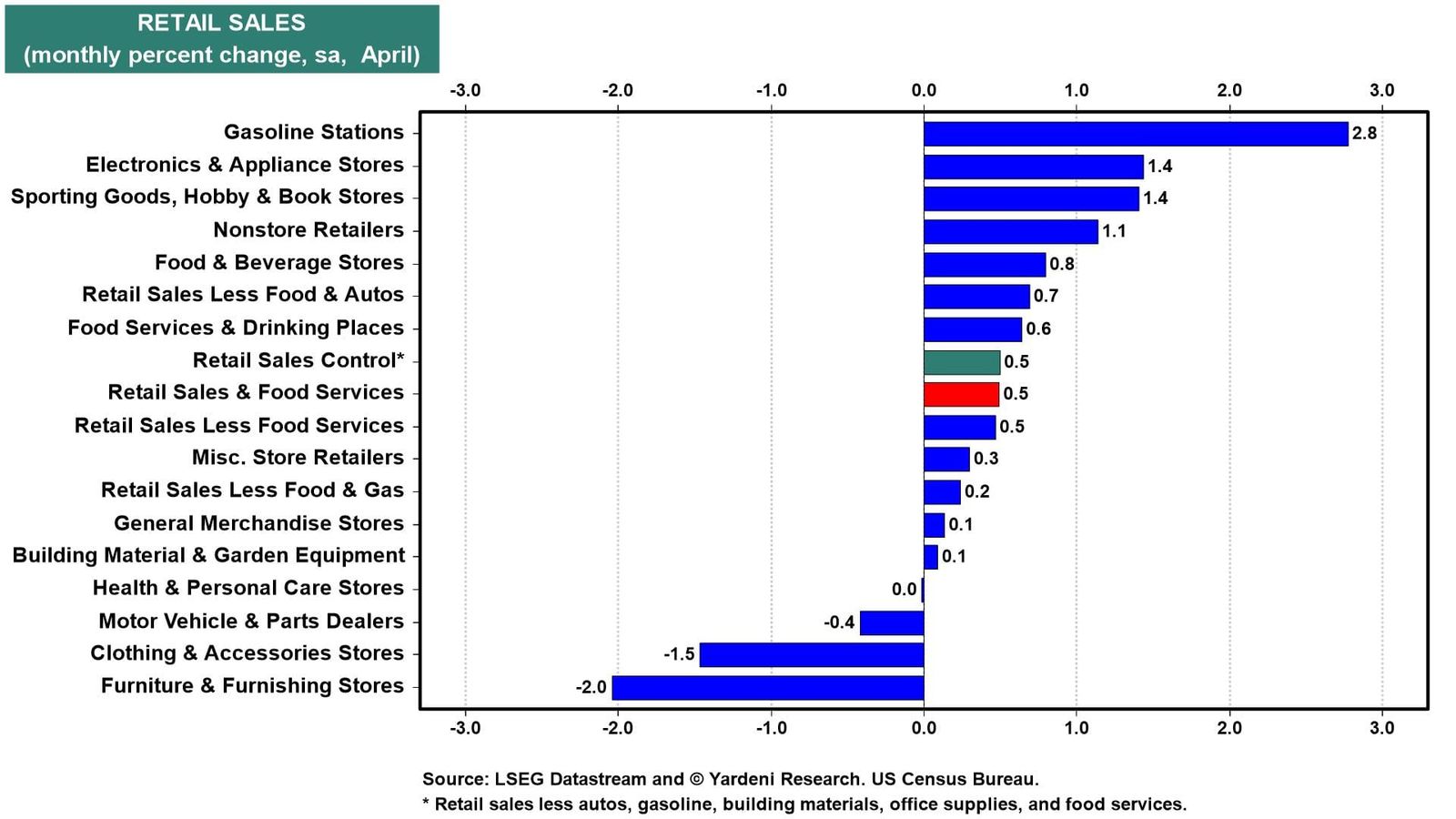
Control group sales, used in calculating GDP, rose a solid 0.5% m/m following a gain of 0.8% in March (chart).
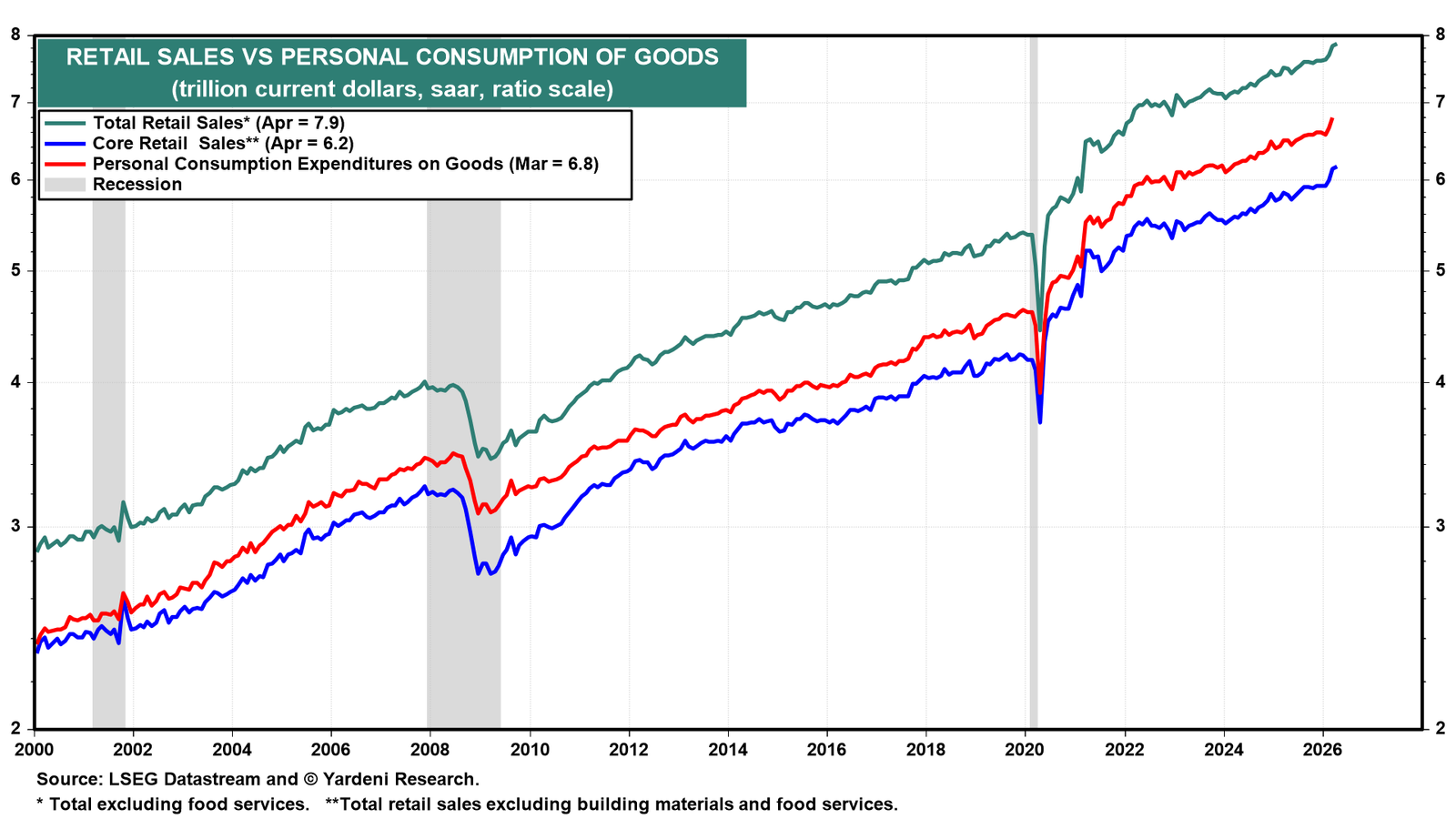
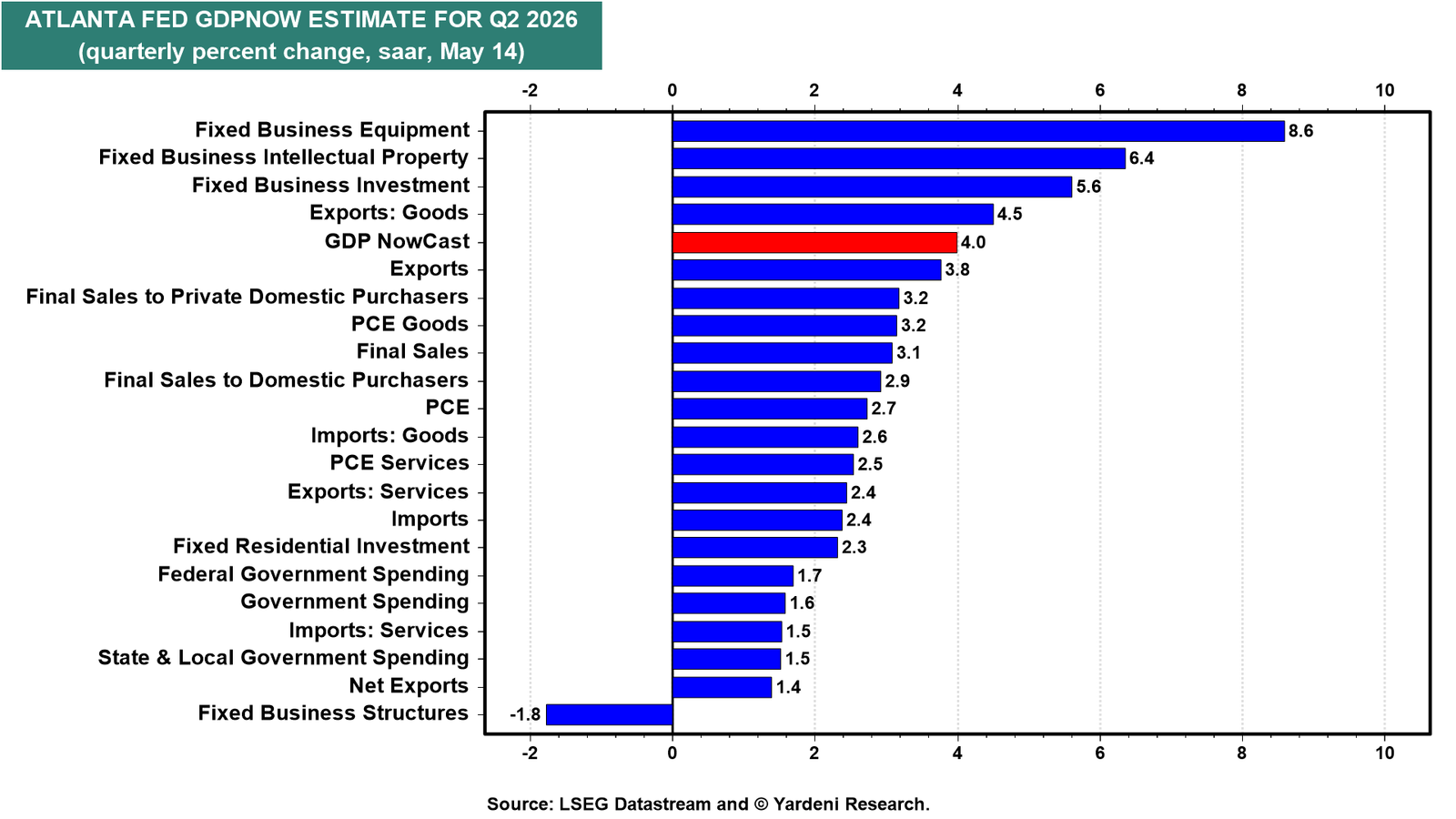
(2) GDPNow. The Atlanta Fed's GDPNow model revised its Q2 real GDP growth estimate up from 3.7% to 4.0% saar. The upgrade was driven primarily by the stronger-than-expected control group retail sales reading, which prompted a higher estimate for real personal consumption expenditures growth.
At 4.0%, the GDPNow estimate is fully consistent with our view that the US economy remains resilient. While higher inflation eroded real wages in March and April, real consumer spending growth is tracking at 2.7% for Q2 (saar). That's because retiring Baby Boomers are no longer getting paychecks, but they are still spending their retirement nest eggs.
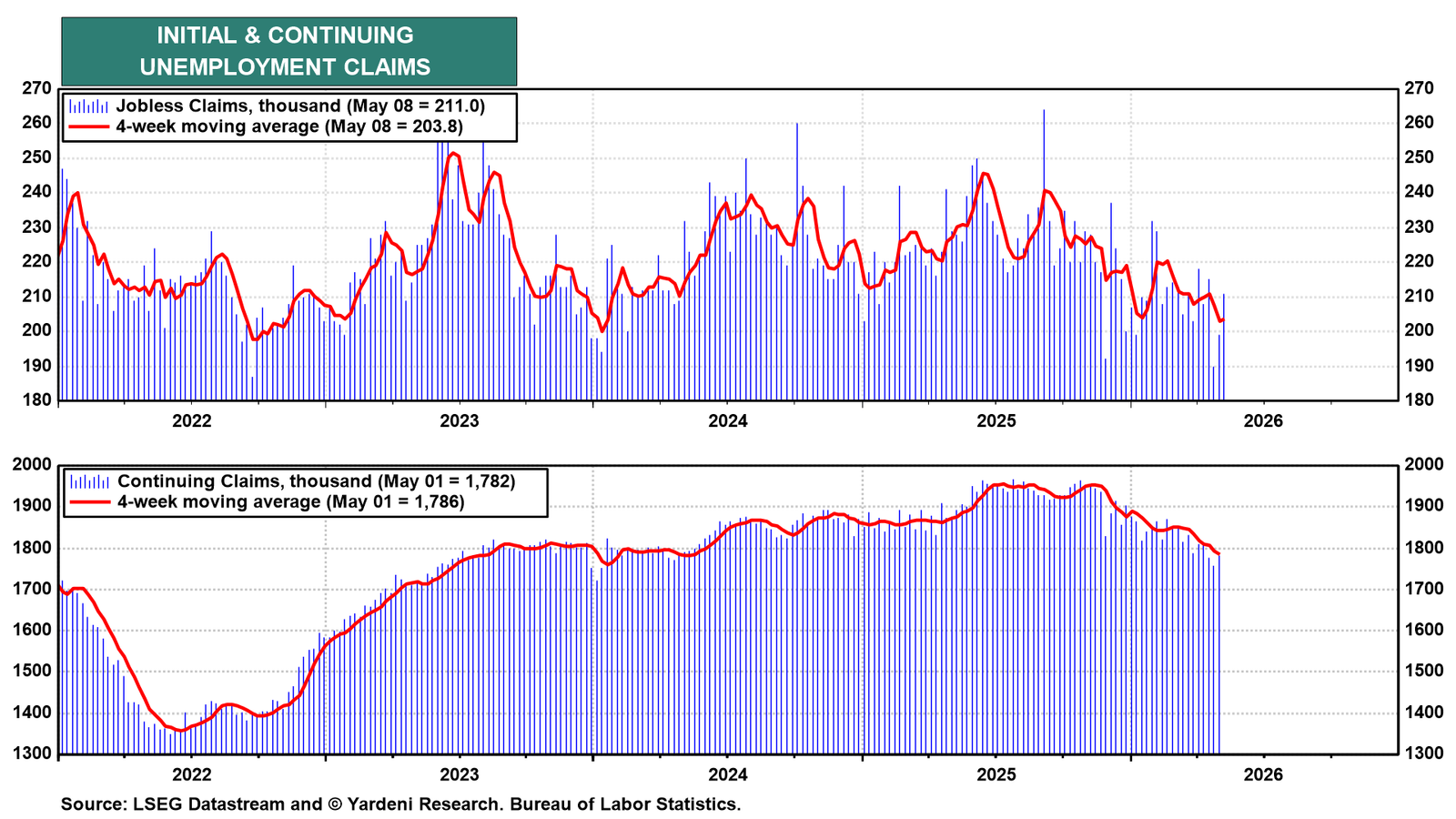
(3) Jobless Claims. Initial unemployment claims rose slightly to 211,000 last week, consistent with low layoff activity (chart). The four-week moving average held near its lowest level since January 2024. Continuing claims ticked up slightly to 1,782,000, but the four-week moving average fell further to its lowest level since early 2024, suggesting it is becoming easier for unemployed workers to find new jobs.
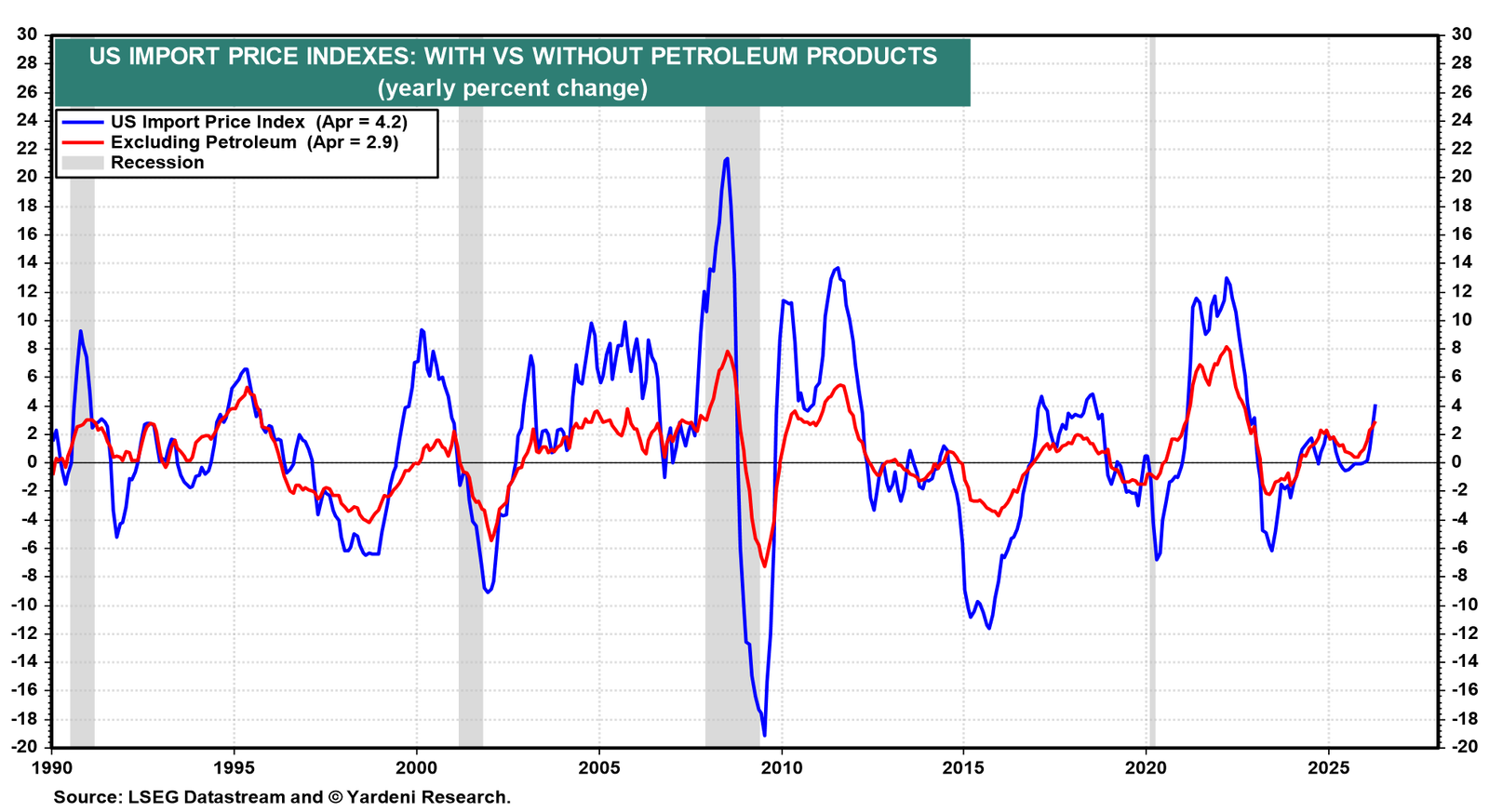
(4) Import Prices. The BLS import price index rose 4.2% y/y in April, the highest annual pace since October 2022, driven by a 19% surge in petroleum prices. Crucially, even excluding petroleum, the index rose 2.9% y/y, also the highest since October 2022 (chart). This suggests the Strait closure is causing broadening inflationary pressures that are showing up in imports of capital goods and consumer products.
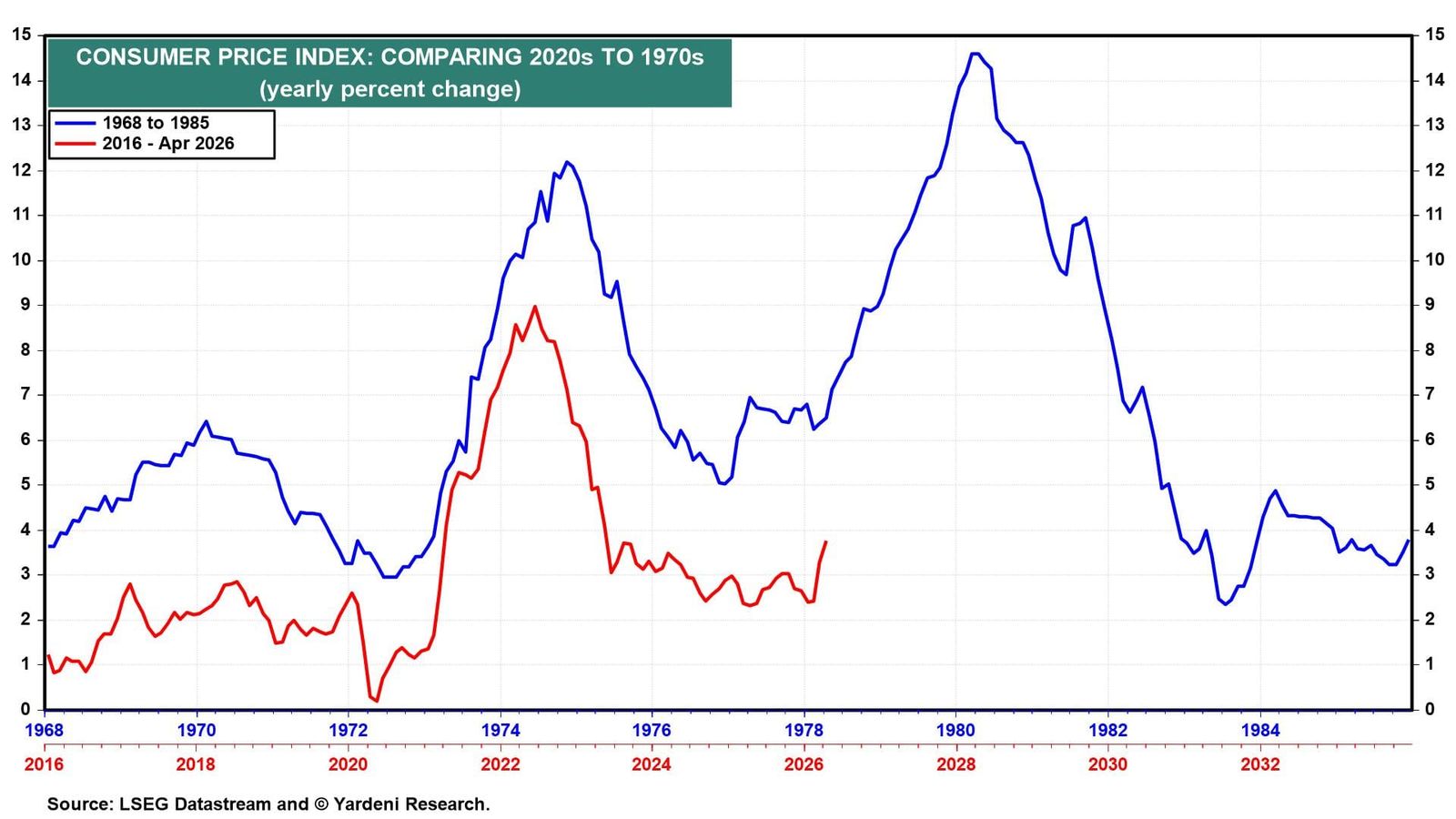
Today's data show resilient consumer spending, solid labor market activity, Q2 real GDP tracking at 4.0%, and import price inflation running at its hottest in over three years. If this mix persists, the probability of a Fed shift to a tightening bias will continue to rise. Fed officials can still recall that inflation proved more persistent than they had anticipated in 2022 and 2023. They don't want to fall behind the inflation curve as they did back then. They certainly don't want a repeat of the 1970s Twin Peaks Inflation calamity (chart).
Treasury Secretary Scott Bessent appeared on CNBC's Squawk Box earlier today from Beijing, where he is attending the summit between President Donald Trump and President Xi Jinping. Bessent argued that the recent surge in inflation is a "temporary supply shock" driven primarily by energy costs from the conflict with Iran. He stated that while we might see "one or two more hot inflation numbers," he expects substantial disinflation to take hold in the coming months as energy markets normalize and US oil production continues to scale up.
We are inclined to agree with Bessent. However, Fed officials need to show the bond market that the latest inflation problem requires a more hawkish stance from them for now.