President Donald Trump may have to write a sequel to his 1987 book, "Trump: The Art of the Deal." It's hard to make a deal if you kill your opponent. He said that about Iran today again: "They’re all messed up. They have no idea who their leader is... We took out, really, three levels of leaders... So they have a hard time figuring out who the hell can speak for the country." Reports surfaced today that Mohammad Bagher Ghalibaf, the Speaker of the Iranian Parliament and Tehran's lead negotiator, has resigned from the negotiating team. He allegedly did so due to persistent interference from the hardliners in the Islamic Revolutionary Guard Corps.
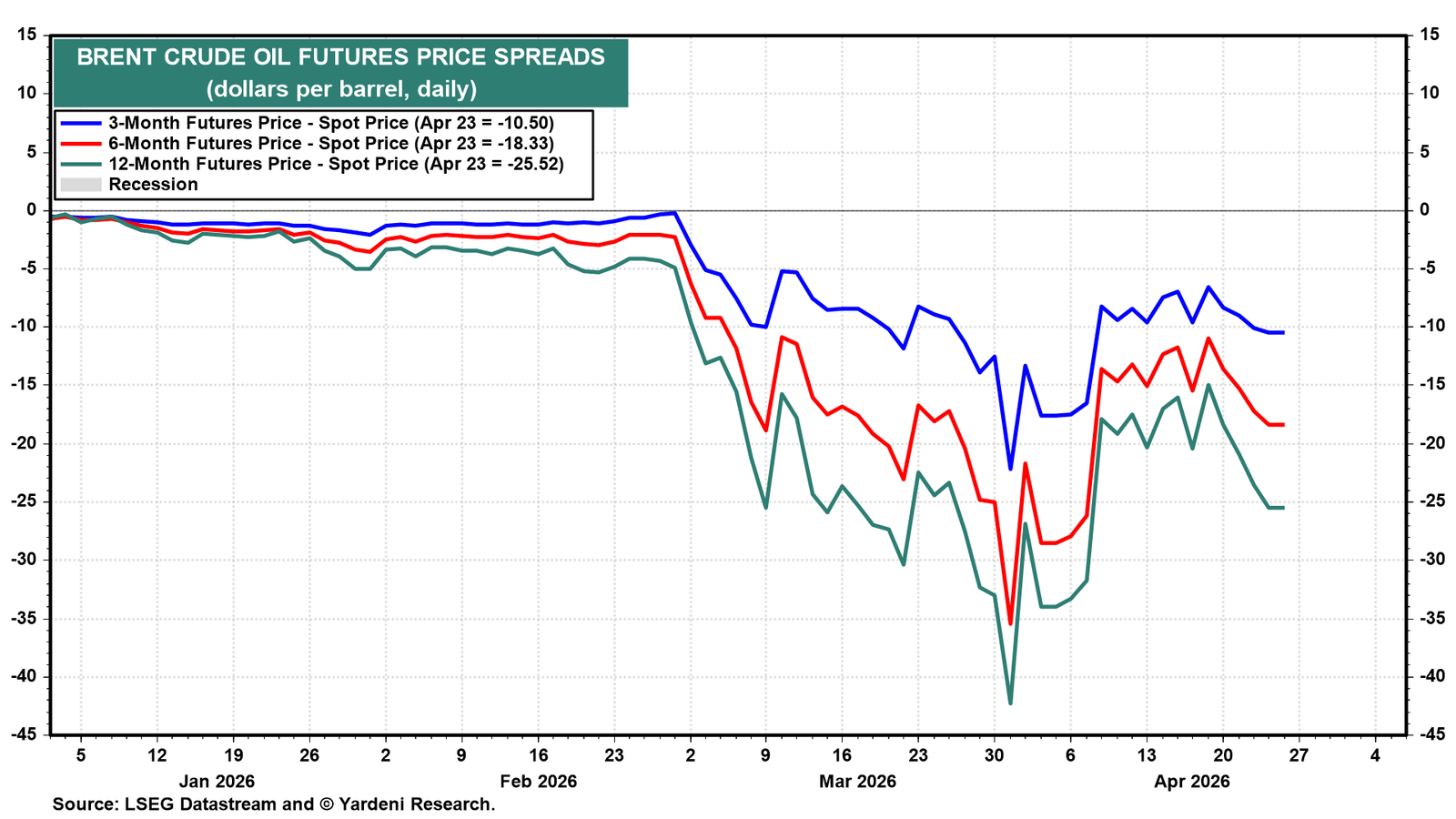
As a result, Brent is back up to $100 a barrel this evening. However, the futures market is still signaling a sharp decline over the next 12 months (chart). That's certainly a possible outcome, but why isn't the price of oil much higher today since the Straight of Hormuz has been effectively shut to navigation since February 28, when the war started? Oil is leaving the Middle East via pipelines and oil truck convoys. Also, Russia is supplying more oil to both China and India. Japan is buying oil from Mexico.
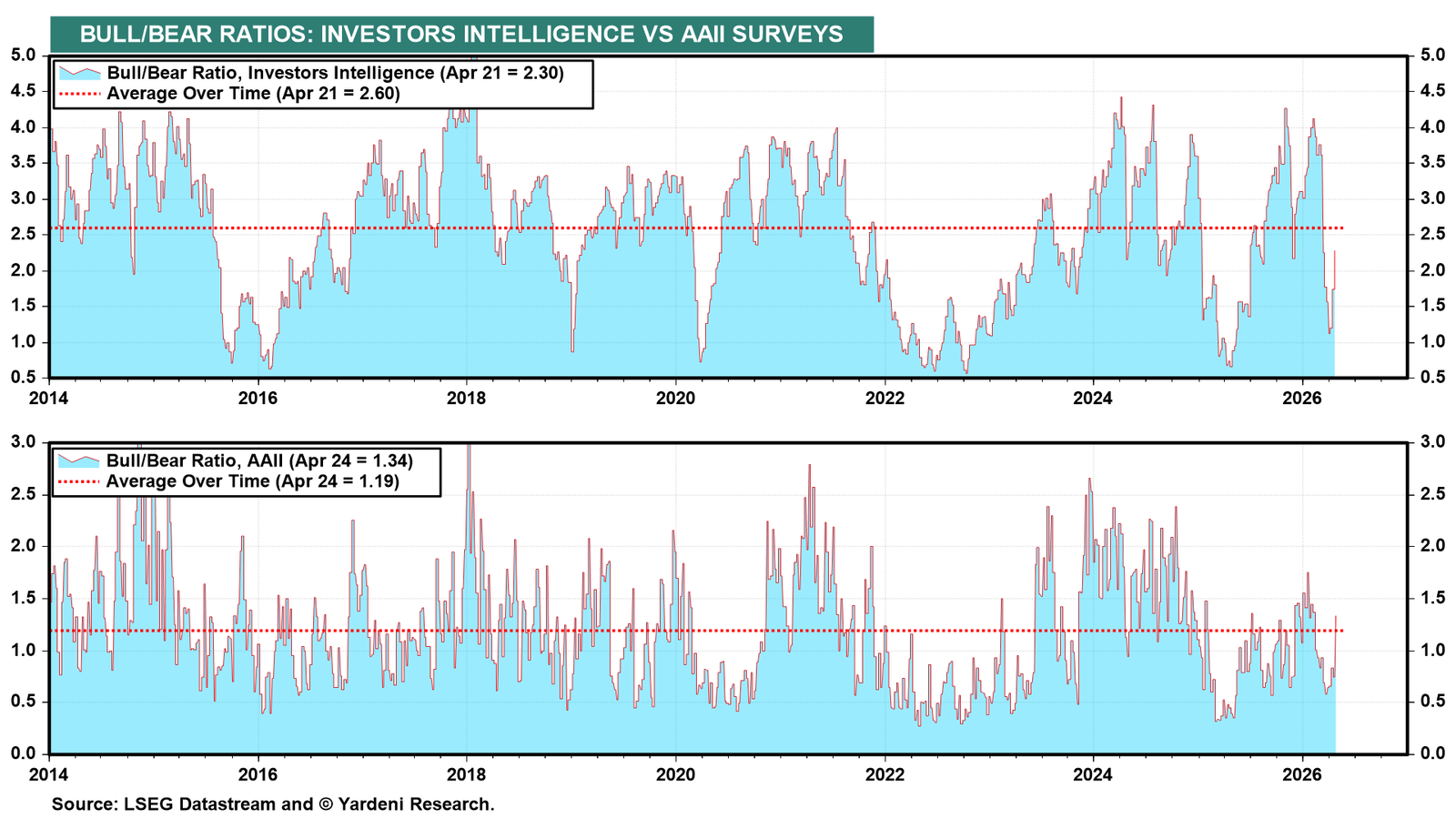
Apparently, the US stock market can live with $100 oil for now. Indeed, sentiment has turned more positive as can be seen in the latest readings of our two favorite Bull/Bear Ratios (chart). They aren't high enough to give us pause about the stock market rally that started on March 31.
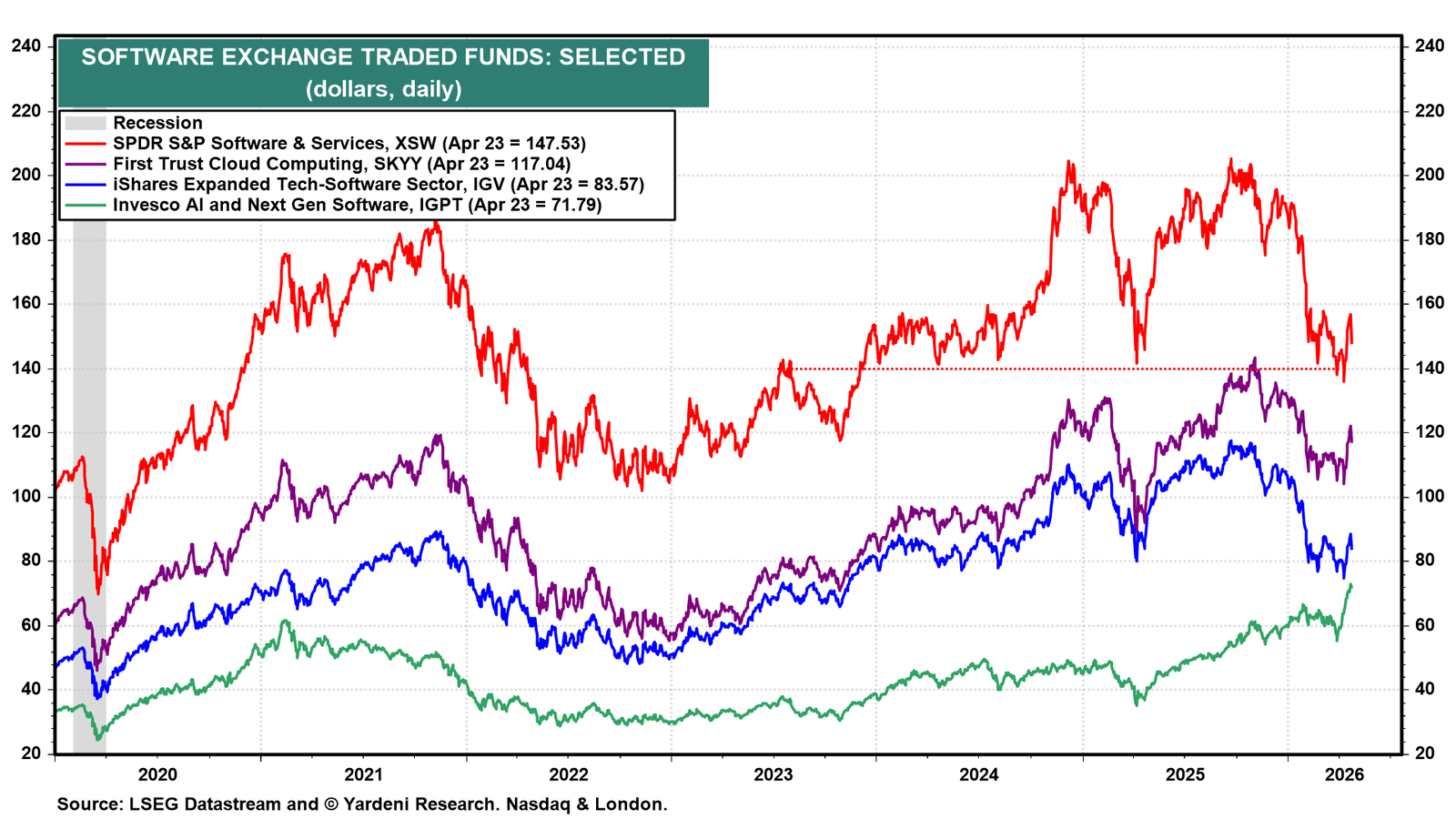
Today was a bad day for software-related stocks (chart). The management of ServiceNow stated that the ongoing conflict in the Middle East has started to delay deal closings in the region. IBM reported slowing growth in its software segment, specifically within Red Hat. Their stock prices fell 18% and 7%, respectively. Microsoft added to the somber mood by offering voluntary buyouts to long-tenured employees today. It's a first for the giant, signaling a massive internal reorganization to pivot away from traditional software toward pure-play AI efforts.
Meta also announced it is slashing roughly 8,000 jobs worldwide. Adding to the low morale, Meta recently disclosed a new program that has employees on edge. The company is installing software on work laptops to capture keystrokes, mouse movements, and screenshots, with the goal of training "AI agents" to autonomously perform tasks currently done by humans.
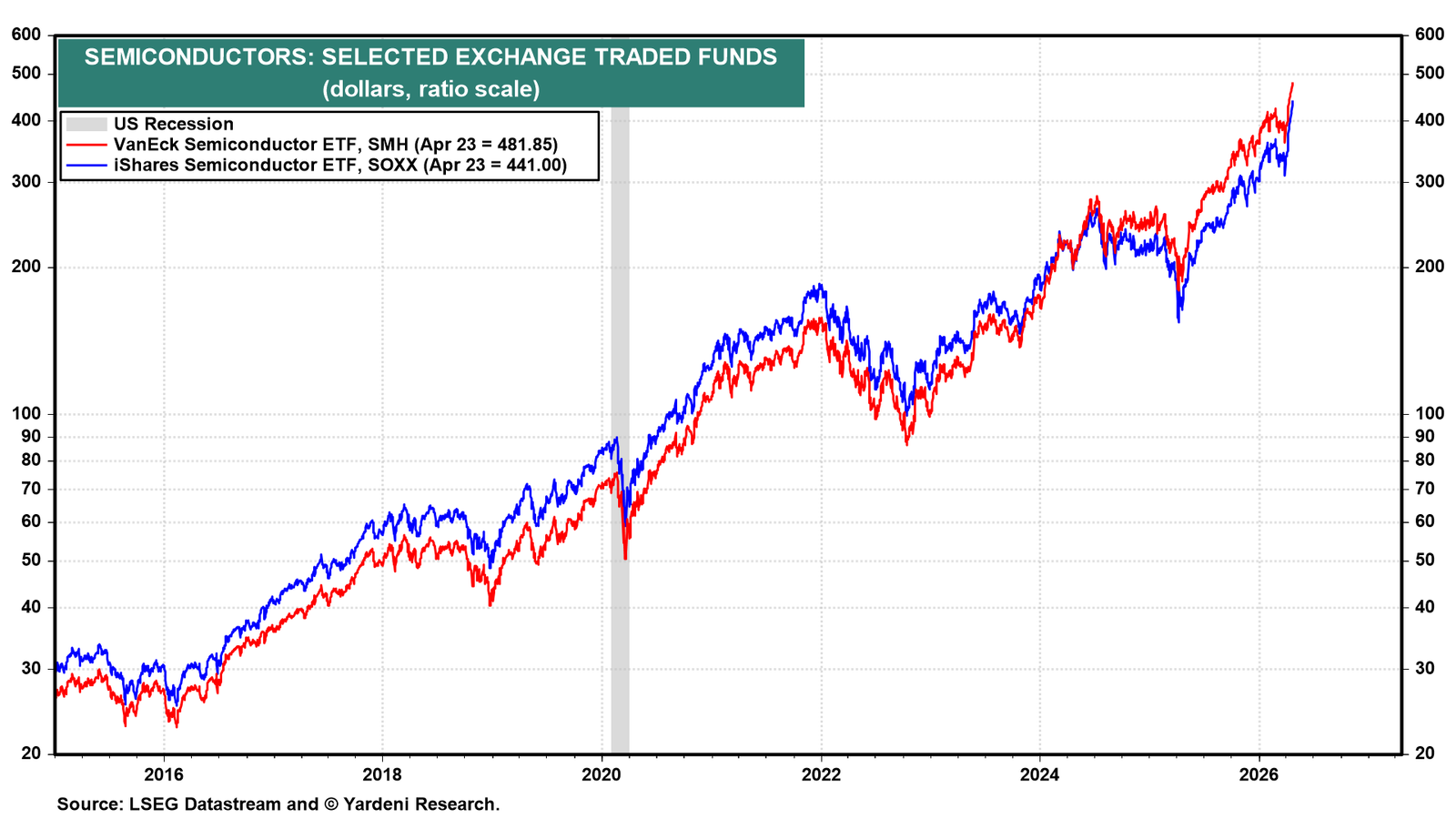
Investors are continuing to rotate out of software and into hardware, such as semiconductors and semiconductor equipment (chart). After the close, Intel announced great results, beating estimates. Shares traded as much as 20% higher.
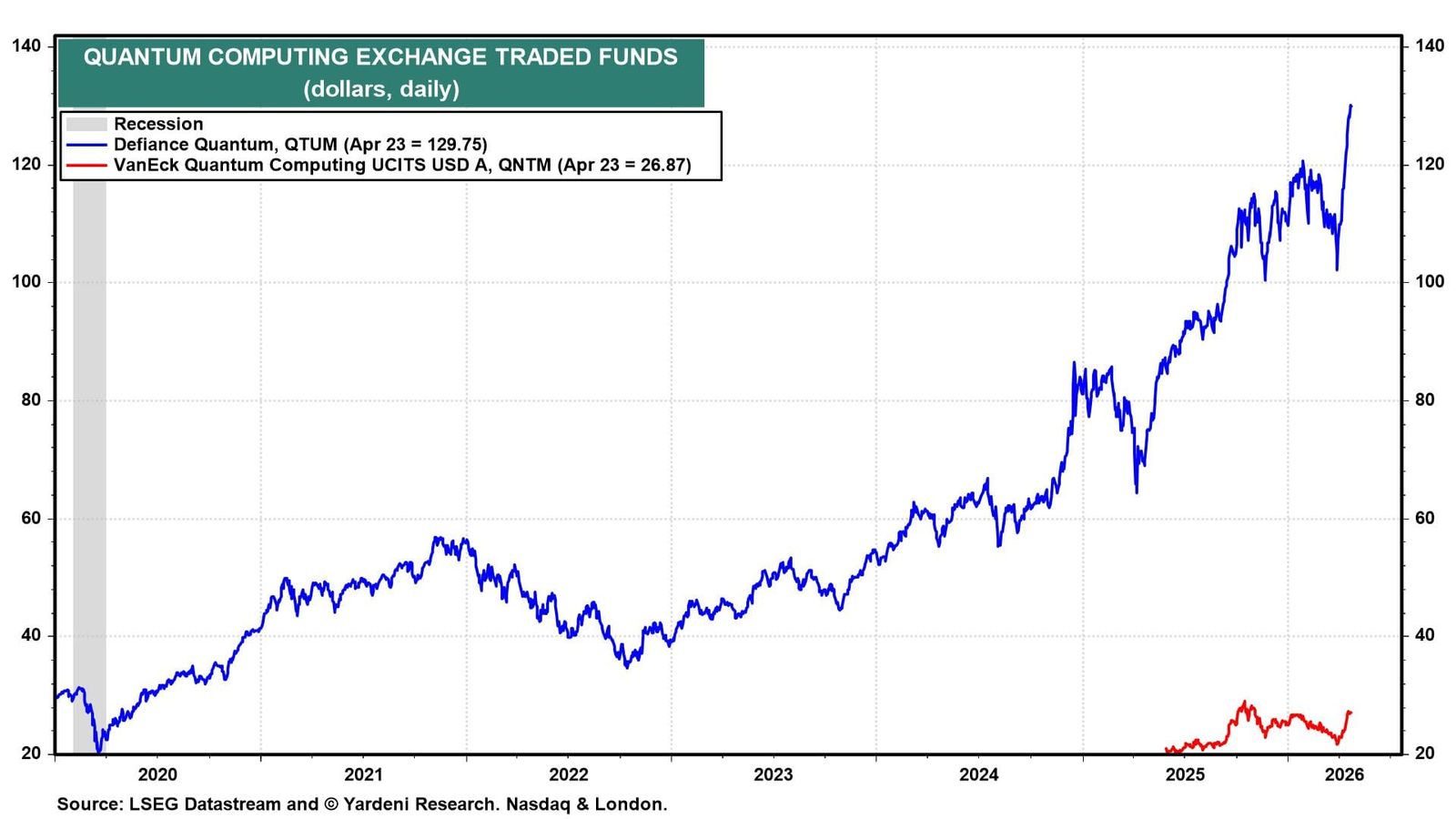
Investors are increasingly betting on the long-term consequences of the Technology Revolution and looking past the short-term mess in the Middle East. In recent days, the Defiance Quantum ETF has soared to record highs (chart).
Investors are also betting on the ongoing resilience of the US economy, which was confirmed by today's economic data:
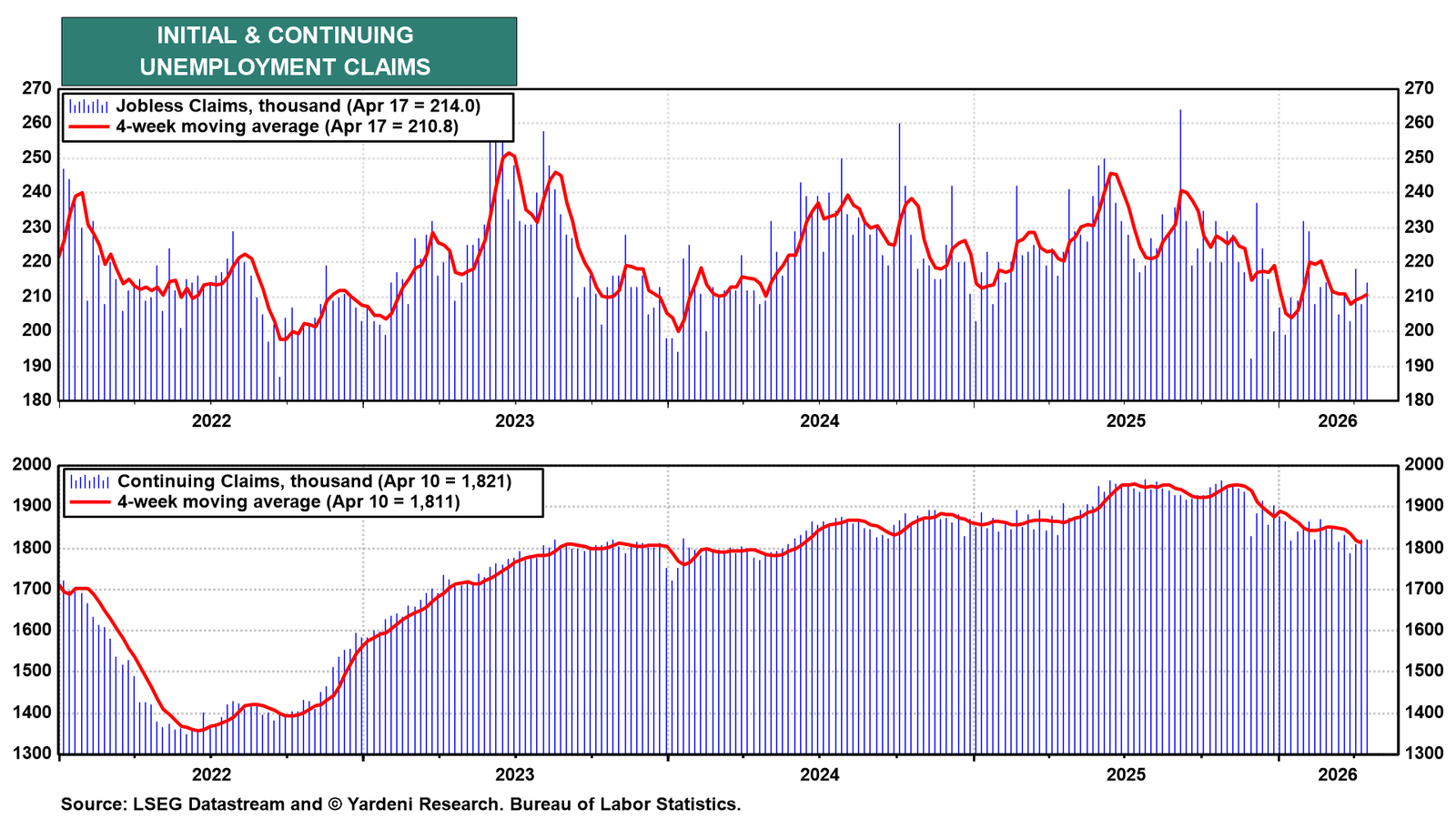
(1) Jobless claims. Initial unemployment claims for the week ended April 18 ticked up modestly but remain well below their long-run historical average and their 2025 average—hovering near some of the lowest levels of the past year and fully consistent with an economic environment in which layoff activity is historically subdued (chart).
The same story holds for continuing claims, which we track as a proxy for the difficulty unemployed workers face in finding new employment. Continuing claims edged up slightly during the week ended April 18 but remain below their 2025 average, and the four-week moving average continues to hover near its lowest level since June 2024. That is an encouraging signal: not only are layoffs low, but those who do lose their jobs are finding new ones more easily. We interpret this as evidence that hiring activity may be starting to improve.
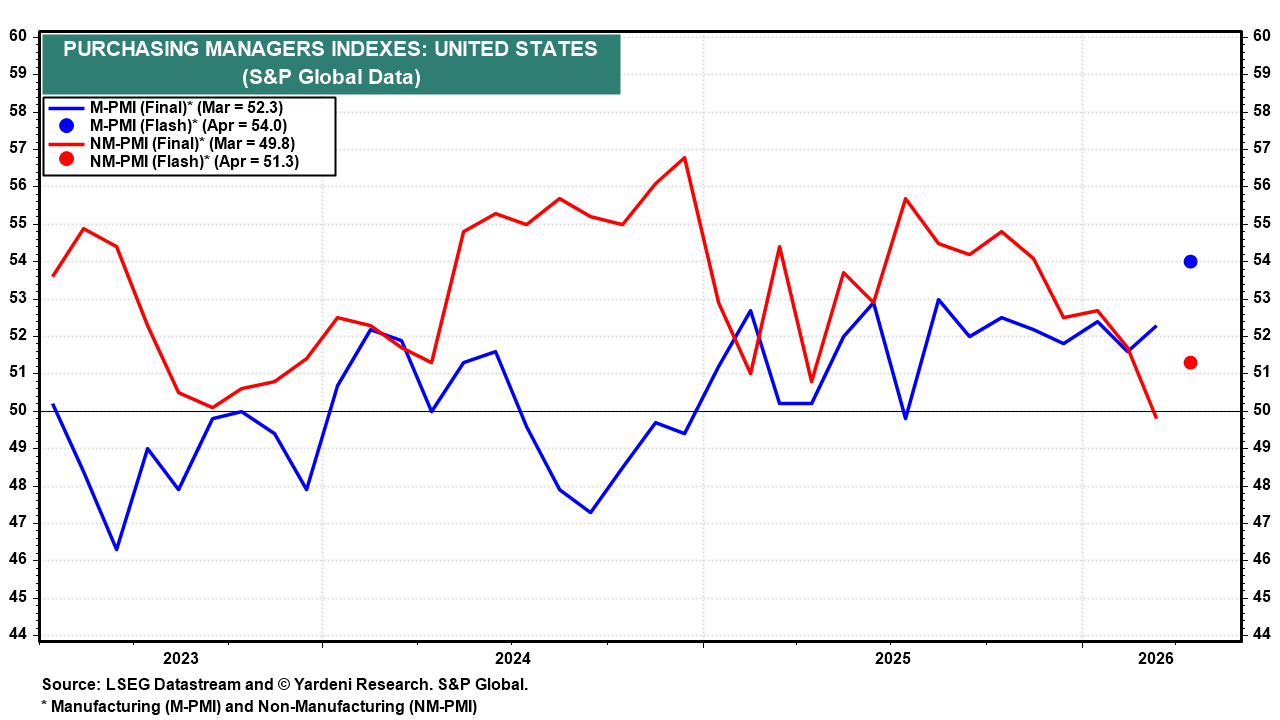
(2) Flash PMIs. April's S&P Global Flash PMI data were strong, notwithstanding higher energy prices (chart). The Services PMI Business Activity Index rebounded to its highest level in two months in April, snapping back from a brief dip below the expansion threshold in March. New business inflows accelerated, service sector employment grew faster, and business confidence improved.
Even more striking, both the Manufacturing PMI and the Manufacturing Output Index surged to multi-year highs in April. The breadth of the improvement was notable, with new orders, output, and employment all expanding at an accelerating pace.
A note of caution is warranted, however. A portion of the manufacturing gains were driven by precautionary inventory building ahead of anticipated supply shortages and price hikes, rather than by an acceleration in underlying demand. Supply chain disruptions tied to the Middle East conflict intensified, with supplier delivery times deteriorating to their worst levels since mid-2022 and a surge in safety-stock purchases that echoes the pandemic-era dynamics of 2021. These pressures fed directly into prices: average selling prices rose at the fastest pace since mid-2022, and input cost inflation hit an eleven-month high.