In his seminal work, On War (1832), Carl von Clausewitz famously wrote: "War is the continuation of politics by other means." The US and Iran agreed to a ceasefire in their war and to talks seeking a diplomatic solution. However, their talks failed, and now they are both resuming the war. On Sunday, US Central Command said the Navy will blockade all maritime traffic entering and exiting Iranian ports on Monday at 10 a.m. ET.
The markets reacted swiftly on Sunday: The prices of Brent and WTI crude oil jumped by about $8 a barrel each, putting them a bit north of $100. The dollar firmed slightly. Gold fell about $100 an ounce. Futures prices for the DJIA/S&P 500/Nasdaq fell a little over 1%.
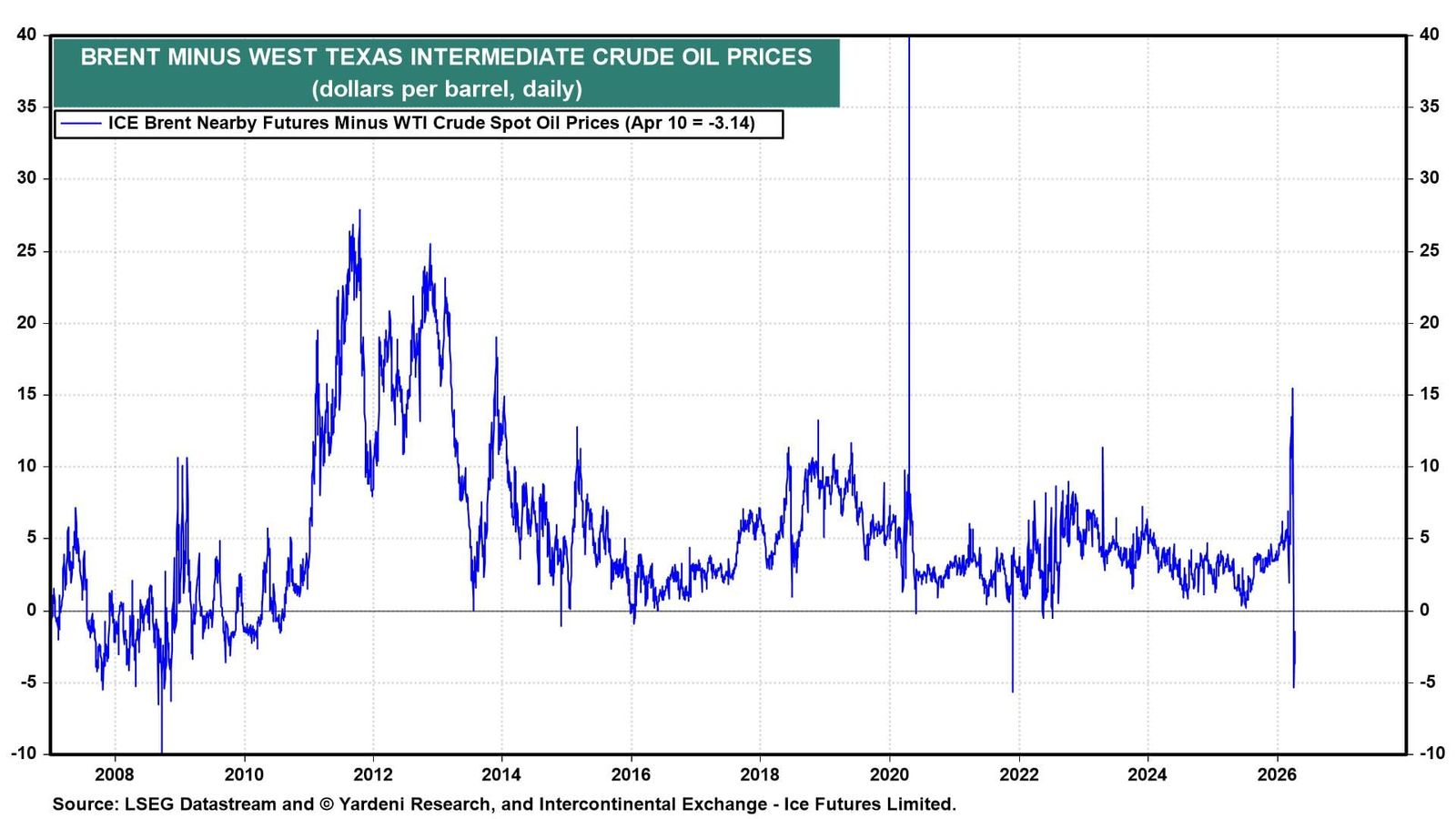
The financial markets may be learning to live with the war in the Middle East, as they have with the war between Ukraine and Russia. China imports lots of Iranian oil. The White House clearly is leaning on China to pressure Iran to end the war, and also threatened today to impose a 50% tariff on China if Beijing sends advanced defense equipment to Tehran. President Donald Trump offered to facilitate the sale of cheaper oil from Venezuela to China. The unusual negative spread between the Brent and WTI prices suggests that traders believe that foreign demand for US crude oil is increasing as an alternative to oil supplied by Arabian Gulf producers (chart).
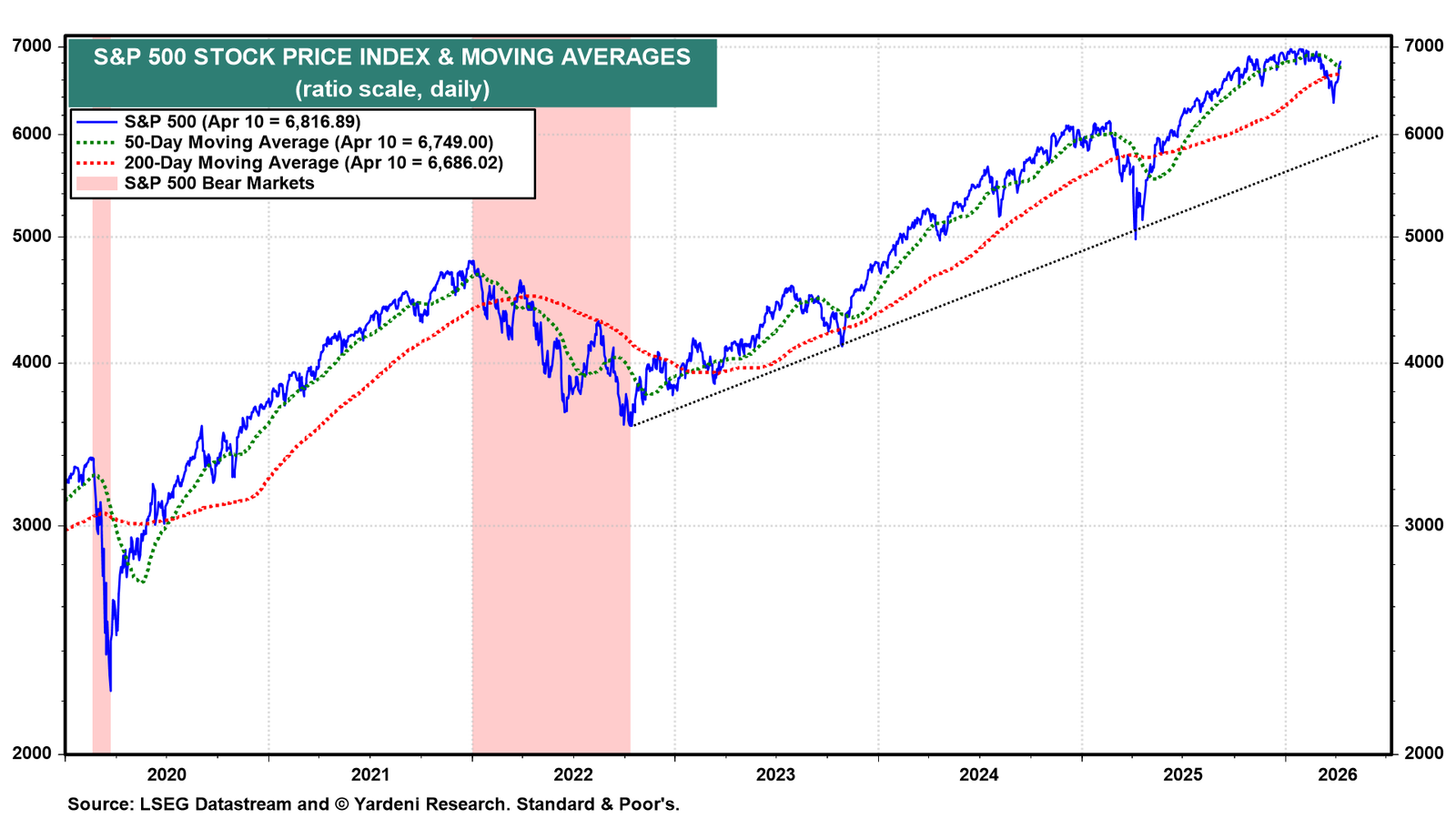
Notwithstanding the ongoing war, we are sticking with our call that the S&P 500 bottomed on March 30 (chart). We are sticking with our year-end target of 7700 for the S&P 500.
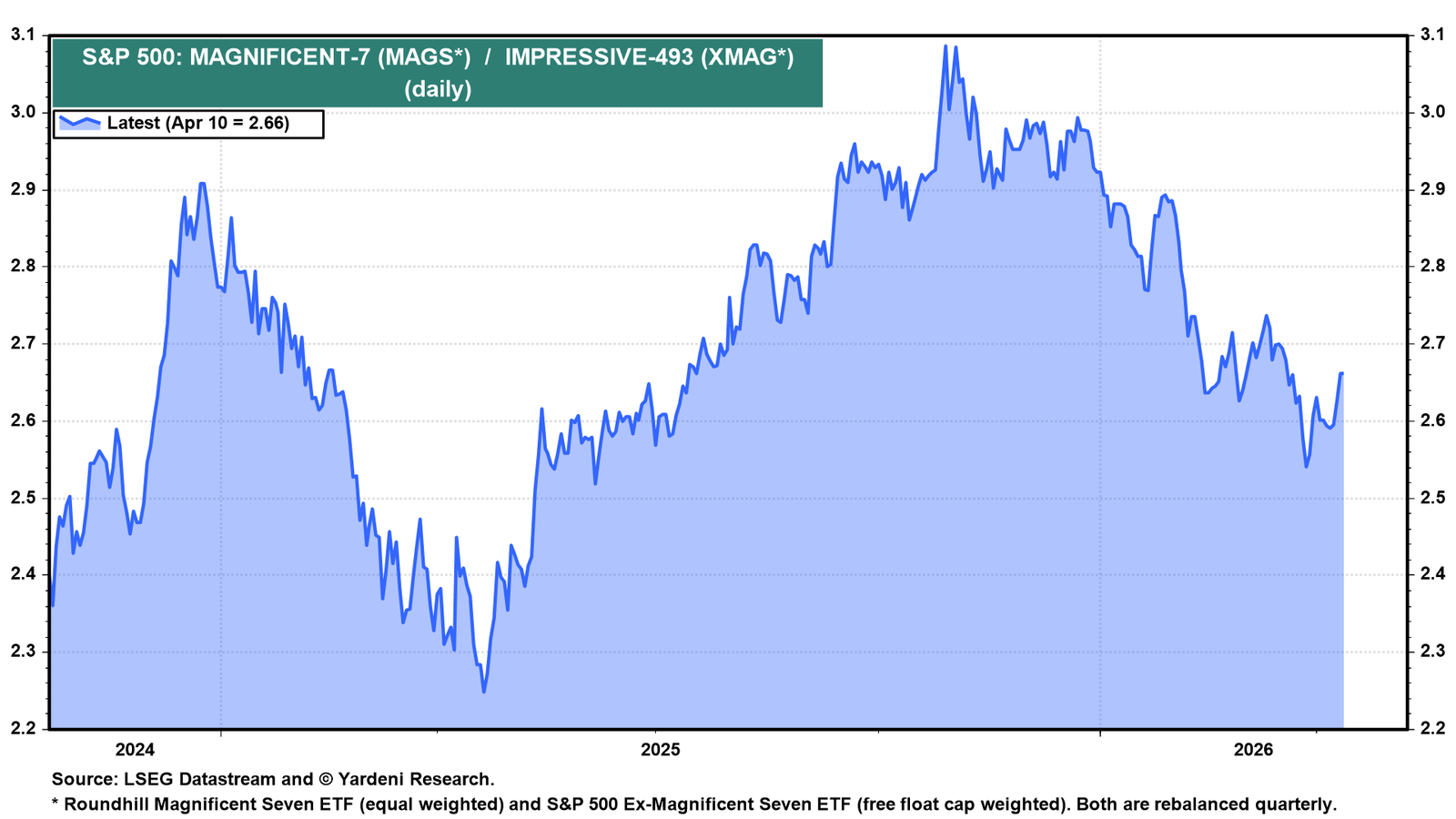
The recent outperformance of the Magnificent-7 stocks relative to the Impressive-493 suggests that their valuation multiples fell enough during the recent stock market pullback to attract buyers again (chart). It may also be a sign that investors are less concerned about an AI bubble. We agree with them. In early December of last year, we recommended underweighting the Mag-7. Three weeks ago, we suggested they were cheap enough to raise to market-weight.
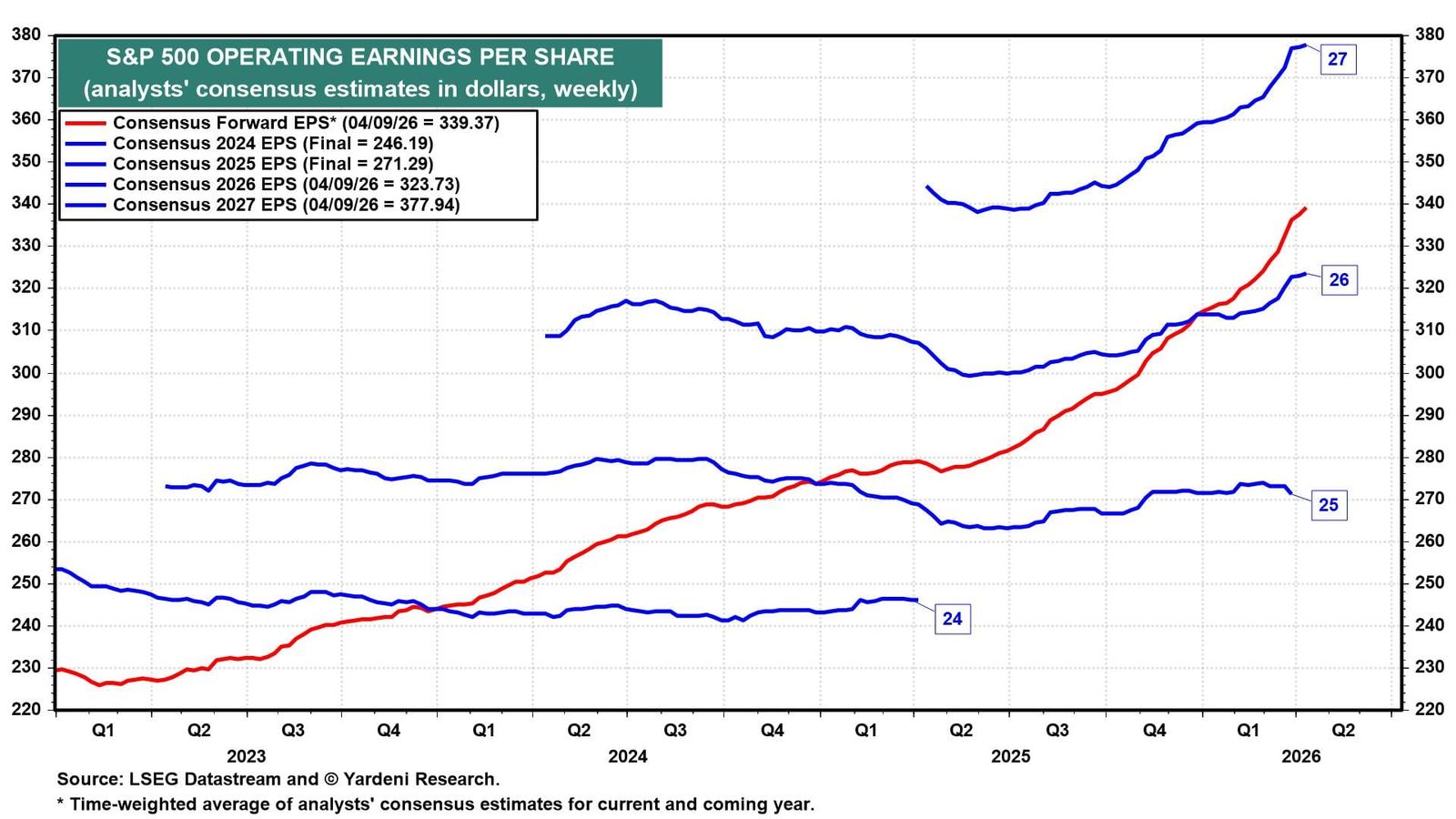
The Q1 earnings season is starting this week. After rising for several weeks, the analysts' consensus estimates for 2026 and 2027 S&P 500 operating earnings per share have flattened out over the past two weeks (chart). The S&P 500 forward earnings rose to yet another record high during the week of April 9. At Friday's close of 6816.89, the S&P 500 is trading at a 19.1 forward P/E.
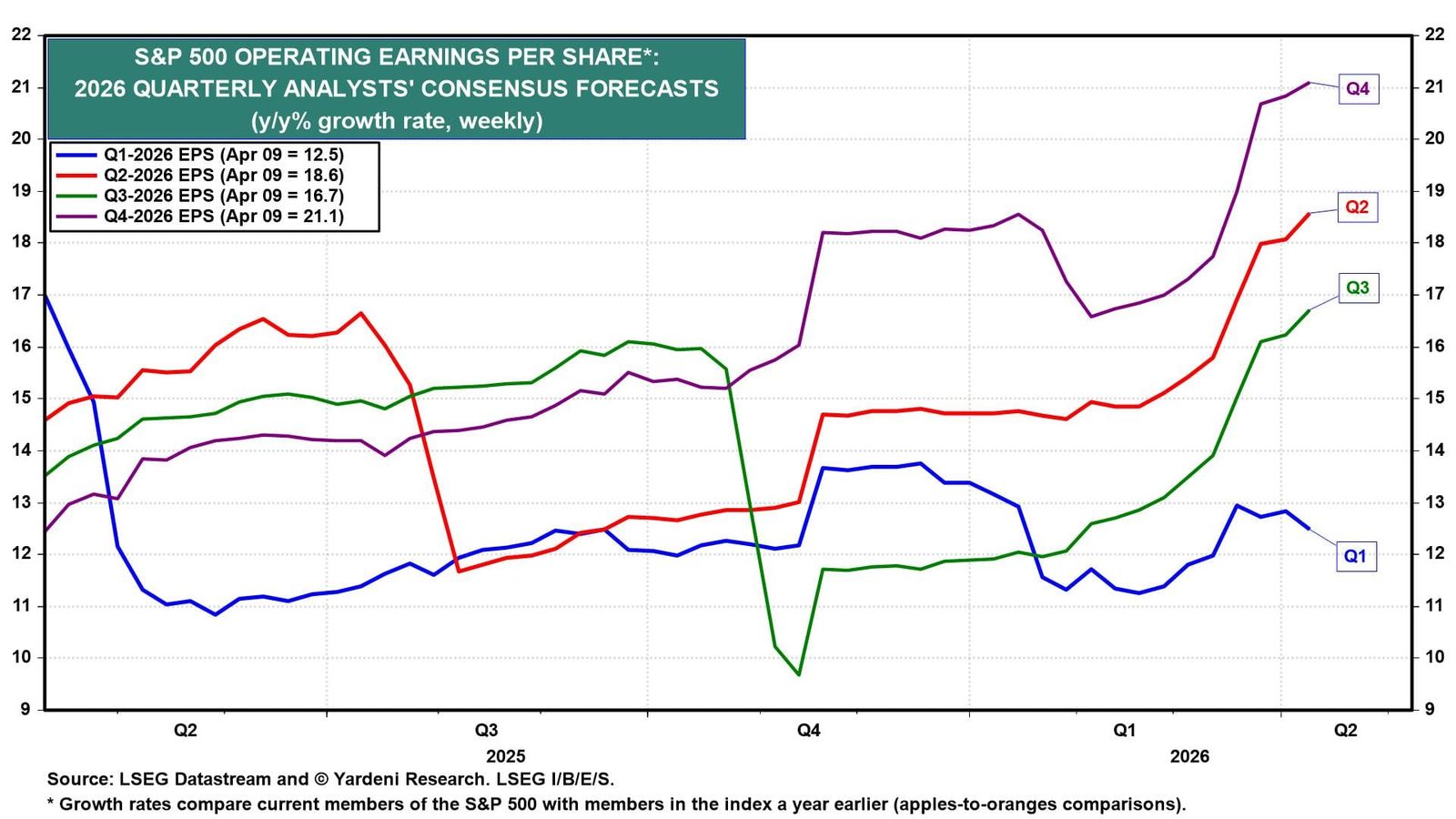
Industry analysts are very optimistic about earnings growth this year, with their expectations of double-digit gains for all four quarters (chart). They may be a bit too optimistic.
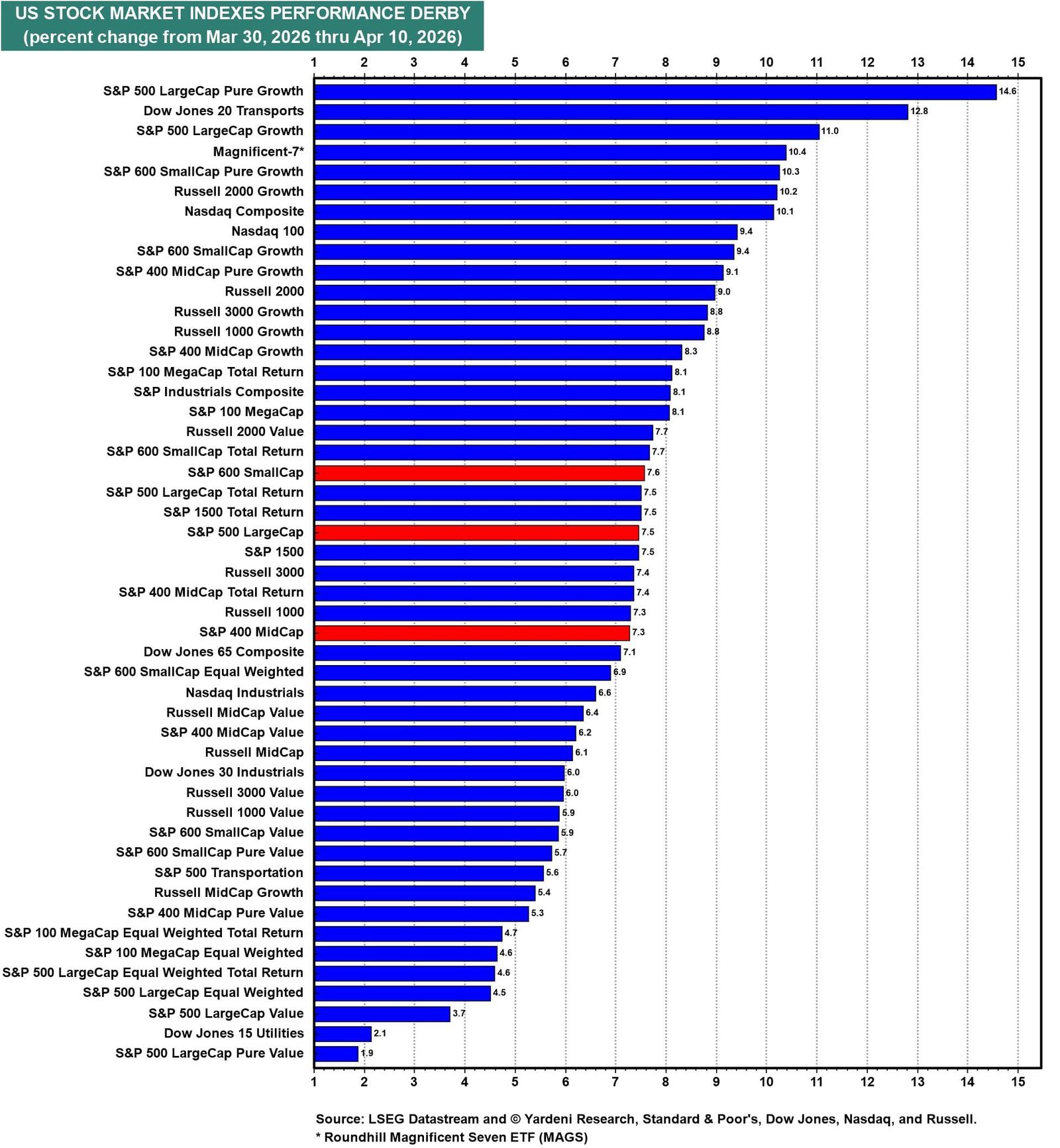
During the stock market pullback, Value outperformed Growth (chart). Since March 30, when the stock market bottomed, Growth has outperformed. Interestingly, so have the Transportation stocks. The S&P 500 equal-weighted index has underperformed. We think it will outperform the S&P 500 market-weight index over the rest of this year.
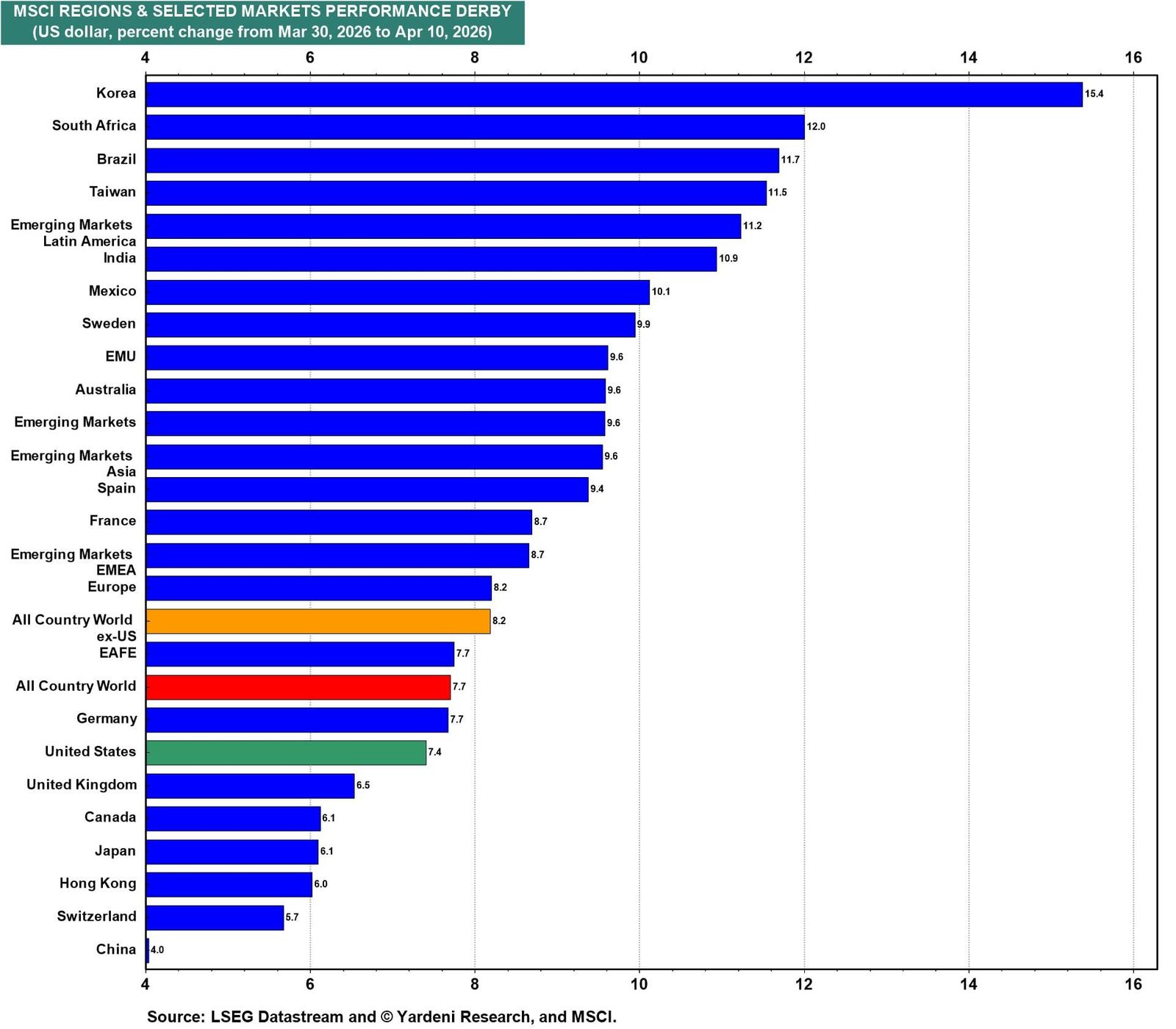
Our pivot from Stay Home to Go Global late last year worked well until the war started. However, it has made a comeback since the market bottomed on March 30 (chart).