This evening, Reuters reports that ship traffic through the Strait of Hormuz was well below 10% of normal volumes on Thursday, despite the US-Iran ceasefire. Tehran asserted its control by warning ships to remain within its territorial waters as they passed through the Strait to avoid mines. As we've noted previously, geopolitical crises tend to provide buying opportunities in the stock market. Sure enough: Following a 9.1% pullback from January 27 through March 30, which occurred mostly in March because of the war, the S&P 500 is up 7.6% through today's close, led by a 9.6% rise in the Magnificent 7.
Stock investors are clearly betting that the hot war will continue to cool off. That's been our bet since late Tuesday, March 31, when we wrote that the market probably bottomed the day before. On the other hand, we think that bond investors should be more concerned that inflation was heating up just before the war, and now will continue to do so, probably through the end of this year. We are still counting on productivity to offset the war's inflationary consequences. But we are on alert. Here's why:
Pre-War Inflation
During January and February, the two months before the war, the CPI inflation rate was slightly cooler than expected at 2.4% y/y in both months. However, both the headline and core PPI inflation rates were hotter than expected. So was import price inflation, which was expected to moderate as the effects of Trump's 2025 tariffs wore off.
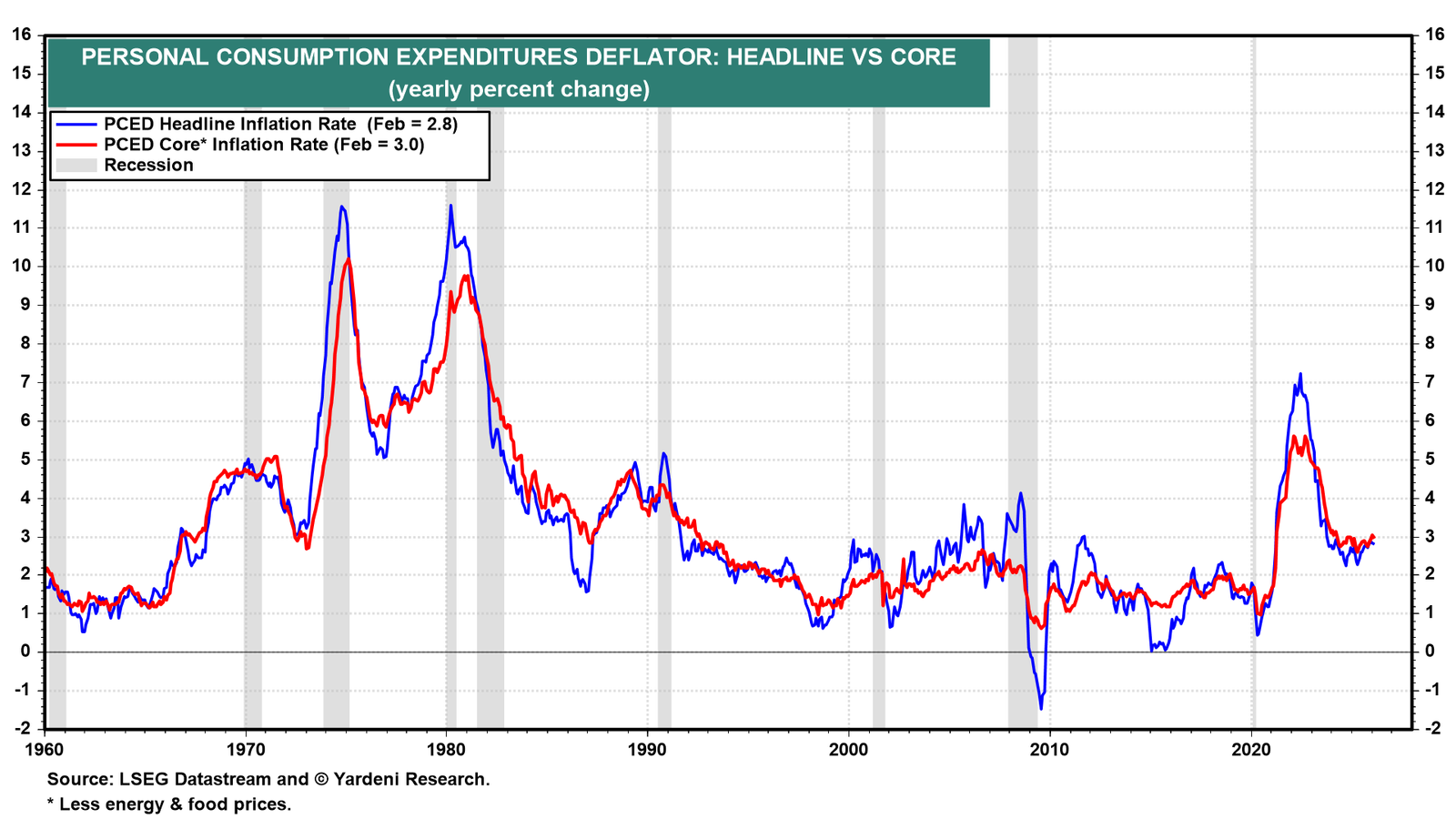
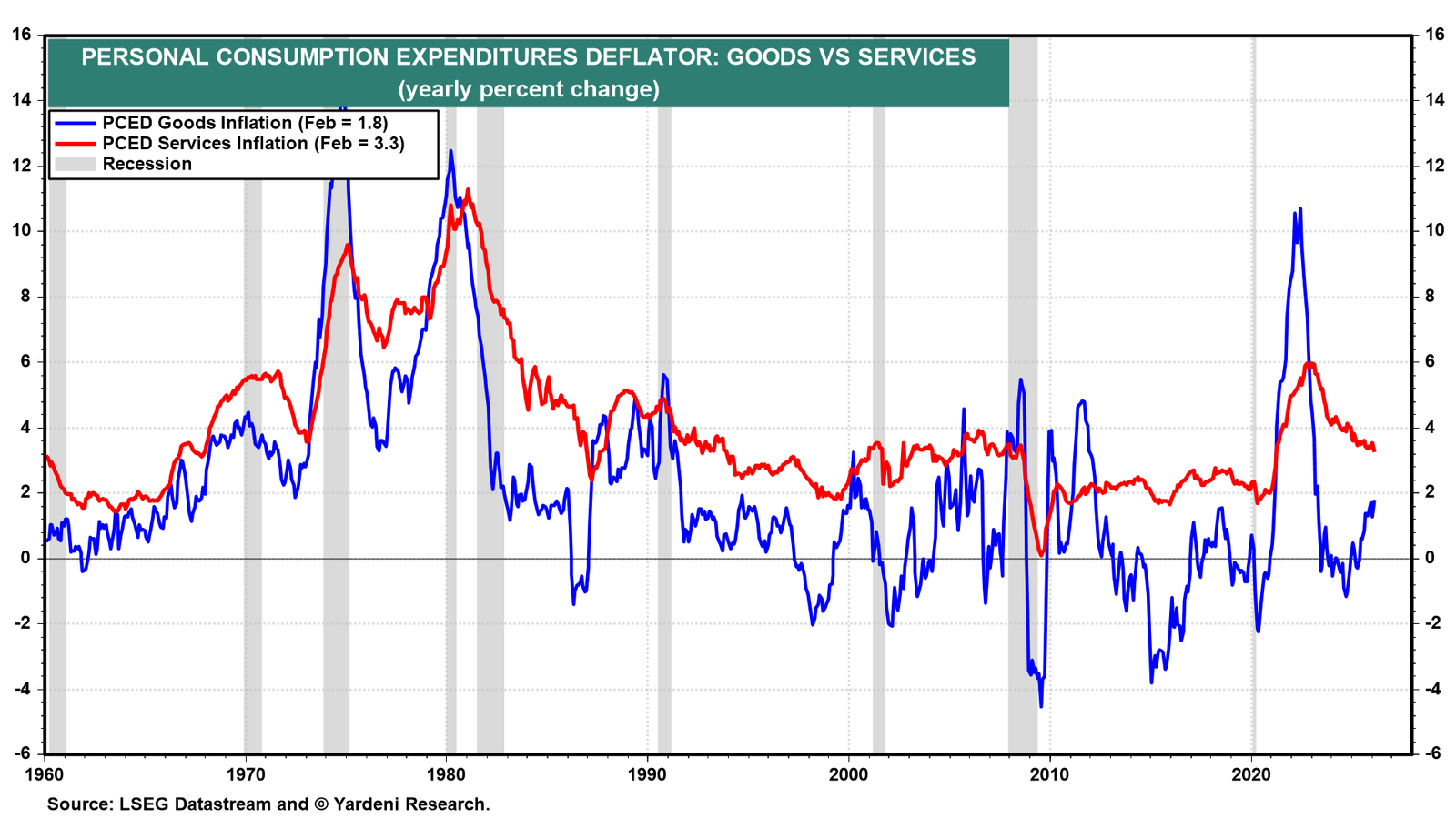
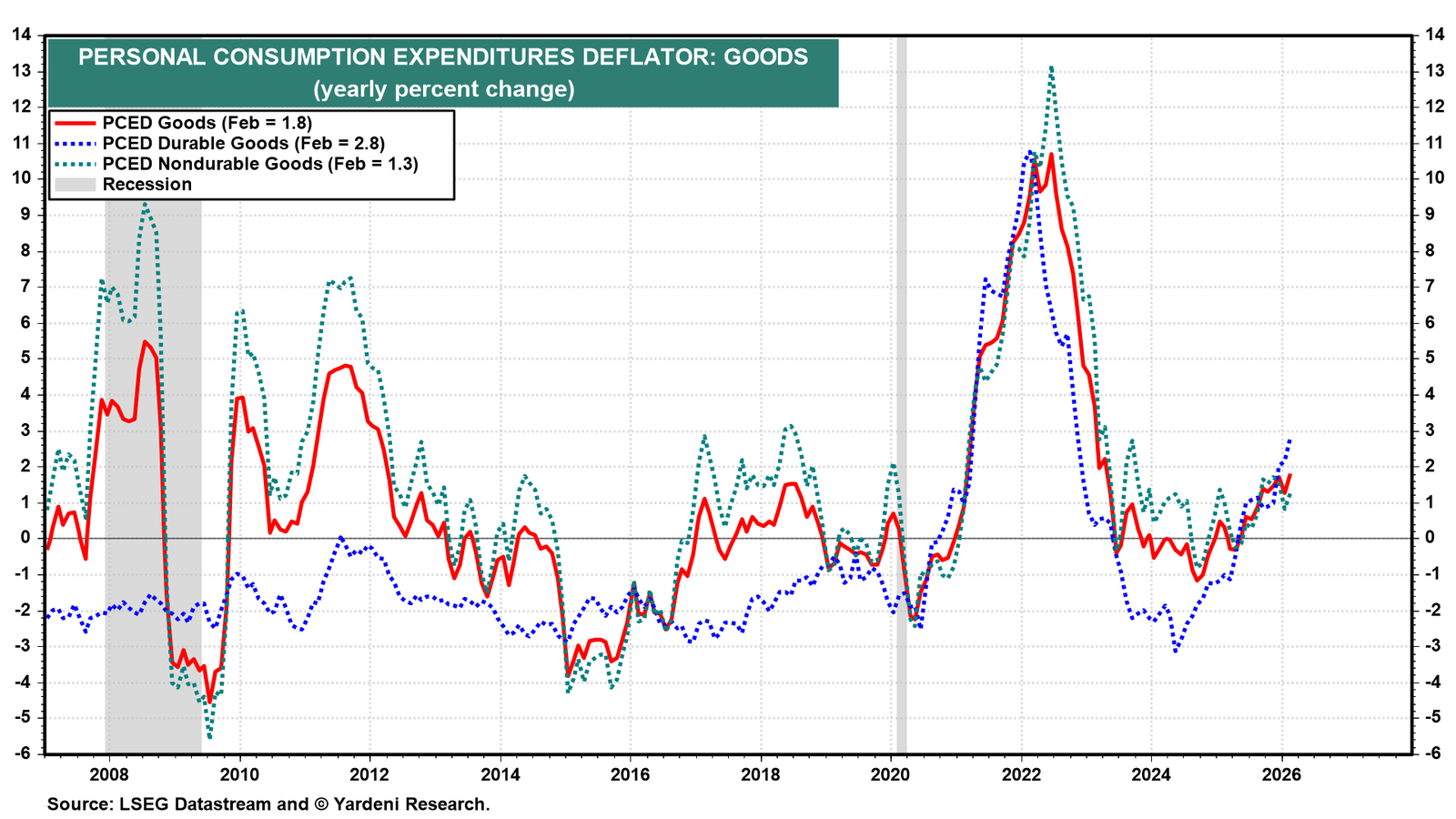
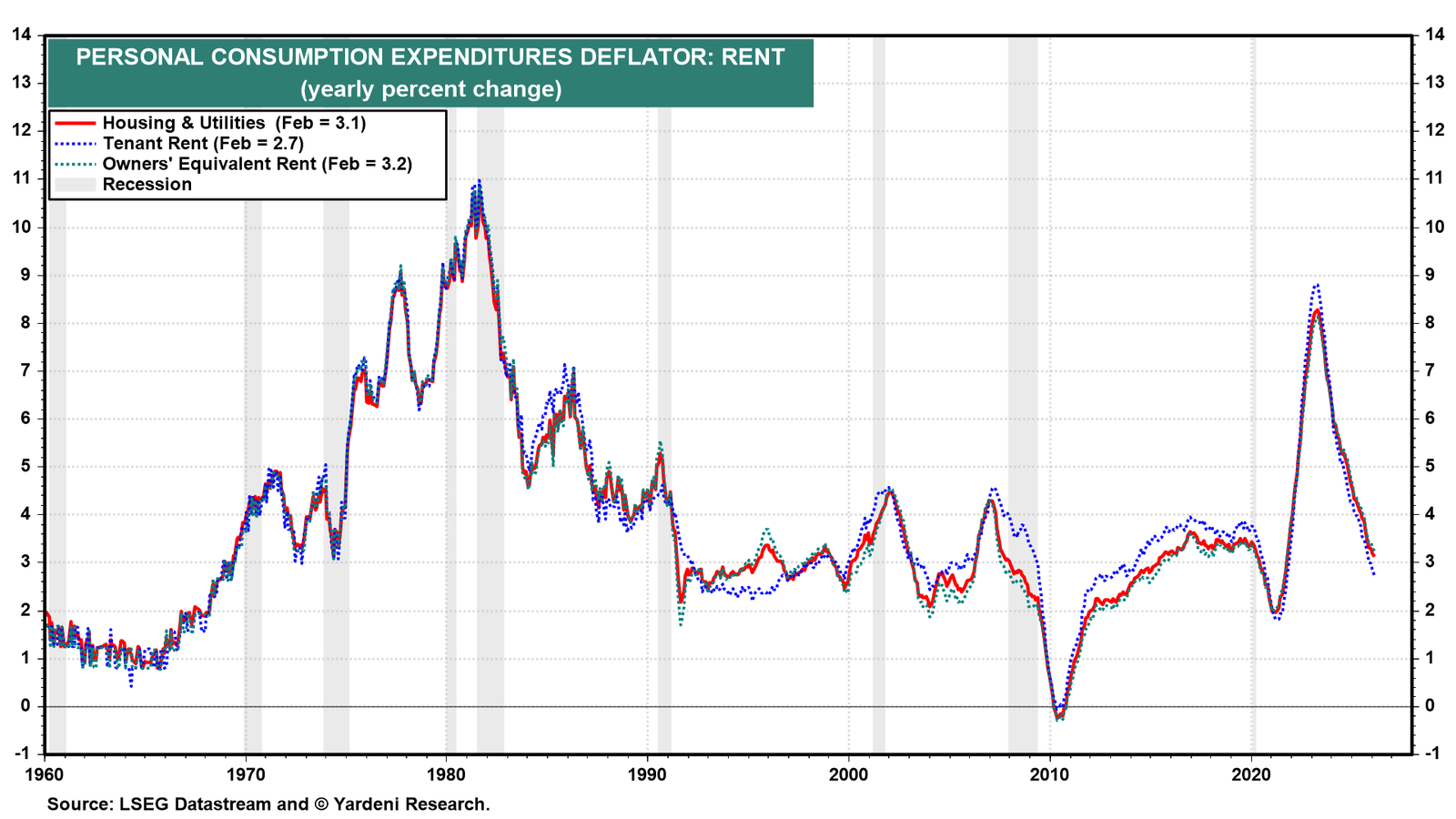
Today we learned that the headline and core PCED price indexes both rose 0.4% m/m in February. On a year-over-year basis, both measures stopped falling and stalled around 3.0% (above the Fed's 2% inflation target) over the past year as Trump's tariffs boosted goods prices, especially durable goods prices (chart). Services inflation continued to moderate, led by cooling shelter inflation.
Last year, the Fed tolerated the lack of progress toward its 2% target because the inflationary impact of tariffs was widely expected to be transitory. Moderating services inflation was cited as evidence that underlying inflationary pressures were easing.
Fast forward to February 2026, and the assumption about tariffs has yet to be vindicated. Durable goods inflation surged 1.1% m/m in February–the strongest monthly reading since January 2022. It is up from -3.1% y/y in May 2025 to 2.8% currently.
The March FOMC meeting Minutes confirmed that policymakers still expected the inflationary impact of tariffs to fade over the course of this year. According to the Minutes, "participants generally expected that the effects of tariffs on core goods prices would diminish this year."
Post-War Inflation
Fed officials seem to have the same transitory assessment of the latest energy price shock, which is very similar to the one during 2022. Back then, inflation began rising in 2021 due to pandemic-related supply chain disruptions. The energy price shock exacerbated inflation and forced the Fed to raise interest rates more aggressively after it realized the inflation problem was more persistent than expected. This time, the energy shock is hitting while inflation has remained stuck around 3.0% due to tariffs, which are having a more persistent inflationary impact than Fed officials might have expected.
Tomorrow morning's release of the March CPI will undoubtedly show that the energy price shock is boosting energy-related inflation. The risk is that the shock will boost inflation more broadly in the coming months. Consider the following:
(1) In 2022, a surge in jet fuel prices translated directly into a spike in the CPI for airline fares. It is doing that again.
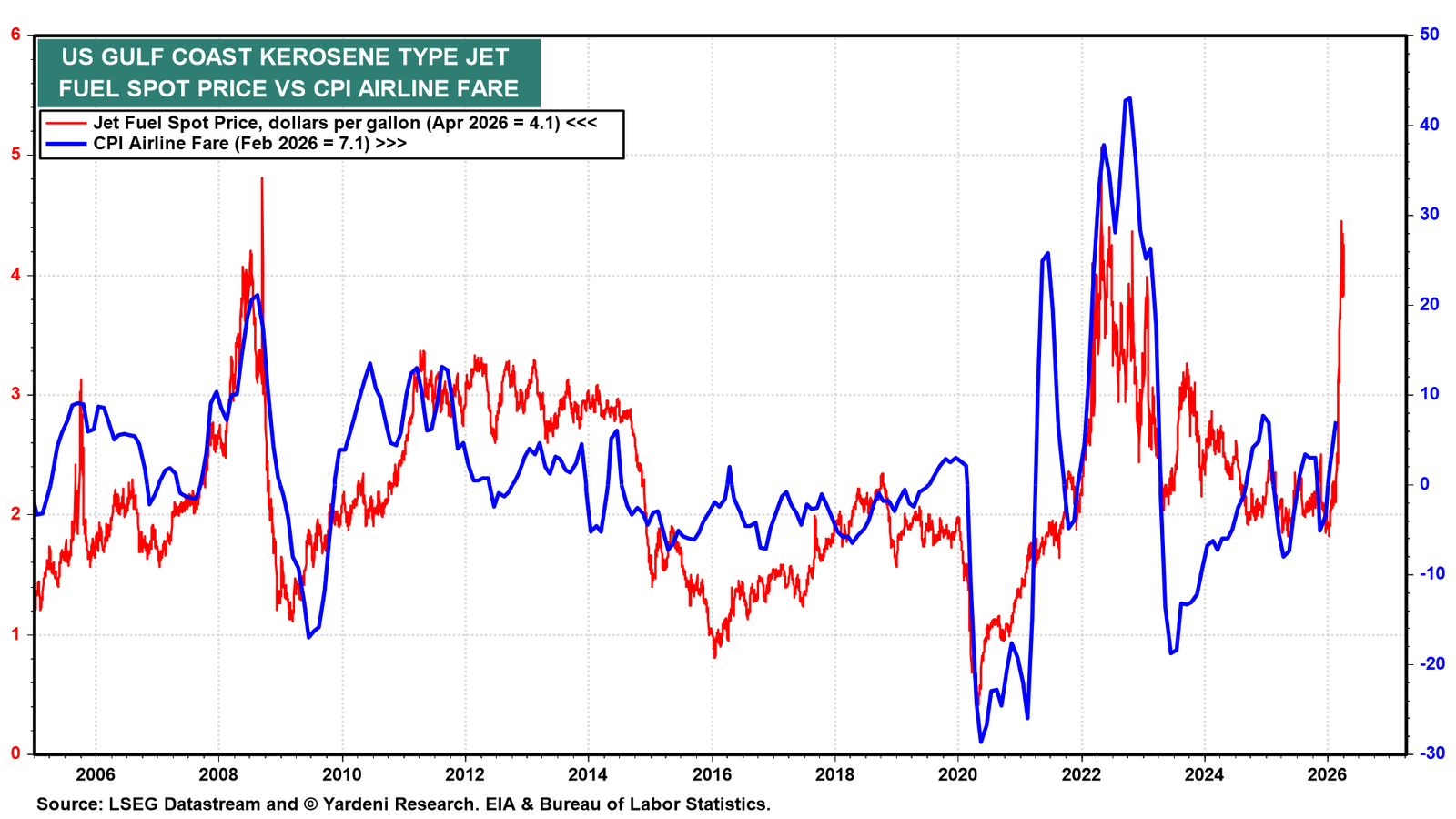
(2) A surge in WTI crude oil prices translated into a spike in the CPI for transportation services back in 2022. It is doing that again.
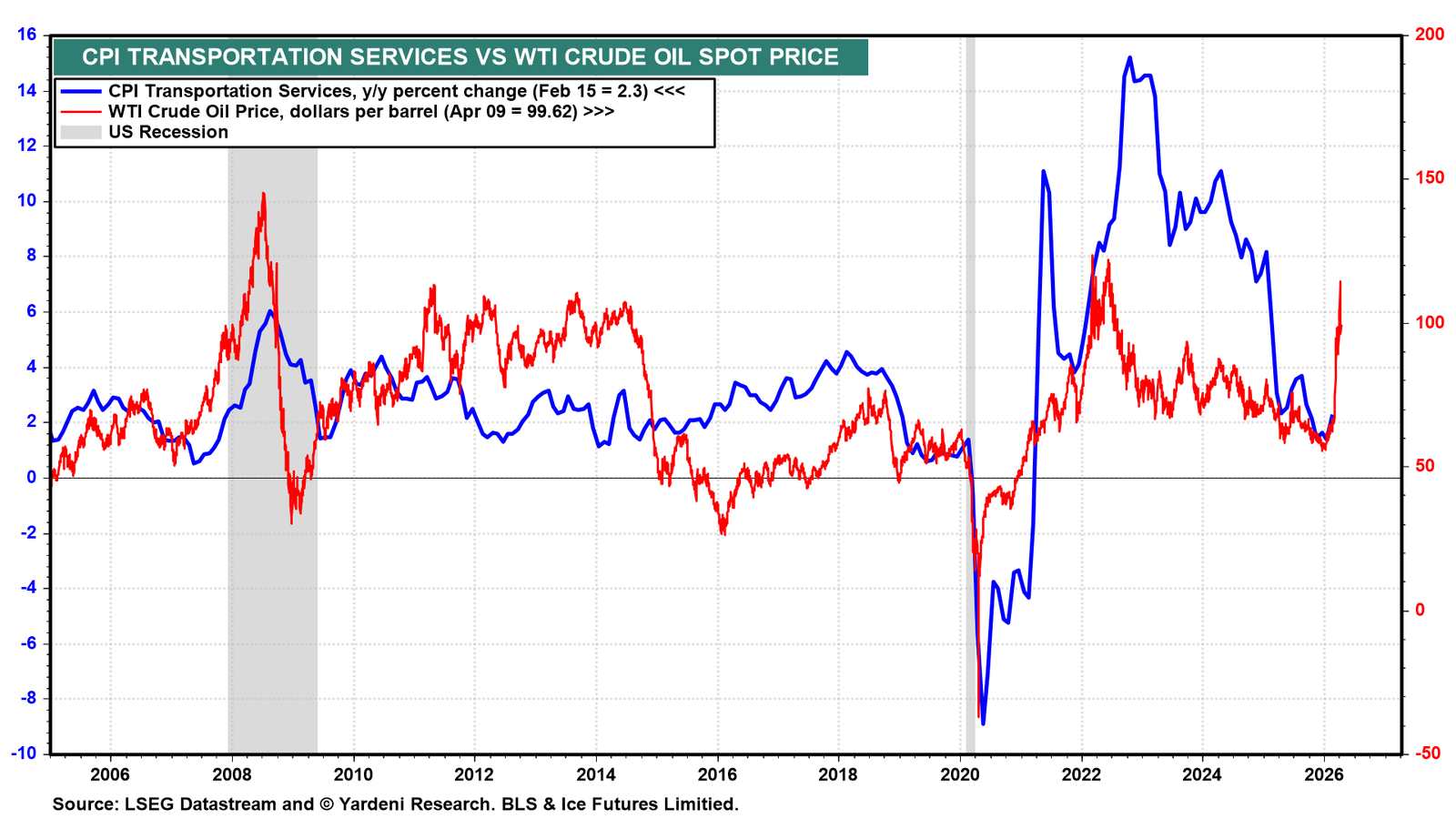
(3) The bottom line is that there is a risk that inflation will turn out to be more persistent than widely expected, including by Fed officials, once again. If so, then beware of an adverse reaction from the Bond Vigilantes once they wake up from their siesta. We are still using a 4.25%-4.75% range for the 10-year Treasury yield this year. We are at the bottom of that range now, but thinking that the next move might be to the top end.