The fog of war has been replaced by the fog of the ceasefire between the US and Iran. Negotiators for the two countries will meet in Islamabad on Friday. They met many times before without averting the war. The pounding of Iran by the US and Israel has failed to topple Iran's regime, which still seems to have firm command and control of the country despite the decapitation of its leadership during the first day of the war. The Islamic Revolutionary Guard Corps remains intact, capable of firing missiles and drones, and has effectively taken over the Strait of Hormuz. The American negotiators will still insist that Iran abandon its nuclear program and surrender its stash of enriched uranium. But now they also need to get the Iranian regime to reopen the Strait as a free passageway for navigation in accordance with international law.
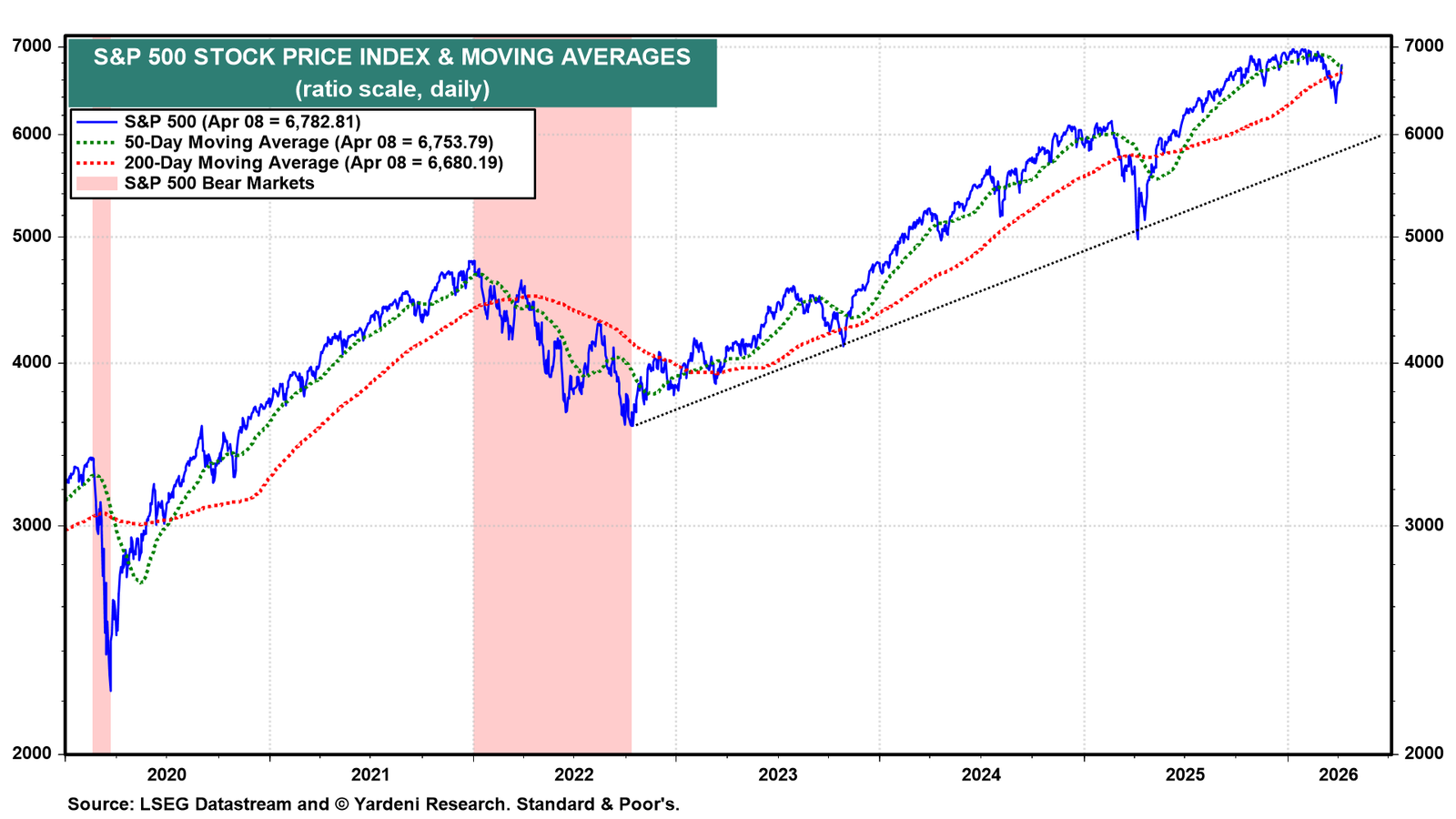
Given all the above, today's latest relief rally in the stock market might have reflected more short covering than outright buying. Still, it was impressive to see the S&P 500 rebound back above both its 200-dma and 50-dma (chart). Moreover, during the 9.1% pullback since January 27, the 50-dma has remained above the 200-dma. We still think that the S&P 500 bottomed on Monday, March 30, at 6343.72. It is up 6.9% since then and down only 2.8% from its record high on January 27.
At the start of this year, we expected the stock market to be choppy in the first half, though we didn't anticipate the war. It is likely to remain choppy until ships can sail freely through the Strait.
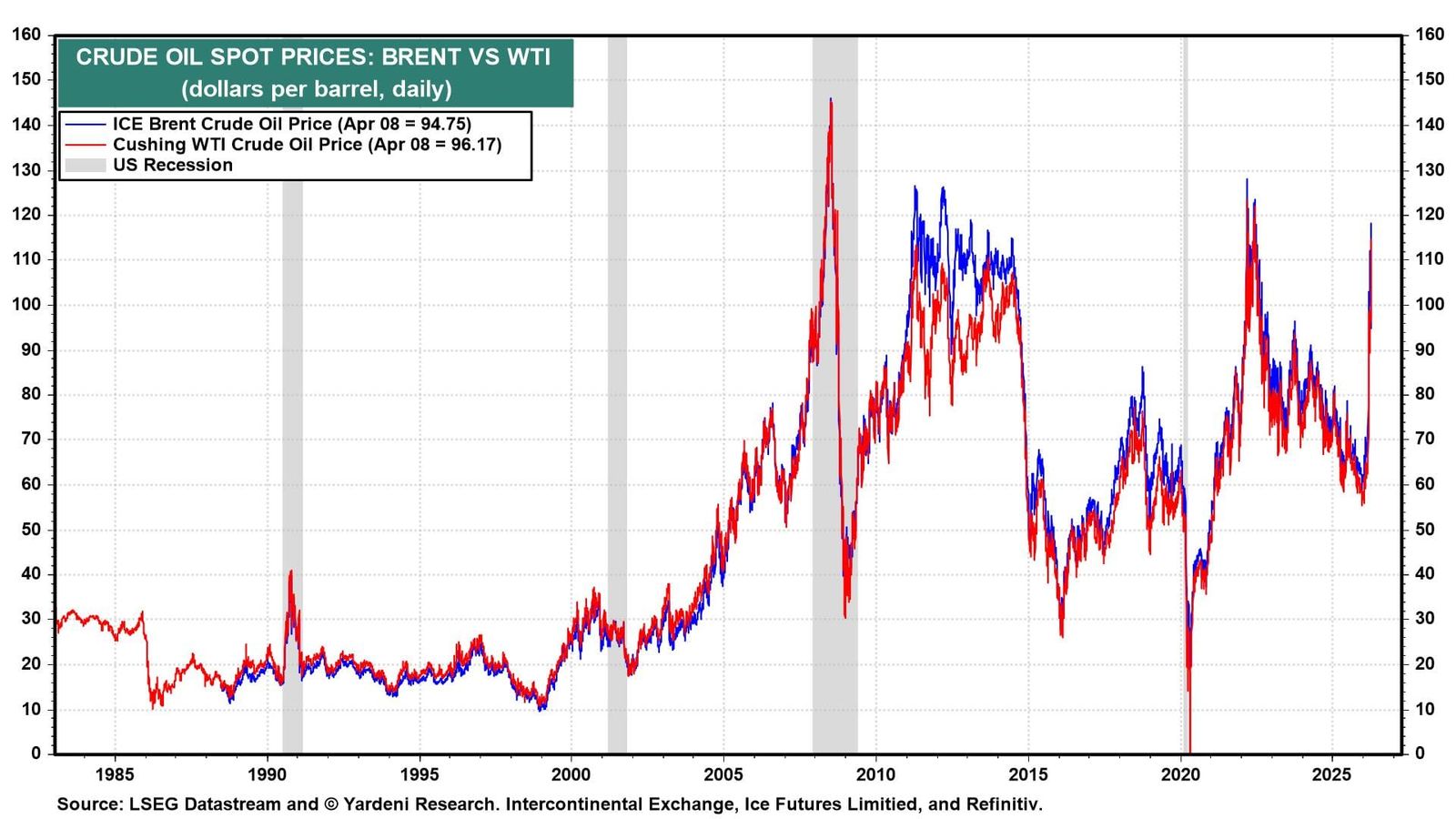
The rebound in stock prices today was fueled by a sharp drop in crude oil prices after President Donald Trump postponed Obliteration Day yesterday, a couple of hours before his 8:00 p.m. deadline for Iran to open the Strait. Nevertheless, both Brent and WTI prices remain elevated tonight, just below $100 a barrel. They were closer to $70 just before the war (chart).
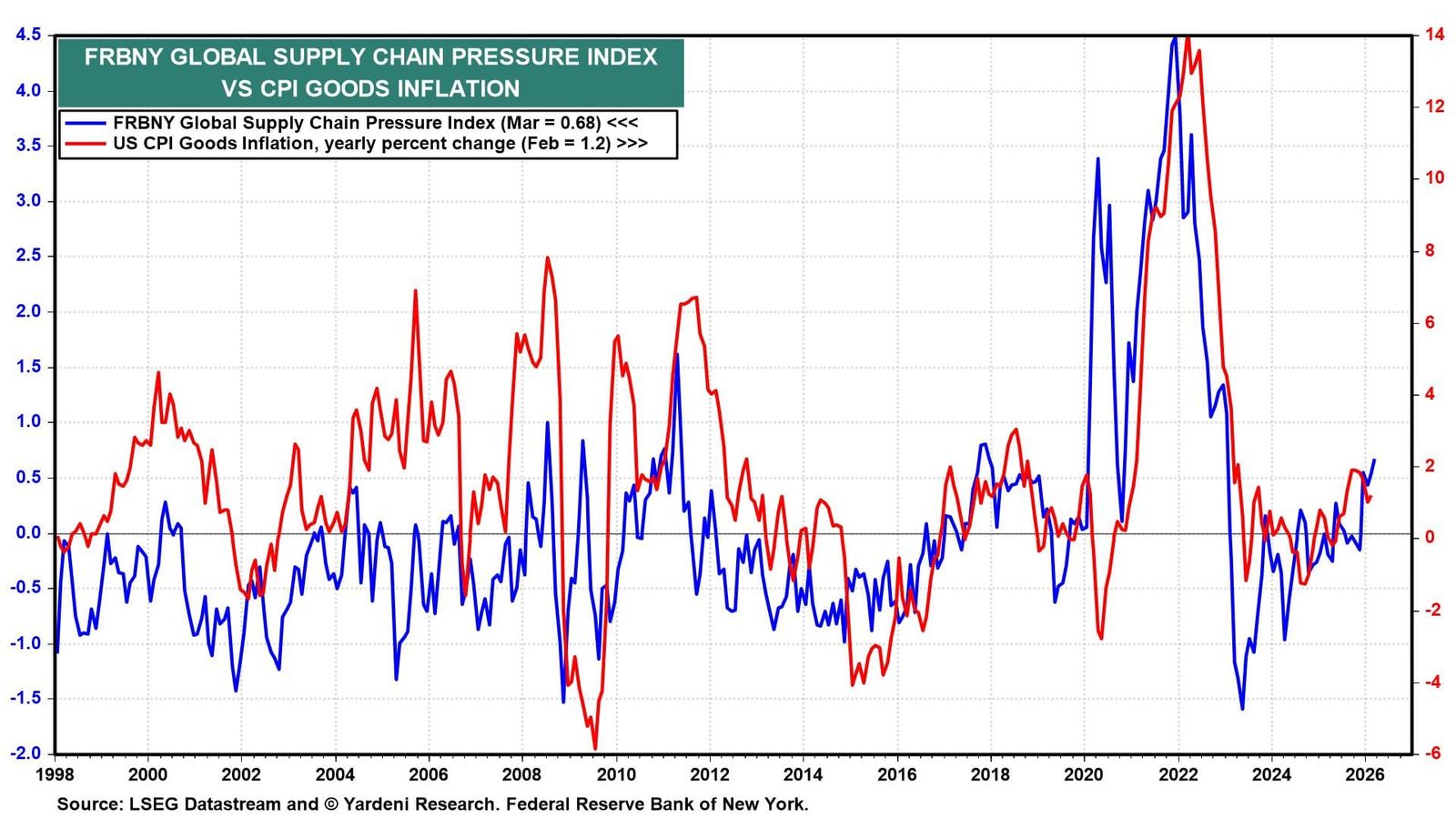
For the Fed, it is déjà vu all over again. Oil prices soared in 2022 after Russia invaded Ukraine. That led to a surge in inflation. However, back then, the CPI goods inflation rate was already rising due to supply-chain disruptions (chart). This time, tariffs boosted CPI durable goods inflation over the past year.
No word haunts the Fed more than the word “transitory.” It was used by Fed officials to describe the surge in inflation triggered by pandemic-related supply chain disruptions in 2021. In 2022, with inflation still rising, Fed officials scrambled to tighten monetary policy and were subsequently roundly criticized for their tardiness and for it being a major policy error. The jump in oil prices exacerbated the inflation initially caused by the pandemic.
In today's Minutes of the March 17-18 FOMC meeting, the word transitory doesn't appear even once. Instead, the participants of the Committee seemed resigned to missing their inflation target for a while longer: "The vast majority of participants noted that progress toward the Committee's 2 percent objective could be slower than previously expected and judged that the risk of inflation running persistently above the Committee’s objective had increased." Oh well: Inflation has exceeded the Fed's 2.0% target for five years and one month now. What's a few more months or a couple more years?
Several participants took some comfort in "that most measures of longer-term inflation expectations remained consistent with the Committee's 2 percent objective." That's not exactly so, based on the March readings of around 3.0% for 3-5 years expectations, according to the FRBNY consumer survey (chart).
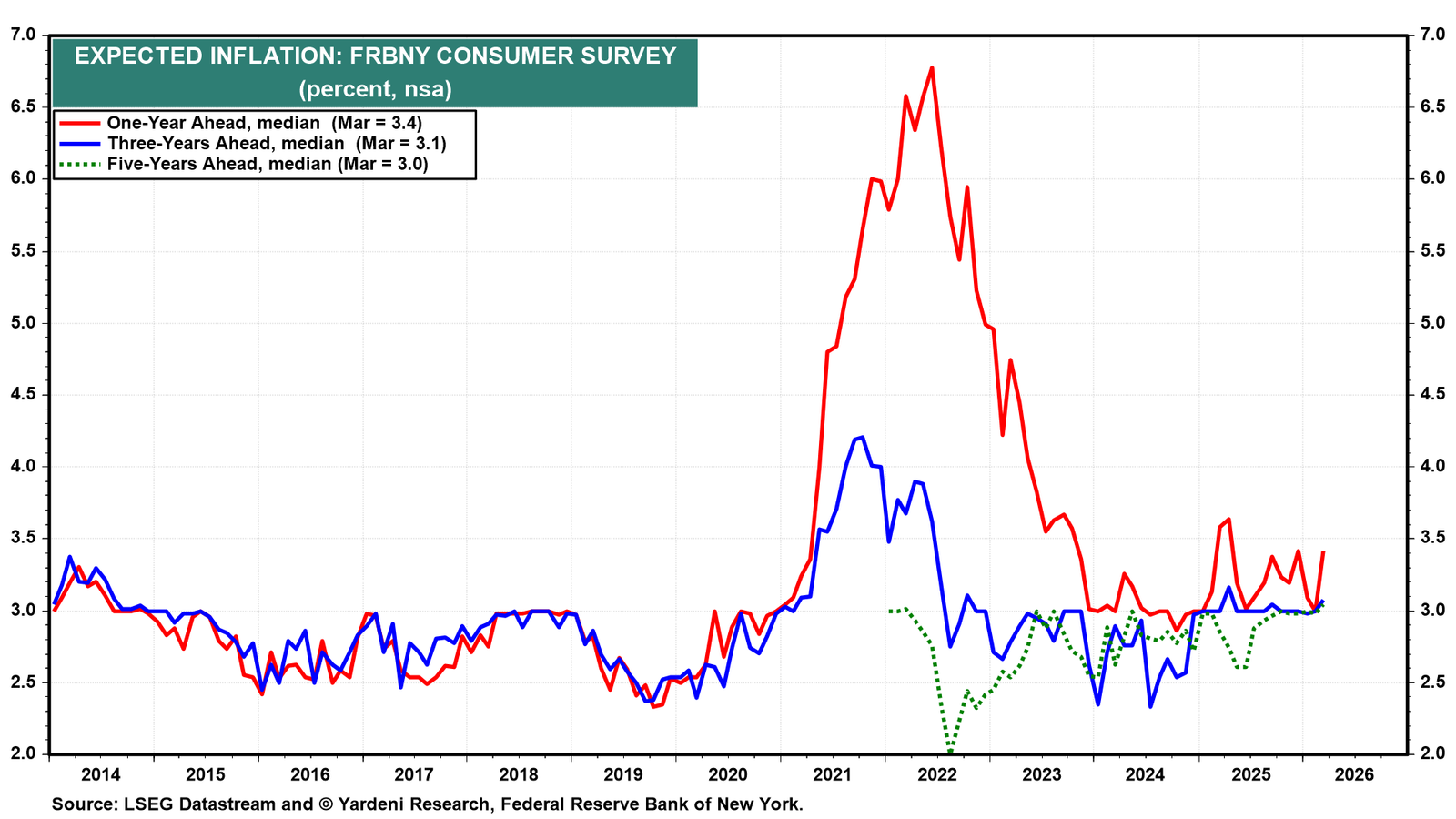
The overriding message from the Minutes was neither hawkish nor dovish. It was one of deliberate patience. "All participants agreed that monetary policy was not on a preset course and would be determined on a meeting-by-meeting basis." This echoes Powell's March press conference, where he emphasized that policy is “in a good place” and that it is best to wait and see how the Middle East conflict evolves. That appears to be the consensus view.
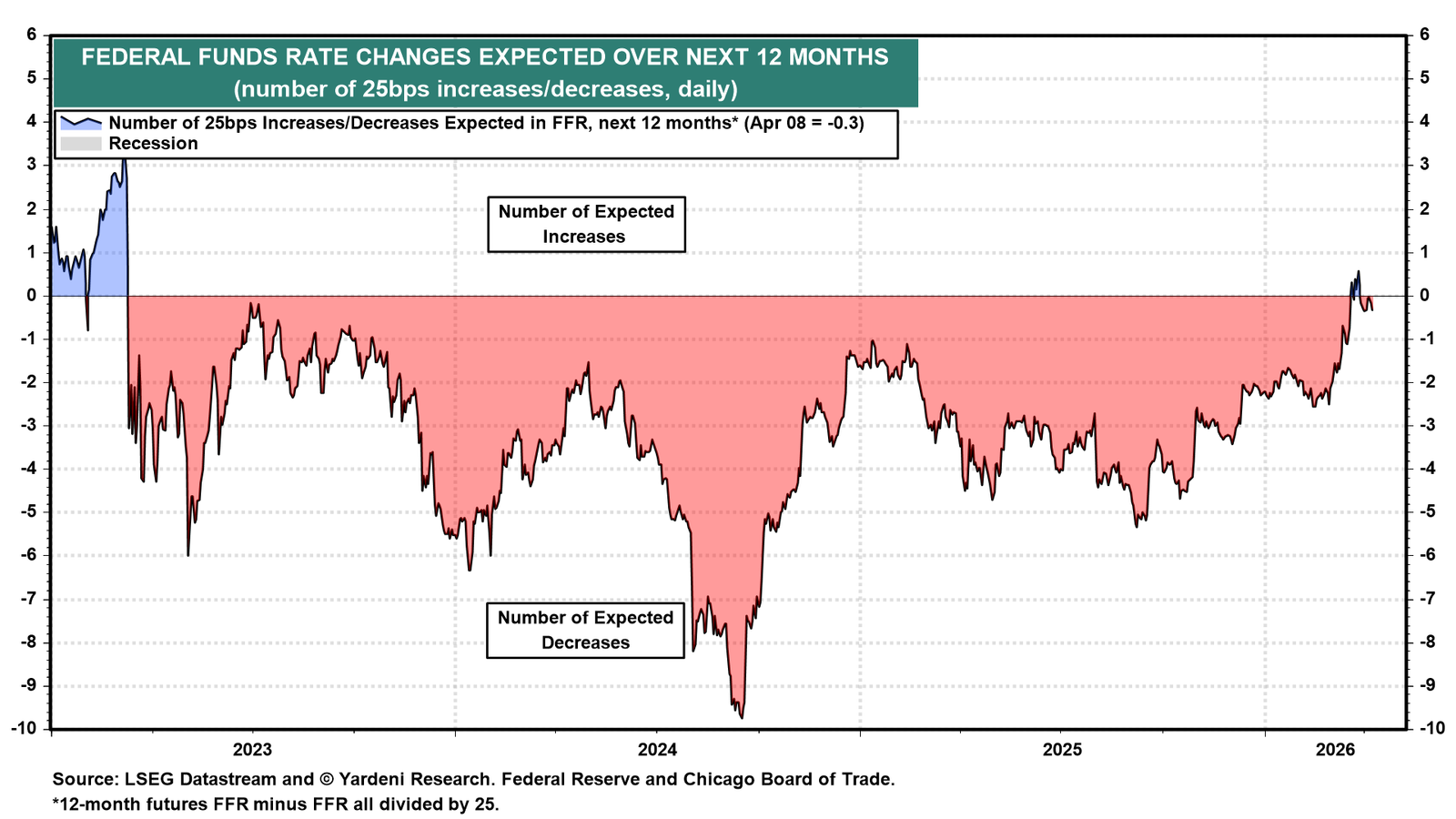
A rise in long-term inflation expectations, or second-round effects from energy prices into core inflation, might trigger a hawkish response from the FOMC. For now, the Fed is set to remain on the sidelines consistent with our "none-and-done" outlook for Fed policy in 2026. The federal funds rate futures market agrees with us for now (chart).