Last year's impressive stock market rally, which began on April 9 (when POTUS postponed his Liberation Day tariffs), was fueled by AI Optimism. It turned into AI Fatigue late last year and, in recent weeks, into AI Fear. Now it's AI Derangement Syndrome. For a while, AI was widely thought of as a productivity-enhancing tool. Now the worry is that it has turned into a Terminator of numerous businesses and the jobs they provide.
Software stocks have plunged since the beginning of the year because Anthropic has been using its LLM (large language models) tools to code better versions of them (chart). If code can write code, who needs coders? Who needs software companies?

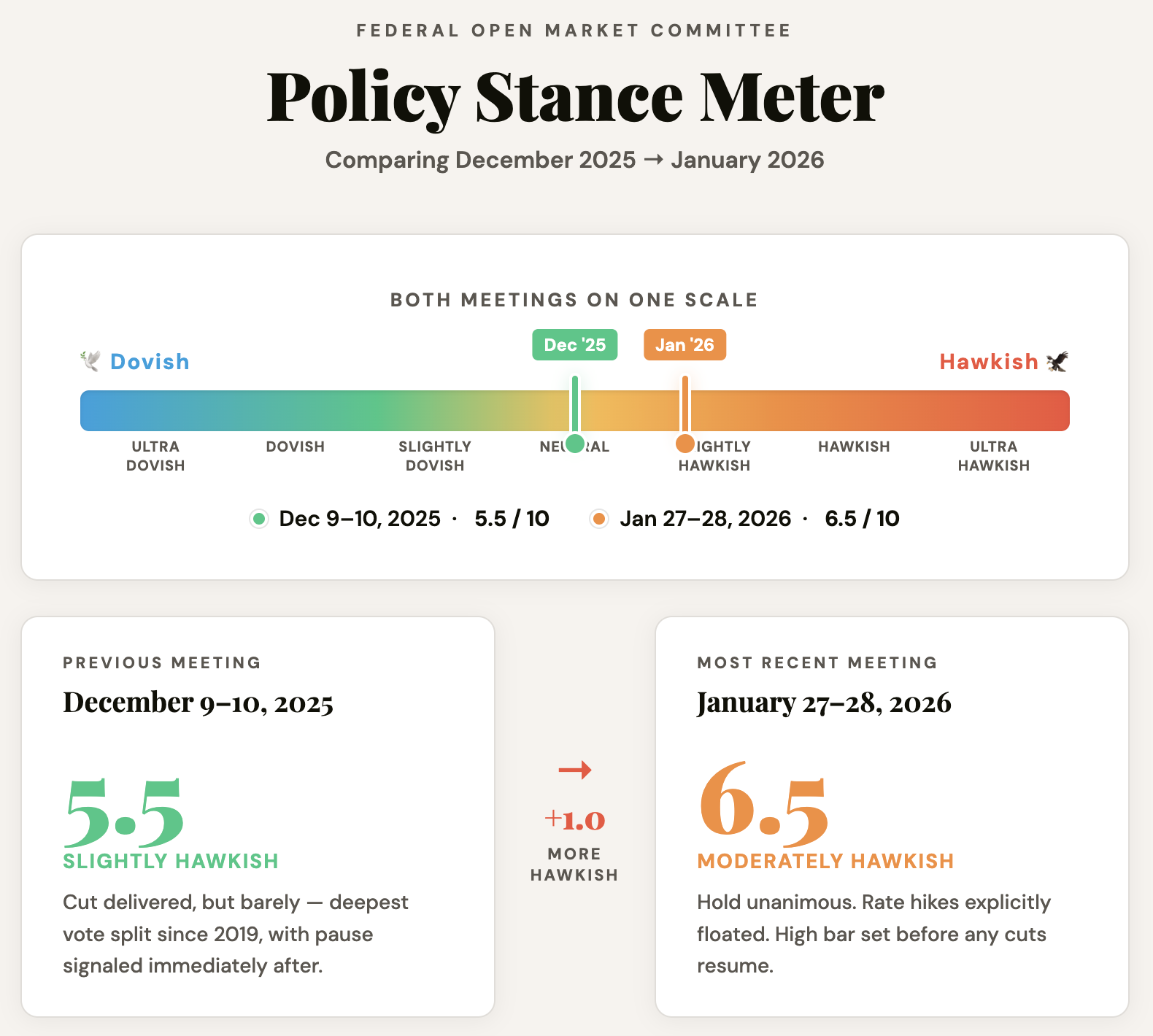
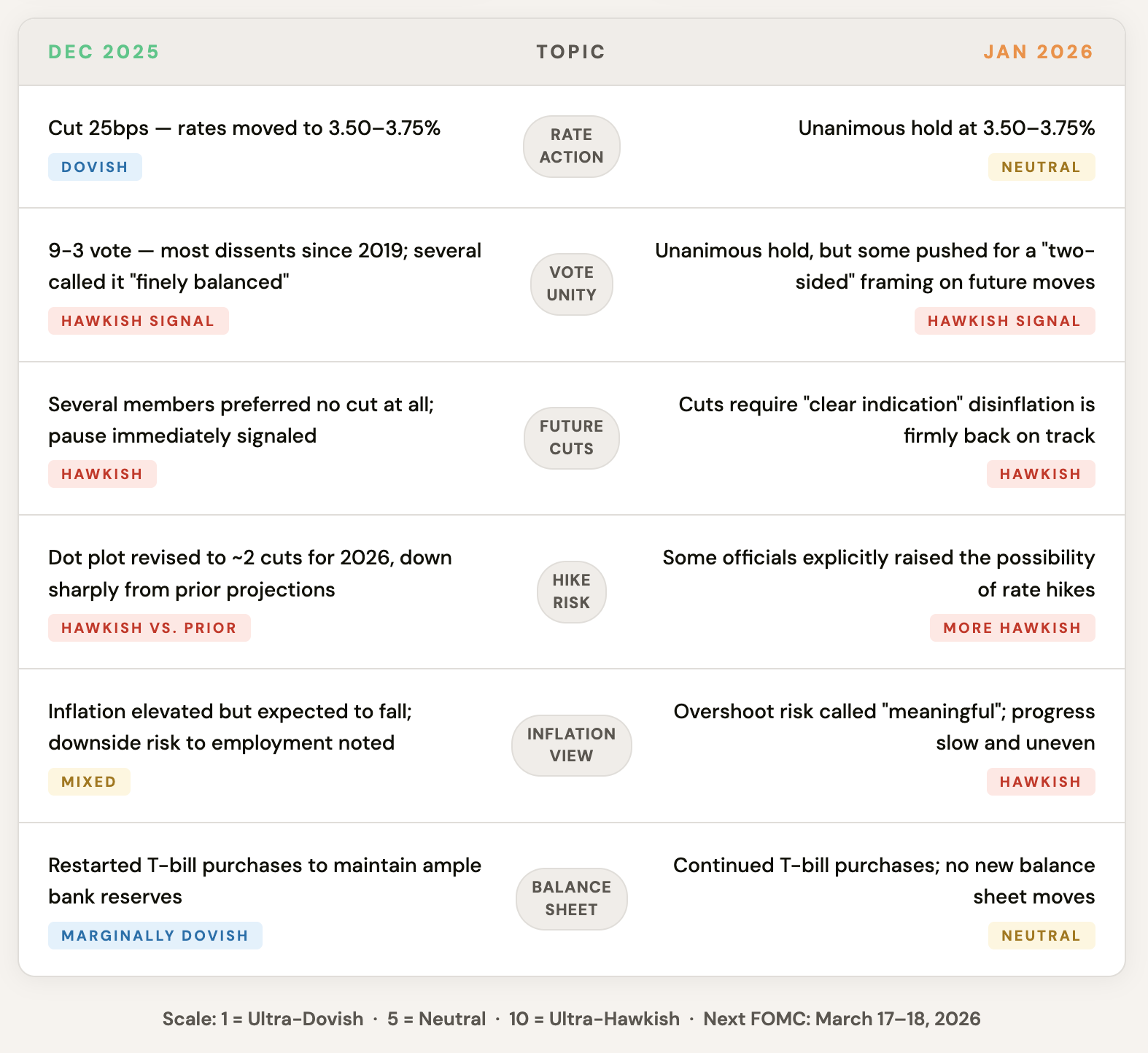
Today, we signed up for Claude Pro at $20 per month. We prompted it to create a Fed Policy Stance Meter to rate the relative dovishness and hawkishness of the past two FOMC meetings. It took Claude less than five minutes to write the HTML code and produce the impressive result below. We don't need to fire anyone. We need our entire YRI Team to use this new tool to enhance our productivity. Our tech team has already started integrating Claude Code into their daily workflows.
Fears that AI will put companies out of business pummeled the stocks not only of traditional enterprise SaaS (software as a service) providers but also many other industries, including cybersecurity, IT services & outsourcing, payments & financial services, wealth management, and real estate (chart).

Yet, Indeed job postings for software engineers are up 11% y/y.

Over the past 12 months through January, business applications rose to a record-high 5.8 million (chart). We presume that the applicants are humans who intend to employ at least themselves if not more employees.

AI fearmongers warn that this technological disruptor may trigger a recession if workers lose their jobs. Alternatively, it might trigger a credit crunch in the private credit market, leading to a recession. The ETFs of private credit companies and consumer credit companies have been hit by the AI Derangement Syndrome. The S&P 500 Financial sector ETF has been among the worst performing ones so far this year (chart).
Yet on Monday, in the midst of a snowstorm in New York City, JPMorgan Chase CEO Jamie Dimon dismissed fears about AI that had hit the company's stock price that day. (That's a wee bit ironic since Dimon has been very vocal since 2022 about an unhappy outcome for the US financial markets and economy.)

More consistently reassuring has been Jensen Huang, Nvidia's CEO. Today he told CNBC’s Becky Quick, "I think the markets got it wrong," when asked about the plunge in software stock prices on fears that the software enterprise industry will be cannibalized by AI. We side with Huang.
We continue to recommend market-weighting S&P 500 Information Technology, Communications Services, and Financials. We continue to recommend overweighting Industrials, Health Care, and Materials. We continue recommend Go Global rather than Stay Home (chart).

|
|